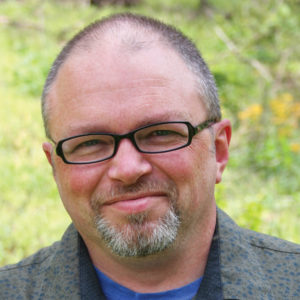

Librarian/​Author Interview: Betsy Bird

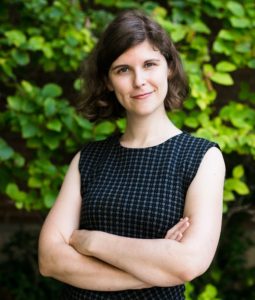
This month’s Industry Insider interview is with a name you likely know well–author, librarian, blogger, podcaster, and reviewer Betsy Bird. Welcome, Betsy!

She’s the Collection Development Manager of Evanston Public Library, and the former Youth Materials Specialist of New York Public Library. She blogs frequently at the School Library Journal site A Fuse #8 Production, and reviews for Kirkus and The New York Times on occasion.

Betsy also hosts two podcasts, Story Seeds, which pairs kids and authors together to write stories, and the very funny Fuse 8 n’ Kate where she and her sister debate the relative merits of classic picture books. Plus, she’s a terrific writer who’s edited anthologies, written middle grade novels, and authored picture books like Giant Dance Party and The Great Santa Stakeout.

Let’s move on to the interview to find out what, why, and how Betsy manages to do all these amazing things!


RVC: How do you think about yourself in terms of your professional identity? Are you a librarian who writes and podcasts and more? Are you like a writer who also librarians? How do you keep it all straight?

BB: Man, I tell you, when I was starting out, I wanted to be like THE EVERYTHING of children’s literature. I wanted the academic side and I wanted the writing side and I wanted the librarianship side. And I didn’t want the teaching side. So, forget about that. But I wanted all the different parts of the personality of a children’s literature person that you could possibly cram into one human. At this point, it hasn’t gotten any less confusing. And I’ve certainly written more books. So, now it mostly just falls between librarian and author, but there’s the podcasting. And then the blogger part is a distinct part. So, I guess anything else falls into the blogger sphere. Podcasting…that’s a blog thing, right? So, that sort of falls into that area. And if I write an article for something…yeah, I’m not sure what I am. I’m a mess!

RVC: From one mess to another, I understand completely. 

BB: Excellent.

RVC: Let’s jump back to the beginning here. What was that first picture book love moment where it all just clicked?

BB: The thing is, there’s not a click moment if it’s just what you breathe. There’s not a moment where you suddenly wake up one day and you’re like, “Air is amazing!” Because you’ve always had it.

RVC: So, you had a childhood with lots of books.

BB: I grew up in a house with books, yes–there were picture books everywhere. It wasn’t like it was even given as an option. It was just this thing one does. So, I had my books, and I had books that I really liked.

The idea of becoming an author probably didn’t come until I realized I had an aunt who was an author. That made it seem like a legitimate job that people have. I was like, “Okay, so that’s a thing.” But yeah, there was no click, there was no lightning flash to love books.

RVC: Did you have any favorites though, either authors or books?

BB: Absolutely. Yet when people ask you that, you’re supposed to say something cool. Like “Shel Silverstein was a god to me.” I mean, I like Shel Silverstein, but who I loved was very uncool. Very, very uncool. When I say her name, people who know her are like, “Oh, that isn’t cool. You’re right.”

RVC: I SO have to know now. Please dish.

BB: Tasha Tudor. Totally not cool, since it looked like the 1880s. But she didn’t live then–she wrote a lot in the 1950s and 60s, but she dressed like she lived a century prior.
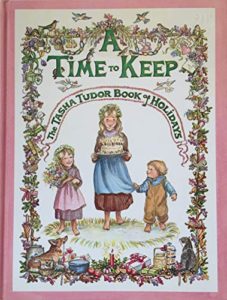
She had this book, A Time to Keep, and it was my Favorite Picture Book of All Time. I read that thing to death. I’ve still got it in my home. My children refuse to look at it, but that’s okay because it’s my book. Mine!

RVC: I feel your pain because my honest answer is The Saggy Baggy Elephant. Why did I like it? Because he was saggy. Nothing more, nothing less.

BB: Oh, yeah. You DO feel my pain!

RVC: Exactly!

BB: Tasha Tudor knew how to draw cupcakes REALLY well. That’s it. That’s all a kid needs.

RVC: When did you really start to think about the kidlit world as a career pathway for you?

BB: I always assumed I’d be a librarian. So, that was just considered the thing that I would do. Growing up, when we got VHS tapes, I was the kid who made an entire cataloguing system–they had all those little numbers on the side of them, remember? I alphabetized the family’s books. With our National Geographic magazines, I’d make subject heading lists to go with them. Just in case I needed capuchin monkeys for a report…which I never did.

In college, I thought it’d be cool to be a photographer. Though I’m a terrible photographer, which I know because I have just enough talent to recognize who is a good photographer. So, I did go to library school with the idea that I’d be an archivist. I wanted to preserve books. I was going to be THAT person.

Yet I took a kids book class on a lark. Now, I was already reading kids books, and had been reading then for years. When I went on my foreign study program, the second Harry Potter book had just come out. My mom told me to buy it, because somehow She Knew. And I read the entire thing that first night. And I’ve been reading like Philip Pullman and more. So, I took that kid literature course and saw that it was books I’d been reading already on my own, which hit me like a little lightning flash. It was like, “Boom, this is what I do!”

RVC: Now, you’re the first official librarian I’ve ever interviewed at OPB, and I’ve been saving this librarian question. Now it’s time to unleash it. Here goes. 

Did you ever have one of those amazing moments where you you recommended a book, and a kid came back after having read it, and their life had been changed?

BB: Apparently I did and didn’t know it at the time. Just a week or two ago. Stephen Savage–a picture book, author/illustrator–sends me an email. He says, “I was in New York, and I was in a restaurant…”

Now, for this story to work, you have to understand that I skim email, so…

Steve wrote, “I saw Fred Hechinger. And he saw my New York Public Library mask and he asked if I knew you, and he said, ‘Betsy Bird changed my life.’ ” And I’m sitting there going…who the HECK is Fred…wait…there was this kid named Fred from three different book groups a while back, and though he was like 10 then, he’d go to YA panels to discuss things, and he was just a delightful, charming kid. You know, I think he like interned at Scholastic for a while.

I was like, “Fred, good old Fred!” But I have no idea how I changed his life. Did I give him a reference? No idea. Did I give him a book he really liked? Entirely possible.

I went back and carefully looked at the email. And how it actually began was that Steve was in a restaurant and he looked over and saw Fred Hechinger. So, he went over to say hi because Steve liked his performance on White Lotus. As it turns out, Fred’s an actor who was on the Fear Street trilogy, and he’s apparently just about everywhere. I had no clue. He was just a good book club kid. So, thumbs up to book club kids. They’re awesome!

RVC: When did you decide to do the authoring and not just the curating, collecting, archiving, and everything else?
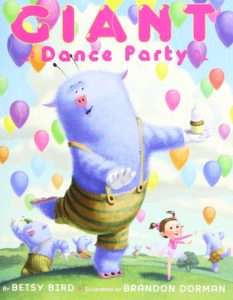
BB: When I was a kid, I wanted to be an author, but then I got older and I was like, “Oh, health insurance. Now what’s going to happen? I’m not going to become an author!” I didn’t take any writing classes or anything like that in college. So, I kind of put that on the side and I became a librarian. When I finally started thinking a little bit about it again, I had some ideas. Then Brandon Dorman, the New York Times bestselling illustrator, contacted me and was like, “Hey, let’s do a book together. You write it. I’ll illustrate it. I just want it to be about one thing–giants leaping up.”  I was like, “You got it!” We wrote three books together and Greenwillow bought two. That’s how I became an author.

It’s a terrible story to tell because people want to know what blood, sweat, and tears you went through, and for me it was just a dude who was like, “Hey, you want to do something?” and I was like, “Yes!” so we did.

RVC: [Making Note to Self: become friends with bestselling, award-​winning illustrators who might need authors to work with.]

BB: That’s just it–they don’t need authors. But I used to do a yearly roundup on my blog of who did the best middle grade book cover. Inevitably, it was him. He did a bunch of great covers. So, I guess he just figured I might be able to write a book?

RVC: Makes perfect sense to me!

BB: You are not, by the way, supposed to walk into a publisher with the author and illustrator, saying, “We wrote a book together!” They hate that. They like pairing authors and illustrators themselves. That’s how it works.

Do NOT walk in together.

RVC: Like you did?

BB: Like I did.

RVC: Let’s circle back on this librarian thing. What’s something that most writers wouldn’t know or appreciate about being a librarian?

BB: Excellent question. Back in the day, it would have been that not everyone who works in the library is a librarian. That gets some people all riled up and angry, like “I worked for two years on my Masters of Library and Information Science degree, and then you’ve just called any old person who’s here a librarian? Harrumph!”

Now, who cares? Call them a librarian.

Today, though, what they may not know, I suppose, is the degree to which we do social work. We have a social worker paid for by my city. At my library, we are very lucky–every library should come with its own built-​in social worker, because we are not trained in social work. And we should be trained in social work, because we often deal with the same things. Even in the children’s book world, you got to deal with a lot of issues that you did not get taught when you went to your library school. And you didn’t have a class on this. Maybe these days they do. I don’t know.

RVC: Care to share an example?

BB: My first library job was at the Jefferson Market branch, a beautiful, beautiful location in Greenwich Village. Absolutely beautiful. And we had to deal with a very interesting set of clientele. One day, you might have to deal with a man with a sword. Here at my library in Evanston, we had to deal with a guy with a BAG of swords! We once had a guy with a parrot. He brought it in because he simply wanted to bring in his parrot. I also had kids set off a stink bomb in the children’s room, which was the most adorable tiny prank of all time–it was kind of cute.

But less adorable is the library branch where someone got attacked by a knife. You’ve got to know how to de-​escalate. And, of course, every time there’s a weekday off of school, the library becomes the de facto daycare, right? Because parents who can’t afford to take off put the kids somewhere and they don’t want them at home. They think the library is the safest place, so they just drop them off. And some may or may not have lunch with them.
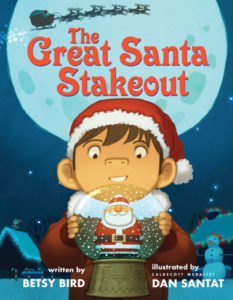
RVC: My goodness! Let’s talk about something happier, and what comes to mind is illustrators. You’ve had the good fortune of working with really fine ones, such as Dan Santat on The Great Santa Stakeout, and, of course, David Small on Long Road to the Circus. How’d you get so lucky as to work with big-​time pros like them?

BB: First, I have to clarify something. Earlier, I said that you’re not supposed to walk in to a publishing house with your Illustrator. There’s almost never been a time I haven’t. Every time I do a book, I pretty much walk in with the illustrator which works when they’ve won Caldecotts. So for The Great Santa Stakeout, I wrote it and then gave it to my agent–who doesn’t do many picture books–and she was like, “Alright, who do we want to do the art?” I said “Dan Santat.” She said, “Go ask him.” So, I did. I told Dan, “Hey, man, I got a book. You want to do it?” And Dan, who’s completely booked up all the time said, “Can you wait two years?” I was like, “You betcha!” Lo and behold, he did it.

How I got to work with David Small is a little bit more of a story. As family lore has it, my grandma’s no-​good uncle would skip out on his farm chores to walk over to an elderly ex-​circus performer’s house to learn how to teach horses some circus tricks. Like you do.

RVC: Indeed.
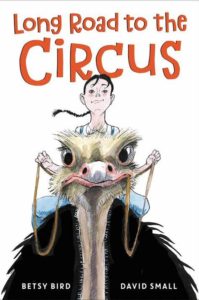
BB: The woman’s name was Madame Marantette. And that woman’s house is currently owned by…David Small! When my mother learned this fact, she realized this family story that we all thought was jokey and silly was, in fact, true. And that this was something she had to tell me because it was actually kind of cool. I filed it away in my brain like, well, that’s neat. Later, I was like, “Man, what if I wrote a book that involved Madame Marantette, and maybe that uncle, and maybe some other things, and maybe David could do the pictures.” So, I wrote it as a picture book. To make a long story short, I showed it to David and he was interested, but said, “I see it more as a novel.” I’d never written a novel, but I did it, and David did spot art throughout. It worked out really well.

RVC: Amazing. Thanks for sharing those stories. I’m now curious to hear about your work as a reviewer. What was it like the first time you had a review of yours in a big-​time venue like The New York Times?

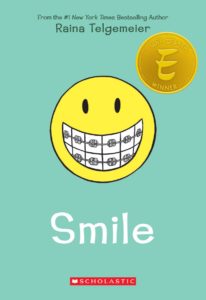
BB: That was a real thrill. I think I’ve reviewed for The New York Times twice. The first time was for Raina Telgemeier’s Smile, which nobody knew was going to blow up and be the biggest thing in the entire world. I just really liked it.

RVC: How’d you get that opportunity?

BB: I knew two New York Times editors just from living in New York–you just run into people at different events. And so I knew two of them. I’d already been writing my reviews in the style of a New York Times review, so it did feel very full circle to me to write for them, though it had a lot more pressure because they were actually fact-​checking me, which nobody does. So, that was new, but they do a good job and were actually paying for it. They also asked me to review Nathan Hale’s Hazardous Tales: Donner Dinner Party.

RVC: You create some very good reviews. What’s your methodology for reviewing a picture book? For instance, what do you focus on? What do you think about? What’s your process?

BB: It really depends on the book. There are really good picture books out there that I can’t review. They’re great, and they might even be the best of the year, but when I sit down to review them, I can’t think of a word to say that would be original. Like “Book good, pictures pretty, story great.” Ugh.

RVC: As someone who’s been reviewing books for a half dozen years, I’ve been there.

BB: The book has to have a hook–there has to be something that I can hook the review on, something that I can say about it that’s new. So, I end up with eclectic choices in terms of the books that I reviewed if only because these are the ones that have given me something to say. That goes for any book, whether middle grade, or picture book, or board book–I can write five or even ten paragraphs on a board book if the board book gives me something to write about.

Someone once called me out for how I review picture books. They said, “You do the opening paragraph, then you do the summary of the book in the second one, and you have some thoughts, then you just do a concluding paragraph.” And to that person, I’m like, “Well, yeah.”

It’s funny because sometimes I write a review and I’m just like, “This is the best review!” And sometimes I do it and they’re not great. They might be very positive and people might be very grateful because I put lots of words into them. But they vary in quality like anything else.

RVC: What’s one thing that people maybe don’t fully appreciate about writing reviews?

BB: A review isn’t just if the book is good or bad. It’s asking questions like:

  • What is the larger context of the book exists?
  • What is the bigger picture?
  • Why is this book different? (especially if you’re talking about picture books, where the sheer scads of picture books being published in a given year is just staggering–there’s just loads of them.)
  • What does this book have to say about the world?
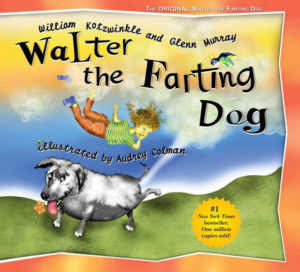
You know, in some way, what makes a book meaningful doesn’t have to be big. It could simply establish itself as important in this day and age in some fashion. Even if it’s like a goofy little book about a balloon that, you know, farts all the time. What does that say about fart books? There are lots of fart books. Walter the Farting Dog was a fart book.  How does this new fart book fit in the ranking of fart books? Why do kids like fart books? What does a fart book do for a kid? Why do grownups hate fart books? There’s a bunch of stuff you can bring into this.

RVC: What do you do when you’re considering reviewing a book by someone you know?

BB: When I was young, I was a jerk. I didn’t care. I would tear a book asunder. Man, I got to tell you, if I can tear a book apart, it’s a thrill. But I haven’t torn a book apart in a while. I don’t know if this is because I’ve written books myself, or because I don’t want to be that jerk author who tears up other authors. When you’re the jerk LIBRARIAN who tears up books, that’s fine. That’s natural. That’s part of your job, so they can just dismiss it. But if you’re the jerk AUTHOR, you might end up in a publisher dinner with these people. I mean, they’re in the same boat as you, and it just feels trickier.

RVC: Agree completely.

BB: If a person I like does a book I don’t like, I don’t review it. I don’t mention it. I don’t put it in a roundup of any kind. I pretty much ignore it. That doesn’t mean that if they have a book that I’m ignoring that I necessarily dislike it. They’ll never quite know what my thoughts are unless I write up a Goodreads thing, which sometimes they notice (which isn’t healthy–don’t spend time reading all your reviews!).

There was a book out last year that I hated. I didn’t review it, though I really went back and forth on that decision. By all accounts, the author was the nicest person. And I thought about doing that review. This book didn’t win any awards. If it had started winning awards, I might have had to do a review of it and I really didn’t want to.

Once, there was a book I didn’t like that was literally number eight on Amazon. Now usually I don’t critically review a first-​time author. But this book was number eight on Amazon and I didn’t like it. So, I did a negative review. That author wasn’t used to this kind of criticism and went off on my blog, and went off on their Facebook page. I don’t know this for a fact, but I think their publisher had them take it down on Facebook. But I didn’t take down their comment on my blog. That’s still up. Anyone can read it any time, and wow, were they mad. My little review somehow stuck them where it hurt. I was like, “Please, man, I’m not a drop in your ocean.” Yeah, that book is still popular to this day, so it shows what I can do!

RVC: Let’s talk about Fuse #8. How did this happen? And what do you get out of it?

BB: When I graduated from college, I had this 1989 Buick Century that my grandmother had given me because it was so ugly from sitting out in the sun all the time. She didn’t want it. So, free car. Awesome! And I parked the car one day, then took the key out, and the electric door locks went up and down and up and down. And up and down, up down. It was possessed. We called it Linda Blair. Unfortunately, it meant the electrical system was broken. I just graduated college, I had no job to speak of–I worked part-​time for the summer for the Richmond, Indiana Symphony choir–so I was making no money. Still, I took it in to get it fixed. The mechanic could just see this person has no money, so he reached into the glove compartment and pulled out fuse number eight. “Look,” he said. “When you have it parked, just pull out this. It’ll stop your battery from getting drained.”

Now, fast-​forward many years. My husband is a filmmaker, and at one point, he needed a name for his production company. He was having a hard time with an estate, so he wanted to call it Widow-​Be-​Damned Production, but no, we weren’t doing that. I suggested, “Fuse #8 Production. That’s catchy. It’s got a number in there. It’s got like a little hashtag. It’s awesome.” He didn’t think so. I thought I’d use the name someday, so when it came to name the blog, even though it had literally nothing to do with children’s books, I named it Fuse #8 Production, and it was catchy. There’s something to be said for a catchy name.

RVC: Great story. What do you like most about podcasting?

BB: It’s funny, I podcasted way back when I was in New York for a little while and I just couldn’t deal with the editing. I was like, “Too much editing! Not enough reason to do this!” So, no, I couldn’t. It was a lot of work. I thought about doing a one-​woman show, but why?

When I moved to the Chicago area, my sister also moved back here. And when she did, I was like, I could do another podcast. But this time, I can make her do all the editing. I said, “Look, I know everything about picture books, while you know almost nothing. We’ll both go through a picture book each episode, and we’ll never run out. You can never run out of classic picture book. We’ll just do one per episode. You go out and read it, then you come back and we talk about it.”

She was like, “So, I’m the dumb one?” I told her, “No, you’re the innocent one.”

What do I get out of it? Sister bonding. I also host the Story Seeds podcast. And that one’s just really cool. I don’t do much except do the narration for it. I sometimes interview authors on that one. It’s just really fun.

RVC: Do you have a favorite episode? If someone’s never listened before, what’s a great starting place for each podcast?
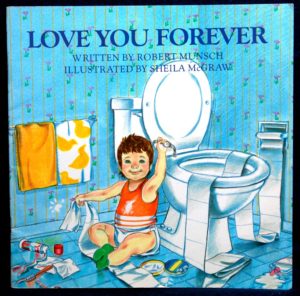
BB: That’s a really good question. With the one I do with my sister, basically, you just need to find a book that you dislike and see what we think about it. If you hate Love You Forever, we might be the podcast for you. If you’re weirded out by Goodnight Moon, definitely check out our episode on that. Absolutely.

In terms of Story Seeds. I mean, it’s got Jason Reynolds on there. So, you may as well just start at the top. It’s Jason Reynolds. It’s a cool episode.

RVC: What do you do if someone comes to you and says, “I want to write picture books.” What what would you recommend they do?

BB: That happens every other week. And I ask, “Are you familiar with the Society of Children’s Book Writers and Illustrators? Because if you’re not, this is an organization that you should consider joining, or at least attending a couple meetings of to get a feel for. They can really help you as you’re working out what you want to do and what you want to make.”

You do not say, “Oh, show me your manuscript!” because people like to use librarians as free book editing advice. Only once in a while did we see really good ones when I was on the desk. There was one which had seven-​foot-​tall puppets made out of masking tape. Oh, the creepiest thing you ever saw.

First and foremost, though, I recommend SCBWI, and there’s the annual Children’s Writer’s & Illustrators Market Guide book. We always have a copy here that people can look at. But it’s mostly do your research and read books you like. If you want to write a picture book, find other picture books like yours and read them. Get a sense of what’s out there. Do your homework and ask questions.
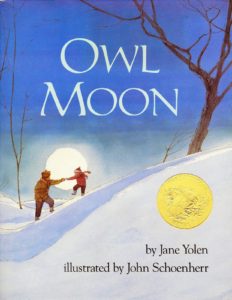
RVC: We here at OPB are a big fan of Jane Yolen. We did a big To-​Do about her 400th published book when it came out not that long ago. What’s your favorite book of hers?

BB: It’s not exciting. Owl Moon. In fact, it’s the boringest answer I could give since it’s her Caldecott winner, but I recently talked about it on my podcast with my sister. The book holds up. The writing holds up. The owl holds up. The whole darn kershmazel holds up.

RVC: The owl does, indeed, hold up nicely. Now…one last question for this part of the interview. What are you working on next? 

BB: I’m working on another novel.
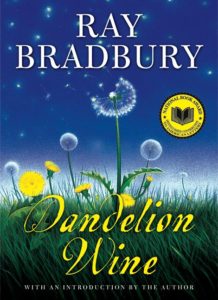
When I was younger, all these authors like Robert Newton Peck and Richard Peck–pretty much anyone with the last name Peck–was doing these nostalgic books, like Ray Bradbury with Dandelion Wine. Where are the nostalgic books for the 80s with the Pocket Rockers and the Pogo balls and He-​Man? Doggone it, it was the last gasp before the internet took over everything, right? And so I’m writing the most ridiculous book. It’s just stories and a lot of it’s based on my youth. And it’s so fun, so enjoyable.

RVC: What’s the target audience?

BB: 9 to 12, though it could go younger. I’m basically trying to tap into that kind of Calvin-​and-​Hobbes-​in-​their-​backyard-​in-​the-​woods type of feel, where it’s just kids running around with no parents because that’s how it was at the time.  I tell my kids how when I was a kid, my parents were like, “Here’s a sharp rusty nail and a brick, go play.” That was parenting in the 80s. “And come back at dinnertime!”

RVC: Okay, Betsy, it’s now time for…THE SPEED ROUND. The point values are quadrupled, and the stakes couldn’t be higher. Let’s zoom through these final six questions. Are you ready?

BB: As prepared as I can be!

RVC: Best place in Evanston for Chicago-​style pizza?

BB: Union Pizza.

RVC: Favorite drink and/​or snack for a late-​night reading session?

BB: I’m horribly addicted to iced chai latte from Starbucks. And their brownies, too, which no longer have espresso beans, but I forgive them.

RVC: What’s a secret talent you have?

BB: Oh, I can spin on a spinning wheel. If you give me a spinning wheel and you give me some roving (wool), I can give you yarn.

RVC: What’s the best picture book you’ve read this year?
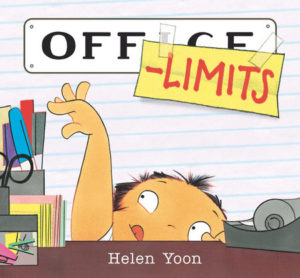
BB: The first one that just pops into my mind–maybe it’s not the best of the year, but it’s near and dear and close to my heart–is Off-​Limits by Helen Yoon. And it’s a great readaloud. Man, I could read that thing aloud so well! It’s a COVID book to a certain extent. It really caught me by surprise. It’s only like her second picture book, but it’s a delight.

RVC: What’s an underappreciated-​but-​great picture book?

BB: A really good question. Someone who doesn’t get enough attention is Keiko Kasza. My Lucky Day is one of the greatest readalouds of all time. Yeah, I said it. It’s amazing. That book does not get enough respect.
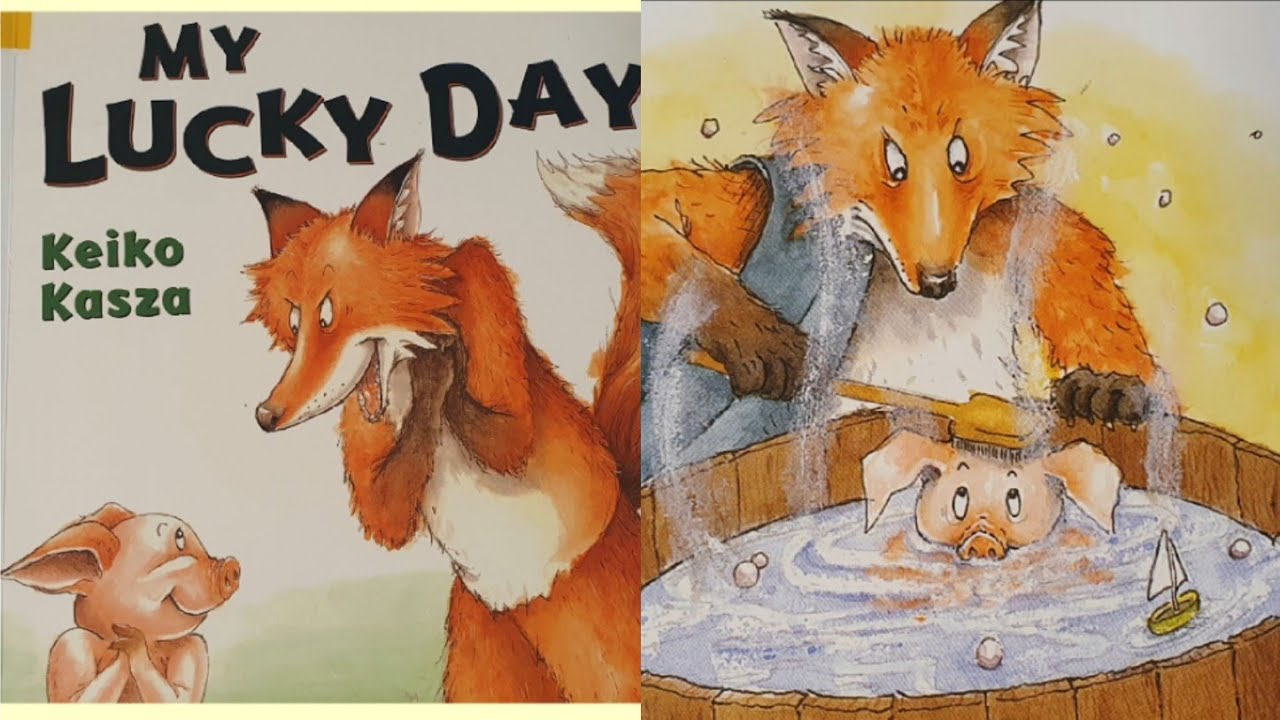
RVC: That pig is just so clever.

BB: Seriously, right? And how many picture books can you think of with a narrator you can’t trust? It’s a great book.

RVC: What’s the most memorable kid + picture book experience you’ve been part of?

BB: There was a kid who was obsessed with getting a certain book in my library. And he tromps up to me. Oh, this kid has clearly explained it 100 times to other adults because he’s like, “I need the orange book. It’s the one about the woman and she’s got the white hat. She’s NOT a pilgrim. And there’s baby Jesus. And there’s a baker.”

I ask: “Is there anything else?”

The kid says, “There’s a pasta pot.”

Me: “Is it Strega Nona?”

The Kid: “YEEESSSSS!”

Oh, yeah. There’s the baby Jesus. And there’s Strega Nona, who is not a pilgrim. And she’s got a white thing on her head–I’ll give you that!

RVC: Thanks so much for doing this, Betsy. This was a total and complete hoot of a good time.
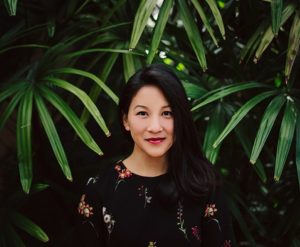
Illustrator Interview: Julia Kuo

Please welcome Julia Kuo to OPB! She’s a Taiwanese-​American illustrator who has worked with The New York Times, The Wall Street Journal, Google, and ProPublica. She has published over a dozen books, including picture books as well as other types of books. Julia has also taught illustration courses at Columbia College Chicago and at her alma mater, Washington University in St. Louis. Among her many awards, she was an artist-​in-​residence at the Banff Centre for the Arts in 2014 and in 2017, and Julia is the recipient of a 2019–2021 Gray Center Mellon Collaborative Fellowship at the University of Chicago.

Without further ado, let’s get right to the interview!

Julia’s website

Julia’s LinkedIn


RVC: When did you first get interested in art?

JK: I started taking drawing classes when I was 5 years old and living in Taipei.

RVC: Wow, that’s an early start. At point did you realize you were going to be a professional artist?

JK: Around my third year of college; I fought it for as long as I could and tried to stick with my business major, but I couldn’t get myself to stop taking art classes.

RVC: Why was the illustration major at Washington University in St. Louis a great fit for you?

JK: I always wonder how life would have turned out if I’d gone to a traditional art school. Going to WashU felt more like getting illustration on the side of a typical college experience. I’m glad I was able to take the business and psychology classes I was interested in, and that my classmates were all studying such interesting and different things! As for the illustration major itself, it leaned towards a more conceptual and process-​driven approach than a technical one, and that was an area of training that I really needed.

RVC: You worked for American Greetings right out of college. What kind of lessons did you learn there?

JK: I learned a lot while working at American Greetings about how the creative process could be translated to a corporate environment. Some days, I was floored by all the resources made available for the creative teams and other days I felt the limitations and inefficiency of a large, complex system. The little I know today about post-​production and reviews comes from my time there.

RVC: How did you make the shift from American Greetings artist and editorial illustration to creating books?

JK: I was signed on to my first chapter book thanks to a friend’s helpful connection. That book happened to be written by Jenny Han and edited by Alvina Ling–someone I am still making books with! What’s even more amazing is that I came out with a literary agent at the end of the process. Emily Van Beek is Jenny’s agent and when she saw that I wasn’t represented, Emily she reached out to me. Signing with her was probably the single most important thing that has ever happened in my career!

RVC: Emily’s good people–congrats on that. What do you most like about making picture books?

JK: I love getting lost in big projects. I’ve always enjoyed creating a series of images and I love that each book means I get to develop a new visual language from scratch. I’m also more of a designerly illustrator, so I enjoy working with layout and imagining how the text will live with the image.

RVC: Which of your picture books got its first starred review? 

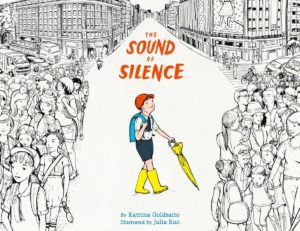
JK: I think it was The Sound of Silence by Katrina Goldsaito.

RVC: What did it feel like to have glowing comments about YOUR art?

JK: Well, I always see it as more of a team effort, since the art could have never existed without the manuscript. As an illustrator, I am always reacting to the text, and a great manuscript challenges me to create art that is worthy of the words!

RVC: Which of your picture books was the most challenging to illustrate?

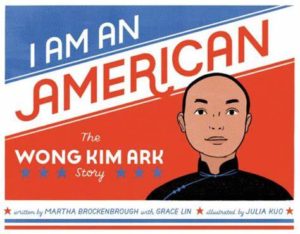
JK: Hmm, I do remember the physical pain of The Sound of Silence, because it required so much detailed linework and coloring. I had to take days off from drawing to save my wrist! I Am An American: The Story of Wong Kim Ark [coming out November 2021!] was challenging because of its historical nature; I was constantly afraid of not doing enough research and portraying scenes or figures inaccurately.

RVC: In all of your experience as a picture book illustrator, what has surprised you the most?

JK: I’m surprised to be writing/​authoring books now. I’m finishing up my second authored book right now, and I’m still shocked.

RVC: Why shocked? Is it that you never considered making stories through words?

JK: Writing is difficult for me. It doesn’t come naturally. And I used to define “good” writing in a very narrow way (something like a linear, fictional story) but am only just starting to learn that there are other paths I can take!

RVC: Your bio statement points out that you’re interested in storytelling and activism. Could you explain that a bit more?

JK: I’m a second-​generation Taiwanese American. I’ve lived in immigrant-​heavy cities like LA, and I’ve also spent 18 years living in various cities in the Midwest. I’ve experienced a huge range of wonderful and terrible experiences all around the US because of how I look. It feels only natural to draw characters who look like me, and to share stories from my own life experiences. I care about how certain policies will affect my parents, my community, and my own future family.

Sometimes I’m able to take on projects that represent what I urgently believe in. But I also have a wide range of interests and limited emotional bandwidth, so other times I just want to draw topics that still feel important or interesting but are a little less personal to me.

RVC: How might one see making picture books as part of that mission?

JK: I love that most kids in the US read picture books, and that these books are one of the first places a person has access to stories that show worlds different than their own. Why not normalize the lives and motivations of others through these stories?

RVC: Great question. And that makes me think of this question–what is the social responsibility of the artist, in kidlit or in general?

JK: I think the social responsibility of the kidlit artist is to tell stories that are true to themselves. To write what they know or believe in, and to step aside when there are others better suited to telling these stories.

RVC: You’ve got a lot of experience as teacher of illustration. What do student illustrators have the hardest time with?

JK: It depends on the school and what resources the students have. I worked at two pretty different schools, and as a caveat, I taught different types of classes at each, so this is far from a perfect comparison. At the first school, many students were just busy juggling their lives, their commute, and the jobs they had on the side. These external life distractions stood between them and the amount of finite time spent on illustration. At the second school, the students were very resource rich, but their struggles were slightly more existential; they often had more to do with fears about the future and achieving certain types of success.

RVC: What do enjoy most about teaching?

JK: It’s VERY exciting to see potential in a student’s work. I love spotting something in their illustrations that opens a door to a new path forward.

RVC: Brag time! What’s a project—current or future—that has you really excited?

JK: I’m super excited about my first book that I will have authored and illustrated myself. It’s called Let’s Do Everything and Nothing, coming out in March 2022!

RVC: Congrats on that! Now…last question for this part of the interview. If you’re not creating picture book art, what other type of art are you likely creating? 

JK: Super random, but I love making piñatas!

RVC: Love that answer. But the time has come, Julia. It’s THE SPEED ROUND! Zoom zoom, and away we go. Are you ready?

JK: Ready!

RVC: The strangest art you’ve ever created?

JK: Kind of hard to answer this, since strange often equals bad, but I’d say the most difficult and complicated art I’ve ever made was a likeness of 20 celebrities sitting together realistically in a pizza joint.

RVC: The most authentic Taiwanese food you’ve ever had in the US is from…?

JK: I just had a very authentic Taiwanese bento here in Seattle at the most unassuming-​looking place, MonGa Café.

RVC: If we overheard you singing in the shower, it’d be what song?

JK: Haha. You’d never hear it, or it would be the last thing you’d hear 😉

RVC: The #1 attribute you bring to an art project is?

JK: Enthusiasm!

RVC: A recent picture book that really got your attention?

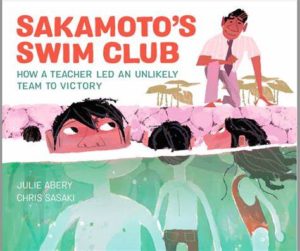
JK: Sakamoto’s Swim Club: How a Teacher Led an Unlikely Team to Victory, written by Julie Abery and illustrated by Chris Sasaki.

RVC: The nicest thing a kid has said about your art?

JK: “She did a good job drawing the pictures”–Livia Blackburne’s daughter (author of I Dream of Popo)

RVC: Thanks so much, Julia!

Author/​Illustrator Interview: Kristen Balouch

This month’s picture book creator interview is with Kristen Balouch, an author, illustrator, artist, and designer living in Brooklyn. Few creatives give as much access to their workspace in the way Kristen does: “I live in a tiny apartment in Williamsburg, Brooklyn that I renovated with salvaged finds. I designed the apartment around this twelve-​foot table. Everything happens at this table: manuscript sorting, book illustrations, editorial illustrations, hand-​lettering, fabric collections, daydreaming, birthday cakes, and dinner parties.”
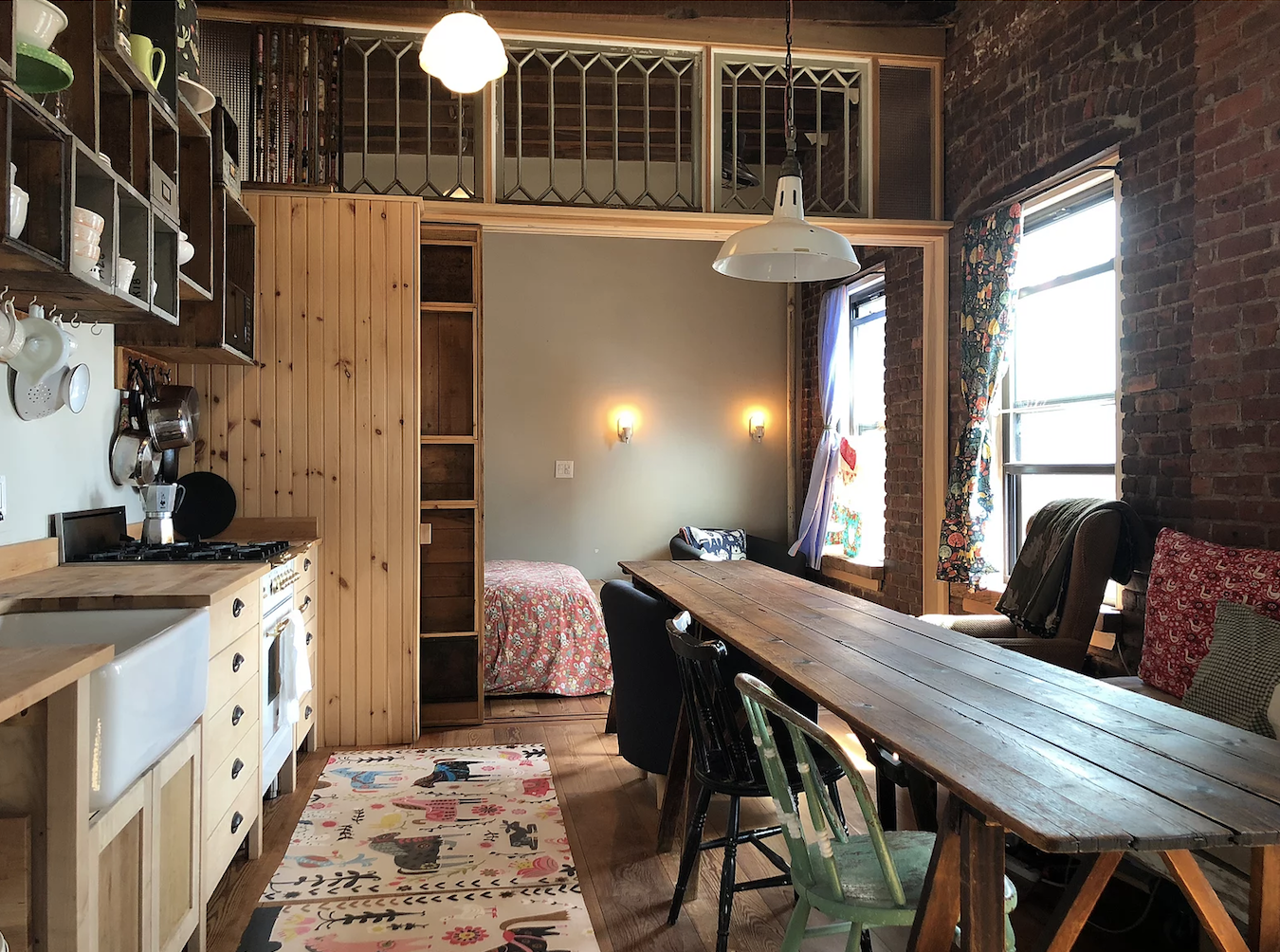
Here’s a photo of that cool space!

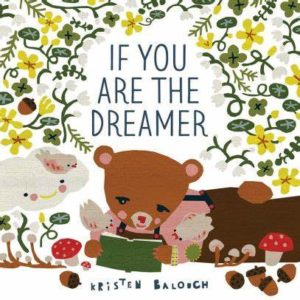
Kristen has created a number of her own picture books such as Feelings and The Little Little Girl with the Big Big Voice, and she’s illustrated the work of others, as with Baby Polar. Her most recent book is the picture book If You Are the Dreamer, which arrives this month.

She also runs Little Blue Mushroom, a “literary agency for children’s books.” (More on this in a minute.)

Let’s get to the interview to find out more about all the cools things Kristen is doing.


RVC: Let’s start with an easy one. As a child, what was your favorite picture book?

KB: The first books I remember reading were Roald Dahl books—Fantastic Mr. Fox and James and the Giant Peach. My grandma lived in Ohio and we lived in California. I think she knew no one was taking me to the library and so she would mail packages of books to me.

RVC: Grandmas like that are the best. What else about your childhood set you up for a career in children’s books?

KB: I lived in among the redwoods of California and we were in no way confined as children. It was me, my sister, and our dog Wonder Dog. We ran, explored, and daydreamed in between the redwoods and along the Russian River.

RVC: In what ways was your creativity coming through during high school?

KB: We moved to Ohio and I had a wonderful art teacher in high school. His name was John Antro. He put the idea of art school and New York City in my mind. My family moved in the middle of high school to Florida and I was devastated. But I was lucky and landed in another school with another amazing art teacher, Roger Smith. These two teachers—their vision, their encouragement—altered the course of my life. Teachers change lives!

RVC: Indeed they do! Now, you went to the Pratt Institute as an undergraduate. What drew you to that school? 

KB: When I was 14, I lied and said I was 16 to work the weekends at a fried chicken place. I saved all my money—I think it was $800, something like that–and used it to go to Pratt for a high school program in the summer. Pratt had a campus which made it feel more like a school experience than a city experience.

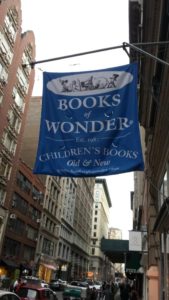
Later, as an undergraduate there, I had the most wonderful English professor, Daniel Gerzog, and I started working on picture books. I also explored New York City. My favorite spot was Books of Wonder. I passed the afternoons with the picture books there.
RVC: Your undergraduate experience at Pratt was a while back. But you recently went back to college via the low-​residence MFA in Writing for Children at Vermont College of Fine Arts. What was the goal?

KB: I felt like I had the art down, but the writing! I just fumbled with words. I went to VCFA and I witnessed the craft of writing and the devotion. It looked the same as my art practice but with words, and I could also see that the components of the book were the same…character development, environment, suspense, story arc. It was just using words to get there instead of color or composition.

RVC: What was the most valuable lesson you learned at VCFA?

KB: I think I learned to trust my words on paper.

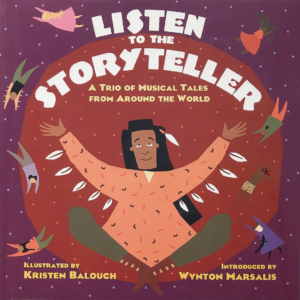
RVC: Let’s get to your books. What’s the story behind your first picture book, Listen to the Storyteller? How did that come about?

KB: I had sent a book dummy for The King & the Three Thieves to Viking. They were publishing Simms Taback at the time and I adored everything they printed. And then they said “Yes!” But they said we have something else first. It was Listen to the Storyteller.

RVC: What’s your favorite thing about that book?

KB: I look back at those illustrations and the compositions are so expressive. I was learning how to use placement and form to tell a story.

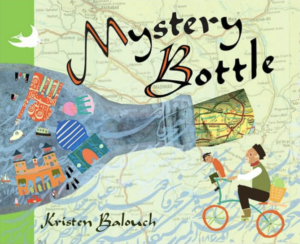
RVC: One of my favorites of yours is the Ezra Jack Keats award-​winning picture book Mystery Bottle. Care to share the close-​to-​home story that inspired it?

KB: Mystery Bottle is like collecting a family history, political borders, and ways of life then sprinkling those details throughout a book. The initial spark was my son’s grandparents and how much they wanted to meet their grandson, but the gap between here and Iran seemed so enormous. It was a way to bring them together.

RVC: On one hand, the story is kind of nonfiction. But things happen in it that aren’t quite realistic in a traditional sense. How do you handle that challenge in terms of creating visuals (which many reviewers note is their favorite thing about the book)?

KB: There are so many ways to see and experience reality. For example, let’s say there are two things on the table that are approximately the same size. If one of those things is important to me, then maybe I would draw it larger. Or maybe that thing is so important to me that it might fill the whole room. Or maybe that thing is so important to me that it fills the entire page. In that example of scale, all of those images would represent a reality. It may just not be the reality we are used to seeing.

RVC: That’s a great point about perspective. I’m not sure writers fully understand all that an illustrator does. Speaking of that…what’s the most important thing writers should know or understand about picture book illustrators?

KB: I think writers do know that illustration is also storytelling and that can enhance or add layers of meaning. Personally, I like to illustrate a roomy text that allows for a broad interpretation.

RVC: Since you brought up interpretation…what do you think about art notes?

KB: Art notes can be necessary if the author is considering a specific visual that tells the story. Other art notes can be micro managing. People have different ways of working. Some people like to be told what to do. But I am not one of those people. Most publishers make sure illustrators have the room to create.

RVC: You’ve been doing freelance work beyond kidlit things for a very long time. How does that work inform your kidlit illustrations?

KB: When art is out in the world, it doesn’t have the same proximity or amount of time with the viewer as children’s books. Images need to be more immediate and compelling—the messaging needs to be clear. The luxury of time and proximity in children’s books creates an environment for play and dialogue. I hope my work has become better as a communicator from creating for different viewers.

RVC: What are your thoughts on the state of kidlit in general right now?

KB: Could you ever imagine this many beautiful books being produced?
The extraordinary, thoughtful books being published every season just takes my breath away. Small presses and imprints acting as small presses are creating diverse books, neurologically and otherwise, which broaden the picture book market. It’s very exciting!

I wish more obscure books became less obscure and made their way into more readers’ hands.

RVC: Here’s a question I’ve never asked in an OPB interview before. How do you go about making a quality artist’s statement? (P.S.—this is something unique to artists. Writers don’t worry about such things!)

KB: I suppose first you have to think about who will be reading your artist statement and how to connect with them. I like to include things that are important to me and the things that make me tick. Like…I like kindness and poetry and little things that dance around in the background of a page. But then if you put that into a context where your reader values awards or accomplishments, well, then I would include some of those, too.

It’s a little scary defining oneself on paper. Be brave, speak truth, walk boldly even if it’s uncomfortable!

RVC: What is Little Blue Mushroom?

KB: Little Blue Mushroom is this incredible thing that happened almost on its own–just add water!

I started teaching online courses about five years ago. I wanted to help illustrators find their way into the children’s book market. I had so many years of trying to figure out how to create story as an illustrator. I looked for access points into storytelling. I put together the things that I thought were helpful and were from the point of view of the illustrator and created a handful of courses.

The response was tremendous. So many very talented illustrators showed up. Little Blue Mushroom organically evolved into a boutique literary agency to help a half dozen of those illustrators bring their work to publishers.

RVC: Any tips for writers or artists who decide to follow in your path and create a similar company?

KB: Be generous with what you can offer. Pay attention and do what’s important to you, and it will grow.

RVC: Brag time. What’s a current or forthcoming project you’re super stoked about?

KB: If You Are the Dreamer is coming out Sept 21st with Cameron Kids. It’s sort of like a contemporary Runaway Bunny in its simplicity and poetry. I’m counting down the days!!! Check back with me in the spring for more exciting news, too!

RVC: Last question for this part of the interview. You’re back at Pratt again, but as a teacher this time. What’s that like for you?

KB: I love encouraging people/​students to see a way to bring what they love to the world. There is room in the world to do exactly what you want to do. I also like to help swat away any nay-​saying self talk–get outta here!

RVC: Okay, it’s time for the Speed Round. Zoomy questions and zippy answers, please. Ready?

KB: Ready!

RVC: Best place in Brooklyn for cupcake?

KB: Bakeri in Greenpoint or Williamsburg.

RVC: Your three favorite colors, in order, are… 

KB: I have four! Strawberry ice cream pink, bright persimmons orange, electric pure yellow, and a hazy gray blue.

RVC: “If I weren’t creating art or writing, I’d be…”

KB: A therapist or a gardener!

RVC: Five things you can’t do your work without. 

KB: Focus, sleep, a full belly, a Sharpie, and a piece of paper.

RVC: If you could illustrate for any living picture book writer, it’d be…

KB: Carole Boston Weatherford.

RVC: [Quick sidenote–check out the OPB interview with Carole right here!] Your illustration philosophy in five words or less.

KB: Be kind.

RVC: Thanks so much, Kristen. Best of luck with the new book!

KB: Thank you!

Author Interview: Mifflin Lowe

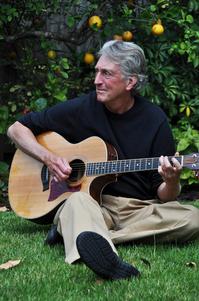
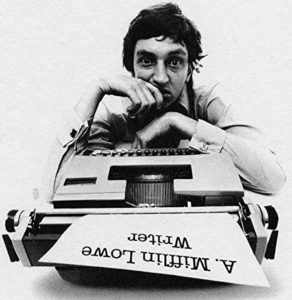
This month’s author interview is with local (to me, at least!) writer Mifflin Lowe who’s an author, singer, songwriter, and musician.

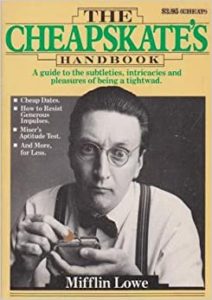
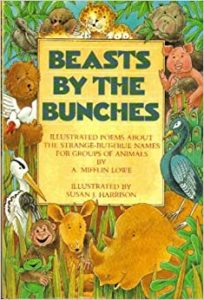
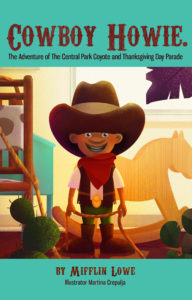
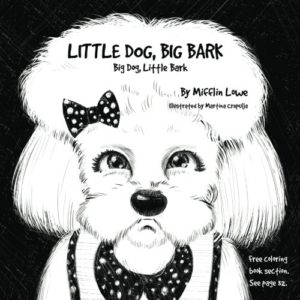
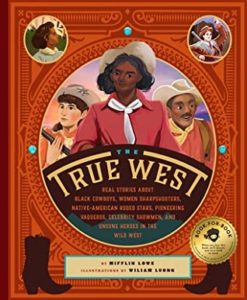
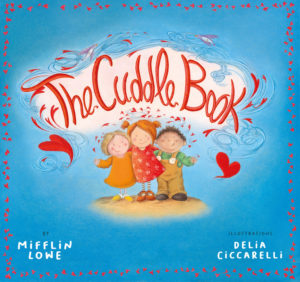
Without rambling on about all that, I’ll just offer this–since a picture’s worth a thousand words, here are three pictures (ergo 3,000 words) that are positively Mifflin-esque.

Okay, let’s zip ahead to the interview to discover a bit more about this imaginative picture book maker!

Mifflin’s website

Mifflin’s Facebook


RVC: When did you first consider yourself to be a writer?

ML: I had to write a paper in seventh grade. I did it late Sunday night, and when I finally finished, I was so tired I fell into bed. My mother saw my bad handwriting so she copied it to make it legible. The teacher called us both in and accused my mother and me of cheating. My mother had not, in fact, changed a single word but he didn’t want to believe that. Since my mom had been an English major in college—and he thought she’d written it–that’s when I knew I was a writer.

RVC: Wow.

ML:  I couldn’t wrestle. I couldn’t climb the rope in gym class. But from a young age, I knew I could write.

RVC: If it makes you feel any better, I couldn’t climb that darn rope either.

ML: And let’s not even talk about rope burns!

RVC: Rumor has it that you went to college for something other than writing.

ML: When I was a freshman at Princeton, I took Modern European Literature in this huge class, about 200 students. At the end of the semester, the professor held up two papers and said, “These are excellent.” I’d written one of them–on Kafka etc.. My roommate, who’d just assumed I was a nincompoop, was blown away. Knowing what I know now, I should’ve majored in English, but the emphasis at Princeton at that time was on 18th-​century English literature, and I didn’t feel like spending four years reading or thinking about that.

At any rate, I took an art history course and loved it, so I chose art history as my major. My father was, naturally, horrified that he was spending a reasonably large amount of money to train me in something essentially useless.

RVC: I assume he recovered when you got a “real” job after college. What did you end up doing?

ML: I got a job as a copywriter and later a creative director for advertising agencies.

RVC: What did you learn there that would prove helpful in your later work as a kidlit author?

ML: Working in advertising taught me a lot about writing. It told me that you had to have a concept. Without a fundamental idea, it’s just a heap of words.

RVC: How did you go from that to writing books?

ML: Very few people actually want to be advertising writers. That included me. I was always thinking about other projects.

I remember driving across Newport Bridge, and I had an idea–The Cheapskate’s Handbook. I realized this could be a book. This could sell. I wrote it and sold it to Price Stern Sloan, which was known for humor and novelty titles like How to Be a Jewish Mother. They got me immense amounts of publicity. I was on a couple of national TV shows and got interviewed for magazines. Along the way, I met Dudley Moore, Erma Bombeck (a wonderful person), and Tom Clancy. It was all great. Price Stern Sloan was definitely the right publisher. We sold 220,000 copies in English, and the book was published in three other languages–Swedish, Danish, and Italian.

RVC: What a fantastic start to a book-​writing career!

ML: I started to think I wanted to write children’s books and create music to go with it, kind of like “The Point” by Harry Nilsson.

By the way, someone once asked me how I could write for children since my wife and I didn’t have kids at the time. I said, “Well, I was one.” With any luck, you don’t forget what it was like to be a kid.

RVC: Music seems to be a big theme throughout your life. When did you first get the music bug?

ML: My love for writing and music happened more or less at the same time. I mean, when you’re a young guy, who doesn’t want to be in a rock band, right? I was in some really good rock and roll bands in New Brunswick and New Jersey. Do you know the song “Brandy (You’re a Fine Girl)”?

RVC: I do indeed.

ML: When they were putting the group together, I was invited to be the singer. But I was going to school in Princeton and commuting to New Brunswick all the time. It had gotten to the point where I didn’t want to travel so I said no. I kind of regret that, a little bit. It could’ve been fun.

RVC: Speaking of regrets, what’s your biggest regret as a writer?

ML: I was invited to be on Oprah Winfrey’s show. This was well before she launched her book club, though. Her producers called me on a Monday and said, “Can you fly out here to Chicago for a show we’re shooting on Tuesday?”

I’d have to scramble to make all my own arrangements to get from Rhode Island to Chicago. I thought about doing a layover in LaGuardia Airport and all the hassle, and I just said, “Nope, I can’t do it.”

Everybody has at least one egregiously stupid thing that they do in their lives. That was one of mine, for sure.

RVC: In retrospect, that had to hurt.

ML: You’re telling me! I might have sold books in a few more languages.

RVC: Tell me more about how you made the move out of advertising and into the world of writing books?

ML: I started a music company that made jingles for TJ Maxx and other companies. That was fun. But I had two types of writing going–I was doing the children’s books, and I freelanced three days a week on advertising just to make money. One of my children’s book projects was a “ ‘Twas the Night Before Christmas” kind of story, twenty-​four pages of rhyming couplets. I sent it around, and it actually got a good response from Maurice Sendak. He was so encouraging and nice.

Around that time, I talked to a publisher and they said, “Well, we already have a story like yours in the backlog from established writers, and, honestly, the chances of breaking into this area aren’t good.” I didn’t quit. I just kept pursuing it. Perseverance is the most important thing in writing, other than some degree of talent. And that was when I came up with the idea for Beasts By the Bunches. It was poems and songs about the names for groups of animals, like a smack of jellyfish, a knot of toads, a watch of nightingales, and so forth. Doubleday bought it.

As someone who was in advertising, I used to work with art directors every day. So when the editor showed me the artist they wanted for the book,  I told them I wanted someone else–somebody with a real cool, distinctive style like Chris Van Allsburg. They got very huffy and made it instantly clear that they didn’t care what I thought about the artwork or the artist. I was astonished. I came to realize that this was how it worked. You send the words, they buy the words, and then it’s “See you later!” while they put the book together on their own with whatever artist they pick.

RVC: What happened next?

ML: I wrote I Hate Fun. It was a humor book, not  a picture book, but ironically, I had a great deal of fun writing it. I loved it. (Still do.) I spent nine months polishing it and getting it just perfect. A big-​time agent got me a deal with a New York publisher. The publishing people said, “We like it. But can you change this, that, and a few hundred other things?” I was used to getting requests for changes in the advertising world, so I tried to do that.

With a humor book, if you take one sentence out of a paragraph, all of a sudden, it’s not funny anymore. You take one word out of a sentence, poof…the magic disappears. I tried and tried to rewrite it, but finally told them that I couldn’t do it. They passed on the project, but I got to keep the advance. Since they’d given me back the rights, I sold it to another publisher myself. Hah hah. I won…but the agent was not happy at all. I guess I’d made him look bad to the publisher.

RVC: It sounds like you’ve had mixed experiences with publishers.

ML: That’s right. For my next few picture books, I decided I was just going to self publish them. I have this one called Cowboy Howie: The Adventure of the Central Park Coyote and Thanksgiving Day Parade. It’s the amazing adventures of a Black kid in New York City who wants to be a cowboy. I thought that was a great concept. I actually wrote it as a movie which won an award down here in Sarasota.

RVC: For those who want to hear the songs he wrote to go with it, here they are!

ML: I really wanted Cowboy Howie to be an animated film. In fact, that’s one of the reasons I moved to Sarasota–I wanted to be near Ringling College of Art and Design. The illustrator I found for the book version was a graduate from there, Martina Crepulja. She’s terrific.

RVC: A picture books of yours that I find charming is also self published and has art by Martina. Little Dog, Big Bark. Could you talk about that one?

ML: The title, Little Dog, Big Bark is a concept, right? As I said, I always have to have a clear concept before I start writing. In terms of how I write, I get up in the morning, walk the dog, have breakfast, and then write for four or five hours. But it always starts with a concept. I’m sure you emphasize this in your classes–you don’t just sit down and start spewing out words. You have to have an idea, a concept behind it so that it that goes somewhere. The idea was generated by our dog, Phoebe, a Bichon Frisee who thought she was the biggest, toughest critter in the world, while my mom had a HUGE Great Dane that was sweet and gentle. I found the concept of two dogs being the opposite of what people presumed was funny and touching. In the end, the two dogs in the story realize they each “complete” each other and they become friends.

RVC: You’ve moved back to working with publishers with picture books like True West: Real Stories About Black Cowboys, Women Sharpshooters, Native American Rodeo Stars, Pioneering Vaqueros, and the Unsung Explorers, Builders, and Heroes Who Shaped the American West.

ML: The art director I had for The Cuddle Book was just great–David Miles. He left that publishing company and he went off to start Bushel & Peck Books on his own, and this new company has a great social impact–for every book they sell, they give one away to an underserved school, library, or neighborhood. And David’s art direction is just terrific. He and I really hit it off.

I sent him Cowboy Howie to see if he’d pick it up and redo it. We decided that I should do a similarly themed nonfiction book because people were really interested in the subject of Black cowboys. And so we did True West, which has brief biographies and photos and information.

The book is doing so well that David has ordered two more books from me. One is about the forgotten founding fathers–all the women and people of color involved in the Revolutionary War, of which there were quite a few, you know. The other is a kid’s encyclopedia of art, which connects back to my degree in art history. So, if my dad was still around, I could say “See? Art History isn’t completely useless!”

RVC: How do you measure success as a kidlit author?

ML: As a musician, I used to do 200+ school and library visits a year. I’d play, sing, and tell stories. I always measured my success by the looks on the kids’ faces. I remember going to one library, for instance, and the librarian said, “Oh, God, please just keep them happy.” Apparently, an author had come in the week before and just read a book to them. Do that, and you lose kids in two or three minutes. They’re bouncing off the walls, they’re not paying attention to you, they’re running all over the place.

My mantra was always this: you don’t perform at kids, you perform WITH kids.

You can always tell if it’s going well because kids will respond if they’re treated like human beings. So, I worked hard to make them part of my show. If they sing along, dance, laugh, or smile back at me, I’m doing fine.

RVC: Kids are the best audience.

ML: Kids are also the toughest audience. If they don’t like what you’re doing, they don’t hide it. On the other hand, if they’re into it, you can see it in their faces.  People send me pictures of kids reading my books. For example, a local tennis teacher’s son LOVES The Cuddle Book. He insists that it be read to him every night. He even told his mom he wanted to take it into the bathtub with him.

RVC: Clearly, The Cuddle Book is that kid’s favorite. When people ask YOU which of your own books is YOUR favorite, what do you say?

ML: The humor book, I Hate Fun. It just amuses me.

RVC: Okay, it’s time for the speed round. Fast questions and even faster answers. Mifflin Lowe, are you ready?

ML: Oh jeez. Let’s do it.

RVC: If we overheard you singing in the shower, we’d hear…

ML: The Donovan song, “Under the Greenwood Tree” (lyrics by William Shakespeare!). Or maybe The Beatles’ “Hello, Goodbye.” Lately it’s been “Amanda Jones” by The Rolling Stones from Between the Buttons–an underappreciated album.

RVC: Your favorite local place for oysters?

ML: Crab & Fin in St. Armand’s Circle.

RVC: If Netflix made your life story into a movie, who’d play the role of you?

ML: Ben Stiller. Or maybe Steve Martin.

RVC: Your picture book philosophy?

ML: To make kids smile.

RVC: Who’s your picture book hero?

ML: Maurice Sendak. And Chris Van Allsburg, too. He gave one of my books a real good blurb, and his art is just great. Amazing.

RVC: What’s the best thing a kid ever said about your writing?

ML: The kid who wanted to take a bath with The Cuddle Book is at the top of the list. I mean, he insisted on having it read to him every night. That’s what an author wants to hear. It doesn’t get any better than that.

RVC: Thanks so much. This was a real treat!

Author/​Illustrator Interview: Todd Sturgell

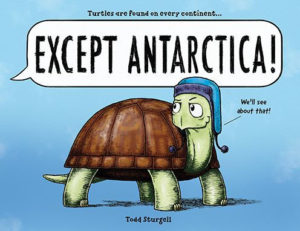
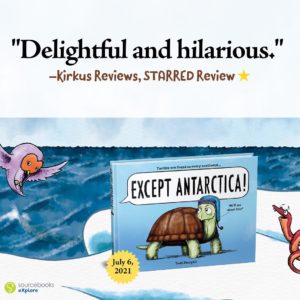
This month’s interview is with Todd Sturgell, an author/​illustrator whose first book, Except Antarctica, hits bookshelves this month. While he’s originally from Ohio and then spent some time in Texas, Todd now lives in the North Carolina mountains with his “wife, kids, and an overactive rescue dog named Max.” Yes, the dog’s name comes straight out of Where the Wild Things Are.

Let’s be honest–anytime you start naming your pets (or children!) after famous picture book characters, you’re committing to a certain path in life. And we’re glad Todd did because his debut book looks terrific. Let’s find out more about it right now!


RVC: When did you realize you were going to do art for a living?

TS: I was either going to be an artist or a paleontologist. Around 10 years old, I settled on art. Up until then, it could’ve gone either way.

RVC: Did you go to school for art or are you self-taught?

TS: I went to East Texas State (now Texas A&M University-​Commerce) for art direction, specifically advertising and design. I’ve really enjoyed all the opportunities I’ve had to illustrate within the advertising and design world. Eventually, I admitted that I’ve got a calling to make picture books, and I needed to get after it.

RVC: How’d you end up in North Carolina?

TD: I worked at a very large advertising agency in Dallas and wanted a change. Since we always loved visiting the North Carolina coast, I started looking for smaller design firms there. I found one, so we moved out. And then the economy tanked, so it didn’t last.

I wasn’t going to go back to a big agency again. I’ve been freelancing since.

RVC: Let’s get to the book, which is called Except Antarctica (Sourcebooks eXplore). What’s it like being a debut author/​illustrator whose book isn’t yet out?

TS: I vary between panic and joy. I’m like, “Am I doing enough? Do I need to reach out to more people? Am I posting enough on social media?”

If I let myself sit back, take a deep breath, and hold my advance reader copy? Then I’m delighted. I’m so happy to be a part of the picture book world.

RVC: The “Am I doing enough?” question is one many writers face. What ARE you doing to help get the good word out about your book?

TS: I have a great marketing team with Sourcebooks–they’ve really reached out to a lot of people and made a lot of connections.

RVC: To people like me. That’s how I learned about you.

TS: That’s good to know! You can see why I’m kind of just following their lead. They find opportunities and ask if I’m interested. And I’m almost always interested.

I’m also part of STEAMTeam Books–it’s a group that supports each other with STEAM-​related book launches. And they’ve been doing this for a couple of years now. We lift each other up and share each other’s social media posts, that kind of thing.

RVC: That’s a terrific idea. But let’s talk about the post-​contract reality a debut author faces. What has surprised you the most about the whole process AFTER signing on the dotted line?

TS: How slow everything moves at the start. And then, when it all comes together, how fast it speeds up. You feel like you’re waiting and waiting and waiting, and then suddenly, okay, it’s almost here, and now you have a million things to do.

I would also say that debuting here on the back end of the pandemic has been something. I don’t know how typical my experience has been in 2021. Is it always this crazy?

I think my next book will feel as much like a debut as this one because the whole process could be so different.

RVC: That’s a good point. Plus, who doesn’t want to have two debuts, right? Back to your book. What’s the elevator pitch?

TS: What if you were watching a nature documentary, and the animals suddenly started doing the opposite of what the narrator says they’d do?

RVC: You’ve got a fun book trailer for Except Antarctica that explains a bit of this, but let me ask it outright–how did the idea for this book come about?

TS: I love nature documentaries, so I tried to expose my kids to as much of that as I could. And the phrase “except Antarctica” crops up over and over. There are so many species found all over the world, and you’ll hear the narrator say, “they’re found on every continent except Antarctica.”

One day, I was watching a show about owls. The narrator said that phrase, and I’m like, just yesterday, I heard that about turtles! Once I connected the concept of habitats to the idea of animals going off script, Except Antarctica was born.

RVC: What’s your favorite thing about the book?

TS: Even though the animals realize maybe they’ve made a mistake, I’m rooting for them the whole way. I especially love how they get to the ocean and the narrator’s like “Yeah, you’re done!” but on the very next page, they’re crossing the ocean! I loved putting that illustration together.

RVC: In terms of Except Antarctica, how will you measure success?

TS: Gosh, I already feel like a success just getting this far!

I hope that it’s successful enough to let me keep making more picture books. But I think the most important measure of success will be if kids–either having this book read to them or reading it themselves–laugh out loud. That’s the win right there. That’s the best type of success for me.

RVC: What was your pre-​contract experience with this book? How did the drafting process go?

TS: I have three other authors in my critique group who really helped the manuscript along. When I first started out, I knew the animals were going to break the mold. Still, it took a couple of versions until I got to the point where they were defying the narrator directly. Once I came up with that, the manuscript in its current form almost wrote itself. I’ve actually been shocked at how few changes I’ve had to make in the text since that point. There was a lot more emphasis on helping me develop the illustrations for these characters.

RVC: So, having a critique group made a real difference.

TS: Absolutely. I had a real sense of the stumbling blocks within the book thanks to valuable input from a lot of helpful people. The interaction with the narrator solved almost all of them! Utilizing a “meta” concept isn’t new or unique, but it was absolutely the right decision for Except Antarctica.

RVC: How many drafts did it take to get to the point where the book wrote itself?

TS: A lot. You’ve got to try different things. There was a point where I had a character who could be found on any continent except Antarctica AND Australia, but he wanted to come along. The others said, “Hey, maybe you should go to Australia first!” because they were afraid of him. That was an interesting little thing, but it really bogged down the book. I had to work that out and get through it before finally dropping it. I go through a lot of these moments where I try different things, and I pull back to see if it works or not. It’s a process.

RVC: Speaking of a process, care to reveal a bit about the actual process you use to produce a picture-​book manuscript?

TS: I’m drawing and writing at the same time. I don’t do one and then the other. It’s not like I develop characters and write or develop the manuscript, and then draw the characters. It all comes together in a storyboard format, rather than a Word document. For me, the art and the writing move forward together.

RVC: Any advice for young writers or illustrators?

TS: When they get started, a lot of people feel very competitive, very protective of their own ideas. The quicker you figure out that most of the people in the kidlit world want to lift each other up and make everybody better, the sooner you start to feel comfortable here. This is a great community. I love almost everyone I’ve met since starting this journey.

RVC: What’s something you know now that you wish you knew back when you first started out?

TS: Worry a lot less about agents and the business, and spend more time focused on craft. Thinking about submissions and gatekeepers felt overwhelming–it probably slowed me down quite a bit in trying to figure it all out. If I had just let some of that fall off, I think I would have enjoyed the process more.

RVC: Last question for this part of the interview. What are you working on now?

TS: My contract with Sourcebooks is for two books. They’d really like to see some of the elements from this book in the next one, so that’s what we’re looking at right now.

RVC: Alrighty. It’s time for the Speed Round. Are you ready, Todd? We’re looking for the opposite of turtle-​slow Q&A here!

TS: Ready!

RVC: Favorite place to go hiking in North Carolina?

TS: Graveyard Fields.

RVC: Best place to get North Carolina BBQ?

TS: North Carolina BBQ has too much vinegar in it for me. There’s a place around here called Haywood Smokehouse that has good Texas BBQ. I love that.

RVC: What secret talent do you have?

TS: I play a pretty mean pirate. I was a pirate guide for a ghost tour one summer!

RVC: Five things we’d see if we sneaked a peek at your writing and drawing studio?

TS:

  1. A mess (incredibly annoying!).
  2. Koh-​I-​Noor drawing pens that I have to clean incessantly, but they’re so great I can’t let them go.
  3. Lots and lots of books.
  4. Club soda. All the time.
  5. My dog, waiting impatiently for me to take him out on a trail.

RVC: What’s a recent picture book that really got your attention?

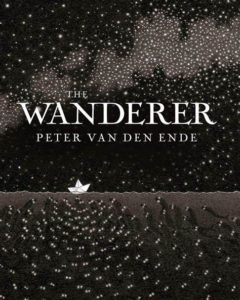
TS: The Wanderer by Peter Van den Ende is stunningly beautiful.

RVC: Your mission as a picture book creator?

TS: I want to connect with readers the same way that my favorite picture books connected with me when I was a kid.

RVC: This was terrific, Todd. Thanks for stopping by and sharing your story with OPB. Best of luck with Except Antarctica!

Author Interview: Nicola Davies

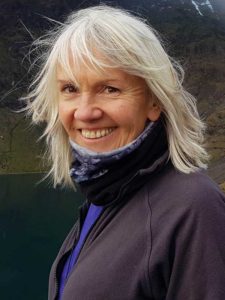
June’s Author Interview is with English zoologist and writer Nicola Davies, who was one of the original presenters for the terrific BBC children’s show “The Really Wild Show.” Nicola got her first pair of binoculars at age eight, and she’s been gazing out at the world of animals ever since, from geese in Scotland to humpbacked whales in NewFoundland to chameleons in Madagascar to bat-​eared foxes in Kenya to saltwater crocodiles in Australia.
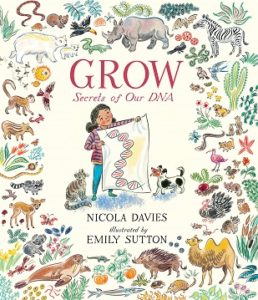
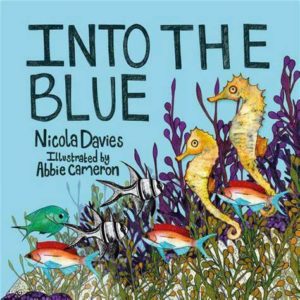
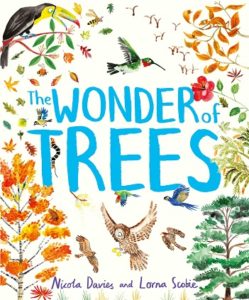
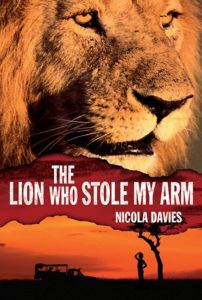
Oh, and she’s written a good number of things along the way, including novels, poetry, and picture books. A few OPB favorites include:

That’s it–thinking about those books again has me excited to hear from Nicola. Let’s get right to the interview!


RVC: Which came first—the love for animals or the love for stories?

ND: I don’t think I could separate them. I came from a family which loved both. My father trained as a biologist and was a keen naturalist but he loved poems and stories too, so information was always imparted in some kind of narrative. My mother was a natural storyteller and instinctively packaged information in narrative. So I grew up with nature poetry and story twined together.

RVC: What inspired you to combine your love of stories with the love of animals?

ND: Entirely intuitively. The natural world is full of ready-​made stories…seasonal cycles, life cycles, nutrient cycles, food chains–all of these are narratives ready and waiting to be retold.

RVC: On a scale of 1 to 10, how interested are kids in animals?

ND: Oh, about 12! I’ve never met a child who wasn’t instinctively connected with and interested in nature. That is the connection that I seek to deepen and strengthen into a lifetime bond.

RVC: Most of your kidlit seems to blend nonfiction and fiction. How do you find the balance?

ND: Narrative is a psychological carrier bag–it can carry real facts and invented ones. But with an invented narrative structure that carries real facts, the narrative itself also has to reflect reality and the factual content you want to deliver. With my hero of the wild series, real conservation stories are told through the medium of invented characters and storylines, but both character and plot are very closely based on real people and events.

The Lion Who Stole My Arm is based on a real conservation project in Mozambique, in the Niassa reserve, and the child at the centre of the story on a real child who was attacked by a lion. The only things I changed were the location of the child to just over the border in Tanzania; the age of my character is 10, the real one 5; and which arm he lost, with the real child losing the left and my character the right. Then I engineered the plot to reveal other background aspects of the real situation. It’s like patchwork!

I did the same with Ride the Wind–a story about a Chilean fisher family who catch an albatross on their long line. It conveys information about the catching of endangered sea birds but also about how some S and C American families are affected by migration to the US. Ditto my book about Hummingbirds.

RVC: Ideally, where do you want those books shelved in the library or at a bookstore?

ND: Anywhere where kids will find them! Ideally two copies–one in fiction and one in nonfiction.

RVC: You’re the first person I’ve interviewed here who worked with/​for the BBC. How did you get that gig, and what was it like?

ND: I was working on a PhD on bat feeding ecology at Bristol University, just a five-​minute walk from the NHU’s home at the BBC in Bristol. When it became obvious that the Tory government were cutting grants for primary research and that, in any case, research would be “preaching to the choir,” I jumped ship and knocked on their door until they let me in. But I wasn’t really cut out for TV–it was very competitive and I’m not good at competing.

I did discover that I could write, so I started writing scripts for the programmes I presented.

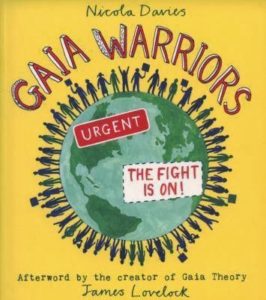
RVC: You’ve said before that “while every book is a story, every book also has its own story of how it came to be.” What’s the story behind Gaia Warriors, which is a book about climate change?

ND: My publisher was approached by James Lovelock who wanted to collaborate with a children’s writer to do a book about climate change. I was reluctant to work with him but I was persuaded, and in the end he just left me to it and we got on fine.

I wanted to do a book that gave children:

  1. the arguments to use to put forward the case to climate change deniers,
  2. hope that action is possible,
  3. examples of interesting ways to live their lives that would be stimulating, satisfying, AND fight CC.

RVC: What’s the most important thing writers should know or understand about creating a picture book that deals with a tough topic?

ND: Do your research. Talk to people who have experienced what you write about even if you also have your own experiences to draw on. Be sensitive, be brave, and remember there are as many ways to tell the same story as there are threads in a spider’s web. Find your way.

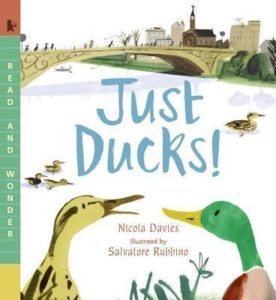
RVC: Your book Just Ducks! came out just a few months back. How do you go about writing a book like that so it’s more than just a pile of duck facts? 

ND: Find the true narrative that carries the facts. In this case it was easy…I really did live in a house by the river (the river Exe in Devon ) and I heard ducks every morning. So everything in that book happened to me multiple times. All I had to do was imagine it happening to a young child.

RVC: You’ve got a very strong view on what narrative is. Care to share it once again?

ND: It’s a piece of writing with a shape. A beginning, a middle, and an end. It should be memorable–i.e. psychologically portable. It should have a clear voice that speaks to the reader. And I like narratives with answered questions and open ends that the reader can think about and engage with.

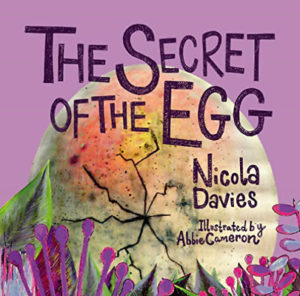
RVC: I’m guessing that the reason you sometimes rhyme—as you do in The Secret of the Egg and other books—stems from your love of poetry. What are some strategies for getting rhyme to really work in a picture book?

ND: Well, the first is to have an editor who lets you do it. Not all allow it.

The second is don’t let the rhyme dictate the thought. Don’t use words you’d never otherwise use just to rhyme (unless you can make a really good aural joke with it). Be super careful with meter…don’t cheat!

RVC: One last question for this part of the interview. In all your experience in writing children’s literature, what has surprised you the most?

ND: I’ve had many lovely surprises from children who respond to and remember bits of my books, identify with characters, and point out things I’ve never thought of. It’s the BEST part of writing for kids.

RVC: Alright. Here we go with the Speed Round! Six fast questions coming at you, starting with…most underappreciated animal?

ND: All the ones that we allow to go extinct before we even named them. All the unseen insects and soil invertebrates that hold ecosystems together, on whom our very lives depend and which we totally ignore. Darwin understood this. That’s why he spent so much time studying earthworms.

RVC: Most underappreciated Welsh food?

ND: Lava bread. It looks a bit like fresh cow poo but is wonderful and very good for you. (It’s seaweed!)

RVC: Which animal would you most want to write a picture book biography about you?

ND:The tiger in my new novel The Song That Sings Us. He’s called Skrimsli.

RVC: Your favorite animal picture book of 2020?

ND: The Lost Spells by Robert Macfarlane and Jackie Morris.

RVC: Your one-​sentence mission as a picture book author?

ND: To fan the spark of childhood curiosity into a lifelong bonfire.

RVC: Best compliment a child reader ever gave you?

ND: About my book The Promise, a very disadvantaged child from a school in Boston said, “THAT BOOK WAS ABOUT ME!” 

RVC: Thanks so much, Nicola! This was terrific.