Editor Interview: Joy Peskin (FSG Books for Young Readers)

Here’s a hearty OPB welcome to Joy Peskin, Senior Executive Editor at Farrar, Straus, Giroux Books for Young Readers, an imprint of Macmillan Children’s Publishing Group.

Joy and I first crossed paths this past June at the WIFYR conference in Utah, where we were both on the teaching faculty (her virtually, me in person). I caught her afternoon Zoom talk to the entire group, and about halfway through I was already mentally drafting the invitation to bring her onto OPB. Yeah, she was great.

So, here we are.

A quick bio for context: Joy has spent three decades in kidlit, moving up the editorial ranks from Editorial Assistant all the way to the top. Her stops include Puffin, Scholastic, Viking, and now FSG BYR. She edits across picture books, middle grade, and YA, and her current picture book work includes the best-​selling Escargot series, written by Dashka Slater and illustrated by Sydney Hanson. She’s also mentored a whole crew of editors coming up behind her, including Kendra Levin.

Alright, on to the questions!


RVC: You were weighing social work against publishing when you graduated. What tipped you toward books?

JP: My parents were willing to pay for what was then the Radcliffe Publishing Course, but not for a social work degree. That’s the honest answer. And I respected it. As a parent now of a 16-​year-​old myself, I get it—it’s not our job as parents to pay for everything our kids choose to do. We get to have a horse in the race.

RVC: As someone with two kids of my own, I say “yep.”

JP: They very graciously offered to pay for Radcliffe, and I took them up on it because I was happy to try out both paths and see which door opened first. Publishing was the door that opened.

What I ended up doing was finding a way to do both. I’ve always done social-​work-​adjacent work as a volunteer, and I’ve always done publishing as a paid employee. Both really matter to me.

One thing I try to convey when I mentor people is that you set yourself up for failure if you think one job is going to satisfy every professional need in your life. Same way you don’t choose one partner and expect them to satisfy every single need in your entire life. You can try. I don’t think it’s going to work.

RVC: What from the Radcliffe course actually stuck?

JP: A number of things, but the one I think about the most is the social element. The director of the program at the time was this amazing woman named Lindy Hess, who has since passed away. And as I recall, Lindy said that if we got into the program and completed it, we’d get a job—it was a job machine in 1996. Publishers recruited right out of Radcliffe. Faxes would come in with job listings and cover the entire wall by the end of the six weeks. You’d just walk up, pick one, and apply.

RVC: WOW. Stories like this just…wow.

JP: But the more enduring lesson was this: we literally had something called Sherry Hour every day. I did not drink sherry at it. I don’t know if any of the other students did. But we were meant to have a little snack and socialize with each other and with the publishing professionals who came to present that day. Lindy told us that was important, and she was right.

I think about that constantly now that we’re all working from home or hybrid. The proximity thing, learning by osmosis—that’s diminished. So the social piece has to be much more intentional now. Junior people have to be more curious and inquisitive. Senior people have to be more deliberate about teaching.

RVC: Amen to that. And speaking of learning from senior people…your first job in New York was at Puffin, and you clearly admired your boss there. What did that early apprentice period actually look like day-to-day?

JP: I remember starting and my boss saying, “Oh my gosh, I’m so glad you’re here—I have a project for you.”

I was like, “I’m going to get a project! An important project! It’s going to be creative!”

And then it turned out the project was: it’s winter, she’s organizing her Bologna schedule, and I need to make a grid and send out a million faxes. This was the olden days. So I had to learn how to use a fax machine, dial internationally, offer people slots, move them around the grid.

That’s the honest picture of starting out. In the beginning, your work is very administrative. Then it slides into a hybrid where you’re assisting some and doing some of your own books. Then when you move up to editor, most people aren’t assisting anymore—you’re doing your own work. At that level, I was at Scholastic, where I got projects handed down from senior people who acquired them and then dropped them onto us as if from the heavens. I didn’t start acquiring my own books until I moved to Viking as a senior editor. I was about 30.

RVC: But you got to run the department at FSG for about 13 years, which sounds pretty terrific.

JP: The big change when I became Editorial Director in 2012 was that I was acquiring my own books, editing my own books, and managing a team. That was 13 years. Now as Senior Executive Editor, I’m back to just acquiring and editing my own stuff and managing an assistant, which honestly is a nice reset. I love the mentorship piece and I still do plenty of that, but there’s something clarifying about being able to focus on just the editorial work itself again.

RVC: Let’s talk picture books specifically. You’ve worked on the Sparkle series with Amy Young, an author-​illustrator. What’s that dynamic like compared to when you’ve got a separate author and illustrator on a project?

JP: I love working with Amy. I worked with Amy years ago when I was at Penguin, and then we did the Sparkle books together at FSG. One reason I love working with author-illustrators—and I’ll admit this is a little selfish—is that it cuts out some of the approvals process. If you’re both the author and the artist, I know you approve the art because you made it! When there’s a separate author, obviously we want them happy with the art too, so we run every stage by them. Happy to do that. Always want to do that. But when it’s a one-​stop shop, it’s just easier.

I also love that author-​illustrators are using both parts of their brain at once. They’re picturing how the art looks and tailoring the text to that. There’s a unity of creative vision.

RVC: You’ve said the freshest picture books bring something new to evergreen topics—first day of school, new sibling, bedtime. What’s a recent example that made you go, “oh, THAT’s how you do this topic differently”?

JP: by Bunmi Laditan, illustrated by Tom Knight. Absolutely perfect example. The ground floor of the story is the classic thing—your child is going from a crib or your bed into their own big bed. Every parent has some version of that conversation. Sometimes kids are excited, sometimes not. It’s a turning point in most children’s lives.

RVC: Here’s the OPB review of The Big Bed. It’s an interesting book for sure.

JP: Bunmi took that common thing and totally inverted it in a genius way. Instead of the parents sitting the little girl down to say, “You’re a big girl now, time for a big bed,” she flips it so that the little girl goes to the dad and is like, “Dad, we need to have a talk. It’s been the three of us in this bed—you, me, and Mom. There’s not room for you anymore. This is your own big bed, which will actually be a camping cot, so I can be with Mommy.”

Genius. We all get it, but I’d never seen it done that way before.

RVC: Agree. But back to mentoring. You’ve been on both ends of the equation. What makes it work in publishing specifically?

JP: Publishing is an old-​fashioned apprenticeship. You don’t need a graduate degree to do it—some people have one, and that’s fine, but you don’t need one. You can’t just jump into a surgical suite and start cutting people up without a medical degree. But you can, in fact, jump into publishing with just a bachelor’s and learn the whole thing on the job. So mentorship has to be baked in.

Some people are more inclined to receive it or give it, based on a lot of factors. For me, I’ve been really lucky to identify people I wanted to learn from. Who you end up reporting to can really determine your path. But sometimes it’s not even your boss—it’s another senior person in the group.

RVC: Such a great point.

JP: What worries me now is that we’ve lost so much of the proximity piece. When I started, I sat in a cubicle right outside my boss’s office. I listened to everything she said because she was right there. That’s how you learn by osmosis. Now we don’t have that. So we have to be much more intentional—senior people have to actively teach, and junior people have to be genuinely curious.

AI is going to make this worse if we let it. The question with AI is: is it going to make us more human or less human? It could make us better at connecting. But right now I think it’s short-​circuiting our brains. We can’t forget how to be people.

RVC: Kendra Levin (VP and Editorial Director at Simon & Schuster Books for Young Readers) has publicly credited you as a mentor. From your side of that mentorship, what did you spot in her early?

JP: Kendra is my heart. I was texting with her today. I met her when she was 19—and because everybody stays the age they were when I met them forever, in my mind she’s still probably 19, although she’s not.

David Levithan had hired her as an intern at Scholastic, and she came to work in my office on Fridays. I had this weird office that had been a copy room, no windows, but I had a long desk, so David asked if she could sit with me. And we just hit it off right away. She knows I’ve told this story a million times, but sometimes I’d come in cranky—I was in a relationship at the time with a lot of ups and downs—and Kendra’s presence would just pry me out of whatever mood I was in. She was warm and delightful and smart and great at the work.

RVC: Who doesn’t love people like that?

JP: So first I connected with her as a human. Then when I moved to Viking and brought her over as my assistant, she was just so impressive at the work. And what really stood out was this: we’d have a check-​in and I and the other folks she reported to would be like, “You’re amazing, you’re the freaking best.” And she’d say, “Great. Are there specific ways I could grow and do better?”

She always wanted the critique. She had genuine passion for the work and this deep desire to keep learning. She never resisted the praise, but she wasn’t satisfied with just praise. That combination told me everything.

RVC: Now I want to hang out and work with Kendra. But back to you and your career–FSG has a clear identity as a publisher. In the picture book space specifically, how do you and your team define what feels like an FSG book versus what belongs elsewhere?

JP: What I really value about FSG—and it’s been this way from the start, even though I’m on my fourth boss over the years—is that the books I do are appreciated.

I brought something to acquisitions recently and people were like, “This is such a Joy Book.” And I felt very seen. Because a book I’m drawn to isn’t a specific genre—it’s a sensibility. It’s what’s baked into who I am and what I care about. And the house gets that. I don’t feel pressure to chase things outside my range.

RVC:…thinking hard about what’s a Ryan Book…hmmm…

JP: For picture books specifically, the example I’d hold up is the Escargot series by Dashka Slater. It came in through her agent, Erin Murphy, as this quirky little one-​off. A snail breaking the fourth wall, trying to get to the end of the book, moving slowly. Voicey and funny. It came from a really organic place for Dashka—she’d brought a snail puppet to author visits for her other books and just started talking in this snail voice as a gimmick, and kids loved it. So the book grew out of that.

RVC: For the deep dive on agent Erin Murphy, here’s the OPB interview with her. Back to you, Joy!

JP: I like an organic build. I tend to be much more comfortable with projects that start as some unusual thing I liked and then other people liked it too. Not a too-​big-​to-​fail thing where somebody spent $6 billion on a 40-​book series and then everyone’s job is to like it, so you can’t get sincere answers about it. That doesn’t create good art.

Escargot just did its thing, and now we’re building a 20-​book series. That’s the kind of thing I love.

RVC: As do tons of readers, too. But let’s shift to talking about the WIFYR (Writing and Illustrating for Young Readers) conference now, since that’s where I “met” you. Sort of. You had a room full of writers hanging onto your every word despite you Zooming in. What’s the piece of advice you find yourself giving—both to writers and to the editors on your team?

"Make It Work- Tim Gunn" Poster JP: “Make it work.” That’s straight from Tim Gunn on Project Runway, which I’m sure my kids have watched too many episodes of.

RVC: Me too!

JP: Tim would go up to a designer working on some assignment—make a dress out of stuff you found in a dumpster, whatever—and he’d say, “Tell me about this.” And then he might say something like, “I’m concerned, I don’t really get what you’re doing here…” But if the person loved it, he pushed them to, you know, make it work.

What I took that to mean is: All I can do is tell you if it’s working for me. If you give someone that feedback, they’ll either say, “Yeah, I agree, this is not coming together”—and then great, we’re on the same page. Or they’ll say, “No, I really love this.” And then it’s like: Okay, it’s not working now. If you love it, let’s find a way to make it work. If you can’t find a way, do something else.

I give some version of that advice all the time. “It’s not working for me. That doesn’t mean you can’t make it work. I don’t know exactly how, or maybe I have a couple ideas too. But—make it work.”

RVC: Preparing for a conference like WIFYR: how does that compare to coaching an author through a manuscript in-house?

JP: I take WIFYR seriously. What’s heartbreaking about the industry is that not every organization out there is ethical. Some places make promises they can’t keep—pay us a thousand bucks, come to this workshop for the weekend, we’ll get you published. Not possible.

WIFYR is the opposite. It’s best in class. So when I’m invited, I really prepare.

RVC: What an endorsement!

JP: For the one-​on-​one critiques, I’ve drawn a lot from my professional coaching training, which I did at Rutgers—the co-​active approach. You meet with the person, you listen, and then you basically ask them: What would feel like progress to you? What is it you want? Because not everybody wants the same thing. Some people want kind of what you’d expect—what did you think, what stood out, what’s not working. But some people are basically like, “Just tell me: Do I suck at this? Should I never do this again?”

So I don’t go in assuming what somebody wants. My goal is to be as clear and kind as possible while taking into account what the person is actually there for. That approach translates directly to the in-​house editing work, too.

RVC: Best thing a kid reader ever said about a book you worked on?

JP: This is easy. The 57 Bus by Dashka Slater—the same author as Escargot, a very multi-​talented writer. The book comes out for its 10-​year anniversary in Fall 2027. It’s a nonfiction YA about two teens whose paths cross when one of them—Richard, a Black teenage boy from a disadvantaged background—sets the skirt of the other teen, a white middle-​class transgender youth, on fire on a bus in Northern California. The person whose skirt was set on fire is injured but recovers. It’s about that moment, but it’s also about what came before and after, and about race, class, gender, forgiveness, repentance, paying your debt.

Early on we got a letter from a reader—a white middle-​class teenage boy—who said, essentially, that he’d gone into the book expecting to have a negative reaction to Richard. Like, how could you do what Richard did, how could you harm someone in that way? But he came out realizing he could have been Richard. Because Richard is essentially egged on by his friends to do a dumb thing. And I have a teenage boy living in my house. They can be stupid, God bless. They’re very peer-​motivated to do silly things because their friends think it’ll be funny. Richard thought it would just be a little spark. He didn’t expect the skirt to go up in flames.

That “there but for the grace of God go I” moment—a book making a teenager have that realization? That’s the whole thing right there. That’s why we do it.

RVC: Great answer, Joy. Let’s ask one more to wrap up this part of the interview. What’s a question no one’s ever asked you in an interview that you wish they would?

JP: “What’s the one that got away?”

RVC: What’s the answer?

JP: It’s Love, Aubrey by Suzanne LaFleur. It was a middle-​grade novel, published in 2009, I think. I bid on it when I was at Viking. I still think about it. It was just the most stunning story about love and loss and recovery.

RVC: Alright, Joy—time for the SPEED ROUND. Zippy-​quick questions, snappy-​fast answers, please. Ready?

JP: Ready.

RVC: Sparkle the Unicorn but make it a cocktail. What’s in it?

JP: Oh, that’s so fun. I’m not great at cocktails—I’m a gin and tonic or whiskey on the rocks person—but okay. It would be one of those cocktails that’s a little blue and a little yellow. A little bubbly and froofy. It would definitely have a cute little toothpick in it with a unicorn on top. Fruity but light. Very summery.

RVC: If your inbox had a theme song, what is it?

JP: I can’t quite land on a song, but I have a visual, which is: a leaf pile, and I’m raking, but the leaves keep falling. So maybe “Hazy Shade of Winter”? Something seasonal, something fall. But cheerful. There are no grudges. I’m just always in there raking.

RVC: A picture book from the past year that deserves more buzz?

JP: Finding Forgiveness by Rebecca Gardyn Levington, illustrated by Diana Mayo. It got some very nice notice—it was a Sydney Taylor Notable—but I absolutely love it, and I think it deserves more. It’s a perfect example of what I always talk about with picture books: three points of entry.

One, it’s Jewish-themed—and specifically about Rosh Hashanah, which is underrepresented (bonus points for not being about Hanukkah or the Holocaust, no offense to either).

Two, it’s a sister story, and I love a good sister story.

Three, it’s a conflict story—the sisters have gotten into a fight the night before Rosh Hashanah and have to make up.

Plus there’s beautiful back matter about the tradition of Tashlich, and about how to make a good apology. Because we make kids say they’re sorry all the time—you hit your brother, you broke your sister’s necklace, say you’re sorry. But what does it actually mean to make a repair? To understand the difference between impact and intention? That book gets at all of it.

RVC: The single most useful habit an editorial assistant can build in their first six months?

JP: I have a new EA right now—Cassandra Gutterman-​Johns (shout out! she’s crushing it)—and one of the things she’s doing so well is asking questions designed to help her understand me, and the other editor she supports, and how we each work. Not just “How do I do this task.” She’s taking over a tracking system from my previous assistant, and she said, “If it’s okay with you, I’m going to update it. But first I want to know what parts of it are useful to you, because I don’t want to change those.” I was like, I love you.

Not romantically. HR, relax.

But that’s such a good question. She’s not upending anything on day one. She’s learning the job first, then thinking about how she can tweak it for her own workflow and for what her bosses need. That’s the whole game.
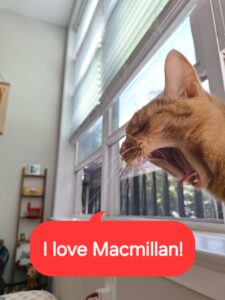
RVC: So you’ve got Pablo the sleepy cat, Pixie the fluffy guinea pig, and Clemmie the camera-​shy guinea pig. Here’s the ultimate question. Guinea pigs–great pet or the GREATEST pet?

JP: That’s the hardest question you’ve asked me, Ryan.

Pablo is a prince among cats. But I feel like the cat-​plus-​guinea-​pig combination is the lifestyle I want to have until I’m dead. Guinea pigs are the unsung heroes of pets. I bring my pigs outside to graze in the park, as anyone would, and when I went to our local town festival—which is called, I’m not kidding you, Maplewoodstock—I brought them out in their little outdoor pen, and I met probably 200 people of all ages and backgrounds who went absolutely out of their freaking minds for the pigs. They make people happy. They bring people together.
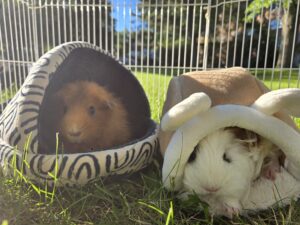
Everybody should get at least two—they’re herd animals. And they’re wasted on children. Do not throw them in a classroom. Be an adult. Get a couple of guinea pigs.

RVC: Well said. Thanks so much, Joy!
Editor Interview: Maria Correa (Random House Children’s Books)

Maria Camila Correa is an editor at Random House Children’s Books, where she acquires and edits innovative and engaging picture books. With experience in multiple aspects of publishing—including editing Dr. Seuss books and international acquisitions—Maria brings a global perspective and an eye for storytelling that captivates young readers.

In addition to her editorial work, Maria is also an author and translator. She’s written several Little Golden Book biographies, including Selena, Bob Ross, and Rita Moreno, as well as Spanish Is My Superpower! As a translator, she’s worked on books like Mi hermano está lejos (My Brother is Away) and Mi Little Golden Book sobre Taylor Swift.

With her unique perspective as an editor, author, and translator, Maria is helping shape the future of children’s literature. Let’s dive into her journey and what excites her most in new projects.


RVC: When you were a child, what role did books play in your life? Did you have a favorite that shaped your love for storytelling?

MC: Books completely shaped the way I saw the world. I was (am?) an only child, and my parents were both big readers—my dad was a journalist, and he read stories to me very theatrically, acting them out and doing voices, so the stories came alive. He also frequently took me to puppet shows, which I loved—and still do (I just saw Song of the North, an Iranian epic told through shadow puppets, at the New Victory Theater in NYC).

I was born and spent the first seven years of my life in Colombia, and a lot of the books I was exposed to were Spanish translations of European books; my very favorite was Ophelia’s Shadow Theatre by Michael Ende, which is now sadly out of print. It was very dark for a picture book—about an old lady who, after being fired from her job in a theater, takes home the shadows left behind from all the plays. Without a job, she becomes homeless, and the shadows form a traveling theater and stage plays to help her earn a living. In the end, the old woman takes in the ultimate shadow—Death.

RVC: Wow, what a story!

MC: Obviously, this isn’t the kind of story we tend to publish here in the US, but it moved me deeply, and I think this kind of emotional depth is something I still look for when acquiring; the memory of this experience also informs my belief in kids’ ability to engage with complex themes, and in their aesthetic sensitivity.

RVC: Let’s talk more about what informs your work. Your academic background is in photojournalism and children’s literature. How do these two fields influence the way you think about picture books?

MC: Well, photojournalism sharpened my eye and gave me a language with which to talk about visual storytelling that is transferable to picture books. It also taught me to be observant, and to consider different ways of approaching the same subject. The master’s in children’s literature gave me context. It was a master’s in education, and there was also a focus on literacies—literacy acquisition in the traditional sense but also visual and digital literacies—so that’s another perspective from which I try to approach my books, especially early readers.

RVC: Your Master’s dissertation focused on postmodern picture books and Suzy Lee’s wordless Border trilogy. What about that type of storytelling fascinates you?

MC: I love storytelling that is open to interpretation. Wordless picture books invite readers to co-​create meaning, and they can be incredible tools for encouraging critical thinking. Without text to guide them, the reader has to determine for themselves what is happening, what the visual cues signify—and each reader will take something different from the story. In Shadow, Mirror, and Wave (aka The Border Trilogy), Korean artist Suzy Lee uses the gutter of the book as a delineation between opposing forces (in Shadow and Mirror, she plays with the real vs the imaginary). My dissertation explored these books from a psychoanalytic lens, which was a fun exercise (she says in hindsight), but at surface level these stories are very accessible for kids—in some ways more accessible than a traditional picture book, since they allow readers to engage with the story without text as a barrier.

RVC: Thanks for this quick dive into the interesting work of Suzy Lee! Now, you’ve worked in both the UK and US publishing industries. What are some key differences in how picture books are developed in each market?

MC: I’d say there are more similarities than there are differences, but two come to mind. One is the cadence to which we publish; in the UK, production timelines are often determined by book fairs, so that projects are ready to be shared at Bologna or Frankfurt, and in the US, that timeline is established based on the publication date of the book.

The other difference is that there is just more money in US publishing—and this is reflected in everything from industry salaries to author and illustrator advances, and, in my experience (though I worked for a then-​indie publisher in the UK that was particularly adept at this model), this is an incentive for British publishers to have their own staff write/​develop books in-house.

RVC: You acquire about 10 picture books per year at Random House. What’s the first thing that makes a manuscript stand out to you?

MC: I look for originality—is there anything new about the concept/​execution, or is this something I’ve read a thousand times before?

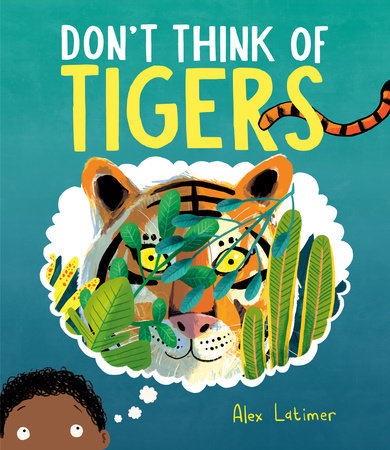
Don't Think of Tigers by Alex LatimerRVC: How do you balance acquiring books that feel fresh and original while still being accessible to young readers? I’m thinking about books like Floor It and Don’t Think of Tigers.

MC: Well, I try to remember the reader, and the experience of reading a picture book, which is usually a shared experience between an adult and a child. Originality is not at odds with accessibility—it can be, if you get really avant-​garde, but even though I personally love those very strange and experimental books, I want the books I publish to be enjoyable to kids first and foremost. I like picture books that are funny and playful and irreverent—that wink at the reader mischievously instead of trying to teach them something.

RVC: You’ve edited Dr. Seuss books, including How the Grinch Lost Christmas! What was it like working within such an iconic brand?

MC: Honestly, it was a full-​circle moment for me. I remember reading Green Eggs and Ham in ESOL class when I moved to the U.S., so having the chance to create new Seuss stories is very special—and I say “is” because I’m still working on a new line of books called Seuss Studios, where we find emerging author-​illustrators from diverse backgrounds and give them access to unpublished Dr. Seuss sketches, which they use as inspiration for their own stories. It’s a cool project that mixes brand legacy with the creators’ unique artistic vision and personal background, and it’s been very exciting to be a part of it.

RVC: That sounds fun! Let’s talk a bit more about emerging authors. What’s something about editing picture books that surprises most debut/​emerging authors?

MC: The timeline! Most picture books publish at least two years after being acquired, so it’s a long, drawn-​out process. When an editor signs up a book, they are committing to spending the next few years of their lives working on that project with that creator.

RVC: What’s the most common revision note you find yourself giving authors?

MC: Let the art say that.

RVC: What kinds of picture books are you hoping to acquire next? Any themes, formats, or storytelling styles you’d love to see?

MC: I’m really intrigued by the idea that the popularity of horror will trickle down into the picture book space, and I’m open to seeing darker, creeper stories that still feel age-​appropriate for kids. I’m also looking for stories by Latin American creators that aren’t necessarily about that cultural experience and that don’t feel like they pander to white readers.

RVC: In addition to editing, you’ve also written several Little Golden Book biographies. What drew you to writing nonfiction for young readers?

MCC: I enjoy the research, and they have a built-​in narrative arc, so in that sense I find them less challenging than writing fiction. But I also think it’s rewarding to shed light on figures whose lives kids can draw inspiration from.

RVC: You’ve translated books like Mi hermano está lejos (My Brother is Away) and Mi Little Golden Book sobre Taylor Swift. What do you find most rewarding about translation work?

MC: Expanding the audience for any book is incredibly rewarding, as is the feeling of having understood and captured the author’s intention behind the original work.

Lately, I find myself thinking about the rise of AI and the threat this poses to translators, but translation is an art—it isn’t mechanical. As Japanese translator Fischer Udagawa said in a recent  PW article, “a translator translating an author’s prose to move an audience is doing something fundamentally creative and artistic, like a musician playing a composer’s piece or an actor speaking the lines of a playwright.”

I am very passionate about the role of translated literature in encouraging cross-​cultural dialogue, and I think translated children’s books open kids’ minds to other experiences and ways of seeing the world. I think, as an industry, we should be looking to other cultures and translating more books into English.

RVC: What’s the biggest challenge when translating a picture book? Are there specific things that are harder to adapt between languages?

MC: Translating rhyme is always challenging but can be equally rewarding. Idioms and slang are also difficult to translate—you have to find an approximation that captures the essence or vibe of the original rather than the literal definition.

RVC: As someone who is not from the US, why do you think it’s important to tell stories by writers from different backgrounds and experiences?

MC: I think editors and publishers have a responsibility to reflect the richness and diversity of the world kids are living in. Especially now, when those books are being challenged and banned. Stories make us feel connected and remind us of our humanity, and by presenting kids with a multiplicity of perspectives, we cultivate empathy.

RVC: What is it you think is special about the picture book as a format?

MC: Picture books are limitless in potential—the dialogue and tension between text and art makes them a uniquely powerful reading experience. They also tend to be quite short, and I love shortform storytelling because it forces the creator to distill their ideas into their most essential form. And often (and certainly in my case), picture books are the foundation for a lifelong love of reading.

I love that Mac Barnett, who was recently named the National Ambassador for Young People’s Literature, is celebrating picture books with his platform Behold, The Picture Book! Let’s Celebrate Stories We Can Feel, Hear, and See.

RVC: One last question for this part of the interview. What upcoming projects at Random House are you especially excited about?

MC: I’ll call out a picture book publishing each season next year: in Spring, I’m excited about Croûton, a very charming picture book about a shelter cat (Croûton) who thinks she’s the one adopting her human; in Summer, To Knit a Ghost features a little witch instructing readers on how to literally knit a ghost, featuring funny and witty interjections by her ghost friends; in Fall, there will be a sequel to Alfie Explores A to Z, an incredibly detailed seek-​and-​find, this time featuring escaped dogs and time travel.

(I am so grateful to get to do what I do.)

RVC: Alright, Maria—it’s time for the fast and fun LIGHTNING ROUND! Super-​quick answers only! Ready?

MCC: Come at me, Ryan.

RVC: What’s your favorite punctuation mark?

MC: The question mark. The design is—let’s face it—sexy, and it signifies curiosity, which—let’s face it—is also sexy.

RVC: You’re stuck in a library overnight—what section are you exploring first?

MC: Picture books (surprise, surprise!).

RVC: What’s a picture book title that would make a great band name?

MC: Julián Is a Mermaid.

RVC: You can collaborate with any historical figure on a book—who’s your pick?

MCC: Frida Kahlo.

RVC: A picture book from your childhood that still holds up today?

MCC: Frog and the Stranger by Max Velthuijs.

RVC: What’s one word you’d use to describe the PERFECT picture book?

MCC: World-​expanding.

RVC: Thanks so much, Maria!

Picture Book List: 4 Picture Books that Kidlit Editors Often Mention—and Why They’re So Good

While classics like Where the Wild Things Are often get the spotlight, there are many other picture books that kidlit editors frequently recommend and reference for their unique qualities. These books simply have something special about them that makes them invaluable resources for teaching, reading, and sparking joy.

So, instead of doing my normal industry insider interview this week, I’m going to share four picture books that I hear kidlit editors talk about a lot. And I’m including a few of the main things those editors often say about these books.

**If OPB readers enjoy this kind of access into what editors are thinking/​saying, I’ll look into doing more of this from time to time. And perhaps I’ll share some of the picture book titles that I frequently talk about and recommend, too.**


Alma and How She Got Her Name by Juana Martinez-Neal

Why Editors Love It:

  • Cultural and Personal Identity: This book’s focus on a young girl discovering the stories behind her names creates a rich, relatable exploration of heritage. Editors often mention its power to foster pride in one’s background and spark discussions about personal identity in a natural way.
  • Illustrative Details: Martinez-Neal’s illustrations, created in soft, warm tones and detailed pencil, evoke a sense of intimacy and family warmth. The textures and gentle lines make each page feel personal and inviting.
  • Conversation Starter: The book naturally invites readers to think about their own names and the stories they carry, making it a great tool for classroom activities and family reading time.

The Bear and the Piano - Scholastic Kids' ClubThe Bear and the Piano by David Litchfield

Why Editors Love It:

  • A Story with Layers: Litchfield’s tale explores ambition, friendship, and the bittersweet nature of success. Editors find it compelling that the story can be appreciated on different levels, offering something new for readers as they grow older.
  • Visually Stunning: The illustrations are a blend of light, color, and texture, creating a sense of magic that captivates the eye. Litchfield’s art has an enchanting quality that complements the story’s emotional arc, making it a book editors often recommend for its artistic merit.
  • Emotional Range: The narrative carries readers through a journey of joy, loss, and fulfillment, demonstrating how picture books can touch on complex emotions in a way that feels genuine and relatable.

The Invisible String by Patrice Karst, illustrated by Joanne Lew-Vriethoff

Why Editors Love It:

  • Universal Emotional Appeal: This book addresses the concept of an unbreakable bond between loved ones, no matter how far apart they may be. Editors value how it introduces the idea of emotional resilience and comfort in an accessible way that resonates with children and adults alike.
  • Simple Yet Powerful Message: The story’s clear and heartfelt message about connection makes it a favorite for social-​emotional learning. Editors point out how The Invisible String is often used as a resource to help children navigate feelings of separation or loss.
  • Approachable Illustrations: Lew-Vriethoff’s art complements the story with warm, friendly illustrations that depict diverse characters, making the story relatable to a wide range of readers. The balance between text and illustration is seamless, enhancing the impact of the book’s comforting theme.

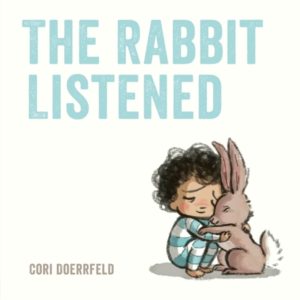
The Rabbit Listened by Cori Doerrfeld

Why Editors Love It:

  • Simple Yet Profound: The text is simple, but its impact is significant. The book teaches young readers the power of empathy and listening without offering solutions. Editors admire this as a masterclass in using simplicity to convey deep emotional truths.
  • Universally Relatable Theme: The book’s exploration of grief and the different ways people respond to loss resonates with readers of all ages. Editors often highlight how it encourages conversation between adults and children about emotional resilience and support.
  • Illustrations That Amplify the Message: Doerrfeld’s gentle, expressive illustrations subtly add to the story’s emotional weight without overpowering the text. The use of space and character expressions enhances the message of understanding and connection.

These four titles serve as excellent examples of how picture books can be simple yet profound, funny yet wise, and always impactful. Whether you’re revisiting these stories or discovering them for the first time, they remind us why well-​wrought picture books hold a special place in the hearts and minds of readers of all ages.

Editor Interview: Kathleen Merz (Eerdmans Books for Young Readers)

Kathleen Merz - Editorial Director - Eerdmans Books for Young Readers ...Welcome to Kathleen Merz, Editorial Director at Eerdmans Books for Young Readers. We bumped into each other at the ALA conference a few months back in San Diego, and hearing her speak about her books and their creators told me all I needed to know–she had to join me for an OPB interview.

What do we need to know about her before we dive into the interview? Try this!

Kathleen joined Eerdmans in 2009 and has since worked on numerous award-​winning titles, including books that have been awarded the Batchelder, the Sibert Medal, and the Caldecott Honor. With a background in English and linguistics, she has a particular love for translated works and nonfiction picture books. She’s drawn to stories that celebrate diversity and thoughtfully address contemporary social issues in ways that feel organic, compelling, and honest. Outside the office, you can usually find Kathleen enjoying the outdoors in Michigan—whether she’s biking, kayaking, camping, or curled up in a hammock with a good book.

With that, let’s jump right into the interview!


RVC: Let’s circle back to the beginning. At what point did you realize you were going to have a career in books?

KM: I’ve been a literature nerd since high school. In college, I was an English major with a linguistics minor and a Latin double major. When you’re an English major, everyone always asks, “What are you going to do with that—teach?” I knew teaching wasn’t for me, but I was interested in publishing. Senior year, one of my professors passed my resume to someone at Eerdmans, where there was an opening in the children’s department. I hadn’t seriously considered a career in children’s literature before, although I’d taken a course on it, but I jumped on the opportunity. I’m so happy I did because I love it and can’t imagine being as happy in any other branch of publishing. Despite the uncertainties, thin margins, and all that, it’s been a great fit.

RVC: Your story is a bit unusual! Most people in the industry hop around different places, but you’ve been with Eerdmans for 15 years. What’s kept you there so long?

KM: I know, it’s rare to stay with one publisher for so long. I love that Eerdmans is based in Michigan, which is my home state, and I like working for a small indie press. The team is great, and the books we publish are unique—quirky international titles, beautifully illustrated works, and thoughtful stories. Being part of a small press means I get to have my hand in everything, which I love. I feel fortunate to have stumbled into this job.

RVC: What does it mean to be an Editorial Director, and what role do you play in submissions at Eerdmans?

KM: We’re a small team. It’s me, our Associate Editor, our Art Director, our Publisher, and the sales and marketing team we share with the rest of the company. In my role, I manage the editorial side of the program, and some parts of the program as a whole.

For submissions—we’re open to unsolicited submissions, and our guidelines can be found on our website. Our Associate Editor does the first read of most of those unsolicited submissions and filters them through. I work on every project we publish, though, whether I take the first read through it or not. (If submissions to us are simply addressed to “Acquisitions Editor,” they’ll find their way where they need to.)

RVC: How many books do you publish per year, and how many submissions do you receive?

KM: We publish around 18 to 20 books a year, with two seasons of about 8 to 10 books each. Over half of those come from international publishers, so we’re looking at just 2 or 3 U.S.-originated books per season. In terms of submissions, I’d estimate we receive about 3 to 6 submissions a day. Out of all those, only a small handful—maybe one every couple of years—makes it from the slush pile into publication.

RVC: What’s the process like for acquiring books from other countries? How does that happen?

KM: A lot of it happens through international book fairs, especially the Bologna Book Fair, which is a major event for children’s publishing. Our publisher attends, and she has about 50 meetings over four days with different agents and publishers. We also receive projects year-​round. We’re always on the lookout for publishers around the world who are doing interesting work. A lot of these books happen because of relationships—connections that we create with publishers, agents, or translators whose projects we admire and whose taste we trust.

RVC: You seem to have a soft spot for translated books. What’s the appeal?

KM: I love them because they open up a bigger world. One of the best things children’s books can do is crack open a wider world for young readers, introducing them to new perspectives, experiences, and ways of living. Translated books offer that in spades. And while these books showcase differences, they also highlight our shared humanity. In a world where there’s often fear of the “other,” international book can remind us of powerfully of what connects us all.

RVC: Can you share a book that illustrates this effectively?

KM: Absolutely! One book we’re publishing is The Cat Way, which is a translation from Swedish that tells the story of a character who goes for a walk each day with their cat. They’re always the one to lead—until one day the cat asks, “Why do you always get to lead?” The next day, the cat leads the way—down paths the human would never have chosen to take. But it turns out there are some beautiful surprises that come with letting go of control. It’s quirky and gorgeous, and I hope it will make readers stop to ponder what life might look like if they’re willing to see things from other perspectives.

RVC: Let’s talk about your editorial style. How do you approach working with authors, especially for translated projects?

KM: No matter the project, the editorial process moves from the big to the small. We start with macro edits—overall structure and flow—then move to more granular things like line edits and copy edits. For translated books, we’re usually working with books that have already been published—so those big-​picture edits have already been done. We usually can’t change much at that level, though there are exceptions. So for translations most of my work is on the level of line edits and copy edits. For U.S.-originated projects, I’m doing all the different levels of work.

For any book I’m working on, I see my role as a curious, engaged reader. I pay attention to how a text holds my attention, and I look for the places where I’m pulled out of a story because of issues—whether it’s inconsistencies or awkward phrasing or confusing language. I try never to tell an author exactly how to rewrite. At the end of the day, it’s their writing, not mine. But I can ask questions, and offer some potential ways forward—and hopefully in the end the text is stronger than either of us could have found our way to on our own.

RVC: What’s a book you’ve worked on recently that challenged you in unexpected ways?

KM: Every project has its own set of unique challenges. Maybe the challenge is getting a character’s voice just right, or making sure the pacing doesn’t lag, or figuring out how to translate onomatopoeia or wordplay that works differently in another language. The fact-​checking that nonfiction books require always adds an extra layer of complexity, and often sends me down editorial rabbit trails that I might not have anticipated. We spent more than a few hours checking and re-​checking several pages of scientific names for Kingdoms of Life. And I know way more about Ediacaran lifeforms than I would have if I hadn’t worked on How the Sea Came to Be!

RVC: What was the first picture book you ever worked on?

KM: The first book I remember working on—and then getting to hold in my hands when it arrived from the printer—was a collection of stories about saints, written and illustrated by Ruth Sanderson. We had previously published it and were reformatting it, so I only did some light edits, but I still remember that first time I got to feel the thrill of holding a book I helped make.

RVC: What was it like working on The Right Word, a Caldecott Honor book?

KM: It’s still one of my favorite projects. Jen Bryant and Melissa Sweet are brilliant creators and wonderful to work with. Jen and Melissa had worked together on A River of Words before, so they had a strong rapport. The process was very collaborative, with lots of revisions. Peter Mark Roget had a life jam-​packed with fascinating details, so we had a lot of work trimming the story down to the core material. There was a lot of back-​and-​forth, shaping and honing the story and the art, and seeing it come together was just beautiful.

RVC: What do you think of the current state of children’s literature?

KM: I love that the industry has finally recognized the need to reflect the full range of people reading these books. The push for diversity and inclusivity has reshaped books being published—it’s been a long time coming and there’s still so much work to do (especially diversifying the industry itself), but it’s exciting and necessary work. It’s opened the door for a much more interesting range of stories to be told.

At the same time, the rise in book bans is incredibly frustrating. It’s another huge issue in the industry right now. I give credit to authors and publishers for standing their ground and continuing to publish important books despite the challenges, but there’s inevitably some quiet censorship that happens anyway. Educators and librarians are having to be much more cautious about the books they order, and that affects publishers across the board. And so many professionals risk losing their jobs if they dare to speak up. This is a major ongoing challenge that we all have to keep fighting against.

RVC: Since COVID, I’ve always tried to ask a health and wellness question, so here’s yours. What do you do to recharge when you’re not working with books?

KM: Anything that I could do outside. I love backpacking, camping, biking, and oh…I just had the trip of a lifetime!

RVC: Do tell!

KM: My dad grew up in California, and when he was in his early 20s, he backpacked to this one lake in the Sierras a couple times. For as long as I can remember, ever since I was a little kid, I remember him talking about Sky Blue Lake, and my sister and I have always wanted to go back there with him. Last month, we finally made it happen. We went backpacking up in the Sierras with my dad to this place that he’d gone to decades ago, and it was an incredible trip. Our world is staggeringly beautiful, and I love getting the chance to go out and see parts of that.

RVC: What’s one thing you wish literary agents understood better about your job?

KM: How guilty I feel not getting back to them more quickly! I wish that I were able to answer all the emails I get as soon as they land in my inbox, but…you know.…

Thankfully, most people are pretty gracious about that.

RVC: I quite agree. Most agents are terrific. Now, what’s the most common misconception people have about editors?

KM: Sometimes, especially with early-​career writers, I notice certain personalities can be very protective of their writing, even threatened by suggestions for change. I get it—it’s tough because this work is their baby, something they’ve spent months or years on. What I often want to gently whisper in their ear is that we’re all on the same side. As an editor, my goal is to help make the best book possible and ensure it finds success in the world. I’m human and fallible, and I have limited time, which brings certain restrictions, but at the end of the day, my aim is the same as theirs: to create the best book we can.

RVC: What’s the most important thing people should know about Eerdmans?

KM: We’re small, we’re independent, and having such a small list means we’re deeply invested in every book we publish. Bigger publishers have their A, B, and C lists, where only the top books might really get much focus. But since we only publish 8 to 10 books a season, they all have to be good, and they’re all very important to who we are. We tend to keep books in print for a long time. We’re committed to taking on projects that really stand out, and doing them justice by making the highest-​quality books we can.

RVC: Complete the following sentence: “Kathleen Merz is an editor who…”

KM:…is very passionate about the books I work on. I love the chance to continue learning and discovering stories I didn’t even know were out there.

RVC: It’s brag time! What are some forthcoming books you’re excited about?

KM: One book from our Spring 2025 list that I’m particularly excited about is A Universe of Rainbows, a poetry anthology by Matt Forrest Esenwine, illustrated by Jamey Christoph. It’s gorgeous and explores all the different ways rainbows appear around the planet—the rainbows in the sky you think of first, of course, but also rainbows in rivers and hot springs and mountains and plants and animals. It’s a wonderful cross-​section of our planet’s beauty, and along with the poems there are sidebars and back matter full of information for kids to dive into.

The rest of the Spring 2025 list is fantastic too. A few highlights: We’ve got a sly detective/​murder mystery picture book (Ramon Fellini the Dog Detective). We’ve got a story about refugees that uses the imagery of knitting—and plenty of yarn in the art—to describe what it’s like for a life to unravel and need to be knitted back together (Thread by Thread). And we’ve got a book about a dog who whose energetic personality keeps him from being adopted, until he finds the perfect fit working as a conservation dog (Trouble Dog).

RVC: Okay, it’s time for the speed round now. Fast questions and speedy answers, please. Are you ready?

KM. Sure!

RVC: If you could only have one app on your phone, what would it be?

KM: Maps–definitely.

RVC: What movie quote do you use on a regular basis?

KM: Probably Monty Python and the Holy Grail: “And there was much rejoicing.”

RVC: What makes your eyes roll every time you hear it?

KM: Business jargon—like when people say, “I don’t think we have the bandwidth for that.” I cringe even when I catch myself using it!

RVC: Five things you couldn’t do your job without?

KM: Tea, curiosity, a thesaurus, my floofy cat colleague, Misha, and a good walk to clear my head when I’ve been staring at a computer screen too long.

RVC: What’s a picture book from the past year that didn’t get its due?

KM: So many great possibilities. But I’ll mention John the Skeleton. It actually just came out this month, so maybe it will get its due—but I’m going to guess that even still many of your readers may not come across it. It’s a translation from Estonian about a retired classroom skeleton who goes to live with an elderly couple on their farm. We actually looked at this one a few years ago, and I’m so glad that it’s been published in English. It’s delightfully strange—and also funny and tender and profound.

RVC: If you had a dream picture book tea party with three other picture book people–authors, illustrators, or characters from picture books–who would it be?

KM: I’ll go with three creators I think are brilliant (as long as they don’t mind me spending the tea party pestering them with questions): Sydney Smith, Christian Robinson, and Candace Fleming. I’ll also say that I’ve had tea with Melissa Sweet, and it was an absolute delight—so she’s got a standing invite to any tea party I’d throw, too.

RVC: What’s the best compliment a kid ever gave about a book you worked on?

KM: Not a compliment from a kid, per se, but the reaction that comes to mind first is something that a school librarian told one of my colleagues at a conference. We recently published a book called A Star Shines Through. The author is Russian, and when Putin invaded Ukraine, she and her family fled, leaving their apartment behind and moving to Israel, and later to Montenegro. The book comes from that experience—it’s about a mother and daughter fleeing their home because of war and settling in a new, unfamiliar place. Everything feels foreign to them: the food, the language, the buildings. In their old home, they had a star-​shaped lamp in the window, and one day in the new place, the mom brings home the makings of a new star lamp. They create it together, finding a small way to make the new place feel like home.

What the librarian told my colleague was that he knew exactly the kid he wanted to share the book with: a refugee student of his who was struggling to make a home in an unfamiliar city, and had started coming to the library because it felt like a safe space. There’s no better compliment and no better reason we do what we do than hearing that someone has the perfect child in mind for a book. That’s why we do it.

RVC: Great answer. Thanks so much for your time, Kathleen!

The Wisdom of Kidlit Editor Harold Underdown

The whole kidlit world was shocked to find that after several years at Kane Press, Harold Underdown was let go and the entire press went out of business. If you hadn’t heard the details, here’s what Harold shared on Facebook.

Harold Underdown - Executive Editor - Kane Press | LinkedIn

By now you may have seen the news that Kane Press has been shut down by Astra and that I’ve been laid off. There’s a deeper story to that, of course.
Just about three years ago, I stepped into the position of Executive Editor at Kane. At the time, Kane was known for fiction with an educational element, as seen in the Math Matters! and Milo and Jazz series. It was the first imprint bought by Beijing-​based TCBI, as they built up the components of what had already become Astra Publishing House when I arrived. However, their program had languished during the pandemic, and I was brought in specifically to revitalize it, and to find new directions while staying true to its core mission.
I got to work, deliberately broadening the range of what we published, and opening up to submissions from authors and agents. I expected it would take at least 4 to 5 years to see if my approach was working. Progress was slowed by understaffing at Astra and my needing to attend to my ailing elderly mother. But I was able to get my first acquisitions out in Fall 2023, with more following this year, from the Follow My Food series, aimed at a young picture book audience, to “Checkups, Shots, and Robots,” comic-​style nonfiction for middle-​grade readers. A good start, I thought, but I felt that it was my 2025 lists that really showcased what Kane Press could be.
I had just about wrapped up my editorial work on the Fall 2025 list when I was let go. From my perspective, this decision is a waste of the investment of the past three years, but I suspect was driven by the condition of the Chinese economy, which forced TCBI into further cutting expenses.
It’s their loss, as far as I am concerned. I am now looking for a new position with a company in need of an experienced, innovative editor to help them turn around an imprint, to fill a gap in their program, or simply to grow. To be continued…

Harold’s one of the Good Ones in the biz, folks. Read the OPB interview I did with him in 2021 to see for yourself!

To show my support of my colleague and friend, I’m repurposing this month’s Industry Insider post to showcase some of the wisdom Harold’s shared over the years via articles, interviews, workshops, and more.

Enjoy it, and please send Harold your best wishes (and leads for editorial jobs at places that aren’t going to self-destruct).

**Note on the excerpts below. A few had grammatical issues/​typos, and one even seemed to be an unedited AI transcript, so I tweaked the spelling and grammar a few times to ensure readability, though I didn’t add or replace any words.**


What are some of the essential qualities of a good editor?

To start with, you must love reading, because you’ll be doing huge amounts of it, both of manuscripts and published books, from the day you enter the field.

You must care about and be interested in books, publishing, children, schools, libraries, and all the other things you will deal with on a daily basis, and you must be open to learning more about them.

Above all, I think you need to love to work with people in the particular ways an editor does: to get inside what an author is trying to do in a manuscript, and to help them to do it better; to know who is the right illustrator for a given book, and to help them do their best work; to work every day with a team of people brought together to produce a book; and of course to advocate for and help a book within a publishing company and out in the world. We don’t just sit in our offices marking up manuscripts with red pencils!

From Miss Marple’s Musings

Shirley's Illustrations: Miss Marple's Musings, Illustrator Interview


Children’s publishing is in an interesting era right now, isn’t it? Why is it important–now more than ever–to have a foundational understanding of this industry before you start preparing and submitting?

So, there’s a few parts to that question and let me unpack that. From my experience–and I’ve been working in publishing for more than 30 years now–it has ALWAYS been important to know how the business works. And that begins with everything from the different kinds of children’s books. A lot of people come into this with only a vague idea about the complexity of the different areas of children’s books and how they connect to children.

But that’s just the start. You need to understand the process of writing from a practical point of view. Like how to get feedback, not just sitting down and writing at your computer and knowing when you’re ready to send a manuscript out. The process of doing that; what happens later? What happens if a publisher or an agent is interested and what happens eventually when you get to the point of being offered a contract? And then beyond that. How are you going to actually be working with a publisher? That’s always been really important knowledge that often is kept out of the conversation, but the focus is very much a lot of the time in our business on the writing and on the illustrating and you really have to put both of them together and that’s what I’m always aiming to do.

From Highlights Foundation


How do you approach submissions as an editor? What makes you stop reading? 

I’ll answer your question as if I were working in-​house, since that’s what your readers probably want to hear. I always approached submissions with tremendous hope, that the NEXT manuscript I read was going to grab me and not let me go. And, over the years, like all editors do, I did find manuscripts from people I didn’t know that surprised and excited me. That’s a wonderful moment, when it happens.

Of course, most manuscripts in the “slush pile” don’t do that, for one of a number of reasons. I can group them into two categories, I think—there are the books that are obviously wrong for my publisher, either because they don’t publish that particular type of book or because they just did publish something too much like it.

The larger category is the second one, and that’s the one in which I would put various kinds of work that just isn’t good enough. There is uninspired and pedestrian writing, the too-​familiar story, talking animals that teach lessons, “clever” writing that impresses adults but bores children, stilted or clumsy sentences, a slew of bad grammar and spelling (I don’t mind a few mistakes if the story is strong). You can get some more examples of what makes me stop reading in my article “Getting Out of the Slush Pile.”

From Kidlit411

KidLit411


What do you do outside of the book world?

I try to make sure my family is happy. We have a child in kindergarten, who over the past several months has learned to read, mostly on her own initiative. I stay involved with that. It’s satisfying and challenging and nothing at all like any job I’ve ever had.

In case you’re wondering, being a father hasn’t changed how I approach my work as an editor. I’ve greatly enjoyed discovering books I didn’t know about, though, and re-​discovering favorites from my childhood. The Editor as Reader, which I mentioned earlier, goes into some of the discoveries.

From Cynsations


How much should a writer pay attention to a manuscript’s “marketability” and market trends?

This is a short question but it needs a long answer. For one thing, the importance of what’s expected in the market varies by type of book. A manuscript written for a packager creating a MG series MUST be focused on what the market wants, while a “literary” novel should simply be the best that the writer can make it.

In general, paying too much attention to the market is dangerous, as trends can change or die overnight. It can also be difficult to figure out what exactly would make a manuscript “marketable.”

So, my advice for writers in this area is to ignore the trends while they are learning the craft–improving their skills, finding their voice, learning what they most like to write. Once they have a good chunk of experience under their belts they can start to pay more attention to the market, as they will not be unduly influenced by it.

From Carol Baldwin’s Blog


What are the advantages of working with an independent editor?

I don’t know if I’m the right person to ask–you should ask some of my clients! But from what people tell me, there is one reason why many of them work with an independent editor. They have gone as far as they can with the avenues that they have for getting feedback on a manuscript, whether that’s their critique group, a writer friend, conference critiques, or all of those, and they know that they haven’t yet reached the place where they want to be. And so they reach out for help from a professional editor. Their manuscripts are in many different stages–ranging from early drafts with significant flaws to oft-​revised drafts that need a final polish. What they have in common, though, is that they need or want to get help to move it up another level.

From the Mixed-​Up Files…of Middle-​Grade Authors


In speaking with so many industry folks over the years, it seems to me that the picture book world does a very good job letting new agents and editors learn in an apprenticeship model. Was that how it worked for you?

That’s an interesting question. And I actually would say that I didn’t have a full on apprenticeship kind of situation. Because I was working for Macmillan Children’s Books–a large, general purpose children’s book imprint–we did everything from picture books up to young adult. We even had the Macmillan Dictionary for Children along with a couple of other reference books.

There were three or four editors within the imprint–Judith Whipple, Beverly Reingold, and my boss Neal Porter, who was the publisher. I was officially working for Neal, but I also interacted with everybody else, so I was actually learning from all of them. One of the things they did within the department was make copies of all their important correspondence and put it in a file. That would get circulated weekly so we could all see what everybody was working on. That was always really interesting for me to read, because I could see how an editor wrote an editorial letter and how they corresponded with an artist. Another lesson I learned was the reality that publishing is a business.

That’s a tough realization, isn’t it?

I thought of publishing as this noble calling where people are simply making wonderful books. And it is! But also, for every single book that we acquired, I had to do a P&L [profit and loss statement]. And it had to work out and make money for us, after I put in all the expenditures and an overhead percentage and so on. It had to hit a target number of profit.

From Only Picture Books

Editor Interview: Cheryl Eissing (Flamingo Books)

When someone takes the time to write a great social media bio, they deserve kudos, acclaim, and general admiration. Witness editor Cheryl Eissing’s bio at Twitter/​X. “When I’m not editing, I can be found reading with an English Bulldog at my feet, cooking too much pasta, or walking my dog around Brooklyn.”

Love it!

Her bio at Penguin’s website offers two bits of dynamite info as well.

“Cheryl mainly edits picture books, with some middle grade and young adult, and is specifically interested in stories that cause giggles, give comfort, and expose their readers to experiences and perspectives they haven’t seen before.”

“Cheryl is always looking for commercial and silly yet profound picture books and stories that entertain, educate, and inspire young readers. When she is not editing books, Cheryl can be found befriending dogs on the streets of Jersey City, watching horror movies, or searching for the perfect lychee martini.”

Awesome, right? Let’s talk to her to find out a bit more.


RVC: Let’s deal with the geographic elephant in the room. In the bio snippets above, it seems you have a multi-​state dog love going. What’s the real story there? 

CE: Ha! Unfortunately, the first bio is out of date. I lived in Brooklyn with the bulldog in question (who has sadly crossed the rainbow bridge, as the social media pet community often calls it) but he was the greatest editing and walking companion. I moved to Jersey City in 2020 and still go for dog walks (by that I mean, I walk around Jersey City and admire all the dogs). I will always have a soft spot for bulldogs.

RVC: Got it, thanks. Now, back to the regularly scheduled OPB interview…what aspect/​part of you today gives away where you’re from and how you were raised? 

CE: I grew up in the suburbs of Long Island and went to college in New Jersey, so I’m very serious about bagels and pizza. I’ve just finally grown up and realized you can get good bagels and pizza outside of New York!

RVC: Good to know! Here’s a huge question: what was your first meaningful experience with a book?

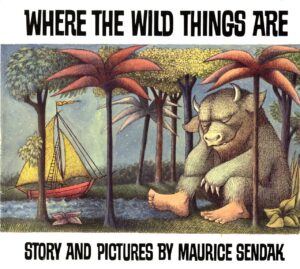
CE: Oh goodness, what a big question! Picture books that I have a vivid memory of reading as a kid are Where the Wild Things Are by Maurice Sendak, Chrysanthemum by Kevin Henkes and Corduroy by Don Freeman. I just remember each of them speaking to something in me as a child. I always loved the adventure of Corduroy and was amazed by the idea of being alone in a department store after it closed. I loved the fantastical, dreamlike elements of Where the Wild Things Are and absolutely identified with Max’s mischievousness. And as someone who did not like being the only person with my name in my class as a little kid, Chrysanthemum really spoke to me.

RVC: Most of us in the book industry had a powerful experience with a teacher somewhere along the way. What was your MIT (Most Important Teacher) moment?

CE: Ms. Jeans, my second-​grade teacher!

RVC: Best…name…ever.…

CE: She was the absolute best and always made me feel smart and capable. I remember her showing a drawing I did to another teacher—it’s amazing how much those little encouragements are so important and really stick with you!

RVC: Totally agree! Your LinkedIn account says you did your undergraduate studies at Rutgers. What career goal did you have in mind there?

CE: I wanted to be in publishing since I was in high school. I remember looking at all of the YA books on my shelves and thinking, “Okay, I don’t really enjoy writing, but what are the names of these companies on the spines of my books?” and realized that I could work with books in another way. I went into college thinking I’d major in English and then eventually go onto publishing, and always sort of thought if it wasn’t meant to be something else would reveal itself as my calling, but it stuck!

RVC: What was the most useful thing/​skill you learned at Rutgers?

CE: Reading and analyzing literature and seeing the many ways a book can be written and written well. Not all who work in publishing are former English majors, but I felt like it certainly helped me!

RVC: You’re the post child for the power of internships. Share a bit about what you did and how that helped launch your career in the industry.

CE: Because Rutgers was just a train ride away from NYC, I was able to apply for internships and do those in Junior and Senior year. I definitely wouldn’t have been able to do them in Freshman and Sophomore year while I was still getting my bearings and still having to take core requirement classes that took up a lot of my time.

I got lucky with landing my first internship at Abrams, in a department that I wasn’t ultimately interested in, but I was doing admin tasks and learning how publishing worked. That led me to more interviews and more internships. Most of what I did for internships wasn’t stuff that interested me, but it helped me learn how a publishing office worked and gave me good experience!

RVC: It seems like you might’ve had a moment where you considered being an agent. What happened there?

CE: After I graduated college and had just had one interview for a real job, I was feeling very restless and continued applying to internships, which eventually landed me as an intern at a literary agency. It was definitely interesting to learn about that part of the publishing world but I realized it wasn’t for me. I definitely prefer working on shaping a manuscript the most!

RVC: Tell me the story behind the first picture book you acquired. 

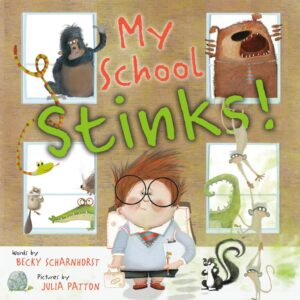
CE: The first picture book I acquired was My School Stinks by Becky Scharnhorst and Julia Patton. I met Becky at the Rutgers One-​on-​One Publishing Conference, and we really clicked. We worked on her manuscript (which was originally a camp story rather than a school story) and I loved it so much. Becky was so great at really considering my notes and was so great at writing funny and heartfelt stories. I ended up asking her to change the setting from a summer camp to a school and I remember feeling so worried that she wouldn’t want to change so much about her manuscript (but also completely understanding if she did!) and worrying that she wouldn’t want me as her editor.

In the end, she adapted the manuscript into a school setting, and I just loved it and I was so happy that my publisher agreed, too! We found Julia and adored her artwork–she is so talented at doing mixed media scenes and could really incorporate the journal entry format of the story into her hilarious illustrations. I loved working on My School Stinks!

RVC: What’s the most useful thing you got from that experience? 

CE: I think I learned a lot about the author’s experience of editing a manuscript. Because it was my first acquisition, I had to really carefully consider my words and how to get the best manuscript possible from my author, while still being encouraging and showing how much I love the book. While an editor absolutely feels ownership over each book they edit, ultimately the book is the author and illustrator’s creation! And our job is to give suggestions in how to make the best possible book that is within the author and illustrator’s creative vision! So I think that experience really taught me to really consider the author on the other end of my emails and notes.

RVC: Let’s jump ahead to your recent work. What’s the most important thing people should know or understand about Flamingo Books?

CE: We love funny picture books! We think books that are fun is the best way to make lifelong readers, so often the first thing we look for is humor. We love profound and heartfelt picture books, too, but I’d say a good majority of our books are funny!

RVC: Why is Flamingo Books a great fit for you?

CE: I love to do sweet and silly picture books that tackle big moments or emotions in a child’s life, as well as books that can teach a reader something new, but always with lots of humor and character. I love a funny book and I’m always looking for books that can be funny while still accomplishing other things. I think that humor is such an easy entry point for kids and reluctant readers. I truly believe that any kid who doesn’t like to read just hasn’t been introduced to the right books!

RVC: What does a typical workday look like for you?

CE: A lot of it is answering emails from other departments, looking at passes of books, fielding submissions, and, depending on the time of year, preparing materials for upcoming meetings.

RVC: What’s the most common misconception writers have about editors?

CE: I think some writers might feel like getting a lot of edits means their editor thinks that they’re not a good writer. Editing can take a lot of time and several rounds (some take 10 rounds or even more!). Sometimes we don’t notice something the first 5 times we read it. Or sometimes fixing one problem in the manuscript creates another. Having lots of edits is very normal and part of the process!

RVC: What’s your editing superpower? 

CE: Oh, I really don’t know! I guess I’m good at editing funny books?

RVC: Speaking of editing superpowers, you’ve had some real successes. Share what it’s like to find out a book you edited is on the New York Times bestseller list. 

CE: It is really really cool. Being on the NY Times list is not the end-​all-​be-​all of a book’s success by any means, but it’s definitely something that holds a lot of weight in the industry and it is so great to have one of your books succeed in that way. I think the coolest part is that books that land on that list are because of the work of so, so many of your colleagues who loved it. A book that you acquired and worked hard on, and launched to them, and hoped they would love as much as you do. Having a whole team to work hard with and celebrate with is really lovely!

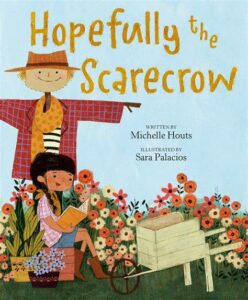
RVC: I believe you worked on a book written by my friend, Michelle Houts—Hopefully, the Scarecrow.

CE: Yes! I adore Hopefully the Scarecrow!

RVC: What grabbed you about that story? 

CE: Michelle’s voice throughout the story was what I instantly loved. It had this timelessness to it that felt like a book I could’ve read 50 years ago but also felt so current.

RVC: Your feeling on art notes?

CE: I LOVE how that book turned out. We waited a whole extra year just to have Sara Palacios illustrate and it was so worth the wait! That book is gorgeous and I sometimes just pop it open to stare at the art. It’s one of those book where the words and art really work together perfectly.

RVC: A lot of aspiring writers read OPB. Let’s help them out—offer some examples of “commercial and silly yet profound picture books” please!

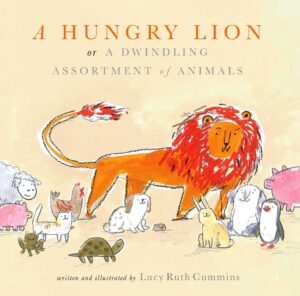
CE: The Bad Seed series by Jory John and Pete Oswald, A Hungry Lion by Lucy Ruth Cummins, We Found a Hat by Jon Klassen, Strictly No Elephants by Lisa Mantchev and Taeeun Yoo, Something’s Wrong by Jory John and Erin Kraan.

RVC: Since COVID, I’ve made a point out of asking everyone a health and wellness action. Here’s yours. What do you do to de-stress?

CE: I like to cook, or exercise, or read a book for pleasure.

RVC: One final question for this part of the interview, Cheryl. If you had to summarize the most important thing you’ve learned about picture books, what would it be?

CE: I guess it would be that picture books have power. They can teach kids about empathy, friendship, loss, feelings, family, differences, etc. and can shape who they are as a person.

RVC: Okay, here we go. It’s the LIGHTNING ROUND. Zippy zoomy questions followed by zapptastically fast answers. Are you ready?

CE: Yes!

RVC: What “old person” thing do you do?

CE: I really like jigsaw puzzles and Sudoku.

RVC: If someone narrated your life, who would you want to be the narrator?

CE: Kathryn Hahn or Ayo Edebiri.

RVC: If you had a giraffe you needed to hide, where would you hide it?

CE: Under a blanket.

RVC: What are five things you couldn’t do your job without?

CE: A notebook, a laptop, post-​its, Diet Dr Pepper, Rhymezone.com

RVC: Who sets the standard for picture book rhymes?

CE: Anna Dewdney and Sandra Boynton.

RVC: What’s a favorite line from a picture book you edited?

CE: “Great job, Buffalo. Help yourself to some potato salad.” (From Porcupine & Cactus by Katie Frawley & Alex Willmore)

RVC: Thanks so much, Cheryl!