Reading Activities: Mother Bruce by Ryan T. Higgins

Mother Bruce
Author: Ryan T. Higgins
Illustrator: Ryan T. Higgins
24 November 2015
Disney Hyperion
48 pages

Book description from Goodreads: “Bruce the bear likes to keep to himself. That, and eat eggs. But when his hard-​boiled goose eggs turn out to be real, live goslings, he starts to lose his appetite. And even worse, the goslings are convinced he’s their mother. Bruce tries to get the geese to go south, but he can’t seem to rid himself of his new companions. What’s a bear to do?”

Need some reviews of Mother Bruce?

Reading Activities inspired by Mother Bruce:

  • Before Reading–From looking at the front cover: 
    • What animals do you see on the cover? What do you think their relationship might be?
    • Look closely at Bruce the bear. What clues in the illustration suggest what kind of personality he might have?
    • What do you think this story might be about just from the title Mother Bruce?
    • If a bear became a mother to baby animals, how do you think that might happen?
    • What do you think Bruce likes or dislikes based on the cover illustration?
    • Do you think Bruce will enjoy taking care of baby animals? Why or why not?
  • After Reading–Now that you’ve read the story: 
    • Why do the goslings think Bruce is their mother?
    • How does Bruce feel about the goslings at the beginning of the story? Do his feelings change over time?
    • Which part of the story was the funniest to you?
    • What problems does Bruce face once the goslings decide he’s their mother? What does he try to do about them?
    • How do the illustrations show Bruce’s emotions throughout the story?
    • What do you think the story is trying to say about families?
    • Would you recommend this book a friend? Why or why not?
  • Bruce’s Very Bad Day: Bruce is not thrilled about becoming a mother. Make a list of the top five things that would ruin Bruce’s perfect day. Then add one thing the goslings do that accidentally makes his day better, even if he’d never admit it.
  • Family, But Make It WeirdThe book shows that families don’t always come together in expected ways. Think of another totally unlikely family combination and write a few lines about how they live, eat, travel, or solve problems together. The fun here is figuring out what makes them different—and what still makes them a family.

  • Grumpy Bear Emotions Chart: Look back through the book and find three moments where Bruce’s feelings are easy to see in the illustrations. Name the specific emotion Bruce might be feeling in those moments. Then think about a time when you felt one of those emotions. What helped you feel better?

  • Books, Books, and More Books!: Check out these picture books about unusual families, animal adventures, and a little bit of grumpiness.

Are You My Mother? by P.D. Eastman
One baby bird searches everywhere for its mother in this classic story about family/​belonging.


Duck, Duck, Moose by Sudipta Bardhan-Quallen
When a moose insists on joining a flock of ducks, readers get a silly adventure about belonging.


Interrupting Chicken by David Ezra Stein
A little chicken keeps interrupting bedtime stories in this funny tale about storytelling and family. (Yes, it’s not about an unusual animal family, but hey, it’s a fun book regardless. )


Grumpy Monkey by Suzanne Lang
This monkey insists he isn’t grumpy, even though everyone else can clearly see that he is having a bad day.


Strictly No Elephants by Lisa Mantchev
A boy and his elephant start a club for pets that feel left out.

Agent Interview: Ashlee MacCallum (Howland Literary)

Welcome to Ashlee MacCallum, a junior literary agent at Howland Literary who has one of the most delightfully eclectic backgrounds you’ll find. Originally from Glasgow, Scotland, Ashlee has been a preschool director, a special education teacher, a US History teacher, a Dean of Students, and—to this day—a high school English teacher in Nevada who makes her sophomores dramatically reenact Macbeth. (Yeah, we love that energy!)

Ashlee joined Howland Literary in 2025 after interning with Brent Taylor at Triada US. Specifically on the picture book side, she’s drawn to stories with multiple hooks, original concepts, and concise writing—with a particular soft spot for creepy tales, quirky humor, and anything “delightfully weird.”

And she’s also a kidlit writer herself, represented by Kaitlyn Katsoupis at Belcastro Agency, which means she knows what the submission trenches feel like from both sides of the desk.

When she’s not reading submissions or grading essays, Ashlee says that she’s “probably mapping out her next Disney adventure, binging a true crime podcast, or humming show tunes in the kitchen.”

Let’s find out a bit more about Ashlee and her work!


RVC: You grew up in Glasgow surrounded by folklore and superstitious storytelling. What’s a moment from your childhood that still lives in your head when you think about what makes a great story?

AM: What a fun question! My mum’s mum, my Nana, is quite the storyteller. I have vivid memories of her telling me about the goblins who lived in the woods behind her house. If we were misbehaving (which my brother usually would), she would tell us the King Goblin was coming to sort us out. Looking back, I think what made her stories great was how compelling they were and the emotional engagement she drew from us.

RVC: Love the goblin stories. Wow. Now, you’ve had one of the most zigzag career paths of anyone we’ve featured on OPB—in a good way! How do all those roles inform the way you work as an agent?

AM: Haha! Outside of traditional publishing internships and training, I have drawn on the skills from my “day job” to help launch my agenting career. I actually think being a high school English teacher utilizes many of the same skills that literary agents use every day: literary analysis, editorial/​revision skills, a knowledge of storytelling and literature, understanding readers and audiences, organization, and strong communication. Even in previous jobs I’ve held, such as a Dean of Students, I negotiated, exercised strong judgment, and worked in an advocacy role.

RVC: You’re a picture book writer yourself, and rumor has it that you queried over 100 times before landing your first agent. What were the top two lessons you took from that experience?

AM: Yes! I learned a lot about myself through the querying process, namely, how I navigate rejection. I realized that while successfully finding an agent is about writing a great book, it’s also about resilience and persistence.

RVC: Amen to that!

AM: I also came to appreciate the power of revision. Feedback and refinement are constant in this industry, and I’ve learned to really lean into and love those things.

RVC: How are things going with your own submissions, and does that in any way affect how you work with other authors as an agent?

AM: Things are moving along! I hope to have good news on that front soon, but again, resilience and persistence. Because I have an intimate understanding of what the sub process looks like, I can guide my clients with empathy, prepare them for the submission process (things like timelines and editor responsiveness), and advocate for their work with a clearer understanding of how editors evaluate projects.

RVC: I see you’re making the bold choice of showcasing your own manuscripts-​on-​submission on your website. Should more authors do that?

AM: It’s a personal decision, for sure. Some authors prefer privacy during the submission process, which is completely valid. For me, it’s about modeling transparency. If writers can see that even someone working inside the industry experiences the same timelines and uncertainty, it helps normalize the realities of publishing. So, I wouldn’t say more authors should do it, but I do think the more honest conversations we have about the process, the healthier the writing community becomes.

RVC: Since we have so many people listening/​reading here (and a lot of them are industry gatekeepers), go ahead and give us the elevator pitch for one of your on-​submission picture books and one other kidlit project.

AM: Haha! This made me giggle. I won’t say too much, but I’m a girlie with ADHD, so my favorite picture book I’ve ever written highlights that experience, but with a little magic and mischief. It’s been through countless revisions, but it’s officially back on sub, and I’m hopeful someone loves it as much as I do.

RVC: Thanks for that! Now, tell me the story of how you ended up working at Howland Literary. What made you say, “This is my home”?
Howland LiteraryAM: Good question! When I connected with Carrie, the founder and president of Howland Literary, it felt like a natural fit right away. What I love most about working at Howland is how our team champions authors and approaches publishing with both creativity and care. There’s a collaborative spirit in our agency (full of girl power, I might add) and I’m so proud to work alongside them.

RVC: According to interviews, voice is the single most important thing you look for in a submission. In a picture book with only 600 words or 300 words or maybe even just 200 words, what does a “distinct, captivating voice” actually look like?

AM: Yes, voice is critical in any writing space, but especially in children’s books. For picture books in particular, voice isn’t about the number of words, but it’s about how much personality each word carries. When you have a limited number of words to tell a story, every sentence has to do multiple jobs like reveal character, create tone, move the story forward, and of course, for picture books, sound fun and engaging when read aloud!

RVC: Your MSWL includes something I don’t see enough agents asking for: creepy picture books. Tell me more!

AM: YES! Please, someone, send me a creepy picture book! The tone I’m looking for here lands somewhere between spooky, mischievous, eerie, and darkly funny. I think kids love controlled fear (think every Disney villain ever) and tension that makes the story memorable (like my Nana’s scary tales about the goblins). This is definitely a high-​priority item on my wish list.

RVC: You also list “inventive and clever nonfiction, particularly STEAM themes and lyrical narrative nonfiction that sings.” What separates a STEAM picture book that excites you from one that feels like a textbook in disguise?

AM: Oooh this is a fantastic question. For me, it comes down to this: is the story driving the science, or is the science driving the story? So, instead of trying to explain how something works, the concept should naturally unfold in the narrative. I’m personally drawn to STEAM stories that still have heart and a strong emotional tie.

RVC: Can you name a book or two that’s a good model for this?

AM: Yes! I think Great Carrier Reef by Jessica Stremer is a great example of a STEAM picture book with heart. In fact, her book is also a strong example of a non-​human character that brings real emotion. In the story, the shop is treated like a real character with a life cycle. When reading it with my son (we read it many times!) he gravitated to the hope-​forward narrative and felt a real connection to “The Mighty O.”

RVC: When you’re editing a picture book before submission, where do you find yourself pushing authors the most?

AM: Probably word count. I want to make sure every word in our submission sparkles and is perfectly placed. Sometimes we can eliminate fluff or text that could be shown in the illustrations instead. These little things matter.

RVC: Let’s briefly talk about rhyme. Should people send those projects your way or find another option? 

AM: I am admittedly not the best fit for rhyme, but at the same time, I don’t want to discourage someone from querying me if they think we’d be a great match, so if your projects meet other items on my wish list, then feel free to give me a shot.

RVC: Since COVID, I’ve tried to ask every interview subject a health and wellness question. Here’s yours. What’s your best tip for kidlit writers who need a hand dealing with the stress and grind of the submission process? 

AM: Nice! I’d say take a break if you need one. It’s okay to give yourself a moment if your mental health is suffering. Constant rejection can be tough, and if it stops feeling like redirection and you’re no longer enjoying writing, take a little break and come back when you’re ready. Self-​care is so important!

RVC: One last question for this part of the interview. What’s next for you?

AM: I recently signed my fifth client, Cate Townsend! Her YA paranormal romance just went out on submission and it’s quite literally to die for. I can’t wait to see who snags it up.

RVC: Alright, Ashlee. It’s time for the much-​anticipated, never-​duplicated, always-​spectacular SPEED ROUND. Snappy questions, rapid-​fire answers. Are you ready?

AM: LET’S DO THIS!

RVC: You’re trapped in a haunted Scottish castle overnight. What picture book character do you want right by your side?

AM: I’m 100% going to need Dennis from The Book of Rules by Brian Gehrlein. Not only is this one of my son’s favs, I know that hungry little purple monster will take care of business if necessary. Ghosties are no match for Dennis.

RVC: Your students have to perform a picture book as a dramatic reading instead of Macbeth. What picture books gets the gig?

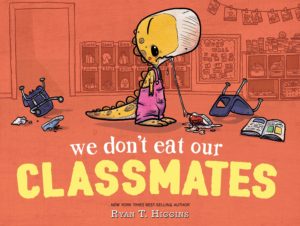
AM: Haha! I’d have to say We Don’t Eat Our Classmates by Ryan T. Higgins. Can you imagine? I have some student actors who could really bring Penelope Rex to life.

RVC: Disney is making a theme park ride based on any picture book you choose. What’s your choice?

AM: Since I love creepy picture books, I’m going to say—you guessed it—Creepy Carrots by Aaron Reynolds. Disney + Twilight Zone vibes is a yes, please for me.

RVC: A picture book from the past year or two that deserves way more attention than it’s gotten?

AM: I think Ghost Makes a Friend by Maggie Edkins Willis is the sweetest story for kids trying to make friends. It really speaks to the shy kiddos, for who sometimes, the scariest thing can actually be making a friend. If you haven’t checked it out, you should!

RVC: Who sets the standard for creepy-​but-​kid-​appropriate picture books?

AM: I think everyone in the kidlit space does in a way: writers, agents, editors, readers… but there are for sure some big names who have helped shape this space like Jon Klassen, Aaron Reynolds and Peter Brown.

RVC: Complete the sentence: “Ashlee MacCallum is an agent who…”

AM: …loves bold voices, big feelings, and stories that refuse to behave.

RVC: Terrific. Thanks so much, Ashlee!
Picture Book List: 4 Picture Books That Showcase Kidlit Agents’ Favorite Elements—and Why They Shine

Last month, I shared a list of picture books that kidlit editors frequently mention, and I got a lot of nice notes about it! So, I’m bringing back the concept—this time with insights from some of the wonderful literary agents who are friends of the blog.

I asked four agents to name a picture book they often reference when talking to clients or writers about what makes a story shine. Each book showcases qualities that agents admire, from compelling narratives to unforgettable art. While I’m keeping their names private to avoid any unintended favoritism, their thoughtful feedback is reflected in the commentary below.

If the language is in quotation marks, it’s directly from the agents. The rest is from me. Enjoy!


Julian Is a Mermaid by Jessica Love

Why Agents Love It:

  • Economy of Text: “This book is proof that less can truly be more. Every word is purposeful, and the space between the lines lets the illustrations tell so much of the story.”
  • Celebration of Individuality: Julian’s journey of self-​expression is told with tenderness and authenticity, making it a standout example of how inclusive stories can feel universal without being preachy. “It’s the kind of book that shows you don’t need to explain everything—sometimes the best stories trust the reader to feel the message.”
  • Art That Transports You: The lush, painterly illustrations are a visual feast. “Every page feels like stepping into Julian’s world, and the quiet magic of the art lingers long after you close the book.”

Thank You, Omu! by Oge Mora

Why Agents Love It:

  • Timeless Themes: Omu’s generosity and the community’s gratitude create a feel-​good story that celebrates kindness and connection. “It’s one of those books that feels like it’s been around forever—and I mean that as the highest compliment.”
  • Unique Art Style: Mora’s collage illustrations are rich, textured, and vibrant. “There’s a warmth and energy to the artwork that makes every page feel alive. You can almost smell the stew simmering!”
  • Perfect for Read-​Alouds: With its rhythmic, repetitive structure, this book practically begs to be read aloud. “The storytelling cadence makes it a go-​to for libraries and classrooms—it’s a crowd-​pleaser every time.”

The Day You Begin by Jacqueline Woodson, illustrated by Rafael López

Why Agents Love It:

  • A Universal Yet Personal Theme: This book speaks to anyone who’s ever felt like they didn’t belong. “It’s a quiet powerhouse of a story—one that gives kids (and adults) permission to embrace their differences and share their truths.”
  • Lyrical Text: Woodson’s poetic language lends the story an emotional depth that lingers long after the last page. “The writing is so lyrical and beautiful, you almost want to read it aloud just to hear the words again.”
  • Stunning Illustrations: López’s bold, vibrant illustrations perfectly complement the text, capturing the emotions of the characters and drawing readers into the story. “The interplay between the words and art is magical—this is what picture books are all about.”

We Don’t Eat Our Classmates by Ryan T. Higgins

Why Agents Love It:

  • Humor with Heart: This hilarious story about a dinosaur learning to navigate the social challenges of school strikes the perfect balance between funny and heartfelt. “It’s laugh-​out-​loud funny, but it also sneaks in such a sweet message about kindness and empathy.”
  • Relatable Concept: Starting school is a major milestone, and this book cleverly addresses first-​day jitters in a way that feels fresh and engaging. “It’s such a smart take on school anxiety—familiar, but with a totally unexpected twist.”
  • Lasting Appeal: Its humor and relatability ensure that it’s a favorite for both kids and adults. “The kind of book parents don’t mind reading over and over—and believe me, that matters.”

If you’re a picture book creator, take note of what makes these books shine—they might just inspire your next project!

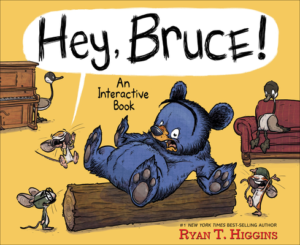
Educational Activities: Hey, Bruce!: An Interactive Book by Ryan T. Higgins

Hey, Bruce!: An Interactive Book
Author: Ryan T. Higgins
Illustrator: Ryan T. Higgins
20 September 2022
Disney Hyperion
48 pages

Book description from Goodreads: “In Hey, Bruce!, Bruce the bear experiences … well, whatever readers want him to.

Rupert, Thistle, and Nibbs, the fun-​loving mice in Bruce’s begrudgingly expansive family, guide readers on a quest for a fun reading experience, with Bruce the ever-​reluctant star. As readers turn the page, flip the book, and follow the mice’s increasingly silly instructions, Bruce is sent flying and tumbling—all as he looks right up the reader’s nose! How will you interact with Bruce?

Bruce’s life is what YOU, the reader, make it in this special interactive addition to the award-​winning Mother Bruce series.


Educational Activities inspired by Hey, Bruce!:

  • Before Reading–From looking at the front cover: 
    • Take a good look at the cover. What clues can you find about what might happen in the story? What does Bruce’s expression tell you?
    • Knowing it’s an interactive book, what sorts of silly things do you think the mice might ask you to do?
    • What questions would you like to ask the author–or the Bruce himself!–before reading the book?
    • Have you read any of the other Mother Bruce books by Ryan T. Higgins? If so, what’s one thing you remember about them?
  • After Reading–Now that you’ve read the story: 
    • One mouse says he can see up the reader’s nose. How did you react to that?
    • What was the funniest or most surprising thing that the mice asked you to do?
    • What did you want to do beyond what the mice asked you to do?
    • Did you feel sorry for Bruce at any point?
    • What was your favorite part of the book and why?
    • Which illustration surprised you the most? Which did you like best?
    • Would you recommend this book to a friend? What part would you tell them about first?
  • Bruce Says! Play a round of “Bruce Says” – have one person be “Bruce” and give silly commands from the book (“Pat Bruce’s head!” or maybe “Tickle Bruce’s toes!”).
  • The Giggles Report: Draw a picture of the funniest part of the book. Write a silly caption to go with it!
  • Build a Bruce Fort: Build your own cozy naptime fort with blankets and pillows – just like Bruce would love!
  • Rhyme Masters: Pick a word from the book (shake, wiggle, nose) and write as many rhymes for it as you can!
  • Your Interactive Story: What silly things would YOU put in an interactive book? Write or draw your ideas!
  • Further Reading: Hey Bruce! An Interactive Book isn’t your typical picture book. It breaks the fourth wall, meaning the characters in the story know they’re in a book and directly talk to the reader!

    Here are some other picture books that use this playful technique. Which of these have you read before? Which would you want to read first?

Picture Book List: 20 Terrific Books About School

Since it’s Back to School time pretty much everywhere, it just made sense to have this special Monday post about some of the best picture books about school. If I missed YOUR favorite picture book about school, drop me a note in the comments and I’ll try to include your fave in a future list or Bonus Goody post.


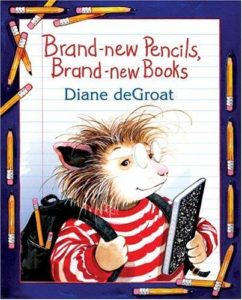
Brand-​new Pencils, Brand-​new Books by Diane deGroat (June 2007)

From Goodreads: “Gilbert, the popular star of deGroat’s New York Times bestseller Roses Are Pink, Your Feet Really Stink, returns in this humorous and reassuring back-​to-​school story, in which Gilbert experiences his first day in first grade.”

Pages: 32
Reading Age: 4–8


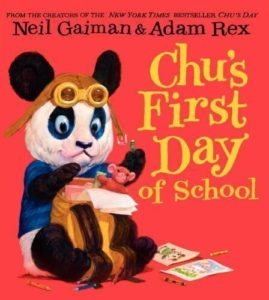
Chu’s First Day of School by Neil Gaiman, illustrated by Adam Rex (June 2015)

From Goodreads: “It is Chu’s first day of school. Chu is nervous. He hopes the other boys and girls will be nice. Will they like him? What will happen at school today? Will Chu do what Chu does best?”

Pages: 32
Reading Age: 1–5


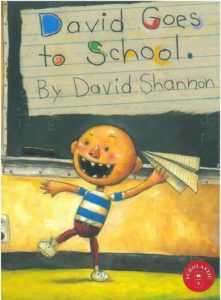
David Goes to School by David Shannon (May 2021)

From Goodreads: “David’s teacher has her hands full. From running in the halls to chewing gum in class, David’s high-​energy antics fill each school day with trouble—and are sure to bring a smile to even the best-​behaved reader.

In ‘David Goes to School’, young David shows up late to class, goes wacko at the blackboard, chews gum in class, yells answers out of turn, pulls pigtails, stares out the window, cuts in line, has a food fight (“I don’t care who started it!” says the teacher), lingers at recess, and more. Colorful, hilarious, childlike illustrations examine our strangely appealing demon-​boy at eye level.”

Pages: 32
Reading Age: 3–6


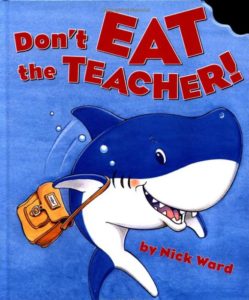
Don’t Eat the Teacher! by Nick Ward (January 1998)

From Goodreads: “Sammy has trouble controlling his enthusiasm on his first day of school.”

Pages: 32
Reading Age: 2–6


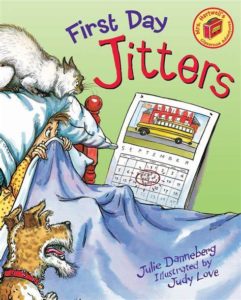
First Day Jitters by Julie Danneberg, illustrated by Judy Love (February 2000)

From Goodreads: “Everyone knows that sinking feeling in the pit of the stomach just before diving into a new situation. Sarah Jane Hartwell is scared and doesn’t want to start over at a new school. She doesn’t know anybody, and nobody knows her. It will be awful. She just knows it. With much prodding from Mr. Hartwell, Sarah Jane reluctantly pulls herself together and goes to school. She is quickly befriended by Mrs. Burton, who helps smooth her jittery transition. This charming and familiar story will delight readers with its surprise ending.”

Pages: 32
Reading Age: 5–8


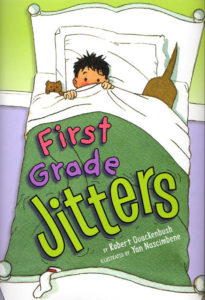
First Grade Jitters by Robert Quackenbush, illustrated by Yan Nascimbene (June 2010)

From Goodreads: “Perfect for nervous/​excited kids about to go to school (and their parents!), this engaging story convinces parents and children alike that there is no place cooler than a first-​grade classroom. Time to shake those jitters!

Here is the story of a young boy who is about to enter first grade and doesn’t know quite what to expect. Will his friends be there? Will he have to know how to read and spell? What if he can’t understand anything his teacher says?

Looks like a case of first grade jitters!”

Pages: 32
Reading Age: 5–6


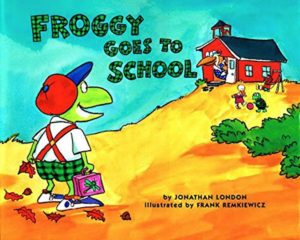
Froggy Goes to School by Jonathan London, illustrated by Frank Remkiewicz (September 1998)

From Goodreads: “Froggy’s mother knows that everyone’s nervous on the first day of school. “Not me!” says Froggy, and together they leapfrog to the bus stop — flop flop flop. Froggy’s exuberant antics, complete with sound effects, will delight his many fans and reassure them that school can be fun.“This is a great read-​aloud with sounds and words that encourage active participation.…A charming story to calm those pre-​school jitters.”

Pages: 32
Reading Age: 2–6


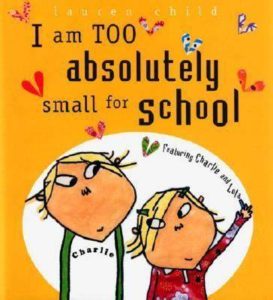
I Am Too Absolutely Small for School by Lauren Child (August 2005)

From Goodreads: “Lola is not so sure about school. After all, why would she need to count higher than ten when she never eats more than ten cookies at a time? Once again, it’s up to ever-​patient big brother Charlie to persuade Lola that school is worthwhile — and that her invisible friend, Soren Lorensen, will be welcome, too.”

Pages: 32
Reading Age: 3–7


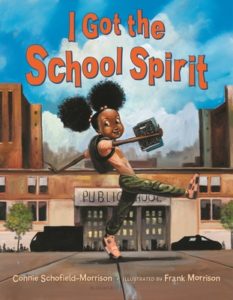
I Got the School Spirit by Connie Schofield-​Morrison, illustrated by Frank Morrison (July 2020)

From Amazon: “This exuberant celebration of the first day of school illustrated by award-​winning illustrator Frank Morrison will have every kid cheering for school to begin!

Summer is over, and this little girl has got the school spirit! She hears the school spirit in the bus driving up the street–VROOM, VROOM!–and in the bell sounding in the halls–RING-​A-​DINGShe sings the school spirit in class with her friends–ABC, 123!

Pages: 32
Reading Age: 3–6


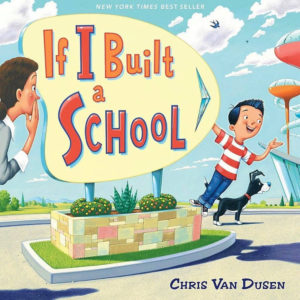
If I Built a School by Chris Van Dusen (June 2015)

From Goodreads: “In this exuberant companion to If I Built a Car, a boy fantasizes about his dream school–from classroom to cafeteria to library to playground.

My school will amaze you. My school will astound.
By far the most fabulous school to be found!
Perfectly planned and impeccably clean.
On a scale, 1 to 10, it’s more like 15!
And learning is fun in a place that’s fun, too.

If Jack built a school, there would be hover desks and pop-​up textbooks, skydiving wind tunnels and a trampoline basketball court in the gym, a robo-​chef to serve lunch in the cafeteria, field trips to Mars, and a whole lot more. The inventive boy who described his ideal car and house in previous books is dreaming even bigger this time.”

Pages: 32
Reading Age: 4–8


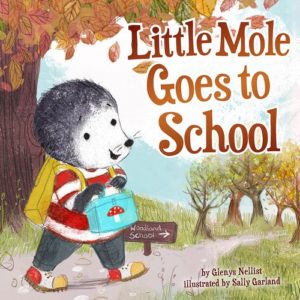
Little Mole Goes to School by Glenys Nellist, illustrated by Sally Garland (July 2022)

From Goodreads: “It’s Little Mole’s first day of school, and he’s nervous. What if he is the last to know his alphabet? What if he’s not good at anything? With a good bit of anxiety, Little Mole heads to class and begins to compare himself to his peers. How will he ever measure up? But soon a crisis on the playground reveals that he has everything he needs in his own two paws to save the day. In this third installment of the Little Mole series, author Glenys Nellist and illustrator Sally Garland spin another endearing tale of the beloved Little Mole, his encouraging mama, and his forest friends. Children will relate to Little Mole’s feelings of self-​doubt, will cheer him on when he discovers his unique gifts and talents, and will be inspired to confront their own insecurities and celebrate what they have to offer, too.”

Pages: 36
Reading Age: 2–5


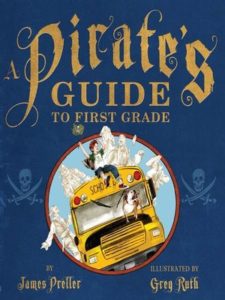
A Pirate’s Guide to First Grade by James Preller, illustrated by Greg Ruth (June 2013)

From Goodreads: “Arr! It’s the first day of first grade, and it’s all hands on deck for a young pirate and his crew. How much trouble can they get into? What will they do at recess? And, most important, what treasure awaits them at school?”

Pages: 48
Reading Age: 3–6


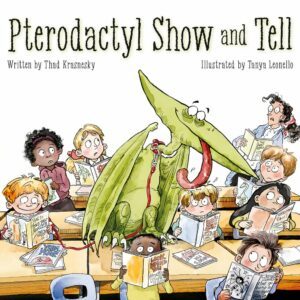
Pterodactyl Show and Tell by Thad Krasnesky, illustrated by Tanya Leonello (October 2018)

From Goodreads: “When a boy brings his pterodactyl to school for show-​and-​tell, hilarious havoc ensues. The creature’s delightfully demented antics, the kids’ expressions as they try to avoid the hungry pterodactyl, and the out-​of-​control imagination of the boy yield a wild and wacky romp. Kids who dig dinosaurs will devour this preposterous pterodactyl tale written in rhyming couplets and teeming with edgy school-​age humor and giggle-​inducing illustrations.”

Pages: 32
Reading Age: 5–7


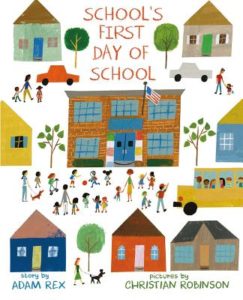
School’s First Day of School by Adam Rex, illustrated by Christian Robinson (June 2016)

From Goodreads: “It’s the first day of school at Frederick Douglass Elementary and everyone’s just a little bit nervous, especially … the school.”

Pages: 40
Reading Age: 5–6


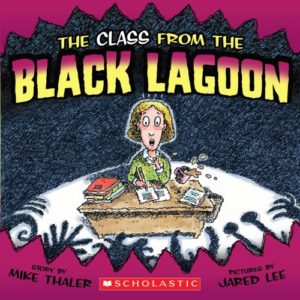
The Class from the Black Lagoon by Mike Thaler, illustrated by Jared Lee (June 2009)

From Goodreads: “Is it true that the new class REALLY is just a bunch of horrible ghouls? The new teacher has heard all sorts of weird stories about her students. What will she find when the students arrive?”

Pages: 32
Reading Age: 4–8


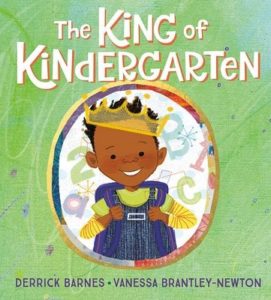
The King of Kindergarten by Derrick Barnes, illustrated by Vanessa Brantley-​Newton (July 2019)

From Goodreads: “Starting kindergarten is a big milestone–and the hero of this story is ready to make his mark! He’s dressed himself, eaten a pile of pancakes, and can’t wait to be part of a whole new kingdom of kids. The day will be jam-​packed, but he’s up to the challenge, taking new experiences in stride with his infectious enthusiasm! And afterward, he can’t wait to tell his proud parents all about his achievements–and then wake up to start another day.”

Pages: 32
Reading Age: 5–6


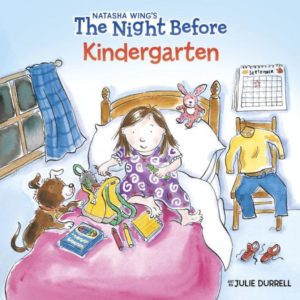
The Night Before Kindergarten by Natasha Wing, illustrated by Julie Durrell (July 2001)

From Goodreads: “It’s the first day of school! Join the kids as they prepare for kindergarten, packing school supplies, posing for pictures, and the hardest part of all—saying goodbye to Mom and Dad. But maybe it won’t be so hard once they discover just how much fun kindergarten really is! Colorful illustrations illuminate this uplifting takeoff on the classic Clement C. Moore Christmas poem.”

Pages: 32
Reading Age: 5–6 years


We Don’t Eat Our Classmates by Ryan T. Higgins (June 2018)

From Goodreads: “Penelope the dinosaur starts school, but it’s hard to make friends when her classmates are so delicious!

It’s the first day of school for Penelope Rex, and she can’t wait to meet her classmates. But it’s hard to make human friends when they’re so darn delicious! That is, until Penelope gets a taste of her own medicine and finds she may not be at the top of the food chain after all… Readers will gobble up this hilarious new story from award-​winning author-​illustrator Ryan T. Higgins.”

Pages: 48
Reading Age: 3–6


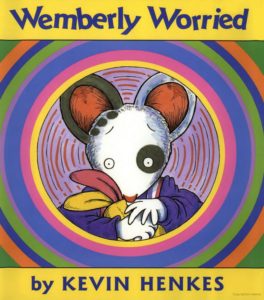
Wemberly Worried by Kevin Henkes (April 2010)

From Goodreads: “Wemberly worried about everything. Big things. Little things. And things in between. Then it was time for school to start. And Wemberly worried even more. If you ever worry (or know someone who does), this is the book for you.

Wemberly worried about spilling her juice, about shrinking in the bathtub, even about snakes in the radiator. She worried morning, noon, and night. “Worry, worry, worry,” her family said. “Too much worry.”

Pages: 32
Reading Age: 3–6


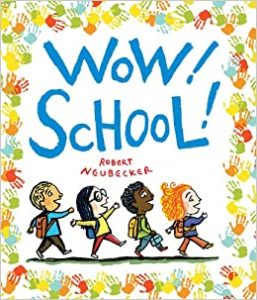
Wow! School! by Robert Neubecker (April 2011)

From Goodreads: “What could be more WOW! than the first day of school?
From science and storytime to music and math, Izzy’s classroom is full of new things to explore. Tag along with Izzy and experience the wonder and excitement of school from a child’s-​eye view.”

Pages: 32
Reading Age: 3–7

Picture Book List: 12 Great Picture Books About Mothers

With Mother’s Day just around the corner, it seems more than appropriate to sit back and take a good, long look at some of the best picture books featuring mothers of all types.

This is not an exhaustive list of every single picture book written by, about, for, or including mothers–there are MANY quality ones out there. The 12 included in this list are simply a small selection of OPB favorites.

Enjoy! And happy Mother’s Day!


Hair for Mama by Kelly A. Tinkham (illustrated by Amy June Bates)

It’s Family Photo Time, yet Mama doesn’t want her picture taken because she’s embarrassed. The chemo she’s receiving to treat her cancer has made her hair fall out. Leave it to eight-​year-​old Marcus to come up with a plan because it won’t be the same without her.


My Monster Mama Loves Me So by Laura Leuck (illustrated by Mark Buehner)

This rhyming bedtime story is sure to please young readers. Sure, it’s fine for Halloween, but this monster mama’s love is worth reading about any time of the year. Be warned: your kids might soon be asking for lizard juice on ice or cookies with bugs!

Enjoy a video read-​aloud of My Monster Mama Loves Me So.


The Kissing Hand by Audrey Penn (illustrated by Ruth E. Harper and Nancy M. Leak)

First published in 1993, this book is widely used on the first day of school in kindergarten because it helps kids feel reassured anytime the world feels a little bit scary. Young readers will enjoy learning about Chester Raccoon’s secret–the kissing hand–that makes a new experience (like the first day of school) feel just as safe and cozy as being home with family.

Enjoy a video read-​aloud of The Kissing Hand.


Mama’s Saris by Pooja Makhijani (illustrated by Elena Gomez)

Mom has a suitcase full of silk, cotton, and embroidered saris, and when her daughter finds them, she wants to dress in those beautiful garments too. Of course, Mom understands this, and for the child’s seventh birthday, Mom allows her to dress beyond years–just for one magical day.

This sweet book captures every child’s wish to be just like their parents.


My New Mom & Me by Renata Galindo

If you’re looking for a book about nontraditional families, this is a great place to start. This emotional tale about a cat mom and a dog child (he’s a bit older than one might expect) is a good conversation-​starter for foster or adoptive school-​aged kids. I dare you not to feel weepy when the dog paints on stripes to be more like his new mom, and she washes them off because “She likes that we are different.”


Did I Tell You I Love You Today? by Deloris Jordan and Roslyn M. Jordan (illustrated by Shane W. Evans)

I’m from Chicago, so I can’t help myself. This book–written by basketball legend Michael Jordan’s mother and sister–has to appear on this list. It does a very good job at showing the routines that effective parents have, even if you’re not a big fan of the Chicago Bulls or Michael Jordan (the greatest basketball player ever).

Kirkus call it a “tender read-​aloud.” OPB agrees.

Enjoy a video read-​aloud of Did I Tell You I Love You Today?


Mommy, Mama, and Me by Lesléa Newman (illustrated by Carol Thompson)

Many know Lesléa Newman for her groundbreaking book Heather Has Two Mommies and for her terrific interview at Only Picture Books! 🙂

Using rhythmic text and striking mixed-​media illustrations, this book shares the gentle, nurturing relationship of a lesbian couple and their little child. It does not get preachy or overly philosophical–it simply presents the clear, honest love that parents have for their child.

Enjoy a video read-​aloud of Mommy, Mama, and Me.


Mom School by Rebecca Van Slyke (illustrated by Priscilla Burris)

From the publisher: “Imagine what would happen if moms went to Mom School! In this adorable kid’s‑eye view of what would happen if Mom went to school, a little girl imagines Mom School, where all moms learn their amazing skills, like fixing a bike tire and baking cupcakes. With warm, funny illustrations and a fun role-​reversal story in which moms act like kids, young readers will love imagining what would happen if their own moms went to Mom School.”


Is Mommy? by Victoria Chang (illustrated by Marla Frazee)

From poet Victoria Chang comes this irreverent tale about toddlers and mommies that’s ultimately an insightful look on motherhood from a kid’s point of view. “Is Mommy fun or boring? BORING!” Spoiler: toddles love their mommies anyway. No matter what.


Just Like My Mom by David Melling

The mischievous lion cub in this story wants to show how he can act just like his mom. When it comes to bedtime, though, no one’s as terrific as she is. Melling is one of the UK’s best-​loved author/​illustrators. Check out Just Like My Mom (the Australian version is called Just Like My Mummy) and see why.

Enjoy a video read-​aloud of Just Like My Mom.


Mother Bruce by Ryan T. Higgins

Leave it to Ryan T. Higgins to create a fresh take on the “Are You My Mother?” tale. In this and Higgins’ other Bruce titles (5 total so far), poor Bruce just wants to have a good meal. But sometimes when you plan on having hard-​boiled goose eggs for dinner, things go sideways. Yet even a grump like Bruce can summon maternal instincts when a group of goslings decide he’s their mommy. To no one’s surprise, Higgins’ illustrations are (once again) hilarious and captivating.

Enjoy a video read-​along of Mother Bruce.


The Runaway Bunny by Margaret Wise Brown (illustrated by Clement Hurd)

In this classic (first published in 1942, it has never been out of print), a young bunny chooses to run away. “If you run away,” his mother says, “I will run after you. For you are my little bunny.” And so the imaginary game of chase begins. Generations of readers have fallen in love with this story’s reassuring words and soft, gentle pictures.

Enjoy a video read-​aloud of The Runaway Bunny.