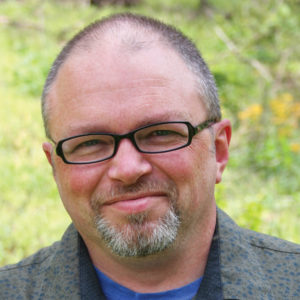
Author/​Illustrator Interview: Todd Sturgell

This month’s interview is with Todd Sturgell, an author/​illustrator whose first book, Except Antarctica, hits bookshelves this month. While he’s originally from Ohio and then spent some time in Texas, Todd now lives in the North Carolina mountains with his “wife, kids, and an overactive rescue dog named Max.” Yes, the dog’s name comes straight out of Where the Wild Things Are.

Let’s be honest–anytime you start naming your pets (or children!) after famous picture book characters, you’re committing to a certain path in life. And we’re glad Todd did because his debut book looks terrific. Let’s find out more about it right now!


RVC: When did you realize you were going to do art for a living?

TS: I was either going to be an artist or a paleontologist. Around 10 years old, I settled on art. Up until then, it could’ve gone either way.

RVC: Did you go to school for art or are you self-taught?

TS: I went to East Texas State (now Texas A&M University-​Commerce) for art direction, specifically advertising and design. I’ve really enjoyed all the opportunities I’ve had to illustrate within the advertising and design world. Eventually, I admitted that I’ve got a calling to make picture books, and I needed to get after it.

RVC: How’d you end up in North Carolina?

TD: I worked at a very large advertising agency in Dallas and wanted a change. Since we always loved visiting the North Carolina coast, I started looking for smaller design firms there. I found one, so we moved out. And then the economy tanked, so it didn’t last.

I wasn’t going to go back to a big agency again. I’ve been freelancing since.
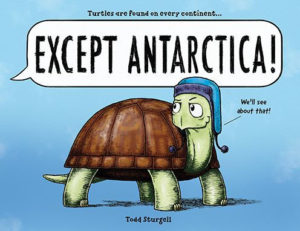
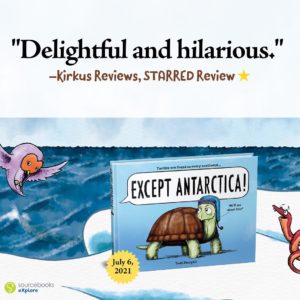
RVC: Let’s get to the book, which is called Except Antarctica (Sourcebooks eXplore). What’s it like being a debut author/​illustrator whose book isn’t yet out?

TS: I vary between panic and joy. I’m like, “Am I doing enough? Do I need to reach out to more people? Am I posting enough on social media?”

If I let myself sit back, take a deep breath, and hold my advance reader copy? Then I’m delighted. I’m so happy to be a part of the picture book world.

RVC: The “Am I doing enough?” question is one many writers face. What ARE you doing to help get the good word out about your book?

TS: I have a great marketing team with Sourcebooks–they’ve really reached out to a lot of people and made a lot of connections.

RVC: To people like me. That’s how I learned about you.

TS: That’s good to know! You can see why I’m kind of just following their lead. They find opportunities and ask if I’m interested. And I’m almost always interested.

I’m also part of STEAMTeam Books–it’s a group that supports each other with STEAM-​related book launches. And they’ve been doing this for a couple of years now. We lift each other up and share each other’s social media posts, that kind of thing.

RVC: That’s a terrific idea. But let’s talk about the post-​contract reality a debut author faces. What has surprised you the most about the whole process AFTER signing on the dotted line?

TS: How slow everything moves at the start. And then, when it all comes together, how fast it speeds up. You feel like you’re waiting and waiting and waiting, and then suddenly, okay, it’s almost here, and now you have a million things to do.

I would also say that debuting here on the back end of the pandemic has been something. I don’t know how typical my experience has been in 2021. Is it always this crazy?

I think my next book will feel as much like a debut as this one because the whole process could be so different.

RVC: That’s a good point. Plus, who doesn’t want to have two debuts, right? Back to your book. What’s the elevator pitch?

TS: What if you were watching a nature documentary, and the animals suddenly started doing the opposite of what the narrator says they’d do?

RVC: You’ve got a fun book trailer for Except Antarctica that explains a bit of this, but let me ask it outright–how did the idea for this book come about?

TS: I love nature documentaries, so I tried to expose my kids to as much of that as I could. And the phrase “except Antarctica” crops up over and over. There are so many species found all over the world, and you’ll hear the narrator say, “they’re found on every continent except Antarctica.”

One day, I was watching a show about owls. The narrator said that phrase, and I’m like, just yesterday, I heard that about turtles! Once I connected the concept of habitats to the idea of animals going off script, Except Antarctica was born.

RVC: What’s your favorite thing about the book?

TS: Even though the animals realize maybe they’ve made a mistake, I’m rooting for them the whole way. I especially love how they get to the ocean and the narrator’s like “Yeah, you’re done!” but on the very next page, they’re crossing the ocean! I loved putting that illustration together.

RVC: In terms of Except Antarctica, how will you measure success?

TS: Gosh, I already feel like a success just getting this far!

I hope that it’s successful enough to let me keep making more picture books. But I think the most important measure of success will be if kids–either having this book read to them or reading it themselves–laugh out loud. That’s the win right there. That’s the best type of success for me.

RVC: What was your pre-​contract experience with this book? How did the drafting process go?

TS: I have three other authors in my critique group who really helped the manuscript along. When I first started out, I knew the animals were going to break the mold. Still, it took a couple of versions until I got to the point where they were defying the narrator directly. Once I came up with that, the manuscript in its current form almost wrote itself. I’ve actually been shocked at how few changes I’ve had to make in the text since that point. There was a lot more emphasis on helping me develop the illustrations for these characters.

RVC: So, having a critique group made a real difference.

TS: Absolutely. I had a real sense of the stumbling blocks within the book thanks to valuable input from a lot of helpful people. The interaction with the narrator solved almost all of them! Utilizing a “meta” concept isn’t new or unique, but it was absolutely the right decision for Except Antarctica.
RVC: How many drafts did it take to get to the point where the book wrote itself?

TS: A lot. You’ve got to try different things. There was a point where I had a character who could be found on any continent except Antarctica AND Australia, but he wanted to come along. The others said, “Hey, maybe you should go to Australia first!” because they were afraid of him. That was an interesting little thing, but it really bogged down the book. I had to work that out and get through it before finally dropping it. I go through a lot of these moments where I try different things, and I pull back to see if it works or not. It’s a process.

RVC: Speaking of a process, care to reveal a bit about the actual process you use to produce a picture-​book manuscript?

TS: I’m drawing and writing at the same time. I don’t do one and then the other. It’s not like I develop characters and write or develop the manuscript, and then draw the characters. It all comes together in a storyboard format, rather than a Word document. For me, the art and the writing move forward together.

RVC: Any advice for young writers or illustrators?

TS: When they get started, a lot of people feel very competitive, very protective of their own ideas. The quicker you figure out that most of the people in the kidlit world want to lift each other up and make everybody better, the sooner you start to feel comfortable here. This is a great community. I love almost everyone I’ve met since starting this journey.

RVC: What’s something you know now that you wish you knew back when you first started out?

TS: Worry a lot less about agents and the business, and spend more time focused on craft. Thinking about submissions and gatekeepers felt overwhelming–it probably slowed me down quite a bit in trying to figure it all out. If I had just let some of that fall off, I think I would have enjoyed the process more.

RVC: Last question for this part of the interview. What are you working on now?

TS: My contract with Sourcebooks is for two books. They’d really like to see some of the elements from this book in the next one, so that’s what we’re looking at right now.

RVC: Alrighty. It’s time for the Speed Round. Are you ready, Todd? We’re looking for the opposite of turtle-​slow Q&A here!

TS: Ready!

RVC: Favorite place to go hiking in North Carolina?

TS: Graveyard Fields.

RVC: Best place to get North Carolina BBQ?

TS: North Carolina BBQ has too much vinegar in it for me. There’s a place around here called Haywood Smokehouse that has good Texas BBQ. I love that.

RVC: What secret talent do you have?

TS: I play a pretty mean pirate. I was a pirate guide for a ghost tour one summer!

RVC: Five things we’d see if we sneaked a peek at your writing and drawing studio?

TS:

  1. A mess (incredibly annoying!).
  2. Koh-​I-​Noor drawing pens that I have to clean incessantly, but they’re so great I can’t let them go.
  3. Lots and lots of books.
  4. Club soda. All the time.
  5. My dog, waiting impatiently for me to take him out on a trail.

RVC: What’s a recent picture book that really got your attention?
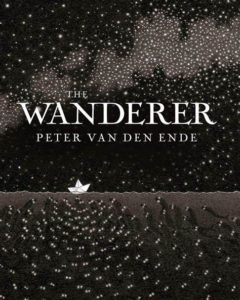
TS: The Wanderer by Peter Van den Ende is stunningly beautiful.

RVC: Your mission as a picture book creator?

TS: I want to connect with readers the same way that my favorite picture books connected with me when I was a kid.

RVC: This was terrific, Todd. Thanks for stopping by and sharing your story with OPB. Best of luck with Except Antarctica!
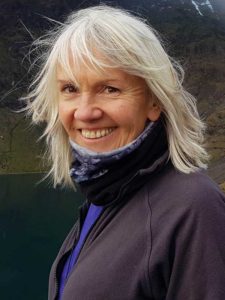
Author Interview: Nicola Davies

June’s Author Interview is with English zoologist and writer Nicola Davies, who was one of the original presenters for the terrific BBC children’s show “The Really Wild Show.” Nicola got her first pair of binoculars at age eight, and she’s been gazing out at the world of animals ever since, from geese in Scotland to humpbacked whales in NewFoundland to chameleons in Madagascar to bat-​eared foxes in Kenya to saltwater crocodiles in Australia.
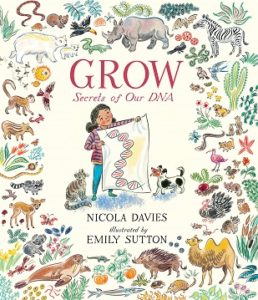
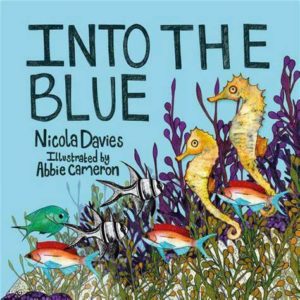
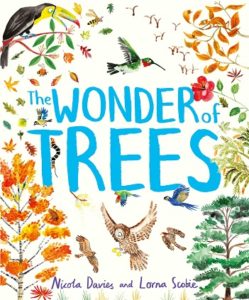
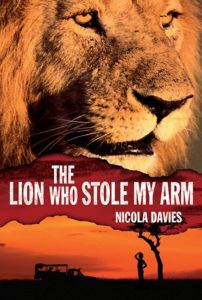
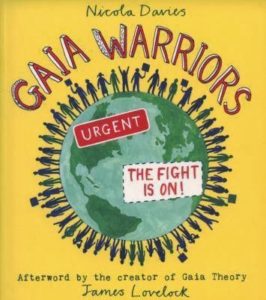
Oh, and she’s written a good number of things along the way, including novels, poetry, and picture books. A few OPB favorites include:

That’s it–thinking about those books again has me excited to hear from Nicola. Let’s get right to the interview!


RVC: Which came first—the love for animals or the love for stories?

ND: I don’t think I could separate them. I came from a family which loved both. My father trained as a biologist and was a keen naturalist but he loved poems and stories too, so information was always imparted in some kind of narrative. My mother was a natural storyteller and instinctively packaged information in narrative. So I grew up with nature poetry and story twined together.

RVC: What inspired you to combine your love of stories with the love of animals?

ND: Entirely intuitively. The natural world is full of ready-​made stories…seasonal cycles, life cycles, nutrient cycles, food chains–all of these are narratives ready and waiting to be retold.

RVC: On a scale of 1 to 10, how interested are kids in animals?

ND: Oh, about 12! I’ve never met a child who wasn’t instinctively connected with and interested in nature. That is the connection that I seek to deepen and strengthen into a lifetime bond.

RVC: Most of your kidlit seems to blend nonfiction and fiction. How do you find the balance?

ND: Narrative is a psychological carrier bag–it can carry real facts and invented ones. But with an invented narrative structure that carries real facts, the narrative itself also has to reflect reality and the factual content you want to deliver. With my hero of the wild series, real conservation stories are told through the medium of invented characters and storylines, but both character and plot are very closely based on real people and events.

The Lion Who Stole My Arm is based on a real conservation project in Mozambique, in the Niassa reserve, and the child at the centre of the story on a real child who was attacked by a lion. The only things I changed were the location of the child to just over the border in Tanzania; the age of my character is 10, the real one 5; and which arm he lost, with the real child losing the left and my character the right. Then I engineered the plot to reveal other background aspects of the real situation. It’s like patchwork!

I did the same with Ride the Wind–a story about a Chilean fisher family who catch an albatross on their long line. It conveys information about the catching of endangered sea birds but also about how some S and C American families are affected by migration to the US. Ditto my book about Hummingbirds.

RVC: Ideally, where do you want those books shelved in the library or at a bookstore?

ND: Anywhere where kids will find them! Ideally two copies–one in fiction and one in nonfiction.

RVC: You’re the first person I’ve interviewed here who worked with/​for the BBC. How did you get that gig, and what was it like?

ND: I was working on a PhD on bat feeding ecology at Bristol University, just a five-​minute walk from the NHU’s home at the BBC in Bristol. When it became obvious that the Tory government were cutting grants for primary research and that, in any case, research would be “preaching to the choir,” I jumped ship and knocked on their door until they let me in. But I wasn’t really cut out for TV–it was very competitive and I’m not good at competing.

I did discover that I could write, so I started writing scripts for the programmes I presented.

RVC: You’ve said before that “while every book is a story, every book also has its own story of how it came to be.” What’s the story behind Gaia Warriors, which is a book about climate change?

ND: My publisher was approached by James Lovelock who wanted to collaborate with a children’s writer to do a book about climate change. I was reluctant to work with him but I was persuaded, and in the end he just left me to it and we got on fine.

I wanted to do a book that gave children:

  1. the arguments to use to put forward the case to climate change deniers,
  2. hope that action is possible,
  3. examples of interesting ways to live their lives that would be stimulating, satisfying, AND fight CC.

RVC: What’s the most important thing writers should know or understand about creating a picture book that deals with a tough topic?

ND: Do your research. Talk to people who have experienced what you write about even if you also have your own experiences to draw on. Be sensitive, be brave, and remember there are as many ways to tell the same story as there are threads in a spider’s web. Find your way.

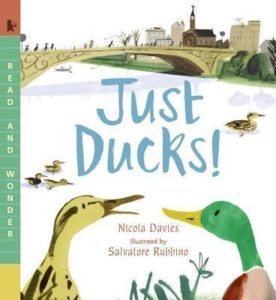
RVC: Your book Just Ducks! came out just a few months back. How do you go about writing a book like that so it’s more than just a pile of duck facts? 

ND: Find the true narrative that carries the facts. In this case it was easy…I really did live in a house by the river (the river Exe in Devon ) and I heard ducks every morning. So everything in that book happened to me multiple times. All I had to do was imagine it happening to a young child.

RVC: You’ve got a very strong view on what narrative is. Care to share it once again?

ND: It’s a piece of writing with a shape. A beginning, a middle, and an end. It should be memorable–i.e. psychologically portable. It should have a clear voice that speaks to the reader. And I like narratives with answered questions and open ends that the reader can think about and engage with.

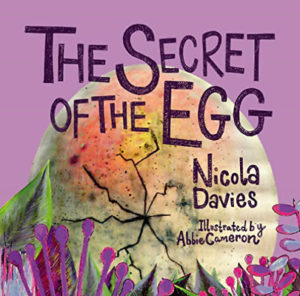
RVC: I’m guessing that the reason you sometimes rhyme—as you do in The Secret of the Egg and other books—stems from your love of poetry. What are some strategies for getting rhyme to really work in a picture book?

ND: Well, the first is to have an editor who lets you do it. Not all allow it.

The second is don’t let the rhyme dictate the thought. Don’t use words you’d never otherwise use just to rhyme (unless you can make a really good aural joke with it). Be super careful with meter…don’t cheat!

RVC: One last question for this part of the interview. In all your experience in writing children’s literature, what has surprised you the most?

ND: I’ve had many lovely surprises from children who respond to and remember bits of my books, identify with characters, and point out things I’ve never thought of. It’s the BEST part of writing for kids.

RVC: Alright. Here we go with the Speed Round! Six fast questions coming at you, starting with…most underappreciated animal?

ND: All the ones that we allow to go extinct before we even named them. All the unseen insects and soil invertebrates that hold ecosystems together, on whom our very lives depend and which we totally ignore. Darwin understood this. That’s why he spent so much time studying earthworms.

RVC: Most underappreciated Welsh food?

ND: Lava bread. It looks a bit like fresh cow poo but is wonderful and very good for you. (It’s seaweed!)

RVC: Which animal would you most want to write a picture book biography about you?

ND:The tiger in my new novel The Song That Sings Us. He’s called Skrimsli.

RVC: Your favorite animal picture book of 2020?

ND: The Lost Spells by Robert Macfarlane and Jackie Morris.

RVC: Your one-​sentence mission as a picture book author?

ND: To fan the spark of childhood curiosity into a lifelong bonfire.

RVC: Best compliment a child reader ever gave you?

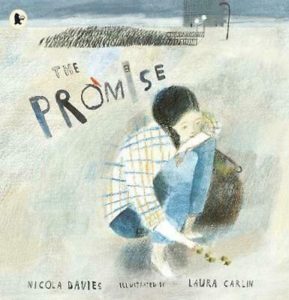
ND: About my book The Promise, a very disadvantaged child from a school in Boston said, “THAT BOOK WAS ABOUT ME!” 

RVC: Thanks so much, Nicola! This was terrific.

Author Interview: Bridget Heos

This month’s Author Interview is with Kansas City-​based writer Bridget Heos—pronounced HEE ose—who’s written more than 120 children’s books (with most of them being nonfiction). She got her start in writing kidlit because one of her four children wanted to read more books about turtles, so Bridget wrote one.

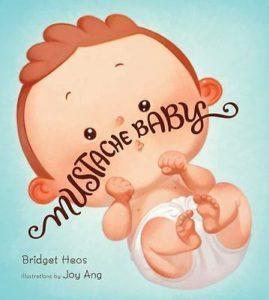
She never thought she would write picture book fiction, but then Bridget read every book on a “Top 100 Picture Books” list and got inspired. Soon after, she got the idea for Mustache Baby.

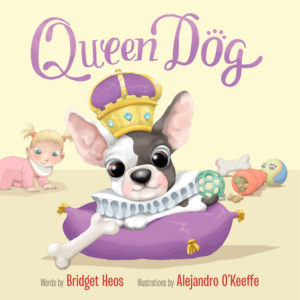
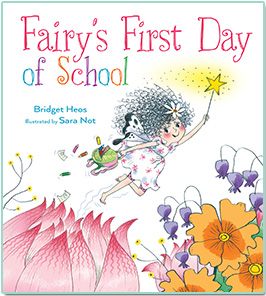
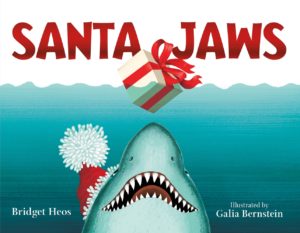
OPB LOVES the Mustache Baby series. But we’re also fans of these books, too (among many others of Bridget’s).

Clearly Bridget figured out how to write picture book fiction at the same level as her terrific nonfiction writing!

So, without further ado, here’s the April 2021 Author Interview with Bridget Heos!

(If you want to check her out on social media before diving into the interview, here’s what you need–enjoy!)

Author website

Twitter

Facebook


RVC: You’re said that you grew up in a family that told lots of stories. What was that like and what type of stories were YOU telling?

BH: I loved listening to their stories. My mom told scary stories that were meant to teach a lesson, like the time her cousin sunbathed for too long. She fell asleep and ants crawled in through her ears and started eating her brain. She was scratching so bad she needed a straightjacket! I can’t tell you how many times I repeated that story as the God’s honest truth I THOUGHT it to be.

My dad told quieter stories of growing up. But I’m not sure what stories I told. I was kind of shy growing up. I think that’s why I wanted to write my own stories down.

RVC: That ant story gives me the willies. Wow!

So, what was your writer’s journey when you first started writing those stories down? And how has it changed since then?

BH: In the beginning, I was writing like crazy. I was doing mostly work-​for-​hire books and had to write a certain amount each year because writing was my full-​time job. By the time I looked up, I had written more than 100 books! I was also woefully behind in all the non-​writing stuff you’re supposed to do as a writer. Now I write fewer books each year but pay more attention to connecting with readers and other children’s book people. I’ve especially loved doing school visits—before the pandemic, I got to travel all over the country!

RVC: What are a few school visit highlights?

BH: I love when I get there and everybody is wearing a mustache for Mustache Baby! A lot of times they’ll have done art or made a welcome sign related to one of my books. It’s all very touching. My favorite part is getting to connect with people after the talk, whether it’s me signing their books or them coming up to ask a question afterwards.

I thought the virtual visits would be different. Honestly, I worried that the kids would be bored. But they have been so much fun. At the end of one, a student unmuted and said, “I’ll miss you.” Then another student unmuted and said, “We’ll all miss you.”

I think that, when they’ve read your books, they feel like they know you a little bit, and I would agree. Most of what happens in my fiction stories happened in my real life and most of what I write about in nonfiction is stuff I think is interesting. During the visits, I encourage them to think about that in terms of themselves:

What in my life could I put in a story?

What topics do I want to learn more about?

RVC: Let’s talk about critics—both internal and external. How do you deal with them?

BH: In terms of inner critic, mine is not too bad. I know that I put my heart into every book. Step by step, I do the work that needs to be done and make the decisions that make the most sense at the time. Criticizing myself because of how someone interprets that seems unfair. I’m not a fortuneteller!

As for outer critics, a bad review hurts but doesn’t surprise me. I’m more surprised when I get a good review, like, “Oh, wow. I finally did something right.” If it’s really scathing, I’ll complain to my husband and then he’ll read it aloud in this pained voice, as though I have hurt him personally by writing such a poor book. It makes me laugh.

RVC: It sounds like he’s a great writing partner.

BH: Yes, he is very supportive. It takes a long time to build a writing career, and he saw me through all that! Although, it’s funny talking about writing to someone who is in a different business. He’s in construction. Once I was talking about all the revisions I had to do and he said, “Well, that’s a change order. They need to pay for their change orders!”

RVC: At one point, you taught writing in junior high. How did that happen, and how did it help your own writing?

BH: An editor friend was teaching there, and he reached out to me because they had another opening. I think it got me thinking about how picture books are really for all ages. We did a unit where the students wrote their own picture books. As research, they read picture books. I read some aloud to them, too, and you could have heard a pin drop.

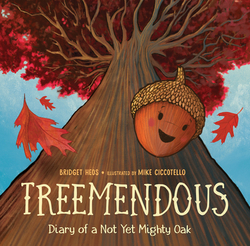
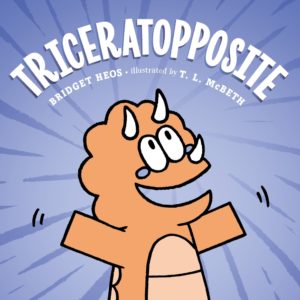
RVC: So, you’re offering free virtual class visits Sept-​Dec in 2021 to celebrate/​promote four new books—Treemendous, Triceratopposite, Santa Jaws, and Good Knight, Mustache Baby, the latest installment in the Mustache Baby series. What are some other things you’ve done PR-​wise to help get the word out about your many new books?

BH: In the fall, I’m going on a seven city virtual book tour! It will be much like a traditional children’s book tour. I’ll do virtual school visits for free and the schools will sell books through their local bookstore. I’m also trying to share more on social media.

The first book to come out this year was Treemendous, and the illustrator, Mike Ciccotello, has a great mind for promotion. We made a trailer and activity pack and all these downloadable inspirational posters. Then we shared them on Twitter, Facebook, and Instagram. I hope to keep this up for the other new releases, too!

RVC: It seems like you’re a fan of punny things, or at least clever wordplay. At what point in the writing process does that come into play? Do you start with that, or are those more often revision-​level additions?

BH: I usually start with the puns. For Stegothesaurus, Triceratopposite, and Treemendous, the wordplay titles were the ideas for the story. And then within the story, it’s just how I write. It’s my writing voice.

RVC: At what point did you realize you had your own writing voice?

BH: I think you’re right that it’s something you realize vs something you create. It’s like what Dorothy learns in the Wizard of Oz.

I realized at some point that my writing voice was not as serious as I thought it was. I’ve always been pretty serious about writing so I’d take these writing workshops and read my very serious essays out loud, and people would be chuckling. I was perplexed, but I thought maybe I should lean into that. Not everyone is meant to be a serious writer, and I didn’t really care either way. I just wanted to write!

Then I was in a music room in a school where I was substitute teaching. There was a sign that said, “Be it ever so humble, there is no voice like your own.” I took that as a sign (It was a sign!). I leaned further into my own voice. Of course, it changes a bit, based on the character.

RVC: Love it. Thanks for that! Now one last question—a series of short questions, really—before we move to the final part of this interview. I’ll say a word or two, you say a word or two in response. Here goes: rhyme.

BH: As long as you keep time!

RVC: Page turn.

BH: Suspense.

RVC: Fairy tale.

BH: They literally wrote the book on endings!

RVC: Sloppy draft.

BH: Very, very sloppy. Terrible. Always.

RVC: Mustache.

BH: Baby!

RVC: Awesome. Thanks for that, Bridget! I promise that no one will try to psychoanalyze those free association questions. 🙂

BH: Great!

RVC: Now I KNOW you’ve been waiting for what’s next because I’ve been waiting for what’s next. EVERYONE has been eagerly waiting for this, their mustaches a‑twitter with anticipation. It’s…THE SPEED ROUND. Speedy questions and spry answers. Ready?

BH: Yes!

RVC: Best place in Kansas City for BBQ?

BH: L.C.‘s Bar-​B‑Q. It’s by the stadium.

RVC: Weirdest job you ever had?

BH: Assistant to a bathtub refinisher.

RVC: Five words that describe your writing process.

BH: Slow, confusing, fast, fun, hopeful.

RVC: What’s your biggest time waster?

BH: Worrying–it wastes prime daydreaming time, and yet I still do it!

RVC: What’s a recent picture book that WOWed you?

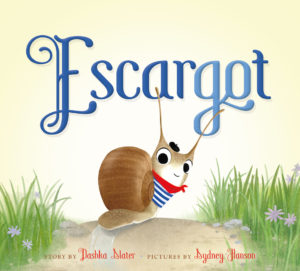
BH: For fiction: Escargot.

For nonfiction: Tiny Creatures: The World of Microbes.

RVC: Something you hope all readers take from your picture books?

BH: A sense that everything is going to be okay.

RVC: Thanks so much, Bridget! It was great getting to know about you and your work. You’re welcome to come by OPB again anytime.

BH: Thank you!

Author Interview: Sy Montgomery

I’m a sucker for authors with great personal stories, and Sy Montgomery shares this on her website:
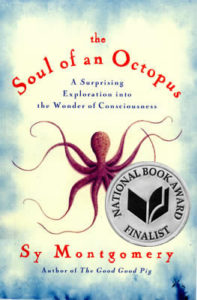
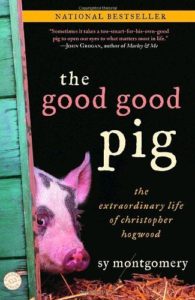
To research her books, films, and articles, Sy Montgomery has been chased by a silverback gorilla, embraced by a Giant Pacific Octopus, and undressed by an orangutan. But she is perhaps best known for her 14-​year love affair with Christopher Hogwood, a runt piglet who grew to a 750-​pound great Buddha master.

So, yeah. We’re having Sy in for this month’s Author Interview. No doubt about it!

Here’s a bit more bio-​wise about Sy. She’s a naturalist, documentary scriptwriter, and author of more than twenty acclaimed books of nonfiction for adults and children, including the National Book Award Finalist The Soul of an Octopus and the memoir The Good Good Pig, a New York Times bestseller. The recipient of numerous honors—including lifetime achievement awards from The Humane Society and the New England Booksellers Association—she lives in New Hampshire with her husband, border collie, and flock of chickens.

And since I’m a world-​class animal fan, I know we’ll get along famously.

With that, let’s get to it!

Sy’s website

Sy’s Twitter


RVC: Some of the picture book authors I interview have a zillion different books about a zillion different topics. You seem to have gone another way and committed more fully to a specific focus. What’s the common denominator with the kidlit—all the books, really—that you write?

SM: Everything I write, for adults and kids, is inspired by and in service to animals.

RVC: Clearly you must’ve had a meaningful early encounter with animals. What was it?

SM: I don’t even remember this, but my parents told me: When I was younger than two, my parents took me to the Frankfurt Zoo, in Germany (where I was born–not in the zoo, but in the city of the Frankfurt!) I broke free of my parents’ hands for a few moments and disappeared. When they found me, I had toddled into the hippo pen—right next to a 3,000-pound hippo, considered the most dangerous animal in Africa.

My parents weren’t happy, but clearly, both the hippos and I were fine about it. I always felt comfortable with animals—far more so than with most people.

RVC: That’s amazing. When did you go from being an animal pal to becoming a writer (not that you can’t do both, as your career demonstrates so well)?

SM: When I began to read, my father, an Army General and my hero, used to help me read animal stories in The New York Times. Back then, in the 1960s, most of the animal stories in the newspaper were about how animals were going extinct due to poaching, pollution, and human overpopulation. I was horrified! Even as a little kid, I realized that people were at fault here, but the good news was that people could also be the solution. If only people knew what was happening! If only people understood that animals have thoughts and feelings, and love their lives as we love ours!

Up to that point in my life, I’d wanted to be a veterinarian—to this day, it’s a vocation I consider almost holy. But I realized as a child that I might be able to help more animals as a writer by getting people to care about animals.

RVC: You were a triple major in college. How did that happen, and how did it prepare you for a life as a writer (and adventurer)?

SM: I just was so hungry for knowledge about EVERYTHING—which is a great thing for a writer. My majors were magazine journalism, French language and Literature, and Psychology. I would have quadruple majored, adding biology, but the school wouldn’t let me!

RVC: I’ve been there. I finished 2.5 undergraduate majors myself and would’ve kept accumulating more had someone not told me, “Hey, just go to graduate school, silly!” Which I did. 

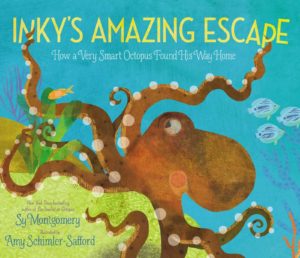
Let’s get to your books. I’m a big fan of Inky’s Amazing Escape: How a Very Smart Octopus Found His Way Home. How did that book come about?

SM: In 2015, my book for adults, The Soul of an Octopus, was published, and became a surprise national (and later international) bestseller and National Book Award finalist. So when a very smart octopus who lived in a New Zealand aquarium escaped from his tank and slid down a drain back into the ocean he’d come from, all sorts of news outlets turned to me for comment. It seemed like this would make a fabulous book for children!

RVC: Besides telling Inky’s escape story in that book, you share interesting octopus facts. They’re such interesting creatures—how do you know which things to share, and how much is too much? That’s something many nonfiction picture book writers struggle with.

SM: Kids absolutely LOVE octopuses! Really, space on the page—not my young readers’ interest—was the limiting factor!

RVC: Why are octopuses so special to you?

SM: I love how these creatures are so different from us that you’d have to go to outer space or science fiction to find something more different from us—and yet, you can become very good friends with an octopus. We both like to play!

RVC: I’m now second-​guessing myself, grammatically speaking. Should I be saying “octopi” instead?

SM: “Octopuses” is the correct plural, though “octopi” sounds cooler!

RVC: Gotcha–thanks!

Let’s talk about the octopus book you just mentioned–The Soul of an Octopus: A Surprising Exploration into the Wonder of Consciousness. Wow, what a book! Honestly, it’s the first one of yours I ran across. I’ll bet you hear that a lot.

SM: Thank you! That book sure had legs! (or arms!) It was my second national bestseller. The first was The Good Good Pig, a memoir (for adults) of my life with a 750-​pound pig who was really a great big Buddha master.

RVC: What was the most difficult aspect of writing that book?

SM: I had such fun researching and writing The Soul of an Octopus. The only difficult part was my own self-​doubt that I wasn’t worthy of telling my octopus friends’ stories. But when I can’t trust myself, I can trust my teachers, in this case the octopuses and others (including people) who showed me that if I have a soul, an octopus has one, too.

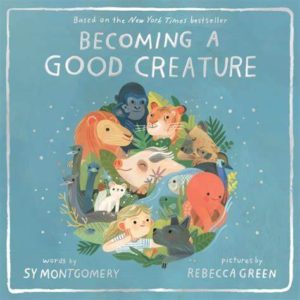
RVC: You wrote about an octopus as well in the New York Times bestselling book How to Be a Good Creature: A Memoir in Thirteen Animals. How did you go about adapting that 208-​page into a 40-​page picture book, Becoming a Good Creature? What was the process?

SM: In addressing the struggles that adults face—finding a passion, building a family, learning to forgive, to survive despair, to start life anew–How to be a Good Creature dealt with some mature themes (child abuse, suicide) that weren’t appropriate for very young children. But we must remember that even very young readers face equally dramatic challenges in their lives. I thought about these, and about what animals a young child might like to meet. Clearly I needed to put lions and tigers and sharks in there, too! And hyenas! So the picture book has fewer icky grown-​up problems and more animals.

I was very lucky to have Kate O’Sullivan, my fabulous editor, to help me with this book. (And Becca’s artwork is so amazing that I honestly think this title would have sold if all I’d done was copy 40 pages from the phone book.)

RVC: Rebecca Green illustrated both the adult version and the picture book. You’re right–she’s very good. What appeals to you most about her work?

SM: The tenderness that she shows in depicting the animals is what I love most about her work. She doesn’t portray animals as cartoons. Many books about octopuses, for instance, have the head in the wrong place. That drives me nuts. Becca’s respect and affection for the animals shines through every illustration.

RVC: It seems to me that you think that we should—need to, in fact—interact more meaningfully with the animal world.

SM: Absolutely! Limiting your friendships to just one species is just as impoverishing as eating only one food, or listening to only one piece of music.

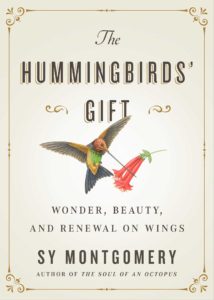
RVC: You’ve got a new book coming out in a few weeks—The Hummingbirds’ Gift: Wonder, Beauty, and Renewal on Wings. Congrats on that! While it’s not a picture book, it’s definitely kid friendly. In all your experience putting that book together, what surprised you the most?

SM: In that book, I had the great blessing of working with hummingbird rehabilitator Brenda Sherburn helping to raise and release orphaned baby hummingbirds. What amazed me is that these tiny delicate babies—they are little more than bubbles wrapped in light–can survive at all. Even for a mother hummingbird, raising a baby is a Herculean task. But for a person to do it? Consider this: they have to be fed every 20 minutes or they starve. But feed them too much, and they can actually pop.

RVC: That’s amazing. What’s the biggest misconception people have about hummingbirds?

SM: Most people love hummingbirds, and don’t realize how many we inadvertently kill. They are killed in shockingly large numbers by our pet cats. They are killed by pesticides we use on our lawns and gardens. (They don’t just need nectar; they need hundreds of tiny bugs every day to survive.) They are killed by pollution, by climate change, by the destruction of their habitats for homes and offices and stores. So it was a great privilege to try to fight that tide by working with Brenda to literally help bring some nearly-​dead hummingbird babies back to life!

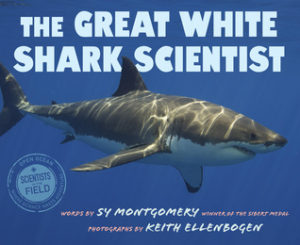
RVC: I’m a shark fan, too, so of course I really enjoyed your The Great White Shark Scientist, which is part of the Scientists in the Field series that includes other titles of yours such as Condor Comeback and Amazon Adventure. What is the most important thing people should know or understand about sharks?

SM: More people are killed by toilets than sharks. More people are killed by toasters than sharks. More people are killed by doctors’ and nurses’ mistakes than by sharks. But nobody wants to get rid of toilets, toasters, or medical professionals!

RVC: You likely don’t know this, but I live quite close to Mote Marine Laboratory & Aquarium, which was launched in 1955 as the Cape Haze Marine Laboratory. Who started it? Why, Dr. Eugenie Clark, a.k.a. “The Shark Lady.” Did you ever get a chance to talk sharks with her?

SM: Oh my gosh, I would’ve loved to! But I’m very lucky to be good friends with the star of The Great White Shark Scientist, Dr. Greg Skomal, who is the lead researcher documenting the recent and exciting population increase of great whites off Cape Cod’s iconic shores.

RVC: One last question before the final part of the interview. The New York Times has called you “equal parts poet and scientist” and The Boston Globe says you’re “part Indiana Jones and part Emily Dickinson.” Which of those four compliments pleases you the most?

SM: Though I’m a huge fan of Emily Dickinson’s, I think Indiana Jones had more fun!

RVC: Okay, Sy. Here we go. Put on your penguin party hat, because it’s time for THE SPEED ROUND! Zebra-​fast questions and zoomy cheetah answers, please. Are you ready?

SM: You bet!

RVC: Craziest thing you ever ate while chasing animals all around the world the way you do? 

SM: I drank rice wine flavored with the corpse of a fetal deer out of a human skull in Borneo while researching my first book.

RVC: Which animal would you most want to see write a book about YOU?

SM: Octavia the Giant Pacific Octopus. I would love to know what she thought about me, even though my mouth was in the wrong place (should have been in my armpits), I had two too few hearts (octopuses have three) and I could neither change color nor shape. Yet she loved me. Why?

RVC: If you had a theme song that describes your life right now, it’d be….

SM: A‑wimoweh, a‑wimoweh, a‑wimoweh, a‑wimoweh (“The Lion Sleeps Tonight”)

RVC: If you could ask any one animal any one question—which animal, and which question?

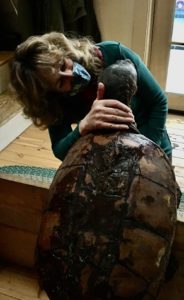
SM: I would ask Fire Chief, a 40-​pound, 60–80 year-​old snapping turtle who I work with (and adore) at Turtle Rescue League, what is his experience of time. (He was injured when he was hit by a truck crossing a street, and we are working with him to strengthen his back legs. I’m attaching a picture just for you!

RVC: A recent great picture book about animals is…

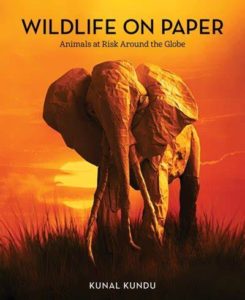
SM: Wildlife on Paper: Animals at Risk Around the Globe by Kunal Kundu. The book was inspired by his son, and features artwork he creates from crumpled paper.

RVC: What’s the best thing a child ever said about one of your books?

SM: I want to spend my life helping animals just like you!

RVC: Thanks so much, Sy! This was a a REAL treat.

A Celebration of Jane Yolen’s 400th book (2 interviews and one original poem)

To help celebrate Jane Yolen’s 400th published book–what an amazing accomplishment!–I felt the need to do more than just review it at OPB. Thus, we have this bonus goody that’s just for you!

I asked Jane and Jen four questions each, and with the productivity and generosity that Jane is so well known for, she offered an original poem, too. Enjoy!


Questions for Jane

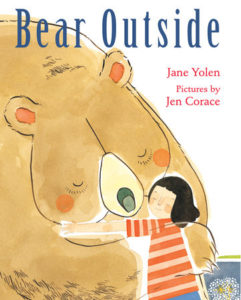
RVC: Why is Bear Outside a good book to be #400?

JY: Because it is typical of my picture book style–lyrical, strong young girl who solves a problem, and has a kicker last line.

RVC: What was most surprising about the hubbub around #400?

JY: That I seem to be the most surprised person of all!

Heidi (my daughter and PA) had been counting the books because when I hit 365 we had a big party at the Eric Carle Museum with teachers, librarians, editors, friends, etc. But I thought as I was just reaching my 80s, I would slow down. But a little over three years later, it was clear I was going to hit 400.

RVC: What’s something readers wouldn’t guess about the girl in this story?

JY: She is me in a way, though instead of a bear, I look out through the eyes of story and it emboldens me.

RVC: Your favorite image from the book? 

JY: I think the very last page, when they are quiet, and instead of a child hugging a toy bear to keep herself safe from night frights, the bear is hugging the girl.


Questions for Jen

RVC: Why is Bear Outside a good book to be #400?  

JC: Bear Outside is the result of so many things I never saw coming or anything I could have conceived of when I started my career in illustration. I had worked on bits and pieces here and there, and I got my foot into the door with Little Pea, but it wasn’t until I started creating bodies of work for gallery shows that I really started to develop a visual voice that felt true to me. It has always been a symbiotic relationship, bringing what I learned creating pieces for galleries into book work and bringing the narrative structure of book work back into paintings made for gallery shows.

If you had told 2007 me that this piece of my career would become part of someone else’s artistic milestone, let alone Jane Yolen’s artistic milestone, I would have calmly told you to get off of my lawn. But it is. It exists, it’s here, and it’s an incalculable honor. To have something put out into the world be seen and understood by someone and then be moved to write a story that respects the core of the image with spare, perfect words? It gives me too many feelings.

For me it’s not a good book to be #400. It’s the PERFECT book to be #400.

RVC: What was most surprising about the hubbub around #400 for Jane?

JC: When I received the manuscript for Bear Outside, I wasn’t told that it would be Jane’s 400th book. I didn’t even know until recently. So it’s all a wonderful surprise. I muddled through my own brain and ideas for so long–it’s a real crock pot of a brain. It makes me wonder what it’s like to have a brain that is all “go go go” while also creating beautiful, meaningful stories. It’s awe inspiring.

RVC: What’s something readers wouldn’t guess about Bear?

JC: Probably that Bear is a Taurus sun with a Sagittarius moon.

RVC: Your favorite line from the text?

JC: “I take care of Bear and Bear takes care of me.”

It’s the perfect distillation of the relationship between Girl and Bear. It’s ideally the relationship we should have in others.


Hugging the Bear

At night, in the dark,
he snores and grumbles.
Sometimes he whimpers.
Then I curl around him.
I am here, Bear, I whisper.
Day will come soon enough.
Wear me like a  suit of armor.
Hold me like a sword of fire.
Tell my story over and over
till all night fears go away.
And his mumbles and whimpers
fade into the dawn.

©2021 Jane Yolen all rights reserved

Author Interview: Laurie Wallmark

This month’s author interview is with award-​winning children’s book author, Laurie Wallmark, who writes wonderful picture books and regularly presents at conferences. She also offers webinars on kidlit writing, too, like the one I attended last week from her at The Writing Barn!
Here are five more things you should know about Laurie. She:

  • has two grown daughters (both software engineers!)
  • co-​chairs the Rutgers University Council on Children’s Literature
  • taught computer science to students incarcerated in maximum security prisons
  • has had four separate careers–software engineer, owner of a mail-​order company selling books about adoption and infertility, computer science professor, children’s book author
  • had a bookstore on the web before Amazon did

Now that we’ve got a much clearer sense of the background basics, let’s get to the actual interview and find out more about Laurie’s secret to PB success.

Website

Blog

Twitter

Facebook


RVC: So, we know each other through Jane Yolen’s Picture Book Boot Camp. How did you get involved with that?

LW: As soon as I saw the announcement that Jane Yolen and Heidi Stemple were holding a picture book boot camp, I was immediately interested. After speaking with a friend who had attended before, I knew I had to apply.

RVC: What has Jane’s support and guidance meant to you?

LW: The kidlit author community has always been a warm and supportive community. But to have someone with as much experience in the field as Jane in my corner means the world to me. Whether it’s sharing publishing business information or giving a “you can do it” just when you need it, I know I can count on Jane.

RVC: How’d you get started in writing children’s books? Since you had a career in software engineering and computer science, I’m guessing the writing bug came later.

LW: The writing bug came significantly later. As a child, the only creative writing I did was a few poems and some songs. About 20 years ago, I had an idea for a middle-​grade novel, so I read many craft books and took writing workshops. That book didn’t sell, so I figured I wasn’t a writer. Five years later, I had another idea for a middle-​grade novel. This one did sell, but the publishing company went out of business. But by this time, I was hooked. Later, I took one more writing break when it felt like I was also so close to getting published, but never quite getting across the finishing line.

Luckily, I couldn’t stay away from writing.

RVC: Why did you choose to earn an MFA in Writing? 

LW: After that second break, I decided I needed to concentrate on improving my craft rather than think about getting published. An MFA would help me to do just that.

RVC: What are some of the specific ways the MFA in Writing for Children & Young Adults at Vermont College of Fine Arts helped prepare you for success as a picture book writer?

LW: My first semester at VCFA, I took a picture book intensive. Having to write so many different types of picture books in so little time forced me to figure out how to get to the heart of the story and write it.

RVC: Unlike some writers who try their hand at everything, you’re laser focused—you write picture book biographies about women in STEM areas. Why is that your calling?

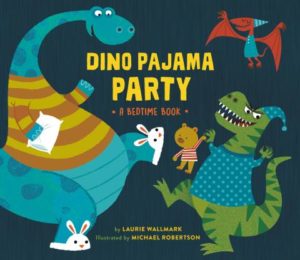
LW: I write about women in STEM because I love science and math, and I want to make sure that all children realize that anyone can join the field. But, I also have a fiction picture book, Dino Pajama Party, coming out in October from Running Press Kids. What’s funny is that because of my reputation, people ask me if it’s nonfiction.

RVC: Here’s hoping the cover helps clue them in!

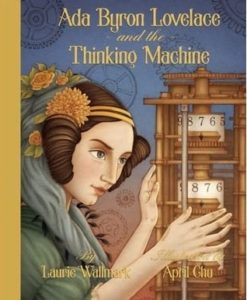
Now, your first book was Ada Byron Lovelace and the Thinking Machine (Creston Books 2015). What’s the story of how that came about?

LW: I’ve always loved math, and I wanted to share that love with kids. Since I’m a computer scientist, and Ada is a mathematician and the world’s first computer programmer, she seemed like the perfect subject for a biography.

RVC: Let’s talk about the process of writing your books. How do you get your ideas? Do you start with a subject, a person, or something else?

LW: For my women in STEM books, I keep a running list of people I might want to write about. When the time comes, I review that list and any notes I’ve already made, like the availability of source material.

For my fiction, I also keep a running list, but in this case it might be an idea, a title, a phrase, or a character. Again, periodically I review the list to see if any would make a good picture book.

RVC: How much research do you do before actually writing?

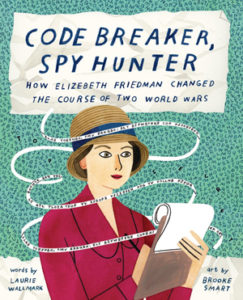
LW: I do almost all my research before I start writing. Invariably I come across discrepancies in the information, and that’s when you need to dig deeper. That’s where archive librarians are really helpful. As a simple example, in my new book, Code Breaker, Spy Hunter, the illustrator wanted to draw a picture of Elizebeth Friedman with her grandchildren. I knew she had had six, but what were their sexes and relative ages? Librarians to the rescue.

RVC: That book’s coming out this month. Congrats on that!  How’d you get hooked on her story?

LW: What’s fascinating to me about Elizebeth is that she wasn’t interested in math or science as a kid. She loved languages and majored in English. Yet she went on to be one of America’s most important cryptologists, helping to capture Nazi spies and rum runners. She also created the CIA’s first cryptology department.

RVC: She sounds positively awesome. I look forward to reading the book.

But part of the challenge with writing picture book biographies is making them interesting. What are some of the strategies you use to make that happen?

LW: I think if the author has a passion for what the subject’s field, it comes through in the writing. In my case, I love science and math, as you may have figured out by now!

RVC: Back matter. How do you know if you should use it? And if so, what and how much?

LW: You need to have, at the very least, a timeline of the person’s life and selected resources. Teachers and librarians appreciate the back matter, so it’s worthwhile for authors to include more. My back matter usually includes a more detailed explanation of the scientific or mathematical principles in the book. But in addition, I’ve included more unusual back matter such as transliterating from the Cyrillic alphabet and the subject’s various nicknames.

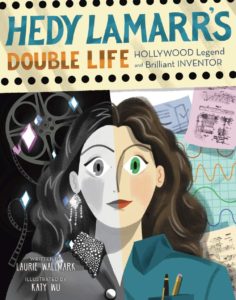
RVC: If someone’s already covered the person you want to write about, should authors just move on? I’m thinking about the situation with your book Hedy Lamarr’s Double Life and Jan Wahl’s Hedy & her Amazing Invention.

LW: A better example is Ada Lovelace. After my book came out, three more picture books about her also came out within a year.

I’d say if you know ahead of time, you should consider writing about another person. But if the subject is important to you, go for it. Clearly we need more than one book about any specific person.

RVC: Part of what sells books is giving a great author visit to libraries and schools. What kind of activities does the Friedman story lend itself to when you’re promoting that new book?

LW: This one’s easy, because the kids can have fun learning how to code and decode messages. Maybe I can find a Dick Tracy magic decoder ring.

RVC: I’ll take one, if you have those!

One last question for this part of the interview. Cuts happen, and good things sometimes don’t make it into the pages—it’s a fact of publishing. So, what didn’t make it into Code Breaker, Spy Hunter?

LW: Elizebeth worked on so many cases that it was hard to decide which ones to leave out. Even though I had 48 pages, which is a lot for a picture book, I could only include her most famous ones. For example, she was once called in to settle a dispute between two countries by showing a sailing vessel flying a Canadian flag was actually a US ship.

RVC: Alright, Laurie—it’s time for the LIGHTNING ROUND! Zippy questions, zappy answers, please. Are you ready?

LW: Go for it.

RVC: What’s your biggest time waster?

LW: Reading.

RVC: Favorite literary villain?

LW: Professor Moriarty.

RVC: Which of the STEM women you’ve written about would you most like to hang out with?

LW: Elizebeth Friedman. We could talk about both math (cryptology) and literature.

RVC: Five words that describe your writing process.

LW: Slow. Slow. Slow. Slow. Lightning-speed.

RVC: What’s a recent women-​in-​STEM biography that really got your attention?

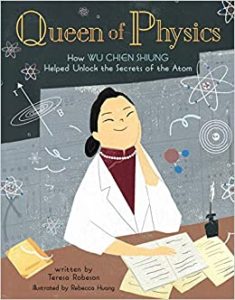
LW: Teresa Robeson’s Queen of Physics: How Wu Chien Shiun Helped Unlock the Secrets of the Atom.

RVC: What’s the best book compliment a kid every gave you?

LW: One of my school visit presentations is about women in computing. During a Q&A, one student said, “Ms. Wallmark, you should write a book about you.”

RVC: Thanks so much, Laurie! Best of luck with Code Breaker, Spy Hunter, too!