
When someone takes the time to write a great social media bio, they deserve kudos, acclaim, and general admiration. Witness editor Cheryl Eissing’s bio at Twitter/X. “When I’m not editing, I can be found reading with an English Bulldog at my feet, cooking too much pasta, or walking my dog around Brooklyn.”
Love it!
Her bio at Penguin’s website offers two bits of dynamite info as well.
“Cheryl mainly edits picture books, with some middle grade and young adult, and is specifically interested in stories that cause giggles, give comfort, and expose their readers to experiences and perspectives they haven’t seen before.”
“Cheryl is always looking for commercial and silly yet profound picture books and stories that entertain, educate, and inspire young readers. When she is not editing books, Cheryl can be found befriending dogs on the streets of Jersey City, watching horror movies, or searching for the perfect lychee martini.”
Awesome, right? Let’s talk to her to find out a bit more.
RVC: Let’s deal with the geographic elephant in the room. In the bio snippets above, it seems you have a multi-state dog love going. What’s the real story there?
CE: Ha! Unfortunately, the first bio is out of date. I lived in Brooklyn with the bulldog in question (who has sadly crossed the rainbow bridge, as the social media pet community often calls it) but he was the greatest editing and walking companion. I moved to Jersey City in 2020 and still go for dog walks (by that I mean, I walk around Jersey City and admire all the dogs). I will always have a soft spot for bulldogs.
RVC: Got it, thanks. Now, back to the regularly scheduled OPB interview…what aspect/part of you today gives away where you’re from and how you were raised?
CE: I grew up in the suburbs of Long Island and went to college in New Jersey, so I’m very serious about bagels and pizza. I’ve just finally grown up and realized you can get good bagels and pizza outside of New York!
RVC: Good to know! Here’s a huge question: what was your first meaningful experience with a book?
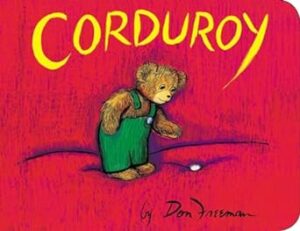
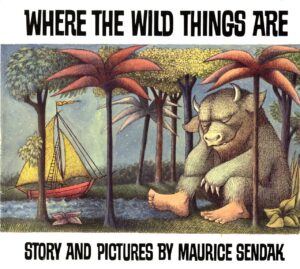 CE: Oh goodness, what a big question! Picture books that I have a vivid memory of reading as a kid are Where the Wild Things Are by Maurice Sendak, Chrysanthemum by Kevin Henkes and Corduroy by Don Freeman. I just remember each of them speaking to something in me as a child. I always loved the adventure of Corduroy and was amazed by the idea of being alone in a department store after it closed. I loved the fantastical, dreamlike elements of Where the Wild Things Are and absolutely identified with Max’s mischievousness. And as someone who did not like being the only person with my name in my class as a little kid, Chrysanthemum really spoke to me.
RVC: Most of us in the book industry had a powerful experience with a teacher somewhere along the way. What was your MIT (Most Important Teacher) moment?
CE: Ms. Jeans, my second-grade teacher!
RVC: Best…name…ever.…
CE: She was the absolute best and always made me feel smart and capable. I remember her showing a drawing I did to another teacher—it’s amazing how much those little encouragements are so important and really stick with you!
RVC: Totally agree! Your LinkedIn account says you did your undergraduate studies at Rutgers. What career goal did you have in mind there?
CE: I wanted to be in publishing since I was in high school. I remember looking at all of the YA books on my shelves and thinking, “Okay, I don’t really enjoy writing, but what are the names of these companies on the spines of my books?” and realized that I could work with books in another way. I went into college thinking I’d major in English and then eventually go onto publishing, and always sort of thought if it wasn’t meant to be something else would reveal itself as my calling, but it stuck!
RVC: What was the most useful thing/skill you learned at Rutgers?
CE: Reading and analyzing literature and seeing the many ways a book can be written and written well. Not all who work in publishing are former English majors, but I felt like it certainly helped me!
RVC: You’re the post child for the power of internships. Share a bit about what you did and how that helped launch your career in the industry.
CE: Because Rutgers was just a train ride away from NYC, I was able to apply for internships and do those in Junior and Senior year. I definitely wouldn’t have been able to do them in Freshman and Sophomore year while I was still getting my bearings and still having to take core requirement classes that took up a lot of my time.
I got lucky with landing my first internship at Abrams, in a department that I wasn’t ultimately interested in, but I was doing admin tasks and learning how publishing worked. That led me to more interviews and more internships. Most of what I did for internships wasn’t stuff that interested me, but it helped me learn how a publishing office worked and gave me good experience!
RVC: It seems like you might’ve had a moment where you considered being an agent. What happened there?
CE: After I graduated college and had just had one interview for a real job, I was feeling very restless and continued applying to internships, which eventually landed me as an intern at a literary agency. It was definitely interesting to learn about that part of the publishing world but I realized it wasn’t for me. I definitely prefer working on shaping a manuscript the most!
RVC: Tell me the story behind the first picture book you acquired.
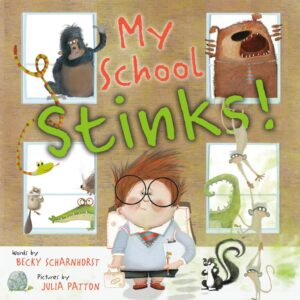 CE: The first picture book I acquired was My School Stinks by Becky Scharnhorst and Julia Patton. I met Becky at the Rutgers One-on-One Publishing Conference, and we really clicked. We worked on her manuscript (which was originally a camp story rather than a school story) and I loved it so much. Becky was so great at really considering my notes and was so great at writing funny and heartfelt stories. I ended up asking her to change the setting from a summer camp to a school and I remember feeling so worried that she wouldn’t want to change so much about her manuscript (but also completely understanding if she did!) and worrying that she wouldn’t want me as her editor.
In the end, she adapted the manuscript into a school setting, and I just loved it and I was so happy that my publisher agreed, too! We found Julia and adored her artwork–she is so talented at doing mixed media scenes and could really incorporate the journal entry format of the story into her hilarious illustrations. I loved working on My School Stinks!
RVC: What’s the most useful thing you got from that experience?
CE: I think I learned a lot about the author’s experience of editing a manuscript. Because it was my first acquisition, I had to really carefully consider my words and how to get the best manuscript possible from my author, while still being encouraging and showing how much I love the book. While an editor absolutely feels ownership over each book they edit, ultimately the book is the author and illustrator’s creation! And our job is to give suggestions in how to make the best possible book that is within the author and illustrator’s creative vision! So I think that experience really taught me to really consider the author on the other end of my emails and notes.
RVC: Let’s jump ahead to your recent work. What’s the most important thing people should know or understand about Flamingo Books?
CE: We love funny picture books! We think books that are fun is the best way to make lifelong readers, so often the first thing we look for is humor. We love profound and heartfelt picture books, too, but I’d say a good majority of our books are funny!
RVC: Why is Flamingo Books a great fit for you?
CE: I love to do sweet and silly picture books that tackle big moments or emotions in a child’s life, as well as books that can teach a reader something new, but always with lots of humor and character. I love a funny book and I’m always looking for books that can be funny while still accomplishing other things. I think that humor is such an easy entry point for kids and reluctant readers. I truly believe that any kid who doesn’t like to read just hasn’t been introduced to the right books!
RVC: What does a typical workday look like for you?
CE: A lot of it is answering emails from other departments, looking at passes of books, fielding submissions, and, depending on the time of year, preparing materials for upcoming meetings.
RVC: What’s the most common misconception writers have about editors?
CE: I think some writers might feel like getting a lot of edits means their editor thinks that they’re not a good writer. Editing can take a lot of time and several rounds (some take 10 rounds or even more!). Sometimes we don’t notice something the first 5 times we read it. Or sometimes fixing one problem in the manuscript creates another. Having lots of edits is very normal and part of the process!
RVC: What’s your editing superpower?
CE: Oh, I really don’t know! I guess I’m good at editing funny books?
RVC: Speaking of editing superpowers, you’ve had some real successes. Share what it’s like to find out a book you edited is on the New York Times bestseller list.
CE: It is really really cool. Being on the NY Times list is not the end-all-be-all of a book’s success by any means, but it’s definitely something that holds a lot of weight in the industry and it is so great to have one of your books succeed in that way. I think the coolest part is that books that land on that list are because of the work of so, so many of your colleagues who loved it. A book that you acquired and worked hard on, and launched to them, and hoped they would love as much as you do. Having a whole team to work hard with and celebrate with is really lovely!
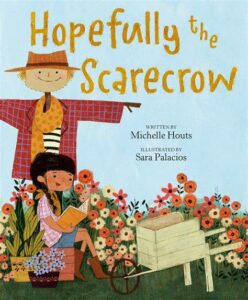 RVC: I believe you worked on a book written by my friend, Michelle Houts—Hopefully, the Scarecrow.
CE: Yes! I adore Hopefully the Scarecrow!
RVC: What grabbed you about that story?
CE: Michelle’s voice throughout the story was what I instantly loved. It had this timelessness to it that felt like a book I could’ve read 50 years ago but also felt so current.
RVC: Your feeling on art notes?
CE: I LOVE how that book turned out. We waited a whole extra year just to have Sara Palacios illustrate and it was so worth the wait! That book is gorgeous and I sometimes just pop it open to stare at the art. It’s one of those book where the words and art really work together perfectly.
RVC: A lot of aspiring writers read OPB. Let’s help them out—offer some examples of “commercial and silly yet profound picture books” please!
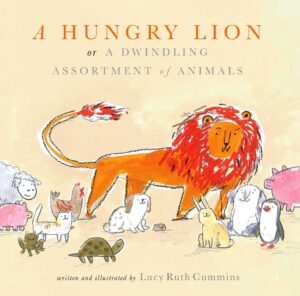 CE: The Bad Seed series by Jory John and Pete Oswald, A Hungry Lion by Lucy Ruth Cummins, We Found a Hat by Jon Klassen, Strictly No Elephants by Lisa Mantchev and Taeeun Yoo, Something’s Wrong by Jory John and Erin Kraan.
RVC: Since COVID, I’ve made a point out of asking everyone a health and wellness action. Here’s yours. What do you do to de-stress?
CE: I like to cook, or exercise, or read a book for pleasure.
RVC: One final question for this part of the interview, Cheryl. If you had to summarize the most important thing you’ve learned about picture books, what would it be?
CE: I guess it would be that picture books have power. They can teach kids about empathy, friendship, loss, feelings, family, differences, etc. and can shape who they are as a person.
RVC: Okay, here we go. It’s the LIGHTNING ROUND. Zippy zoomy questions followed by zapptastically fast answers. Are you ready?
CE: Yes!
RVC: What “old person” thing do you do?
CE: I really like jigsaw puzzles and Sudoku.
RVC: If someone narrated your life, who would you want to be the narrator?
CE: Kathryn Hahn or Ayo Edebiri.
RVC: If you had a giraffe you needed to hide, where would you hide it?
CE: Under a blanket.
RVC: What are five things you couldn’t do your job without?
CE: A notebook, a laptop, post-its, Diet Dr Pepper, Rhymezone.com
RVC: Who sets the standard for picture book rhymes?
CE: Anna Dewdney and Sandra Boynton.
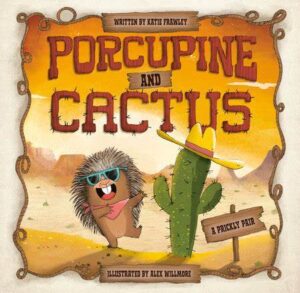 RVC: What’s a favorite line from a picture book you edited?
CE: “Great job, Buffalo. Help yourself to some potato salad.” (From Porcupine & Cactus by Katie Frawley & Alex Willmore)
RVC: Thanks so much, Cheryl!
 Imagine a world where a former forensic scientist analyzes the ingredients of a perfect picture book – with a side of horror movies and ambitious baking goals. That’s the reality of Dan Cramer, founder of Page Turner Literary Agency.



 Today, we’re diving into the imaginative world of Heather Cashman, a seasoned literary agent at Storm Literary Agency, whose dynamic career spans across the evocative realms of Picture Books, Middle Grade, Young Adult, and Adult fiction and nonfiction. Heather’s enthusiasm for boundary-pushing narratives and her commitment to fostering books that evoke a sense of wonder make her a distinguished figure in the literary community.
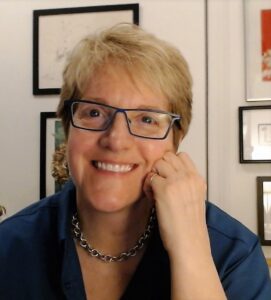 Meet Emma D. Dryden, founder and principal of drydenbks, a premier provider of editorial and coaching services for the children’s publishing industry. Prior to her role as guiding light at drydenbks, Emma was a children’s book editor–first at Random House Children’s Books, and next at McElderry Books, an imprint of Macmillan Children’s Books, where she worked with the legendary Margaret K. McElderry. After Ms. McElderry’s retirement, Emma was made Vice President, Editorial Director of the imprint; in 2005 she became Vice President, Publisher of Atheneum Books for Young Readers and Margaret K. McElderry Books, imprints of Simon
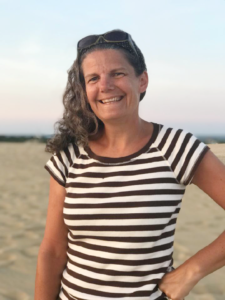 Welcome to Rachel Orr, a longtime literary agent with Prospect Agency. Instead of going with the standard biography here, I’m going to include a few key things she’s said—or others have said about her—that are especially telling.
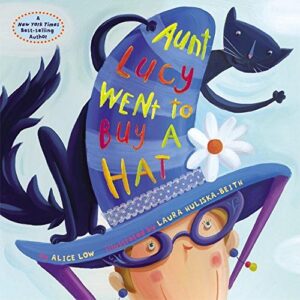
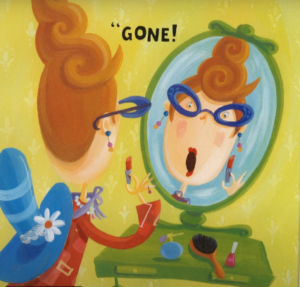 didn’t want it just magically flying behind her on every spread. So Laura came up with the idea to show Aunt Lucy looking in the mirror at the beginning of the book, and she thinks her hat is gone, but it’s really tied around her neck with ribbon and hanging behind her (which the reader can clearly see). It was such a fun solution, and taught me the importance of trusting an illustrator, too.
 Welcome to David Miles, the co-founder and Publisher of Bushel