Editor Interview: Emma Ledbetter (Abrams Books for Young Readers)

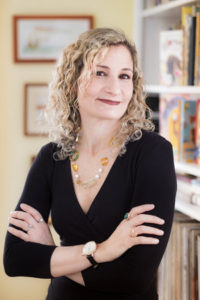
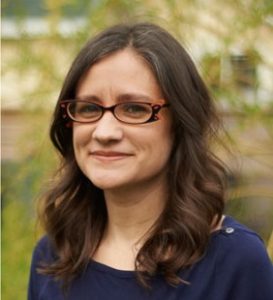
This month’s Industry Insider interview is with Emma Ledbetter, Editorial Director of Picture Books at Abrams Books for Young Readers. Why am I so stoked about this that I’m including a gif of a dancing Muppet here? It’s because she wowed the crowd at an SCBWI event in Orlando this past June, and yours truly was in the audience. And I mean wowed as in WOWed.

I could say more, but let’s instead hear what her new colleague, Andrew Smith (senior VP and publisher of the kidlit division at Abrams), wrote about her in a November 2018 article for Publisher’s Weekly. “Emma’s editorial career includes an expansive and impressive array of engaging picture books that have earned countless stellar reviews and accolades, but most important, they’ve delighted and enlightened young readers. I’m thrilled that she will be bringing her keen eye and expert taste to Abrams, and I’m very excited about the contributions she’ll be making to our list.”

Gosh, that’s so nice that I’m blushing!

Need more, though? I’ll give you five additional Emma bio/​career nuggets, then it’s interview time.

  1. She has a BA in Art History from Yale University.
  2. She had internships at Little, Brown, Nickelodeon, and Nick Jr.
  3. Her Twitter handle is indeed a shout-​out to fans of Frances (the most famous badger in all of kidlit).
  4. She loves Edward Gorey.
  5. She edited the picture book Ida, Always by Caron Levis (illustrated by Charles Santoso).

Ready for the interview now? Onward!


RVC: How did someone studying Art History at Yale end up with internships at Nickelodeon and Nick Jr.? Did we almost lose you to an adjacent-​but-​not-​quite-​kidlit career?

EL: Ha! Actually, I was always interested in children’s entertainment—around high school, I dreamed of working at Pixar, and that interest led me to Nickelodeon. And in my art history major, I wrote my thesis about Little Golden Book illustration. So I was always trying to find the kid-​angle while I was in college. I think it left some of my professors kind of confused.

RVC: Since I run into all kinds of art-​loving students at Ringling College, I also try to introduce a kid-​angle to their efforts, regardless of their major. Why not, right?

Let’s circle back to the presentation I mentioned in the bio that earned you the exceedingly rare OPB Muppets shout-​out. One of the things I took away from that Orlando SCBWI talk is your sincere love for and appreciation of nonfiction picture books. What do you like so much about this sometimes-​underappreciated type of book?

EL: First of all, thanks for your kind words about my presentation—it can be nerve-​wracking up there! It’s interesting that my love of picture book nonfiction struck you, because I don’t usually think of myself as a nonfiction editor (I’d say about 80% of my list is fiction). What I DO love is nonfiction that is creative, fun, and/​or unusual—in its subject, its writing style, its angle into the story, etc. Nonfiction that “reads like fiction.” I’m very selective with it. So you can be sure that if you see a nonfiction book I edited, it’s not just because I liked the topic—it’s because I found the approach particularly interesting or engaging.

RVC: Speaking of engaging, one of the nonfiction examples you used in Orlando was Skulls! by Blair Thornburgh (illustrated by Scott Campbell). For those who missed your talk, would you sum up a few of the reasons that you pounced—editorially speaking—on that book submission?

EL: #1, it made me LAUGH. OUT. LOUD. But it’s also extremely smart.

#2, I’d never seen anything like it before. It is completely fact-​based and scientifically accurate; it’s also totally wacky, and not remotely dry. It’s kind of un-​categorizable, actually.

#3, on reading Blair’s text, I could instantaneously picture what I wanted the book to look like (thank goodness Scott agreed and said yes!) The two of them knocked it out of the park!

RVC: A few of my creative writing students are interested in a career like yours. Let’s give it to them straight. What’s your day-​to-​day work like as an editor?

EL: I answer emails and go to meetings all day long, then go home to read and edit! (But some of those emails are really cool—like approaching an illustrator I love, or sending someone an offer. And some of those meetings are really fun—like digging into a sketch dummy with an art director, or presenting my books to get our in-​house teams excited about an upcoming list.)

RVC: Writing those “I love you and your work!” emails can indeed by fun. But what’s the most difficult aspect of your work?

EL: Time management is a big one. I strongly dislike negotiating contract terms (though it needs to be done!) and evaluating submissions is actually really tough. I get so very many of them, and it’s never fun to send a rejection. It’s extra-​hard when I fully see the merit in something and I really like it, but I just don’t have the space on my list, or I’m not 100% head-​over-​heels for it—only 99%.

RVC: Time and time again, I hear writers who lament how they wish they could do their own illustrations, like Jillian Tamaki or Sarah Williamson do. Make a case for the power of two creatives—the author + the illustrator—versus the all-​in-​one author/​illustrator.

EL: Even some of the most talented and successful author-​illustrators sometimes like to mix it up! I’ve seen an illustrator who writes her own stories fall in love with someone else’s text (like Jillian, who illustrated Julie Fogliano’s My Best Friend), and I’ve seen author-​illustrators write a story that they think would be best served by an artist with a different point of view (like Tomie dePaola, who wrote In a Small Kingdom, which was illustrated by Doug Salati).

Illustrating or writing vs. illustrating and writing can be totally different creative processes, stretching and refreshing your brain. Having a separate illustrator can take your story in wonderful, exciting directions that you couldn’t even imagine when you wrote it. And sometimes, particularly if you don’t have an art background and haven’t spent a lot of time developing your artistic craft, not illustrating your own book is simply the best decision for making the best book possible.

RVC: What are your feelings on illustration notes from writers?

EL: I don’t mind them when they’re critical to explaining a certain part of the story that the text doesn’t describe; or (and use this one selectively!) if you have a brilliant idea for what a certain page might show, and you phrase it as a *light suggestion.* Before sending a manuscript to an illustrator, I will delete pretty much any art notes that don’t fall into these categories.

Once an illustrator takes on a text, remember that it is now 50% their book.

RVC: How long does it take an editor to get situated when they change houses? And how soon is too soon to send them work?

EL: When I moved to Abrams, I’d say I felt situated about six months in, and I’ve been growing more comfortable ever since. I think I’ll feel truly at home once I’ve experienced one full round from acquisition to publication—my first full list of books comes out in Spring 2020, I can’t wait! And I’ve been receiving submissions here (from agents) since…two weeks before I started at Abrams?!

So, fire away!

RVC: Last question for this part of the interview. What’s the biggest story in kidlit that no one’s talking about enough?

EL: Did you see how Jeanette Winter’s beautiful picture book about Greta Thunberg, Our House Is on Fire, went from initial conversation with her editor to published book in two months?? That is a feat surpassed only by Greta herself sailing across the ocean to speak at the U.N.!

RVC: Greta is pretty amazing, and that amazingness is a great segue into the always-​amazing conclusion of every OPB interview. 

Cue the theme music. Open the velvet curtain. Turn on the spotlights. It’s time for … THE LIGHTNING ROUND! Zappy Qs and Zippy As, please. ARE YOU READY?

EL: Ready!

RVC: Most unexpected thing on your music playlist?

EL: Not sure if this is unexpected, but there sure is a lot of Hamilton on there…

RVC: “If I didn’t have a career involving books, I’d instead be _________”

EL: I’ll go with my childhood dream job: an elementary school art teacher!

RVC: Three picture book characters you’d love to have over for a dinner party?

EL: Frances the badger, of course; and let’s add in Lilly (and her Purple Plastic Purse) and Olivia. Dinner wouldn’t be boring, that’s for sure!

RVC: What’s your editorial superpower?

EL: I think I’m pretty good at finding the right illustrator to pair with a text! Also I have very colorful pens.

RVC: Best non-​Abrams picture book you’ve read in 2019?

EL: Two came immediately to mind: I absolutely loved The Important Thing About Margaret Wise Brown and Small in the City.

RVC: In five words or less, how do you measure success?

EL: Do it for the kids.

RVC: Thanks a bunch, Emma. It was indeed a pleasure getting to know you and your work a bit better!

EL: Thanks for having me, Ryan!

Educational Activities: Santa’s Story by Will Hillenbrand

Santa’s Story
Author: Will Hillenbrand
Illustrator: Will Hillenbrand
Two Lions
10 September 2019
32 pages

Book description from Goodreads: “Santa is ready to leave on Christmas Eve, but he can’t find the reindeer anywhere. Dasher is busy dashing, Donner is dozing, and Cupid is crooning. It isn’t until Santa remembers their annual tradition—reading a Christmas story together—that the reindeer are ready. Reindeer merriment abounds in this charming yuletide tale about honoring the celebration of holiday customs with those you love.”


Need some reviews of Santa’s Story?

Kirkus

Publisher’s Weekly

Youth Services Book Review


Educational Activities inspired by Santa’s Story by Will Hillenbrand:

  • Before Reading–From looking at the front and back cover: 
    • What do you think this book will be about?
    • What type of creatures are following Santa?
    • Why does Santa seem so happy?
    • Where and when does this story seem to take place?
    • What questions would you like to ask the author before you read this book?
  • After Reading–Now that you’ve read the story: 
    • What were the most important events in the story?
    • Which of the reindeer was your favorite? Why?
    • Why didn’t the reindeer come when Santa jingled the bells, blew the all-​call horn, and hollered?
    • If the story had a sequel, what do you think it would be about?
  • Writing–Now that you know Santa’s story, what other holiday people/​creatures do you think would have a similarly interesting story? Select the one that appeals to you most and write–or draw–that story any way you choose. Who’s the main character? What problem are they facing? Why are they telling their story? How will their story turn out? Create that story and see how it goes. Consider sharing it with a friend or family member.
  • Craft–With an adult’s help, try some of the following reindeer-​themed crafts: 
  • Further Reading–Want to read other books about Santa? (Click on the book cover for more information on any of these titles!)


Author Interview: Artemis Roehrig

The November 2019 author interview is with Northeasterner author and science guru Artemis Roehrig. What’s cool is that a few days after this interview goes live, I’ll meet her in person at a Highlights Foundation event with Jane Yolen and Heidi E.Y. Stemple. How’s that for some PB-​related name dropping? And a dose of literary kismet?

By way of getting to know Artemis, let’s play the Eight Truths and One Whopper game. Here we go!

  1. Favorite food is macaroni and cheese.
  2. Didn’t get on an airplane until age 18.
  3. Longtime member of the pit orchestra for Valley Light Opera.
  4. Secretly hates coffee.
  5. Has four pet tarantulas.
  6. Earned a master’s degree at UMass in Organismic & Evolutionary Biology.
  7. Still owns a huge collection of Beanie Babies.
  8. Taught summer classes at the Wellfleet Bay Wildlife Sanctuary.
  9. Participates in a combination dance class/​book club.

(If you’re not sure which is false, I’ll spill those biographical beans by the end of the interview.)

For those who are nostalgic about standard bios, though, I’ll offer this, too. Artemis grew up in Western Massachusetts, attended Skidmore College as an undergraduate, and she’s a proud SCBWI member.

Shall we proceed to the interview now? Let’s go!


RVC: Let’s start with your cool first name. Do you have siblings with the name of gods/​goddesses? Do your two kids have equally mythologically wonderful monikers? What’s the real scoop here?

AR: My mother is Greek (check out her memoir Eleven Stories High: Growing Up in Stuyvesant Town, 1948–1968 by Corinne Demas), and since I have my dad’s last name, I think it was important to them that I have an unquestionably Greek first name. And yes, my kids have mythological names too, you’ll have to wait until they publish their first books to find out what they are though!

RVC: Gotcha. (Note to self: Watch for future books from a “Zeus Medusa Perseus Hephaestus Roehrig.”)

So, you made your first book when you were 6, right? A homemade book with your mom called Two Christmas Mice? What do you remember most about that project?

AR: One year we decided to exchange homemade books with our close friends instead of buying Christmas presents. So Two Christmas Mice started as one of those projects. I was very into craft projects at that age, so making books was right up my alley.

RVC: From early on, it sounds as if your mom really wanted you to be a writer. Didn’t she urge you to get a degree in creative writing? What was it like having a successful writer parent?

AR: Yes, she always wanted me to be a writer, and she did convince me to take a creative writing class with Elizabeth McCracken while I was in college. However, I rebelled by majoring in biology.

RVC: I’ve been there there, too, trying like crazy to avoid Fate. But you finally surrendered, and you created a couple of books with your mom, like Does a Fiddler Crab Fiddle? and (forthcoming in 2020) Do Jellyfish Like Peanut Butter? What’s it like to work with her? How is that process different than writing a picture book solo?

AR: As someone in the sciences, collaborating comes very naturally. Look at how many authors there are on most scientific papers! It’s even easier writing with my mom, since we know one another so well. Plus we can be brutally honest with one another when things aren’t working well.

RVC: Talk about the particular challenges of doing nonfiction books for kids. You can’t just make stuff up the way you can with fiction, right? 

AR: Science books are tricky since new studies are constantly coming out. It’s important to always check dates on resources! Nonfiction takes just as much time to write as fiction, but you need spend lots of time on research too. I use a totally different part of my brain when writing fiction versus nonfiction. It’s like the difference between jazz and classical music.

RVC: You’ve spent a lot of time in Cape Cod. How influential is that place—or place in general—in your writing?

AR: I first became interested in pirates when I was a kid and learned about the Whydah, the pirate ship that had wrecked off the coast of Cape Cod, so I feel like it is the perfect place to be when writing about pirates! I also have been very inspired by the Cape for my STEM books. People tend to think of the Cape as just a place to go to the beach, but it has other fascinating habitats like swamps, coastal heathland, marshes, etc, to explore too.

RVC: You’ve got one pirate book out already—Are Pirates Polite? And you’ve got The Grumpy Pirate coming out in 2020 (yet another picture book that’s co-​authored with your mom). What do you find so interesting about pirates?

AR: Pirates are interesting because they are counterculture, which makes them a fun lens to use to look at ubiquitous topics such as politeness or grumpiness!

RVC: How do you balance the creative side of writing with the business side?

AR: The business side of writing definitely takes way more time and effort than I’d like. It’s not really possible to just lock yourself away and be creative. This is a super rough estimate, and varies drastically by project, but in general, I would say the actual writing takes less time and effort than the business.

RVC: Plenty of people give the same advice to aspiring picture book writers (read a lot, join a crit group, be part of SCBWI, pay attention to how kids talk and what they talk about, etc.). What’s one less-​common tip/​strategy/​technique that might help an unpublished picture book writer make real progress?

AR: Well, you hit on a lot of the good ones there. I’d say the most important part of publishing is not to take yourself too seriously. If you’re determined to be published, you’ll need to be very open to criticism. This might include things as extreme as trying out your main character as a different gender or different animal. Rewriting your rhyming book as prose and vice versa. Doubling your manuscript size or cutting it in half.

RVC: Terrific–thanks for those tips. But now it’s time … FORTHESPEED ROUND!! 100mph questions and equally zoomy answers, please. Ready?

AR: Ready!

RVC: Where do you find the yummiest lobster roll in Cape Cod?

AR: I’m a vegetarian, but I’ll say Mac’s on the Pier in Wellfleet because it’s the best location to eat one!

RVC: Most underappreciated insect?

AR: Tiger beetles, since surprisingly few people have even heard of them.

RVC: Awesomest Crayola color that doesn’t yet exist?

AR: Compost. It would be one of those multicolored crayons, made up of various earthy browns and greens. Very useful for coloring in things like trees and grass.

RVC: Best STEM/​STEAM picture book you’ve read in the past year?

AR: Counting Birds: The Idea that Helped Save Our Feathered Friends by Heidi E.Y. Stemple, illustrated by Clover Robin.

RVC: Three words that encapsulate what a good picture book does.

AR: Interest. Educate. Inspire.

RVC: Thanks so much, Artemis!

Note to readers: Did you sleuth out which biographical lie was in that list at the top? The falsehood was … #7. Artemis always thought Beanie Babies were kind of silly. Nowhere near as cool as insects!


Picture Book Review: Pippa’s Night Parade by Lisa Robinson and Lucy Fleming

Pippa’s Night Parade
Author: Lisa Robinson
Illustrator: Lucy Fleming
Two Lions
8 October 2019
32 pages

This month’s PB review is by Ryan G. Van Cleave (#1 parade aficionado at Only Picture Books) and Ringling College of Art and Design Illustration Professor (and OPB buddy) David C. Gardner.

–Ryan’s Review of the Writing–

Pippa has a problem–a “wonderfully wild imagination” that sometimes “runs a little TOO wild.” She does just fine at day when her various costumes serve as armor, but come nighttime? She worries about “villains and monsters and beasts.” Indeed, they pour forth from the darkest corners of both her imagination and her bedroom to cause grief.

Pippa finally tries to tackle her fears head-​on through an invitation to all monsters to come out that night for the Scary Night Parade. Her hope is to deal with the lot of them, once and for all. Yet it doesn’t work out as she hoped. But Pippa refuses to quit. Her next attempt to deal with the monsters leverages something she’s loved from the start–fashion. She’s a big fan of dress-​up. When she brings out the “sashes and sequins and bows” and “belts and berets and shawls,” the critters get into the fashionista spirit and participate in the spectacular show.

Robinson wisely doesn’t let the parents save the day (they quite reasonably send Pippa back to her own bed “again and again and again”). She also presents Pippa as being able to overcome her greatest weakness/​fear through the use of an existing strength. That’s an empowering thing for kids to consider.

Pippa becoming the leader of the monster pack feels like a quiet nod toward Where the Wild Things Are, too, though it’s a bit unfair to compare any book to Sendak’s nuanced masterpiece.

Many readers will delight in Robinson’s attention to the repetition of sound, such as “designs a disguise” and “beasts and brutes and baddies.” They’ll likely enjoy the presentation of Pippa, as well, since she’s a plucky dark-​haired girl who uses her imagination plus problem-​solving skills to get past a common childhood issue.

The well-​wrought cartoony illustrations help bring it all together and keep this story more fun than frightening.

4 out of 5 pencils

David’s Review of the Illustrations–

A light in the darkness.

It starts with the cover: Pippa, victorious, wields a flashlight. Banishing fears with light is the major motif that illustrator Lucy Fleming finds to bring this minimal text to life. It’s a lovely, visual way to capture Pippa’s solution to her bedtime fears.

Along the way, Fleming has plenty of room to add playful touches, like adding a cute white cat (notice: not a scary black Halloween cat!) who accompanies Pippa, like a witch’s “familiar.” The palette is perfect for Halloween, lots of violet, starting with the end papers, complemented with yellow throughout.

This book is clearly aimed at a very young crowd. The pictures are mysterious without being too scary, with plenty of humor, action, and movement. Her monsters early on take the form of ghostly shadows, in one especially clever extension of the text, unscrewing the lightbulbs over Pippa’s bed when she “tries extra nightlights.”

Pippa’s whimsical answer to defeating the monsters? Dress them in silly costumes. That whimsy is echoed in Fleming’s loose, sometimes flattened style, colorful and bright, even at their spookiest, bringing to mind the way a child might draw and color the action.

It would be a mistake, though, to dismiss Fleming’s pictures as naïve. She draws Pippa as a big-​headed kid in the style of the great Mary Blair, a Disney stylist from the 40s through the 60s (think “It’s a Small World”). Blair’s approach is much imitated in picture books today. Fleming even mimics Blair’s gouache painting style, except her opaque watercolor and colored pencil is all created digitally. She manages to bring to it a texture and warmth that feels made-by-hand.

The neatest trick of all: The text moves in and out of Pippa’s mind as her real world intersects with her imagination. To a very young child, there’s not much difference between the two worlds. Fleming blends them, painting a vivid picture of Pippa’s inner and outer landscape, drawing us into the story more deeply than the text alone could manage.

This is a simple story, but a difficult, archetypal one in a child’s development. Fleming manages to help it all go down like Halloween candy.

4 out of 5 crayons


David C. Gardner is an award-​winning illustrator and visual development artist. A former artist for Walt Disney Animation Studios, he has illustrated numerous picture books, including his latest from Sleeping Bear Press, Write On, Irving Berlin! by Leslie Kimmelman (which appeared on OPB not so long ago). It tells the true story of little Izzy Baline, who immigrated to New York City in 1893 and grew up to become Irving Berlin, one of the most well-​known composers of popular music in America. David teaches illustration at Ringling College of Art and Design.
To learn more about David’s own work, please visit FlyingDogStudio.com.

Agent Interview: Jennifer Laughran (Andrea Brown Literary)

This month’s Industry Insider interview is with Jennifer Laughran, a Senior Agent at the Andrea Brown Literary Agency.

By way of getting to know her, here are two haiku embedded with things biographical.

Reads and reads and reads,
this Slytherin show-​tune fan
and kids book maven.

Books are in my blood.”
Runs the Literaticast.
Loves indie bookstores.

What more do you need, right? So, without further ado, let’s get to the interview!

(Though if you want more things Jennifer, the links below will serve you well.)


RVC: Let’s start with something I find intriguing. In addition to being an agent at the Andrea Brown Literary Agency, you have a second job, of sorts—at your local bookstore, Oblong Books & Music. What do you do there?

JL: It’s not really a mystery. I work in my neighborhood bookstore for a few hours on weekend mornings, unless I’m out of town at a conference or something. What do I do there? I… sell people books! And also help run the teen events. I’ve been a bookseller since I was 12, and I see no reason not to keep being one. I like being able to peruse all the new books coming in, and see what kids and parents are responding to on the shelves. Also, as an agent, I work from home, usually extremely long days, sometimes without ever leaving the house or speaking to anyone except online. So it’s nice to actually be forced to interact with people in real time.

(I definitely do NOT work there for the money. I’m a book addict and I’m certain I spend more at the bookstore than I make–but the employee discount is nice!)

RVC: How did being a bookseller since age 12 help prepare you for agenting?

JL: Being a bookseller is, in some ways, like being an agent. As a bookseller, I have favorite books that I’m an evangelist for. I also hand-sell–that is, I ask customers what they want to read, and I find great books that fit their needs.

As an agent, I have authors that I’m an evangelist for. I ask editors what they want to publish, and I find great books that fit their needs. It’s matchmaking, in both instances. Also, my many years in the bookstore gave me a head start at knowing a lot about how publishing works, what the different imprints publish, etc.

RVC: Confession time. I like Kate Messner’s work. A lot. And what do you know, you’re her agent! So, let me ask—which of her picture books has the most interesting idea-​to-​publication story? 

JL: This would probably be a better question for Kate, actually – by the time her books come to me, they are well past the “idea” stage. But maybe Over and Under the Snow?

If I recall correctly, she wrote the original draft for the book on the back of a lunchbag at one of her kid’s field trips. And as you may know, it’s about the “subnivean zone”–which is the area in between the snowpack and the ground where animals chill out during winter. Well, I’m from California and had barely SEEN snow when she sent it to me so I was like “what”? And the editor is from California, as well, and she was like “subWHO zone”? But of course there is no arguing with a brilliant book, and we both quickly got on board the subnivean train.

That book went on to sell brilliantly and have many follow-​up books about different animal habitats, such as Up in the Garden and Down in the Dirt, Over and Under the Pond, with more forthcoming!

RVC: I know you could answer this from the perspective of many of your clients (I’m looking at successes like Daniel Pinkwater, Gareth Hinds, and Erin Lange, to name just a few), but what does Kate Messner do well that keeps her cooking along in the world of kidlit?

JL: Aside from creativity and good writing, obviously, I’d say the qualities that most successful writers share are flexibility, openness and positivity. To use Kate Messner as an example: She is constantly coming up with new ideas, she is always willing to dig deep in revisions and pivot if something isn’t working, and while of course this business has low moments, she rolls with the punches and doesn’t get mired in negativity. You can have a lot of talent, but if you aren’t able to push forward and do the work, you won’t be able to have a successful career as an author.

Also, as with most successful authors, Kate’s a great communicator–not just on the page, but in life. From an agent’s perspective: I need my authors to feel comfortable asking me questions and telling me what they need. I can help you in a lot of ways–but I can’t read your mind!

RVC: Great advice! Now in your 10+ years of agenting, what has most surprised you?

JL: I don’t know if it’s surprising but… interesting? When I first started as an agent, everyone said that “Picture books are dead”–and now I’d say it’s a golden age of picture books. So, like fashion, everything is cyclical. If you’re writing a topic or genre or type of book that isn’t in fashion now, it could very likely come back into style if you stick around! 🙂

RVC: Let’s get numbery. How many submissions do you personally deal with in an average week?

JL: I probably get a hundred or so queries a week.

RVC: What are the first questions you have for submissions that—I’m guessing here, but I’ll bet I’m right—knock out more than half of them straight away?

JL: This was a bigger problem before I got the submission form that I use now. When it was email, I’d get twice as many queries where at least half simply weren’t in a category that I represent. Now that the form exists, it just doesn’t let you submit if you aren’t writing in a category I represent (unless you lie? But like… what’s the point of that?).

RVC: Something else you value in stories—you’ve said it’s a common thread in all of your favorite stories—is an “offbeat worldview.” What are a couple of examples that demonstrate what you mean here?

JL: What I mean by “offbeat worldview” is NOT BORING and NOT DIDACTIC; a story or point of view I haven’t read before. I’m more likely to gravitate to quirky, original-​looking art rather than extremely commercial straightforward art. I’m more likely to appreciate stories that are surprising and funny rather than something with a Good Moral Lesson. My books reflect that taste. Some examples: Cindy Derby’s How to Walk an Ant, which is weird and funny and subversive, about a girl who is a professional Ant Walker. Sergio Ruzzier’s Good Boy, which takes a simple relationship between a kid and his dog to the next level. Maggie Tokuda-Hall’s Also an Octopus, which is a book about writing a book (and has a ukulele-​playing octopus and a rocket ship made of waffles!)

An example of “extremely commercial straightforward art” AND a “good moral lesson” is the Berenstain Bears. Hey, there’s nothing wrong with the bears, they’re popular, and I loved them when I was a kid–but they are pretty much the opposite of books I would choose for my own list.

RVC: Is the offbeat worldview in these books part—or most?—of what makes them unputdownable in your mind?

JL: Yes, being surprising and original and NOT BORING is a good recipe for being unputdownable.

RVC: What’s a recent picture book success story that you’ve been part of?

JL: Raúl the Third’s Vamos, Let’s Go to the Market was very well received this year. It’s a Richard Scarry-​esque exploration of a border town mercado, with tons of awesome details in Spanish. I can’t take credit for the creation of the book in any way–that’s all due to Raúl’s genius! But I’m proud of the role I played in bringing it to the world–particularly now that it’s becoming a franchise, with two more picture books and a handful of board books and early readers signed up.

RVC: And with that, it’s time to move forward with … THE SPEED ROUND! 100mph questions and 200mph answers, please. Ready?

JL: I don’t know, but I’ll try.

RVC: Most surprising Twitter account you follow?

JL: I mostly follow friends, writers, book industry people, theatre people, activists, and cute animals. I don’t think any of those things are surprising.

RVC: The most unappreciated Slytherin member is ____________?

JL: All Slytherin are underappreciated, because the HP books are written with distinct Gryffindor POV bias.

RVC: Mystery Oreos. Great snack, or the GREATEST snack?

JL: Neither, by any metric, but it is a fun guessing game.

RVC: Favorite thing about the Andrea Brown Literary Agency?

JL: My smart and amazing colleagues!

RVC: Most vital social media for an agent?

JL: I don’t think any social media is “vital” for an agent. I personally like Twitter, but it’s optional.

RVC: Three words that describe your Dream Client?

JL: Talented, flexible, communicative.

RVC: Thanks so much, Jennifer! The next time we bump elbows at an SCBWI event, the first pineapple smoothie is on me.

Educational Activites: Snow Globe Wishes by Erin Dealey


Snow Globe Wishes
Author: Erin Dealey
Illustrator: Claire Shorrock
Sleeping Bear Press
15 September 2019
32 pages

The book description from Goodreads: “As the worst snow storm of the year rolls in, one family hunkers down together in a cozy blanket fort for the night. A little girl makes a wish on a snow globe and, in the morning, the sun rises on a winter wonderland–beckoning all outside. And what if, on this snow-​filled day, families shake their busy lives and everyone goes out to play? A lyrical holiday story about wishes and community and snow–lots and lots of snow.”


Need some reviews of Snow Globe Wishes?

Feathered Quill

GoodReads

Kirkus

Publishers Weekly


As a bonus, here’s the book trailer for Snow Globe Wishes.


Educational Activities inspired by Snow Globe Wishes by Erin Dealey:

  • Before Reading–From looking at the front and back cover: 
    • What time of year is it?
    • Why does the girl with the snowglobe seem so happy?
    • Where and when does this story appear to take place?
    • The back cover features three lines of text. How do these words prepare you for the story?
  • After Reading–Now that you’ve read the story: 
    • Which of the family’s indoor activities seemed most enjoyable?
    • What are “snow globe wishes”?
    • When everyone listens, what do they hear?
    • Did the story end the way you imagined?
    • Go back and revisit the pictures in this book. Which of them is your favorite? Why?
  • Writing–Have you ever been in a situation where the power has gone out? Write a list of your things you could do with your family to pass the time when you can’t turn on the TV, play video games, or even use the lights! How many can options can you think of?
  • Crafts–With an adult’s help, try some of the following winter-​themed crafts: 
    • DIY Snow Globe–This craft requires an adult’s help for sure, but they’re not THAT hard to make. And wow, do they look good.
    • Easy Snow Globe–Gather the ingredients and make your own snow globe. How cool is that?
    • Ice Ornaments–Cheap, simple, and terrific to look at. These only work if you live in an area that gets freezing temperatures, though. Sorry, Florida and Texas fans!
    • Melted Snowman–This craft has a few more steps than some, but the result is worth it. Loads of fun.
    • Playdough Snowman–The no-​cook dough recipe has a special ingredient to make the whites really stand out. Add glitter to create a frosty sparkle.
    • Three-​dimensional Snowflakes–Simple, pretty, and an inexpensive hit with kids.
  • Further Reading–Want to find some other terrific picture books about snow? (Click on the book cover for more information on any of these titles!)