
Christian Robinson was an easy pick for a creator spotlight this week, and here’s why: his books look plain until you sit with them, and then a fourth or fifth read hands you emotional information you swear wasn’t there before. Sneaky guy. Here are three books that show off different corners of what he does.
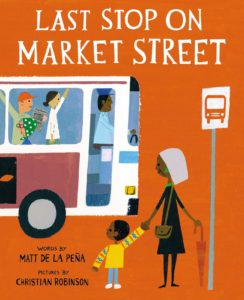 Last Stop on Market Street
Quick note first: Robinson didn’t write this one (Matt de la Peña did) but the art carries so much of the book that this fully belongs in any Robinson conversation. I’m here for what he’s doing with collage.
The story: CJ and his grandmother ride the bus home after church, and Robinson draws the whole ride.
Craft stuff I keep noticing:
- Look at how packed that bus is. Every rider has posture and clothing and a way of taking up space. Nobody is background. (Shoes tell you a lot in this book.)
- Nana sits rooted in every spread while CJ is the one turning, fidgeting, looking around. The whole grandmother-grandson dynamic is happening in body language.
- The palette stays warm even where the book gets into hard stuff—hunger, need, a soup kitchen line. That warmth is a choice.
- Also: watch the guitar spread. Terrific.
 Another
Wordless, and totally committed to it. A girl’s bedroom opens sideways into a city that’s almost hers, and doubles start turning up everywhere.
Craft stuff I keep noticing:
- Wordless books are hard. This one is hard done well. Kids can follow it because every page hands them exactly enough to know where their eyes go next.
- Repeated shapes, repeated colors, repeated figures at different sizes—you feel the “another” of it before you’ve thought about it.
- The move from bedroom to elsewhere happens like it’s the most ordinary thing in the world. No splash page announcing THE MAGIC BEGINS. Robinson just lets it happen and trusts you to come along, which is why the whole book feels like a weird dream you half-remember.
 You Matter
Huge subject, and zero interest in shouting about it. Robinson lets one kid look at one bug on one page and stakes the whole world on that.
Craft stuff I keep noticing:
- Robinson isn’t going to try and out-do his own art with words, and thank goodness for that.
- Scale is the whole engine here. One tiny kid on a big page reads completely different from one face filling the spread. Robinson picks his spots.
- There’s always a bug or a face or a hand somewhere in the frame, some specific small thing for a kid to land on, even when the book is aiming at something as massive as the whole planet.
- A book with a message this size could easily be unbearable. Robinson gets away with it because he does “important” without ever going solemn about it.
Got a favorite Robinson book I skipped? Toss it in the comments. I’m betting Gaston and School’s First Day of School show up fast—Robinson didn’t write those either, but the art in both is WOW.