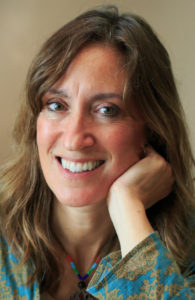
Author Interview: Laurie Keller

I’ve been posting weekly at OPB for more than two years now, and throughout that time, my kids have been kind of “whatEVER!” about the whole thing. But when they heard that “The Arnie the Doughnut Lady” was swinging by? Wow, they got interested. Over the year, we ruined two copies of Arnie the Doughnut with all our rereading, book-​snuggling, etc., so for them, this is the best OPB offering of the century.

I admit it—my dad stock has inched a bit higher as a result of this one. I’ll take it!

It helps that I’ve already shared the advance reading copy of Hello, Arnie! with my kids–it’s book five in the series, and it’s a fun fourth-​wall breaker. The Kirkus review for it says: “Donut expect this to pass young audiences without causing a sprinkle of giggles.”
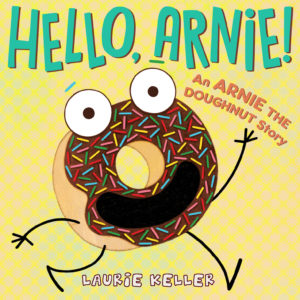
If you’d like to know a bit more pre-​interview info about author-​illustrator Laurie Keller (a.k.a. “The Arnie the Doughnut Lady”), I offer these seven facts:

  • has a degree from Kendall College of Art and Design
  • lives along the shores of Lake Michigan
  • LOVES the movie Waiting for Guffman
  • prefers acrylic paint (“It dries fast and covers up mistakes!”)
  • perfect day includes roasting vegetarian hot dogs over a campfire on the beach
  • searches store bargain bins for ideas (“Well, just because!”)
  • trying hard to learn how to play the banjo

Now that we have a clearer sense of how much fun Laurie is, let’s get to the interview and see it all firsthand!

Want to e‑find Laurie? Here are some terrific options:


RVC: As much as my kids want me to ask Arnie-​only questions, let’s go back to the start of your career for a bit. You weren’t planning to be a writer or an artist, right? Weren’t you studying dance first?

LK: I was in a repertory dance tour company with the local community college and though I considered dance as a major for a while, it was mostly just for fun. I didn’t study ballet (the foundation of most styles of dance) as a kid so I didn’t think I really stood a chance at making it as a professional dancer so, as much as I loved it, I decided not to pursue it.

RVC: You also come from an educator background. Why didn’t you go that route?

LK: I almost did! After my first two years at Kendall College of Art and Design, I left and enrolled at a college that had a great education program, planning on becoming an elementary teacher. I think I would’ve loved that but I was really missing art school and a professor from Kendall talked me into coming back and giving an illustration career a shot.

Since making books involves doing lots of school visits, I feel like I get the best of both worlds.

RVC: That desire to have a career in illustration led you to a job at Hallmark. What did your seven years as a greeting card artist teach you about character and story that would later prove useful in the kidlit world?

LK: I know that a lot of people have the idea that Hallmark artists only paint cute bunnies and flowers—and don’t get me wrong, I love cute bunnies and flowers—but the talent and skills of the creative staff there was through the roof. I learned so much from them—it really was like going to graduate school. When I started making cards for kids a year after I started there, my characters were pretty crude looking but I learned a lot about refining them and making them more appealing.

Then, during my sixth year there, I was in a 4‑month creative workshop where I got to write and illustrate all my own cards. I LOVED being able to create cards from wacky ideas that popped into my head or things that crossed my path (they encouraged us to be as zany as we wanted). It really brought out my sense of humor and it definitely gave me more confidence as far as “putting myself out there” with my writing.

RVC: What was the turning point that got you “putting yourself out there” in terms of picture books? 
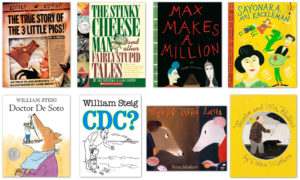
LK: When I got interested in making cards for kids, I started spending lunch hours at a nearby children’s bookstore (The Reading Reptile) looking for inspiration. I was only interested in the illustrations at first but became so enchanted with the stories I read that I started collecting kid’s books and knew that one day I’d love to try writing my own. I was especially inspired by Lane Smith and Jon Scieszka, Maira Kalman, William Steig and Petra Mathers. They all had very different styles of writing—some more dry and irreverent, others more sweet and charming—but they were all funny and engaging in their own right. It helped me to see that there was room for pretty much any style of writing and humor in the children’s book world.

It was years later, when I finished that creative workshop and had to go back to illustrating cards but not writing them, that I got very frustrated and bored, and I’m sure that’s what lead to me writing my first story, The Scrambled States of America.
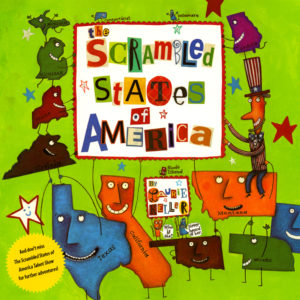
RVC: Publisher’s Weekly loved that book–your first picture book!–as did many critics and reader (including me). How did the idea for that come about?

LK: It sounds so silly but one night, while falling asleep, some little states with arms and legs and faces popped into my head. The next morning I remembered that and thought “Hey, maybe I could make a book using states as characters to help kids learn about U.S. geography in a fun way.” I didn’t know if I’d seen that in a book somewhere so I asked some of my fellow book collector friends if they’d seen that and none had so I dove into writing it. I would work at Hallmark all day then come home and write into the wee hours every night until I finished it—I was obsessed!

RVC: How much input did you have when Gamewright made a game of your scrambled states book (which is an odd but very cool thing to happen to a picture book)?
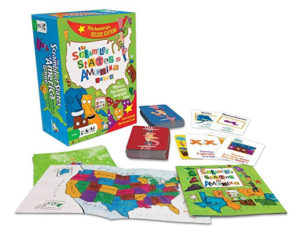
LK: Gamewright contacted Henry Holt expressing interest in turning Scrambled States into a game and wondered if I had any ideas for how it could work. I didn’t AT ALL and was so surprised that they even saw potential for a game. They came up with the entire idea and it’s so much fun to play, very fast-​paced and educational. They ended up making a puzzle version of it, too.

RVC: The Scrambled States of America was purchased by Christy Ottaviano (here’s her 2020 interview with us), and I see that her imprint’s doing Hello, Arnie!, the new Arnie book which comes out in a few weeks (September 2020). What do you like most about working with Christy and her team?

LK: Besides Christy’s minty-​fresh breath, do you mean?

RVC: Yep. That’s a total given!

LK: Well, from day one, she was so warm and friendly and we became fast friends. I thank my lucky stars all the time for being able to work with Christy. And as smart and business-​savvy as she is, she’s also very creative and understands how everyone’s writing process is completely different. She doesn’t get annoyed as I constantly make changes to my stories until the last possible second. And to top it all off, she’s got a goofy sense of humor and is just a whole lot of fun!

RVC: From the interview I did with her here, I totally agree. So much fun!

And speaking of fun, your books feature a lot of wordplay. What’s your process for creating and honing that level of pun fun?

LK: Sometimes I have a few ideas for jokes and silly asides when I start writing. Some of it comes as the story develops and I get to know the characters’ personalities better. But when I get to the illustration part, that’s when most of the jokes pop into my head (especially when it’s late and I’m tired and punchy).

I used to think those ideas were completely random, though I now think my brain is working things out unconsciously and shoots them on over when they’re ready. I’m sure it’s a nightmare for Christy and her team because, like I said, I’m constantly rewriting and making changes until they finally take it away from me. As far as the puns, I’m a punster by nature, probably to the annoying point if you asked my remaining friends–the ones who haven’t left because they’re sick of my dumb puns, that is!
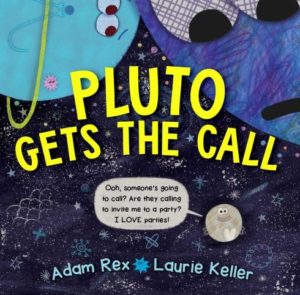
RVC: You illustrate books for others (such as the Marty Frye, Private Eye books and Pluto Gets the Call). How different is the process of working with another’s text versus handling all story aspects on your own?

LK: It takes me longer to loosen up when I’m illustrating someone else’s book; I get so nervous because I want the author to like what I do and I don’t want to blow it! The illustrating process (once I get over my nervousness) is more streamlined because I’m not going back and forth editing my story while I illustrate like I do with my own. Most times, the publisher and author have asked me to add little jokes and asides like I do in my books, and as strange as it feels at first to add words to someone’s story, I always have fun doing that.

RVC: You’re ranged far and wide with your topics. Manners. Doughnuts. Smiling. Geography. Teeth. Numbers. What’s next for you?

LK: I illustrated a book for Joan Holub called I Am the Shark. It’s about sharks. I’ll soon start illustrating a companion book called I Am the Bear. Oddly enough, it’s also about sharks. No wait, it’s about bears.

RVC: I’m sure the marketing folks at the press are super-​happy that’s the case!

LK: I’m also in the idea-​generating process for whatever it is I’ll be writing next. I have picture books in mind, of course, but I’m considering writing books for other age groups as well.

RVC: We loved having you with us, Laurie, but we’ve never had the chance to feature a doughnut here before. Are you open to letting us wrap up this interview with a Q&A from your pastry-bestie?

LK: Thanks for chatting, Ryan! And thank you for asking to interview Arnie–he’s been interrupting me the entire time wanting to get in on it!

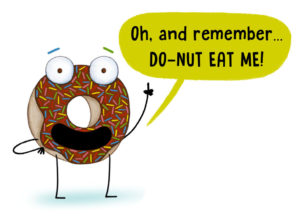
RVC: Arnie, it’s time for THE LIGHTNING CHALLENGE! Sprinkle-​sweet questions and sugary-​good answers, please! Are you ready?

Arnie: I was MADE ready, Ryan!

RVC: Top three items on your bucket doughnut-​box list?

Arnie:

1) to set a Guinness World Record for ROLLING around the world
2) to audition for Cirque du Soleil’s show, “O” (I haven’t seen it yet but since it has a doughnut for the title, I figure I’m a shoo-​in. And I’m very bendy.)
3) to win “BEST IN DOUGH” at the Westminster Dog Show (I’m a doughnut-​dog now, you know)

RVC: A secret talent you have that no one would expect?

Arnie: Charming the ladies.
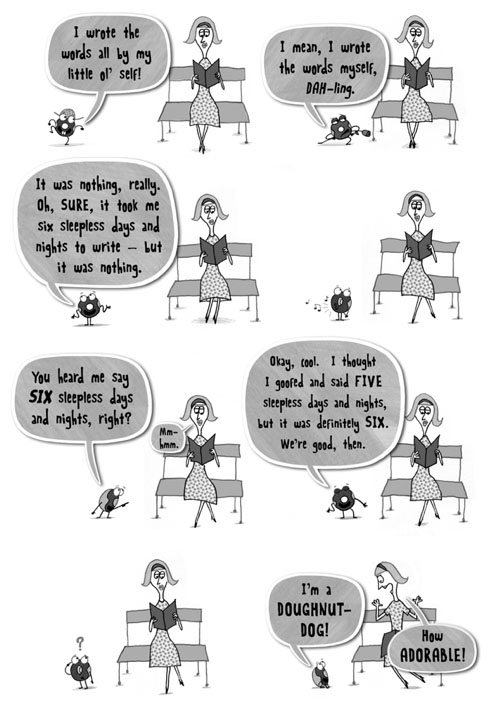
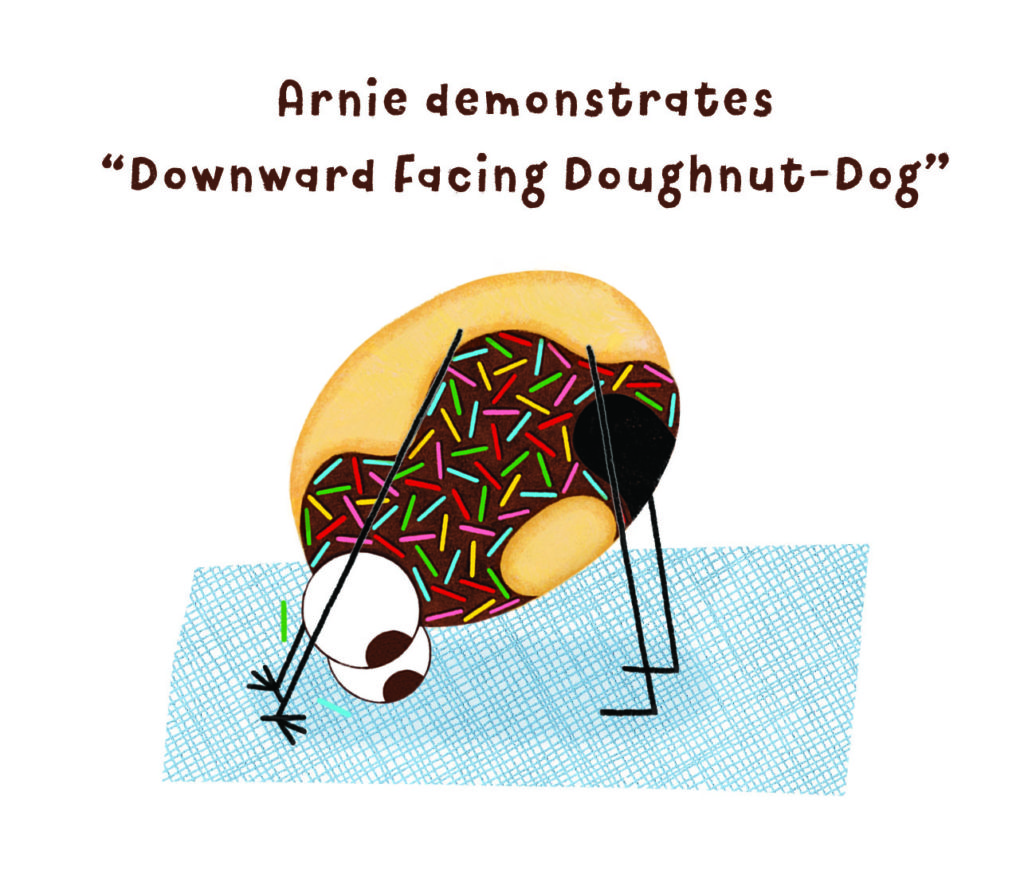
Arnie: I’m also great at hot do-​ga. Your probably know it as hot “yoga.”
RVC: If you weren’t a full-​time picture book star, you’d be…

Arnie: I’m a song and dance doughnut, Ryan. I’d love to be the star in a big show with lots of sprinkles! I’ll tell you what I WON’T be doing and that’s being a picture frame, pincushion, or air freshener like Mr. Bing suggested!

RVC: Favorite non-​doughnut picture book of 2019?

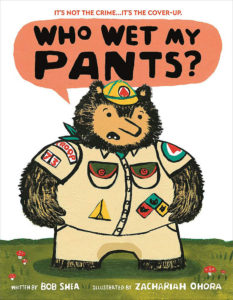
Arnie: Who Wet My Pants? by Bob Shea and Zachariah OHora. I laughed so hard my sprinkles were popping off! (I read Laurie Keller’s copy—don’t tell her, she gets all, “Stop getting frosting and sprinkles on the pages, Arnie!”)

RVC: True or false: you have the same number of sprinkles in every book.

Arnie: TRUE! 135 of them to be exact! Laurie Keller counts them to make sure she does it right. The only time she doesn’t count them is if I’m really small on a page or if only part of me is showing or on the RARE OCCASION that I flip my lid and my sprinkles start flying around. Poor Laurie gets tired of painting sprinkles though and I heard her say once that she wishes she’d made me a plain doughnut.

A PLAIN DOUGHNUT, RYAN! Can you imagine?

I get nauseous just thinking about it.

RVC: How did you first meet Laurie?

Arnie: I was visiting a friend in NYC who lived next door to her and we met on the elevator. She gave me her card and asked if she could make a book about me. I knew it was only a matter of time before someone approached me about it.

RVC: Why is Laurie the best person to help you tell your story?

Arnie: She really gets all of us “inanimate objects,” I guess. She knows that we have feelings, hopes, and dreams just like anyone else does. Plus she likes my corny jokes. I’m a pun-​bun at heart.

RVC: Your favorite line from any of your books?

Arnie: That’s a dough-​brainer, Ryan…it’s my signature song, ”DOUGHNUT MAKE MY BROWN EYES BLUE”.

RVC: Thanks so much, Arnie (and Laurie, too)! I had a great delicious time!

Arnie: Thanks for having us, Ryan!
Author Interview: Kristen Schroeder

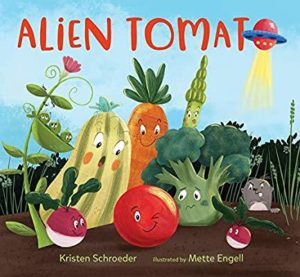
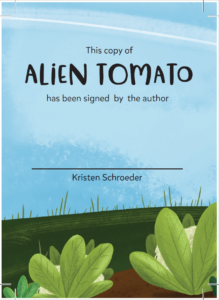
It’s always a treat to be able to showcase the work of a debut picture book author, and with this month’s Author Interview, that’s what we’re doing. Minnesota author Kristen Schroeder’s first book, Alien Tomato, comes out…TOMORROW!
Like any serious writer, she’s already hard at work on creating others, with Freddy the Not-​Teddy coming out in April 2022 with EK Books, and a third picture book entitled So Much Snow hitting shelves in late 2022 from Random House Studios.

Let’s fire up the interview and hear how yet another worthy author broke into the business!


RVC: First things first. Should one pronounce your last name like Charlie Brown’s piano-​playing, Beethoven-​loving pal (which I think rhymes with “grow fur”)? Or are you working more with a gray/​day/​hay sound there (which all sound very Minnesotan)?

KS: I love the Peanuts reference! It’s Schroeder pronounced like it looks, with a long “o”.

RVC: Thanks for that. Now, the next thing we need to get “Out There” is a disclaimer. We know each other. Want to share how?

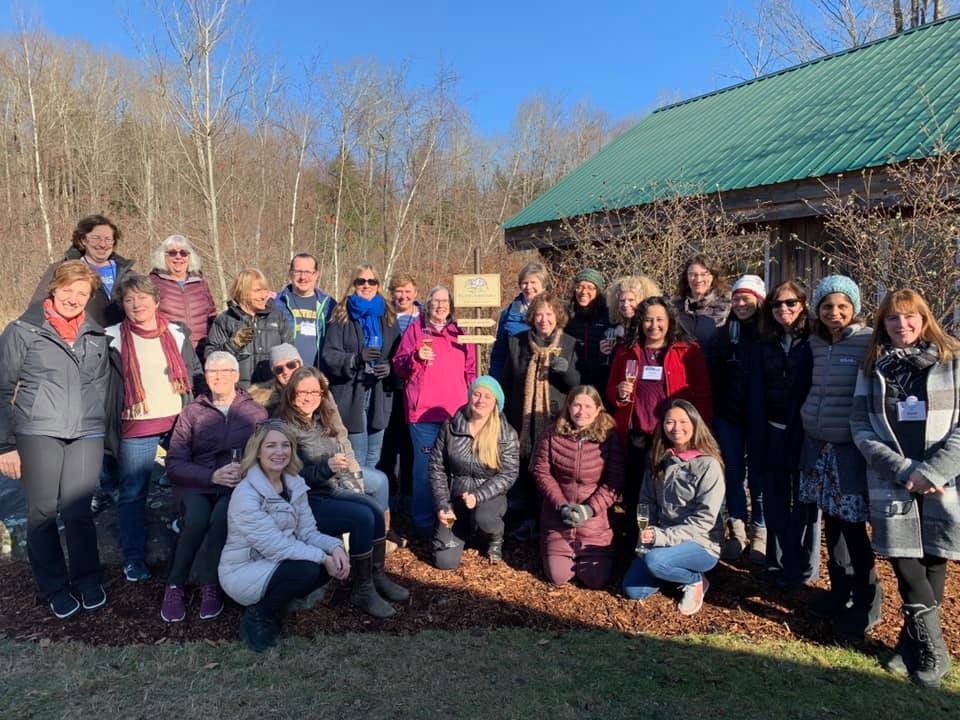
KS: We met in November 2019 (Wow, doesn’t that feel like a lifetime ago?!) at Jane Yolen and Heidi Stemple’s Picture Book Boot Camp held at the Highlights Foundation. I was able to check off two bucket list items in one long weekend as I had always hoped to participate in PBBC and soak up some of JY and Heidi’s wisdom. Staying at the famed Highlights campus was also a dream come true. I highly recommend!

RVC: Just to prove I was there, I’ll include a photo of all the participants holding champagne to toast the opening of the Jane Yolen “Phoenix Farm Annex” cabin. Considering that there’s 25 womenfolk and 1 dude (me!) in this image, it’s a pretty weak Where’s Waldo? challenge. (spoiler #1—I’m in the back, four from the left, squinting like bonkers thanks to that oh-​so-​bright Pennsylvania sun!) (spoiler #2—that’s Kristen in the white coat in the front!)

KS: JY even has a nickname for Ryan: Big Guy.

RVC: That’s true, though to be fair, Jane’s on the diminutive size, so it’s not like I’m Big Bird or something. Just saying. 🙂

What was the most important lesson you learned while there?

KS: I can’t distill the experience into one lesson, however, being surrounded by such a talented group was inspiring. In addition to the writing tips and reviews I received from Jane and Heidi and the group, listening to everyone’s stories of working with their agents and editors was invaluable. It felt like I had entered a new stage of my career as an author.

RVC: That Highlights event was also where I first encountered your debut picture book, Alien Tomato. Many of the participants brought copies of recent or forthcoming books and displayed them atop a grand piano (if memory serves). Your book was there in a F&G (folded and gathered) state. How real did the debut book situation feel at that point?

KS: I received my F&Gs the day before I left for Highlights. I watched nervously as several authors read Alien Tomato, including Jane Yolen herself! What does that facial expression mean? Are they smiling, laughing? Oh my gosh, what if no one “gets it”?

RVC: For what it’s worth, I got it, too. Those are some fun veggies!

KS: I’m happy to report I received kind feedback from several fellow boot campers which calmed my nerves.

RVC: Doesn’t surprise me in the least, both that you felt supported and that your book was well-​received. But let’s talk more about your book.

Let’s say you bump into a stranger in an elevator. You get to talking, and they find out you’re a writer. “Tell me about your next book?” they ask. What’s the elevator pitch you’d give them for Alien Tomato?

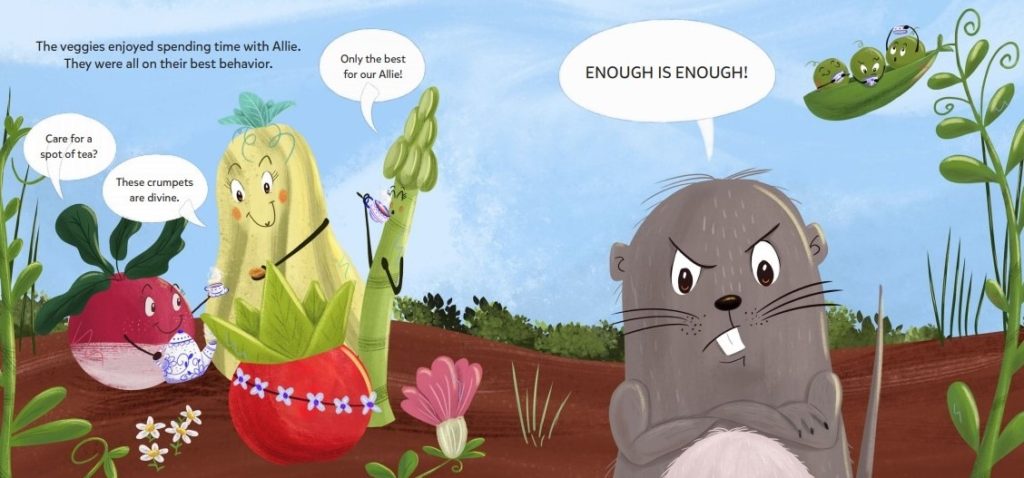
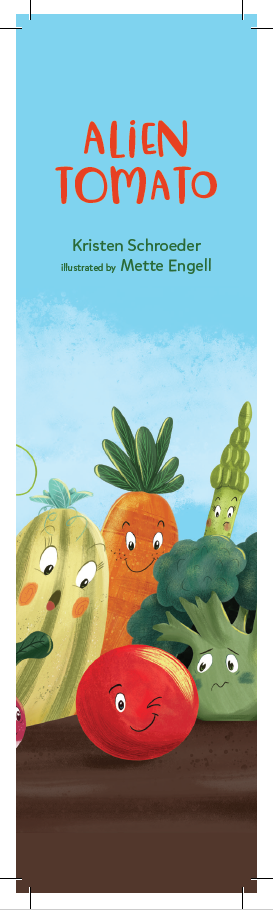
KS: A round red object lands in a veggie garden, and the veggies think it’s an alien tomato, but a cantankerous gopher thinks it’s just a red ball.

Hilarity ensures.

RVC: What’s the story of how Alien Tomato came to be? Was it anything like the old Reese’s Peanut Butter cups commercial, where someone’s like, “Hey, I’ve got peanut butter. Yum! And I’ve got chocolate. Yum! Hmm. Maybe I should put them together….”? 

Because aliens are great. And so are tomatoes, right? 

KS: I do love peanut butter cups, but I won’t let that distract me from telling you the backstory.

My daughter blurted out “alien tomato” after school one day. It was completely out of the blue and we still don’t know why she said it, but I started thinking about the story and it developed pretty quickly from there.

RVC: True or false. The character of Gopher is based on a real person.

KS: False. But Minnesota is known as the gopher state, so I had that inspiration to draw upon.

RVC: Share a bit of the process of writing/​revising Alien Tomato. Did you have a zillion drafts? Did a critique group help? Did you get stuck and finally come across a EUREKA moment?

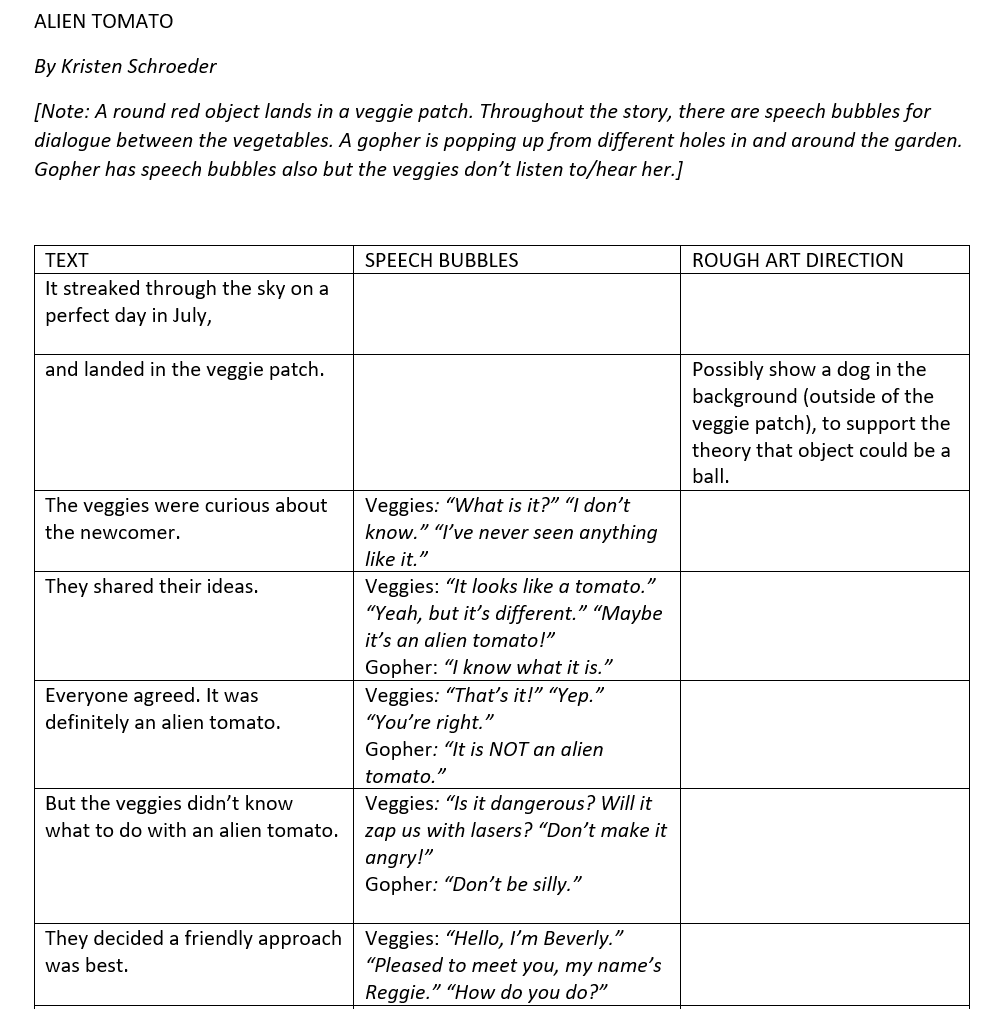
KS: The biggest challenge I faced when writing Alien Tomato was figuring out how to format the manuscript. I was juggling text, dialogue between the veggies and gopher, and illustration notes. I finally dropped it all into a three-​column table which made it much easier to scan and see what was happening on each page. That was a breakthrough moment for me. And, as usual, my critique partners were invaluable in helping me hone various drafts for sure.

RVC: Thanks for sharing that page from an early draft. That three-​column idea is both awesome and clear. So helpful to see it in all its glory!

KS: I created it for myself initially, and my agent liked it and even submitted to editors this way. I’ve used the format since for other manuscripts, too.

RVC: What was the biggest surprise of the post-​contract but pre-​book-​being-​out part of the Alien Tomato journey?

KS: It was the moment I had been waiting for, selling my first book, and then there was still a lot of waiting.

RVC: There’s a popular saying in the publishing industry—you only get one debut. What specific things have you done to make sure it has all the pop, sizzle, and PR fizz you can create?

KS: Unfortunately, Covid-​19 happened so I had to scrap my plans for a launch party. I’m doing a few virtual story times and promoting Alien Tomato through Instagram tours and blogs (like yours, thank you!). I ordered some swag so I could run a pre-​order giveaway contest and I’m getting some Alien Tomato themed cookies made by a local baker, yum! I’m tentatively thinking of doing a delayed event next year, since I don’t have a book coming out in 2021. Fingers crossed that will be possible.

RVC: You’re part of Perfect 2020 Picture Books. Tell us about that group.

KS: One of my favorite things about having a debut picture book has been traveling the same road with the authors who comprise Perfect 2020 PBs. It’s been great to have their support, to bounce ideas off each other, and promote our books. I look forward to continuing these friendships into 2021 and beyond!

RVC: You sold Alien Tomato via a literary agent, Christa Heschke (who OPB just interviewed a month back). How did you land her as an agent?

KS: I had an offer from another agent on a manuscript and that same manuscript was out to a handful of other agents, including Christa. I followed up with all of them and Christa asked to see more work. Then we had “the call” and it wasn’t a hard decision to sign with her. I got a sense for Christa’s knowledge of the industry and her even-​keeled personality, which have been a big plus.

RVC: What’s Christa’s agenting superpower?

KS: Her responsiveness. She’s available to answer any/​all questions and usually responds to emails the same day. I love that about her.

RVC: Yep. I totally believe that. She was easy-​peasy-​squeasy to work with on the OPB interview, too.

KS: That sounds like Christa!

RVC: If I asked Christa what your writing superpower is, what do you think she’d say?

KS: Gosh, I hope she’d say humor and also that I’ve been willing to try new things and keep improving as a writer.

RVC: Let’s back up a bit. When did you first realize you were a writer? 

KS: I didn’t realize I liked to write or even wanted to write until I was almost 30. I’d always been a huge reader but I didn’t think writing was something I could pursue. It wasn’t until I attended my first SCBWI conference that I felt like a writer.

RVC: What kind of formal writing training did you have?

KS: My degrees are in marketing, so any writing courses I took in college were geared towards business communications. I didn’t start writing creatively until 2000 and I took a few classes when I lived in Melbourne. Then I took a long break to run my own business and start a family. I picked up writing again in 2014 by joining the 12x12 community and taking more courses, joining SCBWI, attending conferences, etc. That was the year I started pursuing writing for children seriously.

RVC: If you had to summarize the most important thing you’ve learned about picture books in your just-​getting-​started-​but-​now-​going-​strong career, what would it be?

KS: Picture books have power, and that power is grossly underestimated. Writing picture books is an art form that takes years to learn but it’s SO worth it.

RVC: Here’s one final request for the “serious” part of the interview. Please describe the exact feeling you’re having, knowing your book will finally, finally, FINALLY be Out In The World in just a few hours.

KS: It still feels a little surreal. I don’t think it will sink in until I spot Alien Tomato in the wild (a.k.a. a bookstore). I also can’t wait to see kids reading my book. That will make it real.

RVC: Okay. It’s time for the patent-​pending, crowd-​pleasing, always-​wowtastic SPEED ROUND. Kristen, are you ready?

KS: I hope so…

RVC: Honeycrisp apples. Great apples, or the greatest apples?

KS: I love them! They were created by the University of Minnesota. I’ve chaperoned my kids’ seventh grade field trips to the Arboretum where we got to taste apple varieties and learn how they breed apple tree to have different qualities. We also got to taste test apples and the Honeycrisp was always my favorite.

RVC: You’re a dual American-​Australian citizen, so what’s the awesomest Australian expression Americans don’t fully appreciate?

KS: Crikey! There are so many. It truly was like learning a foreign language when I first moved to Australia. There are some expressions I’ve hung onto because there isn’t a suitable American substitute. I like “spit the dummy” which means a sudden display of anger or frustration. I’ll use it in a sentence: “Ryan spit the dummy when I turned in my interview questions late.” Dummy is Australian for pacifier, so if you imagine a baby spitting out his dummy, that’s where the expression comes from.

(Just kidding — Ryan didn’t really spit the dummy.)

RVC: What’s your literary motto?

KS: I have this quote by Samuel Johnson on my website: “A writer only begins a book. A reader finishes it.” Keeping the audience in mind is especially important when writing for kids.

RVC: Most influential picture book you encountered as a child?

KS: I was obsessed with the Little Nutshell Library by Maurice Sendak. Some of the stories like Pierre, where a boy gets eaten by a lion, had a subversive edge to them and they stuck with me.

RVC: Best picture book of 2019?

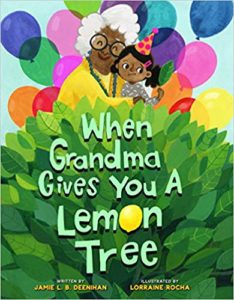
KS: My critique partner, Jamie LB Deenihan’s When Grandma Gives You a Lemon Tree. I love this book, and its sequel, and am so proud of Jamie!

RVC: Three words that encapsulate the spirit of Alien Tomato.

KS: Kindness, curiosity, unexpected.

RVC: Thanks so much, Kristen! It was terrific, you betcha! (I’m from Wisconsin, so I have the ability to sort of speak Minnesotan, dontcha know.)

Author Interview: Laura Renauld

This month’s Author Interview is with Laura Renauld, a kidlit writer living in Northern Virginia. I normally spend a good bit of time carefully crafting a unique biographical statement by way of an introduction, but when I saw Laura’s Twitter bio, I surrendered. Why mess with perfection?
  • Moment miner.
  • Seed-​idea saver.
  • Imagination investor.

Wow. With that, let’s move on to the interview (after some relevant URLs for a little on-​your-​own sleuthing, if you wish)!


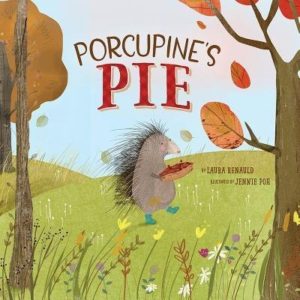
RVC: Let’s deal with the elephant porcupine in the room. In 2018, OPB ran an Educational Activities post on your debut picture book, Porcupine’s Pie. Just tell the truth—was that great PR for your book, or the greatest PR for your book?

LR: It was definitely the greatest PR! I especially appreciated the science connections so kids (and their adults!) could learn the differences between porcupines and hedgehogs. Very educational!

RVC: Debuts are always exciting, but inevitably full of new challenges for authors. Is that where the Debut Review Challenge came from?

LR: When I was preparing for my debut, I kept hearing about the relationship between reviews and a book’s success. This seemed to be particularly true for debut authors and illustrators since they don’t have the benefit of a fan base or name recognition yet.

I am also a huge fan of online challenges, which motivate, encourage, and connect me to the incredible Kidlit community. (In fact, Tara Lazar’s Storystorm challenge inspired Porcupine’s Pie!) I figured if I combined the two, it would be a win-​win for debut Kidlit creators and their audience.

RVC: What was the most unexpected part of the entire publication process for YOUR debut book?

LR: I’d have to say it was the unconventional way I got an offer for publication. Porcupine’s Pie won the first Beaming Books Picture Book Writing Contest in December 2016. I opened an email thanking me for submitting my story and it went on to congratulate me and offer publication of my book! This was before I had an agent. I was so used to emailed rejections that I had to read the email a few times for the good news to really sink in.

RVC: In retrospect, what was the best PR thing that you did for Porcupine’s Pie?

LR: I’m not sure how any of my PR efforts really impacted the visibility of my book, but Jedlie’s Reading with Your Kids podcast (interview link) was something that really took me out of my comfort zone and got me into the ears of my audience: parents and caregivers! With an interview like this one on OPB, it is okay to take time on the questions and endlessly revise them. Not so on a podcast where the interview is verbal and recorded!

I once received some advice in regards to book promotion that really resonated with me: Say “yes” to everything at least once. By saying “yes” to a podcast, I now know that I can do them. And by extension, it gives me confidence to say “yes” to other things that may come my way, even if they make me initially uncomfortable.

RVC: Let’s back up a bit. How did you get started in writing? 

LR: Ever since I can remember, books and reading have been an important part of my life. I could sit on my bed and travel to another planet, share a cake with a panda, or hide out in an art museum. I found friends and adventures between the pages. I don’t remember writing being part of my childhood in quite the same way, but I did keep journals and write to pen pals. A friend and I even created a newspaper which we distributed to the neighborhood, but I didn’t start writing stories until I was an adult.

When I taught third grade, my favorite part of the day was the read-​aloud. I chose a variety of picture books as mentor texts for Reading and Writing Workshops, as supplements for Science, Social Studies, and Math units, and as a springboard for discussions on social topics, such as inclusion, bullying, and empathy. I witnessed the power of story to captivate, amuse, and encourage. Stories are powerful and I felt drawn to the creative process.

RVC: And when did that interest turn to picture books specifically?

LR: Picture books are my first love. They are such an amazing art form because they tell a story and pack an emotional punch in so few words and pages. And the pairing of text and illustration is a collaborative art unlike any other.

RVC: You’re repped by Wendi Gu, right? We did an interview with her a few months back, (though it seems like she’s moved from Janklow & Nesbit to Greenburger Associates since then). What do you imagine Wendi would say is YOUR secret weapon when it comes to writing great picture book text?

LR: Wendi is amazing. She plucked my work out of the slush pile three years ago and, as a client, I’ve moved with her from Greenburger to Janklow & Nesbit then back to Greenburger. She is the perfect combination of cheerleader and realist and an indefatigable champion of children’s literature. She deeply understands the publishing industry and gives stellar editorial advice. Perhaps she would say that my secret weapon as a writer is versatility. I like to experiment and each project I become passionate about is invariably quite different from the one that came before it in genre, structure, and point of view.

RVC: And what do you see as Wendi’s best literary agent superpower?

LR: Wendi is superb at giving constructive feedback. She somehow uplifts my writerly ego while simultaneously telling me what is not working and why. I appreciate her honesty and tact.

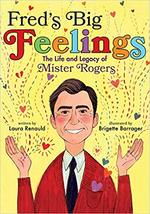
RVC: Did you have the idea for Fred’s Big Feelings: The Life and Legacy of Mister Rogers before you heard about the Tom Hanks Mr. Rogers movie?

LR: Yes. If I’m remembering correctly, my text was in its final stage of edits with my publisher when I first heard about the movie.

RVC: In what ways was the process of writing this picture book biography different than writing the fiction picture book Porcupine’s Pie?

LR: With Fred’s Big Feelings, I did a couple months of research before I even started writing. Organizing the research and finding the thread of the story I wanted to tell made the process much different from the story web brainstorming I tend to do for fiction plots.

RVC: How did you react to seeing how illustrator Brigette Barrager brought those feeling vocabulary words to life in a cartoonish style?

LR: I am such a fan of Brigette’s art. Her ability to convey emotions through color palette, visual cues, and setting is breathtaking. Not to mention all the depth of facial expressions. It was love at first sight!

RVC: Did you have much interaction with her directly or via your editor?

LR: Not really. One of the most surprising things about picture books to those not familiar with the industry is the disconnect between author and illustrator. It may seem jarring to have no interaction, but I’m okay with that. I recognize that my half of the book is text and the illustrator’s half is art. It is always exciting to see how those two parts combine to make a new whole.

RVC: One last question before we move to the final part of the interview. You’ve got a blog, and whether writers have one or not, they all seem to have a strong opinion about their value. What do YOU get out of putting up weekly posts? 

LR: My blog is aligned with the Debut Review Challenge that I launched in October 2019. The kidlit community is so supportive of one another and I wanted a way to give back so my blog features debut authors/​illustrators each week so readers can discover new kidlit talent. Of course, they are also encouraged to review five books during a challenge period for a chance to win signed books!

(Psst! I have a little secret to share with you. Since the challenge is only 6 months old and still garnering participants, you have an excellent chance of winning something! So join the fun!)

RVC: If Fred Rogers were here to transition us to the SPEED ROUND, he’d say that we should all be confident, eager, hopeful, and excited. With that in mind, ARE YOU READY?

LR: Ready, Neighbor!

RVC: Most surprisingly awesome daytrip destination in northern Virginia?

LR: Great Falls National Park.

RVC: Favorite Crayola color?

LR: Robin Egg Blue.

RVC: If someone made a movie of your life, which Hollywood actor should play you?

LR: Sutton Foster.

RVC: Most surprising Fred Rogers fact that didn’t make it into the book?

LR: The iconic beginning of Mister Rogers’ Neighborhood–where Mister Rogers changes his shoes–started as a practical habit during his first children’s show when he had to run quietly behind the set between the organ and the puppets. Dress shoes were too noisy! (At least I was able to include this cool fact in the backmatter.)

RVC: Favorite picture book of the past year?

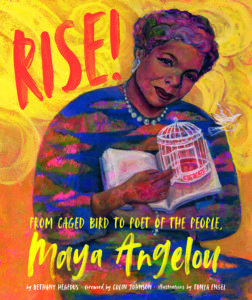
LR: I can’t pick just one! Here are three: Truman by Jean Reidy and Lucy Ruth Cummins; Rise! From Caged Bird to Poet of the People, Maya Angelou by Bethany Hegedus and Tonya Engel; In a Jar by Deborah Marcero.

RVC: Funniest question a kid ever asked you during an author event?

LR: One question I get asked again and again is, “Is that a real recipe at the end of Porcupine’s Pie?” I always ensure them that it is edible and quite delicious!

RVC: Thanks so much, Laura!

LR: Thank you for having me!

Author Interview: Dev Petty

This month’s author interview is with Dev Petty, a former Visual Effects artist who “sat in a terribly dark room for ten years working as a texture painter” for films like The Matrix. Don’t read that the wrong way—she really liked it! But after having daughters, she discovered her passion and skill for writing, and things worked out for Dev there, too.
We’ll cover a lot more about her writing career below, but to prepare us for that, here are seven fun Dev facts:

  • Married her high school sweetheart.
  • Was on the Bay Bridge in the ’89 earthquake.
  • Loves Cheezits.
  • Great at word jumbles.
  • Wicked good at making sandwiches.
  • Swears a lot.
  • Practicing Jew but devoutly Californian.

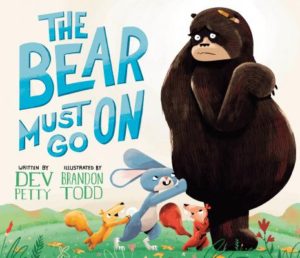
Here’s a bonus eighth thing about Dev–she’s got a new book out, The Bear Must Go On, and it looks tremendously fun.

Plus, here are some URLs to learn a bit more about Dev and all that she does in the world of picture books:

https://www.devpetty.com/​

https://nerdybookclub.wordpress.com/tag/dev-petty/

https://twitter.com/devpetty

With that, let’s get right to the Qs and As here!


RVC: One thing that most text-​only picture writers lament is not being able to create the art for their own books. You painted well enough to work for Hollywood. So…why aren’t you doing your own art to go with your picture book manuscripts?

DP:  Yes, I was a good painter. I had a knack for color and composition and texture and was good with all the technology to make it sing. I teach art sometimes, and I make art all the time. BUT…being artistic and being able to tell a story with my art are different things. I don’t have a particular point of view. I know what I like, but that doesn’t mean I have a style and certainly no sense of character design, movement, etc. Honestly, I really like the writing part–I grew up in Berkeley in the 70s. I’m by nature pretty weird and have a lot of ideas…the writing suits me fine. Doing the art would feel sort of like a…job.

RVC: I’ll bet the Hollywood experiences still proved useful in other ways.

DP: Being in film does, for sure, inform how I tell a story. In film, you have to tell a story front to back–which is to say if someone is noticing some mistake in the background when something important is up front, you’ve failed as a storyteller. That helps me be economical with words and good at discerning what thread I want to pull on in a story.

Film also taught me to have a terribly thick skin.

RVC: What kind of writing training did you undertake when making the shift from creating art to writing picture books?

DP: I actually wasn’t much of a writer and started by taking a personal essay class, which–I ought to tell you–is the cheapest therapy you’ll ever have. I enjoyed writing but didn’t know that I wanted to write picture books until I just wrote one for fun and totally loved it. After that, I just read a lot of blog posts and a gazillion picture books and just wrote, wrote, wrote. I’m not too much for researching or classes or conferences. I just dove in and figured it out.

RVC: You’ve got a thing for animal characters, it seems. Why do they appeal to you as a storymaker?

DP: Well, yeah. I do write books with humans, just none have been picked up as yet. But I like to write about animals–they come with some intrinsic qualities that create good material. So I’m able to inject a lot into their personalities because there are already certain elements there. But I’m not one to just take a human-​like character and decide it’s a walrus for the fun of it.

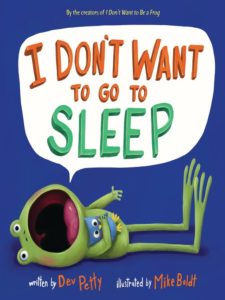
RVC: Mike Boldt—the illustrator of the Frog books—did an interview where he talked about I Don’t Want to Go to Sleep. Regarding the character of Frog, Mike said that he can “hear his voice and see his expressions just by reading the manuscript.” How do you go about creating an effective voice? What specific steps/​techniques are you using?

DP: Mike is the best–just have to get that out there!

RVC: I quite agree! (I hope he sees this and wants do his own OPB interview down the road.)

DP: Frog is fun to write because he’s sort of droll and dry but still curious and engaged in the world around him. Frog has a lot of questions. I’m not sure I take any specific steps–I can just sort of hear his voice, which is very much how I write in any case. I hear a book, at least the opening of a book, in my head before I ever put pen to paper. I don’t think I could write a narrative book with Frog. He’s all dialogue for me.

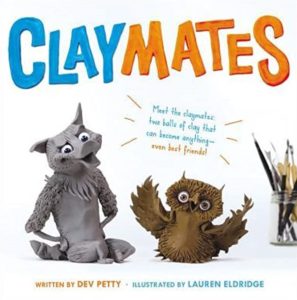
RVC: I’m a fan of Claymation, so obviously I dug your 2017 book, Claymates. What’s the story behind that book?

DP: A lot of wine.

Kidding!

Well, the extraordinary Lauren Eldridge and I were sort of Twitter friends and talked about working together. She would make these funny clay characters and I thought they were really hilarious. I didn’t want to take something normal, like a regular story, and have her illustrate it in clay. I wanted a story that was ABOUT the fact they were clay, where your character could be anything at any time. That’s so open and abstract and kind of 70s trippy and it all just came out at once–the ideas at least.

I pitched her the idea and she liked it! We did a full photographic dummy to try to sell it because, honestly, how could you pitch that story and not sound like a lunatic?! What’s funny is that in the same way the balls of clay become friends through experimentation, play, being silly–so did we. She’s one of my best friends in the world. Art brings the strangest bedfellows together.

RVC: You’ve talked before about the challenge of finding each story’s thread. Would you explain that concept by way via the creation of one of your books?

DP:  Well, Claymates is actually a great example. On the one hand, it’s just some goofball book about some balls of clay who make a mess of themselves. But in a bigger way, the thread of Claymates is about how no matter how many and what sort of hands (parents, teachers, friends) are trying to mold and shape us at any given time, ultimately we have an insatiable need to evolve on our own, experiment, make mistakes, play. I try to remember this as a parent–not to tinker too much in who my kids will become, they have to shape themselves. As long as they’re happy and good people, I don’t care what they end up doing.

RVC: In a 2014 guest post on Tara Lazar’s fine blog, you recommend writers stop writing. Care to give us an explanation on that surprising idea?

DP: Well, I think it’s really easy to go too quickly to writing once you have an idea. You get this lightbulb and want to RUN to start writing. But I’ve found I do much better when I just let things percolate a while, otherwise I just end up shuffling words about on the page instead of digging a little deeper, trying things, finding the thread.

RVC: While OPB interviews agents, we don’t always talk about the HOWS and WHYS of having/​getting one. You’re with Jennifer Rofé at the Andrea Brown Literary Agency, right? How did you land that relationship, and what has it done for your career?

DP: Jen is actually my third agent (loooooonnnnnng story) and I’m so grateful I reached out to her when I was again looking. She’s Mike Boldt’s agent too, so I already knew she was awesome. Jen pushes me, sometimes really hard, to do my best work. She’s editorial, honest, and whipsmart. I rarely feel intimidated by anyone but if I were to, it might be her. Not because she’s mean, because she’s just really sharp, engaged, and articulate. When we talk I write “don’t babble” on my hands because she is so on point with everything and I never want to look back and think, “Darn, Dev, you babbled!”

But she’s also kind and has an uncanny sense of the industry and how to balance life and writing. She’s just a fantastic person and I’m very lucky.

RVC: If you could time-​travel back to that first year of your writing apprenticeship, what would you tell yourself to ease the process? What do you know now that you wish you knew then?

DP: I suppose that it’s just a really slow process, even if you start out with a popular book like I did. It takes time to build this career and you don’t want to rush it just to sell books. I learned most of that from Jen, for what it’s worth.

RVC: Alright, it’s time to transition to the always-​fun, never-​equaled, ever-​exciting SPEED ROUND! Are you ready?

DP: Word.

RVC: The Carlton Dance, the Macarena, or the Cha Cha Slide. Which are we most likely to catch you performing? 

DP: The Macarena. (I don’t even know what the other two are, but I still know without doubt the answer is the Macarena!)

RVC: Most underappreciated film in The Matrix series?

DP: The first one. Everyone loves it and appreciates it and knows it’s the best and it still couldn’t be overappreciated because it’s really original and thoughtful and smart, so it’s probably underappreciated.

RVC: If picture books were ice cream flavors, what flavor would your Frog series be?

DP: Bubblegum. It’s hard to know what the underlying flavor is and there’s weird chewy bits inside for some reason that you pick out and let stain and stick to your napkin and then eat all at once for like five minutes before spitting it out.

RVC: What’s something about your writing process that might surprise people?

DP: I tend to write the opening a bunch of different ways before committing. Once I find one I like, I let that guide the rest of the writing. I throw a LOT away but save everything in case I did something great.

RVC: “The last truly GREAT picture book I read was __________.”

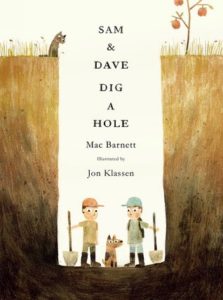
DP: Oooh. I’m really picky actually. In a way that probably doesn’t serve me well.  Sam & Dave Dig a Hole is up there, for sure. It’s dead smart.

RVC: The one-​sentence message you hope all of your picture books deliver?

DP: Ask questions.

RVC: Thanks so much, Dev!

DP: The pleasure is mine! Thank you!

Author/​Illustrator Interview: Hannah Batsel

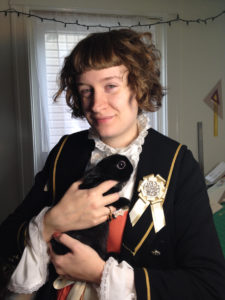
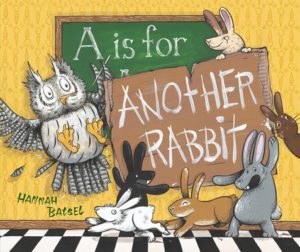
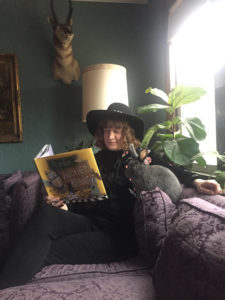
It’s always a treat to witness the beginning of a picture-​book career, and that’s what’s happening with the author/​illustrator we’re interviewing this month—Chicago artist Hannah Batsel, whose debut, A Is for Another Rabbit, comes out this month from Carolrhoda Books (Lerner Publishing). Hannah has a background in creating fine art and book arts, so she’s sure to have an interesting perspective on the process of becoming a picture maker. She’s also a self-​described “fashion idiot and rabbit superfan.” Talk about intriguing!
Let’s get to the interview to learn even more.


RVC: You probably don’t know this, Hannah, but I reached out to recent OPB-​interviewee (and Lerner editor) Carol Hinz for suggestions on early-​career writers who might be ideal for an OPB interview. Your name came up immediately—she clearly thinks you’re terrific. But here’s the real surprise—I already knew your name and work. You’ve got books in the Brizdle-​Schoenberg Special Collections Center at my college’s library, and I lurk in there a lot. 

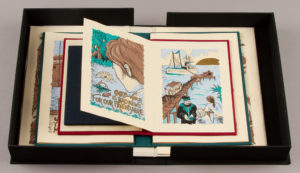
Tell me about your interest in making special-​collections-​quality books like Ephemerus and Maneater, which are the two I’ve shown to my own students here.

HB: Wow, my reputation precedes me!

Well, I was first introduced to artist books and fine press books as a part of my printmaking studies, and I completely fell in love with them. I think that I’m a bit of a control freak, and the fact that I can write, illustrate, print, and bind an edition of books all by myself (and therefore obsess about whether that text line should be a sixteenth of an inch to the left or not for three days without annoying anyone else) is very empowering. Printing only small editions lets me branch out from the traditional codex structure and make weird double-​sided books, books with jointed paper dolls, fold-​out books that expand to twice their size—you name it! I think there’s a book design out there that’s perfectly suited to contain any conceivable human idea.

RVC: Let’s talk about my personal favorite—Maneater. It’s a boxed set of four books, where each sits inside the other like those Russian nesting dolls, and they’re held in place by little hidden magnets. And the story—if I recall it correctly—works backwards in time.

HB: It does work backwards in time—and then forward again! The smallest, innermost nested book takes place the furthest in the past, so as you read towards it, you get more context about the characters’ past relationships before having to read yourself back to the surface to finish the story in present day.

RVC: How did this project come about?

HB: This project was inspired by my collection of late-​19th-century mass market colonialist children’s books (a mouthful, I know). These books’ covers are gilded and colorful and just a treat to look at, but their beauty belies a lot of frankly horrifying ideas about the Western world’s relationship with both the natural world and the cultures of people they didn’t understand.

The four books of Maneater are all illustrated in that lush and extravagant style, and each of the four books follows a different character. There’s a mythical tiger god who rules over life on a tropical island, an actual tiger who is captured from the island and sent to a zoo, a villager on the island who must emigrate and work at the zoo once the island is stripped of its natural resources, and a wealthy shareholder who ends up employing the zookeeper as a butler after a tiger attack forces him into retirement. The books can be read separately, but only when you read them together does a legacy of colonialist greed become clear.

RVC: In what ways are artist books like picture books?

HB: I would say that all of my artist books are picture books! They are certainly for an older audience, but every single page in them is illustrated. Like other picture books, they are meant to be held and explored and looked at, not just read. I even have an artist book that’s only pictures: Overhead, a book that I wrote, printed, and bound all on a commercial airline flight (confusing the flight attendants to no end, I’m sure.)

RVC: You earned a BFA in Printmaking and Book Arts from the University of Georgia, followed by an MFA in Interdisciplinary Book, Paper, and Print Arts from Columbia College Chicago. Clearly you had a book-​focused future planned early on. When did you get interested in this career path?

HB: I had a professor at the University of Georgia who got me into artist books (thanks, Eileen!). Once it clicked for me that books could be made out of just about anything by just about anyone, I set out to do it in as many ways as possible. I feel fortunate to have found something that I can confidently say I’ll be making for the rest of my life in some form or another.

RVC: Let’s talk about your debut picture book. What’s the story behind A Is for Another Rabbit?

HB: I was speaking with my mom on the phone about how I’d like to write a children’s book, and how abecedaria (that’s nerd talk for “alphabet books”) were some of my favorites. I told her that I especially love animal alphabet books, but that I would probably want to make every letter about rabbits, which would make for a very boring book. We started goofing off and improvising pages (“U is for Uuuuuughh, seriously? Stop with the rabbits already!”) and while some of our off-​the-​cuff joke pages were a bit—well—vulgar for a younger audience, others did make it into the first draft of the manuscript.

RVC: How did the story change in the rewriting/​revision process? Was it always metafiction from the first draft?

HB: Very little of the original manuscript ended up changing, actually! It was mostly minor tweaks. It was always metafiction; I think that with a format as tried-​and-​true as the alphabet book, the most interesting thing to do was to throw a monkey wrench into it and explore what would happen if this very rigidly-​structured genre went awry.

RVC: Please talk a little about how you handle pacing via image and text. 

HB: This is something that I tend not to think too hard about; rather, I draft out what feels best to me intuitively and then show as many people as I can so that they can tell me if something feels off. Pacing is one of those things that’s hard to get a grasp on if you’re too close to the project, so having outside perspectives helps a lot. In general, I try to keep my text as tight and necessary as possible—if I can cut something from a manuscript, I do!

RVC: A Is for Another Rabbit uses rhymes, at times (yep—look what I did right there!). What’s your philosophy for rhyming well?

HB: Keep a consistent meter, jam as many rhymes in there as possible (not just at the end of the line), and above all else, use a rhyming dictionary! There’s no shame in it, and there are tons of free ones online; starting with a really great final line and then looking up rhyming words to build up to that finale is a great way to write a stanza.

RVC: The book is dedicated to “my favorite animal in the whole world: the rabbit.” What’s the appeal of these “feisty, fantastic, fluffy-​tailed” critters?

HB: One little-​known rabbit personality trait that I love is their sheer audacity, their absolute impudence. When a cat behaves like a jerk, at least he’s got the claws and teeth to back it up. A rabbit is a prey animal who has been running for his life in the wild for millennia, and yet you let him up onto your couch one time and he thinks he’s the king of the world!

The misbehaving rabbits in my book are inspired by a real rabbit, Pip, that I used to have. He was allowed to go anywhere in the house except for under my bed, so of course, he loved to try to sneak under when I wasn’t looking. Whenever I caught him snooping around for a way in, he would leap into the air with joy at the thrill of being caught and flee the scene! He seemed to like getting caught even more than succeeding!

RVC: I can sympathize with that because (when they were very little) my two kids loved to sneak into my office and riffle through my manuscripts, papers, stories, etc. and wait until I came back to catch them, and they’d laugh, laugh, laugh. Then they grew up and couldn’t care less what I do for a living.

What’s next for you in terms of the picture book world?

HB: I’m always working on my next book, and right now, I’m finalizing the manuscript and initial sketches for a new picture book that will make use of my letterpress-​printing background. I can’t tell you much, but I’ll give you a hint: if A is for Another Rabbit is a good Easter read, this next one would be better suited for Halloween…

RVC: I look forward to the spooky fun!

Last question for the main part of this interview. Since Carol Hinz got you into this, what’s it been like working with her and Carolrhoda?

HB: Carol and the team at Carolrhoda have been an absolute dream to work with. Making your own books like I do means that I had no idea how a bigger production worked, which book sizes were standard, what to put on a title page, what a book contract looked like, or even… oops… how to accurately manage a final deadline. But Carol and Danielle Carnito, my art director, held my hand ever-​so-​patiently and walked me through the whole process.

One thing that’s a bit strange is that I’ve never met either of them in person! From start to finish, making a book together was a multi-​year process, all over email. For all I know, Carol could be a bunch of rabbits standing on each other’s shoulders in a trench coat. Wait—have you ever met her?

RVC: Hold on now… while I’ve interviewed Carol, I have NOT met her. Hmmmm. You might be on to something here.

HB: I think so!

RVC: Alrighty—it’s time for the much-​heralded, always-​awesome SPEED ROUND. Rabbit-​quick questions + hare-​fast answers, please! Are…you…ready?!?

HB: I was born ready.

RVC: Your three favorite picture book rabbits?

HB: Wait, wait, I’m not ready!

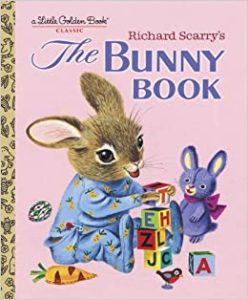
Uhhhh, jeez, this is a tough one! Honestly, Richard Scarry’s vast herd of fictional rabbits would probably take up all three slots. Naughty Bunny, The Bunny Book, Bunnies, I Am a Bunny, not to mention all of the Busytown buns—the guy’s practically cornered the market on great picture book rabbits! Honorable mentions, of course, for Margaret Wise Brown’s many picture book rabbits, especially those of Goodnight Moon and The Runaway Bunny!

RVC: Most surprising rabbit fact?

HB: Rabbits can’t vomit. Hey, you asked for surprising!

RVC: Best place a rabbit might go to get GREAT Chicago deep dish?

HB: Pequod’s, hands down. That caramelized crust…

RVC: Best picture book art you’ve seen in the last year?

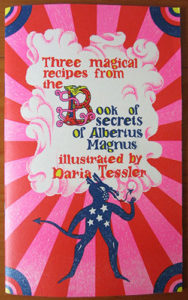
HB: Daria Tessler’s riso-​printed zine, Three Magical Recipes from the Book of Secrets of Albertus Magnus, published by Perfectly Acceptable Press here in Chicago.

RVC: What’s going to keep you up tonight after doing this interview?

HB: Nothing. I can go to sleep within 15 seconds of hitting the pillow; it’s like a superpower.

RVC: Three things that are at the heart of your overarching creative vision?

HB: Magic, fine detail, and the exploration of power (and the power of exploration!)

RVC: From one Chicagoan to another, thanks so much, Hannah! It was a hoot cluck chirp uhhh, say…what sound do rabbits make?

HB: Hmm, well they do thump their back feet on the ground when they’re angry. But I think this interview has been more like a contented tooth-​chatter, don’t you?

RVC: Right. That’s what I meant. It was truly a tooth-​chattering swell time. Thanks for playing along, Hannah!

Author Interview: Trisha Speed Shaskan

The March 2020 Author Interview is with Trisha Speed Shaskan, a Minneapolis writer who’s authored 40+ books. I had the pleasure of meeting her at a Highlights Foundation writing retreat this past November, and straight off, I knew she was OPB material. Why? Because she loves dogs, thinks snorts are funny, and makes a lot of good kidlit. What more do you need than that, right?
Just in case you DO need a bit more to properly frame this interview, here are seven delightful Trisha facts.

  1. She has a dog named Beatrix Fluffernutter named after Beatrix Potter and the east coast sandwich with marshmallow fluff and peanut butter in it.
  2. She allowed the stars of her picture book, Punk Skunks!, to do a no-​holds-​barred interview at The Little Crooked Cottage.
  3. Just last year, she did an 18-​day, 22-​library “Create Your Own Comics” workshop in northern Minnesota alongside her husband/children’s book author & illustrator Stephen Shaskan.
  4. First read The Hobbit while traveling the London countryside by train.
  5. Worked at Wild Rumpus Books for Young Readers that is also licensed as a pet store! Among the children’s books, you’ll find animals both caged (chinchillas, a cockatiel, rats) and running free (chickens and Manx cats). During a Bunnicula anniversary event with author James Howe, Trisha kept the energetic bunnies from busting out of a cage.
  6. Worked as a literacy coach in an elementary school’s afterschool program.
  7. At the University of Minnesota-​Twin Cities, she was the mascot, Goldy Gopher. (But not for sports, she notes—only for PR events.)

With that, let’s get to the interview!


RVC: Let’s start with how you’re living the picture book author dream—you’re married to a pro illustrator. How did that come about (I hear it has to do with a rock band!), and how do you successfully work together to make great kidlit?

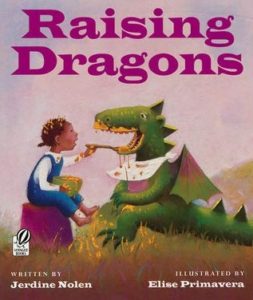
TSS: After receiving my B.A. in English, I worked at an elementary school where I met my future husband Stephen Shaskan. During the day, I worked as an educational assistant, and after school, I taught creative writing. During recess and in between resolving fights, flipping the rope for double dutch, and playing tag, Stephen and I connected over the picture books we were using in our classes, such as Raising Dragons by Jerdine Nolen and illustrated by Elise Primavera. We both loved a range of music from The Cure to Funkadelic.

RVC: With in-​common music like that, it’s no wonder you hit it off!

TSS: Absolutely. Yet for a couple years, we hung out as friends. Then I knew I wanted to date him. During my break at school, I drove to the floral shop to pick up some flowers to bring home. I also bought a bouquet of my faves, Stargazer lilies, for Stephen. When I arrived at school, Stephen was in the parking lot. When I got out of the car, I thought the bouquet looked huge; I felt too shy to give it to him. “Stargazer Lilies,” Stephen said, “My favorite.” I told him I bought them to bring home and placed the bouquet in the backseat of my car. Later on, during his art class, Stephen drew a beautiful picture of the Stargazer lilies and gave it to me as a gift. Soon afterwards, we dated. We also formed a band. I played drums. Stephen played guitar. But it took me a long time to tell him I had actually bought those Stargazer lilies for him!

RVC: What a great story.

TSS: Our friendship and the band were the start of many collaborations. At school, we co-​taught a class together. Eventually we ended up working on books together. I had known I wanted to write children’s books since college, so I went grad school to become a better writer. During that time, Stephen worked as an early childhood educator where he played guitar and sang songs about underwear and dinosaurs. But he also read picture books and loved the format. Between that experience, his degree in illustration, and my interest in writing for children, Stephen began creating children’s books.

RVC: And that’s when you started working together?

TSS: That’s right. At first, Stephen and I created our own books, but eventually we collaborated on picture books and graphic novels. We’re able to work well together because we respect each other, communicate really well, and can both laugh at ourselves. When we create a book together, we make sure we’re both fully invested in the story and play equal roles.

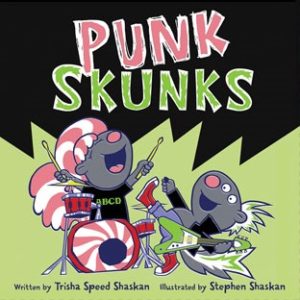
Punk Skunks is drawn from our experience playing music together but also using music with kids in the classroom. Neither of us would’ve created that book alone. Together, we brainstormed and figured out the plot and characters. But I don’t interfere with Stephen’s illustration process. And he doesn’t interfere with my writing process. While working on Punk Skunks, I was surprised by the art. I didn’t know there’d be a chorus of bunnies. Why wouldn’t there be?!

RVC: In your life and in interviews, the two of you have been quite open about how you’re able to stay married and continue to be effective collaborators. What are a few of your best tips for working with another creative?

TSS: When we collaborate on books, since we’re in the same house (versus people who collaborate with friends or a sibling), all of our resources go into one place: the same book. Especially when promoting it. So, it’s good to mix it up; sometimes work solo, sometimes work together. That way our house can remain somewhat clean.

RVC: What are some of the warning signs that it might not be a literary love match?

TSS: How do you know the collaboration isn’t working? If you’re not enjoying working together, or if it doesn’t feel good, it’s not a match. While Stephen and I enjoy creating books together and doing school visits together, there are some parts of the book business we do separately. For example, I do some presentations and attend some conferences by myself. We’ve figured out what works best by trying a bunch of things. If it’s more stress than fun, it’s not worth it.

RVC: Let’s jump back to your writerly beginnings. You wrote all kinds of things as a kid. Where’d you get the writing bug?

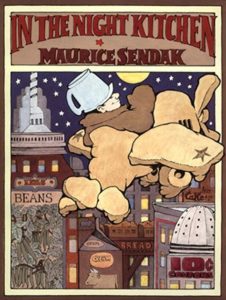
TSS: I grew up in the “Free to Be You and Me” era in a home filled with books and imagination. As a child, my parents read picture books to me. My mom called our milk “Mickey milk” because of In the Night Kitchen by Maurice Sendak. When I was in elementary school, my older sister Nicole had a witchcraft book that contained a glossary of imaginary creatures in the back. She read the definitions aloud: banshee, elf, fairy. Then we made up stories about the creatures. Brownies were my favorite because despite their small stature, they caused a huge amount of havoc. Nicole and I also ran through a field of what I now know were weeds but we believed were flowers that certainly contained fairies.

RVC: What did your family think about you majoring in English at the University of Minnesota? And then getting an MFA in creative writing?

TSS: My mother didn’t think my English degree was practical. She wanted me to become a teacher, which would’ve been a good idea since I ended up teaching writing! My father told me I could do whatever I set out to do. Whenever he wanted to do anything, he figured it out, worked at it, and went for it. As a young man, he earned a technical college degree, apprenticed as a sheet metal worker, and worked for a heating and ventilating business until he was ready to launch his own business. His you-​can-​do-​anything-​you-​set-​your-​mind-​to attitude always inspired me. By the time I returned to college to get my MFA, my mother was happy I was leaving the “nonprofits” (where I ran a youth program) to pursue my passion for writing. HA!

RVC: What’s the most valuable takeaway from your MFA days?

TSS: I knew in order to get published I needed to become a better writer. During my MFA days, I dug in, sentence by sentence, and studied how language worked in all kinds of books from fiction, to nonfiction, to poetry. In my own writing, I learned to look for repetitive ideas and ask questions, such as: Is this dialogue moving the story forward?

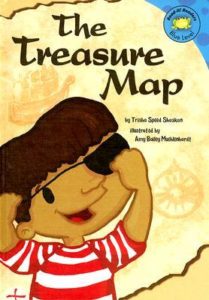
RVC: You got started with work-​for-​hire books, with your first being an easy reader, The Treasure Map. How did that come about, and is that a viable way for new authors to break into the world of kidlit?

TSS: During my first year in the MFA program, I wrote The Treasure Map and an editor at the nearby, local Capstone Press bought it plus 3 more books to-​be-​determined. I continued writing more books-​for-​hire, often in a series, such as Word Fun: If You Were Alliteration. I wrote over 40 books-​for-​hire. Those books opened up opportunities. Before I was traditionally published (although the easy readers were original, I didn’t own the copyrights), being published allowed me to apply for the McKnight Fellowship in Children’s Literature for $25,000 at a time when I felt like quitting writing. I won the Fellowship. I also won an artist grant from the state of MN to move from work-​for-​hire to writing my own stories. A couple of my books-​for-​hire sold well, which led to school visits. I couldn’t make a living solely on writing books-​for-​hire, but the benefits I have received from those books have made a huge impact on my career.

RVC: What are some of the things that doing so many work-​for-​hire books—most of which were for kids older than picture-​book age—taught you?

TSS: I learned to write at different reading-​levels from kindergarten through second grade. I learned to communicate complex ideas in simple language; for example, jet propulsion at a second-​grade reading level. I learned that when I study a topic and get to know it, whether it’s the Mississippi River or an octopus, I often fall in love with the topic; just like getting to know a person who becomes a lovely friend.

RVC: You broke into picture books in 2016 with Punk Skunks! What got you to make that move? 

TSS: I worked for hire to make money, but always worked on my own stories. My agent and Stephen’s sent out an early chapter book I wrote and paired it with some of Stephen’s illustrations. An editor liked the story but wanted me to try in a different format or wanted us to pitch a new story. We pitched a new story. That’s when we began to collaborate on what became Punk Skunks! At first it was an illustrated chapter book, but after the editor who asked for it rejected it, we thought it would make a better picture book. One of my writing teachers used to say “No work is lost work,” and thankfully that rang true.

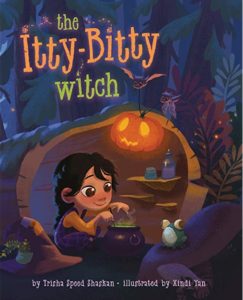
RVC: You seem to have a special affinity for the main character in your own 2019 picture book, The Itty-​Bitty Witch. Why’s that so?

TSS: Betty Ann Batsworth is not only small, but she’s also determined. She never gives up.

RVC: What appeals to you most about picture books, both making them and reading them?

TSS: Reading a picture book to children is an interactive experience. The story speaks the language of poetry and song; the language is active. Picture books also contain visual literacy. Children infer what occurs between the text and art. And the art can contain a beautiful range of styles and mediums–whatever best fits the story–that adds to the colorful dance between the book and its audience.

RVC: What makes a Trisha Speed Shaskan school visit special?

TSS: As an educator, I LOVE school visits and the students and staff can tell; I bring my passion, positive energy, and enthusiasm for stories and creativity. I keep the visit interactive. I show students: Creating stories is fun and accessible to everyone!

RVC: As an author, how do you measure success?

TSS: If I feel I have created the best possible story I can, I consider it a success.

RVC: Last “serious” question to this part of the interview. You and your husband have different agents—you work with Sara Crowe at Pippin Properties, and he works with Teresa Kietlinski at Bookmark Literary. Do you ever have that my-​dad-​can-​beat-​up-​your-​dad thing where you brag about your respective agent’s superpowers in an awesome display of vicarious one-upmanship?

TSS: SNORT! Stephen and I are extremely grateful and lucky to have two, phenomenal agents that are uniquely perfect for each one of us! We admire each other’s agents and our own, so it all works out.

RVC: Glad to hear it!

Alright, it’s time to fire up THE LIGHTNING ROUND!!! That means fastball questions and rocket-​blast answers. Ready?

TSS: Set!

RVC: Best picture book sound effect—burp, fart, or snort?

TSS: LOL! “SNORT!” Of course!

RVC: Favorite literary villain?

TSS: Cruella de Vil, who puts the vile in villain!

RVC: Something about your writing process that might surprise people?

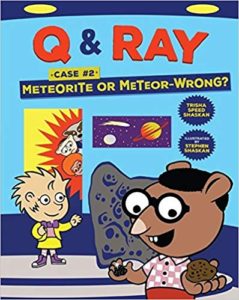
TSS: For every book I write, I do research. My favorite type of research is consulting an expert. For Q & Ray Case #2: Meteorite or Meteor-​Wrong, I asked Dr. Randy Korotev who has been studying meteorites for over 40 years to check the science to make sure it was accurate. After reading a page in the book where Ray was eating a Limburger and onion sandwich, Dr. Korotev told me: When he was in elementary school, each day he walked home for lunch and ate the exact same sandwich!

RVC: Best compliment a kid ever gave your writing?

TSS: It ROCKS!

RVC: Thanks so much, Trisha! This was a snort-​tastically good time!