Editor Interview: Maria Modugno (Random House)

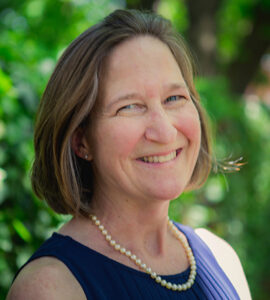
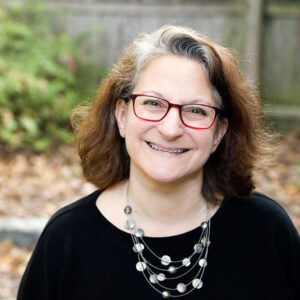
Maria Modugno has had an amazing career in children’s literature. Currently, she serves as Executive Editorial Director at Random House Studio, an imprint of Random House Books for Young Readers. Prior to that, she was vice president and Editorial Director at HarperCollins Children’s Books where she acquired such popular series as Pinkalicious by Victoria Kann and Splat the Cat by Rob Scotton. She also worked at Harcourt Brace Jovanovich and Little, Brown.

Some of her recent titles for Random House Studio include Uni the Unicorn by Amy Krouse Rosenthal and illustrated by Brigette Barrager, Grumpy Monkeywritten and illustrated by Suzanne and Max Lang, Penguin Problems by Jory John and illustrated by Lane Smith, and Attack of the Underwear Dragon by Scott Rothman and illustrated by Peter Oswald.

Yeah, I’m pretty excited to learn more about all Maria does. Let’s find out together!


RVC: You’re living in Chicago these days?

MM: When we went fully remote, I left New York after 20 years and moved to Evanston. It’s right outside Chicago.

RVC: I’m from Chicago myself. My brother still lives in the suburbs.

MM: Oh, it’s great. My family’s out here, too. Whoever thought businesses would go remote and then say, “Sure, take off! Go wherever you want!”

RVC: This industry is well suited for it.

MM: You’re right. We do everything electronically now. I can work from Chicago as easily as I could work with people back when I was in New York.

RVC: Let’s circle back to the start. You’re a lifelong lover of reading and books.

MM: I just loved books even though I grew up in a really small town with a really small library. Kids were only allowed to take out three books a week. Maybe it was because of that rarefied status that I knew books were something really great. My family says I have the Reading Gene. Those who have it, walk around with a book in our hands all the time.

Honestly, if I could do anything in the world, I’d just want to read!

RVC: Speaking of reading…what were some of your special early reading experiences?

MM: They’ve fallen out of fashion, but I love the Little House on the Prairie books. And there was a picture book from Italy called The Circus in the Mist which had opaque and different kinds of paper. I was fascinated by it.

I just loved picture books, like Millions of Cats by Wanda Gág. At one point, Tomie dePaola took me took me to the Kerlan Collection at the University of Minnesota where they have all this art. Tomie asked, “What would you like to see?” And I was able to look at the original art for Millions of Cats.

RVC: Terrific.

MM: I also loved Two Little Miners, a Golden Book. Young readers really don’t have very discriminating taste.

RVC: So long as you love what you’re reading, it’s all fine in my mind.

MM: I wish I could say something profound to your question, like “Oh, I loved The Little Prince.” But no, whenever you hand me something, I’ll read it, you know?

RVC: I totally get it. Now, when did you realize that kidlit was the career for you? Is that what you studied at University of Vermont?

MM: No, I was an English major who specialized in poetry mostly because that’s what I was drawn to. I started out being a science major, but I found I was spending most of my time in the stacks pulling down books and just reading. Studying poetry helps me with editing manuscripts because in a picture book, every word has to count. Every word carries a big burden–it has to say more than just one word typically does.

RVC: You brought up Tomie a moment ago. Rumor has it that he taught you how to become an editor.

MM: I was so lucky. I knew Tomie because my first job in publishing was in marketing. I had toured with him because of that, when Harcourt moved to California, they put me in charge of the editorial department because no one else wanted to pack up and move to the West Coast. I was young and stupid enough to say “Sure, why not?”

I found out we had a contract with Tomie and I said, “Tomie, what are we going to do? I don’t know how to edit.” He generously said, “Why don’t you come out to Whitebird for the weekend, and I’ll teach you.” And so I packed up my warm clothes and went. We talked through the idea of the whole book together–Merry Christmas, Strega Nona. We carefully went through the story and its arc. Then Tomie said, “Now I’ll go off and write it.”

Then he brought the manuscript back to me and said, “Go read it, but don’t change any of my words. Just question things in the margin if something doesn’t sound right. Read it out loud to make sure it sounds right–not just reads right.” And I did exactly that. Then we met up and discussed my comments.

Through that, Tomie instilled in me the importance of someone else’s words. You don’t just trash them off the page. The author put them there for a reason, so let the author make changes when something’s not clear.

That’s how I started as an editor.

RVC: Wow, you were so lucky to have worked with someone like that.

MM I was lucky indeed.

RVC: Fairly early in your career, you went from being an editor to being in charge of editors, which is more like an administrative role.

MM: That’s right. I went from being a marketing manager to being a director of the department. I did that at Harcourt and I did that at Little, Brown and then at Harper, though I was never really happy with that role. I really, really love working on books. That’s what I want to do. Honestly, in publishing, that’s not what’s valued most–what’s valued most is being able to run things and stuff like that. And so I’ve given up a lot of that.

RVC: But that allows you to have your hands on a lot of creative efforts these days, right?

MM: Oh, yeah. At the end of the day, that’s what I want to do. That’s what makes me happy.

RVC: Can you share what the acquisition process is like for picture books?

MM: I’m part of a very small imprint at Random House–it was just founded three years ago. It’s run by Lee Wade, our publisher who’s formerly of Schwartz and Wade, and there are four editors and two designers here. Basically, when I see something I want to sign up, I discuss it with Lee and we talk about what I want to pay for it. It’s as easy as that. I also have to run a P&L [profit & loss statement], which means I have to gather sales data and track information. But I never ask an author to make changes until they have a contract in hand.

RVC: That doesn’t seem to be the norm these days. There seems to be a lot of R&Rs (revise and resubmit) requests before the potential contract arrives. Or not.

MM: When I read a manuscript, it’s either there or it’s not. I can see what needs to be done, and I see that it can be done. I can’t take a manuscript that’s a good idea but is badly written and make that good. That’s not my skill set. But if there’s something there that’s good and I can see where it needs to go? I’m all in.

RVC: Could you talk a bit about working on some of the bigger projects? As you were working on projects like Pinkalicious or Splat the Cat how big they’d become?

MM: Here’s the truth. I never imagined going beyond the first book with any of these. I liked Pinkalicious simply because I thought it was a great idea. You eat too many pink cupcakes, you turn pink. I also like that the little girl sticks her tongue out at me–that’s such a kid thing to do. I was surprised when it took off. I think some of it was shrewd marketing on the part of Harper because Fancy Nancy had just come out and Pinkalicious rode the coattails of that success.

With Splat the Cat, I was at a stationery show and Rob Scotton was there selling mugs and prints. I saw this mug he had with a sheep on it, and that became Russell the Sheep. We just took that image and expanded it. The character of Russell was very involved, in spite of not really having a mouth. I found out that it’s really hard to have a character express emotions without one, so I said to Rob, “Let’s find another character that we can develop.”

Rob had done a set of dishware around this cat named Splat and I said I want it to be a kid. Rob showed me how he could make the head bigger, the arms a little shorter, the body rounder, which made Splat more kid-​like. It worked.

RVC: Yes, it did!

MM: One of the things I do with any book launch is have a promotional hook. That first Splat the Cat book was about going to school, so it was a back-​to-​school story and that helped get it on tables.

OPB: What’s the story behind Toot & Puddle?

MM: Holly Hobbie came to see me at Little Brown. She had heard about me from another artist–Jane Dyer. And Holly had just finished a 30-​year contract with American Greetings where they owned everything she did with that little bonnet girl. She came to me and said, “What do you think I should do?” I told her, “Anything you want.” I mean, she’s such a great artist. She could paint with an eyelash–she’s just amazing!

The first Toot & Puddle as a story about one pig. Then we realized that if you have two pigs, they can play off each other and be two halves of a whole. And they’re charming stories.

RVC: Totally agree.

MM: The first book was cobbled together by some existing artwork. To me, it looks like the seams are showing a bit, but it all worked out fine.

RVC: I’m a big fan of Grumpy Monkey, which is another of the books you edited.

MM: The Langs are so talented that I can’t even believe it. I think they were one of the first to tap into the whole social emotional learning trend because that book comes right out and says, “It’s okay to be grumpy. You don’t have to put on a happy face.” Their books are funny, but they all have this truth–something kids need to learn.

I want to add that I don’t deliberately publish books to teach kids anything. They get that elsewhere. If somebody gave me a book and said, “Here, this is a good book for women who can’t get along with their mothers!” I’d throw that book right back at their head. That’s not why I read books. I like to read books to read books, not to learn things.

RVC: If you learn something, it’s just a bonus. But it’s not the point.

MM: No. And if it is, there’s Sam Goldwyn, who said, “All I want is story. Let Western Union take care of the messages.”

RVC: What do you look for in illustrations?

MM: Among the first people I worked with was Tomie, who was obviously a gifted artist. I also work with a lot of animators because they have the ability to tell a story. What I’m always looking for is movement. I also look for funny because I think the world needs funny books. There just aren’t enough of them.

A lot of do at work requires me to substantiate my decisions with data. But honestly, sometimes I make a preliminary decision and then I look for the data to substantiate it.

RVC: That makes sense. The art+story package should generate a gut reaction.

MM: Yes, that’s right. I don’t like mood pieces. I don’t like fancy words that don’t add up to anything. I don’t like bad rhymes. I just want great stories.

RVC: What are your thoughts on marketing, particularly for debut picture book creators?

MM: It’s the hardest thing with picture books because we don’t market to our direct audience (because we can’t). The biggest marketing or promotion you can do for a book is to get it placement in a bookstore. I never sign up a book without envisioning where it’s going to go in the bookstore. I think about what’s going to compel a bookstore buyer say, “I have to have THIS book and not THAT one.”

Honestly, a beautiful book and a beautiful story isn’t enough. It has to fit into something that a bookseller will promote, like a holiday, or Black History Month, or some other event. You need to have that kind of promotional connection because most picture books have the shelf life of a quart of milk.

If you don’t get it out there and get it noticed, it’s gone.

RVC: Will you talk a bit about your own writing, such as Santa Claus and the Three Bears?

MM: I wrote that book on a lark for a friend. I love that classic story, and I love giving it a twist. But I don’t consider myself a writer at all.

At one point, I took drawing lessons, but believe me, there’s no hidden talent there. I just wanted to know what it felt like for an artist or writer to confront a blank piece of paper. What does it feel like to put that first mark on it?

Maybe that’s what I learned from Santa Claus and the Three Bears–I had to mentally see the story and where it was going to go before I could write it.

RVC: What’s the most important trait that you bring to the editing process?

MM: I never forget what it’s like to be a kid.

When my nephew Chris was four years old, he moved from a very old house in New England to a brand-​new house in the Midwest. I asked, “So, Chris, how’s the new house?” He said, “All the doorknobs are the same.” That’s the viewpoint of a kid. They’re not in our world. They’re in a world that comes up to our waist. You have to remember that. You have to remember the things that interest them.

Kids also like funny things, but a lot of editors prefer serious things. I think the world is serious enough already.

RVC: What are some of your proudest moments as an editor?

MM: I love when a new book comes in. And I love when books hit the bestseller list. Funny books don’t win awards, though. They don’t get starred reviews either. And it took me a long time before I figured that out. By the time I figured it out, I decided that winning awards wasn’t what I was about anyway.

I come from a working-​class background, so I always felt it’s my job to keep authors and artists earning money and working. I don’t like to make them wait for a response from a publisher because that time is time that they’re not making money.

RVC: A lot of writers are going to love that you said that!

MM: I’ll add this–a high point for me is working with Lane Smith. I’m in awe of him. Over and over again, he proves himself to be both brilliant and nice.

RVC: I’m not surprised. That seems to be the brand not just for Lane but also a lot of people in the kidlit industry. It’s good people and good audiences.

MM: You’re right about that.

RVC: Beyond the obvious–join SCBWI, read a lot, write a lot, etc.–what’s your advice for aspiring picture book writers?

MM: I think it’s more than just reading other books–it’s reading them critically. To do this, ask good questions.

  • What did I like about this?
  • What made me turn the pages?
  • Why didn’t I like this?

I also encourage writers of picture books to think visually. As they write, they should see the picture that their words are going to suggest. I’m not talking about art notes, but rather how you imagine these words looking when they’re illustrated. You have to tie the two together all the time.

RVC: Alright, Maria–it’s time for the Speed Round. Are you ready for some zip-​zappy goodness with super-​fast questions and super-​duper-​quick answers?

MM: Sure.

RVC: If animals could talk, which would be the most annoying?

MM: A gnat.

RVC: If you built a picture-​book-​themed hotel, what would the theme be and what would the rooms look like?

MM: Classic fairy tales because they’re so popular and I’d want people to come. Either that or The Nightmare Before Christmas.

RVC: What secret talent do you have that no one would expect?

MM: I make hats. I’m an amateur milliner.

RVC: What’s your dream project in the picture book world?

MM: I’ve already lived so many of them! But my dream would be to sign books without having to go to auctions. They’re really competitive and they rub me the wrong way.

RVC: What’s the One That Got Away?

MM: There’s one every year. That’s one of the things about a picture book–different editors will envision it differently. So, if I saw a book one way and somebody else published one another way, did it really get away or was that book meant to be what it became?

RVC: What is your picture book philosophy?

MM: Don’t forget kids are going to read it.

RVC: This has been a real treat, Maria. Thanks so much!

Editor Interview: Reka Simonsen (Atheneum)

This month’s Industry Insider is Reka Simonsen. Prior to becoming Editorial Director at Atheneum, she worked at various publishers and bookstores such as Houghton Mifflin Harcourt, Henry Holt Books for Young Readers, and Books of Wonder.

To know why we’re so excited to have her join us at OPB, just look at some of the people she’s worked with—Margarita Engle, Carole Boston Weatherford, Evan Turk, Frank Morrison, Jamie Sumner, Linda Urban, Joy McCullough, Emily Ecton, Melanie Crowder, Brian Pinkney, Sean Qualls, Lita Judge, and Lloyd Alexander, among others.

And then there’s the awards that books she’s edited have won—a Newbery Honor, a Coretta Scott King Award and an Honor, a Geisel Honor, a Sibert Honor, Walter Honors, a PEN USA Award, several Pura Belpré Awards and Honors, Jane Addams Peace Awards and Honors, Americás Awards and Honors, a Christopher Medal, Charlotte Zolotow Awards, and they’ve been finalists for the Morris Award, the Andre Norton Award, and the Edgar Award.

Wow, right? Let’s get straight to the interview to discover how Reka makes the magic happen.


RVC: What was your first vital/​transformative experience with books?

RS: Books have been such an important part of my life since very early childhood that it’s hard to think of one transformative experience that I’ve had in relation to them, but some of my earliest and happiest memories are of reading with my father. Long after I’d passed the usual age for bedtime stories, he and I would take turns reading to each other, often from favorites like My Family and Other Animals by Gerald Durrell. I still reread that book almost every year, in memory of my dad. And I very nearly became a wildlife biologist because of Gerald Durrell’s books…

RVC: You graduated from Hunter College with degrees in art and English. What was the career plan at that point? Was it wildlife biology?

RS: Getting a job with health insurance! I’m joking, but not really. I deferred college for several years while I trained as a dancer, so when I did finally go to school, I knew the financial insecurity that comes from being in the arts. Because of that, I was aiming for a career that fulfilled both my need for creativity and my need for basic benefits. I was working part-​time in publishing while I was in college, so I already knew I liked the work; my goal was just to get into the area of publishing that I had always loved: children’s books.

RVC: Though most people think of you as a kidlit editor, you got your start by editing textbooks and coffee table books. How did that work prepare you to be an editor for children’s books? 

RS: At the time, I wondered if the skills specific to those two types of books would be of any use once I started working with children’s books. Turns out that a few of them have. Knowing how to do photo research and obtain permissions has come in handy when I’ve worked on nonfiction books. And editing coffee table books gave me a good eye for how art and text work together to create visual energy and interest for readers, whether young or old.

RVC: What was the first picture book you edited? 

RS: At first, I edited a lot of things that I inherited from predecessors. The first picture book I acquired and edited was Head, Body, Legs, a Liberian creation story by Won-​Ldy Paye and Margaret Lippert, illustrated by Julie Paschkis.

RVC: What was the most important lesson that book taught you?

RS: The importance of working collaboratively, which is something I agreed with in theory but had never had such a hands-​on experience of before this book. The text is a collaboration between two authors: Won-​Ldy is from Liberia and has known the traditional tale his whole life, and as a professional storyteller he can hold an audience rapt with his rendition of it. But he had not written a book before, which was where his friend and collaborator Margaret came in. She is a writer and educator, and she knows how to shape things so that the written version that a parent might read with their kid lands with the same impact that the story has when told in the oral tradition. Then the two of them worked directly with their friend Julie to help interpret the story visually, which was not an easy task, given that it’s about three individual body parts trying to figure out how to come together to make a person! Usually, authors and illustrators do not work directly with one another, but in this case all three of them were friends, and that brought another layer to the book. The art director and I worked closely with all three of them to help shape the folktale into a wonderful book. It was an incredible experience!

RVC: That sounds amazing! Now, what’s the most common misconception about editors?

RS: Even in the book world, I find that most people still think that editing means correcting grammar and punctuation—the kind of red-​pen editing that a lot of us are familiar with from the notes teachers wrote on our school essays. More experienced writers and agents know otherwise, of course, but first-​time authors still often expect that the first thing they’ll see from an editor is a detailed line-​level edit of the manuscript, which is usually a much later step in the process, rather than a letter or conversation that looks at the bigger picture aspects of the story, which is more often the first editorial step.

RVC: What was the most demanding/​challenging picture book you’ve worked on?

RS: I’d have to say A Violin for Elva by Mary Lyn Ray, illustrated by Tricia Tusa. The book itself was wonderful, as were the author and the illustrator, who are both incredibly talented, and lovely people to boot. But long before I started at Harcourt, the two of them had disagreed about the vision for the book, and so the project languished for many, many years. Then I approached them about finding a way forward together, and we were able to do that. While I’d like to think that my fresh perspective and sheer brilliance were what did the trick, I think it was more that enough time had passed for everyone to approach it with more clarity.

RVC: In the few years I’ve been doing interviews here at OPB, I’ve only had a few with a noticeably absent digital footprint. While you’re not quite in the running with them, you’re close! What’s your relationship to social media?

RS:  Ha! Well, it is intentional. While social media has some wonderful upsides, it has a lot of downsides, and for me there are just too many instances where it goes negative and seems to bring out the worst even in well-​intentioned people. I really don’t need to see more of that than necessary—the state of the world provides quite enough stress these days!—so I stay off social media as much as I can. I find that even without being very active on most platforms, I still hear the big headline-​level events and news fairly quickly.

RVC: How important is it for authors to use social media or maintain some type of web presence?

RS: It seems to be much more important for YA authors than for authors writing in any other age category of children’s books. While of course it’s helpful to have some online presence, there just aren’t many platforms where people outside the industry chat up picture books or middle-​grade novels, so the kind of TikTok phenomenon that some YA and adult books are benefiting from just doesn’t seem to be happening for other sorts of books.

RVC: How do you handle pressure at work?

RS: It is very easy in our industry to spend every waking hour either working or thinking about work, an unhealthy situation that has gotten even more pervasive since the pandemic has resulted in many of us working from home indefinitely. But I try very hard to shut down my computer at a reasonable time except when there’s a truly urgent reason for me to keep working at that moment and turn my mind to something else. Plus, I’ve built in other activities, fun things that aren’t work related, that force me to stop work by a certain time at least a few days a week. When things are stressful, often it helps if I take a walk to get some fresh air—even better if I get to see some happy dogs out and about!

RVC: Do you ever get editor’s block?

RS: Oh, yes; I think every editor does once in a while. For me, it helps to read a really good book that I didn’t edit! And sometimes revisiting old favorites can rekindle the spark and remind me why I love working with children’s books. I think it’s also really important to have some creative outlets that are not about books. As editors, our work is often creative and fulfilling, but we can’t mistake that for having our own creative passions that are entirely separate from our jobs. For me, those are things like singing in a chorus, working in the garden, cooking, and to keep both my hands and my mind busy but relaxed, knitting while watching basketball.

RVC: One last question for this part of the interview. It’s brag time! What upcoming projects are you especially excited about? 

RS:  Where to start?! I’m beyond excited about Daughters of Oduma by Moses Ose Utomi, an incredibly fresh, epic YA fantasy inspired by West African culture that’s coming out in February. It’s the story of an élite female fighter named Dirt who feels she’s over the hill but must reenter the competition to protect her found family of younger sisters. It’s a fiercely feminist, body-​positive novel with characters that just grab you by the heart and don’t let go.

I’m also absolutely thrilled about Emma Otheguy’s picture book Martina Has Too Many Tías which has the most adorable illustrations by Sara Palacios. It is a wonderful reimagining of the beloved Caribbean folktale “La Cucaracha Martina” that any child (or adult!) with a loud, lively family will be able to relate to.

RVC: Thanks for that, Reka. But now it’s time for the LIGHTNING ROUND! Zippy questions and zappy answers. Are you ready?

RS: Yes!

RVC: What secret talent do you have that no one would suspect?

RS: I can write backwards—mirror writing. It’s not a very useful talent, but it’s kind of a fun parlor trick. And I found out the hard way (by breaking my wrist) that I can write with both hands, though admittedly my left-​hand writing is at about a third-​grade level.

RVC: You can only eat one food for the rest of your life. What is it?

RS: Only one? I guess I’ll have to go with my favorite birthday cake: lemon cake with lemon curd and whipped cream.

RVC: Five things we’d see if we checked out your favorite writing/​editing place.

RS: My tortoiseshell cat, Maisie, who is trying to crawl into my lap; an in-​progress knitted blanket that at this point is just big enough to keep my toes warm; a view of my newly planted garden which will hopefully be more impressive next year; two very tall, very full bookcases; and two beloved original Edward Gorey prints.

RVC: What’s the One That Got Away?

RS: Oh, there’s more than one! The two that have stuck with me the most, even though they were a long time ago now, are The Thing about Jellyfish by Ali Benjamin and We Are Not Free by Traci Chee.

RVC: Who sets the standard for writing picture books with heart?

RS: So many wonderful writers to choose from, but two who always speak to my heart are Julie Fogliano and Mem Fox.

RVC: What literary agent’s compliment about you would please you most?

RS: I suppose that they’ve heard great things about me and have been wanting to work with me!

RVC: Thanks so much, Reka!

Editor Interview: Kayla Tostevin (Page Street)

The October Industry Insider at OPB is…Page Street Senior Editor Kayla Tostevin! While I generally create my own bios for interview guests, I ran across this bio for her at various SCBWI faculty bio pages, and it’s so terrific that I’m just including it in full.

When not poring over books (and sometimes while poring over books), she likes to be outside: hiking, biking, on a boat, or wandering aimlessly and smiling at animals. She hails from one end of the longest US freeway I‑90 (Seattle, WA) and now lives at the other in Boston, MA.”

Kayla got on my radar because she’s acquired books from literary agents who’ve joined us here at OPB, such as:

What I’ve found is that good people tend to gravitate toward other good people, so that pretty much explains the connections above.

And speaking of good people, let’s learn a bit more about our new good friend, Kayla, by getting to that interview.


RVC: Between the bio above and your Twitter bio (which has the line “happiest while adventuring”), I’m really curious—what type of childhood did you have?

KT: I’m very lucky to have grown up with four fantastic parents (my step-​parents both came into the picture when I was quite young), shifting back and forth between my two sides of family every few days. I think having that constant movement and two wonderfully different home environments—generally spending a lot of time running around outside with neighbor kids and hiking with family at one house, falling in love with movies and playing lots of card and video games together at the other—has probably greatly influenced my restlessness and curiosity/​enthusiasm for a wide variety of things even today. I’m so grateful for all I was able to experience during childhood and all the adventures I’m continuing to have as an adult!

RVC: At what point did you know you were going to work in publishing?

KT: I’ve loved books my whole life and suspected I wanted to work with them as early as middle school—but I originally wanted to be a writer, so I went for a writing, literature, and publishing major in college. After spending some time around other students on the same track and taking several classes, I realized I was better suited to the publishing part than the writing part!

RVC: You started at Page Street in the marketing area. What kind of advantage does that give you now as an editor?

KT: I think it really helps to have a better view of the entire process of bookmaking—and in this case, that very much includes what comes both before and after the book is made. When I’m looking at submissions for potential acquisition, I’m careful to consider not just if it’s a great story, but if it actually has some strong selling points, and my marketing experience definitely has made me stronger at pinpointing those selling points. Once the book is made, I can discuss with the marketing/​PR team what features of the story might be most useful for them to push, using my familiarity as editor to help the rest of the team promote as effectively as possible. Other perspectives are always useful. This background has also given me a much greater awareness and respect for all the other departments involved in making a book.

RVC: What’s the story behind the first picture book you edited at Page Street?

KT: I was one of two children’s editorial assistants in 2019, and we would often be assigned stories the children’s publisher at the time was interested in working on and possibly acquiring. We’d often (good-​spiritedly) fight over who got to work on which ones, and a dummy I won eventually became Moles Present the Natural Tolls of Digging Holes by Springer Badger.

Honestly, it was pretty minimally revised—I mostly just encouraged the author-​illustrator to rearrange some scenes, bring out some contrasts, and lean into the delightful weirdness lurking in the art’s background. The process was a strange one with me doing most of the editing during my temporary return to the marketing/​publicity department, and I still have a huge soft spot for the book.

RVC: What important lessons did that book teach you?

KT: This book was probably my first big lesson on how incredibly subjective publishing is. The author-illustrator–my bosses–and I all had many different ideas about the best way to handle many aspects of this book, and I realized, oh, being an editor is much less about fully controlling the development of a book than it is about finding the best route to solid middle ground between multiple visions. It’s not steering the car so much as politely giving directions from the shotgun seat, while sometimes the driver ignores you to make their own rogue turns, or the backseat passengers argue, or your maps app dies and you have to ask everyone to pull over and be patient with you while you reroute.

It’s a kind of chaos I’ve learned to fondly embrace. Having to come up with a new title that satisfied everyone was an especially hard piece of this lesson. (Fun fact–the original title of the book was We Dig Holes Like Moles).

RVC: Fun title! Now, what makes a Page Street book a Page Street book?

KT: Our publisher likes to stress that we want to make books we feel passionate about, and I second that! With our picture books specifically, we try to consider what will entertain a kid first and foremost—any messages or lessons have to come second to this, because no matter how great they are they’ll do no good if they can’t keep a kid’s attention, and like adults, children absolutely deserve to have some really great stories they can simply enjoy again and again. Though if I do have a favorite agenda to push, it’s to expand perspectives and encourage curiosity about the whole world, on scales big and small.

RVC: Describe a typical workday for you.

KT: Usually, a lot of emailing and meetings—I’m in constant communication with Page Street coworkers, authors, agents, and more. I’m also pretty consistently reading newsletters and reviews and doing research to try to keep up with kids book trends and the publishing industry as a whole. Other than that, each day holds some amount of editing manuscripts, proofreading text and reviewing art, looking at submissions, copywriting, browsing a pitch event or kidlit illustrator hashtag on Twitter, and plenty of other miscellaneous tasks. Sprinkle in some tea, snacks, and music throughout the day, plus a walk in the middle.

RVC: What’s the most important thing prospective Page Street authors should know about you?

KT: I want to be a team! I am here to listen and suggest and collaborate—even after I’ve had my hands all over it, I want the text to always feel like it’s wholly yours, or ideally even more like it’s yours, as we should be trying to make it stronger and bring out its essence together. I might put my foot down about things that aren’t working, but I’m always flexible on how those things can be fixed. Also, if I offer to acquire your book, know that I really, really love it and believe in it, and I will champion it to anyone and everyone in my immediate vicinity.

RVC: The worry writers have over Art Notes. Totally overblown, totally appropriate, or totally something they need to lose sleep over?

KT: Definitely nothing to lose sleep over! I think they’re most appropriate when either a) any part of the text might be confusing without them, or b) you have an art idea that’s so good you just have to throw it out there.

Think of them as a tool in your arsenal—they’re just there to help you communicate with your preliminary readers and the illustrator, and they can definitely be phrased more as suggestions than directives (which is my personal preference, since I think it’s wise to leave plenty of creative space for the illustrator!). The best part about art notes is that no one is going to see them in the final book, so they merely have to be comprehensible, not super carefully crafted like the rest of your writing.

RVC: Tell me about a project or accomplishment that you consider to be the most significant in your kidlit industry career.

KT: I feel most proud and accomplished any time I get to hold a real, finished book I acquired and edited for the first time. Making a picture book is a long, hard process, and every single one feels like a huge victory. Maybe that feels like a cop-​out answer, but this is a tough question, and it’s true! If you want a funnier answer, a recent personal high was proposing a title for a picture book sequel inspired by 2 Fast 2 Furious and expecting everyone to laugh and move on, but, uh, look out for Pirate & Penguin: 2 Few Crew by Mike Allegra and Jenn Harney! (After the first Pirate & Penguin releases, of course.)

RVC: Just wow. That sounds awesome.

KT: Agree!

RVC: How do you handle pressure at work? What do you do to de-stress?

KT: Whenever I feel my focus starting to slip or my anxiety starting to spike, I let myself take a little break—it’s going to be worse for everyone if I keep working and it’s not my best work. My kind of mantra whenever I’m having a really stressful time is “Nobody dies in publishing,” and that little reminder always helps me either muster up the strength to push on or assuage the guilt about taking my necessary pauses. Walking helps me immensely, especially if I go outside, or making a cup of tea, or reading a little bit of a non-​work book.

RVC: You seem to have an especially active presence on Manuscript Wish List. Why don’t more editors or agents use it?

KT: I don’t know, I think they should! It’s a super useful tool that ultimately saves a lot of time, because agents and writers are always asking me, “What are you looking for?” and I can immediately send them a link to a detailed list. I try to stay especially on top of it because I don’t really have a lot of time for agent calls, so I hope keeping this list updated, detailed, and easy to find helps make up for my very limited availability.

RVC: One last question for this part of the interview. What’s an upcoming project or two that you’re really excited about?

KT: One at the top of my mind right now is Kadooboo!: A Silly South Indian Folktale by Shruthi Rao and Darshika Varma, because we just looked at revised sketches and some potential covers for it and ohmygosh it’s so much fun. It’s basically a game of telephone, an adventure all across town, and a hearty recommendation for South Indian food all rolled into one. We’ll have to wait until Winter 2024 for that one, so coming up much sooner (this November 1st!) is Mending the Moon by Emma Pearl and Sara Ugolotti, which has such a lovely, classic storytelling feel and a really cool fantastical scenario, with the moon falling to Earth and shattering and a girl, her grandfather, and some animals working together to fix it.

RVC: Alrighty, Kayla. We’re entering…THE SPEED ROUND! The point values are quintupled, and zippiness is at a premium. Are you ready?

KT: Oh boy, I guess!

RVC: If you could only have one app on your phone, it’d be…

KT: AllTrails.

RVC: If “Spider-​Man” is the answer, what’s the question?

KT: Who’s the only superhero you’ve seen all the movies for?

RVC: You’re organizing a kidlit dinner party. Which three characters from pictures books do you invite?

KT: Pokko from Pokko and the Drum by Matthew Forsythe, Lilly from Lilly’s Purple Plastic Purse by Kevin Henkes, and Payden from Payden’s Pronoun Party by Blue Jaryn and Xochitl Cornejo. (This will truly be a party.)

RVC: Five words that describe your editorial process.

KT: Consider, suggest, listen, try again.

RVC: What’s a picture book from 2022 that really got your attention?

KT: I already mentioned a Matthew Forsythe book, but I gotta say Mina. The humor, art, and unexpected direction are all so, so good.

RVC: Let’s end with a single line from a picture book you acquired.

KT: “If Mimi hears one more Chinese ghost proverb, she will shriek. And not for extra credit.” (Just one of many excellent ghost jokes from So Not Ghoul by Karen Yin and Bonnie Lui.)

RVC: Love it. Thanks so much, Kayla!

Editor Interview: Frances Gilbert (Doubleday Books for Young Readers/​Random House Children’s Books)

This month’s Industry Insider is Frances Gilbert, Editor-​in-​Chief at Doubleday Books for Young Readers/​Random House Children’s Books. In addition to editing some of the top picture book writers working today, she also authored the picture books Go, Girls, Go! and Too Much Slime!, as well as numerous Step Into Reading titles and an abridgment of The Secret Garden. Among other things, Frances is well known for offering clear, supportive writing advice on social media and at writing conferences.

Let’s get to the interview to hear some of that wisdom ourselves firsthand!

Frances’ Twitter


RVC: At what point did you realize you were absolutely going to work in publishing? 

FG: I grew up in a blue collar family in a blue collar town where people didn’t have jobs like the one I have now. When I got to University of Toronto, I was surrounded by élite students whose parents had jobs I didn’t even know existed.

One friend’s mother was a sales rep at a big publisher. I asked if I could visit her office and as soon as I saw the stacks of books in everyone’s cubicles, I decided it was the place for me. She actually tried to talk me out of it! I think she was pretty burnt out. But in my head I kept thinking, “Nope, nope. This is what I’m going to do.”

RVC: What happened next?

FG: A couple of lucky breaks. A friend noticed a posting on a job board at University of Toronto while I was finishing my Master’s degree in English. It was for a Book Club Editor at Scholastic Canada. I knew I wanted to work in publishing but had my sights set on literary fiction. I applied anyway and was hired by the brilliant and wonderful Iole Lucchese, who thankfully read to page two of my resume and saw that I’d worked in the children’s department of my town library for four years in high school. She saw potential that I’d completely missed. Within days of starting, I knew I wanted a career in children’s books.

RVC: What kind of duties does a Book Club editor have? 

FG: A Book Club Editor manages the monthly book club—those flyers we all ordered from as kids. My responsibility was to select and purchase the Canadian content for each list, in addition to writing the copy and hitting monthly financial targets, so I was essentially a book buyer with a large business to manage and account for. I met with every Canadian publisher a few times a year and liaised with my counterpart in the New York office. Looking back, I still can’t believe they gave me such a big job. It allowed me to leap over assistant and associate positions and start right in the deep end. I was so lucky.

RVC: This might seem like a silly question, but I know people are wondering. Were books being published by Scholastic Canada solely for the Canadian marketplace? 

FG: Like any publisher, Scholastic Canada publishes primarily for their own country first, the Canadian marketplace, but not exclusively. Every publisher also has an international sales and foreign rights team who both sell English language copies around the world and license the rights to foreign translations.

RVC: How much French did you pick up while there?

FG: I lived in Canada from age five till I was thirty and took French in school through my second year of university, so I can get around in French at a schoolgirl level.

RVC: Très cool! Now, what are your thoughts on the Tim Hortons Double Double?

FG: I picked up a Tim Hortons Double Double each morning on my way to work. I still hit one up as soon as I land in Canada. Not Double Double anymore, but it’s still my favorite coffee.

RVC: Before getting to Doubleday where you’re at now, you spent a good bit of time working at Sterling (for those of you who don’t know, it’s owned by Barnes & Noble).

FG: Sterling was family-​owned when I was hired. I knew them as one of my suppliers for Book Clubs and Book Fairs. I bought books from them. The owner wanted to start a children’s editorial division and asked if I was interested in moving to New York to set one up. I was twenty-​nine when I got the offer, and had never actually edited a book, as my position was as a buyer and product manager.

RVC: What were some of the highlights of working at Sterling?

FG: Looking back, Sterling’s family-​owned, maverick spirit was certainly a highlight. They were nimble and independent and could take chances. When I protested during my interview that I had no editorial experience, they said, “You’ll learn!” And I did! I’ve often described those early years as “I’ve got a barn, let’s put on a show.” I was teaching myself a lot of stuff on the spot, but I had their full support to find my place. I’ll always be grateful to the former Sterling owners and executives for what they did for me. We had a large and very profitable children’s business when I left twelve years later.

RVC: How is working for Doubleday (a Big 5 publisher) different than what you experienced at your previous editorial jobs?

FG: The feeling of coming to Random House was definitely that of arriving at the Mother Ship. It’s impossible not to be impressed by basically everything–the resources, the systems, the offices, the history, the authors, the backlist, the bestsellers, the brilliant and in many cases legendary staff. But in some ways, my job was very similar to the one I left. Doubleday Books for Young Readers hadn’t published anything for a number of years when Chip Gibson, then the President of Random House Children’s Books, asked me to come over and see what I could do with it. Just like when I started at Sterling, I had to build a business from the ground up, so that was a task I was really comfortable with at that point.

RVC: Let’s help some of the aspiring writers out there. What’s a common misconception about kidlit editors?

FG: I know our industry can feel opaque when you’re trying to break in. One thing I always let people know is that we’re always earnestly trying to find exciting new works. I think people have the idea that we enjoy rejecting things, when in truth it’s the opposite. We’re always avidly trying to find great writing. We don’t enjoy saying “No” as often as we must. “Yes” is always more exciting.

RVC: What kind of things are you most looking for with picture book submissions?

FG: I’m always looking for that intangible thrill you get when you read something and it grabs you, either because it’s incredibly unique or stunningly beautiful or blistering funny. It’s hard to quantify but I know it when I see it. One thing none of us are looking for is formulaic writing. I do worry that picture book manuscripts fall into this category too often. I’m not looking for anything that simply ticks a lot of boxes that someone has heard in a seminar. That’s not how it works.

RVC: One more question for aspiring writers—what are your feelings on art notes? 

FG: If I don’t know what you envision happening in the book without art notes, then give me art notes. It’s that simple. I don’t understand why people worry about them so much.

RVC: In November 2019, you tweeted, “Gulp, so I’m a published book author.” How did your debut picture book Go, Girls, Go! come about?

FG: I actually wrote Go, Girls, Go! as a sort of practice piece. I was thinking about how most cars and trucks books have male characters behind the wheel and wondered what one would look like if we featured girls instead. I wrote it quickly and then put it away for a couple of years, never meaning to have it published. But I kept stumbling across it and finally shared it with a handful of editors. Andrea Welch at Beach Lane /​ Simon & Schuster clicked with it and made me an offer, and I ran about my apartment screaming. The feeling was as if I’d never set foot in the industry before. It was such a thrill.

RVC: What was the most important lesson you learned thanks to that book?

FG: I learned how important it is for authors to roll up their sleeves and really hustle for their books. It became like a second job to me in the evenings, writing to people, begging for favors, posting online. Now that I’ve done it myself, I feel even more emboldened in expecting it of the authors I work with.

RVC: How do your various identities—editor and author—inform each other?

FG: Certainly as an editor I can already envision how a manuscript I’m writing will fit into a publisher’s program—how it will be pitched at list launch, how it will be positioned within the larger list of books, what kind of marketing hooks the sales, marketing, and publicity team can use to help them sell and promote the book. Basically, all the things I think about when I’m acquiring, I also think about when I’m pitching one of my own manuscripts.

RVC: You’ve gone on to publish more picture books. Which one has the most unusual path to publication story?

FG: I have a new picture book coming out with Beach Lane /​ Simon & Schuster next spring. I wrote it during the first summer of the pandemic after receiving an email from an environmental group in my neighborhood. The subject line of the email sparked an idea and I immediately went out on my deck and wrote Can You Hug a Forest? I felt like I knew the entire manuscript in that one second; it just landed in my head and there it was. One moment you’re not thinking about writing something, the next moment you have an entirely new manuscript to share with your editor.

RVC: Do reviews hit you differently as a writer versus an editor?

FG: I’m thick-​skinned as both an author and an editor and can easily read a negative review and think, “Well, you didn’t understand what I was trying to do, and that’s too bad for you that you’re missing out on something really nice.”

RVC: In all of your experience as a picture book author, what has surprised you the most?

FG: How much I love doing it! I was an editor for close to twenty-​five years before it even occurred to me to write something. I can’t explain why; it just never crossed my mind. Being a writer has opened up a whole new part of my imagination.

RVC: What’s next for you as a picture book author? 

FG: Outside of Can You Hug a Forest?, which comes out next May, I don’t have a new manuscript in the works. I have to get on it!

RVC: Here’s one last question for this part of the interview. Who sets the standard for picture book rhyming?

FG: John Robert Allman, author of A Is for Audra and B Is for Broadway on my list at Doubleday. He uses rhyme so smartly to add sass and humor. It’s brilliantly inventive, like he’s landing a quadruple axel in each line.

RVC: Alright, Frances. Now it’s time for THE SPEED ROUND. Boomy-​zoomy question followed by zappy-​cracky answers, please. Are you ready?

FG: Hit me.

RVC: What would you most want—personal chef, maid, or a masseuse?

FG: Paul Hollywood baking in my kitchen all day.

RVC: What makes you roll your eyes every time you hear/​see it?

FG: The phrase “cancel culture.”

Samuel West, who indeed has a mellifluent voice!

RVC: If someone narrated your life, who would you want to be the narrator?

FG: The actor Samuel West, who has the most perfect voice on the planet.

RVC: What’s your editing superpower?

FG: I make really quick decisions. I know what I like the second I see it.

RVC: What’s a picture book you;ve edited that’s more awesome than the world realizes?

FG: Philip Stead’s I’d Like to Be the Window for a Wise Old Dog is an absolute masterpiece. Everyone who reads it will see I’m right. I don’t think it gets any better than this.

RVC: Your picture book philosophy in five words or fewer?

FG: “Grab me from line one.”

RVC: Thanks so much, Frances! This has been delightful. 

FG: Thank you for your great questions!

Agent Interview: Tricia Lawrence (Erin Murphy Literary Agency)

This month’s Industry Insider interview is with Tricia Lawrence, an agent at the Erin Murphy Literary Agency (EMLA). She joined the agency as a social media strategist in 2011 after nearly two decades as a developmental and production-​based copyeditor. Born and raised in Oregon and now living in Seattle, Tricia’s often called the “Pacific Northwest branch” of EMLA.

Let’s get to know Tricia a bit more by playing Eight Truths and One Lie. Ready?

  1. She has watched 500+ hours of BBC America.
  2. After binge-​watching Project Runway, she spent a TON of time draping and fitting a half-​size mannequin.
  3. She has the innate ability to stack books as high as she is tall.
  4. She’s an avid runner.
  5. She likes to collect rocks.
  6. She’s a big Seattle sports fan.
  7. She’s a bonafide piano plunker.
  8. She once shared a blueberry bagel with Beyoncé.
  9. Books she’s authored have been sold off Target endcaps.

Can’t tell which is the lie? The answer will be revealed in the interview…somewhere. And since you likely really want to know that answer, let’s get right to the interview.


RVC: When did you first discover your love for books?

TL: I was about 8 and realized if I slapped down my family’s library card, the librarians had to let me borrow the books. I would clear off a shelf of books at a time, and then read them in about a day, my long legs slung over the arm of our wingback chair. And then I would pester my parents to drive me to the library to get more.

I began to get a reputation at that library …

RVC: How did school foster or get in the way of your future career in the book industry?

TL: I struggled in school, only because I was often daydreaming, but I was alternating between two schools for most of my grade school years. It was my parents’ dream for me to attend a Christian grade school, but they didn’t have the money every year, so I struggled to write a complete sentence in third-​grade PUBLIC school, only because in second-​grade PRIVATE school, our studies hadn’t gotten there yet. These were not the best years of my life. It created a lot of self-​doubt, but I knew I was going to be a writer. And I so in spite of all of this, I reveled in my love for books.

RVC: After college, you spent some time in the writing/​content-​creation side of the medical world. What lessons from those jobs do you use most in your work now as a literary agent?

TL: That no matter how much education you have, it doesn’t mean you can write a story that can keep someone engaged. I edited for a lot of doctors and just like so many have awful handwriting, a lot of them struggled with writing. They were great partners, however, because the best conversations I remember are discussing complex sentences as well as phlebotomy.

RVC: What convinced you to make the move to joining the Erin Murphy Literary Agency (EMLA)?

TL: I’ve LONG been an admirer of Erin Murphy and the kind of agency she has created. She actually turned me down the first time, but I came back a few months later, and voila! Sorta like querying sometimes. One “no” isn’t often the last word.

RVC: I love hearing success stories based in perseverance. Now, what’s the most important things authors should know or understand about effectively using social media to support their careers?

TL: That social media DOES NOT MATTER without the writing. It supports the book, but it doesn’t supersede the book. You only need a massive social media platform if you’re writing nonfiction for the mainstream adult trade market, say, if you’ve got a new approach to phlebotomy or something (ha!), but the story matters the most in children’s literature and teen literature. It’s ALL that matters.

That said, pick the social media tools you enjoy and leave off the rest. If you don’t like Twitter, it will be obvious. If you LOVE TikTok, go with god and have fun.

RVC: Let’s talk about you as an agent. What’s the first picture book you sold?

TL: It was There Was an Old Dragon Who Swallowed a Knight, a magnificent rhymer by the amazing Penny Parker Klostermann. I remember sitting out on the lawn checking my email and then staring up at the trees in our backyard in awe of the power of picture books. I had fallen so hard for Penny’s text and I had sent it to an editor who also loved it. It’s the magic beans of this business. If the author has passion for their work, it will spread and it’s a beautiful thing.

RVC: What are some other books that just grabbed you at the language level like that?

TL: There are so many! From Annie Bailey’s Mud! (2022) to Jill Esbaum’s How to Grow a Dinosaur (2018)–I would need to go on and on and on!

RVC: In terms of your identity as an agent, how would you describe yourself?

TL: Devoted, passionate advocate, and curious.

RVC: Describe your ideal client. 

TL: Self-​aware, honest, and hardworking

RVC: What’s a project or accomplishment that you consider to be the most significant in your career at EMLA?

TL: I think each time I read a manuscript from a client and think “I love this” and then I convince an editor to also love it is the most significant. I know I’m hedging and also being repetitive, but this…this is the magic.

RVC: I know what you mean. What is the most common misconception about a literary agent?

TL: That once you’ve got the agent, you’ve arrived (and for some that may be true). I believe every time we write something, even if it doesn’t garner agent attention or doesn’t win, we’ve arrived. It’s a big balancing act and each writer will arrive to it in their own way, i.e. has their own goals that make them feel they’ve arrived. Hopefully as an agent, I can help them fine-​tune those dreams and reach even farther.

RVC: How do you feel about Art Notes?

TL: I’m feeling pretty good about them. Sometimes they’re just necessary and yet can feel like their own set of rules.

A reminder: if you rely on the art notes to create your story rather than to enlarge and enhance your story, go back through them again and seek out how you might rework anything.

RVC: You seem fairly active with live and virtual events/​communities. What do you get out of participating with #DVpit or attending an SCBWI conference as faculty?

TL: A TON. It’s a place for like-​minded folks to gather. And now, with opportunities opening for more and more stories, I’m hoping we see even more change and openness. Just because I don’t know, doesn’t mean it’s not important. I think gathering together helps us to understand and to learn. Plus, it’s just nice to hang out with folks who are as addicted to stories as I am!

RVC: You also do a lot of work beyond being an agent. Care to talk about some of your own book writing?

TL: I wrote some books back in the late 1990s that were among the first to get picked up by Target. At the time, Target was not doing a lot of book sales, so I got to be the experiment.

RVC: Lucky you!

TL: I remember buying copies for friends and family and my sister announced to the person checking us out that I was the author. The checkout guy made me open each book and point to my name. It was surreal, but really fun. I love that my own clients get to have that experience now. It’s seriously thrilling. I’ve gotten back to my writing during COVID and I’ve learned so much from my clients as to how to be a writer. Courage, refusal to give up, and more courage!

RVC: I see that you’re doing a lot of painting these days and you’ve said that you regret not taking it more seriously earlier.

TL: I started an experiment making art (watercolor and Procreate on the iPad) just to see if I could. I’m not as diligent as I should be, but I still make art every day. I find that it soothes me and opens up a different part of my brain. I give advice to writers all the time about allowing the creativity to flow through other tactile activities: gardening, making art, knitting. I thought it was time to take my own advice and it has become a lovely hobby.

RVC: How has your work as an artist informed your work as a literary agent?

TL: In so many ways. Having a growth mindset means you work at it. So I go from feeling confident and wheeling and dealing for my clients to trying to make art, where I feel inadequate and like a failure. The tension there is so interesting. It’s a daily journey through that tension, but so worth it. From that tension comes amazing growth, centeredness, and courage!

RVC: Brag time. What upcoming projects are you most excited about? 

TL: I’m obsessed with Alice Faye Duncan and Chris Raschka’s Yellow Dog Blues (Eerdmans, 2022) coming in September. Chris took Alice Faye’s text and created a masterpiece of art. He painted on and embroidered burlap for each page.

RVC: WOW!

TL: And Kim Rogers’ debut Just Like Grandma (Heartdrum, January 2023) illustrated by Julie Flett. Absolutely beautiful work. I cannot wait. I also cannot wait for Jill Esbaum’s upcoming Stinkbird Has a Superpower (G.P. Putnam’s Sons, 2023) illustrated by Bob Shea. So excited!

RVC: Tricia, it’s time for the SPEED ROUND. Lightning-​fast questions and even faster answers, please. Are…YOUREADY?

TL: 100 percent!

RVC: What’s something that will always be in fashion, regardless of how much time passes?

TL: Books.

RVC: What movie quote do you use on a regular basis?

TL: “Run mad as often as you choose, but do not faint.”—wrongly used in the 1999 movie they made of Jane Austen’s Mansfield Park, because the original quote is from Austen’s novel, Love and Friendship.

RVC: You’re hosting a literary ice cream social. What three writers—living or dead, real or imagined—would you invite?

TL: Octavia Butler, Mary Magdalene, Carl Sagan.

RVC: What books are on your nightstand?

TL: Oh god. Hundreds of books (but the nightstand doesn’t support them any longer, so they are on a currently reading bookshelf). HAHAHAHAHA.

I have so many. Right now I have 16 novels from the library (mostly murder/​thriller reads, but I’ve been going through this list of debut novels and love being blown away by them all!

RVC: What was the first picture book that gave you a WOW moment?

TL: I Want My Hat Back. I’m a dark soul. This book is brilliant.

RVC: Favorite line from a picture book you repped?

TL:

Nestled on a garden path

and strewn along the shore.

Scattered on a city block

and on the forest floor …


Tucked in sidewalk crevices

and stuck in mucky ground.

Stretching high and scraping sky,

rocks are all around.”

This is from Lisa Varchol Perron and Taylor Perron’s unannounced co-​authored picture book coming in 2024 from Penguin Random House.

RVC: Thanks so much, Tricia! Oh, and by the way, care to reveal which of the biographical nuggets in the introduction is a big stinking whopper of a falsehood?

TL: While I have seen Beyoncé in concert and sang along with everything like the obsessed fan that I am, I unfortunately have never shared a bagel with her. Bey, you want bagels? Call me!

Editor Interview: Catherine Laudone (Paula Wiseman Books)

This month’s Industry Insider Interview is with Catherine Laudone, a children’s book editor at Paula Wiseman Books. Prior to joining Simon & Schuster in 2013, she graduated with a BFA in Writing, Literature, and Publishing from Emerson College and completed several internships at children’s publishing houses and literary agencies, including HarperCollins and Sourcebooks. She is also currently pursuing her MFA in Writing for Children and Young Adults at Vermont College of Fine Arts.

Over the last nine years, she’s edited picture books, middle grade, and young adult novels in a wide range of genres. Her authors’ titles have been New York Times bestsellers, Junior Library Guild selections, Indies New Voices and Indies Kids’ Next Pick selections. They have also been chosen for state reading and award longlists, and received starred reviews.

When Catherine isn’t editing, writing, or reading, she likes to throw pottery, crochet, bake, play tennis, and watch Gilmore Girls reruns. And, quite reasonably, she’s a devout fan of all things chocolate.

Let’s get to the interview so we can learn more!


RVC: What aspect/​part of you today gives away where you’re from and how you were raised?

CL: Growing up on Long Island, I was very close to my extended family—especially my Nana and cousins. My immediate family moved to New Jersey when I was in seventh grade, but we maintained those close relationships over the years. So, my love of stories centered on family and intergenerational relationships reflects my upbringing.

RVC: What influence did your family have on your love for stories?

CL: Growing up, every week my mom took my brothers and I to the library. We even had a designated “library bag” that we would load up with books. And both my parents would read to us every night before bed, fostering a love of stories and books that continues today.

RVC: That’s such a familiar story with agents and editors–I love it. Now, when you chose to attend Emerson College’s BFA program, were you planning to become a full-​time writer and editor?

CL: Yes, going into college I knew I wanted to write and edit children’s books. So, I chose Emerson’s program because it had the best of both worlds—writing and publishing within one degree.

RVC: What lesson from your time at Emerson do you find most useful today?

CL: Emerson College is where I learned to “speed read” and read multiple books at a time. These skills have been helpful, as I often have to multitask and work on many different projects daily as an editor.

RVC: Care to share a tip on how to speed read?

CL:  Speed reading is a fancy word for skimming. Sometimes when another colleague shares a longer novel for second reads, I skim or “speed read” several chapters to get a sense of voice and the story’s overall direction. Practice is the best tip I can give for learning to speed read or skim.

RVC: How did you land internships in publishing? And how valuable were those in terms of getting a full-​time job as an editor?

CL: I looked up internships online on my own, applied, and interviewed for them. I was fortunate that my parents lived about an hour outside of New York City, so I was able to live at home and intern in the city during the summers, between college semesters. I did a few internships in Boston during my semesters as well. Those internships gave me real-​world experience in the children’s publishing industry and helped when it came time for me to apply for entry level editorial jobs in children’s publishing.

RVC: I’m always interested in imprints named after someone because they feel so specific and distinct. Now, I have my own answer here, but I’m curious—in your mind, what makes a Paula Wiseman book a Paula Wiseman book?

CL: A Paula Wiseman book celebrates the joy of being a child—the excitement and magic of new experiences, learning, and building relationships. And a Paula Wiseman book reflects the wonderfully diverse world that we all live in.

RVC: What’s the story behind the first picture book you acquired?
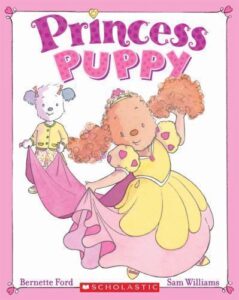
CL: Some graduating seniors from RISD [Rhode Island School of Design] came into the office one day for a portfolio review. I stopped to flip through the portfolio of a talented young woman named Hanna Cha. There was a stunning color sketch of a girl riding on a huge tiger’s back. I asked “Is there a story that goes with this art?” Hanna explained that she had a partial rough dummy that she’d done for school but the story itself was unfinished. I asked her to send it to me and from there we worked on the story together until it was ready to share at my editorial staff meeting. I was given the greenlight to acquire it and that story became Tiny Feet Between the Mountains.

RVC: If you had to summarize the most important lesson you learned over the start-​to-​finish process of that book getting published, what would it be?

CL: I learned that there is no “formula” for editing picture books. I had shadow-​edited other picture books with my supervisor prior to acquiring this one, but parts of his process didn’t naturally fit into how Hanna and I worked together. So, I adapted his process based on what worked for us and figured out the rest as I went. It was Hanna’s debut picture book as well, so it was nice to experience the learning curve together. That’s what makes editing picture books—or any book for that matter—so much fun. Each story is a unique puzzle waiting to be pieced together.

RVC: Describe a typical workday as an Editor at Paula Wiseman Books.

CL: Things have changed since the pandemic. I used to start my day with a long commute and lots of in-​person interactions, but now I work from home and Zoom with colleagues. But the job has remained the same. On a typical day, I am providing feedback on interiors of a picture book, editing a novel, giving my thoughts on a jacket design and art, writing catalog copy, sending requested materials to our Sales or Publicity teams, answering agents’ and authors’ questions via email, and attending meetings and acquiring books.

It’s a fast-​paced, hands-​in-​every-​cookie-​jar kind of job and that’s what I love about it. I’m never bored.

RVC: How much time do you have these days to read for pleasure?

CL: For a few years I fell behind on reading for pleasure—when you’re reading all day for work, sometimes it’s the last thing you want to do when you’re off the clock. But starting my MFA program at Vermont College of Fine Arts a year and a half ago made me get back into reading. I read a minimum of 50 children’s books per semester and annotate/​write critical essays on some of them.

RVC: Wow!

CL: Today, I make time to read for pleasure (and for school), and I go to the library once a week to check out picture books and graphic novels. Although I will admit that I consume novels mostly in the audiobook format these days. It’s easier to listen while doing the dishes, making dinner, or driving somewhere than it is to find time to sit down and read a physical copy.

RVC: No shame there–I do the same, which helps me justify having a commute. Please tell me about a time when things didn’t go the way you wanted. 

CL: There have been times when I gave notes and asked an author to do a revision and resubmit, in the hopes that I could bring the revision to my staff meeting and get the greenlight to take it to acquisitions. But sometimes those projects I’ve given notes on just don’t pan out and I have to pass. It’s disappointing in those cases but I always hope that my notes helped the author make the story a little stronger and that they will find the right home for their project, even if it’s not with me.

RVC: What’s one of your favorite success stories as an editor?

CL: That’s easy—Share Some Kindness, Bring Some Light, Apryl Stott’s New York Times bestselling debut picture book is one of my favorite success stories. When we used to be in the office, I would sometimes get postcards from illustrators advertising their work. One day I received one from Apryl, showing a little girl and a bear in the wintry woods. The bear wore a Santa Lucia wreath and red scarf. I was so charmed by the art that I cold-​emailed Apryl’s agent and asked if she had a story for these two adorable characters.

From there, Apryl and I spent months working on the story together and I went on to acquire it. Fast-​forward to when the book comes out during the height of the pandemic in 2020, and Barnes & Noble picks it for a holiday promotion! Then the Library of Congress picks the story for their National Holiday Read-​Aloud! With all this love for Apryl, the book hits the New York Times bestseller list for a few consecutive weeks. It was a major milestone for both me and Apryl and a true homegrown author-​illustrator success story.

RVC: What do you think of the state of kidlit right now?

CL: I think the kidlit landscape is in a state of evolution. Sure, there are some growing pains that come with that, but I’m encouraged to see so many new voices emerging and telling the stories of underrepresented groups of children and teens.

RVC: Your debut picture book—She Kept Dancing: The True Story of a Professional Dancer with a Limb Difference—comes out from Macmillan in fall 2023. Congrats on becoming an author!

CL: Thank you so much!

RVC: She Kept Dancing is co-​authored. What’s the story behind how this book and your writing partnership came to be?

CL: I have always loved watching the Radio City Rockettes at the Radio City Christmas Spectacular and on TV during the Macy’s Thanksgiving Day Parade. So, I was intrigued when I saw an online article about Sydney Mesher, the first Radio City Rockette with a visible disability. I instantly read it and was so inspired by Sydney’s story. My first thought was “wow, this would make an incredible picture book.” I cold-​emailed Sydney and her two agencies, asking if she’d be interested in discussing the possibility of a picture book. I was delighted when Sydney herself responded and said she was interested. I started interviewing Sydney and the story of her career and her levels of determination and perseverance were incredible. I assumed I would hire a cowriter to help tell the story and I would be the editor of the book.

Things came to a halt when we went into COVID lockdown and the initial proposal wasn’t approved by the Radio City Rockettes. But I couldn’t get Sydney’s story out of my mind—and the more I thought about it, the more I wanted to be the one to help write and tell her story. I reached out again and Sydney and I reconnected. I asked if Sydney would be open to coauthoring the book with me and she agreed. Then we came up with an entirely new angle for her story and that’s the version that wound up finding a home with Emily Settle at Macmillan. I am incredibly grateful to have Sydney as my coauthor and Natelle Quek as our illustrator—it’s been a fantastic collaboration all around.

RVC: How is the process different for an established editor like yourself in terms of submitting a picture book manuscript?

CL: It’s actually not different for me at all! I still have my literary agent submit a picture book manuscript to editors on my behalf. I have to wait for their feedback and receive rejections and requests for revise and resubmits the same as anyone else.

RVC: How has the process (so far!) with She Kept Dancing informed your work as an editor? 

CL: While working on She Kept Dancing, I really had to be sensitive and thoughtful about how I portrayed Sydney as a disabled individual—I had to make sure to capture who she was as a person apart from her disability, while also still make sure that her limb difference and her challenges were portrayed accurately. And I had to put myself in her shoes emotionally and mentally to make sure her character arc was genuine and compelling. As an editor, I look for the same level of care and sensitivity at the craft level when reviewing submissions, especially those featuring disabled characters.

RVC: What’s the most interesting thing about Sydney Mesher that didn’t make it into the book?

CL: I think we managed to get everything in there, actually! So, you’ll have to read the book and decide for yourself what is the most interesting fact about Sydney.

RVC: You’re currently pursuing an MFA in Writing for Children and Young Adults at Vermont College of Fine Arts. You’ve already got a successful career in the industry, so do you find it a little weird?

CL: Not really, because they are two separate careers within the same industry. Yes, there is some overlap when it comes to application of craft. But when I’m an editor, I’m helping another author or illustrator tell the best story they can and make their dreams a reality. When I’m an author, I’m telling my own stories and going after my own writing dreams. I chose to pursue my MFA in Writing for Children and Young Adults to take my own writing to the next level. Being able to apply what I’ve learned to my editor career is an added bonus.

RVC: How many times has a classmate (or a teacher?) pitched you an idea for Paula Wiseman Books?

CL: I’m pleased to say that this has never happened. Sure, sometimes a classmate or advisor might ask my opinion on something publishing-​related if they know I’m an editor. But they never pitch their own books to me. That’s what I love about VCFA—in the program I’m just another fellow writer and student who is there to learn and grow. And people are very respectful of that boundary.

RVC: Editor, author, consultant, freelancer, student. How do your various roles feed each other?

CL: All my roles feed each other in an endless cycle of creativity and critical thinking. I have to be creative in coming up with my own stories and offering feedback on authors’ and illustrators’ stories. And I think critically to find craft-​based solutions and ask the right questions that help both myself and my authors and illustrators best execute those stories.

RVC: You sound busy! What do you do to de-stress?

CL: Going to the gym or for a walk helps a lot. And I like to refill my creative well by learning new things. During the last two years I learned how to throw pottery, but lately I’ve gotten back into crocheting and trying new, harder patterns. Spending time with family and friends is also a great way to de-stress.

RVC: One last question for this part of the interview. What upcoming projects are you most excited about?

CL: As an author, I’m of course excited about She Kept Dancing. And I have a few other works-​in-​progress that I’m excited about but can’t share at the moment. As an editor, I am very excited about some new books that my authors and illustrators have coming out:

RVC: Okay, Catherine. It’s time for the LIGHTNING ROUND. Zippy questions and zoomy answers, please. Are you ready?

CL: Bring it on!

RVC: Gilmore Girls…great TV show or the greatest TV show?

CL: Great TV show—it’s a classic but it does have its flaws.

RVC: Most underappreciated Gilmore Girls character?

CL: That’s a tie between Kirk and Lane! Kirk is great comedic relief, and Lane is the BFF that Rory never deserved or truly appreciated, I think.

RVC: Favorite recipe from (or inspired by) the show?

CL: I own the Gilmore Girls recipe books! So, I have to say Sookie’s blueberry lemon shortcake was delicious!

RVC: What’s your most important good habit/​routine as an editor?

CL: Never answering work emails on the weekend. It’s a good habit, to help keep a healthy balance between my professional and personal life.

RVC: A favorite picture book of 2021 that you didn’t edit?

CL: What Isabella Wanted: Isabella Stewart Gardner Builds a Museum by Candace Fleming and illustrated by Matt Cordell.

RVC: Your picture book philosophy in five words or fewer?

CL: It needs an emotional hook.

RVC: Thanks so much, Catherine.

CL: Thank you for this opportunity!