
Agent Interview: Dan Cramer (Page Turner Literary Agency)

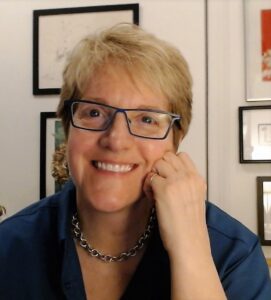
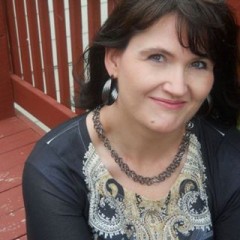
A2821821-DF59-4A87-A703-38E5D84FCD7D.jpgImagine a world where a former forensic scientist analyzes the ingredients of a perfect picture book – with a side of horror movies and ambitious baking goals. That’s the reality of Dan Cramer, founder of Page Turner Literary Agency.

This quirky agent is driven by a deep love for reading and believes children’s books have the power to be surprisingly bold. Let’s explore his unique perspective and discover what makes this book lover’s heart sing. Along the way, we’ll learn a bit about his agency and clients, too!


RVC: Let’s begin with an easy but important question. Do you go by Dan or Daniel?

DC: I accept all forms of my name. Dan, Daniel, Danny, Daniel Boone, Booner, and Uncle Boone. I usually just introduce myself as Dan because it’s short and easy to say. I had a speech impediment when I was younger.

RVC: Okay, Dan. Let’s dive into the real question on everyone’s minds. Henry…great rescue dog, or the GREATEST rescue dog?

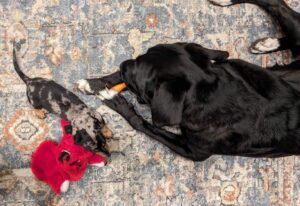
DC: Henry is obviously the GREATEST rescue dog. He’s a Great Dane/​Lab mix. He’s wonderfully lovable and currently a great big brother to his new sister, Longaniza (Lawn-​gah-​knee-​sah) or just Niza (Knee-​sah) for short. She’s a mini dachshund and her name is a Filipino breakfast sausage. My husband is Filipino and a cozy murder mystery series I enjoy by Mia P. Manansala has a dachshund by the same name in the books.

RVC: Makes perfect sense to me! Now, what’s the best lesson Henry has taught you that serves you well in your role as a literary agent?

DC: He’s always excited to go on an adventure. As a literary agent, I have to be excited to go on adventures, too. I have to dive into the worlds created by authors and illustrators and imagine a place for their stories in this big crazy literary world. If I’m not being adventurous, I’m probably not doing my job right.

RVC: Let’s hit the other Big Question here. How often are you mistaken for this Daniel Cramer (who is a film agent for William Morris)?

DC: That hasn’t happened yet – that I know of. But does make me want to read a murder mystery of literary agent mistaken identity! Two agents. Same name. One dead body. Will Daniel Cramer land the deal or end up six feet under? Cue dramatic music.

RVC: I’m in! But while we’re waiting for that book/​movie to happen, let’s circle back to the questions I meant to ask already, like this—what was your first important book experience as a kid?

DC: I was a very reluctant reader as a kid. The first book I remember reading on my own was Squanto, Friend of the Pilgrims and Shiloh after that. While I enjoyed both books, I wasn’t all excited to read more books. I read a few Box Car Children books and Amelia Bedelia. Again, I enjoyed reading them, but my love of reading still wasn’t there. It wasn’t until fifth grade when I read the Chronicles of Narnia (out of order) that I really fell in love with reading. Since then, I’ve just been turning pages.

RVC: Where/​how did you get the bug to be an FBI person?
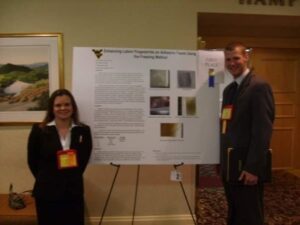
DC: My undergraduate degrees are in Forensic and Investigative Sciences and Psychology. I went to West Virginia University and the Forensic program was connected with the FBI Lab. During my senior year, we had to do our own research and present our findings at a CBD-​IAI conference. My best friend and I (still best friends) worked together. Our research was on developing latent fingerprints on the adhesive side of tape. A recruiter from the FBI approached us after our presentation and took our contact information. Unfortunately, that was also at the same time the government had a shut down and they weren’t hiring. So, I did a year of grad school in pathology and my friend worked for a local police department as an evidence technician. About a year after our presentation, I got the call from the FBI recruiter asking if I was interested in working at the lab and if I had my best friend’s contact information. I said yes to both.

RVC: What was the most difficult aspect of that work?

DC: There was a rigorous 18-​month training program that I went through learning all about the science of friction ridge skin, processing evidence, learning to testify as an expert witness, and comparing unknown prints to known prints. The most difficult aspect was the comparison of unknown prints to known prints. TV makes it look easy, but it’s a very difficult process. The unknown prints are rarely pristine. There is always some type of distortion (smeared, smudged, wiped, etc.) and most unknown prints are just a partial print – sometimes just a few ridges. My mentor realized, and if I’m honest with myself, I realized too that I wasn’t great at comparison. So, I did a lateral transfer within the laboratory to the Evidence Control Unit, where I was the first person to see the evidence arriving at the lab, would inventory the evidence, and help determine its life cycle within the laboratory (which forensic testing would be conducted on each item of evidence.)

RVC: In what way(s) did it prepare you for your career as a literary agent?

DC: I’m very organized and can handle large volumes of information without being overwhelmed. Some cases would have thousands of items of evidence and I would have to keep track of all of it.

RVC: How did the shift—from FBI person to agent—happen?

DC: I met my husband while I was working for the FBI. We both lived in DC and met the old-​fashioned way – in a bar. I didn’t even have a smart phone at the time. We both agreed that while we loved the DC area, it just wasn’t for us. So, we moved to the Chicagoland area where he grew up.

The Mob Doctor DVD Release DateRVC: That’s where I grew up too. Small world!

DC: I started working as an internal affairs investigator for the sheriff, and still do presently. (Side note: While waiting to get my internal affairs job, I did background acting work on TV shows filmed in Chicago. You can see me in Boss Season 2 and Mob Doctor.)

RVC: [working hard to find those episodes online as I ask…] What happened next in terms of your career path?

DC: In 2017, I had a conversation with myself about what I really wanted to do. I really didn’t want to be in law enforcement anymore. So, I distilled down what I loved doing, what brought me joy. The answer was always books and writing. I researched careers and literary agent seemed to be the perfect fit.

I did a cold email to Flannery Literary to see if they had any internship opportunities. I wasn’t looking for monetary compensation – I really just wanted to learn the ropes. I was fortunate enough that Jennifer did need an intern. She taught me the ropes and her joy with her work showed me I was making the right choice for my life. Jennifer was an excellent mentor and helped in more ways than I’ll ever be able to repay her.

RVC: What’s the story behind the first picture book you repped and sold?

DC: A Costume for Charly by CK Malone and illustrated by Alejandra Barajas was the first picture book I sold. I love that it’s the first one. CK and I are both part of the LGBTQIA2S+ community and one of my missions for my agency is to bring more queer representation to children’s literature. CK is also a gem to work with – all my clients are actually. They really think on my crazy ideas, and I think we’ve developed a relationship where we can present any idea to each other. I hope I can continue to bring more representation of all kinds to children’s literature.

RVC: What lessons did that book teach you?

DC: That I could actually do this job. I started as an intern in 2017, then an associate agent in 2019. I didn’t sell A Costume for Charly until June 2021. That’s four years, and I wasn’t sure if I was smart enough, savvy enough, creative enough for this industry. A Costume For Charly probably saved my Agent life and helped bring to life 18 other books from my other clients, including a second one from CK.

RVC: Let’s talk about your agency. What’s the most important thing people should know or understand about it?

DC: That reading books with all kinds of representation is important not only for our souls, but also for our society. Books build up empathy in us and looking around right now – we need that more than ever. So, be fearless in your writing and illustrating! You never know what child needs your words or your art. I want my agency to help bring more varied voices to the table.

RVC: How hands-​on are you in the editing process before sending out a picture book manuscript?

DC: I love working collaboratively and being the agent the author needs. I’ve help from the developmental stages to just having to do some line editing. And each time, no matter how involved I need to be, it’s magic.
RVC: What’s a daily workday look like for you?

DC: Crazy right now – lol! I work a full-​time job as an internal affairs investigator, and I do agenting whenever I can fit it in throughout my day. And with our new puppy, Niza, there’s potty training. I try to be cognizant of my mental health too. We have a culture that’s always go, go, go and that’s hard. I make sure to find time to rest and get in all the doggy snuggles I can.

RVC: Please share a client success story from idea to publication. 

DC: This is a hard question because any book that gets published is a success. In traditional publishing there are so many gate-​keepers, including myself. So, a story breaking down each gate to make it to the shelves of bookstores, libraries, and our homes is a success. But getting your book published is not the only success in this industry. You need define what success is for you, which can be anything – sticking to a writing/​illustrating schedule, joining a critique group, going to a conference, etc. Don’t compare yourself to others because it will steal your joy. Celebrate all your successes and others’ successes, filling your life/​career with joy.

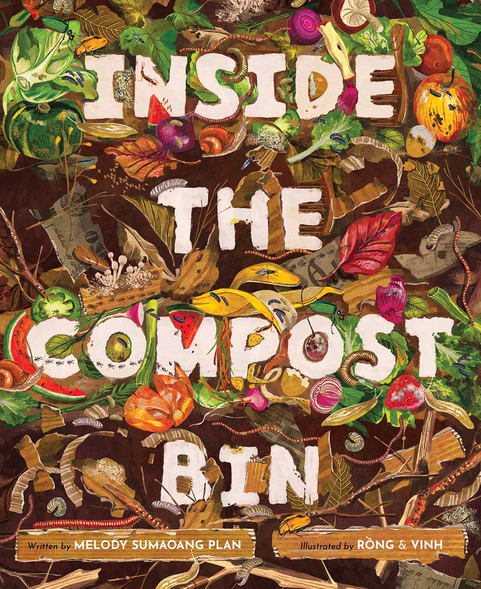
Okay, I’ll hop of my soap box now and I’ll speak of a most recent success. I signed on Melody Sumaoang Plan during a Writers Workshop Virtual Conference during COVID. She pitched me a lyrical nonfiction series about composting. There was minimal work needed to get the first manuscript ready for submission. During the first round there was interest from an editor who asked for a revise and resubmit. We did the R&R and the editor ended up passing. We were both ok with that because the editor did help us create a stronger manuscript. And we celebrated those successes – the R&R and a stronger manuscript. We went back on submission and the story was picked up by Tilbury House and is set to be published this July. We received notice at the end of April that Inside the Compost Bin received a starred review from Kirkus Reviews. A first for both Page Turner Literary Agency and Melody!

RVC: Congrats to you both on that! Let’s help up some future clients by sharing this–what’s the most common misconception about agents or agenting?

DC: We only pass because your writing/​illustrating is bad.

This isn’t true. There are many reasons agents have to pass on queries. For instance, I’m a one-​person show at Page Turner Literary Agency. I’m the only one looking at queries, working with my clients, pitching to editors, creating presentations for conferences, doing all the business stuff that goes with owning an agency. Plus, I work another full-​time job. So, I have to be extremely selective of who I sign on or how many clients I represent. I can tell you right now that I have a pile of work and always have a pile of work. I’m fortunate enough to have clients that understand and are patient with me.

Other reasons I pass are – your writing isn’t bad, it’s just not ready yet, I have something similar, I’m not the right agent to help you elevate your manuscript, your story is written well, but it’s not going to stand out in a crowded market. An automatic pass from me will be if you are rude, bigoted, racist, homophobic, etc in your query letter or submission. Luckily that doesn’t happen often.

RVC: In all your experience as an agent, what has surprised you the most?

DC: The length of time the whole process takes. You have to be patient and persistent in this industry. You will fail if you don’t have those two qualities.

RVC: Any other surprises?

DC. The other thing that has surprised me are the creative ways people tell stories. Jennifer once told me that there are no new stories, just new ways to tell them. And the innovative ways people come up with to tell their stories is fascinating.

RVC: If you could offer one key piece of advice to a new writer or illustrator hoping to get an agent’s attention, what would it be?

DC: Read what you write or illustrate as much as you can. As Gary Paulsen would say, “Read like a wolf eats.” And as you are reading, really study what that author or illustrator has done. Ask yourself what you liked about the story, what you didn’t like, how you would have done it, and, especially for picture books, read them aloud.

This career, writing and illustrating, is an isolating career. Join critique groups, writing groups, go to conferences if you’re able, participate in Twitter/​X pitch events, develop writing/​illustrating friends. Having a connection to this community will help you both in your craft and mentally.

RVC: What do you do to de-​stress or for downtime?

DC: I listen to a lot of audiobooks, read, bake, play with my dogs, be outdoors, run, lift weights, I’m learning ballet, go to the movies, and sometimes just sitting on the couch with my husband and our dogs enjoying each others’ presence.

RVC: One last question for this part of the interview. It’s Brag Time! What are some upcoming Page Turner projects that you want to rave about?

DC: 2024 is a big year for Page Turner Literary Agency! We’ve already had four books released this year and have five more coming out. There are several projects in the works that haven’t been announced yet, and a few in the negotiations stage. I also have big hopes that my MG and YA clients will break into the industry this year.

RVC: Okay, Dan. It’s time to move to the second and final part of the interview. It’s…THE LIGHTNING ROUND! The point values are quadrupled and the key to success is speed, speed, speed. So, quick questions and awesomely fast answers. Are you ready?

DC: Absolutely!

RVC: If you only had one app on your phone, it’d be…

DC: Gmail.

RVC: If you had to bake one item to save your life, what’s on the menu?

DC: Pumpkin Roll – it seems to be everyone’s favorite, so it should be able to save my life.

CREEP (2014) — CULTURE CRYPTRVC: Most underappreciated horror movie?

DC: Creep.

RVC: What are five things you couldn’t do your job without?

DC: Internet, Gmail, Ipad, Clients, Creativity.

RVC: Beyond your own list, what’s the last picture book that actually made you LOL?

DC: I’m Not Missing, with words and story by Kashelle Gourley and art and story by Skylar Hogan. It’s the dog’s side-​eye for me.

RVC: Your picture book philosophy in five words or fewer.

DC: Write for your inner child.

RVC: Thanks so much, Dan! This was terrific.
Agent Interview: Heather Cashman (Storm Literary Agency)

Today, we’re diving into the imaginative world of Heather Cashman, a seasoned literary agent at Storm Literary Agency, whose dynamic career spans across the evocative realms of Picture Books, Middle Grade, Young Adult, and Adult fiction and nonfiction. Heather’s enthusiasm for boundary-​pushing narratives and her commitment to fostering books that evoke a sense of wonder make her a distinguished figure in the literary community.
Heather brings a unique blend of scientific background and creative zest to her role, embodying a true nomadic spirit that seeks out the unexplored and unexpected in literature. Whether it’s a new twist on historical fiction or a fresh perspective in a picture book, Heather is on a quest to discover stories that do things she never knew books could do.

For those who craft narratives with layered hooks and genre blends, or those who write with a blend of commercial appeal and literary elegance, Heather’s insights today will be especially enlightening. Stay tuned as we explore her journey from biochemist to literary agent, her passion for non-​didactic, empowering children’s literature, and her advice for aspiring authors navigating the complex currents of the publishing world.

Let’s get inspired by Heather’s story and learn how we, too, can think outside the book!


RVC: You earned a degree in biochemistry, but that career path didn’t take. What’s the story here?

HC: I love biochemistry! It’s fascinating and a wonderful career path. However, I had three kids in four years and chose to stay home with them, during which time I began writing. And writing. And I just didn’t want to stop! And I started studying editing, became a CP for people, loved the process, and after years of studying and interning, I became a professional editor. By then my kids were in middle school and high school, and I had to make a choice. But I was so passionate about all things writing and editing, I just kept going.

RVC: Your website lists three main areas of creative efforts—literary agent, podcast host, and way-​word writer. Which came first, and how do these roles inform each other?

HC: Writer, then editing and interning and working as the host of Pitch Wars with Brenda Drake got me into the conference circuit, which is where I met Vicki Selvaggio, the owner of Storm Literary.

Writing informs everything. Knowing what it’s like to be a writer in the query trenches, knowing what it’s like to struggle for the words, to pour your heart and soul into a book—it all helps me help my clients. I understand what it’s like, but I also understand how tough it is, how difficult it is to stay motivated, and what the industry takes from you. But I also know that you won’t make it if you don’t put your boots back on, dust yourself off, and get back on the horse.

Being an agent, I hope to understand the industry side, the business side of writing. The sales, the marketing, the hoops you jump through with acquisitions, the contracts, the editing, the selling, the hooks, making your manuscript stand out. All of these things inform my own writing, influences the advice I give my clients and how we strategize selling their books, and also helps me assess each query submission.

The podcast ties all this together for me. As a writer, I need community. As an agent, I feel like I have a way to help writers, but also know intimately what writers navigating publishing today would like to hear about. Knowledge is the key to power—to success. I hope the podcast empowers writers in every facet of a writer’s life, from mental health to craft, the business side of things, the shifting that constantly occurs in this industry, as well as the community. I want it to break down the barriers and stigmas associated with the different paths to publishing. And I hope it provides a nurturing environment for people looking to connect in a real way. We need each other.

RVC: We’ll circle back to the other topics soon, but let’s talk podcasts. Way-​word Writers is very new. Why tackle this big project?

HC: I needed it. I needed to get out of my own small world and talk to writers out there. Every podcast guest has amazed me, informed me, taught me, and been so fun to talk to. I’ve laughed, cried, expanded my own horizons. Even if nobody listened to it, I would want to keep doing it.

RVC: What’s the most difficult aspect of hosting a podcast?

HC: I guess not wanting to do it all the time. I would be interviewing twice as many people if I could afford the time. I absolutely love these guests.

RVC: Way-​Word is more than just a podcast or website, though. What other things do you do/​offer?

HC: We began with just the podcast. But many of our listeners have asked for workshops, retreats, and conferences. So we’re introducing workshops first, probably slowly. Then we’re having an online conference Fall 2024 and then an in-​person retreat in Spring 2025. We’ll see how those go, and if they go well, we’ll try to do them on a regular basis. Fingers crossed!

RVC: If I asked your colleagues at Way-​Word Writers, what would they say is your superpower?

HC: I asked my colleagues, because I don’t see myself as having any superpowers. They said that my superpowers are kindness and compassion, and that I’m dependable, thoughtful, and a good listener. *blushing bright pink!*

RVC: You’re not just a champion of writers—you’re a writer of science fiction and fantasy for adults and young adults, and “the occasional picture book.” What’s your current project?

HC: I have a book on submission right now with my agent that studies the line where preference becomes prejudice, about a young woman who loves the taste of oranges, the sound of a cello, and a certain boy, but her AI-​run government and society demands randomness, so that prejudice can’t ever happen. I’m also working on a picture book about traditions and how different traditions around the world can unify families.

RVC: What do you enjoy most about writing your own picture books?

HC: I love remembering what it was like to be a little child, without all the experiences that jade us, when it was just me napping on the back of my horse while she ate grass out behind the wash shed.

RVC: Let’s talk about being an agent. You came up via the internship route, right? How did you make that happen?

HC: It was a combination really. I’d been interning at an agency and then a publishing house, and I was doing the conference circuit. So things came together for me in a way—a perfect Storm!

Basically I worked A LOT for free for many years.

RVC: Prior to joining Storm Literary Agency, you worked as an editor at Cornerstones UK. How did you fare in the editorial role?

HC: I loved editing and still do! But it always made me sad when I fell in love with a manuscript and then didn’t get to see it through to the selling and publishing stage.

RVC: Talk a bit about how editorial you are in your work as an agent.

HC: When I first started as an agent, I was very editorial. The busier I get with things though, the less time I have to do detailed line or copy edits to really elevate the writing. But I still read and give as much feedback as I possibly can. I always want to give my authors the very best chance at a sale!

RVC: You landed at Storm Literary Agency. What’s the most important thing people should know or understand about that agency?

HC: We’re very much a team. We’re collaborative, have a family atmosphere, and we foster agents and clients alike to be the best they can. This industry takes a village, because books are like children: they’re complex, they grow, they need nurturing and advocates to fight for them. Storm is that village.

RVC: Why is Storm Literary Agency a great fit for you?

HC: I need nurturing too! Also, I love to help the other agents and writers, and Vicki and Essie are so supportive and offer their wealth of knowledge and experience freely. It’s a wonderful place to work.

RVC: What was the first picture book you sold? What’s the story behind that?

HC: The first picture book I sold was a nonfiction picture book by my client Nathalie Alonso titled My Name is Roberto (Calkins Creek, 2025), and it’s been a long time coming! I fell in love with Nathalie’s writing. She’s a fireball with so much heart and soul, and that gets poured right into her books.

RVC: What’s the most useful lesson that first picture book sale taught you?

HC: I could do it. And if I sold one book, I could do it again.

RVC: You’ve mentioned that you love “timeless picture books.” Could you discuss a few examples and what, in your view, contributes to their timelessness?

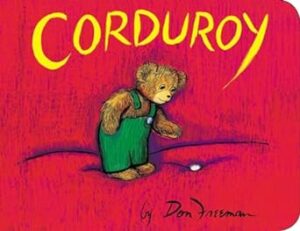
HC: Corduroy by Don Freeman. As timeless as corduroy itself, it’s a book about finding the perfect someone. We all need that.

Where the Wild Things Are by Maurice Sendak. Everyone has an inner monster, and that inner monster gets in trouble, and I love that this book teaches us to identify that inner monster and acknowledge it without letting it keep us from our dinner.

If You Give A Mouse A Cookie by Laura Joffe Numeroff. So fun, and we are all that mouse.

To me, timeless books universally resonate with us because they reveal ourselves—they reveal to us the human condition and help us realize that we aren’t the only ones who feel this way—no matter what our age.

RVC: As an agent, you’ve mentioned a love for books that “do things I never knew books could do.” Could you give an example of such a book?

HC: I’ve seen books that can turn into beehives, books that unfold and turn into a map, books that transform the way you live or think.

RVC: Can you talk about a time when a project took a completely different direction after your initial feedback and turned out better because of it?

HC: I gave someone an 18-​page edit letter for their YA and they asked me why I even took them on as a client. We worked on another project for a while, but after they went back and did the edits on that first project, it became a NYT Bestseller. And while my edits did help, it was their vision, talent, and perseverance that made the difference.

RVC: What a great story! Now, in your opinion, what are the key components of a successful author-​agent relationship?

HC: Communication, understanding, and a willingness to keep learning craft.

RVC: How do you handle the delicate balance of creative input with respecting an author’s artistic vision?

HC: I ask questions, make suggestions, and then let them figure it out. I trust them to know what they’re trying to do and say.

RVC: How do you identify and help authors capitalize on emerging trends in the publishing industry?

HC: My authors have a lot of manuscripts in a folder and I go through them and we discuss, or sometimes I ask them if they have anything an editor is looking for.

RVC: You’ve been involved with Pitch Wars, #PitMad, and Pitch Madness. Why did you get involved?

HC: To find a community of talented authors and creators and surround myself with a community of like-​minded people who want to lift rather than tear down.

RVC: What’s your favorite success story from those opportunities?

HC: I loved every author I worked with, both the mentors and my mentees, and I don’t think I have a favorite success story. There were so many talented authors who went on to do great things.

RVC: I confess—I don’t know anyone who lives the RV life, but it’s something you do full time. What’s a typical workday look like for you?

HC: My workday is very similar to anyone else, I think, as far as working around 10 hours and reading at night. I guess the main difference is that when I make my tea and go sit outside, I’m in the wilderness somewhere. And it’s always changing. Sometimes I’ll edit while in my lawn chair by a river. We’re off grid because we are 100% solar, so we often stay in national parks or forests with the deer and squirrels.

RVC: Your bio says you love kayaking, hiking, and motorcycling. How often do you get to do those things?

HC: I sometimes do small hikes in the mornings, but usually we do something on Saturdays and/​or holidays.

RVC: Alright, Heather. Let’s jump into the much-​beloved, never-​equaled, always-​exciting LIGHTNING ROUND. Zippity-​zoomy questions followed by fasty-​blasty answers, please. Are you ready?

HC: Yes!

RVC: Favorite writing/​editing snack?

HC: Bengal spice tea with lemon.

RVC: Which picture book character would be the best mascot for your RV?

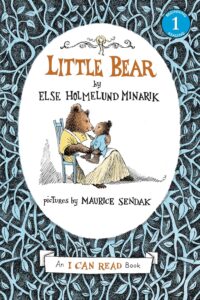
HC: Little Bear.

RVC: If you could swap lives with any picture book character for a day, who would you choose?

HC: Christopher Robin.

RVC: What’s a recent picture book gem that didn’t yet get the attention it deserves?

HC: Too many to count!

RVC: Who sets the standard for picture book rhymes?

HC: Experienced editors who know meter and rhyme, and also know what a great read aloud sounds like. If you meant picture book authors, I would say Dr. Seuss.

RVC: Heather Cashman is an agent who…

HC: …wants all the books!

RVC: Thanks so much, Heather!

Freelance Editor Interview: Emma D. Dryden

**Thanks to picture book author Dianne Ochiltree for stepping in to be the guest interviewer this month!**

Meet Emma D. Dryden, founder and principal of drydenbks, a premier provider of editorial and coaching services for the children’s publishing industry. Prior to her role as guiding light at drydenbks, Emma was a children’s book editor–first at Random House Children’s Books, and next at McElderry Books, an imprint of Macmillan Children’s Books, where she worked with the legendary Margaret K. McElderry. After Ms. McElderry’s retirement, Emma was made Vice President, Editorial Director of the imprint; in 2005 she became Vice President, Publisher of Atheneum Books for Young Readers and Margaret K. McElderry Books, imprints of Simon & Schuster Children’s Publishing, a position she held until 2009 when she launched drydenbks.

​Over the course of her career Emma has edited more than 1,000 books for children and young readers. As publisher, she oversaw a staff of editors and the annual publication of over one-​hundred hardcover and paperback titles. The books she’s edited have received numerous awards and honors, starred reviews, were named to year-​end “best of” lists, received regional and national publicity and acclaim, and hit the bestseller lists in USA Today, The New York Times, The Washington Post, Publishers Weekly, and other national publications.

So, who better to ask questions about picture books, children’s publishing, and everything bookish? Let’s go!


DO: What first attracted you to children’s publishing?

EM: Long before I majored in English Language and Literature in college, I was an avid reader and book-​lover. I thought about becoming a writer, but decided I’d rather be immersed in lots of different kinds of stories and lots of different kinds of writing, which made me think I could enjoy being an editor working with all kinds of writers. I was particularly drawn to children’s publishing because I never outgrew my love for illustrated books. To be honest, I have never really outgrown that aspect of my childhood in which I found great solace and comfort in books, which is why I still adore reading children’s books—especially picture books and middle grade.

DO: What about the children’s publishing industry has kept you engaged in it for all these years? 

ED: I was lucky to be hired by fantastic editors who became mentors and friends; and I quickly felt—and continue to feel—a kinship and shared spirit with people in all aspects of the children’s publishing industry. I love the range of topics, categories, genres, voices, styles, and shapes of children’s books and thrive on the marvelous variety of books and projects on which I’ve been able to work throughout my career—working on a picture book, a MG novel, and a poetry collection one day; working on a YA novel, a board book, and a graphic novel the next.

DO: What was it like working with legendary Margaret K. McElderry? 

ED: Margaret was a tremendous editor from whom I learned so much, from how to reject a manuscript with sensitivity and how to get the best out of an author by posing thoughtful questions during the editing process, to how to conduct oneself professionally and never forgetting to take time to laugh. Margaret was tough—she had to be; it was her name on the spines of those books! She also had such a lovely and sharp sense of humor. She was an inspiration to me in so many ways and I am ever grateful our paths crossed in the ways they did.

DO: How has the picture book form, and the industry itself, evolved in the years of your career?

ED: This is an interesting question insofar as my first thought is that the picture book form hasn’t really changed all that much—not when it comes to the basic “mechanics” of a picture book being 32 or 40 pages with or without endpapers, relying on page turns to create tension and an impetus for a reader to find out what happens next, being illustrated in a way that expands and deepens the text, and so forth. The picture book industry itself is always evolving and growing and picture books can afford terrific opportunities for authors and illustrators to really play with language, perspective, boundaries, voice, and more. It’s these elements that I see ever evolving as picture book creators experiment and apply new ways of storytelling and new ways of engaging young readers.

DO: What services do you offer to authors, publishers, and agents? 

ED: drydenbks LLC provides editorial and creative services to children’s book authors, illustrators, publishers, and agents. Over fourteen years this has included engaging in consultancy and coaching services with authors about their manuscripts, evaluating a small press’ publishing goals and brainstorming how to expand or focus their program, assisting authors sent to me by their agents to ready their manuscripts for submission, helping illustrators update and energize their websites as they prepare to query agents, explaining the ins and outs of children’s publishing to potential publishers, and leading workshops or retreats about different aspects of the writing and revision process.

DO: Can you describe your ideal picture book client? 

ED: The ideal picture book client is the author or author/​illustrator who has not only worked on writing and revising (and revising and revising) their manuscript or dummy, but who has spent time studying how picture books work so they fully appreciate the importance and purpose of the page turn, the importance of leaving a lot unsaid in the text that can be expressed through illustrations, and who is fully open to new ideas and perspectives about their work for the sake of making their project truly sing.

DO: How can potential clients best prepare for their work with you, so they—and you—can get the most from the critique and coaching experience? 

ED: Ideally, I prefer to work with clients who have completed manuscripts—and not simply first drafts, but multiple drafts; clients who have revised their work as much as they can on their own. I don’t hold back in my critiques—so the ideal client is someone who has spent time before they contact me learning about children’s publishing, learning about the category and genre in which they’re writing, and understanding what to expect from a professional critique. Those who have been through some sort of critiquing and workshopping before they work with me are usually more open to entertaining new perspectives and ideas about their work and exploring the kind of provocative “what if?” suggestions and questions I like to pose—and that makes our work together richer and more productive.

DO: What do you think is a key element to crafting an excellent picture book manuscript?

ED: Picture books are a wondrous collaborative art form. Words and illustrations must harmonize—each bringing their own personality, emotion, and mood to create a memorable harmony. It’s important for picture book authors to understand and be excited by the fact that illustrators will not be putting their exact words into pictures in a literal interpretation, but will be adding a whole other level of story to their words. I encourage picture book authors to think of their texts as the musical score that accompanies a drama we see upon a stage. And so saying, the musical score of the picture book needs to be poetry, subtle, emotional, and not overblown–not so loud that it drowns out the drama that will be enfolding on the pages through the artwork.

DO: How do you think picture book authors and illustrators can meet challenges they might experience during the writing/​submission/​ agenting/​publishing process?

ED: So, first off, I will say authors and illustrators WILL without a doubt experience challenges all along the way from story concept inception through publication and even into the aftermath of publication. The breadth and depth of these challenges will vary depending upon so many factors that are without or within a person’s control, including an individual’s personality, experience, background, artistic process, support system, goals, expectations, life changes, definition of success, someone else’s rules, and more. It’s not easy to generalize, of course, but one thing I will say I’ve learned over the course of my long career in this business—a business which has always had ups, downs, highs, and lows—is that the best way to get through challenges is for an author or illustrator to figure out ways to keep going with their creative work and to truly honor their creative work—in whatever form that takes. That could mean grabbing just ten minutes a day for some sort of creativity, finding a new form of support system, getting out of your comfort zone to try something new, taking a class, scripting a tough conversation you know you need to have, asking for help, and above all, giving yourself grace.

In crafting a story—nearly any story, really—a main character can’t evolve or grow without facing challenges. Conflict is what propels a story, a main character, a reader forward to find out what happens. So too in our own lives, right? The more we can figure out how best to face, manage, and learn from challenges, the more we will be able to grow and evolve. It’s not easy and sometimes completely new paths will have to be forged, but I urge authors and illustrators to remember that what they always have is their creativity and their ideas—and these are worth nurturing even through the hardest challenges.

DO: In addition to your work as editorial consultant, you’ve written poetry, essays, and articles for industry publications. How does your experience as a writer influence the work you do with authors?

ED: Writing and revising my own work—on a deadline—has made me appreciate how hard writing and revision—on or off a deadline!—can be. Spending time, energy, and emotional grit on my own writing reminds me how important it is as an editor and coach to respect and empathize with what authors and artists do—and never to take any aspect of the creative process for granted.

DO: Editing, consulting, coaching, writing—whew! You are a busy entrepreneur. What do you like to do in your downtime? 

ED: I don’t have the healthiest work-​life balance (show me any self-​employed person who does!), but when I can, I love spending time with friends, being outside in nature, and traveling—particularly to places with loads of animals and fascinating land- or seascapes.

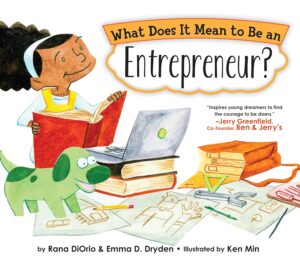
DO: Speaking of entrepreneurs, you have co-​written a wonderful picture book titled What Does It Mean to Be an Entrepreneur?, published by Sourcebooks/​Little Pickle Press in 2016. Can you tell us how that project came about? 

ED: I’d worked with author and entrepreneur Rana DiOrio for quite a while before we co-​wrote our book. I’d been editing some of the books Rana was publishing at Little Pickle Press and we were talking about adding a title to her What Does It Mean to Be…? series about entrepreneurship. Not an easy or accessible subject for picture book age readers, to be sure—and after seeing some writing/​outline samples that we didn’t think were working, I jokingly said “We could write this book ourselves!”—and Rana took me seriously. So we gave it a try.

Our collaboration was tremendous fun, both of us bringing years of experience as entrepreneurs and picture book experts to the process. We created a spare text which at first glance seems to be a string of disparate general ideas, but which we wove together by coming up with a strong visual narrative storyline for the book. It’s in the illustrations where a main character and plot could come alive to pull our ideas all together. We shared our vision with the oh-​so-​talented illustrator, Ken Min, who completely got it and the book was born. I’m very proud of that book!

DO: What is your one best piece of advice for all our author friends out there? 

ED: Can I give two pieces of advice?

DO: Sure!

ED: Take plenty of time between drafts of your work. Don’t underestimate the writing and revising of your story that goes on in your subconscious mind between drafts. It’s necessary and important!

Whether or not publication is your goal, keep writing for the sake of writing and then ask yourself how you define “success” when it comes to your writing. If you attend workshops, retreats, and webinars and are members of groups like Highlights Foundation, SCBWI, or WNDB, you will be hearing a lot about other authors’ processes, goals, dreams, and projects. That can be inspiring, but it’s important for you to recognize and nurture your specific processes, goals, dreams, and projects. I ask workshop attendees to fill in the blank: “I have to write this story because I _​_​_​_​_​_​_​_​.” I urge your readers to complete this exercise and keep the responses somewhere you can see them. Never lose sight of why you’re writing what you’re writing.

DO: You are also an accomplished speaker, teacher, and workshop presenter on all aspects of the business and craft of writing for children. What do you most enjoy about this aspect of your work? 

ED: Sharing my knowledge, expertise, and ideas about writing and revising with authors comes easily to me and I love the conversations and creativity that result. It’s also fun to share my “insider” knowledge about the children’s publishing business. I particularly enjoy the give-​and-​take with authors in a workshop or retreat setting, the exchange of ideas, the asking and answering of questions, and the “ah ha!” moments that always come for authors/​illustrators who are engaging deeply with their work in a nurturing, supportive environment. It’s gratifying to feel helpful and be allowed a gentle glimpse into people who are tapping deeply emotional places as they create their manuscripts and projects.

DO: And how can readers find out about where you are appearing in the future? 

ED: I don’t announce appearances on my website or have a calendar that people can follow. I do post about workshops, retreats, or webinars on Facebook and sometimes on my sometime-​blog, so I hope people will follow me on those platforms.

I am happy to share with your Only Picture Books audience that I will be co-​leading a Revision Retreat at the Highlights Foundation on November 14–17.

DO: You generously share information about children’s literature, the craft of writing for children, and the business side of children’s publishing on social media. Where can readers find and follow you? 

Website: https://drydenbks.com

Facebook: https://www.facebook.com/emmaddryden and  https://www.facebook.com/drydenbks

LinkedIn: https://www.linkedin.com/in/emmaddryden/

My sometime-​blog, “Our Stories, Ourselves”: https://drydenbks.com/blog/

DO: One final question. What are three things that OPB readers would be surprised to learn about you? 

ED: That’s a fun one! Let’s see… readers might be surprised to learn:

To unwind or relax, I get really caught up in watching True Crime stories and contemplating what makes people do the things they do. (Admittedly, sometimes the crimes are so grisly and the criminals so fascinating and repugnant, it defeats the “unwind or relax” aspect of the viewing!)

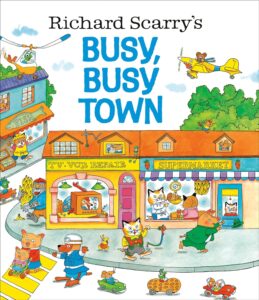
I got my start in the children’s publishing business assisting Olé Risom, the Random House editor who edited Richard Scarry and Laurent de Brunhoff, so I had the pleasure of working with both. I grew up reading Scarry’s Busytown series and de Brunhoff’s Babar series, so to work and get to know these masters was an utterly delightful and serendipitous experience for which I’m so grateful.

I’m not afraid to speak in public, I’m not afraid to try new foods, I’m not afraid to travel by myself. I am, however, afraid of steep hills (going down or going up!)—much to the frustration of family and friends with whom I am supposed to be having fun skiing or hiking!

DO: Thanks so much, Emma!

Agent Interview: Rachel Orr (Prospect Agency)

Welcome to Rachel Orr, a longtime literary agent with Prospect Agency. Instead of going with the standard biography here, I’m going to include a few key things she’s said—or others have said about her—that are especially telling.
  • values her close relationships with authors and believes that nothing feels as good as a fresh, clean line edit.”
  • loves authors who have more than one idea and are willing to revise.”
  • has no spare time—but, if she did, she would spend it dancing, running and reading, of course.”

With that, let’s get to the interview itself to learn more about her. Here we go!


RVC: Let’s start with the here-​and-​now instead of diving into the deep past. You’ve been agenting for a good while. In all your experience, what has most surprised you?

RKO: I think what has most surprised me most about agenting itself is the close relationships I’ve been able to establish and maintain with my clients.

When I worked as an editor at HarperCollins, I really valued the relationships I had with my authors—and I worried that I would lose that as an agent. However, one agent assured me that I would have even stronger relationships with my clients. After all, an editor may only work with a creator on a single book, but an agent ideally works with a creator over the course of an entire career. That was really exciting to me, and has also turned out to be quite true.

RVC: That’s great to hear!

RKO: I do, however, make sure to respect the author-​editor relationship, and feel that part of my role is to place the right author with the right editor. That’s a fun challenge in this ever-​changing industry, for sure.

RVC: I’m noticing that you like to use RKO as your initials. Is there a special story or meaning behind that choice? Are you secretly a huge fan of old-​school wrestling moves?

RKO: Great question, but not a very exciting answer, I’m afraid. They’re just my initials, and that’s how my name was abbreviated when materials were circed around the editorial department at Harper, so I just got used to it. Plus, I like that there was once an RKO film production company (which produced Citizen Kane, though I’ve never seen it). Kind of cool!

RVC: Fair enough. You’ve been at the Prospect Agency since 2007. What’s special about it, and why’s it such a good fit?

RKO: I love that Prospect Agency is a small agency made up of smart women who care deeply about books and also have a savvy business sense. We get the job done, but I don’t think we present ourselves as intimidating. (I hope not, at least!)

I was fairly intimidated by many agents when I worked at Harper—though there was one agent, Liza Voges, whom I found to be incredibly approachable. She has an amazing roster of talented clients and a solid knowledge of the industry, yet she is so incredibly down-​to-​earth and makes people feel at east. That’s how I strive to be as well.

I also appreciate the fact that while my colleagues and I will often collaborate and confer on various matters, we have autonomy, too. There’s a lot of trust involved. The president of Prospect, Emily Sylvan Kim, really allowed me to grow the children’s division of the agency when I began, and to start the illustration branch (Prospect Portfolio) from scratch. She always listens to the wild ideas I have for expanding promotion and fostering community, and I’m so grateful for that.

Lastly, what I feel is most special about Prospect is the close-​knit feel we’ve been able to establish. My clients consider each other family. I love when I get a photo of my clients helping each other out at a trade show, or simply having coffee together. It warms my agent heart!

RVC: Thanks for the great answer! Now, by reputation, you’re a hands-​on, editorial agent. True? 

RKO: Yes, absolutely. I’m an editor at heart, and I suppose that’s really the only way I know how to agent.

RVC: Please give me an example of what that looks like. 

RKO: Well, it looks a bit different for each client, depending on their needs. With some clients, I might play an editorial hand early on, talking through different possibilities for a new project and then helping to flesh out the characters and plot line. With others, I might not get involved until after they’ve already written a manuscript, and then provide (hopefully) helpful feedback by means of line edits.

RVC: Which has proven more valuable to you as an agent—your work as an editor at HarperCollins Children’s Books, your stint as a Barnes & Noble bookseller, or your time as a student at Kenyon College (where you had cool internships at The Kenyon Review and Highlights for Children)?

RKO: While every experience has helped to shape my career in some way, of course, I’d definitely say that my work as an editor has been the most valuable. On a broad level, it helped me to gain an understanding of how a publishing house operates, which I would not have been able to get otherwise. On a more personal level, it’s where I met so many wonderful mentors—Barbara Lalicki and Rosemary Brosnan, in particular—who were instrumental in my development as an agent. From them, I learned how to write editorial letters—specifically, how to request changes to help improve the story while still honoring the creator’s intention. Also, I was often invited to join them for meals and events with their authors and illustrators, which taught me so much about building these creative relationships. In addition, they placed a lot of trust in me, which helped to firmly establish my own confidence in my work.

RVC: If I spoke with Emily Sylvan Kim (owner of Prospect Agency) or fellow agent Charlotte (Wenger), what would they say is your agenting superpower?

RKO: They might say my knack for carefully reviewing contracts (though that is, admittedly, not my favorite part of my job). Hopefully, they might say planning events (since I’m the one in charge of our retreats and soirée), which is much more fun!

RVC: Just between us, what’s your REAL agenting superpower?

RKO: Maybe diplomacy? (My former boss at Harper used to say that I should have been a diplomat.) Either that or juggling so many different projects and creators. I believe that it’s essential for client care to respond to them as promptly as possible (at least to their emails, even if I can’t get to their manuscript right away) and always make time for phone calls if they need to talk something through. So I try my very best to make that a priority.

But, honestly, the variety of projects and clients is what I love most about my job. I love people, and I love figuring out exactly what each individual client needs in order to thrive. And I love giving feedback on a tender, lyrical middle-​grade novel about a girl whose mother struggles with mental illness, and then wracking my brain trying to figure out where to send a poetry collection about animals in pants. It’s what keeps things interesting.

RVC: So, you’re looking for “short, punchy picture books (either in prose or rhyme) that are humorous and have a strong a strong marketing hook.” What are some mentor text examples that’ll give a clear(er) sense of what you mean?

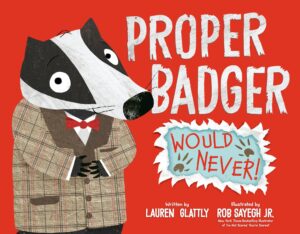
RKO: One example of a humorous picture book in prose that I’m really excited about is Lauren Glattly’s debut Proper Badger Would Never!, forthcoming from Flamingo/​PRH on April 2. This was a story that I fell in love with as soon as it hit my inbox. It’s fresh and unexpected and a little bit naughty (okay, a lot bit naughty) with a surprising ending that is far from being sweet and wrapped up in a bow. And while the marketing hook may not be completely clear at first (the way a hook might be if it’s, say, a seasonal title), I do think it could be a fun (and funny) way to open up conversations with kids about manners in terms of what not to do.

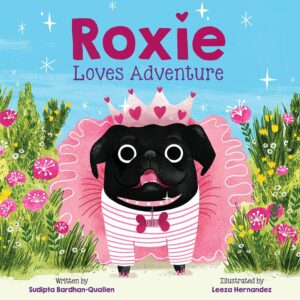
In terms of verse, I would suggest reading anything by Sudipta Bardhan-​Quallen, who has an excellent sense of rhyme and meter and is also very intentional about considering marketing hooks. Check out her picture book Roxie Loves Adventure (Abrams) about pugs and love; Chicks Rock! and Chicks Rule! (companion titles, also both from Abrams) about girl power and music and STEM; and the forthcoming Cats in Construction Hats (Random House Books for Young Readers) about construction vehicles and colors.

RVC: How much do industry trends/​marketplace changes affect what you’re looking for?

RKO: I would say that it doesn’t affect what I’m looking for so much so much as it affects when I send a particular project out. For example, if I fall in love with a manuscript about, say, a narwhal, and the market is flooded with narwhal books at the moment, then I’ll ask the writer to send me more manuscripts to consider. Then, if the writer and I decide to work together, then we can keep the narwhal manuscript in our back pocket for when the market would be more favorable. This is why, in my opinion, it’s crucial for writers to have at least five polished manuscripts (preferably in different styles and on different subjects) ready to share when querying agents.

RVC: That’s great advice! In a 2021 Good Story Company interview you did with my buddy, Mary Kole, you talked about how some picture books eventually transform into other formats, like graphic novels. 

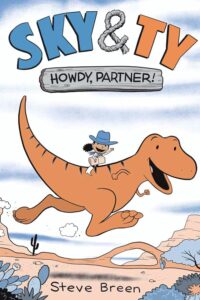
RKO: Yes, it’s something that definitely happens from time to time. Author-​illustrator Steve Breen’s young chapter-​book graphic-​novel Sky and Ty (forthcoming from Pixel + Ink on April 2) was initially conceived as a picture book. The first dummy, however, was about twice the length of a standard picture book. It didn’t have very much text, but it did had have a lot of art and a lot of story that seemed to naturally break into chapters. Given that Steve was already using a limited palette of two colors for the art (along with the fact that he worked as a cartoonist at his day job), it made sense to go in the direction of a graphic novel, especially since the market was so hot for them.

RVC: I don’t think writers fully appreciate this—having a literary agent doesn’t mean guaranteed sales. Sometimes it simply doesn’t work, right? Even when a writer and an agent are 100% onboard with a project.

RKO: Yes, unfortunately, that’s true. (Teardrop!)

RVC: What do you do when that happens?

RKO: Well, I feel that it’s important for the author to keep on writing and for me to keep on supporting that author. It sometimes happens that I might not immediately sell that first manuscript that made me fall in love with the author’s work, but I might sell the second manuscript, and then the third. And then, once the author has established a relationship with an editor, I might be able to go back and sell that first manuscript. (This happened fairly recently, actually.)

Or it might be that we revise the manuscript after getting solid, consistent feedback from editors. We also might decide to shelve the project and pull it out again when the market for that particular genre is better, or when one of us has another idea on how it might be strengthened. Sometimes I might ask one of my illustrators to do a sample that we can submit with it, if we think that might help an editor to better visualize the book. (This strategy once helped to sell a manuscript eight years later!)

In a worse-​case scenario, I just pull the manuscript out from time to time, read it again, and weep that it hasn’t sold. (Maybe not really—I’m not a bit weeper—but I’m definitely crying inside!)

RVC: Since we’re talking about things not being what people expect…what do you think is the most common misconception about literary agents?

RKO: I think there’s possibly the misconception that literary agents are scary, which is absolutely true. Joking! We are not scary. And we do not only care about money. (That was one misconception I had when I was an editor, at least.)

My guess is that most of these misconceptions stem from the age when you didn’t necessarily need to have an agent to get a book published. I feel like there were fewer agents then, and those agents primarily focused on the business side of publishing. That’s not necessarily the case today.

RVC: What’s a typical workday look like?

RKO: Well, one aspect of my job that I love is that there is no typical workday. Also, I’ve also had the luxury of working from home (before it was even popular to do so), which gives me the flexibility to mix things up a bit, if need be.

But, in general, I usually start my workday around 8am after my teenage son and daughter have gone off to school. I might begin with work that requires more quiet and focus (since I won’t have a ton of emails to answer just yet)—something like getting back to a client with editorial notes on a manuscript or dummy, or drafting a pitch letter for a submission that I’m planning on sending out that day, or reviewing a contract. At 9am, when emails start coming in, I try to answer them promptly, but thoughtfully (though sometimes they come in quickly and it’s like a game of Whack-​a-​Mole). Around 10am, I might have a call with a client to discuss the status of a project, or brainstorm ideas for future projects. In the afternoon, if I’m not having lunch with an editor in the city (which is always a treat!), I try to get more work done that requires concentration before my kids get home from school.

Then it’s usually a mad rush of making dinner and picking kids up from their activities and helping with homework (which mostly involves me frantically looking up Khan Academy videos on the slope-​intercept form while my son figures it out on his own).

RVC: As a part of two teens, I’ve been there, and I have that URL handy. Here you go!

RKO: Finally, I’ll catch up with more emails in the evening while my husband watches basketball on TV. I realize that doesn’t sound very exciting—but it is, I promise you.

RVC: What’s something that makes it all worth it?

RKO: Absolutely, hands down, the best part of my job is when I have the chance to call a client and share the good news that we’ve received an offer from an editor. It’s most thrilling, of course, if it’s the client’s first book, but even the twenty-​first book is really pretty great.

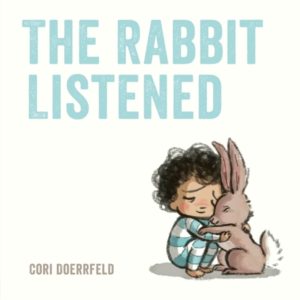
RVC: Totally agree with that! Now, one of your clients, Cori Doerrfeld, had a surprise hit with The Rabbit Listened. What’s the story behind that story?

RKO: Well, first off, what I’ve always found to be most surprising is that so many people viewed this book as a surprise. 🙂 True, this was definitely the book that put Cori on the map, so to speak, but she had been illustrating children’s books for nearly a decade by this point. In fact, we had just sent one of her dummies (Good Dog) out on submission the same day I read The Rabbit (as it was called then). It was a Wednesday afternoon in May, and I remember sitting in the reading room of the Hoboken Public Library and thinking, OH! This is good. Often I’ll make a lot of edits before sending a project out, but I made very few tweaks to this dummy (like, maybe only one).

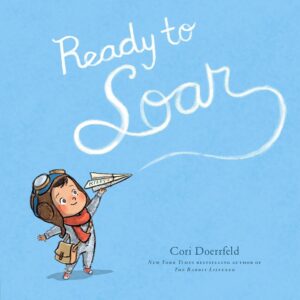
Our only slight hesitation with sending it out immediately was that we had just gone out on submission with Good Dog. We didn’t want editors to feel like they had to choose between the two projects. But then we decided just to go for it! I sent it out late on Thursday afternoon and started getting offers the very next day while I was driving to my family’s house in Pittsburgh. When I stopped halfway for lunch, I called Cori and and gave her an update, and we discussed how we would proceed. Funny—I always imagined big deals going down over a three-​martini lunch, rather than in the parking lot of McDonald’s, but that’s exactly how it happened. We sold the book to Kate Harrison at Dial/​Penguin Random House. Since then, it has been on The New York Times bestseller list and translated into over 25 languages. Cori’s fourth book with Dial, Ready to Soar, will came out March 12.

(Oh, and for the record, we did sell Good Dog as well to Chris Hernandez at HarperCollins. Hurrah! 🙂

RVC: Two more questions for this part of the interview. What was your first special experience with a picture book?

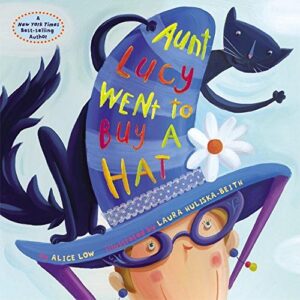
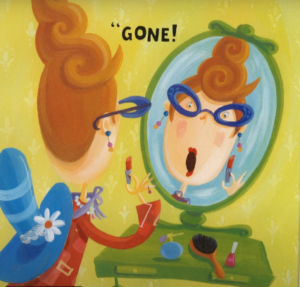
RKO: I would say Aunt Lucy Went to Buy a Hat by Alice Low, illustrated by Laura Huliska-​Beith. It was the first picture book that I acquired as an editor at HarperCollins, so it will always hold a special place in my heart (cliché as that sounds!). Laura was especially amazing to work with, and it was fun to see her solve artistic challenges. For example, Aunt Lucy needs to lose her hat in the beginning of the book and then have it by the end, but we didn’t want it just magically flying behind her on every spread. So Laura came up with the idea to show Aunt Lucy looking in the mirror at the beginning of the book, and she thinks her hat is gone, but it’s really tied around her neck with ribbon and hanging behind her (which the reader can clearly see). It was such a fun solution, and taught me the importance of trusting an illustrator, too.
RVC: Last question! What are some cool upcoming things you’d like to brag about?

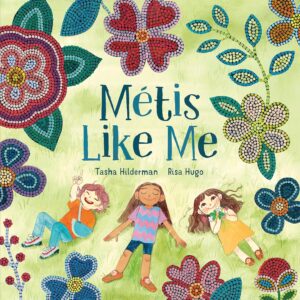
RKO: Oooooo…let’s see! A few upcoming projects that I’m excited about include the picture books Métis Like Me by Tasha Hilderman (Tundra/PRH)—her debut!; My Towering Tree by Janna Matthies (Beach Lane/S&S); I Worked Hard on That by Robyn Wall (S&S Books for Young Readers) and the middle-​grade graphic novel Blake Laser by Keith Marantz and Larissa Brown (HarperCollins). Can’t wait!

RVC: Alright, Rachel. It’s time for the SPEED ROUND. Let’s get zip-​zappy fast here with the questions and answers. Are you ready?

RKO: Sure am!

RVC: Which picture book world would you most want to visit?

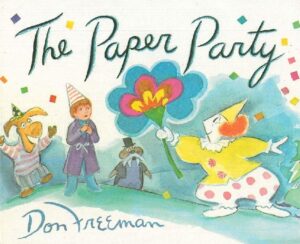
RKO: The Paper Party by Don Freeman.

RVC: What’s something you think you’re much better at than you actually are? 

RKO: Giving interviews?

RVC: What word do you always mispell misppel get wrong?

RKO: brocolli

RVC: Who sets the standard for picture book rhyme?

RKO: Suzy Levinson

RVC: What’s the One That Got Away?

RKO: Gentlemen by Michael Northrop.

RVC: What’s a favorite line from a picture book you repped?

RKO: “…so he can go bite them.”

RVC: Thanks so much, Rachel! This was a hoot!!

Publisher Interview: David Miles (Bushel & Peck Books)

I’m frequently asked why I work for a publishing house when I’ve already got a teaching gig and my own writing/​editing/​coaching/​ghostwriting career. Well, this month’s Industry Insider post will help explain it by offering a deep dive into one of the most exciting kidlit presses working today, which is where I just so happen to work as Editor and Head of Strategic Alliances as of about two years ago.

Welcome to David Miles, the co-​founder and Publisher of Bushel & Peck Books, a press that he launched with his wife in 2018 (their first books came out in 2019).

RVC: What inspired you to start Bushel & Peck Books?

DM: I love books. I love reading them. I love writing them. I love designing them. I love making them. In fact, when I was in college, if I had a big exam that I had to study for, and I wasn’t very motivated to go through my notes, I would actually go to the library. They had a really nice children’s section at BYU. I would get a big stack of children’s books from the shelves, and then I would reward myself so if I made it through 10 flashcards or memorizing certain list of vocab, I could read a book. Then I would go back to my notes, do a bit more work, and then go back to my stack of children’s books. That was one of the ways I got through college.

RVC: What were some of your favorites as a kid?

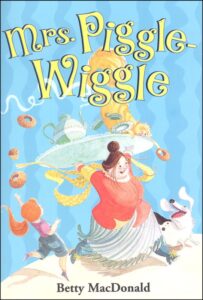
DM: As a kid, I loved Richard Scarry. I loved the Magic School Bus. I loved the Mrs. Piggle Wiggle books, although those are chapter books. But on the picture book side?  Stephen Kellogg’s The Mysterious Tadpole. And I love Jamberry–it’s one of my all-​time favorites.

RVC: Were the ones you chose as an adult in the BYU library the same ones?

DM: At that point, I had already published my first book. I was really interested in children’s books and the illustrations and different ways that they were created, so I would just grab any book that looked interesting off the shelf. And then I was just reading books and studying them and seeing what I liked.

RVC: What did you attend BYU to study?

DM: Business management.

RVC: Well, that explains a lot. Now, clarify something for me. Is missionary work a BYU thing or a faith thing?

DM: It’s part of the faith.

RVC: Did you go on a mission during your BYU days?

DM: I did a year at BYU and then took sabbatical and did a two-​year mission in Thailand. I spent half of that time in the rural Northeast, and I spent the other year in Bangkok.

RVC: What was the most memorable part of your mission?

DM: Just realizing how wonderful people are all over the world. And how much they care about their families. They were so warm and inviting and happy.

I remember flying home to Los Angeles. Now I didn’t know this at the time, but when you when you go on an international flight and you come back to the United States, they play this Department of Homeland Security “Welcome to the United States” video, which isn’t actually all that welcoming. I love America and was glad to be home, but I was very taken by the people I met during my time away and missed the warmth and openness I experienced with them.

RVC: Let’s circle back to the press. How did you choose the name?

DM: My wife, Stephanie, and I spent quite a bit of time brainstorming names. We wanted something that was a little bit unique, a little quirky. We settled on Bushel & Peck because it was broad enough to include all the different kinds of books we wanted to do. It had the right feeling of warmth and charm that goes with that title, and we love that it spoke to the best of childhood. I also loved how the ampersand in Bushel & Peck had a higher end feel, like Crate & Barrel or a brand like that. So, it seemed like a good blend of premium, high-​quality books mixed with the warmth and magic of a loving childhood. That’s what we wanted.

RVC: What’s the most important thing people should know or understand about Bushel & Peck?

DM: That we are a very thoughtful press. When we create a book, we’re not just filling a catalogue, or a certain quota of titles that we have to publish.

We think very carefully about each book. And we think very carefully about how we make each book. We want the books that we create to be the very best that there are on any given topic. That means that the visuals need to be amazing. It means that the writing has to be fantastic. But it also means that it needs to help a kid have an experience with the book–or with the topic or whatever it is–that is thought provoking and inspiring, that it touches them on a lot of levels.

For example, if we do a book about dinosaurs, we don’t want to just another dinosaur book that adds to the noise. It needs to be a fantastic, original experience. I think that people are starting to come to expect that from us now.

RVC: Name a book for each kidlit level you publish that really showcases what Bushel & Peck is about.

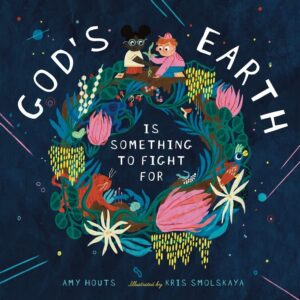
DM: On the picture book side, we did a book called God’s Earth Is Something to Fight For which turned out to be a remarkably controversial picture book! It’s one of the first picture books out there to look at climate change from a faith-​based perspective. That’s a perfect example of a book where we’re on the forefront of ideas and conversations. They might not always make big bucks or become bestsellers, but they’re important books. And they offer a perspective that’s unique, and it’s beautifully done. Its backmatter is terrific, too, and Kris Smolskaya’s illustrations are wonderful. It’s a high-​quality book with a very intelligent, thoughtful message.

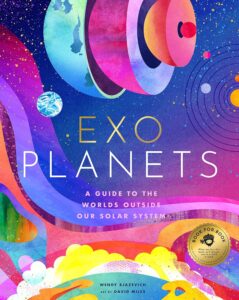
As for a nonfiction picture book? Wendy Bjazevich’s Exoplanets is another really good example where we found a topic that hasn’t really been done before. And we didn’t just do a little book about it–we did a big book with really stunning illustrations. We went to a high level of detail in the science. We didn’t just talk about these planets out there. We went further and talked about probability and spectroscopy and all these different scientific terms that are pretty high level even for adults, but that I think kid readers can handle. Then we went through all the work of including examples of specific exoplanets with how large they are, their mass in relation to Earth, and so on. It’s a remarkable level of detail.

RVC: What about middle grade?

DM: I’m just a big fan of really, really fun stories, the kind that you want to read, that make you feel good. So, with our middle grade imprint, my goal is with every book, I want you to end with those warm feels. Maybe the book leaves a real impression on you, or maybe it just makes you feel warm and happy, or just glad you read that book because it just lifted you up. We have titles where some are sad, some are funny, some are more adventurous, but they all have the ability to connect with the reader by the end in that way.

RVC: What was the first big success with a Bushel & Peck book?

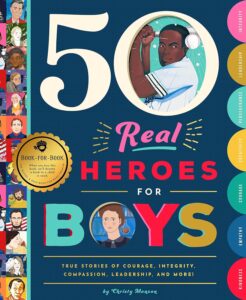
DM: It was Christy Monson’s 50 Real Heroes for Boys: True Stories of Courage, Integrity, Kindness, Empathy, Compassion, and More!, which is actually another good example of a representative Bushel & Peck book. There were so many titles coming out for girls, and for good reason. But as we thought about that, we realized that with those books, we’re only solving half of the problem. Now, empowering girls is incredibly important, but if we’re not also teaching boys to have values, to treat women with respect, to think about the kind of men that they grow up to be, then we’re missing half of the equation. So, that was a book where we wanted to provide the heroes and values specifically to boys. We created this book in our very first publishing season in 2019. We were a nobody, yet Barnes & Noble took the title nationwide, which is unusual for a brand-​new press. It was an instant success.

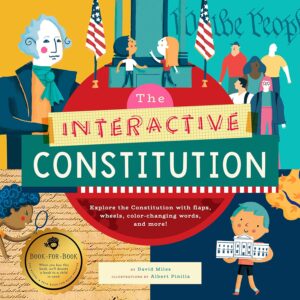
The Interactive Constitution book was also in that first season, and it went on to sell thousands of copies. Since then, our biggest success is the Draw With series, which again, is one of those thoughtful Bushel & Peck books, where it’s not just a doodle book, it’s not just a coloring book. And yes, there have been thousands of doodling and color books in the last 10 years, but ours was different because it focused on creating a unique experience for a parent and a child to bond together, to grow together, and maybe spend some time off screens. That message resonates. To date, we’ve sold almost 100,000 copies in that series.

RVC: What’s a project you’ve worked on that pushed you out of your comfort zone, and what did you learn from it?

DM: Our forthcoming Religions of the World book.

And it wasn’t the content that pushed me out of my comfort zone, but our goal with the book: we wanted to do the book right, to create something that really represented multiple faiths and was as inclusive as possible. We were really challenged editorially to figure out how we could truly accomplish that mission in so few pages. It would have been very easy to do a surface-​level book about some of the bigger faiths and call that a “world religions” book. But that option seemed pretty disingenuous when there are millions of people around the world with lots of different faiths outside the main ones. And it takes a lot of work and a lot of thought and a lot of introspection to figure out how to represent so many people and do so respectfully and authentically. So, that’s a book where the easy path would still have sold books, but that’s not the kind of press we are, and those aren’t the kind of books we want to make.

We learned a ton. We learned a lot about the faiths themselves, and I think we also learned about ourselves, and just how much we really wanted to be able to create books like that. When you go through that process, and you realize how hard it is, and you realize you might be one of the few people who actually do it, it makes you want to do it even more.

RVC: How do you approach the delicate balance between educational content and pure storytelling?

DM: If the book isn’t fun, kids are going to pick it up. And for us, the goal is always to educate. We became publishers because we wanted to have a megaphone. Not an activism kind of megaphone, but a megaphone where we had a chance to share important information and share values and teach kids about the diverse world around them. That’s always the goal of our books–to teach and to explore and to nurture curiosity and help kids broaden their outlook on the world and the people around them. But you can’t do that if the book is boring, or if the art is plain, or if the text is dull. You really have to create an experience that’s engaging and enjoyable. That doesn’t always mean it has to be fun or funny, although sometimes that’s a good way to do it. Sometimes it just means that you really dig into the questions that kids have, and you talk directly to them, and you talk intelligently to them. And you really help them learn the things that they’re already innately curious about.

You just have to think like a kid—like you were as a kid, or the kids that you know—and think, “Okay, for this particular topic, what would be the most compelling way for me to teach this or engage with a child about this topic?” And then you find that path, and that’s the route you follow for that book.

RVC: How do you balance the demands of running a business with your own creative aspirations?

DM: There’s nothing more challenging, or more creative, than creating a business. I love creating books. I love writing books. I love illustrating books. But what I’ve learned is that what I love even more is seeing books succeed. As much as I love writing and illustrating and doing all that, I’m actually perfectly happy to take a backseat while other wonderful, talented people do that. It means that I still get to watch the book take off and make a difference.

As far as balance goes, as the press grows, the amount of time that I spend writing and illustrating myself shrinks. Yet the time I spend shepherding other books to the process grows. I love both parts equally. I’ve never felt a lack as some of the other demands of the press have grown.

RVC: Let’s talk for a moment about the book you’ve written and illustrated yourself. What are some of your favorites, and why?

DM: I’ll give you three.

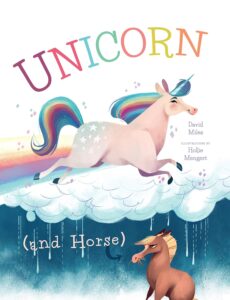
One of my favorites was Unicorn (and Horse). It was just so fun to write because the characters were instantly clear to me. They were fun to spend time with they were fun to write about. It was just a fun story that almost wrote itself.

I loved writing Allegro: A Musical Journey Through 11 Musical Masterpieces, which was a book all about music and how music makes you feel. But it starts with this boy, and he’s practicing the piano (and not real happy about it). There’s probably a lot of autobiography in that book. It was fun to pick some of my favorite classical pieces that stir feelings within me. It’s exciting to imagine kids pushing the buttons and hearing those pieces and sharing that experience with them.

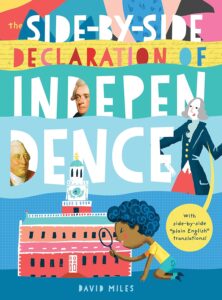
One of the most satisfying books that I worked on was probably The Side by Side Declaration of Independence, and also The Interactive Constitution. Those were both extremely challenging books to write, because when you get into that level of history and detail with these original documents, there’s a lot of pressure to make sure that whatever you’re teaching kids is accurate and correct. You’re interpreting things and that’s both very challenging and super rewarding. I can’t think of many things more important than helping kids understand the framework of our nation and the importance of some of these founding documents and what they continue to mean to the country today.

RVC: What’s a typical workday look like for you?

DM: A lot of email, which I wish I didn’t have to spend so much time doing, but it’s part of running a press. On different days, it varies. Some days, it’s a heavy design load, where I’m creating books, or I’m creating covers. I still like to get my hands on the design process. It’s an area that I enjoy and it’s part of the look and feel of our press, so it’s something I like to stay involved in. On other days, it’s lots of meetings as I’m shepherding books through the process. With meetings, you’re talking to authors, you’re spending time discussing art with agents, and providing feedback as an art director. Other days, it’s very analytical. You put your business hat on, and you’re looking at financials, and you’re forecasting cash flow. Yet I love that part. And as much as I love the creative part, I also love the analytical part. I love the puzzle pieces you move around as you try to make your press as efficient as you can. I really love the business side of it.

I find that I don’t do well when I’m trying to do little bits of everything. It’s best if I block out big chunks of time to work on creative parts or work on business parts. It helps my brain stay focused on the right things for the right amount of time.

RVC: What role does your family play in Bushel & Peck?

DM: First, there’s huge support. There’s no way that we could have started the press without Stephanie and Tucker being on board. It’s a lot of hours. And the press is always on your mind. A lot of the days, you wake up, you go to bed, and there’s problems that you’re thinking about. There are just things on your mind that you know you need to solve. But as much as we can, we try to make it a family affair. Tucker has come to some of the publishing conferences. He likes to look at the books that we publish. He has lots of opinions about them, which is good!

Stephanie plays a bigger role in the actual press. She gives a lot of critical feedback on design and on the books we’re looking to acquire. She takes the lead on all of our social media interactions.

The biggest part though, honestly, is just having people around you that believe in you. It’s a pretty scary thing to go out and start a press–especially when you’re doing it on your own. To have your wife be a partner who believes in it and believes in what you’re doing and can see past the setbacks and can see past the problems and knows where it’s able to go and believes that you’re able to get it there is the biggest thing you could ever ask for.

RVC: What role does your faith play in your work?

DM: I believe that we are all on the earth to make a difference. I would go so far as to say that I think we all have a mission in life, or even multiple missions. I think everyone has a different role to play, and a different way that we can use our time and our skills to benefit mankind.

When we started Bushel & Peck, we could have done just an everyday press that published nice books and tried to make a lot of money. But because of our faith, and that innate desire that our faith has given us to try to do good, and be good, and leave the world better for having lived here, well, I think that belief and that goal just naturally imbued itself in the press. So, the kinds of books that we publish, the approach that we take to our editorial process, how we think about how a book is going to impact people, how we think about people who are marginalized, about voices and stories that need to be heard, that’s all part of our faith.

We’re also committed to publishing books that matter. There’s always a place for funny books, and quirky books, and stuff that’s entertaining, so we’re always going to do some of those books. Yet a lot of the titles we do have an optimism and a hope about them, an eye that’s trying to see the beauty in life and the beauty of humanity—seeing the good in the world. A lot of what we publish are things that champion that, whether it’s interesting nonfiction topics, or books about heroes and lives well lived. I hope the kids that read our books are inspired to be good people and to find ways to use their lives for good. I don’t know if we ever come out and say that directly, but I think it’s pretty clear when you look at the list.

RVC: Who or what has most influenced you as a member of the kidlit industry?

DM: I don’t think I could say anyone other than my mom. I can think of lots of people who have influenced me in different ways or have taught me skills or perspectives, but when I really consider who had the biggest impact, it was my mom. She was the one who taught us the value of books and the value of reading and of uplifting literature.

RVC: How did she do that?

DM: When I was a kid, we would sit as a family on Sunday nights and she would read from her favorite books. The Lord of the Rings. Ralphy Moody’s Little Britches series. Jan Karon’s Mitford series. We’d sometimes have popcorn, and we’d just sit there and listen to Mom read.

We didn’t have a ton of money as a family, so one year for Christmas, she bought a bunch of cassette tapes. She had a little tape recorder and all seven of us kids each got a book that she recorded on tape for us. I guess she did it for months during the fall while we were at school. I can’t remember who got what–one of us got a Henry Reed book, one of us got My Father’s Dragon, all different ones. I don’t know what happened to those cassettes, but we listened to them over and over and over. We loved going to bed at night and hearing Mom read these stories to us.

With a childhood like that, it’s only natural that you come out of it loving books and loving what they can do in your life, because you felt it.

RVC: What’s next for Bushel & Peck Books in terms of new projects or initiatives?

DM: We just launched three new imprints, so we now have Bushel & Peck, but we’ve also got Sunbeam, which is our faith-​based, multi-​faith imprint. We’ve got Moonshower, which is our poetry-​only imprint. And then we’ve got Milk & Cookies, which is our middle grade imprint.

So, we just went through a big growth phase. Now we’re going to grow each of those imprints to really solidify their presence and brand. Then from there, we’ll look at new ways we want to grow. It could be new formats, or it could be new topics that we feel are underserved in publishing. It may be editorial directions that we’d like to add to our portfolio.

RVC: Looking back, is there anything you would have done differently in your publishing journey?

DM: We made lots of mistakes. But I wouldn’t do anything differently, because I don’t know how to learn other than making mistakes. Honestly, I can think of lots of things I would do differently, and yet I wouldn’t want to change that if it meant that I didn’t get to keep the wisdom that those kinds of experiences give you.

RVC: What do you do when you’re not Bushel & Pecking?

DM: Stephanie and I love to garden. We love going to nurseries to look at plants. We love little vintage finds and art and furniture and things like that. That’s a lot of fun. You can see from the books we do that I love seeing the things people have created over the past decades and centuries and finding a new use and appreciation for them. I also like to cook and bake and catch a good movie and throw the football with Tucker. We do a lot of that right now.

After the press launched and we began to have some success, I treated myself to a new piano. That’s been terrific.

RVC: Okay, David. It’s now time for the one, the only, the famous LIGHTNING ROUND! Let’s handle 6 questions and 6 answers in 60 seconds or fewer. Ready?

DM: Bring it!

RVC: If someone overhears you singing in the shower, what are you belting out?

DM: I’m usually listening to something upbeat on Spotify, and so I’m singing along to whatever song is playing at the moment. And yes, I sing!

RVC: What animal would be cutest if it were scaled down to the size of a gerbil?

DM: An otter.

RVC: If someone narrated your life, who would you want to be the narrator?

DM: Stephen Fry.

RVC: What are five things you couldn’t do your job without?

DM: Internet. Chocolate chip cookies. Diet Coke. A really good pillow–super important! And a little bit of rain.

RVC: What’s the last picture book you read that really had an emotional impact on you as a reader?

DM: Dan Santat’s After the Fall.

RVC: Your picture book philosophy in five words or fewer.

DM: Do good.

RVC: Thanks for taking the time to really help us understand Bushel & Peck Books, David. Great job!

Editor Interview: Deidra Purvis (Free Spirit Publishing)

This month’s Industry Insider interview is with Deidra Purvis, an Acquisitions Editor for Free Spirit Publishing, an imprint of Teacher Created Materials. Free Spirit is the “leading publisher of social and emotional learning books for kids, teens, and educators.” The press also notes that it’s “unabashedly pro-​kid.” Love that, right?

Prior to her job as an editor, she spent a lot of time as a classroom teacher and Director of Classroom Services for a book distributor. Don’t worry—we’ll ask about all of that in a moment!

In her free time, Deidra writes creative nonfiction, backpacks, gardens, and rides a bicycle.

Let’s jump to the interview to learn more about Deidra!


RVC: What kind of childhood did you have, and how did it pave the way for your kidlit career?

DP: My childhood was pretty amazing in that I was surrounded by people who loved me.

RVC: I love interviews that start like this!

DP: I grew up in a low-​income household in rural Ohio, and I lived close to the land—I always loved nature and animals, and one of my favorite things was mushroom hunting in the woods with my dad every spring. Most of the men who immediately surrounded me also battled with alcohol use disorder, and that impacted me a lot. I grew up very insecure about my weight and other aspects of my body, and that became one of my biggest challenges. I also worried a lot about money.

I was very quiet, but I always had a lot of thoughts that I wanted to share and needed to process. I started journaling when I was around 10 years old to have an outlet for expressing everything that was bottled up in my head, and it grew my love for writing. This all developed an interest in mental health, too. I started reading books about mindfulness and practicing meditation when I was in middle and high school. The books I started reading around that age were intended for adults; and it’s funny looking back and thinking about how much I could have used books by Free Spirit when I was a kid and teenager. My interest in books, writing, and SEL all grew from my childhood.

RVC: So many writers end up writing books they wanted/​needed as kids. It makes total sense. Now, what were some of the formative books you read during those early years?

DP: I had a small bookshelf in my room, and I’d read these picture books on repeat: Happy Birthday Moon by Frank Asch, I Wear My Tutu Everywhere by Wendy Cheyette Lewison, Corduroy by Don Freeman, and The Monster at the End of This Book by Jon Stone.

RVC: What a great list!

DP: My mom had a great reading voice, and that’s what drew me to a lot of these books. I remember loving the way she made the echoing noise when the moon would speak, and I remember how dramatic she was when reading Grover’s voice in The Monster at the End of this Book. But I think it’s mostly by chance that these are the books I ended up with. They were all hand-​me-​downs other than the tutu book, and it’s funny because I was never a girly girl or into tutus.

As an older kid, my favorite book was Anne of Green Gables by Lucy Maud Montgomery. Then I started reading more and more nonfiction. Somewhere around late elementary, I wanted to work with animals, so I would go to the library and check out stacks of nonfiction books about animals. Then I got into books about meditation and memoirs.

RVC: Clearly, the plan for college was to learn to be a K‑12 teacher. What about that career choice appealed to you?

DP: I wanted to be a teacher for two reasons. It was important to me to follow a career path that made a positive impact in the world. I didn’t want take part in a career that I felt was harming people or the planet—I wanted to do good.

RVC: If only more people had such a goal!

DP: Teaching felt like the most impactful career that I could have. I also loved writing, but I didn’t think writing or working in publishing was realistic. I decided the best path for me was to be an English teacher.

RVC: How did the teaching go?

DP: Teaching was hard, so hard. It ended with me wearing my body down and getting very sick.  I still believe that teaching is one of the most important careers possible. I loved my students and had so many rewarding moments with them. If I could make one change in the world, I wish teachers had more support in doing the important work that they do.

RVC: Having been a teacher for 25 years, I quite agree. So, you moved into a non-​classroom role fairly soon after college. What kinds of things did you do as Director of Classroom Services?

DP: This was such a great move for me! I started calling myself a professional book nerd.

RVC: Love that term!

DP: I was part of a team of former teachers who had the job of curating custom book lists for PK-​12 classrooms across the U.S., and I eventually was promoted to be the director of this department. Each season, reps from all the major publishers would present their newly released children’s books to us, and they’d leave samples for us to review. This is what really grew my love for picture books.

Teachers, principals, librarians, and school district contacts would then reach out to my team with specific book needs. For example, a school principal might reach out to us and tell us they wanted to buy classroom libraries for every classroom in the building for grades K‑5. I would ask them questions to get to know the needs and interests of the students I would be serving, and I would use that information to curate custom classroom libraries for each teacher, specifically for their students. Making sure the students in the classroom could see themselves reflected in the books they had access to was important to me, and it showed me how far the book industry still needs to go to allow this to be possible. This job really gave me a look into the market, where the needs were, and where there were gaps. Most importantly, though, it really made me fall in love with kidlit.

RVC: A few years after your undergrad degree, you went back to school for an MFA in creative writing from Hamline. What was the goal?

DP: My goal at Hamline was to spend time doing what I loved doing. I had a vague goal of eventually getting a job in publishing so I could pursue what I loved, but my primary goals were to enjoy my time doing what I loved, to learn as much as possible about the craft, and to be around other writers.

RVC: What was the most useful thing your Hamline experience taught you?

DP: Wow. Everything. I’m happy that I studied fiction, creative nonfiction, and poetry. It really gave me knowledge into all forms of writing that I apply to my job today. I also spent a lot of time with Water~Stone Review, an annual literary journal published by Hamline University. In one class, I served on the editorial board for the journal. We read the final submissions that were being considered for publication and held conversations about which pieces should be published in the journal. This is where I learned how to read as an acquiring editor—How do you decide if something is ready to be published? What qualities do you look for? During my time at Hamline, in addition to serving on this editorial board, I also contributed as a screener for a couple years, and I was Assistant Editor of Creative Nonfiction during my last year at Hamline. Working on Water~Stone Review ultimately taught me the skills I needed to become an acquiring editor. I wouldn’t be here without it.

RVC: I’m a big fan of college literary magazines for exactly this reason–it’s such good training. How did you end up at Free Spirit?

DP: The stars aligned, and I still pinch myself when I reflect on how much I love my job and how I ended up here. My seven years curating and selling custom book lists kept me more engaged in education than I’d ever been before. I had the opportunity to attend annual conferences from organizations like ASCD, ILA, and NCTE. I was talking with leaders in education across the U.S. on a daily basis, so I became really in tune with new research in pedagogy; and, like I said, I came to know the kidlit book market really well.

I also had a personal interest in social and emotional learning (SEL) that started developing way back in my childhood, so when I learned more about school districts implementing SEL, I knew I wanted that to be my focus. I was often tasked with recommending book lists aligned with SEL units; I would research and incorporate SEL in the blogs I would write; and I would also present professional learning webinars through an SEL lens whenever I had the chance. I was so excited about the work being done in schools around SEL that I was considering possibly going back into the classroom if I couldn’t get into publishing.

But then it all came together. I had experience as a teacher, I knew the kidlit market, I was finishing up my MFA in Creative Writing, and I had a special interest in SEL. I was already a fan of Teacher Created Materials (TCM) because I regularly recommended their books to teachers, so when I saw their job posting for acquiring editor for Free Spirit, TCM’s imprint founded forty years ago to provide kids with social emotional resources, it was like the job description was written for me, and I had to go after it.

RVC: What’s the first picture book you acquired while there?

DP: The first picture books that I acquired will be available this summer. Two that I’m most excited for are Papa and Pearl by Annette M. Clayton and illustrated by Kimberley Barnes and Sonia and the Super-​Duper Disaster by Rachel Funez and illustrated by Kelly Kennedy.

RVC: What about each of these books appealed to you as acquiring editor?

DP: Papa and Pearl is a sweet story about a father and daughter immediately following the divorce of Pearl’s parents. It’s full of imagery related to princesses, pirates, and mermaids. What appealed to me about this story was that Annette M. Clayton’s writing is lyrical and imaginative. It’s a fun book any child will love, and it’s also a helpful resource for children experiencing the separation of their parents.

RVC: And what about the other one?

DP: Sonia and the Super-​Duper Disaster by Rachel Funez is about a girl who realizes she forgot her mom’s birthday, so she decides to whip up a last-​minute super-​duper surprise in the kitchen. Sonia has ADHD and anxiety, and throughout the story, she uses strategies to manage challenges as they arise. This one is filled with superhero imagery, and it’s another story that any child can love. It’s hilarious, and it’s also a great resource to demonstrate specific strategies children can use to manage anxiety that may pop up in their own lives.

RVC: I get the sense that Free Spirit’s picture books are different than those by, say, Candlewick, Peachtree, or other kidlit presses.

DP: All of the resources you’ll find in Free Spirit’s catalog are intended to help children and teens think for themselves, overcome challenges, and make a difference in the world. You can use our books to tackle tough topics such as neurodiversity, anger and stress management, childhood and teenage depression, anxiety, grief and loss, and gender. We have a growing list of picture books like ones that you would see in Candlewick or Peachtree’s catalogue. They are high interest, engaging, lyrically written, and include elements of fun and humor–and they cover a broad range of issues important to kids—from celebration of identity and family to tough topics like anxiety and grief. A good example of a Free Spirit book is Paula’s Patches by Gabriella Aldeman and illustrated by Rocío Arreola Mendoza, about a girl who is embarrassed when her hand-​me-​down pants rip at school. She comes up with a creative solution of making patches not only for herself, but to share with her friends as well. The book is an authentic and fun exploration of problem solving.
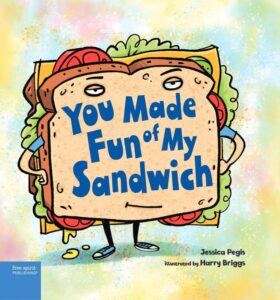
We include that element of fun and humor in our books even when tackling tough topics. This aspect is really front and center in our new release You Made Fun of My Sandwich by Jessica Pegis and illustrated by Harry Briggs. It is laugh out loud funny, and I love the speaker’s inquisitive voice. It starts with a child’s observation that a classmate is mocking their sandwich, and then we follow the child’s imaginative and hilarious thought process as they consider why. As fun as this book is for children to read, it tackles two tough topics: bullying and hunger.

Another thing that really sets our list apart is that we seek out experts in children’s mental health for many of our books. Our picture book What Does Grief Feel Like? is written by Dr. Korie Leigh who has specialized in working with children and families experiencing grief and loss for over 16 years. When you read a Free Spirit book, you can trust that the representation, strategies, and tools are backed by experts. You can also trust that we’re addressing both these topics in an engaging kid-​friendly way.

RVC: What’s the biggest misconception about SEL (social and emotional learning) picture books? 

DP: Some people might think that SEL picture books are didactic and can only be used to teach emotions or other SEL skills or strategies. My favorite SEL picture books are the ones that tell authentic stories using rich language and engaging artwork. Any child or adult can fall in love with them, and they don’t have to read it for the SEL element. I also think that most good picture books are SEL picture books. We read books to learn about ourselves and the world, to feel a sense of belonging, to celebrate identity, to see how characters navigate challenges, or to build appreciation and joy. All of these are qualities of SEL picture books.

RVC: As an acquiring editor, who or what has most influenced you?

DP: My childhood influenced me a lot, and I continue to be inspired by the children around me. I also have to shout out the editors at Free Spirit. They are so talented and do amazing work. I’ll often peek into the manuscripts they’re working on, and I’m in awe of their thoughtful feedback to the authors they work with. It’s such a gift that I get to learn from them every day. It’s another reason I sometimes pinch myself—I’m surrounded by a lot of talent here at Free Spirit.

RVC: You’re a writer, too. What kind of creative nonfiction are you making?

DP: I’m working on memoir that I hope to start sending out to agents and editors within the next year. I also have several essays and poems on submission with literary journals. Almost everything I write is in exploration of my childhood in rural Ohio.

RVC: Any interest in writing picture books of your own?

DP: For sure. It’s not something I’m actively working on, but the temptation is there.

RVC: Since COVID, I’ve been asking everyone at least one health and wellness question. How do you defeat negativity—either internally or from outside yourself?

DP: Learning loving-​kindness meditation was a gamechanger for me.

RVC: One final question for this part of the interview. What upcoming book are you especially excited about?

DP: The next Free Spirit book that I’m really looking forward to is Dominique’s Thrifted Treasures by Margarett McBride and illustrated by Ryan Middaugh. Please read it because it’s doing exactly what I said I love about SEL picture books. It’s a beautiful story that highlights community and shared experiences. Dominique receives a hand-​me-​down jacket from their Pawpaw and isn’t too enthused. However, after Mama comes home with a bag of thrifted clothes from the thrift store the next day, Dominique becomes fascinated by the unique story of each piece of clothing. They spend the day running errands with Pawpaw and running into people who previously owned each item Dominique is wearing. Thrifting is such a fun and relevant topic, and the idea of appreciating the community aspect of thrifting and the stories that the clothes tell is so touching. The artwork is beautiful, and I can’t wait to see this book in the world. It will be available in February 2024.

RVC: Alright, Deidra. It’s time for the LIGHTNING ROUND. I’ll zip out some questions and you zap back some answers. Are you ready?

DP: Sure!

RVC: Would you rather have a personal chef, a maid, or a masseuse?

DP: A personal chef, please!

RVC: What inanimate object would be the worst if it played loud dance music every time it was used?

DP: A pillow?

RVC: What’s the funniest word in the English language?

DP: Lollygag? I don’t know if I think any word is funny, but lollygagging brings me joy.

RVC: Your life is on the line. You need to sing one karaōke song to save it. What do you go with?

DP: “Bicycle Race” by Queen.

RVC: What’s the last SEL picture book you read that WOWed you?

DP: So hard! I have a lot of favorites, but the most recent one I read that really moved me was A Day with No Words by Tiffany Hammond.

RVC: Let’s end with your favorite line from any Free Spirit picture book.

DP: I love the opening lines from I Think I Think A Lot by Jessica Whipple: “I think. I think a lot. I think I think a lot. Such a cute, relatable, and important book.

RVC: Thanks so much, Deidra!