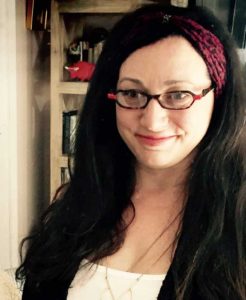
Agent Interview: Abigail Samoun (Red Fox Literary)

This month’s Industry Insider interview is with Abigail Samoun—Abi to her pals—co-founder and literary agent at Red Fox Literary. She’s also worked as an editor and has authored a number of children’s books, which makes her fluent in all aspects of the entire book industry. Talk about the ideal person to chat with for an Insider Interview!

Since OPB readers have requested more Five Facts and One Lie games as a way to get to know interview subjects, here we go again. One of these is an out-​and-​out falsity, the others are all 100% totally yeppers. If you’re unsure which is the stinker, I’ll give you the 411 before we’re through.

  1. She organizes her library according to which authors would get along well together (Brontës next to George Eliot, etc.).
  2. Her husband’s an entomologist whose current research project is investigating biological control options of bagrada bug and spotted wing drosophila.
  3. She’s a former Girl Scout who once sold two boxes of Thin Mints to Barack Obama quite a few years before he was the senator of Illinois.
  4. As a child, she used to do acrobatics on horses and was the top girl in a five-​girl pyramid atop a moving horse.
  5. Abi was born in Paris, France and French was her first language. She immigrated to the U.S. at age seven.
  6. She once worked as an intern at the Bronx Zoo and often spent her lunch hour hanging out with the big cats.

Well, with all that terrific bio-​info, I don’t know about you, but I feel tremendously prepared for the following interview. Sound good? Let’s do it!

Website: www.mommikin.com/abigail-samoun

Agency website: www.redfoxliterary.com

Facebook: https://www.facebook.com/abigail.samoun

Twitter: https://twitter.com/abigailsamoun


RVC: Your undergraduate major at NYU–French Studies/Journalism–seems a bit unexpected. How did that prepare you for a career in the book world?

AS: Not all that well! My real love was literature but I thought journalism might be a more practical option. Little did I know at the time that a journalism degree in a world of print newspapers competing with Facebook, Twitter, and the blogosphere, wouldn’t be nearly as practical as I’d hoped. What really best prepared me for an editorial career were the many, many creative writing classes I took. In each, I had to give kind and insightful critiques of my fellow students’ works. I learned a lot about style, form, and characterization in those classes, and also how to give a critique without making the author feel defensive.

RVC: You must’ve learned those lessons well because you were killing it as an in-​house children’s book editor for more than a decade, with the books you worked on receiving honors like the CCBC Charlotte Zolotow Award, the New York Public Library Ezra Jack Keats Award, and the Pura Belpré Award. Why did you switch to agenting in 2011?

AS: The publisher I worked for was bought by Random House and about a year later, they decided to shutter the children’s division. It was sad but it was just the kick in the butt I needed to get to the next stage of my career. I wrote down a list of all the things I liked to do and most of it had to do with working directly with authors and illustrators. The thought of leaving behind all those authors and illustrators I’d developed relationships with over the course of those ten years with the hardest part of being laid off. Agenting was a way to continue that work. The first clients I took on were authors and illustrators I’d worked with and come to know as an editor.

RVC: With nearly a decade of agenting behind you now, I’ll bet you have strong thoughts about this next question. What do you think is the most common misconception people have about agents? 

AS: I always love seeing the way literary agents are portrayed in film and TV. I think the latest example of this was Melissa McCarthy’s agent in Can You Ever Forgive Me?, played by Jane Curtin. Often, they’re depicted as brash and scheming and money-​hungry. But—and I think this is particularly true for children’s book agents—most of them got into the business because they care about books. We may be focused on getting our clients good deals and some of us can become pretty tough negotiators (I had an editor accuse me of this recently and I took it as quite a compliment), but the deals aren’t the most fulfilling part of the work.

Seeing a book you represented on a bookstore shelf, sharing the news of an offer with a client, securing a deal that will allow your struggling young client to quit his day job and spend the next year doing his art—those are what fulfills most kids’ book agents.

RVC: As mentioned in the intro to this interview, you’re an author, too. One of your books—an illustrated biography entitled Mind Afire: The Visions of Tesla—came about through a successful Kickstarter campaign. As someone who has watched writer pals try (often unsuccessfully) to fund creative things via crowdsourcing sites, what did you learn about the process?

AS: What was great about the Tesla project is that we had a built-​in audience of Tesla fans. At the time, there wasn’t that much out there about Tesla and he hadn’t yet reached the height of his cult popularity. So, I think our timing was really good. We also got lucky with our videographer who created an elegant, stylish video that made us look like hot shots. Plus Beth Haidle’s art is uniquely hers and was such a great fit for the subject—she created these charming animations to go with our Kickstarter launch and I think those won a lot of people over. It was also a point when Kickstarter was featuring makers on a monthly basis, rather than daily, so when they featured us, it really had an impact.

It was a wild ride, doing that book. I’d never written a nonfiction book before and I would lose myself completely in research, digging around and finding all kinds of fascinating and obscure info about Tesla. It was a good thing we had the weight of 1,500 backers to hold us to our deadlines.

RVC: You bet–1,500 backers is a ton! What tips do you have to help others who are considering crowdfunding a project? 

AS: It feels like crowdfunding really works best when you can find a subject that has a niche—where you can find a group of people who are really passionate about it and who will be willing to make an investment simply based on that interest. It feels toughest to do a crowdfunded campaign on something really general, for which there’s a lot of competition—for example, a sci-​fi/​fantasy young adult novel. Compare that to a book set, say, in the world of competitive tennis, and you’ll be able to see that the target audience is much narrower and you’re likely to capture their interest just by virtue of the subject.

RVC: I’ve got a couple of students here at Ringling College’s creative writing program who are entertaining the thought of becoming a children’s book editor. Sure, they should probably move to NYC and work for a press—small, indie, or big—to get hands-​on experience and make connections. But what type of personality or attributes do you think make someone well-​suited to the editing world? What actionables might you recommend to help them become ready for the challenges that await?

AS: Well, first and foremost, you’ve got to be part of that passionate, underground society of rabid book lovers. Just about every editor I’ve met spent most of their childhood and adolescent years with their nose stuck in a book (yours truly included). Next, you have to understand how stories work—what makes a good story, what are the tools that are used. Creative writing and English lit classes help, but most of all, read good books. A good editor has a deep respect for the creative process and can intuit what their author is trying to accomplish, paragraph to paragraph, chapter to chapter. She understands that writing books is not easy and that there are always going to be challenges and ways to make the story stronger. An editor also has to be diplomatic and know how to work in teams. The book-​making process is a long and complicated one—there are designers, art directors, copyeditors, proofreaders, production manager, printers, sales and marketing, book buyers, and, of course, the author and/​or illustrators themselves. Much of the time, the editor is managing all these different people, like a conductor, trying to make sure everyone is doing their part properly.

RVC: In all your experience with the book industry—as a writer, an editor, and an agent—what has surprised you the most?

AS: As I mentioned, I took tons of creative writing classes throughout my long and varied college career and most of my teachers would tell us what a tough business writing was, and how it was hopeless to expect to get published, and that editors received literally tons of manuscripts daily and you had a better shot at going to the moon than getting published. But one of the encouraging things I’ve discovered in my career in children’s books is that talent really does rise above. Editors and agents may receive a ton of submissions but much of it isn’t from those bookish types who live, eat, and breathe books and writing. If you’re really passionate about it, committed to it, take your craft seriously, there’s a good chance you’ll get noticed. A writer who cares about words and has a musical ear and something personal and meaningful to say isn’t a dime a dozen. We love seeing work from such authors. We editors and agents are dying to find work we can really fall in love with. As jaded as we get, I think most of us still get that little flash of hope when we open a new submission and think, “maybe this will be the one.”

It’s a bit like kissing the frog and hoping for a prince. Most of us must be eternal romantics!
See the source imageRVC: Let’s circle back to your agency. Your co-​founder, Karen Grencik, and I met at an SCBWI event a while back. I found her to be quite impressive. What do you see as her real strengths as an agent?

AS: Karen is one of the most conscientious and caring people I know. She works hard for her clients and always knows how to keep what really matters—relationships and books you can be proud of—front and center. She’s ambitious in that she wants to see Red Fox’s reputation grow and shine, but she wants it to grow and shine because of the quality of the books we rep and the respect and care with which we treat our clients and the editors and designers we work with.

RVC: If I asked Karen the same question about you, what do you think she’d say are YOUR strengths as an agent?

AS: Ha! I know exactly what she’d say—she’d say I’m the shiny red sports car and she’s the trusty Volvo station wagon. But I don’t think that’s entirely accurate. She’s often more willing to take a chance than I am and she’s been the driving force behind bringing on our other agents Stephanie Fretwell-​Hill, Jenna Pocius, and Jennie Kendrick. Karen has a real vision for the potential of our agency and pushes us toward that potential. I have a tendency to get stuck in the demands of the day-today.

Karen knows my strengths are more in the creative realm—envisioning the website, coming up with promos, editing manuscripts. She’s more of a big-​picture person and she’s super organized and keeps on top of all the bills, banking, and other business‑y things. We balance each other really well and I feel so incredibly lucky to have teamed up with her.

RVC: Want to share the story of how you and Karen met, and how you partnered to become Red Fox Literary in 2011? You bought a manuscript from her, right? That’s what started it all?
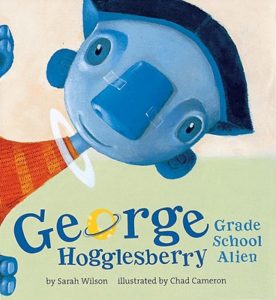
AS: Oh, it goes waaaayyy back. She and I first corresponded in 2001, when I was just a young cub editor, checking agent submissions for my boss, the publisher. Karen was a fairly new agent and sent in a manuscript by Sarah Wilson that I loved so I shared it with my boss and she liked it too. Then my boss said, “How would you like to edit this one?” I had no idea how to even make an offer on a book and acquire it, much less edit it. I was scared out of my wits. But both Karen and Sarah were very kind and patient. I remember a meeting early on where I sat at the table with them and my boss and I was so shy I could barely say anything. But Sarah kept turning to me and saying, “And what do you think, Abi?” I’ve never forgotten how kind and generous Karen and Sarah were to an awkward, fairly clueless, and very young editor.

The picture book we did, George Hogglesberry, Grade School Alien, went on to win the Golden Kite Award from SCBWI. I recently read it aloud to my seven year old—eighteen years later—and it’s still a charming story.

RVC: One last serious question before we get to the LIGHTNING ROUND! Could you say a few words about the important relationship between agent and writer, and how one might find the ideal match, whether it’s at Red Fox or somewhere else?

AS: Your relationship with your agent, just like any important relationship, rests on a foundation of trust. You have to believe that your agent has your best interests at heart. I want all my clients to find success in children’s books. I’m in this business to make good books and help artists and writers make a living off their work. That’s the part of the work that’s most dear to me. I believe in the power of art and books to make a better society—to make us better human beings. The books I have loved made me a kinder, more thoughtful, more mature, and empathetic person. Artists aren’t given much support or encouragement in the U.S. today. Through my work, in a very individual and up-​close-​and-​personal way, I feel I’m doing my part to help a small group of artists feel encouraged, supported, guided—and I find good homes for their stories so they can continue to pay their bills and do work they love.

My point here is that you need to know that your agent’s values align with your own. If an agent talks more about the important people he knows than about his clients and their work, he’s communicating a value to you. If an agent doesn’t speak respectfully of other people in the biz, that’s another thing to pay attention to. Finding an agent is similar to dating. On those first dates, you have to listen carefully and intuit what this person really cares about and if those are the same things you care about. And if there’s one thing I’ve learned in this business—at times the hard way—is that you’ve always got to listen to your gut. If your gut is telling you that this isn’t the agent for you, listen to that, no matter what the agent’s reputation is.

One of the things I love about this industry is that most of the people in it really and truly love books and believe it’s important that children hear and read many, many stories. Every once in a rare while, you’ll come across people who put their egos front and center, but that’s not the norm in this biz. (I suspect those types usually end up in Hollywood or Washington DC!).

RVC: Thanks for the inspiring, honest advice, Abi. And now, without further hubbub, to-​do, or ballyhoo … it’s time for the Lightning Round! Fast questions and zippy-​quick answers, please. ARE YOU READY?

AS: Go for it!

RVC: Best place in Sonoma, California for a burger?

AS: Picazo Café on Arnold Drive. A local family owns it and they take great pride in the delicious food they serve. The French fries are the best in town too.

RVC: Would you rather have a rewind or pause button for your life?

AS: Pause. I’m perpetually late to everything—all the women on my side of the family are. It’s terrible. My sister is the worst—it’s impossible to serve her a warm slice of turkey on Thanksgiving, no matter how late we put the bird in the oven.

RVC: Batman, Deadpool, or Captain Marvel—who’d write the best picture book?

AS: Oh, I’m so out of the whole DC/​Marvel universe thing. Now if you asked me which Brontë sibling would write the best picture book… I’d say Emily, because she loved animals so much.

RVC: What’s on your playlist that you listen to at work?

AS: I love this question! I’ve been spying on my fellow kid-​lit people’s Spotify playlists and have discovered some really interesting stuff. Lately, I’m listening to the late sixties band CAN, atmospheric techno from Beach House and Morcheeba, Nirvana’s demo recordings (I particularly like Marigold), Pavement, Yacht, De-​Phazz, ‘70s disco and funk, and Arcade Fire.

You can tell I’m a child of the ‘90s, right?

RVC: If you went back into the editing world, name one picture book author—not including a Red Fox client—who’d you LOVE to work with?

AS: Mem Fox—because she has such a wonderful understanding of the form.

RVC: If Red Fox Literary had a motto that struck at the heart of what it does and encapsulated its mission, what would that be … in ten words or less? Bonus points for rhyme, Yoda-​speak, or emojis!

AS: It’s funny ‘cause a client was talking to a big-​time editor who asked her what agency she was with. When she said “Red Fox Literary,” the editor said, “Oh, good! They’re not jerks.” Well, he actually said something a little stronger than “jerks.” So the joke among us at Red Fox is that this should be our slogan, “Red Fox Literary: We’re not jerks.” We could put it on our business cards.

But beyond that, I would say… hmmmm… (my attempt at Yoda speak): Good people, we are. Make good books, we must.

RVC: Thanks oodles, Abi. It was a pleasure getting to know you better and sharing all of this with the OPB family. 

And for those of you didn’t figure out which fact from the intro section was, in truth, a big honking lie, I’ll let you in. The falsehood was #3. Abi did NOT sell Girl Scout cookies to Barack Obama, but “I wish that were true!” she admits.
Agent Interview: Mary Cummings (Betsy Amster Literary Enterprises)

**UPDATE: As of 2021, Mary launched her own agency, Great River Literary.**

This month’s Industry Insider interview is with Mary Cummings, a literary agent at Betsy Amster Literary Enterprises. She got on my radar not only for being involved with a number of books that are connected to OPB in some manner (we’ll address those in the interview below), but because her name kept popping up on the Dealmakers section of Publisher’s Marketplace. Yep, we watch that pretty closely here at OPB, for obvious reasons.

Before we dive into the Q&A, let’s learn a bit more about Mary via a Six Facts and One Lie Game. Six of the following are honest-​to-​goodness true. One is a complete falsehood. (Can’t tell which is the pants-​on-​fire moment? I’ll spill the beans somewhere in the interview.)

  1. She can’t stand coffee.
  2. She’s fast in terms of responding to queries. I mean FAST.
  3. She’ll take a pass on any vampire and zombie stories.
  4. She adores opera. Not a day goes by that she doesn’t enjoy an aria or two.
  5. She loves PT Cruiser cars, even though they stopped making them in July 2010.
  6. She spends way too much time following the national news.
  7. She’s GOT to have her annual trip to the mountains or she’ll be worthless to family, friends, clients, and the world in general for the rest of the year.

Now that we’re in the loop with who Mary is and what she’s about, it’s time for the interview. Onward!

Website: www.cummingskidlit.com

Agency website: www.amsterlit.com

Bonus interview #1: https://duotrope.com/interview/agent/24344/mary-cummings

Bonus interview #2: http://www.literaryrambles.com/2019/04/agent-spotlight-interview-with-mary.html


RVC: Unlike many agents I’ve interviewed at OPB, you didn’t start off in the literary world as an agent or as an intern at an agency who then worked their way up. You started at the Loft Literary Center. How did you get involved there? What did those experiences teach you about books, readers, and writing?

MC: As Education Director, I oversaw and sometimes taught classes, workshops, conferences, etc. for adult and kid writers. It was the perfect setting to develop an understanding about what writers need, and my work involved meeting those needs through education, networking, award programs, etc.

One of the most crucial things that I’ve carried forward is my empathy for writers, for their passion and drive in striving to create a publishable manuscript that will reach readers as a book. My area of particular focus was children’s literature. I was in charge of selecting judges from the top editors in the field for the McKnight Award in Children’s Literature, a $25,000 award. I also curated an annual festival of children’s literature featuring authors, illustrators, editors, agents, art directors and other industry professionals. These relationships were foundational for my work as an agent.

RVC: In 2008, you joined Betsy Amster’s agency. What made you take the agenting plunge? And how did your work at the Loft prepare you for success as an agent?

MC: It was a logical next step. I had hired Betsy on many occasions to teach workshops at the Loft. We liked one another, and I brought kid lit expertise and contacts to the agency. She mentored me in some business aspects that I hadn’t had experience with before. As I mentioned, having empathy for writers and understanding for their passion and difficulties was crucial. I also knew writers who talked about what they liked, and didn’t like, about their agents which helped shape my own approach.

RVC: In another interview you did, you called yourself an agent who “takes risks.” That phrase stuck with me (and makes me think of juggling flaming knives, but I suspect you meant something different). What type of risks do you mean?

MC: Well, I’m not cautious! Don’t know about juggling flaming knives, though. I’m willing to take on a project I love even if it’s out of the mainstream, even if it will be extra challenging to explain it to–and hook–editors.

See the source imageRVC: Here’s a fun connection. The first OPB Industry Insider interview was with Sylvie Frank, who WOWed me with a great picture book intensive (with Chronicle Books editor Melissa Manlove) at a regional SCBWI event in Miami. One of the texts Sylvie spoke about a lot was I Have a Balloon. That’s one of your sales, right? What do you think Sylvie liked so much about that book? What kind of behind-​the-​scenes info on that story can you offer?

MC: Yup, it’s one my sales. Here’s what Sylvie Frank said in her deal memo:

This manuscript is so much fun! It’s fresh and funny and totally defies readers’ expectations. (At first I thought it was going to be a sharing book—and then it wasn’t! Ha!) I love that it’s about negotiating and getting what you want. So original.

I worked with Ariel to change the ending before I submitted it (this process is described in an article on cummingskidlit.com). But once it was, there were NO word changes in the publication process. None. Zero. The book’s font sizes were varied throughout the text to give visual energy and suggest areas for emphasis in read-​aloud, but no words were changed. That’s rare. (And this definitely is behind-​the-​scenes. Not many people know this).

RVC: We specialize in delivering behind-​the-​scenes 411 on things here at OPB. Thanks for keeping that trend cooking along!

See the source imageSince we’re talking about OPB connections to your sales record, let’s move to Small Walt and Mo the Tow—another Sylvie Frank book, I’ve got to mention!—which we reviewed here. Do you find that sequels are easier to sell than stand-​alones? Is there a trend here that writers should be aware of?

MC: They typically aren’t easier to sell unless there’s a clear sales record from several prior books in a series. I don’t think there’s a trend here.

RVC: What’s one thing that your client Elizabeth Verdick (author of Small Walt and other picture books) does well that helps her career?

MC: Elizabeth works very hard, and very creatively, to promote sales of her books. There are several things she does which other writers could learn from. (See the article about this on cummingskidlit.com)

RVC: Let’s follow through on offering advice to aspiring picture book writers because many of them come to OPB for guidance, tips, and direction. What can you offer them in terms of using rhyme effectively in picture books?

MC: The hardest rhyme to sell is couplets using end rhyme. Find unusual, fun words and vary the pattern and syllable count. Include other language devices besides rhyme. Consider mixing rhyme with non-​rhyming sections, as Elizabeth Verdick does in her Small Walt books. (See the article on this topic at cummingskidlit.com)

RVC: One of the tips you’ve shared on your website is that “the narration style associated with oral storytelling isn’t suited to picture books.” That’s quite compelling. Could you say a bit more about what you mean by this?

See the source imageMC: Oral storytelling uses different sentence construction than written. It begins differently, has different pacing, depends upon different devices for impact. Take a look, for example, at The Wolf, the Duck & the Mouse (Mac Barnett/​Jon Klassen). It has a sudden start, quick action, fairly short word count, a mix of language styles–and visuals tell part of the story.

RVC: Let’s talk about your agenting partner, Betsy Amster. What are the qualities you most admire about her as an agent?

MC: Her professionalism is #1. She’s ethical, has many years experience in the industry, she’s a deep listener, and a true advocate for authors. We like and complement one another.

RVC: If I asked her the same question about you, what do you imagine she’d say about you as an agent?

MC: She’d say I know my own mind. (I know she’s told people this!). She’s struck by how quickly I’m able to decide if I have interest in a project.

RVC: Dear reader, you’ve been waiting. I’ve been waiting. Mary has been waiting. My neighbor’s twin gerbils have been waiting. And here we are—it’s time for the Lightning Round! [Insert Rick Riordan-​style Zeus lightning crashes! ka-BOOM!] 

ARE YOU READY?

MC: I’ve got my tea. Not that you’re going to give me time to sip it …(and there, I just gave a clue on the Six Facts and One Lie game!)

RVC: Worst pet ever: hermit crabs, gerbils, fish, or ants?

MC: Looks like you have experience with all of them?! I’d say the wrong breed of dog.

RVC: If Hollywood made a movie about your life, what celeb actress would play you?

MC: Meryl Streep.

RVC: In a parallel universe where Mary Cummings didn’t become a bookish person, she instead had a career in … ?

MC: Opera.

RVC: Late night TV talk show you’d most like to see one of your authors on?

MC: Hmm. Depends upon the author, but let’s say Jimmy Fallon.

See the source imageRVC: The last picture book you read—beyond those you worked on—that made you go WOW!

MC: You Are Home: An Ode to the National Parks (Evan Turk).

RVC: Three words that describe what a great picture book is/​does?

MC: Stays in the brain and heart. Not three words. So sue me!

RVC: Fantastic. And for those of you who weren’t sure about which of the Mary Cummings Facts wasn’t, in fact, a fact (wow, that’s a funny phrase to say aloud), the answer is…

MC: I do like some classic stuff, including classic cars. But the PT Cruiser is just ugly. Not classic!

RVC: Agreed! Thanks so much, Mary. It was great getting the chance to learn more about all you do.

Agent Interview: Alyssa Eisner Henkin (Trident Media Group)

See the source imageThis month’s Industry Insider interview is with literary agent Alyssa Eisner Henkin, Senior Vice President of the Trident Media Group. Her Twitter bio adds these two terrific bio facts: “Lemonade-​Maker and Literary Cheerleader.”

While that’s nearly enough useful bio material to set up a good interview, OPB underpromises and overdelivers, so I’ll also note that Alyssa loves the movie Steel Magnolias, the TV show Mad Men, and Beverly Cleary. Plus, like so many people with fine taste, she’s quite the fan of Anne of Green Gables and she adores Bollywood movies.

With that, let’s proceed to the interview!

Agency website: https://www.tridentmediagroup.com/agents/alyssa-eisner-henkin/

Twitter: https://twitter.com/AgentHenkin

Manuscript Wish List: http://www.manuscriptwishlist.com/mswl-post/alyssa-eisner-henkin/


RVC: Rumor has it that you were captured on video at age six, sharing your dream about having a particularly bookish future. 

AH: Yes, indeed. I remember also visiting NYC at the age of six and just feeling certain I would live and or work there one day.

RVC: Has it turned out to be all that your six-​year-​old self imagined?

AH: Yes. I’ve got to meet and see quite a few celebrities on the job and I’ve had my fair share of power lunches both in NY and in LA. But while it might have been the surface glitter of the publishing/​film world that seemed cool when I started, what I’ve come to enjoy most about my work are the quiet moments, usually at my home office (in PA!), discovering a brilliant new voice in the slush pile or having a good heart to heart with a current client.

RVC: While you clearly have a love for middle grade stories, what draws you to picture books? 

AH: I love humor, and biographies, and I adore a great rhyme à la Iggy Peck, Architect. I’m also a fan of picture books that do something totally different as in The Scrambled States of America.

RVC: What do picture books do more effectively than MG and YA?

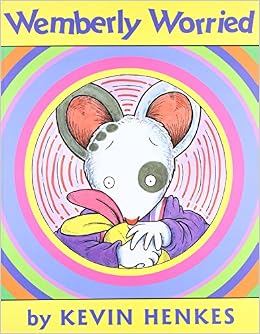
See the source imageAH: They are concise and informative, so you can learn a lot in a picture book biography without needing to read 500 pages. I think a culmination in a picture book can be so gratifying too when done with relatively few words and the perfect image that just kind of says it all. I shared Wemberly Worried recently with my soon-​to-​be five-​year-​old son, and that moment when the two shy little kids in stripes meet is just so rewarding!

RVC: Let’s talk about your agency. It strikes me that Trident is more committed than some to securing foreign rights sales for your clients. Why is that part of your mission?

AH: Trident devotes a lot of resources to its full-​service foreign rights department. Many agencies use co-​agents in major markets so that their bestselling titles are competing with other agencies’ bestselling titles, so we are so fortunate to have a dedicated rights team that sells only Trident titles and attends 3 international books fairs every year. We’ve found that making foreign sales for our clients is great from a financial perspective because a foreign sale is like “found money.” The author does not need to do anything other than approve the deal and the jacket. The author does not pay for translation costs, but they are compensated for this book to exist in a whole other language/​territory.

Also, sometimes books that are moderately successful in the United States can be bestsellers abroad. We have even had clients create special editions just for certain markets if they have a huge following.

RVC: In other interviews, you’ve called yourself an entrepreneur. What does that mean to you, and how does that play out in your role as a literary agent?

AH: Early on in my career when I was still an editor, I realized that sitting in meetings all day and making decisions by committee was not how I wanted to spend my life. I also did not want to be typecast as doing just one kind of book. As an entrepreneurial agent, I get to have my hands and mind in as many projects as I can manage. I love the breadth and diversity of my list and the range of jobs that abound. On any given day, I can be advocating for my clients in myriad ways, from negotiating film rights, to going out on submission, to advocating for an author tour. I also like to approach individuals and brands that have not had books before, but who I think should be in the book business.

I also have a soft spot for sleeper books that exceed expectations and backlist for a long time! There’s nothing I love more than a scrappy story that defies and surpasses everyone’s expectations of what sells. Having a back-​end source of revenue is every entrepreneur’s dream!

RVC: More and more aspiring picture book writers read the OPB interviews, so let’s give them a hand here. Imagine a picture book writer who’s thinking of submitting to you. What are three picture books you’d love for them to read that might offer a good sense of the type of PB you appreciate/​prefer?

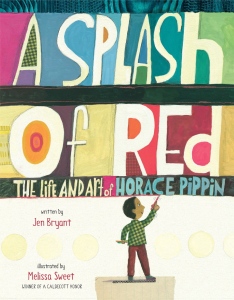
ASOR jacketAH: Rosie Revere, Engineer, A Splash of Red (by my client Jen Bryant), and The Day the Crayons Quit. I’m not usually one for really spare language…I like a rich and funny story, and if there’s a feminist empowerment or humor bent, then all the better!

RVC: And one more thing for those aspiring writers, please. What are your feelings about art notes from text-​only writers?

AH: I would try to be judicious and not include too many art notes since we want the text to stand on its own. That said, I think a few well-​chosen art notes can work.

This Is MY Room!: (No Tigers Allowed) by [Jacobson, Jennifer Richard]RVC: A month or so back saw the publication of This is MY Room! (No Tigers Allowed), a picture book by your client Jennifer Richard Jacobson. Please share your process of preparing a manuscript for submission. Are you super hands-​on? Editorial? More focused on marketing angles? Do you see early drafts or is what your clients send you a “final”?

AH: When a client has a new picture book manuscript, we usually do a few rounds of text revisions before I am ready to start creating the pitch letter and the list of editors who I plan to pitch. In the pitch letter, I always highlight what’s unique about this book and also WHERE I see it sitting in the market. Some books are more gift-​oriented and some are more school and library-​oriented with backlist potential. I know I’ve done my job well when I recognize bits of my pitch letter in the flap copy for the book when it gets published.

Once a book is sold to an editor, I don’t usually do much of the editorial work since I think it’s important not to have too many cooks in the kitchen. That said, I always read the revisions and weigh in on artists and jacket and title and, of course, the marketing. Since my job is to sell the next book and the one after that, I always like the current book to be so successful that it makes subsequent sales that much easier.

RVC: Since I run the creative writing program at Ringling College of Art and Design, I semi-​frequently get asked questions about elephants/​the circus/​clown college, all of which have as much to do with my college as bicycles do to fish. 

So, I have to ask—how many questions/​jokes/​comments do YOU hear about Trident sugarless gum and/​or that fifth dentist who just won’t cave?

AH: So cool about Ringing College! Believe it or not, I’ve never gotten a single remark about Trident gum, but I do remember those commercials quite vividly from my childhood! These days, Trident Media Group is also branding itself as TMG, so maybe other folks noted the gum thing? 😊

RVC: Okay. It’s time for … THE LIGHTNING ROUND! Zip-​zappy questions and electrifyingly quick answers, please. Ready?

AH: Ready!

RVC: If I were a character on Downton Abbey, I’d be …

AH: The Dowager, without a doubt!

RVC: #1 hot dog condiment?

AH: Mustard. Never ketchup!

RVC: Which deceased writer would you most love to have shadowed for a full workday?

AH: Edith Wharton.

RVC: What project—picture book or otherwise—are you most excited about right now?

AH: I hate to play favorites among clients, so I’m going to link into the wonderful array of books I have coming out this year on my web page. Short answer, excited about ALL OF THEM!

https://www.tridentmediagroup.com/agents/alyssa-eisner-henkin/

RVC: Best recent picture book with interactive family-​bonding potential baked right into its literary DNA?

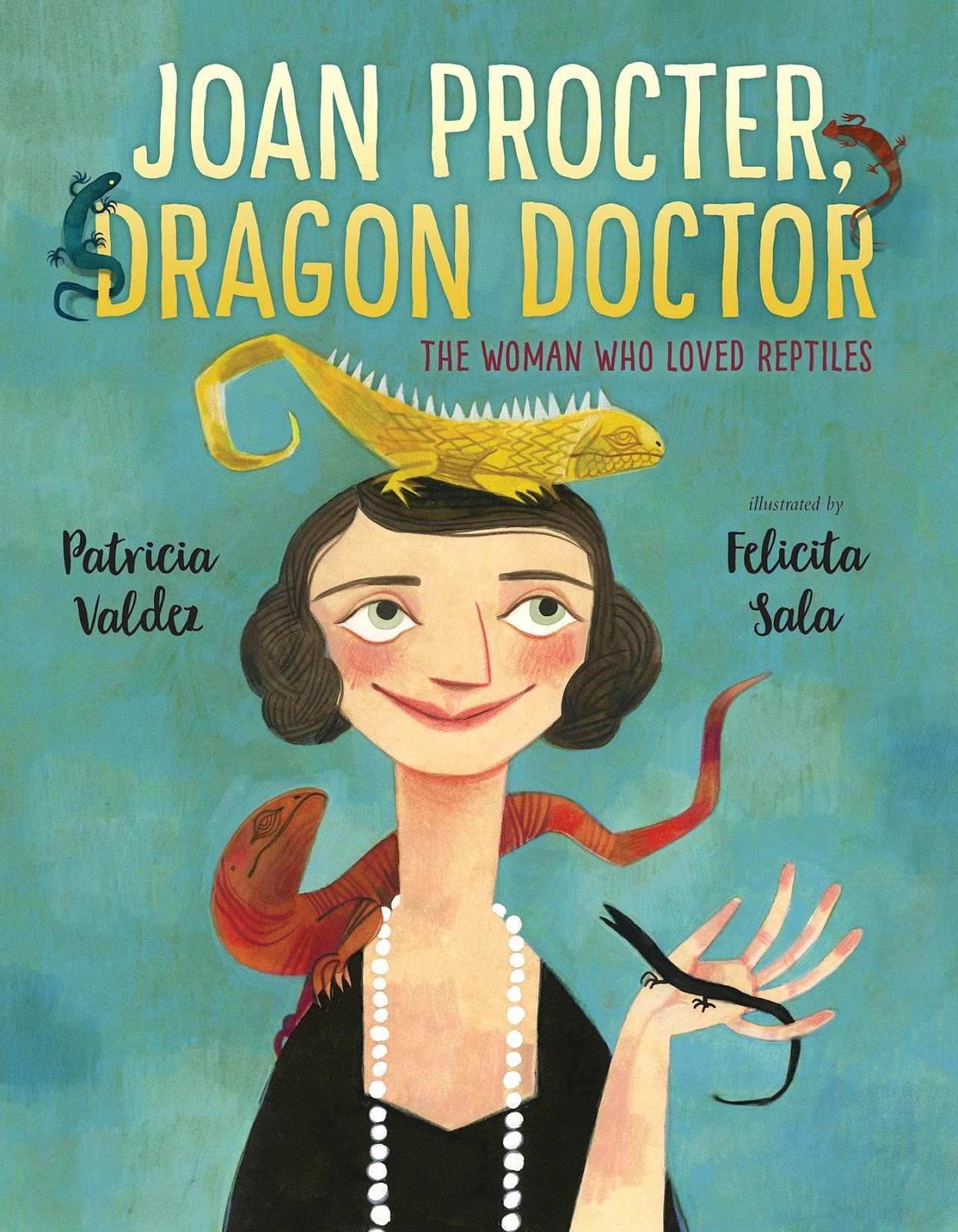
See the source imageAH: This is MY Room!, Pirates Don’t Go to Kindergarten!, and Joan Proctor, Dragon Doctor, because we are a big history/​science-​loving family!

RVC: Three words that describe your agenting philosophy.

AH: Passion. Persist. Visionary.

RVC: Thanks so much, Alyssa! (And thanks as well to Alice, your on-​the-​ball assistant, for helping pull this all together.)

Editor Interview: Karen Nagel (Aladdin Books/​Simon & Schuster)

Meet Karen Nagel, Executive Editor at Aladdin Books/​Simon & Schuster. Prior to joining their team in 2011, she was a Senior Editor at Blue Apple Books (2008–2011) and Senior Editor at HarperCollins (2005–2008). But that’s the sort of bio stuff you hear about when you’re in a job interview, right? At OPB, we do more. We go deeper. We come at things from a different angle.

With that in mind, let’s uncover the REAL 411 about Karen via Six Awesome Karen Facts:

  1. Has had the same best friends since age 7.
  2. Did follow spots for an off-​off-​off Broadway production of Sam Shepard’s ‘Tooth of Crime.’
  3. Bicycled through Europe at 16 with American Youth Hostel.
  4. Has no appendix or tonsils.
  5. Loves laughing.
  6. Enjoys yoga.

And for those who DO yearn for traditional bios, let’s share that too.

Karen Nagel has had the great good fortune of a career in children’s book publishing. From #1 New York Times, USA Today, and Publishers Weekly bestselling books to Coretta Scott King and Society of Illustrator award winners, she has worked with many of industry’s most noteworthy authors and artists.

Today she is the Executive Editor at Simon & Schuster’s Aladdin Books, where she not only has continued to work on bestselling books, but perhaps more significantly has conceived and created new formats for emerging–and reluctant–young readers, planting the seeds for a lifelong love of books. A graduate of New York University, she’s a true believer in the transformative and transcendent power of the arts, the ocean, friendship, family, peace, and love.”

BOOM! Now that we’ve laid the groundwork here for a beautiful, well-​informed relationship, let’s plunge into the interview.

Here we go!

Aladdin Books website: http://simonandschusterpublishing.com/aladdin/

LinkedIn: https://www.linkedin.com/in/karen-nagel-7a5aa115/


See the source imageRVC: Let’s start with a question I’ve never asked an editor before. In 2017, you acquired world rights for Fox & Friends co-​host Ainsley Earhardt’s debut picture book, Take Heart, My Child: A Mother’s Dream. How are things different when working with a celebrity author?

KN: It might be easier for a celebrity author to promote and sell books as they have, for the most part, a built-​in audience and platform. But celebrity or not, it’s the personal connection I want to establish from the get-​go and the relationship we develop along the book-​creating process that is most important and impactful to me and to the story itself. The notable personalities I have the pleasure of working with have been terrific, as I think we at Aladdin do a wonderful job of reflecting what’s in their heart(s).

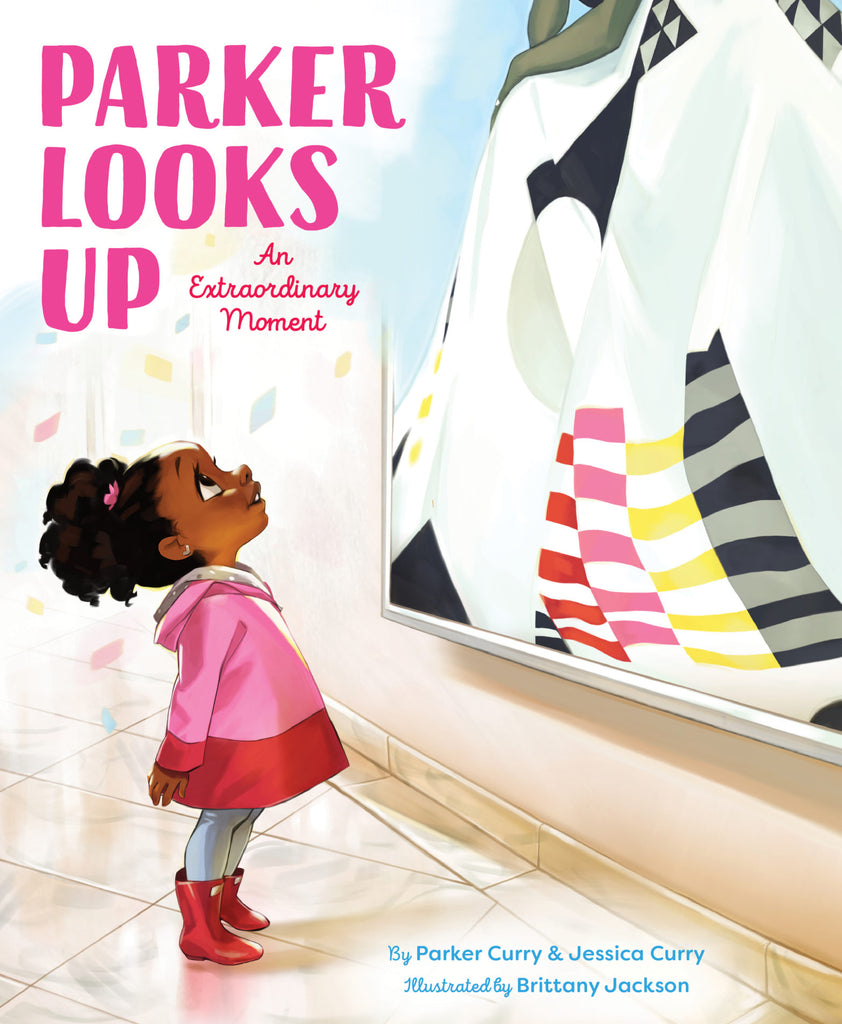
See the source imageRVC: What about the other celebrity book you’ve recently acquired, Parker Looks Up: An Extraordinary Moment, written by four-​year-​old Parker Curry and her mother, Jessica ?

KN: This has been a dream come true for Jessica and Parker, and to capture their experience on that historical and unforgettable day, has been a labor of love on our part.

I sure wouldn’t want to disappoint a four-​year-​old, would you?

RVC: Great point! In a Forbes.com article about Parker Looks Up, you said, “Does anyone ever know the moment that will forever change their lives?” Got a moment like that in your own life you’d like to share? Maybe the one that sent you down the path of kidlit publishing?

KN: Books from my aunt: Charlotte’s Web; Hello, Mrs. Piggle-​Wiggle; The Little Prince.

RVC: What’s the best non-​traditional training you’ve had that helped prepare you for your career as an editor?

KN: Summer sleep-​away camp. I’m not kidding.

RVC: Makes sense to me (I learned all too much at sleep-​away camps!). Now some might not know this, but you’re an author, too. How did your own book, Two Crazy Pigs, come about?

KN: My older son came home from camp (see, it’s camp again) one day, singing a silly made-​up song: We are two crazy pigs…and I was inspired! What would happen on a farm with two out-​of-​control piggys?

RVC: Do you have a sequel or another book in the works?

KN: I have a TCP sequel, and am just looking for the time to finish it…

RVC: I totally understand that–so many projects, so little time. Now let’s tackle a writer-​pleasing question. What’s “out” in the world of picture books? What’s yesterday’s news? What’s the equivalent of parachute pants, which we all love via the nostalgia sheen of memory, but we honestly don’t need to see again in real-​life anytime soon?

KN: Everything is cyclical, to my mind. And it seems short-​sighted to me to pigeonhole an idea as yesterday’s news…

RVC: Fair enough. One a scale of 1 to 11,000, how important is it that an aspiring author have a platform and/​or a viable, robust marketing plan?

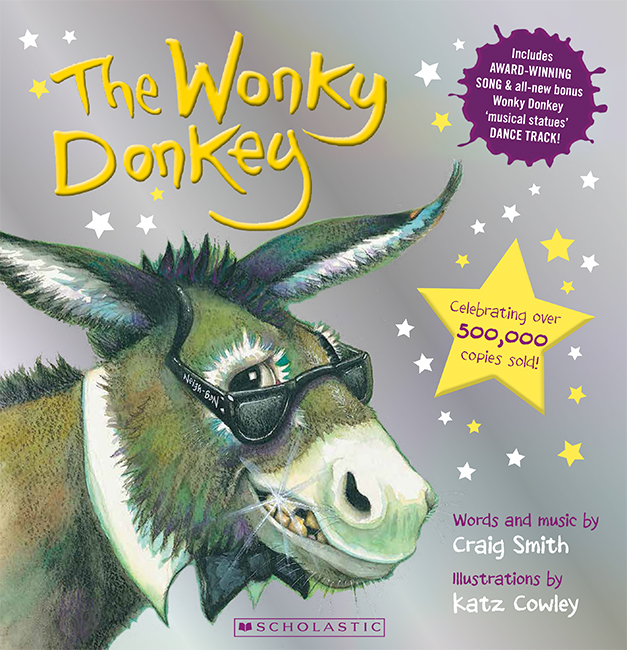
See the source imageKN: These days, 9,000. But then there’s the Scottish Grandma reading The Wonky Donkey, and I doubt she was officially part of any type of platform or robust marketing plan.

RVC: If I could give you a bullhorn powerful enough to reach the ears of every single picture book author on the planet, but it only had enough juice to work for one sentence, what’s the one thing you’d tell them all?

KN: Revise, revise, revise, and remember to listen to and then speak from your real heart.

RVC: Without further ado, hubbub, or hullabaloo, it’s time for … THE SPEED ROUND! Shockingly fast Qs followed by lickety-​split As. Ready?

KN: Ready!

RVC: HERE WE GO! Game of Thrones—great TV series or the greatest TV series? 

KN: Great TV series.

RVC: Which cryptid would make the coolest pet—Sasquatch, Loch Ness Monster, or Chupacabra?

KN: Sasquatch.

RVC: “If I were still in book editing but NOT in the world of kidlit, I’d be editing ________.”

See the source imageKN: Biographies of musicians.

RVC: Favorite non-​Aladdin picture book from 2018?

KN: All Are Welcome by Alexandra Penfold and Suzanne Kaufman.

RVC: What Aladdin picture books coming out later this year are you most excited about?

See the source imageKN: Superbuns! By Diane Kredensor. The Presidents: Portraits of History by Leah Tinari. Parker Looks Up by Parker Curry and Jessica Curry.  Amy Wu and the Perfect Bao by Kat Zhang.

RVC: What’s the three-​item checklist for your dream picture book manuscript?

KN: Well-​written; funny; out-of-the-box.

RVC: Thanks a bunch, Karen. It’s been a pleasure helping the Only Picture Book family get to know you better. 


Editor Interview: Charlie Ilgunas (Little Bee Books)

This month’s Industry Insider interview is with Charlie Ilgunas, Associate Editor at Little Bee Books. Once I saw how his Twitter bio claimed that despite what Pottermore tells him, his Patronus is a capybara, I knew we’d get along famously—my unofficial Patronus is a penguin, after all!
C’mon. Everyone knows that the capybara is just a furry, flipperless penguin.

Since we’ll hit on a lot of bio-​type stuff below, let’s just jump right into the Qs and As, okay? Onward!

Twitter: https://twitter.com/chillgunas
LinkedIn: https://www.linkedin.com/in/cilgunas/
Little Bee Books Website: https://littlebeebooks.com/


RVC: Instead of beginning with the typical “how did you get started?” questions, let’s go a different route. You’re been with Little Bee Books for almost five years now. In all that time, what have you come to realize distinguishes a Little Bee picture book from those that other publishers produce?

CI: I think I would define our books as sophisticated but accessible. We acquire a lot of books that revolve around little-​known stories or people, that happen around big events or movements, or discussing topics that don’t get discussed enough in picture books and middle grade. We’re also proud to work with GLAAD on titles that we hope will increase LGBTQ visibility in younger readers and accelerate inclusivity and acceptance.

RVC: What are a few of your titles that you think made big strides in that direction?

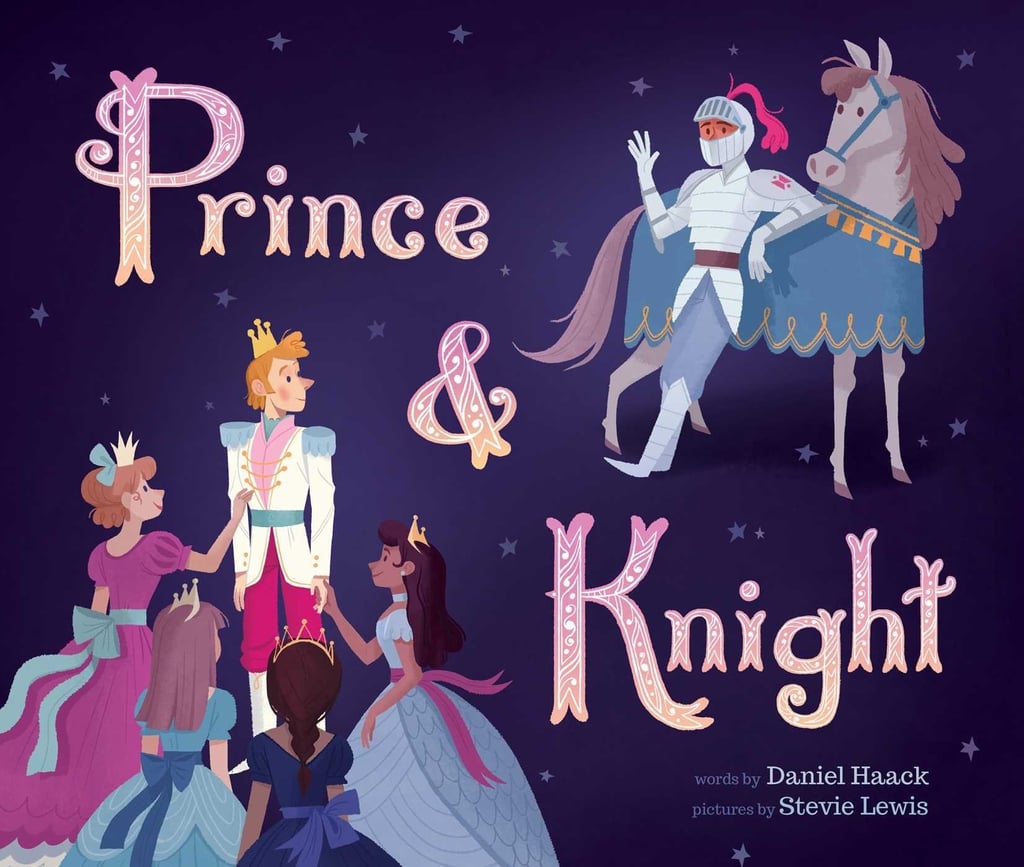
See the source imageCI: Prince & Knight has made the biggest impact so far; the reception to that one over the past year been fantastic! And its companion title, Maiden & Princess, just came out in April. This month we have two more coming out, Except When They Don’t, a book about gender stereotypes, and Our Rainbow, a board book about the colors of the pride flag.

RVC: Let’s talk about the process of getting great manuscripts into the hands of the decision makers. Early career writers ask me this all the time—what’s the difference between editor titles (assistant, associate, etc.)? Is one a better submission target for first-​time-​at-​book-​length picture book authors?

CI: It can mean different things at different houses. At large houses, since their lists are bigger, the roles can be a bit more rigid. Editorial assistants assist the director/​publisher with their work and any admin, research, and submission help, whereas assistant editors are there to help a particular editor on the team and are getting more hands-​on experience in the editorial process—and this is usually the time that they start getting a few of their own acquisitions. Associate editor is the next step up and are essentially junior editors that are forming their own list.

At Little Bee, however, we’re quite a small publisher, so roles are more fluid! When I was an editorial assistant, about 7 months in I took something to acquisitions and signed my first title. And when I became assistant editor, I was essentially acquiring and building my own list. So there is a lot of creative freedom and involvement in the editorial process allowed for assistants here, which I really appreciated.

As for targeting submissions, I wouldn’t say that any one is a better target for debut authors. Newer editors might have less preconceived notions about a text and don’t have as much in the back of their mind to compare it to other projects they’ve worked on or the publisher’s list, but even so, that still gets brought up in acquisitions by other members of the team who do have that experience!

RVC: After earning your BA in English Lit from Washington University in St. Louis, you got a Graduate Certificate in Publishing at the Denver Publishing Institute at the University of Denver. What was that certificate program like? How did it prepare you for being a kidlit editor?

CI: The certificate program was a great experience. It really appealed to me because it was solely focused on books, and the ones at Columbia and NYU have half their curriculum devoted to magazines/​digital media, which I wasn’t interested in. It prepared me in that it exposed me to a lot of aspects and functions involved in the process of getting a book from acquisitions to publication that I hadn’t thought of or was aware of at the time. And it also connected me with a lot of other people who were passionate about publishing and helped me prepare for getting my first job!

RVC: How did you find yourself in the kidlit publishing side versus, say, handling textbooks, literary fiction, or potboilers?

CI: It’s kind of funny–I remember that a big chunk of the group at Denver loved the kidlit presentation (from Greenwillow Books) and seemed determined to get into kid’s books. At the time, I was actually leaning more toward adult fiction or nonfiction. But as time passed and I was trying to get my foot in the door anywhere, I ended up getting an internship at Bloomsbury in their children’s department that completely changed my perspective. Now, I can’t imagine doing anything else!

RVC: What finally sold you on kidlit?

CI: I think what clicked when I started working there is that I just reconnected with what made me fall in love with books as a child. The sweeping illustrations and zany or heart-​melting stories of picture books, the feeling of anticipation with a great adventure, the desire to get spooked with a creepy middle grade. I think in a lot of ways, adult books (and some YA, to an extent), can be locked into tropes and conventions of whatever genre it is, but with picture books and middle grade, I feel that their worlds and characters are so open and that they can go anywhere in the next turn of the page.

RVC: Three of my own students have recently decided that being a book editor might be for them. What path do you recommend they take after they finish their BFA in the creative writing program I run at Ringling College of Art and Design?

CI: Internships are really the best way to get into the business, since you’ll build experience, a pool of references, and may even by hired by the company you intern with. I was lucky because the internship I did with Bloomsbury was both paid and open-​ended, meaning I could work there until I found an editorial assistant job.

Another thing I’ll say is that you shouldn’t be picky about what you apply to. As I said, I was really focused toward adult books, but I started applying to everything, even managing editorial jobs. And that’s actually how I got the Bloomsbury job—I interviewed for a managing editorial internship and didn’t get it (because I had absolutely no managing ed experience!), but I got along so will with the managing editor that she sent me an e‑mail when there was an editorial internship opening and recommended me to the hiring editors.

See the source imageRVC: You recently acquired Albert D.J. Cashier and Two Grooms on a Cake in a two-​book deal with Rob Sanders, a friend of OPB. (In fact, his was the first interview we ever did.) What drew you to those manuscripts? (I confess I feel a real stake in this since I knew these manuscripts well before you ever saw them—Rob talked about them during his frequent classroom visits at Ringling College.) 

CI: So, we were first presented with two manuscripts, Albert D.J. Cashier and one we didn’t end up acquiring. I really liked Albert because it was a really interesting story that I hadn’t heard anything about before. And I was so impressed with Rob’s research. His backmatter is very extensive, and in the editing process, it was fascinating to comb through a 192-​page pension file to see all the back and forth about Albert’s case.

Two Grooms on a Cake actually came at the last minute; we were about to settle the contract for Albert when the agent sent it over, and I couldn’t have been happier reading through it. It was such a great perspective to tell the story of America’s first gay wedding from, and since we already had Albert slated for 2020, Two Grooms would come out in 2021, the 50th anniversary of Jack and Michael’s wedding. It was too perfect!

RVC: I hear a lot from picture book authors who can’t seem to break through. What’s the most common thing that ends up being the deal breaker for an otherwise-​pretty-​solid manuscript?

CI: I read a lot of picture books that have very solid, even fantastic ideas, but just peter out at the end and don’t have a satisfying arc. Having a great idea is important, but the author still needs to find somewhere to take it and a way to make it a full story—one that will keep a distracted kid interested at story times or when learning to read for themselves, one they will want to read again and again.

RVC: One last question before we reach the much-​ballyhooed, never-​equaled, always-​appreciated LIGHTNING ROUND! What kind of picture books do you think the marketplace is missing right now?

CI: I think what’s exciting is that there is such a diversity of stories being told today that there aren’t as many things clearly and perceptibly missing from the market. But one thing I can think of is that I wish that there was more room for unusual picture book formats—oversized, or unusually shaped, or the like. A lot of accounts are pretty quick to reject stuff like this since they have shelf requirements, but indies are pretty accommodating to these types of formats as long as they think it’s cool and see buyers for it!

RVC: Okay, it’s time. Lightning-​fast Qs and As please! Ready?

CI: Let’s do this!

RVC: Most underappreciated Harry Potter spell?

CI: Arania Exumai—it’s only in the movies, but I would use this all time against spiders!

RVC: Favorite burger joint in NYC?

CI: I don’t know if I’m qualified to say, since I was a vegetarian for 8 years until recently; I haven’t had too many yet! I like Shake Shack, and there’s a place near where I live called Burger Club that makes a great burger.

RVC: On a scale of 1 to 1,000, how excited would you be to get a picture book manuscript about (or by!) a capybara?

CI: I actually have one right now that includes a capybara! Not the main character, though, so not quite 1,000, but I was still so excited.

RVC: The #1 Little Bee picture book to watch for in 2020?

CI: Grandpa Grumps. I loved working on this book so so much; it will make you laugh and cry (and possibly hungry)!

RVC: Your favorite non-​Little Bee picture book of 2018?

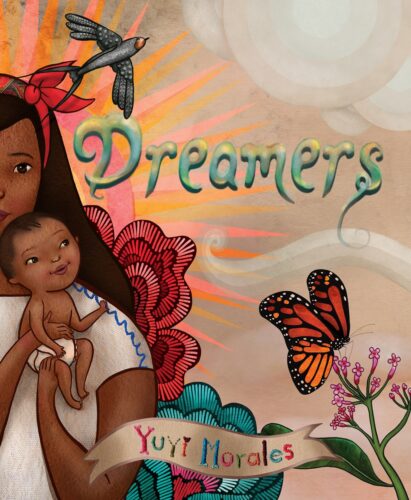
See the source imageCI: I thought We Don’t Eat Our Classmates was hilarious. And Dreamers is utterly gorgeous.

RVC: Three words that describe your work (or goals or philosophy—whatever works best here) as an editor.

CI: Curiosity. Conscientiousness. Wonder.

RVC: Thanks so much, Charlie. Much appreciated!

Editor Interview: Cheryl Klein (Lee & Low Books)

This month’s Industry Insider Interview is with Lee & Low Books’ Editorial Director, Cheryl Klein. She’s been on my Wish List for OPB for some time, so when I was asked in the 11th hour to provide a super-​brief intro for Cheryl’s talk at the SCBWI regional conference in Miami this past January, I knew the literary gods were smiling upon me.
To a roomful of SCBWI members, I shared these three things about Cheryl by way of an introduction:

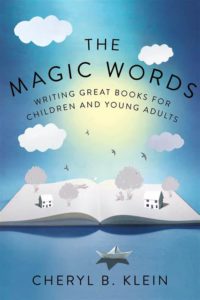
1–“As a writing professor and creative writing program director, I regularly loan out writing craft books to students. That includes Cheryl’s The Magic Words: Writing Great books for Children and Young Adults.” [Then I turned to Cheryl and fake glared at her.] “Yours almost never comes back. I’ve had to buy many, many copies of it over the years. So THANKS for that!”

2–“My literary agent and I were recently talking about picture book editors recently. When Cheryl’s name came up, my agent simply said: ‘She’s good people.’ That’s all I needed to hear.”

3–“Since I launched OPB back in April of 2018, I’ve always had a short Wish List of people I wanted to interview. Some I landed. Jane Yolen. Liz Garton Scanlon. Floyd Cooper. Rob Sanders. Elizabeth Harding. Sylvie Frank. But a few have so far eluded me. One name that’s moved to the top of my 2019 OPB Wish List? Cheryl Klein.” [I now pretended to whisper to the crowd as if Cheryl wasn’t standing six feet to my right.] “I’m hoping that this fancy-​pants introduction might just tip the odds in my favor.”

And here we are, OPB and Cheryl–all thanks to social pressure, some literary luck, and good old-​fashioned schmoozing (and I mean that in only the best sense of the word “schmoozing,” which is really just networking, acting like a pro, and being pleasant, vs. people who are crazy, stalkery, and IN-​YOUR-​FACE pushy–we’ll do a special OPB Bonus Goodie on that “Don’t Do This!” topic another time).

But now that we’re all here and ready to go, let’s get cooking! Take it away, Cheryl!

Website: www.cherylklein.com
Facebook: www.facebook.com/cherylkleinedit/
Twitter: www.twitter.com/chavelaque
MS Wishlist: www.mswishlist.com/editor/chavelaque


RVC: Unlike most editors, you almost had another career … as a spy. How did that (almost) happen?

CK: As a former Midwesterner, I pride myself on my ability to be nice, bland, and unobtrusive to the point of inconspicuousness when I so choose. This served me well in making me a good observer and allowing me to pass through most places unremarked-upon—even if I was, say, carrying the unpublished manuscript for the seventh Harry Potter book (which I did once).

The privileges of being a middle-​class-​ish white lady help here too, of course.

RVC: As a fellow former Midwesterner, I, too, have been known to enter a crowded room and not be noticed until I had my foot stepped on. Depending on how you look at that, it might be considered a gift.

But back to your non-​spy career. Once you started working at Lee & Low, how did you know that you’d found your true calling? What were the signs?

CK: I’ve worked in the industry for nearly nineteen years now, and I felt like it’s my calling since day one. The main sign of that calling is the quality of my books and my relationships with my authors, I think, and how content I feel when I’m doing the work … the “mechanic’s delight,” as the late Canadian writer/​editor Brian Doyle called it, of seeing how much stronger a scene in a novel might be when we take out all the filter words, or discovering a new illustrator’s portfolio and connecting her with a manuscript that lets her talents shine. It makes me deeply happy to make books right or better. And one of the best parts of being an editorial director is helping my team figure out their own rights or betters, and do their best work too.

RVC: I sometimes hear writers bemoan how the days of Maxwell Perkins and hands-​on editors is long gone, and that most editors are just gatekeepers. Could you help dispel that myth by explaining some of the actual work that goes into taking a single picture book manuscript from promising-​manuscript-​I-​acquired to the-best-thing-we-collectively-can-create?

CK: This varies from manuscript to manuscript, and with whether the author is illustrating the book as well, but the process usually runs in three stages. In the first, the author and I think and talk about the concept or point of the book—what the story is, what the author wants to convey, how the project as a whole should feel to readers, where the child’s and adult’s pleasure or interest in it might come from. Here I write (typically long) letters saying what I’m presently seeing in the text, and asking how that differs from the author’s vision, and then defining and explaining what I hope to see in the book long-​term, if the author agrees. We talk that over until the author is ready to go off and revise.

In the second stage, the author takes all that feedback and conversation and moves around the necessary story pieces—or invents new ones—to put the book in a form that conveys the story and those thoughts and feelings compellingly. That might involve setting up a theme or idea on p. 4 that will then pay off on p. 26, or switching out one plot event for another, or just building out a character’s emotional arc a little more. With some manuscripts, we also try to figure out pagination at this point, while with other projects, I might leave that to the illustrator.

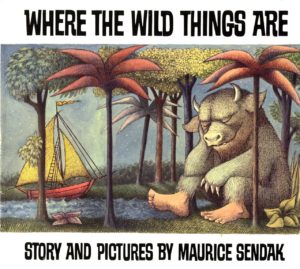
And in the third stage, we try to refine the language so it sounds marvelous when read aloud, leaves plenty of space for the illustrator, etc., etc. Here I do a lot of line-​editing on paper or in Track Changes, going back and forth until everything feels and sounds right to me and the author. Stages II & III tend to bleed into each other a lot, actually, because so much of the sense of picture books is in the sound of them—how a thought or emotion is phrased, even things like word choice. I always think about the fact that Where the Wild Things Are would be infinitely last satisfying if the last phrase were “and it was still warm.”

RVC: Unlike most picture book editors, you’re also an author. In fact, you have two picture books coming out in 2019. What advantages might you have by being both an editor and author versus solely being an author? 

CK: Mostly it’s that I have an intimate knowledge of what’s going on behind the scenes, from what might be happening in an Acquisitions meeting, through the thought process my editor might be going through in phrasing a revision request a specific way. This could be crazy-​making in the sense that I could worry, “Oh man, I heard that Barnes & Noble wants picture books with longer texts. Will the B&N rep speak up against my twelve-​word text in the Acquisitions meeting?”

RVC: I think all writers hear rumors/​trends like that from time to time and panic. A bit. Sometimes a lot.

CK: And while those thoughts do pass through my head, I’ve also been around the industry long enough to know that (a) a lot of this stuff is entirely out of my control, and hence not worth spending mental time on, if I can avoid it; (b) it isn’t personal – someone not liking my writing (particularly for market reasons) has nothing to do with who I am as a person, and my work has integrity no matter what that someone thinks; and © publishing opinions are never definitive or final. In six months, B&N may be begging for short texts, or an editor who didn’t respond to a text once might come around in a year or so and say “Hey, you know what? I can’t stop thinking about that manuscript, and now’s the right time to publish it.” (I know this in part because I have been that editor!) I’m also aware of just how much behind-​the-​scenes work is going on for a book, even when the author can’t see it, and I’m deeply grateful for that. So my knowledge of how things work mostly helps me let go.

RVC: Do you handle getting editorial notes any better than the rest of us?

CK: I will admit that I don’t love getting edits, but I try to think of them as problems to be solved: This is what I want to say; my editor is a smart reader, and she’s not understanding what I’m trying to do, as evinced by these edits; how can I fix the text to make her understand? Thinking that way takes my ego and its associated emotions out of the edits and helps me get the job done.

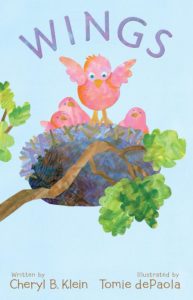
RVC: Tomie dePaola did the illustrations for your own picture book, Wings. What was it like working with an OMG illustrator? 

CK: My editor for Wings was Emma Ledbetter of Atheneum/​Simon & Schuster BFYR, now the editorial director at Abrams BFYR. She worked as Tomie’s in-​house editor at Simon & Schuster, and she knew he loved birds, so she suggested him, and I was blown away by the mere idea of having him do the book. I of course envisioned his lovely, thick-​lined, Strega Nona style at first—the one he’s best known for—and I was thrilled when I saw the new medium he used here: full-​page-​sized Avery labels, colored with markers and cut into shapes! It’s so simple, but in Tomie’s hands, so vibrant and artful, and perfect for the very elemental text. It’s been an honor and a pleasure, all the way around.

RVC: Quite a few writers keep nudging me to ask agents and editors about what they do and don’t want. So let’s toss them a bone. Please offer up three specific things that just aren’t your cup of literary oolong.

CK: List manuscripts (that is, texts that are basically lists on a topic) that don’t build up to illuminate some underlying story or theme; rhyming texts with no sense of purpose, meter, or form; and scatological stuff. As much as kids love poop, pee, and fart jokes, I’m afraid I just say “Ew.”

RVC: I can’t help it—I’m a giver! So let’s give writers one more thing to chew on. What do you dream of finding in the slush pile?

CK: A manuscript by a diverse author illuminating a story from a contemporary kid’s life or a historical or scientific concept through their specific cultural lens, written to achieve some specific emotional effect, and pulling it off so well that I can’t wait to share it with everyone I know.

RVC: One last thing about your own work as a writer. What motivated you to create your own book on writing, The Magic Words?

CK: The Magic Words is a revision of my first, self-​published book, Second Sight: Writing Great Books for Children and Young Adults, which was a collection of my SCBWI talks and personal blog posts and reflections on the art of writing. My motivation to write all of that material came in part from being asked to speak at various events, and in part from my longtime fascination with How Books Work, which dates back to my time as an English major in college. (I never went to grad school—I went into publishing instead—so my books on writing are kind of my attempt to do an M.A. on my own.) Still, maybe the thing I love most about great literature is that even when you take all the pieces apart as best you can—plot and theme and character and sound and so forth—there’s always some indefinable spark that can’t be captured:  life, or truth, or anima, or soul … But I do love trying to capture it, and taking those pieces apart accordingly.

RVC: Got a favorite takeaway or tip?

As for the best takeaways from The Magic Words, readers tend to love how practical the book is, so I’d point out the Character and Plot Checklists, which prompt readers to think about the essentials of both of those huge subjects as manifested in their own works-​in-​progress. I also place a strong emphasis on the fact that every writer is different, and no one writer’s technique is the One True Way That Will Work for Us All on Every Book—not even mine! But I offer a lot of options and directions to help each writer figure out their own True Way. And the closing essay on publishing puts forth one of my favorite similes: The submission process is as subjective and personal as dating, and to be approached rather like dating—with thoughtfulness about who you are, what your book is, and what you want out of the agent/​editor/​publishing relationship, and with a sense of humor as well.

RVC: Okay, it’s time to change things up. It’s time for … The OPB Speed Round! High-​velocity Qs and As only, please. Are you ready?

CK: Bring it on!

RVC: What would be hardest to give up: social media or TV?

CK: Social media!

RVC: Stranger Things. Great Netflix original series, or the greatest Netflix original series?

CK: Great! (But I confess I only watched season one.)

RVC: You’re hosting an ice cream party for picture book characters, but you’ve only got the fixings for yourself plus three guests. Who joins you for double fudgie sundaes with extra strawberry sprinkles?

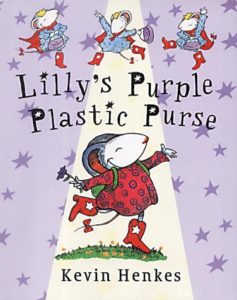
CK: Princess Pinecone and the Pony from Kate Beaton’s The Princess and the Pony (which I co-​edited, I admit), and Lilly from Lilly’s Purple Plastic Purse. Lilly and Pinecone would get along famously, and the Pony and I would enjoy watching them as we ate all the ice cream.

RVC: What’s the most recent picture book you signed? And using only three words, explain why you bought it.

CK: Unstoppable: Thirteen Adventures Alongside Athletes with Physical Disabilities, by Patty Cisneros Prevo. In three words: Energy! Inspiring! Diverse!  

RVC: What’s the most underappreciated picture book of 2018?

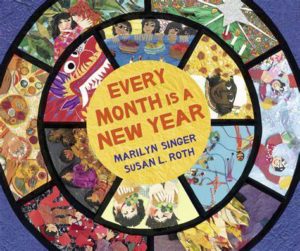
CK: Oh, man. My favorite (non-​Lee & Low) picture book of the year was A Big Mooncake for Little Star by Grace Lin, but it received plenty of appreciation! I do wish more people had seen the Lee & Low book Every Month Is A New Year, by Marilyn Singer, with illustrations by Susan L. Roth, edited by my colleague Louise May. It’s a marvel of concept (the New Year’s celebrations that take place in each month of the year, somewhere around the world), research, poetry, illustration (all collage!), design, and backmatter.

RVC: Best compliment you’ve ever received? 

CK: Can I cite two—one professional, one personal? Sherry Thomas, a novelist I work with, said, “I didn’t think editors edited like this anymore” after we finished her book. And J. K. Rowling told me that I looked like Gwyneth Paltrow!

RVC: Thanks so much, Cheryl!