
Agent Interview: Christa Heschke (McIntosh & Otis)

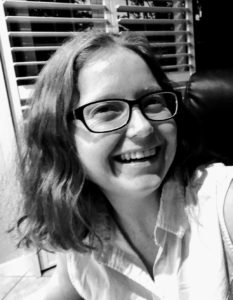
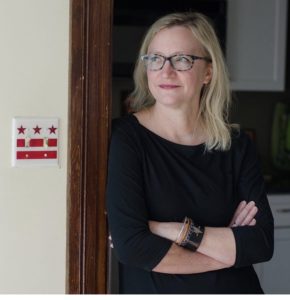
The June Industry Insider interview is with none other than Christa Heschke, who’s been with McIntosh & Otis, Inc. since 2009. While there are many reasons why she’s a great a fit for OPB, here are just three.
Reason One: Her Twitter bio claims a Hufflepuff affiliation.

When I was last in NYC, I made a point of seeing Puffs, or Seven Increasingly Eventful Years at a Certain School of Magic & Magic. Kindred spirits!

Reason Two: She’s a Green Bay Packers fan.

I was born in Neenah, WI (a stone’s throw from GB), and I taught at UW-​GB, where I lived walking distance from Lambeau Field. Plus, my folks had season tickets when I was a kid!

Reason Three: She likes LOTR, zombie TV shows, and RL Stine.

My take on those same things? Yes, amen, and wahoo!

With so many things in common, the two of us making some magic at OPB is all but guaranteed. Let’s prove it right now!


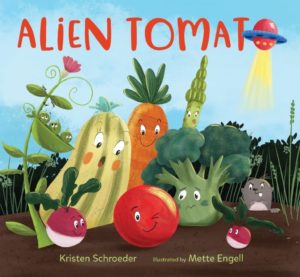
RVC: Let’s start with an unexpected connection we have–Kristen Schroeder (one of your clients!). I just met her at the Jane Yolen/​Heidi Stemple Picture Book Boot Camp back in November. She had an Advance Reading Copy of her debut, Alien Tomato, which was a real hoot to see, to say the least. What do you like most about that book (which comes out in July 2020)?

CH: I love the humor and Gopher is such a fun main character! The ending twist is perfect! Seeing the art capture the text was really cool, too. It’s one of my favorite things about working on picture books.

RVC: Please say a few words about why Kristen’s pitch to become your client worked.

CH: Kristen had queried me and then later notified me she had an offer of rep from another agent. I remember really liking the project she sent me, Howie, which was a fun look at dog-​shaming photos. I liked the humor and I thought the idea was standout. After reading that one and enjoying it, I asked her to tell me more about her body of work and she sent me a whole list of projects she had written or was working on and I was SO impressed! I could see her range and once I read a few more of her projects, I just had to offer her representation!

RVC: Is that something you recommend others do?

CH: Yes! I think it’s helpful to have a handful of finished polished picture books ready when you start querying. When it comes to picture book authors, I always like to see a few projects–I’m rarely offering rep based on just one project. This may be personal preference, but I have stepped aside a few times when I really liked one project but the author didn’t have anything else to share or tell me about.

RVC: Let’s jump back to the beginning. At what point did the publishing career become your path?

CH: Well, it all started back in college. A friend interned at Writers House and suggested I apply. At the time, I had no idea what I wanted to do, but hey, I loved to read so I applied. I loved my time there and that led to another internship at Sterling Lord. When I graduated college, I applied to all kinds of publishing jobs. After some time, I got the job offer to be an assistant at McIntosh & Otis in their children’s department. I said yes, and haven’t looked back since. I got lucky that I fell into the area of publishing I was meant to be in. I love working on the kids side and I’ve always been a kid at heart, so it was a perfect fit for me! After assisting a few years, I moved up to agent.

RVC: I’ll bet you REALLY got the literary bug a bit earlier than college. Did you write term papers about copyright infringement and intellectual property issues? As a teen, were you negotiating deals for writer friends to ghostwrite prom-​posals? Were you doing Muppet Babies fanfic? The OPB family wants to know!

CH: Other than reading a lot growing up, I did have my own magazine for a while called Gal’s World. I was in the 12–14 range when I was actively putting the magazine out there. I also had my own website dedicated to Sailor Moon fanfiction. So, from a young age, I was active on the writing side of things. In school, we wrote and illustrated our own books from kindergarten up through 4th grade. I still have most of them!

RVC: Let’s take a closer look at your time as an intern at Writers House and Sterling Lord Literistic. What does life as an intern look like?

CH: A big part of interning at an agency is reading queries and manuscripts, and then writing reader’s reports. Writers House also had classes on different topics for their interns on everything from subrights to contracts, so it was a great learning experience. At Sterling Lord, I got to help a bit with foreign rights which was cool, including editing their rights guides/​preparing for a major Fair (Frankfurt, if I’m remembering correctly).

I basically helped whomever needed it, so I got to read kids and adult work as well as perform general office tasks such as filing, mailings, organizing, answering phones, etc.

RVC: Any tricks to landing one of those coveted jobs?

CH: Networking helps SO much when getting an internship. Without my friend having a connection at Writers House, I’m not sure if I would have gotten an interview.

RVC: You joined McIntosh & Otis in 2009. What about that agency makes it such a good fit for you?

CH: I love that we’re more of a boutique agency. There are only two agents (plus two assistants and an office manager/​royalty manager) and we handle everything for our clients. So, aside from editorial work and sending projects out on submission, I also handle all subrights (translation rights, audio, film/​TV/​stage etc.), my own contracts, helping authors with promo, permissions, and more. It certainly keeps me busy, but I like that I get to work on a little bit of everything!

I especially love working on foreign/​translation rights. It’s always a good day when a copy of one of your books translated into another language comes in and sometimes with an all new cover! I also like that I can build my list how I want to. So, I can take on the projects that I’m passionate about. Of course, it’s also very important to me to do what I can to raise up marginalized voices. I strongly believe every child should be able see themselves and characters like them in books.

Getting kids to start reading and enjoy reading from a young age is so important to creating lifelong readers. Whenever I see kids reading (whether it’s on the subway or in the park) I get excited! M&O gives me the support to do these things which I sincerely appreciate.

RVC: Though you rep all types of kidlit, what about picture books appeals to you? 

CH: It’s a child’s first experience with reading. I love that! I remember how much I enjoyed picture books as a little kid. My parents told me before I could read, I would flip through picture books and make up the words based on the pictures (or what I remember from my parents reading them to me). So, they have always been special to me. I love how they can be fun and character driven, but still have a great message. I also like seeing how the art works together with the text to create a finished book. I could go on and on!

RVC: How important is voice to picture books?

CH: It’s important. If the text is wordy and the voice feels “too old,” it won’t work for the age-​range. Every so often, I see picture book texts that almost read more like a middle grade as far as word choice, wordiness, and overall voice. Every word counts with a picture book. Voice often comes across more strongly when you have an engaging and developed central character. Even in a picture book they will grow and change from beginning to end and when that’s done right, it helps the voice!

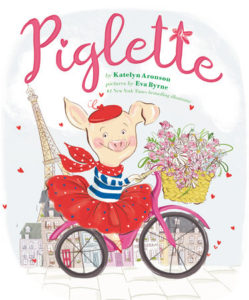
A good example off the top of my head is A Place for Pluto by Stef Wade. Of course Alien Tomato is another. Lindsay Bonilla’s Polar Bear Island. Piglette by Katelyn Aronson. I may be biased but I think all my clients have great picture book voices.

RVC: What are your thoughts on rhyme?

CH: I work on the occasional rhyming text, but I wouldn’t say it’s something I gravitate towards. My assistant, Daniele, is the resident poetry expert.

RVC: How can a writer do a better job if they decide it’s the route to go?

CH: To do a rhyming book right, you need to be well-​versed in poetry and understand meter, rhythm, etc. When you want to write in rhyme, it has to be perfect. I’d also ask writers why they feel this particular story needs to rhyme. Maybe it doesn’t. Some stories work better in prose.

Reading the story out loud can help you find areas where you trip up and may need to work on. Getting extra sets of eyes on a story also helps–especially if you can find readers that specialize in rhyming work or poetry!

RVC: How many submissions do you see per week?

CH: A lot! The number fluctuates a bit. If I recently participated in a Twitter pitch event or a writer’s conference, my inbox numbers will often go up quite a bit. I’d say I get at least 10 queries on a typical day, so upwards of 100 a week is common.

RVC: And what does the process look like going forward from a good query all the way to an offer from you and then having you submit the project to editors?

CH: Once I come across a query that jumps out at me after reading the first pages, I’ll request either a partial manuscript or a full manuscript. When I request a partial, I’m interested but want to read on a bit and see what I think. When I request a full, I generally love both the premise and writing, and I’m intrigued by the synopsis enough to want to see where the story is going.

After I’ve read the entire manuscript and I know I’m in love, I contact the author via email. I like to offer rep over email and give the basics before having a phone call. On the call, I answer any questions, go over any editorial feedback, and ask my own questions. Then I wait. That author likely will have the manuscript with other agents and will wrap up those submissions. A two-​week deadline is pretty standard.

During this time, the author may get more offers and will have to decide who they feel is the best fit for them and their career. If they end up going with me (yay!), we work on editorial and get the manuscript as polished as possible before submitting to editors. I come up with a submission list, share it with the author, and take it from there.

RVC: Last question for this part of the interview. Rumor has it that one of your secret literary weapons is an assistant named Daniele. Care to dish?

CH: Daniele is amazing, and that’s no secret! Daniele helps me SO much. She’s another skilled set of eyes on manuscripts, she has a great editorial eye…She literally assists me with pretty much everything! She also keeps me organized. We always have a high volume of pending things to do, submissions to read etc. etc. and without her, I’d likely get to things a lot slower!

And she’s a ray of sunshine and optimism. She’s so supportive and genuinely loves what she does and working with my clients, and they love working with her. We are very much a team!

RVC: Alright, it’s time…for…the… LIGHTNING ROUND!!! Are you ready for zip-​zappy question and electrifyingly fast answers?

CH: You bet!

RVC: Star Wars, Star Trek, or Stargate?

CH: Star Wars.

RVC: Best fake language—Parseltongue, Dothraki, or Tolkien-Elvish?

CH: Definitely Elvish! A recent highlight was watching the LOTR cast reunion Zoom special. All the feels!

RVC: It’s a night of magical mini-golf…with a literary theme. What three authors (living or deceased) do you invite out onto the (mini) links?

CH: That’s an impossible question to answer! LOL!

Hmm…how about Jane Austen, R.L. Stine, and Garth Nix? These are all authors who I loved reading growing up. If I were to go into authors I admire and fangirl over as an adult, it’d be a super long list. There are so many authors doing such amazing things and creating necessary change in the kidlit world!

RVC: Beyond typos and getting your name wrong, what’s a query pet peeve?

CH: Not doing your research. If you’re sending me something I don’t represent, it’s an automatic no.

RVC: Name an agent‑y bucket list item.

CH: Having a book I rep win the Newbery, Caldecott, or another major award is definitely up there!

RVC: Three words that sum up your picture book philosophy?

CH: Every. Word. Counts.

RVC: Thanks so much, Christa!

Agent Interview: Steven Chudney of The Chudney Agency

While literary agent Steven Chudney is a bit camera-​shy (I’ve worked around this via the “photo-​realistic” artwork I provided alongside his agency’s logo!), The Chudney Agency is devoted mostly to kidlit (about 10% of his list is Adult), and there are plenty of clients who sing his praises. That’s already got the OPB radar turned his way.

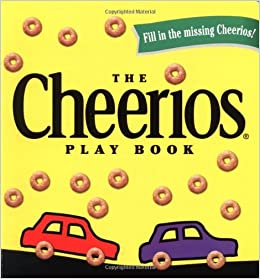
But when I learned that he was part of the marketing campaign for the 40th anniversary of Eloise, the launch of a line of kidlit books for Nickelodeon, and the development of the Cheerios board books, I knew he had to pop in to chat with us at OPB.
With that, let’s pour two cups of oolong, get comfy on some easy chairs, and have a chat with our new friend, Steven!

http://thechudneyagency.com/


RVC: What was the turning point that set you on the path to become a publishing professional? How early did that happen?

SC: Although I’m American born, I grew up and lived in Israel for 7 years as a young boy and teenager. I didn’t enjoy reading in Hebrew, and so I read a ton of British books for kids, like all of those lovely and kitschy Enid Blyton books. Then, I got my first real job working in a small English used bookstore in our town, Andy’s Books. Tons of paperbacks. I was about 12, before my bar mitzvah! That’s when I discovered Agatha Christie mysteries. I loved working in the bookstore and felt so lucky to be surrounded by books. To this day the scent of old books is quite intoxicating.

RVC: That helps explain how you went on to hold a number of different jobs in the book world (sales, marketing, licensing, and sub-​rights positions at Viking Penguin; Farrar, Straus & Giroux; Dell; Simon & Schuster, and Winslow Press). How has that range of experience positioned you to be a successful literary agent?

SC: It seems cumulatively I had the perfect background to become an agent. Every one of those positions offered me experience needed in my present job: how to negotiate, how to review a contract, how to think about a manuscript in terms of future marketing and sales potential. When I worked at Winslow Press (now defunct) I handled sub rights for the small list there and was lucky that they sent me to the Bologna Bookfair–so that was wonderful, of course, but it really opened up my eyes to the international scope of children’s books and introduced me to many foreign children’s publishers.

RVC: It must’ve been a real treat, then, being able to work on such big brands like Eloise and the Cheerios board books?

SC: It taught me the power of the brand, and specifically for an evergreen or legacy brand. Everyone knew Eloise, of course, and it was our responsibility to keep the book in the forefront of booksellers minds, so the 40th anniversary was a perfect opportunity to create more awareness and to increase sales.

Cheerios was very different. It’s not a literary brand, of course, but it was such a known commodity, a top brand–especially with mothers/​caregivers and snacking toddlers. At this point in my career, I was the director of licensing and product development at Simon & Schuster. I was charged with bringing in all kinds of licenses to see how they could be leveraged and made into books for children.

I kid you not, this is how it happened: I had read an article about the pincer grasp, which is a big milestone for toddlers in their fine motor development. So I was food shopping, rolling down the cereal aisle, probably thinking about work as one does, and I stopped to let a mother and her kid pass–their cart had 3 boxes of Cheerios in it. Somehow my brain made a connection with the article I had read and this cereal brand–and I knew I wanted to do Cheerios toddler board books. Back in the office I presented the brand and described that the board book pages needed to be thick so that a toddler could insert a Cheerio piece in a round indentation. Voila! The perfect book to help a toddler with their pincer grasp.

RVC: Wow. That’s an amazing story.

SC: I went on to negotiate the license with General Mills, though I eventually left S&S. By that time, I think there were three Cheerios books that had sold millions of copies. A shoutout to Lee Wade who was the art director at the time at S&S (she now has her own imprint at Random House). She designed and gave birth to all the books.

RVC: Since we’re talking about giving birth here…let’s move ahead to chat about you forming The Chudney Agency in 2002.

SC: I actually became an agent because I was in between jobs. I had foolishly quit a position without having anything else lined up (I did say it was foolish), and then September 11th happened and all of New York froze. For months…no jobs opened up, nothing. I needed to do something and it was suggested to me that I be an agent–and that’s exactly what I did.

I must say here I couldn’t have done any of this without the tremendous support of Ralph, my beloved partner when I founded the agency, who is now my husband. I literally would have been homeless had I tried to do this totally on my own. He was totally onboard and behind me from day one.

RVC: What would you have done differently, knowing what you know now?

SC: If I had to do it all over again, I would have tried to get a position with an agency to really learn the ropes. Doing it alone was a bit daunting, but I muddled through it. Getting clients was the easiest: if you were the new agent in town, at least back then, one would be bombarded with authors and illustrators looking for representation.

RVC: What was the biggest surprise? 

SC: The biggest surprise was that I couldn’t sell everything I sent out on submission. I thought I could do poetry, picture books, novels, nonfiction–the sky was the limit! But that wasn’t the case. It took me a couple of years to find my groove and understand where my strengths lay within kidlit.

RVC: Indeed, your agency website says you specialize in “the wonderful world of books for children and teens.” What is it about kidlit that interests you?

SC: I actually began my career selling mostly adult books and eventually became a children’s specialist. I was drawn to the artistic side of children’s books–all that art!–and the many school and library conferences for kids books allowed me not only to travel around the country, but  also to meet teachers and librarians firsthand. It was a great way to learn more about their jobs and their young readers. I really felt part of the process.

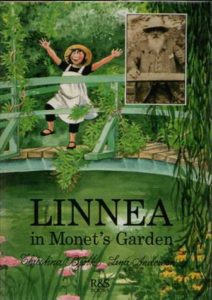
I secretly also felt that the people in children’s books were nicer. But it was when I was at Farrar Straus & Giroux over 2 decades ago that I first enjoyed a marketing promotion success which lead me forward in my career: then I did both sales and marketing. FSG then distributed a small press that had the lovely Linnea in Monet’s Garden book–a backlist staple for FSG for years. A big anniversary was coming up and I proposed we do a promotion to increase sales. I don’t remember all the details, but we designed and printed a cardboard easel-​backed cutout figurine of Linnea that bookstores could get for free if they ordered a certain amount of copies of the book. Probably 5–8 copies, I imagine, with maybe a little extra discount. It worked, and sales bloomed for Linnea in Monet’s Garden. That cutout figurine remained in stores for years and years.

RVC: You’ve said that you really enjoy the “beginning of the process,” which I take to mean reading submissions and discovering new talent. What do you find so appealing? 

SC: It’s discovering new talent that excites me a lot, the proverbial diamond in the rough–reading something that is really good, if not wonderful–and realizing there’s something here, that once revised and polished, there may be an audience for the piece down the road once it’s ready for submission.

Since we’re talking about the beginning of the process, I also like bringing ideas to my authors. For example, I suggested that Alice McGinty write The Water Lady, forthcoming from Anne Schwartz Books/​Random House, after seeing a heartbreaking and astonishing news segment about the lack of running water on Navajo reservations. I had read Marcel Marceau’s obituary and learned he had survived the Holocaust–perfect for a picture book biography by Leda Schubert, Monsieur Marceau: Actor Without Words. And author Elisa Boxer took my idea of a picture book bio about Nancy Pelosi and ran with it–this is due with Crown /​ Random House in 2021.

RVC: Those books sound terrific. But let’s talk about the submission process a bit. Pretend “Joe Smith” sent you one and it’s now at the top of your to-​read stack. What are three things you might find in Joe’s manuscript that get you excited?

SC: At the moment, I’m only looking for author/​illustrator projects–that is, text and art from one individual–so let’s use that as an example.

First, I must like and relate to the art. This is entirely subjective and can be frustrating for authors when I reject a submission. Believe me, this happens to me with editors all the time, so I totally get it. Luckily I do like a variety of art styles. I have to love the story, feel there’s something worth telling and that it has value of some sort to the general consumer, but especially to editors and publishers. Is it fresh and maybe unusual? Is it a new take on a classic issue for kids? Is it a perfect blend of story and art? And then, does it have some kind of hook or sales handle that an editor can use to get the project through the acquisition process?

Besides loving the art, of course, here are some more tidbits.

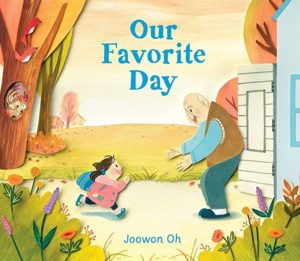
What I loved about Joowon Oh’s Our Favorite Day story was that it was intergenerational: about how a grandfather couldn’t wait for his granddaughter to come for a visit. That Joowon and the characters are Korean added another element–and the dumplings didn’t hurt the story!

Jacob Grant’s Bear books with Bloomsbury are so wonderfully simple and humorous, yet their plots all relate to things that any toddler goes through in life. All those fears and issues!

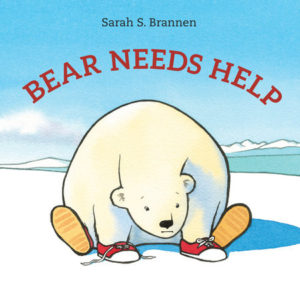
Sarah Brannen’s two picture books with Philomel, Bear Needs Help and A Perfect Day, have very brief texts, but deliver colorful, beautiful art. Each book has a clever, wry twist, as well.

Julie Fortenberry’s forthcoming Darcy’s First Sleepover (Christy Ottaviano Books) and Pearl goes to Preschool (Candlewick), both offer wonderful art and also little kid issues told in a comforting and very appealing manner.

RVC: Beyond the obvious things—typos, preachiness, and length issues—what are some of the common reasons you say no to a manuscript?

SC: If the art doesn’t appeal to me, then I’ll pass on the project, of course. A lot of the art I pass on feels too amateurish and wouldn’t pass muster with my editors, I’m afraid. But then I look at some art in books from major houses that looks like my four-​year-​old nephew could’ve done it–and I sit back and simply wonder at that!  If a story feels derivative, if it’s too similar to others out there, or ones I’ve seen, then I’ll pass on it. I’m not a big fan of alliterative stories, or of rhymed texts–unless superbly done.

RVC: What’s a typical workday like for you?

SC: This is pre-​pandemic: I’m up early, and already reading manuscripts in bed. One of us walks the dog, and then I’m at my desk at 7:00am eating breakfast and reviewing overnight emails–my foreign rights agency is based in London, so I’m always hopeful some good news might have come in about a book. A finalized deal from Italy, an offer from Poland, interest from the UK about a novel? I delete all the crappy emails that come in…and then it’s on to the rest of the work day stuff.

As I work totally alone (a true sole proprietor!), I don’t have partners, other agents, or an assistant. I do everything here. All day long I’m responding to a variety of emails from clients and editors and other agents, reading queries (up to 10 to 15 a day). I’m following up with authors on their projects, cajoling some of them to write something new, reviewing a picture book text for the 8th time to see if it works, does it flow well, is it as strong as it can be for submission – does it need one more round? If there’s art involved, is the text laid out well and is it readable? Does the character look the same throughout the pdf?

Many times I send the author an email full of notes about their project, and then we hop on the phone for a conversation to make sure we’re both happy and on the same page. I break for lunch for an hour–and I do a lot of reading of manuscripts, especially novels. After lunch it’s maybe walking the dog again and then back to the computer. The afternoon is filled with much of the same, though I may need to run to the post office or the bank. By 4:00pm, I’m slowing down a bit, and by 4:30 until dinner time, I can be found reading manuscripts in the sunroom. No work until bedtime, when you’ll find me reading manuscripts in bed–or a non-​client novel for pure pleasure, if I’m lucky.

RVC: Can we take one of your books as a case study in how the process works? How about Joowon Oh’s 2019 Our Favorite Day, which earned a starred review from School Library Journal and Publishers Weekly?

SC: I met Joowon in August 2016. She’s from Korea and was living in New York when she submitted two pdfs to me. I was very much drawn to her art style, I loved the mixed media and her vibrant colors. I passed on one story, yet I told her the other one–then called The Gifthad potential, but needed work. And it did. The story was about a grandfather waiting for a visit from his granddaughter–totally sweet. She wanted some more revision details from me, which I provided, and we decided then to meet in the city for a coffee. Things went well, and I made her an offer of representation, which she accepted. Then we got to work on the text and story, as well as some things in the art.

Once the pdf was ready to go, the submission process began. Our first submission was an exclusive in November. The editor passed on it, so then I did a multiple submission round in December. And another one in January, and another one in March, which finally generated some interest from Candlewick! But then that editor was leaving and she passed it on to another editor there. The new editor, Kate Fletcher, loved it and eventually made an offer, which we negotiated and accepted.

Kate did a beautiful job working with Joowon on this story–it’s ostensibly the same story, but so much better. The title was changed to Our Favorite Day, and it published in September 2019 to lots of wonderful critical acclaim.

RVC: You’ve been closed to submissions for some time, but you’re open again now (June 2020). What are a few things you’re NOT really looking for in picture books at the moment?

SC: Yes, it’s been a tough several months for my family: we lost an aunt to cancer and I was her primary caretaker–it took up a lot of time, both literally and emotionally, and so I needed to close for new submissions for a while.

RVC: I’m so sorry to hear that, but I’m sure that writers and illustrators seeking representation understand.

SC: I’m open now to author/​illustrator submissions only. I want kid-​friendly, mostly character-​driven stories of any kind. A touch of humor always helps! But, first and foremost, I’m looking for stories that a child would pick up and want read to them (again and again)–not one where the appeal is more for the adult.

I’m also open to fun and or unusual nonfiction in picture books, too. If it has an anniversary tie-​in of any type, even better.

RVC: Just to be clear, you’re NOT looking for writers unless they also do their own art.

SC: That’s right. I’m not open to text-​only projects. Sorry, but I have enough clients writing those.

RVC: Now, it’s time for the long-​awaited, always-​appreciated, rarely equaled OPB SPEED ROUND! Zoomy questions and zippy answers, please. Ready?

SC: Let’s do it!

RVC: Best bakery in New York City?

SC: We love Breads Bakery down near Union Square, although there are other locations. You must try their chocolate babka!

RVC: If The Chudney Agency were ice cream, what flavor would it be?

SC: Italian pistachio gelato.

RVC: Your dream picture book project?

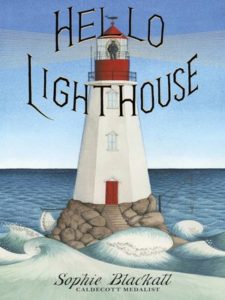
SC: Gosh, there are so many. Hello Lighthouse by Sophie Blackall. Martin Rising: Requiem for a King by Andrea Davis and Brian Pinkney. There are too many, so I’ll stop here.

RVC: Favorite picture book from childhood?

SC: Bread and Jam for Francis.

RVC: Favorite line from a Chudney-​repped picture book?

SC: “I don’t need pants to party” from Jacob Grant’s forthcoming book, No Pants!, Viking, 2021

RVC: Way to end strong, Steven. Thanks so much!

Agent Interview: Jennifer Unter (The Unter Agency)

I had genuine worry that the COVID-​19 situation would understandably keep the OPB blog from continuing with the every-​Monday posts we’ve managed since we launched in April 2018. I’m incredibly stoked that we’re able to keep on trucking thanks to the generosity of literary agent Jennifer Unter who agreed to be this month’s Industry Insider Interviewee. What luck!

Here are three things you need to know about Jennifer before we get rolling.

  1. She has her own literary agency.
  2. She has her own literary agency.
  3. She has her own literary agency.

Let’s be clear about something. Jennifer has plenty of other selling points that make her an agent any writer would be ecstatic to partner with, but here’s what I’ve come to realize over the years—if you can launch your own agency and keep it up for more than a decade, you’re doing not just one thing but a BUNCH of things well. Let’s find out what those are!

Agency Website: www.theunteragency.com

Twitter: https://twitter.com/JenniferUnter


RVC: There’s no way to interview anyone right now without asking this question—how has the COVID-​19 virus affected your work?

JU: It’s so hard to tell at this point. In the present moment, many editors are asking me to re-​pitch them with projects in June since they’re so overwhelmed with working from home (with kids and other issues) that they aren’t buying anything. A few of my books have been pushed back to 2021, but some are going forward as planned, so we’ll see how that works. I’ve been trying to support my authors whose books are out now with new ways to publicize–online storytime and the like. Publishing is a real community, so everyone is trying to help everyone else out and we’re all just getting used to the new (temporary) normal.

RVC: Thanks for that honest update. I get a lot of questions from students, colleagues, and writing friends about what’s going on in the writing world. We’re all sort of holding out collective breath.

JU: Holding our breath and taking very deep breaths at the same time, if that’s possible!

RVC: Exactly so! Let’s circle back to the beginning. At what point did you know you were going to work in the writing world?

JU: I knew when I was in college that I wanted to work with writing in some way. I was an English major and my favorite thing was to read books, so I figured that working in publishing would be an extension of that!

RVC: How did you land that first editorial job at Henry Holt & Co.? And what was the most valuable lesson you took from that experience?

JU: I went to the publishing course at NYU the summer after I graduated college and the editorial assistant job at Henry Holt was on the job board, so I applied and, luckily, I got it. My boss, Allen Peacock, was a brilliant editor, and he taught me to trust my instincts and to have passion for every project. Every book is at least 2 years of work and if you don’t completely love it from the get go, you’re going to fall out of love pretty quickly when you have to read it for the 4th time.

RVC: While you’re not a copyright lawyer, you did attend Fordham University School of Law, and you spent some years at an entertainment firm, so I’m guessing you have better-​than-​average insight into this. What’s the most common misconception that writers (and maybe some agents and editors) have about contracts in general, and/​or copyright? 

JU: Many people believe that contracts are ironclad or can’t be negotiated, but that’s not the case. In addition, contracts can be difficult to read or make sense of–that’s what I focused on as a transactional entertainment attorney. After reading many hundreds, they become much clearer!

RVC: Is there one part of them that most early-​career authors don’t appreciate or think though? I guess I’m thinking about what a genius move George Lucas made way back when to keep the merchandising rights (and sequel rights!) to the Star Wars franchise. Any recommendations for contract parts to read with extra-​care and attention?

JU: Definitely the competition clause. A contract should never prohibit a writer from doing their job, which is being a writer! A contract that doesn’t allow a writer to publish other things–whether it’s another book, an article, or anything that isn’t very similar to the work that is the subject of the contract–is going overboard and should be negotiated so that it’s fair to the writer.

RVC: Great advice there for sure! Now let’s talk about the decision to create The Unter Agency, LLC in 2008. 

JU: I knew I wanted to work for myself for a long time, but it’s hard to find the right moment. I had two young kids at home, and I wanted to do something that was for me. I felt like if I didn’t go for it then, I was never going to do it.

RVC: What was your first sale?

JU: David Gumpert’s Raw Milk Revolution to Chelsea Green Publishing.

RVC: Unlike some kidlit agents, you also represent a host of other areas—food/cooking, nature/​environment, biography/​memoir, pop culture, travel/​adventure, true crime, politics, and health/​fitness. What percentage of the books your rep are kidlit in general? And picture books in specific?

JU: I would say that 60–70% of my list is kidlit. And out of that 60%, probably ½ is picture books.

RVC: What do you like most about picture books?

JU: I love the whimsy and the truth of picture books. They are our emotions, distilled down to 32 pages.

RVC: What picture book project at your agency—at whatever stage it’s in—are you most excited about?

JU: That is not really a fair question, since I love them all! But, I think for this current moment, a picture book that just came out entitled Krit Dreams of Dragon Fruit by Emily France and Natalie Becher–which is about weathering change–is perfect for kids right now.

RVC: Okay, it’s time for another installment of the World’s Greatest Picture Book Blog Speed Round™(ish)! Jennifer, are you ready? 

JU: Ready, willing, and able!

RVC: Since your agency’s office is a half-​block from Central Park…“The strangest thing I’ve seen at Central Park was…”

JU: A clown with a pet snake.

RVC: Best-​yet-​somehow-​underappreciated indie bookstore in NYC?

JU: I think because there are so few of them, no bookstores in NYC feel underappreciated, but my favorite at the moment is The Corner Bookstore on the Upper East Side.

RVC: If picture books were comfort food, what would they be?

JU: Eggplant lasagna.

RVC: Top attributes of your top clients?

JU: Their dedication to their craft and their desire to bring joy to their readers.

RVC: Best non-​Unter-​repped picture book of 2019?

JU: Magic Ramen by Andrea Wang.

RVC: What’s the secret sauce of YOUR success?

JU: I work all the time! And, I love what I do.

RVC: Thanks so much, Jennifer!


Editor Interview: Christy Ottaviano (Christy Ottaviano Books/​Macmillan)

This month’s Editor Interview is with publisher Christy Ottaviano, who runs a boutique imprint at Henry Holt and Company/​Macmillan that specializes in making children’s books that “encourage imagination and free-​thinking, foster a sense of family and community, target the feelings of children, and speak directly to young people’s interest as they explore various milestones.”

If that’s not reason enough to get her onboard for an Industry Insider interview @ OPB, then try these three facts.

  1. She’s edited a handful of New York Times bestsellers.
  2. She’s edited books that have won the National Book Award, the Ezra Jack Keats Award, the E.B. White Award, and the Coretta Scott King Award, among others.
  3. She has graduate degrees in English and American Literature (Boston College) and Education (Columbia University).

Clearly Macmillan knows what she brings to the table because Christy’s been working for them since 1992! In a publishing world where the only constant seems to be change and transition, that’s a fact that’s nearly impossible to believe. But read on, OPB fans, to find out for yourself what Christy’s secret to success might be.


RVC: Let’s start with a question I’ve never asked before. How did it feel the moment you realized you were going to have your own named imprint at a major publishing house? I’m going to guess that the primary emotion back in 2008 when Christy Ottaviano Books was formed might’ve been…WAHOOO!!!! Am I close?

CO: Haha. Yes, it was a great day. I remember making a conscious decision not to call my partner Kevin with the good news as I wanted to share it in person. I have a long commute, and that night when Kevin picked me up from the train station, I opened the car door, saw my three kids smiling from the backseat (they were very young at the time), and happily jumped in and shared the news. My kids, of course, had no idea what any of it meant but it was a special moment to share with my family.

RVC: When Publisher’s Weekly announced the new imprint, they said it’s going to be 50% picture books, 45% MG and YA, and 5% nonfiction. What’s the ratio look like today? Is there a percentage commitment to certain areas, or is it all about what comes across the transom?

CO: Over the years, I have shifted a bit in some genres. I would say my list is about 45% picture books, 45% middle grade, and 10% YA. I definitely publish more nonfiction these days in both the picture book and middle grade genres–probably by at least 25%. I love nonfiction so this has been a natural step especially now with the market embracing nonfiction much more due to the educational emphasis on STEM.

RVC: Let’s back up a moment to the start of your career. From your college degrees (English/​American lit, a French minor, and Education credentials), it seems like you had a different career path in mind. What happened? When did the kidlit bug get you?

CO: I think my career path organically led me to where I am. I always loved reading and writing, and graduated college with an English degree. I went on to pursue a graduate degree in literature with the plan to become a college professor. After getting my master’s in English and American Literature, I taught high school for a year and realized how much I loved teaching creative writing. Around that time I was taking some children’s literature classes at Simmons College and heard an editor speak about her career. Her job’s requirements as an editor seemed like a perfect match for my skills and interests, so I enrolled in a publishing program at Radcliffe College and got my first job in publishing working as an editorial assistant at Henry Holt. But I wasn’t entirely sure it would work out given the competition in the field, so for many years, I took classes after work and obtained a second master’s degree from Teachers College with a plan B to return to education, just in case.

Ironically, this plan proved incredibly formative as I took classes in writing, children’s literature, art history, and painting. All the years I spent in graduate school evaluating text and art definitely helped me grow as an editor. And I credit Macmillan for supporting me in my ascent from editorial assistant to Publisher of my own imprint.

RVC: Why picture books? What about them appeals to you so much?

CO: From an early age, first impressions about story and art are formed by way of this inspiring genre. Picture books are the gateway to reading for young children. It’s a powerful art form and one I feel transcends age as picture book readers tend to be readers for life. It’s a format that I feel can perfectly encapsulate a feeling, a moment, a subject, a place and time.

As cliché as it may sound, picture books have a true magic about them.

RVC: If someone were going to read three of your titles to get a good handle on your picture book sensibility, what three would you recommend?

CO: Arnie the Doughnut by Laurie Keller, Same, Same But Different by Jenny Sue Kostecki-​Shaw, and Counting on Katherine: How Katherine Johnson Saved Apollo 13 by Helaine Becker, illustrated by Dow Phumiruk.

RVC: One of the things I see in your imprint’s lineup is a strong sense of diversity of character, theme, and style–and that’s not even taking account Arnie and his awesome donut-ness. 

How do you handle when someone’s writing outside of their own direct experiences? 

CO: That’s a difficult question to answer because the circumstances differ for each author and with each book. Using sensitivity readers and outside experts has been an important part of my process from the beginning of my career. But also vitally important–I’ve worked hard over the years to develop an aesthetic sense of what makes effective writing and what makes effective art. I use that sense to help me determine if I want to publish a book and how to work with an author in the revision process. As an editor, I bring both an intense closeness to the text as well as a bit of distance, which is crucial. The idea is to enable the author or artist’s work to shine in its best light.

RVC: Something people don’t typically appreciate about the role of an editor is how much research they have to do. How much digging-​around time do you put into a new author or manuscript?

CO: Ah, this is the fun part. As mentioned, I publish a good deal of nonfiction, and whenever I’m considering a subject–either pitching it to an author or responding to a submission–I love fully immersing myself in the material to learn as much as I can before I bring the project to the acquisition board. I’m an information junkie and I’m eager to soak up as much as I can on a particular subject. I may not always be up on the newest Netflix shows, but I think I make up for that by reading widely across sources–newspapers, magazines, newsletters, and, of course books. I’m always reading books. Usually two at a time.

RVC: In all of your experience in kidlit publishing, what has surprised you the most?

CO: The talent of writers and artists. I never get tired of reading wonderful words and looking at beautiful images. The talent keeps us all fresh and young and on our toes.

RVC: What’s a current picture book project that’s got you super jazzed?

CO: Ethan Long’s Hello, Worldthe first book in the Happy County series. This is a modern day Richard Scarry-inspired world full of early childhood content that speaks directly to preschoolers. Ethan is a hugely talented storyteller and artist who is also naturally funny. He taps into a child’s mind as he explores many milestone concepts for this age range.

On a personal note, Richard Scarry was my co-​pilot when my children were young–his books were able to appeal to all three of my kids when they were between the ages of 1 and 6. Whenever we traveled on vacation I would bring a Busy Book as it would keep all three kids content. Ethan Long’s Hello, World is off to a great start with starred reviews, and we have three more in the pipeline with a plan to publish two a year.

RVC: Richard Scarry was a big hit in my family’s reading repertoire, too. If Ethan’s on that same track, sign me up as a fan.

Okay, this next bit comes with a warning. What’s coming next might just be the most important thing you’ve been asked all week. With that in mind…what’s the update on your beloved 1950s red pool chair from the Flatiron Building? Is retirement on your porch all it dreamed it’d be?

CO: I’m sorry to say it’s still sitting in my sister’s NYC apartment. I brought it there by way of a cab (tight fit!) back in May and I still haven’t gotten myself over to pick it up and drive it back to Connecticut where I live. There is a spot waiting for it on our porch so I need to get on that.

Thanks for the reminder, Ryan!

RVC: Let’s shift gears and jump into the final part of the interview—THE SPEED ROUND! Pithy questions and zip-​zappy answers, please. Are you ready?

CO: Bring it on.

RVC: Worst day ever—no social media, no TV, or no books?

CO: Being far away from my family. But, if I’m limited to the choices above—it would be no reading material. When my boys were younger and adored LEGO, they used to say that if I was a mini fig, my accessories would be a cup of tea in one hand and a manuscript or a book in the other. I think that’s pretty accurate.

RVC: If your literary mascot was from the world of picture books, which would it be?

CO: Harry the Dirty Dog.

RVC: Weirdest job you ever had?

CO: I’m a collector and love affordable antiques and flea market finds. In grad school, I got a job working at the Cambridge Antique Market and loved getting to know all of the dealers. It was intriguing to see the different pieces that came in– such a selection of offbeat finds–everything from Bakelite jewelry from the 1930s to old board games of the 1970s like Clue and Operation, to vintage books, which I love and collect. It was a weird job in the best of ways as I never knew what a day at the market would bring in terms of what pieces would come in–a bit like “Antiques Roadshow.” We would have a lot of fun researching the find, and this was before Google so we had to do lots of digging. I loved it all.

RVC: Coolest picture book from the past year (not published by Macmillan)?

CO: Selina Alko’s picture book on Joni Mitchell. I love picture book biographies and publish widely in this genre. I also love music (who doesn’t?!) and Joni is someone whom I have read a lot about; she’s a fascinating subject. Selina spoke with me a bit about this project as she was working on it as we also publish books together. I’m eager to get my hands on a copy. The jacket is stunning.

RVC: If you could change one thing about the world of picture books, what would it be?

CO: I’d like to get picture books into the hands of more readers especially those with limited access.

RVC: Sum up your picture book philosophy in five words or fewer. 

CO: Books that make children grow, think imaginatively, and outside the box. Sorry, Ryan–that was double your word count!

RVC: That’s okay–it was worth it. Thanks so much, Christy!

Editor Interview: Andrea Spooner (Little, Brown Books for Young Readers)

It’s with great pleasure that I introduce Andrea Spooner, this month’s Industry Interview subject. Andrea’s the Vice President and Editorial Director of Picture Books at Little, Brown Books for Young Readers (LBYR). When I realized her imprint won a Caldecott Medal three years in a row, I knew I needed to find out a bit more about what kind of picture book magic they were cooking up there.

Here’s a bit about her. After joining LBYR in 2003, she’s worked with an amazing list of authors, including:

She’s also edited dozens of James Patterson’s books. What impresses me most of all, though, is how the people she works with rave about her. Consider this endorsement, from writer Crescent Dragonwagon: “Andrea took a lot of time finding just the right artist, and she is taking a lot of time working with him, and me. In 40 years of working with different publishers, I can remember no other children’s book editor who has ever involved me quite so much in the selection of the artists, and has engaged me so thoughtfully in discussing the pictures and my reactions to them.” And she adds that Andrea is “one of the most attentive and respectful editors I have ever had.”

Wow.

With that, let’s get on to the interview!


RVC: For some, working in the kidlit business seemed destined in the stars from the start. For others, it’s a curious accumulation of events that brought them to that future. Which was it for you? 

AS: Destined from the start! My mother was an artist and art historian, and my father was an English professor with a focus on writing short stories. I read voraciously and wrote prolifically as a child. The first long-​form story I wrote and illustrated, at age six, was called The Girl Who Hated School, followed up by an “illustrated novel” called Nancy and the U.F.O.! So, I always wanted to make books. I loved the interaction of picture and word… and nothing ever moved me like the books I read as a kid. I even wrote my college application essays about the Nancy Drew series as well as my favorite book of all time, Freaky Friday by Mary Rodgers. I guess it was a clear sign I took kidlit seriously from the beginning.

RVC: My kids wore out the DVD version of Freaky Friday with Jamie Lee Curtis, Mark Harmon, and Lindsay Lohan. But prior to that, I recall liking that book a great deal myself!

What were some of the key elements/​choices of your life that prepared you to be an editor?

AS: The most significant choice leading me toward my career might have been the day in seventh grade when I decided to join Yearbook Club, even though I was told it was only for eighth graders. Turns out just showing up with genuine commitment was more important than my age, and before the year was out I was editor-in-chief.

RVC: As former Prime Minister Benjamin Disraeli famously said, “History is made by those who show up.”

AS: Editing the yearbook took over my life all the way through college. And perhaps choosing to go to Smith College, known for breeding kidlit folk, prepared me for this editing life! At Smith, I was a studio art major and writing minor, and there’s nothing quite like all those group critique sessions to prepare you for the task of gently sharing feedback.

RVC: Let’s talk recent picture book projects. What’s on the docket for 2020 that has you excited?

AS: Oh dear, it’s like you’re asking a mother to talk about her favorite child—it’s inherent betrayal not to speak of all of my books! I’m asking the universe to forgive me in advance for not mentioning the entire LBYR picture book list. But I don’t think anyone would begrudge me for sharing my intense excitement for Jerry Pinkney’s next brilliantly-​illustrated retelling! It’s The Little Mermaidand it’s the first major picture book version that reinvents the story as a friendship story instead of a romance, and that features a cast of mermaids with brown skin. It also leaves readers with the critical message that you should never give up your voice for anything. I think it has potential to become the most definitive contemporary reimagining of the story.

RVC: With books like that coming out from LBYR, I get a real sense why you’ve got that incredibly impressive 3‑peat of Caldecotts going. But I’ll ask anyway–to what do you attribute that streak of success?

AS: Do you mean when LBYR won a Medal three years in a row in 2015–2017? Or… do you mean last year in 2019 when we took three out of the five stickers?

Okay, okay, I don’t mean to sound smug, but yeah, we’re kind of proud of the track record. What I’m most proud of is that these stickers are on books with many different artists and editors and art directors. There’s not just one superstar on the list. It’s really about strong teamwork, I think. There are a lot of eyes on the project, from acquisition through creative development, and everyone on the team is very invested from day one. We also have a fantastic school & library division making sure the books get in front of all the right people at the right time.

RVC: Speaking of 3s, you personally edited three Caldecott winners as well. Coincidence?

AS: I’m exceptionally lucky! It helps when you’re working with bona-​fide geniuses like Jerry Pinkney, Patrick McDonnell, and Oge Mora, who all have pretty powerful and sophisticated creative muses. And I wouldn’t be working with them if it weren’t for the intercession of my former mentor David Reuther, former LBYR editor Amy Lin, and art director Sasha Illingworth, so I can’t take credit for actually discovering this incredible talent.

If I ever make a difference in elevating work to a sticker-​worthy level, it’s likely derived from my willingness to question a choice that’s being made and to push the author or artist to justify it, even the seasoned people. But I’m also willing to step back and let the artist’s muse be the voice in charge. The trick is figuring out when the time is right for each!

RVC: I was pleasantly surprised to find that you edited one of my fav picture books of 2018, Thank You, Omu! How did that project come into being?

AS: It’s such a happy story! One of our art directors, Sasha Illingworth, was providing critiques at the Rhode Island School of Design in a picture book-​making class, and she came back recommending that editors take a look at several of the students’ final projects, which really impressed her. Oge’s project, Omu’s Stew, was at the top. It was clear from the start that Oge had a remarkable handle on the totality of what makes a great picture book, and that it came naturally to her. We offered her a two-​book deal while she was still a senior in college.

RVC: That’s an inspiring story for sure! What’s it like working with such an early-​career talent? What kind of different considerations do you have with them versus, say, working with a mid-​career or senior-​level creative?

AS: I think the way I work is mostly unrelated to how long the creator has been in the business. Of course, with debut talent I try to make sure that I take more time to explain the stages of the publishing process, and the vocabulary and quirks of it. Ultimately, though, each creator has individual needs that aren’t related to where in their career they are. I first try to get a sense of what their goals for the project are, figure out what makes their creative heart ticks, and learn what kind of managing or mentorship they need to generate their best work. Sometimes that involves trial and error, for sure. For me, with a new author it can take longer to figure out the key to a smooth creative process. After I’ve worked with someone once or twice, it’s easier to keep the author or artist happily engaged, productive, and open to feedback.

RVC: You’ve talked about how one of the many tasks of an editor is to improve the read-​aloud experience. What are some specific ways that can happen?

AS: We start by reading that manuscript aloud. Authors can do this too as they write and self-​edit. If you find yourself tripping on certain word/​sound combinations or sentences, rewrite it or cut it. Better yet, have a few others read the manuscript aloud and flag any patterns of stumbling. Reading the text aloud also gives you a sense of where the pacing feels too slow. Sometimes I find myself looking forward to the end of a sentence, paragraph, or page. That might be the sign of an area that can be tightened. I want to feel like I’m relishing each word.

RVC: With my fav picture books, that’s exactly it. “Relishing each word.”

AS: And, of course, we think about the page turns—they’re an essential part of the read-​aloud experience. Those dramatic pauses should be intentionally placed. They propel you through the narrative, and can leave you with an underlying question about what’s going to happen next. I always start editing by paginating a text, since helps me focus on the read-​aloud experience.

RVC: At LBYR acquisitions meetings, are picture book manuscripts actually read aloud? Does everyone have a copy in front of them, too?

AS: Reading the book aloud would be part of my fantasy vision of an acquisitions meeting—I’d love to know if any houses actually do that! But, it’s essential that everyone reads and thinks about acquisitions materials ahead of time; there would rarely be time to perform the books live in such meeting. At LBYR, editorial directors for each genre under consideration are expected to have vetted the manuscript for its viability prior to putting it on the agenda. And sometimes, read-​aloud quality emerges later in the editing and polishing process. So, the manuscript might not even have a perfect “mouthfeel” at acquisitions stage, but it has enough other exciting qualities to motivate us to make an offer.

RVC: So much of the submission process is a matchmaking game that can feel like blind luck, at times. Let’s help some people out here. What are a few likes/​dislikes of yours in terms of themes, subjects, and/​or styles?

AS: As an editorial director, I’ve trained myself to look beyond my own personal likes and dislikes when considering if a project is right for the LBYR list. We need a diverse portfolio in all respects in order to survive and thrive. As an example, I used to say “don’t send me lovey-​dovey books”, but nowadays, I’m totally open to them. I’m better able to look beyond the genre and think “are there audiences out there that like this and want this? Is the market for this kind of thing underserved, or do we have a gap on our list for it?” Some people might say it’s freeing to get to the point in your career when you’re at liberty to only work on the books you personally adore. For me it’s been the opposite–it’s actually been really freeing to embrace things I wouldn’t have necessarily purchased for my own collection.

Is that a cop-​out answer?

RVC: Well…

AS: Okay, okay, I’ll give you this much: For personal projects, right now I’m dreaming of silly-​but-​smart stories that scratch the itch we all have to laugh more in our increasingly troubled world. I tend to be drawn to absurdist humor. Science and nature/​environmental themes often resonate with me. I’m also keen on books that address important moments of child development, and I’m currently seeking more stories that feature differently-​abled characters from authentic perspectives. I’m also always looking for substantive stories with strong voice, re-​readability, and emotional resonance. For art, I look for work with a “signature style.” Once a style becomes trendy and ubiquitous, I’m less stimulated by it.

RVC: Beyond any issue of theme, subject, or style, what are your submission pet peeves?

AS: Manuscripts accompanied by an eternally long pitches and story summaries that are longer than the story itself. Give me one really strong paragraph about the market viability and comparative titles, and if there’s an interesting backstory to the story or connection to the author’s life, that can be another tight paragraph. Also, if we want to get petty for a moment, I’m put off by manuscripts that are single-spaced!

RVC: I’m so glad you said that. I’ve been telling students for years to keep on double-​spacing their submissions, and I’m not sure they believe me. Now I have proof!

AS: By the way, including art notes in a picture book text is absolutely not a pet peeve of mine. So many picture book writers have been told not to do this. But to me, I like to know that a writer has a sense of how visual storytelling impacts a narrative and how they intrinsically work together. A writer shouldn’t be wedded to their proposed vision, but they could convey it at pre-​acquisition for the sake of transparency, and sense. You have to remember that the non-​editorial folks like sales and marketing who are a part of the acquisition conversation may not have the same visual literacy or imagination as an author—and even the best editors aren’t capable of reading an author’s mind! But I am perfectly capable of removing art notes from a manuscript after acquisition if I think they’ll impede an artist’s own personal vision.

RVC: Lots of kidlit industry folks spend a lot of time on social media and their web presence. You seem less concerned about that. Is that a choice or the effects of being so busy with work that it’s on the perpetual back burner?

AS: Thanks for shooting that arrow right into my Achilles heel, Ryan!

RVC: Is it really an Achilles heel?

AS: Sometimes I think it is, but I have complicated feelings about it. I unequivocally admire with awe and wonder those many editors who consistently produce high-​quality books, manage robust lists, and maintain a vibrant social media presence. I’ll never be one of them, and it’s probably a personal failing of mine, but I have to embrace what I’m best at and make the most of it. We have a fantastic marketing department to publicize the authors and books. My “brand,” if I must have one in this day and age, is about what I do behind the curtains rather than what I’m saying on the public stage.

RVC: Let’s talk about that behind-​the-​curtains stuff.

AS: Here’s the thing: I spend or eleven or twelve hours a day largely in front of a screen. I don’t want to spend one minute more. This time and energy, for me, is best spent working for my authors, managing projects as seamlessly as possible, shaping the list and mentoring staff. I consider myself not just an editor, but a customer service representative—and I say that in all seriousness! My number one goal is for everyone, externally and internally, to feel like the process went off as smoothly as possible, and that we made a book we couldn’t have done better… without the benefit of hindsight, anyway.

I haven’t yet found a way to do all that and spend time sorting through the daily mess of social media and maintain my own polished social presence in a way that would meet my own standards. Frankly, I’m really not good at expressing any worthwhile thought in 140 characters or less, as you can see from this interview! There’s too much unnecessary chatter out there as it is. I see myself doing the world a service by not adding to it.

RVC: I typically keep my questions focused on picture books, but my kids LOVED the Patterson Middle School series, so I have to ask something about him. He’s so prolific that I’m inclined to ask how many James Pattersons there are! But I’ll assume there’s just one (unless you secretly tell me otherwise). 

Here’s an actual question about him, though–in all your experience in working with him, what has surprised you the most?

AS: That he is the real deal in every respect. He’s just one person, yes, who’s deeply connected to every book with his name on it—he’s not rubber-​stamping anything. There’s no team of people inventing the core stories; he drafts every single outline, and even the kids’ book outlines we worked on together were about 50 pages long, so there’s a lot of detail. He’s always at his desk working. Over the course of a dozen years of working together I could probably count on one hand times I called him that he didn’t pick up the phone. He’s genuinely passionate about writing, and promoting the pleasure and excitement of reading, which is what motivated his move into kids’ books. There’s nothing he’d rather being doing than writing. Except occasionally playing golf or watching a movie. I also learned a lot from Jim about the craft of commercial writing, especially when it comes to the emotional experience of reading. But those are trade secrets I can’t give away!

RVC: Alright, it’s time for the final part of the interview. The always-​surprising, often-​quippy, ever-​zippy LIGHTNING ROUND. Are you ready?

AS: Of course not! Have you not yet noticed that quips are not my specialty? Remember what I said about being able to say anything in 140 characters or less?

RVC: Don’t overthink it.

AS: That’s what my bosses always say on my performance reviews. Okay, let’s try it!

RVC: Star Trek, Star Wars, or Stargate?

AS: Star Trek! I mean… Leonard Nimoy, George Takei, Nichelle Nichols… and quantum teleportation!

RVC: Secret hobby you have that no one would suspect?

AS: Will anyone know what pysanka is?

RVC: Probably not. Let’s save them from having to Google it, though.

AS: It’s the art of making Ukranian Easter eggs with old-​world tools like a wooden/​metal stylus, beeswax, an open flame, and dyes. Mine are not anywhere near as good as what you see on Wikipedia.

RVC: What four picture book characters do you invite over for Sunday afternoon smoothies at the Spooner house? What’s your dream lineup?

AS: Well, if it’s Sunday afternoon in our little apartment, they’d have to be very well-​behaved! So I think Rosie Revere, Ada Twist, Sofia Valdez, and Iggy Peck would fit make for some very scintillating conversation. My other favorites are way too naughty.

RVC: Hardest venue to get a starred review?

AS: I can’t remember the last time I got a star from The Bulletin of the Center for Children’s Books. I don’t lose sleep over it.

RVC: Coolest non-​LBYR picture book of 2019?

AS: Hmmm, when it comes to “cool” I think the Melissas have it, for me—I’m debating between The Balcony by Melissa Castrillon and How to Read a Book by Kwame Alexander and Melissa Sweet. The art for both books just vibrates with energy, passion, and endless detail.

RVC: Three words that sum up your picture book philosophy.

AS: Aw, that’s just cruel. I am not a woman of brevity…

RVC: Give it a shot!

AS: Read. It. Again.

RVC: Thanks so much, Andrea! 

And for you artistic OPB fans out there, here’s a LBYR public service announcement. They’re starting their fourth year of the Emerging Artist Award. Their first winner just had their book published and it won a New York Times Best Illustrated Book of 2019 honor, so the future seems bright for these winners. Consider applying–perhaps you’ll soon be working with Andrea or one of her amazingly cool colleagues!

Agent Interview: Erin Murphy (Erin Murphy Literary Agency)

The first Industry Insider interview of 2020 is with Erin Murphy. She’s a fifth-​generation Arizona native now living in southern Maine where she’s President of the Erin Murphy Literary Agency (EMLA), the company she founded in 1999. “As founder of EMLA,” she notes, “I focus not just on publishing books, but on building careers—and creating a sense of community, as well.”

For those who like personal bio tidbits, Erin’s a fan of:

  • reading (of course!)
  • knitting
  • walking
  • kayaking
  • traveling
  • watching movies
  • and “figuring out How People Work”

If you want to do a little research of your own, here are some links to do some Erin Murphy/​EMLA sleuthing. But with that, it’s time for the interview!


RVC: Like many agents, you didn’t set out to become one. You started as an editor at a small children’s book imprint, right? How did you get from there to where you are now? 

EM: I was an editor of both adult and children’s books at a small, regional house that does not exist any longer. This was more than twenty years ago. It was right at the time that publishing houses were closing to slush and suddenly children’s writers needed agents—and there weren’t very many agents who did anything at all with children’s books at the time. (Listen to me! “Back in the olden days…”) I thought I’d be an editorial freelancer focusing on regional nonfiction or adults, but instead, I decided I should try my hand at agenting and focus on children’s books.

I had only worked with a couple of agents as an editor, so honestly, I didn’t have a solid impression of what agents could do. And I had never worked in publishing in New York, so I had no contacts there. I did, however, have a solid background in negotiating and reviewing contracts, as my publishing house had revised its contract during my tenure there, and the publishing law expert who did the revision trained me thoroughly. If it hadn’t been for that, I don’t think it would have occurred to me to try being an agent.

RVC: What is it about the children’s book industry that appeals to you? For those who don’t know, your agency specializes in that area.

EM: Three primary things:

  1. The work we do feels very important, because we’re not just making books, we’re making books for society’s youngest members, and therefore, we are shaping the next generation. Turning kids into readers is important, important work, and providing good and fun and interesting and moving books to hook them is a necessary part of that.
  2. The people in children’s publishing are generally incredibly nice. The competitive spirit isn’t as driving here, and there’s a sense of success for one book/​creator/​agent/​publisher being good for the whole industry.
  3. I can’t think of another job that would daily thrill my inner child so much!

RVC: How do you handle existing clients who suddenly want to branch out into writing, say, an adult thriller or a Malcolm-​Gladwell-​style cultural commentary book for adults?

EM: My colleague Ammi-​Joan Paquette generally says, “Bring it on!” when her clients do that, and she gets to work researching appropriate editors on the adult side of publishing. I, however, usually say “Uncle!” because I don’t have time to get to know a whole new set of editorial contacts from scratch. But there have also been times when a client thought their next project might be right for adults, and it turned out it actually worked better (or just as well) on the juvenile side.

RVC: What do you say to a prospective client who wonders why you’re located in southern Maine versus, say, the Flatiron building or in a loft on 27th Avenue in NYC? (Beyond the rent being WAY better in Maine, one assumes!)

EM: Whatever editor I need to reach is just a phone call or email away. I’m not a city gal; I’m happier, and more inspired, when I’m spending most of my time in the countryside. I’ve been doing this for more than twenty years while working far from Manhattan, and it seems to have worked out all right. But listen, especially while the industry is having important conversations about how we exclude a lot of people from becoming a part of the publishing industry because of the financial hurdle of living in NYC, I would hope that “lives in NYC” is not a primary requirement of authors seeking agents. My far-​flung colleagues deserve better.

RVC: Let’s talk about your agenting interests and style. Stop me if I’m way off base here, but in scrutinizing the authors/​books you rep, it SEEMS like you’re often taken by quieter subjects, styles, and themes. Is that fair? 

EM: I do think that’s fair, so long as it’s not all three at once. Something needs to make a book stand out and find its readership! Still, I do love being emotionally moved by a text’s subject, style, or themes—and emotion sometimes gets equated with quietness in literature. Take Deborah Underwood’s The Quiet Book as an obvious example. (I rep Deborah but signed her after The Quiet Book came out.) It has a very understated (and brilliant) writing style and the subject is literally quiet, but it taps into a universal feeling on every page. And it works so well because it’s not lacking for an obvious readership—what parent doesn’t want a book that inspires both conversation and quietness for bedtime reading?

Don’t get me wrong—I love fantasy and high stakes. I do represent Robin LaFeversHis Fair Assassins series, which pitches as “teenage Medieval assassin nuns,” after all—and in picture books, Shark vs. Train by Chris Barton jumps to mind as a non-​quiet book! (See its companion book Fire Truck vs. Dragon, releasing in March 2020.) I just think high stakes are equally valid when they are internal, especially for kids who are figuring out the world and their place in it, and I find that very compelling.

I also find it especially compelling when it concerns voices that have rarely been heard in U.S. children’s publishing. A quiet, emotional story sometimes paradoxically makes a wider window into a world that children of the dominant culture are unfamiliar with—and a more powerful mirror for the children who haven’t seen themselves in books before. (Credit to Rudine Sims Bishop for mirrors/​windows!) My client Andrea Wang was inspired by Bao Phi and Thi Bui’s A Different Pond to write a story from her own childhood, about being a daughter of immigrants, which is forthcoming from Neal Porter Books (with Jason Chin illustrating)—so A Different Pond’s effects will ripple through the new book (tentatively titled Watercress) and beyond. I recently signed Kao Kalia Yang, whose stories of the refugee experience are incredibly powerful and boundary-breaking—and also very simple and poetic.

RVC: You have a rep for being an editorial agent. What does that mean to you, and what are examples of the types of things you’ll do for a client and their manuscript?

EM: Naturally I’m often aware of projects before they start or while they’re in progress and I’ll raise flags if a topic seems problematic, overdone, or not very easy to find an audience for, but that’s not what you’re asking about. I would hope that between a client telling me about an idea and me seeing a manuscript for the first time, they will have done a lot of drafting, re-​drafting, throwing things out, revising further—finding what a text actually needs to be and getting it as far as they can with the help of beta readers and critique partners.

RVC: You’ve got to love how a good critique group can help get a manuscript in submission-​worthy shape!

EM: Totally right! I only get one first look at a manuscript, and what I hope I will be doing with my editorial talents at that point in a picture book’s development is seeing what the author is wanting to do with it and clearing the way to make their vision even more crystallized and irresistible. I ask a lot of questions. I notice little clues the author left for their subconscious to pick up and do more with. I point out lazy writing or obvious “darlings” that the writer loves but that aren’t serving the whole. I point out brilliant writing and ask for more of it. I do a lot of suggesting the author go deeper or take ideas further. I ask them to justify their choices. Sometimes I say, “This is still just an idea, not a picture book text. Your text is talking about it, not telling a story. Go find another way in.”

RVC: So, you have an annual agency retreat. What kind of things are on the agenda each year?

EM: The retreat is a mix of scheduled and unscheduled time. The scheduled time is kind of conference-​like, pulling from the expertise of the agents, special guests, and clients who are in attendance, and it’s high-​level stuff—but the real magic happens in the unscheduled time, when attendees gather spontaneously or intentionally. Plot-​brainstorming sessions have become staples. Readings of works in progress are beloved, and have made it easier for writers to find each other and collaborate—we have several co-​written books that have resulted from the retreat.

There’s also lots of silliness and fun: goofy door prizes, a costume contest, some serious poker-​playing, lots of dessert, jigsaw puzzles, drawing/​painting sessions, Giant Jenga, singalongs, walks, shopping, and last year, a first-​ever EMLA retreat scavenger hunt, a truly evil thing organized by a visiting editor that absolutely captivated the attendees who participated. The main thing is, people really connect there, and they come away feeling creatively rejuvenated. We’re taking 2020 off to step back and evaluate what is really working and what isn’t, and as much as the staff needs the break, we’re all going to miss it a ton, too. It’s pretty great.

RVC: Sounds like fun! What many authors tell me isn’t as much fun, though, is PR. For many, promoting themselves and their books is the biggest anxiety-​causing part of the entire process. What are some of your agency’s best PR success stories?

EM: One of the best things I ever did for EMLA was set up a collaborative relationship with marketing firm Curious City and its brilliant creator, Kirsten Cappy. She takes on marketing concerns for the agency as a whole, but she also is available for our clients who need help with PR and marketing.

So, yes, book promotion can cause anxiety—it is hard to know what to do to support picture book sales and when one is doing enough—but Kirsten encourages our clients to worry less about the immediacy of PR and work more towards establishing long term tools for picture book programmers.  By providing library and classrooms with engagement activities, picture books can be introduced to children and families again and again, long after release. Recently, we have had some significant sales and PR successes that were driven at least partially by the creation of those tools.

After Nancy Raines Day released a Baby & Toddler Story Hour Kit for her book Baby’s First (Charlesbridge), an early literacy program discovered the title and bought 11,000 copies.

Picture book author Maria Gianferrari worked with Curious City to create a Pet Adoption Event Kit for libraries and organizations that centered on her book Operation Rescue Dog (Little Bee). Maria was invited onto the Hallmark Channel to talk about the book, and the talk show hosts celebrated Maria’s “giving back” to the community with the availability of the kit.

(Nancy and Maria are repped by EMLA agents Tricia Lawrence and Ammi-​Joan Paquette, respectively.)

RVC: Dealbreakers in query letters, cover letters, or pitches of any type?

EM: An obvious lack of knowledge of publishing in general or children’s publishing in particular. There is no excuse for not self-​educating when there is so much information that is freely available. I am not interested in dabblers!

RVC: How do you measure your clients’ success?

EM: My primary benchmark is growth. This can be growth in craft and professionalism, expanding into new formats/​genres, increasing sales and recognition, coming closer to getting offers on submission, engaging with wider circles of readers and gatekeepers, etc.

RVC: Talk about the reasons for having the no open submission policy. My guess is that it’s a measured, client-​focused decision that you still probably continue to revisit and debate from time to time.

EM: Actually, you’re only half right! We’ve been closed to slush since maybe my third year as an agent, and I have never once regretted the decision enough to revisit or debate it. We do take queries from people who attend conferences where we speak, and we take referrals (of which we get a lot), and when we realized how much our closed policy has been a barrier for marginalized writers, we started making a serious point of participating in online events like DVPit, doing more reach-​outs, etc. There are avenues to get to us, but we aren’t dealing with nearly the quantity of queries a lot of agents are, and it allows us to have larger numbers of clients than most do. I’m answering this question during the first work week of the new year and an agent from another agency posted that he had gotten 250 queries by Thursday. I can’t fathom dealing in that volume.

RVC: It’s time for the LIGHTNING ROUND! Zippy-​fast questions followed by zappy-​quick responses, please. Ready?

EM: Bring it on!

RVC: Best place for pizza in your neck of the woods (Windham, ME)?

EM: This one hurts. No good answer close by—but we are fans of Otto’s if we want to go a little further.

RVC: In a parallel universe where I wasn’t involved with books at all, I’d instead be ________.

EM: A news editor in some medium or other.

RVC: Favorite non-​kidlit guilty reading pleasure?

EM: Historical mysteries.

RVC: Best non-​client picture book of 2019?

EM: Ooh, that’s not fair! One book! Okay, this is the best I can do…a tie between Saturday by Oge Mora and Small in the City by Sydney Smith.

RVC: The #1 attribute for agenting success?

EM: Flexibility.

RVC: Three words that sum up the EMLA philosophy?

EM: Integrity, community, growth. (Or possibly “unicorns, pie, poker.”)

RVC: Way to end strong! Thanks so much, Erin!