
Editor Interview: Melissa Manlove (Chronicle Books)

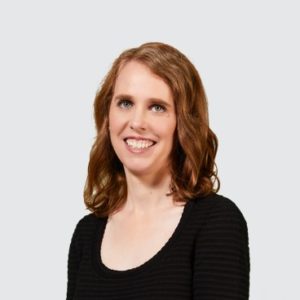
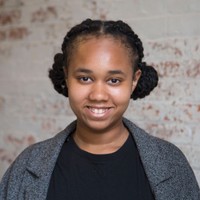
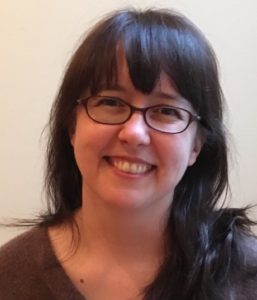
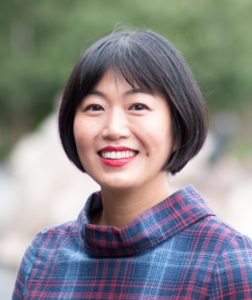
This month’s Industry Insider interview is with Chronicle Books senior editor Melissa Manlove. I first met her in Miami back in 2018 when she gave an inspiring one-​day workshop on picture books with Sylvie Frank—I have pages of scribbled notes to prove it! And I’ve been a fan of Melissa’s ever since.
Melissa didn’t go the regular route to a job in the kidlit world. Her college major was Classics, and she also immersed herself in mythology, folklore, Shakespeare, Milton, Chaucer, Hindu religion, poetry, and more. Talk about a wide-​ranging liberal arts education!

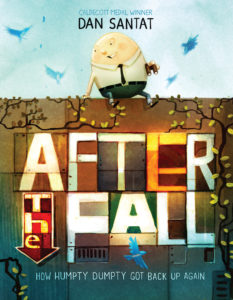
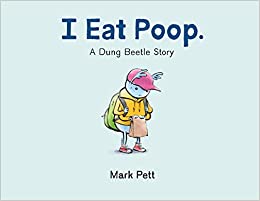
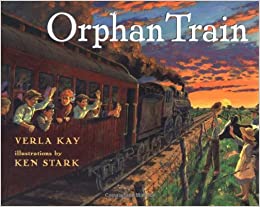
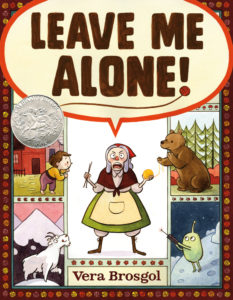
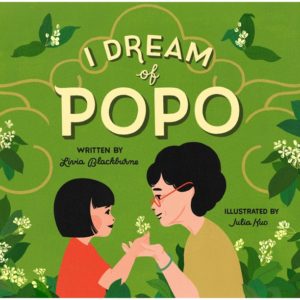
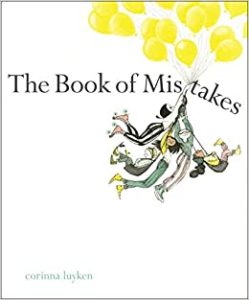
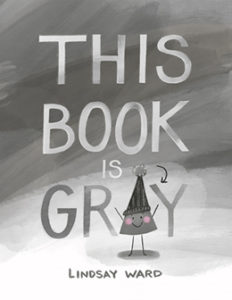
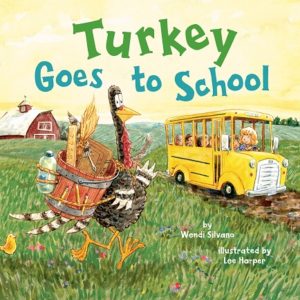
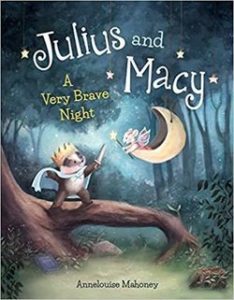
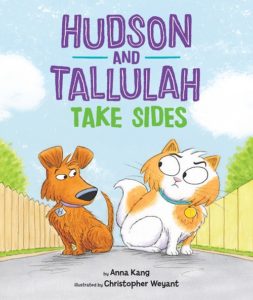
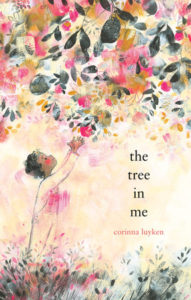
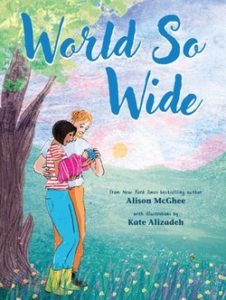
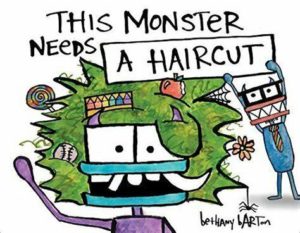
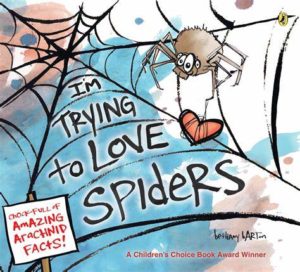
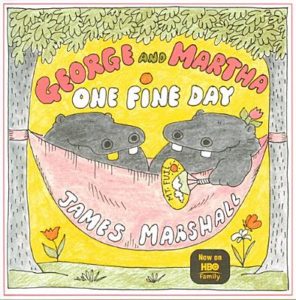
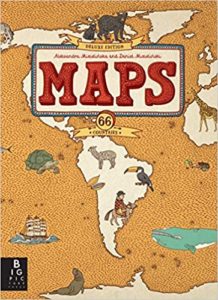
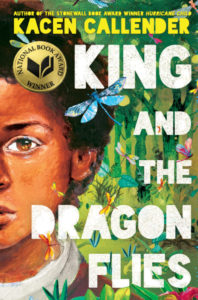
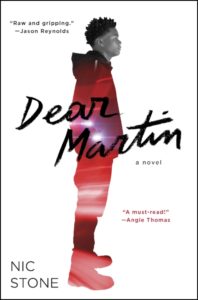
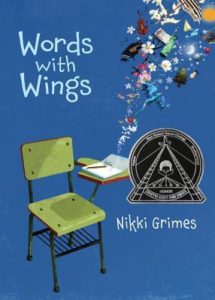
Now it’s no secret that I’m a fan of Chronicle books, and Melissa’s own list has too many faves to list here, so I’ll simply limit myself to three really fine picture books that I urge you to read.

Now that we’re all pals with Melissa, let’s chat!

https://twitter.com/mmanlove

https://www.chroniclebooks.com/


RVC: Let’s start by talking about Chronicle. You’ve been there for 16 years. What’s the best thing about working at an independently owned company? 

MM: There’s a lot of trust invested in the people making the books—aside from covers, the book making process is the privilege of a very small group who work with the author and artist, and I think that makes space for the selfhood of the book itself.

RVC: That’s a great phrase–“selfhood of the book.”

Among your various superpowers is an ability to translate Latin and Ancient Greek. How did your college degree in Classics prepare you for a career in kidlit?

MM: I’ve forgotten most of my Greek and Latin, but my studies of those languages, as well as Russian, French, and Spanish really helped to underline that each language has its own rhythms and music. That and the background in mythology have been a help to how I understand story as a performance art.

RVC: How IS story performance art?

MM: Not all story is necessarily performed, but picture books—especially for the younger ages–are most often read aloud, and that requires the author to consider how their text informs performance. In my talks, I point out that all of the clues authors leave that might inform performance add up to voice. Storytelling started before writing, and passed from voice to ear to mind long before there was written history, and it is still in the profoundly human circle of firelight and voice (whether the firelight comes from a screen these days or not) that we remember what it means to have a shared story.

RVC: And there’s a great explanation on why so many editors are deeply concerned with a manuscript’s “voice.” Thanks for that!

Speaking of editors, I’ve got a few students at Ringling College who are interested in that as a career. When I tell them that a shockingly large percentage of an editor’s day is spent handling email and attending meetings, they don’t quite buy it. Care to drop a truth bomb on me/​them/​everyone?

MM: You are so right!

An editor’s job is in the vast majority a communications job—passing and filtering information between designer, production manager, copyeditors, proofreaders, fact-​checkers, sales reps, marketing, author, artist, agents … Editors are meant to be the hub of a wheel of people, and the guardian of what the book is meant to be to all its stakeholders. It means that I actually edit and read submissions on the weekends, mostly.

RVC: Let’s dig a bit deeper into the life of an editor. How many submissions do you see in a week?

MM: 10–15 from agents, another 5–10 from writers’ conferences that I’ve taught at. But Chronicle’s Children’s Division accepts unagented submissions, and of those we get about 200 per week.

RVC: What’s your favorite part of a workday?

MM: Editing is always my favorite—talking to writers about the craft of writing; talking about the infinitely varied path toward finding what a book wants to be.

RVC: Now I’m going to get all complimenty. It’s clear to me that you’re open to nonfiction picture books that avoid the expected approach, which often is cold precision and a sense of linearity and/​or formality. 

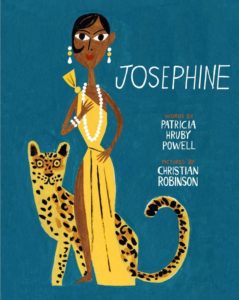
Take Josephine, for example. That book delivers facts, but it’s got real heart, too.

MM: True stories fascinate me, but even more fascinating is what makes a story feel true. That’s something you could give many names, and yes—heart is one of those. After all, what’s the point of telling kids about the world if we don’t also communicate why we should care?

RVC: Is it fair to say that Josephine—as well as many of your nonfiction books—fundamentally presents a transformation arc? Is that something you’re looking for in submissions?

MM: Often, yes! Readers love a transformation arc because when we see how a character can change themselves, we know we have that power, too. And changing ourselves is changing the world.

RVC: From looking at what you teach at conferences and at Storyteller Academy, rhyme is something you appreciate (when it’s done well). So, let me ask—how do you know when it’s done well? What do you look for?

MM: Poetry of all kinds is aware of the space it occupies—in its rhythms, in its breaths, in its white space on the page. Some people are more naturally attuned to the way language moves through its music. But every poet becomes familiar with the idea of scansion, whether they decide to use its structure to build something, or break it purposefully.

RVC: What’s the easiest way to help aspiring rhymers understand syllabic vs accentual poetry?

MM: The question is which you are counting to make a poem. Haiku counts syllables. Sonnets count syllables and accented syllables. Mother Goose just counts accented syllables. Take Humpty Dumpty—the first and second lines have a different number of syllables than the third and fourth lines. But all four lines have the same number of accented syllables—beats.

RVC: What are a few of your favorite rhyming books?

MM: I love Bubble Trouble, Go to Sleep Little Farm, Goodnight Moon, All the World, Bad Bye Good Bye, I Ain’t Gonna Paint No More

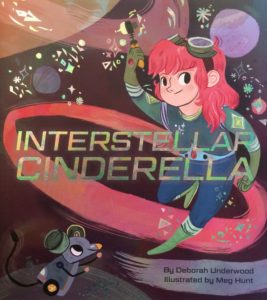
And of course I’m very proud of my many rhyming picture books, which include Interstellar Cinderella and its sequels, Mighty Mighty Construction Site and its sequels, You Are New, Water Sings Blue, Green Is a Chile Pepper, and of course parts of Josephine.

Look for Bathe the Cat and It’s So Quiet coming soon!

RVC: Attendees of your SCBWI workshops on picture book voice rave and rave about them. Now, let’s be honest—if we wanted to really go deep into voice, that’d need to be its own interview. But can you share a misconception about voice that gets writers into trouble?

MM: I think the worst misconception is that a great writer has a single voice. That might be true of reporters. But adapting voice to story, character, mood—that’s what storytellers do.

RVC: In all your experience as a kidlit editor, what has surprised you the most?

MM: There are too many to count or rank!

One of the great gifts of this job is how wide a variety of skills it asks of you, and how wide a variety of experiences it offers. I suppose one is that I’m now teaching public speaking—something I feared and loathed for years. There’s a transformation arc for you!

RVC: What was your secret for moving from a state of fear about public speaking to being comfortable teaching it to others?

MM: The psychiatrist Fritz Perls said “fear is excitement without the breath” and that’s the truth—if you can take a breath and get excited about what you fear, the nervous energy before you go on stage becomes the energy you use to reach out to your audience, and to give them something that matters.

RVC: Love it. Thanks for that!

One last question for this part of the interview. You’ve been a bookseller for a long, long time. Do you still do that? And do you still put on puppet shows?

MM: Sadly, my mother (with whom I did the puppet shows) decided to retire from show business, but I still work at a bookstore on the weekend! I love recommending books.

RVC: Alright, Melissa—it’s time for the SPEED ROUND! Lickety-​split questions followed by zappity-​fast answers. Are you ready?

MM: Oh! Really? I—

RVC: What’s a secret talent of yours?

MM: Um. I can recite Ladle Rat Rotten Hut from memory?

RVC: If you had to live inside a picture book world for a day, which book would you choose?

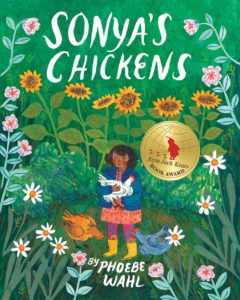
MM: Oh, well, here at the end of 2020 I’m wishing for something cozy. Maybe something by Phoebe Wahl?

RVC: How would you use a 30-​second ad slot at the next Super Bowl?

MM: Probably for an encouragement to reading aloud to kids. Parents give it up too early and too easy, and it makes a huge difference!

RVC: What’s the One That Got Away?

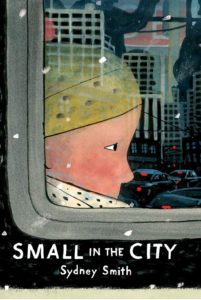
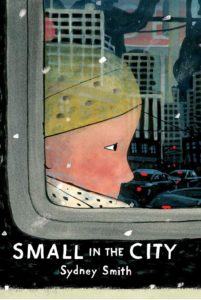
MM: Small in the City. *shakes fist at Neal Porter* (Neal knows I love him)

RVC: Five things you can’t do your job without.

MM: People! That’s who it’s for.

Kids, educators, my friends and colleagues at Chronicle, my brilliant authors and artists, and my own child self.

RVC: Something your authors and illustrators probably say about you.

MM: Oh no. My anxiety and guilt wants to answer “delinquent”—it’s so hard to keep up with this job, especially in a pandemic year. But I guess what I hope I am to my authors and artists is someone who wants their hearts—what’s best and worst about them, what’s true.

RVC: Thanks so much, Melissa. It was great having you come by OPB!

Agent Interview: Clelia Gore (Martin Literary & Media Management)

Let’s give a big OPB welcome to Clelia Gore, the VP of Martin Literary & Media Management, where she serves as Literary Manager of the Children’s and Young Adult Division. Normally, I create a fabulously researched and often-​amusing made-​to-​order biographical introduction at this point, but when someone takes the time to create such an fine Twitter bio as Clelia did, what can I do but share it here?

  • Optimist
  • Lover of things lovely
  • Crooked smiler
  • French-​Peruvian-​American living in Singapore for a bit
  • Mama

And if you’re wondering how to pronounce her name, I asked, and I have the answer. From Clelia herself: “For those wondering, it’s pronounced Clel (rhymes with bell)-eeee-uh. Named after an Italian duchess from a Stendahl novel.”

Perhaps most important, she recently tweeted that “PBs are my jam.” Same here.

With that, let’s get to the interview!


RVC: Rumor has it that you had a great book experience in first grade that got you on the literary path. Care to share your special magic book moment?

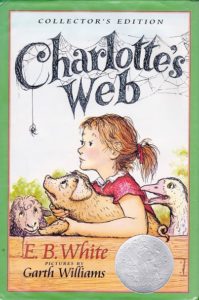
CG: Yes! Charlotte’s Web by EB White sparked something within me that has stayed with me through adulthood. I was the kind of reader that devoured everything on my bookshelf, pretty much as soon as I got the hang of reading. I had read only one other chapter book on my own prior to Charlotte’s Web (a book about a dogcatcher called The Terrible Mr. Twitmeyer). My older brother had acquired it through a Scholastic Book Fair order. He didn’t like me touching his things, so I went into his room secretly, swiped it, and read it behind closed doors while sitting in a bathtub!

I remember being completely affected by the story—how much I loved the characters, the farm and county fair settings, enchanted by the storytelling and feeling ALL the emotions when Charlotte met her fate. I remember crying in the bathtub by myself, completely moved by this terrific pig. From then on, I understood the magic of books in a big way and I’ve spent the rest of my life chasing that same feeling in the books I read.

RVC: Some pig, indeed!

CG: I still have that same copy of the book today! I used to read it right before school started every year, as a comforting ritual. Now I bring it with me wherever we move, carrying a bit of my childhood with me.

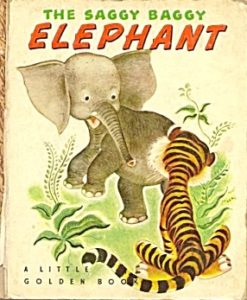
RVC: I keep my first copy of  The Saggy Baggy Elephant for the same reason.

But back to you–how do you go from an amazing reader experience like that into the world of lawyering? What happened?

CG: I continued to be an avid reader through high school and college. At that time in my life, I was a bit of a book snob and only read classics—I was determined to read all of them. I think I was the only 17-​year-​old who had read all of John Steinbeck, Mark Twain, and Edith Wharton’s entire catalogs. I took a lot of pride in having read their deep cuts. In college, naturally, I became an English major. My parents put it in my head that, with that major, I could become a lawyer and I just decided to go with it. I wish I could say I put more thought into it than that, but I didn’t. Looking back, it wasn’t an illogical choice, just not the most thoughtful one. I ended up going straight to law school after college.

RVC: What got you out of the legal world and into the literary agent arena?

CG: I knew early on that being a lawyer was not for me. It was 2009 and I was working at a big corporate law firm in Manhattan litigating securities disputes—not quite the scene for a whimsical gal like me. I will say this—I gained so much from my experience in law school and practicing as an attorney for about four years. It, of course, helps me as a literary agent who negotiated contracts. I’m a better analytical thinker as a result of it, better equipped for the adult world and most importantly, it helped me develop a sense of professional confidence. For me, being a lawyer was a really hard job during a really hard time (the recession). I was challenged every day and was able to rise to the occasion, and I succeeded at it even though I didn’t like it. I brought the confidence I developed from that experience with me to publishing. I also met many lifelong friends and my husband along the way! Plus, I like knowing and learning about the law—I just didn’t like practicing it.

RVC: You’re not the first ex-​lawyer to say something like this here at OPB. Maybe one of these days, I’ll get you all together for a special Picture Book panel discussion.

CG: When I was first contemplating a career switch, I immediately thought of children’s book publishing. Kids books, especially picture books, were always an important part of my life. Even as an adult. As a lawyer, I worked in the Chrysler Building, across from Grand Central Station, and when I was feeling really stressed or sad, I’d go to the Posman Books that used to be there and just browse the picture book section and it would always bring me a sense of calm.

RVC: What happened next?

CG: I reached out to Rotem Moscovich for coffee, who is now editorial director at Knopf. She and I went to high school together and I asked her about children’s book publishing. She was the first person to put the idea in my head that I could be a literary agent—a career I didn’t really know anything about. It took me a few years to figure out how to transition, and I wanted to make sure I made the right step. I decided to go back to grad school, where I received a scholarship at Emerson College’s M.A. in Publishing & Writing. This program helped me try out a few avenues I was interested in: I interned at Houghton Mifflin for half a year in their children’s book division and then I tried out academic publishing at Oxford University Press. I also tried out teaching writing to college freshmen. Funnily enough, I never did an internship with an agency, but when I graduated, I was convinced that that was the path for me. As it happened, my then-​fiancé (now husband) had moved to Seattle from NYC for a job, so I joined him out there.

I was lucky enough to connect with Sharlene Martin right away—she agreed to meet me after I sent her a cold-​call email. I was going to ask her questions about starting my own agency such as: What is Step 1? We ended up sitting in a coffee shop talking for two hours, and at the end of it, she said: “Don’t start your own agency—come work for me! I’ll teach you everything you need to know.” Here I am seven years later, still calling her my mentor!

RVC: I’ve got a lot of creative writing majors here at Ringling College contemplating a path similar to yours. Some of them are thinking about going after internships like the one you had at Houghton Mifflin. How valuable was that for you?

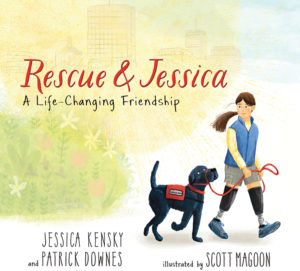
CG: That was truly my first experience in children’s publishing, something I had always dreamed about. I was so grateful for the opportunity. It was definitely an odd experience going from being an attorney in NYC to an intern making $11/​hr. But I was determined to make the best of it, learn as much as possible, and I tried to make the weird situation as comfortable as possible—and the wonderful women I worked with were game, too. It was a great education in how kids’ books are made—having that foundational knowledge absolutely helped me in my career as an agent. I also made some great relationships—I still pitch to editors at HMH whom I knew as an intern. I made several book deals based on a referral from their former managing editor. And I crossed paths with Scott Magoon there, who was working there at the time and he ended up being the illustrator for Rescue and Jessica: A Life-​Changing Friendship by Jessica Kensky and Patrick Downes, which was an award-​winning and bestselling book that I represented.

RVC: You’ve been at Martin Lit for a good while now. In all your experience at that agency, what has surprised you the most?

CG: I started in September 2013, so it’s been seven years now, and in that time I’ve learned so, so much. I mean I was really starting off with very little knowledge and had to learn on the fly from Sharlene and from any resources I could access. I was very determined to right my career path and be successful at this.

One thing that surprised me is how thick-​skinned I would become. Publishing can be a roller coaster ride, especially at the submissions/​acquisitions stage and, having ridden that roller coaster over and over again, I can weather even deep disappointments well—and happily celebrate the highs. I also didn’t realize how my business relationships with clients could form into strong bonds of friendships.

RVC: A lot of early-​career picture book writers ask me if a platform is necessary. What do you think?

CG: I truly think the most important thing is that a book be great (and the timing is right!). Platform is a bonus and plus, of course, but if the work has that special sauce, it doesn’t matter if the author is unknown and has no platform to speak of. If you want to sell a book that plays off of your platform, then, absolutely, you should have an established platform. In certain genres like adult nonfiction, platform is everything. In kidlit, it’s less important, especially at the acquisitions phase. I do think it’s important to signal to publishers that you understand the author’s role in promoting and publicizing the book, that you are willing to play the game.

For authors trying to figure out what kind of platform they have to offer, I would think about what access you have to the target readers and book buyers for your book. Social media is one thing, sure. But…

  • Do you have or can you seek out media contacts that you can take advantage of when the book comes out?
  • Do you belong to certain groups or industries or speak at conferences or events that are made up of your target buyer?
  • What are ways that you can use those groups or gatherings to promote your book?
  • Can you reach out to your school alumni networks to promote the book in some way?
  • Can you write articles, start a podcast, create a blog related to your book or topics you cover in your book?
  • Can you start a newsletter that accesses your entire personal network?
  • Do you have connections to others who have a large platform who would be willing to promote your book?
  • Have you scoured Instagram for influencer accounts that reach your book-​buying audience and are ready to reach out to them?

Think about all the ways you can take advantage of your personal and professional networks so that people can find out about your book.

RVC: Love those examples–thanks!

You’re a self-​confessed sucker for picture books that are a “heart squeezer.” What are some PB examples that really made you get out the Kleenex (in the good way)?

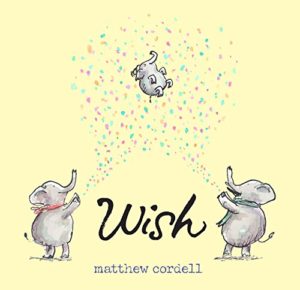
CG: As a mother who struggled with infertility, I cry 100% of the time I read Matthew Cordell’s Wish. Seriously, I have not gotten through even to the third page turn without misty eyes.

Other recent heart-​squeezing favorites include Julián Is a Mermaid by Jessica Love, The Rabbit Listened by Cori Doerrfeld, Hair Love by Matthew Cherry, Hello Lighthouse by Sophie Blackhall, and Home in the Woods by Eliza Wheeler.

RVC: You dig nonfiction—so says your Manuscript Wishlist as of May 2020—but biographies aren’t really a big hit with you. Is that a marketplace thing, personal preference, or something else?

CG: I already have several picture book biographers amongst my clientele so I’m looking to diversify. I have said in the past that the market was thinning a bit to picture book biographies, but I do see evidence of the market opening back up. I sold two this summer. Publishing is dynamic! I will always love picture book biographies, but to me, there are a lot of cool things happening in kid’s nonfiction outside of biographies. I want to see more of those kinds of books!

RVC: How do you describe your agenting style? Is it different with your clients than with prospective editors? 

CG: Collaborative. Respectful. Transparent. Hard-​working. Analytical. Confident. Kind!

One thing I learned from my job as a lawyer, another client-​services industry, is the importance of maintaining professionalism. You can count on me to always be professional.

RVC: Unlike some agents, you’re open to developing MG and YA nonfiction projects with talented writers. Do you ever do such a thing with picture books? 

CG: I think there is a lot of room for growth in the middle grade and YA nonfiction space. There aren’t enough writers of these genres yet! So, at this point, I’d be willing to work with authors who are experts in a field, or journalists or researchers interested in specific topics to help pull good, marketable book ideas.

Picture books have a lot more nonfiction contributors so I’m not looking to develop ideas from scratch beyond my own clientele. I do LOVE coming up with ideas for market-​ready books. It’s one of my favorite parts of my job. Typically, when I think up a good idea, I think about which client would make a good fit and reach out to them and see if they are game to write it. Often, they are. At this point, I think there around about 6–7 books out or coming out that started as one of my brain children. It’s my way of bringing some of my own creativity into this job which is about supporting amazing creative talent.

RVC: Your clients are so lucky! Here’s hoping they send you a jumbo box of gourmet muffins when those book ideas you launched actually happen.

MMMmmmMMMMM…gourmet boysenberry muffins with cream cheese frosting.…

Sorry–I got distracted there. Now here’s a question I wish I didn’t have to ask. How has COVID-​19 changed your day-​to-​day agenting work?

CG: COVID-​19 came at a weird time for me. Since July 2019, I’ve been living in Singapore with my husband and daughter on an ex-​pat stint for my husband’s job (we’ll be back next year). So I was already operating a bit differently than I typically do in that there was less in-​person stuff. Because of COVID-​19, everyone else is doing less in-​person stuff, too. So I would say my day-​to-​day is very similar, but more editors are open to having video meetups as it’s now the norm. I do find that all of this has made me cherish life more and I’m motivated to only work on projects that I’m really passionate about and believe in.

RVC: I quite agree with that!

One last question before we move to the final part of the interview. Did you ever get that longed-​for picture book manuscript about the mathematical golden ratio?

CG: Ha ha, nice memory! No, I didn’t. I did a project on the golden ratio in the sixth grade and I remember it fascinated me, a math-​hating girl. I feel like if that topic could reel in the likes of me, it could reel in lots of other kids!

Feel free to send me one, dear reader!

RVC: There you have it, OPB friends and family. An exclusive manuscript request. When you send it to her and she sells that book, do remember me for helping facilitate this (hint: muffins, muffins, muffins).

Alright, it’s time for The Speed Round! Ferrari-​fast questions and Corvette-​quick answers please. Clelia, are you ready?

CG: Let’s do this.

RVC: Best place for food in Singapore?

CG: Hawker markets. There’s a stand in the Zion Food Centre in a neighborhood called River Valley that has the most perfect pan-​fried dumpling you can possibly imagine. I salivate every time I think about them. I’m salivating right now….

RVC: “If I wasn’t a literary agent or a lawyer, I’d be…”

CG: Government lawyer at the Federal Communications Commission (an alternate history in my lawyering career); speech writer; something in TV/​Film production; book-​related shop owner; First Lady of anything.

RVC: If you put together a golf foursome with PB characters, it’d be you plus which three others?

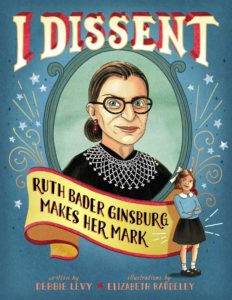
CG: Okay, I’m going to go pragmatic on this one—maybe that says something about the way my brain works. I own a gorgeous Anne of Green Gables-​inspired picture book from Tundra Books called Goodnight, Anne so I’d pick her so I can hang out with Anne-​With-​An‑E, one of my first major heroes. Ruth Bader Ginsburg from I, Dissent (rest in peace, legend), a major real-​life hero. And Jessica from Rescue and Jessica because that Jessica is really author Jessica Kensky, my longtime friend who is hilarious and probably as bad at golf as me and we could all have a good laugh together.

RVC: Describe your Dream Client in five words or less.

CG: Talented, perseverant, kind, charismatic, self-starter.

RVC: A forthcoming client’s book that has BIG commercial potential?

CG: Oh man, I am seriously SO excited about my upcoming titles. But in terms of which might have major sales potential–I would guess two picture books: Daddy Speaks Love by Leah Henderson and illustrated by EB Lewis (Nancy Paulsen), a beautiful tribute to fathers and The Very True Legend of Mongolian Death Worms by Sandra Fay (Godwin Books), a truly hilarious and very uniquely illustrated picture book that I think will appeal to Jon Klassen and Mac Barnett fans. She’s from New Zealand and brings that trademark dry Kiwi wit to her stories. She’s brilliant!

RVC: What’s the One That Got Away?

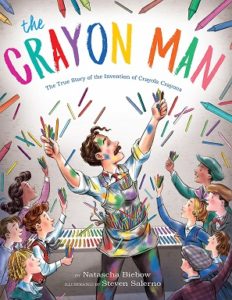
CG: In terms of picture books, I remember deciding not to offer representation on The Crayon Man by Natascha Biebow and that always bugs me–I would have made a different decision today. One book I offered on but the author ended up going with a different agent is an upcoming middle grade novel called La Loteria by Karla Valenti. I was dying to rep lovely Karla and her book, but she went with Ammi-​Joan Paquette, whom I like and respect very much, so I can’t be too mad!!

I just realized these responses were not “Corvette-​fast.” Sorry!

RVC: No worries, Clelia. The real bar for anything at OPB is quality, and you delivered, no doubt about it. Thanks so much!

Editor Interview: Kristine Enderle (Magination Press)

photo credit: Elizabeth Dranitzke

Hello! We’re here today with Kristine Enderle, the Editorial Director of Magination Press. One of the things that intrigues me most is how she came to publishing in such a roundabout way (more on that in a moment!). Her Twitter bio declares her a “full-​time mom, all-​the-​time-​feminist, serious ally, and native Hoosier.” In terms of her publishing career highlights, she offers this sample of titles:


Girl: Love, Sex, Romance, and Being You by Karen Rayne (starred review from Publisher’s Weekly; one of Chicago Public Library’s Best of the Best Nonfiction Teen books)


This Day in June by Gayle Pitman (Stonewall Award winner; ALA Office of Intellectual Freedom’s Top 100 Challenged Books)


My Anxious Mind: A Teen’s Guide to Managing Anxiety and Panic by Michael Tompkins and Katherine Martinez (ABCT Self Help Book Seal of Merit Award)


Something Happened In Our Town: A  Child’s Guide to Racial Injustice by Marianne Celano, Marietta Collins, and Ann Hazard (A New York Times and #1 IndieBound bestseller, A Little Free Library Action Book Club Selection, and an NCSS-​CBC 2019 Notable Social Science Trade Book for Young People)


Whew! That’s a great start. But let’s move on to the interview to find out a bit more about Kristine and her career.


RVC: As mentioned in the intro above, you might win the award for most unusual path toward becoming an editor—at least in terms of industry insider interviews here at OPB! You’ve got a BS degree in microbiology (minor in psychology) from Indiana U, right? What kind of career goals did you have back then?

KE: I honestly didn’t have any career goals! I was lucky enough to be allowed to just study whatever I wanted in college! I grew up in an enormous old house (with actual bats in the attic) in the middle of the woods in southern Indiana. There was always something smashed on the road that we could poke at, or strange insects or fungi living on rotting logs. My dad was a doctor and my mom was a nurse, so there were always ongoing conversations about medicine and health in my house.

RVC: That sounds like an awesome way to grow up.

KE: You bet! I grew to love the natural world and naturally (hah!) that flowed into biology coursework. Eventually after taking a microbiology course, my sights were set on what is unseen and I became fascinated by fungus and bacteria and have a sweet spot for infectious diseases.

RVC: After college, you worked as an AIDS research tech for the AIDS Vaccine Development Program at the National Cancer Institute, and then as a tech at Northwestern University’s Lurie Cancer Center. Isn’t the latter position where you started taking classes in writing?

KE: Yes. While working at Northwestern I took fiction writing, linguistics, and communication courses. I needed to move away from lab work to exercise the other side of my brain. I always hung out with English majors and musicians in school, so I finally got to take all those classes I missed as an undergrad.

RVC: What’s the most valuable thing you learned in those writing classes?

KE: That I am NOT a fiction writer! I have so much appreciation for storytellers and creative people now. Plus it’s more fun to be the oddball science nerd in the room than the way-​too-​serious poet.

RVC: What was the learning curve like going from a science researcher to a development editor at Human Kinetics, a sports science textbook publisher in Illinois? 

KE: Between working in the lab and my first publishing gig, I was a Medical & Scientific Affairs manager at the Alzheimer’s Association. This was pre-​Internet, so I wrote newsletters and fact sheets for the general public and answered the phone, fielding a ton of questions from families and caregivers about Alzheimer’s disease. Working there taught me to explain complicated concepts and technical language, so maybe this was what got me from the lab to publishing?

RVC: Sounds like GREAT training to be an editor.

KE: At Human Kinetics as a development editor, I had to look at big picture things in planning a textbook–editing and organization becomes a puzzle to solve as you need to figure out a way to fit and package a ton of information into ways people can understand and into one comprehensive and complete book, visually with photos, diagrams, charts, and graphs. I still do that at Magination. Our books combine science and literature (or evidence-​based information and creative expression) into something that is accessible and interesting to read.

A great example of this is Move Your Mood which is a hoot and teaches readers about how physical movement positively affects mood–there is psychological research to support this. Or Layla’s Luck. People tend to attribute a woman’s or girl’s success as them being lucky and not relating to their smarts, skill, and hard work. Layla takes aim at that.

RVC: Let’s dig a bit deeper into your publishing career. These days, you’re the Editorial Director at Magination Press. How does that compare to being a developmental editor? Writers ask me versions of this all the time—what’s the difference in terms of those roles?

KE: Editorial director really means that I am responsible for editorial strategy and focus of the press and oversee major initiatives, budgets, planning, and staff. But having come up through the ranks, I am still developing and editing and acquiring books because I have a hard time leaving that behind. I am still a senior/​acquiring editor and have a nice group of house authors I have been working with since their debut work. Many authors call me their editor (and that’s the best thing ever!)

RVC: Compare that to the roles of your Magination colleagues, Senior Editor Sarah Fell and Editor Katie Ten Hagen.

KE: Sarah and Katie do all that, minus the planning and overseeing, and have a bunch more books than me to develop. And they work with new authors mostly, and I’m technically their boss!

RVC: Thanks for that!

Now, some people might not realize that Magination Press is connected to the APA (American Psychological Association). How does that work?

KE: APA’s mission is to promote the advancement, communication, and application of psychological science and knowledge to benefit society and improve lives. So what that means for Magination Press is that we share world mental health expertise and psychological knowledge to help kids through rough patches. Some of our books deal with serious issues like depression and anxiety; others are more of those everyday things that bug you or that you may confront sometime during your life. Also just recognizing the sometimes-​tough job of being a kid these days. We want kids and teens to know that we are listening, we see what they are dealing with, and might have something that can help.

I’d like to think that books like Bye Bye Pesky Fly, Lucy’s Light, Jacob’s Room to Chooseand Lulu the One and Only really make a difference in the lives and well-​being of kids.

RVC: Here’s something else that people might be surprised by. Not only do you publish books exclusively for kids (ages 4–18), but you’re putting out 20+ books a year! 

KE: Yeah. We are kind of overachievers that way.

RVC: What’s the common denominator with all your kidlit?

KE: The stories (and nonfiction) really must be grounded in evidence-​based research. It’s true that there is a little bit of psychology in everything, but to be a publication of the American Psychological Association, the work must be based on science and fact. It would be irresponsible otherwise!

RVC: How vital is it that your writers have backgrounds in psychology or the sciences? Or know APA style?

KE: We prefer our authors be psychologists or are mental health professionals, but it’s not a prerequisite. If an author doesn’t have those credentials, we will hire a psychologist to write the endmatter/​readers note (to provide the psychological context for the story). Also all of our books are reviewed by our editorial advisory board that is made up of child psychologists. They act as peer reviewers and comment on the accuracy and relevancy of the psychological content and whether the coping strategies have merit.

Extra points for folks using APA Style/​Pub Manual 7!

RVC: Let’s say you publish a picture book on depression and so, too, does a NYC press. What are some of the likely differences in how a Magination picture book covers a topic like that? 

KE: Reviewed and vetted by the American Psychological Association, maybe?

RVC: That’s a key distinction, for sure.

Now, you just signed When Nana Dances, a picture book by Jane Yolen and her granddaughter about the relationship between children and grandparents, and how dance can be at its core. This isn’t as clear of an “issue book” as some of your others. Why did you have to snatch this one up?

KE: Because Jane Yolen!

No, really it’s a joyful celebration that combats ageism and models mentally healthy and happy intergenerational relationships. You know that emotional stress can speed up aging at the cellular level. So, this is stress-​relief and mental wellness at its core!

RVC: Your press is always at the trade shows—in fact, that’s how I learned about it. I chatted with one of your sales reps at BEA (Book Expo America) at the Javits Center in NYC a couple years ago, and I was impressed by the quality of the books and topics covered. 

KE: Thank you! You can find us all over, from the Bologna Children Book Fair to the Texas Library Association annual meeting to National Council for Teachers of English. We also attend psychological conferences like American Counseling Association, and of course APA’s Annual Convention.

RVC: For people considering writing for your press, what’s the most important thing they should know or understand?

KE: Despite our serious and sensitive topics, we love humor, humility, and honesty. Not sure what that means exactly for books… might speak more to who we are and our community of authors and illustrators we take up with.

Otherwise a couple things come to mind:

  • Do your research. Before submitting a proposal, please review our catalog: we don’t repeat topics year after year and are unlikely to acquire new titles on already-​covered topics.
  • Keep it universal. We are not interested in autobiography, reflections on childhood, or personal stories about family members, pets, or friends. Keep the appeal wide and general and keep the focus on interesting characters and good storytelling. Be careful with first-​person narrative. Good stories and excellent topics can sour with unrealistic, adult-​sounding, or dated dialog.

RVC: In all your experience with editing picture books, what has most surprised you?

KE: Just how many books I have signed after just reading the cover letter. Another book hooked me immediately with its proposed title–There’s a Cat in My Class!

RVC: One final question for this part of the interview. Your Twitter bio says you’re a “part-​time troublemaker.” Care to support that impressive claim with evidence?

KE: I live in the Capitol Hill neighborhood in Washington, DC. Marching and protesting is what we do!

RVC: Okay, Kristine. We’ve now reached the SPEED ROUND. Speedy questions and even faster answers. Ready?

KE: Ready!

RVC: “If I didn’t have a career in publishing or science, I’d be…”

KE: A park ranger!

RVC: Fave secret lunch spot in DC?

KE: Indigo!

RVC: If you could be any picture book character for a day, who would it be?

KE: Nancy Drew!

RVC: Something that’s on your picture book wish list?

KE: A book about a whale.

RVC: An underappreciated Magination picture book that you simply adore?

KE: Underappreciated? I’m a huge fan of King Calm: Mindful Gorilla in the City. But I also adore our more recent relatively unknown activity book, How Do You Doodle: Drawing Your Feelings and Emotions.

RVC: The one must-​have for every picture book you acquire?

KE: A good pun or a dog.

RVC: Thanks so much, Kristine!

Editor Interview: Amy Novesky (Cameron Kids)

Hold on to your collective literary hats, folks, because this month’s Industry Interview subject—Amy Novesky, the Children’s Book Editor + Director @ Cameron Kids—said “I would love to have some fun” with this interview.

Challenge accepted, Amy.

She also pointed out that while she enjoyed the OPB interview I did with her friend Abigail Samoun, her own life “is not nearly as exciting.”

Implied challenge also accepted, Amy.

So, to get things off on the right foot, let’s begin with a semi-​biographical free association thing. I’ll start a sentence, you finish it. Ready, Amy?

  • If Netflix is the answer, the question is… 
    • what do you waste time endlessly scrolling?
  • If Sausalito were a sandwich, the right condiment for it would be… 
  • When I was a child, my least-​favorite crayon color was… 
    • the broken one.
  • A penguin walks into your room right now, and it’s wearing a tuxedo because it… 
    • clearly is a character from a picture book.
  • The only thing more important than giving a child a book is… 
    • teaching him how to cook dinner.

Whew, we’re off to a great start. I think we’re ready for the regular interview now. Sound good?

So, let me offer up a few URLs of note, then let’s get to the interview.


RVC: As an editor and writer, you’ve been involved with making kidlit books for two decades. Are you a writer who edits, an editor who writes? Or do you have some other way of thinking about it entirely? 

AN: Both, depending on the day. But I think of myself as a writer first, always. Writer is who I am, editor is what I do.

RVC: Then let’s talk about writing first!

One of the clear throughlines in your own books is your affection for creative folks–Georgia O’Keeffe (Georgia in Hawaii), Frida Kahlo (Me, Frida), and Imogen Cunningham (Imogen: The Mother of Modernism and Three Boys), to name just a few. How conscious of a thing is that? 

AN: I do have a thing for women artists—especially painters. And I have consciously wondered why, and made the connection to my mom who paints, and to our ancestors, a large family of artists called the Peales, who were known for their early American portraits. My great (x4) grandfather, Raphaelle, painted still lifes; he was the rebel of the family. So maybe the artist/​portrait/​still life gene got passed down to me, and manifests in words, instead of paint.

RVC: That’s such a cool story.

AN: I am drawn to the arts, and to artists, because I have always been in awe of one who can paint, play the piano, dance, sing. What an amazing life. For me it’s not just the art but the way these artists lived their lives like works of art. Frida was a walking canvas.

Incidentally, one of the things that connects almost all of the artists I have written about is flowers, which, I also love: Georgia’s giant red poppies, the flowers Frida wore in her hair, the signature gardenia Billie wore behind her ear. The magnolia flower Imogen photographed close-​up. And, all of these artists, Louise Bourgeois included, were especially bad ass. Imogen, was probably the most bad ass of all: she managed to be an artist and make art, while raising three boys. That’s what my book, Imogen: The Mother of Modernism and Three Boys, is about.

RVC: Speaking of your books, let’s examine the launch of your picture book author career. What’s the story of that first book?

AN: I wrote Elephant Prince after a trip to India. Among the many things that amazed me was this elephant-​headed god named Ganesh. Who was he? And why did he have the head of an elephant? The story is also, simply, the story of a mother who longs for a child, which was something I could relate to; my son, Quinn, was born a year after the book published.

RVC: You just had another picture book come out this month—Girl on a Motorcycle. Congrats on that! What’s your 20-​second pitch for the book?

AN: Thank you!

Girl with a good job in Paris, leaves it all, jumps on a motorcycle, carries only the essentials (pocket knife, tarp, anti-​diarrheal, eyeliner, bikini, paper & pen …), rides around the world—from France, through Canada to Alaska…to India and Afghanistan…—breaks down, fixes bike, falls, gets back up, finds the world is beautiful and good, writes about it, returns home.

RVC: And all in one sentence, too? Consider me grammatically wowed!

I’m curious. Like the unnamed young Parisian in this story, have you ever dreamed “to go Elsewhere”? 

AN: Every day.

RVC: Don’t we all, right? Even before the COVID world we now live in. [sigh]

What was the biggest challenge you faced when creating this book?

AN: Not being fluent in French (despite—I’m appalled to admit—15 years of studying it in school). Luckily Anne-​France Dautheville, the subject of Girl On a Motorcycle, speaks decent and, comment dit-​on, colorful English. But I would love to be able to talk with her and read her books in French. When I visited her at her home outside of Paris, I felt tongue-​tied, in addition to totally jet-​lagged. Not the best combo for meeting and interviewing your heroine.

RVC: Well, if you ever want help with French, let me know. I am très good at it! (Spoiler–I might be overstating this a bit. “Très” might be the only thing I actually recall from my Ph.D. crash-​course semester in French.)

Moving on–what do you most admire about Julie Morstad’s accompanying artwork for your book Girl On a Motorcycle?

AN: I’ve been a fan of Julie’s work for some time, and she immediately came to mind for this book for her exquisite illustrations, her stylish characters, her sublime palette, which, in this book—beginning with those gorgeous sunset colors on the cover; the coppery brown, uncoated, separate ends; and the muted, earthy and airy hues throughout—takes my breath away.

RVC: Let’s switch gears to your work as an editor. What fulfills you most about that type of work?

AN: Working with words, and in a form that is so distilled, poetic and visual. And, because I am an equally visual person, looking for and working with illustrators and artists.

RVC: How did you get the editing bug?

AN: I’ve been writing since I could write. I studied poetry in college and got a masters in writing, with a focus on short story. It’s hard to make a living writing poetry and short stories, and so I went to work for a publishing house. When I didn’t get the fiction editorial assistant job, I applied to the other editor job that was open: children’s editorial assistant. I fell in love with the picture book form and discovered it was a really good fit for me, and I’ve been doing it since.

RVC: What was the most memorable thing about working for Chronicle Books, where you got that first job in editing?

AN: Living and working in San Francisco in my 20s, making beautiful books, and, the people—many of whom are still close friends, and some I even work with (2 of the 12 Cameron employees worked at Chronicle).

RVC: What was the first picture book you acquired there?

AN: Oh boy. The Go Go Dogs, about two dogs who travel the world, a consistent theme for me. It’s got to be about 3000 words and was clearly influenced by my love of Maira Kalman.

And then there was Isabelle and the Angel, illustrated by Georg Hallensleben, a French buy-​in about an art-​loving pig who falls in love with an angel in a painting at a museum. She loves him so much she becomes a security guard so she can be near him all night. I know, it’s a little odd. But the art is so gorgeous! I have a soft spot for esoteric French picture books, what can I say. The English-​language edition is, sadly, out of print, but I did fairly recently find the original book on the bookstore shelf at the Musée D’Orsay.

RVC: A few years back, you left Chronicle and ended up acquiring titles for two presses at once. How did that happen?

AN: I left my job in 2000 to write and raise a son, and I have been a freelance editor since. Being a freelancer can be tough. I’ve had many many jobs over the years—some I wish I never took and at least one, like my stint at Pixar, which was great fun. Such is the life of a freelancer.

RVC: Tell me about it! My up-​to-​date resume is 40+ pages long to accommodate all the people/​company I’ve worked with over 20+ years of being a writer. 

AN: I started working for Cameron + Company, beginning in 2010, book-​by-​book, and then helped launch their children’s book imprint in 2015. Still, it was only part-​time. When Creative Editions, another small, family-​owned press, offered me part-​time work acquiring for their list, I couldn’t turn it down. Living in the Bay Area on a freelance editor’s income is not easy. Luckily, I was able to do the latter from home, and the two lists are aesthetically different so, creatively, it worked out. I left Creative in February to focus on growing Cameron Kids. And, as of September 1, 2020, I can report that I am a full-​time employee of Abrams, New York, which acquired Cameron + Company.

In short, yes, we editors often wear many hats.

RVC: Why is this super-​new role at Cameron + Company (congrats on that!!) such a good fit for you?

AN: To be the editorial director of a beautiful, thoughtful, well-​curated list of books I helped create; to work with people I respect and adore; and now to be a west coast division of a major New York publishing house, whom I also adore (and who published two of my books: Me, Frida and Cloth Lullaby), is a dream job. It was a long time coming, a lot of hard work, patience, and literal blood, sweat and tears, and I couldn’t be happier.

RVC: What’s the most common misconception about picture book editors?

AN: That we like children. Just kidding!

RVC: Who or what has influenced you most as an editor?

AN: I will give you a who and a what.

RVC: Way to overdeliver!

AN: Who: Victoria Rock at Chronicle Books. I learned so much, mostly from typing up her long, handwritten letters to authors and illustrators.

What: traveling the world. The places I’ve been and have lived and loved—India, Mexico, Paris, New York, Southern California, San Francisco, Kauai—influence my books.

RVC: How do picture books create an opportunity for adult readers to be present with kids?

AN: A picture book is a beautiful, tactile object. It takes time to turn a page, to read the words, to stop and define a difficult word or concept or two. One misconception about picture books is that they are simplistic, but they can be quite sophisticated and profound. The best books stop time, allow you to be present, and isn’t that what we strive for with our kids?

RVC: Well said, Amy. 

Let me ask an industry question. I’m hearing mixed answers these days. Is COVID making things better or worse for writers? Some argue that editors working from home are able to get more done. Some argue that editors working from home are just as swamped as ever, or even more so. What’s been your experience? And what have you seen/​heard from colleagues?

Amy’s home office in March 2020.
Amy’s home office in September 2020.

AN: For me, despite it all, I have been incredibly lucky. I have space. I live in a beautiful place. I have work and I can work from home. My son is old enough now to manage his online schooling and make a sandwich. And so, while I’ve surely gone through as many pandemic phases as stages of grief—from the urgency of it in those first few months, to heaviness and depression and rage, to a measure of acceptance, to moments of stillness and creativity–I’m doing okay, getting work done, chasing new books, even writing a new story or two.

But I know many people, friends and colleagues, who are struggling to do it all. It’s a lot. And here in California, we have pandemic + wildfires + smoke + heat + power outages, and there’s always a few earthquakes rattling about. September has been a particularly harrowing and heartbreaking month. When I can get to the office, 12 hour north, I keep a go-​bag, a 7‑gallon jug of water, and masks for multiple emergencies, in my car.

2020 is making us all bad ass.

RVC: Bad ass, indeed!

Circling back now to your work as a bad-​ass picture book author—you’ve got an author trailer on your website. Not a book trailer, but an AUTHOR one. So cool! Where’d you get that idea? 

AN: I have a good friend who is a talented documentary filmmaker, and she and the co-​founder of her company generously offered to make a short film about me. I am super camera-​shy, so it was pretty excruciating for me, which is probably apparent in the pained look on my face. That and I’m not great at promoting myself and my work. And so I am so grateful to have such a beautiful piece in my portfolio. It’s at least 10 years old at this point, but the heart of it is still current.

RVC: How have people responded to it?

AN: I’ve gotten some really nice feedback.

RVC: Rightly so. It’s terrific.

AN: Thank you!

RVC: One last question for this first part of the interview. Craziest thing that ever happened re: a school visit you did?

AN: Okay, I’ve got a good one for you. On my way to a book event at a school an hour from my house, it was first thing in the morning, rush hour, I’d drunk a pot of coffee, and there was traffic, I was running late, hundreds of elementary kids were waiting for me, and, I had to go to the bathroom really really, like painfully, badly; I wasn’t going to make it. I pulled the car over as soon as I got off the freeway, jumped out and peed in a bush. I’m guessing some homeowner has probably got some good security footage of this children’s book author squatting on their property.

RVC: This from the lady who said her life wasn’t all that exciting! OMG

Regardless, it’s your time to shine, Amy, because it’s the…LIGHTNING ROUND! Electrifyingly fast questions and shockingly quick answers, please. Are you ready?

AN: Let’s do this.

RVC: Smurfs, fraggles, or trolls—most underappreciated not-​so-​tall creatures in pop culture?

AN: Fraggles.

RVC: Best place in Sausalito for a slice of California pizza?

AN: My house. When the sourdough starter stars align.…

But there’s also Sandrino on Caledonia Street!

RVC: What’s the One That Got Away?

AN: Parker Looks Up.

RVC: The responsibility of the picture book writer is…

AN: To write well.

RVC: Recent picture book biography you wish you’d thought of first.

AN: The Important Thing About Margaret Wise Brown.

RVC: The three most important characteristics that lead to picture book success.

AN: An authentic voice, a compelling story, and a Hell Yes manuscript (Cameron Kids’ motto).

RVC: Thanks so much, Amy. And not that anyone’s keeping score, but I think I won on both counts regarding our challenges. Fun and excitement was indeed had by all. 100% of my pre-​pub focus group of 2 agree.

So, thanks for sharing a bit of your literary journey with us today. It was great having you stop by OPB. Best of luck with the new book, too!

Editor Interview: Sarah Rockett (Sleeping Bear Press)

The September 2020 Insider Interview is with…Sarah Rockett!

She’s an Editor for Sleeping Bear Press as well as for Cherry Lake Publishing and 45th Parallel school and library imprints. OPB knows all about her work because we’ve recently covered books she edited: Winged Wonders: Solving the Monarch Migration Mystery, Nature’s Friend: The Gwen Frostic Story, and The Boy Who Grew a Forest. (Yep—we enjoy Sleeping Bear books here at OPB!)

She’s a Michigan person through and through, and these days, she lives outside Ann Arbor with a husband, a son, and a cocker spaniel. And a whole bunch of books, one imagines!

Let’s get to the interview to learn a bit more about all Sarah does!


RVC: You earned a degree in journalism from Boston University. What turned you from a life of newspaper/​magazine writing toward the editorial side of things?

SR: News and magazine writing ultimately felt too fast paced for me. I found that I enjoyed spending more time on the text I was working with—to really be careful with language and more creative. I didn’t love the pressure of a news cycle.

RVC: What was your favorite piece of journalism you ever wrote?

SR: I did the Semester at Sea study abroad program in college and ended up writing a handful of pieces for my hometown newspaper while I was traveling. They were writer-​at-​large type stories—and rightfully buried in the paper—but they were a lot of fun to research and write.

RVC: Sounds like a nautically cool time! I wish I’d investigated such interesting off-​campus experiences like that as an undergrad.

Now, working in NY publishing is the dream for many. What were some of the unexpected benefits/​joys of being part of it?

SR: The big budgets were great. Knowing you had some frontlist “season makers” like a new Llama Llama book by Anna Dewdney or the latest John Green YA, as well as a really strong backlist with a good number of classics, meant we could take some additional risk with other projects. The publishing community in NYC was also really wonderful. I was always running into people from other companies—and it was really nice to talk with them about issues facing the industry and trends.

RVC: What was the biggest issue facing the industry at that time?

SR: When I was with Penguin, ebooks were just really taking off and it was so interesting to see how the industry was feeling out the best way to work with the technology. For adult books, the link to ebook is easy/​obvious. But for children’s books, there are so many more issues around the benefits of books vs ebooks. Many ebook developers wanted to include a lot of interactive features and animations–which can be great, but when does it become a game or cartoon and no longer a book? I don’t think the industry (or consumers) have figured it out yet, but it was really interesting to be in the hub of publishing when the initial ebook frenzy started.

RVC: If you had to summarize the most important thing you’ve learned about editing books for children, what would it be?

SR: I think brevity and specificity are the two most important elements to creating wonderful picture books. There’s something magical about leaving space in the text for a child’s imagination. And if you’re keeping text really tight, you have to be sure each word is working really hard for you—it has to mean exactly what you want it to mean.

RVC: About seven years ago, you left NY publishing and worked as a freelance writer/​project manager for ProQuest  for a year. 

SR: When I moved back to Michigan, there weren’t a lot of children’s publishing companies to work with. In fact, there’s exactly one in about a 500-​mile radius—Sleeping Bear Press. Working freelance let me keep my skills fresh while I nudged the owner of Sleeping Bear about an informational interview and waited for a position to open.

RVC: In 2013, you landed that coveted job. What were some of the differences between working at Sleeping Bear versus a large outfit like Puffin/​Penguin Young Readers?

SR: I love working with a smaller company. The doors to the owner and publisher are always open for questions and advice. And I love that there aren’t a ton of steps to project approval. If I’m passionate about a title or project, I can generally make my case to the owner or acquisition group and then move forward. There aren’t a lot of corporate hoops to jump through—which I think allows the editors (and everyone) to be more creative.

RVC: Let’s talk submissions. I know you like timely hooks (which right now probably means diversity, social justice, environmentalism, etc.), but it strikes me that Sleeping Bear leans toward picture books well-​suited to solid educational backmatter. Would you rather see a great-​for-​the-​classroom book, or one that’s a total laugh-​out-​loud good time?

SR: I don’t think I can choose! I really love working on books that have something important to say—whether that’s a biography of someone previously overlooked in history or a story that encourages kids to reduce their plastic waste, etc.—but books that are just pure fun are a delight! Truly funny, laugh-​out-​loud books are so hard to write, so they can be few and far between.

RVC: How many submissions do you see in a month?

SR: Probably 50–100.

RVC: What percentage of those is agented?

SR: I would guess about 20 percent of those are agented or submitted directly from an author I have a relationship with—the rest come in via email submissions per the guidelines on our website.

RVC: Help us understand what Sleeping Bear is really all about. What three picture books really capture the representative spirit of your press’ aesthetic and creative philosophy?

SR: The Legend of Sleeping Bear for its regional hook and unparalleled art. Memoirs of a Goldfish, which is funny and heartfelt. Winged Wonders: Solving the Monarch Migration Mystery, which is a great classroom title with really strong trade crossover—and the illustrations are just so lovely.

And I have to add A Boy Like You—a story with a really important social emotional message.

RVC: It’s interesting that you mention Memoirs of a Goldfish, because that’s how I learned about your press. I was at Book Expo America in NYC back in 2010 or so, and that book was a giveaway from your press. My kids enjoyed it so much that we eventually picked up the sequels–witness the photographic evidence (minus the Elf and Parrot ones, which my kids have hidden somewhere special, and they won’t share where)!

SR: Oh gosh! I love coincidences like that!

RVC: In many ways the publishing world is a small one, and kids really latch onto their favorites.

Back to the regularly scheduled interview…I’ve heard that you appreciate when an author sells themselves in a pitch letter. But there’s the flip side, which is when a not-​yet-​debut author might say, “Hey, I’m going to be the next Jane Yolen, only faster!” What are some examples of how to manage the middle ground between self-​promotion (the good version) versus SELF-​PROMOTION (the icky version)?

SR: It’s important for editors to have the facts on our authors. So writing groups you’re involved with, social media platforms, relevant professional experience, existing school or conference presentations, etc. But authors should stay away from subjective and/​or grandiose claims. If you/​your story is as good as you think it is (i.e. “the next Where the Wild Things Are”), we’ll see it—don’t force it on editors.

RVC: Great advice. And speaking of advice, what do you say about art notes?

SR: In general, I strongly advise against them. A submitting author’s goal is to have the acquiring editor feel personally and passionately about their story. It’s hard to feel an attachment to a story if every other line the author is telling you what you’re seeing. The beauty of publishing a picture book is that everyone involved brings something to the project (author, editor, illustrator, and designer) that makes it stronger. Let editors have that moment to really be engaged in the story.

RVC: One final question for this part of the interview. Rumor has it that you’re a mega-​fan of Gwen Frostic. Actual news or fake news?

SR: Yes! Love her. I grew up with her art and going to her studio in Northern Michigan—I even met her a couple time before she passed and I have a tattoo of one of her pieces!

When I received the submission for Nature’s Friend, I was SO floored!

RVC: Alrighty, it’s time for the Lightning Round! And that means the questions are zippy, the answers are zappy, and the fun is totally electrified. Are you ready?

SR: Let’s do it!

RVC: Which picture book character would you love to be for a day?

SR: Hannah, from Hannah’s Tall Order. She’s got an appetite and knows what she wants.

RVC: Best place in Northern Michigan to get a cherry pie?

SR: King Orchards on US-​31.

RVC: Pick a theme song for where your life is at right now.

SR: “You’ve Got a Friend” by James Taylor.

RVC: What’s your dream project?

SR: Something lyrical and important.

RVC: Favorite non-​Sleeping-​Bear picture book of 2020 (so far)?

SR: Your Name Is a Song by Jamilah Thompkins-​Bigelow.

RVC: Three words that sum up what picture books mean to you?

SR: Growing little minds.

RVC: Thanks so much, Sarah! Next time I’m up in Ann Arbor, the Vernors ginger ale is on me!

Agent Interview: Kaitlyn Sanchez (Olswanger Literary LLC)

This month’s Industry Insider Interview is an interesting one because our interview subject, Kaitlyn Sanchez, can come at picture books from so many angles.

Oh, and she’s an Associate Agent at Olswanger Literary. Clearly with a picture-​book resume like that, we’re in for a treat. Let’s get ready for the interview with five bonus Kaitlyn facts.

  1. Short stories are her jam.
  2. Was a jock and a band nerd.
  3. Adores math and English.
  4. Loves the smell of cement. (She admits: “I know, weird, right?”)
  5. Jamba! not Starbucks.

Now that we have a better sense about our new friend Kaitlyn, let’s have a hearty Q&A session on our shared fave topic—picture books!


RVC: So, you got into agenting the way many do—you started at Olswanger Literary as an intern in 2019. Why did you seek that position, and how did you land it?

KS: My critique partner Andrea Walker was working as an intern at Olswanger and one day it donned on me that she was in Japan and still able to be an intern, so I asked her about it! She told me about Bookjobs.com and how they list if an internship is at a location or online, and of course, Andrea suggested I apply for Olswanger, so I did! I sent Anna [Olswanger] my letter and resume, and she responded the same day!

RVC: Congrats on recently moving up to Associate Agent. Yay! But let me ask—what are some of the often-​undiscussed challenges and obligations of being a literary agent? 

KS: Thank you so much! I can’t explain how exciting that day was. For agenting challenges, funnily enough, it’s the same I’d say for teaching–there’s a ton of research to do as well as spurts of super busy times.

RVC: I hear you there! Now, in terms of what you want to see in submissions, you mention that you appreciate “rocking rhymes.” What does that mean to you?

KS: For rhyme, I want the story to be the focus and the rhyme to support it. The rhythm should be spot-​on (with variations to keep it from being sing-song).

Diana Murray and Josh Funk are great examples of writers who do that.

Ned the Knitting Pirate is one of our favorite books in my house and Lady Pancake and Sir French Toast is another fun example of a great rhyming book!

RVC: We’ve got an interview with Josh Funk coming up in September, so I’ll be sure to ask him about rhyme, too. But from your perspective, what kind of rhyme crimes do you most often see?

KS: Oh, I can’t wait for Josh’s interview, he’s so amazing!

As far as rhyme crimes, the two I often see are lack of rhythm and inversions. Ironically enough, Renée LaTulippe just put out an awesome Peek & Critique Video on rhyme crimes! Make sure to subscribe; she’s amazing.

RVC: You’re currently closed for submissions. When do you expect to throw wide the doors again and invite new work?

KS: I honestly have no idea. I still have hundreds of queries to get to!

RVC: Here’s a question I don’t typically ask agents (for obvious reasons). How does being an agent inform your work as a picture book author? And/​or the other way around?

KS: That’s a great question. The biggest thing is the recognition that, especially for debut PB authors, your idea really has to stand out. I think reading pitches during #PBPitch can give you that same sense, too. When you’re participating, go out and find those pitches that are getting tons of likes.

As for the other way around, being an author, I know what it’s like to be in their shoes, so when I give feedback or communicate with clients, I always first think about how I’d feel.

RVC: Your own picture books are repped by Joyce Sweeney, who is your second agent, I believe. Why is Joyce a great fit for you?

KS: She is my second agent, and I can’t explain how perfect Joyce is for me. We see eye to eye–she’s totally honest and open like I am, and she found my voice. I thought I found my picture book voice before, but once she found this “outrageous” side of me, the stories just started to flow. I can’t thank her enough for that!

RVC: That’s exactly what a great agent can do. 

KS: Yes! It can be a really amazing relationship when you find the right fit.

RVC: What are you working on now? 

KS: I just sent two new stories to Joyce and she loved them (whew!), so I’m trying to start another idea from my Outrageous Ideas document. What’s an Outrageous Ideas document? Well, based on the story I queried her with, she told me those stories were my jam and said to show her more of these. So, I sat down right after that and filled a few pages with outrageous ideas. I’m thinking she was definitely right! The one I’m working on is about magical creatures warring in the kitchen.

RVC: I’ve got some of those creatures in MY kitchen, too. Unicorns, I think. And they’re eating all the strawberry jam. I’ll have to read your book to figure out how to deal with them because bad puns (like “are small unicorns puny-​corns?”) aren’t doing the trick!

KS: LOL! And ironically, you hit on the topic of one of the stories that already has the Joyce seal of approval 😉

RVC: Let’s talk about manuscripts. How do you know when your own story-​in-​progress is ready to be seen by others? 

KS: Lol, I don’t know if I do. My first and longest running critique group, Awesome Ladies, is totally amazing and bears with me at all stages. I’ll often say, “Hey, Awesome Ladies, I have a first draft but I haven’t finished, and I’m not sure where to go, wanna see it?” And they’re ALWAYS on board and give me the confidence and ideas to keep going.

RVC: It sure sounds like you’ve made the most of critique groups over the years. What are some best-​practice tips for those thinking about creating or joining one?

KS: Thanks so much! I absolutely love critiquing and reading stories. For CGs, just remember, every group is different. The most important thing–in my opinion–is to click with the group, so if you’re just starting one, it’s good to have check-​ins and time frames for determining if it’s a good fit.

RVC: I often point people to Jane Friedman’s fine post on that subject, too, for guidance on critique groups. 

KS: Oh, yeah. She’s got a lot of good info there!

RVC: Care to share a bit about the kidlit contests you’re part of?

KS: Oh, man. I can talk about these fun contests for hours! The main things for all of them is to connect people in the writing community in a fun, positive way! (And having awesome prizes!) Check them all out here.

RVC: You just completed Kidlit Zombie Week. Tell us more!

KS: For those that don’t know about Kidlit Zombie Week, it’s a week filled with inspiration and discussion to help and encourage people bring back their zombie manuscripts (the ones that they set aside, thinking they’d never again see the light of day) and of course there’s tons of prizes from generous kidlit donors! We were hoping it would be a fun event but could not have predicted how amazing it would end up being; we’re over-​the-​moon with how it turned out.

This was Jolene Gutiérrez’s brainchild. She brought up Brian Gerhlein’s blog post, and we were like “So cool, right?” And she already had the wheels turning and asked if we could do something to help others revise their dead manuscripts. Brian was stoked to hear what he had inspired, and he and this agent (the ones who inspired the event) were our first-​prize donors. Find out more about Kidlit Zombie Week here.

RVC: From all you’ve just shared plus your wide-​ranging bio—which is only part of the story!—it’s clear you have a full plate. How do you juggle it all?

KS: I don’t always, but balance is always my goal. At one point, my husband had to sit me down and talk to me about balance. When I was offered my internship, we had a discussion, and I decided to give up a few critique groups (I may have had like…8?) to have time for agenting. Overall, though, I think you make time for things you’re passionate about, and I’m incredibly passionate about kidlit!

RVC: One last question for this part of the interview, and FYI—this one might tickle your high-​school math teacher heart. Which of the following jokes would work best as the jumping-​off point for a picture book?

  • Are monsters good at math?
      • Not unless you Count Dracula!
  • Why does nobody talk to circles?
      • Because there is no point.
  • How do you count cows?
      • With a cowculator!

KS: Ha! As a math teacher the second one made me go “Oh no!” because the definition of a circle is the set of all points equidistant from a single point so not that one, LOL. But, I have definitely been into the whole monsters in picture books concept since reading and falling in love with Zombies Don’t Eat Veggies, so I adore the Count Dracula one!

Did you come up with these, Ryan? If so, you should write some math pbs!

RVC: I just might do that. Who knows what’s next for me in the long term! But in the short term, I know what’s next. It’s the SPEED ROUND where we pair Zoomy Qs with Zippy As in fashion fast-tastic.

Audiences, beware. Participants, be ready. Passersby, stop where you are. We’re ready to GO GO GO!

Kaitlyn, are YOU prepared?

KS: Hold on, let me stop gawking at your awesome intro to this, limber up, annnd, wait for it.…

Okay–GO!

RVC: The answer’s algebra. What’s the question?

KS: What type of reasoning do you use every day and don’t realize it?

RVC: Craziest rhyme you ever tried to make work?

KS: Ha, I wish I knew. I’d have to go back through my manuscripts.

RVC: Best late-​night reading snack?

KS: Cheez-​Its. No, chocolate. NO!! CHEEZ-​ITS ANNND CHOCOLATE! 😋

RVC: Favorite math picture book?

KS: Tie between Zero by Kathryn Otoshi and One Family by George Shannon.

RVC: Dream picture book submission?

KS: One that I can’t stop reading and the world falls away until I’m done, and I’m totally satisfied, but also want to read more from this author because it just swept me off my feet. (Btw, I have had these, and luckily, I get to rep some of them.)

RVC: What’s your picture book motto—as a writer and/​or agent?

KS: Almost anything can be a picture book as long as you can approach it from the kid angle (and please don’t quote me on this because I’m definitely not the first to say it😃) And, if I can add a bit more, there are no steadfast rules. Many books break the mold, so trust yourself and have a reason for your approach.

RVC: Thanks so much, Kaitlyn! From one kidlit zombie fan to another, it’s a no-​brainer having someone like you stop in for an interview with us. Much appreciated!

KS: Thanks for having me, Ryan. This was SO fun, and I’m so glad you loved Zombie week! Sadly, I didn’t revise one myself, but thanks to a funny gif from Clare Helen Welsh, I wrote a new story that my agent loves!