Author Interview: Tara Lazar

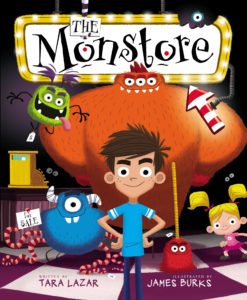
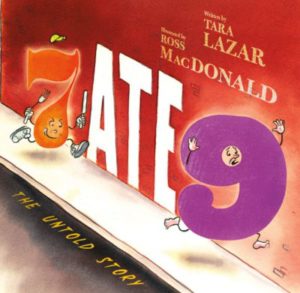
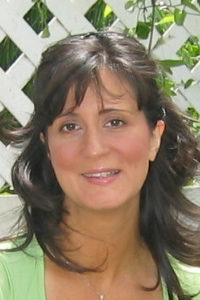
This month’s author interview is with Tara Lazar (rhymes with “bazaar”), a mother of two who is “pushing a stroller along the path to publication.” You probably know her thanks to her terrific website/​blog as well as her quirky, funny picture books, such as these.
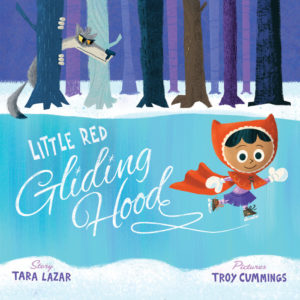
Before we launch into the official OPB interview, let’s get to know Tara a bit via a quick Truth or Lie game. Which of these feels as honest as a cue ball? Which seem as bogus as a four-​dollar bill?

  • Tara chooses cheese over chocolate every single time.
  • Tara walks with a blue cane.
  • Tara once lived in a house that was pink, pink, pink.
  • Tara’s a former figure skating champion.
  • Tara’s hamster, Ozzie, is the world’s cutest.
  • Tara can’t stand coffee.
  • If Tara were stranded on a deserted island and could only have one type of food every single day, it’d be tacos.

Answer Key: All are true! (Yep. Even the thing about coffee.)

So now that you’re starting to get a sense of what Tara’s all about, read on and learn more about the amazing Tara Lazar who sometimes wishes her name were “Tara Laserbeam.” (Spoiler: She’s s total hoot!)

Website: www.TaraLazar.com
Blog: www.TaraLazar.com
Twitter: @taralazar
Facebook: www.facebook.com/authortara
Pinterest: www.pinterest.com/taralazar/


RVC: So what type of kid were you? And how did that childhood prepare you for a career as a picture book author?

TL: Teacher’s pet. Super sharp, but also crazy-​weird. Creative. Writing, acting, drawing, or making something all the time.

I think the acting prepared me to write with a strong voice. I become the character. Being weird as a kid means you are cool as an adult. I never grew up past 8, probably because my parents separated shortly after then and my innocence was shattered. I try to remain that 8 year old as much as possible. In fact, most of my strong memories come from that time period.

RVC: How big of part did books and reading play into those early childhood years?

TL: A big part. I remember my elementary school library telling me that Ally Sheedy wrote and published She Was Nice to Mice at just 12 years old. I was 8 at the time and although 12 seemed like a lifetime away, it was also close enough to become a goal, to become an author myself. It only took me 30 more years!

RVC: I’m always interested in how someone’s first picture book happened. What’s the story of YOUR first picture book? 

TL: I have told this story before, so I am going to boil it down to its most essential elements–I wrote new stories constantly. I brainstormed new ideas several times a week. I stopped submitting and concentrated on my craft. I attended conferences and learned. I made writing friends. After almost two years of this, I wrote The Monstore, my breakthrough manuscript which my critique partners assured me would sell. The Monstore helped me land my agent, Ammi-​Joan Paquette, and my first contract for that book followed shortly thereafter.

RVC: How vital is it for aspiring picture book writers to find an agent first?

TL:  I think now more than ever it is advantageous to have an agent. More houses are closing their doors to unsolicited submissions simply because they receive too many manuscripts to sort through efficiently and find the treasures. An agent opens doors for you and also helps to guide your career.

It is not impossible to be published without one–my friend Josh Funk was discovered in the slush pile–but I think you will get a bigger advance and a bigger publisher (with greater distribution and marketing power) with an agent.

RVC: What does your writing process look like?

TL: First comes the concept, which I write down. Then there’s a lot of thinking. It marinates in my mind subconsciously until I know I’m ready to give the first draft a shot. It’s a gut feeling I cannot explain. Typically it’s weeks or months after the initial idea, but if the idea gets me super excited, then it’s sooner. 7 Ate 9 happened right away, idea then manuscript. BOOMBOOM.

Because of this marination, when I finally get butt in chair, the first draft emerges in somewhat decent shape, and quickly–anywhere from a day to a week.

I spend far more time thinking about a story than I do actually writing it.

Then the story goes to my critique group for a round or two. I don’t do more than two revisions for my group because we all lose that “fresh look” ability, and I believe there is “over-​revising.” Then I give it to my agent who often gives me editorial notes and I revise until she is happy with the story (again, no more than two rounds) and ready to submit.

RVC: There’s no way around it–you’re a prolific writer. Beyond the two-​revisions-​and-​onward strategy, do you have any tips for those who struggle to get projects done?

TL: I think all writers have an undeniable need to write. But it’s important not to compare your output to another writer. We all have our own pace and we need to respect that. My best advice is to learn your process.

What works best for you? Routine? No routine? Experiment and find out.
RVC: So let’s talk about PiBoIdMo (Picture Book Idea Month), which you created in November 2009. Why did you create it? 

TL: PiBoIdMo was patterned after NaNoWriMo, hence the awful name. I began it because I believe picture books are all about great concepts. And to have a winning concept, you need a lot of concepts from which to choose. For every twenty to thirty story ideas, maybe one is worth pursuing. If you spend every day recording at least one idea, you will have a trove of potential stories by the end of the year and never be without one to write.

RVC: And PiBoIdMo became Storystorm in 2017 because…
TL: Again, the name was the worst. I would have created a better name had I thought about it for more than two seconds. No one could pronounce PiBoIdMo and the name didn’t conjure up and idea of what the event was. So I chose Storystorm to suggest a story brainstorm, and I moved it to January so it comes after the holidays instead of during them.

New year, new ideas, a fresh start.

RVC: In addition to being a successful picture book author, you’re a frequent speaker on MS. How do those two careers align?

TL: Get around, over, and through obstacles any way you can. Don’t let them stop you. This message is applicable to writers as well as those who suffer from chronic illness.

RVC: You’ve got a couple of new books coming out soon. Which has the most unusual path from initial idea to publication?
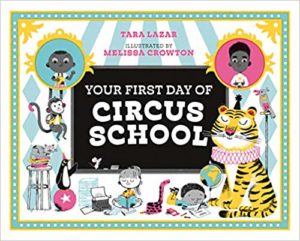
TL: Your First Day of Circus School. The manuscript had so many art notes that it was difficult to read through and understand. So my agent suggested putting it in grid format, which I blogged about here.

https://taralazar.com/2012/​10/​03/​art-​notes-​in-picture-​book-​manuscripts/​

RVC: How many number puns did you have to throw out to make 7 Ate 9 work? And is that more or less than you have to toss during the revision process of your other picture books?

TL: I didn’t throw any out. The important thing when writing with puns is to ensure the story still makes sense with them. The mystery of the story and the solution can be understood by all ages. With the exception of the title, no major plot point relies on a pun.

With all my books, I am more likely to be adding during revision than cutting.

RVC: Okay, it’s time for the Lightning Round! Zippy quick answers, please. Ready? Who’d you rather have as a week-​long houseguest–Sauron or Voldemort?

TL: Voldemort, because he’s English and if I serve Twinings Earl Grey, he’ll most likely act civilized.

RVC: Top three cheeses in order of yumminess?

TL: Manchego, goat cheese, and burrata.

RVC: Norman’s (from your book Normal Norman) middle name?

TL: Frank.

RVC: Name an up-​and-​coming picture book author whose work is always on your MUST-​READ list.

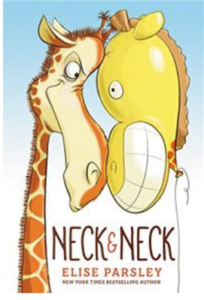
TL: Oh, there are so many!  This field is bursting with talent! But since I just bought Neck & Neck, I’ll say Elise Parsley.

RVC: Your #1 goal as a picture book writer.

TL: To keep being a picture book writer!

RVC: Favorite thing a child has ever said about one of your books?

TL: It happened just last week–a girl said, “you are the author of FAMOUS books.”   She complimented my lemur sweater, too, for bonus points.

RVC: Thanks so much, Tara!
Author Interview: Lynne Marie

This month’s author interview is with Florida writer Lynne Marie. Before the official OPB interview starts, let’s get to know a bit about her via a Ten Cool Bio Factoids list. Enjoy!
  1. Lynne’s favorite 3 places? The library. The World. Disney.
  2. She lives on a lake in South Florida “which she shares with many feathered and scaled friends,” including a a Great Blue Heron named Baymax and four Wood Storks named Michelangelo, Donatello, Raphael, and Leonardo (and of course, her daughter Kayla, son Kevin, and Schipperke puppy, Anakin).
  3. She’s originally from Nesconset, NY but has lived in Sanibel, FL and in Hollywood, FL.
  4. Each year, she tries to read 1,000 picture books. Most years, she succeeds!
  5. Former pets include five hedgehogs: Nike, Willow, Sirena, Athena, and Hamlet as well as a Schipperke name Dante and an African Bullfrog named Bully.
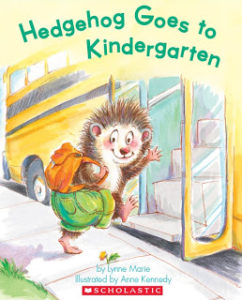
  6. Hedgehog Nike was the inspiration for Lynne’s two Hedgehog books.
  7. She studied English at SUNY Empire State College.
  8. She has two children who “always provide lots of inspiration for her stories.”
  9. She’s a longtime SCBWI member (since 2000).
  10. She loves to travel … which is probably why she also works as as travel agent.

So without further ado, here’s the OPB interview with Lynne, plus a few links if you need more Lynne Marie magic!

Website: www.literallylynnemarie.com
Blog: literallylynnemarie.blogspot.com
Twitter: www.twitter.com/Literally_Lynne
Instagram: www.instagram.com/pictures.by.pixel.pixie
Facebook: www.facebook.com/WordsandPictures.by.LynneMarie
Critique and Mentorship Website: www.thepicturebookmechanic.com (Coming Soon!)


RVC: Prior to getting your first book deal, you had a lot of success in the magazine world with hits at Spider, HopscotchFamily Fun, Writer’s Digest, etc. What was your first professional writing credit? 

LMI have been writing practically all my life and majored in English and Children’s Literature in College and drafted pleadings as a Paralegal, so I did have some experience and skills when I started in magazines. I was fortunate enough to have a small tidbit published in Family Fun Magazine (a parenting magazine) in 1997 as my first official magazine credit. Then, I had another small tidbit published in their book, Games on the Go, in 1998. That’s all it took for me to get the “publication bug” and I have been writing with an eye toward publication ever since!

RVC: What was your most meaningful strike in the magazine marketplace?

LM: Hands down, the most important strike was when I sold my story “Arachne’s Thread” to Highlights for Children, in or around 2003. Ironically, this is scheduled for publication in March 2019.

RVC: My goodness, that’s a long time from acceptance to publication.

LM: “Arachne’s Threat” is a Greek myth about spiders — I think it was really well written, however I was surprised they bought it because it was a little dark for them. I submitted it anyway because they didn’t have many Greek myths and it was one of my favorites and it sold.

Highlights pays upon acceptance and then puts it in a topic folder for future consideration. I guess the world is ready for such myths now 😉

RVC: So you’ve been seriously studying the art of writing picture books for about two decades thanks to college classes, online classes, conferences, and more. What helped the most? What role did mentors and writing critique groups play into your development?

LMI dabbled in book reviews, poetry, and parenting articles for a while before finding my way to picture books in 1999. Once I decided on that path, I went to Borders and purchased a copy of the Children’s Writer’s & Illustrator’s Market and joined SCBWI (Society of Children’s Book Writers and Illustrators). I would have to say, without a doubt, that SCBWI helped the most. 

I have attended conferences on Long Island, in NYC, Massachusetts (NESCBWI), upstate NY (Hudson Valley SCBWI), Western Pennsylvania, Eastern Pennsylvania, New Jersey, LA (each of these several times), Florida and even one in Madrid, Spain. This organization provided knowledge, information, connections, resources and opportunities. In fact, my first book sold indirectly through a NY conference (the editor passed it along to a colleague) and my second book sold as a result of that as well, and my fourth book sold to Meredith Mundy of Sterling as a result of a critique at the 2016 Orlando Florida Conference. She didn’t take the critique submission as she had too many dinosaur books on her list, but asked what else I had. So, I pitched Moldilocks and the 3 Scares, and she asked that I send it. It’s coming out from Sterling in fall 2019. 

RVC: You’ve said that the thing about picture book writing is that it’s NOT about good writing–instead, it’s about great writing. Help clarify that important distinction.

LM:Yes–I’ve also said that great writing is just a foundation for success. The truly essential quality is great storytelling. It doesn’t matter how lovely your writing is if you can’t effectively tell a story and grip the reader to follow your character and seamless plot wherever he/​she/​it goes. 

RVC: What’s the most unexpected tool in your writer’s toolbox?

LM: Hmmm…I would have to say reading, because it’s just so much a basic and not surprising answer that it is often overlooked. Each of my books that have been published are a result of reading at least 50–100 books on similar themes and topics and making sure that my book was as good as, if not better, than the rest AND that it filled a hole in a publisher’s market and list. 

I also think you learn gads from participating in an active critique group AND really considering criticism whether you agree with it or not. 

RVC: What do you get out of your work as a book reviewer and a writer for Children’s Book Insider?

LM: My work as a book reviewer makes me an educated reader, which is essential for success. It also feeds into what I wrote above. This year, I am a Cybils Elementary and Middle Grade Nonfiction Judge, so I am getting to read and review the best of the best! I am truly getting a sense of what publishers are looking for nonfiction, what they’ve published and even, what they haven’t yet published. 

With Write for Kids (Children’s Book Insider), I am getting a chance to share my connections with others and make new ones through the editors and Agents that I interview, as well as learn and get invaluable information from the other columnists who I write with via our monthly e‑zine.

RVC: Let’s talk about your two Hedgehog books. What was the process of developing the character of Spike?

LM: Spike was inspired by my actual Hedgehog, Apollo Nike, who I called Nike and nicknamed Spikey Nike. He was very nervous and would spike a lot around people and noises. No one could hold him but me. Though he had a prickly exterior, he was fine with the right person, and that’s where the idea of Sheldon came from (someone who can handle him physically). 

I thought about equating him with a child and realized that a bus ride would be very scary and unnerving for him, especially if it hit a bump. And wham! The story was born. As always, figuring out the solution was the challenge, but also fun, as I considered which animals he could and couldn’t sit next to. Of course, Sheldon the Turtle, won the seat. 

RVC: Does Spike have more adventures in him?

LM: I truly hope that he does.

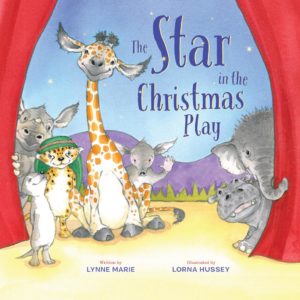
RVC: You’ve got a new picture book that just came out. What’s the story of how The Star in the Christmas Play came to be?

LM: The Star in the Christmas Play is one of my older stories that was inspired by a stuffed giraffe that my daughter had named Raffi. The idea began with a character and his flaw/​story problem–he was too tall to do what he wanted to do. From there, I did have quite a challenge in envisioning a solution for being too tall, so I flipped it in my mind and started to think of the things that a giraffe wouldn’t be too tall for. Because some of them were too obvious and/​or visited in other books, my mind raced past them. Then I thought of “to be a star.” 

From there, my mind tumbled around with the word “play” (movie star or lead in a play) and a variety of scenarios until I settled on one of the most famous stars of all (the Star of Bethlehem). From that point, everything came together so nicely and I knew what Raffi wanted in the story–to be the “star” of the Christmas Play. 

After completion, I put this away and only looked at it from time to time. Until…I saw the Sparkhouse Family (now Beaming Books) Contest. I didn’t really have much in the way of religious-​themed book beside this one (although religion is really just the backdrop and the theme is accepting yourself and finding your own way to shine), but I sent it along anyway. Sometime after the close of the contest, Andrew DeYoung contacted me to tell me although my entry didn’t win, they couldn’t stop thinking about it and and were sending it to acquisitions the next month! Thankfully, it passed through and came to life in the capable hands of Lorna Hussey, illustrator of my second book, Hedgehog’s 100th Day of School.

RVC: Want to tease us about picture books under contract?

LM: Both Moldilocks and the 3 Scares (Sterling) story and/​or Let’s Eat! Mealtimes Around the World, are scheduled for release in fall 2019. Moldilocks is a Goldilocks retelling starring a zombie girl and monsters, so of course, I am extremely excited about this. It adds another level to the story in that the lives of  three monsters who feel something is missing become “just right” when an orphaned Zombie girl sloshes across their porch and into their hearts. And Let’s Eat is a fun exploration of meals and customs of children from 13 countries across the world. We intend to offer a lot of supplemental materials via both my blog and the Beaming Books blog, like recipes and other fun information.

RVC: Speed Round! Ready … go! Worst name for a hedgehog?

LM: LOL. Probably Prickles. 

RVC: Most underappreciated food joint at Disney?

LMOh, gosh–I could do an entire interview on this. For fast food at Magic Kingdom, Casey Jr. They have a really tasty Vegan Slaw dog. For full service–everyone wants to eat at Cinderella’s Castle but my absolute favorite is 1900 Park Fare where you get to meet Cinderella and the Prince, but even better–the Wicked Stepmother and the Stepsisters. And the buffet is decent too. 

Since this has become more popular over the years on its own, I’ll add the buffet at Trail’s End at the Fort Wilderness Campgrounds AND breakfast at the Garden Grill in Epcot. 

RVC: Favorite writing venue?

LM: At home, in my office on my computer, surrounded by all my books and inspirational tchotckhes. I love my writing space. 

RVC: Best picture book of 2018?

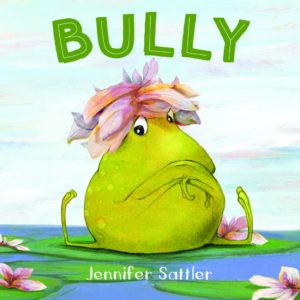
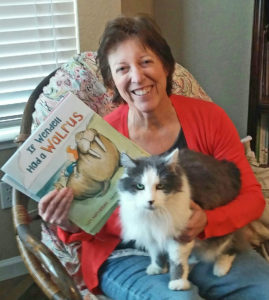
LM: Oh, goodness! This is a tough one. But thinking of the books that I just read, I really loved Bully by Jennifer Sattler and Lost in the Library: A Story of Patience and Fortitude by Josh Funk. Misunderstood Shark by Ame Dyckman, If Wendell Had a Walrus by Lori Mortensen, just to name a few because I honestly could go on and on and on.

[Sidenote from OPB: Check out Lori’s fall 2018 interview with us!]

RVC: The most important reason aspiring writers should join SCBWI?

LM: I am a HUGE fan of SCBWI for so many reasons. However, joining SCBWI and going to conferences is only part of the recipe for success. You have to do the work. Read, write, revise, critique, be critiqued, read, write, revise, repeat.

RVC: Three words that describe your approach to picture book writing.

LM: Humor. Heart. Imagination. 

RVC: Thanks so much, Lynne!

Author Interview: Lori Mortensen

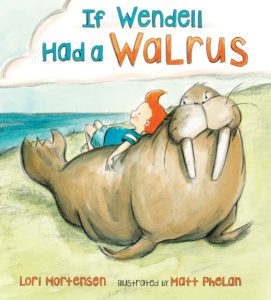
This month’s Author Interview is with Lori Mortensen, an award-​winning children’s book author of more than 70 books and over 350 stories and articles. Her recent picture book releases include If Wendell Had a WalrusChicken LilyMousequerade Ball illustrated by New York Times bestselling illustrator Betsy Lewin, and Cowpoke Clyde Rides the Range, a sequel to Cowpoke Clyde & Dirty Dawg, one of Amazon’s best picture books of 2013.

When she’s not letting her cat in, or out, or in, she’s tapping away at her computer, conjuring, coaxing, and prodding her latest stories to life. Sometimes takes a break and answers marvelous questions posed by Ryan G. Van Cleave at Only Picture Books.
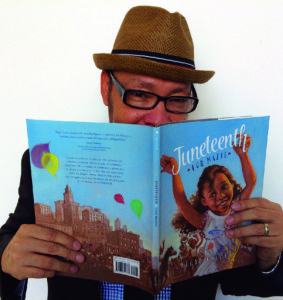
For more information about her books, critique service, events, and upcoming releases, visit her website at www.lorimortensen.com.

Blog: http://lorimortensen.blogspot.com
Twitter: https://twitter.com/lorimortensen
Facebook: https://www.facebook.com/lori.mortensen.77
Goodreads: https://www.goodreads.com/author/show/90109.Lori_Mortensen


RVC: At what point did you realize that you were a writer? What were the warning signs?

LM: Interestingly, I didn’t begin writing until I was a stay-​at-​home mother of three. Up until then, I was an avid reader, but writing never occurred to me. I’d never met a writer, and the whole thing seemed completely out of the realm of possibilities. However, when I had my own children, I was reintroduced to children’s literature and began to wonder what could write.

Taking a gigantic step, I signed up for a writing course through the Institute of Children’s Literature. Although I was a complete beginner, I soaked up each lesson like a sponge and each step was a thrilling challenge. When I sold my final assignment to a children’s magazine, I was hooked. If they wanted this story, maybe they’d want another. And if they bought something, maybe another publisher would too. I’ve been writing ever since.

It’s been my privilege to be a writing instructor for the Institute of Children’s Literature for the past 12 years which continues to be a rewarding, full-​circle experience.

RVC: How does your teaching at the Institute inform your own writing?

LM: The particular course I teach is writing for children’s magazines. After reading and critiquing hundreds of manuscripts, it’s easy to see the common mistakes nearly all new writers make. When I began writing many years ago, I made them too. But over time, challenge by challenge, writers improve as they put in the time to understand and hone their craft.

Most students are surprised at the work and persistence it takes to succeed. Some decide writing is not for them. However, when students catch the vision and are willing to put in the work, success follows. Teaching is a regular reminder that writers can improve, and whatever measure of success they achieve is in direct proportion to the effort they’re willing to put into it. It’s a truism for nearly anything in life.

RVC: What are a few of those common mistakes that nearly all new writers make?

LM: The most common mistakes have to do with point of view and conflict. Many new writers create a cast of characters and then try to tell everyone’s story all at once. By jumping from one point of view to the next, they end up not telling anyone’s story. If there was a main character, they were quickly lost in the shuffle.

Lack of conflict is another common mistake. Many new writers don’t realize that there needs to be a story problem for the main character to face and resolve. Without conflict, there is no story or reason to keep reading. Who resolves the story problem is just as critical. Many times, new authors just can’t help putting parents in charge. The parents tell the main character what to do and teach them a lesson that’s usually about not lying, stealing, or cheating. It’s a challenge for new authors to see things from a child’s perspective instead of the wise, responsible adult’s.

RVC: Your Twitter bio claims that you’re the not-​so-​proud owner of a “misbehaving muse.” Tell me more.

LM: If I could tame that muse, I certainly would. As it is, sometimes ideas land at my feet and blossom into wonderful, exciting projects, and other times it’s a wrestling match to see who will come out on top. While many writers lose count of all the ideas popping into their head, for me it’s more like a Sherlock Holmes affair. Instead of fending off a deluge of ideas, I have to pluck them out of my world like shiny pennies waiting to be found. In either case, it’s an exhilarating and rewarding process to see an idea come together in its finished form.

Now if my muse would get on the ball, I’d get bushels of projects done!

RVC: What does your writing process look like, and what role does revision play in it?

LM: My writing process begins with an idea. Where that idea comes from is the challenge. Sometimes an idea lands at my feet. Other times, I show up at my computer with nothing in mind and know I need to get started on something. I often start the process by immersing myself in the collection of picture books in my bookcase. Sometimes the rhythm of the language sparks an idea. Other times, it’s an illustration or style that gets me thinking. Then, I start writing and see where it takes me. Many times, I don’t know where it’s going when I begin, but as I progress, new ideas come to mind and the story begins to take shape.

Getting through the first draft is the biggest hurtle because it would be so easy to toss it in the bin at this point. What a horrible, ill-​conceived mess! But luckily, I’ve learned to trust the revision process. How many times do I revise? Numbers aren’t important, but quality is. When the manuscript is as good as I can make it, I share it with my trusted critique partners knowing they’ll see things I missed. Once the feedback is in, I return to the revision process. I may not agree with everything they’ve said, but their feedback is invaluable. They not only celebrate what’s wonderful about the manuscript, they help me see where it falls short and how it can be improved.

RVC: Why picture books?

LM: Although I’m an avid reader of adult literature—cozy mysteries, biographies, and a variety of nonfiction, I love to read and write picture books. To me, they’re like mini masterpieces—clever, humorous, smart, informative, whimsical, and unforgettable—all packed within 32 pages. I love the awesome mashup of the words and art and the challenge of writing what I would love to read.

RVC: The first book of yours that I ever ran across was Cindy Moo, where a cow hears the age-​old nursery rhyme and decides to prove that cows CAN jump over the moon. How do you know when rhyme is right for a book—like it is for Cindy Moo—or when it’s going to get in the way of the story?

LM: In the case of Cindy Mooit was clear from the beginning that I would tell this story in rhyme because it was based on the rhyming nursery rhyme, Hey Diddle Diddle. I wrote the Cowpoke Clyde and Dirty Dawg series in rhyme because it seemed like the perfect way to capture Cowpoke Clyde’s rambunctious efforts to catch ol’ Dirty Dawg. Rhyme has a rhythm so I used it to magnify the energy and pace of the chase. As you noted, however, rhyme isn’t suited for everything.

For me, the key is finding the voice of the story. Some ideas lend themselves to rhyme and others don’t. For example, when I began writing If Wendell Had a Walrusthis opening line came to mind: “One day Wendell was minding his own business when a walrus floated by. Of course, it wasn’t a real walrus. Just a cloud one. But when Wendell saw it, he started thinking about real ones all the same.” In this instance, writing it in prose captured the thoughtful nature of the moment where the character was simply looking up at the clouds and imagining.

RVC: Music or silence when writing?

LM: Silence. I’ve always thought it would be great to write with music percolating in the background, like having a direct link to some musical muse. But silence works best for me. When there’s music, or even conversations going on in the background, it makes it harder for me to listen to the stream of thoughts going on in my head which is the essence of writing.

RVC: Dream illustrator you haven’t yet worked with?

LM: What a great question. For someone who writes picture books, this is the dream, icing-​on-​the-​cake question, indeed. Although I have dozens of favorites, my top illustrators would have to be Peter Brown, Oliver Jeffers, and Rowboat Watkins. Their work is so fresh, so original, so … emotionally satisfying! The last may seem like an odd category, but one of the things I love about their work is the brilliant way they convey their characters’ emotions along the way.

A few more favorites include Tracey Campbell Pearson, Levi Pinfold, and Poly Bernatene. (I could go on and on!) Interestingly, one of my recent favorite picture books was Marilyn’s Monsters written by Michelle Knudsen and illustrated by Matt Phelan. I was thrilled when Matt Phelan came on board to illustrate my latest picture book release, If Wendell Had a Walrus.

RVC: The name of your “megafluffy” cat is …

LM: Max

RVC: If your 70+ books got involved in a literary deathmatch—totally Mad Max style—which title would the last one standing? And which would you have been secretly rooting for?

LM: Wow! That creates an interesting mental picture, doesn’t it? I think Cowpoke Clyde and Dirty Dawg would come out on top, fer sure. Clyde would grab his rope, lasso the lot, then get on with washing his ol’ Dirty Dawg. Yee-​haw! No need to root for him because Cowpoke Clyde would have it in the bag all along.

RVC: Best compliment a child has ever given you about your books?

LM: “Read it again!”

RVC: Thanks so much, Lori! 😊


Illustrator Interview: Floyd Cooper

This is an exciting time for OPB–it’s our FIRST EVER illustrator interview. Yay!

Even better, it’s with the amazing Floyd Cooper who I got to meet and listen to at the Orlando SCBWI conference this past summer! Double/​triple yay!

For those how somehow don’t know all about Floyd … he’s the Coretta Scott King award-​winning illustrator of more than 90 books for children. Floyd started his career in illustration at Hallmark. After a successful career in the industrial side of art, he made the leap into picture books with Eloise Greenfield’s Grandpa’s Face in 1996.
Since then, Floyd has worked with bestselling authors such as Jane Yolen, Nikki Grimes, and Virginia Fleming. In addition, Floyd has illustrated and authored many of his own books, such as Jump!: From the Life of Michael Jordan, and the ALA notable book, Coming Home: From the Life of Langston Hughes.

About working in the world of kidlit, Floyd says: “Giving kids a positive alternative to counteract the negative impact of what is conveyed in today’s media is a huge opportunity.”

Website: www.floydcooper.com
Facebook: www.facebook.com/floyd.cooper.12
LinkedIn: www.linkedin.com/in/floyd-cooper-652b2511


RVC: You’ve used the word “voice” a lot when talking about those involved in the making of picture books.

FC: As illustrators and writers, I believe we’re born different–we’re wired differently. For both types, you’re always working with voice. You’re using the various languages you’re blessed with–your creative sensibilities. We use these things to communicate what we hope to say in the language of art and text.

It’s so wonderful when it comes together, and I can’t think of any other thing on earth where these two disciplines come together into one unit, one package, and have such a unified voice.

RVC: When did you first realize that you were an artist–that you had a creative voice?

FC: For me, it started early. I was three years old. This was in Oklahoma–Dad was building a house, and one day, there on a piece of Sheetrock on the side of the house, I scratched a big, wonderful illustration of a duck right on it. Of course, no one else saw a duck because it was drawn by a three year old.

I saw the duck quite clearly.

From that point on, it affected the way I looked at the world. I’m sure that my style, and how I create my art, all goes back to that day and the time I had to erase my duck.

RVC: Share a bit about what your post-​duck childhood was like.

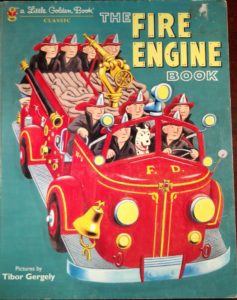
My mother told me stories and we read a lot of books together. I remember my first book–a Little Golden Book called The Fire Engine Book. From reading this and so many other titles, my imagination was constantly fed, and it helped me on the path of expressing myself visually.

When I was seven, for my birthday, someone knew my predilection and I got my very first art supplies. A tray of colors and a scraggly brush. I used that to start making pictures.

RVC: Was it smooth sailing from then on?

FC: Not at all. There were 11 elementary schools in north Tulsa, and I attended all of them. We lived in low-​income housing–there was a lot of moving. Each school I went to, I had to make new friends, and make new connections. I found very early on that I could find myself a friend by showing the art teacher my drawings and paintings. I learned the currency of art–the value of it. Art helped me get by.

My teachers started to notice my work and whisper good things into my ear. And you know what happens when teachers say good things in a kid’s year.

The more they said, the more I painted, and I painted my way right into the University of Oklahoma thanks to a scholarship. And from there, I got my first job working at Hallmark.

RVC: Weren’t you warned away from working for Hallmark?

FC: Well, my professors thought it was a poor option. I liked to say that it was a great job, but you wouldn’t want to live there.

During my two years there, I never did get a chance to make a greeting card–Hallmark turned everything down. Every time something of mine got turned down, though, I found myself a reason to go the art supply room and totally load up. So in a sense, it all seemed to work out.

This was one of many important life lessons.

RVC: Free art supplies are awesome?

FC: Absolutely.

RVC: Despite never making a greeting card, how important was that time at Hallmark for your own development as an artist? 

FC: Hallmark regularly brought in illustrators to give workshops to their REAL artists, and I wasn’t supposed to go. I was just a revamper, after all But I had two friends from Brooklyn working with me, and when the big artists came, we all snuck into the seminars and workshops. That’s how I met one of my heroes, Mr. Mark English. He’s a prominent illustrator from the 80s and 90s. He was the king of illustration in those days. He helped me out a good bit, and we ended up working on some big projects together.

The way it worked was that I’d do the black and white, and sometimes the color too, and the famous guy comes in and signs his name to the whole job. I was willing to do that because he was Mr. Famous.

My days at Hallmark, though, were numbered once they saw me working with Mark English. It wouldn’t be long before I had my first big sale and was off to New York to do my own art full-time.

RVC: That’s partially because you weren’t actually an artist for Hallmark , were you?

FC: That’s right. I worked in a department called revamp, where you take art from the vault and change it, erase it to make it more marketable. Little pigs became little dogs. And peonies became daisies. Whatever the market conditions needed, the revamp department would deliver.

The next time you’re shopping for a greeting card, look closely. There might be a ghost image.

RVC: So you had to erase your duck, and Hallmark paid you to erase greeting card art. It seems like that all played a large part into the distinctive subtractive style you use today.

FC: You’re talking about oil wash on board. I put a thin coat of oil paint on an illustration board with a 1‑inch brush. When it dries, I use a cheap, stretchy eraser to create shapes into the background. You can create a bit of color by adding some white paint, and even more with crayons, acrylics, and oil color.

There are many different approaches to age-​old problems. This is mine–a 50-​cent eraser.

I love erasers. I have a big collection of erasers at home. I have ink erasers, pink erases, even a Spongebob eraser. But my favorite? A cheapo stretchy one.

RVC: So let’s talk about your interactions and influence on artists of today. Many of them–especially artists of color–look up to you. What do you say to young people when they admit they’re starting to think about maybe becoming an illustrator?

FC: Always keep a sketchbook with you. Draw all the time.

Plus it’s very important to have a good education as well. Make sure that every discipline is well-​represented in your studies–don’t just double-​down on art. It all helps you become a better artist.

RVC: Let’s say that someone has studied widely but has now finally committed to art. Now what? What’s the #1 struggle that illustrators face when looking to break into the picture book world?

FC: The secret to success in picture books–the secret channel–is getting an editor. Having a relationship with a good editor will offer you career longevity.

You may get a book published. You may self-​publish a book that does well. But nothing beats having an editor at a publishing company who believes in your work and battles for you and your work when people don’t get it. These editors often find ways to keep you working.

RVC: So how do we get one of those saints editors?

FC: Get connected with professional organizations like SCBWI. That’s a great start. Then go to conferences like SCBWI and others–that’s how you can meet them directly. Attend the workshops and seminars. Get yourself and your work in front of them.

As preparation for meeting editors, though, you need to build your technical craft. That comes from hard work, dedication, and reading lots of books. You should read every book you can get your hands on. Inhale them.

At some point, you’ll know the market really well. That’ll guide you as to who is publishing what, and help you see where you might fit in the overall scheme.

RVC: Your overall scheme includes your wife, Velma, being your agent. What’s the best thing about that?

FC: She understands me. Even if you have an agent who isn’t your spouse, having an agent IS like having a spouse. It’s like a marriage–it’s a relationship.

RVC: It’s time for … The Lightning Round! Ready? GO! Favorite guilty pleasure reading?

FC: I love biographies. I make them too, but I’ve always been quite a history buff–especially sports books, and sports history.

Currently, I’m reading Sally Jenkins’ The Real All Americans–it’s a wonderful story. She’s so great at building this big panorama of huge historical events, how they all relate, and how we can see them through the Native American’s eyes and through the settler’s eyes, too.

RVC: If you’re playing hooky versus making art, you’re most likely …

FC: Watching DVDs or playing solitaire. It depends on where I am, and what kind of break I’m taking.

If it’s a major break, I like to run at night. I used to play tennis quite a bit, but it’s been a long time since I’ve been on the court.

RVC: Favorite Crayola color?

FC: Grape.

RVC: If you didn’t create that duck way back when, and you never went down the path of art, what would you instead be doing today?

FC: I was a consumer of The Weekly Reader in third grade, and I remember reading a lot about the US Navy hospital ship, the SS Hope.

I always had a desire to be a doctor. And all of my aunts and great aunts wanted that for me, too. I was good with my hands and I was fairly bright, so they always had it in their minds that I’d go to med school to become a surgeon.

Of course, I ran into issues with high school chemistry and, well, art was always there. I didn’t even know I could make money as an artist. But I learned quickly that you can make doctor money as an illustrator.

RVC: What’s the greatest compliment someone can give you about your art?

FC: That they like it enough to buy my book. It’s always a great compliment sometime choose to pay money for something you created.

RVC: Name someone you’d most like to work with on a book.

FC: I’d LOVE to work with LeBron James on a book. I’ll take Steph Curry, too. I’m a big basketball fan.

RVC: What about Draymond Green?

FC: Oh yeah. He’s fierce on the court–he can be a real bug in your bonnet there–but he’s definitely a guy you want on your side.

RVC: And you’re an illustrator any picture book author would want on their side, too. Thanks for sharing your story here, Floyd!

Author Interview: Liz Garton Scanlon

This month’s author interview is with Liz Garton Scanlon. I had the pleasure of witnessing two days of her talking about picture books at the June 2018 SCBWI Summer Workshop in Orlando. Let’s be clear—I filled two pads of paper with scribbles/​notes.
She’s got bunches of things worth sharing as introductory bio material, but let’s just focus on the 10 factoids about her that I find most fascinating. Without further ado, they are:

  1. She “wrote an overly long autobiography in second grade.”
  2. She’s lived in Colorado, Wisconsin, Ohio, England, Colorado (again), California, and Texas, where she has since lived for many years. (Austin, Texas shout out!)
  3. She aspires to one day beat her family at board games.
  4. She has “dozens of cousins.”
  5. She has “very curly hair.”
  6. She is “darn good at shuffling cards.”
  7. She teaches at the Vermont College of Fine Arts.
  8. Her dream breakfast? Strong coffee and gingerbread pancakes.
  9. She works, mostly, in a “closet-​sized studio at an old library table.”
  10. Joanne Woodward narrated a video Liz’s second book, All the World.

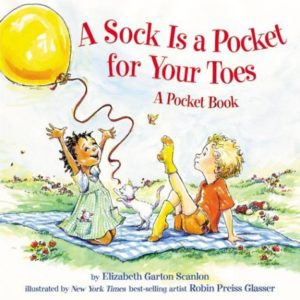
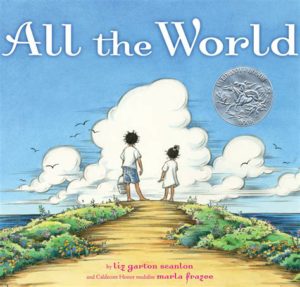
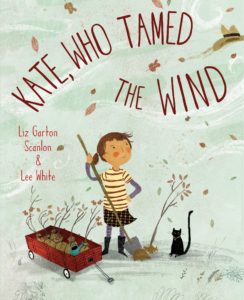
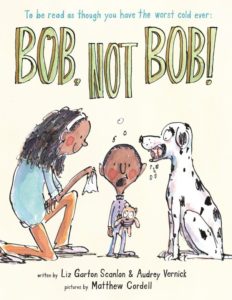
And the bonus factoid #11? She’s the author of lots of picture books, including these three (below) that I dig quite a bit.


Website: http://lizgartonscanlon.com
Facebook: https://www.facebook.com/liz.g.scanlon
Twitter: https://twitter.com/lgartonscanlon
LinkedIn: https://www.linkedin.com/in/liz-garton-scanlon-8045533/


RVC: I can see where degrees in journalism and English can lead you to the path to writing for kids. Same with editing a poetry journal. But corporate marketing communications? Was writing picture books an antidote to that? Or did that offer you skills that translated better than one might expert to writing picture books?

LGS: Ha ha—this question makes me laugh! YES, writing picture books is an absolute antidote to writing corporate communications. I left that job after one too many conference calls sent me to bed with a migraine. When I finally got up, I knew I was done.

That said, the work served me in many ways. First, it made it possible for us to have babies, pay our mortgage, and send my husband to graduate school all at the same time! But also, corporate work provided a steep learning curve in subject matter that was new to me since it required precision on a deadline and it asked for brevity and flair. I think I got to be a better writer through all that, so I’m thankful.

RVC: A Sock Is a Pocket for Your Toes is a fun title. That was your first picture book, too, right? What’s the story of how that came to be?

LGS: Yep, that was my first book. I wrote it when my eldest daughter was a baby. I was getting her dressed one day and said, “Look, a sock is a pocket for your toes!” and instantly, I was flooded with more than enough pocket metaphors to fill a picture book! But it wasn’t just my first book—it was also a mini-​education in writing rhyme for kids. I had submitted a manuscript that was, metrically, very loose—almost free form—and my editor asked for exactitude. Predictable syllabics and rhythm for the read-​aloud set! This makes sense when you think about it, but it was a tough lesson to learn because revising rhyme is excruciating.

RVC: Let’s talk about rhyme a bit more. Pretty much everyone likes it … when it’s done well. How DOES someone write/​revise for rhyme? Any strategies? Tips?

LGS: Oh, rhyme. It’s so good when it’s good, isn’t it? So musical. So memorable. But boy, is it tricky. Here’s the thing—it’s more than coming up with a few decent end rhymes. It’s coming up with perfect end rhymes that actually serve the story at hand. That say what we want them to say. That say what the story needs (rather than forcing an illogical digression just to make the rhyme work). And it’s about perfect meter, too. Rhyme is nothing without meter, so we need a regular syllabic pattern along with the rhyme scheme, and we need to make sure we’re not having to put the emPHAsis on the wrong syLABble when we read it aloud.

As for revising, we must be willing to unravel the whole thing if necessary. We tend to think that once rhyme is drafted, it’s sacrosanct. But sometimes we have to pull it apart—and even toss out darn good lines—to get it right.

RVC: On one hand, the story of how A Sock Is a Pocket for Your Toes is one of those easy-​peasy it-​worked-​like-​magic tales, right? But didn’t it also have quite a few hiccups/​challenges along the way?

LGS: Sure, every book has its hiccups. And speaking of rhyme and meter, I wrote and submitted that manuscript with no discernible pattern to it at all. I thought I was composing jazz, and that the variations were creative and fun! My editor helped me see that I was making it almost impossible to read aloud and I’d done away with all the rhythmic predictability that makes rhyme so pleasurable to kids. Honestly, A Sock Is a Pocket for Your Toes served as my own mini picture book boot camp, and I needed it.

RVC: Your Caldecott-honored picture book, All the World, was illustrated by Marla Frazee. What was it like working with her?

LGS: I was a serious devotee of Marla’s work long before she was my illustrator or my friend. In fact, our first-​ever contact came via a fan letter I wrote her after reading the Clementine books with my girls. Her illustrations in All the World made the book what it is—a physical place of beauty and comfort and communion open to every reader. And making it together was, really, a deep pleasure. The process was more collaborative than most picture book projects in that we spent time over many months—via phone and email, and with our editor Allyn Johnston of Beach Lane Books—massaging the text and illustrations until the marriage was just right.

I’ll always treasure that experience and the final product.

RVC: Speaking of collaborations … you’ve successfully written picture books with Audrey Vernick. What’s your secret? What do you get out of collaborating? How do you make it work so well?

LGS: Key to collaboration is admiration and connection and respect. If I didn’t adore Audrey and her writing—and vice versa—I don’t think this would work. Also, we do something kind of brave (or crazy)—we write by passing a Word doc back and forth, and we don’t use comments or edit mode. At all. When it’s our turn, we just add and delete and amend as we see fit. Without permission. We take absolute ownership—until it’s time to send it on. In that way, the piece is completely ours and then again, not ours at all. The result is that we’re deeply engaged but not egoic, which is good for the work and our own well-​being. Also, it’s really fun.

RVC: While I’m sure that you had some degree of fun while writing of all of your books, it seems that Kate, Who Tamed the Wind might’ve also provided a lot of challenges for you. Far more than usual, right?

LGS: That book. Oh, mercy. It took more than fifteen years from idea to publication. And more than 100 drafts. There are rhymed and unrhymed versions. Versions with a man, a woman, a little boy, a little girl. Versions written in past tense and present.

Honestly, if there was something to try, I promise you I tried it. What I wanted, in the end, was something lyrical, relational, environmental, cumulative, mystical, personal, read-aloudable—and I guess it just took me a long, long time to achieve all that.

RVC: Let’s talk about the drafting process. You’ve got an interesting idea regarding the value of those first drafts.

LGS: Anne Lamott talks about “shitty first drafts,” and this is just my version of that. I constantly remind myself that a first draft doesn’t have to be lovely. It doesn’t have to flow, or be the right shape or length. It doesn’t have to be good at all! It just has to reveal itself to me.

It’s a place where I get to bumble about, where I get to walk myself into the story—to tell myself the story. Once I’ve done that, then it’s time to figure out how to tell it to everybody else.

RVC: Speed round! Hardest word you’ve ever managed to rhyme well.

LGS: Oooo, I’ve got a few. Lemonade. Steadfast. Strut. I do love the puzzle of a good rhyme!

RVC: An illustrator you’d love to work with on a future book of yours.

LGS: I have SO MANY ILLUSTRATOR DREAMS. Many of them, of course, have been answered! (I’ve been very, very lucky in this regard.) As you know, I just spent a day teaching with Floyd Cooper at the Florida SCBWI conference and I love that man and his work, so that would be pretty great. But I’m also always yearning to work with up-​and-​coming female illustrators who are still having a harder time getting noticed in the picture book world. More than half my books have been illustrated by women and I’m liking that track record.

RVC: If you had to write longhand, would you use a pencil or pen?

LGS: Pencil—as long as it was really sharp.

RVC: If you never became a writer, you’d instead be …

LGS: A lawyer. I like arguing and I did well on the logic portion of the GRE. So, yes. A lawyer … but living on a horse farm.

RVC: Best late-​night snack?

LGS: Popcorn with chili powder and brewer’s yeast.

RVC: Favorite non-​kidlit genre to read?

LGS: I always have a novel, a collection of short stories, and a book of poetry on my bedside table. I choose based on time of day, emotional state, and exhaustion level.

RVC: Best compliment a child could ever give you about one of your books?

LGS: “I’m gonna write a book like this someday.”

RVC: Thanks oodles, Liz!

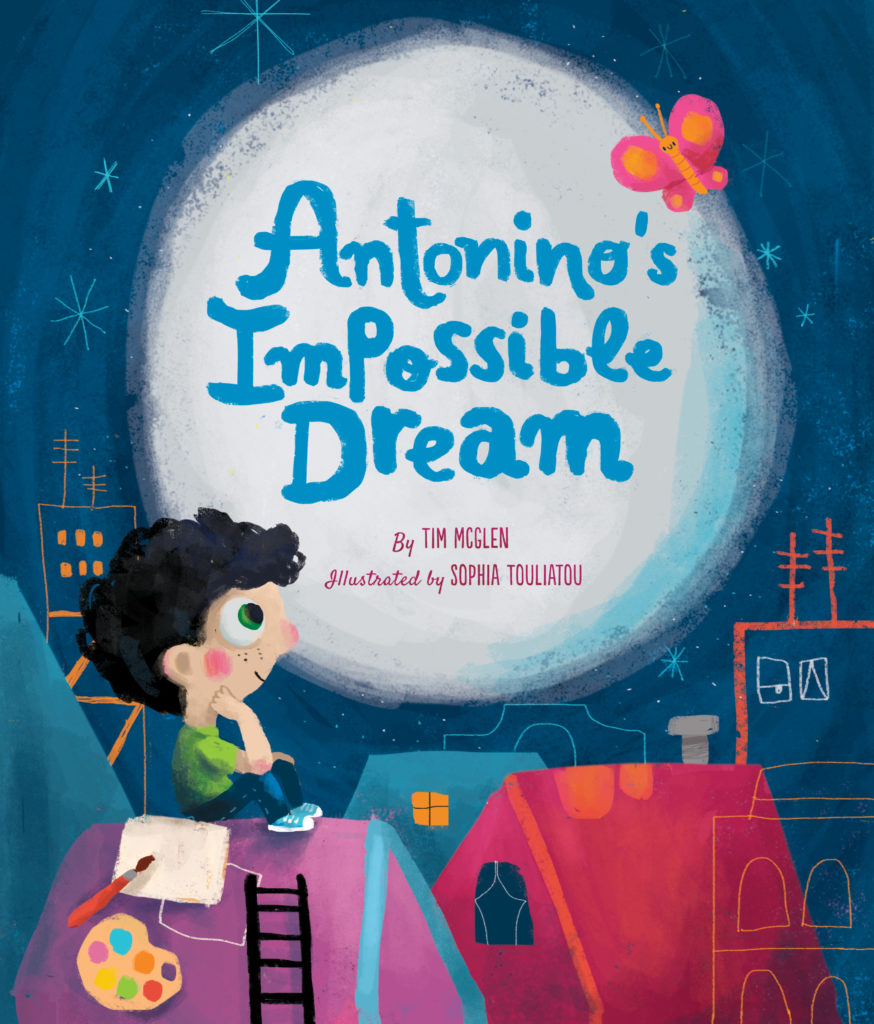
Picture Book Debut: Tim McGlen’s Antonino’s Impossible Dream (with cover reveal!)

For those OPB readers who’ve asked for more behind-​the-​scene stories about debut picture book authors—this one’s for you!

It’s with great pleasure that OPB has been asked to debut the cover of Antonino’s Impossible Dream by first-​time picture book author Tim McGlen. The book is being published after winning the Second Annual Prize for Original Children’s Book by by Minneapolis publisher Beaming Books. About the manuscript, Development Editor Naomi Krueger said, “Antonino’s Impossible Dream is such a fresh portrayal of how art and the willingness to learn new things can bring people together. Our team was captivated by the unique storytelling voice and the possibilities for vibrant art to go along with this artsy story.”

Tim McGlen teaches at a Montessori school, where he enjoys seeing children discover their potential as learners, creators, friends, mentors, teammates, and community members. His involvement in Florida’s SCBWI community makes him a happy writer. When Tim’s not teaching or writing, you can find him working out stories on his bicycle, cooking up flag football plays, or reading.

Twitter: https://twitter.com/TimMcGlen
Facebook: https://www.facebook.com/tim.mcglen


RVC: What were the biggest challenges you encountered when first trying your hand at writing picture books?

TM: As a short story author, I had no idea how to write a picture book. My first manuscripts clocked in at 1,200 words. Sound familiar, anyone? It took committed study and deconstruction of good picture books, learning at SCBWI conferences, and reading books like Ann Whitford Paul’s Writing Picture Books to begin to gain competency.

RVC: What are a few of those picture books that proved most useful to you early on?

TMMy Red Balloon, by Kazuaki YamadaSalina Yoon’s Be A FriendWhere the Wild Things Are, of course. All are spare with their language.

RVC: So let’s get to the big story here. Antonino’s Impossible Dreamyour debut picture book—is coming out in spring 2019. What’s it like being a debut picture book author waiting for your book to hit the shelves? (Though it is available for pre-​order already!)

TM: A lot of work is being done by other people, so I just keep to my routine of writing, revising, and studying. At the same time, random little gurgles of “Oh, yeah, this is really happening!” bring excitement. I’m mostly eager to see Sophia’s finished spreads. She’s a talented artist.

RVC: How did Antonino’s Impossible Dream come about? What’s the story of how that story came to be?

TM: It’s a book about what making a friend looks like. A little more than a year ago, I knew I needed to write something that would rise above my other manuscripts. I hopped on my bicycle, pedaled away from humanity, and started speaking first lines. Another good manuscript came from that same ride. Now the manuscripts from “before” sit in a file cabinet, and I work on new material. I wonder if that line has to happen in every writer’s life.

RVC: What’s been the biggest surprise in terms of the manuscript-​into-​final-​product process so far?

TM: The revelation that as picture book author I am one third of a collaborative project was something I never thought that deeply about. And in saying that, I’m thankful to work with an editor who has such a strong vision for this book.

RVC: Describe what it’s like working with an editor who has a strong vision for your book.

TM: I submitted a honed manuscript with zero art notes to leave plenty of room for visual interpretation, and Andrew figured it out. He saw the book around the words. He envisioned a distinct setting and how it integrates into character. He saw an artistic style.

RVC: This is Only Picture Books’ first cover reveal. Thanks for that, by the way! But tell me—what’s the big deal about cover reveals for picture book creators? What does it mean to you personally to finally see the fully-​imagined cover?

TM: The cover is the portal into the story world. It’s what every child sees first, what launches their imaginations. Setting, protagonist. I would like to spend some time here, with this person who could even be me. The cover is the agent of the experience awaiting inside the book.

So to see Antonino’s cover rendered so expertly fills me with hope that children will want to climb into the book and stay there.

RVC: What did you edit out of Antonino’s Impossible Dream?

TM: Good material that did not belong in the book, discovered primarily through dummying.

RVC: Three words that come to mind when you look at the cover of Antonino’s Impossible Dream?

TM: POSSIBILITY. (Isn’t that ironic? Thanks, Sophia!)

CREATIVITY.

WOW.

RVC: What’s the next picture book project for you? A sequel to Antonino? Something else?

TM: Anthropomorphism. Fish out of water. And yes, a sequel. Thank you, Ryan.

RVC: Thanks, Tim. Best of luck for you and Antonino!