

 This month on the OPB Author Interview Series, we’re delighted to feature Susan Hughes—an award-winning Canadian author and freelance editor with more than 30 books to her name. Susan’s picture books range from joyful read-alouds like Hooray for Trucks to powerful nonfiction like Walking in the City with Jane and Walking for Water. Her books have been honored with the Norma Fleck Award for Canadian Children’s Non-Fiction and numerous other accolades.
In addition to her writing, Susan is a sought-after editor and story coach who has helped countless writers strengthen their craft. A lifelong lover of books, Susan now lives and works in Toronto, in a tall house with a red door, where she continues to balance her own creative projects with guiding others toward theirs.
Let’s jump into the conversation!
RVC: Susan, you’ve written everything from nonfiction to fiction, chapter books to YA—but picture books seem to be at the heart of your work. What keeps you coming back to them?
SH: There is something so marvelous about writing and rewriting a story with a limited number of words (or even none !), then feeling that “click” that means it’s good, it’s come alive; and then releasing it into the world with the hope that what might come next is a publisher who loves it and acquires it; an experienced editor who makes just-right suggestions to further shape it and improve it; an illustrator with imagination and talent whose visuals elevate the story even more in ways both expected and surprising, and so on. It’s fantastic!
RVC: I quite agree! Now, you’ve said your love of writing goes back to your childhood writing club. How did those early experiences shape the way you approach writing now?
SH: When I was in grades 7 and 8, my two best friends and I loved to write stories and poems, so we’d meet every few weeks or so to share our work. It was important to find at least one or two things we liked in one another’s writing, but we also agreed to be honest about any problems and challenges we saw. I recall how wonderful it was to get feedback, and to this day, one of my biggest joys is receiving an editor’s notes on a manuscript heading for publication.
RVC: Not every author agrees with that attitude, but it’s a winning mindset, no doubt about it! Let’s go back to Earth to Audrey (2005). That was one of your earliest picture books—what’s the story behind that book?
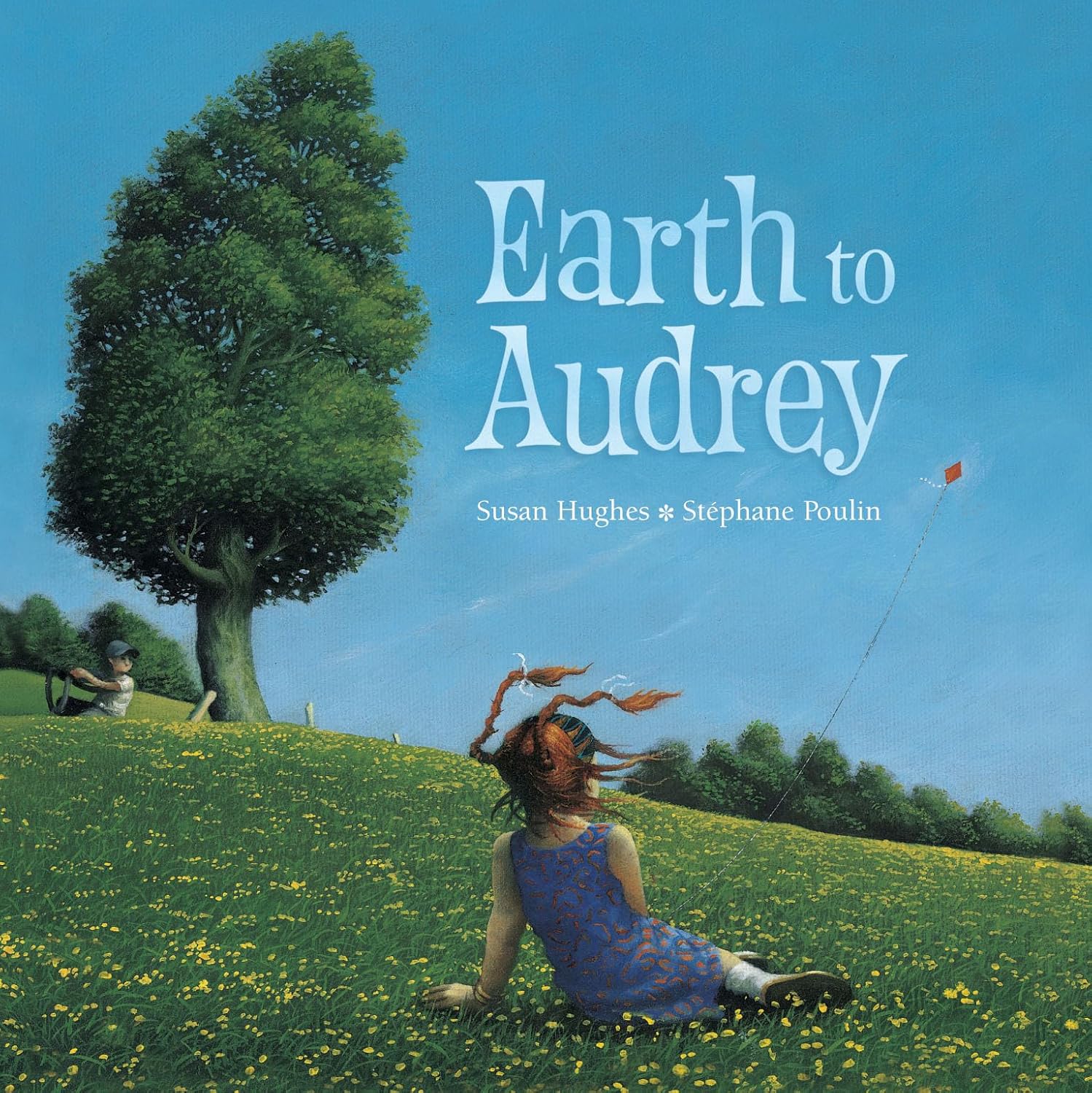 SH: Ah, yes. It’s still one of my favorites! And even though it was over two decades ago, I still remember writing the first paragraphs that would eventually become Earth to Audrey. I was just playing, writing in the first-person voice of a young girl. She was lying on the grass, looking up at the sky, and having big thoughts and feelings – about the expansiveness of space, the feeling of Earth solid beneath her, how much she longed for a friend … I don’t really recall exactly.
But I remember being pleased with it, feeling there was something there—an essence, heart … So, I shaped it a bit—gave it a beginning, something of a middle, and an end, and I asked a trusted writer friend to read it.
I smile when I remember her response. “It’s lovely writing, and she’s an interesting character, but … it’s not a story yet. Nothing happens! Things have to happen!”
She was right, of course–(thank you, Monica Kulling!)
RVC: What was the biggest lesson that book taught you?
SH: This book and Monica taught me to make things happen when I write stories. It’s something I still need to remind myself when I write.
RVC: The Puppy Pals series (originally published in Canada, now available in the U.S. with Sourcebooks Jabberwocky) has found a whole new audience. What has it been like to see those chapter books reach readers across borders?
SH: It’s terrific! Many of my other books have also been published in other countries and also translated into different languages. It’s very cool knowing kids from Greece to Czechoslovakia and from the Netherlands to China are enjoying my stories!
 RVC: Walking in the City with Jane introduces kids to Jane Jacobs. What drew you to her story, and how did you decide what to include for young readers?
SH: Back in 2014 or so, I felt inspired to write a picture book biography about a woman—a unique individual who had made a difference and who would be inspiring to kids 5 and up. I’d known of Jane Jacobs for years, but when I began reading about her in detail, I couldn’t believe how perfect she would be as a picture book subject.
Jane Jacobs was a creative problem-solver, curious and imaginative, always asking questions, making her own observations, and coming up with her own original solutions. She was fascinated with cities and how they functioned. She changed the way people think about how cities grow and develop. She saw them as living ecosystems, made up of different parts working together; that cities should be walkable; that they were primarily for people.
She was an “ideas” person, but she was also a go-getter and an activist, supporting the wisdom of local citizens who knew their neighborhoods and community best and wanted to protect them from destruction or development, not just cheering them on from the sidelines but joining the rallies, getting her hands dirty, making her voice heard, standing up for what she believed in—even if it meant being arrested.
RVC: One of the challenges of writing about an interesting person is that you can’t fit all the cool stuff you learn about them into the book. What are some awesome things that just didn’t make the cut?
SH: There were so many, but two kid-friendly ones were how Jane’s dad would often respond to her endless questions about how things worked by handing her the encyclopedia. He encouraged her to find out answers for herself. Or how Jane was living and working with her sister in New York City after finishing high school, but expenses were so steep, they sometimes had to eat Pablum, a type of porridge-like baby food, bland (ick!) but cheap and nutritious.
 RVC: Your non-fiction books Sounds All Around and Lights Day and Night in your Science of How series explore the physics of sound and light. What was the biggest challenge in writing these books for a picture book audience?
SH: Ha! Okay, well, there wasn’t just one big challenge–there were at least four.
- Read about, and understand, each concept thoroughly.
- Convey the information in very few words and at a level that kids in K‑3 could understand.
- Convey the information accurately.
- Because children are learning about these concepts at school, convey the information in a way that supports what they know but is unique, engaging, and draws them in.
Tackling these kinds of challenges and bringing nonfiction concepts to life on the page for kids is exactly what makes writing nonfiction picture books so delightfully appealing to me!
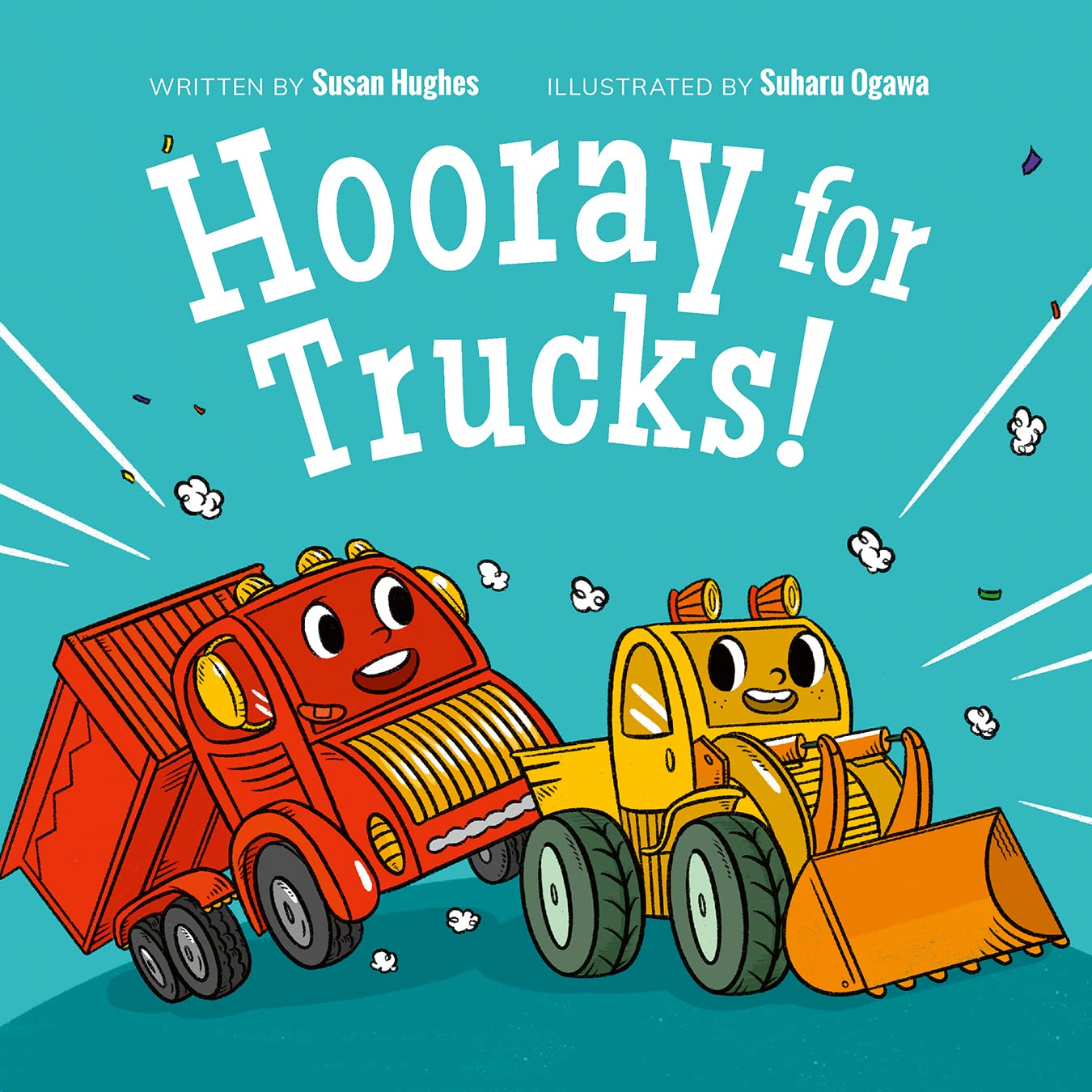 RVC: On the lighter side, Hooray for Trucks is pure fun. What inspired you to write a story just for the joy of it?
SH: Recalling this makes me grin, because I literally sat down to write one day and decided, “Okay. I want to have some fun!” I like writing in different styles and trying new things, and I’d never written a picture book story in rhyme. It would be fun to try.
So, on this day, I thought, “I’m going to write a rhymer about something super popular with younger kids.” Dinosaurs, stars … or, a‑ha! A fun story about cars and trucks … My own three kids had all spent hours playing with cars and trucks when they were little. And hey, I’d recently heard about a truck parade in Victoria, B.C. and this sparked an idea for a playful storyline.
Bouncy, bright rhyme with a sprinkling of snappy dialogue and some “sound” words –Honk! Beep! Toot!—would make it fun to read-aloud and also fun to write!
And, sure enough, it was!
RVC: How does your writing process shift when you’re working on a lyrical nonfiction book versus a bouncy, rhyming read-aloud?
SH: When I’m returning to a work in progress, whatever the writing style or whether the story is fiction or nonfiction, it takes me some time to reengage with the topic and also with the tone.
However, I can jump back into the writing and revising of a rhyming read-aloud relatively quickly and easily, while, when writing or revising a lyrical nonfiction book I need to set aside much more time for each writing session. I need to reconnect with the topic and also immerse myself more deeply in the prose to continue exploring the voice and rhythm that works best or to continue to write in the one that’s been established.
RVC: What was one of your most surprising discoveries while researching a nonfiction book?
SH: Ah, that’s easy! While doing research for one of my middle-grade nonfiction projects, I came across an amazing photo essay. It told about a young boy in a village in Malawi who was walking to get water with the girls and women, taking his sister’s place so she could go to school and not miss out on an education. I knew I had to share this true story with young children, and this became my picture book Walking for Water: How One Boy Stood Up for Gender Equality.
RVC: For a nonfiction project, do you usually begin with a child-centered story question, or do you dive into research first?
SH: I always research first. I love researching, almost to a fault! Sometimes it’s difficult to decide I’ve learned enough and accumulated enough information that it’s time to stop and actually begin outlining the book! Other times, I’ll find myself going off on a more interesting research tangent. I may end up setting aside, or scrapping my original idea for a new one with more potential.
RVC: You’ve worked with a wide range of illustrators. How do you think about illustration potential when drafting a picture book manuscript?
 SH: Even now, when drafting a picture book story, I can still find myself immersed in the words of a story and not giving any thought at all to what the story could look like or how the visuals could share in the telling of the story. For example, when I wrote What Happens Next, the story was all about the narrative structure. The story has a call and response-like pattern written to reflect the outsider personality of the main character. I didn’t think about the art at all. Fortunately, almost magically, Carey Sookocheff chose a thoughtful color palette and spare illustration style to perfectly support and reveal the mood and tenor of the bullying story.
More and more often, however, when I begin to write a picture book story, right from the start, I’m taking into account, and depending on, the art to show what isn’t being said. A great example is my first wordless picture book, which is coming out with Owl Kids in 2027!
RVC: Which of your picture books changed the most between the first draft and final book?
SH: Probably Walking for Water: How One Boy Stood up for Gender Equality. I wrote the story as a narrative text, and it was acquired as such; however, the editor suggested the story might have more kid appeal if it were revised as a picture novel-graphic novel hybrid. I agreed and rewrote it, trimming out lots of the descriptive text and reframing the text as script. It worked really well!
RVC: As both an author and freelance editor, what common pitfalls do you see in picture book manuscripts?
SH: Writing that seems a bit flat, without that special spark. Text that doesn’t leave enough “space” for visuals to tell the story. Text that is unclear. Text that is too explicit and doesn’t allow readers to make their own connections. It’s always a fine balance between all these important elements!
RVC: Now, if you had to pick one of your picture books that best represents your voice, which would it be and why?
SH: Great question. But I don’t think there is one picture book that best represents my voice. I’ve written in many different voices and sometimes there is a consistency of voice, but more often than not, there isn’t. My stories usually demand a voice unique to them. And this is something I really love about writing – the opportunity and freedom to create the voice best suited to an individual story.
RVC: Last one for this part of the interview: what’s next for you in the world of picture books?
SH: I am delighted to have several picture books coming out over the next few years–one is nonfiction and the third of a series, one is fiction and very playful, one is fiction and wordless, and one is fictional but inspired by a real person!
RVC: Alright, Susan. It’s time for the Speed Round. Zippy questions and fast answers please. Are you ready?
SH: Definitely.
RVC: Favorite snack while writing?
SH: Ha! I don’t allow myself to snack while writing. It would be a slippery slope …!
 RVC: If you could live inside one of your books for a day, which would it be?
SH: My picture book Carmen and the House that Gaudí Built—so I could meet the amazing Spanish designer and architect Antoni Gaudí as he designed the dragon-topped Casa Batlló and the little girl, Carmen, who went on to live in that house!
RVC: Best piece of editorial advice you’ve ever received?
SH: “Make things happen!” of course.
RVC: A nonfiction picture book you’d recommend to every writer?
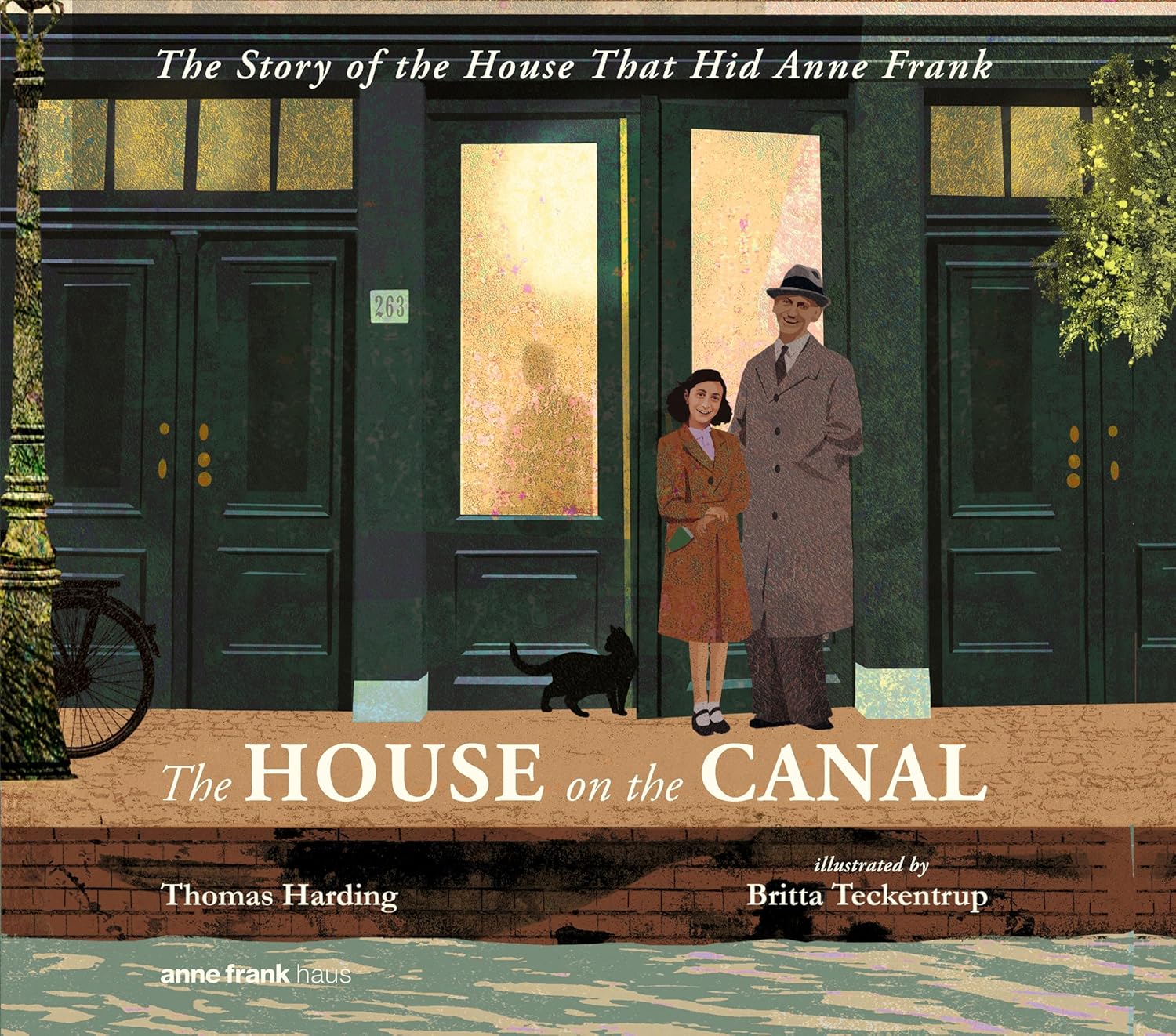 SH: The House on the Canal: The Story of the House that Hid Anne Frank by Thomas Harding.
RVC: One word you hope readers use to describe your books?
SH: Fantabulous!
RVC: Thanks so much, Susan!