Educational Activities: The Struggle Bus by Julie Koon

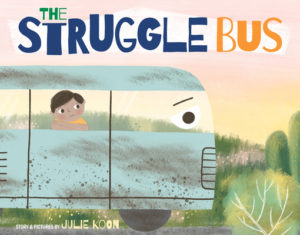
The Struggle Bus
Authors: Julie Koon
Illustrator: Julie Koon
8 March 2022
Kind World Publishing
36 pages

Book description from Goodreads: “Sometimes things are really tough. It’s just too hard, you’ve had enough. Grumble, rumble, bump, and roar, The Struggle Bus is at your door. Strap in and hold on tight! Through all the ups and downs, you have what it takes to do hard things.

Rolling, rollicking rhymes take readers on a journey of perseverance, where challenges are faced and mountains are climbed.”


Need some reviews of Struggle Bus?


Educational Activities inspired by Julie Koon’s The Struggle Bus:

  • Before Reading–From looking at the front and back cover: 
    • Where and when do you think this story takes place?
    • What do you think this story will be about?
    • What is the child doing on the front cover?
    • What emotion is being felt by that child?
    • If that child spoke, what do you think would be said?
    • How do you think this story will end?
    • From looking at this cover, what other books does this remind you of?
  • After Reading–Now that you’ve read the story: 
    • How did you feel when the child stepped about the struggle bus?
    • Did the struggle bus look like you imagined it would?
    • How did you react to the repeating line “grumble, rumble, bump and roar”? 
      • Did you notice that the last word in that repeated line changed a number of times?
    • How surprised were you when the struggle bus SOARED?
    • Which picture/​scene did you like the most? Why?
    • What was the most interesting part of the back matter?
  • Writing–Think about a time where you rode your own struggle bus. What struggles were you facing? What were you feeling? How did things change for you? Write about that time in whatever way you choose–a poem, a story, a rant, song, or something else! Use pencils, crayons, or markers to add pictures or decorate it, if you want. Consider sharing your writing with an adult and explaining your creative choices.
  • Playing–With a couple of friends or family members, play “Simon Says Feelings.” For example, say: “Simon says…look mad!” Feel free to discuss those feelings or ask questions about them between rounds or after the game is over.
  • Crafting–Making crafts is a fantastic way to explore, share, and engage with your feelings. Here are a few of our favorites: 
    • Emotion Faces–These conversation starters are easy to make.
    • Emotion Masks–A little more involved than some of the other crafts, but it’s not too challenging for kids to create.
    • Emotion Painting–This is designed for a classroom teacher, but it’s easily adapted to a family setting, as well.
    • Emotions Wheel–This printable craft has three different version that range in levels of complexity.
    • Feeling Spinner–This paper plate craft can help young people identify and talk about emotions.
  • Further Reading–Enjoy a few more picture books about feelings. Which of these have you already read? Which of the others would you want to read first? (Click on any book cover for more information on these titles!)

Author Interview: Elisa Boxer

Our April Author Interview is with Elisa Boxer, a Maine-​based writer and Emmy-​winning journalist. You might’ve seen her writing at The New York Times, Fast Company, and as part of the Today Show parenting blogging team, or you might’ve seen her as a former ABC news anchor. In the past few years, though, she’s gone from having a lifelong passion for reading children’s books to combining that passion with her storytelling skills and commitment to uncovering and sharing vital truths to write her own children’s books. Helping her manage this new kidlit writing career is literary agent Steven Chudney (see the OPB interview with him right here!).

As Elisa shares on her website: “seeing my own words unfold onto the page (I write everything out longhand first) helps bring into focus how journalism, teaching, mothering, mindfulness, advocacy, and writing are inextricably and cosmically intertwined for me.” That sounds like the recipe for something really good.

Let’s get right to that interview and learn more about how all these things play into Elisa’s life and career!

Elisa’s Twitter

Elisa’s Instagram

Elisa’s Website


RVC: With most author interviews, I try to sleuth out that kernel of a moment that sparked a kidlit writing career. With you, however, I feel like I might need to go after that journalist AHA moment first. So, let me ask it this way—as a kid, what was your relationship to reading and writing?
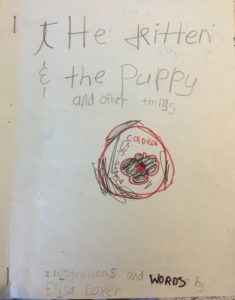
EB: My kidlit writing career actually preceded my journalism career. But it’s understandable that this would have flown under your sleuthing radar, as it was the early 70s and The Kitten & the Puppy and Other Things had a relatively small print run.

Although as you can see, it did win a Coldicot (sic).

RVC: Absolutely glorious. Thanks for sharing!

But since my exhaustive sleuthing didn’t turn that up, I’m now doubting all of my “facts,” yet I THINK you studied journalism at Columbia. What were a few of the best writing lessons you learned there that helped in your subsequent career as a journalist?

EB: The best lessons I learned there were about jumping straight to the source for information. I didn’t have much of a choice, since those were pre-​internet days where you couldn’t just look stuff up. But I was taking subways to Harlem and the Bronx at all hours, and hunting down interviews and stories and sources first-​hand. Before that, I had been a crime reporter in Lowell, Massachusetts, a community where there was no shortage of crime. I was doing stories on girl gangs and drug rings. So, during the course of my time at the Lowell Sun and Columbia, I really got comfortable with pounding the pavement and gathering information the old-​fashioned way. That was the only way to do it back then. This is all to say that I’m old.

RVC: What did you find most rewarding about old-​fashioned journalism work?

EB: Telling the stories of people whose voices might otherwise go unheard… Whether it was a kid organizing a bake sale for his sick teacher, a lawmaker apologizing on behalf of the state for abuse that happened decades earlier at a state-​run institution, or a domestic abuse survivor starting a shelter, I’ve always been drawn to shining a light on the unsung heroes.

RVC: That’s such a lovely way to explain journalism that’s done well. What motivated you to take the leap into the big ocean of children’s books? 

EB: I rediscovered my love for children’s books when my son was born, eighteen years ago. Soon after that, I left full-​time journalism, transitioning to part-​time magazine writing and teaching newspaper reporting at the University of Southern Maine. In between classes and assignments, I drafted children’s book manuscripts. During those years, I attended several SCBWI conferences, and always left feeling invigorated and inspired. I never knew if I’d ever be published, but I knew I loved creating stories for kids.

RVC: I’ve left more than a few SCBWI conferences feeling the same way. What was the story behind the story of your first picture book, The Voice that Won the Vote?
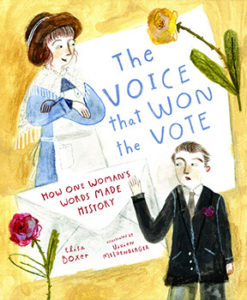
EB: It was 2017 and I had another social-​justice related book out on submission. That one still hasn’t sold!

RVC: It happens to the best of us!

EB: Anyway, my agent, Steven Chudney, alerted me to the fact that the 100th anniversary of the 19th Amendment (which gave women the right to vote) was coming up in 2020. Being drawn to unsung heroes, I did an internet search for little-​known women in the suffrage movement. When kids who are trying to come up with topics ask how I found this story, I always tell them to do internet searches for unsung heroes in whatever area they’re interested in. Because I literally typed into Google “little-​known women in the suffrage movement.”

When I came across the story of Febb Burn, the mom who helped save suffrage, I felt that tug in my solar plexus to find out more. I went digging further, but couldn’t find any books about her, for adults or children. That really surprised me. She was such an inspirational figure and such a perfect representation of the idea that every voice matters. That’s when I knew I wanted to make her the subject of a picture book.

RVC: If you’re anything like the long-​form journalists I know, you dive into research like a penguin goes for water. Given the page constraints of picture books, how did you grapple with shaping the story and choosing what went in and what didn’t?

EB: So true about the research and narrowing down what goes in. It’s such a challenge! With every book, I first make sure there’s an emotional resonance that’s relatable for kids–a universal theme that would make a great takeaway. In this case, the theme of every voice matters hooked me. I want every child to know how much their voice matters, so I looked for scenes from Febb’s life and from that time in history that either highlighted that theme, or challenged it. From there, I built a story arc, and if a scene didn’t contribute to that main idea, alas, I had to cut it.

RVC: I have to ask—what’s your favorite Febb fact that didn’t make it into the book?

EB: After writing the letter that resulted in her son casting the tie-​breaking vote for nationwide women’s suffrage, Febb became the first woman in Tennessee history to register to vote. Here’s her registration card!
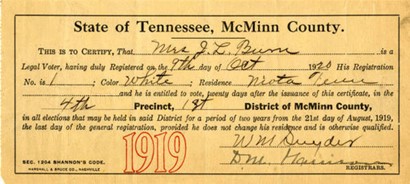
RVC: WOW!

EB: Notice it says “his” registration. These cards were designed for men. I geek out over these historical documents.

RVC: What are some of the key differences between reporting a story and picture-​booking a story?

EB: They seem so different, right? But there are many similarities–I’d say more similarities than differences. At least for nonfiction. Both involve choosing a topic, coming up with a hook, conducting research and interviews, writing outlines and drafts, ditching those and writing new ones, deciding which elements contribute to the story enough to make it in the final product, and then distilling those elements down to something relatable and (hopefully) interesting. So, whether it’s a newspaper article, a magazine story, a TV report, or a picture book, the information gathering and storytelling process is very similar.

I’d say the biggest difference is the timeline and turnaround time. Since daily journalism has much tighter deadlines, the process is sped up exponentially.

RVC: Aha. Makes sense! Care to give a specific example?
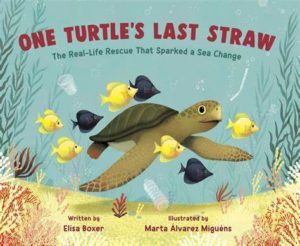
EB: In One Turtle’s Last Straw, for example, which comes out next month, I saw a viral video of marine biologists rescuing a sea turtle who’d gotten a straw stuck in his nasal passage and could barely breathe. I did some background research, and then interviewed the marine biologist who made the video. She happened to mention that this whole ordeal was likely the result of someone who had unwittingly tossed a straw in the garbage without giving it a second thought. I knew in that moment that’s how I wanted to begin the book, with a child casually tossing a straw in the trash. Same thing with journalism in terms of researching and reporting facts, details and quotes, and determining how to approach the story in a way that will resonate with readers/​viewers.

RVC: How does the editorial profess differ between journalism and picture books?

EB: Long-​form journalism is fairly similar to picture books editorially, at least in the initial stages, in that you choose a topic, gather information, craft the story, and refine it. With books, you’re dependent on an editor/​publisher to buy the text, whereas in journalism, you’re already hired! The whole part about no rejections is a plus. From there, with books as well as long-​form journalism, there’s input and some back-​and-​forth with the editor. In daily journalism with the tighter deadlines and turnarounds, there’s less time for editorial input. Picture books remind me a lot of the days when I used to do packaged reports for television, in that the illustrator/​videographer brings depth and feeling to the product in a way that the words alone never could. I have been so fortunate to work with incredibly talented photographers, videographers, and illustrators, and I am in constant awe of their ability to bring my words to life in a way that’s so much richer than I could have imagined.

RVC: At what point did you fully realize you were making a kidlit career and that you weren’t a one-​and-​done author?

EB: I’m still pinching myself, honestly. I think it was while we were waiting for The Voice that Won the Vote to come out, when I sold two books to Emily Easton at Crown/​Random House, and then two books to Howard Reeves at Abrams, that I realized I could conceivably have this career that had been in my heart ever since The Kitten & the Puppy.

RVC: If you had to summarize the most important thing you’ve learned about writing nonfiction picture books, what would it be?

EB: Write the stories you care about, rather than the stories you think will sell. So much in this business is uncertain and counterintuitive. But if you stick with what calls to you, only good can come of that.

RVC: Let’s talk Nancy Pelosi. How did A Seat at the Table: The Nancy Pelosi Story come about?

EB: My agent gets the credit for this one, too! By the way, I’m loving that stick figure you drew for your interview with him.

RVC: Aw, shucks. I’ll have to start bragging to my illustrator colleagues at Ringling College about my near-​criminally underappreciated mad art skills. Thanks for noticing! (To see that AWESOME art, check out Steven’s OPB interview right here). Back to you and the Pelosi book, Elisa!
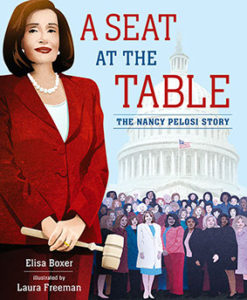
EB: I had just finished writing The Voice that Won the Vote, and Steven and I were chatting about other barrier-​breaking potential subjects. He suggested Nancy Pelosi. When I began researching her background and found out more about her childhood, I knew she’d make the perfect subject for a picture book.

RVC: What’s a common misconception about Nancy Pelosi?

EB: That she always had political aspirations. She actually grew up believing that women were supposed to stay out of the political spotlight, and that their role in politics was purely to help men get elected. She watched her mother do that. It wasn’t until a dear dying friend personally asked her to fill her Congressional seat that Nancy Pelosi actually considered running for office herself. And even then, she was hesitant.

RVC: In terms of your writing, what did you handle better in this book than in your first?

EB: That’s such an interesting question, because I’ve been thinking a lot lately about the element of this business where you pour your heart into a manuscript, sell it (hopefully), and then it’s another 2–3 years before it’s published as a book. And we’re ever evolving, right? I mean, I’m not the same person I was last week, let alone three years ago.

I feel like I am constantly aligning better with who I really am, and shedding old versions of me that maybe did things based on “shoulds” or expectations. And so with the books I have coming out this year, there are things I would have done differently had I started writing them now. I mean, I am super proud of them, but there’s phrasing I would have changed here and there, or a different approach I would have taken with this scene or that. So, to answer your question, I think each book represents the best of who we are at that point.

RVC: Along the way, you teamed up with a picture book PR group—the Soaring 20s.

EB: It’s such an amazing bunch of creators and remains one of the best kidlit decisions I have made! Writing can be such a solitary experience, and I was looking for a community of creators to not only help promote each other’s work, but to share insights about the business. What I hadn’t counted on was getting a close-​knit group of great friends.

RVC: Could you talk a bit more about that group and what they’re/​you’re all doing?

EB: It’s been extraordinary. Especially since we’ve been able to support each other through the ins and outs of publishing in a pandemic. For many of us, our debuts released just as the pandemic was beginning. My first book released March 15, 2020, which was the week that everything shut down. Several of us had our launch events and school visits cancelled, and together we were able to share insights on how to move forward virtually. When 2020 was over, we weren’t ready to say goodbye! Plus, many of us had new book deals. So, we decided to stick together for at least the next decade. 😀

RVC: From looking at your website and LinkedIn page, you sound terrifically busy. What do you do to de-stress?

EB: There’s a way to do that?

RVC: Who or what has most influenced your kidlit career?

EB: Definitely my son, Evan. He’s an everyday reminder to keep tapping into my heart, which is where all of my stories come from. Even the more academic stories. If I can’t write them with heart, I can’t write them.

RVC: One final question for this part of the interview because it’s brag time. What’s next for you in the world of kidlit? Are we going to see a fiction picture book?
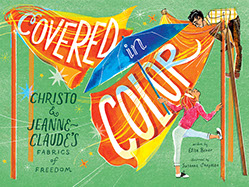
EB: I do have a couple of fiction picture books in progress! One involves humor. I’m a bit stuck on it–I need to get funnier. I’m also writing a chapter book series and a middle grade novel. But on the more immediate horizon are several more nonfiction picture books: One Turtle’s Last Straw (Crown/​Random House) coming next month, SPLASH! (Sleeping Bear Press) coming in July, Covered in Color (Abrams) in August, Hope in a Hollow (Abrams) in 2023 Tree of Life (Rocky Pond Books/​Penguin) in 2024, and more in 2024 that haven’t been announced yet.

RVC: Congrats on all of that. You’re going to be busy!

EB: Absolutely!

RVC: Now, Elisa, since you’re a journalist who knows about the mission-​critical importance of tight copy and fast deadlines, you’re surely as prepared as anyone to kick butt on our SPEED ROUND! Let’s prove it now. Zoomy quick questions and whizzy fast answers please. Are you prepared?

EB: No! I tend to be slow and methodical. Unless I am on deadline, then I can be zoomy and whizzy. Although actually I AM on deadline because I left these until the last minute.

So, yes, I’m ready! Fire away!

RVC: Tea, coffee, or soda?

EB: Pineapple and banana smoothie.

RVC: What inanimate object would be most annoying if it pumped out loud, upbeat music every time you used it?

EB: My son just said a toothbrush, because you hold it close to your head. He has a point, no? That would be really annoying.

RVC: What word do you always mispell misspel write wrong? 

EB: Suppress (I always want to add an “r” before the first “p”) and precede (I always want to double the middle “e”).
RVC: What books are on your nightstand?

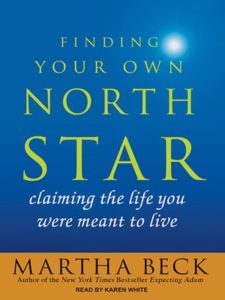
EB: Martha Beck’s Finding Your Own North Star and a notebook for writing down dreams and story ideas in the middle of the night.

RVC: What’s a great nonfiction picture book that too few people know about?
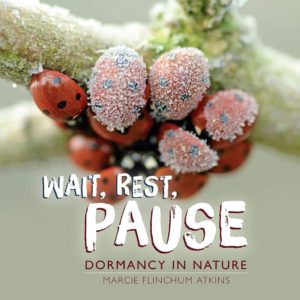
EB: Wait, Rest, Pause: Dormancy in Nature, by Marcie Flinchum Atkins. I love this book for many reasons, including the fact that it helped me to be okay with slowing down. The book came out in 2019. I had just been diagnosed with chronic Lyme disease, after spending a couple of years with a mysterious debilitating illness. Glorious photographs and Marcie’s comforting text reveal plants and animals that stop, slow down and take deep, meaningful pauses before emerging in a new season. At the time, I was frustrated with my inability to be active. I’ve always looked to the natural world for inspiration, and this book was a profound reminder that maybe this was a period of time when my body needed to rest and build strength from within.

RVC: What are five words that describe your picture book writing philosophy?

EB: Search for the story’s soul.

RVC: Thanks so much, Elisa! Best of luck with all those new books.

EB: Thank you so much, Ryan! It was really great connecting with you!
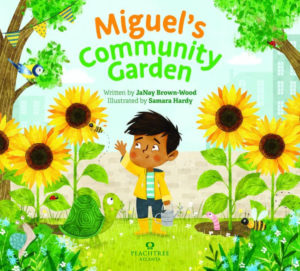
Picture Book Review: Miguel’s Community Garden

Author: JaNay Brown-​Wood
Illustrator: Samara Hardy
Peachtree Publishing
1 March 2022
32 pages

This month’s PB review is by Ryan G. Van Cleave (Owner/​Operator of Only Picture Books) and longtime OPB friend (and Ringling College of Art and Design Illustration Professor) John Herzog.

–Ryan’s Review of the Writing–

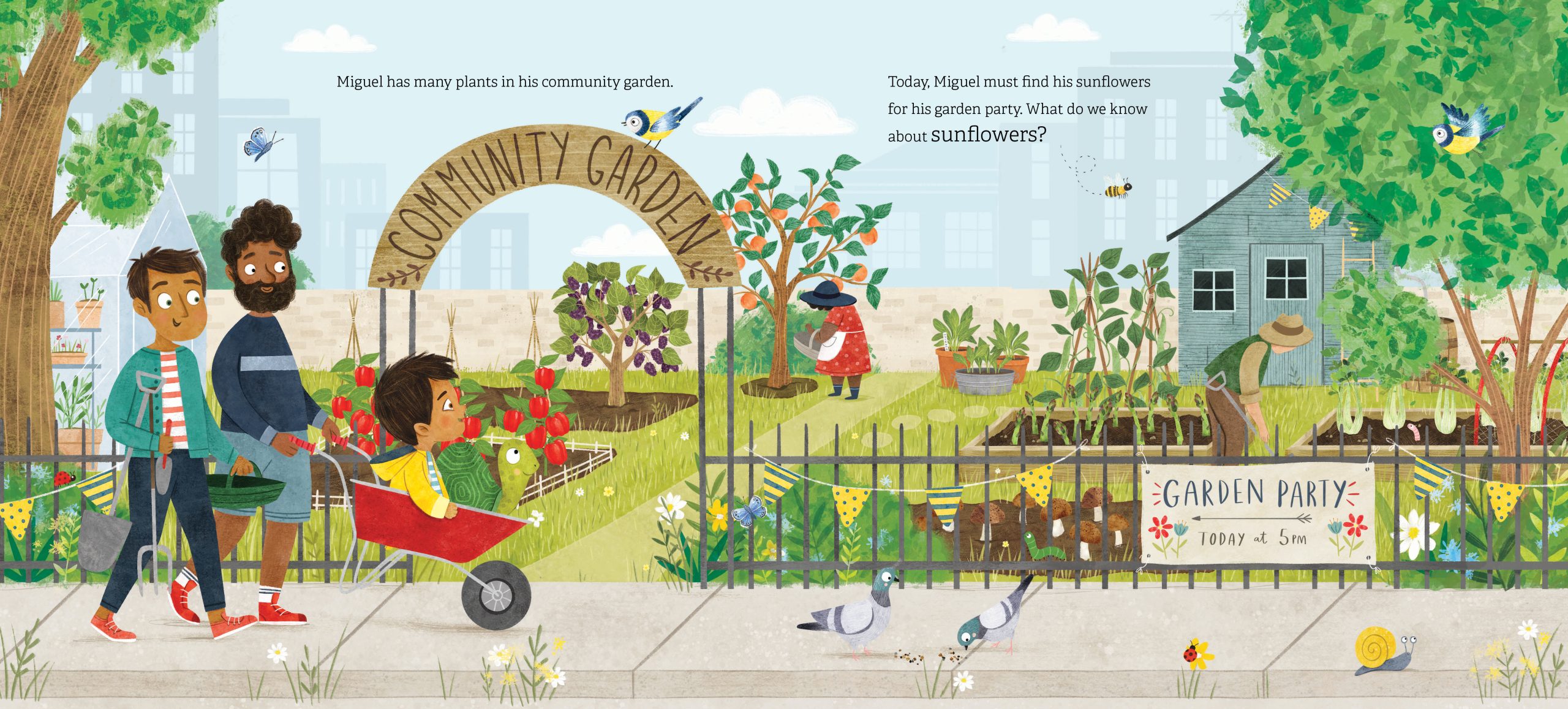
I got interested in this book via the cover and story concept even before I realized it was the second book in a series (Where in the Garden?). Regardless, the book works fine on its own, though I have to say that it’s best suited for a very young audience due to its straightforward, simple plot and use of basic language and concepts. I say this in the most positive way–there’s a decidedly Mr. Rogers feel to lines such as: “Today, Miguel must find his sunflowers for his garden party. What do we know about sunflowers?”

The reader is invited to join Miguel and his pet tortoise on their journey to find a sunflower to decorate the Community Garden Party. That’s not as easy as it sounds because the garden is full of plants, so Miguel needs a hand with identifying them. He carefully examines eight types of plants before his criteria for what makes a sunflower a sunflower finally matches what he sees before him. The STEM focus of paying close attention to the attributes of a living thing might generate interesting discussions during or after the reading.

I’m also charmed by how Miguel isn’t daunted in his task when a quick rainshower arrives. He just tugs up his yellow rain slicker and keeps examining the characteristics of the plants before him. It’s hard not to smile, too, at how the tortoise sneaks off to take a happy chomp out of the spinach. Somehow, Samara Hardy has found the visual secret to making fruits and veggies look scrumptious, as that tortoise is proving right there on the page. He’s having a total blast with those leaves!

One of the clear strengths of this book is the repetition of key words that allow young readers to gain lots of useful read-​aloud practice. While some of the plants might be a bit exotic for some kids–I’m looking at you, artichokes and mulberries!–their names won’t be overly challenging. The art provides helpful visual context, as well.

For those who want an adult-​guided extension activity, the book includes the recipe for Sunflower Seed Salad. Normally, I ignore recipes in kid books, but something about this one makes me seriously want to give it a try. Perhaps it’s the luscious art throughout, or the delicious visuals on the end papers?

Quite simply, the book is charming and the which-​plant-​is-​it? plot is compelling enough for this age range. Add in the art that’s just teeming with life on nearly every page, and this is a worthwhile, lively book.

4.25 out of 5 pencils


–John’s Review of the Illustrations–

Miguel’s Community Garden is a pleasant surprise for me. I must admit that when I looked at the cover, I had my own preconceived notions regarding what the book would be about and what the main conflict would be. It’s easy for me to let that cynical, “Oh, I know what this is going to be because I know everything” side of me emerge just by looking at the cover. However, after reading it, that attitude took a back seat and was replaced with a very gratifying sense of discovery and joy, and the old adage really hit home:

Don’t judge a book by its cover.

While Miguel’s Community Garden does skew towards a younger audience (two- and three-​year-​olds will be in rapture) it doesn’t ever pander to them–in both the writing and the illustrations. I’ve ranted about this in a previous review here on Only Picture Books. We’re on this journey of discovery and learning with Miguel, a pleasant little boy who is simply trying to find some sunflowers for a garden party at his local community garden. We learn, along with him, about various fruits and vegetables and how they grow. And we even get a recipe for a sunflower seed salad at the end, connecting nicely with the main conflict of the book.

While the illustrations were created digitally, they implement a wonderful, Eric Carle-​like sensibility with rich, tangible textures and vibrant colors. There is beauty in the simplicity here, and Samara Hardy’s lovely illustrations complement that notion well.

The whole book is meditation on the beauty of simplicity, really. Simple ingredients, simple situations, simple storytelling… But don’t let that fool you. It’s incredibly difficult to distill something down to its simplest form while keeping it relatable and understandable. It’s easy to clutter up deficiencies with detail, and Hardy and author Janay Brown-​Wood avoid that completely here.

My only critique is that parents and older children may not find the book as engaging due to the subject matter. No doubt this is territory they’ve trod before. However, younger kids–and parents who are kids at heart–will thoroughly enjoy learning about various fruits and vegetables with Miguel. Personally, I found it a lovely change of pace to read a picture book that isn’t trying to tackle big, existential themes. It’s also incredibly fun to look at thanks to Hardy’s wonderful illustrations.

4.5 out of 5 crayons


John Herzog is an illustrator and educator. He has created work for Scholastic, Houghton Mifflin Harcourt, Little, Brown and Company, Highlights for Children, DreamWorks TV, and Hasbro. He also teaches illustration at Ringling College of Art and Design.

John is a member of the National Cartoonists Society and the Society of Children’s Book Writers and Illustrators, where he received the 2018 SCBWI Magazine Merit Award. He lives in Florida with his family.

John is represented by Kayla Cichello at Upstart Crow Literary.

Editor Interview: Allison Cohen (Running Press Kids)

Welcome to Allison Cohen, who is the subject of this month’s Industry Insider interview at OPB. Since 2018, she’s been an editor at Running Press Kids (an imprint of Hachette Book Group), but for eight years prior to that, she served as a literary agent at The Gersh Agency. Before that, she worked almost two years as an assistant at a different literary agency (The Gernert Company).
Allison got herself on my radar via being so prominent on the recent Dealmakers List at Publishers Marketplace—anyone making as many deals as she’s making has my attention for sure!

Allison keeps a pretty low online profile, so instead of me making things up or sharing summer internship information (for example, she worked at Gemstar/​TV Guide for 5 months a long, long time ago), let’s jump ahead to the interview to see what we can discover together!


RVC: Congratulations on having the second-​smallest digital footprint of anyone I’ve interviewed here. Is that on purpose or did it just happen that way?

AC: Hahaha! I wear that as a badge of honor. To be honest, I have a love-​hate relationship with social media. I think it can be a wonderful place to connect and support a shared love of all things—books, music, food, travel, (insert personal interests here), but a few years ago, I realized I needed to take myself offline to protect my mental health. It can be a very toxic place, too, and so I’ve been happy to (mostly) let it go.

RVC: I hear you there! Other than my blog, I stay pretty low-​key, as well. Now, let’s go back to the start of things for you. Where’d you grow up?

AC: Just outside northeast Philly.

RVC: Describe the path that led from there to where you are now, working in NYC as an editor for a kidlit imprint at one of the Big 5 publishers.

AC: I come from a long line of educators (both my parents were teachers, as was my sister, aunts/​uncles, etc.), and so I always assumed I would be a high school English teacher when I grew up. In college, I realized my interests extended beyond teaching, and I thought about other opportunities I could pursue as an English Lit major. I thought about what I loved most (spoiler alert: books/​reading), and had a moment where I was like, hmm…maybe I do the “teaching thing” later in life and find something in the immediate that lets me surround myself with books for a few years before I change gears. I didn’t really know where to start, so I applied to a job at TV Guide, hoping to work with their magazine (dating myself here). Let’s just say it wasn’t exactly what I’d imagined it would be.

Skip ahead to when an amazing friend of mine was telling me about her job in sales at Random House and how she thought I should consider moving to NYC and getting a job in “real” publishing. She sold me. My first job at a Big 5 was as the assistant to Madeline McIntosh when she led the audio group. She was an incredible mentor and really helped me figure out what I wanted to do. We were talking over lunch one day, and I started talking about all these editors I admired and how I wanted to be like them. She asked me what, specifically, I liked about what these editors did. After I told her, she casually asked if I’d ever thought about being an agent. I hadn’t. At the time, I thought of agents in the abstract. They were the people who sent publishers submissions, and then we took it from there. She set up some informal meetings for me to talk with agent friends she knew so I could hear more about their day-​to-​day, and I was hooked. I wanted to be the person on the very front lines. Finding the author, helping them shape their work, finding them a home with a publisher, championing them every step of the way, having these lifelong connections.

So, when the opportunity presented itself, I took a job as an assistant to two agents. I learned a lot about what really goes into creating a book—what it takes to find and grow authors, sell books, etc. I eventually wound up as Phyllis Wender’s assistant at Gersh. I’ve never met anyone like Phyllis. Her career path is incredible. There’s nothing she hasn’t done. She is also one of the most passionate, dedicated, generous, loving people I’ve ever met. To this day, she is an unbelievable mentor. She helped me build my list and become an agent in my own right. I am forever indebted to her and could write a book about all she’s taught me—personally and professionally. After eight years at Gersh, however, an opportunity presented itself and…well, RP Kids became my home!

RVC: All the time, I see editors moving into the field of agenting. You did that, but then you boomeranged back to editing. That’s really quite rare.

AC: I loved being an agent. I loved working with writers across genres—children’s and adult, fiction and non-​fiction, etc. And the relationships I built with my authors were unbelievably special. But the 247 hustle was a lot. You’re not just an agent—you’re an editor, an accountant, a lawyer, a therapist, etc. I often found myself pulled away from some of what I loved best about the job—working with authors on developing their manuscripts. Don’t get me wrong, being an editor requires hustle—nights and weekends reading and editing—but it’s a different kind. I had been talking to an editor friend of mine about life and maybe making a change but not really knowing what that change was.

That same week, I saw the opening at Running Press Kids. It felt like the universe was sending me a sign. I REALLY struggled with leaving behind my authors, but I knew the relationships with the ones who really mattered would continue (they have), and I told myself that if the whole editing “thing” didn’t work out, I could always come back to agenting. I knew how to do it. I loved it. I could come back.

I started at Running Press and I loved it. Present tense. I love it. I love the people. The entire team—we’re a family. I love our authors. I love our list. It’s relit a creative fire I didn’t realize I’d been missing. Four years later, I can’t imagine doing anything else.

RVC: For those that don’t know Running Press Kids that well, say a few words about what makes it different than other imprints and presses.

AC: We are small but mighty. And we approach every book as a collaboration. We trust each other and really value opinions on everything from cover to copy. And I think the collective passion of our team is why our books look the way they do and find the readers they do. Because we’re all working towards the same goal of instilling a lifelong love of reading into the readers who find our books.

RVC: What was the first picture book you acquired?

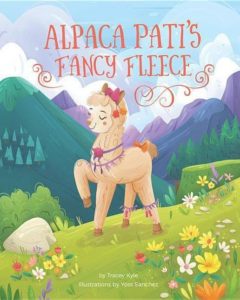
AC: Alpaca Pati’s Fancy Fleece by Tracey Kyle.

RVC: What was the best lesson that came out of that book?

AC: It was a crash course in how to manage all the moving parts of producing a picture book. From finding an illustrator to managing schedules of deliverables. I learned just how collaborative the process is—not just between the author and illustrator, but across all the different departments—editorial, design, managing ed, production, marketing/​publicity, sales. There is SO much that goes into making these books happen. They don’t just appear on shelves at stores. Ha!

RVC: It seems like you have a particular interest in nonfiction picture books. Is that fair?

AC: Ooh, I don’t know…maybe in the beginning? I love books that teach kids about the world without being overly didactic. At RPK, we pride ourselves on publishing beautiful books that educate while they entertain. That said, several of my more recent acquisitions have been fiction, and it’s because I need that balance. Fiction offers opportunities to celebrate life and nature and can teach kids how to be better people, all through the power of story.

RVC: Let’s help out those writers and agents who read OPB. What kinds of things are you looking for?

AC: Hmm…this is hard because sometimes I don’t realize I’m looking for something until it hits my desk. That is such a non-​answer, I know. I will say that I have been having a lot of fun with our mystical/​magical books. With picture books I take on, I’m mostly looking for projects in the mindfulness, conservation/​nature, and social justice space.

RVC: What kinds of things are you NOT looking for?

AC: Rhyming picture books! Okay, to be fair, there is always an exception to this. BUT it often seems writers think picture books have to be written in rhyme, and then they try to force this rhyme scheme that doesn’t feel natural and the book falls apart a little.

On a more general note, I’m not looking for sci-​fi/​fantasy or chapter books.

RVC: I’m curious about what you do in a day-​to-​day work sense.

AC: Day-to-day…it really depends on what kinds of meetings we have. First thing, every morning, I check my email to make sure there aren’t any “fires” that developed overnight. Then I look at the day and block out times to deal with all the things. I used to try and get to every email in real-​time, but it’s a losing battle. So, now I just create blocks on the calendar to tend to everything. I work on pitches/​proposals for our internal editorial meetings (including comp research). I run P&Ls for potential acquisitions. I review passes and proofs of our books in production, style manuscripts for transmittal, work on cover copy, draft fact sheets for sales/​marketing. This all happens in between various meetings—cover meetings (love reviewing covers of our books), illustrator meetings (reviewing portfolios for potential projects), editorial meetings, calls with agents, editorial calls with authors, etc.

Mind you, I try to check my email every half hour or hour, depending on what the day is like. The hardest part, honestly, is just trying to keep things moving and being able to pivot when something major needs to be addressed.

RVC: What’s the most common misconception that people have about editors?

AC: That we spend our days reading and editing manuscripts. If only! The days are spent drafting copy, running P&Ls, reviewing proofs, preparing titles for launch and sales conference. Pretending I don’t have 221 emails in my inbox…(see above answer—hahaha!)

RVC: If you had to summarize the most important thing you’ve learned about being an editor, what would it be?

AC: To be flexible. Sometimes, you have to reimagine a book—sometimes it’s the trim size or page count. Sometimes it’s the art because an illustrator you wanted isn’t available. Sometimes a book’s on-​sale date has to move out—it can be a month or two, or sometimes it’s to a different season. There are a multitude of reasons things change over the course of a book’s production, and much is out of your control, so you just have to roll with it. Remind yourself it’s all part of the process of making sure the book is the best version of itself.  

RVC: What’s one thing that a lot of people just don’t quite understand about picture books?

AC: There is SO much that has to come together to make a book. That’s why schedules can be so long. It takes a lot to create synergy between the text and illustrations—you have the manuscript, then you find the right illustrator, then you get the sketches (almost always adjustments are made), then you see the color art (more adjustments are made). You’re getting together materials to share with sales so they can sell in to their accounts. You’re building marketing/​publicity plans to launch the book into the world. All this is happening while the managing ed and production teams are doing their best to make sure the books are printed, shipped, etc. There are so many hands that touch a book. It takes time. It’s a lot of work, but then you get the advance copy, hold it in your hands and think, THIS IS WHY. It is incredible when everything works out.

RVC: Since COVID has clearly affected all of us, I’m making an extra effort to ask a mental health question in every interview now. Here’s yours: what do you do to de-stress?

AC: I go outside. I feel so much better surrounded by nature. I go for runs or hikes. I just need to get out and get moving.

RVC: And here’s a follow-​up mental health question. What do you do to defeat negativity—internally or from the outside world?

AC: That’s a great question. It’s something I’m really working on, so I’m not sure I have an answer. I will say I have some really amazing friends and family that are always at the ready to offer support and keep me in check. So, when I’m really feeling down about something, I just reach out to the people I love and know they will come back with either a virtual hug or send a ridiculous meme to distract me.

Sounds cheesy, but it’s the best I can think of for now.

RVC: One last question for this part of the interview. What forthcoming projects do you want to brag about?

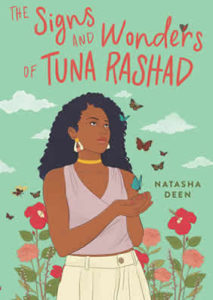
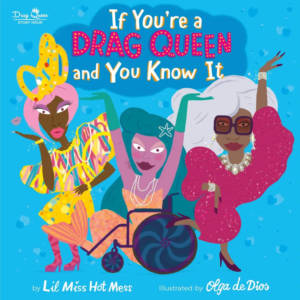
AC: There are so many!! Honestly, I look at our list and just think, WOW, we make beautiful books that demand conversation (and attention). Natasha Deen was the very first author I worked with at RP Kids, and her next book with us, The Signs and Wonders of Tuna Rashad (YA fiction) pubs this summer. The second book from Lil Miss Hot Mess, If You’re a Drag Queen and You Know It, comes out this summer. I didn’t work on this, but it’s just such a fun book, and the cover is incredible—a true feast for the eyes!

We have an awesome Junior Handbook series, and the third book is publishing this Fall—The Junior Tarot Reader’s Handbook. In a similar “mystical” vein, we have Astrology for Black Girls this summer. We have two picture books that reteam the author/​illustrator, that are so much fun—Peculiar Primates and Battle of the Brains coming this Fall.

I could seriously go on and on. Is there room to brag about all of our books? Because that’s how I feel about our list.

RVC: Alrighty, Allison. It’s time for the Big Moment. It’s…THE LIGHTNING ROUND! The point values are quintupled, and the stakes have never been higher. We’ve got the countdown clock ready because we’re looking to handle six questions and answers in sixty seconds. Are you ready?

AC: [Stretches arms. Closes eyes and takes a deep breath…] 

RVC: If you could only have one app on your phone, it’d be…

AC: My music app. I LOVE music and have all sorts of playlists depending on my mood or what I’m doing—editing, running, cooking, etc. Wait, is that considered an app? If not, then I guess my Notes app because I use it all the time when I have an idea for a book or need to create lists or to-​dos. My brain is so overloaded that I can’t remember anything without writing it down.

RVC: Would you rather have a personal chef, a personal trainer, or a maid?

AC: Ryan! Oh, gosh…ummm…personal chef? I actually find cleaning therapeutic. I do like cooking, but I don’t always have the time or resources. But, man, a personal trainer would be pretty cool, too.

Chef. I’m going to stick with personal chef! Final answer!

RVC: If someone narrated your life, who would you want to be the narrator?

AC: Jennifer Garner. She’s the first person that popped into my head. I don’t know why. Maybe because she’s amazing?

RVC: Five words (or fewer!) that come to mind when someone says “Art Notes.”

AC: Leave room for creative license! (to be clear, for the illustrator’s creative license)

RVC: What was the One That Got Away?

AC: Oof. You would think it would get easier each time, but there are a few that have stuck with me even years later. I try to console myself with the knowledge that at least the book will find its way into the hands of readers, and I’ll be able to add a copy to my personal bookshelf.

RVC: Your favorite quote about picture books (or writing, or editing—I can adjust to whatever you’ve got)

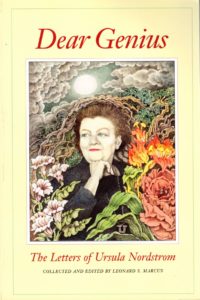
AC: It’s not a quote, but I was gifted the book Dear Genius: The Letters of Ursula Nordstrom, and it is one of the best gifts I’ve ever been given. I changed a lot about the way I approach editing after reading her letters. And I think anyone who loves publishing and books should read it. There is so much wonderful history (and humanity) in this book, and I have found a lot of inspiration in how I approach my work from it. If you really need a quote, though, on my wall is a quote from Ernest Hemingway: There is no friend as loyal as a book. 😉

RVC: Thanks so much, Allison!

AC: THANK YOU!!!

Educational Activities: Climb On! by Baptiste Paul

Climb On!
Authors: Baptiste Paul
Illustrator: Jacqueline Alcántara
8 March 2022
NorthSouth Books
32 pages

Book description from Goodreads: “When a young child reminds her dad about the hike they planned, her father is hesitant —To the tippy top? It’s a great day to watch futbol (soccer). But as the two climb on, her enthusiasm is contagious. Filled with setbacks, surprises, and stunning views, this warm and humorous story highlights in vivid colors the bonding power of a shared experience. A list of creatures at the end prompts a second look for keen-​eyed readers to make discoveries of their own.

Baptiste Paul and Jacqueline Alcántara (co-​creators of The Field) have teamed up again! Baptiste’s humorous and tender text, with a sprinkling of Creole words straight from the Pitons, and Jacqueline Alcántara’s vibrant and evocative illustrations capture the wonder and emotions experienced on the trail and the special relationship between a parent and a child.”


Need some reviews of Climb On!?

As a bonus, please enjoy this short interview about the book with author Baptiste Paul.


Educational Activities inspired by Baptiste Paul’s Climb On!:

  • Before Reading–From looking at the front and back cover: 
    • Where and when do you think this story takes place?
    • What do you think this story will be about?
    • What is the child doing on the front cover?
    • What emotion is the child on the cover feeling?
    • Who is the other person behind that child?
    • From looking at this cover, what other books does this remind you of?
    • What do the images on the back cover make you think about?
    • How do you think this story will end?
  • After Reading–Now that you’ve read the story: 
    • What did you think would happen with the child wanted to got for a walk and Daddy said it was a “great day for watching futbol”?
    • If you were going on a long hike, would you have taken anything beyond what they put in their backpacks?
    • How easy was it to figure out what the Creole words meant? (They were always in italics.)
    • What creatures were causing trouble when you read “Buzz, buzz, buzz. Smack, smack, smack!”? Would you have turned back then?
    • What other animals and creatures did you see in this story?
    • What would you have done if you got to the top of the summit and realized you’d forgotten a camera? What did you think of their solution?
  • Writing–Think about a time you took a walk with a loved one. Or, if you prefer, imagine a walk you might one day take with a friend or family member. Write that story. Think about scenery, weather, plants, animals, and nature. If you want, create accompanying pictures with crayons, colored pencils, or markers. Stories are best when shared, so consider sharing yours with a friend or family member.
  • Planning–It’s always a good idea to plan before starting any journey. Answer the following about a future hike:
    • I’d like to hike to/​at _______________.
    • Someone I’d like to hike with me is _______________.
    • The three most important things to bring with me on the hike are _​_​_​_​_​_​_​_​_​_​, _​_​_​_​_​_​_​_​_​_​_​_​_​_​, and _____________.
    • Something I expect to see on my hike is _____________.
    • The best part about hiking is  _____________.
  • Activities–There are a lot of things to do while taking a hike. Here are a few of our favorites: 
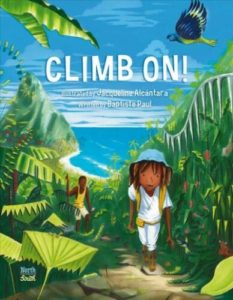
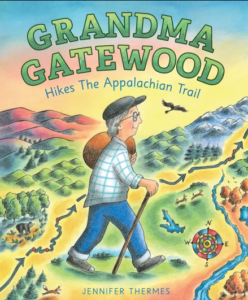
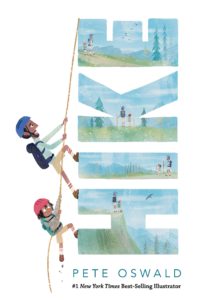
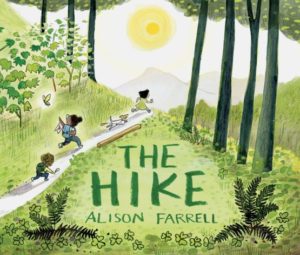
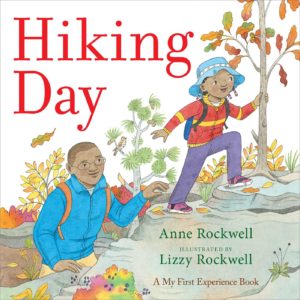
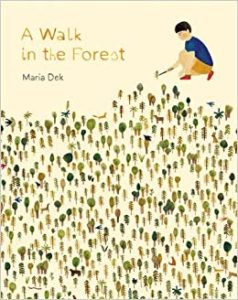
  • Further Reading–Enjoy more picture books about taking a hike. Which of these have you already read? Which of the others would you want to read first? (Click on any book cover for more information on these titles!)

Author Interview: Traci Sorell

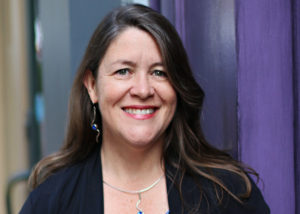
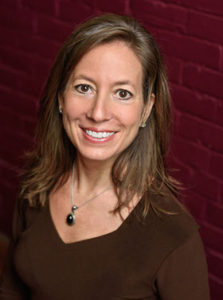
photo credit; Kelly Downs Photography

The February 2022 Author Interview at OPB is with Traci Sorell. She writes fiction and nonfiction books as well as poems for children “featuring contemporary characters and compelling biographies—the type of books I sought out in my school and public libraries as a child.” She’s an enrolled citizen of the Cherokee Nation and lives in NE Oklahoma where her tribe is located.

In addition to four published picture books and one middle grade novel, Traci is under contract for a half dozen more books to be published in the next year or so. Talk about being prolific!

And just because these are awesome, here are three Fun Facts about Traci:

  • When she was 8, she tried out for the lead role in the 1982 film Annie.
  • During college, she lived in Madrid for a year and taught English to Spanish children and adults.
  • She is absolutely, profoundly unable to whistle.

With that, let’s move on to the interview.

https://www.tracisorell.com/

https://twitter.com/tracisorell

https://www.facebook.com/TraciSorellAuthor/


RVC: What was it like growing up in the Cherokee Nation?

TS: It was very different than it is now. Like many other Native Nations at that time (1970s-​1980s), the Cherokee Nation could not exercise its sovereignty and provide services to its citizens or others living within its reservation the way it can now. Tribal leaders and their citizens nationwide worked hard to challenge federal and state laws and policies that undermined our inherent rights as politically distinct peoples within the United States. So, I’m grateful my son has a completely different experience growing up in the Cherokee Nation today than I did as a child. He can experience the focus on language revitalization, participating in cultural programs, and being involved in community life with support from the central tribal government. When I grew up, only one’s family and community provided that because there wasn’t a stronger central government to serve as a support like there is now.

RVC: I’m glad to hear that! How much of a part of your daily life are stories?

TS: All of it. My entire day is filled with stories I tell myself, those I hear from others, and the ones I write. Stories are what we’re all made up of in this life and hopefully help us make sense of it.

RVC: When did you get interested in writing for children?

TS: Just before my son entered preschool, I began to examine the large collection of picture books I had related to Native Nations. I found very few focused on contemporary life and even fewer were created by citizens of Native Nations. I started researching to see what had been more recently published to determine if most of my books were just too old or anomalies, but that wasn’t the case. Overwhelmingly, even the current books featured pre-​1900 life and failed to represent us in our full humanity. I decided I needed to figure out how to be part of the solution to this huge problem.

RVC: To address that problem by creating your own books, what kind of research or training did you do?

TS: A friend from graduate school told me to join SCBWI and connect to my local chapter because he believed the organization was good for helping people new to the field. At the time (2013), I lived in the Kansas City area where there are a lot of people writing and illustrating for young people. I found some wonderful mentors in my local region. I learned so much at our conferences and at other regional conferences from people across the industry.

RVC: How important is it for young kidlit writers to join SCBWI?

TS: I think that depends on your background and what you feel you need. I had no creative writing or English degrees. My prior work had been in completely different areas. I also didn’t know anyone writing in the kidlit field full time. Now there are mentorship programs, helpful info websites like kidlit411.com, classes from Highlights Foundation and The Writing Barn, and kidlit-​focused Facebook groups that someone can connect with much more easily for the information and communities they need. For BIPOC creators, Kweli Journal’s Color of Children’s Literature conference is a terrific place to connect with fellow creatives at all levels of publishing experience as well as meet agents and editors. So, I don’t know that SCBWI membership is as critical given the broader array of supports and information available today.

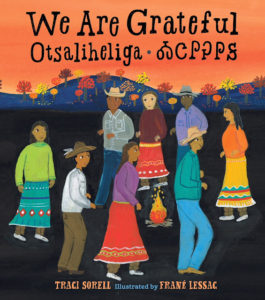
RVC: What’s the story of how your debut picture book, We Are Grateful: Otsaliheliga, came about?

TS: In the fall of 2015, I won a free Skype critique from Suzanne Slade, a prolific, award-​winning nonfiction author, and had no manuscript to show her. So, I sketched out the story, wrote it up, and met with her in November. She suggested a few revisions and told me to get it out to publishers. It was the quickest book I’ve ever written. I sold it unagented through the slush pile in March 2016.

RVC: I’m not surprised that Suzanne’s notes helped you get that book ready to succeed–we know how good Suzanne is (we did an interview with her in 2019). Now, what’s your favorite thing about We Are Grateful: Otsaliheliga?

TS: I have two. First, I’m still hearing from Cherokee people that they love seeing us just living our contemporary lives and doing what we do represented in a picture book because there had never been one previously.

Second, the team of people I worked with to craft the book from fellow Cherokee Nation citizens and veteran illustrator Franè Lessac to my editor Karen Boss and the entire Charlesbridge team, everyone made me feel so supported that I wanted to write more and become a part of this industry.

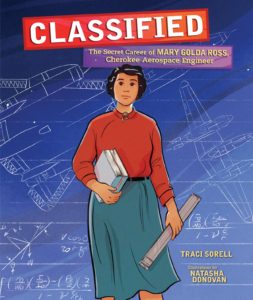
RVC: You had a new book come out last year at this timeClassified: The Secret Career of Mary Golda Ross, Cherokee Aerospace Engineer. What are some of the things you did in terms of PR to support the book?

TS: It was difficult to launch a book into the world that I couldn’t share with anyone in person. Since I didn’t have any 2020 releases, I hadn’t experienced that previously. So, I launched a preorder campaign with Birchbark Books (Native-​owned indie bookstore in Minneapolis). Every preordered book received a bookplate sticker featuring art from the book and signed by the illustrator Natasha Donovan and myself. I also created twenty-​five golden tickets that would be randomly placed in the preordered books. Those receiving a golden ticket inside their book contacted me, and I’d mail them a $1 2019 gold coin issued by the US Mint to commemorate Native contributions in space. Both Mary Golda Ross and NASA astronaut John Herrington (Chickasaw) are featured on the coin.

RVC: That’s a terrific idea–so different than I normally see from authors.

TS: I did some podcast and blog interviews, too. I also got in touch with the Society of Women Engineers, the national organization that Mary was very active in, and they helped promote the book within their networks.

RVC: What’s the most important thing people should know or understand about Mary?

TS: Into every space Mary entered, she brought her Cherokee identity and values with her. Those allowed her to develop her incredible math abilities for the betterment of us all.

RVC: One of the challenges of a picture book biography is that you simply can’t squeeze everything into it. So, what’s something cool about Mary that just didn’t make the final cut?

TS: Her mother donated part of her land to have a one-​room schoolhouse built where her children, her nieces and nephews and others living in the area could attend school close to home. As a result, Mary was not sent off to a boarding school like some Cherokee and many Native children from different tribes were at the time. I believe that act made a difference in Mary’s life.

RVC: If you had to summarize the most important thing you’ve learned about picture book writing while writing Classified, what would it be?

TS: Trust your gut instincts. Forget what your head says. From the structure to the research to co-​creating the book, I just trusted that the through line I wrote for Mary’s story would connect with readers.

RVC: Let’s talk process. What does your writing process look like?

TS: I start out as a plotter. I’ll make notes, usually create a mind map, and then sketch out a rough outline. Then, as I’m writing, a looser style comes in because the story evolves as it needs to be based on the through line I’ve created. I write in my office and, when I’m close to a deadline, I’ll head to a hotel about twenty minutes from my home for a long weekend. I take the food and water I need, so I have uninterrupted time to just read, edit, and sit with the story to finalize the draft or make the revisions.

RVC: [Making a note to try writing and editing in a hotel–ideally a 5‑star fancy one.] What’s your writing superpower?

TS: I believe it’s crafting lyrical, accessible text to create connection and inform or provoke greater understanding of what previously may not have been visible or well understood.

RVC: You’ve got a lot of books under contract and you’re doing a lot of other things in your life. How do you stay so prolific?

TS: I like variety, so I challenge myself to write in new formats and for different age groups. If I wasn’t doing that, I don’t think I’d have as many books as I do. It’s just how I’m hardwired.

RVC: Since COVID, I’ve always tried to ask a question about health and wellness in every interview, so here’s yours—What works best when you need to de-stress?

TS: I listen to music, dance, and nap.

RVC: That’s a great combo of things, for sure. Now, just one last question for this part of the interview, Traci. What forthcoming projects are you most excited about?

TS: All of them. Each one I thought up or a fellow creative did, and they are all stretching me in new ways.

RVC: Okay, Traci, it’s time for the LIGHTNING ROUND. Cracking-​fast questions and express-​swift answers, please. Are you prepared?

TS: Definitely.

RVC: What’s the funniest word in the English language?

TS: Cockamamie, then cattywampus.

RVC: What secret talent do you have that no one would suspect?

TS: I’m a good dancer–salsa, merengue, swing, etc.

RVC: 5 things you can’t do your job without?

TS: Easy–the support of my peeps, pencil, paper calendar, laptop, and smartphone.

RVC: A recent picture book that really got your attention?

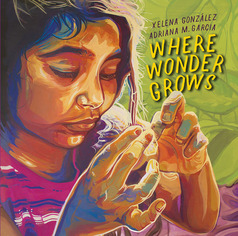
TS: Where Wonder Grows, written by Xelena González and illustrated by Adriana M. Garcia (Lee and Low). I love that the idea from the story came from students who showed their rocks to the two creators during school visits. It prompted them to create an intergenerational story between a Native grandmother and her granddaughters that informs readers that rocks are beings and what different roles they have in our world. It’s very visually arresting, too. I just love it!

RVC: Your mission as a kidlit author?

TS: To combat the erasure and invisibility of Native Nations and their citizens while centering their humanity, sovereignty, histories, cultures, and languages in trade-​published literature for young people in both fiction and nonfiction. That mission isn’t just about works I create, but also helping other Native creatives get their work in front of young people too.

RVC: Favorite expression/​quote about writing?

TS: “I’m not entangled in shaping my work according to other people’s views of how I should have done it.” ~Toni Morrison

RVC: Thanks so much, Traci!