Insider Insights: Illustrator Bait–Write Lines that Invite Art

At our ACQUIRED! workshop this weekend, guest illustrator Fred Koehler shared a simple idea that lit up the room: write lines that give artists room to invent. He calls it “illustrator bait.” Your job as the text writer is to aim the scene and the feeling, then leave space for visual problem-​solving. That space is where style, timing, and humor explode.

Here’s a short guide with quick made-​up examples and a few mentor texts.

Aim the beat, leave the staging

You want clarity of intent, strong verbs, and an emotional target. Avoid pinning down props and choreography unless a detail is crucial to the plot or the joke.

Over-​scripted: Bob threw his left shoe at the big picture window.
Bait: Bob wanted the room to feel his thunder.

Over-​scripted: Lila tips a red bucket and water splashes Mom.
Bait: Lila turns mischief into weather.

Over-​scripted: The cat leapt onto the table and knocked the vase down.
Bait: The cat chose chaos.

Over-​scripted: Maya stacks three green books and stands on them to reach the shelf.
Bait: Maya finds a way to grow three inches.

Each “bait” line sets intention, mood, and consequence. An illustrator can stage a stomp, a bang, a glare, a toppled tower, a sudden rainstorm, or countless other choices that fit the book’s visual language.

When specifics matter

Sometimes the exact object or action carries story weight. Keep it when:

  • A later payoff depends on it, like Grandma’s locket that returns on the final spread.

  • The comedy hinges on a specific reveal, like the banana cream pie that must land somewhere impossible.

  • Nonfiction accuracy requires a precise mechanism, like a bee’s figure-​eight waggle on the comb.

Otherwise, write the aim and the effect, and trust the art team.

Mentor texts that leave room beautifully

  • Sam and Dave Dig a Hole (Mac Barnett, Jon Klassen): spare lines set intention, the pictures deliver irony and surprise.

  • They All Saw a Cat (Brendan Wenzel): simple refrain, wildly varied visual interpretations.

  • The Day the Crayons Quit (Drew Daywalt, Oliver Jeffers): voicey letters aim the emotion, illustrations choose staging and sight gags.

  • Extra Yarn (Mac Barnett, Jon Klassen): the text names desire and consequence, the art builds world and texture.

Pocket tests for your draft

  • Could three different illustrators thumbnail this beat three different ways and stay true to your line?

  • Does your line state intent, feeling, or consequence rather than prescribing props and blocking?

  • If a detail is specific, does the story truly need that exact thing later?

Workshops like ACQUIRED! work because questions like this sharpen pages for collaboration. Write the emotional arrow, give the scene direction, and let your illustrator fly it to the target.

Author Interview: Lindsay H. Metcalf

This month, we’re thrilled to welcome Lindsay H. Metcalf to the Only Picture Books Author interview series! Lindsay’s lyrical nonfiction and activist poetry have won plenty of awards—including the Green Earth Book Award and the ILA Social Justice Literature Award—and her growing body of work continues to inspire young readers to care about the world and their place in it.

From Beatrix Potter, Scientist to Farmers Unite!, No Voice Too Small, and the upcoming Tomatoes on Trial, Lindsay tackles unexpected topics with heart, clarity, and a journalist’s curiosity. She’s also just plain fun.

When she’s not researching or writing, Lindsay plays ukulele, sings pop parodies, and hangs out with her family (including a mischievous puppy and an old cat!) in rural Kansas, not all that far from the farm where she grew up.

Let’s get to know Lindsay!


RVC: You started as a journalist. What made you decide to shift from newspapers to children’s books?

LHM: I had two babies in a seventeen-​month span and decided to stay home with them. In those early days, the library and reading fueled our daily rhythm. I hadn’t picked up a picture book since I was a child, and wow, had they evolved! Discovering titles such as Stuck by Oliver Jeffers and I Want My Hat Back by Jon Klassen, I loved them as much as my kids did. I thought, how hard could it be to write one? Boy, was I naïve.

RVC: Been there!

LHM: It took me two years of fumbling with fiction manuscripts to discover that, actually, I’m much better at nonfiction. Duh—I was a journalist. I didn’t enjoy reading nonfiction as a kid, but as an adult I realized my love of narrative nonfiction where the truth comes alive as sensory-​laden story.

RVC: What skills from journalism carry over into your work as a nonfiction author?

LHM: One of my journalism professors used to say, “If your mother says she loves you, check it out.” That emphasis on vetting research has served me well in all kinds of nonfiction writing. I also grew a thick skin as a newspaper reporter. With daily deadlines, my editors didn’t have time to sugarcoat their critiques. I learned to detach my ego from the writing, which has served me well with the endless flow of rejections in kidlit.

RVC: Let’s jump right to your picture book debut, Beatrix Potter, Scientist. How did that project begin?

LHM: I happened upon this post from The Marginalian detailing Beatrix’s early work as a mycologist. She had written a paper for the Linnean Society of London—what?? Although her books were burned into core memories, all I could tell you about her was that her name appeared in all caps on her book covers.

I loved the idea that Beatrix had been more than one thing—a scientist and a children’s author, and later a conservationist and sheep farmer—pivoting just like I had in my own career. When I discovered that her extensive diary detailed her scientific research, I cuddled up with her words not as a child with a bedtime story but more like two friends chatting over tea.

RVC: What surprised you most during your research into Beatrix’s life and work?

LHM: To keep her parents from reading her diary, she wrote it in a letter-​for-​letter substitution code, later cracked by researcher Leslie Linder. She wrote near-​daily entries for sixteen years. Today anyone can read The Journal of Beatrix Potter from 1881 to 1897, a testament to her brilliant mind and determination.

RVC: That’s amazing. Thanks for sharing all of that! Now, let’s talk about Farmers Unite!, which feels especially personal given your Kansas roots. Did you grow up hearing about the 1979 tractorcade?

LHM: I did not! That’s why I was so amazed when I saw this picture of a local farmer’s tractor in 2016.
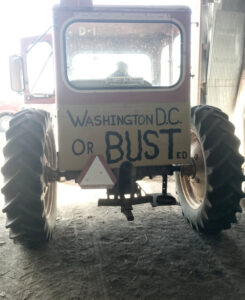
Why on earth would this 1940s tractor be driving from Kansas to Washington, DC? After some Googling, I found out about the American Agriculture Movement protests. In January 1979, farmers from points across the country formed tractor parades—“tractorcades”—thirty miles long en route to the nation’s capital. The movement remained active through the Eighties and inspired Willie Nelson and friends to host the first Farm Aid concert. I remembered the concert but had no knowledge of its roots.

I felt compelled to tell the farmers’ story of fighting to keep their farms alive during the farm crisis—and fighting to continue putting food in the bellies of their fellow citizens. I began writing this story at a time when gun violence protests were sweeping the country and wanted to tell the story of how farmers had found their own way to raise their voices. Today, with tariffs, climate change, and other factors, food producers still face livelihood-​threatening issues each day. Yet their stories are rarely told.

RVC: No Voice Too Small and No World Too Big spotlight youth activism. What did you learn from the young people featured?

LHM: I learned that if young people have the creativity, persistence, and fortitude to speak up and work together to make change, then adults have no excuse.

RVC: Both books have co-​editors working alongside you. How did that process go?

LHM: It went so well that we are currently working on two follow-​up projects together. My co-​anthologists Jeanette Bradley (also the illustrator) and Keila Dawson and I will release a third title in the young activists series in June 2026. It’s called No Brain the Same: Neurodivergent Young Activists Shaping Our Future, and it won’t be long before we can reveal its gorgeous cover! We are also working on a meaty middle-​grade nonfiction project that hasn’t been announced.

RVC: Let’s talk tomatoes! What inspired your almost-​here picture book, Tomatoes on Trial?

LHM: A Facebook friend posted a meme about the 1893 Supreme Court case in which tomatoes were declared a vegetable. My mind churned with the possibilities for a children’s book. Immediately I could see the layers: courts/​debate, food fight humor, history… With my curiosity piqued, I dove into the research rabbit hole and learned the story of produce merchant John Nix, who imported a boatload of Bermudan tomatoes and was slapped with a 10 percent vegetable tariff. Nix believed tomatoes were fruits and took the New York Customs House collector to court.

RVC: What made this story feel important for kids to know?

LHM: When I started working on the story in 2021, I imagined kids using the book as a springboard for learning to research, verify sources, construct an argument, and hold debates. Kids tend to get indignant when I tell them that the Supreme Court declared tomatoes a vegetable.

But as the book releases in August 2025, there’s a whole other layer that I didn’t see coming: tariffs. The Nix v. Hedden case centered on the 1883 Tariff Act. Tariffs fell out of favor for many years, now, under the Trump administration, they’re back. This book is a low-​stakes introduction to that concept.

RVC: Can you share a craft challenge you faced while writing Tomatoes on Trial—and how you solved it?

LHM: No one had written a book about John Nix, so the only information I had about him was the snippets I found in historical newspapers. I had the bones of the Nix v. Hedden case, but not enough to write a picture book biography. So initially I set out to write about the history of tomatoes and how they were plagued by misinformation for centuries. The first drafts had a Magic School Bus feel, with an adult farmer sharing shocking tomato stories (including the Supreme Court case) with two fictional kids. And it wasn’t working.

Finally my friend and nonfiction guru Kirsten Larson helped me see how to cut through the morass with an episodic narrative rather than a full-​fledged biography. This helped me dig into scenes where “Team Fruit” and “Team Vegetable” flung dueling definitions. Nix v. Hedden is a simple case and inherently kid-​friendly, so this approach let me lean into the humor and write something surprising and relevant.

RVC: What’s your favorite part of the research process?

LHM: It’s that moment when, after you think you’ve uncovered every little fact about your subject, you do another search for good measure that turns up new details.

RVC: And the hardest part?
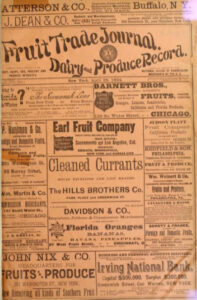
LHM: Image research! For Tomatoes on Trial, I had so little information about Nix that I didn’t know what he looked like. When Calkins Creek acquired the manuscript, they asked me to find images for the back matter, and it became a personal mission to find Nix. Finally, after weeks of searching, I found his obituary in an obscure online archive of the Fruit Trade Journal and Produce Record. To my delight, it included an etched portrait of Nix. I needed only a handful of images for the back matter, but I collected dozens in a secret Pinterest board and eventually shared them with illustrator Edwin Fotheringham. Nonfiction illustrators have such a difficult job, because they have to think about details that aren’t in the text: period clothing, architecture, etc. If I am already doing that research, I may as well share.

RVC: What does a typical writing day look like for you?

LHM: I am a stay-​at-​home mom of two teens, so there is no typical writing day, other than constant interruptions, chores, errands, and appointments. In between I try to list tasks I can do the next time I sit down with my computer. I typically work from the couch, feet up, with my Cavalier King Charles, Gus, and my 21-​year-​old tabby, Gertie, fighting for lap space.

RVC: Do you approach writing differently when the audience skews older (like for your YA title Footeprint)?
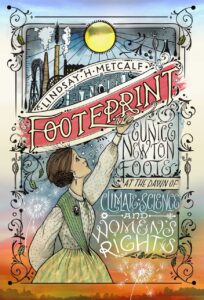
LHM: Yes and no. Footeprint: Eunice Newton Foote at the Dawn of Climate Science and Women’s Rights (February 2026, Charlesbridge), started in my mind as a picture book. Eunice was the first to discover carbon dioxide’s warming properties in 1856, and yet the “father” of climate science is considered to be one of her peers, John Tyndall, who published similar research three years later.

No one had written about her in a traditionally published book and I felt drawn to tell her whole story. It had climate science. The first women’s rights convention at Seneca Falls. Her own patented inventions and her husband as US patent commissioner. Meanwhile, their lives were intertwined with the nascent industrial revolution and the very seeds of climate change.

The best thing I did was write what I needed to write without placing restrictions on myself. I usually start wrapping my head around biography research by making a giant timeline of every fact I know, and then identifying a unifying thread. This book wanted to be more than a picture book, so I shoved my self-​doubt to the side and wrote it as it begged to be written. Her story came out in poems, and I had no idea it would be considered young adult until the book was acquired and my contract specified it.

RVC: A lot of kidlit writers seem to have stories that “came out in poems” these days. Why did this choice seem like the best option for telling this story?

LHM: It worked for several reasons. The subject matter was emotional, with a woman fighting for her right to be a scientist and inventor in an era when married women could not own property or hold patents. While I could feel the emotions behind the facts, I wanted to stick as closely as possible to nonfiction. I found letters written by Eunice and her family later in her life, but I had nothing but her formal patent applications for the time period that formed the crux of the book. Poetic devices—metaphor in particular—create ways to convey emotion without straying from facts.

Another aspect I loved about telling the story in poems was the choppy nature of a novel-​in-​verse. Each poem tells its own miniature story, without the need for much transition. In places where I had gaps in facts—sometimes years—the novel-​in-​verse form helped me bridge those pretty seamlessly through white space and creative poem titles.

RVC: What’s your best tip for writers creating a verse novel?

LHM: The same advice I’d give anyone trying a new type of writing: read great mentor texts, find like-​minded critique partners, and take classes. I learned a ton from Cordelia Jensen, who periodically teaches courses through the Highlights Foundation. Her next course—Revising Your Novel-​in-​Verse—runs November through mid-​December. Cordelia goes deep and offers critiques, and she’s a wonderful verse novelist herself.

RVC: What role do critique partners or writing groups play in your process?

LHM: They are essential! For the young activist books (No Voice Too Small, No World Too Big, and the forthcoming No Brain the Same) three of us work together, almost as a built-​in critique group. Because we’re in touch each day and we have regular calls, we do a lot of problem-​solving and cowriting in real time.

I share solo projects with a critique group that meets monthly, and if those folks have seen a manuscript too many times, I will send it to individual critique partners. Every single project of mine has improved based on astute critique feedback.

RVC: How do you know when a manuscript is done?

LHM: When my agent tells me it’s done. Ha! I find that after I’ve worked on a project for a long time, it’s tough for me to see its strengths and flaws objectively.

RVC: Here’s the last question for this part of the interview. What’s something you’ve learned/​run across recently that made you say, “Yes, yes, yes—THAT’S a book”?

LHM: It’s not my story to tell, but I think someone NEEDS to write about the Indigenous teens who are kayaking the 300-​mile Klamath River after the US government removed a long-​contested dam. This inspiring story of environmental justice and decolonization demands its own book!

RVC: Alright, Lindsay. Step back and take a breath—you’re going to need it. We’re now at THE LIGHTNING ROUND! Fast questions and zippy answers please. Are you ready?

LHM: Hit me.

RVC: What’s your favorite weird tomato fact?

LHM: In the 1800s, people took tomato pills as a cure-​all, from consumption to cholera.

RVC: Kansas sunsets or Kansas thunderstorms?

LHM: Post-​storm sunsets.

RVC: What song do you belt when no one’s listening?

LHM: Right now it’s “Pink Pony Club” by Chappell Roan.

RVC: One writing rule you always break?

LHM: Sentence fragments. And conjunctions at the beginnings of sentences.

RVC: The last great picture book you read that made you stop and reread a line?
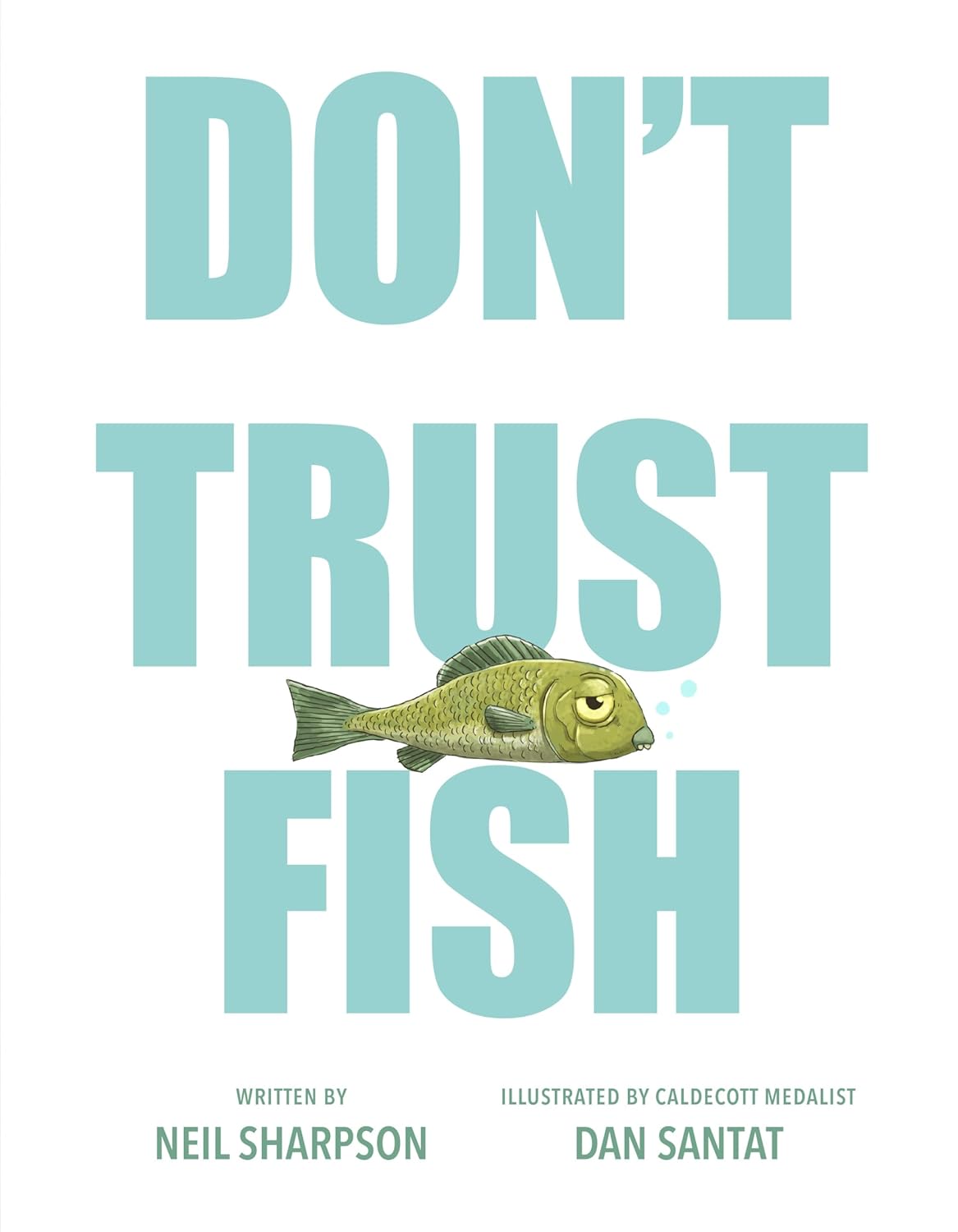
LHM: Don’t Trust Fish by Neil Sharpson, illustrated by Dan Santat.

RVC: One word you hope readers use to describe your work?

LHM: Thought-​provoking. I’m counting that as one word.

RVC: Thanks so much, Lindsay!

LHM: Thanks, Ryan! It’s been an honor.
Industry Insights: Decoding Editorial Feedback (with Real Picture Book Examples)

Hello, OPB friends!

This month, we’re doing something a little different for our Industry Insider post. Instead of featuring an interview, I wanted to dig into a question that comes up often during critique sessions, revision conversations, and email threads with clients, friends, and fellow kidlit writers:

What do editors really mean when they say things like “This feels quiet” or “I didn’t quite connect with the voice”?

As Editorial Director at Bushel & Peck Books—and a kidlit writer myself for the past ten years—I’ve heard these phrases from both sides of the table. I’ve also talked about them at length with my own agent, with critique partners, and with other editors across the industry. So, today’s post is a kind of translation guide: a short, honest look at some of the most common editorial phrases and what they often (but not always!) mean under the hood.


This feels quiet.”

This doesn’t mean “bad.” It usually means the concept doesn’t feel immediately marketable. Maybe the theme is lovely but soft, or the stakes feel internal rather than plot-​driven. Sometimes it means the story is tender or subtle, but doesn’t stand out in a crowded submission pile.

What might help:
Sharpen the hook. Raise the stakes. Consider whether the emotional arc or character journey could be more compelling or surprising.

Example: The Rabbit Listened by Cori Doerrfeld
This is a quiet book, yes, but it works because the emotional core is crystal-​clear and universally resonant. Note how the hook—how kids process big feelings—feels urgent and relatable, even though the plot is minimal.


It’s well-​written, but I didn’t fall in love.”

This is often code for “I admire this, but I don’t have a vision for how to sell it.” Editors have to advocate hard for every book they acquire, and that requires real enthusiasm. No one wants to take on a project they feel lukewarm about, even if the writing is strong.

What might help:
Nothing, necessarily. This one isn’t about a fixable flaw, but rather more about fit. Keep querying. The right person might fall hard.

Example: Julian Is a Mermaid by Jessica Love
This debut book is lyrical, quiet, and elegant—easily one an editor could have passed on for being “lovely, but maybe too subtle.” But its emotional depth and visual storytelling made the right editor fall in love, and champion it all the way to success.


There’s not quite enough here for a picture book.”

This might mean there’s not a full arc, or that the story leans more toward vignette or concept than narrative. It can also mean the emotional or plot payoff isn’t big enough to justify 32, 40, or 48 pages.

What might help:
Dig deeper into the character’s journey. Add tension, reversals, or a turning point. Picture books (even/​especially quiet ones!) need structure to shape the reader’s experience.

Example: A Sick Day for Amos McGee by Philip C. Stead and Erin E. Stead
This story is gentle, but it has a clear beginning, middle, and end. Amos takes care of animals at the zoo. One day he’s sick—and they return the favor. The role reversal adds narrative weight to what could’ve been a flat concept.


I wasn’t quite connecting with the voice.”

This is a gentle way of saying that something in the tone, language, or narrative feel simply didn’t land. The voice might feel too adult, too generic, or inconsistent. Or maybe it didn’t match the story’s intended mood or audience.

What might help:
Read it aloud. Is the rhythm strong? Does it sound like a real person? Could the narrator be more specific, distinctive, or emotionally resonant?

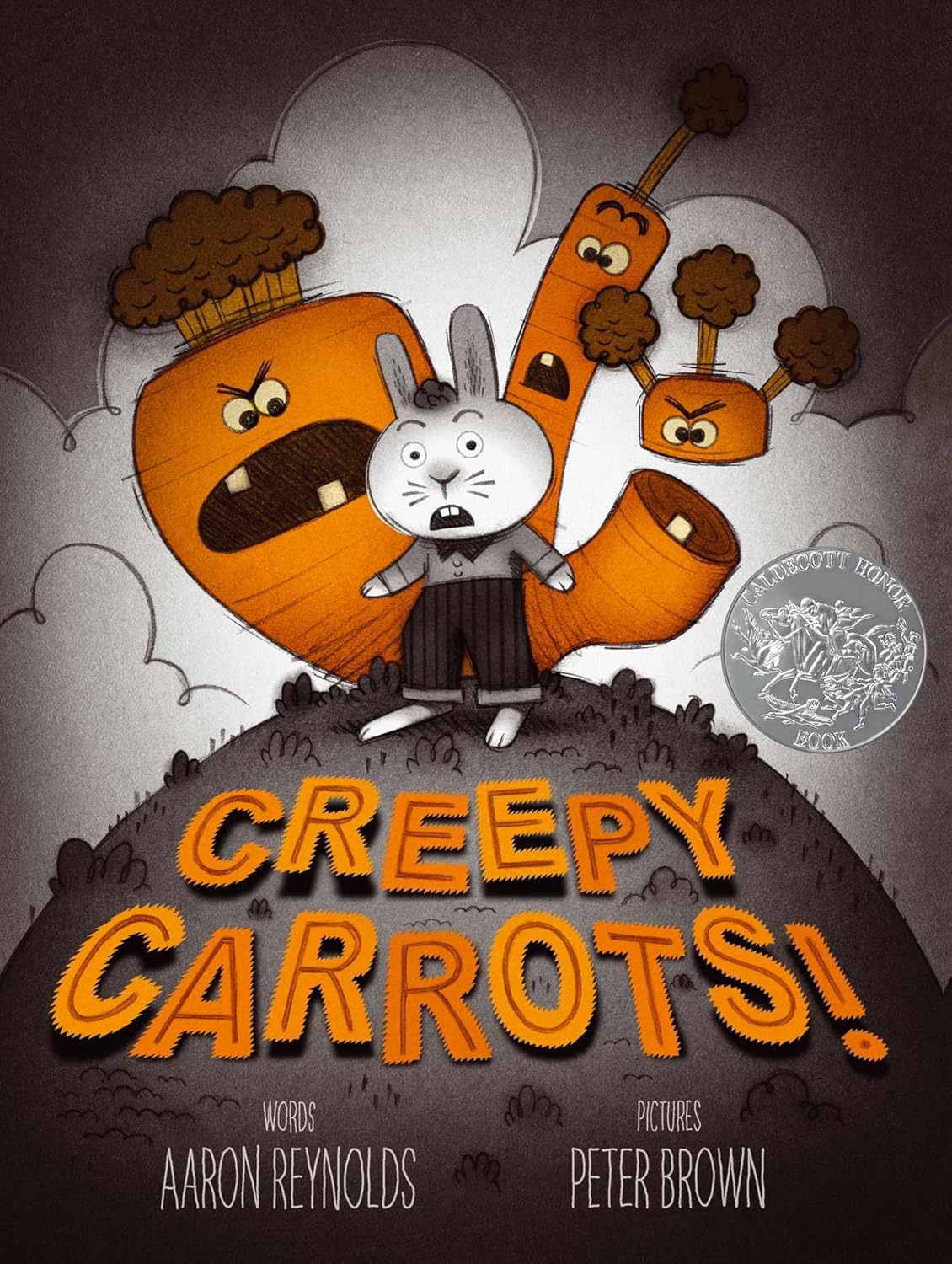
Example: Creepy Carrots! by Aaron Reynolds, illustrated by Peter Brown
The voice here is spot-​on: cinematic, dramatic, and a perfect match for the mock-​horror tone. The exaggerated seriousness is what sells the humor…and the book.


It’s too similar to something else on our list.”

This is rarely personal. More times than not, it’s strategic. Editors have to balance their list across themes, formats, tones, and audiences. If they just acquired a book about ballet-​loving dinosaurs, they’re probably not going to take another one. I run into this a lot at my press because we’re a small press with a small list. I can’t buy a second book about penguins if we’ve already got one in the pipeline, or just published one…even though I’d love to do an all-​penguin imprint!

What might help:
Check your comps. Make sure your book fills a different niche, or offers a fresh twist that feels essential, not adjacent.

Example: Don’t Let the Pigeon Drive the Bus! by Mo Willems
A story about a demanding character trying to get their way? Done a zillion times before. But the second-​person narration, meta structure, and pigeon personality made this feel wildly new, even though the premise is simple.


We’re being really selective right now.”

Always true. But also: sometimes it’s a way of softening a pass without going into detail. Budgets, list size, market trends, team bandwidth, and internal priorities all play a role.

What might help:
This is nothing you can control. It’s just not a reflection on you or your work. Keep going. The right project will hit the right desk at the right time.

Example: The Day the Crayons Quit by Drew Daywalt and Oliver Jeffers
A book like this may have felt risky at the wrong time: epistolary format, multiple voices, no central plot. But with the right champion at the right moment, it broke through—and became a bestseller.


Final Thoughts:
Rejections don’t always mean “no forever.” And editorial speak isn’t meant to be mysterious, though it can MOST DEFINITELY feel that way in the moment for a while. As writers, it helps to hear what’s often behind the phrases. As editors, it helps to be honest about what we mean. The more we can bridge that gap, the stronger the books (and the industry) become.

Got a phrase you’d like help decoding? Leave a comment or reach out! I’m happy to demystify where I can.

Picture Book List: 15 Books About Astronomy

Calling all stargazers and curious minds!

With Spring Astronomy Day approaching on May 3, 2025—a day dedicated to bringing astronomy to the people—​it’s the perfect time to explore the wonders of the cosmos with your little ones. We’ve curated a stellar collection of 15 picture books that illuminate the mysteries of space, stars, and planets, igniting curiosity and wonder in young readers.

So grab a blanket, step outside under the night sky, or cozy up indoors, and let these stories launch your imaginations into the universe!

If I missed your favorite picture book that’s out of this world, drop it in the comments!


A Hundred Billion Trillion Stars by Seth Fishman, illustrated by Isabel Greenberg (May 2020)

From Goodreads: “Did you know that the earth is covered in three trillion trees? And that seven billion people weigh about the same as ten quadrillion ants? Our world is full of constantly changing numbers, from a hundred billion trillion stars in space to thirty-​seven billion rabbits on Earth. Can you imagine that many of anything?

The playful illustrations from New York Times–bestselling artist Isabel Greenberg and the friendly, straightforward voice of author Seth Fishman illuminate some of the biggest numbers in the universe—a hundred billion trillion stars—and the smallest—one unique and special YOU. Here is a book for story time, for science time, for math time, for bedtime, and all the times in between.

Perfect for curious children, classrooms eager for STEM content, and readers who have devoured Ada Twist, Scientist and How Much Is a Million?

  • 40 pages
  • Reading Age: 3–7 years

A Moon of My Own by Jennifer Rustgi, illustrated by Ashley White (September 2016)

From Goodreads: “An imaginative young girl travels the world with her faithful companion, the moon. In her enchanted adventure she visits all seven continents while the moon goes through its cycle of phases as portrayed in silhouetted art. “Explore More” sections for kids and adults offer information and activities on phases of the moon and other aspects of astronomy and geography.”

  • 32 pages
  • Reading Age: 3–10 years

Astro Girl by Ken Wilson-​Max (November 2021)

From Goodreads: “The stars are the limit for a little girl who acts out her wish to be an astronaut — inspired by a very special person.

Astrid has loved the stars and space for as long as she can remember. “I want to be an astronaut!” she says to everyone who will listen. While her mama is away, Astrid and her papa have fun acting out the challenges an astronaut faces on a space mission — like being in zero gravity (“I can do that all day long!” she says), eating food from a kind of tube, and doing science experiments with the help of cookie sheets. When at last it’s time to meet Mama at the air base, Astrid wears her favorite space T‑shirt to greet her. But where exactly has Mama been? Channeling a sense of childlike delight, Ken Wilson-​Max brings space travel up close for young readers and offers an inspiring ending.”

  • 32 pages
  • Reading Age: 4–8 years

Bright Sky, Starry City by Uma Krishnaswami, illustrated by Aimée Sicuro (May 2015)

From Goodreads: “A little girl and her father have an opportunity to appreciate the wonders of the night sky. Phoebe helps her dad set up telescopes on the sidewalk outside his store. It’s a special night ― Saturn and Mars are going to appear together in the sky. But will Phoebe be able to see them with all the city lights? Raindrops begin to fall, followed by lightning and thunder. Phoebe is filled with disappointment as she and her father hurry inside to wait out the storm. But suddenly the power fails and then, amazingly, the rain and clouds disappear. Phoebe and her dad and all kinds of people spill into the street. And there, in the bright night sky, the splendor of the planets and a multitude of stars are revealed for all to see. An illustrated afterword includes information about the solar system, planetary conjunctions and rings, moons, telescopes and light pollution. A glossary and recommended further reading are also included.”

  • 32 pages
  • Reading Age: 6–9 years

Curiosity: The Story of a Mars Rover by Markus Motum (March 2018)

From Goodreads: “Discover the incredible story of the search for life on Mars, told from the unique perspective of Curiosity, the Mars Rover sent to explore the red planet.

Markus Motum’s stylish illustrations and diagrams reveal how a robot travelled 350,000,000 miles to explore a planet where no human has ever been.”

  • 56 pages
  • Reading Age: 4–9 years

The Fly Who Flew to Space by Lauren Sánchez (September 2024)

From Goodreads: “Lauren Sánchez, Emmy Award-​winning journalist, pilot, and philanthropist, takes readers on a high-​flying space adventure with Flynn the Fly in her picture book debut.Bold and inquisitive, Flynn is a little fly with big aspirations. School is tough, and it’s all too easy to be distracted by the rocket company down the road–especially while daydreaming about becoming an astronaut! One day while exploring, Flynn flies aboard a rocket that suddenly takes off! Follow Flynn on an exciting journey to space to learn more about our precious planet—from amazing natural wonders like the Amazon rainforest, to the atmosphere that protects it all. After all, big dreams and a curious mind can lead to the most amazing discoveries! With a book jacket that doubles as a glow-​in-​the dark poster, this engaging picture book from debut author and Emmy-​award winner, Lauren Sánchez, features exquisitely detailed illustrations by Clio-​award winner, Raleigh Stewart, and introduces important STEAM concepts. Encouraging exploration and conservation, Sánchez—and Flynn—will have little readers reaching for the stars.”

  • 32 pages
  • Reading Age: 4–7 years

Go for the Moon: A Rocket, a Boy, and the First Moon Landing by Chris Gall (June 2019)

From Goodreads: “Written and illustrated by Chris Gall, Go for the Moon! captures the fascinating detail and inspiring adventure of the moon landing. It is a captivating celebration of one of humankind’s greatest technical achievements and most extraordinary feats of exploration.

The Apollo 11 astronauts have prepared carefully for their attempt to be the first men to land on the moon. The young narrator of this book has prepared carefully, he explains the design of the spacecraft, the flight from the earth to the moon, and the drama of touching down–while shadowing the astronaut’s voyage with one of his own.”

  • 48 pages
  • Reading Age: 5–8 years

How to Be on the Moon by Viviane Schwarz (June 2019)

From Goodreads: “In the follow-​up to How to Find Gold, best friends Anna and Crocodile are going on another intrepid adventure — this time, to the moon.

It’s almost impossible to get to the moon. It’s out in space, which is dark and empty, and it’s very far away. If Anna and Crocodile are going to make it to the moon, they’ll need some special skills, like being able to do math and having a lot of patience. They’ll also need to build a rocket. Not to mention the sandwiches for the journey. Luckily, when Anna and Crocodile put their minds together, nothing can stand in their way. Full of the same cheerful charm that made How to Find Gold so endearing, Viviane Schwarz’s pitch-​perfect text and wonderfully colorful illustrations launch this story off the page in a true celebration of curiosity and the magic of imaginative play.”

  • 32 pages
  • Reading Age: 2–5 years

Just Right: Searching for the Goldilocks Planet by Curtis Manley, illustrated by Jessica Lanan (January 2019)

From Goodreads: “Do you wonder
if humans
are the only beings
who wonder
if they are alone
in the universe?

Our sun is a star.
In the night sky are all kinds of stars,
and orbiting those stars
are planets like the ones in our own solar system.

Could those planets have life
like we do on Earth?

Planet Earth is not too big,
not too small, not too hot,
and not too cold. It’s just right.
Our very own Goldilocks planet .…

Follow a young girl
as she explores these questions
in this gorgeous book about the wondrous search
for another Goldilocks planet.”

  • 48 pages
  • Reading Age: 5–9 years

Mae Among the Stars by Roda Ahmed, illustrated by Stasia Burrington (January 2018)

From Goodreads: “Inspired by the life of the first African American woman to travel in space, Mae Jemison.

When Little Mae was a child, she dreamed of dancing in space. She imagined herself surrounded by billions of stars, floating, gliding, and discovering.

  • 40 pages
  • Reading Age: 3–6 years

Pluto Gets the Call by Adam Rex, illustrated by Laurie Keller (November 2019)

From Goodreads: “Pluto gets a call from Earth telling him he isn’t a planet anymore, so he sets out on a journey through the solar system to find out why in this funny and fact-​filled romp that’s perfect for fans of The Scrambled States of America .

Pluto loves being a planet. That is, until the day he gets a call from some Earth scientists telling him he isn’t a planet anymore! You probably wanted to meet a real planet, huh? So, Pluto takes the reader on a hilarious and informative journey through the solar system to introduce the other planets and commiserate about his situation along the way. Younger readers will be so busy laughing over Pluto’s interactions with the other planets, asteroids, moons, and even the sun, they won’t even realize just how much they’re learning about our solar system!”

  • 48 pages
  • Reading Age: 4–7 years

Rocket Says Look Up! by Nathan Bryon, illustrated by Dapo Adeola (June 2019)

From Goodreads: “Meet Rocket–a plucky aspiring astronaut intent on getting her community to LOOK UP! from what they’re doing and reach for the stars in this auspicious debut picture book. Honored as a Chicago Public Library 2019 Best of the Best Book!A comet will be visible tonight, and Rocket wants everyone to see it with her–even her big brother, Jamal, whose attention is usually trained on his phone or video games. Rocket’s enthusiasm brings neighbors and family together to witness a once-​in-​a-​lifetime sighting. Perfect for fans of Ada Twist, Scientist and Cece Loves Science–Rocket Says Look Up! will inspire readers of all ages to dream big as it models Rocket’s passion for science and infectious curiosity.Author Nathan Bryon, an actor and screenwriter, and Dapo Adeola, a community-​minded freelance illustrator, bring their fresh talents, passion, and enthusiasm to the picture book medium.”

  • 32 pages
  • Reading Age: 2–4 years

Twinkle, Twinkle, Little Star by Jane Cabrera (September 2023)

From Goodreads: “A favorite lullaby becomes a celebration of love in this lushly illustrated version featuring animals from all over the world.”

  • 32 pages
  • Reading Age: 1–3 years

Where to Hide a Star by Oliver Jeffers (October 2024)

From Goodreads: “World-​renowned artist and picture book creator Oliver Jeffers brings to life an endearing story about the magic of friendship—and sharing what brings us joy.Celebrate twenty years of The Boy in this highly anticipated new adventure from the internationally bestselling picture book creator of Lost and Found Oliver Jeffers! Once there was a boy who would often play hide-​and-​seek with his friends the star and the penguin. The star was always easy to find, but one day it went missing. So, the boy radioed the Martian for help, and soon found himself on an exciting spaceship rescue mission to the North Pole! But there, he discovered that he wasn’t the only one who had always dreamed of having a star as a friend …The out-​of-​this-​world, long-​awaited sequel to the much-​loved Boy stories, loved all around the world—now introducing a brand-​new character!”

  • 48 pages
  • Reading Age: 4–8 years

You Are the First Kid on Mars by Patrick O’Brien (May 2009)

From Goodreads: “As we look back to the beginnings of the space race, 2009 is also the year for looking forward to humankind’s next step toward the stars.In the spirit of books that once imagined colonies on the moon, Patrick O’Brien has created a unique look at your first trip to Mars. Using the most up-​to-​date designs and theories of what it will take to establish a base on Mars, you are off on an incredible journey, over 35 million miles to the red planet. Filled with details, and vividly brought to life, this is an adventure that you are never going to forget.”

  • 48 pages
  • Reading Age: 4–8 years

Only Picture Books’ “24 Favorite Picture Books of 2024”

Well, 2024 is officially in the rearview mirror! That means I’ve had a whole year to delve into the delightful stacks of picture books published this past year, and I’m thrilled to share my favorites with you.

For those unfamiliar with OPB, I select books based on the following:

  • Books that have heart.
  • Books that resonate.
  • Books that are skillfully done.
  • Books that matter.

But to earn a spot on the “Best of 2024” list, a book needs to go above and beyond. This year, I was particularly drawn to books with these qualities:

  • A Unique Perspective: Books that offer a fresh way of seeing the world, whether it’s through an unusual narrative voice, an unexpected theme, or a groundbreaking artistic style.
  • Emotional Resonance: Stories that tap into the depths of human emotion, sparking empathy, understanding, and connection in readers of all ages.
  • Lyrical Language: Books with a musicality to their words, where the rhythm and flow of the language enhance the story’s impact.
  • Artistic Brilliance: Illustrations that not only complement the text but also tell their own story, captivating the eye and enriching the reading experience.
  • Lasting Impact: Books that stay with you long after you’ve turned the final page, prompting reflection, conversation, and a deeper understanding of ourselves and the world around us.

In no particular order (except alphabetical, for the sake of organization), here are OPB’s standout picture books of 2024. As always, I’m including my signature 5‑word reviews for each title, along with a link to the book’s Goodreads page.

Of course, this list is just a snapshot of the many wonderful picture books published in 2024. If I missed your favorite, please share it in the comments.

Now, let’s dive into the books!


Ahoy!
Author: Sophie Blackall
Illustrator: Sophie Blackall
Anne Schwartz Books
2 April 2024
48 pages

OPB’s five-​word review: Parent-​child hijinks spark comedic magic.

Goodreads Reviews


All That Grows
Author: Jack Wong
Illustrator: Jack Wong
Groundwood Books
5 March 2024
32 pages

OPB’s five-​word review: Gentle exploration roots lifelong curiosity.

Goodreads Reviews


All the Books
Author: Hayley Rocco
Illustrator: John Rocco
Little, Brown Books for Young Readers
1 October 2024
48 pages

OPB’s five-​word review: Warm ode to libraries’ wonders.

Goodreads Reviews


Built to Last
Author: Minh Lê 
Illustrator: Dan Santat
Knopf Books for Young Readers
30 April 2024
40 pages

OPB’s five-​word review: Creative chaos builds unbreakable friendship.

Goodreads Reviews


Clever Crow
Author: Chris Butterworth
Illustrator: Olivia Lomenech Gill
Candlewick
9 July 2024
32 pages

OPB’s five-​word review: Witty crow world wonders–lovely.

Goodreads Reviews


Comet Chaser: The True Cinderella Story of Caroline Herschel, the First Professional Woman Astronomer
Author: Pamela S. Turner
Illustrator: Vivien Mildenberger
Chronicle Books
5 March 2024
60 pages

OPB’s five-​word review: Persistence crafts a stellar legacy.

Goodreads Reviews


Crowning Glory: A Celebration of Black Hair
Author: Carole Boston Weatherford
Illustrator: Ekua Holmes
Candlewick
3 September 2024
32 pages

OPB’s five-​word review: Vibrant collages uplift every curl.

Goodreads Reviews


The Dictionary Story
Author: Oliver Jeffers
Illustrator: Sam Winston
Candlewick
27 March 2024
56 pages

OPB’s five-​word review: Hilarious hijinks in alphabetic pandemonium.

Goodreads Reviews


Finding Things
Author: Kevin Henkes
Illustrator: Laura Dronzek
Greenwillow Books
14 May 2024
32 pages

OPB’s five-​word review: Serendipity sparks joy, connection, contentment.”

Goodreads Reviews


Good Night Thoughts
Author: Max Greenfield
Illustrator: James Serafino
G.P. Putnam’s Sons Books for Young Readers
3  September 2024
32 pages

OPB’s five-​word review: Greenfield soothes sleepless little minds.

Goodreads Reviews


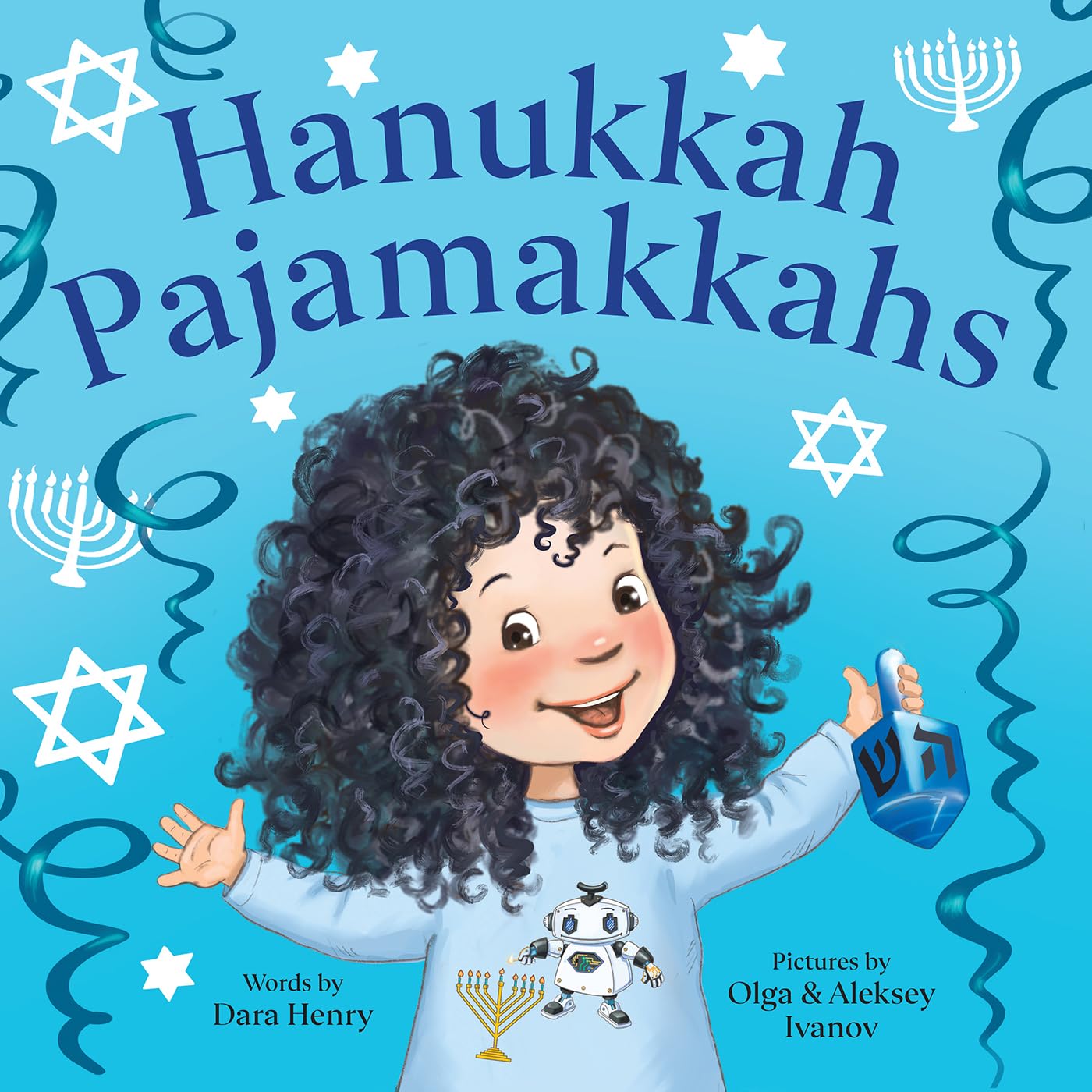
Hanukkah Pajamakkahs
Author: Dara Henry
Illustrator: Olga & Aleksey Ivanov
Sourcebooks Jabberwocky
3 September 2024
40 pages

OPB’s five-​word review: Ruthie’s resilience makes Hanukkah shine.

Goodreads Reviews


Home in a Lunchbox
Author: Cherry Mo
Illustrator: Cherry Mo
Penguin Workshop
11 June 2024
40 pages

OPB’s five-​word review: Vibrant bites bridge shy beginnings.

Goodreads Reviews


I Am Gravity
Author: Henry Herz
Illustrator: Mercè López
Tilbury House Publishers
16 April 2024
32 pages

OPB’s five-​word review: Herz balances science with elegance.

Goodreads Reviews


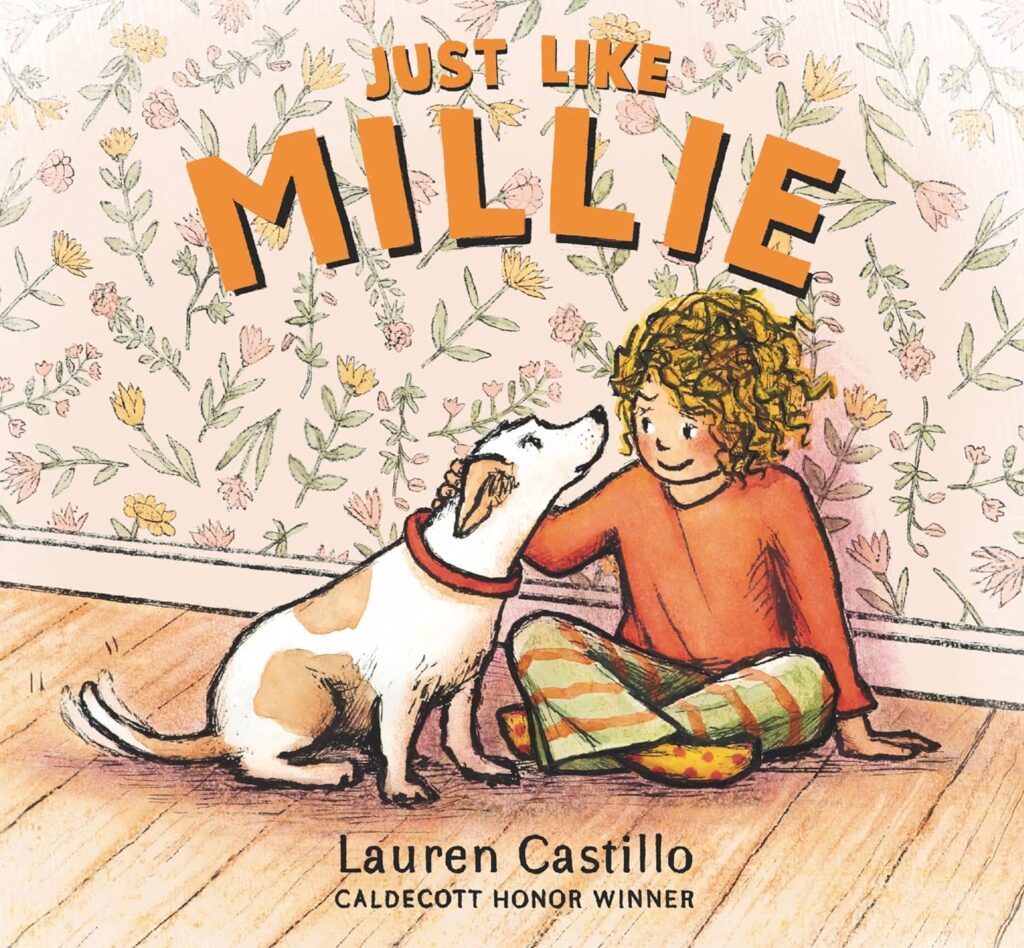
Just Like Millie by Lauren Castillo: Book CoverJust Like Millie
Author: Lauren Castillo
Illustrator: Lauren Castillo
Candlewick
27 March 2024
40 pages

OPB’s five-​word review: Subtle sweetness transforms anxious beginnings.

Goodreads Reviews


The Last Stand
Author: Antwan Eady
Illustrator: Jarret and Jerome Pumphrey
Knopf Books for Young Readers
30 January 2024
40 pages

OPB’s five-​word review: Generations harvest love and hope.

Goodreads Reviews


The Last Zookeeper
Author: Aaron Becker
Illustrator: Aaron Becker
Candlewick
26 March 2024
40 pages

OPB’s five-​word review: Luminescent artwork animates quiet heroism.

Goodreads Reviews


Nothing: John Cage and 4′33″
Author: Nicholas Day
Illustrator: Chris Raschka
Neal Porter Books
2 April 2024
40 pages

OPB’s five-​word review: Silence resonates, music redefined brilliantly.

Goodreads Reviews


Ode to Grapefruit: How James Earl Jones Found His Voice
Author: Kari Lavelle
Illustrator: Bryan Collier
Knopf Books for Young Readers
30 July 2024
48 pages

OPB’s five-​word review: Words transform struggle into strength.

Goodreads Reviews


Piper Chen Sings
Author: Phillipa Soo and Maris Pasquale Doran
Illustrator: Qin Leng
Random House Studio
2 April 2024
40 pages

OPB’s five-​word review: Harmony blooms amidst heartfelt jitters.

Goodreads Reviews


Small Things Mended
Author: Casey W. Robinson
Illustrator: Nancy Whitesides
Rocky Pond Books
19 March 2024
40 pages

OPB’s five-​word review: Broken things inspire gentle healing.

Goodreads Reviews


The Table
Author: Winsome Bingham and Wiley Blevins
Illustrator: Jason Griffin
Neal Porter Books
17 September 2024
56 pages

OPB’s five-​word review: Furniture holds history, fosters empathy.

Goodreads Reviews


Thank You
Author: Jarvis
Illustrator: Jarvis
Candlewick
6 August 2024
32 pages

OPB’s five-​word review: Whimsy meets heartfelt thankfulness beautifully.

Goodreads Reviews


World More Beautiful: The Life and Art of Barbara Cooney
Author: Angela Burke Kunkel
Illustrator: Becca Statlander
Random House Studio
6 August 2024
40 pages

OPB’s five-​word review: Visionary illustrator leaves lasting legacy.

Goodreads Reviews


The Yellow Bus
Author: Loren Long
Illustrator: Loren Long
Roaring Brook Press
25 June 2024
48 pages

OPB’s five-​word review: Timeless story, ultimate second chances.

Goodreads Reviews

Picture Book List: 15 Picture Books About Books

Calling all bookworms and bibliophiles!

Today, we’re turning the pages on a delightful collection of picture books that celebrate the magic of stories. From heartwarming tales about libraries to whimsical journeys into the world of words, these 15 gems are sure to spark a love of reading in young hearts.

So snuggle up with your little ones, open a book, and let the adventure begin!

**If I missed your favorite picture book that’s about books, tell me in the comments!**


Book Fiesta!: Celebrate Children’s Day/​Book Day by Pat Mora, illustrated by Rafael López (March 2016)

From Goodreads: “Take a ride in a long submarine or fly away in a hot air balloon. Whatever you do, just be sure to bring your favorite book! Rafael López’s colorful illustrations perfectly complement Pat Mora’s lilting text in this delightful celebration of El día de los niños/​El día de los libros; Children’s Day/​Book Day. Toon! Toon!

Includes a letter from the author and suggestions for celebrating El día de los niños/​El día de los libros; Children’s Day/​Book Day.”

  • 40 pages
  • Reading Age: 4–8 years

The Book with No Pictures by B.J. Novak (Sept 2014)

From Goodreads: “Warning! This book looks serious but it is actually completely ridiculous!

A book with no pictures?

What could be fun about that?

After all, if a book has no pictures, there’s nothing to look at but the words on the page.

Words that might make you say silly sounds… In ridiculous voices…

Hey, what kind of book is this, anyway?

At once disarmingly simple and ingeniously imaginative, ‘The Book With No Pictures’ inspires laughter every time it is opened, creating a warm and joyous experience to share—and introducing young children to the powerful idea that the written word can be an unending source of mischief and delight.

If a kid is trying to make you read this book, the kid is playing a trick on you. You will end up saying silly things and making everybody laugh and laugh!

Don’t say I didn’t warn you…”

  • 48 pages
  • Reading Age: 4–8 years

Charlie Cook’s Favorite Book by Julia Donaldson, illustrated by Axel Scheffler (June 2006)

From Goodreads: “Charlie Cook has a favorite book. It’s about a pirate, who also has a favorite book … about Goldilocks, who also has a favorite book … about a knight, who also has a favorite book .… This hilarious pattern continues throughout the story, right to the satisfying and surprising end.”

  • 32 pages
  • Reading Age: 2–4 years

Fantastic Flying Books of Mr. Morris LessmoreThe Fantastic Flying Books of Mr. Morris Lessmore by William Joyce, illustrated by Joe Bluhm (June 2012)

From Goodreads: “Morris Lessmore loved words.
He loved stories.
He loved books.
But every story has its upsets.

Everything in Morris Lessmore’s life, including his own story, is scattered to the winds.
But the power of story will save the day.”

  • 56 pages
  • Reading Age: 4–8 years

How Rocket Learned to Read by Tad Hills (July 2010)

From Goodreads: “Learn to read with this New York Times-bestselling picture book, starring an irresistible dog named Rocket and his teacher, a little yellow bird. Follow along as Rocket masters the alphabet, sounds out words, and finally … learns to read all on his own!

With a story that makes reading fun—and will even help listeners learn to read—this book is ideal for kindergarten classrooms and story hour or as a gift for that beginning reader. Fresh, charming art by Tad Hills, the New York Times bestselling author/​illustrator of Duck & Goose, will make this a favorite.”

  • 40 pages
  • Reading Age: 3–6 years

How to Read a Story by Kate Messner, illustrated by Mark Siegel (May 2015)

From Goodreads: “Step One: Find a story. (A good one.)
Step Two: Find a reading buddy. (Someone nice.)
Step Three: Find a reading spot. (Couches are cozy.)
Now: Begin.
Accomplished storytellers Kate Messner and Mark Siegel chronicle the process of becoming a reader: from pulling a book off the shelf and finding someone with whom to share a story, to reading aloud, predicting what will happen, and—finally—coming to The End . This picture book playfully and movingly illustrates the idea that the reader who discovers the love of reading finds, at the end, the beginning.”

  • 36 pages
  • Reading Age: 5–7 years

The Incredible Book Eating Boy by Oliver Jeffers (April 2007)

From Goodreads: “Like many children, Henry loves books. But Henry doesn’t like to read books, he likes to eat them. Big books, picture books, reference books … if it has pages, Henry chews them up and swallows (but red ones are his favorite). And the more he eats, the smarter he gets—he’s on his way to being the smartest boy in the world! But one day he feels sick to his stomach. And the information is so jumbled up inside, he can’t digest it! Can Henry find a way to enjoy books without using his teeth? With a stunning new artistic style and a die-​cut surprise, Oliver Jeffers celebrates the joys of reading in this charming and quirky picture book. It’s almost good enough to eat.”

  • 32 pages
  • Reading Age: 3–7 years

Let Me Finish! by Minh Lê, illustrated by Isabel Roxas (July 2016)

From Goodreads: “When our young hero settles in to read, the last thing he wants is for some noisy animals to ruin the ending of the story.

But ruin it they do.

And as it turns out, the boy is quickly approaching a surprise ending of his own! Maybe he should have listened to the animals after all.…

This silly, timeless picture book with a clever meta twist introduces debut author Minh Lê’s witty text and Isabel Roxas’s eye-​catching illustrations.”

  • 40 pages
  • Reading Age: 3–6 years

The Library by Sarah Stewart, illustrated by David Small (April 1995)

From Goodreads: “Meet an unforgettable bibliophile.

Elizabeth Brown doesn’t like to play with dolls and she doesn’t like to skate. What she does like to do is read books. And now that she’s grown up, her collection has gotten so big all the shelves are collapsing. Her front door has disappeared entirely. What in the world will she do? The reclusive Elizabeth Brown surprises everyone wit her splendid solution.

In charming verse and elegant watercolors Sarah Stewart and David Small celebrate one of America’s grandest institutions.”

  • 40 pages
  • Reading Age: 5–9 years

Library Lion by Michelle Knudsen, illustrated by Kevin Hawkes (July 2006)

From Goodreads: “An affectionate storybook tribute to that truly wonderful place: the library.

Miss Merriweather, the head librarian, is very particular about rules in the library. No running allowed. And you must be quiet. But when a lion comes to the library one day, no one is sure what to do. There aren’t any rules about lions in the library. And, as it turns out, this lion seems very well suited to library visiting. His big feet are quiet on the library floor. He makes a comfy backrest for the children at story hour. And he never roars in the library, at least not anymore. But when something terrible happens, the lion quickly comes to the rescue in the only way he knows how. Michelle Knudsen’s disarming story, illustrated by the matchless Kevin Hawkes in an expressive timeless style, will win over even the most ardent of rule keepers.”

  • 32 pages
  • Reading Age: 1–3 years

Little Red Reading Hood and the Misread Wolf by Troy Wilson, illustrated by Ilaria Campana (July 2019)

From Goodreads: “A retelling of the classic Little Red Riding Hood, starring our bookish heroine Red and a misunderstood, book-​loving wolf desperate for a good story.

Little Red Reading Hood loves–you guessed it–reading! She applies everything she learns from books to the real world. So, when she sets off to take her sick grandmother a homemade treat, she’s prepared for anything that comes her way. In keeping with the original story, Red is in for a surprise when she arrives to find a wolf disguised as her grandmother. But this is no ordinary wolf… This is the Misread Wolf, who’s after something more delicious than your average snack. He’s desperate for a bedtime story and knows Little Red Reading Hood might just be his only hope.”

  • 32 pages
  • Reading Age: 4–8 years

Lola at the Library by Anna McQuinn, illustrated by Rosalind Beardshaw (June 2006)

From Goodreads: “Learn about the library, checking out books, and story time with Lola.  Every Tuesday Lola and her mommy go to the library. Lola meets her friends there. They share books and don’t have to be quiet all the time. The nice librarian tells stories. There is a big machine that buzzes Lola’s books in and out, and she can take any books she wants home with her. Lola and her mommy always stop for a treat on the way home. No wonder Lola loves the library.

This gentle story of growing with books encourages little ones to discover the joy of reading as well as getting them ready and excited to visit the library.

Sweet, bright illustrations are from a kids-​eye point of view. Perfect for a lap read or story time, the first in Lola series, LOLA AT THE LIBRARY is a book young readers will fall in love with.”

  • 32 pages
  • Reading Age: 1–3 years

Read the Book, Lemmings! by Ame Dyckman, illustrated by Zachariah OHora (Nov 2017)

From Goodreads: “Aboard the S.S. Cliff, First Mate Foxy reads an interesting fact: “Lemmings don’t jump off cliffs.” But Foxy can’t get the lemmings on the Cliff to read his book, too. They’re too busy jumping off.

After a chilly third rescue, exasperated Foxy and grumbly polar bear Captain PB realize their naughty nautical crew isn’t being stubborn: The lemmings (Jumper, Me Too, and Ditto) can’t read. And until Foxy patiently teaches his lemmings to read the book, he can’t return to reading it, either!”

  • 40 pages
  • Reading Age: 2–8 years

Tomás and the Library Lady by Miranda Paul, illustrated by Nate Wragg (Feb 2000)

From Goodreads: “Tomás is a son of migrant workers. Every summer he and his family follow the crops north from Texas to Iowa, spending long, arduous days in the fields. At night they gather around to hear Grandfather’s wonderful stories. But before long, Tomás knows all the stories by heart. “There are more stories in the library,” Papa Grande  tells him.  The very next day, Tomás meets the library lady and a whole new world opens up for him.

Based on the true story of the Mexican-​American author and educator Tomás Rivera, a child of migrant workers who went on to become the first minority Chancellor in the University of California system, this inspirational story suggests what libraries–and education–can make possible.  Raul Colón’s warm, expressive paintings perfectly interweave the harsh realities of Tomás’s life, the joyful imaginings he finds in books, and his special relationships with a wise grandfather and a caring librarian.”

  • 40 pages
  • Reading Age: 3–7 years

Wolf! by Becky Bloom, illustrated by Pascal Biet (March 1999)

From Goodreads: “A wolf learns to read in order to impress a group of farmyard animals he has met.”

  • 32 pages
  • Reading Age: 4–8 years