This month, we’re thrilled to welcome Lindsay H. Metcalf to the Only Picture Books Author interview series! Lindsay’s lyrical nonfiction and activist poetry have won plenty of awards—including the Green Earth Book Award and the ILA Social Justice Literature Award—and her growing body of work continues to inspire young readers to care about the world and their place in it.
From Beatrix Potter, Scientist to Farmers Unite!, No Voice Too Small, and the upcoming Tomatoes on Trial, Lindsay tackles unexpected topics with heart, clarity, and a journalist’s curiosity. She’s also just plain fun.
When she’s not researching or writing, Lindsay plays ukulele, sings pop parodies, and hangs out with her family (including a mischievous puppy and an old cat!) in rural Kansas, not all that far from the farm where she grew up.
Let’s get to know Lindsay!
RVC: You started as a journalist. What made you decide to shift from newspapers to children’s books?
 LHM: I had two babies in a seventeen-month span and decided to stay home with them. In those early days, the library and reading fueled our daily rhythm. I hadn’t picked up a picture book since I was a child, and wow, had they evolved! Discovering titles such as Stuck by Oliver Jeffers and I Want My Hat Back by Jon Klassen, I loved them as much as my kids did. I thought, how hard could it be to write one? Boy, was I naïve.
RVC: Been there!
LHM: It took me two years of fumbling with fiction manuscripts to discover that, actually, I’m much better at nonfiction. Duh—I was a journalist. I didn’t enjoy reading nonfiction as a kid, but as an adult I realized my love of narrative nonfiction where the truth comes alive as sensory-laden story.
RVC: What skills from journalism carry over into your work as a nonfiction author?
LHM: One of my journalism professors used to say, “If your mother says she loves you, check it out.” That emphasis on vetting research has served me well in all kinds of nonfiction writing. I also grew a thick skin as a newspaper reporter. With daily deadlines, my editors didn’t have time to sugarcoat their critiques. I learned to detach my ego from the writing, which has served me well with the endless flow of rejections in kidlit.
 RVC: Let’s jump right to your picture book debut, Beatrix Potter, Scientist. How did that project begin?
LHM: I happened upon this post from The Marginalian detailing Beatrix’s early work as a mycologist. She had written a paper for the Linnean Society of London—what?? Although her books were burned into core memories, all I could tell you about her was that her name appeared in all caps on her book covers.
I loved the idea that Beatrix had been more than one thing—a scientist and a children’s author, and later a conservationist and sheep farmer—pivoting just like I had in my own career. When I discovered that her extensive diary detailed her scientific research, I cuddled up with her words not as a child with a bedtime story but more like two friends chatting over tea.
 RVC: What surprised you most during your research into Beatrix’s life and work?
LHM: To keep her parents from reading her diary, she wrote it in a letter-for-letter substitution code, later cracked by researcher Leslie Linder. She wrote near-daily entries for sixteen years. Today anyone can read The Journal of Beatrix Potter from 1881 to 1897, a testament to her brilliant mind and determination.
RVC: That’s amazing. Thanks for sharing all of that! Now, let’s talk about Farmers Unite!, which feels especially personal given your Kansas roots. Did you grow up hearing about the 1979 tractorcade?
LHM: I did not! That’s why I was so amazed when I saw this picture of a local farmer’s tractor in 2016.
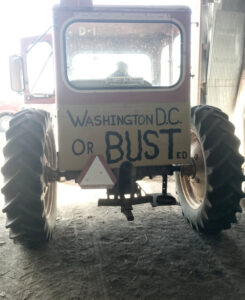
Why on earth would this 1940s tractor be driving from Kansas to Washington, DC? After some Googling, I found out about the American Agriculture Movement protests. In January 1979, farmers from points across the country formed tractor parades—“tractorcades”—thirty miles long en route to the nation’s capital. The movement remained active through the Eighties and inspired Willie Nelson and friends to host the first Farm Aid concert. I remembered the concert but had no knowledge of its roots.
I felt compelled to tell the farmers’ story of fighting to keep their farms alive during the farm crisis—and fighting to continue putting food in the bellies of their fellow citizens. I began writing this story at a time when gun violence protests were sweeping the country and wanted to tell the story of how farmers had found their own way to raise their voices. Today, with tariffs, climate change, and other factors, food producers still face livelihood-threatening issues each day. Yet their stories are rarely told.
 RVC: No Voice Too Small and No World Too Big spotlight youth activism. What did you learn from the young people featured?
LHM: I learned that if young people have the creativity, persistence, and fortitude to speak up and work together to make change, then adults have no excuse.
RVC: Both books have co-editors working alongside you. How did that process go?
LHM: It went so well that we are currently working on two follow-up projects together. My co-anthologists Jeanette Bradley (also the illustrator) and Keila Dawson and I will release a third title in the young activists series in June 2026. It’s called No Brain the Same: Neurodivergent Young Activists Shaping Our Future, and it won’t be long before we can reveal its gorgeous cover! We are also working on a meaty middle-grade nonfiction project that hasn’t been announced.
RVC: Let’s talk tomatoes! What inspired your almost-here picture book, Tomatoes on Trial?
 LHM: A Facebook friend posted a meme about the 1893 Supreme Court case in which tomatoes were declared a vegetable. My mind churned with the possibilities for a children’s book. Immediately I could see the layers: courts/debate, food fight humor, history… With my curiosity piqued, I dove into the research rabbit hole and learned the story of produce merchant John Nix, who imported a boatload of Bermudan tomatoes and was slapped with a 10 percent vegetable tariff. Nix believed tomatoes were fruits and took the New York Customs House collector to court.
RVC: What made this story feel important for kids to know?
LHM: When I started working on the story in 2021, I imagined kids using the book as a springboard for learning to research, verify sources, construct an argument, and hold debates. Kids tend to get indignant when I tell them that the Supreme Court declared tomatoes a vegetable.
But as the book releases in August 2025, there’s a whole other layer that I didn’t see coming: tariffs. The Nix v. Hedden case centered on the 1883 Tariff Act. Tariffs fell out of favor for many years, now, under the Trump administration, they’re back. This book is a low-stakes introduction to that concept.
RVC: Can you share a craft challenge you faced while writing Tomatoes on Trial—and how you solved it?
LHM: No one had written a book about John Nix, so the only information I had about him was the snippets I found in historical newspapers. I had the bones of the Nix v. Hedden case, but not enough to write a picture book biography. So initially I set out to write about the history of tomatoes and how they were plagued by misinformation for centuries. The first drafts had a Magic School Bus feel, with an adult farmer sharing shocking tomato stories (including the Supreme Court case) with two fictional kids. And it wasn’t working.
Finally my friend and nonfiction guru Kirsten Larson helped me see how to cut through the morass with an episodic narrative rather than a full-fledged biography. This helped me dig into scenes where “Team Fruit” and “Team Vegetable” flung dueling definitions. Nix v. Hedden is a simple case and inherently kid-friendly, so this approach let me lean into the humor and write something surprising and relevant.
RVC: What’s your favorite part of the research process?
LHM: It’s that moment when, after you think you’ve uncovered every little fact about your subject, you do another search for good measure that turns up new details.
RVC: And the hardest part?
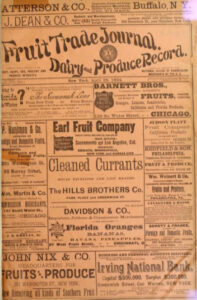 LHM: Image research! For Tomatoes on Trial, I had so little information about Nix that I didn’t know what he looked like. When Calkins Creek acquired the manuscript, they asked me to find images for the back matter, and it became a personal mission to find Nix. Finally, after weeks of searching, I found his obituary in an obscure online archive of the Fruit Trade Journal and Produce Record. To my delight, it included an etched portrait of Nix. I needed only a handful of images for the back matter, but I collected dozens in a secret Pinterest board and eventually shared them with illustrator Edwin Fotheringham. Nonfiction illustrators have such a difficult job, because they have to think about details that aren’t in the text: period clothing, architecture, etc. If I am already doing that research, I may as well share.
RVC: What does a typical writing day look like for you?
LHM: I am a stay-at-home mom of two teens, so there is no typical writing day, other than constant interruptions, chores, errands, and appointments. In between I try to list tasks I can do the next time I sit down with my computer. I typically work from the couch, feet up, with my Cavalier King Charles, Gus, and my 21-year-old tabby, Gertie, fighting for lap space.
RVC: Do you approach writing differently when the audience skews older (like for your YA title Footeprint)?
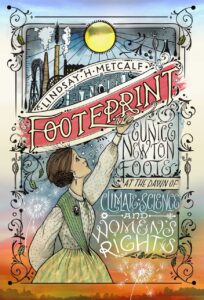 LHM: Yes and no. Footeprint: Eunice Newton Foote at the Dawn of Climate Science and Women’s Rights (February 2026, Charlesbridge), started in my mind as a picture book. Eunice was the first to discover carbon dioxide’s warming properties in 1856, and yet the “father” of climate science is considered to be one of her peers, John Tyndall, who published similar research three years later.
No one had written about her in a traditionally published book and I felt drawn to tell her whole story. It had climate science. The first women’s rights convention at Seneca Falls. Her own patented inventions and her husband as US patent commissioner. Meanwhile, their lives were intertwined with the nascent industrial revolution and the very seeds of climate change.
The best thing I did was write what I needed to write without placing restrictions on myself. I usually start wrapping my head around biography research by making a giant timeline of every fact I know, and then identifying a unifying thread. This book wanted to be more than a picture book, so I shoved my self-doubt to the side and wrote it as it begged to be written. Her story came out in poems, and I had no idea it would be considered young adult until the book was acquired and my contract specified it.
RVC: A lot of kidlit writers seem to have stories that “came out in poems” these days. Why did this choice seem like the best option for telling this story?
LHM: It worked for several reasons. The subject matter was emotional, with a woman fighting for her right to be a scientist and inventor in an era when married women could not own property or hold patents. While I could feel the emotions behind the facts, I wanted to stick as closely as possible to nonfiction. I found letters written by Eunice and her family later in her life, but I had nothing but her formal patent applications for the time period that formed the crux of the book. Poetic devices—metaphor in particular—create ways to convey emotion without straying from facts.
Another aspect I loved about telling the story in poems was the choppy nature of a novel-in-verse. Each poem tells its own miniature story, without the need for much transition. In places where I had gaps in facts—sometimes years—the novel-in-verse form helped me bridge those pretty seamlessly through white space and creative poem titles.
RVC: What’s your best tip for writers creating a verse novel?
LHM: The same advice I’d give anyone trying a new type of writing: read great mentor texts, find like-minded critique partners, and take classes. I learned a ton from Cordelia Jensen, who periodically teaches courses through the Highlights Foundation. Her next course—Revising Your Novel-in-Verse—runs November through mid-December. Cordelia goes deep and offers critiques, and she’s a wonderful verse novelist herself.
RVC: What role do critique partners or writing groups play in your process?
LHM: They are essential! For the young activist books (No Voice Too Small, No World Too Big, and the forthcoming No Brain the Same) three of us work together, almost as a built-in critique group. Because we’re in touch each day and we have regular calls, we do a lot of problem-solving and cowriting in real time.
I share solo projects with a critique group that meets monthly, and if those folks have seen a manuscript too many times, I will send it to individual critique partners. Every single project of mine has improved based on astute critique feedback.
RVC: How do you know when a manuscript is done?
LHM: When my agent tells me it’s done. Ha! I find that after I’ve worked on a project for a long time, it’s tough for me to see its strengths and flaws objectively.
RVC: Here’s the last question for this part of the interview. What’s something you’ve learned/run across recently that made you say, “Yes, yes, yes—THAT’S a book”?
LHM: It’s not my story to tell, but I think someone NEEDS to write about the Indigenous teens who are kayaking the 300-mile Klamath River after the US government removed a long-contested dam. This inspiring story of environmental justice and decolonization demands its own book!
RVC: Alright, Lindsay. Step back and take a breath—you’re going to need it. We’re now at THE LIGHTNING ROUND! Fast questions and zippy answers please. Are you ready?
LHM: Hit me.
RVC: What’s your favorite weird tomato fact?
LHM: In the 1800s, people took tomato pills as a cure-all, from consumption to cholera.
RVC: Kansas sunsets or Kansas thunderstorms?
LHM: Post-storm sunsets.
RVC: What song do you belt when no one’s listening?
LHM: Right now it’s “Pink Pony Club” by Chappell Roan.
RVC: One writing rule you always break?
LHM: Sentence fragments. And conjunctions at the beginnings of sentences.
RVC: The last great picture book you read that made you stop and reread a line?
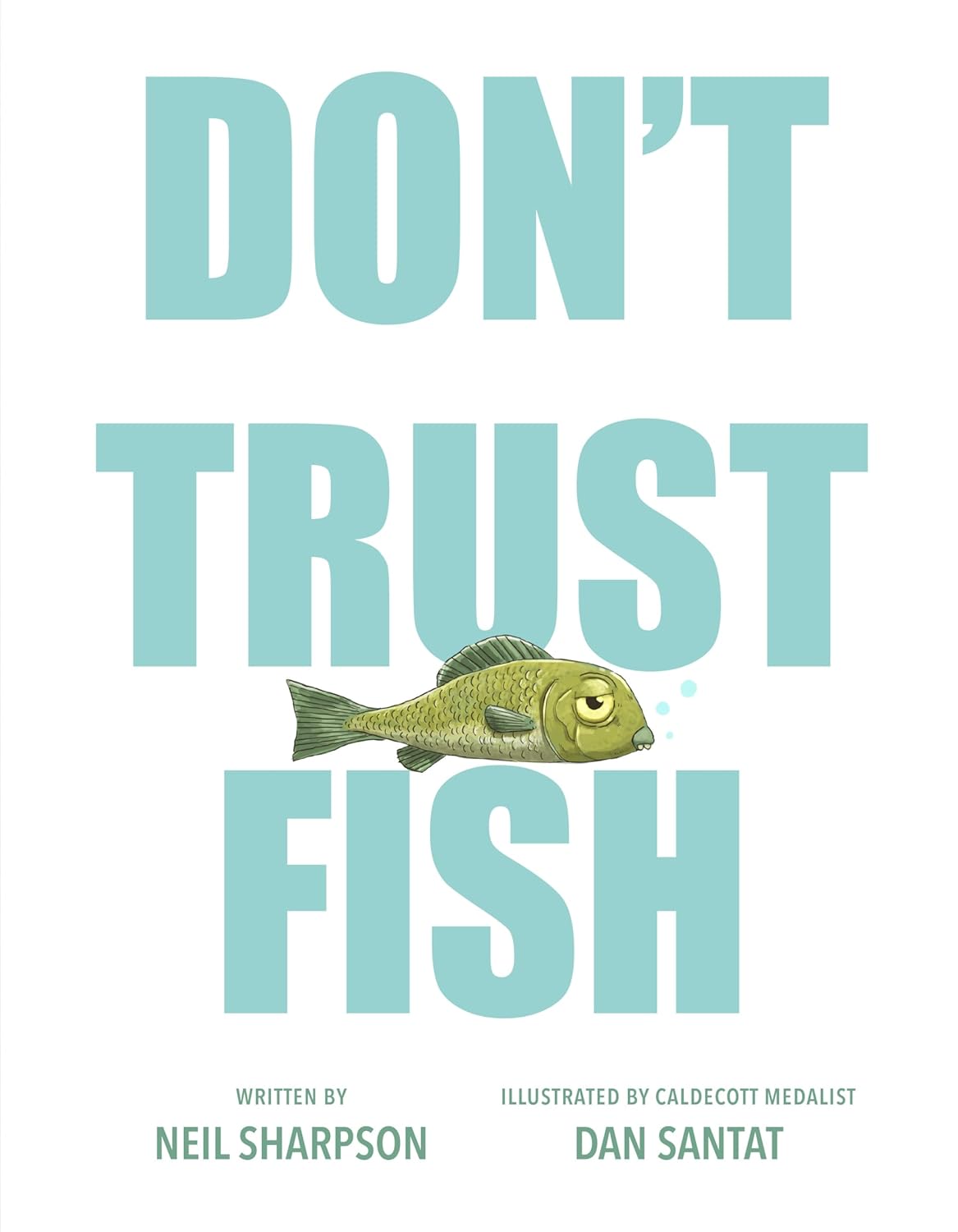 LHM: Don’t Trust Fish by Neil Sharpson, illustrated by Dan Santat.
RVC: One word you hope readers use to describe your work?
LHM: Thought-provoking. I’m counting that as one word.
RVC: Thanks so much, Lindsay!
LHM: Thanks, Ryan! It’s been an honor.
 The Baby Who Stayed Awake Forever
 Big Enough
  Blue
Blue  Broken
 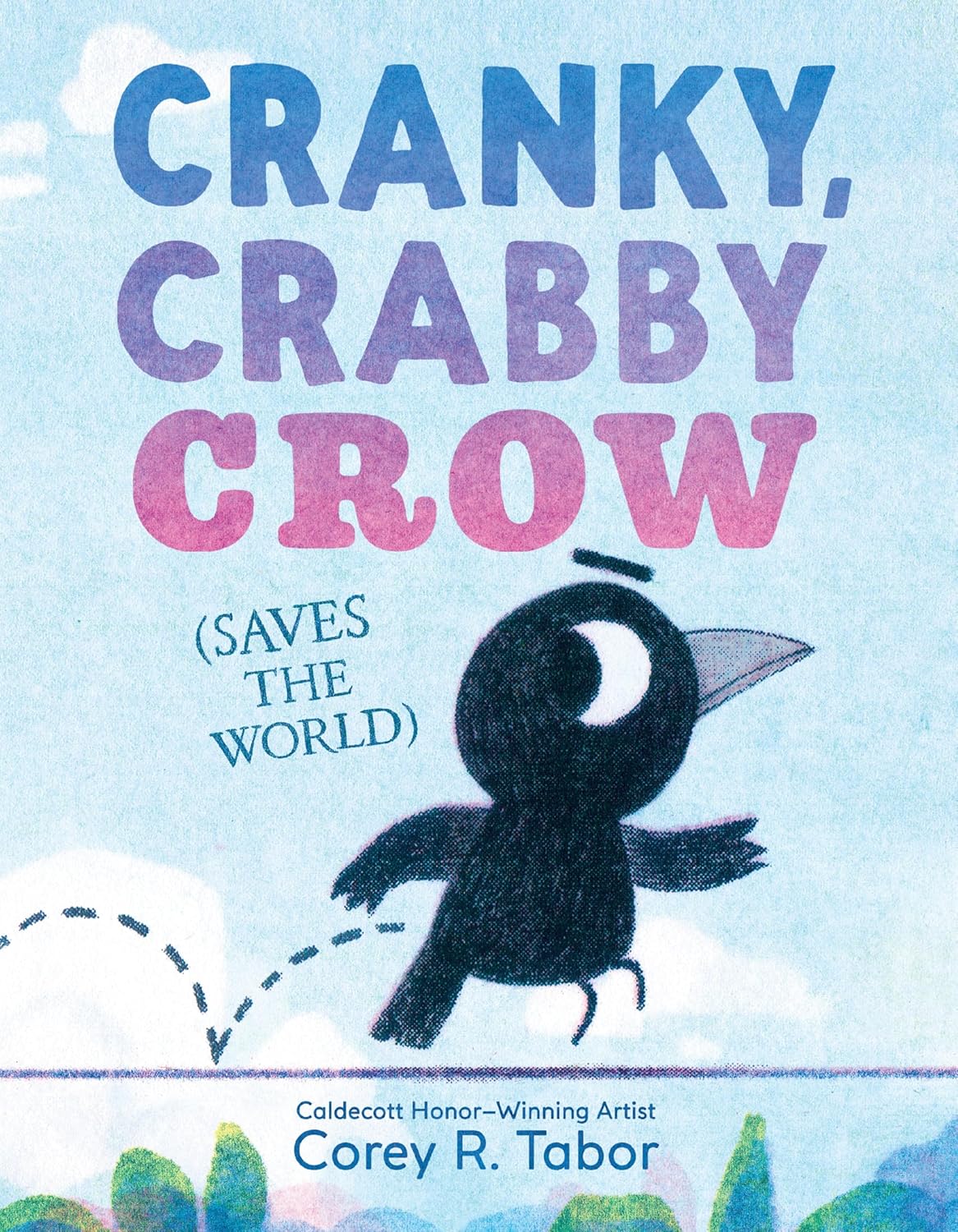 Cranky, Crabby Crow (Saves the World)
  Don’t Trust Fish
 The Escape Artist: A True Story of Octopus Adventure
 Every Monday Mabel
 Fireworks
  The Grumpy Ghost Upstairs
  Home
Home  How Sweet the Sound
  Hurricane
  The Interpreter
  It Started with a P
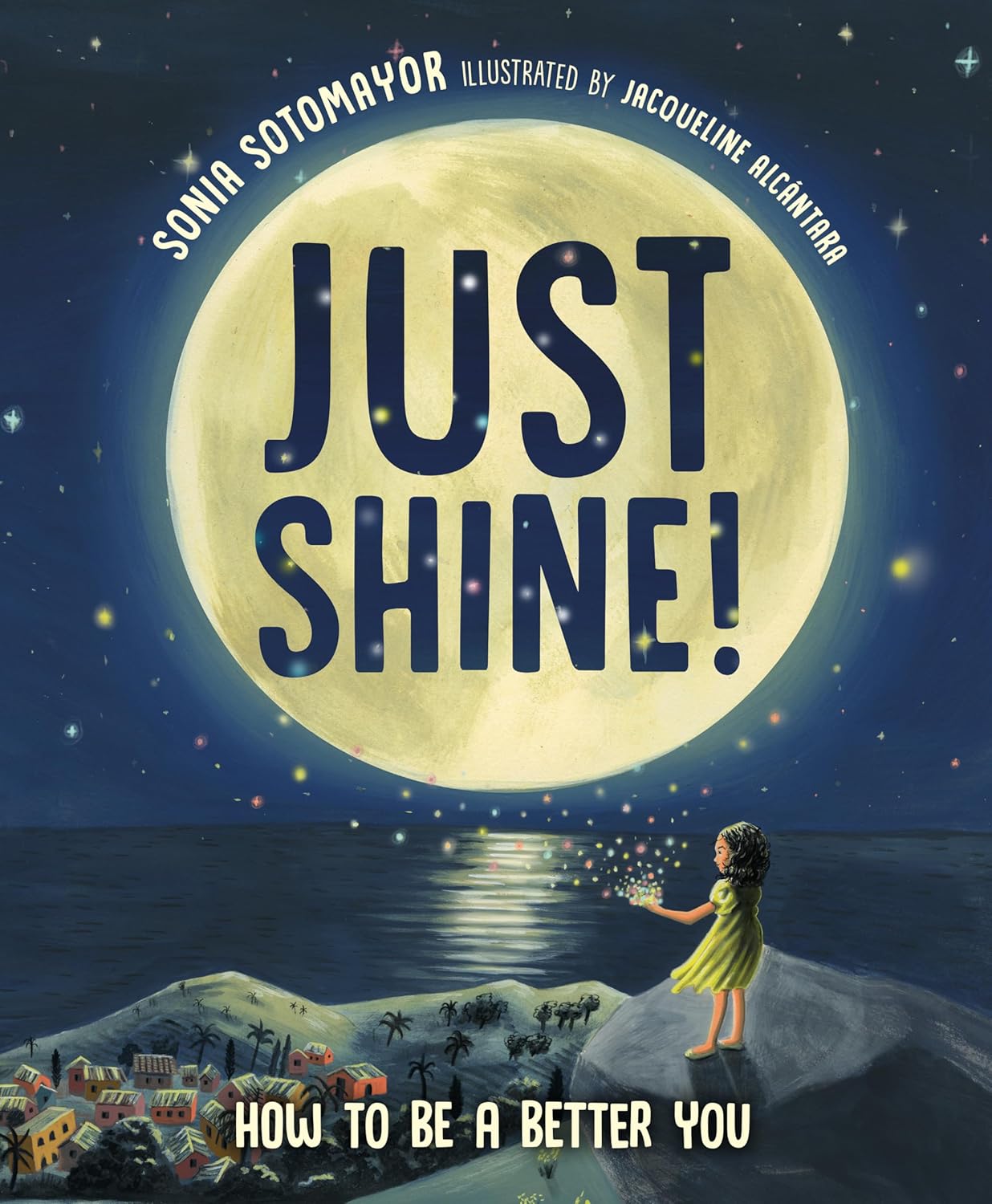 Just Shine!: How to Be a Better You
  Moon Song
  The Moving Book
  Smash, Crash, Topple, Roll!: The Inventive Rube Goldberg―A Life in Comics, Contraptions, and Six Simple Machines
  Stalactite & Stalagmite: A Big Tale from a Little Cave
  This Is Orange: A Field Trip Through Color
  The Trouble with Giraffes
  The True and Lucky Life of a Turtle
  Tuck Me In!: A Science Bedtime Story
  Who Ate Steve?