Reading Activities: Shark Girl by Kate Beaton

Shark Girl
Author: Kate Beaton
Illustrator: Kate Beaton
25 February 2025
Roaring Brook Press
48 pages

Book description from Goodreads: “When Shark Girl is captured by an evil fishing captain’s net, she makes a vow… for REVENGE!

With the sea witch’s help, Shark Girl becomes a human sailor and launches a plan… for MUTINY!

But Shark Girl needs the help of her crew mates before she can enact her plan. Will Shark girl SINK… or SWIM?

Bestselling creator Kate Beaton has created a subversive and hilarious spin on the classic little mermaid fairy tale that will inspire little readers to seek their own revenge on behalf of justice!”


Need some reviews of Shark Girl?


Reading Activities inspired by Shark Girl:

  • Before Reading–From looking at the front cover: 
    • What words come to mind when you think about fireworks?
    • What do you notice first about Shark Girl’s appearance? How is she the same as—or different from—a typical mermaid?
    • The word shark can feel scary; how does the art make Shark Girl seem friendly, fierce, or both?
    • Where do you think this story takes place—deep in the ocean, on a ship, or somewhere else? What clues help you decide?
    • If you could ask Shark Girl one question before opening the book, what would it be?
    • The tagline says she’s “part shark and part human.” What challenges or adventures might that create?
    • Look at the background colors and shapes. What mood do they set for the story you’re about to read?
  • After Reading–Now that you’ve read the story: 
    • What makes Captain Barrett’s fishing practices harmful to the ocean?
    • Why does Shark Girl think revenge is the answer at first—and what changes her mind?
    • How does the crew react to Shark Girl over time? What helps them become allies?
    • Where do you see humor in the artwork or dialogue, even during tense moments?
    • The sea witch “lives for drama.” How does this character move the plot forward?
    • What panels or spreads were the most exciting or surprising? Why?
    • What does the ending teach about teamwork and ethical choices?
  • Sea-​Change Comic Strip
    Using six small panels, retell a key moment—Shark Girl breaking the net, meeting the sea witch, or launching the mutiny. Add “sound-​word” effects like SNAP! or WHOOSH! and bright colors to match Kate Beaton’s comic style.
  • Captain’s Catch: Sustainable or Not?
    Draw two buckets. Label one Overfishing and the other Ethical Catch. Cut out or sketch different sea creatures (tuna, shark, sea turtle, etc.). Research (or guess together) which catches are sustainable and place them in the right bucket. Discuss why some choices protect the ocean better than others.
  • Shark Teeth Smile Masks
    Fold cardboard or heavy paper into a half-​mask that covers just the mouth. Cut zig-​zag “shark teeth,” paint it ocean-​blue, and attach string to wear. Practice three Shark Girl expressions: determined, surprised, and triumphant. What emotions do those pointy teeth show?
  • Mutiny Map
    On a big sheet, draw the ship Jellyfish and the crew. Plan your own (kinder!) mutiny: list five changes you’d make to help the ocean—maybe recycling on board or rescuing bycatch. Illustrate each change with simple icons or mini-scenes.
  • Sea-​Witch Bargain Jar
    Decorate a clear jar with sea colors and glitter. Write small “promises to the planet” on scraps of paper—use less plastic, pick up beach litter, learn about sharks. Each time you fulfill a promise, add a shell, bead, or pebble to the jar until it sparkles like magic.
  • Books, Books, and More Books! Check out these real-​world picture books about ocean wonders, identity, and standing up for what’s right:


The Brilliant Deep: Rebuilding the World’s Coral Reefs by Kate Messner, illustrated by Matthew Forsythe
The true story of Ken Nedimyer, who sparked a movement to restore damaged coral—showing kids that one person’s passion can help the sea thrive.


Flotsam by David Wiesner
A wordless seaside adventure where a mysterious camera reveals hidden ocean life—perfect for sparking curiosity about underwater worlds.


Julián Is a Mermaid by Jessica Love
After seeing dazzling mermaids on the subway, Julián dreams of being one too—and finds loving acceptance in his abuela’s embrace.


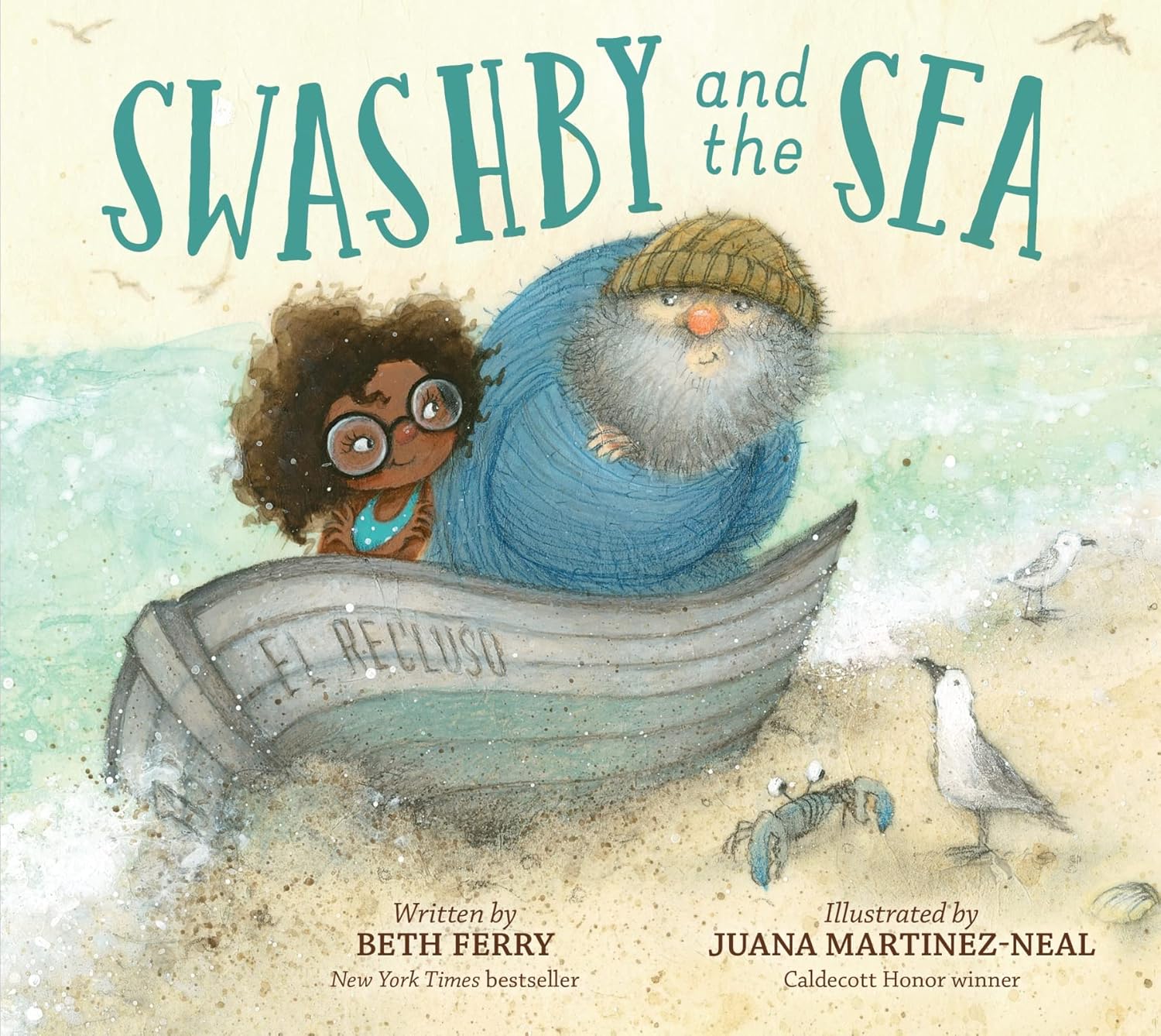
Swashby and the Sea by Beth Ferry, illustrated by Juana Martinez-​Neal
A salty sea captain thinks he prefers solitude, until a lively girl and the ocean itself nudge him toward friendship.


Thank You, Earth: A Love Letter to Our Planet by April Pulley Sayre
Stunning photographs and poetic lines create a heartfelt “thank-​you letter” to our planet, inviting readers to notice and protect nature.

Industry Insights: Decoding Editorial Feedback (with Real Picture Book Examples)

Hello, OPB friends!

This month, we’re doing something a little different for our Industry Insider post. Instead of featuring an interview, I wanted to dig into a question that comes up often during critique sessions, revision conversations, and email threads with clients, friends, and fellow kidlit writers:

What do editors really mean when they say things like “This feels quiet” or “I didn’t quite connect with the voice”?

As Editorial Director at Bushel & Peck Books—and a kidlit writer myself for the past ten years—I’ve heard these phrases from both sides of the table. I’ve also talked about them at length with my own agent, with critique partners, and with other editors across the industry. So, today’s post is a kind of translation guide: a short, honest look at some of the most common editorial phrases and what they often (but not always!) mean under the hood.


This feels quiet.”

This doesn’t mean “bad.” It usually means the concept doesn’t feel immediately marketable. Maybe the theme is lovely but soft, or the stakes feel internal rather than plot-​driven. Sometimes it means the story is tender or subtle, but doesn’t stand out in a crowded submission pile.

What might help:
Sharpen the hook. Raise the stakes. Consider whether the emotional arc or character journey could be more compelling or surprising.

Example: The Rabbit Listened by Cori Doerrfeld
This is a quiet book, yes, but it works because the emotional core is crystal-​clear and universally resonant. Note how the hook—how kids process big feelings—feels urgent and relatable, even though the plot is minimal.


It’s well-​written, but I didn’t fall in love.”

This is often code for “I admire this, but I don’t have a vision for how to sell it.” Editors have to advocate hard for every book they acquire, and that requires real enthusiasm. No one wants to take on a project they feel lukewarm about, even if the writing is strong.

What might help:
Nothing, necessarily. This one isn’t about a fixable flaw, but rather more about fit. Keep querying. The right person might fall hard.

Example: Julian Is a Mermaid by Jessica Love
This debut book is lyrical, quiet, and elegant—easily one an editor could have passed on for being “lovely, but maybe too subtle.” But its emotional depth and visual storytelling made the right editor fall in love, and champion it all the way to success.


There’s not quite enough here for a picture book.”

This might mean there’s not a full arc, or that the story leans more toward vignette or concept than narrative. It can also mean the emotional or plot payoff isn’t big enough to justify 32, 40, or 48 pages.

What might help:
Dig deeper into the character’s journey. Add tension, reversals, or a turning point. Picture books (even/​especially quiet ones!) need structure to shape the reader’s experience.

Example: A Sick Day for Amos McGee by Philip C. Stead and Erin E. Stead
This story is gentle, but it has a clear beginning, middle, and end. Amos takes care of animals at the zoo. One day he’s sick—and they return the favor. The role reversal adds narrative weight to what could’ve been a flat concept.


I wasn’t quite connecting with the voice.”

This is a gentle way of saying that something in the tone, language, or narrative feel simply didn’t land. The voice might feel too adult, too generic, or inconsistent. Or maybe it didn’t match the story’s intended mood or audience.

What might help:
Read it aloud. Is the rhythm strong? Does it sound like a real person? Could the narrator be more specific, distinctive, or emotionally resonant?

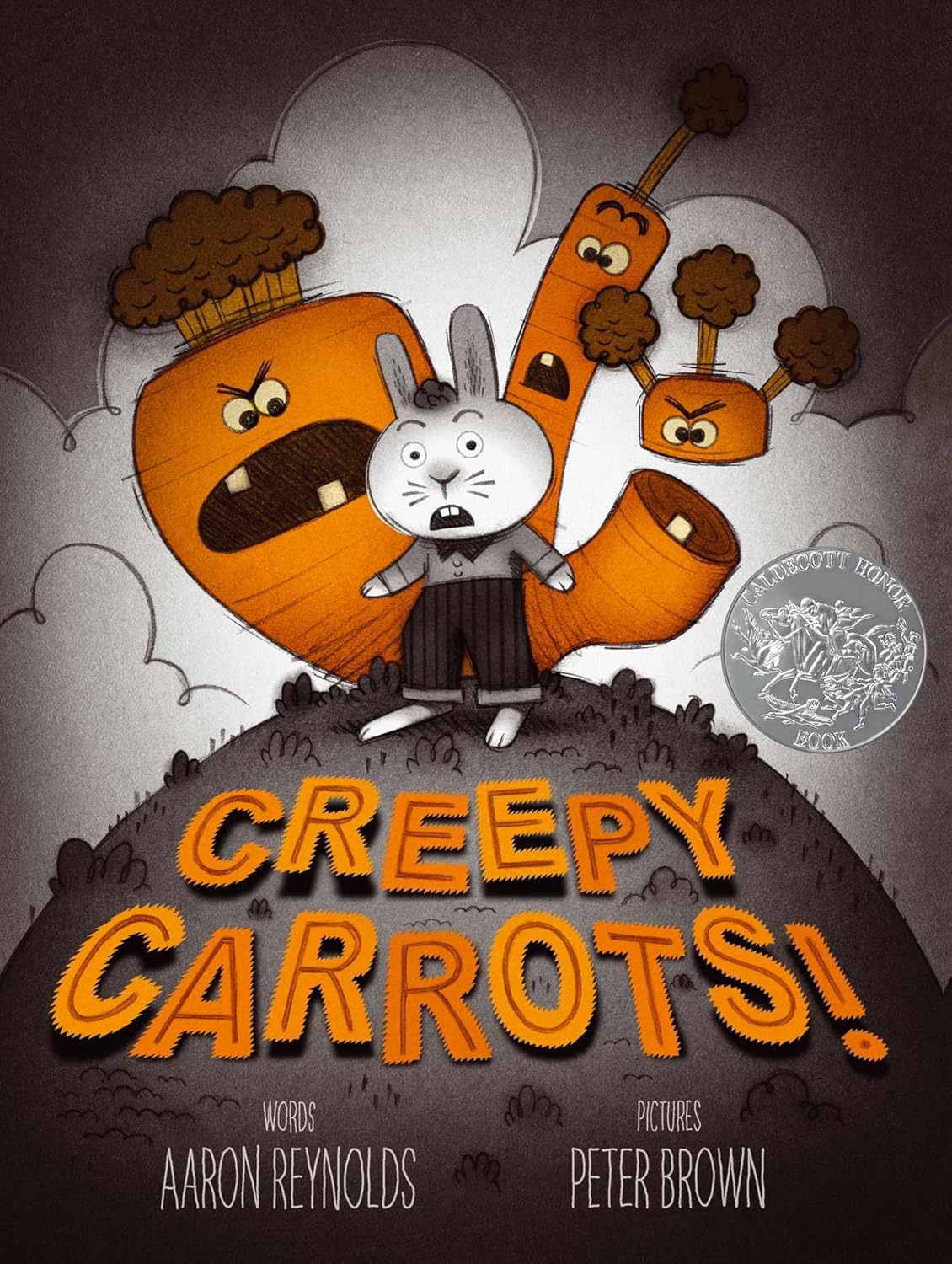
Example: Creepy Carrots! by Aaron Reynolds, illustrated by Peter Brown
The voice here is spot-​on: cinematic, dramatic, and a perfect match for the mock-​horror tone. The exaggerated seriousness is what sells the humor…and the book.


It’s too similar to something else on our list.”

This is rarely personal. More times than not, it’s strategic. Editors have to balance their list across themes, formats, tones, and audiences. If they just acquired a book about ballet-​loving dinosaurs, they’re probably not going to take another one. I run into this a lot at my press because we’re a small press with a small list. I can’t buy a second book about penguins if we’ve already got one in the pipeline, or just published one…even though I’d love to do an all-​penguin imprint!

What might help:
Check your comps. Make sure your book fills a different niche, or offers a fresh twist that feels essential, not adjacent.

Example: Don’t Let the Pigeon Drive the Bus! by Mo Willems
A story about a demanding character trying to get their way? Done a zillion times before. But the second-​person narration, meta structure, and pigeon personality made this feel wildly new, even though the premise is simple.


We’re being really selective right now.”

Always true. But also: sometimes it’s a way of softening a pass without going into detail. Budgets, list size, market trends, team bandwidth, and internal priorities all play a role.

What might help:
This is nothing you can control. It’s just not a reflection on you or your work. Keep going. The right project will hit the right desk at the right time.

Example: The Day the Crayons Quit by Drew Daywalt and Oliver Jeffers
A book like this may have felt risky at the wrong time: epistolary format, multiple voices, no central plot. But with the right champion at the right moment, it broke through—and became a bestseller.


Final Thoughts:
Rejections don’t always mean “no forever.” And editorial speak isn’t meant to be mysterious, though it can MOST DEFINITELY feel that way in the moment for a while. As writers, it helps to hear what’s often behind the phrases. As editors, it helps to be honest about what we mean. The more we can bridge that gap, the stronger the books (and the industry) become.

Got a phrase you’d like help decoding? Leave a comment or reach out! I’m happy to demystify where I can.

Reading Activities: Are You a Friend of Dorothy? by Kyle Luckoff, illustrated by Levi Hastings

Are You a Friend of Dorothy?
Author: Kyle Lukoff
Illustrator: Levi Hastings
29 April 2025
Simon & Schuster Books for Young Readers
40 pages

Book description from Goodreads: “In a time when the LGBTQ+ community was forced to hide in the shadows, a woman named Dorothy helped her people find each other in the dark and celebrate themselves in the light.

But who was Dorothy? Was she from the neighborhood, someone’s wife, mother, or sister? Was she that clever writer, who threw parties where there were no rules about who you could and couldn’t dance with? Or was she a girl from Kansas, who dreamed of leaving her black-​and-​white, small-​town life and finding a vibrant, colorful world that loved her?

Dorothy might have been all these things—because Dorothy, as known by the post-​WWII queer community, wasn’t real. Still, she helped a community find connection and care amidst adversity.”


Need some reviews of Are You a Friend of Dorothy?


Reading Activities inspired by Are You a Friend of Dorothy?:

  • Before Reading–From looking at the front cover: 
    • What do you notice first when you look at the cover?
    • What do you think the title means? Who or what might “Dorothy” refer to?

    • What mood or feeling do the colors and art style give you?

    • Who do you think this book might be about? What clues helped you decide

    • If you could ask the character on the cover a question, what would it be?

  • After Reading–Now that you’ve read the story: 
    • What did the phrase “Are you a friend of Dorothy?” help people do?
    • Why do you think people had to hide their true selves in the past
    • How does the illustrator show community and connection in the pictures?
    • What are some ways the book blends fact and imagination?
    • How has life changed for LGBTQ+ people since the time this story takes place—and what challenges still remain?
    • What message do you think the author wants young readers to take away?
    • Would you recommend this book to a friend? Why or why not?
  • Code Words & Connection Collage
    Make a collage about what it means to belong. Use magazines, drawings, stickers, or digital images to show places, people, or ideas that help you feel seen and safe. Add a secret symbol or word that only someone “in the know” would understand (just like the friends of Dorothy).
  • Rainbow Timeline
    This story looks at a real part of LGBTQ+ history. Create a visual timeline that starts with the phrase “Are you a friend of Dorothy?” and ends with the Pride celebrations we know today. Include moments from the book and add your own ideas or research about important LGBTQ+ events.
  • Dorothy Who? Detective Game
    The book offers different guesses about who Dorothy might’ve been. Choose one—Dorothy Gale, Dorothy Parker, or another idea—and create a mini case file. Draw clues, write a short “report,” or make a wanted poster that shows why your choice could be the true Dorothy.
  • Color Outside the Lines
    The illustrations in this book are bold and expressive, with vibrant colors that tell a story. Choose one page you love and recreate it using your own color choices or art style. What mood or message are you showing through your choices?
  • Secret Signals Station
    Come up with your own set of signals to say things without using words. You might use hand signs, symbols, or invented phrases. Practice with a friend or family member—can they figure out what your signals mean?
  • Books, Books, and More Books!
    Check out these real-​world picture books about identity, community, and the power of finding your people:


All Are Welcome by Alexandra Penfold, illustrated by Suzanne Kaufman

A warm, inclusive classroom shows how differences are celebrated and everyone belongs.


Big by Vashti Harrison

This powerful story explores how others see us—and how we learn to see ourselves—with beauty, empathy, and strength.


Julián Is a Mermaid by Jessica Love

After seeing women dressed as mermaids, Julián explores his identity and finds love and acceptance in his abuela’s response.


Love, Violet by Charlotte Sullivan Wild, illustrated by Charlene Chua

A tender LGBTQ+ love story about a girl finding the courage to express her feelings to the one she admires most.


Our Subway Baby by Peter Mercurio, illustrated by Leo Espinosa

A true story about family, love, and how an adopted baby brought two dads—and a community—together.

Picture Book List: 4 Picture Books That Showcase Kidlit Agents’ Favorite Elements—and Why They Shine

Last month, I shared a list of picture books that kidlit editors frequently mention, and I got a lot of nice notes about it! So, I’m bringing back the concept—this time with insights from some of the wonderful literary agents who are friends of the blog.

I asked four agents to name a picture book they often reference when talking to clients or writers about what makes a story shine. Each book showcases qualities that agents admire, from compelling narratives to unforgettable art. While I’m keeping their names private to avoid any unintended favoritism, their thoughtful feedback is reflected in the commentary below.

If the language is in quotation marks, it’s directly from the agents. The rest is from me. Enjoy!


Julian Is a Mermaid by Jessica Love

Why Agents Love It:

  • Economy of Text: “This book is proof that less can truly be more. Every word is purposeful, and the space between the lines lets the illustrations tell so much of the story.”
  • Celebration of Individuality: Julian’s journey of self-​expression is told with tenderness and authenticity, making it a standout example of how inclusive stories can feel universal without being preachy. “It’s the kind of book that shows you don’t need to explain everything—sometimes the best stories trust the reader to feel the message.”
  • Art That Transports You: The lush, painterly illustrations are a visual feast. “Every page feels like stepping into Julian’s world, and the quiet magic of the art lingers long after you close the book.”

Thank You, Omu! by Oge Mora

Why Agents Love It:

  • Timeless Themes: Omu’s generosity and the community’s gratitude create a feel-​good story that celebrates kindness and connection. “It’s one of those books that feels like it’s been around forever—and I mean that as the highest compliment.”
  • Unique Art Style: Mora’s collage illustrations are rich, textured, and vibrant. “There’s a warmth and energy to the artwork that makes every page feel alive. You can almost smell the stew simmering!”
  • Perfect for Read-​Alouds: With its rhythmic, repetitive structure, this book practically begs to be read aloud. “The storytelling cadence makes it a go-​to for libraries and classrooms—it’s a crowd-​pleaser every time.”

The Day You Begin by Jacqueline Woodson, illustrated by Rafael López

Why Agents Love It:

  • A Universal Yet Personal Theme: This book speaks to anyone who’s ever felt like they didn’t belong. “It’s a quiet powerhouse of a story—one that gives kids (and adults) permission to embrace their differences and share their truths.”
  • Lyrical Text: Woodson’s poetic language lends the story an emotional depth that lingers long after the last page. “The writing is so lyrical and beautiful, you almost want to read it aloud just to hear the words again.”
  • Stunning Illustrations: López’s bold, vibrant illustrations perfectly complement the text, capturing the emotions of the characters and drawing readers into the story. “The interplay between the words and art is magical—this is what picture books are all about.”

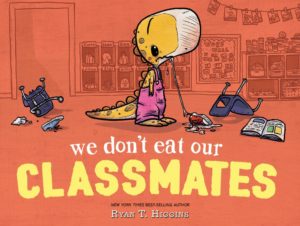
We Don’t Eat Our Classmates by Ryan T. Higgins

Why Agents Love It:

  • Humor with Heart: This hilarious story about a dinosaur learning to navigate the social challenges of school strikes the perfect balance between funny and heartfelt. “It’s laugh-​out-​loud funny, but it also sneaks in such a sweet message about kindness and empathy.”
  • Relatable Concept: Starting school is a major milestone, and this book cleverly addresses first-​day jitters in a way that feels fresh and engaging. “It’s such a smart take on school anxiety—familiar, but with a totally unexpected twist.”
  • Lasting Appeal: Its humor and relatability ensure that it’s a favorite for both kids and adults. “The kind of book parents don’t mind reading over and over—and believe me, that matters.”

If you’re a picture book creator, take note of what makes these books shine—they might just inspire your next project!

Picture Book List: 16 Picture Books for Pride Month

**This month’s Bonus Goody is brought to you courtesy of frequent OPB guest writer, Joshua Walls!**


With June marking the beginning of Pride Month (which celebrates the LGBTQ+ community), young readers may witness the celebrations around them and ask questions. What better way to answer their questions than through the world of picture nooks covering this topic?

Below is a collection of LGBTQ+ focused picture books that caught my attention as someone who is a part of this community. If you’ve got a favorite that wasn’t included, please share it with us in the comments section. Happy reading!
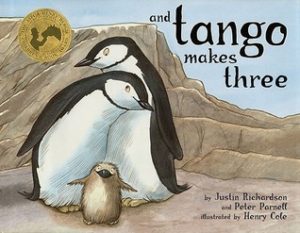

And Tango Makes Three by Justin Richardson and Peter Parnell, illustrated by Henry Cole (June 2015)

From Goodreads: “In the zoo there are all kinds of animal families. But Tango’s family is not like any of the others. This illustrated children’s book fictionalizes the true story of two male penguins who became partners and raised a penguin chick in the Central Park Zoo.”

Pages: 36
Reading Age: 2–5
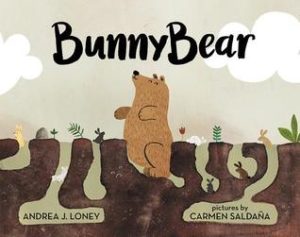

Bunnybear by Andrea J. Loney, illustrated by Carmen Saldana (August 2018)

From Goodreads: “Although Bunnybear was born a bear, he feels more like a bunny. He prefers bouncing in the thicket to tramping in the forest, and in his heart he’s fluffy and tiny, like a rabbit, instead of burly and loud, like a bear. The other bears don’t understand him, and neither do the bunnies. Will Bunnybear ever find a friend who likes him just the way he is?”

Pages: 32
Reading Age: 5–8
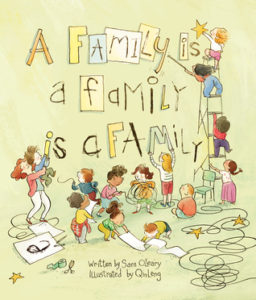

A Family is a Family is a Family  by Sara O’Leary, illustrated by Qin Leng (September 2016)

From Goodreads: “When a teacher asks the children in her class to think about what makes their families special, the answers are all different in many ways — but the same in the one way that matters most of all.

One child is worried that her family is just too different to explain, but listens as her classmates talk about what makes their families special. One is raised by a grandmother, and another has two dads. One is full of stepsiblings, and another has a new baby.

As one by one, her classmates describe who they live with and who loves them — family of every shape, size and every kind of relation — the child realizes that as long as her family is full of caring people, her family is special.

A warm and whimsical look at many types of families written by award-​winning author Sara O’Leary, A Family is a Family is a Family springs to life with quirky and sweet illustrations by Qin Leng.”

Pages: 32
Reading Age: 4–7
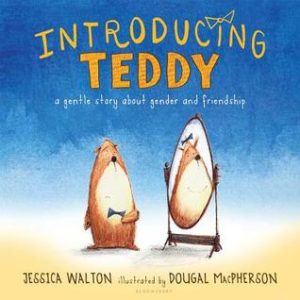

Introducing Teddy: A Gentle Story About Gender and Friendship by Jessica Walton, illustrated by Dougal MacPherson (May 2016)

From Goodreads: “One sunny day, Errol finds that Thomas the Teddy is sad, and Errol can’t figure out why. Then Thomas the Teddy finally tells Errol what Teddy has been afraid to say: ‘In my heart, I’ve always known that I’m a girl Teddy, not a boy Teddy. I wish my name was Tilly.’ And Errol says, ‘I don’t care if you’re a girl teddy or a boy teddy! What matters is that you are my friend.’

Pages: 32
Reading Age: 3–6


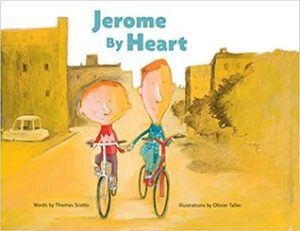
Jerome By Heart by Thomas Scotto, illustrated by Olivier Tallec (April 2018)

From Goodreads: “This story follows a little boy named Raphael, whose daily rhythm is steeped in his immense affection for his friend Jerome. The two boys share jokes and snacks and plan future adventures to the Himalayas. Even when Raphael’s constant talk of Jerome is driving his parents crazy, he remains steadfast: “Raphael loves Jerome. I say it. It’s easy.” And the truth is, when he’s with Jerome, Raphael feels happy, liked, and understood― even special. Thomas Scotto’s simple, strong, and insightful prose and Olivier Tallec’s delightful, expressive illustrations give much emotion and immediacy to the story.”

Pages: 32
Reading Age: 6–8
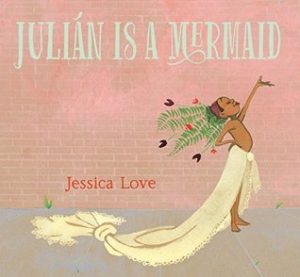

Julián Is a Mermaid by Jessica Love (August 2018)

From Goodreads: “While riding the subway home from the pool with his abuela one day, Julián notices three women spectacularly dressed up. Their hair billows in brilliant hues, their dresses end in fishtails, and their joy fills the train car. When Julián gets home, daydreaming of the magic he’s seen, all he can think about is dressing up just like the ladies in his own fabulous mermaid costume: a periwinkle curtain for his tail, the fronds of a potted fern for his headdress. But what will Abuela think about the mess he makes—and even more importantly, what will she think about how Julián sees himself? Mesmerizing and full of heart, Jessica Love’s author-​illustrator debut is a jubilant picture of self-​love and a radiant celebration of individuality.”

Pages: 40
Reading Age: 4–8
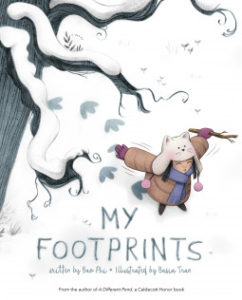

My Footprints by Bao Phi, illustrated by Basia Trans (September 2019)

From Goodreads: “Every child feels different in some way, but Thuy feels “double different.” She is Vietnamese American and she has two moms. Thuy walks home one winter afternoon, angry and lonely after a bully’s taunts. Then a bird catches her attention and sets Thuy on an imaginary exploration. What if she could fly away like a bird? What if she could sprint like a deer, or roar like a bear? Mimicking the footprints of each creature in the snow, she makes her way home to the arms of her moms. Together, the three of them imagine beautiful and powerful creatures who always have courage–just like Thuy.”

Pages: 32
Reading Age: 6–8
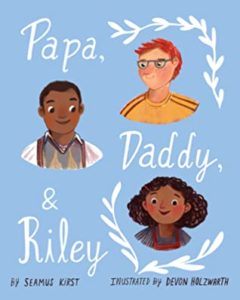

Papa, Daddy, and Riley by Seamus Kirst, illustrated by Devon Holzwarth (May 2020)

From Goodreads: “Riley is Papa’s princess and Daddy’s dragon. She loves her two fathers! When Riley’s classmate asks her which dad is her real one, Riley is confused. She doesn’t want to have to pick one or the other.

Families are made of love in this heartwarming story that shows there are lots of ways to be part of one.”

Pages: 32
Reading Age: 4–8
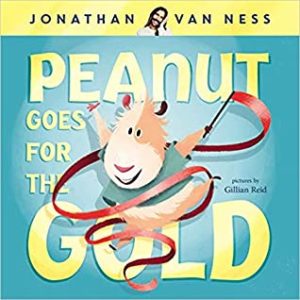

Peanut Goes for the Gold by Jonathan Van Ness, illustrated by Gillian Reid (March 2020)

From Goodreads: “Jonathan Van Ness, the star of Netflix’s hit show Queer Eye, brings his signature humor and positivity to his empowering first picture book, inspiring readers of all ages to love being exactly who they are.

Peanut Goes for the Gold is a charming, funny, and heartfelt picture book that follows the adventures of Peanut, a gender nonbinary guinea pig who does everything with their own personal flare.

Peanut just has their own unique way of doing things. Whether it’s cartwheeling during basketball practice or cutting their own hair, this little guinea pig puts their own special twist on life. So when Peanut decides to be a rhythmic gymnast, they come up with a routine that they know is absolutely perfect, because it is absolutely, one hundred percent Peanut.

This upbeat and hilarious picture book, inspired by Jonathan’s own childhood guinea pig, encourages children to not just be themselves―but to boldly and unapologetically love being themselves.

Jonathan Van Ness brings his signature message of warmth, positivity, and self-​love to this boldly original picture book that celebrates the joys of being true to yourself and the magic that comes from following your dreams.”

Pages: 32
Reading Age: 4–8
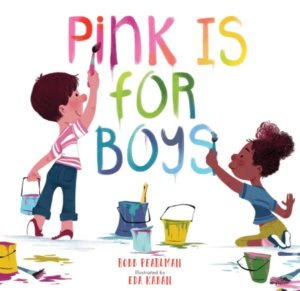

Pink Is for Boys by Robb Pearlman, illustrated by Eda Kaban (June 5, 2018)

From Goodreads: “Pink is for boys … and girls … and everyone! This timely and beautiful picture book rethinks and reframes the stereotypical blue/​pink gender binary and empowers kids-​and their grown-​ups-​to express themselves in every color of the rainbow. Featuring a diverse group of relatable characters, Pink Is for Boys invites and encourages girls and boys to enjoy what they love to do, whether it’s racing cars and playing baseball, or loving unicorns and dressing up. Vibrant illustrations help children learn and identify the myriad colors that surround them every day, from the orange of a popsicle, to the green of a grassy field, all the way up to the wonder of a multicolored rainbow.

Parents and kids will delight in Robb Pearlman’s sweet, simple script, as well as its powerful message: life is not color-coded.”

Pages: 40
Reading Age: 4–8
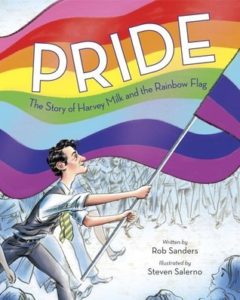

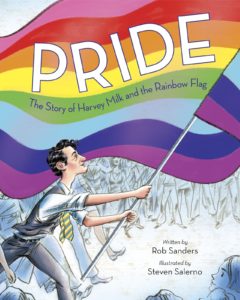
Pride: The Story of Harvey Milk and the Rainbow Flag by Rob Sanders, illustrated by Steven Salerno (April 2018)

From Goodreads: “The very first picture book about the remarkable and inspiring story of the Gay Pride Flag!

In this deeply moving and empowering true story, young readers will trace the life of the Gay Pride Flag, from its beginnings in 1978 with social activist Harvey Milk and designer Gilbert Baker to its spanning of the globe and its role in today’s world. Award-​winning author Rob Sanders’s stirring text, and acclaimed illustrator Steven Salerno’s evocative images, combine to tell this remarkable—and undertold—story. A story of love, hope, equality, and pride.”

Pages: 48
Reading Age: 5–8
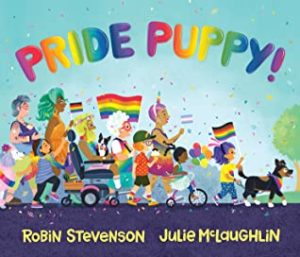

Pride Puppy! by Robin Stevenson, illustrated by Julie McLaughlin (May 2021)

From Goodreads: “A young child and their family are having a wonderful time together celebrating Pride Day–meeting up with Grandma, making new friends and eating ice cream. But then something terrible happens: their dog gets lost in the parade! Luckily, there are lots of people around to help reunite the pup with his family.

This rhyming alphabet book tells a lively story, with rich, colorful illustrations that will have readers poring over every detail as they spot items starting with each of the letters of the alphabet. An affirming and inclusive book that offers a joyful glimpse of a Pride parade and the vibrant community that celebrates this day each year.”

Pages: 32
Reading Age: 3–5
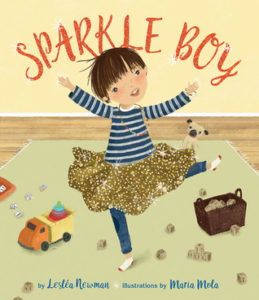

Sparkle Boy by Lesléa Newman, illustrated by Maria Mola (June 2017)

From Goodreads: “Casey loves to play with his blocks, puzzles, and dump truck, but he also loves things that sparkle, shimmer, and glitter. When his older sister, Jessie, shows off her new shimmery skirt, Casey wants to wear a shimmery skirt too. When Jessie comes home from a party with glittery nails, Casey wants glittery nails too. And when Abuelita visits wearing an armful of sparkly bracelets, Casey gets one to wear, just like Jessie. The adults in Casey’s life embrace his interests, but Jessie isn’t so sure. Boys aren’t supposed to wear sparkly, shimmery, glittery things. Then, when older boys at the library tease Casey for wearing ‑girl- things, Jessie realizes that Casey has the right to be himself and wear whatever he wants. Why can’t both she and Casey love all things shimmery, glittery, and sparkly? Here is a sweet, heartwarming story about acceptance, respect, and the freedom to be yourself in a world where any gender expression should be celebrated. Sparkly things are for everyone to enjoy!”

Pages: 32
Reading Age: 5–8
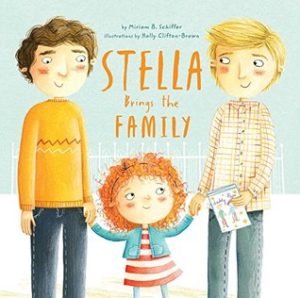

Stella Brings the Family by Miriam B. Schiffer, illustrated by Holly Clifton-​Brown (May 2015)

From Goodreads: “Stella’s class is having a Mother’s Day celebration, but what’s a girl with two daddies to do? It’s not that she doesn’t have someone who helps her with her homework, or tucks her in at night. Stella has her Papa and Daddy who take care of her, and a whole gaggle of other loved ones who make her feel special and supported every day. She just doesn’t have a mom to invite to the party. Fortunately, Stella finds a unique solution to her party problem in this sweet story about love, acceptance, and the true meaning of family.”

Pages: 36
Reading Age: 5–8
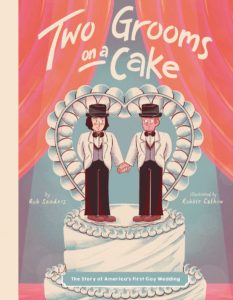

Two Grooms on a Cake by Rob Sanders, illustrated by Robbie Cathro (May 2021)

From Goodreads: “This is the story of Jack Baker and Michael McConnell and their inspiring story becoming the first married gay couple in the US fifty years ago.

Long before marriage equality was the law of the land, two grooms stood on a wedding cake with their feet firmly planted in fluffy white frosting. That cake belonged to Jack Baker and Michael McConnell, who were wed on September 3, 1971, becoming the first same-​sex couple in America to be legally married. Their struggle to obtain a marriage license in Minnesota and their subsequent appeals to the Minnesota Supreme Court and the Supreme Court of the United States is an under-​told story of LGBT history. This beautiful book celebrates the love story of two pioneers of marriage equality for all through the baking of their wedding cake!”

Pages: 40
Reading Age: 6–9
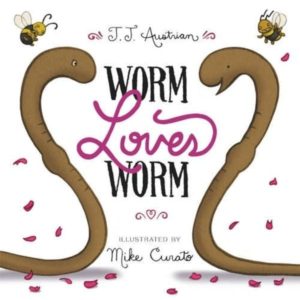

Worm Loves Worm by J.J. Austrian, illustrated by Mike Curato (January 2016)

From Goodreads: “Perfect for fans of And Tango Makes Three and The Sissy Duckling, this irresistible picture book is a celebration of love in all its splendid forms from debut author J. J. Austrian and the acclaimed author-​illustrator of Little Elliot, Big City, Mike Curato.

You are cordially invited to celebrate the wedding of a worm … and a worm.

When a worm meets a special worm and they fall in love, you know what happens next: They get married! But their friends want to know—who will wear the dress? And who will wear the tux?

The answer is: It doesn’t matter. Because Worm loves Worm.”

Pages: 32
Reading Age: 4–8

Joshua Walls is a children’s author and travel writer who isn’t afraid to fuse, challenge, or deconstruct genres in the pursuit of creating compelling stories. Currently, he lives in Sarasota, FL where he’s pursuing a BFA in Creative Writing at Ringling College of Art and Design. He’s also the co-​founder and co-​host of the Fluff It podcast.
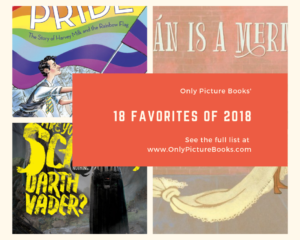
 

Only Picture Books’ 18 Favorites of 2018

What better way to close out 2018 than with a list of OPB’s 18 favorites from this past year?

Some of these titles appeared in the (digital) pages of OPB.

Some didn’t. (Alas, this isn’t a comprehensive PB review site like PW, Kirkus, or others.)

But make no mistake–I’m a fan of these 18 titles. I’ll even offer up a sentence or three for each to give a sense about why I liked them.


Note #1: Every book listed below is a total winner via my super-​subjective estimation. By that, I mean:

  • I own a copy. (Yep. Not just the freebie ARCs/​galleys here!)
  • I’d be happy to read any of these with a child.
  • I’d be happy to re-​read any of these, even without a child handy.
  • I’d be happy to have written, illustrated, and/​or edited ANY of these.
  • I’d be pleased as Hawaiian punch for any of the involved authors, illustrators, and editors to hit up OPB for an interview. HINT HINT HINT!

Note #2: They aren’t ranked in any particular way, save alphabetically by title. Want to know the #1 picture book of 2018? Read them yourself and make your own choice. Post your choice as a comment here. Or offer it up on your social media. Or add your glowing recommendation on an Amazon or Goodreads page.

Note #3: I like notes.

Note #4: There should be more picture books about sloths. (Please refer to question #1 of the Speed Round of editor Kait Feldmann’s OPB interview for proof of this profound sloth lack!)

Note #5: Refer to notes 1–4, as needed.


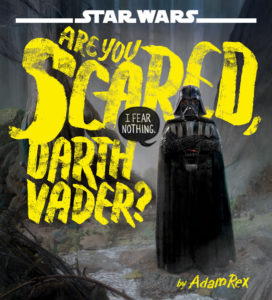
Are You Scared, Darth Vader? by Adam Rex (3 July 2018)

I often bring a picture book to share at my SCBWI PALs meetings, and this one brought the house down. It’s loads of fun, but it’s far more than just a Star Wars nostalgia riff. Well done, Mr. Rex!


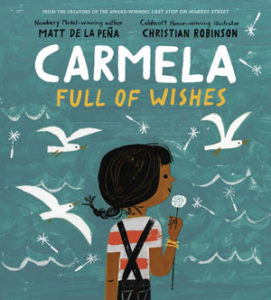
Carmela Full of Wishes by Matt de la Peña, illustrated by Christian Robinson (9 October 2018)

If you liked Last Stop on Market Street, you’ll love de la Peña’s new book that powerfully spotlights children who are worthy of our attention. Plus Robinson’s acrylic paintings are rich and captivating. Simply terrific.

Enjoy an Oct 2018 interview about Carmela Full of Wishes with Matt and Christian at PW.


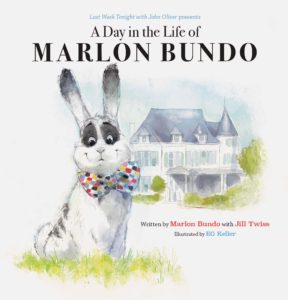
A Day in the Life of Marlon Bundo by Marlon Bundo and Jill Twiss, illustrated by EG Keller

To everyone’s surprise, political satire and picture books can go together like chocolate and peanut butter. Plus Jim Parsons really rocks it on the audio version.


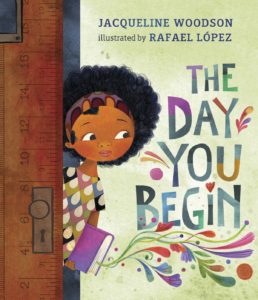
The Day You Begin by Jacqueline Woodson, illustrated by Rafael López (28 August 2018)

It’s a memorable, inclusive story with lyrical writing and dreamy art. This is a book for every child who feels alone (which is to say “everybody” at one time or another).

Here’s The New York Times article on two of Woodson’s books (including this one).


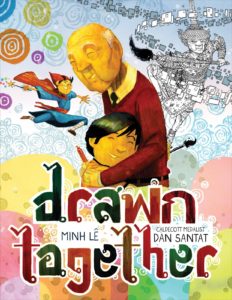
Drawn Together by Minh Lê, illustrated by Dan Santat (5 June 2018)

This gorgeous book shows the power of art–and the creative process–in action. It’s a visual WOW.

Here’s a June 2018 NPR interview with Minh Lê about Drawn Together.


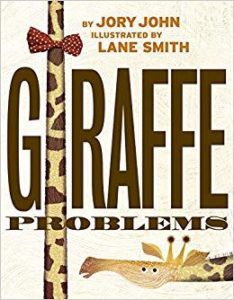
Giraffe Problems by Jory John, illustrated by Lane Smith (25 September 2018)

About twice a month, I go to my local library and grab two huge bags of whatever picture books catch my eye. Then I read them all at home. That’s the story of how I got introduced to this book, and it was the star of the whole batch by far. Clever. And full of positive messages too.

Here’s a Dec 2018 “speed interview” with Jory John on this cool book.


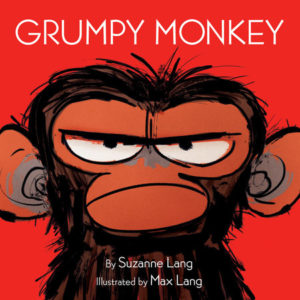
Grumpy Monkey by Suzanne Lang, illustrated by Max Lang (15 May 2018)

The simplistic yet powerfully expressive illustrations are first-​rate. Plus there’s something wonderful about a grumpy monkey screaming “I’m not grumpy!” This is great for a kindergarten reading session. They’ll all make the faces along with the characters for sure.


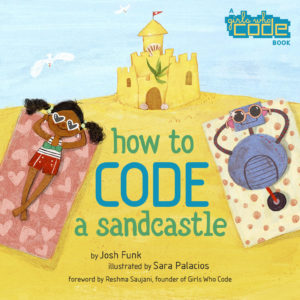
How to Code a Sandcastle by Josh Funk, illustrated by Sara Palacios (15 Mary 2018)

No rhymes or delicious puns here, but instead you have a kid-​friendly book that shows how to break down a seemingly big problem into small, manageable steps. It’s smart, useful, and just silly enough to keep all the learning fun.

Here’s a “Simply 7” interview (by Jena Benton) with the always-​interesting Josh Funk.


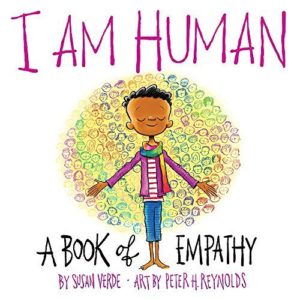
I Am Human: A Book of Empathy by Susan Verde, illustrated by Peter H. Reynolds (2 October 2018)

I’ve been paying attention to this picture book team since I Am Yoga and they continue to deliver. This book is a fine celebration of the beautiful imperfectness of humanity. It’s a book that says it’s okay to make mistakes, and that’s a fine lesson for young readers that counteracts the over-​tested, over-​scheduled, must-have-GPAs-higher-than‑4.0 world in which we live.


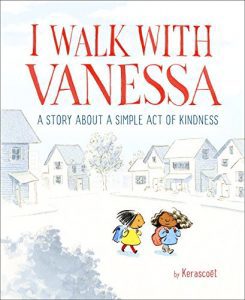
I Walk with Vanessa by Kerascoët (24 April 2018)

I’ve been a fan of this husband-​wife team since their graphic novel Beautiful Darkness. This picture book shows just how magical a wordless story can be.

Here’s a fine review of I Walk with Vanessa at Unleashing Readers.


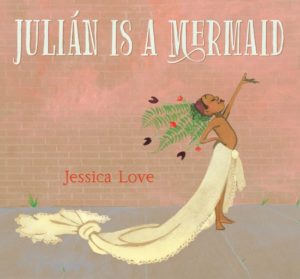
Julián Is a Mermaid by Jessica Love (23 April 2018)

This is a book that could’ve gone wrong in a host of ways … but doesn’t. It’s beautiful and empowering without being preachy.

Here’s a May 2018 interview with Jessica about this book at Seven Impossible Things Before Breakfast.


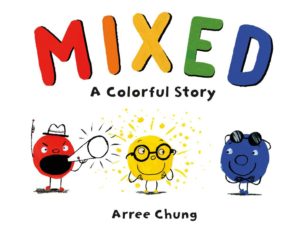
Mixed: A Colorful Story by Arree Chung (3 July 2018)

This celebratory book feels more relevant by the day. I’m also a fan of the graphic, eye-​catching style.

Read the full review of Mixed at OPB!


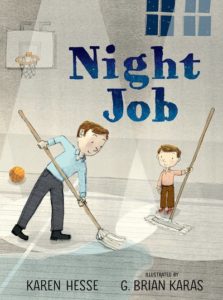
Night Job by Karen Hesse, illustrated by G. Brian Karas (11 September 2018)

This gentle story has a great big heart and Karas’ mixed media illustrations are spot-​on in every way.

Here’s the starred review of Night Job at Kirkus.


Pride: The Story of Harvey Milk and the Rainbow Flag by Rob Sanders, illustrated by Steven Salerno (10 April 2018)

I know Rob pretty well and despite that (just kidding, Rob!), I think this book is tremendously good and tremendously important. When Rob visited my Writing Picture Books class at Ringling College in spring 2018, he shared this book with them–it became the #1 most talked-​about book of the entire semester for the students, and for that reason alone, it’s got to be on this list. I also really dig the back matter timelines.


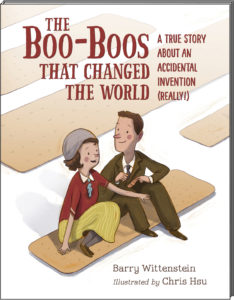
The Boo-​Boos that Changed the World: A True Story About an Accidental Invention (Really!) by Barry Wittenstein, illustrated by Chris Hsu (13 February 2018)

The retro look draws me in as much as the well-​told story about a now-​omnipresent first aid item.

Here’s a March 2018 speed interview with Barry at The Children’s Book Review.


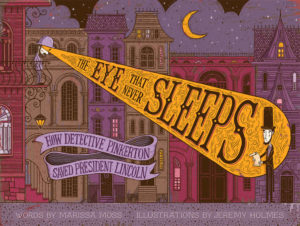
The Eye that Never Sleeps: How Detective Pinkerton Saved President Lincoln by Marissa Moss, illustrated by Jeremy Holmes (6 November 2018)

The hip cartoony style works well with the text to present a memorable read about one of America’s greatest detectives.


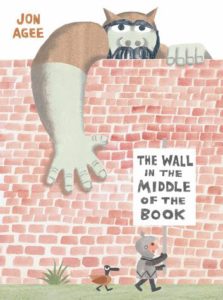
The Wall in the Middle of the Book by Jon Agee (2 October 2018)

This book proves to be quite the discussion starter on the concepts of perspective and assumptions.

Here’s an October 2018 Q&A with Jon at PW.

Here’s an October 2018 interview with Jon at Let’s Talk Picture Books.


We Don’t Eat Our Classmates by Ryan T. Higgins (19 June 2018)

The character? Hilarious. The ending? Delightful. It’s the type of back-​to-​school book I wish I had when my kids were little.

Here’s a Q&A with Ryan at PW.