Agent Interview: Jessica Saint Jean (Root Literary)

Jessica Saint Jean is a literary agent at Root Literary, where she’s on a mission to bring bold, narrative-​driven art to the forefront of children’s publishing. With nearly 15 years in the industry in a variety of roles, she knows the ins and outs of both storytelling and design. Jessica represents illustrators and author-​illustrators across formats like board books, picture books, middle grade, and graphic novels, and she’s all about finding projects that pair striking visuals with unforgettable stories.

Jessica’s sharp eye for expressive art and her knack for nurturing creative careers make her a standout advocate for her clients (I know this is true–I asked a few!). Known for her love of Airtable, color-​coded spreadsheets, and deep-​dive submission lists, she balances organization with boundless enthusiasm for great storytelling. In this interview, Jessica dishes on her career, her favorite projects, and what it takes to succeed in today’s competitive kidlit market.

Learn more about Jessica here:


RVC: You’ve worked in publishing for almost 15 years, first as an editor, then on the art side of things, and now as an agent. How have those roles shaped your approach to representing illustrators and authors?

JSJ: My time working in-​house at publishers informs just about everything I do as an agent. Though I was never actually an art director! At Candlewick, I worked in the Art Department but I had a pretty unique role – I wore many hats, but my primary responsibility was to coördinate illustrator commissions: after an editor acquired an author’s story for a book that would be illustrated (a picture book text for example), I would help select which artist Candlewick would hire to illustrate that book, and then negotiate the deal with the illustrator’s agent.

RVC: Oh, that’s interesting. I bet that gave you some great insight.

JSJ: Being part of that process searching for the perfect illustrator for a particular story gave me a lot of key insights into how I represent my clients and promote their work with publishers – from what type of information is helpful to share in email campaigns to helping my clients develop their portfolios.

And of course, negotiating many illustrator deals on behalf of the publisher gave me a lot of great intel now that I do the same thing from the other side of the desk!

RVC: How did your time at Barefoot Books and Candlewick Press influence your understanding of children’s publishing, particularly for illustrators?

JSJ: Barefoot is a small publisher, so beginning my career there gave me a great overview of all facets of children’s publishing – I was working in the same room as the Creative Director, the heads of sales and marketing, the CFO, etc. I kept my ears open and offered to help doing lots of different types of tasks that needed doing. It made my workload a little overwhelming but also taught me a lot! At larger companies, it can be harder to learn about what your colleagues are doing in different departments, and how their work impacts yours (and the bottom line). So that early role as an editor gave me experience in many corners of this business, which helps me guide my clients through lots of different situations.

And my time at Candlewick gave me a deep understanding of the market. To inform my work commissioning illustrators, I got to know every agent representing kidlit artists and each of their lists, met college students graduating from illustration programs, kept a close eye on all the key children’s lit awards, and, of course, read as many picture books as I could. It all helped hone my artistic tastes and commercial instincts.

RVC: Let’s talk about Root Literary. Why did you choose it, and how does it align with your vision for your clients?

JSJ: When I became an agent, I wanted to build a boutique list of illustrators at an agency that wasn’t currently representing illustrators so I had room to establish the look and feel of my list. But after several years working solo on so many aspects of my job, I realized I could grow my business (and my clients’ careers!) faster if I had colleagues who represented illustrators too.

Two agents at Root Literary, Molly O’Neill and Kurestin Armada, were already representing illustrators and I loved both of their lists. We have similar tastes without actually overlapping, so I felt my roster of illustrators would harmonize well with theirs. And I love Root’s approach to agenting – it’s very collaborative. So, I knocked on Holly Root’s proverbial door and was over the moon when she invited me to join the team.

RVC: What’s the story behind the first picture book you edited? 

JSJ: I started at Barefoot as an editorial intern and worked my way up, so I was initially supporting the other editors’ lists. The project that looms the largest in my mind all these years later is Barefoot Books World Atlas, which was an extraordinarily complex project to create! I will never forget that the day we finally sent it off to the printer was the same day South Sudan became an independent state. So… I started a list of reprint corrections before the book even hit the press. That might be a record?!

RVC: I bet it is! Now, how did this experience compare to the first picture book you repped as an agent?

JSJ: The first deal I closed as an agent was for Ashley Yazdani’s Cosmic Wonder: Halley’s Comet and Humankind, which, ironically, also takes a sweeping look at history and the earth. But thankfully with zero maps!

RVC: Let’s dig into the agenting side now. What’s a typical day like for you?

JSJ: It is super hard to describe a typical day as an agent because there are so many different facets to our job. And very, very often, what I spend all day doing isn’t necessarily what I planned to work on. We sometimes have to make quick pivots if time-​sensitive things come up, like a surprise offer on a book (yay, the best disruption!) or a sticky situation our clients need help navigating.

The easiest thing to say is that I spend a lot of time writing emails. So, so many emails!

RVC: That’s a popular answer, to be sure. What’s a misconception about picture books that you’d like to debunk?

JSJ: Picture book authors, you do not need to hire an artist to illustrate your book! In fact, I am begging you not to do this. Publishers like to pair illustrators with picture book texts themselves (see: my old job at Candlewick!) so most of the time, it’s actually detrimental to your book if you submit it with an illustrator already attached. (Unless, of course, you are an author-​illustrator planning to illustrate the book yourself.) It’s also better for the illustrator to be hired by the publisher, who can give them a share in the book’s royalties and handle all the accounting for that, etc. So, save yourself and everyone else the trouble!

RVC: For illustrators who also write, what unique challenges or opportunities do you see during the submission process?

JSJ: Sometimes an editor might love an author-illustrator’s art style but not connect as much with their story, or vice versa. An editor needs to love both to acquire a book. But the upside when editors pass on a submission but fall in love with one facet or another of a creator’s work, is that there’s usually an opportunity to follow that lead and connect on another project – even if it ultimately takes a while to get all the stars to align!

RVC: In another interview, you mentioned sometimes relying on “gut feelings” when matching projects to editors. Can you share an instance when your intuition paid off in a big way?
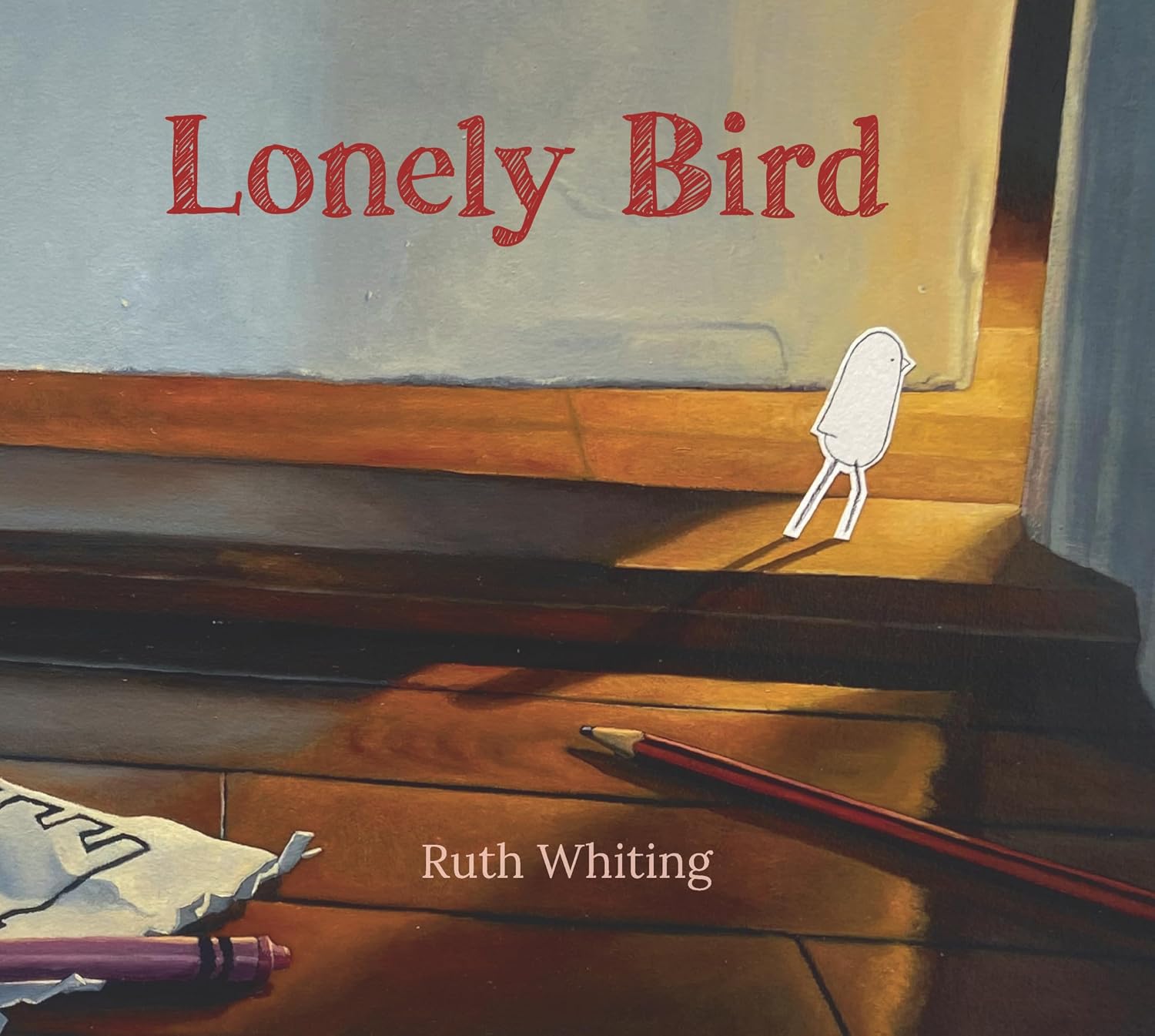
JSJ: One of the first submissions I sent out as an agent was a very special book, Lonely Bird by Ruth Whiting. It’s whimsical and sensitive, warm and hopeful but also a little melancholy, and the art is absolutely incredible (realistic oil paintings with paper collage) but a far cry from the digital styles that are very on trend right now. So, in short: it’s an amazing book but I worried it wasn’t going to be an easy sell. I knew I had to get it in front of the right editor, someone who would really “get” this story creatively and who would also know how to position it in the market so readers would understand it too.

I was still getting to know a lot of editors, so I did a ton of research while building my submission list. But when a book is doing something pretty different than what’s out there, you can only connect the dots so much – ultimately you have to trust your instincts. And I knew exactly who I was going to share Lonely Bird with at Candlewick from the jump: Mary Lee Donovan. She’s a brilliant editor and I had a good feeling that she was going to see the same magic in Ruth’s debut that I did. And happily, I was right! She made an offer not only for Lonely Bird, but two sequels as well, at lightning speed. She’s been an incredible partner to help bring Ruth’s vision to life.

RVC: That’s a great success story. Now, you recently launched a newsletter. Care to share what and why?

JSJ: There are a lot of smart people who are sharing their knowledge of the publishing industry in various places (including here!), but I’ve found there isn’t quite as much out there specifically for children’s book illustrators. I wanted to help contribute to that knowledge pool, but I didn’t want to do it on traditional social media platforms run by algorithms. I was intrigued by substack (I used to love blogs back in the day) and wanted to learn more about it. And I figured, what better way to do that than to start a newsletter myself? I’m still finding my rhythm with writing posts but I really love that corner of the internet.

RVC: Best of luck with the newsletter! One final question for this part of the interview. What are some upcoming client projects that you’re really excited about?

JSJ: Oooh, I love this question! I cannot wait for The Dinosaur Seed by Lindsey Yankey to hit shelves this summer. It’s such a unique book – the story is told completely through the dialogue of four kids as they play pretend at the park, almost like a short play. I really want to do a dramatic reading of it with a few of my friends each voicing one of the characters. And the art is absolutely exquisite. I think kids are going to love it.

I’m also super excited about Floor It, written by Bex Tobin Fine and illustrated by my client Federico Fabiani. It transforms a baby’s ordinary crawl across the floor into a racecar-​themed adventure, with lots of clever wordplay and mesmerizing, slightly surreal art. I’m a huge Formula 1 fan so love all the racecar jokes.

And last but not least, my client Hayden Goodman illustrated a fabulous new take on The Night Before Christmas, which is coming out this fall. It’s set in a NYC apartment building, and it’s funny and sweet and absolutely gorgeous. There are lush cutaways of all the different families’ homes with tons of little details to discover, and Santa has a fresh look and a magnificent magical pipe.

RVC: Alright, thanks for that–best of luck with all of those projects. But now…it’s time for the LIGHTNING ROUND. Let’s zip through questions and zap in those answers. Are you ready, Jessica? 

JSJ: Ready!

RVC: What’s the most Virgo thing you do every day?

JSJ: Ha! So many answers to this, but the #1 thing may be the way I tag almost every single email I send/​receive with myriad color-​coded labels.

RVC: What’s the most unexpected thing you’ve ever used Airtable for?

JSJ: Gardening! I have a base where I track all the perennials I grow in my yard, the care instructions, when they bloomed each year, etc. It’s ridiculous but also fun. I call it my “recreational spreadsheet.”

RVC: How many projects can illustrators juggle without losing it?

JSJ: This depends on the illustrator. Though I try to encourage my clients to have only 2 new picture books publish per year, max. For lots of reasons, but workload chief among them.

RVC: A picture book from 2024 with underappreciated-​but-​awesome art?

JSJ: I have to mention Lonely Bird again, because the second book in the series, Lonely Bird’s Dream has the most incredible art. Ruth’s process is fascinating – she paints in oil, which is its own special feat, but she also creates all her illustrations in real life and photographs them as references for her paintings. Which means she’s literally built all the flying contraptions that Lonely Bird builds in the story, and she spends a lot of time lying on the floor taking photos from Lonely Bird height. She did a few interviews talking about her process that I recommend checking out!

RVC: If your life were illustrated as a picture book, what would the title and art style be?

JSJ: I’m very bad at brainstorming good titles in real life (I desperately wish I were better at this!) so whatever I came up with myself, the editor would probably gently suggest we change, haha. I don’t know if I could choose just one art style! I would need someone else to spearhead the illustrator search for my own book. Doctors are the worst patients, and all that.

RVC: What’s your favorite quotation about agenting, publishing, or writing kidlit?

JSJ: “Tell them stories….That’s what nourishes them. You must tell them true stories, and everything will be well, everything. Just tell them stories.” from The Amber Spyglass by Philip Pullman (my all-​time favorite book!)

RVC: Thanks so much, Jessica!
Agent Interview: Sam Farkas (Jill Grinberg Literary Management)

Welcome to Sam Farkas, a literary agent at Jill Grinberg Literary Management who helps bring innovative and impactful picture books to life. With a background in publishing that includes subsidiary rights at Penguin and extensive experience connecting authors and illustrators with global audiences, Sam is passionate about championing stories that captivate young readers.

Her tastes lean toward picture books with kid-​friendly texts that beg to be read aloud, out-​of-​the-​box nonfiction, and books that celebrate our multicultural world. Recent sales like Eight-​Nine-​Tengineers and Floor It! showcase her knack for finding stories that combine heart, creativity, and meaningful messages. In this interview, Sam shares insights into the world of picture book publishing, what she looks for in submissions, and how she supports creators in crafting unforgettable books.

Learn more about Sam here:


RVC: When you were a kid, was it obvious you’d end up in a book-​related career?

SF: In hindsight, yes. I was always reading and writing. Then, as a teen, I spent a lot of time reading publishing blogs (mostly written by agents) because I found the industry so fascinating, but I viewed it more through the lens of wanting to be an author. At that time, I was very against the idea of living in New York City (how that has changed!), so I didn’t think publishing would be open to me. It wasn’t until college that I seriously considered it as a career path.

College of William & Mary – Logos DownloadRVC: Let’s talk about college then. You attended William & Mary as an undergraduate. What did you study there, and how has it shaped your approach to agenting?

SF: When I went to college, I thought I was going to be an archaeologist. I loved history, and I had a very romanticized view of the archaeology field. However, after a semester cleaning potsherds with a toothbrush, I decided that it was not for me, so I abandoned those courses and declared myself a double major in English and History. That said, I still sometimes view my work as an agent through an archaeological lens, especially when I’m digging through the slush. The thrill of discovery. Putting pieces together to unearth a great story. Polishing things up until they shine (with an edit letter, not a toothbrush).

RVC: That’s a lovely way of thinking about it. Now, you worked at Barnes & Noble for a while after college. How useful was that for your future career in the publishing industry?

SF: Very! When I was first interviewing for publishing jobs in 2015, that was the piece of my resume that the hiring managers asked about the most. As a student, it’s easy to get lost in the books you have to read for coursework; working at Barnes & Noble reminded me what’s being published and selling now. (Also, I met my husband while working there, so it was a very influential time in my life!)

RVC: Bonus score! Eventually, you worked directly in publishing as a rights coördinator. How did that prepare you for agenting?

SF: There is a lot of crossover, as both are all about selling rights. The main difference is that as an agent you’re also doing editorial work and managing an author’s career. It’s more overarching. But my time as a rights coördinator taught me how to pitch, how to negotiate deals, how to do a contract, what different markets look like and what we can expect from them.

RVC: What’s a common misconception about book rights?

SF: A lot of new writers don’t think about subrights at all. Or they think that rights sales are a given, when in fact there are a lot of factors that affect how and whether a book sells subrights. A rhyming picture book, for example, is going to have trouble in the translation market—translating rhyme is hard!

Another example: preferences in art style vary dramatically territory-​by-​territory, so what works here doesn’t necessarily work overseas. I’ve sat in many a meeting where I’ve been told, “This will never work for France!” (French editors, if you’re reading, I think you’re great!)

RVC: How has your love for travel and global cultures influenced the way you think about the picture book market?

SF: This isn’t specific to picture books, but I’m often thinking about what makes books appealing to foreign markets—it’s more complicated than whether something is a great book. It can be the length (shorter is better, as translation adds to the page count), details in the art (yellow school buses? Too American), even the genre itself (horror is not nearly as popular overseas as it is here). While it doesn’t affect whether I offer on something, I get really excited when I see a lot of translation potential. It’s special to see a book resonate with readers around the world.

RVC: What’s the most important lesson you’ve learned since joining JGLM in 2018?

SF: Oh, I have to pick just one? I’m going to cheat and pick two.

RVC: Go for it!

SF: 1) Trust your gut. It’s usually correct.

2) It’s okay to be the bearer of bad news. It’s no secret that there are a lot of things in publishing that are very difficult, whether that’s books dying on submission or lackluster marketing support. It’s tempting to try to sugarcoat it, but that helps no one—we have to be honest with our authors and support them as best we can.

RVC: What’s the story behind the first picture book you sold as agent?

SF: The first book I sold as an agent was Charlotte Gunnufson’s Dream Submarine. I had admired Charlotte’s work from my Penguin days—I was there when her book Prince & Pirate published—so I was really excited to represent her.

Dream Submarine is a beautifully multifaceted bedtime book about the ocean at night, and it sold to Candlewick pretty quickly once we took it out on submission.

RVC: The biggest lesson that book taught you was…

SF: Trust your gut! We discussed a lot of projects before deciding which to take out on submission, and there were many strong contenders, but this one felt right. Sometimes, you can’t put into words why one project feels more right than the others, but listen to your instincts.

RVC: In your opinion, what makes a great counting book, like Eight-​Nine-​Tengineers, or other concept-​driven picture books?

SF: It has work on multiple levels. It’s not enough to just be a counting book, or a colors book, or an ABC book—it has to do something else, too, such as tell a great story or bring in additional educational content. Charlotte Gunnufson’s Eight-​Nine-​Tengineers is a counting book, but it’s also a kid-​friendly introduction to environmental engineering, showing how we can work together to build a greener planet.

RVC: When assessing a manuscript, what’s the first thing that makes you think, “Now THIS is something I need to represent”?

SF: I can’t stop thinking about it. When I read a picture book manuscript, I usually know right away if it’s a “no,” but if it’s not a quick “no,” then it goes in my “take a closer look” pile. Occasionally, I will forget about it there, and then that tells me that it wasn’t a good fit and I let it go; but if I keep opening that manuscript, read it multiple times, and can’t let it go, then that’s a sign that I want to work on it.

RVC: How do you support your clients during the submission process, especially when navigating feedback or rejections?

SF: I let the author take the lead in how they’d like me to handle feedback or rejections. Every author is different: some want to hear every bit of news, some only want the highlights, others don’t want to hear a peep until it’s a “yes.” I trust my clients to know what’s best for their mental health, and I’ll work to accommodate that so they can focus on the writing.

RVC: I’m sure authors appreciate your flexibility there.

SF: If we get a pattern of feedback in the passes—multiple editors saying the same thing—then we’ll pause and see if we might be able to address it before taking the book out on submission again. Or if there’s no specific editorial feedback, but the book just isn’t hitting for whatever reason, sometimes we’ll pull it and move on to a different text. The nice thing about picture book writers is they tend to be prolific—if something isn’t working on submission, there’s always a new project waiting in the wings.

RVC: What advice would you give to creators choosing comp titles for their picture book manuscripts?

SF: Choose books that published within the last 5–7 years. Choose books that have done well, but try to avoid mega-​hits, as those tend to be outliers.

RVC: In your “wish list” online, you’ve mentioned a love for out-​of-​the-​box nonfiction. What kinds of nonfiction picture books are you hoping to see in your inbox?

SF: Ah, tricky! I don’t really know until I see it, but I do know that I’m burnt out on picture book biographies. I love picture book bios, but I’ve struggled to sell them, so I’m hesitant to take them on.

RVC: Brag time! What new projects are you most excited about?

SF: I’m really excited for Bex Tobin Fine’s Floor It!, illustrated by Federico Fabiani. It takes a simple conceit—a baby’s crawl across the floor—and turns it into a fun-​filled racecar-​themed adventure. Coming from Random House Children’s Books in Fall 2025!

RVC: Sounds like some high-​octacte fun.

SF: Charlotte Gunnufson’s Hard Hat Hank and the Sky-​High Solution, illustrated by Brian Biggs, is releasing in February on the inaugural Disney Planet Possible list, and it’s a very kid-​friendly construction book with a focus on eco-​friendly building.

And I just welcomed a new client who has a gorgeous literary text that I can’t wait to take on submission.

RVC: Thanks for the updates, Sam. But prepare yourself because it’s now time for the Speed Round. Rocket-​fast questions and racecar-​quick answers. Ready?

SF: Ready!

RVC: Your go-​to snack when reading submissions?

SF: Black licorice.

RVC: If animals could talk, which animal would be the most annoying?

SF: My cat, Paprika, who can already be the most annoying. I shudder to think what she’d say if she could talk. It probably wouldn’t be very nice.

RVC: What’s one thing you couldn’t do your job without?

SF: My awesome colleagues. The women at JGLM are absolute stars—so helpful, and wise, and kind.

RVC: What’s one word every picture book needs?

SF: “The” (although I imagine there are picture books without it!)

RVC: Last picture book that truly made you LOL?

SF: I Quit! by Kristen Tracy, illustrated by Federico Fabiani—the illustration of the cat sticking her face through a loaf of bread makes me laugh every time!

RVC: Your picture book philosophy (or agenting philosophy) in 3 words?

SF: Trust your gut!

RVC: Thanks so much, Sam!

Editor Interview: Kathleen Merz (Eerdmans Books for Young Readers)

Kathleen Merz - Editorial Director - Eerdmans Books for Young Readers ...Welcome to Kathleen Merz, Editorial Director at Eerdmans Books for Young Readers. We bumped into each other at the ALA conference a few months back in San Diego, and hearing her speak about her books and their creators told me all I needed to know–she had to join me for an OPB interview.

What do we need to know about her before we dive into the interview? Try this!

Kathleen joined Eerdmans in 2009 and has since worked on numerous award-​winning titles, including books that have been awarded the Batchelder, the Sibert Medal, and the Caldecott Honor. With a background in English and linguistics, she has a particular love for translated works and nonfiction picture books. She’s drawn to stories that celebrate diversity and thoughtfully address contemporary social issues in ways that feel organic, compelling, and honest. Outside the office, you can usually find Kathleen enjoying the outdoors in Michigan—whether she’s biking, kayaking, camping, or curled up in a hammock with a good book.

With that, let’s jump right into the interview!


RVC: Let’s circle back to the beginning. At what point did you realize you were going to have a career in books?

KM: I’ve been a literature nerd since high school. In college, I was an English major with a linguistics minor and a Latin double major. When you’re an English major, everyone always asks, “What are you going to do with that—teach?” I knew teaching wasn’t for me, but I was interested in publishing. Senior year, one of my professors passed my resume to someone at Eerdmans, where there was an opening in the children’s department. I hadn’t seriously considered a career in children’s literature before, although I’d taken a course on it, but I jumped on the opportunity. I’m so happy I did because I love it and can’t imagine being as happy in any other branch of publishing. Despite the uncertainties, thin margins, and all that, it’s been a great fit.

RVC: Your story is a bit unusual! Most people in the industry hop around different places, but you’ve been with Eerdmans for 15 years. What’s kept you there so long?

KM: I know, it’s rare to stay with one publisher for so long. I love that Eerdmans is based in Michigan, which is my home state, and I like working for a small indie press. The team is great, and the books we publish are unique—quirky international titles, beautifully illustrated works, and thoughtful stories. Being part of a small press means I get to have my hand in everything, which I love. I feel fortunate to have stumbled into this job.

RVC: What does it mean to be an Editorial Director, and what role do you play in submissions at Eerdmans?

KM: We’re a small team. It’s me, our Associate Editor, our Art Director, our Publisher, and the sales and marketing team we share with the rest of the company. In my role, I manage the editorial side of the program, and some parts of the program as a whole.

For submissions—we’re open to unsolicited submissions, and our guidelines can be found on our website. Our Associate Editor does the first read of most of those unsolicited submissions and filters them through. I work on every project we publish, though, whether I take the first read through it or not. (If submissions to us are simply addressed to “Acquisitions Editor,” they’ll find their way where they need to.)

RVC: How many books do you publish per year, and how many submissions do you receive?

KM: We publish around 18 to 20 books a year, with two seasons of about 8 to 10 books each. Over half of those come from international publishers, so we’re looking at just 2 or 3 U.S.-originated books per season. In terms of submissions, I’d estimate we receive about 3 to 6 submissions a day. Out of all those, only a small handful—maybe one every couple of years—makes it from the slush pile into publication.

RVC: What’s the process like for acquiring books from other countries? How does that happen?

KM: A lot of it happens through international book fairs, especially the Bologna Book Fair, which is a major event for children’s publishing. Our publisher attends, and she has about 50 meetings over four days with different agents and publishers. We also receive projects year-​round. We’re always on the lookout for publishers around the world who are doing interesting work. A lot of these books happen because of relationships—connections that we create with publishers, agents, or translators whose projects we admire and whose taste we trust.

RVC: You seem to have a soft spot for translated books. What’s the appeal?

KM: I love them because they open up a bigger world. One of the best things children’s books can do is crack open a wider world for young readers, introducing them to new perspectives, experiences, and ways of living. Translated books offer that in spades. And while these books showcase differences, they also highlight our shared humanity. In a world where there’s often fear of the “other,” international book can remind us of powerfully of what connects us all.

RVC: Can you share a book that illustrates this effectively?

KM: Absolutely! One book we’re publishing is The Cat Way, which is a translation from Swedish that tells the story of a character who goes for a walk each day with their cat. They’re always the one to lead—until one day the cat asks, “Why do you always get to lead?” The next day, the cat leads the way—down paths the human would never have chosen to take. But it turns out there are some beautiful surprises that come with letting go of control. It’s quirky and gorgeous, and I hope it will make readers stop to ponder what life might look like if they’re willing to see things from other perspectives.

RVC: Let’s talk about your editorial style. How do you approach working with authors, especially for translated projects?

KM: No matter the project, the editorial process moves from the big to the small. We start with macro edits—overall structure and flow—then move to more granular things like line edits and copy edits. For translated books, we’re usually working with books that have already been published—so those big-​picture edits have already been done. We usually can’t change much at that level, though there are exceptions. So for translations most of my work is on the level of line edits and copy edits. For U.S.-originated projects, I’m doing all the different levels of work.

For any book I’m working on, I see my role as a curious, engaged reader. I pay attention to how a text holds my attention, and I look for the places where I’m pulled out of a story because of issues—whether it’s inconsistencies or awkward phrasing or confusing language. I try never to tell an author exactly how to rewrite. At the end of the day, it’s their writing, not mine. But I can ask questions, and offer some potential ways forward—and hopefully in the end the text is stronger than either of us could have found our way to on our own.

RVC: What’s a book you’ve worked on recently that challenged you in unexpected ways?

KM: Every project has its own set of unique challenges. Maybe the challenge is getting a character’s voice just right, or making sure the pacing doesn’t lag, or figuring out how to translate onomatopoeia or wordplay that works differently in another language. The fact-​checking that nonfiction books require always adds an extra layer of complexity, and often sends me down editorial rabbit trails that I might not have anticipated. We spent more than a few hours checking and re-​checking several pages of scientific names for Kingdoms of Life. And I know way more about Ediacaran lifeforms than I would have if I hadn’t worked on How the Sea Came to Be!

RVC: What was the first picture book you ever worked on?

KM: The first book I remember working on—and then getting to hold in my hands when it arrived from the printer—was a collection of stories about saints, written and illustrated by Ruth Sanderson. We had previously published it and were reformatting it, so I only did some light edits, but I still remember that first time I got to feel the thrill of holding a book I helped make.

RVC: What was it like working on The Right Word, a Caldecott Honor book?

KM: It’s still one of my favorite projects. Jen Bryant and Melissa Sweet are brilliant creators and wonderful to work with. Jen and Melissa had worked together on A River of Words before, so they had a strong rapport. The process was very collaborative, with lots of revisions. Peter Mark Roget had a life jam-​packed with fascinating details, so we had a lot of work trimming the story down to the core material. There was a lot of back-​and-​forth, shaping and honing the story and the art, and seeing it come together was just beautiful.

RVC: What do you think of the current state of children’s literature?

KM: I love that the industry has finally recognized the need to reflect the full range of people reading these books. The push for diversity and inclusivity has reshaped books being published—it’s been a long time coming and there’s still so much work to do (especially diversifying the industry itself), but it’s exciting and necessary work. It’s opened the door for a much more interesting range of stories to be told.

At the same time, the rise in book bans is incredibly frustrating. It’s another huge issue in the industry right now. I give credit to authors and publishers for standing their ground and continuing to publish important books despite the challenges, but there’s inevitably some quiet censorship that happens anyway. Educators and librarians are having to be much more cautious about the books they order, and that affects publishers across the board. And so many professionals risk losing their jobs if they dare to speak up. This is a major ongoing challenge that we all have to keep fighting against.

RVC: Since COVID, I’ve always tried to ask a health and wellness question, so here’s yours. What do you do to recharge when you’re not working with books?

KM: Anything that I could do outside. I love backpacking, camping, biking, and oh…I just had the trip of a lifetime!

RVC: Do tell!

KM: My dad grew up in California, and when he was in his early 20s, he backpacked to this one lake in the Sierras a couple times. For as long as I can remember, ever since I was a little kid, I remember him talking about Sky Blue Lake, and my sister and I have always wanted to go back there with him. Last month, we finally made it happen. We went backpacking up in the Sierras with my dad to this place that he’d gone to decades ago, and it was an incredible trip. Our world is staggeringly beautiful, and I love getting the chance to go out and see parts of that.

RVC: What’s one thing you wish literary agents understood better about your job?

KM: How guilty I feel not getting back to them more quickly! I wish that I were able to answer all the emails I get as soon as they land in my inbox, but…you know.…

Thankfully, most people are pretty gracious about that.

RVC: I quite agree. Most agents are terrific. Now, what’s the most common misconception people have about editors?

KM: Sometimes, especially with early-​career writers, I notice certain personalities can be very protective of their writing, even threatened by suggestions for change. I get it—it’s tough because this work is their baby, something they’ve spent months or years on. What I often want to gently whisper in their ear is that we’re all on the same side. As an editor, my goal is to help make the best book possible and ensure it finds success in the world. I’m human and fallible, and I have limited time, which brings certain restrictions, but at the end of the day, my aim is the same as theirs: to create the best book we can.

RVC: What’s the most important thing people should know about Eerdmans?

KM: We’re small, we’re independent, and having such a small list means we’re deeply invested in every book we publish. Bigger publishers have their A, B, and C lists, where only the top books might really get much focus. But since we only publish 8 to 10 books a season, they all have to be good, and they’re all very important to who we are. We tend to keep books in print for a long time. We’re committed to taking on projects that really stand out, and doing them justice by making the highest-​quality books we can.

RVC: Complete the following sentence: “Kathleen Merz is an editor who…”

KM:…is very passionate about the books I work on. I love the chance to continue learning and discovering stories I didn’t even know were out there.

RVC: It’s brag time! What are some forthcoming books you’re excited about?

KM: One book from our Spring 2025 list that I’m particularly excited about is A Universe of Rainbows, a poetry anthology by Matt Forrest Esenwine, illustrated by Jamey Christoph. It’s gorgeous and explores all the different ways rainbows appear around the planet—the rainbows in the sky you think of first, of course, but also rainbows in rivers and hot springs and mountains and plants and animals. It’s a wonderful cross-​section of our planet’s beauty, and along with the poems there are sidebars and back matter full of information for kids to dive into.

The rest of the Spring 2025 list is fantastic too. A few highlights: We’ve got a sly detective/​murder mystery picture book (Ramon Fellini the Dog Detective). We’ve got a story about refugees that uses the imagery of knitting—and plenty of yarn in the art—to describe what it’s like for a life to unravel and need to be knitted back together (Thread by Thread). And we’ve got a book about a dog who whose energetic personality keeps him from being adopted, until he finds the perfect fit working as a conservation dog (Trouble Dog).

RVC: Okay, it’s time for the speed round now. Fast questions and speedy answers, please. Are you ready?

KM. Sure!

RVC: If you could only have one app on your phone, what would it be?

KM: Maps–definitely.

RVC: What movie quote do you use on a regular basis?

KM: Probably Monty Python and the Holy Grail: “And there was much rejoicing.”

RVC: What makes your eyes roll every time you hear it?

KM: Business jargon—like when people say, “I don’t think we have the bandwidth for that.” I cringe even when I catch myself using it!

RVC: Five things you couldn’t do your job without?

KM: Tea, curiosity, a thesaurus, my floofy cat colleague, Misha, and a good walk to clear my head when I’ve been staring at a computer screen too long.

RVC: What’s a picture book from the past year that didn’t get its due?

KM: So many great possibilities. But I’ll mention John the Skeleton. It actually just came out this month, so maybe it will get its due—but I’m going to guess that even still many of your readers may not come across it. It’s a translation from Estonian about a retired classroom skeleton who goes to live with an elderly couple on their farm. We actually looked at this one a few years ago, and I’m so glad that it’s been published in English. It’s delightfully strange—and also funny and tender and profound.

RVC: If you had a dream picture book tea party with three other picture book people–authors, illustrators, or characters from picture books–who would it be?

KM: I’ll go with three creators I think are brilliant (as long as they don’t mind me spending the tea party pestering them with questions): Sydney Smith, Christian Robinson, and Candace Fleming. I’ll also say that I’ve had tea with Melissa Sweet, and it was an absolute delight—so she’s got a standing invite to any tea party I’d throw, too.

RVC: What’s the best compliment a kid ever gave about a book you worked on?

KM: Not a compliment from a kid, per se, but the reaction that comes to mind first is something that a school librarian told one of my colleagues at a conference. We recently published a book called A Star Shines Through. The author is Russian, and when Putin invaded Ukraine, she and her family fled, leaving their apartment behind and moving to Israel, and later to Montenegro. The book comes from that experience—it’s about a mother and daughter fleeing their home because of war and settling in a new, unfamiliar place. Everything feels foreign to them: the food, the language, the buildings. In their old home, they had a star-​shaped lamp in the window, and one day in the new place, the mom brings home the makings of a new star lamp. They create it together, finding a small way to make the new place feel like home.

What the librarian told my colleague was that he knew exactly the kid he wanted to share the book with: a refugee student of his who was struggling to make a home in an unfamiliar city, and had started coming to the library because it felt like a safe space. There’s no better compliment and no better reason we do what we do than hearing that someone has the perfect child in mind for a book. That’s why we do it.

RVC: Great answer. Thanks so much for your time, Kathleen!

The Wisdom of Kidlit Editor Harold Underdown

The whole kidlit world was shocked to find that after several years at Kane Press, Harold Underdown was let go and the entire press went out of business. If you hadn’t heard the details, here’s what Harold shared on Facebook.

Harold Underdown - Executive Editor - Kane Press | LinkedIn

By now you may have seen the news that Kane Press has been shut down by Astra and that I’ve been laid off. There’s a deeper story to that, of course.
Just about three years ago, I stepped into the position of Executive Editor at Kane. At the time, Kane was known for fiction with an educational element, as seen in the Math Matters! and Milo and Jazz series. It was the first imprint bought by Beijing-​based TCBI, as they built up the components of what had already become Astra Publishing House when I arrived. However, their program had languished during the pandemic, and I was brought in specifically to revitalize it, and to find new directions while staying true to its core mission.
I got to work, deliberately broadening the range of what we published, and opening up to submissions from authors and agents. I expected it would take at least 4 to 5 years to see if my approach was working. Progress was slowed by understaffing at Astra and my needing to attend to my ailing elderly mother. But I was able to get my first acquisitions out in Fall 2023, with more following this year, from the Follow My Food series, aimed at a young picture book audience, to “Checkups, Shots, and Robots,” comic-​style nonfiction for middle-​grade readers. A good start, I thought, but I felt that it was my 2025 lists that really showcased what Kane Press could be.
I had just about wrapped up my editorial work on the Fall 2025 list when I was let go. From my perspective, this decision is a waste of the investment of the past three years, but I suspect was driven by the condition of the Chinese economy, which forced TCBI into further cutting expenses.
It’s their loss, as far as I am concerned. I am now looking for a new position with a company in need of an experienced, innovative editor to help them turn around an imprint, to fill a gap in their program, or simply to grow. To be continued…

Harold’s one of the Good Ones in the biz, folks. Read the OPB interview I did with him in 2021 to see for yourself!

To show my support of my colleague and friend, I’m repurposing this month’s Industry Insider post to showcase some of the wisdom Harold’s shared over the years via articles, interviews, workshops, and more.

Enjoy it, and please send Harold your best wishes (and leads for editorial jobs at places that aren’t going to self-destruct).

**Note on the excerpts below. A few had grammatical issues/​typos, and one even seemed to be an unedited AI transcript, so I tweaked the spelling and grammar a few times to ensure readability, though I didn’t add or replace any words.**


What are some of the essential qualities of a good editor?

To start with, you must love reading, because you’ll be doing huge amounts of it, both of manuscripts and published books, from the day you enter the field.

You must care about and be interested in books, publishing, children, schools, libraries, and all the other things you will deal with on a daily basis, and you must be open to learning more about them.

Above all, I think you need to love to work with people in the particular ways an editor does: to get inside what an author is trying to do in a manuscript, and to help them to do it better; to know who is the right illustrator for a given book, and to help them do their best work; to work every day with a team of people brought together to produce a book; and of course to advocate for and help a book within a publishing company and out in the world. We don’t just sit in our offices marking up manuscripts with red pencils!

From Miss Marple’s Musings

Shirley's Illustrations: Miss Marple's Musings, Illustrator Interview


Children’s publishing is in an interesting era right now, isn’t it? Why is it important–now more than ever–to have a foundational understanding of this industry before you start preparing and submitting?

So, there’s a few parts to that question and let me unpack that. From my experience–and I’ve been working in publishing for more than 30 years now–it has ALWAYS been important to know how the business works. And that begins with everything from the different kinds of children’s books. A lot of people come into this with only a vague idea about the complexity of the different areas of children’s books and how they connect to children.

But that’s just the start. You need to understand the process of writing from a practical point of view. Like how to get feedback, not just sitting down and writing at your computer and knowing when you’re ready to send a manuscript out. The process of doing that; what happens later? What happens if a publisher or an agent is interested and what happens eventually when you get to the point of being offered a contract? And then beyond that. How are you going to actually be working with a publisher? That’s always been really important knowledge that often is kept out of the conversation, but the focus is very much a lot of the time in our business on the writing and on the illustrating and you really have to put both of them together and that’s what I’m always aiming to do.

From Highlights Foundation


How do you approach submissions as an editor? What makes you stop reading? 

I’ll answer your question as if I were working in-​house, since that’s what your readers probably want to hear. I always approached submissions with tremendous hope, that the NEXT manuscript I read was going to grab me and not let me go. And, over the years, like all editors do, I did find manuscripts from people I didn’t know that surprised and excited me. That’s a wonderful moment, when it happens.

Of course, most manuscripts in the “slush pile” don’t do that, for one of a number of reasons. I can group them into two categories, I think—there are the books that are obviously wrong for my publisher, either because they don’t publish that particular type of book or because they just did publish something too much like it.

The larger category is the second one, and that’s the one in which I would put various kinds of work that just isn’t good enough. There is uninspired and pedestrian writing, the too-​familiar story, talking animals that teach lessons, “clever” writing that impresses adults but bores children, stilted or clumsy sentences, a slew of bad grammar and spelling (I don’t mind a few mistakes if the story is strong). You can get some more examples of what makes me stop reading in my article “Getting Out of the Slush Pile.”

From Kidlit411

KidLit411


What do you do outside of the book world?

I try to make sure my family is happy. We have a child in kindergarten, who over the past several months has learned to read, mostly on her own initiative. I stay involved with that. It’s satisfying and challenging and nothing at all like any job I’ve ever had.

In case you’re wondering, being a father hasn’t changed how I approach my work as an editor. I’ve greatly enjoyed discovering books I didn’t know about, though, and re-​discovering favorites from my childhood. The Editor as Reader, which I mentioned earlier, goes into some of the discoveries.

From Cynsations


How much should a writer pay attention to a manuscript’s “marketability” and market trends?

This is a short question but it needs a long answer. For one thing, the importance of what’s expected in the market varies by type of book. A manuscript written for a packager creating a MG series MUST be focused on what the market wants, while a “literary” novel should simply be the best that the writer can make it.

In general, paying too much attention to the market is dangerous, as trends can change or die overnight. It can also be difficult to figure out what exactly would make a manuscript “marketable.”

So, my advice for writers in this area is to ignore the trends while they are learning the craft–improving their skills, finding their voice, learning what they most like to write. Once they have a good chunk of experience under their belts they can start to pay more attention to the market, as they will not be unduly influenced by it.

From Carol Baldwin’s Blog


What are the advantages of working with an independent editor?

I don’t know if I’m the right person to ask–you should ask some of my clients! But from what people tell me, there is one reason why many of them work with an independent editor. They have gone as far as they can with the avenues that they have for getting feedback on a manuscript, whether that’s their critique group, a writer friend, conference critiques, or all of those, and they know that they haven’t yet reached the place where they want to be. And so they reach out for help from a professional editor. Their manuscripts are in many different stages–ranging from early drafts with significant flaws to oft-​revised drafts that need a final polish. What they have in common, though, is that they need or want to get help to move it up another level.

From the Mixed-​Up Files…of Middle-​Grade Authors


In speaking with so many industry folks over the years, it seems to me that the picture book world does a very good job letting new agents and editors learn in an apprenticeship model. Was that how it worked for you?

That’s an interesting question. And I actually would say that I didn’t have a full on apprenticeship kind of situation. Because I was working for Macmillan Children’s Books–a large, general purpose children’s book imprint–we did everything from picture books up to young adult. We even had the Macmillan Dictionary for Children along with a couple of other reference books.

There were three or four editors within the imprint–Judith Whipple, Beverly Reingold, and my boss Neal Porter, who was the publisher. I was officially working for Neal, but I also interacted with everybody else, so I was actually learning from all of them. One of the things they did within the department was make copies of all their important correspondence and put it in a file. That would get circulated weekly so we could all see what everybody was working on. That was always really interesting for me to read, because I could see how an editor wrote an editorial letter and how they corresponded with an artist. Another lesson I learned was the reality that publishing is a business.

That’s a tough realization, isn’t it?

I thought of publishing as this noble calling where people are simply making wonderful books. And it is! But also, for every single book that we acquired, I had to do a P&L [profit and loss statement]. And it had to work out and make money for us, after I put in all the expenditures and an overhead percentage and so on. It had to hit a target number of profit.

From Only Picture Books

Editor Interview: Cheryl Eissing (Flamingo Books)

When someone takes the time to write a great social media bio, they deserve kudos, acclaim, and general admiration. Witness editor Cheryl Eissing’s bio at Twitter/​X. “When I’m not editing, I can be found reading with an English Bulldog at my feet, cooking too much pasta, or walking my dog around Brooklyn.”

Love it!

Her bio at Penguin’s website offers two bits of dynamite info as well.

Cheryl mainly edits picture books, with some middle grade and young adult, and is specifically interested in stories that cause giggles, give comfort, and expose their readers to experiences and perspectives they haven’t seen before.”

Cheryl is always looking for commercial and silly yet profound picture books and stories that entertain, educate, and inspire young readers. When she is not editing books, Cheryl can be found befriending dogs on the streets of Jersey City, watching horror movies, or searching for the perfect lychee martini.”

Awesome, right? Let’s talk to her to find out a bit more.


RVC: Let’s deal with the geographic elephant in the room. In the bio snippets above, it seems you have a multi-​state dog love going. What’s the real story there? 

CE: Ha! Unfortunately, the first bio is out of date. I lived in Brooklyn with the bulldog in question (who has sadly crossed the rainbow bridge, as the social media pet community often calls it) but he was the greatest editing and walking companion. I moved to Jersey City in 2020 and still go for dog walks (by that I mean, I walk around Jersey City and admire all the dogs). I will always have a soft spot for bulldogs.

RVC: Got it, thanks. Now, back to the regularly scheduled OPB interview…what aspect/​part of you today gives away where you’re from and how you were raised? 

CE: I grew up in the suburbs of Long Island and went to college in New Jersey, so I’m very serious about bagels and pizza. I’ve just finally grown up and realized you can get good bagels and pizza outside of New York!

RVC: Good to know! Here’s a huge question: what was your first meaningful experience with a book?

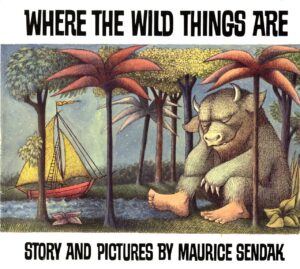
CE: Oh goodness, what a big question! Picture books that I have a vivid memory of reading as a kid are Where the Wild Things Are by Maurice Sendak, Chrysanthemum by Kevin Henkes and Corduroy by Don Freeman. I just remember each of them speaking to something in me as a child. I always loved the adventure of Corduroy and was amazed by the idea of being alone in a department store after it closed. I loved the fantastical, dreamlike elements of Where the Wild Things Are and absolutely identified with Max’s mischievousness. And as someone who did not like being the only person with my name in my class as a little kid, Chrysanthemum really spoke to me.

RVC: Most of us in the book industry had a powerful experience with a teacher somewhere along the way. What was your MIT (Most Important Teacher) moment?

CE: Ms. Jeans, my second-​grade teacher!

RVC: Best…name…ever.…

CE: She was the absolute best and always made me feel smart and capable. I remember her showing a drawing I did to another teacher—it’s amazing how much those little encouragements are so important and really stick with you!

RVC: Totally agree! Your LinkedIn account says you did your undergraduate studies at Rutgers. What career goal did you have in mind there?

CE: I wanted to be in publishing since I was in high school. I remember looking at all of the YA books on my shelves and thinking, “Okay, I don’t really enjoy writing, but what are the names of these companies on the spines of my books?” and realized that I could work with books in another way. I went into college thinking I’d major in English and then eventually go onto publishing, and always sort of thought if it wasn’t meant to be something else would reveal itself as my calling, but it stuck!

RVC: What was the most useful thing/​skill you learned at Rutgers?

CE: Reading and analyzing literature and seeing the many ways a book can be written and written well. Not all who work in publishing are former English majors, but I felt like it certainly helped me!

RVC: You’re the post child for the power of internships. Share a bit about what you did and how that helped launch your career in the industry.

CE: Because Rutgers was just a train ride away from NYC, I was able to apply for internships and do those in Junior and Senior year. I definitely wouldn’t have been able to do them in Freshman and Sophomore year while I was still getting my bearings and still having to take core requirement classes that took up a lot of my time.

I got lucky with landing my first internship at Abrams, in a department that I wasn’t ultimately interested in, but I was doing admin tasks and learning how publishing worked. That led me to more interviews and more internships. Most of what I did for internships wasn’t stuff that interested me, but it helped me learn how a publishing office worked and gave me good experience!

RVC: It seems like you might’ve had a moment where you considered being an agent. What happened there?

CE: After I graduated college and had just had one interview for a real job, I was feeling very restless and continued applying to internships, which eventually landed me as an intern at a literary agency. It was definitely interesting to learn about that part of the publishing world but I realized it wasn’t for me. I definitely prefer working on shaping a manuscript the most!

RVC: Tell me the story behind the first picture book you acquired. 

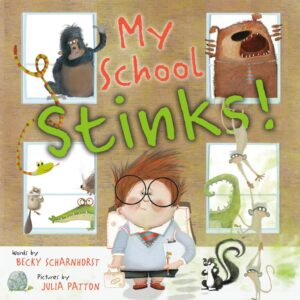
CE: The first picture book I acquired was My School Stinks by Becky Scharnhorst and Julia Patton. I met Becky at the Rutgers One-​on-​One Publishing Conference, and we really clicked. We worked on her manuscript (which was originally a camp story rather than a school story) and I loved it so much. Becky was so great at really considering my notes and was so great at writing funny and heartfelt stories. I ended up asking her to change the setting from a summer camp to a school and I remember feeling so worried that she wouldn’t want to change so much about her manuscript (but also completely understanding if she did!) and worrying that she wouldn’t want me as her editor.

In the end, she adapted the manuscript into a school setting, and I just loved it and I was so happy that my publisher agreed, too! We found Julia and adored her artwork–she is so talented at doing mixed media scenes and could really incorporate the journal entry format of the story into her hilarious illustrations. I loved working on My School Stinks!

RVC: What’s the most useful thing you got from that experience? 

CE: I think I learned a lot about the author’s experience of editing a manuscript. Because it was my first acquisition, I had to really carefully consider my words and how to get the best manuscript possible from my author, while still being encouraging and showing how much I love the book. While an editor absolutely feels ownership over each book they edit, ultimately the book is the author and illustrator’s creation! And our job is to give suggestions in how to make the best possible book that is within the author and illustrator’s creative vision! So I think that experience really taught me to really consider the author on the other end of my emails and notes.

RVC: Let’s jump ahead to your recent work. What’s the most important thing people should know or understand about Flamingo Books?

CE: We love funny picture books! We think books that are fun is the best way to make lifelong readers, so often the first thing we look for is humor. We love profound and heartfelt picture books, too, but I’d say a good majority of our books are funny!

RVC: Why is Flamingo Books a great fit for you?

CE: I love to do sweet and silly picture books that tackle big moments or emotions in a child’s life, as well as books that can teach a reader something new, but always with lots of humor and character. I love a funny book and I’m always looking for books that can be funny while still accomplishing other things. I think that humor is such an easy entry point for kids and reluctant readers. I truly believe that any kid who doesn’t like to read just hasn’t been introduced to the right books!

RVC: What does a typical workday look like for you?

CE: A lot of it is answering emails from other departments, looking at passes of books, fielding submissions, and, depending on the time of year, preparing materials for upcoming meetings.

RVC: What’s the most common misconception writers have about editors?

CE: I think some writers might feel like getting a lot of edits means their editor thinks that they’re not a good writer. Editing can take a lot of time and several rounds (some take 10 rounds or even more!). Sometimes we don’t notice something the first 5 times we read it. Or sometimes fixing one problem in the manuscript creates another. Having lots of edits is very normal and part of the process!

RVC: What’s your editing superpower? 

CE: Oh, I really don’t know! I guess I’m good at editing funny books?

RVC: Speaking of editing superpowers, you’ve had some real successes. Share what it’s like to find out a book you edited is on the New York Times bestseller list. 

CE: It is really really cool. Being on the NY Times list is not the end-​all-​be-​all of a book’s success by any means, but it’s definitely something that holds a lot of weight in the industry and it is so great to have one of your books succeed in that way. I think the coolest part is that books that land on that list are because of the work of so, so many of your colleagues who loved it. A book that you acquired and worked hard on, and launched to them, and hoped they would love as much as you do. Having a whole team to work hard with and celebrate with is really lovely!

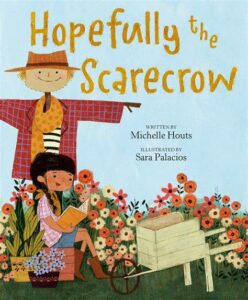
RVC: I believe you worked on a book written by my friend, Michelle HoutsHopefully, the Scarecrow.

CE: Yes! I adore Hopefully the Scarecrow!

RVC: What grabbed you about that story? 

CE: Michelle’s voice throughout the story was what I instantly loved. It had this timelessness to it that felt like a book I could’ve read 50 years ago but also felt so current.

RVC: Your feeling on art notes?

CE: I LOVE how that book turned out. We waited a whole extra year just to have Sara Palacios illustrate and it was so worth the wait! That book is gorgeous and I sometimes just pop it open to stare at the art. It’s one of those book where the words and art really work together perfectly.

RVC: A lot of aspiring writers read OPB. Let’s help them out—offer some examples of “commercial and silly yet profound picture books” please!

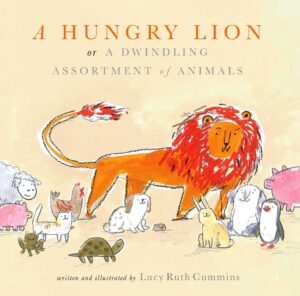
CE: The Bad Seed series by Jory John and Pete Oswald, A Hungry Lion by Lucy Ruth Cummins, We Found a Hat by Jon Klassen, Strictly No Elephants by Lisa Mantchev and Taeeun Yoo, Something’s Wrong by Jory John and Erin Kraan.

RVC: Since COVID, I’ve made a point out of asking everyone a health and wellness action. Here’s yours. What do you do to de-stress?

CE: I like to cook, or exercise, or read a book for pleasure.

RVC: One final question for this part of the interview, Cheryl. If you had to summarize the most important thing you’ve learned about picture books, what would it be?

CE: I guess it would be that picture books have power. They can teach kids about empathy, friendship, loss, feelings, family, differences, etc. and can shape who they are as a person.

RVC: Okay, here we go. It’s the LIGHTNING ROUND. Zippy zoomy questions followed by zapptastically fast answers. Are you ready?

CE: Yes!

RVC: What “old person” thing do you do?

CE: I really like jigsaw puzzles and Sudoku.

RVC: If someone narrated your life, who would you want to be the narrator?

CE: Kathryn Hahn or Ayo Edebiri.

RVC: If you had a giraffe you needed to hide, where would you hide it?

CE: Under a blanket.

RVC: What are five things you couldn’t do your job without?

CE: A notebook, a laptop, post-​its, Diet Dr Pepper, Rhymezone.com

RVC: Who sets the standard for picture book rhymes?

CE: Anna Dewdney and Sandra Boynton.

RVC: What’s a favorite line from a picture book you edited?

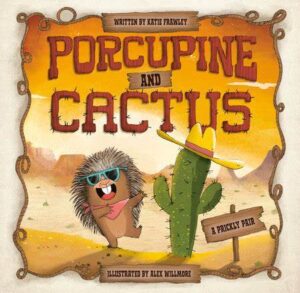
CE: “Great job, Buffalo. Help yourself to some potato salad.” (From Porcupine & Cactus by Katie Frawley & Alex Willmore)

RVC: Thanks so much, Cheryl!

Agent Interview: Dan Cramer (Page Turner Literary Agency)

A2821821-DF59-4A87-A703-38E5D84FCD7D.jpgImagine a world where a former forensic scientist analyzes the ingredients of a perfect picture book – with a side of horror movies and ambitious baking goals. That’s the reality of Dan Cramer, founder of Page Turner Literary Agency.

This quirky agent is driven by a deep love for reading and believes children’s books have the power to be surprisingly bold. Let’s explore his unique perspective and discover what makes this book lover’s heart sing. Along the way, we’ll learn a bit about his agency and clients, too!


RVC: Let’s begin with an easy but important question. Do you go by Dan or Daniel?

DC: I accept all forms of my name. Dan, Daniel, Danny, Daniel Boone, Booner, and Uncle Boone. I usually just introduce myself as Dan because it’s short and easy to say. I had a speech impediment when I was younger.

RVC: Okay, Dan. Let’s dive into the real question on everyone’s minds. Henry…great rescue dog, or the GREATEST rescue dog?

DC: Henry is obviously the GREATEST rescue dog. He’s a Great Dane/​Lab mix. He’s wonderfully lovable and currently a great big brother to his new sister, Longaniza (Lawn-​gah-​knee-​sah) or just Niza (Knee-​sah) for short. She’s a mini dachshund and her name is a Filipino breakfast sausage. My husband is Filipino and a cozy murder mystery series I enjoy by Mia P. Manansala has a dachshund by the same name in the books.

RVC: Makes perfect sense to me! Now, what’s the best lesson Henry has taught you that serves you well in your role as a literary agent?

DC: He’s always excited to go on an adventure. As a literary agent, I have to be excited to go on adventures, too. I have to dive into the worlds created by authors and illustrators and imagine a place for their stories in this big crazy literary world. If I’m not being adventurous, I’m probably not doing my job right.

RVC: Let’s hit the other Big Question here. How often are you mistaken for this Daniel Cramer (who is a film agent for William Morris)?

DC: That hasn’t happened yet – that I know of. But does make me want to read a murder mystery of literary agent mistaken identity! Two agents. Same name. One dead body. Will Daniel Cramer land the deal or end up six feet under? Cue dramatic music.

RVC: I’m in! But while we’re waiting for that book/​movie to happen, let’s circle back to the questions I meant to ask already, like this—what was your first important book experience as a kid?

DC: I was a very reluctant reader as a kid. The first book I remember reading on my own was Squanto, Friend of the Pilgrims and Shiloh after that. While I enjoyed both books, I wasn’t all excited to read more books. I read a few Box Car Children books and Amelia Bedelia. Again, I enjoyed reading them, but my love of reading still wasn’t there. It wasn’t until fifth grade when I read the Chronicles of Narnia (out of order) that I really fell in love with reading. Since then, I’ve just been turning pages.

RVC: Where/​how did you get the bug to be an FBI person?

DC: My undergraduate degrees are in Forensic and Investigative Sciences and Psychology. I went to West Virginia University and the Forensic program was connected with the FBI Lab. During my senior year, we had to do our own research and present our findings at a CBD-​IAI conference. My best friend and I (still best friends) worked together. Our research was on developing latent fingerprints on the adhesive side of tape. A recruiter from the FBI approached us after our presentation and took our contact information. Unfortunately, that was also at the same time the government had a shut down and they weren’t hiring. So, I did a year of grad school in pathology and my friend worked for a local police department as an evidence technician. About a year after our presentation, I got the call from the FBI recruiter asking if I was interested in working at the lab and if I had my best friend’s contact information. I said yes to both.

RVC: What was the most difficult aspect of that work?

DC: There was a rigorous 18-​month training program that I went through learning all about the science of friction ridge skin, processing evidence, learning to testify as an expert witness, and comparing unknown prints to known prints. The most difficult aspect was the comparison of unknown prints to known prints. TV makes it look easy, but it’s a very difficult process. The unknown prints are rarely pristine. There is always some type of distortion (smeared, smudged, wiped, etc.) and most unknown prints are just a partial print – sometimes just a few ridges. My mentor realized, and if I’m honest with myself, I realized too that I wasn’t great at comparison. So, I did a lateral transfer within the laboratory to the Evidence Control Unit, where I was the first person to see the evidence arriving at the lab, would inventory the evidence, and help determine its life cycle within the laboratory (which forensic testing would be conducted on each item of evidence.)

RVC: In what way(s) did it prepare you for your career as a literary agent?

DC: I’m very organized and can handle large volumes of information without being overwhelmed. Some cases would have thousands of items of evidence and I would have to keep track of all of it.

RVC: How did the shift—from FBI person to agent—happen?

DC: I met my husband while I was working for the FBI. We both lived in DC and met the old-​fashioned way – in a bar. I didn’t even have a smart phone at the time. We both agreed that while we loved the DC area, it just wasn’t for us. So, we moved to the Chicagoland area where he grew up.

The Mob Doctor DVD Release DateRVC: That’s where I grew up too. Small world!

DC: I started working as an internal affairs investigator for the sheriff, and still do presently. (Side note: While waiting to get my internal affairs job, I did background acting work on TV shows filmed in Chicago. You can see me in Boss Season 2 and Mob Doctor.)

RVC: [working hard to find those episodes online as I ask…] What happened next in terms of your career path?

DC: In 2017, I had a conversation with myself about what I really wanted to do. I really didn’t want to be in law enforcement anymore. So, I distilled down what I loved doing, what brought me joy. The answer was always books and writing. I researched careers and literary agent seemed to be the perfect fit.

I did a cold email to Flannery Literary to see if they had any internship opportunities. I wasn’t looking for monetary compensation – I really just wanted to learn the ropes. I was fortunate enough that Jennifer did need an intern. She taught me the ropes and her joy with her work showed me I was making the right choice for my life. Jennifer was an excellent mentor and helped in more ways than I’ll ever be able to repay her.

RVC: What’s the story behind the first picture book you repped and sold?

DC: A Costume for Charly by CK Malone and illustrated by Alejandra Barajas was the first picture book I sold. I love that it’s the first one. CK and I are both part of the LGBTQIA2S+ community and one of my missions for my agency is to bring more queer representation to children’s literature. CK is also a gem to work with – all my clients are actually. They really think on my crazy ideas, and I think we’ve developed a relationship where we can present any idea to each other. I hope I can continue to bring more representation of all kinds to children’s literature.

RVC: What lessons did that book teach you?

DC: That I could actually do this job. I started as an intern in 2017, then an associate agent in 2019. I didn’t sell A Costume for Charly until June 2021. That’s four years, and I wasn’t sure if I was smart enough, savvy enough, creative enough for this industry. A Costume For Charly probably saved my Agent life and helped bring to life 18 other books from my other clients, including a second one from CK.

RVC: Let’s talk about your agency. What’s the most important thing people should know or understand about it?

DC: That reading books with all kinds of representation is important not only for our souls, but also for our society. Books build up empathy in us and looking around right now – we need that more than ever. So, be fearless in your writing and illustrating! You never know what child needs your words or your art. I want my agency to help bring more varied voices to the table.

RVC: How hands-​on are you in the editing process before sending out a picture book manuscript?

DC: I love working collaboratively and being the agent the author needs. I’ve help from the developmental stages to just having to do some line editing. And each time, no matter how involved I need to be, it’s magic.

RVC: What’s a daily workday look like for you?

DC: Crazy right now – lol! I work a full-​time job as an internal affairs investigator, and I do agenting whenever I can fit it in throughout my day. And with our new puppy, Niza, there’s potty training. I try to be cognizant of my mental health too. We have a culture that’s always go, go, go and that’s hard. I make sure to find time to rest and get in all the doggy snuggles I can.

RVC: Please share a client success story from idea to publication. 

DC: This is a hard question because any book that gets published is a success. In traditional publishing there are so many gate-​keepers, including myself. So, a story breaking down each gate to make it to the shelves of bookstores, libraries, and our homes is a success. But getting your book published is not the only success in this industry. You need define what success is for you, which can be anything – sticking to a writing/​illustrating schedule, joining a critique group, going to a conference, etc. Don’t compare yourself to others because it will steal your joy. Celebrate all your successes and others’ successes, filling your life/​career with joy.

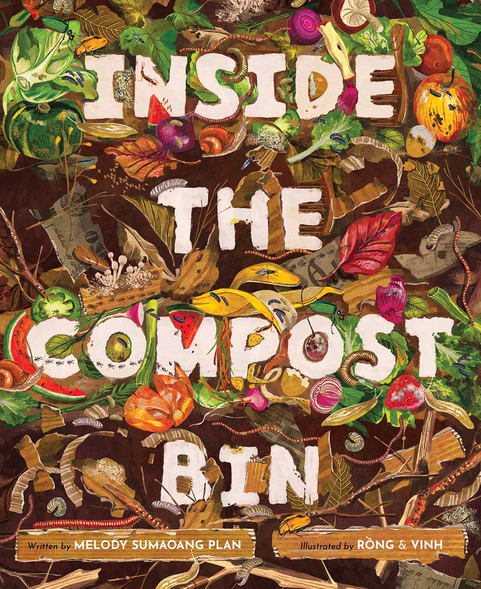
Okay, I’ll hop of my soap box now and I’ll speak of a most recent success. I signed on Melody Sumaoang Plan during a Writers Workshop Virtual Conference during COVID. She pitched me a lyrical nonfiction series about composting. There was minimal work needed to get the first manuscript ready for submission. During the first round there was interest from an editor who asked for a revise and resubmit. We did the R&R and the editor ended up passing. We were both ok with that because the editor did help us create a stronger manuscript. And we celebrated those successes – the R&R and a stronger manuscript. We went back on submission and the story was picked up by Tilbury House and is set to be published this July. We received notice at the end of April that Inside the Compost Bin received a starred review from Kirkus Reviews. A first for both Page Turner Literary Agency and Melody!

RVC: Congrats to you both on that! Let’s help up some future clients by sharing this–what’s the most common misconception about agents or agenting?

DC: We only pass because your writing/​illustrating is bad.

This isn’t true. There are many reasons agents have to pass on queries. For instance, I’m a one-​person show at Page Turner Literary Agency. I’m the only one looking at queries, working with my clients, pitching to editors, creating presentations for conferences, doing all the business stuff that goes with owning an agency. Plus, I work another full-​time job. So, I have to be extremely selective of who I sign on or how many clients I represent. I can tell you right now that I have a pile of work and always have a pile of work. I’m fortunate enough to have clients that understand and are patient with me.

Other reasons I pass are – your writing isn’t bad, it’s just not ready yet, I have something similar, I’m not the right agent to help you elevate your manuscript, your story is written well, but it’s not going to stand out in a crowded market. An automatic pass from me will be if you are rude, bigoted, racist, homophobic, etc in your query letter or submission. Luckily that doesn’t happen often.

RVC: In all your experience as an agent, what has surprised you the most?

DC: The length of time the whole process takes. You have to be patient and persistent in this industry. You will fail if you don’t have those two qualities.

RVC: Any other surprises?

DC. The other thing that has surprised me are the creative ways people tell stories. Jennifer once told me that there are no new stories, just new ways to tell them. And the innovative ways people come up with to tell their stories is fascinating.

RVC: If you could offer one key piece of advice to a new writer or illustrator hoping to get an agent’s attention, what would it be?

DC: Read what you write or illustrate as much as you can. As Gary Paulsen would say, “Read like a wolf eats.” And as you are reading, really study what that author or illustrator has done. Ask yourself what you liked about the story, what you didn’t like, how you would have done it, and, especially for picture books, read them aloud.

This career, writing and illustrating, is an isolating career. Join critique groups, writing groups, go to conferences if you’re able, participate in Twitter/​X pitch events, develop writing/​illustrating friends. Having a connection to this community will help you both in your craft and mentally.

RVC: What do you do to de-​stress or for downtime?

DC: I listen to a lot of audiobooks, read, bake, play with my dogs, be outdoors, run, lift weights, I’m learning ballet, go to the movies, and sometimes just sitting on the couch with my husband and our dogs enjoying each others’ presence.

RVC: One last question for this part of the interview. It’s Brag Time! What are some upcoming Page Turner projects that you want to rave about?

DC: 2024 is a big year for Page Turner Literary Agency! We’ve already had four books released this year and have five more coming out. There are several projects in the works that haven’t been announced yet, and a few in the negotiations stage. I also have big hopes that my MG and YA clients will break into the industry this year.

RVC: Okay, Dan. It’s time to move to the second and final part of the interview. It’s…THE LIGHTNING ROUND! The point values are quadrupled and the key to success is speed, speed, speed. So, quick questions and awesomely fast answers. Are you ready?

DC: Absolutely!

RVC: If you only had one app on your phone, it’d be…

DC: Gmail.

RVC: If you had to bake one item to save your life, what’s on the menu?

DC: Pumpkin Roll – it seems to be everyone’s favorite, so it should be able to save my life.

CREEP (2014) — CULTURE CRYPTRVC: Most underappreciated horror movie?

DC: Creep.

RVC: What are five things you couldn’t do your job without?

DC: Internet, Gmail, Ipad, Clients, Creativity.

RVC: Beyond your own list, what’s the last picture book that actually made you LOL?

DC: I’m Not Missing, with words and story by Kashelle Gourley and art and story by Skylar Hogan. It’s the dog’s side-​eye for me.

RVC: Your picture book philosophy in five words or fewer.

DC: Write for your inner child.

RVC: Thanks so much, Dan! This was terrific.