
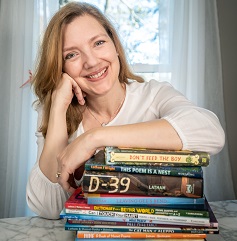
 Here we go with another OPB Author Interview! Today we’re spotlighting Irene Latham, whose well-wrought picture books keep winning hearts (and awards). I had the joy of editing The Museum on the Moon: The Curious Objects on the Lunar Surface, and I can confirm: Irene’s writing ability shines.
You may know her for Can I Touch Your Hair? (with Charles Waters), the Caldecott Honor book The Cat Man of Aleppo (with Karim Shamsi-Basha), the kindness-forward Be a Bridge (with Charles Waters), and her anthologies like The Mistakes That Made Us. Whether she’s writing persona poems, curating other poets’ voices, or sneaking science into verse, Irene’s work invites kids to look closely, feel deeply, and live language out loud.
Let’s learn more about her and her work right now!
RVC: When did you realize you were a poet?
IL: Family legend says I’ve been writing poems since I could wield a crayon—love poems, for my mother. But I am a shy person by nature and didn’t share my work with others or pursue publication until I was in my late twenties.
 RVC: What kind of training do you have that supports that writing interest?
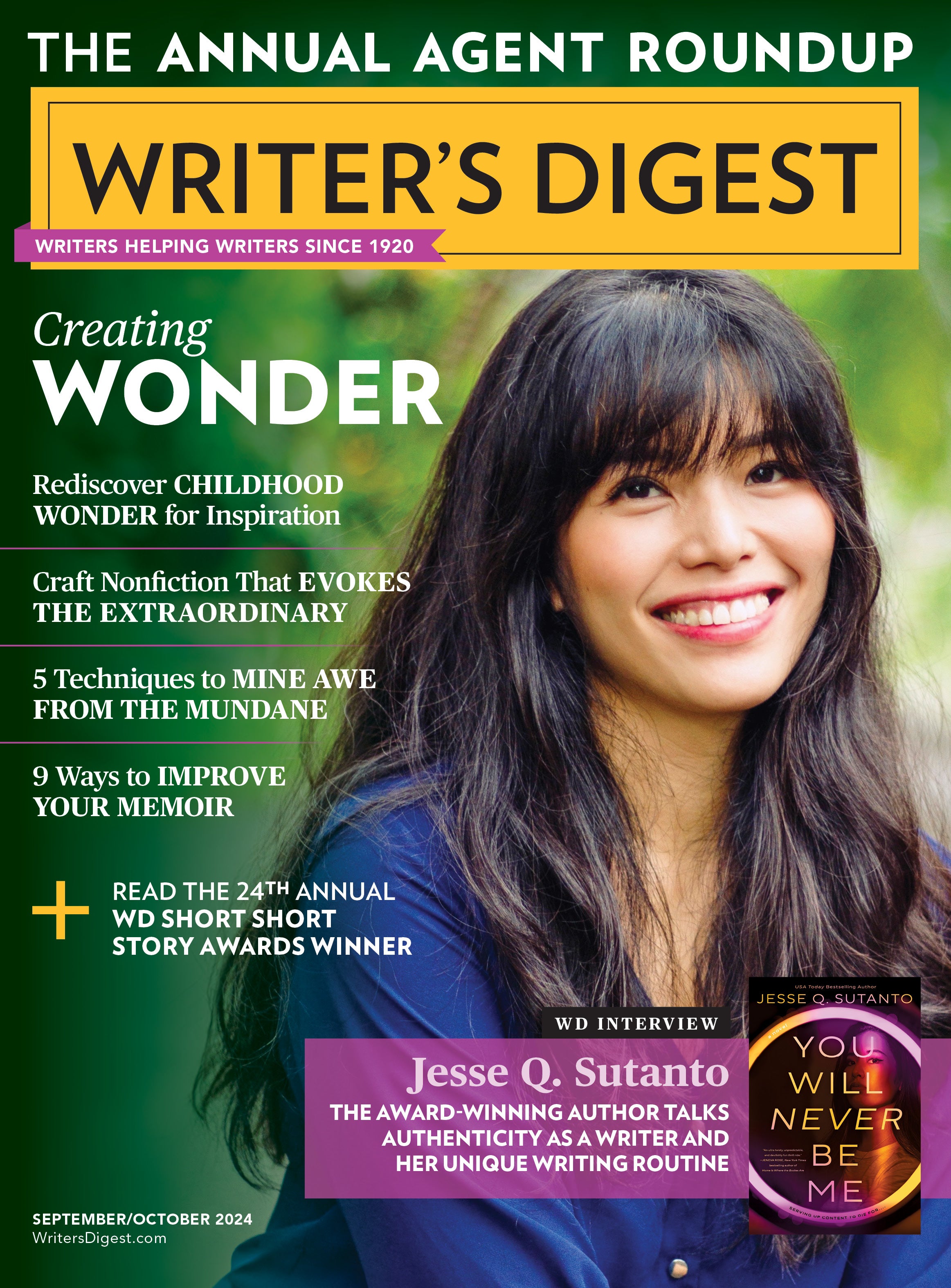
IL: I’m self-taught. Each day I’m learning to be a poet through reading poems, of course, and also consuming craft books, podcasts, and articles. I spend part of each day in nature (we live on a lake), and I have attended many a conference and poetry reading. My first stop once I decided to try and get my work published was to join my state’s poetry society. Also, for decades now, my sister has gifted me a subscription to Writer’s Digest magazine (where I have seen lots of your articles, Ryan!).
RVC: Aw, shucks. Thanks!
IL: Much of my writing education has come from those pages!
 RVC: What’s the story behind the first picture book you wrote and published?
IL: I started in the children’s market as a middle grade novelist with Leaving Gee’s Bend (Penguin, 2010). I still love writing novels, but before anything else, I am a poet. So I started sending picture book poetry collection manuscripts to my agent Rosemary Stimola, and together we worked up a list of editors who might be interested. Several manuscripts got rounds of rejections before I wrote Dear Wandering Wildebeest: And Other Poems from the Water Hole. Carol Hinz at Lerner acquired that book, and it was published with illustrations by Anna Wadham in 2014. Carol and I have worked together many times since then! The book received some starred reviews and awards, which was super encouraging. It, along with a companion title When the Sun Shines on Antarctica: And Other Poems About the Frozen Continent (Lerner, 2016) will be released in paperback in 2026.
RVC: The biggest lesson that experience taught you?
IL: Dear Wandering Wildebeest features poems with nonfiction text boxes. I learned pretty quickly that the text boxes are not simply “extra” information. These two pieces—the poem and the text box—should work in tandem. It’s important to include information in the text box that readers may need to decode the poem, and/or information that anticipates a question a reader may have after reading the poem. And keep it SHORT.
RVC: This is GREAT advice.
IL: In some ways, the text boxes are like prose poems, leaning heavily on poetic elements of economy and precision of language.
 RVC: Love that, thanks. Now let’s jump ahead to the book we worked on together—The Museum on the Moon. When you realized “hey, there’s a whole museum’s worth of artifacts on the Moon,” what clicked first—the book concept or a specific poem?
IL: I was a “space” kid who followed the NASA program, and later my oldest son had a childhood obsession with space travel. We also live near the U.S. Space and Rocket Center in Alabama. So I had been collecting moon facts for many years. One day, when reviewing my file of facts (I keep all sorts of files of potential book ideas that often arise from my general obsessions, and add to them over time.), I noticed quite a few things had been left on the moon. I jumped on the internet and found even MORE things! Given the number and variety of items, the history and science connections, and the innate kid appeal, I thought, hmm, this could be fun…and I started writing!
RVC: Craft nuts-and-bolts question here. Museum pairs poems with tight prose sidebars. How did you balance music with accuracy?
IL: It’s important to me that a poem be a poem. There should be a surprising image or word choice, some musicality, and it shouldn’t be just a recitation of clunky facts. There are myriad of other factual space books available to readers, so I felt my job was to really focus, to “explode the moment.” Which meant being ruthless when cutting and paring both the poems and text boxes. (Confession: there’s one poem in the collection that still feels a bit clunky to me, and every time I read it, I wish I’d spent a little more time unleashing its music!)
RVC: Dear blog readers, that last comment is something all book creators feel at one time or another. It’s okay–truly. You do your best and move on to next projects. Trust me on this. Now, let’s dig back into the book. It features a variety of poetry forms. What was the process for determining which poem formats got used in the book, and for which topics?
IL: The “matching” of subject matter to poetry form is an intuitive process. Mostly it just takes time and trust, allowing oneself to sit with it, to experiment, and allow the answer to arise on the page. The opening poem, “Welcome Earthlings!” is a triolet, an 8‑line form which features one line that repeats 3 times, and a second line that repeats 2 times. This repetition felt “right” to me because the moon also repeats, returning each night…and that became the focus of the poem, how even though you may see the moon every night, you don’t know everything about the moon. It has secrets, and now it’s here to share those secrets. It felt like a perfect marriage of form and content.
RVC: Agree! What’s your favorite spread to see illustrated by Myriam Wares, and why that one?
IL: I loved seeing Myriam’s rendering of the closing poem “This Poem is an Outpost.” We don’t know yet what a habitat on the Moon will actually look like, so I was super curious to get a glimpse into Myriam’s imagination. Her moon habitat is so inviting—who wouldn’t want to stay there before cruising out to Mars?
RVC: What’s one object on the Moon that surprised even you once you researched it?
IL: It surprised me to learn that Charles Duke (Apollo 16) left a photograph of his family on the moon. There’s something so tender and human about that—it was his way of making his loved ones part of the experience. Beautiful! (Though the photo is likely faded beyond recognition at this point.)
RVC: If UNESCO-style protections ever extended to lunar sites, which locations belong at the top of your “heritage” list?
IL: The first footprints, number one. Probably my number two would be the lunar rover that holds the one book on the Moon—a red Bible. Truly, I could argue for them all! Perhaps there really does need to be a museum on the Moon?!
RVC: Let’s talk about collaboration. You and Charles Waters have built a true creative partnership. What’s his writing/collaborating superpower?
IL: For fun, Charles and I named ourselves the I & C Construction Co.: Building Books One Word at a Time Since 2015.
RVC: HAH. Love it.
IL: We are friends first, and collaborators second, and we’ve been super fortunate to work on a variety of projects. Our current focus is on co-curating poetry anthologies for children. Charles has multiple superpowers, but one that has really impacted me is how good he is at acknowledging all the others who help make a book. Our presentations always include slides of folks who helped along the way: from childhood teachers, to librarians who aided our research, to editors and book designers…Charles is a great connector, and he makes it his business to really “see” people.
RVC: How does your collaborative process work? And how/when/where/why do the book ideas emerge?
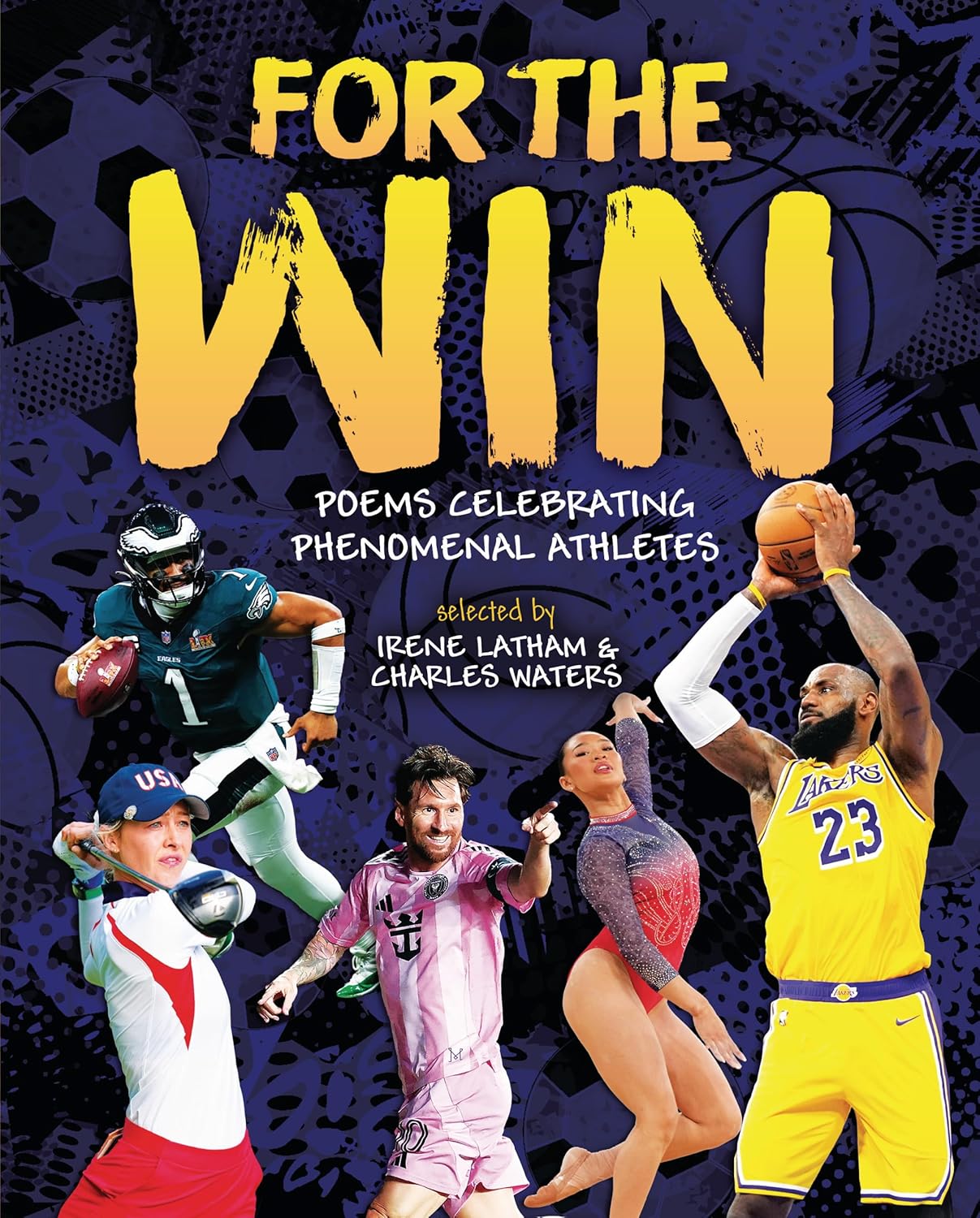 IL: Each project has been different, and our process continues to evolve. I’m mostly the idea person, but our next book, a poetry anthology titled For the Win: Poems Celebrating Phenomenal Athletes (Lerner, March 3, 2026) evolved out of an idea Charles had many years ago to do a sports anthology. I’m not a sports person, but when he came to me the idea, I pondered it for a while and eventually suggested we focus not on biography, but on moments in each athlete’s life, from introduction to the sport, training, setbacks, achievements, and also what happens after the great achievement. Such inspiring subject matter, whether one likes sports or not!
RVC: IT sounds terrific.
IL: In terms of our day-to-day work together, we currently love Google Docs, because we can both be working inside a document simultaneously. Sometimes we have these marathon phone calls where we’re talking through things and also making corrections in the document. Other times we work independently, and take turns responding or adding material. Some things we address through texting. We divvy tasks as best we can, allowing each of us to do the things we want to do, are best at, or feel called to do. I trust Charles, and he trusts me. Somehow it all works out!
RVC: In Be a Bridge, you distilled big, bridge-building ideas for very young readers. What did “every word counts” look like in revision?
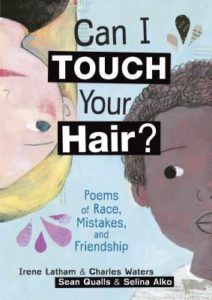
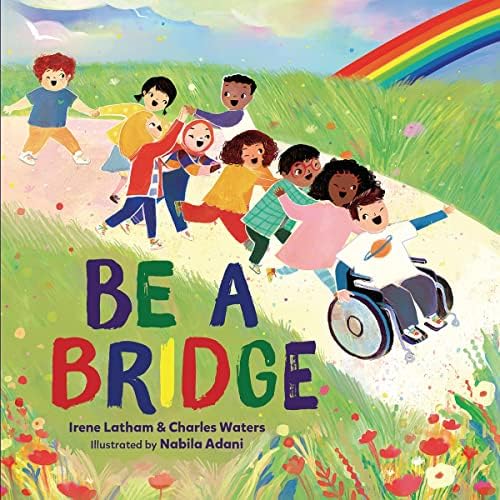 IL: Be a Bridge was a tough one! It emerged out of our efforts to bring the subject matter of Can I Touch Your Hair? Poems of Race, Mistakes, and Friendship to a younger audience. Carol Hinz rejected several of our manuscripts before we finally got to Bridge, so we’d already been revising and revising…There’s a didacticism inherent in the premise—I mean, the title itself is instructive!—and we wanted to “soften” that, but we were also hemmed in by these rhyming couplets. Taking out a single word seemed to unravel the whole thing! And then, after the book was illustrated, a sensitivity reader found some issues that needed further revising. It’s all a bit of a blur in my memory, but what makes it all worthwhile is hearing from educators and families how meaningful the book has been to them. A LOT of work goes into a picture book, that’s for sure!
RVC: The Mistakes That Made Us anthology invited poets to get autobiographical. What editorial promise did you and Charles make to contributors to help them go brave?
 IL: We asked each poet to share a mistake from their own lives, write a poem about it, and then craft a nonfiction text box sharing how the mistake impacted their lives—what did they learn from it? Charles and I shared our own responses to the prompt, and we leaned into what impact this kind of vulnerability may have on our child readers. Our goal was to inspire and normalize mistake-making. It’s just part of life! Not surprisingly given the generosity of poets, our contributors really came through, from Allan Wolf sharing how embarrassing it was to score a soccer goal for the wrong team to Naomi Shihab Nye sharing an incident from First Grade involving a fellow student taking too long at the pencil sharpener, a pencil, and bloodshed! As editors, our job was to stay out of the way of this truth-telling as much as possible, stepping in only to help clarify or to eliminate unnecessary distractions on the page.
RVC: Speaking of collaborations, how do you handle art notes?
IL: I use them as sparingly as possible. One of my most favorite things about creating picture books is seeing what magic the illustrator conjures, so I want to give a wide berth! However, I have worked on a few historical books, both fiction and nonfiction, and it’s my responsibility to provide art notes, which can be links to historic photos or general research—anything that will help ensure our book will reflect the story’s time, place, people, and culture accurately.
RVC: This Poem Is a Nest is such a fine idea—turning one long poem into a ton of “nestlings.” What moment told you this wasn’t just a poem experiment but a full book?
 IL: Of all my books, This Poem Is a Nest is probably the most joyful creative experience I’ve had. I was fortunate to work with Rebecca Davis (WordSong), and she acquired it when I’d only written about 30 nestlings. She believe in the book and invited me to have fun with it, so I did! Neither of us could have anticipated I would have had 161 poems worth of fun. As a creator, I’m so grateful to have been given this kind of freedom.
RVC: What’s one simple way families or classrooms can try their own found poems at home?
IL: You can find poems in the mail that arrives in your mailbox! Or on your bookshelf or magazine rack. Or you can download a pack of free poems from my website designed for just this purpose:
RVC: Let’s talk persona poems. What’s your checklist for writing ethically and vividly in another voice—especially for picture-book readers?
IL: Do your research, of course. And not just about the person/animal/object, but also about the place and time where/when the person/animal lives or lived. Imagination is the building block of empathy, so really, all persona work is an exercise in empathy. To make these (or any type poem) more vivid, aim to include not only the sense of sight, but other senses as well. I have a new poetry collection coming from Astra/WordSong in 2026 called Come In! Come In! Wordspinners to Welcome You Home, and the very last revision pass I did was for the sense of smell. At last gasp, I realized smell was underrepresented in the collection, so I made it my aim to bring in some more scents.
RVC: I’ve read that you’re a cellist. Has learning an instrument changed your line breaks or sound play on the page?
IL: That’s a great question. Playing the cello influences my writing in myriad ways! A musical phrase is not unlike a poetic one, and just as silence is a placeholder for emotion in music, white space serves the same purpose in poetry. More importantly, I’ve learned to appreciate the process of music-making or poetry-making, to focus on creating a connection with my audience rather than impressing anyone. Music, and poetry, is a place for me to just be me.
RVC: What can you tell us about the importance of community in a writer’s life?
IL: Truly this is a business of relationships. I love surrounding myself with book/poetry people, people who share the impulse to use language and stories to attempt to discover the world and share ourselves on the page. I’ve learned community isn’t about numbers—so you can stop obsessing about growing your list of followers on social media! Community is about walking this world with kindness and openness and surrounding yourself with people who support what you’re doing, lift you up, and listen to your dreams and disappointments. This can be as simple as one other person, or two. The most important thing is to be authentic, and to be the kind of person who invites others to be authentic, too.
RVC: What’s one museum (on Earth!) you’d love to partner with for a poetry program, and what you do there?
IL: Ooh, I can’t think of a museum I wouldn’t want to partner with! I love museums—the big, flashy ones and the labor-of-love, local ones. Art, history, science…every trip I take includes a visit to one or more of these type of museums.
Also, since 2015, I’ve created a public art project on my blog called ArtSpeak!, in which I post an ekphrastic poem (poem inspired by art) to my blog. I love and have written on such a wide variety of art—you can find hundreds of these free poems on my website, and I am still just as in love with the project as I was ten years ago. Once, long ago, I did partner with Birmingham artist Liz Reed, and we mounted two “Poetry & Paint” shows in which she created art after I wrote, and I wrote poems after she painted. I’d love to do that again.
RVC: Last question for this part of the interview. What’s next in your picture-book/poetry world that you can tease?
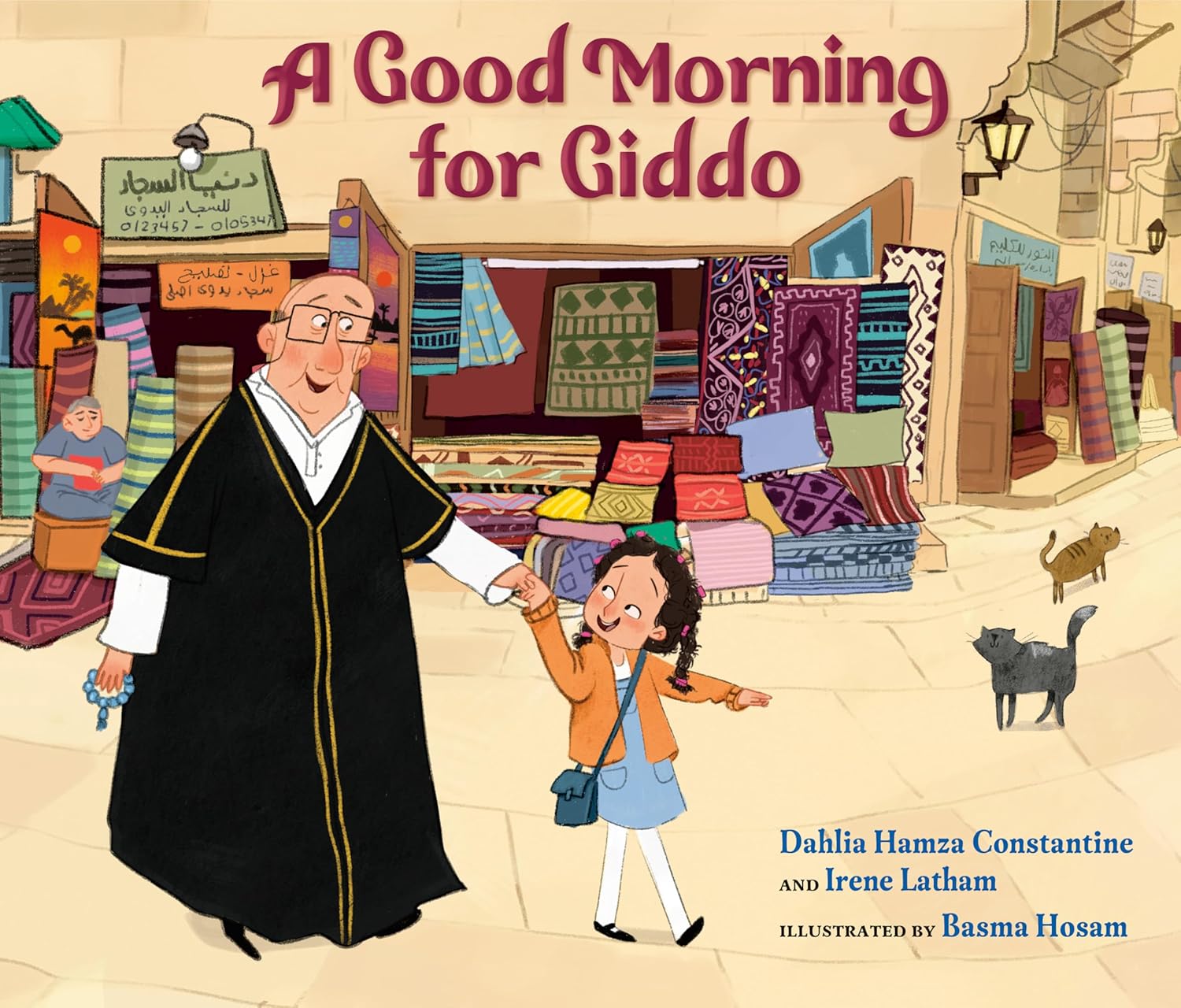 IL: I have three picture books releasing in 2026, and two of them are poetry. the (third) poetry anthology I’ve co-curated with Charles Waters, For the Win: Poems Celebrating Phenomenal Athlete (Lerner); a narrative picture book titled A Good Morning for Giddo (Penguin Random House), I wrote with my friend Dahlia Hamza Constantine, featuring a little girl and her giddo (grandfather) exploring Egyptian arts and culture at the Cairo market; and a solo collection of 66 poems called Come In! Come In! Wordspinners to Welcome You Home (Astra Publishing). Imagine a Richard Scarry book, but instead of just words, readers get short poems.
RVC: Okay, Irene. It’s time for the SPEED ROUND! Quick questions and fast answers please. Ready?
IL: Let’s go!
RVC: If you could only have one app on your phone…
IL: Music tuning app.
RVC: Pick one: personal chef, house cleaner, or masseuse?
IL: Personal chef.
RVC: What outdated slang do you use the most?
IL: Is “Awesome” considered outdated? I say that and “Excellent” fairly often. As a Southerner, I also enjoy words like “yonder,” “reckon and “piddle, ” and I use “y’all” and “fixin’ to” pretty regularly—but those words feel timeless to me!
RVC: First line that pops into your head when someone says “write a moon haiku—go!”
IL: The moon makes music
RVC: A poet every picture-book writer should read.
IL: Valerie Worth.
RVC: One word you want kids to feel after reading your picture books.
IL: Loved.
RVC: Thanks so much, Irene!
 I always ask myself whether this is something children actually
  I’m open [to self-published or indie authors] so long as the project they’re querying hasn’t already been published. Those I won’t take on because the project really needs to be an Indie bestseller in order for editors to consider it. Otherwise it doesn’t really matter to me unless those projects are problematic/poorly written. My general advice is don’t try to use self-publishing as a way to launch yourself into traditional publishing. It backfires more often than it works.
 If I’m intrigued, I send insights about areas to revise. I don’t want to hear back in, like, two hours because I don’t believe the writer will have really pondered and had opportunity to decide whether the revisions seem like a direction that feels right. But I also want to hear back in some reasonable amount of time (a few months would be really long for a picture book, unless my thoughts for revision would have major impact on illustrations for an author/illustrator).
 I particularly love what I call “historical footnote” picture books, that build a story around lesser known bits from history. I’m also looking for picture books that capture ordinary or natural moments that feel like they’re magical—moments like capturing fireflies, bread dough rising, watching a bird murmuration, the Northern Lights, planting a seed and having it grow into a living plant, and so on. We’re surrounded by ordinary magic, and I want to celebrate it! I’m also particularly looking for picture books that explore something peculiar that happens in nature.
 One interesting thing is that independent booksellers have been compelled to be so much more nimble and creative to stay competitive and so many of them have gotten really good at selling picture books and middle-grade books.
 I regularly see picture book biography texts that are well done but just don’t completely grab me. A common problem with these is pacing. Everything in the subject’s life is given equal weight, so the highs don’t feel all that high nor do the lows feel all that low.
 Communication is key!!! It’s so important to me that my clients feel comfortable talking to me about any concerns they have throughout the process. I am always here! Most authors will feel a range of emotions throughout the submission process and beyond. Are you feeling disheartened? Would you like to talk strategy? Do you have editors you’d like me to submit to? Are you confused about contract language or what something means? I am always open to suggestions as well. It’s a partnership! Every author is different as far as how often they want to communicate and in what way (phone, email, etc.) and how involved they want to be in particular aspects of the process. So, I always like to be as clear on those details as possible. I want everyone I work with to be happy, know that I have their back, and be comfortable talking through things with me.
 A picture book is more than anything else a piece of theater, with pictures and words unfolding together as the pages turn and turn and turn all the way to that most important and satisfying one—the final turn from pages 30–31 to page 32.
 Three hundred and fifty words is definitely on the short end of the picture books we publish! Word counts can vary greatly depending on things like the age group they’re targeting, and whether they’re fiction or nonfiction.
 In terms of process, it’s [writing a picture book] sort of a cross between composing a poem and writing a short essay. For many years I did a column for
  If I knew the formula for making a finished book irresistible, I would be a millionaire. Even after years of experience, I find it hard to anticipate which titles will really take off. I always pause when I have the first bound book in my hands and celebrate that achievement. What the market thinks is out of our control. Nevertheless, most bookstores use the top seasonal holidays as a hook for a display. Back to school is another important season for picture books. It goes without saying, that the publisher has priced the book competitively and the trim size is right for the story, i.e. some books are “lap books” that can be spread across the laps of two readers; some illustrations call for vertical size and others for landscape.
 So what does it mean to have a book for kids aged 3–7? It means that you need to focus on things these children can understand and can relate to. Keep in mind what a young kids’ experience with the world is and what is interesting to them. A four-year-old isn’t going to want to read a book about a ten-year-old. They can’t relate to what that character is going through and probably won’t understand the book. Young children are still learning how the world works and wont usually comprehend more complex emotional stories. That’s why most picture books tend to be simplified. A book about bullying, for example, would likely focus on a protagonist stepping up to stop the bullying, not the actual physical and emotional abuse the bullied child experiences.
 If I had to pick a picture book that has had particular meaning for both me and my kids this year, I would choose