Behind the Books: 5 Key Questions to Ask About Your First Picture Book Draft

Between teaching picture book writing classes, editing at Bushel & Peck Books, and reviewing manuscripts through The Picture Book Doctor, I spend plenty of time looking at early versions of stories.

When you’ve just finished a draft, it’s worth stepping back and asking yourself a few bigger questions.

Here are five to start with before you dive into revisions.


1. Am I hiding the good stuff?

A writer spends the first few pages warming up, explaining the situation, or easing into the idea…then suddenly the story wakes up.

If the manuscript gets interesting around page four, there’s a good chance the book should start there.

(To be honest, if the book doesn’t grab readers at the start, they’re not reaching the good stuff on page four.)

2. Who is this really for?

Picture books are often read aloud by adults, so it’s easy to drift toward clever phrasing or jokes that mostly land with the grown-​up reader. Think politics, 80s or 90s pop culture riffs, or jokes about mortgages and wine.

A little of that can be fine, but the emotional center of the story still needs to belong to the kid listening.

If the adult reader is getting the biggest payoff, the balance is probably off.

3. Where does the character make a real choice?

Look for the moment where the main character decides something that changes, transforms, or shifts the direction of the story. We’re talking about giving characters agency here.

If the resolution happens because a parent steps in, luck intervenes, or the problem simply fades away, the character is riding the plot instead of driving it.

The writer’s job is to get the main character up a tree, and then once they are up there, throw rocks at them. | Vladimir Nabokov quote, HD Wallpaper

4. Where might the story be playing it safe?

First drafts often smooth things out. Your character learns the lesson quickly and the ending wraps up neatly.

Sometimes the story becomes stronger if the character struggles a little longer or the ending trusts the reader without spelling everything out.

5. What part of this would I fight for?

Imagine an editor saying, “We like the concept, but we think this section should change.”

What would YOU defend?

That answer often points to the manuscript’s true center (some might call it the “heart” or the “core”). And if nothing feels essential yet, well, that’s useful information too. It probably means you’re still discovering what the story wants to be, and that discovery process–which I’ll talk about in future posts–is completely different than the revision process.


First drafts are messy by design. That’s fine. But your job now is figuring out where the best version of the story is hiding and letting that version take over.

Behind the Books: Is This Idea Too Small? And Other Early Picture Book Questions

I teach Writing Picture Books at my college every semester these days. Some of the same craft questions emerge every time…usually when someone has a draft that’s almost working and they can feel it slipping.

Here are three of them.

Is this idea too small for a picture book?

This comes up most frequently with quiet stories, like a book about waiting, or taking a walk with grandma, etc.

I usually point to A Ball for Daisy. Here’s the spoiler–the whole book is about a dog and a ball. The ball breaks. Daisy loses it. That’s the plot.

What gives the book weight is how fully it stays with Daisy inside that moment. The story doesn’t rush past her reaction or try to decorate it with extra events. It lets the feeling unfold long enough for the reader to feel it too.

When a student draft starts to feel too small, what I usually see is hesitation. The writer rushes away from the moment just as it starts to deepen, or they fill the space with activity instead of attention.

That’s usually where our conversation turns. Not toward adding more story, but toward staying put just a little longer.

Do I need a clear lesson or message before I start writing?

No. When someone starts that way, I can usually tell by page two. The characters start acting like they already know what they’re supposed to learn, and every choice feels pre-approved.

To put it plainly–the story stops discovering and starts executing a plan.

In class, we look at The Most Magnificent Thing to see how to handle this in a more effective way.

In this story, the kid quits and then she sulks. Yeah, she’s maybe a bit irritating for a while. Yet the book doesn’t rush to redeem her or explain what we’re meant to take from it. The meaning shows up later, after the story has let her struggle honestly instead of steering her toward the right conclusion.

Most drafts that arrive with a message already attached don’t need a clearer message. They need a character who hasn’t worked things out yet and a story that’s willing to stay with that uncertainty instead of smoothing it over.

Why does my draft feel rushed at the end?

Most of the time it’s because the writer hits the brakes immediately after the problem is solved. In workshop, this shows up as a story that builds and resolves, but doesn’t give the reader any time to feel what that resolution actually meant.

A good real-​world example of how to avoid rushing the ending is Knuffle Bunny. The stuffie is found, which is the whole crisis of the book, yet Willems doesn’t end it there. He allows a little space afterward for the relief, the exhaustion, and the emotional shift to register before the book actually ends.

In student drafts, the fix usually isn’t more plot. It’s staying put for one more beat instead of cutting away the moment the problem disappears.

Behind the Books: 10 Picture Book Resolutions You Should Actually Keep in 2026

Whenever I don’t have a picture book creator interview lined up for a second-​week-​of-​the-​month post, I’ve got two options.

  1. Skip the week’s post and hope no one notices.
  2. Create something of equal use to picture book creators.

I like flexibility, so I tend toward option 2. That’s what we’re doing this week.

Which Type Of Expert Do You Want To Be?

Here we go!


It’s January, which means the internet is drowning in productivity hacks and motivational quotes from people who’ve already broken their resolutions by the time you’re reading this. But here’s the thing: most writing advice is either too vague (“write every day!”) or too prescriptive (“write exactly 500 words between 5–6am while standing on one foot and listening to Green Day”).

So here are ten resolutions for picture book creators that are actually achievable, actually useful, and—if I’m doing this right—actually entertaining. These come from my work as an editor at Bushel & Peck Books and from working with writers who’ve made these exact mistakes (including past me, who made ALL of them…often more than once).

1. Read at least five picture books you absolutely hate.

Not books that are badly written. I’m talking about books that are well executed on their own terms but collide hard with your personal taste.

Why? Because figuring out what you hate—and WHY you hate it—is craft gold. Is it the pacing? The voice? The ending that’s too neat? Too messy? Your taste is your compass. So sharpen it by purposefully bumping into things you despise.

2. Stop explaining your manuscript in your cover letter.

If your query letter includes phrases like “This story teaches children about…” or “The message is…” or “Readers will learn…”—delete them.

Your manuscript should do the teaching/​messaging/​learning-​inducing. Your cover letter should answer: What’s the book about? Why does it matter? Why are you the one to write it? That’s it. Three questions, not three pages.

3. Delete your opening line. Then delete the next one.

I’m not saying your opening definitely needs to go. I’m just suggesting that it probably does.

Most manuscripts start too early—with setup, with explaining, with warming up. Your story truly starts when something changes, when tension arrives, when your character wants something they don’t have. Everything before that? Probably throat-​clearing. Try starting on page two and see if anyone misses page one.

4. Join one writing group. Quit one writing group.

If you’re not in a critique group, find one. If you’re in three, quit two of them. Writing groups should make you better, not just busier. The right group pushes your craft, celebrates your wins, and tells you the truth about your work. The wrong group makes you feel obligated to show up, defensive about feedback, or completely exhausted by drama.

5. Read something that’s not a picture book.

Middle grade. Young adult. Adult fiction. Nonfiction. Poetry. Graphic novels. Even—brace yourself—literary fiction. Picture books are a 32-​page ecosystem, but the best ones borrow from everywhere.

You want to write tight? Read short stories. You want to nail voice? Read first-​person YA. You want to build a world fast? Read the opening chapters of terrific fantasy novels. To borrow an idea from Austin Kleon: steal like an artist.

**He’s got a lot worth of other good ideas worth stealing. Maybe sign up for Austin’s weekly newsletter?

6. Answer your own “So what?” question.

Before you submit, before you revise, before you do literally anything else…answer this:

  • So what?
  • Why does this story matter to an editor?
  • To an art director?
  • To a sales rep?
  • To a teacher?
  • To a parent?
  • To a kid?

If you can’t answer these easily and effectively, neither can anyone else. And if nobody else can answer them, your manuscript becomes someone’s “maybe pile” that turns into their “probably not” pile. Make it obvious why others they should care.

7. Stop submitting before your manuscript is ready.

You know that feeling when you finish a draft and immediately want to send it everywhere? That feeling is lying to you. It’s like an exciting first date where everything says go go go—and you already know that’s exactly when to slow down.

Sit on it for two weeks, or a month if you can stand it. Then read it fresh and realize what you missed: the saggy middle, the unclear motivation, the ending that felt brilliant at midnight but confusing in daylight. The best submissions are the ones that waited. The worst submissions are the ones that couldn’t.

8. Write three new first pages for your “finished” manuscript.

You’ve already revised your manuscript four nine eleven times. Great! Now write three completely new opening pages. Different POV, different tone, different first line.

You don’t have to use them—but the activity will show you what you’re attached to versus what’s actually working. Sometimes the thing you love most is the thing holding your story back. Find out BEFORE you submit.

9. Buy fewer craft books. Finish more manuscripts.

Writing craft books are fantastic. I’ve read plenty and even written a few. But if you’ve got six unfinished manuscripts and four unread craft books on your shelf, you don’t have a learning problem—you have a finishing problem.

  1. Pick one project.
  2. Write it badly.
  3. Revise it slightly less badly.
  4. Repeat until it’s good.

You’ll learn more from completing and revising one messy manuscript than from reading about how to write a perfect one.

10. Celebrate a rejection.

Not every rejection, of course…just a really good one. What’s that look like? It’s the kind that comes from an editor or agent you respect, who clearly read your work, who maybe even said something specific about why it wasn’t right for them. That rejection means you’re in the game. You’re being read by people who matter. You’re close enough to hear “not quite” instead of silence.

Frame it. Screenshot it. Whatever.

Just recognize that being rejected by the right people is progress.


So there you have it: ten resolutions that won’t make you a perfect writer but might make you a better one. Or at least a more self-​aware one. And if you break all of them by February? You’re still ahead of everyone who’s still “planning to start writing soon.”

Now go write something!

Expanding Weeks 2 & 4: And a Real Talk on Ghostwriting and Invisible Work

If you’ve been following OPB lately, you might’ve noticed that our Week 2 and Week 4 posts have started stretching a little. Originally, Week 2 was meant to focus strictly on interviews with authors or illustrators. Week 4 was for interviews with industry insiders. And while we love interviews (and have some great ones coming soon), we’re also opening the door a little bit wider now.

So, expect to see more process deep-​dives, craft essays, and behind-​the-​scenes reflections—anything that helps peel back the layers on how picture books really get made, sold, shaped, and shared. Week 2 is for the creatives; Week 4 is for the industry-​minded folks. But there’s plenty of overlap, and honestly? That’s where things get interesting.

Last week, for example, I was talking with a writing client who’s just landed her first picture book deal—and now she’s starting to think about how to build her career from here. She asked a smart question:

Should I say yes to ghostwriting or IP work, or will that hurt my chances of getting future books under my own name?”

9 Secrets of Ghostwriters | Mental FlossI’ve heard versions of this question before. And it’s a good one, because the answer is complicated.

I told her that ghostwriting and IP (intellectual property) work can be incredibly fulfilling—and often financially solid. Here are some other cool aspects about it:

  • You get to work on commercial, high-​concept books.
  • You learn to write on deadline.
  • You collaborate with editors, designers, and marketing teams.
  • You stretch muscles you didn’t even know you had.

But there’s a catch: sometimes, your best work disappears.

I know this firsthand. I’ve got books on shelves right now—books I’m proud of, books that sell well, books that connect with kids—but they don’t have my name on them. They’re part of brand-​driven IP lines, or they were ghostwritten for public figures. In fact, many of my biggest publishing successes don’t show up in my official bio.

That becomes a problem when editors and acquisitions boards are trying to “see the whole picture” on a potential author before pitching a project internally or pulling together a P&L report. They’re wondering:

  • What’s their track record?

  • How many books have they sold?

  • Do they have experience delivering under pressure?

  • Are they promotable?

  • Are they likely to stick the landing during revisions?

  • Will this book stand out—or get lost on a crowded list?

If your best work is invisible, it doesn’t factor in. So, here’s what I shared with my client–in bullet format, since I’ve been feeling bullet pointy in this post (apparently!):

The Pros of Ghostwriting and IP Work
• You get paid to write. (That’s no small thing.)
• You sharpen your craft and build confidence.
• You expand your network with editors and publishers.
• You often get insider access to what’s trending in the market.
• You prove—sometimes to yourself—that you can deliver.

The Cons
• You usually don’t own the work.
• You may not get public credit.
• You can’t always list the book in pitches or proposals.
• You’re building someone else’s brand, not your own.

In the end, it’s about knowing what you’re signing up for. If your goal is to boost visibility and build your personal brand, it may slow things down. But if you’re looking for experience, income, and a way to keep your creative muscles active? It can be a great way to grow.

There’s no one “correct” path in this business. Some of the most seasoned writers I know have built long, successful careers that no one outside the industry knows about, and yet their fingerprints are everywhere. Is someone going to argue that their career isn’t worthwhile? Not me.

And that’s what I shared with my client, adding that the work matters—even if your name doesn’t always show up on the cover. So does the growth, the hustle, the collaboration, and the choice to keep showing up with something to say.

At OPB, we’re here for all of it. The front-​facing triumphs, the behind-​the-​scenes wins, and the quiet stories that help make the loud ones possible. Stay tuned for more creator-​focused topics like this. Because sometimes, pulling back the curtain is the story.

Author Interview: Donna Janell Bowman

This month on the OPB Author-​Illustrator Interview Series, we’re thrilled to feature Donna Janell Bowman—a writer, researcher, and storyteller who brings history to life for young readers. Donna’s award-​winning picture books, including Step Right Up: How Doc and Jim Key Taught the World About Kindness, King of the Tightrope: When the Great Blondin Ruled Niagara, and Wings of an Eagle: The Gold Medal Dreams of Billy Mills (co-​authored with Billy Mills), shine a light on incredible historical figures who persevered against the odds.

With a passion for uncovering overlooked stories, Donna’s meticulous research and lyrical writing have earned her accolades like the Sibert Honor, multiple state book awards, and recognition from ALA, NCTE, NCSS, and the Library of Congress. She holds an MFA from Vermont College of Fine Arts and has spent years teaching, editing, and mentoring writers.

Join us as we discuss her journey from ranch kid to award-​winning author, her deep-​dive research process, and the unforgettable stories she brings to life.


RVC: You grew up on a ranch, surrounded by wide-​open spaces and animals. How did your childhood experiences shape your love for storytelling?

DJB: Ooh, I love this question! There were a few downsides to being a ranch kid: I was isolated from my friends who lived in regular neighborhoods, we had only five TV channels (pre-​digital age), and I had seemingly endless chores in all weather conditions. When I was young, I didn’t appreciate how the wide-​open spaces and uninterrupted time provided a sort of incubator for a rich imagination and sense of curiosity. My penchant for stories began right there in Central Texas.

RVC: It sure sounds like it!

DJB: The animals, too, shaped me. I was an animal lover, and we had a whole lot of them, but I had a special bond with horses. Through my years of training for and competing in horse shows, I was the lucky beneficiary of the remarkable animal-​human connection. I learned compassion and empathy — traits that would be critical to future me, the writer.

RVC: You once dreamed of being a veterinarian, movie star, writer, and princess—all at the same time! When did writing take center stage for you?

DJB: Ah, the pie-​in-​the-​sky dreams of youth! I was awed by the power of drama to evoke emotion and truth, and actors’ abilities to inhabit characters so believably. I had a very active imagination! But Hollywood was not in the cards for me. Instead, I checked out books from the bookmobile that came to my school at irregular times and imagined the stories playing out in my mind. Then I created my own stories while sitting in a tree, often with a horse and dog waiting below. Stories, poems, and diary entries filled my notebooks. When my parents gifted me a typewriter, I became a writing machine, surely to the annoyance of my family.

My concern for animals sparked my interest in veterinary work, but after working for a clinic for two years as a teenager, I realized that it wasn’t quite the altruistic endeavor that I naively hoped. Later, I would write a book about kindness toward animals.

As for becoming a princess, well, at some point, I realized that Disney princesses were passive in their lives rather than empowered women. How boring! Don’t get me wrong, I was ready to saddle my own horse if some hunky guy who lived in a castle showed up on his trusty steed with the perfect proposal and some feminist leanings.

It took a little time, but I eventually circled back to my writing roots.

RVC: Before publishing children’s books, you wrote for newspapers and magazines. How did that background help shape your voice as a nonfiction writer?

DJB: This is a classic case of faking it till I made it. Though I had taken some journalism classes in college, I did not consider myself a journalist. When I left the corporate world, I took a chance and pitched myself to regional newspapers and later to children’s magazines. To my surprise, I had success with both. The more I wrote and adapted to variables, the closer I came to my own writing voice, and the more confident I became in my skills.

RVC: This is a common story I hear from kidlit authors. You’re in good company!

DJB: While I was writing those articles, I wrote plays for local theatre, and I was immersed in children’s books with my kids. At some point, when my youngest son was in diapers, I knew that I wanted to be a children’s book author. For an agonizing number of years that followed, I studied and dissected picture books like a scientist. And I wrote a lot. I was relentless!

RVC: Talk about your MFA from Vermont College of Fine Arts. What was the most valuable lesson you took away from that experience?

DJB: Everybody with an MFA will answer this question differently, depending on their pre-​MFA experience and their specific program. I started the VCFA Writing for Children and Young Adults program with seven books under contract and years of deep self-​study under my belt. But, good golly, the program was intense! The volume of reading and critical and creative writing on short deadlines was challenging. On top of that, somehow, I managed to launch my first trade picture book, Step Right Up, during my second semester. Yowza! The two-​year program deepened and expanded my knowledge base, provided an invaluable community that now includes forever friends, and taught me that there is always more to learn.

RVC: Let’s get to your books! What’s the story of your first published picture book? 

DJB: Thank you for clarifying “published” picture book. During school visits, kids always ask me how many books I’ve written, which is a very different question.

RVC: Absolutely. Those are two completely different things.

DJBLike most authors, before my first published book, I wrote a lot of meh manuscripts that will never see the light of day, but each one educated me.

Step Right Up: How Doc and Jim Key Taught the World About Kindness took ten years to bring into the world. I first learned about Doc Key and his “educated” horse, Beautiful Jim Key, through an adult book about the subject. My interest was piqued because once a horse girl, always a horse girl. But I was so skeptical about the true story that I had to do my own deep research. Soon, I was convinced that this was a story that kids needed to know.

RVC: How did the manuscript change over those ten years?

DJB: My first iteration of Step Right Up was middle-​grade nonfiction, but an agent suggested that I rewrite it as a picture book. I spent the next 1 ½ years studying the unique genre of picture book biographies. After too many rewrites and revisions to count, my manuscript found a home with Lee and Low Books and was published in 2016, just when the world needed a book about kindness. Gratefully, it racked up many awards and accolades.

RVC: Nice! What lessons did that book teach you—about writing, research, or even publishing?

DJB: Oh, gosh, how much time do you have? My journey with Step Right Up was a masterclass in research, the challenges of carving a focused angle out of a giant story, the power of revision, the synergistic relationship between author and editor, and the fluid nature of publishing timelines. Perhaps most importantly, I learned that the key to writing a book that deeply resonates with readers is to select a topic that deeply resonates with me. Considering my background, it’s not surprising that a piece of my heart is threaded through Step Right Up.

RVC: Your books often highlight underdogs and figures who defied expectations. What draws you to these kinds of stories?

DJB: It’s interesting that we authors don’t always recognize the patterns in our choice of subjects or story themes until we’re a bit further down the publishing path. Like most people, I have felt like an underdog at times, and I know the internal wrestling match between insecurity and determination. By learning about the lives of people who overcame great obstacles, persevered against skepticism, and upended expectations, I find hope and empowerment. Kids need those stories, too. That’s the power of books and stories, isn’t it?

RVC: With so much research involved in nonfiction, how do you organize your notes and materials to keep everything manageable?

DJB: I’m a research junkie, so this makes me chuckle. My processes have evolved since my first nonfiction manuscript (unpublished) almost twenty years ago.

I am a tactile person, so I like both hard copies of my research materials and digital folders. Since many of my books are historical, I organize my materials chronologically or by subtopic. In fact, I’ve earned a bit of a reputation for my giant binders. As if that’s not enough of a chore, I then copy and paste the most vital information into a Word document that is divided by relevant topics for easy scannability. It’s a tedious process that makes me grouchy, but the document becomes an invaluable tool during fact-​checking and when, years later, I’m interviewed about my older books. For example, a few weeks ago, I was interviewed about Beautiful Jim Key, but it has been many years since I visited my old research. Thankfully, I didn’t need to dig through my old binders because I had my detailed “book bible” document as a quick refresher.

RVC: Wings of an Eagle was a collaborative project with Olympian Billy Mills. What was it like co-​authoring a book with him, and how did that change your writing process?

DJB: People are often surprised to learn that Wings of an Eagle was my idea. In 2014–15, I learned about Billy while I was researching for a different book. Talk about an underdog story? He was born impoverished, was orphaned as a child, and faced health challenges and systemic racism. Just when he was ready to give up, he remembered his late father’s advice to chase a dream to heal a broken soul. Billy’s dream was Olympic-​sized. Spoiler alert: He succeeded and is still the only American to win Olympic gold in the 10,000-meter event, and only the second Native American to win Gold in any track & field event.

RVC: Such a heroic story here!

DJB: I researched and wrote a first draft of the book while I was a VCFA student. But, as a white woman, it didn’t feel right to pursue publication without Billy’s blessings and input, so I spent the next four-​plus years trying to secure an interview with him. In January 2020, I got my chance. I spent a day with Billy and his wife at their home. It was magical! By the end of the day, we agreed to collaborate; I would do the writing and revising and work with an acquiring editor, and Billy would supply information and ensure authenticity and accuracy. Our many conversations broadened my perspective and inspired me to look much closer at American history, with special consideration for Billy’s point of view. My journey with Billy and Wings taught me to be open-​hearted and flexible.

RVC: Your books blend history with a strong narrative voice. How do you balance factual accuracy with engaging storytelling?

DJB: Firstly, thank you! I always remind myself that I’m writing a true story, not a journalistic article. For narrative nonfiction, my job is to select the facts that serve my story angle and theme and then flesh them out into source-​based scenes that seamlessly connect to each other in a natural arc and a satisfying resolution. Unfortunately, picture books have limited page space and word counts, so I must leave 95% of my research material on the cutting room floor. That part is painful!

As for voice, before I begin writing, I carefully consider the character’s vibe and the overall story tone. As much as possible, I customize my narrative voice to reflect who the character is/​was and the impact they had on their world. That’s why each of my books has a unique narrative voice.

RVC: What’s one of the most surprising discoveries you’ve made while researching for a book?

DJB: I’ve had stunning revelations during research for each of my books, but I’ll offer one as a cautionary tale.

RVC: Please do!

DJB: For my book King of the Tightrope: When the Great Blondin Ruled Niagara, I was desperate to track down descendants of the tightrope walker because my research revealed conflicting information. Three years into my search, I finally made contact with Blondin’s French great-​great-​grandson. Fortunately, he was his family’s historian, and he was thrilled about my project. Huzzah! We shared resources and, together, dispelled some myths about Blondin that had been perpetuated since the mid-​1800s, including a fictionalized biography published in 1861—a source used by practically every writer who has written about Blondin since that time. Lesson learned: Don’t fully trust any single source.

RVC: What advice would you give to writers tackling their first nonfiction picture book?

DJB: Choose a character or topic that will retain your interest and commitment for a very long time, potentially years.

Ask yourself why you personally resonate with your character or subject. Doing so will lead you to the heart of your story and your likely theme.

Let glorious curiosity be your guide, and don’t settle for the low-​hanging fruit of research. The good stuff is buried and begging to be uncovered — probably not online.

Remember that experts and sensitivity readers are important. Don’t be shy about contacting them. They are usually honored to be asked.

RVC: If you could go back in time and give one piece of advice to your younger writer self, what would it be?

DJB: Only one? Okay then…do not expect your children’s books to financially support you!

RVC: One last question for this part of the interview. What’s next for you? Are there any upcoming projects or events you’re excited to share?

DJB: I do have other projects in the works, but I’m not able to discuss them yet. Otherwise, I’ll be heading to ALA with Billy Mills at the end of June to accept the Robert F. Sibert Honor for Wings of an Eagle. And Wings has been named the South Dakota One Book for 2025, so we will be there in September, along with illustrator SD Nelson, for the book festival and to celebrate approximately 15,000 third graders receiving a copy of the book. Huzzah!

RVC: I’ll see you at ALA then. And congrats!

DJB: Oh, and I’ll be teaching some online classes soon, so readers should watch my website for details.

RVC: Okay, Donna. Let’s launch into the Speed Round. Fast questions and zippy answers please. Are you ready?

DJB: Hey, I have survived an MFA and the publishing process, so I can handle anything.

RVC: What’s one thing about ranch life that city folks would be shocked to learn?

DJB: Mud can suck boots right off your feet!

RVC: You can instantly master any extreme sport—what do you pick?

DJB: Mountain climbing.

RVC: If your life had a theme song, what would it be?

DJB: “Unwritten” by Natasha Bedingfield.

RVC: Which of your book characters would make the best travel companion?

DJB: Billy Mills, of course!

RVC: If you could go back in time and witness one historical event, which would it be?

DJB: Hm! I would like to have witnessed the suffrage movement and the first vote under the 19th Amendment.

RVC: What legacy do you hope your books leave behind?

DJB: Through my books, I hope readers, especially my future descendants, will hear my voice encouraging them to chase their dreams, shoulder through obstacles, and extend hope and love to all of humanity.

RVC: Thanks so much, Donna!

DJB: Thank you for inviting me, Ryan! It has been a real pleasure!
Author Interview: Shannon Stocker

Thanks to Joyce Uglow for another fine OPB interview. I’ll give a quick bio on our guest, author Shannon Stocker, and then Joyce will take the reins. Enjoy!


Shannon Stocker lives in Louisville, KY, with her best friend and husband of 20+ years (Greg) and their two beautiful miracles, Cassidy and Tye. They have a chatty parrot named Prozac (‘Zac’), a service dog named Sophie (Cassidy is a brain cancer warrior), a mini Aussie named Copper, a rescue kitty named Nugget, and a bearded dragon named Pepper. She is fully aware that she harbors too many animals. Outside of writing, she’s a singer, songwriter, pianist, guitarist, and actress.  Shannon is represented by Allison Remcheck of Stimola Literary Studio.


JPU: Reinventing the Wheel: How Two Sisters Revolutionized the Wheelchair comes out in the summer 2026. Get a Hug releases in fall of 2026. Why are these two picture books important to get into the hands of kids?

SS: Hi, Joyce and Ryan! Thanks so much for having me on your blog. Reinventing the Wheel is another nonfiction picture book biography that’s dear to me, like Listen: How Evelyn Glennie, a Deaf Girl, Changed Percussion, because it shines a light on a fabulous invention for wheelchair users by Irish sisters, Ailbhe (pronounced AL-​va) and Izzy Keane.

IZZY'S WHEELS PW announcement.png

I spent two years in a wheelchair, and I remember only too well the looks of pity I’d get from others. At the time, I had actually been given two years to live; I didn’t know that I would regain my strength and walk again someday. Those two years taught me a great deal about myself, and they changed the way I approach everything—including my writing. I’m passionate about highlighting the beauty, the color, the possibility within different disability communities. We too often put boxes around that which is unknown to us. Kids in wheelchairs deserve more than that. They deserve our encouragement to break free from limits that others place on them and explore the vast realm of that which is possible.

To think of things that no one else has ever thought of before. That’s what Izzy and Ailbhe Keane did. As for Get a Hug, this book is everything that I first fell in love with about writing. It’s so much fun; it rhymes, it’s musical, it’s song-​like, and it’s reminiscent of one of my favorite children’s authors—Sandra Boynton. It’s an ode to hugs, and everything a hug can be. I really wanted to write a book that exudes pure joy, and this is that book.

Screenshot 2024-08-23 at 10.28.41 AM.png

JPU: Ah…yes. It has been said that a little bit of joy can last a lifetime if practiced daily. As a former educator and aunt of young man who struggles with mobility, I can totally see why both of these books are important to you. It is crucial that people see themselves in books. Did your idea to acquisition process differ for these two picture books?

SS: Reinventing the Wheel only went to my editor, Jess Garrison, at Dial/​PRH. It really belonged with her. She did such a lovely job with Listen—my agent wanted to give her first crack this one, since it felt like a great follow-​up. Obviously, I’m thrilled that Jess agreed!

Get a Hug got immediate interest from a few houses, but Celia Lee was effusive about it and immediately had a vision for the right illustrator (Lily Zhang, whose initial sketches are friggin’ adorable). Celia’s suggestions for edits rang true to me, and revisions just poured out so easily. When she made an offer, I knew it belonged with her at S&S!

JPU: I see that you and I are on the same page when it comes to the notion that artwork in a picture book has the power to draw in a book buyer. And I agree that the vision for the artwork is one of the keys to success. I also love a fun follow up and companion book. And so do kids! What would you like your readers to take away from these two stories?

SS: I’m hoping that both books are feel-​good stories that bring joy. I’d love for Reinventing the Wheel to bring a sense of “normalcy” to wheelchairs. People who use them often don’t feel confined. Wheelchairs can allow for a sense of independence and freedom, and they deserve to be a reflection of the user, just as a pair of shoes or an outfit might be for those who don’t need a wheelchair. I’m hoping that Get a Hug winds up being one of those books that kids choose time and again from the shelf because it’s so fun to read!

JPU: YES! That re-​readability IT factor brings it home time and time again. New ideas for books come to me when we venture out and about to see the world or travel the USA. Does inspiration strike you when you’re at home, on vacation, at work, or other places?

Inspiration strikes wherever I keep my eyes open (and sometimes when they’re closed)! I travel for my day job, so I’m always looking around at people: what they’re wearing, their tattoos, the way they interact with others. I especially try to interact with people in the disability community. If someone makes eye contact with me, I’ll smile and say hello. I frequently write down names and traits for characters in my novels, too. I actually just got an idea on our vacation a couple of weeks ago, when I met someone whom I believe will make a wonderful subject for my next nonfiction picture book biography. But I also get ideas right here at home from my kids all the time. Especially my son, whose imagination soars. Ideas are everywhere!

JPU: Isn’t it fun to notice and note people’s reactions to a smile or a nod? This brings me to wonder about your thoughts on back matter. Is there a certain back matter style or structure that resonates with you?

SS: For me, back matter should add something to the manuscript that didn’t belong in the manuscript but makes the story feel complete. It should complement the book. In Reinventing the Wheel, for example, I really wanted to get Izzy’s take on wheelchair etiquette. The book is not about wheelchair etiquette at all, but the topic came up multiple times in interviews with the sisters.

I think that people who don’t use wheelchairs sometimes feel uncomfortable around them—is it okay to draw attention to them? Should I help someone in a wheelchair, or should I not? Should I bend over when talking to them so we’re eye-​to-​eye? Sometimes people think they know the answers, but maybe they don’t. Back matter, to me, is a great opportunity to fill in some of the blanks, especially when a book is nonfiction or the author has a personal connection to the story, as I do.

JPU: Teachers love back matter, discussion guides, and extension activities. What are your thoughts on creating tools for teachers, care givers, and/​or parents?

SS: Oh, this is such a great question, and I wish I had a better answer for you! Luckily, my houses have been pretty good about creating discussion guides and extension activities for my books. Unlike some other authors, I’m not a teacher, so I really rely on the ones who are to give me guidance and feedback. I was recently talking with a critique partner about this, and I think I’m going to reach out to the homeschooling community on Instagram for help on this with my novels. It’s not been my strength but is definitely an area where I’m looking to improve.

JPU: Speaking of strengths, I believe one of yours is message consistency. If you were on a panel of kidlit writers talking about platform, what would the audience members be surprised to hear you say?

SS: In many ways, I think books have a life of their own. I know a lot of authors who spend a great deal of time building their online presence, but some might be surprised to hear that I feel it barely moves the needle. I do pretty much the same thing for all my books, and some do much better than others. My suggestion would be that writers do the best they can with platform, but try not to stress about it too much.

JPU: I agree! We do not need to add any level of stress to our lives! How about your super writer power? Does it kick into gear when creating an intriguing title with hooks that attracts book buyers?

SS: I try not to write hooks for the purpose of making a sale. If you write for the market, or if you write with the trends, by the time you’re on submission, the market will have changed. The best writing superpower we all have, in my opinion, is the wealth of experiences we’ve collected through our lives.

  • What connects with YOU?
  • What story can only YOU write?
  • How can you take YOUR passions, YOUR pain, YOUR tragedies, YOUR funny moments, YOUR experiences, and turn them into a story?

When books are filled with honesty, people really feel them to their core. That’s what gives them heart. We are never the only one to experience things. If we can use books to connect with other people, that’s when the magic happens.

JPU: Truth be told! When listening in on conversations between kids, (ok… eavesdrop) I pay attention to their interests. I’ve been known to lose myself in research because a news article spurs me to dig into a topic. What is the best rabbit hole your got lost in?

SS: LOL – I can think of a million bad rabbit holes that I’ve gotten lost in, but “best rabbit hole” is harder! I think my best rabbit hole is researching musicians with disabilities. I have ADHD, segmental neurofibromatosis, RSD/​CRPS, and I’m a coma survivor. My daughter has brain cancer, and my son is neurodiverse. My parents were both hard-​of-​hearing, and my mom was blind for a period of time (retinitis pigmentosa).

But I’m also a musician (pianist, singer, songwriter, mediocre-​at-​best guitarist). For years, I’ve had to change my way of playing instruments or performing to get around my disability. For example, I had to start using a travel-​sized guitar because a standard guitar presses against the tumors in my arm and causes pain. Everyone has obstacles in their life. The question is, how do you use those obstacles to succeed? How do you use your experiences to get ahead and pursue your passions? I’m fascinated by those questions.

JPU: Questions and curiosity fascinate me too. Is there a children’s book from your childhood that you wished you had written? What makes it special and unique?

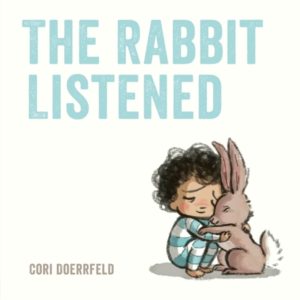
SS: I am one of the rare authors who didn’t read much as a child. I don’t remember ever being read to, either. But I did fall in love with picture books when I had my own children. A book I wished I’d written is The Rabbit Listened by Cori Doerrfeld. It’s so beautiful and perfect in its simplicity, and the message is crystal clear without being didactic. And those illustrations are adorable! To me, this book is like a great song with an earworm hook. It comes back to me over and over again. Another one like that is Guess How Much I Love You by Sam McBratney. That last line is so perfect! Who knows—maybe I have a thing for rabbits…

JPU: In many ways, kids today have it better than I did when I was a kid. Our library was quite a distance away, and we did not have many books. I’m glad to see that Oliver (one of my grandsons) is an avid reader. He may have picked up his soft spot for bunnies from reading books.  There’s much to love about those fuzzy little friends. What is the best advice you can give to a new kidlit writer?

SS: FIND YOUR PEOPLE!!! Do not try to go this alone. The publishing journey is not for the faint of heart. It’s filled with rejection and self-​doubt. It’s slow and painful. Find writers who are at the same stage you are, grow together, learn together, go to conferences together, critique one another’s work, and be there to cheer one another on along the way.

I remember wanting to find an established group that I could join, when I first got started. But honestly, that’s not the way it works. Established groups typically started and grew together, when everyone was a newbie. It sounds counter-​intuitive, but that really is the best way to learn. Find people whose feedback and writing resonates with you and hold onto them for dear life. Then, ride the wave together.

JPU: Okay, Shannon–it’s time for the Speed Round. Here we go! What is your One Little Word for 2025?

SS: Compassion. It has never mattered more.

JPU: 100%! Are you a book buyer or library user?

SS: Both! Yay, libraries!! One of the best ways to support authors is to ask your library to carry their books. It’s free and oh-so-helpful!!

JPU: Sorry! That wasn’t a fair question. How about this choice? Do you prefer to write Picture Books or Young Adult?

SS: Can’t choose between my babies. They are apples and oranges, and I love them both.

JPU: Okay… Are you a “pantser” or a “plotter” when writing picture books?

SS: I used to be a pantser, but I’m more of a plotter now. I have to have a sense of where I’m going or I tend to flounder. That said, it’s not uncommon for my outline to change along the way. In fact, it always does.

JPUChange can bring about golden nuggets. What are you working on now?

SS: I just finished a new picture book last week that I’m super excited about. It’s been spinning in my brain for years, and I finally made the time to just put my butt in a chair and finish writing it. And I LOVE it—it gives me all the feels. I’m also working on characters for my next novel.

As for revisions, I’m working on my next YA novel, The Roach King of Raleigh, which comes out early next year, and revisions of my upcoming picture books, Reinventing the Wheel, Get a Hug, and a couple more that have yet to be announced.

JPU: You get THE call from THE children’s book awards committee, what’s your reaction?

SS: Oh my gosh, this was the BEST call ever!! I actually missed the first call, but when they called the second time, I remember hearing, “Schneider Family Award committee,” and screaming. I asked them if I could gather my family before they said anything else and they all cracked up. I screamed to my whole family, put the phone on speaker, and then asked them to continue. It was chaos in the most wonderful, hysterical way. I sobbed through the whole call, feeling the most immense sense of gratitude and validation. Particularly because it was the Schneider Family Award, and I’m such a passionate advocate for the disability community. Any award would be meaningful, obviously, but this one was a bucket list item, for sure!

JPU: Thank you, Shannon. It was wonderful getting to know you and your new books. All the best to you. See you in the library and on the bookstore shelves!