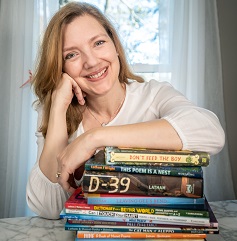
Author Interview: Irene Latham

Irene Latham - Highlights FoundationHere we go with another OPB Author Interview! Today we’re spotlighting Irene Latham, whose well-​wrought picture books keep winning hearts (and awards). I had the joy of editing The Museum on the Moon: The Curious Objects on the Lunar Surface, and I can confirm: Irene’s writing ability shines.

You may know her for Can I Touch Your Hair? (with Charles Waters), the Caldecott Honor book The Cat Man of Aleppo (with Karim Shamsi-​Basha), the kindness-​forward Be a Bridge (with Charles Waters), and her anthologies like The Mistakes That Made Us. Whether she’s writing persona poems, curating other poets’ voices, or sneaking science into verse, Irene’s work invites kids to look closely, feel deeply, and live language out loud.

Let’s learn more about her and her work right now!


RVC: When did you realize you were a poet?
IL: Family legend says I’ve been writing poems since I could wield a crayon—love poems, for my mother. But I am a shy person by nature and didn’t share my work with others or pursue publication until I was in my late twenties.
Writer's Digest Magazine September/October 2024 Cover RevealRVC: What kind of training do you have that supports that writing interest?
IL: I’m self-​taught. Each day I’m learning to be a poet through reading poems, of course, and also consuming craft books, podcasts, and articles. I spend part of each day in nature (we live on a lake), and I have attended many a conference and poetry reading. My first stop once I decided to try and get my work published was to join my state’s poetry society. Also, for decades now, my sister has gifted me a subscription to Writer’s Digest magazine (where I have seen lots of your articles, Ryan!).

RVC: Aw, shucks. Thanks!
IL: Much of my writing education has come from those pages!

Leaving Gee's Bend: A NovelRVC: What’s the story behind the first picture book you wrote and published?
IL: I started in the children’s market as a middle grade novelist with Leaving Gee’s Bend (Penguin, 2010). I still love writing novels, but before anything else, I am a poet. So I started sending picture book poetry collection manuscripts to my agent Rosemary Stimola, and together we worked up a list of editors who might be interested. Several manuscripts got rounds of rejections before I wrote Dear Wandering Wildebeest: And Other Poems from the Water Hole. Carol Hinz at Lerner acquired that book, and it was published with illustrations by Anna Wadham in 2014. Carol and I have worked together many times since then! The book received some starred reviews and awards, which was super encouraging. It, along with a companion title When the Sun Shines on Antarctica: And Other Poems About the Frozen Continent (Lerner, 2016) will be released in paperback in 2026.

RVC: The biggest lesson that experience taught you?
IL: Dear Wandering Wildebeest features poems with nonfiction text boxes. I learned pretty quickly that the text boxes are not simply “extra” information. These two pieces—the poem and the text box—should work in tandem. It’s important to include information in the text box that readers may need to decode the poem, and/​or information that anticipates a question a reader may have after reading the poem. And keep it SHORT.

RVC: This is GREAT advice.
IL: In some ways, the text boxes are like prose poems, leaning heavily on poetic elements of economy and precision of language.

RVC: Love that, thanks. Now let’s jump ahead to the book we worked on together—The Museum on the Moon. When you realized “hey, there’s a whole museum’s worth of artifacts on the Moon,” what clicked first—the book concept or a specific poem?
IL: I was a “space” kid who followed the NASA program, and later my oldest son had a childhood obsession with space travel. We also live near the U.S. Space and Rocket Center in Alabama. So I had been collecting moon facts for many years. One day, when reviewing my file of facts (I keep all sorts of files of potential book ideas that often arise from my general obsessions, and add to them over time.), I noticed quite a few things had been left on the moon. I jumped on the internet and found even MORE things! Given the number and variety of items, the history and science connections, and the innate kid appeal, I thought, hmm, this could be fun…and I started writing!

RVC: Craft nuts-​and-​bolts question here. Museum pairs poems with tight prose sidebars. How did you balance music with accuracy?
IL: It’s important to me that a poem be a poem. There should be a surprising image or word choice, some musicality, and it shouldn’t be just a recitation of clunky facts. There are myriad of other factual space books available to readers, so I felt my job was to really focus, to “explode the moment.” Which meant being ruthless when cutting and paring both the poems and text boxes. (Confession: there’s one poem in the collection that still feels a bit clunky to me, and every time I read it, I wish I’d spent a little more time unleashing its music!)

RVC: Dear blog readers, that last comment is something all book creators feel at one time or another. It’s okay–truly. You do your best and move on to next projects. Trust me on this. Now, let’s dig back into the book. It features a variety of poetry forms. What was the process for determining which poem formats got used in the book, and for which topics?
IL: The “matching” of subject matter to poetry form is an intuitive process. Mostly it just takes time and trust, allowing oneself to sit with it, to experiment, and allow the answer to arise on the page. The opening poem, “Welcome Earthlings!” is a triolet, an 8‑line form which features one line that repeats 3 times, and a second line that repeats 2 times. This repetition felt “right” to me because the moon also repeats, returning each night…and that became the focus of the poem, how even though you may see the moon every night, you don’t know everything about the moon. It has secrets, and now it’s here to share those secrets. It felt like a perfect marriage of form and content.

RVC: Agree! What’s your favorite spread to see illustrated by Myriam Wares, and why that one?
IL: I loved seeing Myriam’s rendering of the closing poem “This Poem is an Outpost.” We don’t know yet what a habitat on the Moon will actually look like, so I was super curious to get a glimpse into Myriam’s imagination. Her moon habitat is so inviting—who wouldn’t want to stay there before cruising out to Mars?

RVC: What’s one object on the Moon that surprised even you once you researched it?
IL: It surprised me to learn that Charles Duke (Apollo 16) left a photograph of his family on the moon. There’s something so tender and human about that—it was his way of making his loved ones part of the experience. Beautiful! (Though the photo is likely faded beyond recognition at this point.)

RVC: If UNESCO-​style protections ever extended to lunar sites, which locations belong at the top of your “heritage” list?
IL: The first footprints, number one. Probably my number two would be the lunar rover that holds the one book on the Moon—a red Bible. Truly, I could argue for them all! Perhaps there really does need to be a museum on the Moon?!

RVC: Let’s talk about collaboration. You and Charles Waters have built a true creative partnership. What’s his writing/​collaborating superpower?
IL: For fun, Charles and I named ourselves the I & C Construction Co.: Building Books One Word at a Time Since 2015.

RVC: HAH. Love it.
IL: We are friends first, and collaborators second, and we’ve been super fortunate to work on a variety of projects. Our current focus is on co-​curating poetry anthologies for children. Charles has multiple superpowers, but one that has really impacted me is how good he is at acknowledging all the others who help make a book. Our presentations always include slides of folks who helped along the way: from childhood teachers, to librarians who aided our research, to editors and book designers…Charles is a great connector, and he makes it his business to really “see” people.

RVC: How does your collaborative process work? And how/​when/​where/​why do the book ideas emerge?
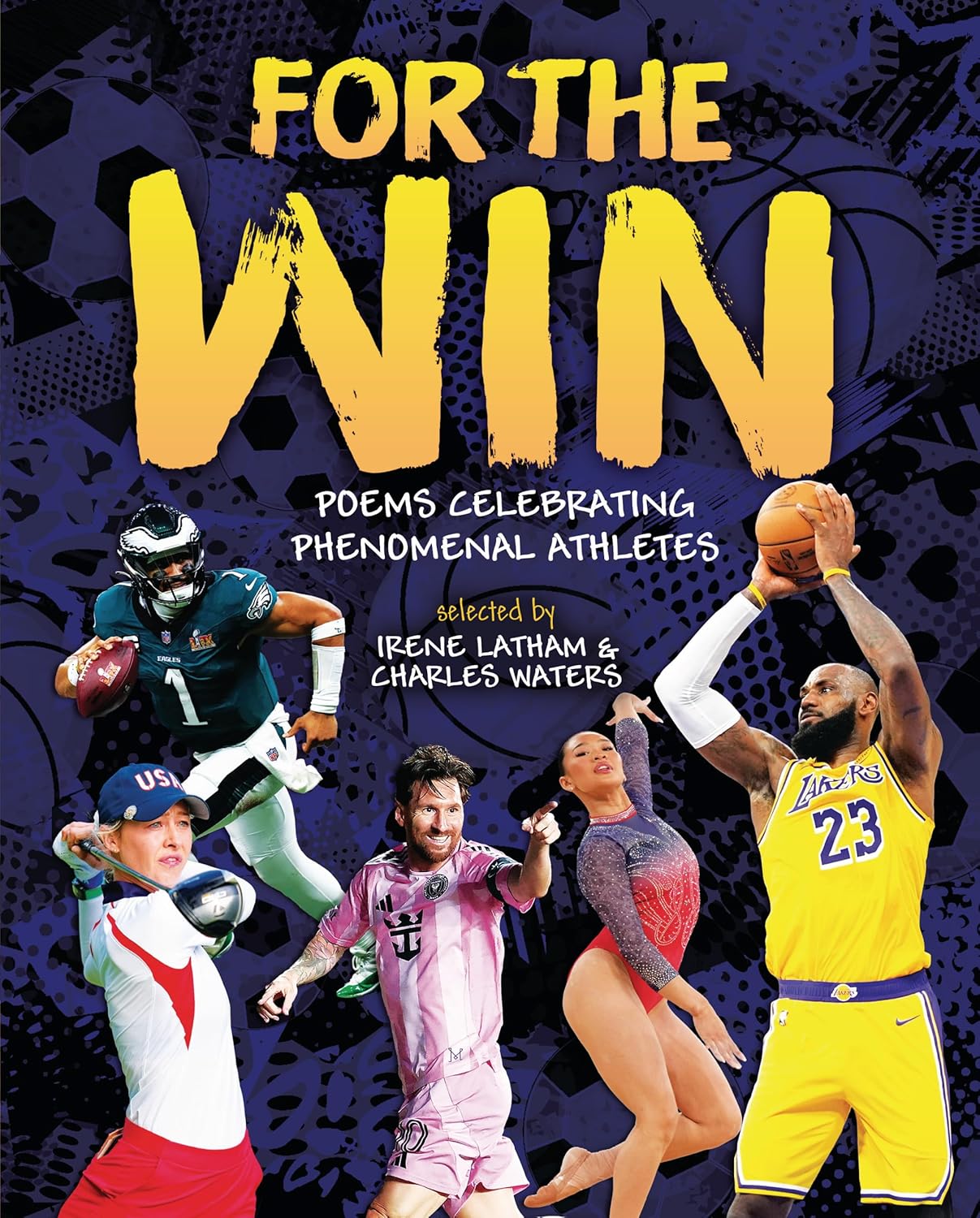
IL: Each project has been different, and our process continues to evolve. I’m mostly the idea person, but our next book, a poetry anthology titled For the Win: Poems Celebrating Phenomenal Athletes (Lerner, March 3,  2026) evolved out of an idea Charles had many years ago to do a sports anthology. I’m not a sports person, but when he came to me the idea, I pondered it for a while and eventually suggested we focus not on biography, but on moments in each athlete’s life, from introduction to the sport, training, setbacks, achievements, and also what happens after the great achievement. Such inspiring subject matter, whether one likes sports or not!

RVC: IT sounds terrific.
IL: In terms of our day-​to-​day work together, we currently love Google Docs, because we can both be working inside a document simultaneously. Sometimes we have these marathon phone calls where we’re talking through things and also making corrections in the document. Other times we work independently, and take turns responding or adding material. Some things we address through texting. We divvy tasks as best we can, allowing each of us to do the things we want to do, are best at, or feel called to do. I trust Charles, and he trusts me. Somehow it all works out!

RVC: In Be a Bridge, you distilled big, bridge-​building ideas for very young readers. What did “every word counts” look like in revision?
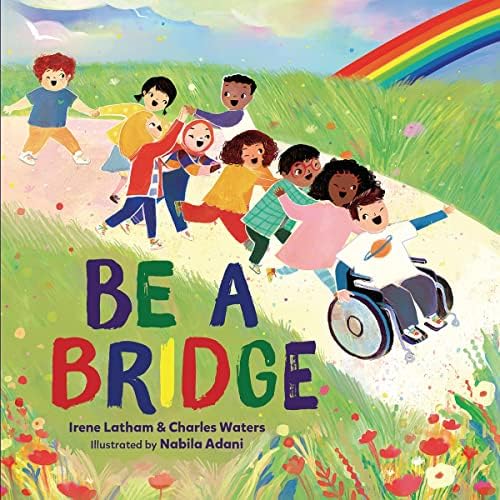
IL: Be a Bridge was a tough one! It emerged out of our efforts to bring the subject matter of Can I Touch Your Hair? Poems of Race, Mistakes, and Friendship to a younger audience. Carol Hinz rejected several of our manuscripts before we finally got to Bridge, so we’d already been revising and revising…There’s a didacticism inherent in the premise—I mean, the title itself is instructive!—and we wanted to “soften” that, but we were also hemmed in by these rhyming couplets. Taking out a single word seemed to unravel the whole thing! And then, after the book was illustrated, a sensitivity reader found some issues that needed further revising. It’s all a bit of a blur in my memory, but what makes it all worthwhile is hearing from educators and families how meaningful the book has been to them. A LOT of work goes into a picture book, that’s for sure!

RVC: The Mistakes That Made Us anthology invited poets to get autobiographical. What editorial promise did you and Charles make to contributors to help them go brave?
IL: We asked each poet to share a mistake from their own lives, write a poem about it, and then craft a nonfiction text box sharing how the mistake impacted their lives—what did they learn from it? Charles and I shared our own responses to the prompt, and we leaned into what impact this kind of vulnerability may have on our child readers. Our goal was to inspire and normalize mistake-​making. It’s just part of life! Not surprisingly given the generosity of poets, our contributors really came through, from Allan Wolf sharing how embarrassing it was to score a soccer goal for the wrong team to Naomi Shihab Nye sharing an incident from First Grade involving a fellow student taking too long at the pencil sharpener, a pencil, and bloodshed! As editors, our job was to stay out of the way of this truth-​telling as much as possible, stepping in only to help clarify or to eliminate unnecessary distractions on the page.

RVC: Speaking of collaborations, how do you handle art notes?
IL: I use them as sparingly as possible. One of my most favorite things about creating picture books is seeing what magic the illustrator conjures, so I want to give a wide berth! However, I have worked on a few historical books, both fiction and nonfiction, and it’s my responsibility to provide art notes, which can be links to historic photos or general research—anything that will help ensure our book will reflect the story’s time, place, people, and culture accurately.

RVC: This Poem Is a Nest is such a fine idea—turning one long poem into a ton of “nestlings.” What moment told you this wasn’t just a poem experiment but a full book?
IL: Of all my books, This Poem Is a Nest is probably the most joyful creative experience I’ve had. I was fortunate to work with Rebecca Davis (WordSong), and she acquired it when I’d only written about 30 nestlings. She believe in the book and invited me to have fun with it, so I did! Neither of us could have anticipated I would have had 161 poems worth of fun. As a creator, I’m so grateful to have been given this kind of freedom.

RVC: What’s one simple way families or classrooms can try their own found poems at home?
IL: You can find poems in the mail that arrives in your mailbox! Or on your bookshelf or magazine rack. Or you can download a pack of free poems from my website designed for just this purpose:

RVC: Let’s talk persona poems. What’s your checklist for writing ethically and vividly in another voice—especially for picture-​book readers?
IL: Do your research, of course. And not just about the person/​animal/​object, but also about the place and time where/​when the person/​animal lives or lived. Imagination is the building block of empathy, so really, all persona work is an exercise in empathy. To make these (or any type poem) more vivid, aim to include not only the sense of sight, but other senses as well. I have a new poetry collection coming from Astra/​WordSong in 2026 called Come In! Come In! Wordspinners to Welcome You Home, and the very last revision pass I did was for the sense of smell. At last gasp, I realized smell was underrepresented in the collection, so I made it my aim to bring in some more scents.

RVC: I’ve read that you’re a cellist. Has learning an instrument changed your line breaks or sound play on the page?
IL: That’s a great question. Playing the cello influences my writing in myriad ways! A musical phrase is not unlike a poetic one, and just as silence is a placeholder for emotion in music, white space serves the same purpose in poetry. More importantly, I’ve learned to appreciate the process of music-​making or poetry-​making, to focus on creating a connection with my audience rather than impressing anyone. Music, and poetry, is a place for me to just be me.

RVC: What can you tell us about the importance of community in a writer’s life?
IL: Truly this is a business of relationships. I love surrounding myself with book/​poetry people, people who share the impulse to use language and stories to attempt to discover the world and share ourselves on the page. I’ve learned community isn’t about numbers—so you can stop obsessing about growing your list of followers on social media! Community is about walking this world with kindness and openness and surrounding yourself with people who support what you’re doing, lift you up, and listen to your dreams and disappointments. This can be as simple as one other person, or two. The most important thing is to be authentic, and to be the kind of person who invites others to be authentic, too.

RVC: What’s one museum (on Earth!) you’d love to partner with for a poetry program, and what you do there?
IL: Ooh, I can’t think of a museum I wouldn’t want to partner with! I love museums—the big, flashy ones and the labor-​of-​love, local ones. Art, history, science…every trip I take includes a visit to one or more of these type of museums.

Also, since 2015, I’ve created a public art project on my blog called ArtSpeak!, in which I post an ekphrastic poem (poem inspired by art) to my blog. I love and have written on such a wide variety of art—you can find hundreds of these free poems on my website, and I am still just as in love with the project as I was ten years ago. Once, long ago, I did partner with Birmingham artist Liz Reed, and we mounted two “Poetry & Paint” shows in which she created art after I wrote, and I wrote poems after she painted. I’d love to do that again.

RVC: Last question for this part of the interview. What’s next in your picture-​book/​poetry world that you can tease?
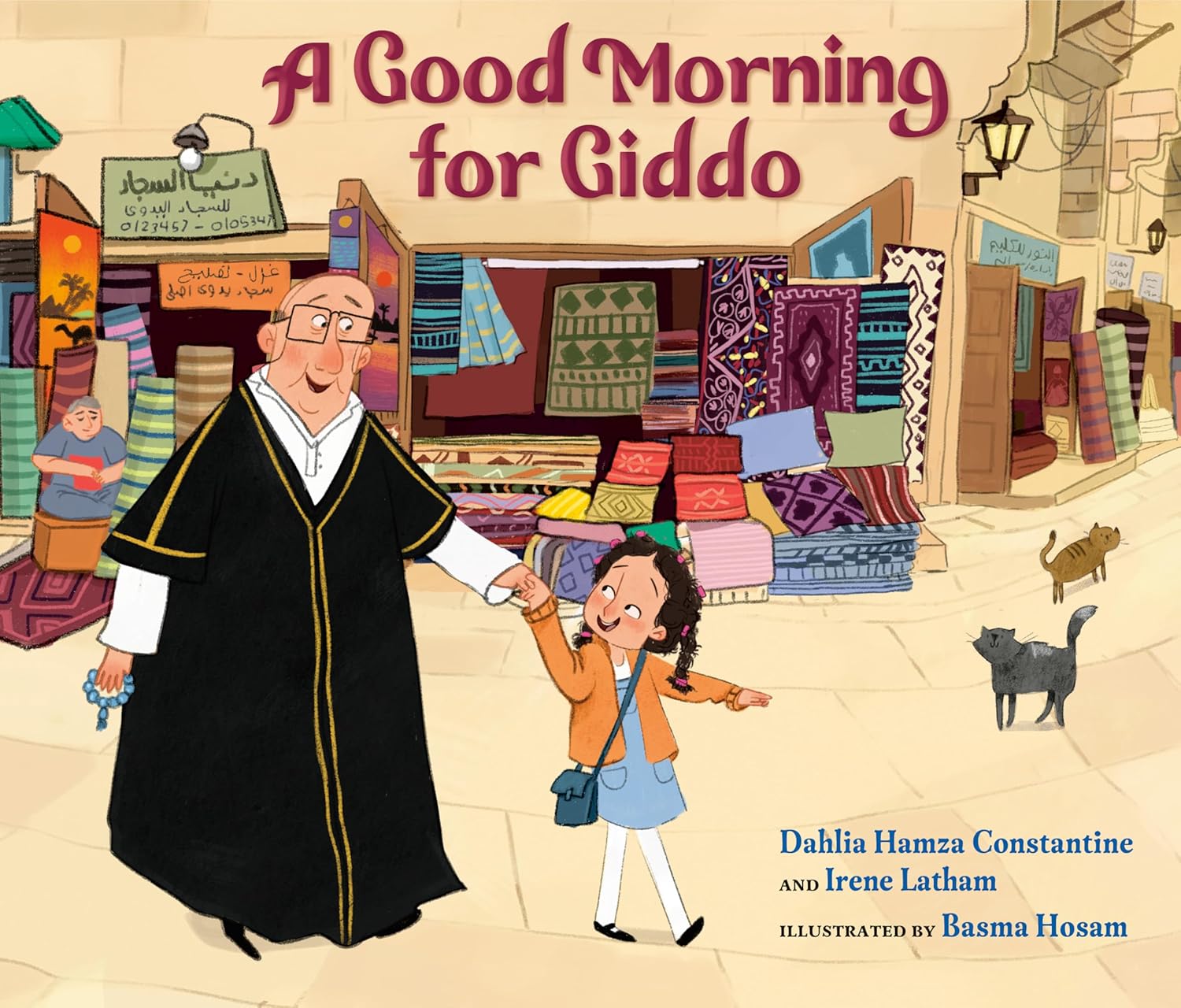
IL: I have three picture books releasing in 2026, and two of them are poetry. the (third) poetry anthology I’ve co-​curated with Charles Waters, For the Win: Poems Celebrating Phenomenal Athlete (Lerner); a narrative picture book titled A Good Morning for Giddo (Penguin Random House), I wrote with my friend Dahlia Hamza Constantine, featuring a little girl and her giddo (grandfather) exploring Egyptian arts and culture at the Cairo market; and a solo collection of 66 poems called Come In! Come In! Wordspinners to Welcome You Home (Astra Publishing). Imagine a Richard Scarry book, but instead of just words, readers get short poems.

RVC: Okay, Irene. It’s time for the SPEED ROUND! Quick questions and fast answers please. Ready?
IL: Let’s go!

RVC: If you could only have one app on your phone…
IL: Music tuning app.

RVC: Pick one: personal chef, house cleaner, or masseuse?
IL: Personal chef.

RVC: What outdated slang do you use the most?
IL: Is “Awesome” considered outdated? I say that and “Excellent” fairly often. As a Southerner, I also enjoy words like “yonder,” “reckon and “piddle, ” and I use “y’all” and “fixin’ to” pretty regularly—but those words feel timeless to me!

RVC: First line that pops into your head when someone says “write a moon haiku—go!”
IL: The moon makes music

RVC: A poet every picture-​book writer should read.
IL: Valerie Worth.

RVC: One word you want kids to feel after reading your picture books.
IL: Loved.

RVC: Thanks so much, Irene!

Author Interview: Keyshawn Johnson & Bettina Bush

Each year, I work as a ghostwriter on a few celebrity kidlit projects. No oneKeyshawn Johnson Wants the N.F.L. to Remember Its ‘Forgotten Four ... knows which ones, of course. That’s the “ghost” part of the equation.

Every so often, I get to collaborate instead of ghost, which means I can actually talk about the process. Today’s post is about one of those rare projects: a picture book I co-​created with Super Bowl champion and sports commentator Keyshawn Johnson and voice actress and singer Bettina Bush.

Once Upon a You—Keyshawn’s first picture book—shows kids everywhere that they’re the authors of their own destinies. Let’s hear more from Keyshawn and Bettina about the book, their creative process, and their friendship.Bettina Bush | Host, Speaker, Voice Artist & Advocate for Multiculturalism


RVC: So, the two of you are a creative powerhouse. How did your relationship first begin?

BB: That’s a funny story actually! [Laughs] About 15 years ago.…

KJ: Bettina and I go way back. We’re neighbors and she was walking down the street with her baby daughter. I came out the front door and Cassie pointed at me and said, “Daddy!” [Laughs]

Bettina was like “You look nothing like my husband but she must be thinking of my dad!” It was an immediate friendship. Bettina and my wife Jen are very tight and our kids and families have always been close.

RVC: When did you first realize you might want to create something together?

BB: It sort of evolved naturally. We’d talk about our kids, about legacy, and about how powerful stories can be in shaping who we become. One day we realized—wait, this is the story we should be telling.

KJ: Bettina’s got this incredible creative energy, so when she said let’s start with a children’s book and see where we want to go from there, I said, “Okay, I trust you.  Let’s go!”

RVC: Hah. Love it.

KJ: And I’ll definitely say we’re just getting started.

RVC: What drew you both to picture books—and this idea in particular?

BB: I’ve always believed stories are the bridge between imagination and identity. Picture books are where that starts. You see yourself reflected in these beautiful images and words, and it shapes the way you dream.

RVC: Absolutely!

KJ: Picture books are special. They’re one of the first places where a kid starts to dream big. I’ve read to my kids plenty of nights, and I know the kind of magic that happens when a story really lands. This idea—Once Upon a You—was about showing kids that their story matters, that they have control over their own path. That spoke to both of us.

RVC: The title Once Upon a You sounds like an invitation. How did that phrase come about?

KJ: We wanted something that felt classic, like a fairy tale—but flipped. “Once upon a time” is what we all know, but this is your story. You’re you. When Bettina said “Once Upon a You,” I was like, “That’s it right there.” It’s simple, but powerful.

RVC: Keyshawn, what surprised you most about the world of children’s publishing once you jumped in?

KJ: How collaborative it is. I mean, I’ve been part of teams my whole life, but this is a different kind of teamwork. There are editors, illustrators, designers—all focused on every detail to make sure it connects. And I’ll be real, I didn’t know how much time and heart goes into one 32-​page book. It’s a grind, but a rewarding one.

RVC: Bettina, as someone who’s worked in voice and music, how did your storytelling instincts translate into this medium?

BB: It’s actually very natural. Music, voice acting, writing—they all come from rhythm and emotion. With picture books, you’re writing a kind of song. Every line has a cadence, every page turn is a beat. You have to feel the flow of it. My background in performing helps me hear the story in my head—the tone, the warmth, the rise and fall. It’s all about creating an emotional melody through words.

RVC: What did collaboration look like day-​to-​day? Were you trading drafts, voice notes, Zoom calls, or late-​night texts?

KJ: All of the above! [Laughs]

We’d text ideas at random hours, hop on calls, send each other notes—it was constant communication. We both have busy lives, but when something feels right creatively, you find the time. It was like running a two-​minute drill, but for storytelling.

BB: The energy was always flowing. What made it special was that there was such mutual respect—we trust each other’s instincts, and that made the process really joyful.

RVC: How did seeing the illustrations for the first time change how you felt about the story?

BB: That was honestly magical. When we saw the art come to life, I teared up. You have this vision in your mind, and then suddenly there it is, breathing and full of color and emotion. The illustrator captured the heart of the story perfectly—it was like watching your imagination step off the page and smile back at you.

KJ: Oh man, that was emotional. The first time I saw the art, it hit me how real it all was. You write these words, you talk about concepts, but when an illustrator brings that to life—it’s like seeing your vision walk off the page. It gave me chills.

RVC: The book’s message—“you’re the author of your own destiny”—feels both empowering and personal. Why was that message important to you?

BB: Because it’s true for every single one of us. I’ve lived many creative lives—music, acting, producing—and through all of it, I’ve learned that no one writes your story but you. I want every child to feel that sense of agency and possibility. That message is something I live by, and it’s something I want to gift to my own kids and to every reader.

RVC: Love it. How about for you, Key? 

KJ: Because that’s my life, straight up. I wasn’t handed anything. I had to work, stay focused, believe in myself even when others didn’t. That’s what I want kids to understand—it doesn’t matter where you start, you have the power to shape your story. That’s the message I wish someone had told me when I was young.

RVC: Was there a line or image in the book that hit you emotionally once it was on the page?

BB: There’s a moment that talks about “the light that lives inside you.” That one really got me. It’s such a simple line, but it holds so much truth. We all have that light—it just needs to be seen, nurtured, and believed in. Seeing that line surrounded by such beautiful illustrations—it gave me goosebumps.

KJ: The part where it talks about “the moments that make you you.” That hit me hard. It reminded me of my kids, my journey, all the things that shaped me along the way. It’s not just about success—it’s about identity, and being proud of who you are.

RVC: What do you hope kids (and parents) take away after reading Once Upon a You together?

BB: I hope they take away a sense of wonder and ownership over their stories. For kids, that they can dream big and define who they are. For parents, I hope it opens up conversations about self-​belief and creativity—and maybe even helps them see themselves through their children’s eyes again.

KJ: For kids, I want them to know they’re capable of amazing things and to ignore anyone who tells them otherwise. For parents, I hope it sparks conversations—about dreams, resilience, and love. Reading together can be such a grounding moment.

RVC: Since COVID, I often ask a health and wellness question in OPB interviews. With both of you being so busy with work and family, I’m really curious—what do you do to destress? 

BB: Music is my therapy. I’ll sing, write, or just put on a playlist and let myself breathe. And honestly, being outside helps—whether walking my dog, going to the beach, or just sitting in the sun. I also try to unplug and be present with my family.

KJ: For me, it’s simple—working out, getting outside, spending time with my family. I need that balance. I’ll hit the gym, then come home and just watch a game with my kids. That’s the reset button right there.

RVC: So, every author interview at OPB has two parts: the main interview, and then the SPEED ROUND. And it’s time to get zippy. Are you both ready for quick questions and fast answers?

BB: Yep!

KJ: Let’s do it!

RVC: What’s one thing fans would be surprised to learn about you?

BB: I climbed Mt. Kilimanjaro when my kids were little!

KJ: I can’t swim.

RVC: What snack fuels your creativity?

BB: French fries with ranch.

KJ: Chips and really good salsa.

RVC: You can invite any three people—real or fictional—to storytime. Who’s on the rug?

BB: My dad and my two kids. I’d give anything to watch them together at this age.  I’m 100% certain they’d blow each other’s minds in the best ways.

KJ: Three kids who don’t have books.

RVC: If Once Upon a You had a mascot, what would it be?

BB: A butterfly. Magical growth and beauty.

KJ: Probably a lion. Courage and heart—the stuff we want kids to feel when they read the book.

RVC: A picture book you loved as a kid that still sticks with you?

BB: Where the Wild Things Are. It’s about imagination, courage, and coming home to yourself. That story never leaves you—it grows with you.

KJ: The Giving Tree. That one’s timeless. Simple message, deep meaning. I’ve read it to my kids too, and it still hits the same.

RVC: What’s one word that captures Once Upon a You?

BB: Becoming. Because it’s all about the journey of who you are, who you’ve been, and who you’re meant to be.

KJ: Empowerment. That’s it. It’s about owning your story—no matter where it starts or where it goes.

RVC: That was terrific—thank you both for sharing the behind-​the-​scenes magic!

Author Interview: Joan Schoettler

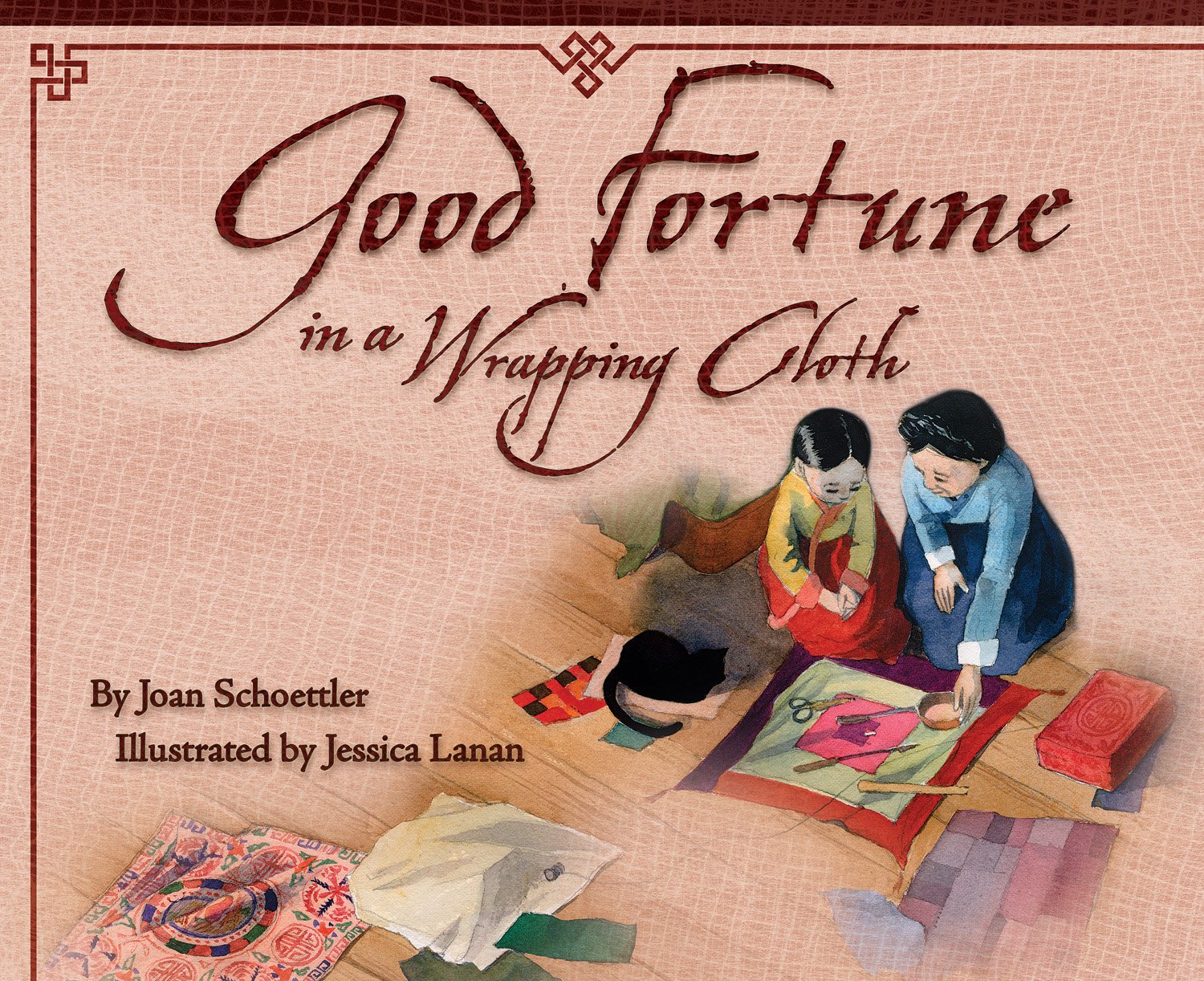
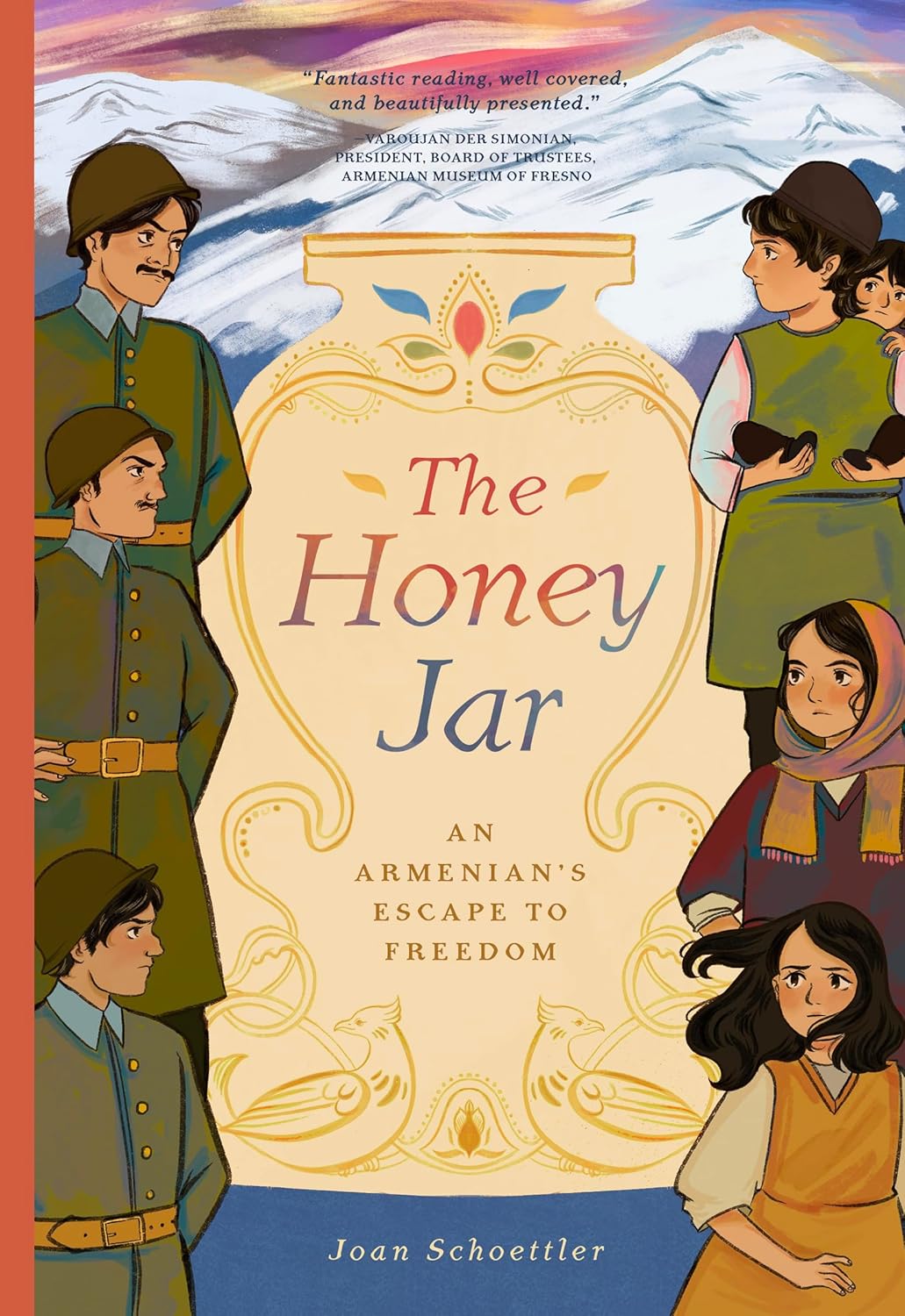
This month, we’re featuring Joan Schoettler, author of Books Travel the World, which I had the pleasure of editing for Bushel & Peck Books. Joan’s writing carries a quiet beauty and a deep sense of care for story and history. Her verse novel The Honey Jar: An Armenian’s Escape to Freedom won the California Book Award Gold Medal for Juvenile Literature, and her picture book Good Fortune in a Wrapping Cloth received the APALA Award.

A longtime educator and literacy advocate, Joan blends research, heart, and lyricism in ways that stay with readers. She lives in central California, where she enjoys reading, gardening, and traveling with her family.

Let’s dive into this interview and learn more about Joan right now!


RVC: Joan, you’ve worn many hats over the years—professor, poet, and kidlit author. What drew you to children’s books in the first place? 

JS: Thank you for the opportunity to talk with you about writing today. Your editorial notes and comments for Books Travel the World definitely brought insights that tightened and enriched my story. Much appreciated.

RVC: Happy to help!

JS: I struggled with reading until about the third grade, and I remember my parents worrying about me learning to read. My mother took advantage of having a library walking distance from our home and took us often. I liked going there, especially when I could read the books.

My 5th grade teacher turned the coat closet at the back of the room into a classroom library where books invited us to explore fiction, non-​fiction, and poetry. Characters in books felt like friends. Reading became a constant in my life. To this day, my friends and I continue to talk about and share books.

RVC: You earned a BS in Social Science at San José State University. What was the plan with that degree?

JS: Finding my purpose has been and continues to be part of my life journey. When I reflect on your questions, I step back into my childhood home where my mom’s friend shared her copies of National Geographic magazine. My interest in cultures around the world stemmed from looking at unique photographs and reading stories of people and societies from around the world. My curiosity in social studies took hold in school where various cultures were explored. My favorite part of the school day began with maps and photographs and stories of people who lived in faraway lands. As time went on, studying and learning about different cultures and sharing them with others, felt right, so I focused my education on social studies and teaching.

I began teaching in elementary school but soon decided to focus on one subject instead of teaching across the curriculum. Children’s literature? Art? Social Science? My desire to deepen my understanding of how reading persuades, informs, and entertains led me to study children’s literature, but my curiosity and regard for art and discovering communities and how they interact over time remained strong. Becoming a writer never crossed my mind.

RVC: Yet at some point, you realized that you wanted to write and publish books for children.

JS: After many years of studying, teaching, and immersing myself in children’s literature, three different episodes came together and nudged me forward. At lunch with a famous children’s author, I asked her where all her stories came from.

Why, inside.” Then she pointed her finger to me and said, “They’re inside you, too, Joan. You just have to let them out.” I didn’t believe her, but a seed was planted.

Around the same time a child asked me if I ever wrote stories and why I always made them write and share their stories but if I didn’t write any stories myself. I paused again. His question challenged me. A short time later, I read an obituary about a well-​known storyteller who had taught me and whom I greatly admired. I sat down that morning and putting pen to paper, I wrote my first story. It was about a storyteller.

RVC: How did that growing interest in writing connect with your interest in education?

JS: While many authors have known they wanted to become a writer, my desire to write came after a long career in children’s literature. My love of children’s books, sharing them with young readers in my early teaching career, delving into the world of children’s literature as I pursued a Master’s Degree in Literacy, and teaching children’s literature, storytelling, and reading and writing at the university, took hold.

With young readers and university students we examined children’s books; interweaving the main components of writing, exploring the art of storytelling, and focusing on the powerful visual impact illustrators use to bring stories to life. We read poetry and investigated nonfiction. We studied authors, their books, and their lives. We compared different versions of biographies of the same person and various adaptations of fairy tales. We studied memorable, engaging characters, universal themes, creative setting, captivating plots, and the main components of illustrations in children’s books. The years of reading and delving into books set the groundwork for writing.

RVC: When/​why did you make the full commitment to writing books for kids? 

JS: When I finally took pen to paper, my writing journey began. I joined a children’s writing critique group, and their support, encouragement, and creativity invited me to follow a writing path. Many drafts, many rejections, and many years passed before my first publication. But as I reflect on the years I read to and with children, all the ways we studied literature together, and all the interactions with teachers and librarians along the way, I realized how my life experiences prepared and guided me to begin writing. I’m honored to share my children’s books with young readers, parents, teachers, and librarians.

RVC: Let’s talk about your first published picture book. What’s the story behind that story?

JS: Visiting museums ties into my curiosity of cultures. The Asian Art Museum in San Francisco displayed an exhibit on Korean bojagi. I’d never seen Korean wrapping cloths before, and they captured my imagination. Chungie Lee, a well-​known Korean fiber artist, had created a large bojagi with stencils of Korean women who were bojagi artists from the 1800s. I wanted to know the story behind these women. Who were they? What invited them to create works of art passed on for centuries? What drove them to meticulously sew stitch after stitch to create works of art from scraps of fabrics?

I learned the women offered good luck, good fortune, and good health with each stitch, and that knowledge and art led to my first children’s picture book, Good Fortune in a Wrapping Cloth.

RVC: What’s the best lesson that book taught you?

JS: Writing is more than just the story. Gifts abound in unexpected places. Research opens doors to knowledge, art, and community. The outreach of curators at Asian museums offered insights in history and opportunities to learn about the Korean culture far beyond my inquiry regarding bojagi. Invitations to speak and sign my book at museums, in private homes, and at Korean schools and community centers enriched my learning and experiences beyond what I imagined.

RVC: The Honey Jar takes place in the Middle East, while Good Fortune in a Wrapping Cloth focuses on Korean culture. What does your research process look like when writing cross-​cultural stories?

JS: My research begins like broad strokes across a blank sheet of paper. Questions abound. Family life. Homes. Food. Rituals. Education. Clothing. Jobs. Responsibilities. Children’s play. One leads to another. Large questions break off into smaller ones. I believe what is written on the final pages of my books is a fraction of the knowledge I’ve gained in learning about a culture. Books about art and history, primary sources and interviews, and deep research is imperative. Stacks of picture books fill my arms as I depart from the library.

Cross-​cultural research examines people and their behaviors from one culture to another. Through in-​depth research the knowledge of different cultures–their customs, their foods, their homes–begin to create a framework for the story. Diversity of cultures found throughout the world demonstrate a richness in people values and beliefs, rituals, interactions, and language. This diversity must be honored and shared. But the belief in the family unit, the power of loss and love, and working through conflict to find your identity are universal themes.

RVC: Speaking of stories about more than one culture…let’s leap over to your new one—Books Travel the World. Where did that idea come from?

JS: Do you remember earlier I mentioned my initial interest in cultures through National Geographic magazines? That carried through in what I studied in college. It is woven through my life. When I reflect on the stories I have written and stories I hope to write, my interests cross many cultures. Tie that into my dedication of a lifetime of working in children’s literature and my belief in getting books into the hands of children whether locally, nationally, or internationally, Books Travel the World seems like a culmination of what I believe in. I want to honor all of the people throughout the world who remain dedicated to their belief in the importance of reading and that reading will make a difference in the world.

RVC: What was the biggest challenge with writing that book? Was it the research rabbit hole or something else?

JS: Learning about all the dedicated people who believe in the importance of literacy inspired me so the research was delightful and heartwarming. Writing a text for young readers became my challenge. The teacher in me wanted to make sure the readers saw all the creative possibilities literature offers after the reading. The sharing of stories, the art, the drama, the creativity, and the inspiration for the reader found in books was important to share with the reader too. While I wove these components organically into the text, I also included information in the back matter of ways to extend the literary experience with the reader.

RVC: Now that the book is done and out, I can ask this question. What are you happiest about?

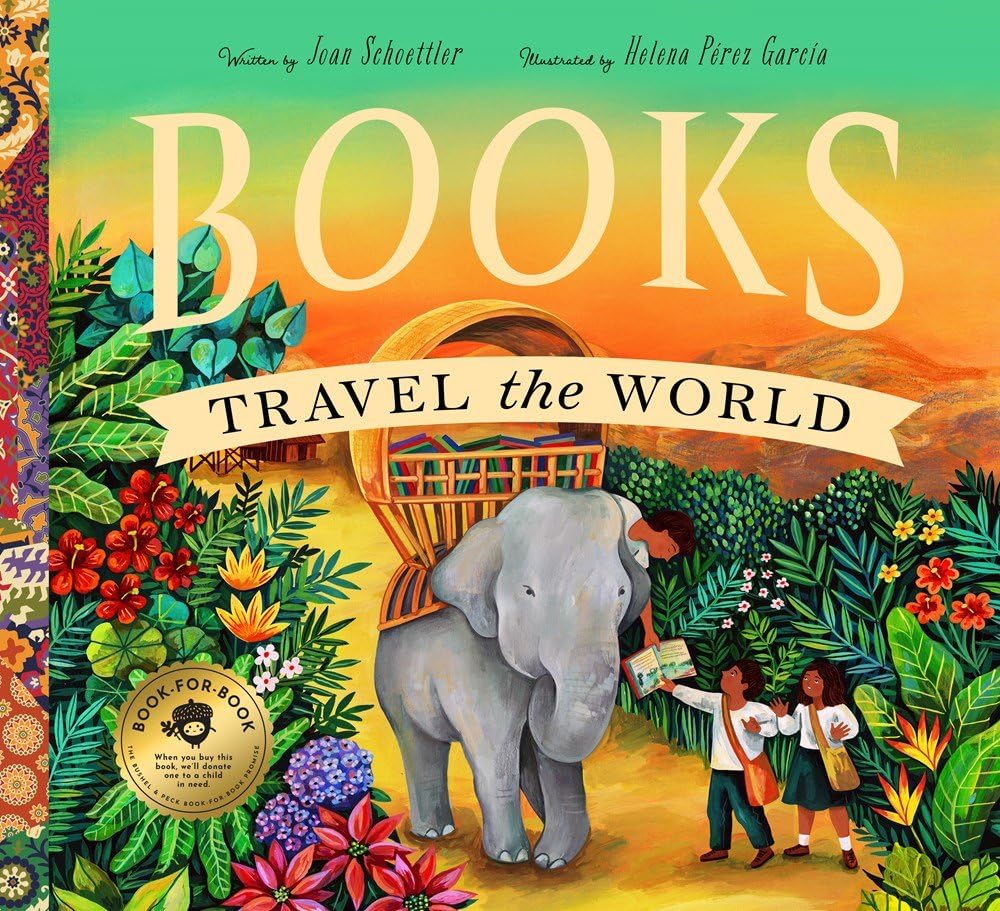
JS: Two elements come to mind. Helena Pérez-Garcia’s vibrant and eye-​catching illustrations bring the story to life! In reading the story to children, their chiming in on the refrain, “One more story please!” warms my heart. I hope all parents, teachers, and librarians listen to that request and read “one more story.”

RVC: What are some of the fun things you’ve done to promote that book?

JS: Enjoying signing at bookstores, meeting librarians at ALA and sharing my book with them, inviting children to write postcards to the librarians in the book, and participating in district librarian meetings where the outreach goes directly to the librarians of schools are some of the important components of promotion for Books Travel the World. With other books, I’ve presented and signed at museums, schools, festivals, and book clubs.

RVC: What’s the most important thing people should know or understand about librarians?

JS: Librarians are essential to providing access to books, information, and research. Librarians work in libraries, hospitals, law firms, medical research labs, and universities. School librarians empower students to embrace curiosity and learn independently through their knowledge of books and technology. “Students with access to well-​resources libraries with certified librarians consistently perform better academically.” (Center for American Progress. April 18, 2024)

RVC: Let’s talk about process. What’s your writing process like these days? Has it changed over the years?

JS: In some ways, I find the writing process overflowing beyond the time sitting in the chair at my desk. Spending time at museums, plays, movies, concerts, and, of course, in nature inspire me. The creative self needs to be nurtured. Daydreaming opens new pathways in a story. Journaling allows me to listen closely to characters, to embellish settings, and to learn more about myself. I write picture books and middle grade novels, so I always have stacks books to nudge me on my writing journey. I usually have three projects at different stages in place. Incubating new ideas, writing the early drafts, and editing others fill my days. After walking or yoga, I keep my mornings for writing and often return to it again in the afternoon. My critique group has been meeting weekly for twenty years. Their insights, support, and encouragement are ongoing and essential to my work.

RVC: What’s a topic you haven’t written about yet but would love to explore in a future book?

JS: I’m going to keep you in suspense regarding this question. I keep my future projects close but will let you know when something new is coming.

RVC: In all of your experience as a kidlit author, what has most surprised you?

JS: First, I’m surprised how story ideas come to me: at museums, in gardens, in conversations, and obituaries. My writing is enriched by learning from research and experts. Amazing opportunities open up like private museum tours, meeting family members of people I’m researching, and invitations to weekend-​long workshops.

RVC: Since COVID, I try to ask at least one health and wellness question in every interview. Here’s yours. What’s your favorite thing to do to de-​stress or defeat negativity?

JS: After indulging in chocolate, my stress relievers are going for a walk, riding my bike, or spending time in the garden listening to birds, watching squirrels, and enjoying the beauty of nature. Sometimes a nap works too!

RVC: Last question for this part of the interview. What’s next for you? Are there any upcoming books or projects you’re excited to share?

JS: I’m pleased to share A Doctor at Heart: The Groundbreaking Story of Scientist and Educator Vivien Thomas, my upcoming picture book, with you (Beach Lane Books: May 12, 2026). A few other stories are making the submission rounds. A new story has been begging for my undivided attention. I’m excited to delve into another culture to share a universal story of family, dreams, and creativity.

RVC: Alrighty, Joan. It’s time for the SPEED ROUND. Short and sweet questions followed by zippy-​skippy answers. Are you ready?

JS: Yes!

RVC: What’s your go-​to snack when you’re deep in writing mode?

JS: Chocolate.

RVC: What’s your secret talent? 

JS: Planting sweet peas for 50 years.

RVC: If Books Travel the World were made into a documentary, who should narrate it?

JS: Jim Molesky.

RVC: What’s one thing every nonfiction writer should keep in their toolkit?

JS: Notebooks.

RVC: What’s a great nonfiction picture book published in 2025 that isn’t getting its due?

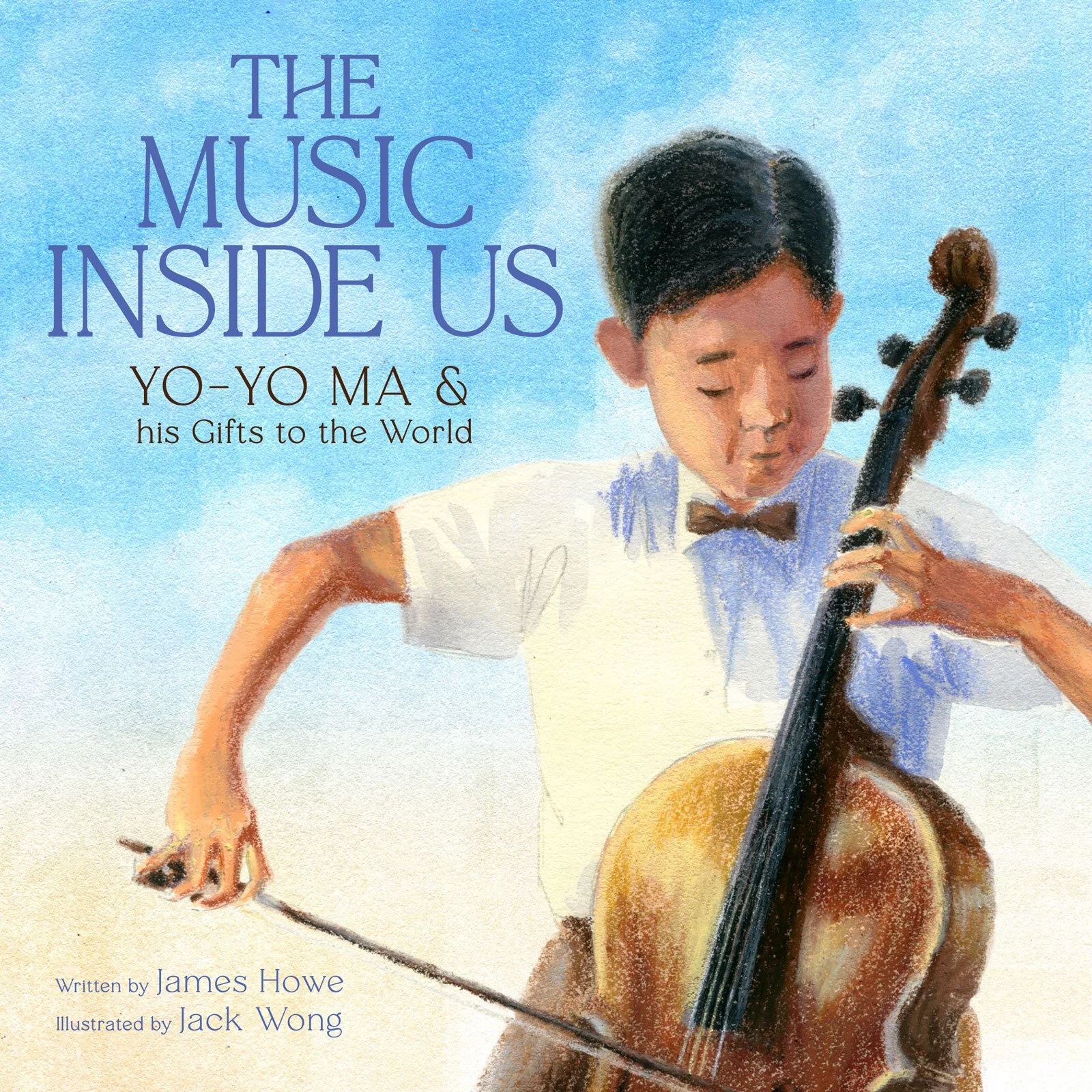
JS: The Music Inside Us: Yo-​Yo Ma and His Gifts to the World

RVC: What’s one word you hope people use to describe your books?

JS: Engaging.

RVC: Thanks so much, Joan!

Author Interview: Susan Hughes

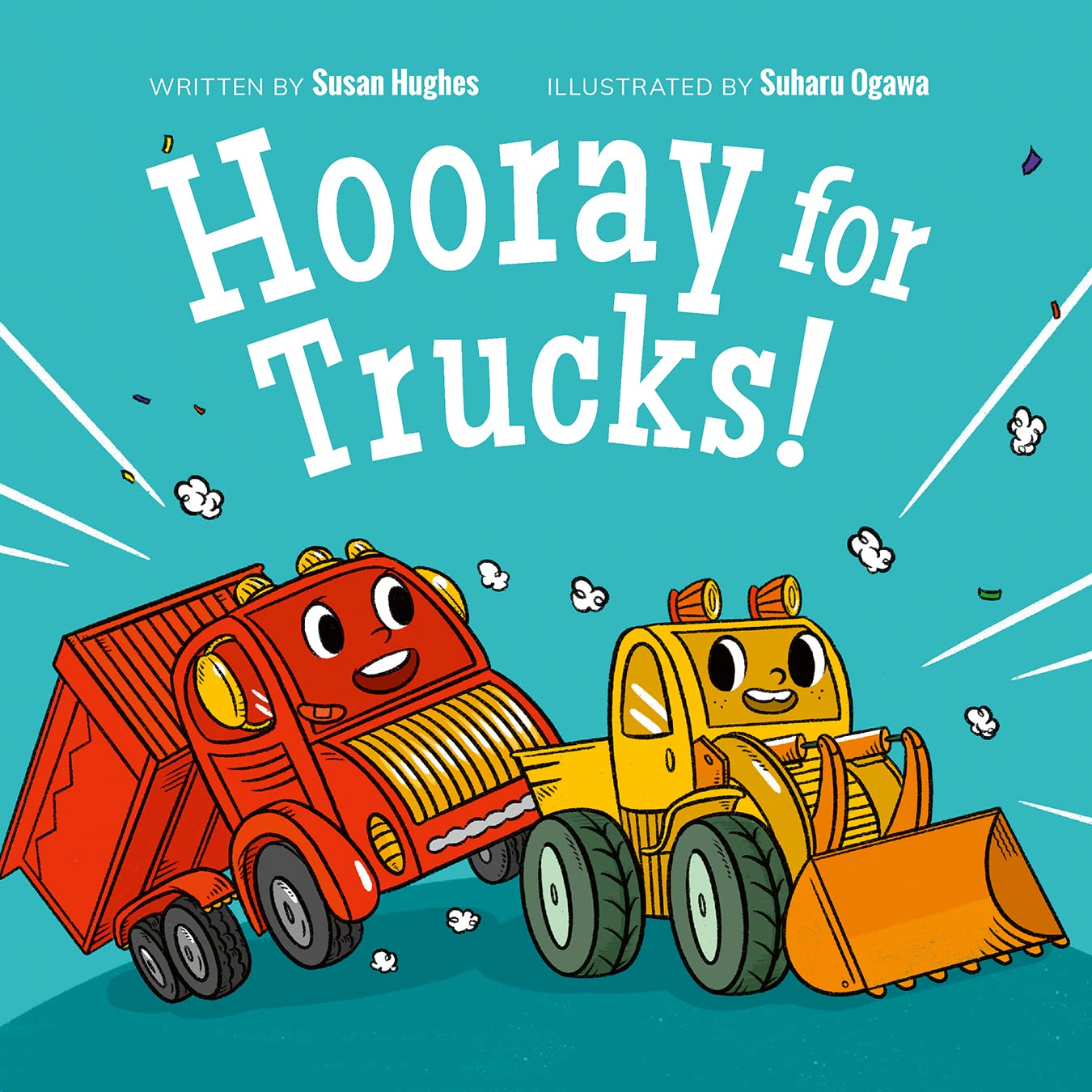
This month on the OPB Author Interview Series, we’re delighted to feature Susan Hughes—an award-​winning Canadian author and freelance editor with more than 30 books to her name. Susan’s picture books range from joyful read-​alouds like Hooray for Trucks to powerful nonfiction like Walking in the City with Jane and Walking for Water. Her books have been honored with the Norma Fleck Award for Canadian Children’s Non-​Fiction and numerous other accolades.

In addition to her writing, Susan is a sought-​after editor and story coach who has helped countless writers strengthen their craft. A lifelong lover of books, Susan now lives and works in Toronto, in a tall house with a red door, where she continues to balance her own creative projects with guiding others toward theirs.

Let’s jump into the conversation!


RVC: Susan, you’ve written everything from nonfiction to fiction, chapter books to YA—but picture books seem to be at the heart of your work. What keeps you coming back to them?

SH: There is something so marvelous about writing and rewriting a story with a limited number of words (or even none !), then feeling that “click” that means it’s good, it’s come alive; and then releasing it into the world with the hope that what might come next is a publisher who loves it and acquires it; an experienced editor who makes just-​right suggestions to further shape it and improve it; an illustrator with imagination and talent whose visuals elevate the story even more in ways both expected and surprising, and so on. It’s fantastic!

RVC: I quite agree! Now, you’ve said your love of writing goes back to your childhood writing club. How did those early experiences shape the way you approach writing now?

SH: When I was in grades 7 and 8, my two best friends and I loved to write stories and poems, so we’d meet every few weeks or so to share our work. It was important to find at least one or two things we liked in one another’s writing, but we also agreed to be honest about any problems and challenges we saw. I recall how wonderful it was to get feedback, and to this day, one of my biggest joys is receiving an editor’s notes on a manuscript heading for publication.

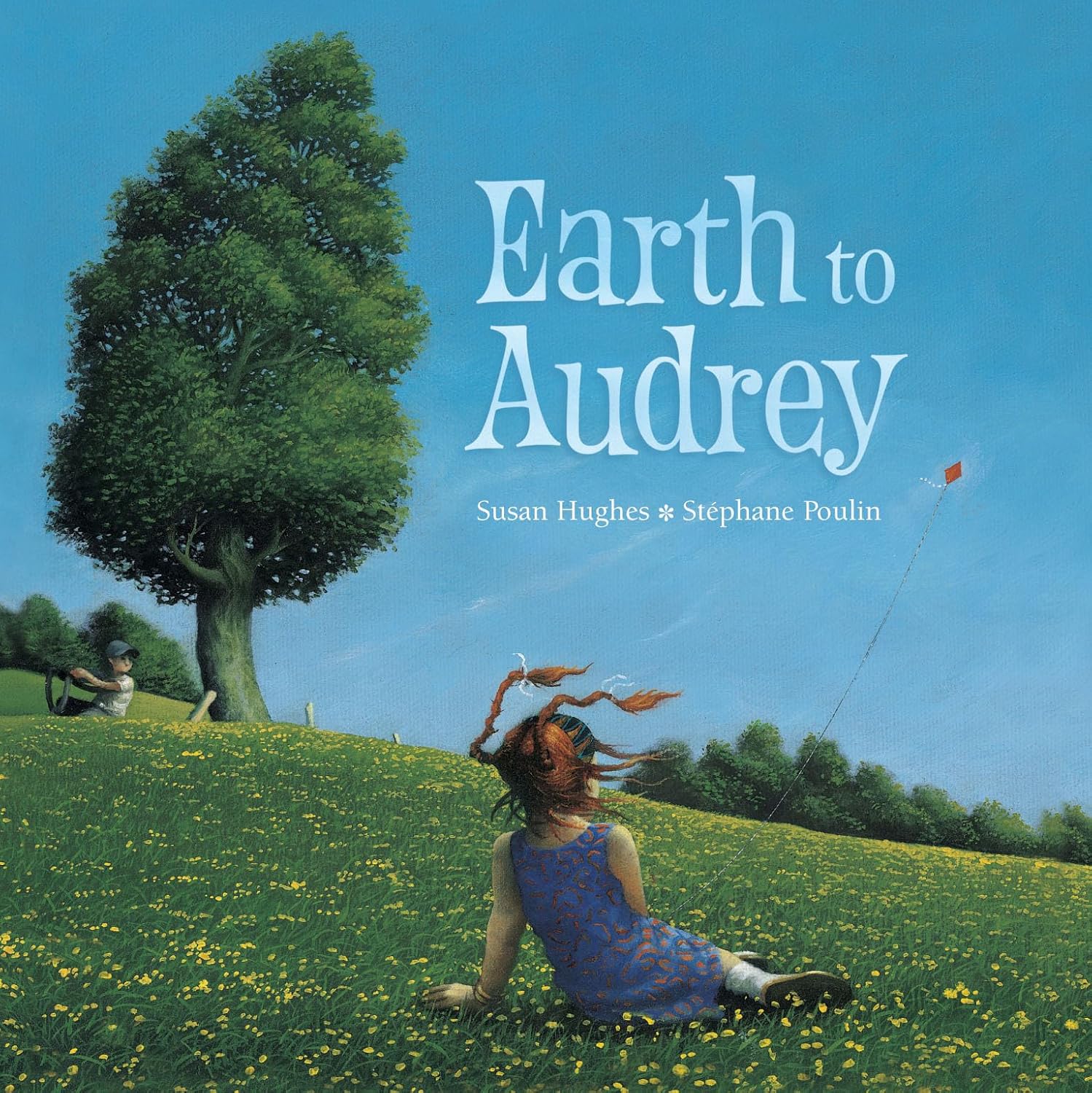
RVC: Not every author agrees with that attitude, but it’s a winning mindset, no doubt about it! Let’s go back to Earth to Audrey (2005). That was one of your earliest picture books—what’s the story behind that book?

SH: Ah, yes. It’s still one of my favorites! And even though it was over two decades ago, I still remember writing the first paragraphs that would eventually become Earth to Audrey. I was just playing, writing in the first-​person voice of a young girl. She was lying on the grass, looking up at the sky, and having big thoughts and feelings – about the expansiveness of space, the feeling of Earth solid beneath her, how much she longed for a friend … I don’t really recall exactly.

But I remember being pleased with it, feeling there was something there—an essence, heart … So, I shaped it a bit—gave it a beginning, something of a middle, and an end, and I asked a trusted writer friend to read it.

I smile when I remember her response. “It’s lovely writing, and she’s an interesting character, but … it’s not a story yet. Nothing happens! Things have to happen!”

She was right, of course–(thank you, Monica Kulling!)

RVC: What was the biggest lesson that book taught you?

SH: This book and Monica taught me to make things happen when I write stories. It’s something I still need to remind myself when I write.

RVC: The Puppy Pals series (originally published in Canada, now available in the U.S. with Sourcebooks Jabberwocky) has found a whole new audience. What has it been like to see those chapter books reach readers across borders?

SH: It’s terrific! Many of my other books have also been published in other countries and also translated into different languages. It’s very cool knowing kids from Greece to Czechoslovakia and from the Netherlands to China are enjoying my stories!

RVC: Walking in the City with Jane introduces kids to Jane Jacobs. What drew you to her story, and how did you decide what to include for young readers?

SH: Back in 2014 or so, I felt inspired to write a picture book biography about a woman—a unique individual who had made a difference and who would be inspiring to kids 5 and up. I’d known of Jane Jacobs for years, but when I began reading about her in detail, I couldn’t believe how perfect she would be as a picture book subject.

Jane Jacobs was a creative problem-​solver, curious and imaginative, always asking questions, making her own observations, and coming up with her own original solutions. She was fascinated with cities and how they functioned. She changed the way people think about how cities grow and develop. She saw them as living ecosystems, made up of different parts working together; that cities should be walkable; that they were primarily for people.

She was an “ideas” person, but she was also a go-​getter and an activist, supporting the wisdom of local citizens who knew their neighborhoods and community best and wanted to protect them from destruction or development, not just cheering them on from the sidelines but joining the rallies, getting her hands dirty, making her voice heard, standing up for what she believed in—even if it meant being arrested.

RVC: One of the challenges of writing about an interesting person is that you can’t fit all the cool stuff you learn about them into the book. What are some awesome things that just didn’t make the cut?

SH: There were so many, but two kid-​friendly ones were how Jane’s dad would often respond to her endless questions about how things worked by handing her the encyclopedia. He encouraged her to find out answers for herself. Or how Jane was living and working with her sister in New York City after finishing high school, but expenses were so steep, they sometimes had to eat Pablum, a type of porridge-​like baby food, bland (ick!) but cheap and nutritious.

RVC: Your non-​fiction books Sounds All Around and Lights Day and Night in your Science of How series explore the physics of sound and light. What was the biggest challenge in writing these books for a picture book audience?

SH: Ha! Okay, well, there wasn’t just one big challenge–there were at least four.

  1. Read about, and understand, each concept thoroughly.
  2. Convey the information in very few words and at a level that kids in K‑3 could understand.
  3. Convey the information accurately.
  4. Because children are learning about these concepts at school, convey the information in a way that supports what they know but is unique, engaging, and draws them in.

Tackling these kinds of challenges and bringing nonfiction concepts to life on the page for kids is exactly what makes writing nonfiction picture books so delightfully appealing to me!

RVC: On the lighter side, Hooray for Trucks is pure fun. What inspired you to write a story just for the joy of it?

SH: Recalling this makes me grin, because I literally sat down to write one day and decided, “Okay. I want to have some fun!” I like writing in different styles and trying new things, and I’d never written a picture book story in rhyme. It would be fun to try.

So, on this day, I thought, “I’m going to write a rhymer about something super popular with younger kids.” Dinosaurs, stars … or, a‑ha! A fun story about cars and trucks … My own three kids had all spent hours playing with cars and trucks when they were little. And hey, I’d recently heard about a truck parade in Victoria, B.C. and this sparked an idea for a playful storyline.

Bouncy, bright rhyme with a sprinkling of snappy dialogue and some “sound” words –Honk! Beep! Toot!—would make it fun to read-​aloud and also fun to write!

And, sure enough, it was!

RVC: How does your writing process shift when you’re working on a lyrical nonfiction book versus a bouncy, rhyming read-aloud?

SH: When I’m returning to a work in progress, whatever the writing style or whether the story is fiction or nonfiction, it takes me some time to reengage with the topic and also with the tone.

However, I can jump back into the writing and revising of a rhyming read-​aloud relatively quickly and easily, while, when writing or revising a lyrical nonfiction book I need to set aside much more time for each writing session. I need to reconnect with the topic and also immerse myself more deeply in the prose to continue exploring the voice and rhythm that works best or to continue to write in the one that’s been established.

RVC: What was one of your most surprising discoveries while researching a nonfiction book?

SH: Ah, that’s easy! While doing research for one of my middle-​grade nonfiction projects, I came across an amazing photo essay. It told about a young boy in a village in Malawi who was walking to get water with the girls and women, taking his sister’s place so she could go to school and not miss out on an education. I knew I had to share this true story with young children, and this became my picture book Walking for Water: How One Boy Stood Up for Gender Equality.

RVC: For a nonfiction project, do you usually begin with a child-​centered story question, or do you dive into research first?

SH: I always research first. I love researching, almost to a fault! Sometimes it’s difficult to decide I’ve learned enough and accumulated enough information that it’s time to stop and actually begin outlining the book! Other times, I’ll find myself going off on a more interesting research tangent. I may end up setting aside, or scrapping my original idea for a new one with more potential.

RVC: You’ve worked with a wide range of illustrators. How do you think about illustration potential when drafting a picture book manuscript?

SH: Even now, when drafting a picture book story, I can still find myself immersed in the words of a story and not giving any thought at all to what the story could look like or how the visuals could share in the telling of the story. For example, when I wrote What Happens Next, the story was all about the narrative structure. The story has a call and response-​like pattern written to reflect the outsider personality of the main character. I didn’t think about the art at all. Fortunately, almost magically, Carey Sookocheff chose a thoughtful color palette and spare illustration style to perfectly support and reveal the mood and tenor of the bullying story.

More and more often, however, when I begin to write a picture book story, right from the start, I’m taking into account, and depending on, the art to show what isn’t being said. A great example is my first wordless picture book, which is coming out with Owl Kids in 2027!

RVC: Which of your picture books changed the most between the first draft and final book?

SH: Probably Walking for Water: How One Boy Stood up for Gender Equality. I wrote the story as a narrative text, and it was acquired as such; however, the editor suggested the story might have more kid appeal if it were revised as a picture novel-​graphic novel hybrid. I agreed and rewrote it, trimming out lots of the descriptive text and reframing the text as script. It worked really well!

RVC: As both an author and freelance editor, what common pitfalls do you see in picture book manuscripts?

SH: Writing that seems a bit flat, without that special spark. Text that doesn’t leave enough “space” for visuals to tell the story. Text that is unclear. Text that is too explicit and doesn’t allow readers to make their own connections. It’s always a fine balance between all these important elements!

RVC: Now, if you had to pick one of your picture books that best represents your voice, which would it be and why?

SH: Great question. But I don’t think there is one picture book that best represents my voice. I’ve written in many different voices and sometimes there is a consistency of voice, but more often than not, there isn’t. My stories usually demand a voice unique to them. And this is something I really love about writing – the opportunity and freedom to create the voice best suited to an individual story.

RVC: Last one for this part of the interview: what’s next for you in the world of picture books?

SH: I am delighted to have several picture books coming out over the next few years–one is nonfiction and the third of a series, one is fiction and very playful, one is fiction and wordless, and one is fictional but inspired by a real person!

RVC: Alright, Susan. It’s time for the Speed Round. Zippy questions and fast answers please. Are you ready?

SH: Definitely.

RVC: Favorite snack while writing?

SH: Ha! I don’t allow myself to snack while writing. It would be a slippery slope …!

RVC: If you could live inside one of your books for a day, which would it be?

SH: My picture book Carmen and the House that Gaudí Built—so I could meet the amazing Spanish designer and architect Antoni Gaudí as he designed the dragon-​topped Casa Batlló and the little girl, Carmen, who went on to live in that house!

RVC: Best piece of editorial advice you’ve ever received?

SH: “Make things happen!” of course.

RVC: A nonfiction picture book you’d recommend to every writer?

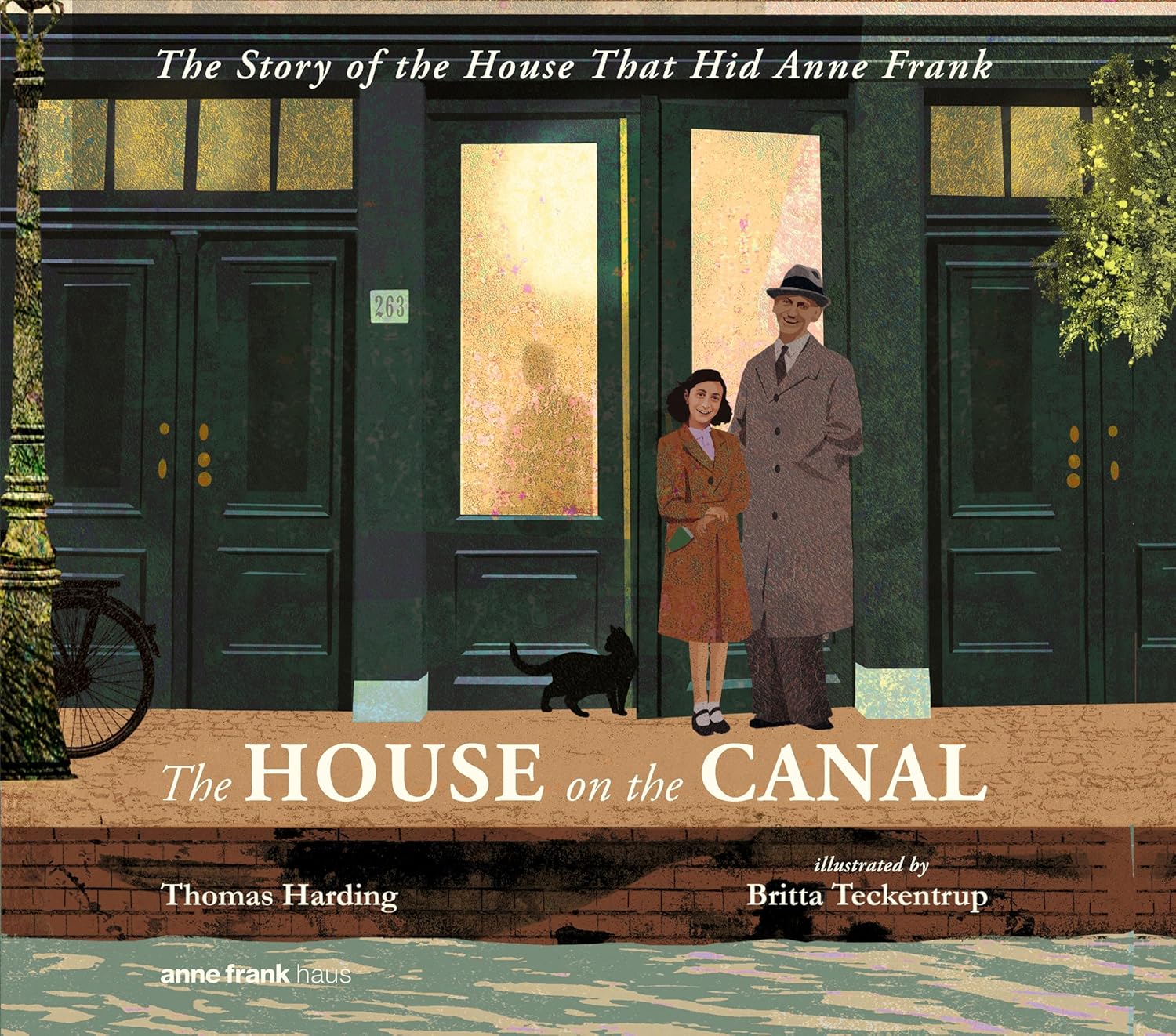
SH: The House on the Canal: The Story of the House that Hid Anne Frank by Thomas Harding.

RVC: One word you hope readers use to describe your books?

SH: Fantabulous!

RVC: Thanks so much, Susan!

Author Interview: Lindsay H. Metcalf

This month, we’re thrilled to welcome Lindsay H. Metcalf to the Only Picture Books Author interview series! Lindsay’s lyrical nonfiction and activist poetry have won plenty of awards—including the Green Earth Book Award and the ILA Social Justice Literature Award—and her growing body of work continues to inspire young readers to care about the world and their place in it.

From Beatrix Potter, Scientist to Farmers Unite!, No Voice Too Small, and the upcoming Tomatoes on Trial, Lindsay tackles unexpected topics with heart, clarity, and a journalist’s curiosity. She’s also just plain fun.

When she’s not researching or writing, Lindsay plays ukulele, sings pop parodies, and hangs out with her family (including a mischievous puppy and an old cat!) in rural Kansas, not all that far from the farm where she grew up.

Let’s get to know Lindsay!


RVC: You started as a journalist. What made you decide to shift from newspapers to children’s books?

LHM: I had two babies in a seventeen-​month span and decided to stay home with them. In those early days, the library and reading fueled our daily rhythm. I hadn’t picked up a picture book since I was a child, and wow, had they evolved! Discovering titles such as Stuck by Oliver Jeffers and I Want My Hat Back by Jon Klassen, I loved them as much as my kids did. I thought, how hard could it be to write one? Boy, was I naïve.

RVC: Been there!

LHM: It took me two years of fumbling with fiction manuscripts to discover that, actually, I’m much better at nonfiction. Duh—I was a journalist. I didn’t enjoy reading nonfiction as a kid, but as an adult I realized my love of narrative nonfiction where the truth comes alive as sensory-​laden story.

RVC: What skills from journalism carry over into your work as a nonfiction author?

LHM: One of my journalism professors used to say, “If your mother says she loves you, check it out.” That emphasis on vetting research has served me well in all kinds of nonfiction writing. I also grew a thick skin as a newspaper reporter. With daily deadlines, my editors didn’t have time to sugarcoat their critiques. I learned to detach my ego from the writing, which has served me well with the endless flow of rejections in kidlit.

RVC: Let’s jump right to your picture book debut, Beatrix Potter, Scientist. How did that project begin?

LHM: I happened upon this post from The Marginalian detailing Beatrix’s early work as a mycologist. She had written a paper for the Linnean Society of London—what?? Although her books were burned into core memories, all I could tell you about her was that her name appeared in all caps on her book covers.

I loved the idea that Beatrix had been more than one thing—a scientist and a children’s author, and later a conservationist and sheep farmer—pivoting just like I had in my own career. When I discovered that her extensive diary detailed her scientific research, I cuddled up with her words not as a child with a bedtime story but more like two friends chatting over tea.

RVC: What surprised you most during your research into Beatrix’s life and work?

LHM: To keep her parents from reading her diary, she wrote it in a letter-​for-​letter substitution code, later cracked by researcher Leslie Linder. She wrote near-​daily entries for sixteen years. Today anyone can read The Journal of Beatrix Potter from 1881 to 1897, a testament to her brilliant mind and determination.

RVC: That’s amazing. Thanks for sharing all of that! Now, let’s talk about Farmers Unite!, which feels especially personal given your Kansas roots. Did you grow up hearing about the 1979 tractorcade?

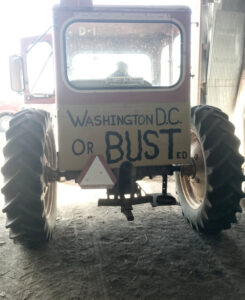
LHM: I did not! That’s why I was so amazed when I saw this picture of a local farmer’s tractor in 2016.

Why on earth would this 1940s tractor be driving from Kansas to Washington, DC? After some Googling, I found out about the American Agriculture Movement protests. In January 1979, farmers from points across the country formed tractor parades—“tractorcades”—thirty miles long en route to the nation’s capital. The movement remained active through the Eighties and inspired Willie Nelson and friends to host the first Farm Aid concert. I remembered the concert but had no knowledge of its roots.

I felt compelled to tell the farmers’ story of fighting to keep their farms alive during the farm crisis—and fighting to continue putting food in the bellies of their fellow citizens. I began writing this story at a time when gun violence protests were sweeping the country and wanted to tell the story of how farmers had found their own way to raise their voices. Today, with tariffs, climate change, and other factors, food producers still face livelihood-​threatening issues each day. Yet their stories are rarely told.

RVC: No Voice Too Small and No World Too Big spotlight youth activism. What did you learn from the young people featured?

LHM: I learned that if young people have the creativity, persistence, and fortitude to speak up and work together to make change, then adults have no excuse.

RVC: Both books have co-​editors working alongside you. How did that process go?

LHM: It went so well that we are currently working on two follow-​up projects together. My co-​anthologists Jeanette Bradley (also the illustrator) and Keila Dawson and I will release a third title in the young activists series in June 2026. It’s called No Brain the Same: Neurodivergent Young Activists Shaping Our Future, and it won’t be long before we can reveal its gorgeous cover! We are also working on a meaty middle-​grade nonfiction project that hasn’t been announced.

RVC: Let’s talk tomatoes! What inspired your almost-​here picture book, Tomatoes on Trial?

LHM: A Facebook friend posted a meme about the 1893 Supreme Court case in which tomatoes were declared a vegetable. My mind churned with the possibilities for a children’s book. Immediately I could see the layers: courts/​debate, food fight humor, history… With my curiosity piqued, I dove into the research rabbit hole and learned the story of produce merchant John Nix, who imported a boatload of Bermudan tomatoes and was slapped with a 10 percent vegetable tariff. Nix believed tomatoes were fruits and took the New York Customs House collector to court.

RVC: What made this story feel important for kids to know?

LHM: When I started working on the story in 2021, I imagined kids using the book as a springboard for learning to research, verify sources, construct an argument, and hold debates. Kids tend to get indignant when I tell them that the Supreme Court declared tomatoes a vegetable.

But as the book releases in August 2025, there’s a whole other layer that I didn’t see coming: tariffs. The Nix v. Hedden case centered on the 1883 Tariff Act. Tariffs fell out of favor for many years, now, under the Trump administration, they’re back. This book is a low-​stakes introduction to that concept.

RVC: Can you share a craft challenge you faced while writing Tomatoes on Trial—and how you solved it?

LHM: No one had written a book about John Nix, so the only information I had about him was the snippets I found in historical newspapers. I had the bones of the Nix v. Hedden case, but not enough to write a picture book biography. So initially I set out to write about the history of tomatoes and how they were plagued by misinformation for centuries. The first drafts had a Magic School Bus feel, with an adult farmer sharing shocking tomato stories (including the Supreme Court case) with two fictional kids. And it wasn’t working.

Finally my friend and nonfiction guru Kirsten Larson helped me see how to cut through the morass with an episodic narrative rather than a full-​fledged biography. This helped me dig into scenes where “Team Fruit” and “Team Vegetable” flung dueling definitions. Nix v. Hedden is a simple case and inherently kid-​friendly, so this approach let me lean into the humor and write something surprising and relevant.

RVC: What’s your favorite part of the research process?

LHM: It’s that moment when, after you think you’ve uncovered every little fact about your subject, you do another search for good measure that turns up new details.

RVC: And the hardest part?

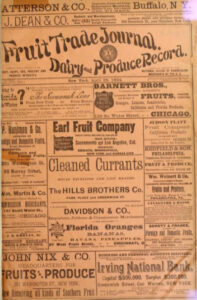
LHM: Image research! For Tomatoes on Trial, I had so little information about Nix that I didn’t know what he looked like. When Calkins Creek acquired the manuscript, they asked me to find images for the back matter, and it became a personal mission to find Nix. Finally, after weeks of searching, I found his obituary in an obscure online archive of the Fruit Trade Journal and Produce Record. To my delight, it included an etched portrait of Nix. I needed only a handful of images for the back matter, but I collected dozens in a secret Pinterest board and eventually shared them with illustrator Edwin Fotheringham. Nonfiction illustrators have such a difficult job, because they have to think about details that aren’t in the text: period clothing, architecture, etc. If I am already doing that research, I may as well share.

RVC: What does a typical writing day look like for you?

LHM: I am a stay-​at-​home mom of two teens, so there is no typical writing day, other than constant interruptions, chores, errands, and appointments. In between I try to list tasks I can do the next time I sit down with my computer. I typically work from the couch, feet up, with my Cavalier King Charles, Gus, and my 21-​year-​old tabby, Gertie, fighting for lap space.

RVC: Do you approach writing differently when the audience skews older (like for your YA title Footeprint)?

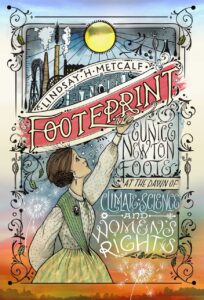
LHM: Yes and no. Footeprint: Eunice Newton Foote at the Dawn of Climate Science and Women’s Rights (February 2026, Charlesbridge), started in my mind as a picture book. Eunice was the first to discover carbon dioxide’s warming properties in 1856, and yet the “father” of climate science is considered to be one of her peers, John Tyndall, who published similar research three years later.

No one had written about her in a traditionally published book and I felt drawn to tell her whole story. It had climate science. The first women’s rights convention at Seneca Falls. Her own patented inventions and her husband as US patent commissioner. Meanwhile, their lives were intertwined with the nascent industrial revolution and the very seeds of climate change.

The best thing I did was write what I needed to write without placing restrictions on myself. I usually start wrapping my head around biography research by making a giant timeline of every fact I know, and then identifying a unifying thread. This book wanted to be more than a picture book, so I shoved my self-​doubt to the side and wrote it as it begged to be written. Her story came out in poems, and I had no idea it would be considered young adult until the book was acquired and my contract specified it.

RVC: A lot of kidlit writers seem to have stories that “came out in poems” these days. Why did this choice seem like the best option for telling this story?

LHM: It worked for several reasons. The subject matter was emotional, with a woman fighting for her right to be a scientist and inventor in an era when married women could not own property or hold patents. While I could feel the emotions behind the facts, I wanted to stick as closely as possible to nonfiction. I found letters written by Eunice and her family later in her life, but I had nothing but her formal patent applications for the time period that formed the crux of the book. Poetic devices—metaphor in particular—create ways to convey emotion without straying from facts.

Another aspect I loved about telling the story in poems was the choppy nature of a novel-​in-​verse. Each poem tells its own miniature story, without the need for much transition. In places where I had gaps in facts—sometimes years—the novel-​in-​verse form helped me bridge those pretty seamlessly through white space and creative poem titles.

RVC: What’s your best tip for writers creating a verse novel?

LHM: The same advice I’d give anyone trying a new type of writing: read great mentor texts, find like-​minded critique partners, and take classes. I learned a ton from Cordelia Jensen, who periodically teaches courses through the Highlights Foundation. Her next course—Revising Your Novel-​in-​Verse—runs November through mid-​December. Cordelia goes deep and offers critiques, and she’s a wonderful verse novelist herself.

RVC: What role do critique partners or writing groups play in your process?

LHM: They are essential! For the young activist books (No Voice Too Small, No World Too Big, and the forthcoming No Brain the Same) three of us work together, almost as a built-​in critique group. Because we’re in touch each day and we have regular calls, we do a lot of problem-​solving and cowriting in real time.

I share solo projects with a critique group that meets monthly, and if those folks have seen a manuscript too many times, I will send it to individual critique partners. Every single project of mine has improved based on astute critique feedback.

RVC: How do you know when a manuscript is done?

LHM: When my agent tells me it’s done. Ha! I find that after I’ve worked on a project for a long time, it’s tough for me to see its strengths and flaws objectively.

RVC: Here’s the last question for this part of the interview. What’s something you’ve learned/​run across recently that made you say, “Yes, yes, yes—THAT’S a book”?

LHM: It’s not my story to tell, but I think someone NEEDS to write about the Indigenous teens who are kayaking the 300-​mile Klamath River after the US government removed a long-​contested dam. This inspiring story of environmental justice and decolonization demands its own book!

RVC: Alright, Lindsay. Step back and take a breath—you’re going to need it. We’re now at THE LIGHTNING ROUND! Fast questions and zippy answers please. Are you ready?

LHM: Hit me.

RVC: What’s your favorite weird tomato fact?

LHM: In the 1800s, people took tomato pills as a cure-​all, from consumption to cholera.

RVC: Kansas sunsets or Kansas thunderstorms?

LHM: Post-​storm sunsets.

RVC: What song do you belt when no one’s listening?

LHM: Right now it’s “Pink Pony Club” by Chappell Roan.

RVC: One writing rule you always break?

LHM: Sentence fragments. And conjunctions at the beginnings of sentences.

RVC: The last great picture book you read that made you stop and reread a line?

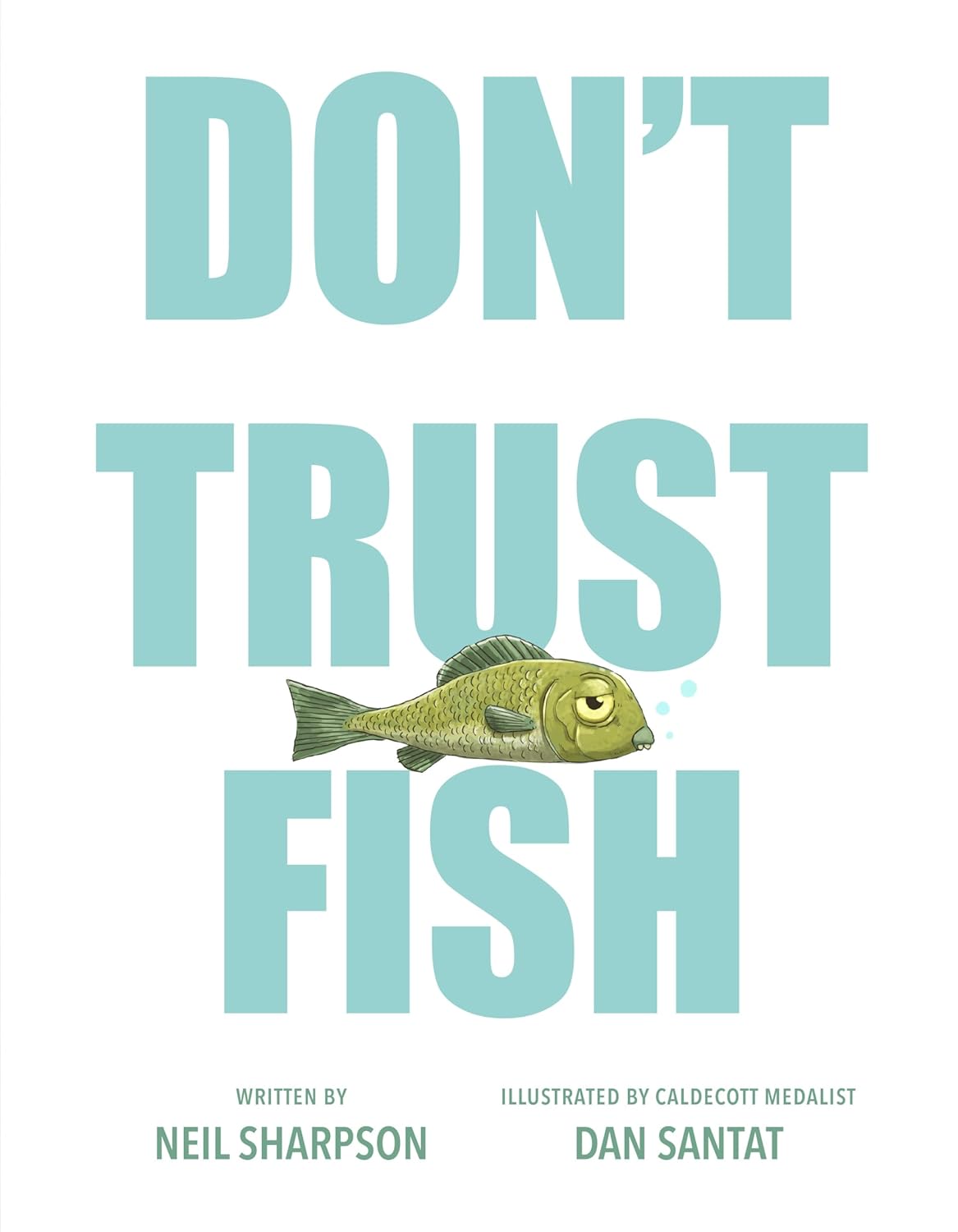
LHM: Don’t Trust Fish by Neil Sharpson, illustrated by Dan Santat.

RVC: One word you hope readers use to describe your work?

LHM: Thought-​provoking. I’m counting that as one word.

RVC: Thanks so much, Lindsay!

LHM: Thanks, Ryan! It’s been an honor.

Author Interview: Donna Janell Bowman

This month on the OPB Author-​Illustrator Interview Series, we’re thrilled to feature Donna Janell Bowman—a writer, researcher, and storyteller who brings history to life for young readers. Donna’s award-​winning picture books, including Step Right Up: How Doc and Jim Key Taught the World About Kindness, King of the Tightrope: When the Great Blondin Ruled Niagara, and Wings of an Eagle: The Gold Medal Dreams of Billy Mills (co-​authored with Billy Mills), shine a light on incredible historical figures who persevered against the odds.

With a passion for uncovering overlooked stories, Donna’s meticulous research and lyrical writing have earned her accolades like the Sibert Honor, multiple state book awards, and recognition from ALA, NCTE, NCSS, and the Library of Congress. She holds an MFA from Vermont College of Fine Arts and has spent years teaching, editing, and mentoring writers.

Join us as we discuss her journey from ranch kid to award-​winning author, her deep-​dive research process, and the unforgettable stories she brings to life.


RVC: You grew up on a ranch, surrounded by wide-​open spaces and animals. How did your childhood experiences shape your love for storytelling?

DJB: Ooh, I love this question! There were a few downsides to being a ranch kid: I was isolated from my friends who lived in regular neighborhoods, we had only five TV channels (pre-​digital age), and I had seemingly endless chores in all weather conditions. When I was young, I didn’t appreciate how the wide-​open spaces and uninterrupted time provided a sort of incubator for a rich imagination and sense of curiosity. My penchant for stories began right there in Central Texas.

RVC: It sure sounds like it!

DJB: The animals, too, shaped me. I was an animal lover, and we had a whole lot of them, but I had a special bond with horses. Through my years of training for and competing in horse shows, I was the lucky beneficiary of the remarkable animal-​human connection. I learned compassion and empathy — traits that would be critical to future me, the writer.

RVC: You once dreamed of being a veterinarian, movie star, writer, and princess—all at the same time! When did writing take center stage for you?

DJB: Ah, the pie-​in-​the-​sky dreams of youth! I was awed by the power of drama to evoke emotion and truth, and actors’ abilities to inhabit characters so believably. I had a very active imagination! But Hollywood was not in the cards for me. Instead, I checked out books from the bookmobile that came to my school at irregular times and imagined the stories playing out in my mind. Then I created my own stories while sitting in a tree, often with a horse and dog waiting below. Stories, poems, and diary entries filled my notebooks. When my parents gifted me a typewriter, I became a writing machine, surely to the annoyance of my family.

My concern for animals sparked my interest in veterinary work, but after working for a clinic for two years as a teenager, I realized that it wasn’t quite the altruistic endeavor that I naively hoped. Later, I would write a book about kindness toward animals.

As for becoming a princess, well, at some point, I realized that Disney princesses were passive in their lives rather than empowered women. How boring! Don’t get me wrong, I was ready to saddle my own horse if some hunky guy who lived in a castle showed up on his trusty steed with the perfect proposal and some feminist leanings.

It took a little time, but I eventually circled back to my writing roots.

RVC: Before publishing children’s books, you wrote for newspapers and magazines. How did that background help shape your voice as a nonfiction writer?

DJB: This is a classic case of faking it till I made it. Though I had taken some journalism classes in college, I did not consider myself a journalist. When I left the corporate world, I took a chance and pitched myself to regional newspapers and later to children’s magazines. To my surprise, I had success with both. The more I wrote and adapted to variables, the closer I came to my own writing voice, and the more confident I became in my skills.

RVC: This is a common story I hear from kidlit authors. You’re in good company!

DJB: While I was writing those articles, I wrote plays for local theatre, and I was immersed in children’s books with my kids. At some point, when my youngest son was in diapers, I knew that I wanted to be a children’s book author. For an agonizing number of years that followed, I studied and dissected picture books like a scientist. And I wrote a lot. I was relentless!

RVC: Talk about your MFA from Vermont College of Fine Arts. What was the most valuable lesson you took away from that experience?

DJB: Everybody with an MFA will answer this question differently, depending on their pre-​MFA experience and their specific program. I started the VCFA Writing for Children and Young Adults program with seven books under contract and years of deep self-​study under my belt. But, good golly, the program was intense! The volume of reading and critical and creative writing on short deadlines was challenging. On top of that, somehow, I managed to launch my first trade picture book, Step Right Up, during my second semester. Yowza! The two-​year program deepened and expanded my knowledge base, provided an invaluable community that now includes forever friends, and taught me that there is always more to learn.

RVC: Let’s get to your books! What’s the story of your first published picture book? 

DJB: Thank you for clarifying “published” picture book. During school visits, kids always ask me how many books I’ve written, which is a very different question.

RVC: Absolutely. Those are two completely different things.

DJBLike most authors, before my first published book, I wrote a lot of meh manuscripts that will never see the light of day, but each one educated me.

Step Right Up: How Doc and Jim Key Taught the World About Kindness took ten years to bring into the world. I first learned about Doc Key and his “educated” horse, Beautiful Jim Key, through an adult book about the subject. My interest was piqued because once a horse girl, always a horse girl. But I was so skeptical about the true story that I had to do my own deep research. Soon, I was convinced that this was a story that kids needed to know.

RVC: How did the manuscript change over those ten years?

DJB: My first iteration of Step Right Up was middle-​grade nonfiction, but an agent suggested that I rewrite it as a picture book. I spent the next 1 ½ years studying the unique genre of picture book biographies. After too many rewrites and revisions to count, my manuscript found a home with Lee and Low Books and was published in 2016, just when the world needed a book about kindness. Gratefully, it racked up many awards and accolades.

RVC: Nice! What lessons did that book teach you—about writing, research, or even publishing?

DJB: Oh, gosh, how much time do you have? My journey with Step Right Up was a masterclass in research, the challenges of carving a focused angle out of a giant story, the power of revision, the synergistic relationship between author and editor, and the fluid nature of publishing timelines. Perhaps most importantly, I learned that the key to writing a book that deeply resonates with readers is to select a topic that deeply resonates with me. Considering my background, it’s not surprising that a piece of my heart is threaded through Step Right Up.

RVC: Your books often highlight underdogs and figures who defied expectations. What draws you to these kinds of stories?

DJB: It’s interesting that we authors don’t always recognize the patterns in our choice of subjects or story themes until we’re a bit further down the publishing path. Like most people, I have felt like an underdog at times, and I know the internal wrestling match between insecurity and determination. By learning about the lives of people who overcame great obstacles, persevered against skepticism, and upended expectations, I find hope and empowerment. Kids need those stories, too. That’s the power of books and stories, isn’t it?

RVC: With so much research involved in nonfiction, how do you organize your notes and materials to keep everything manageable?

DJB: I’m a research junkie, so this makes me chuckle. My processes have evolved since my first nonfiction manuscript (unpublished) almost twenty years ago.

I am a tactile person, so I like both hard copies of my research materials and digital folders. Since many of my books are historical, I organize my materials chronologically or by subtopic. In fact, I’ve earned a bit of a reputation for my giant binders. As if that’s not enough of a chore, I then copy and paste the most vital information into a Word document that is divided by relevant topics for easy scannability. It’s a tedious process that makes me grouchy, but the document becomes an invaluable tool during fact-​checking and when, years later, I’m interviewed about my older books. For example, a few weeks ago, I was interviewed about Beautiful Jim Key, but it has been many years since I visited my old research. Thankfully, I didn’t need to dig through my old binders because I had my detailed “book bible” document as a quick refresher.

RVC: Wings of an Eagle was a collaborative project with Olympian Billy Mills. What was it like co-​authoring a book with him, and how did that change your writing process?

DJB: People are often surprised to learn that Wings of an Eagle was my idea. In 2014–15, I learned about Billy while I was researching for a different book. Talk about an underdog story? He was born impoverished, was orphaned as a child, and faced health challenges and systemic racism. Just when he was ready to give up, he remembered his late father’s advice to chase a dream to heal a broken soul. Billy’s dream was Olympic-​sized. Spoiler alert: He succeeded and is still the only American to win Olympic gold in the 10,000-meter event, and only the second Native American to win Gold in any track & field event.

RVC: Such a heroic story here!

DJB: I researched and wrote a first draft of the book while I was a VCFA student. But, as a white woman, it didn’t feel right to pursue publication without Billy’s blessings and input, so I spent the next four-​plus years trying to secure an interview with him. In January 2020, I got my chance. I spent a day with Billy and his wife at their home. It was magical! By the end of the day, we agreed to collaborate; I would do the writing and revising and work with an acquiring editor, and Billy would supply information and ensure authenticity and accuracy. Our many conversations broadened my perspective and inspired me to look much closer at American history, with special consideration for Billy’s point of view. My journey with Billy and Wings taught me to be open-​hearted and flexible.

RVC: Your books blend history with a strong narrative voice. How do you balance factual accuracy with engaging storytelling?

DJB: Firstly, thank you! I always remind myself that I’m writing a true story, not a journalistic article. For narrative nonfiction, my job is to select the facts that serve my story angle and theme and then flesh them out into source-​based scenes that seamlessly connect to each other in a natural arc and a satisfying resolution. Unfortunately, picture books have limited page space and word counts, so I must leave 95% of my research material on the cutting room floor. That part is painful!

As for voice, before I begin writing, I carefully consider the character’s vibe and the overall story tone. As much as possible, I customize my narrative voice to reflect who the character is/​was and the impact they had on their world. That’s why each of my books has a unique narrative voice.

RVC: What’s one of the most surprising discoveries you’ve made while researching for a book?

DJB: I’ve had stunning revelations during research for each of my books, but I’ll offer one as a cautionary tale.

RVC: Please do!

DJB: For my book King of the Tightrope: When the Great Blondin Ruled Niagara, I was desperate to track down descendants of the tightrope walker because my research revealed conflicting information. Three years into my search, I finally made contact with Blondin’s French great-​great-​grandson. Fortunately, he was his family’s historian, and he was thrilled about my project. Huzzah! We shared resources and, together, dispelled some myths about Blondin that had been perpetuated since the mid-​1800s, including a fictionalized biography published in 1861—a source used by practically every writer who has written about Blondin since that time. Lesson learned: Don’t fully trust any single source.

RVC: What advice would you give to writers tackling their first nonfiction picture book?

DJB: Choose a character or topic that will retain your interest and commitment for a very long time, potentially years.

Ask yourself why you personally resonate with your character or subject. Doing so will lead you to the heart of your story and your likely theme.

Let glorious curiosity be your guide, and don’t settle for the low-​hanging fruit of research. The good stuff is buried and begging to be uncovered — probably not online.

Remember that experts and sensitivity readers are important. Don’t be shy about contacting them. They are usually honored to be asked.

RVC: If you could go back in time and give one piece of advice to your younger writer self, what would it be?

DJB: Only one? Okay then…do not expect your children’s books to financially support you!

RVC: One last question for this part of the interview. What’s next for you? Are there any upcoming projects or events you’re excited to share?

DJB: I do have other projects in the works, but I’m not able to discuss them yet. Otherwise, I’ll be heading to ALA with Billy Mills at the end of June to accept the Robert F. Sibert Honor for Wings of an Eagle. And Wings has been named the South Dakota One Book for 2025, so we will be there in September, along with illustrator SD Nelson, for the book festival and to celebrate approximately 15,000 third graders receiving a copy of the book. Huzzah!

RVC: I’ll see you at ALA then. And congrats!

DJB: Oh, and I’ll be teaching some online classes soon, so readers should watch my website for details.

RVC: Okay, Donna. Let’s launch into the Speed Round. Fast questions and zippy answers please. Are you ready?

DJB: Hey, I have survived an MFA and the publishing process, so I can handle anything.

RVC: What’s one thing about ranch life that city folks would be shocked to learn?

DJB: Mud can suck boots right off your feet!

RVC: You can instantly master any extreme sport—what do you pick?

DJB: Mountain climbing.

RVC: If your life had a theme song, what would it be?

DJB: “Unwritten” by Natasha Bedingfield.

RVC: Which of your book characters would make the best travel companion?

DJB: Billy Mills, of course!

RVC: If you could go back in time and witness one historical event, which would it be?

DJB: Hm! I would like to have witnessed the suffrage movement and the first vote under the 19th Amendment.

RVC: What legacy do you hope your books leave behind?

DJB: Through my books, I hope readers, especially my future descendants, will hear my voice encouraging them to chase their dreams, shoulder through obstacles, and extend hope and love to all of humanity.

RVC: Thanks so much, Donna!

DJB: Thank you for inviting me, Ryan! It has been a real pleasure!