

A Walk in the Words
Author: Hudson Talbott
Illustrator: Hudson Talbott
14 September 2021
Nancy Paulsen Books
32 pages
Book description from Goodreads: “When Hudson Talbott was a little boy, he loved drawing, and it came naturally to him. But reading? No way! One at a time, words weren’t a problem, but long sentences were a struggle. As his friends moved on to thicker books, he kept his slow reading a secret. But that got harder every year. He felt alone, lost, and afraid in a world of too many words.
Fortunately, his love of stories wouldn’t let him give up. He started giving himself permission to read at his own pace, using the words he knew as stepping-stones to help draw him into a story. And he found he wasn’t so alone–in fact, lots of brilliant people were slow readers, too. Learning to accept the fact that everyone does things in their own unique way, and that was okay, freed him up and ultimately helped Hudson thrive and become the fabulous storyteller he is today.”
Want some reviews of A Walk in the Words?
Reading Activities inspired by A Walk in the Words:
- Before Reading–From looking at the front cover:
- What are you most curious about before opening the book?
- Why do you think there are so many words on the tree branches?
- What might it mean to “walk” in words instead of read them?
- The character looks small compared to the words. How does that size difference make you feel?
- This book is written and illustrated by the same person. What might that tell you about the story you’re about to hear?
- After Reading–Now that you’ve read the story:
- At the beginning, what feels safe for the narrator, and what feels threatening?
- When the narrator feels stuck, what specific choice helps him move forward?
- The book uses pictures to show feelings like fear and feeling overwhelmed. Which image stayed with you the most, and why?
- Where do you see the shift from fear to curiosity? What changes right before that moment?
- What does this book suggest about reading slowly—or doing anything at your own pace?
- Would you recommend this book to a friend? Why or why not?
- Wall of Words Snapshot:
In the story, a full page of text feels like a wall keeping him out. Draw your own “wall of words” on one side of a page. On the other side, draw what helps you get through a hard moment: a person, a tool, a habit, a thought. Add labels if you want! - Break a Big Word:
The narrator takes “overwhelm” and makes it smaller by breaking it apart. Let’s do something similar! Choose one big feeling word and play with it.- Write your word in BIG letters across the page.
- Circle a part you know.
- Underline the part that makes the word feel intimidating or too big.
- Rewrite the word in a way that feels more your size.
- Then write one sentence that begins: “I can handle this by…”
- Stepping-Stone Reading:
Pick a short paragraph from any book. On a separate sheet of paper, write down the words you recognize instantly as you read. Those are your stepping stones.- Read just those words in order to see what you can understand about the paragraph.
- Then read the full paragraph at your own pace.
- What felt different the second time? What helped you move forward?
- Fear vs. Curiosity Tug-of-War:
Draw a line down the middle of a page. Title one side Fear and the other Curiosity.- On the Fear side, list what fear says about reading or learning.
- On the Curiosity side, list what curiosity says.
- Circle the one curiosity thought that feels strongest. Keep it as a “bookmark sentence” you can return to.
- Paint with Words:
The narrator says learning words is like finding new colors for art. Choose one scene you love (a storm, a birthday, a soccer game, a quiet night). Write two versions:
Version 1 uses only simple words.
Version 2 adds five “new colors,” more specific words, stronger verbs, sharper sensory details.
Compare the two. Which version feels more alive to you, and why? - Books, Books, and More Books!: Check out these picture books about learning differences, self-trust, and finding your way with words:

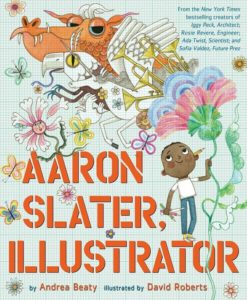
Aaron Slater, Illustrator by Andrea Beaty, illustrated by David Roberts
Aaron struggles with reading, but drawing is where his ideas come alive.
 I Talk Like a River by Jordan Scott, illustrated by Sydney Smith
A boy describes what it feels like to stutter, using metaphor instead of explanation.
 Just Ask! Be Different, Be Brave, Be You by Sonia Sotomayor, illustrated by Rafael López
Kids speak directly about their bodies, brains, and needs in a relatable way.
 Thank You, Mr. Falker by Patricia Polacco
A girl carries deep shame about reading until one teacher finally sees what’s going on.
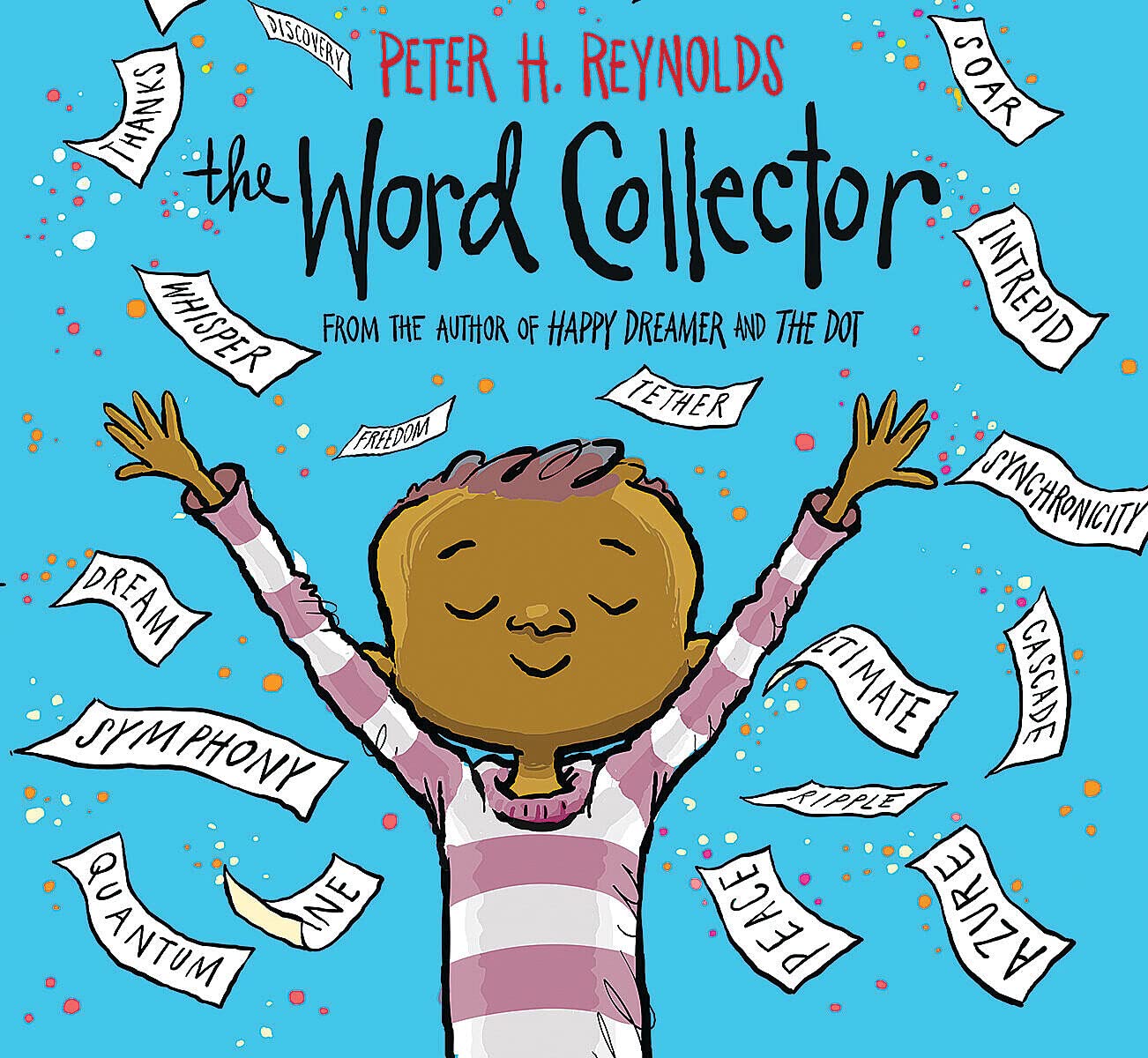 The Word Collector by Peter H. Reynolds
Jerome loves gathering words and noticing how they sound and feel.