Reading Activities: Fireworks by Matthew Burgess, illustrated by Cátia Chien

Fireworks
Author: Matthew Burgess
Illustrator: Cátia Chien
13 May 2025
Clarion Books
44 pages

Book description from Goodreads: “POP! As a hot day sizzles into evening, everyone on stoops and sidewalks looks skyward on this special summer night—the Fourth of July! Words and art blossom into flowers of fire across the sky, making this a perfect read for firework enthusiasts in cities and suburbs everywhere. POPPOP!”


Need some reviews of Fireworks?

As a special bonus, here’s a page at the author’s website which has a book trailer for this book, along with multiple interior pages. Enjoy!

www.matthewjohnburgess.com/fireworks


Reading Activities inspired by Fireworks:

  • Before Reading–From looking at the front cover: 
    • What words come to mind when you think about fireworks?
    • What time of year do you think this book takes place? What makes you think that?
    • Do you enjoy loud celebrations, or do you prefer quiet ones? Why?
    • What do you notice about the art style on the cover? How does it make you feel?
    • What questions would you like to ask the author or illustrator before reading the book?
  • After Reading–Now that you’ve read the story: 
    • What are some of the things the children do while waiting for the fireworks?
    • How does the author use sounds in the text to make the day come alive?
    • How does the illustrator show the heat of the day? What changes when night falls?
    • What moment felt the most exciting to you? Why?
    • What do you think the characters mean when they say they’re “tucked in with summer on our skin”?
    • What made the rooftop fireworks feel so special after such a busy day?
    • Would you like to spend a day like this? Why or why not?
    • Would you recommend this book to a friend? What part would you tell them about first?
  • Rooftop View Drawing
    The children in Fireworks climb to their rooftop to see the sky light up. Imagine you’re doing the same. What would your rooftop view look like—buildings, bridges, trees, birds, stars? Use crayons, pastels, or paint to create your own “rooftop moment,” just before the first firework explodes.
  • Boom! Pop! Swish!: Sound Words Game
    This book is filled with onomatopoeia—words that sound like the thing they describe. Make a list of all the sound words you remember from the story. Then come up with your own sound words for other things: splashing in a pool, biting into a Popsicle, or jumping on the sidewalk. Can your friends guess what you’re describing just from the sounds?
  • City Summer Scavenger Hunt
    Make a list of small details the book celebrates—like a fire hydrant spray, a saxophone, the smell of something cooking, or bright pink flip-​flops. Then go outside with an adult and try to spot your own version of a city summer. Take photos or draw what you find and label them with your own poetic lines.
  • Watermelon Words
    One of the best parts of the day in Fireworks is sitting down to eat sweet, juicy watermelon. Pretend you’re writing a poem just about that one moment. How does it taste? Feel? Sound? Smell? Use sensory words and bright colors to create a “watermelon moment” poem or mini book.
  • Music in the Air: Dance Story
    In the park, the kids hear music and can’t help but dance. Think of a song that makes you want to move. Create a short story or comic showing a character dancing through the city. Where do they go? Who do they see? Let the rhythm lead the way!
  • Books, Books, and More Books! Check out these real-​world picture books that celebrate summer, city life, and the joy of everyday magic:


Apple Pie Fourth of July by Janet S. Wong, illustrated by Margaret Chodos-​Irvine

While her parents cook Chinese food in their store, a girl worries it doesn’t belong on the Fourth of July…until fireworks and apple pie help her see things differently.


Carmela Full of Wishes by Matt de la Peña, illustrated by Christian Robinson

On her birthday, Carmela explores her neighborhood and collects wishes. It’s a quiet, reflective city story about noticing details and finding joy in small things.


Hot Day on Abbott Avenue by Karen English, illustrated by Javaka Steptoe

Two best friends spend a sweltering summer day not speaking to each other. Then the games begin and the heat melts more than just the pavement.


My Chinatown: One Year in Poemsby Kam Mak

Through a series of seasonal poems, a boy reflects on his new life in Chinatown. It’s a powerful mix of city life, cultural identity, and lyrical beauty.


Water in the Park
by Emily Jenkins, illustrated by Stephanie Graegin

A tender and observant look at one day in a city park, hour by hour.

Author Interview: Shannon Stocker

Thanks to Joyce Uglow for another fine OPB interview. I’ll give a quick bio on our guest, author Shannon Stocker, and then Joyce will take the reins. Enjoy!


Shannon Stocker lives in Louisville, KY, with her best friend and husband of 20+ years (Greg) and their two beautiful miracles, Cassidy and Tye. They have a chatty parrot named Prozac (‘Zac’), a service dog named Sophie (Cassidy is a brain cancer warrior), a mini Aussie named Copper, a rescue kitty named Nugget, and a bearded dragon named Pepper. She is fully aware that she harbors too many animals. Outside of writing, she’s a singer, songwriter, pianist, guitarist, and actress.  Shannon is represented by Allison Remcheck of Stimola Literary Studio.


JPU: Reinventing the Wheel: How Two Sisters Revolutionized the Wheelchair comes out in the summer 2026. Get a Hug releases in fall of 2026. Why are these two picture books important to get into the hands of kids?

SS: Hi, Joyce and Ryan! Thanks so much for having me on your blog. Reinventing the Wheel is another nonfiction picture book biography that’s dear to me, like Listen: How Evelyn Glennie, a Deaf Girl, Changed Percussion, because it shines a light on a fabulous invention for wheelchair users by Irish sisters, Ailbhe (pronounced AL-​va) and Izzy Keane.

IZZY'S WHEELS PW announcement.png

I spent two years in a wheelchair, and I remember only too well the looks of pity I’d get from others. At the time, I had actually been given two years to live; I didn’t know that I would regain my strength and walk again someday. Those two years taught me a great deal about myself, and they changed the way I approach everything—including my writing. I’m passionate about highlighting the beauty, the color, the possibility within different disability communities. We too often put boxes around that which is unknown to us. Kids in wheelchairs deserve more than that. They deserve our encouragement to break free from limits that others place on them and explore the vast realm of that which is possible.

To think of things that no one else has ever thought of before. That’s what Izzy and Ailbhe Keane did. As for Get a Hug, this book is everything that I first fell in love with about writing. It’s so much fun; it rhymes, it’s musical, it’s song-​like, and it’s reminiscent of one of my favorite children’s authors—Sandra Boynton. It’s an ode to hugs, and everything a hug can be. I really wanted to write a book that exudes pure joy, and this is that book.

Screenshot 2024-08-23 at 10.28.41 AM.png

JPU: Ah…yes. It has been said that a little bit of joy can last a lifetime if practiced daily. As a former educator and aunt of young man who struggles with mobility, I can totally see why both of these books are important to you. It is crucial that people see themselves in books. Did your idea to acquisition process differ for these two picture books?

SS: Reinventing the Wheel only went to my editor, Jess Garrison, at Dial/​PRH. It really belonged with her. She did such a lovely job with Listen—my agent wanted to give her first crack this one, since it felt like a great follow-​up. Obviously, I’m thrilled that Jess agreed!

Get a Hug got immediate interest from a few houses, but Celia Lee was effusive about it and immediately had a vision for the right illustrator (Lily Zhang, whose initial sketches are friggin’ adorable). Celia’s suggestions for edits rang true to me, and revisions just poured out so easily. When she made an offer, I knew it belonged with her at S&S!

JPU: I see that you and I are on the same page when it comes to the notion that artwork in a picture book has the power to draw in a book buyer. And I agree that the vision for the artwork is one of the keys to success. I also love a fun follow up and companion book. And so do kids! What would you like your readers to take away from these two stories?

SS: I’m hoping that both books are feel-​good stories that bring joy. I’d love for Reinventing the Wheel to bring a sense of “normalcy” to wheelchairs. People who use them often don’t feel confined. Wheelchairs can allow for a sense of independence and freedom, and they deserve to be a reflection of the user, just as a pair of shoes or an outfit might be for those who don’t need a wheelchair. I’m hoping that Get a Hug winds up being one of those books that kids choose time and again from the shelf because it’s so fun to read!

JPU: YES! That re-​readability IT factor brings it home time and time again. New ideas for books come to me when we venture out and about to see the world or travel the USA. Does inspiration strike you when you’re at home, on vacation, at work, or other places?

Inspiration strikes wherever I keep my eyes open (and sometimes when they’re closed)! I travel for my day job, so I’m always looking around at people: what they’re wearing, their tattoos, the way they interact with others. I especially try to interact with people in the disability community. If someone makes eye contact with me, I’ll smile and say hello. I frequently write down names and traits for characters in my novels, too. I actually just got an idea on our vacation a couple of weeks ago, when I met someone whom I believe will make a wonderful subject for my next nonfiction picture book biography. But I also get ideas right here at home from my kids all the time. Especially my son, whose imagination soars. Ideas are everywhere!

JPU: Isn’t it fun to notice and note people’s reactions to a smile or a nod? This brings me to wonder about your thoughts on back matter. Is there a certain back matter style or structure that resonates with you?

SS: For me, back matter should add something to the manuscript that didn’t belong in the manuscript but makes the story feel complete. It should complement the book. In Reinventing the Wheel, for example, I really wanted to get Izzy’s take on wheelchair etiquette. The book is not about wheelchair etiquette at all, but the topic came up multiple times in interviews with the sisters.

I think that people who don’t use wheelchairs sometimes feel uncomfortable around them—is it okay to draw attention to them? Should I help someone in a wheelchair, or should I not? Should I bend over when talking to them so we’re eye-​to-​eye? Sometimes people think they know the answers, but maybe they don’t. Back matter, to me, is a great opportunity to fill in some of the blanks, especially when a book is nonfiction or the author has a personal connection to the story, as I do.

JPU: Teachers love back matter, discussion guides, and extension activities. What are your thoughts on creating tools for teachers, care givers, and/​or parents?

SS: Oh, this is such a great question, and I wish I had a better answer for you! Luckily, my houses have been pretty good about creating discussion guides and extension activities for my books. Unlike some other authors, I’m not a teacher, so I really rely on the ones who are to give me guidance and feedback. I was recently talking with a critique partner about this, and I think I’m going to reach out to the homeschooling community on Instagram for help on this with my novels. It’s not been my strength but is definitely an area where I’m looking to improve.

JPU: Speaking of strengths, I believe one of yours is message consistency. If you were on a panel of kidlit writers talking about platform, what would the audience members be surprised to hear you say?

SS: In many ways, I think books have a life of their own. I know a lot of authors who spend a great deal of time building their online presence, but some might be surprised to hear that I feel it barely moves the needle. I do pretty much the same thing for all my books, and some do much better than others. My suggestion would be that writers do the best they can with platform, but try not to stress about it too much.

JPU: I agree! We do not need to add any level of stress to our lives! How about your super writer power? Does it kick into gear when creating an intriguing title with hooks that attracts book buyers?

SS: I try not to write hooks for the purpose of making a sale. If you write for the market, or if you write with the trends, by the time you’re on submission, the market will have changed. The best writing superpower we all have, in my opinion, is the wealth of experiences we’ve collected through our lives.

  • What connects with YOU?
  • What story can only YOU write?
  • How can you take YOUR passions, YOUR pain, YOUR tragedies, YOUR funny moments, YOUR experiences, and turn them into a story?

When books are filled with honesty, people really feel them to their core. That’s what gives them heart. We are never the only one to experience things. If we can use books to connect with other people, that’s when the magic happens.

JPU: Truth be told! When listening in on conversations between kids, (ok… eavesdrop) I pay attention to their interests. I’ve been known to lose myself in research because a news article spurs me to dig into a topic. What is the best rabbit hole your got lost in?

SS: LOL – I can think of a million bad rabbit holes that I’ve gotten lost in, but “best rabbit hole” is harder! I think my best rabbit hole is researching musicians with disabilities. I have ADHD, segmental neurofibromatosis, RSD/​CRPS, and I’m a coma survivor. My daughter has brain cancer, and my son is neurodiverse. My parents were both hard-​of-​hearing, and my mom was blind for a period of time (retinitis pigmentosa).

But I’m also a musician (pianist, singer, songwriter, mediocre-​at-​best guitarist). For years, I’ve had to change my way of playing instruments or performing to get around my disability. For example, I had to start using a travel-​sized guitar because a standard guitar presses against the tumors in my arm and causes pain. Everyone has obstacles in their life. The question is, how do you use those obstacles to succeed? How do you use your experiences to get ahead and pursue your passions? I’m fascinated by those questions.

JPU: Questions and curiosity fascinate me too. Is there a children’s book from your childhood that you wished you had written? What makes it special and unique?
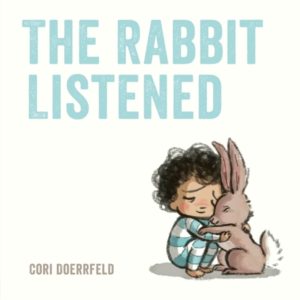
SS: I am one of the rare authors who didn’t read much as a child. I don’t remember ever being read to, either. But I did fall in love with picture books when I had my own children. A book I wished I’d written is The Rabbit Listened by Cori Doerrfeld. It’s so beautiful and perfect in its simplicity, and the message is crystal clear without being didactic. And those illustrations are adorable! To me, this book is like a great song with an earworm hook. It comes back to me over and over again. Another one like that is Guess How Much I Love You by Sam McBratney. That last line is so perfect! Who knows—maybe I have a thing for rabbits…

JPU: In many ways, kids today have it better than I did when I was a kid. Our library was quite a distance away, and we did not have many books. I’m glad to see that Oliver (one of my grandsons) is an avid reader. He may have picked up his soft spot for bunnies from reading books.  There’s much to love about those fuzzy little friends. What is the best advice you can give to a new kidlit writer?

SS: FIND YOUR PEOPLE!!! Do not try to go this alone. The publishing journey is not for the faint of heart. It’s filled with rejection and self-​doubt. It’s slow and painful. Find writers who are at the same stage you are, grow together, learn together, go to conferences together, critique one another’s work, and be there to cheer one another on along the way.

I remember wanting to find an established group that I could join, when I first got started. But honestly, that’s not the way it works. Established groups typically started and grew together, when everyone was a newbie. It sounds counter-​intuitive, but that really is the best way to learn. Find people whose feedback and writing resonates with you and hold onto them for dear life. Then, ride the wave together.

JPU: Okay, Shannon–it’s time for the Speed Round. Here we go! What is your One Little Word for 2025?

SS: Compassion. It has never mattered more.

JPU: 100%! Are you a book buyer or library user?

SS: Both! Yay, libraries!! One of the best ways to support authors is to ask your library to carry their books. It’s free and oh-so-helpful!!

JPU: Sorry! That wasn’t a fair question. How about this choice? Do you prefer to write Picture Books or Young Adult?

SS: Can’t choose between my babies. They are apples and oranges, and I love them both.

JPU: Okay… Are you a “pantser” or a “plotter” when writing picture books?

SS: I used to be a pantser, but I’m more of a plotter now. I have to have a sense of where I’m going or I tend to flounder. That said, it’s not uncommon for my outline to change along the way. In fact, it always does.

JPUChange can bring about golden nuggets. What are you working on now?

SS: I just finished a new picture book last week that I’m super excited about. It’s been spinning in my brain for years, and I finally made the time to just put my butt in a chair and finish writing it. And I LOVE it—it gives me all the feels. I’m also working on characters for my next novel.

As for revisions, I’m working on my next YA novel, The Roach King of Raleigh, which comes out early next year, and revisions of my upcoming picture books, Reinventing the Wheel, Get a Hug, and a couple more that have yet to be announced.

JPU: You get THE call from THE children’s book awards committee, what’s your reaction?

SS: Oh my gosh, this was the BEST call ever!! I actually missed the first call, but when they called the second time, I remember hearing, “Schneider Family Award committee,” and screaming. I asked them if I could gather my family before they said anything else and they all cracked up. I screamed to my whole family, put the phone on speaker, and then asked them to continue. It was chaos in the most wonderful, hysterical way. I sobbed through the whole call, feeling the most immense sense of gratitude and validation. Particularly because it was the Schneider Family Award, and I’m such a passionate advocate for the disability community. Any award would be meaningful, obviously, but this one was a bucket list item, for sure!

JPU: Thank you, Shannon. It was wonderful getting to know you and your new books. All the best to you. See you in the library and on the bookstore shelves!
Picture Book Review: 5‑Word Reviews (A Cup of Quiet; Big Enough; Brave Old Blue; It Started with a P; Mistaco!)

Back with another round of five-​word reviews—because sometimes, that’s all it takes.

Each one offers something special, whether it’s big laughs, bold visuals, or a fresh take on a familiar theme. If you’re looking for recent releases to add to your collection or storytime stack, these are worth checking out.

Let’s get to it.


A Cup of Quiet
Author: Nikki Grimes
Illustrator: Cathy Ann Johnson
Bloomsbury Children’s Books
15 April 2025
40 pages

Ryan’s five-​word review: Gentle sounds, loud with love.

🐝 4.5 out of 5 bees buzzing softly


Big Enough
Author: Regina Linke
Illustrator: Regina Linke
Little, Brown Books for Young Readers
1 April 2025
40 pages

Ryan’s five-​word review: Wisdom blooms in small steps.

👣 4.25 out of 5 footsteps


Brave Old Blue
Author: Colleen Muske
Illustrator: Christopher Thornock
Sleeping Bear Press
1 April 2025
32 pages

Ryan’s five-​word review: Blue skies, warm hearts–healing.

🥕 4 out of 5 carrots


It Started With a P
Author: Brittany Pomales
Illustrator: Andrew Joyner
Flamingo Books
8 April 2025
32 pages

Ryan’s five-​word review: Regal meltdown meets alphabet chaos.

🎉 4.5 out of 5 party hats


Mistaco! A Tale of Tragedy y Tortillas
Author: Eliza Kinkz
Illustrator: Eliza Kinkz
Kokila
1 April 2025
40 pages

Ryan’s five-​word review: Comfort, culture, chaos, and queso.

🫓 4.5 out of 5 flour tortillas

Agent Interview: Janine Le (Janine Le Literary Agency)

Welcome to Janine Le, the founder of Janine Le Literary Agency, “a full-​service agency representing authors and illustrators of award-​winning and critically acclaimed books for children and young adults.” With over a decade of experience in children’s publishing—including her time as an agent at Sheldon Fogelman Agency—Janine brings a blend of editorial insight, business expertise, and deep passion for storytelling.

Her agency, launched in 2022, represents a diverse roster of award-​winning authors and illustrators. Janine is drawn to picture books that beg to be read aloud, feature playful or poetic language, and offer fresh perspectives on childhood experiences. She has an eye for stories that spark joy, celebrate multicultural worlds, and offer creative storytelling twists.

Let’s learn more about her right now!


RVC: When did you first realize you wanted to work in children’s publishing?

JL: In high school, I got an inkling of what an editor was and thought that could be a good fit. I was always a bookworm, and in elementary school I thought I might want to be an author or a librarian. I also considered accounting in high school and professorship in college, but ultimately I wanted to be where the children’s books are made. Thanks to my mom for all the books and library trips and for indulging all my read aloud requests! (And turns out kidlit does not preclude you from doing accounting!)

RVC: That’s a good point about the accounting/​kidlit combo platter! How did studying creative writing at Bucknell University shape your career path?

JL: I was incredibly lucky at the flexibility I had at Bucknell to select my own courses. I was able to take a good mix of writing courses in both poetry and prose and literature courses in a variety of periods and subjects, including children’s literature, as well as to pursue my honors thesis on the scholarly side.

There’s a wonderful literary community outside the classroom as well. I was an officer at a student literary & art magazine, attended many poetry readings, and interned with on-​campus professional literary magazine West Branch. I also became a peer writing consultant. All of this together helped build my foundation of writing and editing tools and confirm that I was more passionate about helping others with their writing and advocating for their success than being a writer myself.

RVC: I assume attending NYU’s Summer Publishing had a real impact as well?

JL: SPI was very helpful in giving a survey of how publishing actually works and building NYC connections. I don’t think I’d heard of agenting before then, but I loved the agent panel. It was at their career fair that I connected with Sterling Lord Literistic, where I would do my internship.

RVC: And that led you to working at Sheldon Fogelman Agency or more than a decade. Now why/​how did you make the decision to launch your own agency after that?

JL: Like any decision of that magnitude, there were a lot of factors (and even a pro and con chart), but the main motivator was flexibility to make my own schedule. The more seriously I thought about it, the more excited I was about focusing on my clients and building something new!

RVC: What’s the biggest difference between working at an established agency and running your own?

JL: SFA was very collaborative, so it was both challenging and freeing to go solo and trust my own instincts. Three years in, I’m so happy with my decision. I can handle most things on my own, and I have networks of agents when I need to phone a friend.

The first new client I signed at JLLA, Shifa Saltagi Safadi, won the 2024 National Book Award for Young People’s Literature for her debut novel Kareem Between, and I’m working on a contract for our ninth book together (including pictures books, chapter books, and MG verse)! I’m so glad I not only trusted myself but that all my clients trusted me to build from the ground up!

I also spent six weeks that first summer doing a camping/​national park roadtrip with my family from New York to California and back, which I don’t think I could have done otherwise. I try to continue using my flexibility for more quality time with family despite having the responsibility that I can’t be fully away from my desk since I don’t have any coverage.

RVC: Can you share the story of the first picture book you sold and what made it stand out?

JL: I connected with Heather Preusser through 12 x 12. Her writing stood out to me for how clever and punny it was. We sold her picture book manuscript A Symphony of Cowbells to Sleeping Bear through an editor request at a conference she attended. It’s a great read aloud with plenty of onomatopoeia and alliteration, beautifully illustrated by Eileen Ryan Ewen. And you can now find even more of Heather’s wit in her chapter book series Hedgehog Whodunit!

RVC: What was the biggest surprise (or lesson) that book provided?

JL: I’d been managing foreign rights, where we split advances 50/​50 between author and illustrator, so I was accidentally overly ambitious with my counter offer after researching what the publisher had paid one of the agency’s illustrators. As I quickly learned, domestic text advances are closer to a third of what an illustrator is advanced, but royalties are still split 50/​50.

RVC: By way of contrast, what was the story of your first picture book sold at your own agency?

JL: Shortly after I opened, Walker Books asked Leanne Hatch to illustrate Angelo & Angelina, The Christmas Angels by Anne Booth. It’s a beautiful story of Christmas, and neighborly love, and little miracles, so it felt like an auspicious start. It turned out gorgeous in Leanne’s hands, of course! That was my fifth book with Leanne, and I’m thrilled we’re now in the double digits in our partnership!

RVC: What’s the first thing that makes you think, “Yes, I need to represent this project”?

JL: It’s sort of like chemistry. I have to connect on an emotional level and want to drop everything I’m doing to work on your project.

The first line in Leanne’s debut Unraveled is “The bond was instant.” Although she’s referring to a baby and his blanket, I think it’s a good metaphor for that must-​have feeling!

RVC: How important is visual pacing in picture book storytelling, and can you share an example of a recent book that does this especially well?

JL: It’s so important, not only to help pull readers through the story but also to give it the rereadability that’s crucial to picture books. Leo and the Pink Marker by Mariyka Foster is a great example. I particularly love the action shots that show the protagonist multiple times in one image to portray movement! She also does a great job keeping the visual interest up with a variety of layouts. Full page art vs spots vs two page spreads, close ups vs wide angle shots. There are even some Easter eggs like a hidden mouse. This book was also recognized in SLJ’s Endies Endpaper Awards, which along with their Undies may be the most fun awards in kidlit!

RVC: How do you guide debut authors and illustrators through the publishing process, especially those selling their first book?

JL: I’m very hands on. We start with a phone or video call to get to know each other and discuss edits in broad strokes, followed by at least one round of written notes and revisions. I then consult with the client on the submission list and pitch, share feedback from editors, and revise and submit further if needed. I am happy to walk debut creators through offers and contracts as much as needed, and I stay copied in all publisher communications throughout the publication process so I can follow their progress and support as needed.

RVC: How do you balance working with debut creators vs. more established clients?

JL: I signed most of my clients with their debuts and we don’t take their place in the industry for granted even as they get more established. I continue to work with them on project development, though editing and submitting sometimes gets easier. On the other hand, we have more backlist to manage.

I love helping debut creators break out and wish I could always keep an open door, but I am closed to submissions most of the time in order to focus on my existing list.

RVC: Are there any trends or innovations in picture books that excite you right now?

JL: One of the things I loved about my background at SFA is that I got to work on classics that are still selling 20, 30+ years later. Although I like books to feel fresh, I don’t really chase trends, which publishers tend to fill up on quickly. I’m most excited about books that feel like they have those enduring qualities.

RVC: One last question for this part of the interview. What’s coming up for your agency that you’re most excited about?

JL: I am genuinely excited about every one of our books, but I want to mention our upcoming author-​illustrator picture book debuts, which include the sensory Nora At Night by April dela Noche Milne, the road tripping Rus & Moose by Chuchu Wang, and a curious capybara in Look Alike by Natali de Mello. Middle grade novelist Kerry O’Malley Cerra also makes her picture book debut with The Gallaudet Eleven: The Story of NASA’s Deaf Bioastronauts, illustrated by Kristina Gehrmann.

RVC: Okay, Janine. It’s time for the much-​anticipated, never-​equaled, always-​surprising LIGHTNING ROUND. Let’s prepare to zing and zap here. Are you ready?

JL: Ready!

RVC: Your go-​to snack while reading submissions?

JL: Reading happens at any hour, so I’m going to go with the one food I consider appropriate for any time: cereal.

RVC: Your biggest timewaster? 

JL: Probably social media, but it also serves its purposes for staying connected and informed.

RVC: Three things you can’t do your job without?

JL: My phone, tablet computer, and notebook.

RVC: What’s the last picture book that made you actually LOL?

JL: We are Definitely Human by X. Fang. I’m partial to dry humor.

RVC: A picture book every picture book maker should study?

JL: Miss Nelson is Missing! by Harry Allard and James Marshall. I loved it as a kid and it holds up really well, as do any of Marshall’s works. Bonus points for the fact that Marshall was a kind and funny person, as I learned from his agent, Sheldon Fogelman. I’m really pleased to be working with the James Marshall Trust again, now as trustee.

RVC: Janine Le is a literary agent who…

JL: is rooting for you. Whether I’m representing you or we meet in passing, I truly appreciate all the creators and professionals who work so hard to bring kids the books they need! I’m rooting for the kids as well!

RVC: Thanks so much, Janine!

Reading Activities: Something Good by Kenneth Kraegel

Something Good
Author: Kenneth Kraegel
Illustrator: Kenneth Kraegel
11 February 2025
Candlewick
40 pages

Book description from Goodreads: “In need of a bad day remedy? One girl’s terrible day takes an unexpected—and extraordinary—turn when she comes upon a pair of magic socks.

Blah. Nothing good ever happens to me.

This morning a little girl wakes up with a chicken on her head. (Ouch.) Then she finds worms in her cereal (after she’s had a few bites—yuck!). Then she realizes, too late, that her boots are full of mud. Ack! Then her best friend ignores her, a big hole appears where it wasn’t yesterday, and it starts to rain—cold rain, of course. Could this day get any worse? When a mysterious gift shows up out of nowhere, wrapped in a bow, the girl dares to wonder if it could finally be something good. Get ready for a high-​flying tale as the beloved creator of Wild Honey from the Moon brings his signature deadpan humor, quirky charm, and appealingly simple text to a fantastical adventure sure to turn even the worst days around.”


Need some reviews of Something Good?


Reading Activities inspired by Something Good:

  • Before Reading–From looking at the front cover: 
    • What do you think this book will be about?
    • What kinds of things do you think count as “something good”?
    • What kind of mood does the cover character seem to be in? Why do you think that?
    • Have you ever had a day that started out really bad? How did it make you feel?
    • What are some small things that can help turn a day around?
    • What questions would you like to ask the author before reading the book?
  • After Reading–Now that you’ve read the story: 
    • What questions would you like to ask the author before reading the book?
    • Why did the gift of socks feel disappointing at first?
    • How did the socks change the character’s day—and mood?
    • Why do you think Zoe ignored the main character at the beginning? What was really going on?
    • How did the main character’s feelings change throughout the story? What caused those changes?
    • Why do you think they decided to give the socks to someone else at the end?
    • What message do you think this book is trying to share?
    • Would you recommend this book to a friend? What part would you tell them about first?
  • Blah-​Day Bingo: Make one bingo board with silly bad-​day moments like “stepped in something squishy,” “ran out of cereal,” or “lost your sock.” Then, during the day or while reading the book, see how many squares you can check off. Now make a second board filled with cheerful things like “someone smiled at me,” “found a cool rock,” or “heard a funny joke.” The goal? Try to fill your “something good” board faster than your “blah” one—and see how your mood shifts as you look for the good stuff!
  • Chicken Hat & Magic Socks Craft: Create your own ridiculous chicken hat using paper, feathers, and imagination, just like the one from the beginning of the book. Then make a pair of “magic socks” using cardstock or paper. Decorate them with drawings of the adventures you would go on if your socks could fly. What powers would they give you? Who would you share them with?
  • Mood Meter Map: Draw a line across a page and mark one end as “Total Blah” and the other as “Amazing!” As you reread the story, track the main character’s mood on this line. What made things worse? What helped? Then make your own mood meter for a recent day and chart what affected your feelings. Did something small help shift your mood in a big way?
  • The Gift You Didn’t Expect: In the story, a plain pair of socks turns out to be the best surprise of all. Think of something simple—like a pencil, a pebble, or a balloon—and invent a story where it becomes magical. What does it do? How does it change your day? Write a short paragraph or comic strip to show how an ordinary object became something good.
  • From Blah to Hooray! Mini Book: Fold a piece of paper into a tiny book. On the first page, draw or write about a “blah” thing. On each following page, draw or write what helps that mood shift—maybe a friend shows up, a silly animal appears, or magic socks arrive! End your mini book with a big “Hooray!” moment to show how things got better.
  • Share Something Good Challenge: The character realizes that sharing something good makes it even better. Try it yourself! Choose one small, good thing to share today: a compliment, a snack, a toy, or a funny story. What happened when you shared it? Did someone smile? Did it change their day, or yours? Write or draw what you noticed.
  • Peanuts Vibes Soundtrack
    This story has been compared to Peanuts comics—funny, moody, and full of charm. Imagine this book had a soundtrack. What kind of music would you play at the beginning when everything is going wrong? What about when the magic socks appear? Make a playlist or just describe the sounds. Slow and rainy? Bouncy and silly? Dreamy and floaty?
  • Books, Books, and More Books! Check out these real-​world books about bad days, surprising joys, and learning to see the good:


Alexander and the Terrible, Horrible, No Good, Very Bad Day by Judith Viorst, illustrated by Ray Cruz

The ultimate bad-​day picture book. Alexander has one frustrating moment after another—but readers come to see that some days are just like that, and they still end with love.


A Bad Case of the Stripes
by David Shannon

Camilla is worried about fitting in, and it causes her to literally break out in stripes—and then polka dots, and even worse! A story about staying true to yourself, even when things feel weird or overwhelming.


The Magical Yet by Angela DiTerlizzi, illustrated by Lorena Alvarez

For anyone feeling frustrated about what they can’t do yet, this book shows that hope, patience, and persistence can turn almost any day around. A great reminder that something good might be just around the corner.


Rain! by Linda Ashman, illustrated by Christian Robinson

One rainy day is seen two totally different ways by two characters. This joyful story reminds us that perspective shapes how we experience the world—and a “blah” day for one person might be a magical one for someone else.


What If, Pig?
by Linzie Hunter

Pig is having a worry-​filled kind of day, but thanks to a kind friend, things start to look brighter. A great book about friendship, anxiety, and noticing when we need support—and when others might, too.

Author Interview: Becky Scharnhorst

Thanks to guest interviewer Joyce Uglow for handling this month’s interview with Becky Scharnhorst!


Becky grew up in Northeast Wisconsin and spent most of her childhood playing in lakes and reading books. Shortly after graduating from Luther College, Becky spent a year working as a children’s bookseller and soon discovered she enjoyed reading picture books more than anything else. Now Becky spends her days writing children’s books and working at her local library. When she’s not reading or writing, Becky can be found hiking through the woods, baking something sweet, or thinking happy thoughts. She currently lives in Central Wisconsin with her husband, two kids, and a few too many pets.
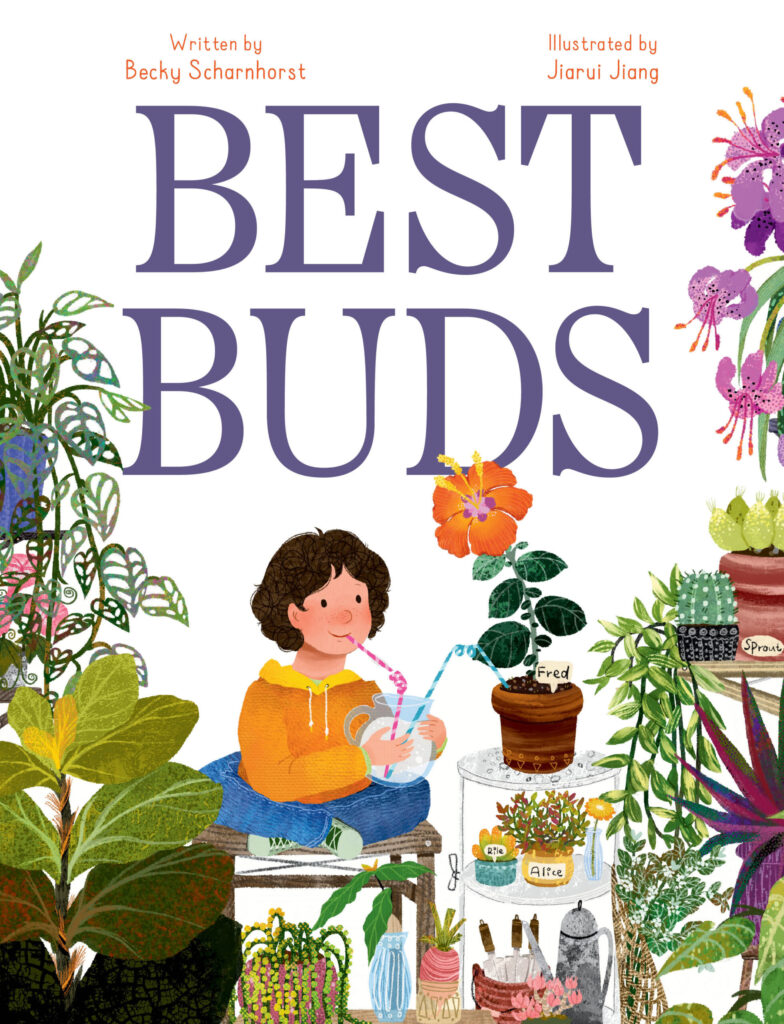

JPU: Best Buds is the most adorable book on earth, and I simply cannot wait for its release on July 8, 2025. Please share what you see as the power Best Buds can have on young readers. What do you hope will speak to kids?

BS: Thank you so much for your kind words about Best Buds! I’m thrilled to hear it resonated with you. My hope is that after reading this story young readers will feel empowered to trust themselves and to embrace their own unique self. In this story, Spencer is confident in who he is and in his choice of friends. He knows what qualities he’s looking for and he finds friends who have them. Even when others question him, he remains true to himself and his chosen friends. I hope young readers feel equally confident in who they are, and I hope it makes them consider what qualities are important to them when it comes to friendship.

JPU: Booklist had this to say about your picture book My School Stinks. “Along with being a good choice for children anxious about their first day, this offers a nifty exercise in reading between the lines. What is your favorite read between the lines in Best Buds?

BS: There is a spread near the beginning where Spencer learns he can buy plant friends at the farmers’ market. The text reads “On a trip to the farmers’ market, Spencer discovered he could even buy friends, though something didn’t feel quite right about that.” 

I love that line because it works on two different levels. Children will think it’s funny even if they don’t understand the hidden meaning behind that phrase because they know you can’t buy friends at the store or market. But older children and adults who do understand the meaning behind the phrase “buy friends” will know that the text is also saying something about the true nature of friendship.

JPU: Friendship. As a principal, I often gathered small groups for special friendship lunches. It would have been great to have a garden at our school to plant friendships. New ideas for picture books come to me when I’m traveling.  Does inspiration strike you when you’re at home, on vacation, at work, or other places?

BS: That’s an interesting question. I was going to say all of the above, but when I started going through my list of books and ideas, I realized most of them came to me when I was at home. I’m guessing that’s because home is where I’m most comfortable and where I can most easily quiet my mind. That said, I have worked out a lot of story problems while hiking, so the forest is another place of inspiration for me.

JPU: Home is where the heart is, right? Speaking of traveling, This Field Trip Stinks is hilarious! In contrast, I think the jokes in Best Buds are more subtle. Is there a line or a spread that makes you giggle?

BS: The spread that makes me giggle the most is the one where Spencer discovers he can buy friends at the farmers, market. However, a close second is the one where Spencer takes his plant friends to various locations. All of Spencer’s lines on that page make me laugh, but I especially love the one that comes right after the librarian comments on how many friends he has brought to story time. Spencer casually replies, “Don’t worry. They’re much quieter than Jeremy.”

JPU: There is that travel theme again…  I do love a busy farmers market where I can replenish my pantry with special honey, plants, and bread. Picture books are extraordinary treasures in of themselves. It’s well known that great teachers use picture books for enhancing their students’ learning. Your extension activities, discussion guides, and resources are super fun and helpful. In your opinion, what are the important features in a tool for teachers, caregivers, and/​or parents?

BS: I think one of the most important features is that the tools are easy to access and easy to use. Parents, teachers, and caregivers are usually quite busy, so if the activities you are providing require a lot of extra prep or materials, they likely won’t get used at all. I also think it’s important the activities are fun for kids. Having curriculum tie-​ins is an added bonus, but I think it’s okay if the activities you provide are purely for fun. We are writing for children, first and foremost, so when creating resources, we need to keep that in mind.

JPU: Here’s one to make you think outside the box. If you were on a panel of kidlit writers talking about platform, what would the audience members be surprised to hear you say?

BS: I laughed out loud when I read this question because I can’t imagine any scenario where I’d be asked to be on a panel talking about platform. This is one of the areas where I struggle the most. I don’t know if I could even describe my platform, though I probably shouldn’t admit that. I admire people who excel at marketing and branding, but I am not one of them. Probably some of that stems from my mixed feelings about social media. I tend to be a rather private person, so I don’t feel comfortable sharing a lot about myself online. At the same time, I want my online presence to be real and authentic, so it’s a struggle to find that balance. The audience might be surprised to hear me say that I’m still figuring it out. Or, maybe that’s obvious after taking a look at my online presence.

JPU: I don’t know about that, Becky. I see you as someone who stands on the nature platform very well.  So, how about your super writer power? How do you kick it into gear when creating an intriguing title with hooks that attracts book buyers?

BS: You’re really digging into to all my weaknesses, Joyce! I am embarrassed to admit that I only came up with one of the titles for my books. I do not have a superpower when it comes to clever titles that will attract book buyers. What I do have are brilliant critique partners who are masters at wordplay! My friend Tara Hannon came up with the title for Best Buds and it is utter perfection. Laura Lavoie is another writing friend of mine who is so good at coming up with catchy titles and concepts. She wrote an excellent blog post about titles that I still refer back to when brainstorming. Titles are hard for me! 

What I usually do is write a list of words and phrases that are associated with my manuscript. Then, I come up with a list of terrible titles using those words. After that, I send the list to my smarty pants critique partners and they usually come up with the perfect title. I’ve also had titles changed by my editor. So, I guess my superpower is surrounding myself with geniuses!

JPU: I agree! Critique partners, editors, and fellow writing community members enrich what we do. I’ve been known to lose myself in research because a news article spurs me to dig into a topic. What is the best rabbit hole you got lost in?

BS: Octopus camouflage! Even though How to Get Your Octopus to School is a fiction book, my editor wanted me to include some facts about octopuses in the back. I thoroughly enjoyed researching these incredible creatures and especially learning more about their impressive camouflage. I don’t think I want to know how many hours I spent watching octopus camouflage videos.

JPU: I have to admit that EVERY time I see an article, video, or book about an octopus, I think of you. Name a children’s book from your childhood that you wished you had written. What makes it special and unique?

BS: I loved The Monster at the End of This Book as a child and I still love it today. I think one of the things that makes it special is that it’s interactive. There are a lot of interactive books out now, but I can’t think of any others from my childhood. Also, the page turns are epic! Young readers cause ropes to snap and brick walls to tumble with the mere flip of a page. It’s empowering and hilarious! It also has one of the best endings ever! It’s silly, surprising, and completely satisfying.

JPU: I need to dig that one out again. Jon Klassen and Mac Barnett just wrote an in-​depth analysis of Go, Dog. Go! on their SubStack Looking at Picture Books. Those older books are sure different from what is getting published today. What is the best advice you can give to a new kidlit writer?

BS: Focus on your craft. There are many excellent resources available to new writers, and a lot of them are free. So, do some research. Read current books. Take a class. Get some feedback. Revise. Revise. Revise. Always be diligent about your craft. And if you can, find yourself some brilliant critique partners.

JPU: Thanks, Becky. Let’s jump into the Speed Round. What is your One Little Word for 2025? 

BS: I didn’t choose a word for 2025, but I am trying to be more deliberate about rest.

JPU: Ah ha. REST. It is a radical act… I need more of that! Are you a book buyer or library user? Both!

BS: I admit to spending way too much money on picture books. But then I have gifts I can give. I do love a good library stack, too.

JPU: What’s funnier? A well-​crafted joke or a surprise?

BS: Most well-​crafted jokes have an element of surprise to them, so I’m not sure how to answer. Can I say both again?

JPU: Now I’m going to have to reread your books to see which technique you use the most. Are you a “pantser” or a “plotter” when writing picture books?

BS: Plotter! I usually spend weeks or months thinking about a project before I put any words on the page.

JPU: Wise. Becky, you’re very wise. What do you have in the publishing pipeline?

BS: I recently received some exciting news, but I’m not allowed to share the details yet. Hopefully I can spill the beans soon!

JPU: NO! I’m not good at waiting… You get THE call from THE children’s book awards committee, what’s your reaction?

BS: Based on the reaction I have whenever my agent calls with good news, I’d say lots of screaming and jumping around. I am the opposite of chill in those situations.

JPU: Thank, Becky. I know for a fact that kids all over will fall in love with Best Buds. I know I did.