

Editor Interview: Alexis Orgera and Chad Reynolds (Penny Candy Books)

This month’s Industry Insider interview has double the goodness and double the fun, thanks to the generosity of Alexis Orgera and Chad Reynolds, the co-​founders of Penny Candy Books.

Alexis describes herself as a partner, friend, daughter, sister, animal lover, road-​tripper, homebody, poet, essayist, children’s book publisher, and an editor/​editorial consultant. She also spends a great deal of time “thinking about justice, imagination, and how to use what we have in our hearts and heads to make the world a little bit better.”

Alexis has also authored two fine poetry collections: How Like Foreign Objects and Dust Jacket, which won the 2013 Elizabeth P. Braddock Prize for Poetry.

Chad is the author of five poetry chapbooks and a co-​founder of Short Order Poems, a poetry collaborative whose mission is to bring poetry to people in unexpected ways and places. He also [apparently] enjoys brief bios. 🙂


RVC: What is the most important thing people should know or understand about Penny Candy Books?
AO: First and foremost, it’s important to know that we focus on diversity. Our mission is to publish children’s literature that reflects the diverse realities of the world we live in, both at home and abroad. This means seeking out books by and about people and subjects that speak to and from a broad range of human experience.

We’re serious about our mission, serious about who’s telling the stories we choose to publish, serious about making books that aren’t exclusionary based on the traditional (old) paradigms. We hope to build a diverse company—authors, illustrators, readers, editors, designers, and more.

RVC: I think that most writers get excited when they hear publishers talking about alternative structures. So much of publishing seems locked into a pre-​1980s mentality, despite the world changing dramatically in many ways.

CR: We’re new to publishing in this capacity, so I think by default we bring our other experiences as teachers, insurance brokers, store clerks, waiters, baristas, etc, with us to this endeavor, and that helps us see things in a fresh way. We’ve had a steep learning curve, and we’ve been keen to flatten it by learning best practices—but we always pause to ask whether a best practice makes sense or if it’s “best” because it’s what’s always been done.

We want to make it as a publisher and part of that involves doing some tried and true things, such as working with royalty contracts and using a traditional distributor. But we want to make it in our own way. Alexis and I both live outside the usual publishing hubs, and this gives us new insights and perspectives. We’re willing to take chances on newer or first-​time authors and illustrators. We have an open submission policy and we don’t limit word or page counts.

RVC: You launched the Penelope Editions imprint in January 2017. In what ways are its books different than other Penny Candy Books titles?

 AO: We launched Penelope to publish books that we loved that didn’t necessarily fit into Penny Candy’s model. We are currently honing Penelope’s mission, but it will have feminist leanings with books that display guts, vision, and humor.

RVC: I can’t help but note that the two of you are poets. Rumor has it that graduate school—and a shared love for poetry—brought you both together professionally. In what way(s) does having a background in poetry prepare you for publishing picture books which, on the surface, seem a good deal different than the work of Billy Collins, Sylvia Plath, W.H. Auden, and Rita Dove.

AO: Poets think a lot about concision of language, the alchemy that imbues words with meaning, and images. We were basically being groomed for kids’ books back in grad school without even realizing it. Going into this business, Chad and I both had strong feelings about the books that shaped us. Those books that really reach in and grab something inside you—they’re essentially poems.

Poetry and kid lit are similar, too, in that they both seek the universal, the experience we can all point to and say, “Hey, I totally get that!”

CR: Poetry and picture books have a lot in common, which maybe explains why poets as diverse as TS Eliot, Gwendolyn Brooks, Randall Jarrell, Naomi Shihab Nye, Ted Hughes, Maya Angelou, Gertrude Stein, Carl Sandburg, Langston Hughes, and many others wrote them.

RVC: Are there any poets of the type one might encounter in graduate school or, say, The Iowa Review, who haven’t yet entered the realm of writing picture books that you think might be well-​suited to do so? 

AO: Oh yes, and we have a few upcoming!
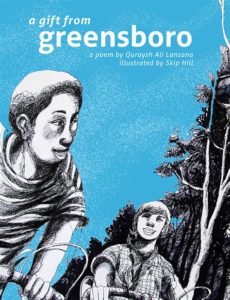
RVC: If they’re anything like A Gift from Greensboro, a poem by Quraysh Ali Lansana that became one of the first Penny Candy Books title, you’re right to be excited. 

Speaking of books that excite readers… prior to starting up Penny Candy Books, what picture books were wowing you? Which ones made you want to get involved in this industry?

CR: When I was a kid, my favorites were Small Pig by Arnold Lobel and A Visit to William Blake’s Inn by Nancy Willard. Pezzettino and Swimmy by the great Italian artist Leo Lionni were favorites of my kids and opened my eyes to narrative and visual possibilities in this genre. Books by Taro Gomi such as Everyone Poops and My Friends made us laugh while inviting us into global conversations. Ruth Krauss’s A Hole Is to Dig and Open House for Butterflies—both with spot illustrations by Maurice Sendak—showed me how well kids can respond to figurative language and leaps of imagination, and how to see the world through a child’s eyes.

But for all the great books we admired before starting Penny Candy Books, we also recognized that American kids’ books could at times feel one-​sided, stagnant, Puritanical, pedantic. A lot of stories that needed to be told, weren’t being told.
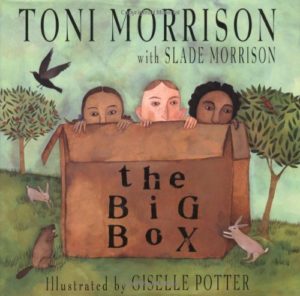
AO: Of all the books I loved as a kid, I don’t think any featured characters of color, except one that I now recognize to have been very racist and colonialist. I had a real love affair growing up with a series of tiny books by Jenny Partridge about the adventures of animals in Oakapple Wood. To name just a few, more recently, Toni & Slade Morrison’s The Big Box really made an impact on me and reminded me what a picture book can do in its exploration of concepts like freedom. Jacqueline Woodson’s This is the Rope, among many of her books, is another that I loved for its treatment of family history through the lens of the Great Migration. The poet Ted Kooser and Jon Klassen collaborated on House Held Up by Trees, which was a very lovely book.

Finally, as we were planning what our books would look and feel like, we pored over books from all over the world to get a feel for the physicality of design. We were inspired by several French books, particularly.

RVC: I keep finding your press listed high up on the Dealmakers list of Publisher’s Marketplace. How many books do you plan to publish per year? And seeing that your authors include writers from Palestine, Australia, and France, some might wonder—is there a conscious ratio in mind of American vs. non-​American authors? 

CR: We are working up to publishing around 20 new titles per year, and we hope to hit that number within 4 or 5 years.

AO: Not a conscious ratio, no, but certainly an eye toward bringing work from other countries into the US kids’ book market. As a culture, particularly right now, we can’t afford to be isolationist in our reading habits. If kids are reading the works of authors from around the world, they’ll grow up with a broader perspective of what the world actually is. It’s not just our slice of it. 

RVC: Now that you’ve been at it for a few years, what are some of the PB world trends you’re noticing?

AO: Diversity is a very important and necessary development. Hopefully it’s not a trend but a reality that’s here to stay. The “Own voices” movement is a critical aspect of diversity, and publishers are finally recognizing that who is telling the story is just as important as the story being told.

RVC: Describe the ideal Penny Candy Books author.

CR: The only ideals we have are that stories ring true and that authors use language in a way that makes these stories sing.

RVC: Last thoughts?

AO: Here’s to big conversations!

CR: Thanks for your interest, Ryan.

RVC: Thanks so much, Alexis and Chad!

Educational Activities: Write On, Irving Berlin! by Leslie Kimmelman and David C. Gardner


Write On, Irving Berlin!
Author: Leslie Kimmelman
Illustrator: David C. Gardner
Sleeping Bear Press
15 May 2018
32 pages


From the author of Hot Dog! Eleanor Roosevelt Throws a Picnic and the illustrator of The Harvey Milk Story comes this vivid picture-​book biography that examines the life of Irving Berlin, the distinguished composer whose songs, including “God Bless America” and “White Christmas,”  continue to be popular today.


Need some reviews of Write On, Irving Berlin?

Kirkus

Publisher’s Weekly

Jewish Book Council


Educational Activities inspired by Leslie Kimmelman’s Write On, Irving Berlin! 

  • Before Reading–Ask students:
    • From looking at the cover, what do you think Berlin is writing about?”
    • What are some of your favorite songs?”
    • What traits make a good student?”
  • After Reading–Listen to three of Berlin’s most popular songs: “Alexander’s Ragtime Band,” “White Christmas,” and “God Bless America.” Discuss which you like most.
  • After Reading–The Berlin family fled Russia in the 1890s because they were persecuted for being Jewish. Have you ever heard of someone being treated poorly because of their religious beliefs? Or the color of their skin? Or for how they dress or act? How does that make you feel?
  • Music–Using a song you know well–perhaps one of Berlin’s or maybe a song like “Twinkle Twinkle Little Star” or “Row Row Row Your Boat”–write your own lyrics. Feel free to be serious or silly.
  • Crafts–Using crayons (or colored pencils) and paper, draw what you think of when you hear the phrase “God Bless America.” What are you thankful for? Listen to the song for inspiration.
  • Writing–Berlin wrote “God Bless America” to honor American soldiers. Write your own letter to American soldiers that thanks them for their service. Consider working with an organization like A Million Thanks to send the letters.

Author Interview: Dianne Ochiltree

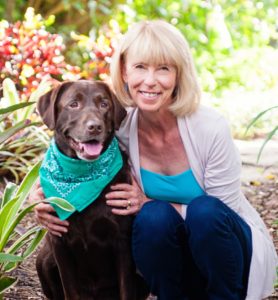
This month’s PB creator interview is with Sarasota author Dianne Ochiltree. She’s a writing coach, freelance editor, workshop presenter, and award-​winning author of books for the very young. She notes that her family’s home “was filled to the rafters with books, books, books,” and that their home “was populated by a parade of pets, from guppy to puppy, as well as the stray animals Dianne had a habit of rescuing.” Talk about the perfect environment for raising a writer!

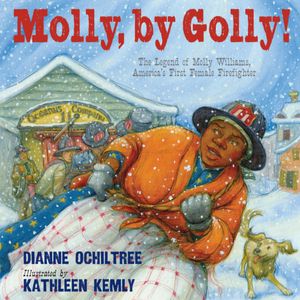
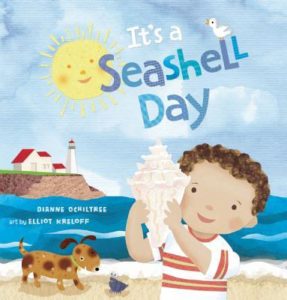
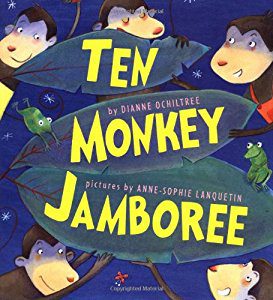
Dianne’s many published books include such titles as Molly, by Golly!, It’s a Seashell Day, and Ten Monkey Jamboree.


I’ll let you in on somethingI know Dianne well. She recently did a well-​received visit to my Writing Picture Books class at Ringling College, and she’s also in my SCBWI critique group where we work on … wait for it … picture books! In short, I KNEW she’d be great for an OPB interview, but my hope was to keep her around until something went sideways and I needed someone completely trustworthy and dependable to save the day in the eleventh hour.

I couldn’t wait. So here’s Dianne. Enjoy!

Website: www.dianneochiltree.com
Facebook: www.facebook.com/dianne.ochiltree
Twitter: twitter.com/WriterDi
LinkedIn: www.linkedin.com/in/dianne-ochiltree-54381118/


RVC: What was your first big break in publishing, and what lessons did it offer you?

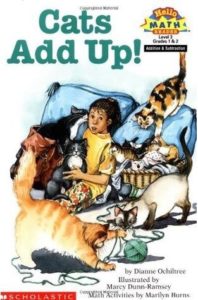
DO: The path to publication of my first book for kids, Cats Add Up! was full of good lessons. A title in the “Hello, Reader!” softcover series from Scholastic, it was acquired directly as the result of attending a children’s publishing conference and making networking connections there. In this case, it was the RUCCL One-​on-​One Conference at Rutgers University, in the mid-​1990s, when I first entered the field of children’s writing. For this conference, writers are accepted on the merit of writing samples sent with the application, because part of the program is a session in which you, and a mentor, focus privately on your writing or artwork. I was thrilled to be accepted and even more excited on that day when I learned my mentor would be Paula Danziger. Paula liked my WIP (work in progress) about counting cats and she made helpful editorial suggestions, including the thought that it might be revised to be a potential title in Scholastic’s “Hello, Reader!” Series.

RVC: That’s amazing. I’ve heard Paula was terrific that way.

DO: I agree! Paula introduced me later in the day to an editor at Scholastic who, while not associated with the series, promised to read my submission when it was ready, and furthermore, to pass it along to the right department should he feel it was a good fit. I left the conference feeling happy that my work was good enough to get professional notice, but never believing that events would unfold in the way they did. I revised and submitted.

Months passed. I figured things had just not worked out with that submission.

However, one day the phone rang with an offer to publish my cat story with Scholastic. Since then, I’ve certainly believed in the power of attending conferences and networking widely. You never know exactly which connection might give you an opportunity to submit work and gain publication at some future date.

RVC: If conferences are your thing, then surely SCBWI been a part of your career.

DO: Absolutely! One of the first things I did when transitioning from marketing/​advertising/​PR copywriting to writing for children was to join SCBWI. I became active in my local chapter and made it part of my learning curve to attend every neighboring or national SCBWI conference possible. I gained a lot of knowledge in a short space of time from those speakers, workshops, and critique sessions in the early days. SCBWI also offers a ton of great information and services online. I made good use of those, too. Still do!

RVC: Let’s talk about your picture books in specific. Many of them—like Pillow Pup and It’s a Firefly Night—use rhyme quite effectively. Where do most writers go wrong with rhyme? And why?

DO: Writers may go wrong with rhyming text in these common situations: when sentences are altered to unnatural or awkward structures simply to suit a rhyme scheme; when story details are inserted or ordered simply to suit a rhyme scheme; when plot action is expanded unnecessarily or repetitively simply to suit a rhyme scheme. In all cases, the narrative choices made by the author were done in service of the rhyme or rhythm, and not the story structure.

Writers owe it to their readers to ask early and often: does this serve the story?  Rhyming or not, STORY is job number one!

Many “rhyming” writers start out trying to be Dr. Seuss. While Dr. Seuss may be the most famous rhyming children’s book author, his style isn’t for everyone. While it’s not wise to imitate someone else, it IS smart to study other authors who effectively use rhyme and learn from these mentor texts just how it works. It often boils down to juicy words judiciously applied.

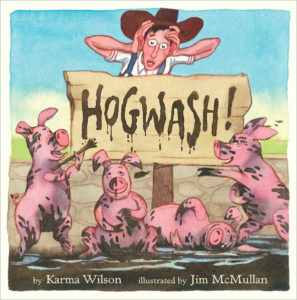
Some of my favorite authors writing text in rhyme are Karma Wilson, Corey Rosen Schwartz, Douglas Florian, and Anna Dewdney. These writers consistently use rhyme to good effect. Here’s an example of an effective rhyming picture book text, from Karma Wilson’s Hogwash!, illustrated by Jim McMullan, which opens this way:

He washed the horses, ducks and cows
The goats, the cats and dogs.
Everything went dandy…
Until the farmer reached his hogs.
“No hogwash for us today.
Pigs love dirtso go away!”

Those rhythmic lines rhyme and are fun to read aloud, yes? But they are also an effective setup for the story to follow. We know the setting (farm); the main character (the farmer); the cast of characters (horses, ducks, cows, goats, cats, dogs, and pigs); and the plot problem to be solved (the pigs do not want to be washed today and plan to resist the farmer’s every attempt to hose them down). All this story structure in less than 35 words, and it reads like a song.

RVC: In terms of being able to create rhythmic lines that are fun to read—and who doesn’t love fun-​to-​read rhymes, right?—what do you recommend people do beyond read good examples from published books? Classes? How-​to books? Something else?

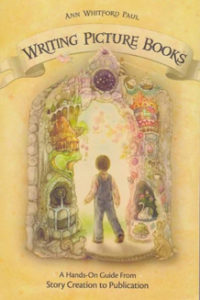
DO: I suggest going one step beyond reading good examples of published books: actually typing out the text for later study. Without the distraction of the illustrations, it’s easier to study the structure and techniques used by the author to build story, setting, and characterization with words alone.  My favorite craft book for picture book writers is Writing Picture Books:  A Hands-​On Guide from Story Creation to Publication, by Ann Whitford Paul.

There are online groups and courses focusing on picture book writingtoo many to mention them all. But my favorite is Julie Hedland’s 12 x 12 Picture Book Challenge, designed to motivate writers to write 12 picture book drafts in 12 consecutive months. Members participate in an exclusive forum and a very active Facebook group where they can ask questions, find critique partners, and share their journeys to getting their books published.

To circle back to SCBWI membership, it’s important to use the online and in-​person networking opportunities to find a real, live critique group of other picture book writers who are committed to improving their craft. There’s nothing like immediate feedback from peers, or group brainstorming on a troubled WIP, to elevate your writing skills.

RVC: Do you have a daily writing routine or do you have less scheduled strategy to find writing time?

DO: Because of the multi-​tiered nature of my life these daysI’ve added writing coach, freelance editor, yoga instructor, and wife of a retired-​business-​man-​turned-​rock-​musician to the mixmy old, predictable writing routine of the past isn’t always possible. Instead of working in larger, pre-​planned blocks of time, I now work in smaller, spontaneous chunks of time. I keep a notebook handy so I can jot down ideas, phrases, etc. as I travel through my day. I’ve found using pen and paper to write bits of narrative (instead of on the computer keyboard at my desk) has changed my writer’s voice somewhat, making my storyline and words more heart-​driven. The urgency of writing what I can when I can has eliminated some of the “narrative circling” that has been my creative bad habit.  I find I am ALWAYS thinking of the approach to plot and characterization and theme when I must be away from the keyboard physically these days. It’s helped me focus quickly on the WIP when I finally get my B.I.C. (“butt in chair”) as Jane Yolen so famously advises us all to do.

RVC: Tell me three words that you hope come to a reader’s mind when they think of your picture books.

DO: “Read it again.”

RVC: Thanks so much, Dianne!


Picture Book Review: They Say Blue by Jillian Tamaki


They Say Blue
Author: Jillian Tamaki
Illustrator: Jillian Tamaki
Abrams Books for Young Readers
13 March 2018
52 Pages


This month’s PB review is by Ryan G. Van Cleave (Big Cheese at Only Picture Books) and Ringling College of Art and Design Illustration Professor Katy Betz.

–Ryan’s Review of the Writing–

Caldecott and Printz Honor-​winning illustrator Jillian Tamaki’s They Say Blue clocks in at a beefy 52 pages versus the far leaner (and more traditional) 32-​page format. That’s not to say that this is a text-​heavy book, however. In fact, most pages with text only have 10 words or so, which makes sense since the strength of this quiet book resides in Tamaki’s compelling illustrations.

The main character is an inquisitive young girl who undergoes an almost philosophical exploration on the idea of color starting with the blue of the sky and the sea and ending with black crows flying: “Tiny inkblots on a sea of sky.” In many ways, the somewhat lyrical, nonlinear story is about curiosity–it has a kind of imaginative carpe diem feel throughout, or at least a “stop and smell the roses” lesson. But some readers might find the text a bit meandering and the ending too abrupt to be as richly satisfying as the wonderful artwork.

To be clear–there is no plot. It’s far more of a series of vignettes or musings.

Those who prefer picture books that generate discussion might find the girl’s color- and season-​based ponderings to be quite fruitful. For example, what reader won’t react when she cups water in her hands and says, “I toss it in the air to make diamonds”? Or when she stretches her arms to the sky and somehow transforms into a tree?

In sum, They Say Blue is a memorable book with more than a few picture-​perfect spreads, though it’s clearly the expressive artwork that carries the day.

3.75 out of 5 pencils

–Katy’s Review of the Illustration–

Jillian Tamaki’s illustrations in They Say Blue burst with energy and soulful contemplation. Readers will discover hidden truths about life on each page, thanks to the imaginative narrative and clever compositions.

Using traditional media of acrylic on watercolor paper, Tamaki invites readers to wonder through use of bold colors and sweeping textures. Her imagery plays off the text beautifully–sometimes visually supporting what the main character is thinking, while other times purposefully contradicting to evoke curiosity and surprise. The power of color association is often used to enhance conceptual facts, making us feel something instead of just think. And a few sequential drawings throughout the book illuminate concepts of time and transformation, integrating both literal and metaphorical imagery seamlessly.

They Say Blue is a pictorial delight that will inspire readers to never lose their sense of wonder.

5 out of 5 crayons


A Professor of Illustration at Ringling College of Art and Design, Katy Betz works with both traditional and digital media and is active in the fields of children’s literature, gallery, and editorial illustration. When not working in the studio or classroom, she says that you can find her “playing outdoors in the Florida swamps or hiking the California Sierras with a sketchbook in hand.”

Katy is represented by Christy Ewers of CATugeau Agency.

Editor Interview: Sylvie Frank (Paula Wiseman Books)


This month’s Industry Insider interview is with Sylvie Frank, Senior Editor at Paula Wiseman Books, a boutique imprint of Simon & Schuster’s Children’s Division. She is the editor of award-​winning and critically-​acclaimed books including Strictly No Elephants by Lisa Mantchev, illustrated by Taeeun Yoo; I Have a Balloon by Ariel Bernstein, illustrated by Scott Magoon; Miss Mary Reporting: The True Story of Sportswriter Mary Garber by Sue Macy, illustrated by C. F. Payne; and OCDaniel by Wesley King.

Since joining Paula Wiseman Books in 2013, Sylvie has been on the prowl for literary, character-​driven middle grade and kid-​focused, snappy picture books. She is drawn to original and diverse voices across all genres. One of her favorite pastimes is browsing agents’ and illustrators’ websites for new talent. When she’s not reading, Sylvie can be found running while listening to audiobooks.

Or answering interview questions from OPB via email.


RVC: At an SCBWI event in Orlando maybe 5 years back, you said one of the most common reasons you were rejecting PB manuscripts was that they were “too quiet.” What kind of trends–good, bad, or otherwise–are you seeing in PB submissions these days?

SF: I still see a lot of submissions I would call too quiet. It’s been interesting and encouraging to see that our divided political times have led to writers and illustrators channeling their energy and frustration into their work: I’m seeing a lot of picture books that celebrate acceptance, diversity, and individuality, as well as books that are calls to action. There’s absolutely a need for these books, but I’m anticipating a tidal wave of them starting this fall. Where some of these manuscripts go wrong is that they can read more like mantras than picture books, which can make it difficult to develop a visual concept.

RVC: Let’s talk about “visual concepts” for a moment. How much should PB writers (not author/​illustrators) be thinking about that with their own manuscripts? Are there ways that these writers can communicate a useful/​helpful/​appropriate sense of their vision without stomping over the illustrator’s turf or rubbing editors the wrong way?

SF: This is so tough for writers. They should have a completely solid vision for their book. After all, a picture book relies equally on text and art to tell a story (if it’s not wordless, that is). As the writer, you should have a thorough understanding of how the book could page out and what scene might unfold on every spread. If a writer is thinking only about the words, then likely the story will not have enough of a visual component to make it a successful picture book. It’s for that reason that I encourage all writers to make picture book dummies as a step in their writing and revision process. But here’s the catch: writers must then let their visions go. It’s a lot to ask—I know! But the art of creating a picture book means that the illustrator’s vision is just as important as the writer’s. So, it’s the writer’s job to write the story in succinct, specific, action-​filled words that leave space for the illustrator to show the story. That means leaving out descriptions and leaving action open to the artist’s interpretation. Things to leave out: the weather, what a character is wearing or how he/​she/​it looks, describing how someone gets somewhere, etc., etc.

Resist!

Of course, this leads us to the topic of art notes. I’ve heard of many editors who believe that if a picture book manuscript requires art notes, then it’s not good enough. I’m not quite so strict. My personal opinion is that if the action is visual and does not require narrating, a very, VERY brief art note can be used so that the editor or agent understands how the action is progressing. As the writer, if you envision a scene in which your protagonist has baked a cake and gotten flour, frosting, and sprinkles absolutely everywhere and it’s the climax of the story, the manuscript could read: 

I was going to be in big trouble.

Then an art note could say: [Art note: Baking project has gone awry.] 

You do not need to tell the illustrator (or editor or agent) that there is flour on the protagonist’s nose and sprinkles on the floor. These details are up to the illustrator to decide, and potential editors and agents have excellent imaginations: they can create this scene in their heads. That’s why they’re good at their jobs.

RVC: Speaking of people being good at their jobs—it seems that more and more often, a PB’s final title is decided well after a contract is signed, thanks to input from editors and other publishing pros. Is that the case at Paula Wiseman Books or is that just anecdotally true? And how important is it to have a WOW title during the submission process if it’s more than likely going to be changed at some point?

SF: I would never let a less-​than-​stellar title deter me from acquiring a manuscript I loved—although I would likely try to come up with a better title before taking the manuscript to acquisitions. It’s frequently true that manuscripts get renamed somewhere along the publishing path, but certainly not always. Some manuscripts come my way with a perfect title and we never even consider changing it. Some titles require weeks and weeks of brainstorming and agony before we find the right one. Every book is different, and I’m cool with that.

RVC: When I think about a Paula Wiseman Books PB, the word that comes to mind is “heart.” Please explain what “heart” is for you when it comes to PBs, and how important is it in the acquisition conversation?

SF: I like to hear that! Thanks! I call “heart” a lot of different things: theme, emotional core, re-​readability factor. I worry that “heart” makes it sound like we only publish books that could be called sweet, and that isn’t the case. In essence, heart is what makes a reader come back from more. I always think about someone browsing in a bookstore. Picture books can be read in their entirety during a browsing session. If a book can be read, digested, and forgotten while the buyer is shopping, why would he or she buy it? But if a book encourages the purchaser to slow down, consider what it means, and—best of all—want to return to read it again, that increases the likelihood that he or she will buy it. So that’s what I mean by re-​readability factor: there has to be enough that is substantial and thought provoking to convince a busy parent/​aunt/​uncle/​grandparent/​whoever to drop $16.99 on this book (and make space for it on their bookshelf!) in order to share it with a kid.

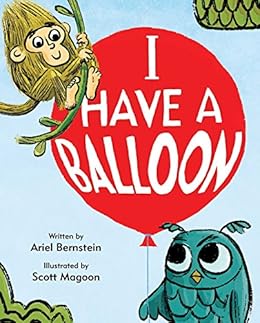
People frequently share book ideas with me. “What about a book about a kitten that pretends it’s a cow?” My response to all ideas is, “Sure, write it. But what’s it about?” What I mean by that is there needs to be an emotional aspect to the story. A good example is a book I edited called Strictly No Elephants by Lisa Mantchev and Taeeun Yoo. On the surface, it’s about a boy and his pet elephant who are excluded from pet club. But the emotional core of the story is about making change, creating inclusive spaces, and celebrating difference. I want to give another example of a book that I find completely hilarious (and yes, it’s also one I edited so perhaps I am biased), called I Have a Balloon by Ariel Bernstein and Scott Magoon. The plot is that an owl has a balloon and a monkey wants it. But it’s really a book about wanting what you can’t have, negotiating, and assigning value to objects; it’s basically an economics lesson. So: heart is that extra layer of nuance and meaning. It’s what starts conversations between the person reading aloud and the child.

RVC: What’s it like working for a NY publisher but living in Colorado?

SF: Fab! I feel really lucky. Technology makes it easy. Between FaceTime, email, and UPS, I’ve got it covered. I visit the office four or five times a year for sales meetings and try to make the most of the real face time with my colleagues. I miss the bustle of being in the office every day, but overall my collaborations feel just as productive and creative as they always have. I should also add that there are benefits to having someone on the team who has a non-​NYC perspective and can cultivate relationships elsewhere. For example, it’s been really valuable (and fun!) to become involved with the Rocky Mountain SCBWI chapter and to network with the fantastic local independent bookstores (shout-​out to Boulder Book Store and Tattered Cover in particular!).

RVC: Favorite munchies to enjoy with a terrific book?

SF: I’m a sucker for chips and salsa. Mmmmmmmmm.

RVC: Instead of asking you flat-​out what you’re looking for, please share three of your titles that are a good representation of what you value in a PB submission.

SF: I’m so glad you asked!

I Have a Balloon by Ariel Bernstein and Scott Magoon

Small Walt by Elizabeth Verdick and Marc Rosenthal

Strictly No Elephants by Lisa Mantchev and Taeeun Yoo

RVC: Thank you, Sylvie!


Paula Wiseman Books

Sylvie Frank on Twitter

Sylvie Frank on LinkedIn


Educational Activities: After the Fall by Dan Santat


After the Fall
Author: Dan Santat
Illustrator: Dan Santat
Roaring Brook Press
3  October  2017
32 pages


From the New York Times-bestselling creator of The Adventures of Beekle: The Unimaginary Friend comes the inspiring epilogue to the beloved classic nursery rhyme Humpty Dumpy.

Everyone knows that when Humpty Dumpty sat on a wall, Humpty Dumpty had a great fall. But what happened after?


Need some reviews of Dan Santat’s After the Fall?

Kirkus

BookPage

Lu & Bean Read

Fab Book Reviews


Educational Activities inspired by Dan Santat’s After the Fall

  • Before Reading–Read the original Humpty Dumpty nursery rhyme with students, then ask: 
    • What was Humpty Dumpty doing on the wall?”
    • Why did Humpty Dumpty fall?”
    • Why couldn’t ‘all the king’s horses and all the king’s men’ put Humpty Dumpty back together again?”
    • What would YOU have done to help Humpty Dumpty after his fall?”
  • After Reading–Read a nursery rhyme (other than “Humpty Dumpty”) aloud to students and then have them write/​tell/​draw the “what happened next?” sequel to the story. (Some suggestions: “Little Miss Muffet,” “Jack and Jill,” or “Incy Wincy Spider”)
  • After Reading–Have students write/​tell/​draw about a fear or worry in their own lives. Consider having them to write/​tell/​draw a way to overcome that fear or worry, as well.
  • Science–In many ways, After the Fall deals with the idea of flight. Create a paper airplane and learn about the four forces of aerodynamics that allow a plane (or a bird) to fly. 
  • Crafts–Create a Humpty Dumpty paper plate puppet. Allow students to decorate it as they choose or model their puppet after any of the egg characters in After the Fall.