Author Interview: Liz Garton Scanlon

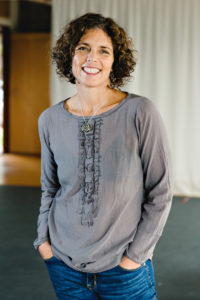
This month’s author interview is with Liz Garton Scanlon. I had the pleasure of witnessing two days of her talking about picture books at the June 2018 SCBWI Summer Workshop in Orlando. Let’s be clear—I filled two pads of paper with scribbles/​notes.

She’s got bunches of things worth sharing as introductory bio material, but let’s just focus on the 10 factoids about her that I find most fascinating. Without further ado, they are:

  1. She “wrote an overly long autobiography in second grade.”
  2. She’s lived in Colorado, Wisconsin, Ohio, England, Colorado (again), California, and Texas, where she has since lived for many years. (Austin, Texas shout out!)
  3. She aspires to one day beat her family at board games.
  4. She has “dozens of cousins.”
  5. She has “very curly hair.”
  6. She is “darn good at shuffling cards.”
  7. She teaches at the Vermont College of Fine Arts.
  8. Her dream breakfast? Strong coffee and gingerbread pancakes.
  9. She works, mostly, in a “closet-​sized studio at an old library table.”
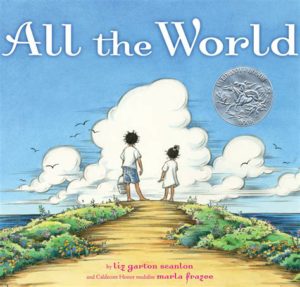
  10. Joanne Woodward narrated a video Liz’s second book, All the World.

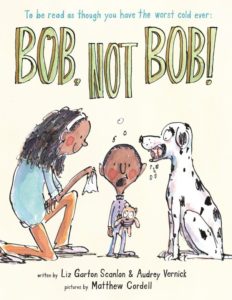
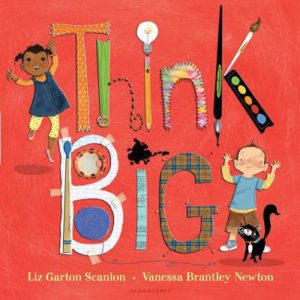
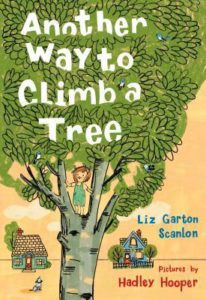
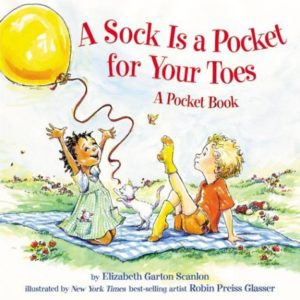
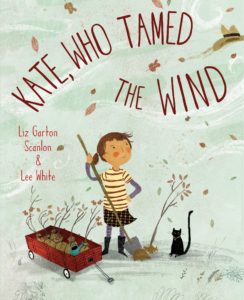
And the bonus factoid #11? She’s the author of lots of picture books, including these three (below) that I dig quite a bit.


Website: http://lizgartonscanlon.com
Facebook: https://www.facebook.com/liz.g.scanlon
Twitter: https://twitter.com/lgartonscanlon
LinkedIn: https://www.linkedin.com/in/liz-garton-scanlon-8045533/


RVC: I can see where degrees in journalism and English can lead you to the path to writing for kids. Same with editing a poetry journal. But corporate marketing communications? Was writing picture books an antidote to that? Or did that offer you skills that translated better than one might expert to writing picture books?

LGS: Ha ha—this question makes me laugh! YES, writing picture books is an absolute antidote to writing corporate communications. I left that job after one too many conference calls sent me to bed with a migraine. When I finally got up, I knew I was done.

That said, the work served me in many ways. First, it made it possible for us to have babies, pay our mortgage, and send my husband to graduate school all at the same time! But also, corporate work provided a steep learning curve in subject matter that was new to me since it required precision on a deadline and it asked for brevity and flair. I think I got to be a better writer through all that, so I’m thankful.

RVC: A Sock Is a Pocket for Your Toes is a fun title. That was your first picture book, too, right? What’s the story of how that came to be?

LGS: Yep, that was my first book. I wrote it when my eldest daughter was a baby. I was getting her dressed one day and said, “Look, a sock is a pocket for your toes!” and instantly, I was flooded with more than enough pocket metaphors to fill a picture book! But it wasn’t just my first book—it was also a mini-​education in writing rhyme for kids. I had submitted a manuscript that was, metrically, very loose—almost free form—and my editor asked for exactitude. Predictable syllabics and rhythm for the read-​aloud set! This makes sense when you think about it, but it was a tough lesson to learn because revising rhyme is excruciating.

RVC: Let’s talk about rhyme a bit more. Pretty much everyone likes it … when it’s done well. How DOES someone write/​revise for rhyme? Any strategies? Tips?

LGS: Oh, rhyme. It’s so good when it’s good, isn’t it? So musical. So memorable. But boy, is it tricky. Here’s the thing—it’s more than coming up with a few decent end rhymes. It’s coming up with perfect end rhymes that actually serve the story at hand. That say what we want them to say. That say what the story needs (rather than forcing an illogical digression just to make the rhyme work). And it’s about perfect meter, too. Rhyme is nothing without meter, so we need a regular syllabic pattern along with the rhyme scheme, and we need to make sure we’re not having to put the emPHAsis on the wrong syLABble when we read it aloud.

As for revising, we must be willing to unravel the whole thing if necessary. We tend to think that once rhyme is drafted, it’s sacrosanct. But sometimes we have to pull it apart—and even toss out darn good lines—to get it right.

RVC: On one hand, the story of how A Sock Is a Pocket for Your Toes is one of those easy-​peasy it-​worked-​like-​magic tales, right? But didn’t it also have quite a few hiccups/​challenges along the way?

LGS: Sure, every book has its hiccups. And speaking of rhyme and meter, I wrote and submitted that manuscript with no discernible pattern to it at all. I thought I was composing jazz, and that the variations were creative and fun! My editor helped me see that I was making it almost impossible to read aloud and I’d done away with all the rhythmic predictability that makes rhyme so pleasurable to kids. Honestly, A Sock Is a Pocket for Your Toes served as my own mini picture book boot camp, and I needed it.

RVC: Your Caldecott-honored picture book, All the World, was illustrated by Marla Frazee. What was it like working with her?

LGS: I was a serious devotee of Marla’s work long before she was my illustrator or my friend. In fact, our first-​ever contact came via a fan letter I wrote her after reading the Clementine books with my girls. Her illustrations in All the World made the book what it is—a physical place of beauty and comfort and communion open to every reader. And making it together was, really, a deep pleasure. The process was more collaborative than most picture book projects in that we spent time over many months—via phone and email, and with our editor Allyn Johnston of Beach Lane Books—massaging the text and illustrations until the marriage was just right.

I’ll always treasure that experience and the final product.

RVC: Speaking of collaborations … you’ve successfully written picture books with Audrey Vernick. What’s your secret? What do you get out of collaborating? How do you make it work so well?

LGS: Key to collaboration is admiration and connection and respect. If I didn’t adore Audrey and her writing—and vice versa—I don’t think this would work. Also, we do something kind of brave (or crazy)—we write by passing a Word doc back and forth, and we don’t use comments or edit mode. At all. When it’s our turn, we just add and delete and amend as we see fit. Without permission. We take absolute ownership—until it’s time to send it on. In that way, the piece is completely ours and then again, not ours at all. The result is that we’re deeply engaged but not egoic, which is good for the work and our own well-​being. Also, it’s really fun.

RVC: While I’m sure that you had some degree of fun while writing of all of your books, it seems that Kate, Who Tamed the Wind might’ve also provided a lot of challenges for you. Far more than usual, right?

LGS: That book. Oh, mercy. It took more than fifteen years from idea to publication. And more than 100 drafts. There are rhymed and unrhymed versions. Versions with a man, a woman, a little boy, a little girl. Versions written in past tense and present.

Honestly, if there was something to try, I promise you I tried it. What I wanted, in the end, was something lyrical, relational, environmental, cumulative, mystical, personal, read-aloudable—and I guess it just took me a long, long time to achieve all that.

RVC: Let’s talk about the drafting process. You’ve got an interesting idea regarding the value of those first drafts.

LGS: Anne Lamott talks about “shitty first drafts,” and this is just my version of that. I constantly remind myself that a first draft doesn’t have to be lovely. It doesn’t have to flow, or be the right shape or length. It doesn’t have to be good at all! It just has to reveal itself to me.

It’s a place where I get to bumble about, where I get to walk myself into the story—to tell myself the story. Once I’ve done that, then it’s time to figure out how to tell it to everybody else.

RVC: Speed round! Hardest word you’ve ever managed to rhyme well.

LGS: Oooo, I’ve got a few. Lemonade. Steadfast. Strut. I do love the puzzle of a good rhyme!

RVC: An illustrator you’d love to work with on a future book of yours.

LGS: I have SO MANY ILLUSTRATOR DREAMS. Many of them, of course, have been answered! (I’ve been very, very lucky in this regard.) As you know, I just spent a day teaching with Floyd Cooper at the Florida SCBWI conference and I love that man and his work, so that would be pretty great. But I’m also always yearning to work with up-​and-​coming female illustrators who are still having a harder time getting noticed in the picture book world. More than half my books have been illustrated by women and I’m liking that track record.

RVC: If you had to write longhand, would you use a pencil or pen?

LGS: Pencil—as long as it was really sharp.

RVC: If you never became a writer, you’d instead be …

LGS: A lawyer. I like arguing and I did well on the logic portion of the GRE. So, yes. A lawyer … but living on a horse farm.

RVC: Best late-​night snack?

LGS: Popcorn with chili powder and brewer’s yeast.

RVC: Favorite non-​kidlit genre to read?

LGS: I always have a novel, a collection of short stories, and a book of poetry on my bedside table. I choose based on time of day, emotional state, and exhaustion level.

RVC: Best compliment a child could ever give you about one of your books?

LGS: “I’m gonna write a book like this someday.”

RVC: Thanks oodles, Liz!

Picture Book Review: Perfectly Norman by Tom Percival


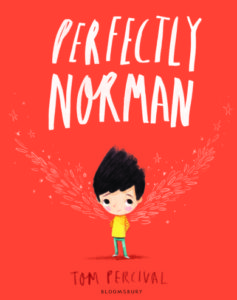
Perfectly Norman
Author: Tom Percival
Illustrator: Tom Percival
Bloomsbury Children’s Books
1 May 2018
32 pages


This month’s PB review is by Ryan G. Van Cleave (Employee of the Month at Only Picture Books) and Florida-​based author/​illustrator Linda Shute.

–Ryan’s Review of the Writing–

Maybe it’s because I’ve been binge-​watching Glee or because I have a teen and a tween living under my roof, but I’m smitten these days by books that encourage young people to be who they are versus who others want them to be. And that’s the story here with poor Norman who plays with his dog and seems just like every other little boy until one day, he sprouts a set of beautiful wings. He flies and zooms and soars, as happy as can be. But then he gets worried what everyone else will think. No one else has wings, do they? What will they all think?

So he hides those wings under a big coat and kind of huddles into himself.

As one would expect, wearing a big yellow jacket all the time is no fun and creates its own set of problems. Bath time? Bed time? Birthday parties? Yikes. “The coat was hot and uncomfortable, but Norman had decided that no one should see his wings–ever.” Norman remains in misery on the sidelines while the other kids go about their lives and do kid stuff.

Finally, thanks to the encouragement of his parents, Norman sheds his coat and reveals his glorious, colorful wings. And in doing so, a few of his peers are empowered to do the same and show their own wings. The sky is filled with flying kids who are having the time of their lives.

So while Norman might not be “perfectly normal,” he is “perfectly Norman,” and that’s far more important, he realizes at last.

Of course, the wings symbolize freedom and the story is fairly on-​the-​nose regarding its message that it’s better to accept your true identity than to live any type of lie. That’s a message every parent can support.

Many readers will feel uplifted by this tale of finding one’s place in the world. An enjoyable and satisfying read.

4 out of 5 pencils

–Linda’s Review of the Illustrations–

Right from the git-​go, it is hard to miss Perfectly Norman. The book stands a foot tall and gleams life-​jacket red. Even the brush script title glows in the semi-​dark. Strongly designed by Bloomsbury’s Goldy Bond, it is the ideal format to be read and shown to a young group because the target audience is not just the “Normans” out there, but their friends and classmates. Percival’s characters are drawn simply and lightheartedly with emotional appeal, inviting reader identification.

Norman lives in a sepia suburb. The townhomes, his diverse friends, and even his parents (one noticeable darker than the other) occupy bland tonality, but NOT NORMAN! He is the colorful character in their midst starting on page one. The only creatures, besides Norman, who live in the domain of color are the birds, in their bit of blue sky—a spoiler clue revealed on page two that can be enjoyed upon rereading. The spotlight is on Norman in his yellow clothing, and on the birds and (Let’s not forget!), the multi-​hued wings, focusing young listener/​viewers on Norman’s journey right through to its chromatically joyous conclusion.

And once Norman’s story is revealed…well, there’s time to go back and wander the interesting, humorous, warm details of his sepia world. This is a picture book that works on many levels.

4 out of 5 crayons


Linda Shute is an author/​illustrator who earned a degree in art and art history at Florida State University and taught children’s book illustration at Ringling College of Art and Design.
She loves peanuts and beach sunsets.

Picture Book Debut: Tim McGlen’s Antonino’s Impossible Dream (with cover reveal!)

For those OPB readers who’ve asked for more behind-​the-​scene stories about debut picture book authors—this one’s for you!

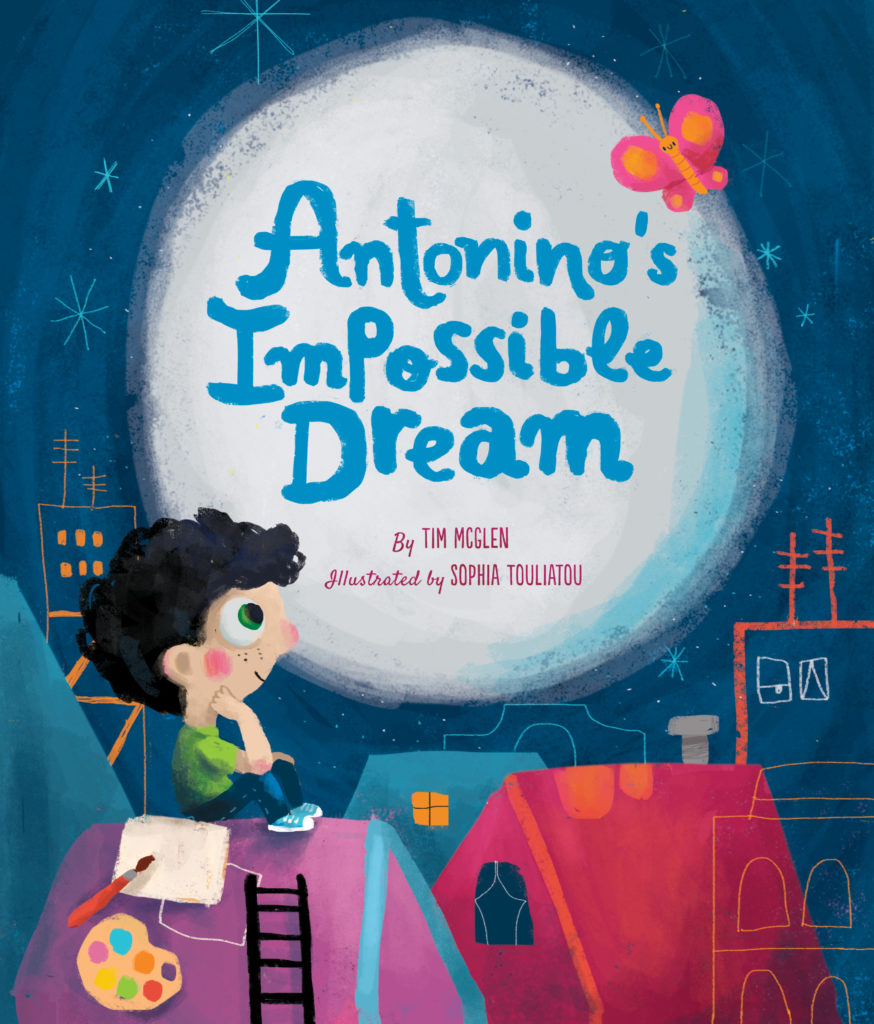
It’s with great pleasure that OPB has been asked to debut the cover of Antonino’s Impossible Dream by first-​time picture book author Tim McGlen. The book is being published after winning the Second Annual Prize for Original Children’s Book by by Minneapolis publisher Beaming Books. About the manuscript, Development Editor Naomi Krueger said, “Antonino’s Impossible Dream is such a fresh portrayal of how art and the willingness to learn new things can bring people together. Our team was captivated by the unique storytelling voice and the possibilities for vibrant art to go along with this artsy story.”

Tim McGlen teaches at a Montessori school, where he enjoys seeing children discover their potential as learners, creators, friends, mentors, teammates, and community members. His involvement in Florida’s SCBWI community makes him a happy writer. When Tim’s not teaching or writing, you can find him working out stories on his bicycle, cooking up flag football plays, or reading.

Twitter: https://twitter.com/TimMcGlen
Facebook: https://www.facebook.com/tim.mcglen


RVC: What were the biggest challenges you encountered when first trying your hand at writing picture books?

TM: As a short story author, I had no idea how to write a picture book. My first manuscripts clocked in at 1,200 words. Sound familiar, anyone? It took committed study and deconstruction of good picture books, learning at SCBWI conferences, and reading books like Ann Whitford Paul’s Writing Picture Books to begin to gain competency.

RVC: What are a few of those picture books that proved most useful to you early on?

TMMy Red Balloon, by Kazuaki YamadaSalina Yoon’s Be A FriendWhere the Wild Things Are, of course. All are spare with their language.

RVC: So let’s get to the big story here. Antonino’s Impossible Dreamyour debut picture book—is coming out in spring 2019. What’s it like being a debut picture book author waiting for your book to hit the shelves? (Though it is available for pre-​order already!)

TM: A lot of work is being done by other people, so I just keep to my routine of writing, revising, and studying. At the same time, random little gurgles of “Oh, yeah, this is really happening!” bring excitement. I’m mostly eager to see Sophia’s finished spreads. She’s a talented artist.

RVC: How did Antonino’s Impossible Dream come about? What’s the story of how that story came to be?

TM: It’s a book about what making a friend looks like. A little more than a year ago, I knew I needed to write something that would rise above my other manuscripts. I hopped on my bicycle, pedaled away from humanity, and started speaking first lines. Another good manuscript came from that same ride. Now the manuscripts from “before” sit in a file cabinet, and I work on new material. I wonder if that line has to happen in every writer’s life.

RVC: What’s been the biggest surprise in terms of the manuscript-​into-​final-​product process so far?

TM: The revelation that as picture book author I am one third of a collaborative project was something I never thought that deeply about. And in saying that, I’m thankful to work with an editor who has such a strong vision for this book.

RVC: Describe what it’s like working with an editor who has a strong vision for your book.

TM: I submitted a honed manuscript with zero art notes to leave plenty of room for visual interpretation, and Andrew figured it out. He saw the book around the words. He envisioned a distinct setting and how it integrates into character. He saw an artistic style.

RVC: This is Only Picture Books’ first cover reveal. Thanks for that, by the way! But tell me—what’s the big deal about cover reveals for picture book creators? What does it mean to you personally to finally see the fully-​imagined cover?

TM: The cover is the portal into the story world. It’s what every child sees first, what launches their imaginations. Setting, protagonist. I would like to spend some time here, with this person who could even be me. The cover is the agent of the experience awaiting inside the book.

So to see Antonino’s cover rendered so expertly fills me with hope that children will want to climb into the book and stay there.

RVC: What did you edit out of Antonino’s Impossible Dream?

TM: Good material that did not belong in the book, discovered primarily through dummying.

RVC: Three words that come to mind when you look at the cover of Antonino’s Impossible Dream?

TM: POSSIBILITY. (Isn’t that ironic? Thanks, Sophia!)

CREATIVITY.

WOW.

RVC: What’s the next picture book project for you? A sequel to Antonino? Something else?

TM: Anthropomorphism. Fish out of water. And yes, a sequel. Thank you, Ryan.

RVC: Thanks, Tim. Best of luck for you and Antonino!


Freelance Editor Interview: Mary Kole

This month’s Industry Insider interview is with freelance editor and book consultant Mary Kole. I know her from Way Back When because she was the then-​assistant to my then-​literary agent, and in that role, Mary Kole provided solid feedback and advice on some of my kidlit projects.
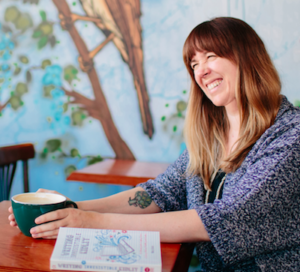
She’s perhaps the ultimate Industry Insider because she’s done such a wide range of things in the world of writing and publishing. She earned an English and Theatre BA at Santa Clara University, then began a career freelance writing for newspapers and magazines, including the Los Angeles Times. While pursuing her MFA in Creative Writing at the University of San Francisco, she interned at her first literary agency. Upon completing her degree and securing representation for her own writing, she interned in the children’s editorial department at Chronicle Books in San Francisco.

She went on to read for the Andrea Brown Literary Agency (that’s where I first ran across her!), one of the oldest and most prestigious children’s book literary agencies in America. Three and a half happy years there as an Associate Agent gave her a solid foundation in the business and cemented her love for all things children’s literature. She then became a Senior Literary Manager and founder of the children’s book department at Movable Type Management in New York City. In 2013, she left to finally pursue her first love, editorial work, full time.

My work directly with writers had always been my favorite part of agenting,” she admits, “so it wasn’t a tough decision to make.”

Who better, then, to share industry wisdom and insight about the picture book world with the OPB family?

Website: www.marykole.com
Website: www.KidLit.com
Facebook: www.facebook.com/kidlit
Twitter: twitter.com/kid_lit


RVC: Most people probably know you as the dynamo behind Kidlit.com and/​or the author of Writing Irresistible Kidlit (one of the better books on writing for authors of any genre). How did those projects come about?
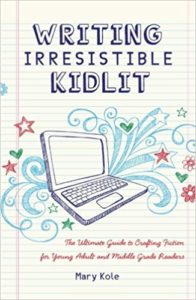
MK: Thanks! I started reading for a literary agency in 2008, while I was doing my MFA. There were so many easily avoidable mistakes in the slush, and I found the whole publishing process so fascinating, that I decided to start a blog about it. Kidlit has been my platform to talk about writing and publishing ever since. It grew into a more organized book in 2013, and I challenged myself to create an entire writing reference guide from scratch, instead of using existing blog content. It was so much fun to write, because I love teaching on the subject of writing and publishing. I also included a lot of examples from my favorite books of the era, so the whole thing was like a giant book report. Writing that book was one of my fondest memories, and I’m so grateful that it’s still out there, speaking to writers.

RVC: What has doing them taught you?

MK: It’s funny. My agent for the book was Andrea Brown, who was my boss at the time. The book cleared acquisitions and I was pretty much floating when Andrea called. But the first thing she told me was, “This book deal isn’t going to change your life.” If you know Andrea, you’ll laugh. She is wise but can sometimes be quite direct. In the moment, I really thought she was raining on my parade. But she was right. Publishing a book, believe it or not, didn’t change my day-​to-​day life. Sure, it’s probably the accomplishment I’m most proud of, but I didn’t wake up on a yacht the day after it came out, if you know what I mean. What it has done, however, is push me to think deeper and harder about my craft, and to come up with new ideas, better ideas…

The book and the blog are my challenge and my motivation. They both inspire me to keep putting one foot in front of the other. I think I finally understand Andrea’s point. The book deal wasn’t the life-​changing destination. It was the first step of the journey of my life’s work.

RVC: You’ve worked in publishing (Chronicle Books), agenting (Andrea Brown Literary and Movable Type Management), and the freelance world—the bookworld trifecta! Which of these held the most surprises?

MK: I’ll take the “triple threat” label. As a former (tragic) theatre major who couldn’t act, sing, or dance, this is probably the first time it has applied! Agenting was probably the biggest wake-​up call. I was surprised by how big the global publishing world is (hellooooo, Bologna Children’s Book Fair), and also how small, sometimes. Meaning that it sometimes really does come down to category and trend and what a house wants to publish and what the spreadsheet projections say. Projects I loved would fail to sell and utter tripe would shoot up the lists. It was a crash course in the intersection between art and business. And I’m still not entirely sure that it’s not all a complete and total crapshoot.

But one thing I learned is that writers who keep working and honing their craft and coming up with new ideas do tend to persevere. There is a place on shelves for those who are dedicated enough to learn the business side of things. At one point or another, business and art might just intersect with their particular project. The point is to be out there, waiting at that intersection, as frequently as possible. That’s why I like my current job best of all: I can work directly with creators to take their work to the next level. After all, “Success is where preparation and opportunity meet.” I can’t guarantee when opportunity will come, but I’m all about being prepared for it!

RVC: Let’s talk about viable career paths. (I’m thinking about some of my own creative writing students, armed with a world of ambition and a BFA degree in creative writing.) Would you recommend that my students do what you did and try it all out? Or do you think there might be better rewards—creative, financial, or otherwise—in one of those areas? Is one easier to break into? Does one come with more sand traps and alligator pits?

MK: Publishing is a tough field to make a career in, I’m not going to lie to you. To work at a house, you’ll need to live in a place where publishers operate. For a lot of people, that’s NYC. Aspiring editors flood into the city every day. Houses tend to have a lot of entry-​level openings but sometimes career progression is slow. You always answer to someone above you who dictates the flavor of your list.

Agenting, on the other hand, can be a huge trial and error process. You will often work with mentors for a long time before building your own list. But you have more relative autonomy to find your own superstars—and make your own mistakes. You will always be networking, trying to find both clients and editors who you can form relationships with. Houses often take several years to pay for a book in full and agenting is largely commission-​based, unless you’re with a big agency that will pay you a draw. So you are going out to $22 drinks in Manhattan with the help of Mr. Mastercard and hoping it’ll turn a corner soon. Or at least I was! In both of these fields, people get started by interning or reading for publishers or agencies for free. This is hungry, long, and tiring work. You learn a lot but the slush is unrelenting and you can’t pay rent with reader reports.

With freelance editing, you can hang up your shingle with a stylish website and start working with clients immediately. But your first few years are going to be taken up with establishing yourself and marketing your services. If you want to charge money, you’ll need to convince people you’re worth what you’re charging. Reading experience with publishers or agencies comes in very handy here. (Maybe now you know why I went for the triple threat?)

Overall, the people who do well in publishing tend to be hustlers. They will make a name for themselves. There’s always the visionary publisher who everyone wants to work with, the hot agent who has the best projects, the desirable editor with the waiting list. Reputation is key. And from what I remember of my BA/​MFA experience, marketing classes weren’t a requirement. They really should be.

RVC: In your six years as an agent, you ran across oodles of picture book manuscript submissions. While we all know many of the general things that make a book work—interesting characters, compelling plot, appropriate pacing, etc.—what signaled to you that “Wow, this writer is good and I really need to take my time with this manuscript!”?

MK: Small characterizing details about the protagonist always seem to set a project apart, as well as the character’s ability to feel deeply. This last bit always gets me. If a writer is able to capture an emotion in a way that creates the emotion inside of me, I am immediately intrigued. The slush is full of picture book manuscripts that dutifully list a character’s favorite stuffed animals and ice cream flavor and favorite sport in an attempt for readers to “know” that character. But such a list is useless in terms of getting at the marrow of the protagonist as a person. If a writer, on the other hand, is to write, for example, “Petey looked up at the moon. He wondered if anyone in the whole wide world was seeing it right then,” that stirs up a deeper sense of Petey. He’s maybe lonely. He maybe feels like an outsider. I’m not told this, explicitly. But I’d much rather know what a character thinks about or how they see their world or what their experience is within it than…you know…that their favorite color is red.

RVC: If you had to recommend two picture books as mentor texts for beginning picture book writers, which two would you choose? And what lessons would they impart?
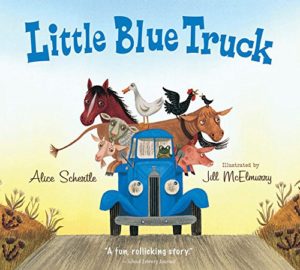
MK: I’ll do three to cover plot, voice, and character. Little Blue Truck by Alice Schertle and illustrated by Jill McElmurry has earned its success for a reason. A lot of writers out there want to write in rhyme. But they get so caught up in their rhyming pairs and the style of their prose that they forget—books need story. Here, an unlikely and humble hero saves the day by being who he always is. In the meantime, with all the animal sounds and the high stakes plot, this book has enough movement and fun to be an engaging read-​aloud for even the youngest kids.

A lot of people like to write “sweet” books about how precious childhood is. If this is your goal, study Little Bitty Friends by Elizabeth McPike, illustrated by Patrice Barton. It’s very simple and veeeeeery sweet but the childlike voice and wonder on every page really make it stand out, along with a satisfying last page. It’s also in rhyme. This captures childhood without outright telling about how amazing and wonderful it all is, which I see way too often.
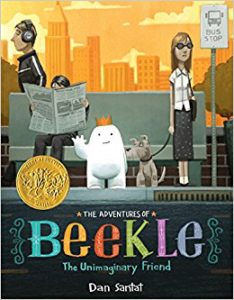
For a great picture book character, study The Adventures of Beekle: The Unimaginary Friend by Dan Santat. This is such a touching story, but without being syrupy or heavy-​handed. Beekle is a great example of a character who has a problem and works creatively and endearingly to solve it. His objective and motivations are really well-​defined. A lot of picture books don’t put their protagonist in the driver’s seat, which is a grave mistake. Ideally, it’s about empowering our young audience!

RVC: While you can handle nearly any type of story in your capacity as a freelance editor, you’ve clearly got a knack for kidlit and picture book authors. What’s the most common challenge picture book clients have when they come to you for guidance and help?

MK: The most common error aspiring picture book writers make is to overtly teach their audience. They have a theme they’re writing about and they want everyone to know it. This is understandable. But a didactic picture book manuscript will die a quick death in the slush. Kids are told what to do all day long. They don’t want an overt lesson positioned at the end of a book they’re reading for fun.

The best way around this common pitfall is to convey the lesson via the main character’s experience, so that the reader can appreciate it firsthand and “discover” it themselves. Empower your protagonist and for the love of all things good—never have a wise adult swoop in at the end to deliver the message. We all love Granny, but the final moment of discovery in a picture book belongs to the child-​age main character.

Here’s one of my links on this very topic: www.kidlit.com/2014/07/14/picture-book-wisdom-from-without-vs-within

RVC: Warning signs a writer should watch for when looking at hiring a freelance editor?

MK: Unfortunately, if they’re too nice, you are not getting value from the service. That’s not to say that I Simon Cowell people’s work to shreds for the fun of it. Or that I level arbitrary criticism just to make it look like I did something. Or that I’m mean. But if your editor has one or two pieces of mild feedback and mostly encouragement, they may make a wonderful critique partner or coffee buddy, but they are giving you unrealistic expectations of your work.

Publishing is a tough business. Rejection is everywhere. If you get a green light and a thumbs up from a “professional,” you’re vulnerable to having your hopes crushed when you actually go out on submission. I’d say it’s better to invest in tough feedback, and do the hard work early in the process, then reap the potential rewards later.

These types of nice editors are very tempting because praise feels good. Work sucks. Being told that you need to do a heavy revision? Just ugh. But the writers who tend to be the most successful in their endeavors are the ones who aren’t afraid of rolling up their sleeves and diving in. Light notes breed complacency. If you’ve tried to submit with no luck, slightly tweaking a manuscript that actually needs substantial revision is only going to bring you the same results.

I consider myself nice to the client but realistic about the work, which sometimes comes across as challenging. But I’ve been building my credibility for ten years. Me blowing smoke at a client just to make them feel warm and fuzzy isn’t going to do either of us any good. My approach comes from experience in the publishing industry, and knowing how cutthroat it can be. Remember, anyone can hang a shingle out and proclaim themselves an editor. Do they have the experience and, more importantly, the level of feedback to back themselves up?

RVC: Rhyme + picture books. Thoughts?

MK: Rhyme can be so tough. Publishers obviously still publish rhyming books. Two of the mentor texts I cited above use rhyme. But most agents and publishers aren’t looking for rhyme and do not put it on their wish lists. Why? Simply put, most amateur rhyme needs more work. Writers find a rhyming pattern and think they’re done. But what about rhythm? Stressed and unstressed syllables? Are they putting rhyme above all else or does the rhyme actually serve the story? There’s an outdated notion that picture books have to rhyme. Well, the industry has shifted tremendously toward looser, more colloquial prose storytelling. The question everyone needs to ask themselves is, “Does this have to be in rhyme? Why?” If you’re just doing it because you think you have to, I’d say that doesn’t bode well. Take it out of rhyme and explore what the story actually is. Most aspiring rhyme writers get so caught up in the style that they neglect the substance, and it really should be the other way around.

RVC: Speed round! Fav dish by your chef husband?

MK: He makes this raw shaved artichoke and arugula salad that I love. There’s also a chicken thigh curry tagine he cooks that’s out of control. Before we had our son, he spent weekends cooking these giant pots of stews and freezer meals. It gets cold in Minnesota, don’tcha know! Some of my favorite memories are of us devouring those stews and goulashes after we’d gotten our baby to sleep. But, really, I gratefully eat anything he makes.

RVC: Your two pugs, Olive and Gertie. Which has a better sense of humor?

MK: Gertie is a true pug and loafs around all day. Then she gets this wild burst of energy sometimes, and runs around crazed. It’s hilarious. Olive, on the other hand, is wily. If there’s even the whiff of food anywhere, don’t turn your back. We were setting up for a party one time and left a chair pulled away from the table. That’s all it took for Olive to decimate our buffet spread. She ate an entire coffee cake!

RVC: #1 poolside drink for a summer scorcher in Minneapolis?

MK: Change “pool” to “lake” or “river” and now you’re talking! We have a cabin on the beautiful St. Croix River, and refreshments are a must on the pontoon boat. I don’t drink, so I’ve gotten pretty good at mocktails. They’re usually built around various flavors of La Croix sparkling water (apricot and tangerine are my favorites) or kombucha (Brew Dr.’s “Love” flavor). Sometimes I’ll throw in some fresh berries and mint. My son wakes up at dawn, which, in the summer is about 5:30 a.m., so cold brew coffee is almost another member of the family.
RVC: Most terrific writing how-​to book you’ve read?

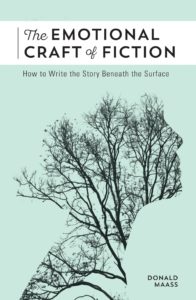
MK: I see everyone on this blog recommending Ann Paul’s Writing Picture Books, so I would toss in another vote for that. I loved The Emotional Craft of Fiction by Donald Maass, even though it’s not geared for picture book writers. It reminds us that we strive to create emotional responses in the reader, and a lot of people forget to consider that.

RVC: Three words that describe your editing style.

MK: Honest, tough, encouraging.

I really don’t want to portray myself as a monster or a jerk. But I will say this: Every writer who has the spark can learn something from working with me. Every project can take one or several steps forward. As long as someone is committed to learning and growing in their craft, I will help them. I have never said “Don’t quit your day job” to a writer, because as long as there’s a willingness to learn, there’s progress to be made. Mean feedback can kill a writer’s motivation for years to come. Trying to package my feedback in a way that’s going to motivate and galvanize a writer, instead of squash their mojo, is a responsibility that I take very seriously.

RVC: Best thing someone said about Writing Irresistible Kidlit.

MK: I am lucky that my book has enjoyed some great reviews from aspiring writers. I can’t pick a specific piece of feedback. One of my editorial clients called me “a one-​woman MFA program,” though, and that has really stuck out to me. The other feedback that I love to get is that I’ve played a small role, whether through my editorial work, book, or blog, in helping a writer either return to writing after a long time away or take the next step in their journey, whether that’s getting agented or a earning a book contract. I really love to be there on the sidelines for these big “dreams coming true” occasions.

Andrea may have been right that signing a book deal doesn’t change a person’s whole life, but that pure awe and satisfaction of publishing a book? It’s like nothing else!

RVC: Thanks so much, Mary Kole!
Educational Activities: Moon by Alison Oliver


Moon
Author: Alison Oliver
Illustrator: Alison Oliver
Clarion Books
17 April 2018
40 pages


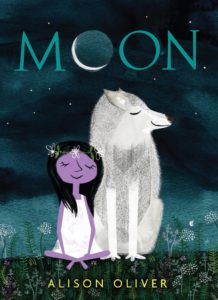
Alison Oliver’s debut picture book as an author/​illustrator, Moon, is a simply worded and evocatively illustrated story. Throughout her busy days, Moon wonders what it would be like to be wild and free until the day she meets a wolf and learns all about his wolfish ways. And she’s forever changed by the experience.


Need some reviews of Moon?

Kirkus

Publisher’s Weekly

BookPage


Educational Activities inspired by Alison Oliver’s Moon:

  • Before Reading–Ask students:
    • What do you think of when you hear the word ‘moon’?”
    • From looking at the front cover, what do you think the relationship is between the girl and the wolf?”
    • What do you notice about the girl?”
  • After Reading–What does the following line mean? “But she wasn’t the same Moon anymore.” Is there any evidence in the pictures that suggests/​proves she isn’t the same? WHY isn’t she the same Moon anymore? Do you think it’s a good change? Why/​why not?
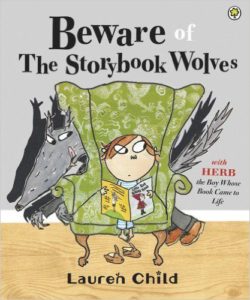
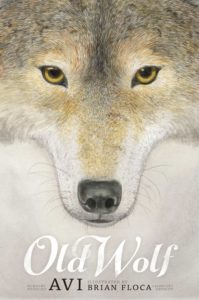
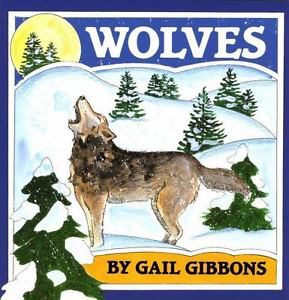
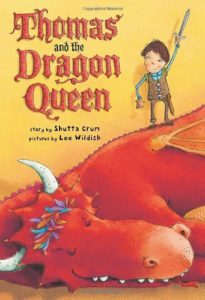
  • Further Reading–A wolf plays a big role in this story. Read another book about wolves, such as one of those listed below, and then compare the wolf characters in the stories. What do they do differently? Which wolf (or wolves) do you like the most? Why? Which would you like to go on an adventure with, like Moon did? Which wolf would you like to read more about?
    (Click on the book cover for more information on any of these titles!)              
  • Activity–The wolf teaches Moon its “wolfy ways,” which includes howling, pouncing, and playing. In your best wolf fashion, try howling. Try pouncing. Try playing. How does it feel? What do you think about “wolfy ways”?
  • Crafts–Using crayons (or colored pencils) and paper, draw yourself in the Great Forest beneath an ocean of stars. What would it feel like to sit there in the dark with a wolf friend? To have the insects around you hush into quietness? To have the breeze blow through your hair?
  • Writing–This story follows Moon throughout. How would the story be different if the wolf were the main character? What lessons could the wolf learn from Moon? Write that version yourself.


Author Interview: Shutta Crum

This month’s PB author interview is with Florida snowbird Shutta Crum. I confess—I’m a fan of Shutta for three main reasons.

  • She has the greatest name.
  • She did a bang-​up job in critique sessions for my own PB writing at two different SCBWI regional conferences.
  • She’s amazingly generous to other writers—especially early-​career ones.

Back to the regularly-​scheduled introductory bio! Born in Kentucky and raised in Michigan, Shutta is a children’s author and poet. But she’s also “a lecturer, a teacher, a storyteller, a mother, a grandmother, a retired librarian, an educator, as well as someone who is intoxicated by color and 3D doodling. (I make quilts, do mosaics, and glue together strange things I find when I’m not writing.)”
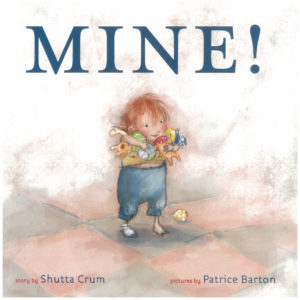
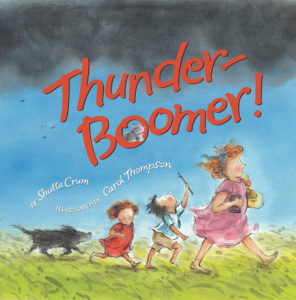
Shutta is the author of numerous books for children, ranging from those for the very young (Uh Oh! and Mine!) to the standard PB-​age kid (Thunder-​Boomer! and The Bravest of the Brave) to much older readers (the almost-​middle-​grade book Thomas and the Dragon Queen and the middle-​grade novel Spitting Image). Plus she writes poetry for adults. And I can speak with authority on these last bio-​worthy points—she’s a natural public speaker with a keen sense of humor and a storyteller’s soul.


Website: www.shutta.com
Blog: blog.shuttacrum.com
Facebook: www.facebook.com/ShuttaCrum
Twitter: twitter.com/Shutta


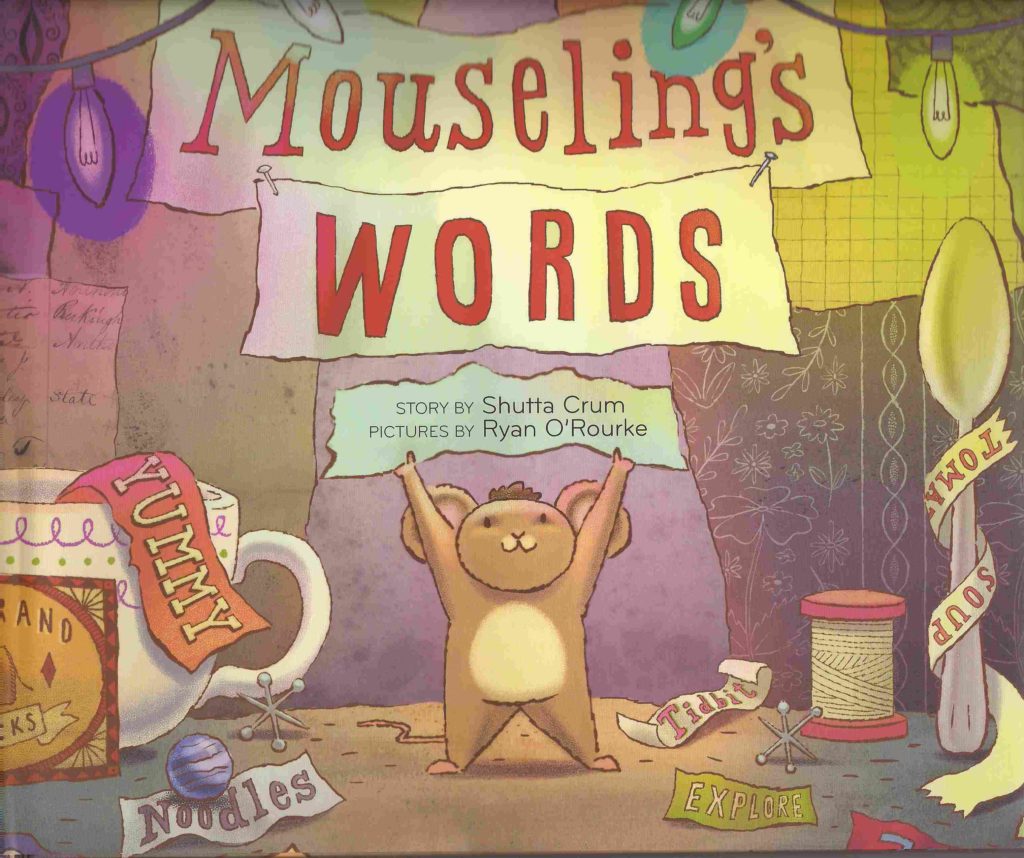
RVC: Sometimes an author’s point of view choice feels absolutely perfect for a book, as does 1st person for Mouseling’s Words. How do you know when you’ve got the right POV?

SC: This is a great question, and one that I’m currently struggling with in a novel I’m writing. (Still the first draft.) It’s a dual narrative with alternating points of view. But … I’ve struggled with should the POVs be same? And the tense? Should it be the same? Would it be too confusing to use 1st person in one and 3rd in another? (Which is where I currently am with this manuscript. And present tense in both.)

I think the answer comes down to how close I personally feel to the protagonist(s). If I feel I can truly inhabit the character(s)—in fact, that the character is actually some facet of me as in Mouseling’s Words, which I tell people is my “auto-mouse-ography”—then I’m more likely to use 1st person. If I feel like a storyteller standing outside of the action, then it feels like it should be 3rd person. But even using 3rd person, I really have to be “into” my character(s). So it seems to me that that kind of decision is about how comfortable/​uncomfortable I am as the creator of a piece of writing.

Sometimes my critique groups or beta readers will disagree with the POV I’ve chosen. I do add their voices to my internal debate about it, but in the end it’s really about how I feel as I’m writing. After all, writing a book is a journey, and I have to enjoy that journey. Otherwise, what’s the point? In the end a book is a product that an author hopes will nourish its readers—but for the writer, it’s the journey that’s the nourishment.

RVC: Can you recommend some published PBs that really show how to make the most of 1st person? 3rd?

SC: Well, there’s a ton of great 3rd person picture books. In fact, a writer I know was told by her editor to change her 1st person POV picture book into the “usual” 3rd.  Not sure I could have done that. But it’s always worth experimenting. I’m currently working on a 1st person POV picture book. It’s a bit long. So I’m going to try it in 3rd soon to see what effect that has and if it helps to shorten the storytelling. But in the meantime, let me shout out for a couple of my favorite 3rd person picture books—and then a longer list of 1st person, as I think that is a bit rare.

I’m overwhelmingly in true love with Real Cowboys by Kate Hoefler. She’s a poet, and the story is told in 3rd person plural prose poetry. The illustrations by Jonathan Bean are gorgeously lit and reflect the heat of the range and the swirling dark of a storm. I adore it. Can you tell? Just the cover makes me almost swoon—the light hitting right at the heart. Jonathan should have gotten a Caldecott for this.

As to other 3rd person POV books I love: Shrek! by William Steig (the non-​movie version original), Tara Lazar’s 7 Ate 9, and the Caldecott Medalist by Peggy Rathmann, Officer Buckle and Gloria. Also, there’s the wonderful book by Linda Sue Park, The Firekeeper’s Son, illustrated by Julie Downing, and, of course, the classic Maurice Sendak book Where the Wild Things Are.

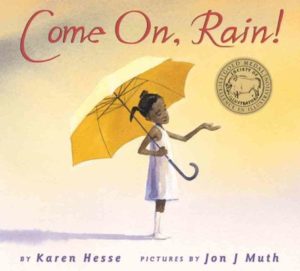
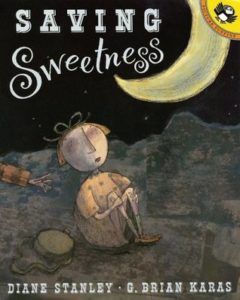
1st person POV in picture books is less common. Those I think are worthy mentor texts include the hilarious, well-​plotted, and beautifully illustrated Saving Sweetness by Diane Stanley, illustrated by G. Brian Karas. As well, I adore Karen Beaumont’s I Ain’t Gonna Paint No More!, illustrated by David Catrow. Then there’s the incomparable Owl Moon by Jane Yolen, a Caldecott medalist illustrated by John Schoenherr. Also, I have to shout out about the lovely, lively Come on, Rain! by Karen Hesse and illustrated by Jon J. Muth. Finally, I want to recommend a book by an author who is a master of repetition without creating boredom, Bill Grossman. Check out My Little Sister Ate One Hare.

I could go on and on. However, there’s a good list of these 1st person POV picture books at: https://annaforrester.wordpress.com/tag/first-person-narration-in-picture-books/

RVC: It’s clear that you’re a big fan of mentor texts. Does a mentor text lead to a story, or is it the other way around? How do you read a mentor text differently than other books? What do you do if you can’t find an appropriate mentor text for a project?

SC: Of course, some books engender ideas which come into being as other books. I found this particularly helpful while I was a librarian and being around so many wonderful books. And I have another writer friend who, when she needs a fresh idea, spreads out a bunch of recently-​published picture books and lets her mind wander among them for a way to put together something new.

Generally, I don’t use mentor texts to lead to a story. The ideas just seem to come. Sometimes, they’ll percolate for years before finally rising to the surface with a bunch of disparate yet connected strands pulled from living an observant life. I’ve never then said, “OK, now I need a mentor text to guide me through the project.” I don’t use mentor texts that way.

However, I love learning from the writing of others, and I tend to use mentor texts mostly as a way to hone my craft—not for particular projects. That is, I read broadly and take note of the books I love and the techniques used. My reading is partly to facilitate my teaching, but also to allow me to go, “Ah-​ha! Look at this cool thing that so-​and-​so has done.” I’m sure that although I don’t use mentor texts to work through specific manuscripts, the things I’ve noted are there in the little gray cells and they get used as I write.

One thing I did when I first began my journey as a writer was to type out the text of picture books I loved so I could see how they were laid out on the page without illustrations. This was particularly instructive about how the artwork melds with the text. Of course, by the time a book is published, it’s been edited and the text may not look like the original submission. But that’s okay. It still gave me an idea of the ideal I was striving for.

RVC: There’s always a story behind someone’s first published story. What’s yours? What was the process of getting that first PB published?

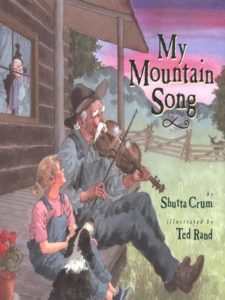
SC: Actually, the best story is about the first picture book I wrote—but it was the fifth one published. I had just finished reading Cynthia Rylant’s When We Were Young in the Mountains and I thought “Dang! She just wrote my story.” At that time, I’d also come across a poem about a young girl in the mountains, so I decided to try my hand at writing a poem about what it was like to spend summers with my relatives in the mountains of southeastern Kentucky where I was born. So I wrote a poem. Folks who heard it said it sounded like a story, you should tell it. So

I then wrote My Mountain Song. I submitted it and it got one rejection—though it was a very nice hand-​written one from Paula Morrow. I put the manuscript away for about 18 years! I figured with one rejection maybe I just wasn’t meant to write for kids. Geesh!

Eighteen years later, when I realized that all writers get rejected I pulled it out and started submitting it. Over the course of its pre-​pubbed life it garnered thirty-​five rejections! However, with each one I’d get asked to submit something else because my writing was liked. And on the strength of that story, I sold 6 other books!

I was also hearing that the reason it was getting rejected was that the editors felt there was more to the story, it should be a novel. So I started writing a novel based on the characters from my poem and my picture book. When I finally got an offer on My Mountain Song, the editor, Dinah Stevenson of Clarion, said to send the novel, too, when it was finished!

As it turns out, the novel was published before the picture book. It took 4 years for my picture book to work its way through the long list of books the inimitable Ted Rand was illustrating. My book was one of his last. After the book came out he sent me an original painting from it. Such a lovely gesture, and a kind man. Anyway, the upshot of this story is that an idea became a poem, then a picture book, and finally a novel. One never knows the circuitous route a bit of storytelling can take. And, of course, never give up—pull those manuscripts out of the drawers they’ve been languishing in and go for it!

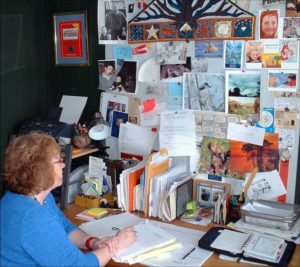
RVC: What does your writing area look like?

SC: A mess! (See the photo.)

RVC: Speed round! What are the four Hs of picture book writing?

SC: Heart. Hurt. Hope. Humor.

RVC: Which H is the hardest for newer picture book writers to master?

SC: Strangely enough, I think it’s heart. Beginning writers get so caught up in a joke, or a cool plot twist that they forget the most important element of the 4‑Hs.

RVC: Share your reaction to being invited to the White House Easter Egg Roll in 2015.

SC: Incredulity. When the phone call came from my publicist at Knopf, I put my husband on the line thinking it was a prank call.

RVC: When it got cancelled after you got there due to inclement weather, you …

SC: … felt saddened for the families that had camped out in stormy weather all night on the sidewalks around the White House. We’d already had breakfast and I’d sat nervously on the incredible antique furniture in the W.H. worrying that I’d spill my coffee by the time they officially called it off due to lightning. So after a few announcements by the Secretary of Education, photos, and applauding by all we did a small tour and went home. Sigh … At any rate, the ride in the limos, the gift basket, and eating in the White House was fun. Funny thing though, they confiscated my picture books and I was told that they would be given back to me just prior to my reading—as though I’d try to hide some sort of weapon within a skinny PB!

RVC: Three words that you hope come to mind when people read your PBs.

SC: Heart. Hope. Humor. (I don’t necessarily want them to remember the hurt except as it is connected to the revealing of heart.)

RVC: One picture book you would have LOVED to have written.

SC: Real Cowboys by Kate Hoefler. What more can I say than I’ve said above? I adore it. I could reread it a million times. A close second would be Saving Sweetness by Diane Stanley—it has the 4 Hs in abundance. Strange that I wouldn’t have picked an international bestseller .… Perhaps because I’m not into this just for the income—such as it is.

RVC: Thanks so much, Shutta!


****Bonus Opportunity for Writers!!****

Thanks to Shutta’s generosity, she’s offering a FREE critique of a picture book manuscript—or the first 10 pages of a middle grade manuscript—to a randomly-​picked person who comments on Shutta’s Facebook page about this interview in July 2018. Here’s a link to where you should post those comments. Good luck!