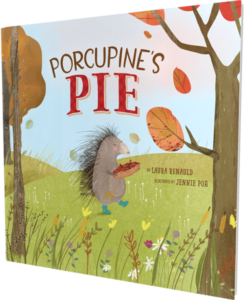
Educational Activities: Porcupine’s Pie by Laura Renauld

Porcupine’s Pie
Author: Laura Renauld
Illustrator: Jennie Poh
Beaming Books
9 October 2018
32 pages

Three things to note about Porcupine’s Pie:

  1. This book won the 2017 Beaming Books picture book writing contest.
  2. Laura Renauld has been participating in Tara Lazar’s PiBoIdMo/​Storystorm event since 2011. (Read the OPB interview with Tara Lazar here!)
  3. Porcupines are awesome.

Want to know a bit about the story itself? Porcupine can’t wait to share Fall Feast with her woodland friends, so when everyone she greets is unable to bake their specialty due to a missing ingredient, Porcupine generously offers staples from her pantry. When Porcupine discovers that she, too, is missing a key ingredient, the friends all work together to create a new Fall Feast tradition.


Need some reviews of Porcupine’s Pie?

The Classy Chics

Connected2Christ

Bridget and the Books

Foreword Reviews

Heck of a Bunch

And enjoy an interview with author Laura Renauld on this book at the Beaming Books blog.


Educational Activities inspired by Laura Renauld’s Porcupine’s Pie:

  • Before Reading–Ask students:
    • “What do you already know about porcupines?
    • What characters do you think will appear in this story?”
    • What type of pie do you think Porcupine is making?”
  • After Reading–Each of Porcupine’s animal friends has made special Fall Feast food in the past. Which of those sounds most delicious to you–Squirrel’s Famous Nut Bread, Bear’s Famous Honey Cake, or Doe’s Famous Apple Tart?
  • After Reading–If Porcupine met one more animal on her journey (besides Squirrel, Bear, and Doe), what animal would that be? What would that animal’s special Fall Feast dish be?
  • Science–While a porcupine and a hedgehog seem like the same animal, they’re actually quite different. Find out more about some of those differences here: 
  • Cooking–With an adult’s help, make your own Friendship Pie! (The recipe is at the back of the book.) Or try these other yummy-​sounding pie recipes: 
  • Craft–With an adult’s help, try out some of the following porcupine crafts: 
  • Further Reading–Despite having a prickly body, porcupine are actually little bundles of love. Read some of the following picture books about porcupines and answer the following: (Click on the book cover for more information on any of these titles!) 
    • Which of these porcupines has the prickliest personality?
    • Which of these porcupines likely has the best stuffed animal friend?
    • Which porcupine would you invite to your birthday party?

Author Interview: Tara Lazar

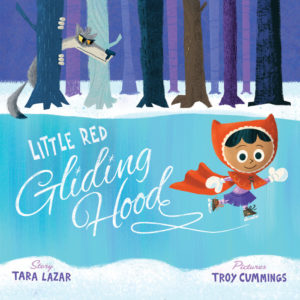
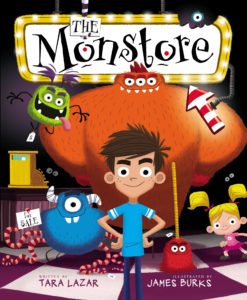
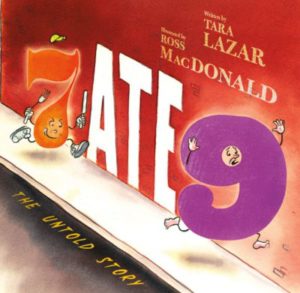
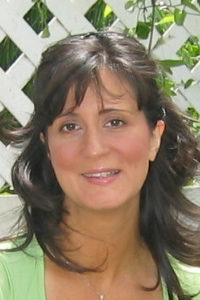
This month’s author interview is with Tara Lazar (rhymes with “bazaar”), a mother of two who is “pushing a stroller along the path to publication.” You probably know her thanks to her terrific website/​blog as well as her quirky, funny picture books, such as these.

Before we launch into the official OPB interview, let’s get to know Tara a bit via a quick Truth or Lie game. Which of these feels as honest as a cue ball? Which seem as bogus as a four-​dollar bill?

  • Tara chooses cheese over chocolate every single time.
  • Tara walks with a blue cane.
  • Tara once lived in a house that was pink, pink, pink.
  • Tara’s a former figure skating champion.
  • Tara’s hamster, Ozzie, is the world’s cutest.
  • Tara can’t stand coffee.
  • If Tara were stranded on a deserted island and could only have one type of food every single day, it’d be tacos.

Answer Key: All are true! (Yep. Even the thing about coffee.)

So now that you’re starting to get a sense of what Tara’s all about, read on and learn more about the amazing Tara Lazar who sometimes wishes her name were “Tara Laserbeam.” (Spoiler: She’s s total hoot!)

Website: www.TaraLazar.com
Blog: www.TaraLazar.com
Twitter: @taralazar
Facebook: www.facebook.com/authortara
Pinterest: www.pinterest.com/taralazar/


RVC: So what type of kid were you? And how did that childhood prepare you for a career as a picture book author?

TL: Teacher’s pet. Super sharp, but also crazy-​weird. Creative. Writing, acting, drawing, or making something all the time.

I think the acting prepared me to write with a strong voice. I become the character. Being weird as a kid means you are cool as an adult. I never grew up past 8, probably because my parents separated shortly after then and my innocence was shattered. I try to remain that 8 year old as much as possible. In fact, most of my strong memories come from that time period.

RVC: How big of part did books and reading play into those early childhood years?

TL: A big part. I remember my elementary school library telling me that Ally Sheedy wrote and published She Was Nice to Mice at just 12 years old. I was 8 at the time and although 12 seemed like a lifetime away, it was also close enough to become a goal, to become an author myself. It only took me 30 more years!

RVC: I’m always interested in how someone’s first picture book happened. What’s the story of YOUR first picture book? 

TL: I have told this story before, so I am going to boil it down to its most essential elements–I wrote new stories constantly. I brainstormed new ideas several times a week. I stopped submitting and concentrated on my craft. I attended conferences and learned. I made writing friends. After almost two years of this, I wrote The Monstore, my breakthrough manuscript which my critique partners assured me would sell. The Monstore helped me land my agent, Ammi-​Joan Paquette, and my first contract for that book followed shortly thereafter.

RVC: How vital is it for aspiring picture book writers to find an agent first?

TL:  I think now more than ever it is advantageous to have an agent. More houses are closing their doors to unsolicited submissions simply because they receive too many manuscripts to sort through efficiently and find the treasures. An agent opens doors for you and also helps to guide your career.

It is not impossible to be published without one–my friend Josh Funk was discovered in the slush pile–but I think you will get a bigger advance and a bigger publisher (with greater distribution and marketing power) with an agent.

RVC: What does your writing process look like?

TL: First comes the concept, which I write down. Then there’s a lot of thinking. It marinates in my mind subconsciously until I know I’m ready to give the first draft a shot. It’s a gut feeling I cannot explain. Typically it’s weeks or months after the initial idea, but if the idea gets me super excited, then it’s sooner. 7 Ate 9 happened right away, idea then manuscript. BOOMBOOM.

Because of this marination, when I finally get butt in chair, the first draft emerges in somewhat decent shape, and quickly–anywhere from a day to a week.

I spend far more time thinking about a story than I do actually writing it.

Then the story goes to my critique group for a round or two. I don’t do more than two revisions for my group because we all lose that “fresh look” ability, and I believe there is “over-​revising.” Then I give it to my agent who often gives me editorial notes and I revise until she is happy with the story (again, no more than two rounds) and ready to submit.

RVC: There’s no way around it–you’re a prolific writer. Beyond the two-​revisions-​and-​onward strategy, do you have any tips for those who struggle to get projects done?

TL: I think all writers have an undeniable need to write. But it’s important not to compare your output to another writer. We all have our own pace and we need to respect that. My best advice is to learn your process.

What works best for you? Routine? No routine? Experiment and find out.

RVC: So let’s talk about PiBoIdMo (Picture Book Idea Month), which you created in November 2009. Why did you create it? 

TL: PiBoIdMo was patterned after NaNoWriMo, hence the awful name. I began it because I believe picture books are all about great concepts. And to have a winning concept, you need a lot of concepts from which to choose. For every twenty to thirty story ideas, maybe one is worth pursuing. If you spend every day recording at least one idea, you will have a trove of potential stories by the end of the year and never be without one to write.

RVC: And PiBoIdMo became Storystorm in 2017 because…

TL: Again, the name was the worst. I would have created a better name had I thought about it for more than two seconds. No one could pronounce PiBoIdMo and the name didn’t conjure up and idea of what the event was. So I chose Storystorm to suggest a story brainstorm, and I moved it to January so it comes after the holidays instead of during them.

New year, new ideas, a fresh start.

RVC: In addition to being a successful picture book author, you’re a frequent speaker on MS. How do those two careers align?

TL: Get around, over, and through obstacles any way you can. Don’t let them stop you. This message is applicable to writers as well as those who suffer from chronic illness.

RVC: You’ve got a couple of new books coming out soon. Which has the most unusual path from initial idea to publication?

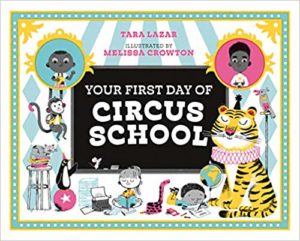
TL: Your First Day of Circus School. The manuscript had so many art notes that it was difficult to read through and understand. So my agent suggested putting it in grid format, which I blogged about here.

https://taralazar.com/2012/​10/​03/​art-​notes-​in-picture-​book-​manuscripts/​

RVC: How many number puns did you have to throw out to make 7 Ate 9 work? And is that more or less than you have to toss during the revision process of your other picture books?

TL: I didn’t throw any out. The important thing when writing with puns is to ensure the story still makes sense with them. The mystery of the story and the solution can be understood by all ages. With the exception of the title, no major plot point relies on a pun.

With all my books, I am more likely to be adding during revision than cutting.

RVC: Okay, it’s time for the Lightning Round! Zippy quick answers, please. Ready? Who’d you rather have as a week-​long houseguest–Sauron or Voldemort?

TL: Voldemort, because he’s English and if I serve Twinings Earl Grey, he’ll most likely act civilized.

RVC: Top three cheeses in order of yumminess?

TL: Manchego, goat cheese, and burrata.

RVC: Norman’s (from your book Normal Norman) middle name?

TL: Frank.

RVC: Name an up-​and-​coming picture book author whose work is always on your MUST-​READ list.

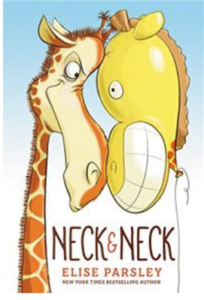
TL: Oh, there are so many!  This field is bursting with talent! But since I just bought Neck & Neck, I’ll say Elise Parsley.

RVC: Your #1 goal as a picture book writer.

TL: To keep being a picture book writer!

RVC: Favorite thing a child has ever said about one of your books?

TL: It happened just last week–a girl said, “you are the author of FAMOUS books.”   She complimented my lemur sweater, too, for bonus points.

RVC: Thanks so much, Tara!

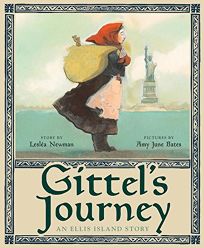
Picture Book Review: Gittel’s Journey: An Ellis Island Story by Lesléa Newman

Gittel’s Journey: An Ellis Island Story
Author: Lesléa Newman
Illustrator: Amy June Bates
Abrams Books for Young Readers
5 February 2019
48 pages

This month’s PB review is by Ryan G. Van Cleave (Top journey-​taker at Only Picture Books) and Ringling College of Art and Design Illustration Professor (and OPB pal) John Herzog.

–Ryan’s Review of the Writing–

Gittel’s Journey tells the story–based on a pair of oral tales from the author’s family–of a nine-​year-​old girl being sent to America in the latter part of the 19th century while her mother has to stay behind because of an eye infection. Along the lengthy journey, the address on a piece of paper becomes smudged, so poor Gittel doesn’t know where to go when she arrives. I’ll hold off on revealing the ending but suffice to say, it’s both heartfelt and glorious.

Gittel’s Journey is one of those books that–even without the back matter–runs closer to 1,000 words than the 300 that so many literary agents and editors claim is the new norm. But the story necessitates it. And never did I have that somewhat common thought as I read: “Wow, this feels looooooong.”

That extra space allows for Newman to offer quiet moments of delicious sensory detail such as Gittel grabbing onto the ship’s “cold, wet railing” or how when she finally arrives at Ellis Island, the “ocean spray smacked Gittel in the face, and when she licked her lips, she tasted salt.” It also allows the the room for this story to unfold with the quiet tenderness it deserves. Nothing feels rushed.

Newman’s skill with language is also on full display with how she weaves in Yiddish words (always italicized) throughout the story. The context of those words give more than enough clues as to their meanings so not knowing Yiddish isn’t an issue.

The extensive Author’s Note, bibliography, and short glossary all add to the story and provide more interesting context to the immigrant experience as well.

This is a terrific book with spot-​on illustrations (see below for John’s glowing review on that aspect) that brings social issues into the realm of picture books in an effective, memorable way. It’s a fine, fine book worthy of your bookshelf space.

4.75 out of 5 pencils


–John’s Review of the Illustrations–

In today’s political and social climate in our great American experiment, we need a book like Gittel’s Journey. We need it to remind us of our past, where we come from, and why we’re here. We need it to remind us of the immense value of patience, kindness, and bravery. We need it to remind us of what made America truly great.

The story here is incredible, and based on the true events of a young girl who travels to America alone in search of a better life–without the use of a smart phone or GPS (terrifying). An amazing story like this requires amazing illustrations, and the work by Amy June Bates does not disappoint. In fact, it stands toe-​to-​toe with the story and–dare I say–elevates the book to a whole new level.

In a sea of muted browns and grays, little Gittel stands out with her red hood, pink apron, and bright green bag. We know this is her story. The progression of color throughout the book is breathtaking, helping guide is from that which is familiar to that which is not and back again. Gittel’s home country is depicted in very warm, inviting tones while her journey is very muted, cold and drab. Thankfully, the warm tones return at the end as Gittel’s cousin meets her for the first time, and into the final page when Gittel is reunited with her mother. It’s this mastery of color progression that makes us care about the safety of Gittel, and relieved when she is reunited with family.

The print quality of this book is exquisite. I love that tinted paper was used–a nod to a time long past. The whites used in the illustrations really pop against the colored paper, and helps create contrast and appealing movement in the images. The sketchy figures, the watercolor, the stamp-​like borders and filigree–all of it transports me back to what I would imagine this time period was like, yet fuzzied and faded by time.

This is an important book, both for children and adults. As Americans, we seem to have such a short memory when it comes to how important immigrants are to this country. It’s books like this that help us remember that, and what this country should stand for:

The Statue of Liberty,” said a man standing beside Gittel, as he
waved his cap in the air and wept. “She’s welcoming us to America.”

Gittel’s Journey is a masterpiece.

5 out of 5 crayons


John Herzog is an illustrator and educator. His clients include, Hasbro, James Patterson, Houghton Mifflin Harcourt, and Highlights for Children. He also teaches illustration classes at Ringling College of Art and Design. He lives in Florida with his wife, two kids, a pair of tarantulas, a bearded dragon, and a fish.
 

Editor Interview: Marilyn Brigham (Two Lions/​Amazon Publishing)

It’s my pleasure to announce that the November 2018 Industry Insider interview is with editor Marilyn Brigham of Two Lions/​Amazon Publishing. I’ve been a fan of Two Lions for some time now, so it’s a real treat to get the inside story on what makes the magic work so well there.

Here’s a bit about Marilyn:
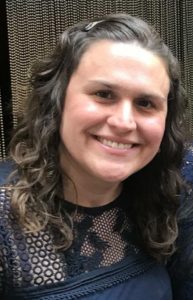
In her 13+ years in the children’s book industry, Marilyn has edited 100+ trade children’s books, including picture books, chapter books, middle grade fiction, young adult fiction, and nonfiction. Some of her noteworthy titles include the Duck and Hippo Series by Jonathan London, illustrated by Andrew Joyner; the Amazon bestseller Goodnight, Little Monster and its sequels by Helen Ketteman, illustrated by Bonnie Leick; It’s Not Jack and the Beanstalk by Josh Funk, illustrated by Edwardian Taylor; and Ralph Tells a Story by Abby Hanlon.

But Marilyn’s also a writer–she’s the author of the board book Swim!, illustrated by Eric Velasquez, as well as the educational title Dik-​Dik, part of the Even Weirder and Cuter Series from Bearport Publishing.

So let’s have Marilyn put that editing and writing acumen to good use with some OPB interview goodness. Here we go!

Amazon publishing website: www.amazonpublishing.amazon.com
Twitter: @MarilynBrigham


RVC: So how does someone from Syracuse University who got a proper degree in journalism manage to end up in the kidlit business? 

MG: Well, I thought I was going to get a magazine job after graduation, but I’m glad that I found myself at a book publisher instead! I started my career as an intern in the reference department at Marshall Cavendish, and I got lucky when an editorial assistant job opened up at the company a couple months later. It was a truly special place to work. The office was an old Georgian mansion in Westchester County, NY, filled with secret passageways and quirky offices, and I worked with an amazing team. I learned so much about the business of publishing and editing in general during my time there. As an assistant, I worked on the trade children’s book imprint as well as nonfiction series for the school and library market, and I ultimately worked up to editor in the Marshall Cavendish Children’s Books imprint.

I’m a lover of words, as are many of my closest friends, and I was obsessed with reading as a kid, so it’s not too surprising that I ended up working with books.

RVC: What’s the best thing about being in the kidlit business?

MG: Definitely the people! The KidLit community is full of so many creative and inspiring people (authors, illustrators, editors, marketing and PR folks, designers, the list goes on). I also love that it’s a very supportive industry and that in general, the KidLit community helps build up one another and celebrate everyone’s successes. Plus, there’s something inherently special about people who spend their days thinking about how we can enrich the lives of children through storytelling. I feel it when I go to conferences, such as ALA (American Library Association) or SCBWI (Society of Children’s Book Writers & Illustrators), and get to be surrounded by these people—my people!

We recently exhibited at ALA Annual in New Orleans, and the enthusiasm that the librarians had for our authors was such a good reminder of why we do what we do. One librarian started crying when she met our author Jonathan London, because she had shared so many of his books over the years with her own child. It was such a sweet moment!
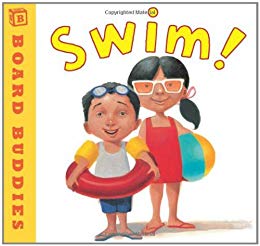
RVC: Unlike many people in publishing, you’re an author, too–your board book, Swim!, came out in 2012, and your educational title, Dik-​Dik, came out in 2017. Are you a writer who edits, or an editor who writes? 

MG: I’d love to say I’m a writer who edits, but I don’t think I spend nearly as much time writing as I should! I really envy my authors for their discipline. I find it much easier to stay laser-​focused on work when I’m on the editing side of the table. (Yes, writers, the struggle is real!)

But no matter which side of the table I’m on, I know I am so lucky to be able to do this work for a living.

RVC: LinkedIn tells me that you have “a lengthy (digital) stack of half-​finished manuscripts” that you dig into whenever you can. What would the editor side of you say to the writer side of you in regards to the unpublished picture book manuscripts in that digital stack? And what about the picture book manuscripts you’ve already published?

MG: She would say, keep going! And write it before someone else does! While it’s definitely important sometimes to put a manuscript aside for a while and let it marinate, you also can’t leave it there forever. With picture books especially, I’ve seen that ideas can catch on all at once—I’ll suddenly get multiple picture book submissions on the same topic. It’s so weird how that happens!

In terms of the books I’ve published, of course I can’t help thinking about what I might have changed (editors die hard!), but I really try not to. It’s thrilling to see my name in print, and I don’t want to argue with it!

RVC: Could you share the connection between Marshall Cavendish Children’s Books and Two Lions, which just so happens to mirror your own career path?

MG: I was working at Marshall Cavendish Children’s Books when Amazon acquired some of their titles and backlist in 2012. It was exciting to go on the journey along with the authors and illustrators from the Marshall Cavendish list. For me, it was also an amazing opportunity to help shape the vision of what is now the Two Lions imprint. We came up with the Two Lions name as a way to tie together the great history of our backlist and our new future as part of Amazon Publishing. The name was also a nod to “Patience and Fortitude,” the two lions who stand proudly in front of the New York Public Library.
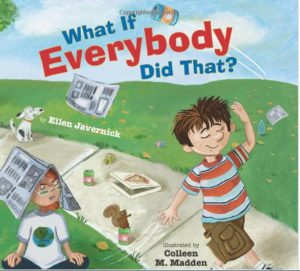
As an editor, it’s given me a special thrill to see some of the Marshall Cavendish books, such as What If Everybody Did That? by Ellen Javernick, illustrated by Colleen Madden, and Goodnight, Little Monster, by Helen Ketteman, illustrated by Bonnie Leick, reach an even wider audience at Amazon Publishing and become bestsellers years after their original publications. In fact, we’ve published sequels to both of those titles and now have a third book in each series still to come. This is in addition to so many great new titles and series that have been homegrown in the Two Lions imprint.

We’ve also had a lot of fun over the years trying out new programs to promote our books at Two Lions. One year, we did kid book review videos and had kids read our books and then talk about what they liked (and in some cases, how they’d give the books “ten million bajillion stars”!). In 2019, we’re working on animated trailers for all of our new titles—it’s a blast to see our characters coming alive on the screen!

RVC: What’s different about working at Two Lions?  What does being connected to the 800 lb. sales gorilla (Amazon) do for you?

MG: I’ve had the unique experience of coming from a very traditional publishing background and then going into a new and innovative publishing company. Working at Two Lions challenges me to constantly rethink my own biases and helps me find new ways to be inventive within the industry. We have a lot of freedom to bring new ideas to the table, and there’s an openness and encouragement to trying new things.

But one of the things I love most about working at Two Lions is the emphasis that we place on author and illustrator happiness. We see authors and illustrators as our customers, and we spend a lot of time thinking about them, developing our relationships with them, and soliciting their feedback (and I’ve seen real changes happen as a result). I’ve also had the opportunity to dip my toes into the creation of other content for kids, including enhanced eBooks and short stories for an app, which has helped expand my own skillset.

RVC: It seems as if Two Lions is making more of an effort to acquire and translate non-​English work. How does that shift relate to the growing kidlit interest in diversity and Own Voices? How conscientious of that are you when you’re deciding whether or not to champion a picture book submission?

MG: We’re very excited to be getting into the world of picture-​book translation! Amazon Publishing already has a long history of bringing translated works from around the world to the United States with our imprint, Amazon Crossing, and it’s a unique opportunity for me to help build on that legacy with children’s books from around the globe. I recently signed up my first book, Spiky, written and illustrated by Ilaria Guarducci and translated by Laura Watkinson. The book hails from Italy, where it was shortlisted for a picture book award. It’s about an evil forest creature named Spiky whose body is covered in spikes. When Spiky suddenly loses his spikes, he must learn what it means to be a friend. Spanish, French, Chinese, and Korean rights to the book have also been sold, which I think speaks to the universal message of the book. But I also love how the story has a distinctly Italian feel to it as well, and we’ve retained some of the small Italian details in the art, such as an Italian newspaper, as something for kids to discover on their own.

I think the timing of our picture books in translation couldn’t be better with the focus on diversity and #OwnVoices in KidLit. There are so many elements regarding diversity to consider—race, nationality, sexuality, disability—and I think that non-​American perspectives are also so important to include. As corny as it sounds, the kids really are our future, and giving them diverse perspectives is so vital to helping them become better global citizens. It’s exciting that we’re at a moment in history when diverse perspectives and characters are being championed and becoming bestsellers. Diversity is definitely on my mind when considering acquisitions, as well as through the editing and art creation process. And I still have so much more to learn in this area, too!

RVC: The other day, you tweeted praise for Leila Sales’ Publisher’s Weekly article “What Authors and Editors Wish They Could Say to One Another.” I came across that piece as well and found it both honest and useful. But what’s one more thing you’d add to the list that editors wish they could just say (scream?) at authors?

MG: I would add: Picture books are a long game. It’s easy to feel impatient and frustrated as the pieces come together. Plus, holiday and seasonal timing can be so important. I want my authors to know that I get antsy for the pub dates to come, too! The best thing you can do while you wait is to keep creating.

(And I promise that one day you will blink, and the pub date will be here!)

RVC: What kinds of picture books do you think the marketplace (and maybe Two Lions specifically?) is missing?
MG: I think it’s always difficult to find picture books that touch on sensitive, emotional topics (for example, death), while also handling the subject matter in a way that’s not overly sentimental or heavy handed. There are a lot of trying issues that kids face, too, and I’d love to see more picture books that address difficult topics.

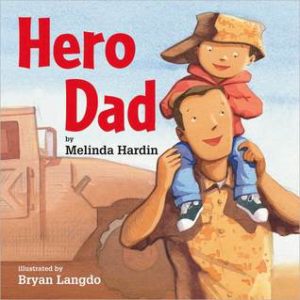
One of the books I had the pleasure to work on was Hero Dad, written by Melinda Hardin and illustrated by Bryan Langdo. In the book, a little boy compares his dad, who is in the military, to a superhero. Using minimal text and focused images, the author and illustrator created such a strong, heart-​warming, and accessible book for kids. The book has also been featured in commercials for the Wounded Warrior Project, which has been very rewarding to see.

We followed it up with Hero Mom, because of course moms are superheroes too! That book featured a diverse group of kids and showed the many jobs their moms do in the military and why they are like superheroes.

RVC: Want to dish on a few of your favorite upcoming projects?

MG: Always! I’m super excited about a few debut authors I have coming in 2019. The first is Lauren H. Kerstein with her book Rosie the Dragon and Charlie Make Waves, illustrated by Nate Wragg, which is a funny summertime romp about a boy who is teaching his pet dragon to swim. The second is Lisa Robinson, who has two titles forthcoming with Two Lions: Pirates Don’t Go To Kindergarten!, illustrated by Eda Kaban, a first-​day-​of-​kindergarten story featuring a pirate-​loving little girl who makes her former preschool teacher walk the plank; and Pippa’s Night Parade, illustrated by Lucy Fleming, about a little girl with a wild imagination who has to tame the creatures that are coming out of her storybooks each night.

Additionally, author Joy Jordan-​Lake, who is published on Amazon Publishing’s Lake Union imprint, has her first picture book to come with Two Lions: A Crazy-​Much Love, illustrated by Sonia Sánchez, a heartfelt and deeply personal story about a parent’s love for her adopted child. These authors are a talented bunch, and I can’t wait to introduce them to readers!

RVC: So it’s time for the Speed Round! Ready … GO! Best place in NYC to take a literary agent or Two Lions author for a slice of pizza?

MG: I’d probably opt for wood-​fired in this scenario and have to give a shout-​out to PizzArte, which is right near my office and SO good.

RVC: “If I never got into writing or editing, I’d instead be ________”

MG: In a career related to animals, for sure. Maybe a veterinarian. Biology was always my favorite area of science, and I have a deep love for animals. Plus, I don’t get grossed out too easily.

(Just keep bees far, far away from me, and we’ll be good!)

RVC: If you could sing one song–and one song only–on American Idol, what would it be?

MG: Hmm, probably something old and classic, like “You’ve Got a Friend” by Carol King.

(P.S. I don’t think I’d win, though!)

RVC: The #1 reason you turn down a picture book manuscript submission?

MG: It’s not a fit with our publishing program. At Two Lions we’re focused on books that have both commercial and literary appeal, and that have well-​developed story arcs and character arcs. We also look for holiday and seasonal-​themed books.

Our list is relatively small, so if we already have something similar on our list, we’ll likely have to pass. There are a lot of great books out there that deserve to be published but don’t necessarily fit for us.

RVC: Favorite under-​appreciated picture book?

MG: Well, it’s not really under-​appreciated, but I think Good Night, Gorilla by Peggy Rathmann is one of the best picture books of all time! I actually never read it until I had my son, but it’s a little piece of genius! So if you haven’t yet read it, go do it. Now.

RVC: What makes a Two Lions picture book a Two Lions picture book?

MG: It’s a book that you want to hug! And then read again.

RVC: Thanks so much, Marilyn!
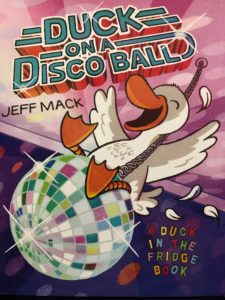
Educational Activities: Duck on a Disco Ball by Jeff Mack


Duck on a Disco Ball (A Duck in the Fridge Book)
Author: Jeff Mack
Illustrator: Jeff Mack
Two Lions
1 November 2018
40 pages


The latest picture book in the Duck in the Fridge series has silliness that builds with each page of this high-​energy, pun-​filled story.


Need some reviews of Duck on a Disco Ball?

Youth Services Book Review

Five Dollar Shake

Kirkus

Beagles and Books


And why not enjoy the book trailer, too?


Educational Activities inspired by Jeff Mack’s Duck on a Disco Ball:

  • Before Reading–Ask students:
    • “What do you like most about ducks?
    • Why role do you imagine that a disco ball plays in the story?”
    • What do you notice about the back cover?”
  • After Reading–Did the giant party really happen or was it just as dream? What do YOU think?
  • After Reading–This book is full of puns (like calling Mom + Dad + Duck “party animals”) and jokes (like “What do you get when you cross an elephant with a fish? Swimming trunks!”). What are some of your favorite jokes? Need some more? 
  • Drawing–What do you think your parents do after you go to bed? Read books? Watch TV? Have a party with a bunch of animals? Using crayons or colored pencils, draw your answer on a sheet of paper.
  • Craft–With an adult’s help, try out some of the following duck crafts. 
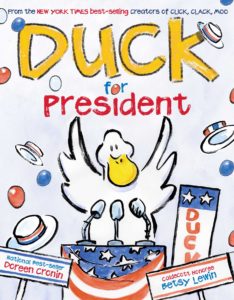
  • Further Reading–Ducks are pretty awesome. But let’s face it–ducks don’t get as many starring roles in picture books as they might deserve. In the following titles, though, they do. So read some of the following and enjoy the quacktastic fun. Which of these ducks is your favorite? Which duck seems most likely to throw the best party?
    (Click on the book cover for more information on any of these titles!)

Author Interview: Lynne Marie

This month’s author interview is with Florida writer Lynne Marie. Before the official OPB interview starts, let’s get to know a bit about her via a Ten Cool Bio Factoids list. Enjoy!
  1. Lynne’s favorite 3 places? The library. The World. Disney.
  2. She lives on a lake in South Florida “which she shares with many feathered and scaled friends,” including a a Great Blue Heron named Baymax and four Wood Storks named Michelangelo, Donatello, Raphael, and Leonardo (and of course, her daughter Kayla, son Kevin, and Schipperke puppy, Anakin).
  3. She’s originally from Nesconset, NY but has lived in Sanibel, FL and in Hollywood, FL.
  4. Each year, she tries to read 1,000 picture books. Most years, she succeeds!
  5. Former pets include five hedgehogs: Nike, Willow, Sirena, Athena, and Hamlet as well as a Schipperke name Dante and an African Bullfrog named Bully.
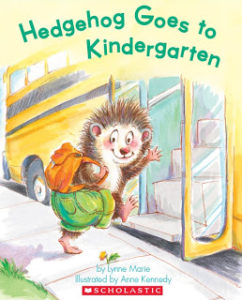
  6. Hedgehog Nike was the inspiration for Lynne’s two Hedgehog books.
  7. She studied English at SUNY Empire State College.
  8. She has two children who “always provide lots of inspiration for her stories.”
  9. She’s a longtime SCBWI member (since 2000).
  10. She loves to travel … which is probably why she also works as as travel agent.

So without further ado, here’s the OPB interview with Lynne, plus a few links if you need more Lynne Marie magic!

Website: www.literallylynnemarie.com
Blog: literallylynnemarie.blogspot.com
Twitter: www.twitter.com/Literally_Lynne
Instagram: www.instagram.com/pictures.by.pixel.pixie
Facebook: www.facebook.com/WordsandPictures.by.LynneMarie
Critique and Mentorship Website: www.thepicturebookmechanic.com (Coming Soon!)


RVC: Prior to getting your first book deal, you had a lot of success in the magazine world with hits at Spider, HopscotchFamily Fun, Writer’s Digest, etc. What was your first professional writing credit? 

LMI have been writing practically all my life and majored in English and Children’s Literature in College and drafted pleadings as a Paralegal, so I did have some experience and skills when I started in magazines. I was fortunate enough to have a small tidbit published in Family Fun Magazine (a parenting magazine) in 1997 as my first official magazine credit. Then, I had another small tidbit published in their book, Games on the Go, in 1998. That’s all it took for me to get the “publication bug” and I have been writing with an eye toward publication ever since!

RVC: What was your most meaningful strike in the magazine marketplace?

LM: Hands down, the most important strike was when I sold my story “Arachne’s Thread” to Highlights for Children, in or around 2003. Ironically, this is scheduled for publication in March 2019.

RVC: My goodness, that’s a long time from acceptance to publication.

LM: “Arachne’s Threat” is a Greek myth about spiders — I think it was really well written, however I was surprised they bought it because it was a little dark for them. I submitted it anyway because they didn’t have many Greek myths and it was one of my favorites and it sold.

Highlights pays upon acceptance and then puts it in a topic folder for future consideration. I guess the world is ready for such myths now 😉

RVC: So you’ve been seriously studying the art of writing picture books for about two decades thanks to college classes, online classes, conferences, and more. What helped the most? What role did mentors and writing critique groups play into your development?

LMI dabbled in book reviews, poetry, and parenting articles for a while before finding my way to picture books in 1999. Once I decided on that path, I went to Borders and purchased a copy of the Children’s Writer’s & Illustrator’s Market and joined SCBWI (Society of Children’s Book Writers and Illustrators). I would have to say, without a doubt, that SCBWI helped the most. 

I have attended conferences on Long Island, in NYC, Massachusetts (NESCBWI), upstate NY (Hudson Valley SCBWI), Western Pennsylvania, Eastern Pennsylvania, New Jersey, LA (each of these several times), Florida and even one in Madrid, Spain. This organization provided knowledge, information, connections, resources and opportunities. In fact, my first book sold indirectly through a NY conference (the editor passed it along to a colleague) and my second book sold as a result of that as well, and my fourth book sold to Meredith Mundy of Sterling as a result of a critique at the 2016 Orlando Florida Conference. She didn’t take the critique submission as she had too many dinosaur books on her list, but asked what else I had. So, I pitched Moldilocks and the 3 Scares, and she asked that I send it. It’s coming out from Sterling in fall 2019. 

RVC: You’ve said that the thing about picture book writing is that it’s NOT about good writing–instead, it’s about great writing. Help clarify that important distinction.

LM:Yes–I’ve also said that great writing is just a foundation for success. The truly essential quality is great storytelling. It doesn’t matter how lovely your writing is if you can’t effectively tell a story and grip the reader to follow your character and seamless plot wherever he/​she/​it goes. 

RVC: What’s the most unexpected tool in your writer’s toolbox?

LM: Hmmm…I would have to say reading, because it’s just so much a basic and not surprising answer that it is often overlooked. Each of my books that have been published are a result of reading at least 50–100 books on similar themes and topics and making sure that my book was as good as, if not better, than the rest AND that it filled a hole in a publisher’s market and list. 

I also think you learn gads from participating in an active critique group AND really considering criticism whether you agree with it or not. 

RVC: What do you get out of your work as a book reviewer and a writer for Children’s Book Insider?

LM: My work as a book reviewer makes me an educated reader, which is essential for success. It also feeds into what I wrote above. This year, I am a Cybils Elementary and Middle Grade Nonfiction Judge, so I am getting to read and review the best of the best! I am truly getting a sense of what publishers are looking for nonfiction, what they’ve published and even, what they haven’t yet published. 

With Write for Kids (Children’s Book Insider), I am getting a chance to share my connections with others and make new ones through the editors and Agents that I interview, as well as learn and get invaluable information from the other columnists who I write with via our monthly e‑zine.

RVC: Let’s talk about your two Hedgehog books. What was the process of developing the character of Spike?

LM: Spike was inspired by my actual Hedgehog, Apollo Nike, who I called Nike and nicknamed Spikey Nike. He was very nervous and would spike a lot around people and noises. No one could hold him but me. Though he had a prickly exterior, he was fine with the right person, and that’s where the idea of Sheldon came from (someone who can handle him physically). 

I thought about equating him with a child and realized that a bus ride would be very scary and unnerving for him, especially if it hit a bump. And wham! The story was born. As always, figuring out the solution was the challenge, but also fun, as I considered which animals he could and couldn’t sit next to. Of course, Sheldon the Turtle, won the seat. 

RVC: Does Spike have more adventures in him?

LM: I truly hope that he does.

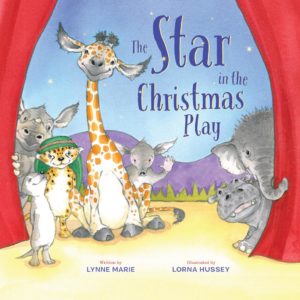
RVC: You’ve got a new picture book that just came out. What’s the story of how The Star in the Christmas Play came to be?

LM: The Star in the Christmas Play is one of my older stories that was inspired by a stuffed giraffe that my daughter had named Raffi. The idea began with a character and his flaw/​story problem–he was too tall to do what he wanted to do. From there, I did have quite a challenge in envisioning a solution for being too tall, so I flipped it in my mind and started to think of the things that a giraffe wouldn’t be too tall for. Because some of them were too obvious and/​or visited in other books, my mind raced past them. Then I thought of “to be a star.” 

From there, my mind tumbled around with the word “play” (movie star or lead in a play) and a variety of scenarios until I settled on one of the most famous stars of all (the Star of Bethlehem). From that point, everything came together so nicely and I knew what Raffi wanted in the story–to be the “star” of the Christmas Play. 

After completion, I put this away and only looked at it from time to time. Until…I saw the Sparkhouse Family (now Beaming Books) Contest. I didn’t really have much in the way of religious-​themed book beside this one (although religion is really just the backdrop and the theme is accepting yourself and finding your own way to shine), but I sent it along anyway. Sometime after the close of the contest, Andrew DeYoung contacted me to tell me although my entry didn’t win, they couldn’t stop thinking about it and and were sending it to acquisitions the next month! Thankfully, it passed through and came to life in the capable hands of Lorna Hussey, illustrator of my second book, Hedgehog’s 100th Day of School.

RVC: Want to tease us about picture books under contract?

LM: Both Moldilocks and the 3 Scares (Sterling) story and/​or Let’s Eat! Mealtimes Around the World, are scheduled for release in fall 2019. Moldilocks is a Goldilocks retelling starring a zombie girl and monsters, so of course, I am extremely excited about this. It adds another level to the story in that the lives of  three monsters who feel something is missing become “just right” when an orphaned Zombie girl sloshes across their porch and into their hearts. And Let’s Eat is a fun exploration of meals and customs of children from 13 countries across the world. We intend to offer a lot of supplemental materials via both my blog and the Beaming Books blog, like recipes and other fun information.

RVC: Speed Round! Ready … go! Worst name for a hedgehog?

LM: LOL. Probably Prickles. 

RVC: Most underappreciated food joint at Disney?

LMOh, gosh–I could do an entire interview on this. For fast food at Magic Kingdom, Casey Jr. They have a really tasty Vegan Slaw dog. For full service–everyone wants to eat at Cinderella’s Castle but my absolute favorite is 1900 Park Fare where you get to meet Cinderella and the Prince, but even better–the Wicked Stepmother and the Stepsisters. And the buffet is decent too. 

Since this has become more popular over the years on its own, I’ll add the buffet at Trail’s End at the Fort Wilderness Campgrounds AND breakfast at the Garden Grill in Epcot. 

RVC: Favorite writing venue?

LM: At home, in my office on my computer, surrounded by all my books and inspirational tchotckhes. I love my writing space. 

RVC: Best picture book of 2018?

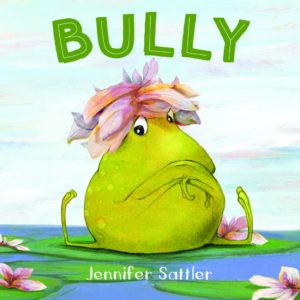
LM: Oh, goodness! This is a tough one. But thinking of the books that I just read, I really loved Bully by Jennifer Sattler and Lost in the Library: A Story of Patience and Fortitude by Josh Funk. Misunderstood Shark by Ame Dyckman, If Wendell Had a Walrus by Lori Mortensen, just to name a few because I honestly could go on and on and on.

[Sidenote from OPB: Check out Lori’s fall 2018 interview with us!]

RVC: The most important reason aspiring writers should join SCBWI?

LM: I am a HUGE fan of SCBWI for so many reasons. However, joining SCBWI and going to conferences is only part of the recipe for success. You have to do the work. Read, write, revise, critique, be critiqued, read, write, revise, repeat.

RVC: Three words that describe your approach to picture book writing.

LM: Humor. Heart. Imagination. 

RVC: Thanks so much, Lynne!