Educational Activities: This Little Scientist: A Discovery Primer

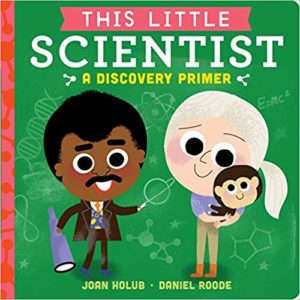
This Little Scientist: A Discovery Primer
Author: Joan Holub
Illustrator: Daniel Roode
Little Simon
25 September 2018
26 pages

My kids LOVE Holub’s Goddess Girls series, so when this board board arrived at OPB, I read it right away. It’s the type of book I might’ve enjoyed as a kid since I loved learning about other people (esp. underappreciated ones, which scientists so often are). In rhyming verse, it showcases ten memorable scientists through age-​appropriate facts and some striking illustrations.


Need some reviews of This Little Scientist?

Kirkus

GoodReads


Educational Activities inspired by Joan Holub’s This Little Scientist:

  • Before Reading–Ask students:
    • “What do you think of when you think of science?
    • Look at the two people on the front cover. What type of science do you think they each do?”
    • The subtitle has the word ‘discovery’ in it. What role does discovery play in science?”
  • After Reading–Which of the ten scientists in this book impressed you most? Why? What type of science does that impressive person do?
  • After Reading–The list of 17 bonus scientists at the back of the book has a place for an 18th scientist–you! What type of scientist do you think you’d like to be? What thing(s) or ideas(s) are you interested in studying?
  • Science Experiments–With an adult’s help, try out some of the following experiments: 
  • Science Craft–With an adult’s help, try out some of the following science-​themed crafts: 
  • Further Reading–Check out the following five picture book titles that explore the world of science. To learn more about any of these, click on the book covers!

Counting Crows: A Conversation Between Jane Yolen and Adam Stemple

As part of a whirlwind blog tour to support their new co-​authored picture book, Jane Yolen and Adam Stemple share thoughts about the genesis and writing of Crow Not Crow.

(OPB doesn’t do many non-​Monday posts, but when we do a Bonus Goody, it’s always going to be worthwhile like this. Enjoy!)

JY: I remember the first time you talked about teaching your wife Betsy how to bird using something you called “Crow Not Crow.” She was a Minneapolis girl and really didn’t know one bird from another. But you had been taught to bird as a child by your father who had grown up in the mountains of West Virginia. I thought Crow Not Crow might make a great title for a picture book, but since it wasn’t my idea, I left it alone. Only much later did I start bugging you about it.

AS: The actual teaching idea started out as a joke, splitting all of the bird kingdom into two classes: Crow and Not Crow. But the more Betsy and I joked about it, the more useful it started to seem. She got really good at telling crows from not crows, and we quickly added other birds into the mix. Now, she’s a full-​fledged (pun intended) birder.

When you first mentioned doing Crow Not Crow as a picture book, I didn’t see it. I hadn’t written in any kind of illustrative medium and hadn’t yet learned to think visually while writing. But after writing three graphic novels with you, I was suddenly eager to work on Crow Not Crow.

JY: That is the core of writing picture books–thinking visually. You have to think in double page spreads, as scenes. You have to understand what makes the reader want to turn the page.  But you also have to think like both a poet and a storyteller–compression and expansion. How to tell the story as if it is as tight and lyrical as a poem. (And I DON’T mean it needs to rhyme!)

Of course, adding the fact that we were two people writing one story from the point of view of a child only made it harder. It sounds really complicated put that way–but in the end, it was as wonderful as a dance.

AS: I like the fact that the form is compact and constrained. Constraints help me be more creative. I’m forced to rethink all the crazy ideas I have and mold them into a usable, readable shape. It’s that shaping that makes them come to life. Without constraints, I fly off into the ether, ending up with pages of stuff that gets tossed in a drawer, never to be seen again.

JY: I agree–there is something to be said for constraints in art. You learn them so you can eventually change, reorder, even violate them. A picture book–like a sonnet, a haiku–has certain parameters. And we slip into them as if putting on a special outfit: the ballerina has her tutu and toe shoes, the football player has pads, and clowns a red nose. We write picture books knowing the page count, understanding the page turn, aware of the child audience. Constraints but not restraints. Like grammar, we need it at the base of our picture book.

But I also love to work on books with you–and your brother and sister. Such partnerships come with other constraints. Family meetings without the fraughtness. Yes, you and your siblings are all truly good writers. But even more, when we work together on books, we deepen and broaden our relationships, for now we have more than just family gossip to sustain our visits. We talk art, craft, business–and new ideas as well. Besides, in books like Crow Not Crow, we bring back great memories of your dad, and what a wonderful husband and father he was. Not only did he teach all of us to bird, and was unsparing in sharing his own knowledge of the outdoors, he was also a great first reader for me. I know he would have loved this book because–as the original inspiration for Pa in my book Owl Moon–he cared deeply about good, honest, and lyrical books for kids about the natural world.

And when we write something like Crow Not Crow, it becomes a part of his legacy.


Author Interview: Antoinette Portis

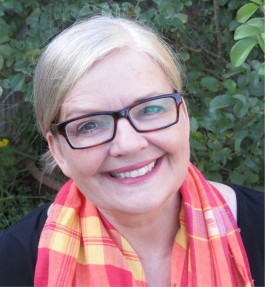
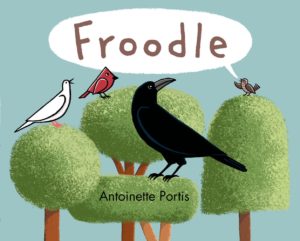
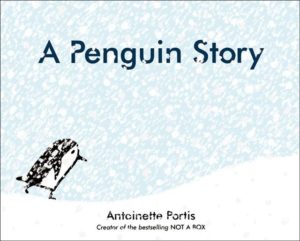
Antoinette Portis is the subject of this month’s author interview, and I have to confess–I’ve been looking forward to this one for some time. Anyone who can get away with using words like “Froodle” and “Frints” in picture book titles is awesome. Obviously.

We cover her bio pretty well in the Q&A below, so let’s close out this intro by sharing two of her books that I totally dig. Go (re)read them now. Seriously.
Website: www.antoinetteportis.com
Facebook: www.facebook.com/antoinette.portis
Twitter: @portisa
Instagram: www.instagram.com/bathingonthemoon
Goodreads: www.goodreads.com/author/show/129061.Antoinette_Portis


RVC: When did your interest in writing first show up?

AP: When I was in sixth grade, my best friend and I vowed that we were going to each write and illustrate a book. It took her 5 years before she presented me with one that she’d written in pencil on lined paper.

It took me much, much longer to hold up my end of the deal. 30 years!

RVC: Along the way, you went to art school, too.

AP: Right. I was terrified of writing after a freshman poetry class, so I veered toward visual art instead and got a BFA at the UCLA School of Fine Arts. I was also a video performance artist, but guess what? There’s wasn’t a career in that waiting for me. I started working in the commercial realm as a graphic designer so I could make a living and still be creative. Over the years, I was an advertising art director, making print advertising and TV commercials.

Then I had a baby and did a lot of freelance work in advertising.

RVC: And you found your way into working for Disney.

AP: I got a 3‑day gig at Disney working for a creative director I’d known from my advertising days. She was head of Creative Resources at Disney Consumer Products. I ended up staying there for almost nine years. It was super fascinating to be there, to be part of this huge American cultural thing–not all of which I agreed with.

I loved the creative challenges. My team did so much good work that at the end of each day, my mouth would hurt from smiling.

In advertising, “cool” was what you wanted, but at Disney, “cute” was a major vocabulary word. I got completely indoctrinated into cuteness, into the world of child-​friendly creative.

RVC: Why did you make the shift from that amazing job to the world of kidlit?

AP: I still had this secret part of me locked away in a treasure box–the artist who wanted to make her own stuff.

As I moved up the corporate ladder, pretty soon I wasn’t working directly with my creative team any longer. Most of my job was sitting in meetings with pages of tiny numbers on the table in front of me. I’d be in business meetings all day, return to my desk at 6pm to catch up on my work, then finally leave around 7:30pm, or later. I wasn’t thinking much about color and design anymore, but about deals and Target sales numbers. I was like, “What am I doing here? My soul is dying.” I wanted to see more of my kid and get back to being a creative person again.

Disney is an intellectual content provider, but I wanted to make my own IP.

I decided to leave. We’d had a bunch of layoffs, and it came to the point where they paid people to leave voluntarily. It was a perfect opening. I felt like a bird in a cage and the door creaked open for me. I could fly.

I think of that time as me being birthed out of the corporate world to what I was really supposed to do with my life.

So now I was home and could think about what kind of stuff I wanted to make. I considered going back to making site-​specific sculptural installations–something I’d done in art school. Or should I make children’s books, which was something I knew I’d wanted to do since elementary school? I weighed which arena would be more welcoming to a middle-​aged woman and that helped me decide on picture books.

Well before Disney, I took a class at Otis College where I wrote a picture book manuscript that I’m just now getting around to illustrating. Full circle.

RVC: Were you writing the whole time?

AP: Not while I was at Disney. There was  group of us at Disney–me, a poet, a painter, a knitter, etc.–who kind of met up and encouraged each other not to drop our dreams, but honestly, with Disney, everybody’s too busy to do anything else.

After Disney, I took children’s book classes at UCLA extension and Art Center College of Design (Marla Frazee’s class). I went to SCBWI conferences so I could understand how the publishing business worked.

I wrote a couple of manuscripts that I thought were okay. I’d paginated them and made them into little dummies. I started to get a sense of the rhythm of a 32-​page story, how it unfolds, how the whole thing works as a unit.

RVC: How did it go from there?

AP: The first book I submitted was promptly rejected. I revised and sent it out again, and it got rejected again.

Then I learned that Barbara Bottner–a writing teacher I had in 1993 before I started at Disney–was moving back to the area and starting up a guided critique group, so my current writing group just migrated over to hers.

I showed her the manuscript that got rejected. I was proud it. It was a smart idea. Cute. Clever.

Barbara looked at it, tossed it on the table, and said, “No, you’ve got to write something that matters to you.” Her theory is that we each have a specific age that we connect with as a writer. She wanted me to go back to my childhood and mine it for something that really mattered to me.

I had ideas. (I have lots of ideas–I keep lots of lists.)

One idea was based on my memory of playing in cardboard boxes. I remembered how much fun it was as a kid to do that–to entertain ourselves with our own imaginations. I first pictured the book as line drawings of a kid sitting in a box, with transparent overlays to show what they were imagining. But that wouldn’t work–you’d see the overlay before the box. The imagination part needed to come second. So the reveal had to follow a page turn. Which turned me on to the power of a page turn in a picture book. You really feel that power when you read out loud to kids–they shout out what’s on the next page before you’re turned. It becomes a guessing game or a chance to show off their knowledge.
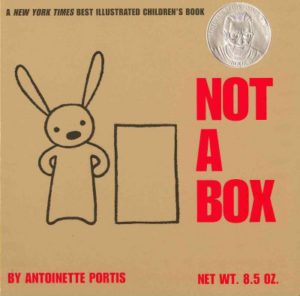
Once I saw what format would work, the text came easily–72 words just popped out. It was one of the really lucky times where the whole thing came together fast without a lot of pain and agony.

It’d be great if every idea unfolded like that. But no.

RVC: What lessons from those business world experiences proved most helpful in creating your own picture books?

AP: You have to grow a thick skin. You have to know that more than one idea will come to you.

In the advertising world, you pull an all-​nighter coming up with creative based on a strategy the account guys have given you. You come up with something brilliant and pin it up in the conference room, then the business guys come in and announce that they’ve changed strategies. Here’s the new one. So now go be brilliant again.

You might want to cry, but you go at it again. In advertising, creatives are thought of as an idea factory. You HAVE to be that–that’s your job.

I’ve seen in many picture book classes how there can be a preciousness–this is MY ONE idea. Like you’re never going to have another good one, so you cling to it and nurse it for years and years, even if it’s not working, or it’s not going to make it in the marketplace.

You’ve got to be able to let go when an idea isn’t working, or when you’ve beaten the life out of it. There’s not just one idea that’s doled out to a person in their life. There’s an endless supply of ideas!

And it helps to be strategic in the sense of how a book has a theme, an idea you’re trying to convey. You can’t have 17 themes crammed into a 32-​page picture book. The main idea–whatever it is–has to be set up in the beginning and then paid off at the end, hopefully in some surprising and satisfying way.

RVC: In a recent interview, you said, “Imagination is a super power all children possess–and it’s one they can exercise freely. I can’t stop wanting to celebrate that!” How does this impulse play into the creation of your own picture books?

AP: Imagination is a big theme for me in my work–it keeps showing up. But I don’t want to tell children “Use your imagination!” I want to show and reflect back to children how they do use their imaginations. I want to do it on their terms–not through the understanding of an adult.

Kids don’t run around saying, “I’m going to imagine now!” They just play. They make stuff up. The line between reality and imagination is blurred for a kid. It’s seamless how they move from one to the other.

RVC: Since we’re talking about the element of play, let’s talk about your illustration. It seems that you like to change up your art style from book to book. How do you know when you’ve got the right match for the current project?

AP: I spent my entire corporate career being an art director. My job was to have an idea, then hire someone else to bring that idea to life. Before the internet, we had these thick reference books with the portfolios of all these amazing illustrators. You’d leaf through it, page after page, to find the artist or photographer with the exact right style for the job. Now I write a manuscript and think, argh, I can only hire myself! Where’s my big fat book of art styles to pick from?

The manuscript I’m illustrating now, I wouldn’t (and couldn’t) have tackled 20 years ago. Finding my voice as an illustrator is an ongoing process. Getting away from drawing with a thick black outline opened up new terrain for me. I’m working looser, letting accident and spontaneity be more a part of the final result. I now spend a lot of time experimenting with different materials and tools. I’m loving sumi ink and big funky brushes these days. I’m making leaf prints, cutting stamps out of erasers, and there are clouds of vine charcoal dust settling on my drawing table. I’m following my intuition more–being open to more inspiration. So now I’m finally ready to illustrate the first picture book manuscript I ever wrote.

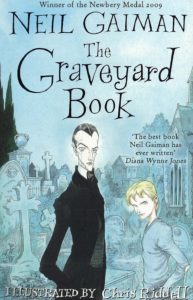
The process of growing reminds me of something Neil Gaiman said. He’d had the idea for The Graveyard Book decades before he wrote it, but he didn’t feel like he could do the idea justice so he let it sit until he was ready. And one day he was. (And it’s an amazing book!)
I have ideas that I never see myself illustrating because they require a style outside what I do. I’m never going to be, for example, an oil painter.

Some people are masters of a specific style. They might only work with a certain pen, or a particular paint set. They’ve perfected their craft over years and they’ve mastered it. That’s a wonderful thing. But it’s not how I work. I get a real charge out of not knowing exactly how I’m going to illustrate a book beforehand. I might do 6 different art styles and then talk with my editor about which one works best.

Apparently, I like to be mildly terrified at the beginning of a project.

RVC: You were lucky enough to be a Sendak fellow in 2010 (which seems mildly terrifying to me since he’s intimidatingly terrific!). What was the real takeaway from that experience?

AP: The real takeaway for me was the appreciation for what an amazing human Maurice was. Having him as a friend was a beautiful, beautiful thing. And having him believe in my work was awesome.

Plus there’s the friends I made there. Rowboat Watkins was a fellow Fellow, and we’re still friends. We share work back and forth, and we can count on each other to be honest and thoughtful.
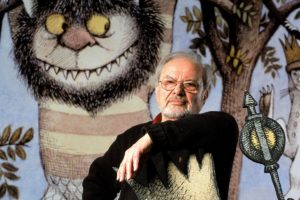
I remember Maurice being so disheartened by how commercial the world had become, and how so many publishers were more concerned with enhancing stockholder value (e.g. making a profit) than in bringing great work to the marketplace. So he told us that we’ve got to be spies, to sneak depth and meaning into our work so the corporate overloads don’t even notice it’s there.

Maurice made the point in many interviews that just because picture books are for children, that doesn’t mean they are devoid of psychological truth. He certainly proved that in his work–Where the Wild Things Are is still the gold standard for what a picture book can accomplish. He didn’t condescend to children, or patronize them. He recognized them as fellow human beings. Picture books can deal with the deepest, most profound ideas. And like great novels, they do it obliquely, not by hitting you over the head with their philosophy.

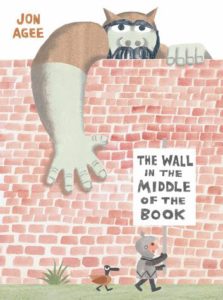
For example, there’s Jon Agee’s wonderful The Wall in the Middle of the BookYou could write a dissertation about that book. But if you told someone sitting next to you at a dinner party that you’d read this great book and then told them it’s a picture book, they’d laugh in your face. But the Agee book is funny, engaging, and profound. It’s a perfect creation. And so on point for our times.

A good picture book IS a spy. It’s sneaking meaning into your life without you noticing.

RVC: I’m a fan of that Agee book too–it’s one of the OPB 18 Favorites of 2018. But let’s circle back to something we’ve touched on before: writing groups. What role does a writing group play in your process?

AP: I’ve heard people say, “I’ve read my book to my kindergartner and he loves it!” as if that guaranteed a book’s success.

No. You’ve got to get through the gatekeepers (agents and editors and acquisition committees) who are both savvy and jaded. Editors see zillions of manuscripts, so you’ve got to hone your writing and submit something that already works. They’re not going to fix it for you. Their job isn’t to mine raw ore. You have to hand them a gem and they will polish it. That means you have to put your text through the filter of other people’s eyes to make sure it’s working the way you meant it to.

Sometimes I find myself defending my work in my critique group because I know what I was trying to say, and to me, I said it. But they’re not getting it. So I listen and the pushback helps me clarify my aim, so I can set about communicating better. A crit group lets you know if you’ve actually communicated.

There’s a whole complex dynamic as a book unfolds in the space of a crit group. Sometimes there are wrong turns. There’s a rhythm to the process that took me years to internalize. The most important thing is that you can’t take a crit of your writing personally–it’s about elevating the work.

But yes, sometimes the feedback is painful. Sometimes you just gotta cry on the drive home. Then you get back to work and rewrite that sucker.

I’m still in a critique group. I can’t go all year, though, since I spend a part of it illustrating and that requires total immersion. I need to be completely focused for that. It’s the other side of the brain and once I’m hanging out there, it’s all about pictures.

Anyone who is serious about making picture books should join a crit group with people whose ideas and talent you respect. (Patiently building mutual trust is required.)

In my class at UCLA, a group of us decided, “Hey, we’re helping each other, so let’s form a critique group together.” That’s what I was hoping would happen as I took each writing class, and finally a group of us clicked. And some of us have been together for a long time now, maybe 15 years.

RVCWait feels like a special book for you. In what way is your relationship with that book different than you have with others?

AP: There are two special things about Wait–one is formal, the other is the heart and soul part.

With Not a Box, there’s a push and pull between adult and kid. It’s about a child’s imagination, but also about a child defending it against the disbelief and casual cynicism of adults or some other bystander who’s not into playing along with them.

Back to that memory of my brother and I sitting in a cardboard box in our driveway, playing train. I can picture my mom washing dishes, looking out at the window at us,  thinking, “They’re going to leave those boxes out there and I won’t be able to get the car into the garage …” You know–the practical stuff adults think.

Another time, we used every single sheet, blanket, and towel in the house to build a fort. When she asked us to clean it up, we were like, “No, it’s fantastic. Leave it up forever!” (She might have cried. But then she sicced Dad on us and we had to take it down and do a lot refolding. A lot.)

I’m interested in that kind of dichotomy between the child’s world and the adult world, which is so much a part of growing up. Kids are constantly getting into trouble and breaking the boundaries set for them, often accidentally.

The idea for Wait came when I was sitting in a café and a mom walked by with a boy (about 2 years old) who broke free and ran over to look at a bug on the windowsill right in front of me. He was rapt.
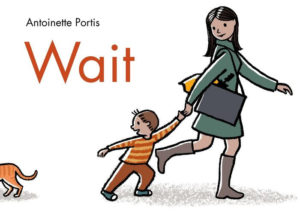
She grabbed his hand and dragged him down the street.

Hello, picture book!

That happens a billion times a day, where an adult’s agenda overrides a child’s agenda. Kids learn about the world by looking at things that adults have already learned to take for granted or are too busy to stop and see. Kids are fascinated by the ants in a crack in the sidewalk and random seed pods. Adults stomp right on past them.

This tug of war is a poignant situation, and I’m on the kids’ side. That’s the emotional underpinning of Wait.

One version of the book had variations of what the mom says, like “Let’s keep moving, buddy,” etc. I thought the book need that to be interesting. But then I realized that the narrative unfolds in the pictures–that’s where the interest lies. So a super-​tight, terse structure worked perfectly. The dialogue is just a simple back and forth. The mom says “Hurry” and all the child says is “Wait.” Until the end, that is, when the mom capitulates and things switch. That change becomes a big, big moment.

To figure out this book, I felt like I had to put everything I’d ever learned about picture books into it. In the pictures, there’s foreshadowing, repeated motifs, and visual jokes. But the real challenge was to create a visual narrative, not relying on poetic text, that had an emotional payoff.  I wanted to let readers figure out what the theme is. It’s clear and it’s there, but not actually spoken. I never want to speak a theme.

RVC: That sounds like a truth from the business world, too.

AP: The same thing is indeed true in advertising. With an ad campaign, there’s always the underlying strategy. You had to think of a tagline to support it, but you couldn’t use the strategy as the tagline.

A strategy might be “Our cars are better” or  “Drive our cars and everyone will think you’re cool.”

But you had to find a clever, funny, or powerful way of communicating that concept, so people would be emotionally or intellectually engaged with it.

RVC: Beyond the obvious–finish the work, proofread, send it out, etc.–what’s the best practical tip you have for aspiring picture book writers?

AP: The main thing is to be open to criticism. Be more committed to making the work better than to sticking with the germ of an idea as it originally came to you.

A novelist (I can’t remember where I heard this) once said that whatever initial idea you had for a book–whatever that one thing was that spurred you to spend years writing it–might need to be discarded as the idea takes on its own life and evolves into what it needs to be, its final form.

In a picture book, sometimes your favorite sentence has to go–the one that’s the most beautiful thing you’ve ever written. The book around it has gone to a new place, so bye bye beautiful sentence. (Maybe you’ll find a new home someday.)

I once heard Jon Klassen say that you have to be true to the idea. It’s all about the idea, not about you or your self expression. Once the idea is in existence, it tells you the rules if you just listen. It tells you what it needs.

RVC: Is this ever a challenge for you?

AP: Sometimes there’s a wrestling match. The book says, “You know I’m not going to work if you hang onto that thing you’re hanging onto,” but I dig in my heels. It might take me a while to face up to the fact that something I really like needs to go.

Manifesting an idea requires rigor and sometimes an idea has to whup you upside the head to get your to listen.

RVC: Alrighty–it’s time for the SPEED ROUND! Quick questions. Even quicker answers. GO! Guiltiest TV binge-​watching pleasure?

AP: It’s a show on Acorn (Australian TV) called “800 Words,” about a columnist whose wife died so he moved from Australia to this funky town in New Zealand with two teen kids and he writes a column for a dinky local newspaper. My husband and I are both addicted. He says, “Let’s see what George is up to,” which is ironic because George is never up to much and that’s what’s so great about the show.
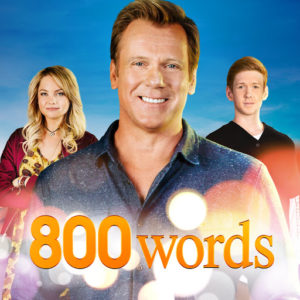
Continuous mellowosity.

RVC: Favorite literary villain?

AP: The Grinch, but from the book, not the modern movie versions. I think the green guy is on my mind because Christmas kind of wore me out. Sometimes I wanted to pack it up in a sack and stuff it in the back of a cave myself.

RVC: If you weren’t in the kidlit biz but you still left your job at Disney, you’d now be a  ______?

AP: I’d freelance in graphic design to make a living and then be writing and making art on the side. Maybe there’d be cardboard sculptures all over my walls.

RVC: Best dinner foursome made up of picture book characters?

AP: I’d like to have dinner with Winnie the Pooh, Owl, Piglet, and Eeyore. I feel like I’d have a great time with them.

We had those books when I was a kid, but I didn’t really read through them all until high school. I remember finishing them late one night and sobbing because I couldn’t go to the Hundred Acre Wood. I fervently hoped, when I died, that’s what heaven would be like. But now, writing for kids, reading and drawing with them, my life is its own Hundred Acre Wood.

RVC: Funniest picture book you’ve recently read?
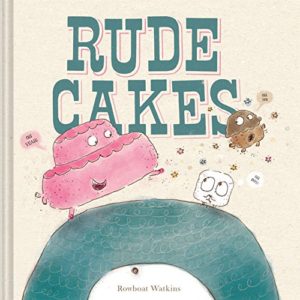
AP: My friend Rowboat Watkins wrote a book Rude Cakes that has has one of the funniest page turn reveals ever.

RVC: Three words that sum up what a great picture is/​does.

AP: Says something true about being a human being.

I’m going past three words here, but it’s important–a picture book isn’t didactic but rather something that tick-​tick-​ticks in the back of your mind like a time-​release capsule. It unfolds in your thought and moves you in some way. It makes you feel connected to your own humanity, and maybe makes you able to see your own behavior in a way that resonates for you. And maybe even changes you a tiny bit.

RVC: Thank IS worth going past the three word limit. Thanks so much, Antoinette!
Picture Book Review: Small Walt and Mo the Tow

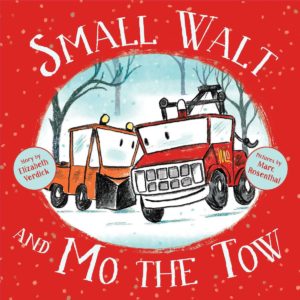
Small Walt and Mo the Tow
Author: Elizabeth Verdick
Illustrator: Marc Rosenthal
Simon & Schuster/​Paula Wiseman Books
30 October 2018
40 pages

This month’s PB review is by Ryan G. Van Cleave (#1 snowplow aficionado at Only Picture Books) and Ringling College of Art and Design Illustration Professor (and frequent OPB helper-​outter) David C. Gardner.

–Ryan’s Review of the Writing–

Small Walt and Mo the Tow is the sequel to the 2017 book Small Walt, which was a delight. This new title has a simple plot–a “bitter blizzard” has come so Gus (the driver) and Walt are off to clear the roads with “a big load of ice-​melting salt.” When a little green car slides off a forest road and FWUMPs into a ditch, Walt wants to use his scoop to save the day, but Gus says, “Now, now. Plows only scoop snow.”

It’s Mo the Tow to the rescue, along with Mo’s driver Sue, who wears a bright blue coat. Only Mo’s tires can’t get a grip of the slick ice, so Walt does his part to plow the snow and use his spreader to drop salt with a “switch-​twist, switch-​twist.” And from that moment on, new friendships are made, and the little green car is rescued at last.

The vehicles have a good deal of personality, which is certainly part of the fun. Yet what young readers might respond best to is the attention to sound, both in the alliteration (“swish the slush” etc.) as well as the many instances of onomatopoeia (“Whumpa-​thumpa-​bumpa-​bump!” and “Rugga-​brum-​brum, HUMMAROOOM!”).

This is a sweet story of friendship and kindness. If you liked Small Walt, then this sequel likely won’t disappoint you.

4 out of 5 pencils

David’s Review of the Illustrations–

This sequel starts with a long view of the town, like a child’s eye view of a toy village, then the pictures swoop in to immerse us in the action. And it is all action, essentially a narrative of pulling a stuck car out of the snow. 

Rosenthal’s pictures border on crude, done in what looks to be heavy-​colored pencil or thick crayon. (I will confess I have always been skeptical of the notion that children want to look at pictures that look like something they might create themselves.) Rosenthal’s simple illustrations for the Small Walt books have been rightly compared to Virginia Lee Burton’s classic books like The Little House (1942), Mike Mulligan and His Steam Shovel (1939), and especially Katy and the Big Snow (1943), and they do share that childlike quality and charm. Burton worked in this medium too, but her work was more refined, like fine miniatures, starting with soft watercolor washes, then layering in colored pencil with attention to tiny details.

The looseness here is not necessarily a weakness, though; it gives the book a contemporary feel. Rosenthal has a wide-​ranging portfolio as an illustrator for magazines, advertising, and books, and his style consistently pays homage to illustration styles of the past, always with a clever twist so that we never forget his work is of-the-moment.

And this book is no different.

Rosenthal is, in a sense, playing jazz, not Beethoven. That freshness helps to convey the immediacy of the story for its very young audience. The illustrations also amp up the charm considerably, giving the book a hip coolness without being cynical, and never tipping over in the other direction into easy, sappy cuteness.

3 out of 5 crayons


David C. Gardner is an award-​winning illustrator and visual development artist. A former artist for Walt Disney Animation Studios, he has illustrated numerous picture books, including his latest from Sleeping Bear Press, Write On, Irving Berlin! by Leslie Kimmelman (which appeared on OPB not so long ago). It tells the true story of little Izzy Baline, who immigrated to New York City in 1893 and grew up to become Irving Berlin, one of the most well-​known composers of popular music in America. David teaches illustration at Ringling College of Art and Design.
To learn more about his work, please visit FlyingDogStudio.com.

Only Picture Books’ 18 Favorites of 2018

What better way to close out 2018 than with a list of OPB’s 18 favorites from this past year?

Some of these titles appeared in the (digital) pages of OPB.

Some didn’t. (Alas, this isn’t a comprehensive PB review site like PW, Kirkus, or others.)

But make no mistake–I’m a fan of these 18 titles. I’ll even offer up a sentence or three for each to give a sense about why I liked them.


Note #1: Every book listed below is a total winner via my super-​subjective estimation. By that, I mean:

  • I own a copy. (Yep. Not just the freebie ARCs/​galleys here!)
  • I’d be happy to read any of these with a child.
  • I’d be happy to re-​read any of these, even without a child handy.
  • I’d be happy to have written, illustrated, and/​or edited ANY of these.
  • I’d be pleased as Hawaiian punch for any of the involved authors, illustrators, and editors to hit up OPB for an interview. HINT HINT HINT!

Note #2: They aren’t ranked in any particular way, save alphabetically by title. Want to know the #1 picture book of 2018? Read them yourself and make your own choice. Post your choice as a comment here. Or offer it up on your social media. Or add your glowing recommendation on an Amazon or Goodreads page.

Note #3: I like notes.

Note #4: There should be more picture books about sloths. (Please refer to question #1 of the Speed Round of editor Kait Feldmann’s OPB interview for proof of this profound sloth lack!)

Note #5: Refer to notes 1–4, as needed.


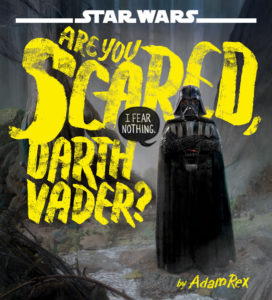
Are You Scared, Darth Vader? by Adam Rex (3 July 2018)

I often bring a picture book to share at my SCBWI PALs meetings, and this one brought the house down. It’s loads of fun, but it’s far more than just a Star Wars nostalgia riff. Well done, Mr. Rex!


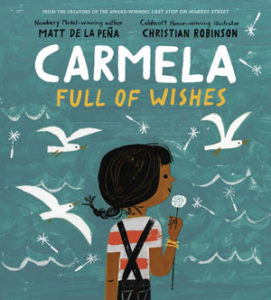
Carmela Full of Wishes by Matt de la Peña, illustrated by Christian Robinson (9 October 2018)

If you liked Last Stop on Market Street, you’ll love de la Peña’s new book that powerfully spotlights children who are worthy of our attention. Plus Robinson’s acrylic paintings are rich and captivating. Simply terrific.

Enjoy an Oct 2018 interview about Carmela Full of Wishes with Matt and Christian at PW.


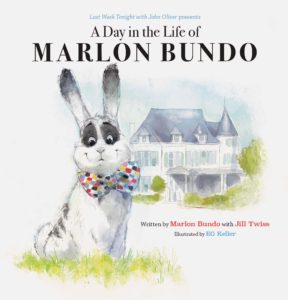
A Day in the Life of Marlon Bundo by Marlon Bundo and Jill Twiss, illustrated by EG Keller

To everyone’s surprise, political satire and picture books can go together like chocolate and peanut butter. Plus Jim Parsons really rocks it on the audio version.


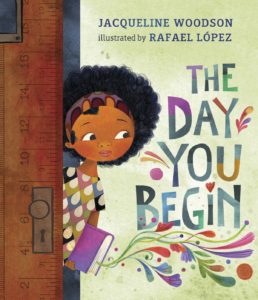
The Day You Begin by Jacqueline Woodson, illustrated by Rafael López (28 August 2018)

It’s a memorable, inclusive story with lyrical writing and dreamy art. This is a book for every child who feels alone (which is to say “everybody” at one time or another).

Here’s The New York Times article on two of Woodson’s books (including this one).


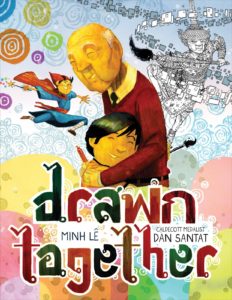
Drawn Together by Minh Lê, illustrated by Dan Santat (5 June 2018)

This gorgeous book shows the power of art–and the creative process–in action. It’s a visual WOW.

Here’s a June 2018 NPR interview with Minh Lê about Drawn Together.


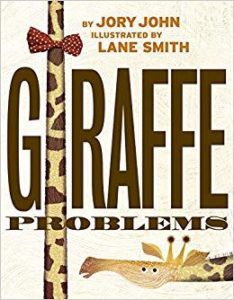
Giraffe Problems by Jory John, illustrated by Lane Smith (25 September 2018)

About twice a month, I go to my local library and grab two huge bags of whatever picture books catch my eye. Then I read them all at home. That’s the story of how I got introduced to this book, and it was the star of the whole batch by far. Clever. And full of positive messages too.

Here’s a Dec 2018 “speed interview” with Jory John on this cool book.


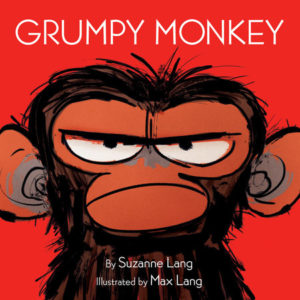
Grumpy Monkey by Suzanne Lang, illustrated by Max Lang (15 May 2018)

The simplistic yet powerfully expressive illustrations are first-​rate. Plus there’s something wonderful about a grumpy monkey screaming “I’m not grumpy!” This is great for a kindergarten reading session. They’ll all make the faces along with the characters for sure.


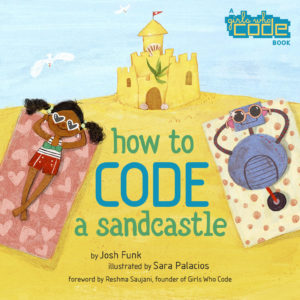
How to Code a Sandcastle by Josh Funk, illustrated by Sara Palacios (15 Mary 2018)

No rhymes or delicious puns here, but instead you have a kid-​friendly book that shows how to break down a seemingly big problem into small, manageable steps. It’s smart, useful, and just silly enough to keep all the learning fun.

Here’s a “Simply 7” interview (by Jena Benton) with the always-​interesting Josh Funk.


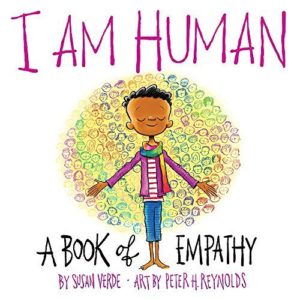
I Am Human: A Book of Empathy by Susan Verde, illustrated by Peter H. Reynolds (2 October 2018)

I’ve been paying attention to this picture book team since I Am Yoga and they continue to deliver. This book is a fine celebration of the beautiful imperfectness of humanity. It’s a book that says it’s okay to make mistakes, and that’s a fine lesson for young readers that counteracts the over-​tested, over-​scheduled, must-have-GPAs-higher-than‑4.0 world in which we live.


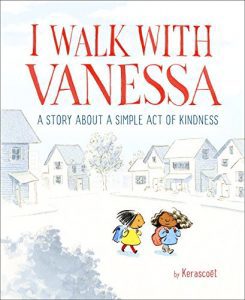
I Walk with Vanessa by Kerascoët (24 April 2018)

I’ve been a fan of this husband-​wife team since their graphic novel Beautiful Darkness. This picture book shows just how magical a wordless story can be.

Here’s a fine review of I Walk with Vanessa at Unleashing Readers.


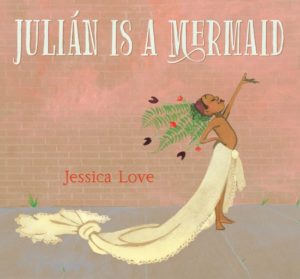
Julián Is a Mermaid by Jessica Love (23 April 2018)

This is a book that could’ve gone wrong in a host of ways … but doesn’t. It’s beautiful and empowering without being preachy.

Here’s a May 2018 interview with Jessica about this book at Seven Impossible Things Before Breakfast.


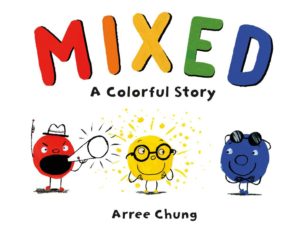
Mixed: A Colorful Story by Arree Chung (3 July 2018)

This celebratory book feels more relevant by the day. I’m also a fan of the graphic, eye-​catching style.

Read the full review of Mixed at OPB!


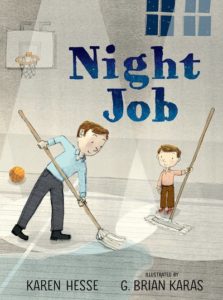
Night Job by Karen Hesse, illustrated by G. Brian Karas (11 September 2018)

This gentle story has a great big heart and Karas’ mixed media illustrations are spot-​on in every way.

Here’s the starred review of Night Job at Kirkus.


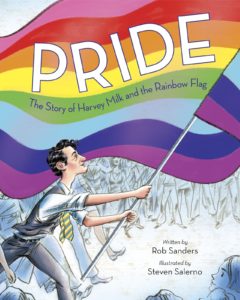
Pride: The Story of Harvey Milk and the Rainbow Flag by Rob Sanders, illustrated by Steven Salerno (10 April 2018)

I know Rob pretty well and despite that (just kidding, Rob!), I think this book is tremendously good and tremendously important. When Rob visited my Writing Picture Books class at Ringling College in spring 2018, he shared this book with them–it became the #1 most talked-​about book of the entire semester for the students, and for that reason alone, it’s got to be on this list. I also really dig the back matter timelines.


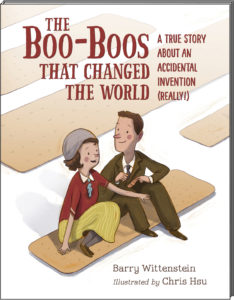
The Boo-​Boos that Changed the World: A True Story About an Accidental Invention (Really!) by Barry Wittenstein, illustrated by Chris Hsu (13 February 2018)

The retro look draws me in as much as the well-​told story about a now-​omnipresent first aid item.

Here’s a March 2018 speed interview with Barry at The Children’s Book Review.


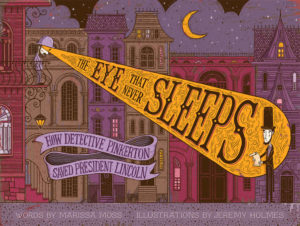
The Eye that Never Sleeps: How Detective Pinkerton Saved President Lincoln by Marissa Moss, illustrated by Jeremy Holmes (6 November 2018)

The hip cartoony style works well with the text to present a memorable read about one of America’s greatest detectives.


The Wall in the Middle of the Book by Jon Agee (2 October 2018)

This book proves to be quite the discussion starter on the concepts of perspective and assumptions.

Here’s an October 2018 Q&A with Jon at PW.

Here’s an October 2018 interview with Jon at Let’s Talk Picture Books.


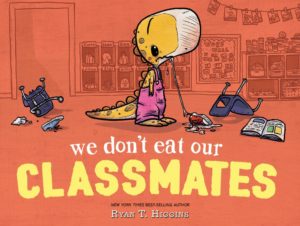
We Don’t Eat Our Classmates by Ryan T. Higgins (19 June 2018)

The character? Hilarious. The ending? Delightful. It’s the type of back-​to-​school book I wish I had when my kids were little.

Here’s a Q&A with Ryan at PW.

Editor Interview: Kait Feldmann (Arthur A. Levine/​Scholastic)

The final Industry Insider interview for 2018 is with Kait Feldmann. And not to toot my own OPB horn here, but the following is SO GOOD that it’s totally worth sending out on Xmas eve. Feel free to tuck this post under your tree and wait to open it until Xmas day, if you want! 

That being said–here are 11 fun facts about Kait to get us started! Why 11 and not 10? Because at OPB, you always get a little extra literary love. Plus there’s always the This is Spinal Tap connection to be enjoyed.

  1. Her fancy title? “Editor at Arthur A. Levine Books, an imprint of Scholastic.”
  2. How many n’s in “Feldmann”? Two.
  3. When did she join Scholastic? May 2014.
  4. She assisted on Newbery Honor-​winner Echo by Pam Muñoz Ryan, The Marvels by Brian Selznick, and The Tales of Beedle the Bard: The Illustrated Edition by J.K. Rowling, illustrated by Lisbeth Zwerger.
  5. Book hoarder, insomniac, and lover of all things sloth.”
  6. She’s a “proud hapa.”
  7. Sometimes wishes “referral” were spelled “refferrall.” (Ryan’s note: Don’t we all?)
  8. What does Kait yearn for in a manuscript? “Meaningful, character-​driven stories with humor and heart.”
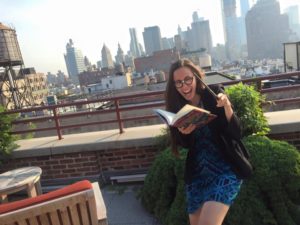
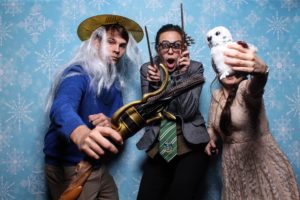
  9. Also “likes a little whimsy, light layers of magic.” (Ryan’s note: Witness the Potterhead Q&A exchange below! And note what Kait’s both reading and holding in the picture above!)
  10. Wants to see more picture books featuring kids of color.
  11. Submission WARNING from Kait! “I have a stone-​cold heart the size of a pea and am not moved by sweeping texts that explore ideas like love, family, tradition, etc., through a glimpse into many different kinds of experiences. Instead, I prefer to see specific narratives that focus on a particular character’s emotional journey. Universal through the specific!”

Arthur A. Levine website: www.arthuralevinebooks.com
Personal Website: www.kaitfeldmann.com
Twitter: www.twitter.com/kaitfeldmann
Tumblr: www.scattershotsilly.tumblr.com
Manuscript Wish List: www.manuscriptwishlist.com/mswl-post/kait-feldmann/


RVC: How did you first get involved with the publishing world?

KF: My first foray into publishing was an internship with Scholastic, which was offered after providing my mom (children’s book author Lisa Yee)  notes on Warp Speed that she passed along to her editor, Arthur Levine. He liked what I had to say and asked me to intern for him. I hadn’t considered an editorial career before, but that experience ignited my passion, and I spent the rest of my college years taking on any kind of book-​related work I could, interning remotely, assisting a local independent publisher, freelance editing, and selling fine writing pens in Vroman’s stationery department where I’d sneakily pretend to be a bookseller on the side.

RVC: So in your current editorial position at Arthur A. Levine Books, you’re primarily looking to acquire picture books and graphic novels. What appeals to you most about these ways of telling stories? 

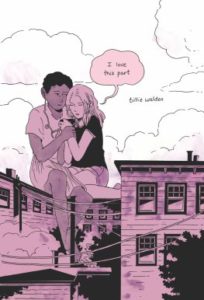
KF: Images bring something to a story that I think, when done right, can really enhance the world of words. And you can play with story in the book format in a way you simply can’t do in another medium. A great example is Tillie Walden’s I Love This Part, which I might call a middle-​grade picture book. It follows two girls through their relationship and break up in glimpses—each spread a different scene from their love story, not necessarily in order. Tillie only uses two colors, but she plays with them thoughtfully, saturating scenes of affection with purple and going grayscale in times of turmoil. She also plays with proportion and surrealism in a way that you’re just going to have to see for yourself…some things words can’t properly express.

RVC: Any advice on how to make this type of magic happen?

KF: Read widely. Really understand the ins and outs of the picture book form, know how to pace and paginate a story, study the way art is composed (notice the room left for text; the difference between spots, single pages, and full-​bleed spreads…). This is important even if you’re a writer only! Make it a habit to browse your library or bookstore every month or so to get a feel for what’s out there. In a submission, I can tell who does this and who doesn’t.

RVC: Plenty of relatively competent submissions hit your desk daily, I’m sure. In fact, just tell us. What’s an average week for you? How many new submissions come at you?

KF: It fluctuates depending on a number of factors, including whether I’ve been to a conference recently and how responsive I’ve been to agents (I try to be speedy! The catch is that the quicker I respond, the more submissions I get—it creates a sort of Hydra effect that’s quite stressful!).

Taking a look at a random week, I see: six agented submissions (three are international—already published but looking for a North American/​English-​language publisher), and 72 unagented submissions. 

RVC: How can you tell when writers haven’t done their homework for a submission? What’s the giveaway?

KF: Well, there’s the cosmetic stuff—I get a lot of “Dear Editorial Department,” “To Whom It May Concern,” or “Dear Kate Feldman” (note both first/​last misspelled). It’s not an automatic rejection if you have a generic or misspelled salutation, but since it’s your VERY FIRST impression, it does stand out…in a bad way.

Then there’s the pitch. My acquisition profile is easily Googleable, as are most editors’ and agents’. My bailiwick is picture books and graphic novels but I get a lot of MG/​YA novel submissions that are clearly copy-​pasted from a template. I’m also very vocal and specific about publishing diverse books and creators, yet I get a number of queries that either ignore that or say “I know you’re interested in diversity so my book might not be for you but I’m going to try anyway.” What? No! That’s almost worse than not doing your homework. It’s taking the time to do your homework wrong and turning it in anyway.

Query letters are like cover letters—if you want to stand out you need to personalize each one you send to show why you are a great fit for that position. In a way…you are applying for a job. There’s a lot of work ahead, so show that you’re serious and have thought it through.

RVC: When a submission hits your desk and you’re intrigued, do you Google the author? If so, what are you looking for?

KF: Yup, I’m a Googler. I don’t always know what I’m looking for—I guess just a broader sense of who the person is. What they like. What they stand for. How active they are in the book community. And of course, any red flags! It hasn’t happened often, but there were a few instances where I came across a Tweet and thought ohhhh…yeah, we won’t get along.

RVC: So speaking of getting along … we first met at the SCBWI conference in Orlando this past June. What do you get out of being a speaker at events like that?

KF: I love discussing craft and publishing and find that I learn and grow from my experiences at writers conferences, too. And of course, I always hope to make lasting connections. One of the first authors I signed, the indomitable Aida Salazar, is someone I met at SCBWI LA. My colleague Nick Thomas had a critique with her and passed along her work. We both fell so hard for her writing that we offered a two-​book deal right away. Her debut novel, The Moon Within (which Nick edited), comes out February 26, 2019 and her picture book, Jovita Wears Pants: The Story of a Revolutionary Fighter (that one’s mine!) follows in 2020.

RVC: Every editor and agent I speak with has a conference horror story or two–they were cornered in a bathroom stall, or someone slid 500 pages of a YA werefox thriller under their hotel door … three pages at a time … at 2 a.m. in the morning.

What’s YOUR conference-​related writer horror story?

KF: Omg, can anyone beat the 2 a.m. page slide? Imagine the editor sitting on the other side, reading in suspense, waiting for the next pages to follow…(kidding—I’m sure that’s NOT what happened and don’t encourage that behavior).

Mine is the time I was talking to an author at a bar and a man asked to join us—he was friendly but very focused on me, wanted to know all about my interests outside of publishing. It didn’t read as flirtatious but it was clear he had an agenda, and that shifted the dynamic of the conversation in an uncomfortable way. A month or so later I’d forgotten all about it when I received a big box packed with my favorite things…and at the very bottom, a manuscript. From Bar Guy. It was completely inappropriate, and under Scholastic’s Code of Ethics, also considered a bribe.

RVC: That’s crazy. And speaking of crazy, here’s a semi-​popular belief among writers: Editor’s don’t edit much anymore–they primarily just acquire (or more often, not!). While that might be true in some book areas, I don’t find that as valid to say about picture book editors.

How much time do you put in on any given picture book manuscript? How much before the sale is made? How much after?

KF: Is that true?? Perhaps in some circles, but that’s not how I was trained, and it’s not how I work! I typically schedule picture books to publish two years out from when I sign them, minimum! We go through rounds and rounds and rounds and rounds of editing. It really varies depending on the book and the creator and our working style—I try to adapt to provide what each creator needs from me, but sometimes neither of us knows what that looks like until we’ve taken a few different tacks!

There’s one creator who I approached cold and asked to develop a project from scratch—we worked for ten months on creating a story I could share with my acquisition team—but all that time working together and figuring out our style meant that by the time we officially signed it up we were flying.

RVC: What’s the most common misconception about being a picture book editor? What do authors–and possibly even agents–have wrong?

KF: The best way to make a children’s book editor bristle is to say “Oh how cute! You edit picture books? That must be so easy!” But I’m sure your readers know well…IT ISN’T EASY!

The one thing that bothers me even more, however, is people who underestimate the picture book audience. First of all, we should be writing UP to kids, not down. Kids are so smart, emotionally and intellectually, and they know instantly when their worth is being devalued. Second, picture books are not just for kids. They’re for anyone who loves a good story!

RVC: Alright–it’s time for the Speed Round! Go! What zoo animal deserves more picture book coverage?

KF: I’m very happy that sloths are finally having their moment, but they deserve moooooore!!!

RVC: You semi-​frequently tweet about amazing workplace discoveries. The office copier’s ability to corner staple. The “move to folder” dropdown in Outlook. What’s the latest breakthrough?

KF: The secret tunnel that leads to a cupcake store. You think I’m kidding.

RVC: Grammar gaff that drives you the most bonkers?

KF: Er…I’m not the bestest at grammar myself.

RVC: You’ve openly confessed to being a Potterhead. Spill the (Bertie Bott’s Every Flavour) beans. Most underappreciated character?

KFAngelina Johnson.

RVC: Three current picture book authors who are setting/​raising the bar?

KF: Jessica Love (Julián Is a Mermaid); Minh Lê (Drawn Together, illustrated by Dan Santat); Tillie Walden (I Love This Part).

RVC: The most unforgivable thing in a picture book submission is …

KF: Getting the person’s name wrong!

RVC: What would like to see written on your literary tombstone?

KF: Here lies Kait, who died as she lived, under a pile of books.

RVC: Thanks so much, Kait. What a way to wrap up the first year of OPB! Thanks!!