

Agent Interview: Christa Heschke (McIntosh & Otis)

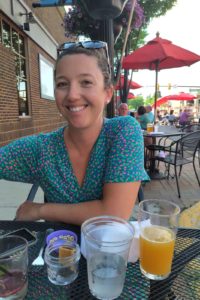
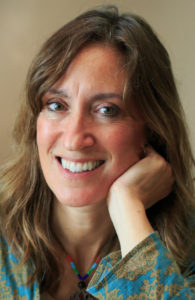
The June Industry Insider interview is with none other than Christa Heschke, who’s been with McIntosh & Otis, Inc. since 2009. While there are many reasons why she’s a great a fit for OPB, here are just three.

Reason One: Her Twitter bio claims a Hufflepuff affiliation.

When I was last in NYC, I made a point of seeing Puffs, or Seven Increasingly Eventful Years at a Certain School of Magic & Magic. Kindred spirits!

Reason Two: She’s a Green Bay Packers fan.

I was born in Neenah, WI (a stone’s throw from GB), and I taught at UW-​GB, where I lived walking distance from Lambeau Field. Plus, my folks had season tickets when I was a kid!

Reason Three: She likes LOTR, zombie TV shows, and RL Stine.

My take on those same things? Yes, amen, and wahoo!

With so many things in common, the two of us making some magic at OPB is all but guaranteed. Let’s prove it right now!


RVC: Let’s start with an unexpected connection we have–Kristen Schroeder (one of your clients!). I just met her at the Jane Yolen/​Heidi Stemple Picture Book Boot Camp back in November. She had an Advance Reading Copy of her debut, Alien Tomato, which was a real hoot to see, to say the least. What do you like most about that book (which comes out in July 2020)?

CH: I love the humor and Gopher is such a fun main character! The ending twist is perfect! Seeing the art capture the text was really cool, too. It’s one of my favorite things about working on picture books.

RVC: Please say a few words about why Kristen’s pitch to become your client worked.

CH: Kristen had queried me and then later notified me she had an offer of rep from another agent. I remember really liking the project she sent me, Howie, which was a fun look at dog-​shaming photos. I liked the humor and I thought the idea was standout. After reading that one and enjoying it, I asked her to tell me more about her body of work and she sent me a whole list of projects she had written or was working on and I was SO impressed! I could see her range and once I read a few more of her projects, I just had to offer her representation!

RVC: Is that something you recommend others do?

CH: Yes! I think it’s helpful to have a handful of finished polished picture books ready when you start querying. When it comes to picture book authors, I always like to see a few projects–I’m rarely offering rep based on just one project. This may be personal preference, but I have stepped aside a few times when I really liked one project but the author didn’t have anything else to share or tell me about.

RVC: Let’s jump back to the beginning. At what point did the publishing career become your path?

CH: Well, it all started back in college. A friend interned at Writers House and suggested I apply. At the time, I had no idea what I wanted to do, but hey, I loved to read so I applied. I loved my time there and that led to another internship at Sterling Lord. When I graduated college, I applied to all kinds of publishing jobs. After some time, I got the job offer to be an assistant at McIntosh & Otis in their children’s department. I said yes, and haven’t looked back since. I got lucky that I fell into the area of publishing I was meant to be in. I love working on the kids side and I’ve always been a kid at heart, so it was a perfect fit for me! After assisting a few years, I moved up to agent.

RVC: I’ll bet you REALLY got the literary bug a bit earlier than college. Did you write term papers about copyright infringement and intellectual property issues? As a teen, were you negotiating deals for writer friends to ghostwrite prom-​posals? Were you doing Muppet Babies fanfic? The OPB family wants to know!

CH: Other than reading a lot growing up, I did have my own magazine for a while called Gal’s World. I was in the 12–14 range when I was actively putting the magazine out there. I also had my own website dedicated to Sailor Moon fanfiction. So, from a young age, I was active on the writing side of things. In school, we wrote and illustrated our own books from kindergarten up through 4th grade. I still have most of them!

RVC: Let’s take a closer look at your time as an intern at Writers House and Sterling Lord Literistic. What does life as an intern look like?

CH: A big part of interning at an agency is reading queries and manuscripts, and then writing reader’s reports. Writers House also had classes on different topics for their interns on everything from subrights to contracts, so it was a great learning experience. At Sterling Lord, I got to help a bit with foreign rights which was cool, including editing their rights guides/​preparing for a major Fair (Frankfurt, if I’m remembering correctly).

I basically helped whomever needed it, so I got to read kids and adult work as well as perform general office tasks such as filing, mailings, organizing, answering phones, etc.

RVC: Any tricks to landing one of those coveted jobs?

CH: Networking helps SO much when getting an internship. Without my friend having a connection at Writers House, I’m not sure if I would have gotten an interview.

RVC: You joined McIntosh & Otis in 2009. What about that agency makes it such a good fit for you?

CH: I love that we’re more of a boutique agency. There are only two agents (plus two assistants and an office manager/​royalty manager) and we handle everything for our clients. So, aside from editorial work and sending projects out on submission, I also handle all subrights (translation rights, audio, film/​TV/​stage etc.), my own contracts, helping authors with promo, permissions, and more. It certainly keeps me busy, but I like that I get to work on a little bit of everything!

I especially love working on foreign/​translation rights. It’s always a good day when a copy of one of your books translated into another language comes in and sometimes with an all new cover! I also like that I can build my list how I want to. So, I can take on the projects that I’m passionate about. Of course, it’s also very important to me to do what I can to raise up marginalized voices. I strongly believe every child should be able see themselves and characters like them in books.

Getting kids to start reading and enjoy reading from a young age is so important to creating lifelong readers. Whenever I see kids reading (whether it’s on the subway or in the park) I get excited! M&O gives me the support to do these things which I sincerely appreciate.

RVC: Though you rep all types of kidlit, what about picture books appeals to you? 

CH: It’s a child’s first experience with reading. I love that! I remember how much I enjoyed picture books as a little kid. My parents told me before I could read, I would flip through picture books and make up the words based on the pictures (or what I remember from my parents reading them to me). So, they have always been special to me. I love how they can be fun and character driven, but still have a great message. I also like seeing how the art works together with the text to create a finished book. I could go on and on!

RVC: How important is voice to picture books?

CH: It’s important. If the text is wordy and the voice feels “too old,” it won’t work for the age-​range. Every so often, I see picture book texts that almost read more like a middle grade as far as word choice, wordiness, and overall voice. Every word counts with a picture book. Voice often comes across more strongly when you have an engaging and developed central character. Even in a picture book they will grow and change from beginning to end and when that’s done right, it helps the voice!

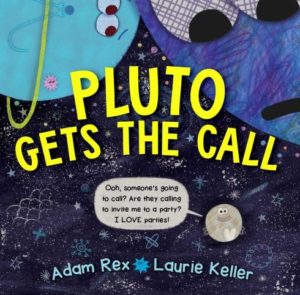
A good example off the top of my head is A Place for Pluto by Stef Wade. Of course Alien Tomato is another. Lindsay Bonilla’s Polar Bear Island. Piglette by Katelyn Aronson. I may be biased but I think all my clients have great picture book voices.

RVC: What are your thoughts on rhyme?

CH: I work on the occasional rhyming text, but I wouldn’t say it’s something I gravitate towards. My assistant, Daniele, is the resident poetry expert.

RVC: How can a writer do a better job if they decide it’s the route to go?

CH: To do a rhyming book right, you need to be well-​versed in poetry and understand meter, rhythm, etc. When you want to write in rhyme, it has to be perfect. I’d also ask writers why they feel this particular story needs to rhyme. Maybe it doesn’t. Some stories work better in prose.

Reading the story out loud can help you find areas where you trip up and may need to work on. Getting extra sets of eyes on a story also helps–especially if you can find readers that specialize in rhyming work or poetry!

RVC: How many submissions do you see per week?

CH: A lot! The number fluctuates a bit. If I recently participated in a Twitter pitch event or a writer’s conference, my inbox numbers will often go up quite a bit. I’d say I get at least 10 queries on a typical day, so upwards of 100 a week is common.

RVC: And what does the process look like going forward from a good query all the way to an offer from you and then having you submit the project to editors?

CH: Once I come across a query that jumps out at me after reading the first pages, I’ll request either a partial manuscript or a full manuscript. When I request a partial, I’m interested but want to read on a bit and see what I think. When I request a full, I generally love both the premise and writing, and I’m intrigued by the synopsis enough to want to see where the story is going.

After I’ve read the entire manuscript and I know I’m in love, I contact the author via email. I like to offer rep over email and give the basics before having a phone call. On the call, I answer any questions, go over any editorial feedback, and ask my own questions. Then I wait. That author likely will have the manuscript with other agents and will wrap up those submissions. A two-​week deadline is pretty standard.

During this time, the author may get more offers and will have to decide who they feel is the best fit for them and their career. If they end up going with me (yay!), we work on editorial and get the manuscript as polished as possible before submitting to editors. I come up with a submission list, share it with the author, and take it from there.

RVC: Last question for this part of the interview. Rumor has it that one of your secret literary weapons is an assistant named Daniele. Care to dish?

CH: Daniele is amazing, and that’s no secret! Daniele helps me SO much. She’s another skilled set of eyes on manuscripts, she has a great editorial eye…She literally assists me with pretty much everything! She also keeps me organized. We always have a high volume of pending things to do, submissions to read etc. etc. and without her, I’d likely get to things a lot slower!

And she’s a ray of sunshine and optimism. She’s so supportive and genuinely loves what she does and working with my clients, and they love working with her. We are very much a team!

RVC: Alright, it’s time…for…the… LIGHTNING ROUND!!! Are you ready for zip-​zappy question and electrifyingly fast answers?

CH: You bet!

RVC: Star Wars, Star Trek, or Stargate?

CH: Star Wars.

RVC: Best fake language—Parseltongue, Dothraki, or Tolkien-Elvish?

CH: Definitely Elvish! A recent highlight was watching the LOTR cast reunion Zoom special. All the feels!

RVC: It’s a night of magical mini-golf…with a literary theme. What three authors (living or deceased) do you invite out onto the (mini) links?

CH: That’s an impossible question to answer! LOL!

Hmm…how about Jane Austen, R.L. Stine, and Garth Nix? These are all authors who I loved reading growing up. If I were to go into authors I admire and fangirl over as an adult, it’d be a super long list. There are so many authors doing such amazing things and creating necessary change in the kidlit world!

RVC: Beyond typos and getting your name wrong, what’s a query pet peeve?

CH: Not doing your research. If you’re sending me something I don’t represent, it’s an automatic no.

RVC: Name an agent‑y bucket list item.

CH: Having a book I rep win the Newbery, Caldecott, or another major award is definitely up there!

RVC: Three words that sum up your picture book philosophy?

CH: Every. Word. Counts.

RVC: Thanks so much, Christa!

Educational Activities: Papa Brings Me the World by Jenny Sue Kostecki-Shaw

Papa Brings Me the World
Author: Jenny Sue Kostecki-Shaw
Illustrator: Jenny Sue Kostecki-Shaw
5 May 2020
Christy Ottaviano Books
40 pages

With Father’s Day just around the corner, this book about a cool dad (and his equally cool daughter) seemed like an especially good choice to feature in this month’s Education Activities.

Book description from Goodreads: “Most parents drive a car or ride a bus or train to work—but not Lulu’s papa. He navigates mountains, deserts, and oceans, each time returning home with pockets full of treasures. There’s an ancient calculator from China, a musical mbira from Zimbabwe, and a special game from Sumatra. But the best treasures are special stories Papa tells when he comes home—tales of playing peekaboo with rare birds in the Andes and befriending dragons in the Irish Sea.”


Need some reviews of Papa Brings Me the World?

And here’s a cool GIF of the cover from the publisher!


Educational Activities inspired by Jenny Sue Kostecki-​Shaw’s Papa Brings Me the World:

  • Before Reading–From looking at the front and back cover: 
    • Where and when does this story seem to take place?
    • How might Papa “bring me the world”?
    • What type of book are they looking at on the front cover?
    • What is the child and her cat making on the back cover?
    • If you could ask the author any one question before you read the book, what would it be?
  • After Reading–Now that you’ve read the story: 
    • What do you see as Lulu’s main problem/​challenge in this story?
    • What were the most important events in the story?
    • What is the main message of this book?
    • What other story does Papa Brings Me the World remind you of?
    • What seems like the most exciting part of Lulu’s Papa’s job (being a photojournalist)?
    • Which of the stories/​things that Papa brings her do you find most interesting? How people of Cameroon once bartered with potato mashers? The musical mbira from Zimbabwe? The ancient calculator from China? Something else?
  • Writing–Now that Lulu has her own travel journal and is exploring the world, where do you imagine she’ll go? And what will she see/​do? Write down a few of her adventures in as much detail as you choose. 
    • What does she see/​smell/​taste/​touch?
    • What are her favorite moments?
    • What treasures will she bring back?
    • Feel free to draw pictures to accompany your story.
    • Perhaps share your results with a friend or adult?
  • Activities–Try some of the following dad-​themed crafts. Any of these would make a terrific Father’s Day gift, whether you ask him or another adult for help making it: 
    • Dipped Golf Tees–Make dad the sportiest dad on the links. Paint + golf tees = great gift idea. Spell out words with them (“Love,” “Dad,” “Thanks,” etc.) for added WOW!
    • Fingerprint “Daddy & Me” Mug–Super simple to make and dads everywhere love this kind of present. (Trust me–I’m a dad, too!)
    • Origami Shirt and Tie–This one’s a bit trickier than some because, well, origami. But look at how awesome the results are! And all you need are two pieces of paper.
    • Paper Bag Dad Puppet–Who knew a brown paper lunch bag could be so much fun?
    • Thumbprint Heard Glass Magnets–Wow, these are great. They can easily become necklaces, keychains, or simple keepsakes.
  • Further Reading–Which of these other picture books about papas have you read? (Click on the book cover for more information on any of these titles!)

Author Interview: Laura Renauld

This month’s Author Interview is with Laura Renauld, a kidlit writer living in Northern Virginia. I normally spend a good bit of time carefully crafting a unique biographical statement by way of an introduction, but when I saw Laura’s Twitter bio, I surrendered. Why mess with perfection?

  • Moment miner.
  • Seed-​idea saver.
  • Imagination investor.

Wow. With that, let’s move on to the interview (after some relevant URLs for a little on-​your-​own sleuthing, if you wish)!


RVC: Let’s deal with the elephant porcupine in the room. In 2018, OPB ran an Educational Activities post on your debut picture book, Porcupine’s Pie. Just tell the truth—was that great PR for your book, or the greatest PR for your book?

LR: It was definitely the greatest PR! I especially appreciated the science connections so kids (and their adults!) could learn the differences between porcupines and hedgehogs. Very educational!

RVC: Debuts are always exciting, but inevitably full of new challenges for authors. Is that where the Debut Review Challenge came from?

LR: When I was preparing for my debut, I kept hearing about the relationship between reviews and a book’s success. This seemed to be particularly true for debut authors and illustrators since they don’t have the benefit of a fan base or name recognition yet.

I am also a huge fan of online challenges, which motivate, encourage, and connect me to the incredible Kidlit community. (In fact, Tara Lazar’s Storystorm challenge inspired Porcupine’s Pie!) I figured if I combined the two, it would be a win-​win for debut Kidlit creators and their audience.

RVC: What was the most unexpected part of the entire publication process for YOUR debut book?

LR: I’d have to say it was the unconventional way I got an offer for publication. Porcupine’s Pie won the first Beaming Books Picture Book Writing Contest in December 2016. I opened an email thanking me for submitting my story and it went on to congratulate me and offer publication of my book! This was before I had an agent. I was so used to emailed rejections that I had to read the email a few times for the good news to really sink in.

RVC: In retrospect, what was the best PR thing that you did for Porcupine’s Pie?

LR: I’m not sure how any of my PR efforts really impacted the visibility of my book, but Jedlie’s Reading with Your Kids podcast (interview link) was something that really took me out of my comfort zone and got me into the ears of my audience: parents and caregivers! With an interview like this one on OPB, it is okay to take time on the questions and endlessly revise them. Not so on a podcast where the interview is verbal and recorded!

I once received some advice in regards to book promotion that really resonated with me: Say “yes” to everything at least once. By saying “yes” to a podcast, I now know that I can do them. And by extension, it gives me confidence to say “yes” to other things that may come my way, even if they make me initially uncomfortable.

RVC: Let’s back up a bit. How did you get started in writing? 

LR: Ever since I can remember, books and reading have been an important part of my life. I could sit on my bed and travel to another planet, share a cake with a panda, or hide out in an art museum. I found friends and adventures between the pages. I don’t remember writing being part of my childhood in quite the same way, but I did keep journals and write to pen pals. A friend and I even created a newspaper which we distributed to the neighborhood, but I didn’t start writing stories until I was an adult.

When I taught third grade, my favorite part of the day was the read-​aloud. I chose a variety of picture books as mentor texts for Reading and Writing Workshops, as supplements for Science, Social Studies, and Math units, and as a springboard for discussions on social topics, such as inclusion, bullying, and empathy. I witnessed the power of story to captivate, amuse, and encourage. Stories are powerful and I felt drawn to the creative process.

RVC: And when did that interest turn to picture books specifically?

LR: Picture books are my first love. They are such an amazing art form because they tell a story and pack an emotional punch in so few words and pages. And the pairing of text and illustration is a collaborative art unlike any other.

RVC: You’re repped by Wendi Gu, right? We did an interview with her a few months back, (though it seems like she’s moved from Janklow & Nesbit to Greenburger Associates since then). What do you imagine Wendi would say is YOUR secret weapon when it comes to writing great picture book text?

LR: Wendi is amazing. She plucked my work out of the slush pile three years ago and, as a client, I’ve moved with her from Greenburger to Janklow & Nesbit then back to Greenburger. She is the perfect combination of cheerleader and realist and an indefatigable champion of children’s literature. She deeply understands the publishing industry and gives stellar editorial advice. Perhaps she would say that my secret weapon as a writer is versatility. I like to experiment and each project I become passionate about is invariably quite different from the one that came before it in genre, structure, and point of view.

RVC: And what do you see as Wendi’s best literary agent superpower?

LR: Wendi is superb at giving constructive feedback. She somehow uplifts my writerly ego while simultaneously telling me what is not working and why. I appreciate her honesty and tact.

RVC: Did you have the idea for Fred’s Big Feelings: The Life and Legacy of Mister Rogers before you heard about the Tom Hanks Mr. Rogers movie?

LR: Yes. If I’m remembering correctly, my text was in its final stage of edits with my publisher when I first heard about the movie.

RVC: In what ways was the process of writing this picture book biography different than writing the fiction picture book Porcupine’s Pie?

LR: With Fred’s Big Feelings, I did a couple months of research before I even started writing. Organizing the research and finding the thread of the story I wanted to tell made the process much different from the story web brainstorming I tend to do for fiction plots.

RVC: How did you react to seeing how illustrator Brigette Barrager brought those feeling vocabulary words to life in a cartoonish style?

LR: I am such a fan of Brigette’s art. Her ability to convey emotions through color palette, visual cues, and setting is breathtaking. Not to mention all the depth of facial expressions. It was love at first sight!

RVC: Did you have much interaction with her directly or via your editor?

LR: Not really. One of the most surprising things about picture books to those not familiar with the industry is the disconnect between author and illustrator. It may seem jarring to have no interaction, but I’m okay with that. I recognize that my half of the book is text and the illustrator’s half is art. It is always exciting to see how those two parts combine to make a new whole.

RVC: One last question before we move to the final part of the interview. You’ve got a blog, and whether writers have one or not, they all seem to have a strong opinion about their value. What do YOU get out of putting up weekly posts? 

LR: My blog is aligned with the Debut Review Challenge that I launched in October 2019. The kidlit community is so supportive of one another and I wanted a way to give back so my blog features debut authors/​illustrators each week so readers can discover new kidlit talent. Of course, they are also encouraged to review five books during a challenge period for a chance to win signed books!

(Psst! I have a little secret to share with you. Since the challenge is only 6 months old and still garnering participants, you have an excellent chance of winning something! So join the fun!)

RVC: If Fred Rogers were here to transition us to the SPEED ROUND, he’d say that we should all be confident, eager, hopeful, and excited. With that in mind, ARE YOU READY?

LR: Ready, Neighbor!

RVC: Most surprisingly awesome daytrip destination in northern Virginia?

LR: Great Falls National Park.

RVC: Favorite Crayola color?

LR: Robin Egg Blue.

RVC: If someone made a movie of your life, which Hollywood actor should play you?

LR: Sutton Foster.

RVC: Most surprising Fred Rogers fact that didn’t make it into the book?

LR: The iconic beginning of Mister Rogers’ Neighborhood–where Mister Rogers changes his shoes–started as a practical habit during his first children’s show when he had to run quietly behind the set between the organ and the puppets. Dress shoes were too noisy! (At least I was able to include this cool fact in the backmatter.)

RVC: Favorite picture book of the past year?

LR: I can’t pick just one! Here are three: Truman by Jean Reidy and Lucy Ruth Cummins; Rise! From Caged Bird to Poet of the People, Maya Angelou by Bethany Hegedus and Tonya Engel; In a Jar by Deborah Marcero.

RVC: Funniest question a kid ever asked you during an author event?

LR: One question I get asked again and again is, “Is that a real recipe at the end of Porcupine’s Pie?” I always ensure them that it is edible and quite delicious!

RVC: Thanks so much, Laura!

LR: Thank you for having me!

Picture Book Review: A Little Called Pauline by Gertrude Stein

A Little Called Pauline
Author: Gertrude Stein
Illustrator: Bianca Stone
Penny Candy Books
14 April 2020
64 pages

This month’s PB review is by Ryan G. Van Cleave (Big-​time Gertrude Stein fan at Only Picture Books) and Florida-​based author/​illustrator Fred Koehler.

–Ryan’s Review of the Writing–

Let me preface this review by saying that dozens of picture book hardcovers, softcovers, e‑versions, ARCs, and F&Gs arrive at OPB each month, and it’s hard to deny that more than a few have a sense of sameness to them. That’s not to say quality stories don’t land on my desk each month–some are quite strong! A few are even great. But it’s accurate to note that much of what I see follows traditional paths in how they story creators convey story. I say all this by way of explaining that when a picture book comes along that avoids well-​trod paths, it stands out.

Enter A Little Called Pauline by the late-​great Gertrude Stein, who first published this as a poem in her amazing 1914 book Tender Buttons. The poem isn’t some candy-​coated version of poetry for kids with June-​moon-​spoon rhymes and surface-​only clarity. And this new book is a vibrant, fresh take on a poem that might seem a bit disjointed in both logic and language.

Witness: “Bidding a wedding, widening received treading, little leading mention nothing.”

Or the lines that immediately follow the above: “Cough out cough out in the leather and really feather it is not for.”

Yet there IS a story here, thanks to the work of illustrator Bianca Stone, whose ink and wash sketches pair with Stein’s words to create a story about a girl who dearly wants a fancy, expensive crown for her birthday that’s more than the family can afford. The girl throws a tantrum, and has a Where the Wild Things Are imaginative trip out to sea in a little boat where she then has strange experiences that end up not quite being all she hoped for. In both stories, it’s Mom who provides an apt, tender moment to bring these tumultuous excursions to a satisfying close.

I applaud the inclusion of the Illustrator’s Afterword which discusses the storyness of this poem, and the poemness of this story, as well as Stone’s personal connection to the original “A Little Called Pauline.” The Afterword also invites readers to join in the visual interpretative fun via what Stone calls “Poetry Comics.”

Leave it to Stone–a poet-artist–to trust the power of poetry for its ability to reach young readers. Stone explains: “Poetry is not a mysterious riddle you must figure out. It is a continuous adventure with your own mind, and there are no wrong answers in how you interact with it. All it asks is that you do.”

And that’s what this welcome adaptation of a century-​old poem does. It asks–insists, really–for interaction and response that few readers can deny.

4.5 out of 5 pencils

–Fred’s Review of the Illustration–

Anytime an artist successfully pushes boundaries within a genre, they’re creating new spaces for other artists to experiment and play. In A Little Called Pauline, two bodies of art are separated by over a hundred years and yet somehow they sing in a weird and satisfying harmony.

Yes, I credit this book with having two artists. Gertrude Stein wrote the words in her 1914 poetry collection Tender Buttons. At first blush, they’re so strange that you wonder if it’s a bad translation. But the more you look at lines and say them out loud, the more sense they make. The words make art all by themselves, almost as if they’re a magic spell and by reading them you’re falling under its influence.

Then along comes Bianca Stone, who addresses the text as if she understood exactly what Stein was meaning to say all along. Around the nonsense, she wraps a parent/​child narrative that’s equally intriguing. I love the ink and watercolor style that draws the eye to important details. It’s fun to go back through and see what you missed the first time.

If you skip the words all together, you’ll understand the story. But when you add in the poem, you end up with something oddly wonderful that seems perfectly appropriate, and potentially a healing force, for the strange world we live in today.

I can’t wait to see what Bianca Stone comes up with next.

4 out of 5 crayons


Fred Koehler is an artist and storyteller whose real-​life misadventures include sunken boats, covert border crossings, and fighting off robbers in the dead of night. Whether free diving in the Gulf of Mexico or backpacking across Africa, Fred’s sense of adventure and awe of nature overflow into his characters’ stories.

Fred is passionate about encouraging young artists, promoting social justice, and conserving our environment. He lives in Florida with his wife, kids, and a rescue dog named Cheerio Mutt-​Face McChubbybutt.

Agent Interview: Steven Chudney of The Chudney Agency

While literary agent Steven Chudney is a bit camera-​shy (I’ve worked around this via the “photo-​realistic” artwork I provided alongside his agency’s logo!), The Chudney Agency is devoted mostly to kidlit (about 10% of his list is Adult), and there are plenty of clients who sing his praises. That’s already got the OPB radar turned his way.

But when I learned that he was part of the marketing campaign for the 40th anniversary of Eloise, the launch of a line of kidlit books for Nickelodeon, and the development of the Cheerios board books, I knew he had to pop in to chat with us at OPB.

With that, let’s pour two cups of oolong, get comfy on some easy chairs, and have a chat with our new friend, Steven!

http://thechudneyagency.com/


RVC: What was the turning point that set you on the path to become a publishing professional? How early did that happen?

SC: Although I’m American born, I grew up and lived in Israel for 7 years as a young boy and teenager. I didn’t enjoy reading in Hebrew, and so I read a ton of British books for kids, like all of those lovely and kitschy Enid Blyton books. Then, I got my first real job working in a small English used bookstore in our town, Andy’s Books. Tons of paperbacks. I was about 12, before my bar mitzvah! That’s when I discovered Agatha Christie mysteries. I loved working in the bookstore and felt so lucky to be surrounded by books. To this day the scent of old books is quite intoxicating.

RVC: That helps explain how you went on to hold a number of different jobs in the book world (sales, marketing, licensing, and sub-​rights positions at Viking Penguin; Farrar, Straus & Giroux; Dell; Simon & Schuster, and Winslow Press). How has that range of experience positioned you to be a successful literary agent?

SC: It seems cumulatively I had the perfect background to become an agent. Every one of those positions offered me experience needed in my present job: how to negotiate, how to review a contract, how to think about a manuscript in terms of future marketing and sales potential. When I worked at Winslow Press (now defunct) I handled sub rights for the small list there and was lucky that they sent me to the Bologna Bookfair–so that was wonderful, of course, but it really opened up my eyes to the international scope of children’s books and introduced me to many foreign children’s publishers.

RVC: It must’ve been a real treat, then, being able to work on such big brands like Eloise and the Cheerios board books?

SC: It taught me the power of the brand, and specifically for an evergreen or legacy brand. Everyone knew Eloise, of course, and it was our responsibility to keep the book in the forefront of booksellers minds, so the 40th anniversary was a perfect opportunity to create more awareness and to increase sales.

Cheerios was very different. It’s not a literary brand, of course, but it was such a known commodity, a top brand–especially with mothers/​caregivers and snacking toddlers. At this point in my career, I was the director of licensing and product development at Simon & Schuster. I was charged with bringing in all kinds of licenses to see how they could be leveraged and made into books for children.

I kid you not, this is how it happened: I had read an article about the pincer grasp, which is a big milestone for toddlers in their fine motor development. So I was food shopping, rolling down the cereal aisle, probably thinking about work as one does, and I stopped to let a mother and her kid pass–their cart had 3 boxes of Cheerios in it. Somehow my brain made a connection with the article I had read and this cereal brand–and I knew I wanted to do Cheerios toddler board books. Back in the office I presented the brand and described that the board book pages needed to be thick so that a toddler could insert a Cheerio piece in a round indentation. Voila! The perfect book to help a toddler with their pincer grasp.

RVC: Wow. That’s an amazing story.

SC: I went on to negotiate the license with General Mills, though I eventually left S&S. By that time, I think there were three Cheerios books that had sold millions of copies. A shoutout to Lee Wade who was the art director at the time at S&S (she now has her own imprint at Random House). She designed and gave birth to all the books.

RVC: Since we’re talking about giving birth here…let’s move ahead to chat about you forming The Chudney Agency in 2002.

SC: I actually became an agent because I was in between jobs. I had foolishly quit a position without having anything else lined up (I did say it was foolish), and then September 11th happened and all of New York froze. For months…no jobs opened up, nothing. I needed to do something and it was suggested to me that I be an agent–and that’s exactly what I did.

I must say here I couldn’t have done any of this without the tremendous support of Ralph, my beloved partner when I founded the agency, who is now my husband. I literally would have been homeless had I tried to do this totally on my own. He was totally onboard and behind me from day one.

RVC: What would you have done differently, knowing what you know now?

SC: If I had to do it all over again, I would have tried to get a position with an agency to really learn the ropes. Doing it alone was a bit daunting, but I muddled through it. Getting clients was the easiest: if you were the new agent in town, at least back then, one would be bombarded with authors and illustrators looking for representation.

RVC: What was the biggest surprise? 

SC: The biggest surprise was that I couldn’t sell everything I sent out on submission. I thought I could do poetry, picture books, novels, nonfiction–the sky was the limit! But that wasn’t the case. It took me a couple of years to find my groove and understand where my strengths lay within kidlit.

RVC: Indeed, your agency website says you specialize in “the wonderful world of books for children and teens.” What is it about kidlit that interests you?

SC: I actually began my career selling mostly adult books and eventually became a children’s specialist. I was drawn to the artistic side of children’s books–all that art!–and the many school and library conferences for kids books allowed me not only to travel around the country, but  also to meet teachers and librarians firsthand. It was a great way to learn more about their jobs and their young readers. I really felt part of the process.

I secretly also felt that the people in children’s books were nicer. But it was when I was at Farrar Straus & Giroux over 2 decades ago that I first enjoyed a marketing promotion success which lead me forward in my career: then I did both sales and marketing. FSG then distributed a small press that had the lovely Linnea in Monet’s Garden book–a backlist staple for FSG for years. A big anniversary was coming up and I proposed we do a promotion to increase sales. I don’t remember all the details, but we designed and printed a cardboard easel-​backed cutout figurine of Linnea that bookstores could get for free if they ordered a certain amount of copies of the book. Probably 5–8 copies, I imagine, with maybe a little extra discount. It worked, and sales bloomed for Linnea in Monet’s Garden. That cutout figurine remained in stores for years and years.

RVC: You’ve said that you really enjoy the “beginning of the process,” which I take to mean reading submissions and discovering new talent. What do you find so appealing? 

SC: It’s discovering new talent that excites me a lot, the proverbial diamond in the rough–reading something that is really good, if not wonderful–and realizing there’s something here, that once revised and polished, there may be an audience for the piece down the road once it’s ready for submission.

Since we’re talking about the beginning of the process, I also like bringing ideas to my authors. For example, I suggested that Alice McGinty write The Water Lady, forthcoming from Anne Schwartz Books/​Random House, after seeing a heartbreaking and astonishing news segment about the lack of running water on Navajo reservations. I had read Marcel Marceau’s obituary and learned he had survived the Holocaust–perfect for a picture book biography by Leda Schubert, Monsieur Marceau: Actor Without Words. And author Elisa Boxer took my idea of a picture book bio about Nancy Pelosi and ran with it–this is due with Crown /​ Random House in 2021.

RVC: Those books sound terrific. But let’s talk about the submission process a bit. Pretend “Joe Smith” sent you one and it’s now at the top of your to-​read stack. What are three things you might find in Joe’s manuscript that get you excited?

SC: At the moment, I’m only looking for author/​illustrator projects–that is, text and art from one individual–so let’s use that as an example.

First, I must like and relate to the art. This is entirely subjective and can be frustrating for authors when I reject a submission. Believe me, this happens to me with editors all the time, so I totally get it. Luckily I do like a variety of art styles. I have to love the story, feel there’s something worth telling and that it has value of some sort to the general consumer, but especially to editors and publishers. Is it fresh and maybe unusual? Is it a new take on a classic issue for kids? Is it a perfect blend of story and art? And then, does it have some kind of hook or sales handle that an editor can use to get the project through the acquisition process?

Besides loving the art, of course, here are some more tidbits.

What I loved about Joowon Oh’s Our Favorite Day story was that it was intergenerational: about how a grandfather couldn’t wait for his granddaughter to come for a visit. That Joowon and the characters are Korean added another element–and the dumplings didn’t hurt the story!

Jacob Grant’s Bear books with Bloomsbury are so wonderfully simple and humorous, yet their plots all relate to things that any toddler goes through in life. All those fears and issues!

Sarah Brannen’s two picture books with Philomel, Bear Needs Help and A Perfect Day, have very brief texts, but deliver colorful, beautiful art. Each book has a clever, wry twist, as well.

Julie Fortenberry’s forthcoming Darcy’s First Sleepover (Christy Ottaviano Books) and Pearl goes to Preschool (Candlewick), both offer wonderful art and also little kid issues told in a comforting and very appealing manner.

RVC: Beyond the obvious things—typos, preachiness, and length issues—what are some of the common reasons you say no to a manuscript?

SC: If the art doesn’t appeal to me, then I’ll pass on the project, of course. A lot of the art I pass on feels too amateurish and wouldn’t pass muster with my editors, I’m afraid. But then I look at some art in books from major houses that looks like my four-​year-​old nephew could’ve done it–and I sit back and simply wonder at that!  If a story feels derivative, if it’s too similar to others out there, or ones I’ve seen, then I’ll pass on it. I’m not a big fan of alliterative stories, or of rhymed texts–unless superbly done.

RVC: What’s a typical workday like for you?

SC: This is pre-​pandemic: I’m up early, and already reading manuscripts in bed. One of us walks the dog, and then I’m at my desk at 7:00am eating breakfast and reviewing overnight emails–my foreign rights agency is based in London, so I’m always hopeful some good news might have come in about a book. A finalized deal from Italy, an offer from Poland, interest from the UK about a novel? I delete all the crappy emails that come in…and then it’s on to the rest of the work day stuff.

As I work totally alone (a true sole proprietor!), I don’t have partners, other agents, or an assistant. I do everything here. All day long I’m responding to a variety of emails from clients and editors and other agents, reading queries (up to 10 to 15 a day). I’m following up with authors on their projects, cajoling some of them to write something new, reviewing a picture book text for the 8th time to see if it works, does it flow well, is it as strong as it can be for submission – does it need one more round? If there’s art involved, is the text laid out well and is it readable? Does the character look the same throughout the pdf?

Many times I send the author an email full of notes about their project, and then we hop on the phone for a conversation to make sure we’re both happy and on the same page. I break for lunch for an hour–and I do a lot of reading of manuscripts, especially novels. After lunch it’s maybe walking the dog again and then back to the computer. The afternoon is filled with much of the same, though I may need to run to the post office or the bank. By 4:00pm, I’m slowing down a bit, and by 4:30 until dinner time, I can be found reading manuscripts in the sunroom. No work until bedtime, when you’ll find me reading manuscripts in bed–or a non-​client novel for pure pleasure, if I’m lucky.

RVC: Can we take one of your books as a case study in how the process works? How about Joowon Oh’s 2019 Our Favorite Day, which earned a starred review from School Library Journal and Publishers Weekly?

SC: I met Joowon in August 2016. She’s from Korea and was living in New York when she submitted two pdfs to me. I was very much drawn to her art style, I loved the mixed media and her vibrant colors. I passed on one story, yet I told her the other one–then called The Gifthad potential, but needed work. And it did. The story was about a grandfather waiting for a visit from his granddaughter–totally sweet. She wanted some more revision details from me, which I provided, and we decided then to meet in the city for a coffee. Things went well, and I made her an offer of representation, which she accepted. Then we got to work on the text and story, as well as some things in the art.

Once the pdf was ready to go, the submission process began. Our first submission was an exclusive in November. The editor passed on it, so then I did a multiple submission round in December. And another one in January, and another one in March, which finally generated some interest from Candlewick! But then that editor was leaving and she passed it on to another editor there. The new editor, Kate Fletcher, loved it and eventually made an offer, which we negotiated and accepted.

Kate did a beautiful job working with Joowon on this story–it’s ostensibly the same story, but so much better. The title was changed to Our Favorite Day, and it published in September 2019 to lots of wonderful critical acclaim.

RVC: You’ve been closed to submissions for some time, but you’re open again now (June 2020). What are a few things you’re NOT really looking for in picture books at the moment?

SC: Yes, it’s been a tough several months for my family: we lost an aunt to cancer and I was her primary caretaker–it took up a lot of time, both literally and emotionally, and so I needed to close for new submissions for a while.

RVC: I’m so sorry to hear that, but I’m sure that writers and illustrators seeking representation understand.

SC: I’m open now to author/​illustrator submissions only. I want kid-​friendly, mostly character-​driven stories of any kind. A touch of humor always helps! But, first and foremost, I’m looking for stories that a child would pick up and want read to them (again and again)–not one where the appeal is more for the adult.

I’m also open to fun and or unusual nonfiction in picture books, too. If it has an anniversary tie-​in of any type, even better.

RVC: Just to be clear, you’re NOT looking for writers unless they also do their own art.

SC: That’s right. I’m not open to text-​only projects. Sorry, but I have enough clients writing those.

RVC: Now, it’s time for the long-​awaited, always-​appreciated, rarely equaled OPB SPEED ROUND! Zoomy questions and zippy answers, please. Ready?

SC: Let’s do it!

RVC: Best bakery in New York City?

SC: We love Breads Bakery down near Union Square, although there are other locations. You must try their chocolate babka!

RVC: If The Chudney Agency were ice cream, what flavor would it be?

SC: Italian pistachio gelato.

RVC: Your dream picture book project?

SC: Gosh, there are so many. Hello Lighthouse by Sophie Blackall. Martin Rising: Requiem for a King by Andrea Davis and Brian Pinkney. There are too many, so I’ll stop here.

RVC: Favorite picture book from childhood?

SC: Bread and Jam for Francis.

RVC: Favorite line from a Chudney-​repped picture book?

SC: “I don’t need pants to party” from Jacob Grant’s forthcoming book, No Pants!, Viking, 2021

RVC: Way to end strong, Steven. Thanks so much!

Educational Activities: Bo the Brave, by Bethan Woollvin

Bo the Brave
Author: Bethan Woollvin
Illustrator: Bethan Woollvin
Peachtree Publishing
1 April 2020
32 pages

Book description from Goodreads: “A feisty little girl learns who the real monsters are in this brilliantly funny medieval adventure.

Once, there lived a little girl called Bo. Bo wanted to be just like her brothers and capture a fearsome monster. Bo is small, too small to catch a monster–or so her brothers say. But Bo isn’t one to take no for an answer, so she sets off on a quest to catch a monster of her own. Can she defeat the furious griffin, conquer the hideous kraken, and triumph over the monstrous dragon? Or has Bo got the wrong idea who the real monsters are?

Author-​illustrator Bethan Woollvin, the creator of the New York Times Best Illustrated Little Red, employs her signature style in this original fairy tale with a clever twist. Readers are sure to fall in love with Woollvin’s newest vibrant and sassy protagonist.”


Need some reviews of Bo the Brave?


Educational Activities inspired by Bethan Woollvin’s Bo the Brave:

  • Before Reading–From looking at the front and back cover: 
    • Does this seem like our world, or is it about a different time and place?
    • What type of character do you think Bo is?
    • What do you think of when you’re told a character is “brave”?
    • Who/​what do you see sneaking about on the back cover?
    • If you could ask the author any question before you read the book, what would it be?
  • After Reading–Now that you’ve read the book: 
    • Which of the three creatures that Bo encounters on her adventure do you like the most?
    • What does the story teach us about who/​what monsters are?
    • How do you think Bo’s relationship with her brothers will change after this story?
    • At the end of this story, we learn that Bo and her brothers “loved roaming the land and learning about all the amazing she came across.” What type of creature do you think they met next?
    • From time to time, this story rhymed. Were they are moments that really stood out for that reason?
    • What other story does Bo the Brave remind you of?
  • WritingBo the Brave has three monsters in it: a griffin, a kraken, and a dragon. Write up your own list of other monsters that Bo might’ve encountered. Consider using the alphabet to guide your choices, such as “B is for Bigfoot” or “N is Nine Naughty Penguins!” Be as scary or silly as you choose! 
    • Feel free to create illustrations if you want.
    • Perhaps you might want to share your results with a sibling or adult?
  • Activities–This climax of this story has a lot to do with a dragon, so let’s celebrate dragons together. With an adult’s help, try the following dragon-​themed crafts: 
    • Dragon Corner Bookmark–Easy to make and useful, too. They’re so cute!
    • Dragon Mask–What better way to have fun with dragons than to become one? With this printable and a little decorating, you’ve got all you need for some dragontastic fun!
    • Make a Dragon Snack–It’s rare to have fully edible crafts in these Educational Activities, but this one sure is! Chocolate chips, raisins, a cashew, and a pear. Yum!
    • Paper Plate Dragon–It’s amazing how a single paper plate can transform into such a cool puppet.
    • Paper Puppet Dragon–Yes, another dragon puppet of sorts, but the results here are far different the paper plate version. What’s terrific is how this one scales up or down in terms of difficulty (for older or younger kids).
  • Further Reading–In addition to being about dragons (and other “monsters,”) this book is about bravery. Which of these other picture books about bravery have you read? (Click on the book cover for more information on any of these titles!)