Cover Reveal: The Witness Trees by Ryan G. Van Cleave

We’re doing more and more Cover Reveals at OPB these days, and I got to thinking…I’m so pleased with the cover of my own new picture book that I wanted to have a big to-​do about it. So, that’s what I’m doing here!

You all know I don’t just drop covers and call it a blog post. Instead of that, I always include a mini-​interview because context is everything. Even though I’ll be the one asking AND answering the interview questions in this post, I’ll give it some extra oomph to ensure it’s up to OPB’s usual standards of fun and excellence.

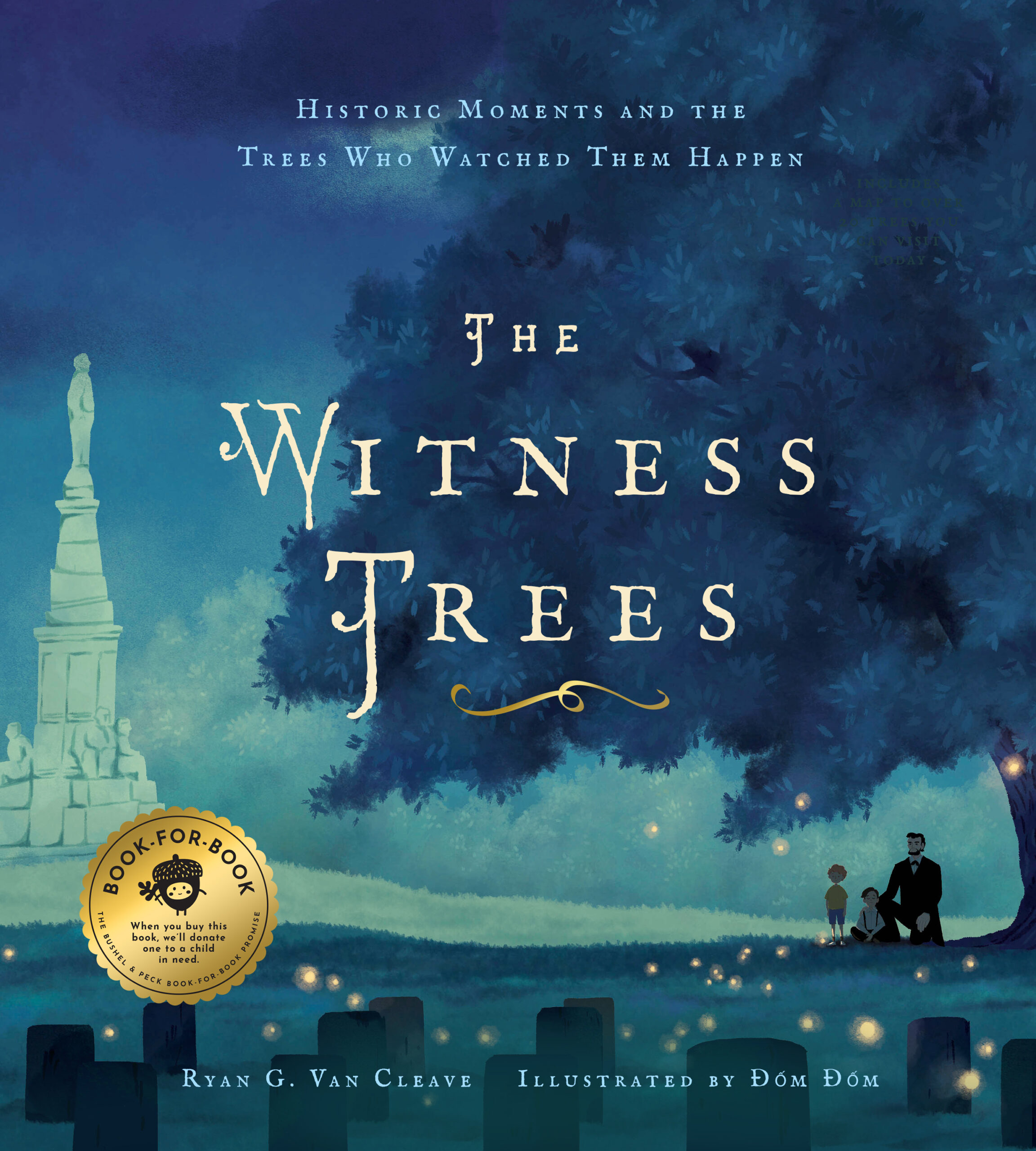
Now, without further ado, here’s the cover to The Witness Trees: Historic Moments and the Trees Who Watched Them Happen (Bushel & Peck, March 2023).

OPB: How did the idea for this book come about?

RVC: I’ve always been interested in history, but when I visited California for the first time when I was 10 or so, I was in awe of the towering redwoods. THIS was living history, I realized.

Over the years, I’ve been fortunate enough to have seen trees far older than America. Talk about putting things in perspective, right?

The idea of trees that witness history stuck with me. When I finally sat down to write this book, the title came first, and then I just worked with the idea of giving voice to the specific trees that have stood witness to some of the most important moments in human history. To no one’s surprise, the trees speak in a poetic manner, which just makes sense–trees are poetic and beautiful and glorious in every way.

OPB: Who created the art for this book?

RVC: He’s a Vietnamese artist named Đốm Đốm. My editor just knew he was right for this project, and from the start, Đốm Đốm did exactly what a good illustrator does–he deepened and expanded the text in ways I didn’t anticipate.

OPB: This is a Bushel & Peck book, right? Aren’t you working there?

RVC: It’s a curious situation, yes. After a number of conversations in late 2021 and early 2022, the owner, David Miles, bought a few of my picture book manuscripts. Soon after, he hired me to offer some editorial input on another book he’d acquired. It went so well that he eventually brought me on in a more sizable capacity.

These days, I’m serving as editor for most of their books, save for the middle grade and young adult books. It’s a great outfit and I’m pleased to be part of the team. Plus, working with a gifted artist and art director like David–whether that’s on my own books or the books of others–is an education every time.

OPB: One last question. What’s the most important lesson that this book taught you?

RVC: This book taught me that when an editor says, “I like the book but I’m going to pass because I don’t have a clear vision for it,” that it’s a real thing. While it’s always frustrating to come up short with a submission, the editor has to LOVE LOVE LOVE the manuscript or the magic isn’t likely to happen.

David DID have a clear vision for this from the start, and because of that, the entire process has gone smoothly, and the end product is looking better than I expected. It feels and looks magical to me. I’m incredibly pleased.

OPB: Thanks for sharing the cover with OPB. Best of luck with the book!

Picture Book Review: Wally, the World’s Greatest Piano-​Playing Wombat by Ratha Tep

Princeton Architectural Press
18 October 2022
40 pages

This month’s PB review is by Ryan G. Van Cleave (Owner/​Operator of Only Picture Books) and longtime OPB friend (and Ringling College of Art and Design Illustration Professor) John Herzog.

–Ryan’s Review of the Writing–

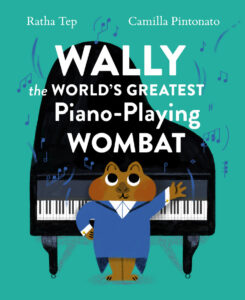
I’m a sucker for a picture book cover that screams READ ME and wow, this one does that. The title is silly and full of alliteration, and Wally himself just seems like the type of wombat I want to spend 32 pages with. And yes, it’s partially due to the blue tuxedo tailcoat.

This debut picture book by frequent The New York Times contributor Ratha Tep starts fast. By the third spread, we know that while Wally wants to be the world’s best piano-​playing wombat, he’s not–a wombat in a red tuxedo tailcoat does it better. Wally isn’t daunted by that realization, however. He adds more and more to his act until he’s tap dancing, ball twirling, AND playing the piano. Surely he’s the greatest at all of that?

He’s not. That same red-​dressed wombat can do all of that better.

At that realization,Wally quits. But like anyone with a dream, he finds it’s hard to give it up completely. He keeps thinking about that piano, and when the other wombat is “lurking around Wally’s piano,” Wally takes action.

The other wombat (Wylie), though, offers a cookie. Then he says that he missed Wally’s playing because it made playing the piano fun, and it made him try harder and play better. Wally realizes that Wylie’s playing made HIM play better, too. Over a chocolate chip cookies and milk snack, the two new wombat friends create a plan. Not just any plan, but the WORLD’S GREATEST plan.

The two perform on stage as the “World’s greatest blindfolded, unicycling, flamethrowing, hula-​hooping, piano-​playing wombats ever!” And it’s amazing. Until they realize someone else can do it better.

Even though Wally is discouraged at times, the book showcases the power of healthy competition and the delicious joy of doing what one loves. In an interview at Picture Book Builders, Tep discusses how, as a child, she had experiences similar to Wally’s but that “things also exponentially improved for me once I started accepting that there would always be someone better. I don’t mean this in a defeatist way; if anything I find it a liberating frame of thought. It frees you up to do what you really love.”

I think that affirmative, empowering focus comes through effectively in this story. Even when Wally has his minor eruption, he immediately comes around after the simple kind act of Wylie offering him a cookie.

Even though this is Tep’s debut picture book, I have to note that she did an admirable job keeping the text tight and focused. I think that’s partially why the artwork is so effective–she purposefully left a lot of room for Pintonato to play with, explore, and spotlight.

In sum, while this is a debut author at work and the publisher isn’t one I’ve encountered before, the product is memorable, amusing, and well worth reading again. Highly recommended.

4.75 out of 5 pencils


–John’s Review of the Illustrations–

Wait, what?”

These are the two words I repeated to myself at least three or four times while I read Wally the World’s Greatest Piano-​Playing Wombat. Not because I didn’t like the book–I absolutely love this book, and it will probably end up being my favorite picture book of 2022. I said those words because Wally genuinely surprised me with its sophisticated themes, and how universal yet specific it is. It’s a two-​person, high-​wire balancing act, with Ratha Tep’s snappy prose beautifully balanced by Camilla Pintonato’s charming, vintage-​style illustrations.

This is a book that speaks to anyone who aspires to anything, spending hours and hours honing and perfecting their craft only to realize that there’s someone out there who does it better than you. This conflict is at the core of our story, which involves a piano-​playing wombat named Wally who discovers that there’s another wombat named Wylie who can not only play the piano, but can tap-​dance and twirl a ball and play the piano at the same time. Naturally, Wally decides to take his ball and go home (a sentiment I very much relate to). But that doesn’t last for long, as he and Wylie discover that they both motivate each other to become better and strive for more.

This story resonated very deeply with me. It’s easy to get jealous and competitive when you’re around others who do what you do, but do it better. I’m surrounded by immense talent at Ringling College from both faculty and students alike, so I can definitely relate to Wally’s frustrations.

And if anyone were to get me thinking seriously about taking my ball and going home, it would be Camilla Pintonato. Her illustrations for this book are so vibrant, fun, and well-​designed that it makes me sick. This Italian talent is today’s equivalent of Mary Blair, in my opinion. And I despise her for it.

Only kidding. Or am I?

At the beginning of each semester at Ringling, I like to give a presentation to my students that sums up some of my philosophies when it comes to being a working artist. One of these philosophies is this:

You are not climbing a mountain. You are on a never-​ending road of discovering and learning.

Sometimes, the road is quick, smooth, and easy. Sometimes you’re in wall-​to-​wall traffic going two miles per hour. Sometimes the road has a lot of bumps and potholes. Sometimes you’re off-​roading in the jungle, unsure of what lies ahead. There will always be people behind you on this road, and there will always be people ahead of you on this road. The key is to stay on the road, to continue moving forward. And Wally the World’s Greatest Piano-​Playing Wombat sums that up beautifully.

Dammit.

5 out of 5 crayons


John Herzog is an illustrator and educator. He has created work for Scholastic, Houghton Mifflin Harcourt, Little, Brown and Company, Highlights for Children, DreamWorks TV, and Hasbro. He also teaches illustration at Ringling College of Art and Design.

John is a member of the National Cartoonists Society and the Society of Children’s Book Writers and Illustrators, where he received the 2018 SCBWI Magazine Merit Award. He lives in Florida with his family.

John is represented by Kayla Cichello at Upstart Crow Literary.

Picture Book List: 15 Pumpkin Picture Books

Maybe I’ve just got a hankering for pumpkin pie, or maybe it’s how my neighborhood is full of jack-​o-​lanterns since Halloween is right around the corner.

Regardless, this month’s Bonus Goody is another picture book list, and it’s deliciously pumpkin-​themed. Enjoy it!


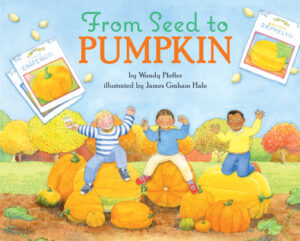
From Seed to Pumpkin by Wendy Pfeffer, illustrated by James Graham Hale (August 2015)

From Goodreads: “Pumpkins can be baked in a pie, carved into jack‑o’-lanterns, and roasted for a healthy snack. But how does a tiny seed turn into a big pumpkin? With clear text and detailed, colorful illustrations, this book explains what a pumpkin seed needs to help it grow! This book also includes delicious pumpkin recipes and easy experiments to do with pumpkin seeds.

This is a Stage 1 Let’s‑Read-and-Find-Out, which means the book explains simple science concepts for preschoolers and kindergarteners. Let’s‑Read-And-Find-Out is the winner of the American Association for the Advancement of Science/​Subaru Science Books & Films Prize for Outstanding Science Series.

Supports the Common Core Learning Standards and Next Generation Science Standards.”

Pages: 40
Reading Age: 3–7


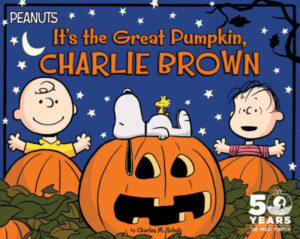
It’s the Great Pumpkin, Charlie Brown by Charles M. Schulz, adapted by Kara McMahon, illustrated by Scott Jeralds (July 2015)

From Goodreads: “Spooky tricks and hilarious treats abound in this retelling of the beloved Halloween special that comes with holographic foil and embossing on the cover!

Celebrate Halloween with Charlie Brown and the rest of the Peanuts gang!

It’s Halloween night, which means costumes, trick-​or-​treating, bobbing for apples…and waiting for the Great Pumpkin. Linus is certain that the Great Pumpkin will rise out of the pumpkin patch to bring toys to all the children of the world. Could this be the year that it finally happens?

Find out in this stunning storybook with an embossed cover with holographic foil!”

Pages: 32
Reading Age: 4–8


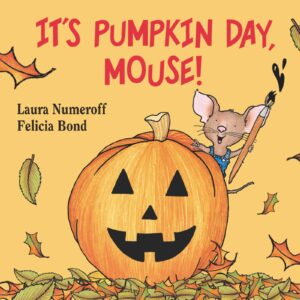
It’s Pumpkin Day, Mouse! by Laura Numeroff, illustrated by Felicia Bond (July 2019)

From Goodreads: “Join Mouse from If You Give a Mouse a Cookie as he decorates all the pumpkins in the patch in this sweet board book from Laura Numeroff and Felicia Bond.

Mouse is excited for fall because that means it is time to decorate pumpkins! But one is missing. Where could it have gone?

This is the perfect Halloween book for the very youngest reader, and is just the right book to get kids and budding artists inspired to work on their own Halloween crafts.”

Pages: 24
Reading Age: 1–3


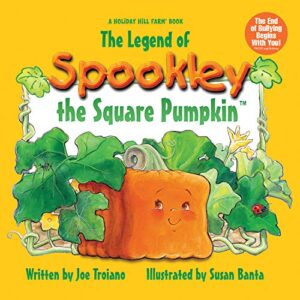
The Legend of Spookley the Square Pumpkin by Joe Troiano, illustrated by Susan Banta (Jan 2018)

From Goodreads: “One day in the pumpkin patch the strangest little pumpkin hatched.… Spookley the Pumpkin was different. All the other pumpkins teased him, until Spookley proved that being different can save the day!

Spookley CD includes — A reading of the story by Farmer Hill — The Transylvania Twist — The Spookley Song — Bugs! I Love Them All!”

Pages: 23
Reading Age: 2–6


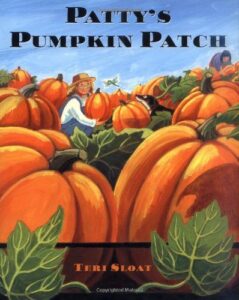
Patty’s Pumpkin Patch by Teri Sloat (Aug 1999)

From Goodreads: “Patty’s pumpkin patch is a surprisingly busy place all year long. There’s plowing and planting in the spring, weeding (and lots of growing!) in the summer, and much more than just picking pumpkins in the fall. For within the patch, creepy-​crawly, furry, and feathered friends from A to Z are always on the move, keeping Patty company and watching her work.

The perfect lead-​in or follow-​up to a visit to a pumpkin patch, Teri Sloat’s bouncy verse and vibrant, detailed artwork make this an outing kids can enjoy any time of the year.”

Pages: 32
Reading Age: 2–6


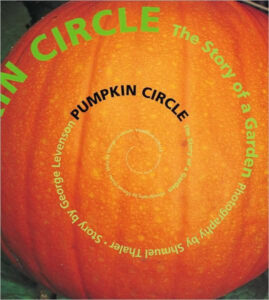
Pumpkin Circle: The Story of a Garden by George Levenson, illustrated by Shmuel Thaler (August 2002)

From Goodreads: “We can be sure of this: It’s a circle without end. It’s pumpkin seeds to pumpkins to pumpkin seeds again!

This treat of a picture book comes cloaked in the colors of fall. Bouncy verse and glowing photographs show a backyard pumpkin patch move through its natural cycle–a bug’s eye and a bird’s high view of seeds sprouting, flowers blooming, bees buzzing, pumpkins growing …and then going back to earth.

An author’s note explains how to grow your own pumpkin.”

Pages: 40
Reading Age: 4–6


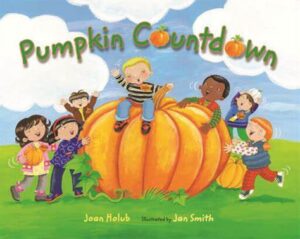
Pumpkin Countdown by Joan Holub (September 2018)

From Goodreads: “In this rhyming picture book, a classroom of children goes on a field trip to the pumpkin patch, where they count everything in sight. The book is perfect for the fall season, and an extra fun way to teach children to count backward from twenty.”

Pages: 32
Reading Age: 4–8


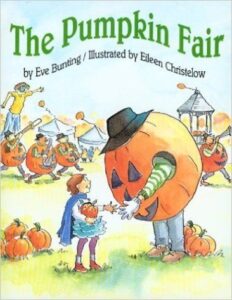
The Pumpkin Fair by Eve Bunting, illustrated by Eileen Christelow (September 2001)

From Goodreads: ““A bouncy rhyme and delightful artwork bring this pumpkin fair to life. The young narrator is ecstatic to be at the local pumpkin fair, where pumpkins of every size are on display—and that’s not all! There’s pumpkin bowling, a pumpkin pull, and every sort of food you can imagine made from the orange stuff, from ice cream to stew.… Christelow’s good-​natured watercolor-​and-​ink illustrations are filled with things to look at and laugh about, including a marching band in pumpkin suits. Keep this book around to read for autumn story hours—but you might want a piece of pumpkin pie when you’re done.”—ALA Booklist

Christelow’s jubilant illustrations in watercolor and pen and ink add to the general atmosphere of gaiety—everywhere readers look, families are interacting happily and having fun.… Halloween is never mentioned, so the book could be used to celebrate the harvest season in general. Of course, it will also serve as a good non-​scary Halloween story.”—School Library”

Pages: 32
Reading Age: 4–7


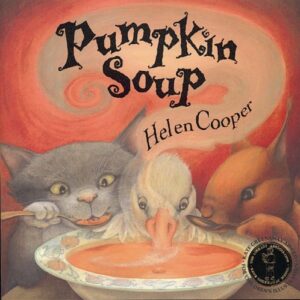
Pumpkin Soup by Helen Cooper (September 2005)

From Goodreads: “Deep in the woods in an old white cabin, three friends make their pumpkin soup the same way every day. The Cat slices up the pumpkin, the Squirrel stirs in the water, and the Duck tips in just enough salt. But one day the Duck wants to stir instead, and then there is a horrible squabble, and he leaves the cabin in a huff. It isn’t long before the Cat and the Squirrel start to worry about him and begin a search for their friend. Rendered in pictures richly evoking autumn, Helen Cooper’s delightful story will resonate for an child who has known the difficulties that come with friendship. Included at the end is a recipe for delicious pumpkin soup.”

Pages: 32
Reading Age: 2–6


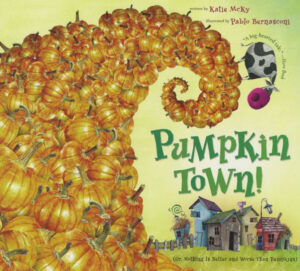
Pumpkin Town! (Or, Nothing is Better and Worse Than Pumpkins!) by Katie McKy, illustrated by Pablo Bernasconi (August 2008)

From Goodreads: “One pumpkin makes a tasty pie. Two pumpkins can be carved into grinning jack‑o’-lanterns, and a couple hundred more make for a decent pumpkin patch. Gather one thousand pumpkins and you’ll have a grand fall festival.
But what happens when a town has an accidental abundance of pumpkins?

What do José and his brothers do with a mountain of pumpkins? An EXPLOSION of pumpkins? Step into Pumpkin Town and see!”

Pages: 32
Reading Age: 4–8


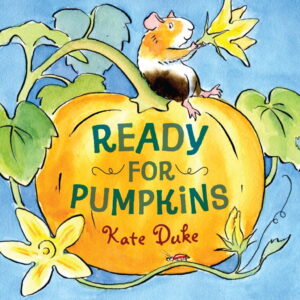
Ready for Pumpkins by Kate Duke (August 2012)

From Goodreads: “A classroom guinea pig finds a way to plant his own garden in this funny tale of pumpkins and patience.

After watching the first graders grow plants from seeds, Hercules, the class guinea pig, is inspired. He wants to grow things, too!

With the help of a rabbit named Daisy, Hercules plants his seeds and waits. And waits and waits.… He learns that growing things takes more than seeds and soil, sun and rain. It takes patience. But sometimes having to wait makes the reward even sweeter.

Duke’s story brims with humor of both the classroom and animal-​buddy varieties, and her featherlight paintings capture every ounce of Herky’s enthusiasm, impatience, and eventual satisfaction.” —PW, starred review”

Pages: 40
Reading Age: 5–8


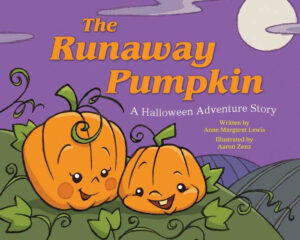
The Halloween Pumpkin: A Halloween Adventure Story by Anne Margaret Lewis, illustrated by Aaron Zenz (September 2018)

From Goodreads: “A cute little Halloween pumpkin announces that he is ready for a Halloween adventure. So he prepares to set out on the exploration of a lifetime. However, his ever watchful and caring mother wants to make sure he’s prepared before he takes that first step outside.

The little pumpkin will begin his adventure on a witch’s broom, where he will fly through the skies. Next, he’ll dare to venture through the very spookiest haunted house. And to celebrate the night, he’ll dance to the “Monster Mash”! It’s scary out there on Halloween night, but his mother is packing a parachute just in case he falls, a blankie for reassurance, and his favorite monster shoes so he can boogie-​woogie all night long. Whatever adventures he has, he is sure to be prepared. Halloween isn’t so scary when you have a mother pumpkin making sure you’re ready for whatever frights might come your way!”

Pages: 22
Reading Age: 2–6


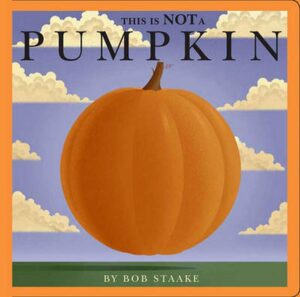
This NOT a Pumpkin by Bob Staake (August 2007)

From Goodreads:

It

may

be round like

a pumpkin and even orange

like a pumpkin, but this is NOT

a pumpkin! If it’s not a pumpkin,

then what is it? Preschoolers and

toddlers will love knowing the

answer and enjoy the fun,

unexpected” ending!”

Pages: 32
Reading Age: 1–3


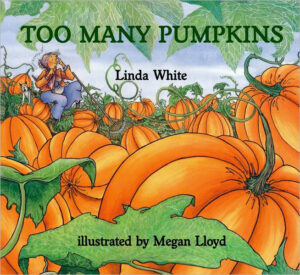
Too Many Pumpkins by Linda White, illustrated by Megan Lloyd (January 1996)

From Goodreads: “What can you do with too many pumpkins?

Rebecca Estelle has hated pumpkins ever since she was a girl when pumpkins were often the only food her family had. When an enormous pumpkin falls off a truck and smashes in her yard, she shovels dirt over the pieces and forgets about them. But those slimy pumpkin smithereens sprout up in autumn, and Rebecca Estelle finds a sea of pumpkins in her garden.

A heartwarming classic for more than twenty years, this story shows what happens when one thrifty gardener figures out how to make other people happy with the squash she can’t stomach.

Filled with colorful illustrations from a season of gardening, this is a perfect book for young gardeners and pumpkin lovers. Its wonderful lesson about helping others can be appreciated in the classroom or at home.”

Pages: 32
Reading Age: 3–7


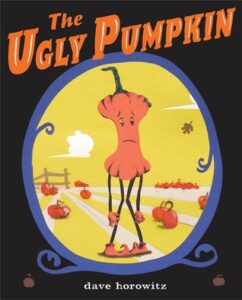
The Ugly Pumpkin by Dave Horowitz (August 2008)

From Goodreads: “Putting a wacky twist on Hans Christian Andersen’s The Ugly Duckling, Horowitz tells this story of an ugly pumpkin that doesn’t fit in. He leaves the pumpkin patch, and by the time Thanksgiving rolls around, he discovers the truth about who he is. Full color.”

Pages: 40
Reading Age: 2–6

Book Giveaway for Teachers: Help OPB Create a Future Post

Teachers of preschool, kindergarten, and grades 1 or 2–I need you! In return for your help, you can win a stack of free books for your classroom.

You heard me…I said, “FREE BOOKS!”

What I’m asking of you: Just poll one or more of your preschool, kindergarten, or grade 1 or 2 classes about “Things Kids Love” and send that list to me to before midnight on January 31, 2023. Use the form here: https://www.onlypicturebooks.com/contact/

**The more specific the items on your list, the better. For example, “toys” is far less interesting/​helpful than, say, “Super Soakers,” “LEGOs,” or “Mr. Potato Head.”**

Tell me about those free books!!!: On February 1, 2023, I’ll draw 10 teacher names at random from all entries, and each of those 10 winners will receive a free stack of 10 books (most are picture books, but some are early readers or chapter books).

**Shipping to US only—sorry!**

Can I increase my chances of getting some of those much-​ballyhooed free books?: For one additional entry, poll your class about “Things Kids Don’t Like” and send me that list before the January 31, 2022 deadline, too. **Entrants can only win one set of books, but this would increase your chance of winning anything!**

What are you doing with this information?: I’ll be compiling all the results (anonymously) into lists that appear as a free resource via a post or two for writers, teachers, librarians, and parents right here at www.OnlyPictureBooks.com

Do you have an example of what you’re looking for? Yes, indeed. Check out these links–I’m essentially creating up-​to-​date versions of these terrific lists.

I’m not a preschool, kindergarten, or grade 1 or 2 teacher. Can I still win books?: Not this time, sorry! But you can earn yourself some literary karma by sharing this opportunity with a preschool, kindergarten, or grade 1 or 2 teacher,

Editor Interview: Kayla Tostevin (Page Street)

The October Industry Insider at OPB is…Page Street Senior Editor Kayla Tostevin! While I generally create my own bios for interview guests, I ran across this bio for her at various SCBWI faculty bio pages, and it’s so terrific that I’m just including it in full.

When not poring over books (and sometimes while poring over books), she likes to be outside: hiking, biking, on a boat, or wandering aimlessly and smiling at animals. She hails from one end of the longest US freeway I‑90 (Seattle, WA) and now lives at the other in Boston, MA.”

Kayla got on my radar because she’s acquired books from literary agents who’ve joined us here at OPB, such as:

What I’ve found is that good people tend to gravitate toward other good people, so that pretty much explains the connections above.

And speaking of good people, let’s learn a bit more about our new good friend, Kayla, by getting to that interview.


RVC: Between the bio above and your Twitter bio (which has the line “happiest while adventuring”), I’m really curious—what type of childhood did you have?

KT: I’m very lucky to have grown up with four fantastic parents (my step-​parents both came into the picture when I was quite young), shifting back and forth between my two sides of family every few days. I think having that constant movement and two wonderfully different home environments—generally spending a lot of time running around outside with neighbor kids and hiking with family at one house, falling in love with movies and playing lots of card and video games together at the other—has probably greatly influenced my restlessness and curiosity/​enthusiasm for a wide variety of things even today. I’m so grateful for all I was able to experience during childhood and all the adventures I’m continuing to have as an adult!

RVC: At what point did you know you were going to work in publishing?

KT: I’ve loved books my whole life and suspected I wanted to work with them as early as middle school—but I originally wanted to be a writer, so I went for a writing, literature, and publishing major in college. After spending some time around other students on the same track and taking several classes, I realized I was better suited to the publishing part than the writing part!

RVC: You started at Page Street in the marketing area. What kind of advantage does that give you now as an editor?

KT: I think it really helps to have a better view of the entire process of bookmaking—and in this case, that very much includes what comes both before and after the book is made. When I’m looking at submissions for potential acquisition, I’m careful to consider not just if it’s a great story, but if it actually has some strong selling points, and my marketing experience definitely has made me stronger at pinpointing those selling points. Once the book is made, I can discuss with the marketing/​PR team what features of the story might be most useful for them to push, using my familiarity as editor to help the rest of the team promote as effectively as possible. Other perspectives are always useful. This background has also given me a much greater awareness and respect for all the other departments involved in making a book.

RVC: What’s the story behind the first picture book you edited at Page Street?
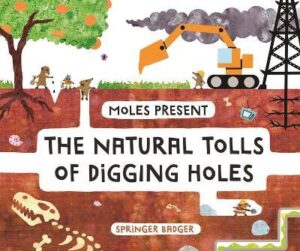
KT: I was one of two children’s editorial assistants in 2019, and we would often be assigned stories the children’s publisher at the time was interested in working on and possibly acquiring. We’d often (good-​spiritedly) fight over who got to work on which ones, and a dummy I won eventually became Moles Present the Natural Tolls of Digging Holes by Springer Badger.

Honestly, it was pretty minimally revised—I mostly just encouraged the author-​illustrator to rearrange some scenes, bring out some contrasts, and lean into the delightful weirdness lurking in the art’s background. The process was a strange one with me doing most of the editing during my temporary return to the marketing/​publicity department, and I still have a huge soft spot for the book.

RVC: What important lessons did that book teach you?

KT: This book was probably my first big lesson on how incredibly subjective publishing is. The author-illustrator–my bosses–and I all had many different ideas about the best way to handle many aspects of this book, and I realized, oh, being an editor is much less about fully controlling the development of a book than it is about finding the best route to solid middle ground between multiple visions. It’s not steering the car so much as politely giving directions from the shotgun seat, while sometimes the driver ignores you to make their own rogue turns, or the backseat passengers argue, or your maps app dies and you have to ask everyone to pull over and be patient with you while you reroute.

It’s a kind of chaos I’ve learned to fondly embrace. Having to come up with a new title that satisfied everyone was an especially hard piece of this lesson. (Fun fact–the original title of the book was We Dig Holes Like Moles).

RVC: Fun title! Now, what makes a Page Street book a Page Street book?

KT: Our publisher likes to stress that we want to make books we feel passionate about, and I second that! With our picture books specifically, we try to consider what will entertain a kid first and foremost—any messages or lessons have to come second to this, because no matter how great they are they’ll do no good if they can’t keep a kid’s attention, and like adults, children absolutely deserve to have some really great stories they can simply enjoy again and again. Though if I do have a favorite agenda to push, it’s to expand perspectives and encourage curiosity about the whole world, on scales big and small.

RVC: Describe a typical workday for you.

KT: Usually, a lot of emailing and meetings—I’m in constant communication with Page Street coworkers, authors, agents, and more. I’m also pretty consistently reading newsletters and reviews and doing research to try to keep up with kids book trends and the publishing industry as a whole. Other than that, each day holds some amount of editing manuscripts, proofreading text and reviewing art, looking at submissions, copywriting, browsing a pitch event or kidlit illustrator hashtag on Twitter, and plenty of other miscellaneous tasks. Sprinkle in some tea, snacks, and music throughout the day, plus a walk in the middle.

RVC: What’s the most important thing prospective Page Street authors should know about you?

KT: I want to be a team! I am here to listen and suggest and collaborate—even after I’ve had my hands all over it, I want the text to always feel like it’s wholly yours, or ideally even more like it’s yours, as we should be trying to make it stronger and bring out its essence together. I might put my foot down about things that aren’t working, but I’m always flexible on how those things can be fixed. Also, if I offer to acquire your book, know that I really, really love it and believe in it, and I will champion it to anyone and everyone in my immediate vicinity.

RVC: The worry writers have over Art Notes. Totally overblown, totally appropriate, or totally something they need to lose sleep over?

KT: Definitely nothing to lose sleep over! I think they’re most appropriate when either a) any part of the text might be confusing without them, or b) you have an art idea that’s so good you just have to throw it out there.

Think of them as a tool in your arsenal—they’re just there to help you communicate with your preliminary readers and the illustrator, and they can definitely be phrased more as suggestions than directives (which is my personal preference, since I think it’s wise to leave plenty of creative space for the illustrator!). The best part about art notes is that no one is going to see them in the final book, so they merely have to be comprehensible, not super carefully crafted like the rest of your writing.

RVC: Tell me about a project or accomplishment that you consider to be the most significant in your kidlit industry career.

KT: I feel most proud and accomplished any time I get to hold a real, finished book I acquired and edited for the first time. Making a picture book is a long, hard process, and every single one feels like a huge victory. Maybe that feels like a cop-​out answer, but this is a tough question, and it’s true! If you want a funnier answer, a recent personal high was proposing a title for a picture book sequel inspired by 2 Fast 2 Furious and expecting everyone to laugh and move on, but, uh, look out for Pirate & Penguin: 2 Few Crew by Mike Allegra and Jenn Harney! (After the first Pirate & Penguin releases, of course.)

RVC: Just wow. That sounds awesome.

KT: Agree!

RVC: How do you handle pressure at work? What do you do to de-stress?

KT: Whenever I feel my focus starting to slip or my anxiety starting to spike, I let myself take a little break—it’s going to be worse for everyone if I keep working and it’s not my best work. My kind of mantra whenever I’m having a really stressful time is “Nobody dies in publishing,” and that little reminder always helps me either muster up the strength to push on or assuage the guilt about taking my necessary pauses. Walking helps me immensely, especially if I go outside, or making a cup of tea, or reading a little bit of a non-​work book.

RVC: You seem to have an especially active presence on Manuscript Wish List. Why don’t more editors or agents use it?

KT: I don’t know, I think they should! It’s a super useful tool that ultimately saves a lot of time, because agents and writers are always asking me, “What are you looking for?” and I can immediately send them a link to a detailed list. I try to stay especially on top of it because I don’t really have a lot of time for agent calls, so I hope keeping this list updated, detailed, and easy to find helps make up for my very limited availability.

RVC: One last question for this part of the interview. What’s an upcoming project or two that you’re really excited about?
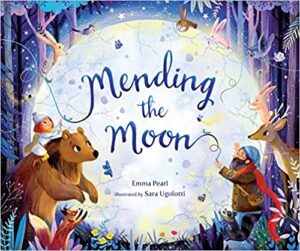
KT: One at the top of my mind right now is Kadooboo!: A Silly South Indian Folktale by Shruthi Rao and Darshika Varma, because we just looked at revised sketches and some potential covers for it and ohmygosh it’s so much fun. It’s basically a game of telephone, an adventure all across town, and a hearty recommendation for South Indian food all rolled into one. We’ll have to wait until Winter 2024 for that one, so coming up much sooner (this November 1st!) is Mending the Moon by Emma Pearl and Sara Ugolotti, which has such a lovely, classic storytelling feel and a really cool fantastical scenario, with the moon falling to Earth and shattering and a girl, her grandfather, and some animals working together to fix it.

RVC: Alrighty, Kayla. We’re entering…THE SPEED ROUND! The point values are quintupled, and zippiness is at a premium. Are you ready?

KT: Oh boy, I guess!

RVC: If you could only have one app on your phone, it’d be…

KT: AllTrails.

RVC: If “Spider-​Man” is the answer, what’s the question?

KT: Who’s the only superhero you’ve seen all the movies for?

RVC: You’re organizing a kidlit dinner party. Which three characters from pictures books do you invite?
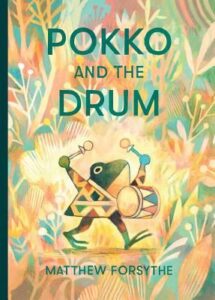
KT: Pokko from Pokko and the Drum by Matthew Forsythe, Lilly from Lilly’s Purple Plastic Purse by Kevin Henkes, and Payden from Payden’s Pronoun Party by Blue Jaryn and Xochitl Cornejo. (This will truly be a party.)

RVC: Five words that describe your editorial process.

KT: Consider, suggest, listen, try again.

RVC: What’s a picture book from 2022 that really got your attention?

KT: I already mentioned a Matthew Forsythe book, but I gotta say Mina. The humor, art, and unexpected direction are all so, so good.
RVC: Let’s end with a single line from a picture book you acquired.

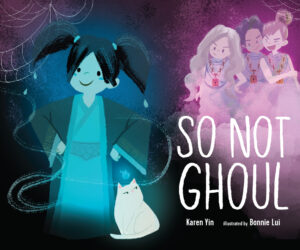
KT: “If Mimi hears one more Chinese ghost proverb, she will shriek. And not for extra credit.” (Just one of many excellent ghost jokes from So Not Ghoul by Karen Yin and Bonnie Lui.)

RVC: Love it. Thanks so much, Kayla!
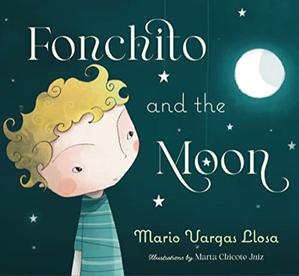
Educational Activities: Fonchito and the Moon by Mario Vargas Llosa

Fonchito and the Moon
Author: Mario Vargas Llosa
Illustrator: Marta Chicote Juiz
18 October 2022
Kales Press
32 pages

Book description from Goodreads: “Fonchito falls in love for the very first time and discovers that there is nothing one cannot do for a loved one, even if what they wish for is the moon!”


Need some reviews on Fonchito and the Moon?


Educational Activities inspired by Fonchito and the Moon:

  • Before Reading–From looking at the front and back cover: 
    • What do you think of when you think about the moon?
    • What’s happening on the front cover?
    • What’s interesting about the back cover?
    • Where and when does this story seem to take place?
    • What questions would you like to ask the author before you read the book?
  • After Reading–Now that you’ve read the story: 
    • How did you react when Nereida said she’d only let Fonchito kiss her on the cheek if he got the moon and gave it to her?
    • What other ways can you think of that Fonchito could get the moon for her?
    • Do you think Nereida really wanted him to kiss her?
    • Which picture did you like the most? Why?
    • What did you think of the book’s ending?
    • Did you like this book? Why/​why not?
  • Drawing–How do you like the illustrations of the moon? Does it look like what YOU think the moon looks like? Use colored pencils, crayons, or markers to create your own moon art for this story or simply to be art all on its own. Consider sharing your work with a friend or family member.
  • Crafting–Since the moon plays such a big role in this story, let’s enjoy some moon crafts! 
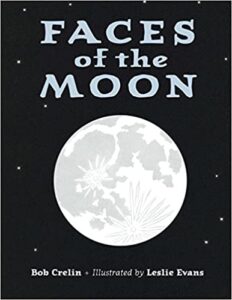
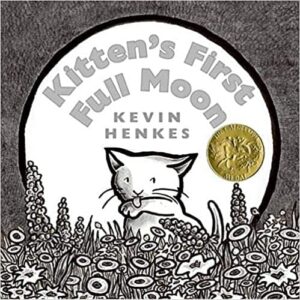
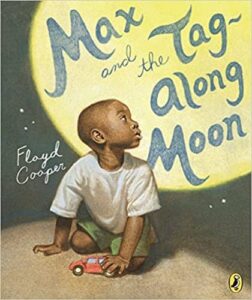
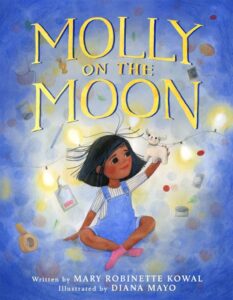
  • Further Reading–Learn more about the moon by reading these related books. Which of these have you already read? Which of the others would you want to read first? (Click on any book cover for more information on these titles!)