Educational Activities: A Very Dinosaur Birthday by Adam Wallace (illustrated by Christopher Nielsen)

A Very Dinosaur Birthday
Author: Adam Wallace
Illustrator: Christopher Nielsen
20 June 2023
Tommy Nelson
40 pages

Book description from Goodreads: “Your family will roar with laughter at this funny read-​aloud from Adam Wallace, #1 New York Times bestselling author of the How to Catch series. What if dinosaurs showed up at your birthday party? From prehistoric presents to games crashing out of control and your snacks going extinct, it’s a dino disaster! Dinosaurs are big, and strong, and scary, and farty, So do you really want them coming to your birthday party? Watch out! Birthdays will never be the same with this silly picture book adventure featuring lively rhymes and hilarious illustrations.”


Need some reviews on A Very Dinosaur Birthday?


Educational Activities inspired by A Very Dinosaur Birthday:

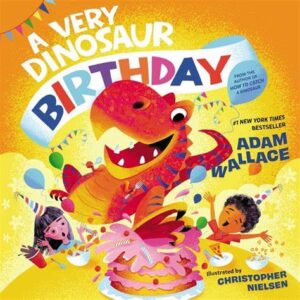
  • Before Reading–From looking at the front cover: 
    • What do you think this story might be about, given the title?
    • What does the setting tell you about the story?
    • How are the children reacting to the dinosaur on the cover?
    • How do you feel about dinosaurs? What makes them interesting or exciting to you?
    • What questions would you like to ask the author before reading the book?
  • After Reading–Now that you’ve read the story: 
    • Did the story meet your expectations from the cover? Why/​why not?
    • What was your favorite rhyme in the story?
    • What did you think about the ending?
    • Did anything in the story surprise you?
    • What lesson did you learn from the story?
    • How did the illustrations contribute to the story?
    • Which picture did you like the most? Why?
  • Design a Dinosaur: Using modeling clay, LEGOs, or other building materials, create your own dinosaur. Think about the body shape, the type of dinosaur you’re building, and how it might move. What would it eat? Where would it live? What would it look like?
  • Make a Dinosaur Rhyme: Write your own dinosaur rhyme inspired by the rhyming lines in this book. You can create a short poem or song about a dinosaur having fun at a party or doing something else you imagine. Share it with friends or family!
  • Dinosaur Dance Party: Put on some music and dance like a dinosaur. You can stomp, roar, and shake your tail. Invite a “dino” friend to join in the fun!
  • Dino Dens: Using blankets, pillows, and chairs, create a dinosaur den. What would a comfy home for a Triceratops look like? How would that be different than for a T‑rex or a flying dinosaur?
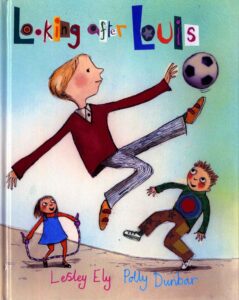
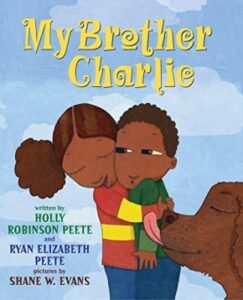
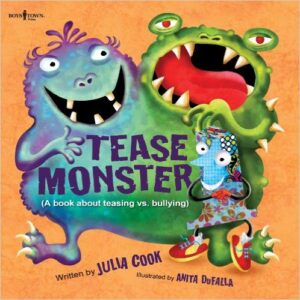
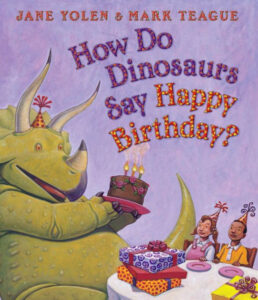
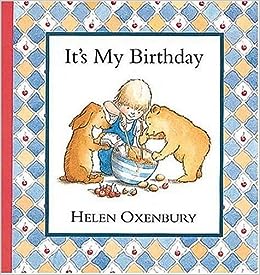
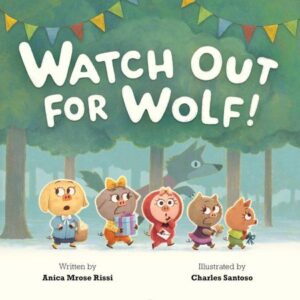
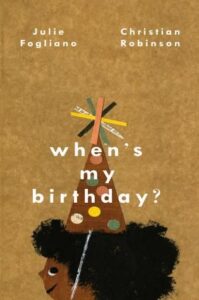
  • Further Reading: A Very Dinosaur Birthday is about dinosaurs and birthdays. Let’s focus on the second element and look at other picture books that that explore birthdays. Which of these have you already read? Which of the others would you want to read first? (Click on any book cover for more information on these titles!)
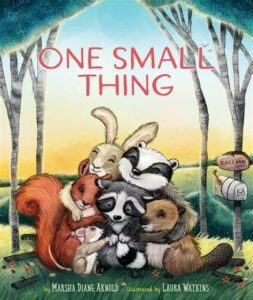
Educational Activities: One Small Thing by Marsha Diane Arnold (illustrated by Laura Watkins)

One Small Thing
Author: Marsha Diane Arnold
Illustrator: Laura Watkins
9 May 2023
Beaming Books
32 pages

Book description from Goodreads: “After Raccoon’s home burns down in a lightning storm, his friends don’t know what they can do to help. Squirrel, Beaver, Mouse, Badger, and Rabbit all go back to their own homes, trying to focus on something other than Raccoon’s tragedy. But each animal discovers one small thing they can do for Raccoon–and it turns out that each small act may not be so small after all.

A gentle and powerful look at how small actions can make a big impact.”


Need some reviews on One Small Thing?

Enjoy this interview with Marsha about One Small Thing at Jena Benton’s blog.

And feel free to check out the author’s own free Activity Guide to go with this book!


Educational Activities inspired by One Small Thing:

  • Before Reading–From looking at the front cover: 
    • What do you think the book will be about?
    • Who or what could “one small thing” be?
    • What emotion do the creatures on the cover seem to be feeling?
    • What does the setting tell you about the story?
    • Can you guess the main theme of the book?
    • What do you think the main character’s challenge might be?
    • What questions would you like to ask the author before reading the book?
  • After Reading–Now that you’ve read the story: 
    • Would you recommend this book to your friends? Why/​why not?
    • How did the “one small thing” in the story make a big difference?
    • How did the main character feel throughout the story?
    • What did you think about the ending?
    • Did anything in the story surprise you?
    • What lesson did you learn from the story?
    • Which picture did you like the most? Why?
    • How did the illustrations contribute to the story?
    • Did the colors in the book match the mood of the story? How so?
    • How did the illustrations help you understand the main character better?
    • Did the illustrations make you feel like you were in the story? How so?
  • Mindful Minute: The story invites us to slow down and appreciate the smaller things. Practice a Mindful Minute each day. Close your eyes, take deep breaths, and focus on your senses. What can you hear, smell, or feel? It’s a great way to be present and appreciate small moments!
  • Tiny Treasures Artwork: Create an art piece using small objects you can find around your house or outdoors–like pebbles, leaves, or buttons. Each little piece contributes to the overall beauty, just like each small action can lead to significant results in the world around us.
  • Small Things Scavenger Hunt: Create a scavenger hunt focused on finding small things. Write a list of small items to find both inside and outside your home. It could include a red leaf, a button, a paper clip, etc. Have fun finding these small items and realize just how much you might overlook in your everyday life.
  • The Smallest Bake: With the help of an adult, bake a batch of mini cupcakes, cookies, or any treat you love. Enjoy the process of creating and, of course, eating them! This will show you how even small things can bring a big smile to your face.
  • My Small Hero Story: Just like the main character in the book, you can be a hero in small ways! Write a story where you perform small acts of kindness that make a big difference. Be creative, and remember that no action is too small to matter! Feel free to illustrate it, if you want. And consider sharing it with others to enjoy.
  • Further Reading: One Small Thing is about a number of topics, including helping others. Let’s look at other picture books that that explore that same idea. Which of these have you already read? Which of the others would you want to read first? (Click on any book cover for more information on these titles!)
Educational Activities: Bitsy Bat, School Star by Kaz Windness

Bitsy Bat, School Star
Author: Kaz Windness
Illustrator: Kaz Windness
6 June 2023
Simon & Schuster/​Paula Wiseman Books
48 pages

Book description from Goodreads: “A little bat struggles to fit in only to learn to celebrate differences in this heartfelt picture book from an autistic perspective about starting school, making friends, and seeing what makes each person special.

Bitsy is a little bat with big star dreams of making friends at her new school. But when she arrives, Bitsy doesn’t feel like she fits in. The other kids sit on their chairs, but being right-​side-​up makes Bitsy dizzy. The other kids paint with their fingers, but Bitsy would rather use her toes. Everyone tells Bitsy she’s doing things wrong-​wrong-​wrong, so she tries harder…and ends up having a five-​star meltdown.

Now Bitsy feels like a very small star and doesn’t want to go back to school. But with help from her family, Bitsy musters her courage, comes up with a new plan, and discovers that being a good friend is just one of the ways she shines bright!”


Need some reviews on Bitsy Bat, School Star?

Enjoy this interview with Kaz about her book at The Children’s Book Review.


Educational Activities inspired by Bitsy Bat, School Star:

  • Before Reading–From looking at the front cover: 
    • Can you predict what the story might be about based on the cover?
    • Does this seem like it’s going to be a scary story? Why/​why not?
    • What emotion does the bat seem to be feeling?
    • What do you know about bats? How do they live? What do they eat? How do they see at night?
    • What does it mean be a “star”? How might that be different from a “school star”?
  • After Reading–Now that you’ve read the story: 
    • Would you recommend this book to your friends? Why/​why not?
    • How did Bitsy Bat feel at school? Why do you think she felt that way?
    • What were some of the things that Bitsy found difficult to do? How did she manage these difficulties?
    • How did Bitsy’s friends and family help her when things got tough?
    • How did Bitsy feel when her father told her she was a special star? How do you think this helped her?
    • What is something new you learned about autism from reading this book?
    • How did the other animals in the story react to Bitsy’s differences?
    • How do you think Bitsy’s experiences might be similar to those of a child with autism?
    • What can we learn from Bitsy about embracing our differences and those of others?
  • Create Your Own Cave: Like Bitsy Bat, you can create your own cozy and calm space. Find a quiet corner in your room and build a fort with pillows and blankets. Make it a place where you can retreat when you need some quiet time. This can be your “Bat Cave,” just like Bitsy’s! How do you feel when you’re in your quiet space?
  • Sound and Light Exploration: Bitsy sometimes finds things too bright or too loud. Explore your surroundings to find places or things that are too bright or too loud for you. What could you do to make those situations more comfortable? Discuss these findings with your friends or family members.
  • What Makes You a Star: Bitsy is a special star because of her uniqueness. What makes you a star? Draw a picture or write a story about what makes you special. Remember, everyone has unique strengths, and it’s our differences that make us shine brighter!
  • Design a Squishmallow: Bitsy has stuffies that help comfort her. If you could design your own comfort toy or “Squishmallow,” what would it look like? Draw a picture or describe it in writing. Remember, it’s okay to seek comfort in the things we love, just like Bitsy does!
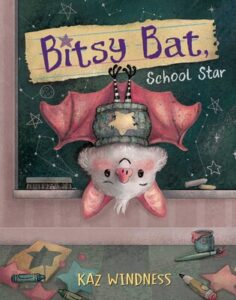
  • Further Reading–As the author explains in the back matter, the main character in this story has autism. Let’s look at some other picture books that include characters with autism to compare and contrast with Bitsy Bat, School Star. Which of these have you already read? Which of the others would you want to read first? (Click on any book cover for more information on these titles!)
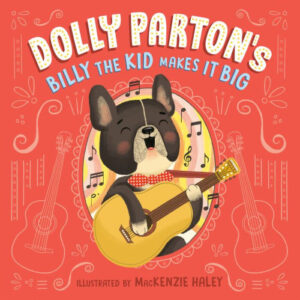
Educational Activities: Billy the Kid Makes It Big by Dolly Parton and Erica S. Perl

Billy the Kid Makes it Big
Author: Dolly Parton and Erica S. Perl
Illustrator: MacKenzie Haley
25 April 2023
Penguin Workshop
40 pages

Book description from Goodreads: “French bulldog Billy the Kid was born with an ear for music. And not just any music. He loves barking to the beat of country music! So Billy sets out to Nashville to sing his heart out.

But when he meets some big bullies at the Battle of the Bow-​wows, Billy worries he’s barking up the wrong tree. He’ll need his favorite songs (“Jowlene” and “I Will Pawlways Love You,” of course), a group of scrappy new friends, and his favorite country music star to regain self-​confidence and be the star he always knew he could be.

Written by Dolly Parton with Erica S. Perl and illustrated by MacKenzie Haley, this is a delightful picture book about standing up to people (and dogs) who put you down and finding the drive to achieve your dreams.”


Need some reviews on Billy the Kid Makes it Big?

Enjoy this interview with Dolly about her book at Good Morning America.

https://www.goodmorningamerica.com/culture/video/dolly-parton-talks-new-childrens-book-billy-kid-98821887


Educational Activities inspired by Billy the Kid Makes it Big:

  • Before Reading–From looking at the front cover: 
    • What do you already know about Dolly Parton?
    • Can you predict what the story might be about based on the cover?
    • Who or what is Billy the Kid?
    • What does it mean for someone to “make it big”?
    • How much of a role will music play in this story?
    • How happy does the dog on the cover seem to be?
  • After Reading–Now that you’ve read the story: 
    • What was the main conflict in the story, and how was it resolved?
    • How much did you enjoy the puns (“ruff day” and “true muttropolitan” etc.)?
    • What did you enjoy most about the French bulldog, Billy the Kid?
    • What lesson do you think the author wanted readers to learn from the story?
    • Which part of the story was your favorite, and why?
    • How did the illustrations help to convey the story’s message and enhance the overall reading experience?
    • Were there any moments in the story that surprised you? If so, which ones?
    • Would you recommend this book to your friends? Why/​why not?
  • Billy’s Adventure Map–Can you remember all the places Billy went in his adventure? Let’s draw a big map of his journey. You can draw his home, Nashville, the “Battle of the Bow-​Wows” stage, and any other places you remember. Don’t forget to show how Billy faced the bullies and became a star!
  • Billy’s Music Magic–Do you like music just like Billy? Let’s write our very own songs! Think about what makes you happy, what dreams you have, or a time when you were really brave. Write down your ideas and turn them into a cool song. If you’re not sure about a whole song, that’s okay. Even a few lines or a catchy chorus will be awesome!
  • You’re Special, Just Like Billy–Billy was different, but that’s what made him special! Now, it’s your turn to show how special you are. Draw or write about something that makes you different and why you’re proud of it. Maybe you’re really good at jumping rope, or you can whistle super loud. Anything that makes you, YOU! When we’re done, we can share and celebrate how different and amazing we all are.
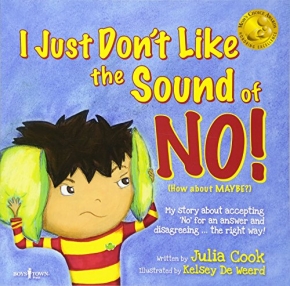
  • Further Reading–This book is about a lot of things, but dealing with bullies is an important part of this story. Let’s look at some other picture books about dealing with bullies. Which of these have you already read? Which of the others would you want to read first? (Click on any book cover for more information on these titles!)
Educational Activities: My Dog is NOT a Scientist by Betsy Ellor

My Dog Is NOT a Scientist
Author: Betsy Ellor
Illustrator: Luisa Vera
18 April 2023
Yeehoo Press
40 pages

Book description from Goodreads: “A humorous, endearing story about a passionate, young scientist who is determined to achieve her goal–no matter what! Yara is out to prove that she’s the greatest scientist in town! Her annoying neighbor Eddie always wins the Science Fair, but this year is going to be HER year. Like every good scientist, Yara starts with a question, makes observations, and comes up with a hypothesis … but each time she starts an experiment, her dog, Renzo, ruins it! Could Renzo be up to something more than making trouble? From Betsy Ellor and Luisa Vera comes a humorous, endearing story about a passionate, young scientist who is determined to achieve her goal–no matter what!”


Educational Activities inspired by My Dog Is Not a Scientist:

  • Before Reading–From looking at the front cover: 
    • What do you think the title A Dog is NOT a Scientist means?
    • Can you predict what the story might be about based on the cover?
    • What qualities do you think a scientist should have?
    • Why do you think the dog is wearing safety goggles on the cover?
    • What are some ways animals can help humans learn and discover new things?
    • What do you think the dog might try to do in this story?
  • After Reading–Now that you’ve read the story: 
    • What was the main conflict in the story, and how was it resolved?
    • How did the Renzo the dog’s actions lead to humorous situations in the story?
    • In what ways did Renzo help the other characters learn or discover something new?
    • What lesson do you think the author wanted readers to learn from the story?
    • Which part of the story was your favorite, and why?
    • How did the illustrations help to convey the story’s message and enhance the overall reading experience?
    • Were there any moments in the story that surprised you? If so, which ones?
  • Writing–Pretend you are Renzo the dog in the story and write a journal entry about your experience trying to be a scientist. How did it feel when things didn’t go as planned, and what did you learn? Use colored pencils, crayons, or markers to illustrate that story, if you choose. Consider sharing your work with a friend or family member.
  • Experimenting–Yara’s a young scientist, and you can be too! With an adult–and maybe a “helper” dog like Renzo–test out any of the following kid-​friendly experiments. 
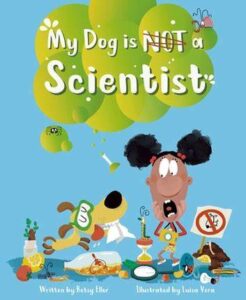
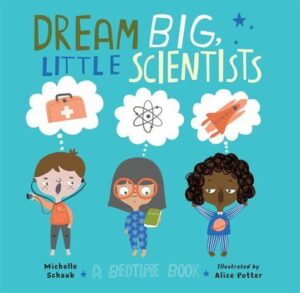
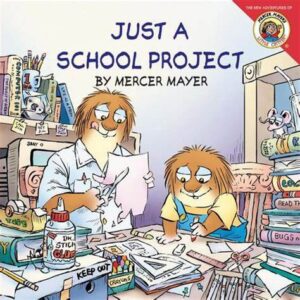
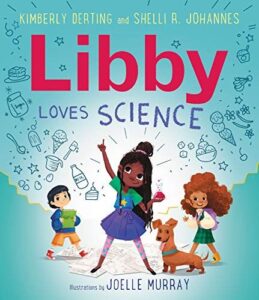
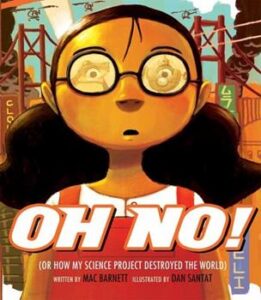
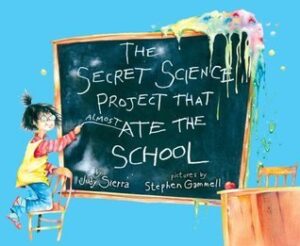
  • Further ReadingMy Dog Is NOT a Scientist is indeed about science in general and science fairs in specific. Let’s look at some other picture books about those same topics. Which of these have you already read? Which of the others would you want to read first? (Click on any book cover for more information on these titles!)
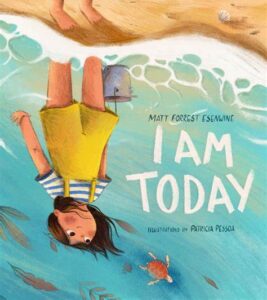
Educational Activities: I Am Today by Matt Forrest Esenwine

I Am Today
Author: Matt Forrest Esenwine
Illustrator: Patricia Pessoa
1 March 2022
POW! Kids Books
36 pages

**While OPB generally chooses fairly new picture books to feature in our monthly Education Activities section, sometimes an older picture book grabs our attention. That’s what happened this week with Matt’s I Am Today, which was published a year ago.**


Book description from Goodreads: “A young girl realizes that she doesn’t have to wait until she’s grown-​up to stand up for what is right and make a big impact.

While playing on the beach in her coastal town, a young girl comes across a sea turtle ensnared by a wire. Her town is home to a factory that has provided jobs for many of her neighbors, including her mother, but it has also been dumping garbage from a pipe into the waters, threatening the creatures that live in them.

Children are used to being asked what they’ll do and be when they grow up, but the girl knows there is so much she can do today to help. Unable to forget the sight of the struggling turtle, with a fantastic act she inspires the townspeople to compel the factory to change its destructive ways.

Written in spare and evocative poetry, I Am Today is an empowering story for children who want to be the change the world needs.”


Educational Activities inspired by I Am Today:

  • Before Reading–From looking at the front cover: 
    • What do you think this book will be about?
    • Where and when is this story taking place?
    • How do you think this story is going to end?
    • Who do you think the main character is? What do you think they might be like?
    • What are you looking forward to learning or discovering in the book?
    • Have you read any other books by the same author or illustrator? If so, what did you like about them?
  • After Reading–Now that you’ve read the story: 
    • What does it mean for someone to be Today?
    • What does it mean for someone to be the Future?
    • In your mind, which of the child’s activities to save the turtle was most effective? 
      • What else might YOU have done to save turtles?
    • What did you think of the book’s ending?
    • What do you believe is the main message of the story?
    • Which picture did you like the most? Why?
    • Did you enjoy this book? Why/​why not?
  • Drawing–What’s interesting about I Am Today is that the turtle-​saving story occurs entirely in the pictures and not in the words. What’s another animal-​saving story that could happen in the background of these pages and this book-​length poem? Use colored pencils, crayons, or markers to create that story. Feel free to show that story in one piece of art or spread it out over many pages. Consider sharing your work with a friend or family member.
  • Crafting–The girl in this story clearly likes turtles, and so does OPB. After you’ve tried out the cool origami turtle activity in the back of the book, return here to test out these fun turtle crafts. As always, get an adult to help! 
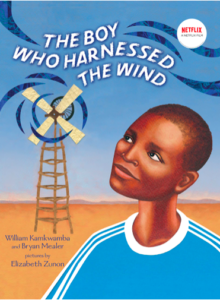
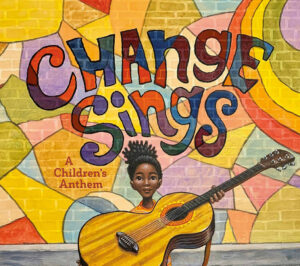
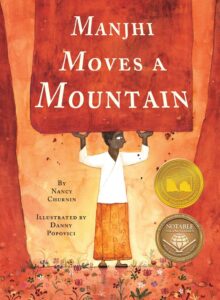
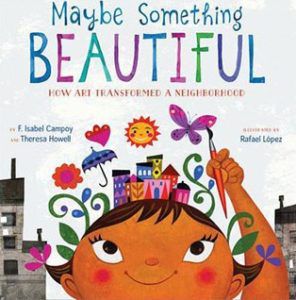
  • Further ReadingI Am Today is about a child who makes an important change in the lives of others. Here are picture books about people who made similarly meaningful changes through awareness, kindness, and–perhaps most vital–taking action. Which of these have you already read? Which of the others would you want to read first? (Click on any book cover for more information on these titles!)