Reading Activities: Shark Girl by Kate Beaton

Shark Girl
Author: Kate Beaton
Illustrator: Kate Beaton
25 February 2025
Roaring Brook Press
48 pages

Book description from Goodreads: “When Shark Girl is captured by an evil fishing captain’s net, she makes a vow… for REVENGE!

With the sea witch’s help, Shark Girl becomes a human sailor and launches a plan… for MUTINY!

But Shark Girl needs the help of her crew mates before she can enact her plan. Will Shark girl SINK… or SWIM?

Bestselling creator Kate Beaton has created a subversive and hilarious spin on the classic little mermaid fairy tale that will inspire little readers to seek their own revenge on behalf of justice!”


Need some reviews of Shark Girl?


Reading Activities inspired by Shark Girl:

  • Before Reading–From looking at the front cover: 
    • What words come to mind when you think about fireworks?
    • What do you notice first about Shark Girl’s appearance? How is she the same as—or different from—a typical mermaid?
    • The word shark can feel scary; how does the art make Shark Girl seem friendly, fierce, or both?
    • Where do you think this story takes place—deep in the ocean, on a ship, or somewhere else? What clues help you decide?
    • If you could ask Shark Girl one question before opening the book, what would it be?
    • The tagline says she’s “part shark and part human.” What challenges or adventures might that create?
    • Look at the background colors and shapes. What mood do they set for the story you’re about to read?
  • After Reading–Now that you’ve read the story: 
    • What makes Captain Barrett’s fishing practices harmful to the ocean?
    • Why does Shark Girl think revenge is the answer at first—and what changes her mind?
    • How does the crew react to Shark Girl over time? What helps them become allies?
    • Where do you see humor in the artwork or dialogue, even during tense moments?
    • The sea witch “lives for drama.” How does this character move the plot forward?
    • What panels or spreads were the most exciting or surprising? Why?
    • What does the ending teach about teamwork and ethical choices?
  • Sea-​Change Comic Strip
    Using six small panels, retell a key moment—Shark Girl breaking the net, meeting the sea witch, or launching the mutiny. Add “sound-​word” effects like SNAP! or WHOOSH! and bright colors to match Kate Beaton’s comic style.
  • Captain’s Catch: Sustainable or Not?
    Draw two buckets. Label one Overfishing and the other Ethical Catch. Cut out or sketch different sea creatures (tuna, shark, sea turtle, etc.). Research (or guess together) which catches are sustainable and place them in the right bucket. Discuss why some choices protect the ocean better than others.
  • Shark Teeth Smile Masks
    Fold cardboard or heavy paper into a half-​mask that covers just the mouth. Cut zig-​zag “shark teeth,” paint it ocean-​blue, and attach string to wear. Practice three Shark Girl expressions: determined, surprised, and triumphant. What emotions do those pointy teeth show?
  • Mutiny Map
    On a big sheet, draw the ship Jellyfish and the crew. Plan your own (kinder!) mutiny: list five changes you’d make to help the ocean—maybe recycling on board or rescuing bycatch. Illustrate each change with simple icons or mini-scenes.
  • Sea-​Witch Bargain Jar
    Decorate a clear jar with sea colors and glitter. Write small “promises to the planet” on scraps of paper—use less plastic, pick up beach litter, learn about sharks. Each time you fulfill a promise, add a shell, bead, or pebble to the jar until it sparkles like magic.
  • Books, Books, and More Books! Check out these real-​world picture books about ocean wonders, identity, and standing up for what’s right:


The Brilliant Deep: Rebuilding the World’s Coral Reefs by Kate Messner, illustrated by Matthew Forsythe
The true story of Ken Nedimyer, who sparked a movement to restore damaged coral—showing kids that one person’s passion can help the sea thrive.


Flotsam by David Wiesner
A wordless seaside adventure where a mysterious camera reveals hidden ocean life—perfect for sparking curiosity about underwater worlds.


Julián Is a Mermaid by Jessica Love
After seeing dazzling mermaids on the subway, Julián dreams of being one too—and finds loving acceptance in his abuela’s embrace.
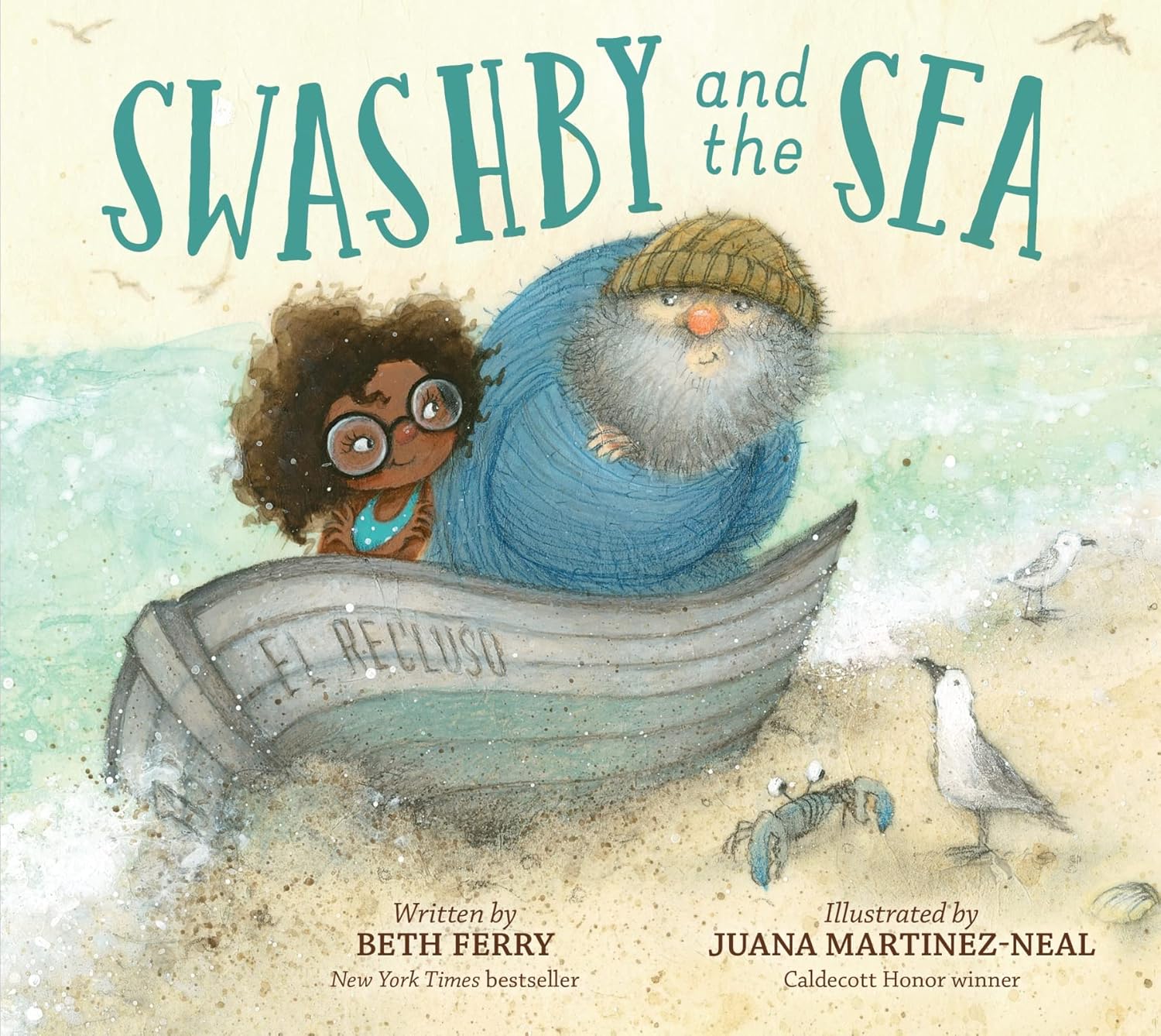
 

Swashby and the Sea by Beth Ferry, illustrated by Juana Martinez-​Neal
A salty sea captain thinks he prefers solitude, until a lively girl and the ocean itself nudge him toward friendship.


Thank You, Earth: A Love Letter to Our Planet by April Pulley Sayre
Stunning photographs and poetic lines create a heartfelt “thank-​you letter” to our planet, inviting readers to notice and protect nature.

Reading Activities: Chalk the Walk by Chelsea Tornetto, illustrated by Laurel Aylesworth

Chalk the Walk
Author: Chelsea Tornetto
Illustrator: Laurel Aylesworth
1 April 2025
Familius
32 pages

Book description from Goodreads: “Take to the sidewalk with this colorful picture book to inspire artistic expression and imagination!

Faded pavement.
Walls of gray.
Boring city streets?
No way!

Grab a piece of sidewalk chalk and join in the fun! Join a pair of adorable siblings as they explore the incredible power of a piece of chalk to transform the world around them. Joined by people of all ages from their neighborhood along the way, they use their bucket of chalk to make some sidewalk magic. With rhyming text by Chelsea Tornetto and increasingly colorful illustrations by Laurel Aylesworth, Chalk the Walk is a celebration of imagination.”


Need some reviews of Chalk the Walk?

As a special bonus, here’s an interview with the author at Sue Irwin’s website. Enjoy!


Reading Activities inspired by Chalk the Walk:

  • Before Reading–From looking at the front cover: 
    • What do you think this book will be about?
    • What kinds of things can you do with sidewalk chalk?
    • Have you ever made art that others could see in your neighborhood?
    • How do the colors on the cover make you feel?
    • What questions would you like to ask the author or illustrator before reading the book?
  • After Reading–Now that you’ve read the story: 
    • How do the children change the neighborhood with their chalk drawings?
    • Why do you think people were inspired to join in the fun?
    • What happens to the chalk art at the end of the story, and how do the characters react?
    • How does the book compare chalk to screen time?
    • What are some ways you’ve made your own fun without using screens?
    • Would you recommend this book to a friend? What part would you tell them about first?
  • Chalk It Forward
    The children in the story start a wave of creativity by drawing with chalk and it spreads to the whole community! Try it yourself: make a cheerful message or simple drawing on the sidewalk or driveway (with permission, of course). You might just brighten someone’s day or inspire a neighbor to add something of their own.
  • Color Our World
    In the book, dull gray spaces slowly fill with bright color. On a piece of paper, draw a scene in all grays. Then color in only one section. Maybe a balloon, a flower, or a chalk drawing. How does that pop of color change the mood? Try doing a second version where everything is bright.
  • Sidewalk Storytelling
    Use chalk to create your own story across several sidewalk squares or blocks. Each square can be a different part of your story: the beginning, the middle, and the end. Invite a friend to read your story as they walk!
  • Screen-​Free Saturday
    Plan a whole day of screen-​free fun, inspired by this book. Make a list of things you can do: build with blocks, play dress-​up, read a book, draw with chalk, make a snack, or put on a puppet show. Can you go the whole day without using a tablet or TV?
  • Books, Books, and More Books!
    Check out these real-​world picture books about creativity, outdoor fun, and screen-​free play:


Chalk by Bill Thomson

A wordless picture book where chalk drawings come to life…until things get a little too real!


Hello Hello by Brendan Wenzel

This visually dazzling book celebrates connection, color, and noticing the world around you. No screens needed!


On a Magical Do-​Nothing Day by Beatrice Alemagna

A rainy day and a bored child lead to a magical outdoor adventure.


Sidewalk Flowers by JonArno Lawson, illustrated by Sydney Smith

In this wordless story, a girl collects flowers on a city walk, quietly transforming her world with small acts of kindness.


Sidewalk Chalk by Jen Fier Jasinski, illustrated by Lea Marie Ravotti

From the publisher: “Imaginations soar when a group of neighborhood children scritch, scribble and scrawl in a rainbow of colors, crafting lovely works of art. But one little girl watches from afar, unsure how to contribute her own colorful creations. After gathering her courage, she misses the chance to grab the last piece, until a familiar face shows her how to draw with nature’s chalk — a soft piece of rock. But then raindrops begin to fall and time is cut short, causing the lovely colors to fade into memories. In the morning, a new day begins, and the girl leads the way in welcoming a new friend to this creative community.”

This one’s not out yet, but go ahead and preorder it!

Reading Activities: Are You a Friend of Dorothy? by Kyle Luckoff, illustrated by Levi Hastings

Are You a Friend of Dorothy?
Author: Kyle Lukoff
Illustrator: Levi Hastings
29 April 2025
Simon & Schuster Books for Young Readers
40 pages

Book description from Goodreads: “In a time when the LGBTQ+ community was forced to hide in the shadows, a woman named Dorothy helped her people find each other in the dark and celebrate themselves in the light.

But who was Dorothy? Was she from the neighborhood, someone’s wife, mother, or sister? Was she that clever writer, who threw parties where there were no rules about who you could and couldn’t dance with? Or was she a girl from Kansas, who dreamed of leaving her black-​and-​white, small-​town life and finding a vibrant, colorful world that loved her?

Dorothy might have been all these things—because Dorothy, as known by the post-​WWII queer community, wasn’t real. Still, she helped a community find connection and care amidst adversity.”


Need some reviews of Are You a Friend of Dorothy?


Reading Activities inspired by Are You a Friend of Dorothy?:

  • Before Reading–From looking at the front cover: 
    • What do you notice first when you look at the cover?
    • What do you think the title means? Who or what might “Dorothy” refer to?

    • What mood or feeling do the colors and art style give you?

    • Who do you think this book might be about? What clues helped you decide

    • If you could ask the character on the cover a question, what would it be?

  • After Reading–Now that you’ve read the story: 
    • What did the phrase “Are you a friend of Dorothy?” help people do?
    • Why do you think people had to hide their true selves in the past
    • How does the illustrator show community and connection in the pictures?
    • What are some ways the book blends fact and imagination?
    • How has life changed for LGBTQ+ people since the time this story takes place—and what challenges still remain?
    • What message do you think the author wants young readers to take away?
    • Would you recommend this book to a friend? Why or why not?
  • Code Words & Connection Collage
    Make a collage about what it means to belong. Use magazines, drawings, stickers, or digital images to show places, people, or ideas that help you feel seen and safe. Add a secret symbol or word that only someone “in the know” would understand (just like the friends of Dorothy).
  • Rainbow Timeline
    This story looks at a real part of LGBTQ+ history. Create a visual timeline that starts with the phrase “Are you a friend of Dorothy?” and ends with the Pride celebrations we know today. Include moments from the book and add your own ideas or research about important LGBTQ+ events.
  • Dorothy Who? Detective Game
    The book offers different guesses about who Dorothy might’ve been. Choose one—Dorothy Gale, Dorothy Parker, or another idea—and create a mini case file. Draw clues, write a short “report,” or make a wanted poster that shows why your choice could be the true Dorothy.
  • Color Outside the Lines
    The illustrations in this book are bold and expressive, with vibrant colors that tell a story. Choose one page you love and recreate it using your own color choices or art style. What mood or message are you showing through your choices?
  • Secret Signals Station
    Come up with your own set of signals to say things without using words. You might use hand signs, symbols, or invented phrases. Practice with a friend or family member—can they figure out what your signals mean?
  • Books, Books, and More Books!
    Check out these real-​world picture books about identity, community, and the power of finding your people:


All Are Welcome by Alexandra Penfold, illustrated by Suzanne Kaufman

A warm, inclusive classroom shows how differences are celebrated and everyone belongs.


Big by Vashti Harrison

This powerful story explores how others see us—and how we learn to see ourselves—with beauty, empathy, and strength.


Julián Is a Mermaid by Jessica Love

After seeing women dressed as mermaids, Julián explores his identity and finds love and acceptance in his abuela’s response.


Love, Violet by Charlotte Sullivan Wild, illustrated by Charlene Chua

A tender LGBTQ+ love story about a girl finding the courage to express her feelings to the one she admires most.


Our Subway Baby by Peter Mercurio, illustrated by Leo Espinosa

A true story about family, love, and how an adopted baby brought two dads—and a community—together.

Reading Activities: Fireworks by Matthew Burgess, illustrated by Cátia Chien

Fireworks
Author: Matthew Burgess
Illustrator: Cátia Chien
13 May 2025
Clarion Books
44 pages

Book description from Goodreads: “POP! As a hot day sizzles into evening, everyone on stoops and sidewalks looks skyward on this special summer night—the Fourth of July! Words and art blossom into flowers of fire across the sky, making this a perfect read for firework enthusiasts in cities and suburbs everywhere. POPPOP!”


Need some reviews of Fireworks?

As a special bonus, here’s a page at the author’s website which has a book trailer for this book, along with multiple interior pages. Enjoy!

www.matthewjohnburgess.com/fireworks


Reading Activities inspired by Fireworks:

  • Before Reading–From looking at the front cover: 
    • What words come to mind when you think about fireworks?
    • What time of year do you think this book takes place? What makes you think that?
    • Do you enjoy loud celebrations, or do you prefer quiet ones? Why?
    • What do you notice about the art style on the cover? How does it make you feel?
    • What questions would you like to ask the author or illustrator before reading the book?
  • After Reading–Now that you’ve read the story: 
    • What are some of the things the children do while waiting for the fireworks?
    • How does the author use sounds in the text to make the day come alive?
    • How does the illustrator show the heat of the day? What changes when night falls?
    • What moment felt the most exciting to you? Why?
    • What do you think the characters mean when they say they’re “tucked in with summer on our skin”?
    • What made the rooftop fireworks feel so special after such a busy day?
    • Would you like to spend a day like this? Why or why not?
    • Would you recommend this book to a friend? What part would you tell them about first?
  • Rooftop View Drawing
    The children in Fireworks climb to their rooftop to see the sky light up. Imagine you’re doing the same. What would your rooftop view look like—buildings, bridges, trees, birds, stars? Use crayons, pastels, or paint to create your own “rooftop moment,” just before the first firework explodes.
  • Boom! Pop! Swish!: Sound Words Game
    This book is filled with onomatopoeia—words that sound like the thing they describe. Make a list of all the sound words you remember from the story. Then come up with your own sound words for other things: splashing in a pool, biting into a Popsicle, or jumping on the sidewalk. Can your friends guess what you’re describing just from the sounds?
  • City Summer Scavenger Hunt
    Make a list of small details the book celebrates—like a fire hydrant spray, a saxophone, the smell of something cooking, or bright pink flip-​flops. Then go outside with an adult and try to spot your own version of a city summer. Take photos or draw what you find and label them with your own poetic lines.
  • Watermelon Words
    One of the best parts of the day in Fireworks is sitting down to eat sweet, juicy watermelon. Pretend you’re writing a poem just about that one moment. How does it taste? Feel? Sound? Smell? Use sensory words and bright colors to create a “watermelon moment” poem or mini book.
  • Music in the Air: Dance Story
    In the park, the kids hear music and can’t help but dance. Think of a song that makes you want to move. Create a short story or comic showing a character dancing through the city. Where do they go? Who do they see? Let the rhythm lead the way!
  • Books, Books, and More Books! Check out these real-​world picture books that celebrate summer, city life, and the joy of everyday magic:


Apple Pie Fourth of July by Janet S. Wong, illustrated by Margaret Chodos-​Irvine

While her parents cook Chinese food in their store, a girl worries it doesn’t belong on the Fourth of July…until fireworks and apple pie help her see things differently.


Carmela Full of Wishes by Matt de la Peña, illustrated by Christian Robinson

On her birthday, Carmela explores her neighborhood and collects wishes. It’s a quiet, reflective city story about noticing details and finding joy in small things.


Hot Day on Abbott Avenue by Karen English, illustrated by Javaka Steptoe

Two best friends spend a sweltering summer day not speaking to each other. Then the games begin and the heat melts more than just the pavement.


My Chinatown: One Year in Poemsby Kam Mak

Through a series of seasonal poems, a boy reflects on his new life in Chinatown. It’s a powerful mix of city life, cultural identity, and lyrical beauty.


Water in the Park
by Emily Jenkins, illustrated by Stephanie Graegin

A tender and observant look at one day in a city park, hour by hour.

Reading Activities: Something Good by Kenneth Kraegel

Something Good
Author: Kenneth Kraegel
Illustrator: Kenneth Kraegel
11 February 2025
Candlewick
40 pages

Book description from Goodreads: “In need of a bad day remedy? One girl’s terrible day takes an unexpected—and extraordinary—turn when she comes upon a pair of magic socks.

Blah. Nothing good ever happens to me.

This morning a little girl wakes up with a chicken on her head. (Ouch.) Then she finds worms in her cereal (after she’s had a few bites—yuck!). Then she realizes, too late, that her boots are full of mud. Ack! Then her best friend ignores her, a big hole appears where it wasn’t yesterday, and it starts to rain—cold rain, of course. Could this day get any worse? When a mysterious gift shows up out of nowhere, wrapped in a bow, the girl dares to wonder if it could finally be something good. Get ready for a high-​flying tale as the beloved creator of Wild Honey from the Moon brings his signature deadpan humor, quirky charm, and appealingly simple text to a fantastical adventure sure to turn even the worst days around.”


Need some reviews of Something Good?


Reading Activities inspired by Something Good:

  • Before Reading–From looking at the front cover: 
    • What do you think this book will be about?
    • What kinds of things do you think count as “something good”?
    • What kind of mood does the cover character seem to be in? Why do you think that?
    • Have you ever had a day that started out really bad? How did it make you feel?
    • What are some small things that can help turn a day around?
    • What questions would you like to ask the author before reading the book?
  • After Reading–Now that you’ve read the story: 
    • What questions would you like to ask the author before reading the book?
    • Why did the gift of socks feel disappointing at first?
    • How did the socks change the character’s day—and mood?
    • Why do you think Zoe ignored the main character at the beginning? What was really going on?
    • How did the main character’s feelings change throughout the story? What caused those changes?
    • Why do you think they decided to give the socks to someone else at the end?
    • What message do you think this book is trying to share?
    • Would you recommend this book to a friend? What part would you tell them about first?
  • Blah-​Day Bingo: Make one bingo board with silly bad-​day moments like “stepped in something squishy,” “ran out of cereal,” or “lost your sock.” Then, during the day or while reading the book, see how many squares you can check off. Now make a second board filled with cheerful things like “someone smiled at me,” “found a cool rock,” or “heard a funny joke.” The goal? Try to fill your “something good” board faster than your “blah” one—and see how your mood shifts as you look for the good stuff!
  • Chicken Hat & Magic Socks Craft: Create your own ridiculous chicken hat using paper, feathers, and imagination, just like the one from the beginning of the book. Then make a pair of “magic socks” using cardstock or paper. Decorate them with drawings of the adventures you would go on if your socks could fly. What powers would they give you? Who would you share them with?
  • Mood Meter Map: Draw a line across a page and mark one end as “Total Blah” and the other as “Amazing!” As you reread the story, track the main character’s mood on this line. What made things worse? What helped? Then make your own mood meter for a recent day and chart what affected your feelings. Did something small help shift your mood in a big way?
  • The Gift You Didn’t Expect: In the story, a plain pair of socks turns out to be the best surprise of all. Think of something simple—like a pencil, a pebble, or a balloon—and invent a story where it becomes magical. What does it do? How does it change your day? Write a short paragraph or comic strip to show how an ordinary object became something good.
  • From Blah to Hooray! Mini Book: Fold a piece of paper into a tiny book. On the first page, draw or write about a “blah” thing. On each following page, draw or write what helps that mood shift—maybe a friend shows up, a silly animal appears, or magic socks arrive! End your mini book with a big “Hooray!” moment to show how things got better.
  • Share Something Good Challenge: The character realizes that sharing something good makes it even better. Try it yourself! Choose one small, good thing to share today: a compliment, a snack, a toy, or a funny story. What happened when you shared it? Did someone smile? Did it change their day, or yours? Write or draw what you noticed.
  • Peanuts Vibes Soundtrack
    This story has been compared to Peanuts comics—funny, moody, and full of charm. Imagine this book had a soundtrack. What kind of music would you play at the beginning when everything is going wrong? What about when the magic socks appear? Make a playlist or just describe the sounds. Slow and rainy? Bouncy and silly? Dreamy and floaty?
  • Books, Books, and More Books! Check out these real-​world books about bad days, surprising joys, and learning to see the good:


Alexander and the Terrible, Horrible, No Good, Very Bad Day by Judith Viorst, illustrated by Ray Cruz

The ultimate bad-​day picture book. Alexander has one frustrating moment after another—but readers come to see that some days are just like that, and they still end with love.


A Bad Case of the Stripes
by David Shannon

Camilla is worried about fitting in, and it causes her to literally break out in stripes—and then polka dots, and even worse! A story about staying true to yourself, even when things feel weird or overwhelming.


The Magical Yet by Angela DiTerlizzi, illustrated by Lorena Alvarez

For anyone feeling frustrated about what they can’t do yet, this book shows that hope, patience, and persistence can turn almost any day around. A great reminder that something good might be just around the corner.


Rain! by Linda Ashman, illustrated by Christian Robinson

One rainy day is seen two totally different ways by two characters. This joyful story reminds us that perspective shapes how we experience the world—and a “blah” day for one person might be a magical one for someone else.


What If, Pig?
by Linzie Hunter

Pig is having a worry-​filled kind of day, but thanks to a kind friend, things start to look brighter. A great book about friendship, anxiety, and noticing when we need support—and when others might, too.

Reading Activities: Nearly Exactly Almost Like Me by Jennifer Bradbury, art by Pearl AuYeung

Nearly Exactly Almost Like Me
Author: Jennifer Bradbury
Illustrator: Pearl AuYeung
11 February 2025
Atheneum/​Caitlyn Dlouhy Books
40 pages

Book description from Goodreads: “A loyal big brother makes a case for why his adopted little brother is just like him when a pesky kid on the playground questions their physical differences in this charming picture book.

When they hear the singsong tune of an ice cream truck, two brothers race to get in line! Big brother beats little brother and holds their spot. But when little brother catches up, another kid challenges him joining his brother in no cutting! Everyone knows that cutting doesn’t count when you’re siblings, but the kid doesn’t believe they can be brothers when they don’t look anything alike.

The brothers may not be biologically related, but they’re still brothers, and they have so much else in common! They both like candy way too much, love swimming but hate baths, and know their parents love them. Big brother knows that differences on the surface don’t matter when in his heart, his little brother is just like him.”


Need some reviews of Nearly Exactly Almost Like Me?


Reading Activities inspired by Nearly Exactly Almost Like Me:

  • Before Reading–From looking at the front cover: 
    • What do you think the title Nearly Exactly Almost Like Me means? What does it suggest about the characters?
    • Look at the two kids on the cover—how do they seem alike? How do they seem different?
    • What does it mean to be part of a family? Does everyone in a family have to look alike? Why or why not?
    • Have you ever had someone assume something about you that wasn’t true? How did it make you feel?
    • What are some ways people in a family can be similar besides their appearance?
    • Why do you think the author wanted to tell this story? What message do you think it will have?
    • What questions would you like to ask the author before reading the book?
  • After Reading–Now that you’ve read the story: 
    • How did the big brother react when someone questioned whether Dev was really his brother?
    • What were some of the things the brothers had in common? What were some ways they were different?
    • How do you think Dev felt when the other child didn’t believe they were brothers?
    • Why do you think it was important for the big brother to show that family is about more than just looking alike?
    • What was your favorite moment in the book? Why did it stand out to you?
    • How did the illustrations help tell the story? What details in the pictures stood out to you?
    • How do you think the skeptical kid at the playground felt at the end of the story? Did their view change?
    • Would you recommend this book to a friend? What would you tell them about first?
  • The “Almost Like Me” Sibling Challenge: Grab a friend, sibling, or family member and write down ten things about yourselves—your favorite foods, hobbies, pets, bedtime routines, anything! Then, compare your lists. How many things do you have in common? What surprised you? Just like Dev and his big brother, you’ll probably find that the things that matter most go beyond appearances!
  • Family Portrait—Remixed!: Most people think of family portraits as everyone smiling for a photo together, but what if a portrait captured something deeper? Instead of drawing a picture of just how your family looks, make a family portrait that shows what makes you all unique. Maybe you love the same food, play the same games, or share inside jokes. Include those details in your artwork to celebrate what really makes your family yours!
  • What’s in a Name? A Family Storytime: In the book, Dev and his brother share family traditions and history. Now, let’s explore your own family’s story! Ask a parent, grandparent, or guardian about your family history. Do you have a name with a special meaning? Are there stories about how you became part of your family? Write down what you learn and share it with someone close to you.
  • You Can’t Tell By Looking!” Discovery Game: People often assume things about others based on how they look, but appearances don’t tell the whole story! Play this game with friends or classmates: Everyone writes down one fact about themselves that others wouldn’t guess by looking at them. Then, mix up the papers and take turns reading them aloud, guessing who wrote each one. It’s a fun way to see how much more there is to people than what we see!
  • The Love List: What Really Makes a Family?: Dev and his brother know that family is about love, not just looks. Think about what makes your own family special—whether it’s a family you were born into, adopted into, or chosen. Make a list of ten things that show love in your family. Do you have special traditions? Do you help each other in different ways? Decorate your list and keep it as a reminder that family is about what we do, not just what we look like!
  • Letters of Belonging: A Note to Someone Who Feels Left Out: In the book, Dev faces a moment where someone doesn’t believe he and his brother belong together. Write a letter to someone (real or imaginary) who might feel left out or different. What would you say to make them feel welcome? Decorate your letter and share it with a friend, family member, or teacher to spread kindness!
  • Books, Books, and More Books!: Check out these real-​world picture books about family, adoption, and sibling bonds:

The Day You Begin by Jacqueline Woodson, illustrated by Rafael López

This heartfelt story is about feeling different but finding connections with others. Like Nearly Exactly Almost Like Me, it reminds us that even when we don’t look like those around us, we all have something in common.


A Family Is a Family Is a Family by Sara O’Leary, illustrated by Qin Leng

This book introduces a classroom full of children, each with a different type of family. Some have two dads, some live with grandparents, and some are adopted. It beautifully illustrates that what makes a family is love.


We Belong Together: A Book About Adoption and Families by Todd Parr

A warm and simple book that explains adoption in a way young kids can understand. It celebrates how families come together in different ways and the love that binds them.


Big Brothers Don’t Take Naps by Louise Borden, illustrated by Emma Dodd

A sweet story about an older brother passing on wisdom to his younger sibling. It highlights the joys of having a little brother—whether they look alike or not!


Real Sisters Pretend by Megan Dowd Lambert, illustrated by Nicole Tadgell

Two sisters play pretend, reminding each other that even though they weren’t born into the same family, their bond is real. Like Nearly Exactly Almost Like Me, this story affirms that love is what makes a family.