Educational Activities: Isabel and her Colores Go to School by Alexandra Alessandri

Isabel and her Colores Go to School
Author: Alexandra Alessandri
Illustrator: Courtney Dawson
15 July 2021
Sleeping Bear Press
40 pages

Book description from Goodreads: “English, with its blustery blues and whites, just feels wrong to Isabel. She prefers the warm oranges and pinks of Spanish. As she prepares for class at a new school, she knows she’s going to have to learn–and she would rather not! Her first day is uncomfortable, until she discovers there’s more than one way to communicate with friends. This is a universal story about feeling new and making new friends.”


Need some reviews of Isabel and her Colores Go to School?

As a bonus, enjoy here’s the trailer for this picture book.


Educational Activities inspired by Alexandra Alessandri’s Isabel and her Colores Go to School:

  • Before Reading–From looking at the front and back cover: 
    • Where and when do you think this story takes place?
    • Why do you think Isabel is bringing “her colores” to school?
    • What kinds of things do YOU bring to school?
    • What emotion does Isabel appear to be feeling?
    • The front and back covers include lots of flowers. Why do you think they’re there? How might they play into the story?
    • What else do you notice about the cover?
  • After Reading–Now that you’ve read the story: 
    • Why was Isabel so nervous about going to her first day of school?
    • The story uses both English and Spanish words. What Spanish words were you able to figure out through context clues or the accompanying pictures? 
      • Did you check your ideas with the Spanish definitions in the Back Matter?
    • What does the phrase “To bad times, a good face” mean to you?
    • Throughout the story, language and words are described as having colors such as “night-​sky blue” and “sunrise-​orange.” Which of the author’s many descriptions appeals to you the most?
    • What was your favorite moment in the story? Why?
    • What was your favorite picture in the story? Why?
    • Ultimately, was this a happy story, a sad story, or something in between? Explain your thoughts.
  • Drawing–Sarah and Isabel became friends when Isabel “drew and colored and painted” a picture of the two of them and they both decided they were amigas/​friends. Using whatever colors you choose, create a picture of you and one of your friends. Be as realistic or imaginative as you want. Consider sharing it with them to let them know how much you appreciate their friendship.
  • Writing–After making friends with Sarah and having Miss Page share Isabel’s drawing with the rest of the class, the book ends with this line: “Maybe school wouldn’t be so bad after all.” Write the story of what you think happens on day two of school for Isabel. Does she make even more friends? Does íngles now sound different to her (or is it described in different colors)? Consider sharing this story with family members or friends.
  • Crafting–Since Isabel was so interested in drawing and colors, try your own hand at one or more of these crayon-​themed crafts. Most of these will definitely require the help of an adult, though: 
    • Chunky Crayons–Recycle those stubs and nubs with an oven, a muffin tin, and cooking spray.
    • Crayon Monogram–A perfect gift for a teacher or loved one.
    • Crayon Play Dough–Whether it’s National Play Dough Day (Sept 16) or not, this craft is sure to please.
    • Sandpaper Printed T‑Shirt–A quick trip to a dollar store can keep this one affordable. (I made the whole thing for $2.)
    • Wax Paper Lantern–This one needs an iron, so adults are are must here!
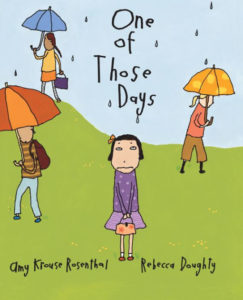
  • Further Reading–Which of these other first-​day-​of-​school picture books have you read? (Click on any book cover for more information on these titles!)
 

Educational Activities: Dragons Are the Worst by Alex Willan

Dragons Are the Worst
Author: Alex Willan
Illustrator: Alex Willan
7 September 2021
Simon & Schuster Books for Young Readers
40 pages

Book description from Goodreads: “Gilbert the Goblin is absolutely, definitely, one-​hundred-​percent certain that dragons are the worst.

They burn down everything in sight and they hoard all the gold. They melt every ice cream cone within a mile radius, and everyone is afraid of them. But really, it’s the dragons who should be afraid of Gilbert and his tremendous goblin power!

…right?”


Need some reviews of Dragons Are the Worst?


Educational Activities inspired by Alex Willan’s Dragons Are the Worst:

  • Before Reading–From looking at the front and back cover: 
    • Where and when do you think this story takes place?
    • What do you already know about dragons?
    • Why do you think someone would say that dragons are the worst?
    • What do you already know about goblins?
    • What do you think this story will be about?
    • What do you think just happened between the dragon and the goblin?
    • What emotion is the goblin feeling?
  • After Reading–Now that you’ve read the story: 
    • The goblin believed he was scary. Did you find him scary? Why/​why not?
    • Which of the goblin’s spells made you laugh the most? 
      • Making your shoelaces untied?
      • Turning candy into spiders?
      • The terrifying pigeon costume?
    • The goblin has lots of reasons why dragons aren’t so great. Which did you agree with most? (I think it’s finding a hat that works with such spiky horns.)
    • How did you react when the goblin got covered in dragon poop?
    • How long will it take for that poor goblin to realize he’s stinky versus scary?
  • Writing–The goblin mentions a lot of other creatures from the world of fantasy–mermaids, trolls, ogres, and, of course, dragons. Select another fantasy creature (such as unicorn, pegasus, fairy, centaur, or giant, or  anything else you think of or want to make up) and write a scene where the goblin shares his feelings on that creature, too. Is he jealous of how scary they are? Does he admire them? Is one of them the goblin’s best friend? Get imaginative, and consider using crayons or colored pencils to illustrate your work. For fun, consider sharing it with a friend or adult.
  • Crafting–Since Dragons Are the Worst includes quite a few dragons, let’s make a few dragons of our own. Try your hand at one or more of the following dragon crafts (use recyclable materials when you can). Get an adult to help, just to be on the safe side: 
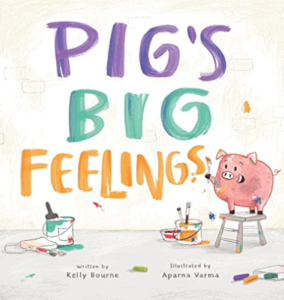
  • Further Reading–Want more picture books about dragons? Here you go! Which have you already read? (Click on any book cover for more information on these titles!)
  • Further Reading–Since Dragons Are the Worst is ALSO about goblins, let’s look at some other terrific books featuring goblins of all types. Which of these other picture books about goblins have you read? (Click on any book cover for more information on these titles!)
Educational Activities: When I’m Not Looking by Farren Phillips

When I’m Not Looking
Author: Farren Phillips
Illustrator: Farren Phillips
18 May 2021
Yeehoo Press
32 pages

Book description from Goodreads: “An interactive detective story with fun fill-​in-​the-​blanks and laugh-​out-​loud details.

Legs loves her pet duck. But Legs isn’t quite sure what her duck gets up to when she’s not looking. Her duck may want Legs to think that she is just sitting around a pond eating bread all day, but Legs knows better than that! She is certain that her duck is more likely dressing like a knight and fighting dragons, starting an army of ducks, building a rocket, and even trying on Leg’s best pants.

Young readers will love joining Legs on her quest to solve the mystery. Using their creativity, imagination, and detective skills, they can help Legs find the truth about what her duck does when she’s not looking.

What to Expect:

Families Love Pets: This exuberant story of finding out what the pet is up to is perfect for pet lovers.

Creative Interaction: Shows playful interaction of readers’ help and imagination, and demonstrates that stories can be found all around us.

Detective Theme with Humorous Twist: Delights mystery lovers and brings out the inner detective in young readers with its search-​and-​find element and bright illustrations,

Irresistible Artwork: Observant readers will be delighted to spot the fun and charming details and explore every corner of the surroundings.

Thinking Like A Philosopher: This book is a good tool for parents and teachers to get children thinking outside of the box about the world and what is happening beyond their bubble.”


Need some reviews of When I’m Not Looking?

As a bonus, enjoy this interview with author/​illustrator Farren Phillips!

And as a second bonus, here’s the book trailer for When I’m Not Looking.


Educational Activities inspired by Farren Phillips’ When I’m Not Looking:

  • Before Reading–From looking at the front and back cover: 
    • Where and when do you think this story takes place?
    • What does the title mean to you? Not looking at WHAT? And WHY do you think the child isn’t looking?
    • What emotion is being felt by the child on the cover?
    • What do you make of all the ducks? What about the other animals?
  • After Reading–Now that you’ve read the story: 
    • Was this a happy story, a sad story, or did you feel mixed emotions? Why?
    • Early in the story, the child talks about their “moms.” What does it mean if someone has more than one mom?
    • This book has interactive elements. Did you try them? 
      • Did you find a portrait of a duck? A worm? A microscope?
      • How many socks did you find? How many books?
      • What did you fill in the blanks with?
    • What does Legs say a philosopher does?
    • Why do you think Legs is so concerned about what her pet duck is doing when she’s not around?
    • There are a lot of odd and unexpected things in the background. Which ones stood out most to you? Why?
  • Writing–Beyond the ideas or evidence presented in this book, what do you think Legs’ pet duck is REALLY doing when Legs isn’t around?
    Write down what you imagine the duck is up to. Have fun with it. Perhaps retell the entire story from the point-​of-​view of the pet duck. Does the duck wonder what Legs is doing when the duck isn’t around? Feel free to share your writing with friends or adults.
  • Crafting–Since When I’m Not Looking features a duck, let’s have some more duck fun. Try your hand at one or more of the following crafts (use recyclable materials when you can) about ducks. Get an adult to help, just to be on the safe side: 
  • Further Reading–It’s easy to think of Legs as being a detective who looks for clues to help answer a mysterious question. Which of these other picture books about detectives have you read? (Click on any book cover for more information on these titles!)
 

Educational Activities: Mars Is by Suzanne Slade

Mars Is: Stark Slopes, Silvery Snow, and Startling Surprises
Author: Suzanne Slade
Illustrator: NASA photos
1 April 2021
Peachtree Publishing
48 pages

Book description from Goodreads: “Award-​winning author and former mechanical engineer Suzanne Slade (CountdownA Computer Called Katherine) explores the remarkable beauty of Mars in this timely photo-​packed space extravaganza.

For young readers eagerly following NASA’s Mars Exploration Program and awaiting continued discoveries on the Red Planet.

For centuries, people have been intrigued by Mars, and over time, scientists have made exciting discoveries, such as the planet’s Earth-​like weather and seasons. But curious earthlings want to know more. Does Mars have deserts? Volcanoes? Or signs of life? Could people live there someday?

Scientists decided to take a closer look. They built a powerful camera called the HiRise (High Resolution Imaging Science Experiment) and loaded it onto a rocket. The rocket blasted off on August 12, 2005, and seven months later, the camera began orbiting Mars. It sent back astounding, revealing photos showing the world what Mars really is.

With elegant spare prose, award-​winning nonfiction author and former rocket engineer Suzanne Slade leads readers through some of these stunning photos taken by the most advanced camera ever sent to another planet. A visual feast for space enthusiasts and STEAM fans that will expand readers’ assumptions and understanding of Mars.”


Need some reviews of Mars Is?

As a bonus, here’s the book trailer for Mars Is.


Educational Activities inspired by Suzanne Slade’s Mars Is:

  • Before Reading–From looking at the front and back cover: 
    • Do you think this will be a fiction or nonfiction book?
    • What do you already know about Mars?
    • What “startling surprises” are you hoping for?
    • Does Mars seem like an inviting place? 
      • If not, why not?
  • After Reading–Now that you’ve read the book: 
    • Where are we getting our best pictures of Mars from?
    • What type of different weather does Mars have?
    • What kind of land features might we find on Mars?
    • Why does the author believe that Mars “is more amazing than anyone ever imagined”?
    • A lot of people are trying very hard to get to Mars. Would you like to visit Mars?
  • Art–The nice people at NASA are as interested in Mars as you are! Get out your crayons and have fun with these coloring sheets that they’ve created: 
  • Crafting–Try your hand at one or more of the following Mars- and space-​themed crafts. Ask an adult to help, and use recyclable materials when you can! 
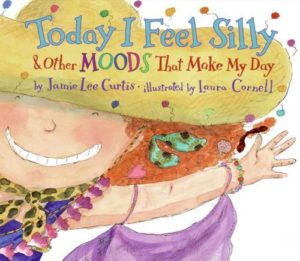
  • Further Reading–Which of these other picture books about Mars have you read? (Click on any book cover for more information on these titles!)
Educational Activities: Albert Einstein by Inspired Inner Genius

Albert Einstein
Author: Stephanie Willis
Illustrator: Aimee Hawk
30 March 2021
Inspired Inner Genius
34 pages

Book description from Goodreads: “Today, Einstein is widely recognized as a genius and one of the greatest physicists in history, but things didn’t start off that way. Einstein was slow at speech and spoke only from the age of 3. Despite his slow start, Einstein was always curious and imaginative. It was these qualities that eventually lead to some of his craziest ideas and experiments. Some of his most famous inventions include the mass energy equivalence formula E = MC2, the theory of relativity and quantum theory.

Everyone is a genius. But if you judge a fish by its ability to climb a tree, it will live its whole life believing that it is stupid. — Albert Einstein

Imagine the disaster if Einstein stopped inventing because of fear. Now, imagine the possibilities if everyone explored courageously just like him. Let’s realize that imagination.”


Educational Activities inspired by Inspired Inner Genius’ Albert Einstein:

  • Before Reading–From looking at the front and back cover: 
    • Where and when do you think this story takes place?
    • Does think this book will be real or make believe?
    • What does the name “Albert Einstein” mean to you?
    • From looking at the images around him, what kind of work do you think Albert does?
  • After Reading–Now that you’ve read the story: 
    • Who was Albert Einstein?
    • Why was Albert so important?
    • How did you feel when that teacher said Albert would never amount to anything?
    • Why didn’t Albert give up when no one took his ideas about science seriously?
    • What’s the most useful lesson from Albert’s life?
    • Which of the pictures of Albert do you like the most? Why?
  • Creativity–Part of what made Albert Einstein so successful in everything he did was his creativity, which is finding new and useful ways of doing or thinking about something. Let’s practice that ourselves! How many different uses can you think of for a sock? A paperclip? A pencil? Consider having a contest with a friend to see who can dream up the most new possibilities in one minute.
  • Art–Albert Einstein had a lot of ideas about the sun and our planets. Make a drawing of your favorite planet, whether it’s Earth or not! Feel free to get creative with how you handle color, size, shape, and style. Have fun with it–Albert would approve!
  • Crafting–Try your hand at one or more of the following crafts (use recyclable materials when you can!) about the many things we find in space–Albert Einstein loved looking at and thinking about space! Get an adult to help, just to be on the safe side: 
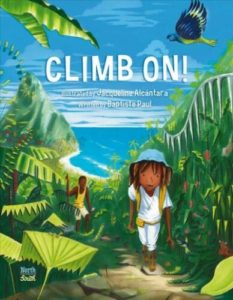
  • Further Reading–Which of these other picture books about famous scientists have you read? (Click on any book cover for more information on these titles!)
 

Educational Activities: When My Cousins Come to Town by Angela Shanté

When My Cousins Come to Town
Author: Angela Shanté
Illustrator: Keisha Morris
4 May 2021
West Margin Press
32 pages

Book description from Goodreads: “A fun, lively story of Black family and cousin culture that celebrates individuality and embraces differences.

Fitting in can be hard, but standing out isn’t easy either!

Every summer a young girl eagerly waits for her cousins to come visit and celebrate her birthday. All her cousins are unique in their own ways and have earned cool nicknames for themselves… except for the girl. But this year things are going to be different. This year before summer ends, she’s determined to earn her own nickname!

Filled with warmth, love, and laughter, When My Cousins Come to Town brings all the energy and love of a big family to prove that you don’t need to be anyone else to be special–just the way you are is exactly right!”


Need some reviews of When My Cousins Come to Town?


Educational Activities inspired by Angela Shanté’s When My Cousins Come to Town:

  • Before Reading–From looking at the front and back cover: 
    • Where and when do you think this story takes place?
    • What do you think of when you hear the word “cousins”?
    • What emotion is the girl on the cover feeling?
    • What are the shadow-​figure kids on the cover doing?
  • After Reading–Now that you’ve read the story: 
    • Was this a happy story, a sad story, or did you feel mixed emotions? Why?
    • How important are nicknames in this story?
    • How do these kids get their nicknames?
    • Which of the nicknamed characters would you most like to hang out with? The Ambassador? Swift? DJ‑E? Someone else?
    • How did you feel when the birthday present was lost?
    • How does the girl feel about the nickname “Smurf”?
  • Wordplay–The main character only wants one thing–a nickname. Let’s have some fun of our own with words and nicknames. For yourself, someone you know, or a character from this book: 
    • Make up a superhero nickname.
    • Make up a food-​related nickname.
    • Make up a nickname that rhymes.
    • Make up a nickname that’s inspired by a TV show or movie.
    • Make up the silliest nickname ever.
    • Make up another appropriate nickname for the main character of this story.
    • Make up a nickname for this book!
  • Research–Ask family members if they’ve ever had a nickname. If so, find out how they got it. Consider asking about old–or current!–nicknames of friends, neighbors, or distant relatives, too. See what you can learn about these people from the stories behind their nicknames.
  • Further Reading–Which of these other picture books about cousins have you read? (Click on any book cover for more information on these titles!)