Editor Interview: Lisa Rosinsky (Barefoot Books)

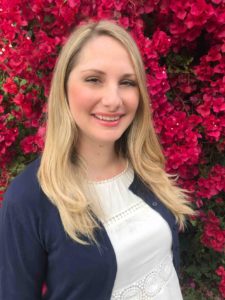
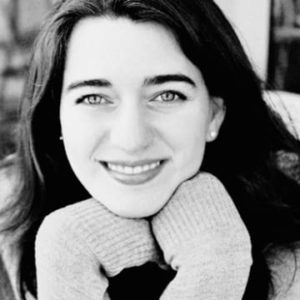
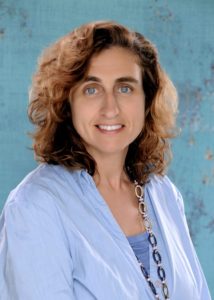
This month’s Industry Insider Interview is with Lisa Rosinsky, Senior Editor at Barefoot Books in Concord, MA, where she edits and art directs picture books and board books. Lisa could just as easily appear at OPB as an Author Interview because she’s a poet, YA novelist, and picture book writer, too. Along the way, she earned a BA in creative writing from the Writing Seminars at Johns Hopkins and an MFA in creative writing (poetry) from Boston University. She also beat out hundreds of applicants to become the 2016–2017 Associates of the Boston Public Library Writer-​in-​Residence, where she worked on her first and second YA novels. Her debut YA novel, Inevitable and Only, tells a story of secrets, sisters, and Shakespeare!
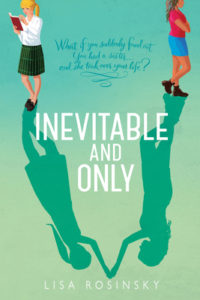
Pretty cool, right?

But wait—there’s more! Here are ten things you absolutely must know about Lisa before we go any further. Just because.

Lisa:

  1. translates French picture books.
  2. has two cats that are convinced they’re dogs.
  3. was half of a two-​person traveling production of The Lion, the Witch, and the Wardrobe.
  4. is a font nerd (favorite typeface: Baskerville; favorite punctuation mark; ampersand &).
  5. has been a musical instrument-​selling wench at a Renaissance Faire.
  6. writes poems about “love, gods, and dinosaurs.”
  7. has worked as a witchcraft and spellbook proofreader.
  8. has been a library coffee shop barista.
  9. has a shockingly good collection of punny T‑shirts.
  10. was once co-​billed with Sir Patrick Stewart (say what?! Find out more below…)

What better intro to an interview is there than a list of awesomeness like that, right? So, let’s get straight to the interview then!


 RVC: Rumor has it that you started writing as a child growing up in the suburbs of Baltimore.

LR: As far back as I can remember, I’ve always wanted to make books. I used to write and illustrate my own little poems in a marble composition notebook. I also used to cut out pieces of loose-​leaf paper, staple them together, and write a character profile on each page. I called them my “People Books”—they were meant to be catalogs of characters I could write about someday.

RVC: Talk about starting the writing research early! Now, what school project got you really thinking more seriously about becoming a writer?

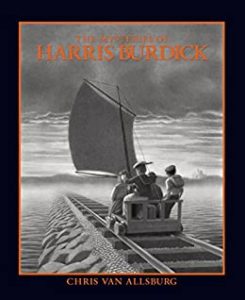
LR: When I was in fourth grade, I met That Teacher—the one who changes your whole life. Her name was Kitty Boyan. She read us The Mysteries of Harris Burdick by Chris Van Allsburg—a book of unfinished stories or story-​starters, 14 intriguing images with titles and one-​line captions but no other text. Mrs. Boyan assigned us to pick one of the images and write the story behind it. Mine turned into an entire novel that took me four more years to finish. I wrote the whole thing by hand in—you guessed it—a marble composition notebook. It’s fun to look at it now and see how drastically my handwriting changed over those four years!

RVC: When I look at my childhood writing efforts, I can’t even read the chicken scratches! Since we’re talking about your childhood though, the plotline for your first YA book, Inevitable and Only, sort of came from that, didn’t it?

LR: That’s true! One day when I was in middle school, out of the blue, I invented an older brother. It started by dropping his name at lunch. Then my friends were curious, so I had to come up with more details about his backstory and why they’d never met him. By the time he’d turned into a rock-​guitarist-​Doctor-​Without-​Borders who was conveniently taking a year off to backpack around the world, which was why none of my friends had ever seen his purple hair, sleeve tattoos, or facial piercings—well, at that point one of my friends asked my mom, “Hey, have you heard from Steve lately?” She said, “…Steve who?” and the game was up.

Many years later, I started daydreaming on a long drive about a character who discovered a secret sibling they’d never met…and that’s where Inevitable and Only began. I wrote the story outline in one long rush and then drafted the book during NaNoWriMo (National Novel Writing Month), which is a challenge to write a novel, or at least 50,000 words, in 30 days.

RVC: Looking back, what was the most important lesson you learned from participating in NaNoWriMo?

LR: NaNoWriMo is a wild experience. Trying to hit that 50,000-word goal in such a short span of time teaches you amazing writing discipline. I would wake up very early and write a couple thousand words before work every morning to make sure I hit my word count for the day. Then I’d outline the next scene, so that the next morning I’d wake up and know exactly what I was going to write and could sit down and start right away.

RVC: So, you’re a morning writer then?

LR: Early mornings are still my favorite time to write…when my creative brain is still loose and dreamy, before my critic/​editor brain has fully awoken.

RVC: From looking at your LinkedIn educational profile, it’s clear that you were going full-​blast toward a future as a poet (witness the 2009 Provost’s Undergraduate Research Award for “Poetry in Performance” and numerous publications in venues such as Prairie Schooner, Mid-​American Review, and Hunger Mountain). Since you’re not a poetry professor somewhere, I have to ask—what got you off that course and into the world of kidlit? Was it being an editorial intern at Highlights for Children?

LR: I’m still writing and publishing poetry in journals, and I’m also working on a full-​length poetry collection. But I have never been interested in academia as a career. I’ve always wanted to make books, rather than write or teach about them.

RVC: I get that. I’m knee deep (sometimes neck deep!) in academia, and I assure everyone, it’s not at all the same as making books. Now, when did you officially get interested in kidlit?

LR: I first became interested in kidlit when I worked as a traveling actor for the Maryland Theatre Association. We were a small company of actors and we’d drive all over the state of Maryland performing plays for elementary school students. We did one play about folktales around the world and another that was a two-​person production of The Lion, the Witch, and the Wardrobe. I played Lucy, Susan, and the White Witch, and the other actor played Aslan, Peter, Edmund, and Mr. Tumnus. We did a lot of quick costume changes! From that job, I learned that I loved working with kids and stories, and I wanted to find a job where I could keep doing that. I applied for an internship at Highlights, the magazine I’d loved since I was little, and from there I fell in love with children’s publishing.

RVC: Your first actual job in kidlit was at Boyds Mills Press. In all your experience there, what most surprised you?

LR: I worked in managing editorial, so I mostly handled schedules and copyediting. But I learned as much as I could about the creative side of editing when I got to sit in on acquisitions meetings. I was surprised by how much there was to learn about artwork. My educational background was all in writing and literature; I’d never studied art. But picture books are at least 50% about the illustrations.

I loved the way illustrators could not only bring a story to life with pictures but could also add to the text, creating new dimensions and nuances that the author (or editor!) might not have even dreamed of. And I loved seeing which artists were chosen for each manuscript and trying to figure out what made the illustrator a perfect fit for that book. Art directing is still one of my absolute favorite parts of my job.

RVC: What Boyds Mills book that you worked on was your favorite?

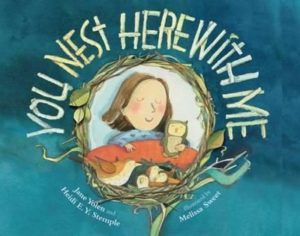
LR: You Nest Here with Me, by Jane Yolen and Heidi E. Y. Stemple and illustrated by Melissa Sweet, is still a favorite bedtime read-​aloud in our house. That was also one of the first times I got to work on a book written by an author whose work I’d loved reading as a kid. I was only a lowly copyeditor on the project, but still–there is no thrill quite like that experience.

RVC: How did you end up at Barefoot Books?

LR: I wanted to move from managing editorial to the more creative side of things—not just project-​managing books, but making them. So I took some fabulous classes in the children’s literature MA program at Simmons College and then earned an MFA in creative writing from Boston University. After that, I started looking for editorial jobs. A friend introduced me to Barefoot Books around the same time, saying they were the best books she’d found for her young son, with diverse casts of characters, beautiful stories, and gorgeous artwork. I researched Barefoot and saw that they’d just posted a senior editor role—so I applied.

RVC: What’s the most important thing people should know or understand about Barefoot Books?

LR: Barefoot has been an independent, mission-​driven company for its entire 30-​year history. I think that has allowed us to be nimble, take risks, and devote a deep level of care and attention to every single one of our books the whole way through the process. We keep our titles in print for a very long time, so each book is a long-​term investment for us. We’ve always had a global focus, opening kids’ hearts and minds to stories from around the world and teaching them to be compassionate global citizens and stewards of our planet—messages that I think continue to become more relevant every year. And our whole list has a distinctive visual aesthetic; we work with illustrators from all over the world who make high-​quality, beautiful artwork in a wide variety of media and styles.

RVC: Please share your secret for being so productive. Freelance copyeditor. Senior editor at Barefoot Books. Poet. Novelist. Mom. How do you make all that happen and still find time to do interviews like this?

LR: I guess “I have no idea” isn’t a very helpful answer?! I am constantly trying to get better at saying no to things… But in all seriousness, I’m grateful that I get to do so many things I love every day. I highly recommend having a couple of cats who will nap in your lap while you’re working so that you can’t get up.

RVC: [Making Note to Self that says: Purchase cats.] You write picture books under the not-​so-​secret pen name of Skye Silver. Why use a pen name, and is there a story behind that one?

LR: It’s an homage to two of my friends and mentors at Barefoot. Our (now-​retired) editor-​in-​chief and cofounder Tessa Strickland wrote under the pen name Stella Blackstone, and senior editor Kate DePalma sometimes writes as Sunny Scribens. So, I chose a celestial name to go with Stella and Sunny, using the last three letters of my last name, “-sky.”

TL;DR: it’s my pirate persona.

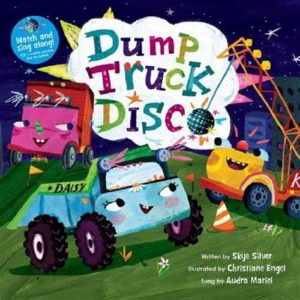
RVC: How’d one of Skye’s book, Dump Truck Disco, happen?

LR: When I was little, I had a big collection of Matchbox cars and loved to make up stories with them. I gave them names and personalities and invented a complex web of relationships and jobs and families for them all. So it was pure delight to write a book about construction vehicles that come to life and build a secret project together! Barefoot published it as a singalong, which means the book comes with (super catchy) music and audio animation. You can find a sneak preview of it here.

RVC: What’s your favorite construction vehicle from that one?

LR: Favorite truck in the book—that’s tough! Illustrator Christiane Engel brought them all to life with such amazing individual personalities. I think it’s a three-​way tie between Dump Truck Daisy, Tractor Tiana, and Excavator Esteban.

RVC: The text scans quite well. What’s your strategy for handling meter and rhyme as an author? As an editor?

LR: Thank you! And that’s an easy one: reading and rereading lines out loud.

RVC: Since this is an Industry Insider Interview (allegedly!), let’s circle back to your editorial day job. What do you think is the most common misconception about editors?

LR: I googled “common misconceptions about editors” and came up with a lot of links saying that writers worry that their editors will change their work. I have enormous respect for the authors I work with—I think that being a writer myself helps me to understand both sides of the process and hope that brings an element of compassion and collaboration to my work as an editor. I try to communicate clearly with writers about where I see potential in their manuscripts and what changes I would ask them to make, before we sign a contract, to make sure that we’re on the same page. I think of my job as a literary lapidary: finding a gorgeous rock and helping polish all the facets so they catch the light and shine as brightly as the author intended.

RVC: Who or what has influenced you as an editor?

LR: That’s a tough one…I’d have to name every book I’ve ever read and every editor I’ve ever had the privilege to work with. Most recently, though, I have to say that reading books with my two-​year-​old has taught me an enormous amount about editing. There’s nothing like reading a book over and over with a toddler to show you where the plot lags or fails to hold a reader’s attention, where the syntax is clunky or there are missing details. And picture books are a shared experience between an adult and a child—you have to think about the grownup buying and reading the books as well as the young audience. My new test for a manuscript when I’m reading submissions is, “Would I still want to read this one again after reading it at bedtime every single night for MONTHS?”

RVC: That’s a high bar, indeed!

LR: Absolutely.

RVC: Since 2019, you’ve participated in #DVpit (a pitch event for unagented creators of marginalized communities) on Twitter. What do you most like about that event?

LR: I love that #DVPit gives editors a chance to discover writers who haven’t necessarily followed a “traditional” path towards publishing, or who are struggling to get their stories and voices out there. I don’t use Twitter much personally—it stresses me out!—but I resurface for #DVPit and a few other pitch events throughout the year. And I do think Twitter can be extremely valuable to writers for forming networks, learning from each other, and breaking down barriers of privilege and access in the industry.

RVC: What’s your favorite #DVpit success story?

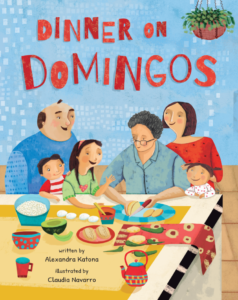
LR: That’s like asking someone to pick their favorite child… But I’ll mention the #DVPit success story I just finished working on—Dinner on Domingos by Alexandra Katona, illustrated by Claudia Navarro. It’s a gorgeous story about something I think we all long for very deeply these days: a big warm family gathering around a delicious meal. Based on the author’s own childhood, the main character is a first-​generation Latinx American girl who doesn’t speak much Spanish, but wants to learn more so that she can bond with her Spanish-​speaking grandmother. It’s a heartwarming story that speaks poignantly to any family with cultural differences that form both barriers and bridges between generations.

RVC: I’m more conscientious of health and wellness than ever before, so I’m trying to ask a question in that arena more often. With that in mind, what do you do to de-​stress or for downtime?

LR: My brain and body feel best when I take a daily walk. Yoga and cooking help me relax. And playing music! Spending some quality one-​on-​one time with my piano or guitar always helps me recharge, clear my mind, and feel like myself again.

RVC: What’s your motto, or something you often say to encourage yourself?

LR: “There is no such thing as a children’s book emergency.” When deadlines are looming or a project feels stressful, it helps to remind myself that the entire point of my job is to bring joy to children. I’m unbelievably lucky to get paid to do this every day.

RVC: One last question for this part of the interview. What exciting projects should we expect from you in the near future, as an editor and/​or an author? It’s brag time!

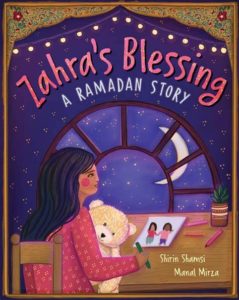
LR: One of our Spring 2022 books I’m most excited about is Zahra’s Blessing: A Ramadan Story, written by Shirin Shamsi and gorgeously illustrated by Manal Mirza. This book has so many layers—it’s a story about a child volunteering at a shelter for asylum seekers during Ramadan. It’s also more broadly about loss, hope, friendship, and family. Kirkus just gave it a lovely review, calling it “a sweet story about the importance of sharing and caring that’s embedded in Islamic traditions.”

RVC: Shirin’s agent is Saba Sulaiman, who we just interviewed two months back at OPB. Small world, right? 

LR: The publishing world sure is!

RVC: Alright, Lisa. It’s time to get zipping along, and zip-​zap-​zoom we will, because it’s the Speed Round! Wahoo! Are you ready?

LR: Uh-​oh…

RVC: If you could pick a movie to describe where your life is at right now, what would it be?

LR: The sad truth is that I can barely stay awake through a whole movie these days…parents of toddlers will understand!

RVC: Weirdest celebrity run-in?

LR:  I was once a listener contestant on the NPR radio show Wait Wait Don’t Tell Me, and that week, the guest celebrity star was Sir Patrick Stewart. Can I say that counts as a “co-​billing”?! I still have Carl Kasell’s recording on my voicemail message. My mom used to text me: “I’m going to call you both don’t pick up, I just want to hear Carl Kasell.”

RVC: What literary invention do you wish were real?

LR: The tesseract. (Only if I get to travel it with Mrs. Who, Mrs. Which, and Mrs. Whatsit.)

RVC: Best non-​Barefoot book you’ve read recently?

LR: Adult fiction—The Sentence by Louise Erdrich. I found it so cathartic to read this gorgeous haunting story set at the beginning of the pandemic.

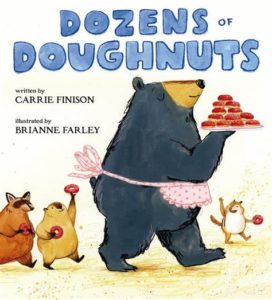
For picture books, I have to plug Dozens of Doughnuts by Carrie Finison! We’ve been reading it over and over at bedtime for weeks and it still makes me chuckle. The writing is impeccable and the story is so sweet.

RVC: What’s your dream project?

LR: A lyrical, poetic manuscript by a debut author, paired with a brand-​new illustration talent—I love helping open doors for creators early in their careers. There is such magic in bringing someone’s first book to life.

RVC: Let’s end with a favorite line from a picture book you edited.

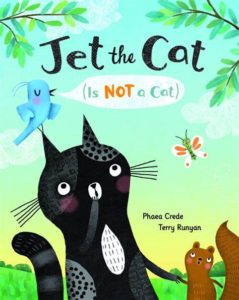
LR: “A skunk? A skink? Platypus? Sun bear? Goblin shark? Pink fairy armadillo? Friendly school librarian?”

That’s from Jet the Cat (Is Not a Cat) and I won’t tell you the context—you’ll have to go read it to find out! (You can also hear all about the behind-​the-​scenes creation of this book in an interview with the author, the illustrator, and me on the Picture Book Look podcast.)

RVC: Thanks so much, Lisa! This was a truly great way to get us cooking along at OPB in 2022. 

Editor Interview: Harold Underdown (Kane Press)

This month’s Industry Insider Interview is with Harold Underdown, a Brooklyn-​based children’s book editor. His editorial experience includes being Vice President of ipicturebooks.com, editorial director of the Charlesbridge trade program, and an editor for Orchard Books and Macmillan. For a long while, he worked as a consulting/​independent editor, a writing and revision teacher, a workshop/​retreat leader, and an online writing teacher. As of October 2021, he started work as Executive Editor at Kane Press. That means he’s cutting back on independent editing work, though he’s still going to be teaching and leading workshops.
Most people in the kidlit world, however, likely know Harold best through his informative The Purple Crayon website, which was created in 1995 and remains a valuable resource for the picture book world.

To round things out introduction-​wise, here are a few Harold Bio Nuggets.

Now that we know Harold a good bit better than we did 90 seconds ago, let’s get to that interview and see what he has to say about the world of picture books, discover the origin of The Purple Crayon, and find out about his cool new job!


OPB: When did you first realize you were going to be in the book industry?

HU: Unlike some people, I did not come out of college thinking, “Oh, I want to work in publishing!” In fact, for quite a long time, I thought I was going to be a teacher, which I think initially came from the fact that my dad was a university professor. But since he was a university professor, I saw the departmental politics and the requirement to publish. I didn’t want to go into that.

OPB: *laughing* Yeah. After working at seven colleges and universities, I know what you mean. 

HU: After college, I went into a teaching job at a Friend’s school, and I kind of struggled with it, which led to my doing a master’s degree in education. Before that, I hadn’t had any actual training in teaching–I thought it was something you could just do.

OPB: It’s harder than most realize!

HU: I finally ended up in New York City, teaching in the public schools through an arrangement they had that was called a temporary per diem license for people who had not completed all the formal requirements, which, even though I had a master’s, I had not done. That was an interesting experience. I worked at an alternative elementary school on the Upper West Side. It was a great school. But really, I was kind of out of my depth because at that point, I still did not have enough experience or supervision. The part of it that I really liked, however, was working with the kids on reading. I read out loud to them. And they loved it.

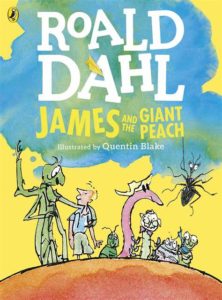
This was a mixed group of third and fourth graders. I still remember reading James and the Giant Peach to this group of New York City kids. Since I had English family on my father’s side, I was able to do different British accents for the insects, and they loved that. That taught me something: here’s this book that’s mostly set in England and these kids from New York City were totally into it.

I taught a very diverse group of kids, yet I couldn’t find books in which they could see themselves and I was definitely looking for that. There were a few, but there weren’t nearly as many as there are now. And I thought, okay, so maybe if I’m not going to be teaching, maybe I can go into publishing and help create more books for kids like the ones I’m teaching. And that was actually what ended up happening.

OPB: How’d you go from that goal to landing that first publishing job?

HU: I did the typical pre-​Internet job-​hunting things. What ended up working was that my stepmother’s mother used to work at Greenwillow and still had some publishing connections. I sent my resume to someone she knew who was working at Macmillan–this being the old Macmillan–and she passed it along.

From that, I got started as an editorial assistant.

OPB: What was the first picture book that you worked on by yourself?

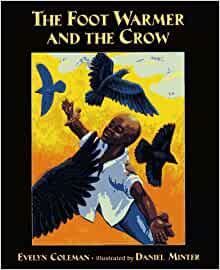
HU: Well, I wouldn’t say I worked on it completely by myself, but the first picture book that I regard as a book that I was deeply interested in and really wanted to acquire and bring on was The Foot Warmer and the Crow by Evelyn Coleman. It tells the story of an enslaved man who escapes from slavery with the help of a crow. It’s a folktale-​like story–very, very powerful. And I wanted to find some appropriate art to go with it–a picture book illustrator who could really carry the story.

I looked through the art files and I talked to our art director. We eventually came up with someone who I thought was a good possibility. I told Evelyn about it and showed her samples. She wasn’t crazy about this guy. And she said, “Well, there’s this artist here in Atlanta. Can I send you some pictures of his art? I think he should be the illustrator.” Of course, I said the usual thing, “You know, we REALLY know what we’re doing here. It’s up to us to choose the artists…but if you want to, you can send the art to me.” And so she sent me a whole package of samples by Daniel Minter. At the time, he was a fine artist doing sculptures.

I looked at the samples and said, “Oh, yes. This is exactly what we need.” And fortunately, Daniel was open to the idea of illustrating a picture book.

OPB: I don’t know this book well, I’m afraid. It came out in the early 1990s–well after I stopped reading picture books as a kid, and not yet where I was reading them again as an adult. How was the book received when it came out?

HU: The book itself turned out really well. I think in some ways, it was a book that was ahead of its time. It didn’t stay on the market long. But it led to Daniel Minter becoming a children’s book illustrator, so that was a good thing.

OPB: Agreed. His art has received a Caldecott Honor, and with good reason. Now, let’s get back to you. In speaking with so many industry folks over the years, it seems to me that the picture book world does a very good job letting new agents and editors learn in an apprenticeship model. Was that how it worked for you?

HU: That’s an interesting question. And I actually would say that I didn’t have a full on apprenticeship kind of situation. Because I was working for Macmillan Children’s Books–a large, general purpose children’s book imprint–we did everything from picture books up to young adult. We even had the Macmillan Dictionary for Children along with a couple of other reference books.

There were three or four editors within the imprint–Judith Whipple, Beverly Reingold, and my boss Neal Porter, who was the publisher. I was officially working for Neal, but I also interacted with everybody else, so I was actually learning from all of them. One of the things they did within the department was make copies of all their important correspondence and put it in a file. That would get circulated weekly so we could all see what everybody was working on. That was always really interesting for me to read, because I could see how an editor wrote an editorial letter and how they corresponded with an artist. Another lesson I learned was the reality that publishing is a business.

OPB: That’s a tough realization, isn’t it?

HU: I thought of publishing as this noble calling where people are simply making wonderful books. And it is! But also, for every single book that we acquired, I had to do a P&L [profit and loss statement]. And it had to work out and make money for us, after I put in all the expenditures and an overhead percentage and so on. It had to hit a target number of profit.

OPB: You were a freelance editor for a long time. What were the benefits and challenges of moving away from working with publishing houses?

HU: I didn’t really get out of it. Because even when I was not working at a trade house, I was still very involved with the industry through my freelance work and the workshops that I did. All along, my intention was to get back there. What happened instead was that I ended up going off on a very long tangent.

OPB: Do tell!

HU: I had been working at Charlesbridge, which was a great place to work–a very good company. I was essentially commuting from New York City to Boston. My wife and I wanted to have a baby. We both agreed that we couldn’t do that if I was in Boston half the time. So, I looked for jobs back in New York. Unfortunately for me, the one that I got was working for a book packager. This was 2000 or so, and the owner was trying to set up a children’s focused ebook company. There were two problems with this. One of them was that it was way early to do a children’s ebook company. This was several years before the Kindle format came along. Nobody had figured out how to how to sell ebooks. Consumers didn’t want ebooks. There was probably some kind of market there–in the library market–but the owner wasn’t interested in that. So, we were going after a market that didn’t exist.

The second problem was the owner ran his own business badly, and treated his staff badly. Fortunately, this didn’t last long because he ran out of funds. He had some seed capital from Time Warner but he blew through it in a year and a half.

Honestly, it was a terrible experience in some ways. Yet I learned things from that, for sure, like the importance of finding out what the culture of the place is like before you take a new job. I’ll never do that again!

OPB: I hear you there! Culture matters. What happened next?

HU: I needed to find something quickly to support us. This was now the down slope of the .com years, so there wasn’t a lot of hiring going on. I consider myself lucky to have gotten a job at McGraw-​Hill then. My teaching background was something they were looking for, along with my editorial background. I worked there on and off until fairly recently.

If you know anything about educational publishing, this fact will not surprise you–while I was at McGraw-​Hill, they went through four rounds of layoffs. For someone who had worked in trade publishing, it was hard to understand what the problem was, but I think part of it was that they did textbook publishing, and that’s a business in which there’s enough money involved that they could afford to hire expensive consultants. And each time, the expensive consultants would tell them to do some something else to fix the company. Unfortunately, one of the things that was always involved was laying off people.

The last time this happened, I was one of the people who got laid off.

OPB: I’ve written textbooks, and I’ve seen the carousal of editors in educational publishing firsthand. You’re exactly correct.

HU: It wasn’t the end of the world. I had freelance work, which I’d been doing on the side, so I had connections to build up. But I also knew this was the time to get back into trade publishing. I had looked into doing that even while I was at McGraw-​Hill, and I had talked to people about it, but I never found the right position for me, given my experiences and abilities. So I got very serious about hunting in a way I hadn’t before, and the Kane Press job came along.

OPB: When did that happen?

HU: Last summer. I’d had Kane on my radar because Bobbie Combs, who I know from working at the Highlights Foundation, had introduced me to Juliana Lauletta, who’s their publisher. So, I knew a little bit about them. Kane Press is interesting, because Joanne Kane, who founded Kane Press about 30 years ago, started the press very deliberately wanting to publish books that had an educational component. But the books weren’t textbooks. She was aiming at a very specific market, and that’s what she did as an independent publisher for quite a long time.

Kane was the first company that Thinkingdom Media Group acquired when they moved into the US market. As you probably heard, they also bought Boyds Mills, Calkins Creek, and Wordsong. And they made a deal to buy minedition, a picture book company started by Michael Neugebauer, who’s a very well-​known Swiss publisher and a picture book specialist. He had worked at North South Books, and then he went out on his own and started minedition. And he decided to sell it to what became Astra. This year, they also brought Jill Davis in, who started Hippo Park as her personal imprint. So, they essentially assembled a publishing house, with an adult imprint and a literary magazine as well. And in 2020, they set up Astra Publishing House.

At that point, they wanted to bring somebody else in at Kane Press to help build it up and, hopefully, take it in a few new directions. Basically, that’s what I’m aiming to do.

OPB: Why was Kane Press the right fit for you?

HU: It was the right match for me because the things that I want to build out are very much things that they were already thinking about. For example, Kane Press has always done series publishing, like Math Matters and Science Solves It! More recently, there’s the Eureka! The Biography of an Idea series. All of these were developed in house and they would then hire authors and illustrators to create individual titles.

We’re going to continue to do that. But I made the point right at the beginning that while we may be brilliant, there are only so many ideas we can have. What if we open up the doors to proposals from the outside and see what people offer us?

That’s essentially been my main focus in the first two months–writing out how that would work, developing guidelines, and letting people know that we’re open. We’ve pretty narrowly defined it because we don’t just want to get lots of random submissions. We want to get series proposals with a sample manuscript and there are certain things we look for in them. We’re being cautious and we’re only looking at these if they’re from published authors, or from an agent.

OPB: Let’s help out some writers and agents here. In your capacity as Executive Editor at Kane Press, what ARE you looking for?

HU: One of the things people need to do before they do anything else is familiarize themselves with some of the books that Kane has published and try to get a feel for what distinguishes it from other companies. Because one of the things I’ve noticed already is people think, “Kane is educational, so they must be publishing those library series like Lerner and Capstone do.” And that’s what writers send us.

That’s not what we publish.

Also, almost all of our books are illustrated rather than photo illustrated. In fact, we did a photo series long before I arrived here. It was kind of a disaster.

The series that they’ve succeeded with have been ones that somehow walk a line between the school and library market, but they also speak to parents, maybe parents who are homeschooling or maybe parents who are just looking for something that’s going to supplement what kids are getting in school.

OPB: So they’re going to have a trade feel to them?

HU: Before I arrived, they’ve already been upgrading their illustration style and moving in a direction that makes the books look more like something you would see on the shelf in a bookstore. To me, the goal is that we’re going to publish books that are going to be every bit Kane Press books in the sense that there’s an educational component, either in the story, or, for nonfiction, in the facts. It’s got to have really great back matter, too, which is something Kane Press has a name for.

OPB: Let’s circle back to your website, The Purple Crayon. That’s how a lot of people know you, I think. Why did you start that? And what has it done for you over the years?

HU: The Purple Crayon goes back to 1995. Believe it or not, it was something that I started in between working at Orchard Books and Charlesbridge. When I moved to Orchard with Neal Porter, I got caught up in a kind of messy situation. Orchard Books–which at the time was owned by Grolier, which was primarily a reference publishing company–didn’t know how to deal with this sort of high-​end trade children’s imprint that they somehow had. I’m still not entirely sure how they actually owned it. They didn’t know how to deal with it, and so people were unhappy there. And this was Neal Porter, Dick Jackson, and Melanie Kroupa. Three pretty amazing editing people.

We happened to be in the same office building on Madison Avenue with Dorling Kindersley and we would be going up and down in the elevator with Dorling Kindersley people. Neal in particular got talking to them, and it led to the three of them leaving and starting a new imprint at Dorling Kindersley that didn’t last long, but it got them out of the Grolier situation. I ended up getting laid off. So, while I was looking around for the next thing–which turned out to be Charlesbridge–my brother told me about this thing he discovered called the World Wide Web.

I had already been going to SCBWI conferences and the like, and giving presentations. I had one called Getting Out of the Slush Pile that was based on my experience as an editorial assistant and a young editor, being the person who read all the manuscripts that came in that nobody else wanted to read. This was back in the day when publishers hadn’t closed the doors to open submissions yet.

I thought I could put this presentation up on the web, and then people could find it from all over the world. And so I did that. The website initially was that and a couple other articles that I’d written. I think I pretty early on started the Who’s Moving Where page, which is a sort of chronological listing of editors who’ve moved around, or new imprints that have been started. And I just update that whenever I can, which isn’t very often these days.

OPB: The industry can move pretty fast sometimes. I feel your pain there.

HU: In terms of what’s on the website, some parts of it, honestly, I haven’t paid any attention to for years, but I try to keep up. The key informational articles and the Who’s Moving Where page, though, I try to keep up to date.

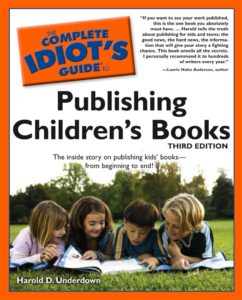
Having that website kind of increased my visibility. Definitely, it’s led to conference opportunities and things like that. And also interestingly enough, that led directly to The Complete Idiot’s Guide to Publishing Children’s Books.

OPB: How was it making that book?

HU: This is back in like 2000/​2001. The Complete Idiots series had this model where they would publish one in a particular area, and in this case, it was just publishing in general. If it was successful, then they’d look for ways to kind of subdivide it. So they thought, we’ve got a successful The Complete Idiot’s Guide to Getting Published. Now, we should do children’s books and romance novels, and I don’t know what else they did, but I was not the only subdivided idea they had.

They would go out and look for experts and essentially commissioned those people to write them. And they found me through The Purple Crayon. Writing for them was an interesting experience. They had you write a very detailed outline, down to the subheads of the entire book. I think it ended up being about 10 pages long and and then you just kind of crank that out. One of the good things about that kind of structure is it’s very flexible. They let me say the things I wanted to say.

We were able to update it a couple of times since then. Unfortunately, they’ve sort of shifted their model, and they’ve stopped doing revised editions–they only do new titles. So the current edition that’s out in the market is about 10 years old.

Most of it’s still still pretty solid. I wish I could update it again.

OPB: I have to ask–what’s your editing superpower?

HU: That’s a great question. I think that this applies both to a freelance situation and to in-​house work. I try to understand what an author is trying to do themselves, where are they going with this story or this piece of nonfiction. I try to get inside of it and see what’s working, what isn’t working. I try not to impose my ideas about what they should do but instead help them build it in the direction that they’re already trying to go. To me, that’s the best kind of editing.

Now, I don’t necessarily do that all the time. There are times when, for market reasons or practical reasons, I may say, “We need to do X, Y, and Z.” Or “This is too long.” That’s not editing from inside of the story, though.

What I always try to do is to get into the story to really take it in and understand where the writer’s going with it, and help them do it better.

OPB: One last question for this part of the interview. What are Harold Underdown’s feelings about art notes?

HU: I talk about this regularly because I teach the Crash Course in Children’s Publishing: Everything You Need to Know at the Highlights Foundation, which is probably the only course like that anywhere. In it, we focus on the practical and the business side of publishing and how that all works. So, it’s not a writing or illustrating craft course. We get a lot of people who are what I would call serious beginners. They’ve gotten into the field and are probably writing, but they just don’t understand how things work and they want to find out.

And art notes always come up.

I will say my thinking on art notes has evolved. Back in the day, I would always say–and this used to be the standard thing people said–“Don’t put in art notes. Don’t tell the illustrator what to do.”

I’m not as absolute now. The big thing I warn people about–I see people doing this a lot in manuscripts that I’ve been given a conferences, or the stuff that my students show in workshops–is using art notes as a substitute for the story that you want to tell. If you’re doing, that you’re not using art notes correctly. You should only be using art notes when it’s absolutely necessary to tell the illustrator something they won’t figure out simply by reading the entire manuscript.

OPB: Okay, Harold. It’s time for the Speed Round. Fast questions and faster answers, please. Are you ready?

HU: All set!

OPB: What’s the best place for REAL New York City pizza?

HU: There are a lot of options here, but I’m just going to mention one in my immediate neighborhood: Graziella’s Pizza on Vanderbilt Avenue.

OPB: “If I could be any picture book character for a day, it’d be ____________.”

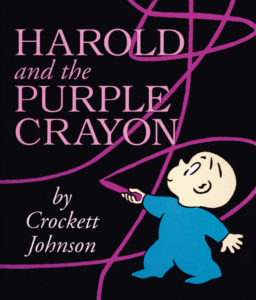
HU: Harold from Harold and the Purple Crayon, of course. What’s great about him is that he never stops trying. He gets into trouble, and he draws his way out of it. He’s very creative.

OPB: What’s a secret vice?

HU: I picked up a fascination with cricket from my English father, and I still follow it. I like the international politics of the sport, which are fascinating. If you’re a soccer fan, for example, you know how corrupt FIFA is, right? There’s similar stuff in cricket, though, perhaps not as quite as pervasive.

OPB: Biggest time waster?

HU: Facebook and Twitter.

OPB: Your picture book philosophy in five words or less.

HU: Picture books are for children.

OPB: Thanks so much, Harold. This was truly informative! Best of luck at Kane Press.

Agent Interview: Saba Sulaiman (Talcott Notch Literary Services)

This month’s Industry Insider interview is with Saba Sulaiman, a literary agent at Talcott Notch Literary Services. While I could put all kinds of traditional bio things here, I’m going to instead offer part of her own terrific Twitter bio. “Eternally recovering from maternity leave. Probably hiding behind the crib, eating cake.” With an awesome Twitter bio like that, what more do you need to know?

We’ll give more anyway, because that’s what we do here at OPB.

Saba admits that when she’s not reading, she’s likely:

  • running after two small children,
  • secretly learning another language,
  • playing Scrabble,
  • watching a Bollywood movie,
  • or singing in the bathroom.

If you REALLY want to know the regular bio stuff, I’ll get to that in the interview itself. Speaking of that, let’s get right to it!


RVC: Rumor has it that your sister played a big role in your initial love for books.

SS: She did! She was (and remains) a big reader and there’s no way I would’ve gotten into reading at all if it weren’t for how much she influenced me (read: how obsessed I was with everything she did) when we were young. She’d probably argue that there’s very little that’s original about me, to be honest, but isn’t that true for everyone?

RVC: That sure can feel like the case from time to time! Now, from the start, you were culturally displaced. How did that affect your reading interests and your relationship to language?

SS: Until I came to the US for college, I spent my whole life being expected to know a language I didn’t know well enough, and was then ridiculed for not being fluent enough. My petulant (and understandable, in retrospect) reaction to it was to make sure my English (the only language I felt confident speaking) was better than anyone else’s, and I think reading a lot helped with that. And then, of course, because my life got so much easier in the US when language wasn’t a barrier anymore, I decided to complicate it further and start learning three more languages in college.

RVC: Wow.

SS: I know.

RVC: Were your graduate studies in Persian literature at the University of Chicago a path toward your future publishing career, or were you still thinking of other career options?

SS: You know what they say: everything in your past plays a role in how things turn out in the future. I wasn’t thinking about publishing at all when I began graduate school—in fact, I was fairly sure I’d purse a Ph.D. and a career in academia. But my experience there definitely informed the kinds of books I tend to gravitate towards, and how I think about, read, and evaluate writing.

RVC: The next step in your journey took you to Sourcebooks as an editorial intern. Their home base is in Naperville, Illinois, right? What kinds of things did they have you doing there?

SS: I was actually at one of their satellite offices in Milford, CT, where their romance imprint is run. It was an incredible experience, truly—they had me write back cover copy my first day there, if that’s any indication of how happy they were to throw me into the deep end. I read submissions and wrote reports on them, attended acquisitions meetings, maintained their various author and comp title databases, and assisted the editors there with anything they needed help with. It was a really comprehensive and wonderful introduction to publishing, and I had a blast.

RVC: What was the most valuable lesson you learned while at Sourcebooks?

SS: I think it’s a combination of a few things: that working with good people is a highly underrated and very necessary aspect of enjoying your work; that supporting and advocating for people looks very different depending on the person; and that there is actually very little reading involved in the work we do (at least during office hours, alas), but that it’s absolutely essential not to lose sight of how important it is to keep in touch with what’s being published so we can best help our authors thrive.

RVC: Let’s tackled a super-​basic issue. Why is agenting the right fit for you?

SS: I get to work very closely with creative professionals and help them achieve their goals without having to take on the actual work and stress of creating art, plus I’m surrounded by people who inspire me and I get to read a lot and call it market research—what’s there not to love? I’m also a bit of a Mother Hen, and agenting allows me to channel my protective instincts in a pretty satisfying way.

RVC: You say that being an author today is an entrepreneurial enterprise. What do you mean by that? 

SS: Since publishers can’t support all the authors they publish with equal amounts of fervor when it comes to marketing and publicity, authors are expected to participate as much as they can in doing outreach, finding and connecting with their audience via libraries, conferences, and social media, and making promotional material that can aid in increasing their books’ visibility and sales. It requires time, energy, and a lot of strategy development and implementation for each author to figure out what works for them, which is why it’s much more of an entrepreneurial role than it used to be, say, fifty years ago.

RVC: Do picture book authors and illustrators have to do as much of this PR work as writers for a MG, YA, or adult audience?

SS: I think the nature of the work required is different but the amount is comparable. PB writers may not have to do a lot in terms of being personally active on social media in order to connect with their audience, but they often have to focus more on the school and library market–being available for story times, both virtual and in real life at bookstores and libraries (where safety permits), presenting their books to students at schools via classroom visits, etc. All authors want their books to find more readers–the process is just different for PB writers.

RVC: I’ve heard you say that you think every author should have an agent. Care to explain that a bit more? Especially as to how it might pertain to self-​published authors?

SS: Well, first of all, I will admit that I’m clearly biased since I am an agent, but I do think having someone in your corner whose entire job is to support and advocate for you, find opportunities for you to improve your craft and publish widely, review your contracts and advise you on how you manage your career overall–especially in an industry as frustratingly esoteric as publishing–is very useful. Authors can certainly manage their careers without agents, especially if they’re fairly certain they want to self-​publish and continue to do so, but it requires doing a lot of research that is hard to access without the help of a professional who has had the experience working in this space, as well as having a tremendous amount of energy—energy that I think would be better served being channeled into writing their manuscripts.

Finding a good agent isn’t just a means to an end, it’s a long-​term investment in your career, and a wise decision, I believe.

RVC: What was the first picture book you sold? What made you want to represent it?

SS: The first PB I sold was Muslim Girls Rise by my client Saira Mir (illustrated by Aaliya Jaleel). I fell completely in love with it because it was written so beautifully and with such clarity and an earnest desire to share these exceptional women’s voices. Also as a Muslim woman myself, I found that even I hadn’t heard of a majority of these women before I read this submission, so I knew I had to do my part to help make their inspiring stories available to read for kids all over the world.

RVC: I’ve got a copy of that one–it’s a worthy book, indeed. Now, let’s throw a bone to the writers out there. What do you want to see out of submissions? What are some must-​haves and turn offs?

SS: In picture books, I’m drawn most to stories with a nuanced emotional takeaway, fun wordplay, notes of whimsy, textual economy, and memorable characters. I love smart, unexpected narratives where authors are experimenting structurally; I love funny books, both the sweet and soft kind and the wry, dry kind; I love layered storytelling with subtextual richness that can provide a launchpad for readers to start a conversation; and I love idiosyncratic narratives that take mundane processes and make them seem utterly delightful. I also represent non-​fiction, and am particularly interested in creative storytelling with a STEM component, biographies of lesser-​known trailblazers who have made a significant impact in their fields, stories with environmental themes, and creative nonfiction that almost feels like it could be shelved in the fiction section. I’m also always especially excited when I receive submissions from BIPOC creators, queer creators, disabled creators, immigrant creators, and creators who are writing stories of joy and celebration at the intersection of these identities.

RVC: Is there anything you don’t want to see?

SS: I don’t usually find stories that have a very heavy moral or “lesson” component very appealing.

RVC: Picture book trends. Should writers pay attention to them? 

SS: Writers should absolutely pay attention to trends–knowing what kinds of stories the market is responding to at any given point is important because books aren’t published in a vacuum. Writers can (and should feel free to) choose not to respond to or write to these trends, but I do think they should know what kinds of books are selling if they’re seriously pursuing publication.

RVC: How do you describe your agenting style?

SS: Forthright, honest, encouraging, collaborative, and flexible.

RVC: One final question for this part of the interview, Saba. What’s are some picture-​book projects that you’d like to brag about?

SS: Ooh yes, thank you for the opportunity! This year a picture book very dear to my heart called Laxmi’s Mooch by my client Shelly Anand (and illustrated by Nabi H. Ali) was published–it’s a really sweet, joyful story that celebrates body hair and inspires kids to be confident about who they are—it was featured on the Today Show which was really thrilling!

And then next year, I have three PBs forthcoming: The Meaning of Pride by Rosiee Thor (illustrated by Sam Kirk), Zahra’s Blessing by Shirin Shamsi (illustrated by Manal Mirza), and If You’re a Kid Like Gavin by Kyle Lukoff and Gavin Grimm (illustrated by J. Yang), all of which I’m very excited about!

RVC: Alrighty. It’s now time to double the points, double the speed, and double the overall goodness. Welcome to…THE LIGHTNING ROUND! Are you ready? 

SS: Go for it!

RVC: Biggest time waster?

SS: Someone sent me a few funny Instagram Reels and I made the mistake of going back to browse for more–don’t get sucked in, it’s a trap!!! Even more so than TikTok, I think, because of how much shorter the videos are and how easy it can be to tell yourself you’ll only watch one more…

RVC: If we overheard you singing in the shower (we get it—the acoustics are great!), you’d be belting out…

SS: It varies a lot depending on my mood but “I Want More” from The Little Mermaid is definitely a repeat offender and has been since I was a kid–both my mom and my husband can definitely attest to that.

RVC: A favorite autocorrect misadventure?

SS: I once praised a client for how fantastic and transportive their decryptions are. That was fun!

RVC: A recent picture book that really impressed you?

SS: Ooh, there are so many but I’ll name the most recent one–it’s a picture book biography coming out in January 2022 from HarperCollins called When the Schools Shut Down by Yolanda Gladden and Dr. Tamara Pizzoli, and illustrated by Keisha Morris. It’s got such beautiful, contemplative, rich, nuanced, and rousing storytelling, such gorgeous, warm illustrations, and it’s such an expansive story told with intimate, emotionally exacting detailing–I just love it. Both the author and illustrator really managed to convey a sense of Yolanda Gladden’s soul, her family, and her nurturing community, which is so difficult to do with a PB biography.

RVC: Three must-​haves in a picture book manuscript?

SS: Voice, kid-​appeal, and a sense of sincerity.

RVC: Best moment in your agenting career (so far)?

SS: Probably the day I found out one of my clients got longlisted for the National Book Award–I was actually in the middle of what’s been one of my best runs to date, so it was a great personal moment as well!

RVC: Thanks for joining us here at OPB, Saba. Best of luck with everything!

SS: Thanks for having me, Ryan!

Agent Interview: Elizabeth Bennett (Transatlantic Agency)

This month’s Industry Insider interview is with Elizabeth Bennett, a Senior Literary Agent and Partner at Transatlantic Agency. She’s spent her entire career in the children’s publishing industry, having worked in marketing, product development, and editorial at such companies as Scholastic, Reader’s Digest, and Houghton Mifflin Harcourt. One especially cool thing she did at HMH was establish an IP program that launched several middle grade series, including The Next Best Junior Chef, Survivor Diaries, and Junior Ninja Champion.

Let’s get right to the interview to find out more about Elizabeth and her career!

Her agency’s website

Her Twitter

Her Instagram


RVC: At what point did you first fall in love with books?

EB: When I was in third grade I read the All of a Kind Family series by Sydney Taylor. I loved them so much that I wrote to the author and asked if she was planning on writing more. She wrote back (SHE WROTE BACK!!!) telling me she hoped to some day write more books in the series (spoiler, she did…) and suggested another book she had written. I’m pretty certain that hearing from the author of a beloved book series cemented my love of reading.

RVC: I had the same kind of thrill with Piers Anthony when I wrote him a handscrawled letter about his bestselling Xanth series. He wrote back to me, too! Crazy, right?

When did you go from being an avid reader to knowing books would be your career?

EB: I should have known that a career in children’s books was the right path for me (my favorite course in college was a children’s literature), but I actually stumbled upon it. I wanted to work in children’s television, but back in the 80s there weren’t as many opportunities in kids TV, and the job market was tight all around. Fresh out of graduate school, with a degree in communications, I took the first job I could find–a marketing position at Scholastic. I changed lanes throughout my career, but from that point on, I stayed on the publishing road.

RVC: What type of training did you have along the way to prepare you for success in the publishing industry?

EB: The knowledge base I have from a child study major in college and a communications degree have certainly helped, but in publishing, much of the training happens organically. You listen, you question, you take chances, you grow…

RVC: You spent a good bit of time on the editing side of things. What are some of the key lessons you learned that help you in your work as an agent?

EB: I know that some successful agents don’t have experience on the editorial side and I’m flummoxed by (and slightly in awe of) them. For me, the ability to help my clients finesse their manuscripts before they go out on submission has been key. Because of the volume of my work, I can’t do the kind of line edits that I did as an editor (nor is that my strength), but I know how to make a good manuscript better, getting it ready for submission–while leaving room for the acquiring editor to take it on and make it really sing.

RVC: Scholastic is kind of the 800-​pound gorilla in the kidlit world. What was it like working for them?

EB: So many of us in the industry cut our teeth at Scholastic. When I started there, some of the big brands it is known for were just being launched–Goosebumps, The Babysitters Club, The Magic School Bus. It was an incredibly exciting time to be in publishing and Scholastic was small enough then that we all felt like we were a part of it. To this day, I’m still close to many of the people I worked with there–it truly was a great training ground.

RVC: I’m sure OPB readers will want to know about franchise publishing—you worked on Doc McStuffins, Hello Kitty, and Clifford, among others. What’s different about working with a franchise? 

EB: I’ve worked on brands both as an editor and writer–brands from Scholastic, Disney, Nickelodeon, Marvel, and more. With a franchise, you have to keep the brand bible in mind–the world has already been created and there are boundaries that you have to keep inside of, but you still have the opportunity to tell stories. Franchise publishing is a great entry point for many readers, so I’m a big fan.

RVC: You’ve also worked with some big-​time classics at HMH (Curious George, Little Blue Truck, and The Little Prince). What was the best thing about working with those?

EB: It’s really fun to take a classic character and find a new story to tell or a new format to try. Curious George can celebrate Ramadan. Little Blue Truck can find baby animals on a farm. Toddlers can be introduced to The Little Prince in a series of board books.

RVC: You’ve been at your current agency for some time now. Why is Transatlantic Agency a good fit? What do they do especially well?

EB: We are lean and nimble. Small enough for each of the agents to have autonomy, but established enough to have the systems we need to run our businesses and support our clients. We each are independent contractors, but we come together as an agency to share thoughts, experience, and knowledge. I also love that we have agents and clients on both sides of the Canada/​US border–we can offer our clients a broader market and network.

RVC: Recently, you were made a Partner at the agency. Congrats on that! What does that mean for you? Do your day-​to-​day duties change?

EB: I’ll be honest, the appointment was more of an honor than a promotion. It doesn’t change my day-​to-​day responsibilities. But it does mean that I have more of a stake and interest in the operations of the agency. And it was lovely to be recognized for my work considering that I’m relatively new to agenting.

RVC: You’ve been involved with a lot of graphic novels, so you’re the ideal person to ask this question. More and more, I see publishers making graphic novels for kids. What’s the difference between those and picture books?

EB: Well, the easiest answer is that picture books are for young children–ages 2–5 or so–while graphic novels are for readers of all ages and, as of late, can be found across all genres. But it’s more than that. With a graphic novel, readers are drawn into the storytelling in a way that they may not be with a more traditional text. The pacing and emphasis on action can be captivating and a real bonus for more reluctant readers. Inference comes into play. Using visual cues, readers make connections they may not have to make when storytelling is done through text alone. They build comprehension and critical thinking skills.

Let’s just say, I’m a big fan!

RVC: Me, too! I love them.

Let’s talk submissions. What’s one thing you see too often in picture book manuscripts that ultimately earns a pass from you?

EB: I’m open to accepting a rhyming picture book text, but I see too much bad rhyme. Writing in rhyme is easy–doing it well is really, really hard. That’s why many agents and editors won’t even look at a text that’s written in rhyme.

RVC: You’re busy enough these days that you’re only accepting submissions from non-​clients by referral only. I don’t ask this question enough—what’s an effective way to get a referral without being pushy, aggressive, or stalkery?

EB: I will always look at a submission that comes through a client of mine or a colleague. So, the best way to get a referral is through relationships.

  • Do you have a peer in a critique group who is agented?
  • Did you meet an editor at a conference?
  • Did you go to school with someone in the business?

But, I’ll add that if an agent is closed to submissions, it’s usually because they truly aren’t looking to grow their list. Better to focus on agents who are actively acquiring–your chances are just that much better of getting an offer.

RVC: That last point is really astute. OPB readers, take heed!

Now, I often hear that it’s important for early career authors to be active on social media.

EB: Some of my clients are very active on social media – others not so much. And I always tell them that it’s up to them. Social media is a great way to grow a platform, to make connections, to self-​promote. But I don’t want anyone to think they have to be active on social media–unless of course fame and recognition is part of their pitch (i.e. a celebrity book).

RVC: Brag time. What’s a book project or two you’re working on that you’re really excited about? 

EB: Ack–so many. But I’ll mention a few.

Kayla Miller, the creator of the NYT best-​selling graphic novel Click series, has collaborated with writer Jeffrey Camino and illustrator Kristina Luu on Besties–a spin-​off series which is launching in October. It’s exciting to see this franchise grow.

Damian Alexander’s Other Boys, a touching and poignant graphic memoir about transcending trauma and embracing self, is receiving a lot of (deserving) buzz, and Debbie Dadey is authoring a picture book memoir about Kati Kariko, the woman who’s mRNA research led to the development of the COVID vaccine. It’s the kind of story we need right now.

RVC: Okay, Elizabeth. It’s time for the Speed Round! ARE YOU READY?!?

EB: Ready!

RVC: Favorite place to get a terrific slice of pizza?

EB: I love pizza, but as a New Englander, I’m going to go lobster roll here–Alive and Kickin’ Lobsters in Cambridge is my hands-​down favorite.

RVC: A surprising song that’s on your current playlist?

EB: Shameless plug for my daughter’s boyfriend, Carson McKee. Any song by his group, The Other Favorites–everyone I recommend their music to becomes a fan.

RVC: If your life were a Hollywood movie, which actress would play the role of you?

EB: How about Annette Bening–Annette Bening in An American President

RVC: What’s the One That Got Away?

EB: I won’t mention any names but there was a YA rom-​com that I really should have taken on–great title, great concept. It’s already been acquired and has a movie deal. I really regret letting that one slip away…

RVC: A recent picture book that really got your attention? 

EB: The Day the Crayons Quit is a recent favorite – so clever!

RVC: Five words that describe your picture book philosophy.

EB: I can do it in four: Never seen this before.

RVC: Thanks so much, Elizabeth. It was great getting to know you and your work better, and congrats on making Partner at the agency!

Freelance Editor Interview: Brooke Vitale

To understand why Brooke Vitale has been on the OPB Must-​Interview list for some time, one need only look at three numbers.

  • 100+ books written
  • 750+ self-​published books edited
  • 1,500+ traditionally published books edited

If you want a bonus number, try this:

  • 350+ of the books she’s been involved with have earned 5‑star ratings

Or look at a few of her own recent picture books!

So, yeah, she knows her stuff as both an editor and author. That’s why I let this interview run a bit longer than the norm–she has SO MUCH to offer. See for yourself!


RVC: When did you first realize you were a writer?

BV: Honestly, I didn’t realize I was a writer until my job threw me into having no choice but to write. One of the things that I think a lot of people don’t know about publishing companies is that lots of the books are written in-​house by the editors because the publishing company can’t necessarily afford to hire an author to write something that’s going to sell for $7.99. So, it falls on the editors to go ahead and write it. And also to come up with the idea for the book, to look at the list, and say I don’t have anything for Valentine’s Day—I’d better write it and hire an illustrator quickly, then rush it out the door.

Actually, that’s how some of my favorite books came about. For example, when I was at Penguin, my designer happened to be a paper engineer. We did a book called Everyone Says I Love You, which was about the words “I love you” in different countries. I wrote it, and he did the pops, and it was gorgeous.

It was when I really started doing all of that that I learned I could write. And of course, the more you do, the better you get at it.

RVC: When you’re an editor who’s also authoring books for the publisher, do you get treated like an author?

BV: Not only do you not get treated like an author, chances are good that you don’t even get to put your name on the book. It’s just “We need to have books on our list. I will do better if I can keep the list going and keep sales up. I will get a promotion if I can bring in X amount of dollars. So, let me write this book and move it along.”

RVC: Let’s leap back to the beginning of your career. What was your pathway to becoming an editor?

BV: This probably wouldn’t surprise anybody given that I work in books, but I was that kid who was happiest being in my room. Reading. Even in college, I did a lot of reading.

RVC: You and me both!

BV: I went into school thinking I was going to be a physical therapist, and then I took chemistry and that idea went away. Then I went into psychology and really didn’t like it, so I ended up an English major with a focus in children’s books because I could graduate and figure it out later. I remember talking to a friend one night during my junior year of college, trying to figure out what am I going to do with myself. I asked, “Why can’t I just have a job where I read all day?” And my friend said to me, “You know, there’s a whole industry around that, right?”

Honestly, no—the fact that there were people who put the books together had never occurred to me as a career path. I was lucky enough that this friend actually worked at the university press, and she was able to help me get an interview there. I interned for one semester at the University Press of Florida and realized that I liked it. Afterward, I applied to graduate school at NYU, where I got my Master’s in publishing. And while I was there, I managed to land a general internship at Sterling Publishing, which is a company owned by Barnes and Noble.

RVC: What was it like at Sterling?

BV: Sterling did a lot of DIY books. That was what they had done for years. I walked into the office my first day, and they showed me this stack of paste-​ups for books. Literally, what that means is that the pictures used to be glued to a board, and the text used to be typed up and pasted to the board, and then they would scan it that way. So I got there and they said, “We need you to take all the pictures off and find the author. Hopefully, the author is still alive! And we need you to mail everything back.” This was how I started my career in publishing—pulling 30-​year-​old pictures off of paste-​ups in a dusty room.

After I’d been there about six months, a position opened in the children’s department. I had gotten to know the editorial director there, Frances Gilbert—who is now over at Random House—and she hired me on. That was how I got my start. She taught me everything. I learned so much working from her. And some of my favorite books I ever worked on were done there. Like Who’s Haunting the White House, which was a nonfiction about all the ghosts in the White House. It was such a fun book, and she really helped me shape it!

That’s the thing about publishing—it’s a mentorship business. You really have to find somebody who can teach you how to do the job, because you can’t teach it to yourself. You need someone who will sit and do an edit with you and teach you why they’re making those decisions. And what’s going to make a good book, as well as what’s not going to make a good book.

RVC: Let’s talk Disney. You worked there for seven years. What kind of hurdles did you face as an editor there?

BV: Working with the studio was one of the bigger challenges. They have really specific things that they’re okay with, and really specific things that they’re not okay with. The thing is, as an editor, you’re always getting on calls with the movie producers—both from current movies and ones that are years old! They’re looking at everything. They’re approving everything to make sure that it’s on brand, because the goal is always that they’re going to put out more movies, more shorts, whatever it is. And you, as the publishing arm, have become the storytelling arm of extending their brands. They need to know that you’re not doing anything that will then be at odds with their plans. Which means that sometimes you have to make changes you don’t expect.

RVC: Got an example?

BV: Sure. I remember working on this one book, A Frozen Heart, which was basically a retelling from the dual perspective of Anna and Hans. And they said, “You cannot say at any point in this book that Anna wants to find love.”

I said, “She sings an entire song about that.” And they said, “Yes. But you can’t do it.”

Whatever the reasons were, they had them, so we worked around it. But that was always the biggest hurdle—managing the needs of the studio, because everything we did ultimately came from them. They had to be happy with the end product and managing the needs of a good book.

The two aren’t always the same thing.

RVC: Here’s the question every writer wants me to ask. What’s the secret to getting to write a book for Disney?

BV: Know somebody. Honestly, that’s the secret. Most of the people who are hired to write a Disney book are industry insiders. We tend to turn to writers and editors that we know. We KNOW that they know the license and can knock it out of the park.

There will be other opportunities occasionally because things have changed in the last few years for Disney and the world as a whole because of the need for diversity and inclusiveness. For example, when Disney put out Moana, we weren’t allowed to bring on a single person to write or illustrate unless they had a Pacific Islander background. The same happened when they put out Coco.

I know somebody who just wrote a book for Luca, but she’d never done anything for them before. But she knew somebody who knew somebody, and they said, “We need someone who fits this mold, because we want to make sure that what we’re writing is true to the culture.” So, there’s always the chance that somebody’s going to find you and ask you to come in and do something. But unfortunately, it really is who you know.

RVC: Wow.

BV: There’s probably only 100 freelance writers out there who are doing all of the writing for every licensed product across publishing.

RVC: Does that feel like a lot to you? Or does that feel like a small number in your perspective?

BV: It’s probably about right. When I worked at Disney, I had about 12 to 15 authors that I went to every single time. Across our entire group at Disney, we had maybe 25 authors that we were turning to, but a lot of those are the same authors I was turning to when I was at Penguin. You take who you know, you take who you trust, you take somebody who’s maybe been at that company before and understands how it works.

Licensed publishing is its own unique piece, again, because of all the approvals processes, and that an author doesn’t necessarily have the freedom they would have if they were writing something for themselves. There are a lot of rules around what story they need to tell. There are a lot of rules around how a character can develop, and you need somebody who isn’t going to pitch a fit if you come back after you told them the manuscript is perfect and then, suddenly, the whole thing has to change.

RVC: I’m sensing that this has happened to you a few times.

BV: It’s happened to me as an editor and an author. A few years ago, I was writing a book for Scholastic around Disney’s Kingdom Hearts. We were under the impression that we could do one thing. My editor asked me to write the first three chapters, which I did. And then when it went off to all of the licensors—there are several tied to that franchise—they came back and said, “We’re not actually comfortable with this after all. Start from scratch.”

It’s one of those things where you go, “Okay, that’s the business.” You can’t mess with future plans.

RVC: Let’s talk a bit more about editors. Is it accurate to say that there is more than one type of editor at a traditional publishing company?

BV: That’s right. You have editors who are acquiring and editing books, and then you have the editors who are coming up with their lists, writing them, and getting them out the door.

So, for a traditional picture book, you’re going to have an editor who is getting all of the manuscripts in from agents. They’re looking at everything, they’re finding what they love, and they’re picking out the few that they really, really love, because the publishing house can only publish so many books in any one year.

A house might have an imprint that has five editors who are acquiring manuscripts. For any given season—which is how scheduling is broken out for publishers, with two or three seasons per year—you might have only four or five books each of them is working on. So, they’re finding the ones that they really love. They’re bringing them to the editorial group and the rest of their team, saying, “Do you love it as much as I love it?” Then they’re bringing it to a sales and marketing team and asking, “I love this, but can we sell it?”

As an editor, you need to have a sense of the market. You need to know that this really is something that can be sold, but it’s still going to come down to a sales and marketing thing. They might say, “It’s great, but I think I can only do 600 copies,” or they might say, “I think I can do 10,000 copies.” That input is going to make a big difference. But once an editor gets that yes, an editor’s job is to shape the story. That means working with the words, but also commenting on art and design, shepherding the book through the whole publishing process. A book’s success reflects on the editor, so it’s their baby to oversee from start to finish.

RVC: What do most people not appreciate or understand about an editor?

BV: I hear from a lot of people who say, “A publisher is just going to tear my book to shreds. It’s not going to be my book when they’re done with it.” I think the most important thing for anybody to understand about an editor or acquiring a book at a publishing house is all of the hoops that an editor has to jump through to be able to acquire your book. It’s not just one person saying, “I love it, and I’m taking it.” It’s also that editorial group, the sales and marketing group, and it might even be taken to Barnes and Noble and Amazon to see if they think that they can sell it.

Any book that’s coming from agents is going to be in a good place to begin with. It should be something that has enough promise that an editor feels they can get it where it needs to go. The editorial process is about going back and forth with the author, finding the things that can change as well as the things that NEED to change. And sometimes there really are things that NEED to change. For example, is this a book that Scholastic would take? They only take clean books. They don’t want anything that’s going to cause a parent to say, “Wait a minute, I’m not sure about this.” So, sometimes an editor has to go back to the author and say, “I know you love this part, but we need to change it.” Or, “I know you love this, but we’re talking about the difference between 2,000 units and 20,000 units.”

But here’s the thing. At the end of the day, an editor’s not acquiring anything they don’t love already. They don’t want to tear it to shreds—they want to make it as good as it can be.

RVC: In 2017, you shifted your career to freelancing. As a freelance editor, what’s the process you use when someone hires you to work on their picture book manuscript?

BV: I always break the manuscript down into two different pieces. I start with what I call an assessment, and that’s when I’m looking for all of the big problems. It’s pretty rare that I get a manuscript that doesn’t have at least a few big problems, like you’re telling me what’s happening instead of showing me what’s happening. Or there’s not enough emotion here—that happens a lot.

I’m also looking for potholes. I’m looking for places where something doesn’t make sense or is handled ineffectively. I had one manuscript come to me about a year ago, and I said to the author, “You’re going to hate me, but you’ve written this entire book from the wrong character’s point of view. This isn’t their story.” He looked at it and said, “Okay, I’m going to try.” He rewrote it. He later told me that he thinks it’s now 1,000 times better.

And of course I’m looking at word count. For a picture book, you can’t have 45 words telling me what somebody looks like when I can look across the page and see that for myself. All of those things need to go. A story needs to move along at a fast clip. It needs to keep a child’s attention. There are just so many stories that get bogged down in details that aren’t necessary. Sometimes details do matter. But it’s not necessary most of the time. Remember—a picture book audience is three to seven. They have no attention span. If you’re not moving the story along, and if with every page turn, you’re not shifting scenes or shifting emotional moments, you’ve lost your reader. They have gotten up and walked away to go find toys to play with, or different books to read or whatever it might be.

After handling a large-​scale assessment on the manuscript, I perform my developmental edit, which is really just finessing it, bringing it all together, figuring out the actual words, determining where page turns will go, and offering up art notes for the illustrator.

RVC: Where does rhyme fit in here?

BV: There are two ways of writing a picture book. Either you write it in rhyme—which so many love to do—or you write it in prose.

With prose, it’s really easy for a reader to stop and say, “What does that mean?” and not lose the thread of the story. It’s a lot easier to use big words in prose. But when you’re rhyming, if a kid stops because they don’t understand that word, you’ve not only stopped the story, you’re asking the kid to reset their head back to the meter of the rhyme. That’s a big part of editing rhyme—looking at your meter. If you’re rhyming, are the beats hitting exactly where they need to hit? If a reader’s stumbling over the words, it ruins the whole reading experience. It’s got to be seamless.

All of that is what goes into making a manuscript sing—making sure the kid stays engaged and wants to turn the next page.

RVC: What tips do you have for taking rhyming that’s draft-​good and making it publishing-​quality good?

BV: There are two big problems with rhyme. Like I said before, one is not understanding meter.

The most common kinds of meter used in picture books are an iambic meter, which is stressing every other beat, and an anapestic meter, which is stressing every third beat. I recommend that writers literally stand there and clap out what they’ve written—clap hard for a stressed, and give a little clap for non-​stressed beat.

For visual people, I color code everything. For iambic meter, my stressed beat is red, and my downbeat is black. Like this:

For anapestic, I do it a bit different. I keep my stressed beats red. My first downbeat is blue and my second downbeat is green. Then I’m back to my next red stressed beat. If the line isn’t following that pattern—if I have red, blue, green, red, blue, green … uh-​oh, there’s an extra thing there—something’s not right.

Those are my top two ways to nail meter. As far as the rhyme itself, the biggest problem I see is either using words that don’t rhyme at all, or using words that are a near rhyme. It’s just so important with a rhyming book to make sure that the words you’re choosing to go with the end of the line ACTUALLY RHYME. “Talk” and “walks” don’t rhyme because the S at the end of “walks” throws it off. Yet I see things like that all the time. I always recommend people go to the website, Rhyme Zone, where you can type in a word, and it’ll tell you what actually rhymes. I use it myself all the time just because sometimes you get stuck.

If you can come up with true rhyme and use meter well, you’ll be in a good place most of the time.

RVC: Any warnings about rhyme?

BV: Rhyme doesn’t work well with heavy topics. It’s really hard to have an emotional punch in a picture book when you’re trying to use small rhyming words. When something’s especially dark or deep, I usually suggest taking it out of rhyme.

RVC: What type of clients do you get for your freelance services?

BV: Many of the authors that I work with are actually looking to self publish at this point. They’re looking at the difficulty of getting into a traditional publishing company. And they’re looking at the royalty structure of a publishing company and knowing that, unfortunately, publishers have maybe 10 lead titles out of the year. That’s where they’re putting their marketing dollars. So, all of the marketing efforts still has to go to the author. At a publishing company, they’re also only getting 10% of the profits instead of 100%.

While there absolutely are benefits to publishing companies—and don’t get me wrong, distribution is one of the huge ones—a lot of my authors want more creative control. They’d like to be the ones who are benefiting from their own work.

RVC: You’re still doing a lot of picture book writing, and many of those are with existing franchises. How are those happening?

BV: Like I said, it’s who you know. My colleagues from Disney and Penguin are at all the big companies now. One of my bosses at Disney is now the editorial director for Lucasfilm. So, the first season of The Mandalorian came out and they needed books. I got an email and he said, “I need three books, and I need them in seven days.”

So, I got them to him in four days.

RVC: I’ve said it before, but here it comes again: Wow.

BV: Yeah, that one was fun. Lots of hours on the couch watching TV! But really, it’s those existing relationships. Children’s book publishing is a really small world—there are very few people that you don’t know, or know in passing. Licensed publishing is an even smaller world, because each company is going to have one imprint that’s going to be doing it. Penguin has Penguin Workshop. Simon and Schuster has the Simon Says imprint, etc. All of the editors are moving around within a circle, and they’ve got their go-​to people.

RVC: Do you ever get hired as an editor on a project-​by-​project basis with traditional publishers?

BV: I still do a lot with publishers. I was just hired by a publisher to work on all of their readers. I do a lot with Sourcebooks as well because my former boss is now their custom sales person. She’ll call me and say, “I need you to just take over this project because I know that you know their requirements and know you know how it has to go together—your understand the format.”

RVC: And custom sales are … ?

BV: Nonreturnable books created specifically for a particular store like Costco or Target.

RVC: Gotcha. What role does your family play in your writing or editing process?

BV: Not so much in the editing process. That tends to happen when I’m by myself, because the only role that my children play is being very loud, and it’s hard to edit when they’re screaming behind me.

But in the writing process, they actually do play a big role. And it’s funny, several of the books that I’ve written at this point have come about out of conversations with my husband. He used to say to me, “Why are you editing other people’s books? You should be writing your own book.” And I always said, “I don’t have anything original to say.”

Then he started throwing ideas out. “Well, why don’t you write about this?” I thought, “Okay, well, that sounds kind of fun. Let me noodle around with it for a while.”

And then the next thing you know, I’ve got six books sitting on the back burner, ready to do something with them. Because we do a lot together, there’s a big collaborative process around ideation. And because he’s a very critical person—not in a bad way—he will read something and tell me if it’s garbage. I know that if he’s not laughing at it, if he’s not smiling, I have to go back to the drawing board. If I get a chuckle out of him, I’m probably onto something.

RVC: What’s his background?

BV: He’s in real estate.

RVC: Sometimes non-​writers are the best beta readers.

BV: Totally. I read all my books to my kids. If they like them, I know I’m doing well. If they tell me it’s boring and they walk away, then I’ve got to make changes. They’re the target audience.

RVC: Before we end this first part of the interview, I have to ask—what is Charge Mommy Books?

BV: When we were stuck at home last year because of COVID-​19, I played out in the backyard a lot with my almost four year old and almost six year old. They started this game where they would literally pick up a baseball bat and run at me with it. They called it Charge Mommy. What I had to do was grab the bat in my hand and send them around in a circle, and then let go. They’d fall back on the ground and crack up, laughing, then they’d say, “Let’s do it again!” This became a common game in my house—Charge Mommy!

During that time, I started jotting down ideas for books. And because I actually had some time on my hands, I was able to start thinking about writing them and thinking about what it is that I like about books that I want to put out in the world. So, Charge Mommy Books is an independent publisher. And our focus is twofold. One is on publishing books that children can enjoy reading and want to read again and again—they’re just good, whimsical fun, and aren’t meant to teach about an issue or not meant to cover a problem in any way but just be something that you can enjoy. And the other piece of it is that we strongly support literacy, because it’s really important to us that children do learn how to read.

We’re starting with a handful of early readers that we’re dropping on Instagram right now, one page at a time, with a literacy activity that goes with each individual page. And we’re working with a literacy specialist to make sure that those are actually geared toward the right age range. What we really want and the reason we’re doing it on Instagram is because we know how much time parents spend on their phone. We want to give them a moment to engage with their children. Let’s look at this together. Let’s make this a useful technology moment.

We’re also planning to donate a portion of all of our proceeds to literacy foundations. I’m based in Connecticut, and there are certain areas here that don’t have the support they need, though there are obviously areas in New York City that could use our support, too.

RVC: Last question for this part of the interview. When will the first Charge Mommy Books be available?

BV: We’re looking at doing a pre-​order on our first round of books, probably in December, with books to be available in the spring. Our list will be a mix of books written by me and books that we are republishing by authors whose rights have reverted back to them.

RVC: Okay, it’s time for the Lightning Round. Zippy zappy Qs and As please. Are you ready?

BV: Absolutely!

RVC: Your favorite eat-​out place in Connecticut?

BV: Garden Catering is a little place here that has turned into a chain. They have the best chicken nuggets and French fries, plus these things called cones that are like tater tots, but puffier.

RVC: Your favorite Disney villain?

BV: Maleficent.

RVC: Biggest time waster?

BV: Internet—Instagram, Facebook, social media.

RVC: A recent picture book that really got your attention.

BV: One of my favorites is Calvin Gets the Last Word, which is from the perspective of a dictionary that has a boy who carries it everywhere to look up words. And it’s one of those stories that uses words that are well outside of the child’s understanding but still uses them properly. The end sheets actually give the kid version of the definition of those words. I think it’s so well done. Brilliant. It actually opens up conversation about bigger words, the importance of words. I’m loving it.

RVC: What’s the most important trait you bring to the keyboard?

BV: It’s my problem solving. There are a lot of veterans out there who will say to somebody, “It’s not working!” But “It’s not working!” doesn’t get you very far. It has to be, “It’s not working. And here’s how we fix it.”

So, what I bring to the keyboard is the “Here’s how we fix it.”

RVC: Your proudest moment as a writer?

BV: I think my proudest moment as a writer is probably still coming. Though I have a picture book retelling of The Goonies coming out next month that I’m quite proud of.

RVC: Thanks so much for this, Brooke. You were terrific!

Agent Interview: Emily Mitchell (Wernick & Pratt Agency)

This month’s Industry Insider Interview is with Emily Mitchell, an agent at Wernick & Pratt Agency. Emily began her career at Sheldon Fogelman Agency where she says she “handled submissions, subsidiary rights, and coffee.”

Emily then spent eleven years at Charlesbridge Publishing as senior editor, contracts manager, and director of corporate strategy. Things get wonky from there (details on that below) before she eventually found her way to Wernick & Pratt Agency, where she’s been since 2013.

But that’s all just the stock bio material. Let’s gamify this getting-​to-​know Emily thing by playing 9 Biographical Truths and 1 Whopper! Ready?

Emily:

  1. is the shortest person in her family.
  2. considers herself a “terrible eater.”
  3. unironically believes Grease 2 to be a Top 3 movie.
  4. has a playlist that’s an even balance between show tunes and Kesha.
  5. thinks that in her heart of hearts, she’s a twelve-​year-​old kid.
  6. ran five overnight, 200-​mile relay races before she got old and lazy.
  7. can juggle any fruit smaller than grapefruit (she has tiny hands).
  8. regularly conflates loungewear with sleepwear, especially in the past year.
  9. has a fave gadget—a desktop coffee mug warmer.
  10. enjoys an ALL CAPS relationship with the Cubs and Red Sox.

Here are some URLs to get to know Emily and her agency even more, if you’re so inclined. But let’s delay no longer. It’s time for the interview!


RVC: Let’s deal with the career elephant in the room. Not only do you have an MBA, but you left publishing at one point to join corporate America. What the *!$#^ happened? 

EM: I had a little midlife crisis in my early/​mid thirties. I got my MBA and stuck with publishing for a while, but I was determined to branch out—if only to make some more money, and to prove to myself that the skills I’d developed in publishing really were transferable to other industries. I ended up doing marketing communications strategy for a large printing company.

I liked my coworkers, and the work was fine, with some new challenges I enjoyed. But the job and the industry didn’t inspire or motivate me the way publishing did. And then I got laid off. Wheeee!

RVC: It happens to the best of us. I’m glad you found your back to the book world.

EM: Me, too! Fortunately, my former coworkers from my first publishing job had since started their own agency, and were willing to take me on.

RVC: In some of your bios, you claim that you were supposed to be a teacher. What’s the story there?

EM: I grew up in a family and a community full of teachers. I really didn’t understand till I was like nine that there were, in fact, other jobs in the world.

I went to college expecting to become a high school English teacher, and after undergrad, went directly into a master’s program in secondary English ed. I graduated in the middle of a school year and moved to the NYC area to be with my fiancé (now husband). I figured I’d get a job for a few months, and then look for a teaching position for the following school year. Instead, I found a job at a literary agency specializing in children’s books, and that was that.

RVC: Let’s talk agenting. What does a typical day look like for you? 

EM: *snorty laughter* There is no typical day. Most days include a bunch of emailing: follow-​ups on submissions, follow-​ups on contracts, follow-​ups on permissions. Then there’s redlining contracts, working on sub lists and pitch letters, and drafting foreign rights agreements and permission letters. Sometimes I have client calls or editor calls, and I have regular Skypes with my colleagues a few times a week. If I’m lucky, there’s reading and commenting on client manuscripts, and/​or reviewing non-​client submissions.

Sometimes, there’s also handling tech issues (I am the IT department), making website updates (I am the webmaster), waiting on hold with the IRS (I am the foreign-​tax-​exemption filer), and posting client news online (I am the social media manager). Working at a small company means we all wear many hats.

RVC: Wow!

EM: Oh, and there’s also normal life stuff, like doing laundry and taking the dog out and getting a kid to the orthodontist and helping with musical rehearsals and going to the post office and watching the other kid’s softball game and putting out various fires in my volunteer life. I would be nowhere without my phone, which lets me be reachable and work-​able even when I’m not at my desk.

RVC: That’s it. I AM impressed. But I’m curious–what’s your agenting style like in terms of how you deal with current and prospective clients?

EM: I’m much more of a writer than a talker—I do most of my communications with my clients over email. That said, I’m always happy to hop on the phone with a client when they need it.

Apart from that, I try to adjust my style to whatever the client needs. I have some clients who don’t want any updates about their projects on submission: once it’s out of their hands and in mine, they don’t want to hear anything unless and until we have an offer. For other clients, I send regular submissions check-​ins, and we brainstorm ideas for other editors and imprints together. Some people have lots of questions about their contracts; some people just sign and return with little fanfare. I try to be flexible.

RVC: If you had to summarize the most important thing you’ve learned about agenting, what would it be?

EM: Don’t lie. I mean—I’m not a lying person anyway, or at least I try not to be. But I have found my strongest negotiating tool is just to be honest and clear about we want and why. I hope that’s my reputation with editors and contracts departments, and I think my clients appreciate knowing that I’m neither sugarcoating nor catastrophizing whatever news I have for them.

RVC: You recently scored a multi-​book deal for the Arithmechicks. What do you like most about that series?

EM: Honestly, the title sold itself. Chickens! Math! ARITHMECHICKS! Ann Marie Stephens uses her experience as a first-​grade teacher to make books that are so engaging, and so clearly trade (as opposed to textbooks or educational books). They’re just terrific.

RVC: How do you go about crafting a pitch for a series? What’s your strategy?

EM: Arithemechicks notwithstanding, I don’t actually do a ton of series or multi-​book deals, at least for picture books. I’ll often sell a book that has series potential, which I’ll mention in the pitch, but in my experience, publishers are hesitant to make a big bet on a full series off the bat. They’d rather buy one or two and see how those do before acquiring more.

I’ve also found recently that some publishers are open to multi-​book deals where the subsequent books are untitled or unspecified—an open contract, essentially. While this can demonstrate a commitment on the publisher’s part to support the author for a medium- to long-​term, in practice, it can end up being more of a burden than a boon. There’s not necessarily urgency on the publisher’s part to line up a manuscript for that second or third book, so the author ends up submitting story after story that the publisher can reject, which can stall momentum or cast a pall on the relationship. It’s one of those things where both parties go into it with the best of intentions, but the outcomes can be less than ideal.

RVC: A good number of OPB readers are writers who want to land an agent. What’s a question or two most don’t ask prospective agents…but they should?

EM: I think agents and authors need to have clear expectations going into a working relationship. How long could it take to sell a project? What are the likely terms for a picture book acquisition? How many books can a client reasonably work on in a year? What happens if an agent doesn’t sell a project quickly, or at all?

RVC: That’s a good list of questions, for sure. Readers? Take note!

EM: Publishing is a deeply weird industry, with lots of historical practices that don’t really make sense anymore. It’s also an extremely slow industry: books acquired today aren’t likely to be published before 2023. (My MBA classmates who work in high-​tech and finance were flummoxed when I explained that our time-​to-​market was measured in years, not weeks or months.)

RVC: I, too, am flummoxed by this. Clearly we have the technology and infrastructure to go from manuscript to finished book in a few months, or less. Why not make that the norm? Why insist on the wait?

EM: Well, part of the waiting for picture books is art: illustrators need time to create and perfect their vision for the text. Another part is production: most picture books are printed in Asia, so it takes time to get books physically to market on container ships. But it’s true: in publishing, we wait All The Time—for responses to submissions, for draft contracts to arrive, for revisions to be done, for monies to hit the bank account, etc.

People hear lots of buzz about high-​stakes auctions and rapid-​fire acquisitions and books being crashed to market, but that’s not the reality for most books or most creators. We don’t do ourselves any favors by setting our expectations based on the latest deal announcement or Twitter thread.

RVC: How important is it for picture book writers to have an agent these days?

EM: It’s more important than it used to be, as houses have consolidated even further, and more imprints are closed to submissions. It’s still not 100% necessary, but having an agent makes it easier to get your work seen by editors, and gives you protection and perspective when it comes to contracts.

RVC: Brag time. What’s a picture book project you’re really excited about? 

EM: This is the “who is your favorite kid” question, isn’t it?

RVC: Yes, indeedy!

EM: I can’t possibly pick just one. I’ll cheat and name a handful of upcoming 2022 titles:

RVC: Two last questions for this part of the interview. If I asked Marcia (Wernick) and Linda (Pratt) what they thought your agenting secret weapon was, they’d say…

EM: I think they appreciate my experience working at a publisher. I’ve got behind-​the-​scenes knowledge and an understanding of the “other side” of the negotiating table, which can be helpful in sorting through certain issues.

RVC: What’s your ACTUAL agenting secret weapon?

EM: A painful aversion to an inbox that’s more than one screen full (i.e., if I have to scroll to see all the messages, I AM BEHIND AND THAT IS BAD).

RVC: Okay, Emily. Here we go—it’s the LIGHTNING ROUND! The questions will zip. The answers will zap. Are you prepared?

EM: Zop.

RVC: Best place in Massachusetts to get a Fluffernutter?

EM: Fluffernutters are disgusting. Our go-​to apple-​picking place is Carlson Orchards in Harvard, MA. They have excellent cider donuts and hard cider.

RVC: A theme song that describes your agenting life right now?

EM: “BusyBusyBusy” by Sandra Boynton, from the brilliant Philadelphia Chickens.

RVC: You’ve got four extra Hoodsie Cups. Which four figures from the world of picture books gets invited over for an ice cream social?

EM: James Marshall, Frances the badger, Jan Thomas’s Fat Cat, and Ashley Bryan.

RVC: A recent picture book that really caught your attention?

EM: Since COVID kept our library closed to the public till just recently, I haven’t had the chance to do a lot of serendipitous browsing. That said, I’m intrigued by Home Is in Between by Mitali Perkins, illustrated by Lavanya Naidu.

RVC: Five words that sum up your picture book philosophy?

EM: “Can we tighten this up?”

RVC: A favorite line from a recent picture book you repped?

EM: “Except when the drag coefficient causes the end of fun.” From Frank Dormer’s forthcoming. We Have a Playdate (Abrams).

RVC: Thanks so much, Emily! Oh, and for those who wanted to know what the Whopper of a Lie was in the introductory bio, it’s the juggling (though she does have tiny hands). No joke!