Industry Insights: Read and Write in Spreads

My Writing Picture Books class is building picture book dummies this week, so spread planning is on my desk and in my head. We had a great time folding paper and stapling up dummies in class last week, too.

If you’re new to making dummies, start with these two resources:

How to Craft a Picture Book Dummy

Picture Book Dummy, Picture Book Construction: Know Your Layout

As the students work with their dummies this week, I’ve asked them to assign a job to every spread. One spread, one purpose. Why? Weak spreads and soft page turns become hard to ignore. A dummy makes each spread’s job visible.

Use your dummy to shape spreads

Label the job for each spread, then place lines from your current draft that best serve that job. Keep only lines that serve a spread’s job. Move others to a better spread or copy them into a “cuts” file for possible reuse.

My spread job checklist

  • Promise: who or what the book is about and the energy it carries
  • Pattern: the everyday or plan we’ll soon disrupt
  • Tilt: the first small change
  • Escalate: effort increases or stakes rise
  • Breath: a quiet beat to reset attention
  • Surprise or Cost: the twist or the price of trying
  • Climax: the most charged action or reveal
  • Resonance: a final image that lingers

I tell my students to use this as a quick gut check while working on their dummies. When a moment is small, two jobs might even share one spread. If the book runs longer, the same spread logic applies. You can repeat Pattern, Tilt, Escalate, and Surprise or Cost until you reach the Climax and the final Resonance.

What editors and art directors notice

Here’s my advice for beginning and early career picture book writers. After two or three revision passes, make a quick paper dummy for yourself. Use that exercise to shape the manuscript you eventually submit because editors and art directors can tell when a story has been dummy tested. How do they know? Because it reads like a book.

  • Page turns feel intentional. The opening starts delivering the cover promise. A real breath appears where listeners need it. Reveals land on turns.

  • Lines leave room for pictures. You aim the feeling and the beat. The illustrator invents the staging.

  • Pacing fits the format. It reads cleanly in 32 pages because empty spreads were cut or combined.

  • The book is easy to picture in layout. Conversations move faster and decisions come easier.

That’s the point of making a dummy first, folks. It’s a simple craft step that signals professional readiness. Plus, it’s a good excuse to break out the glue sticks, scissors, staplers, and crayons and have some fun.

Insider Insights: Illustrator Bait–Write Lines that Invite Art

At our ACQUIRED! workshop this weekend, guest illustrator Fred Koehler shared a simple idea that lit up the room: write lines that give artists room to invent. He calls it “illustrator bait.” Your job as the text writer is to aim the scene and the feeling, then leave space for visual problem-​solving. That space is where style, timing, and humor explode.

Here’s a short guide with quick made-​up examples and a few mentor texts.

Aim the beat, leave the staging

You want clarity of intent, strong verbs, and an emotional target. Avoid pinning down props and choreography unless a detail is crucial to the plot or the joke.

Over-​scripted: Bob threw his left shoe at the big picture window.
Bait: Bob wanted the room to feel his thunder.

Over-​scripted: Lila tips a red bucket and water splashes Mom.
Bait: Lila turns mischief into weather.

Over-​scripted: The cat leapt onto the table and knocked the vase down.
Bait: The cat chose chaos.

Over-​scripted: Maya stacks three green books and stands on them to reach the shelf.
Bait: Maya finds a way to grow three inches.

Each “bait” line sets intention, mood, and consequence. An illustrator can stage a stomp, a bang, a glare, a toppled tower, a sudden rainstorm, or countless other choices that fit the book’s visual language.

When specifics matter

Sometimes the exact object or action carries story weight. Keep it when:

  • A later payoff depends on it, like Grandma’s locket that returns on the final spread.

  • The comedy hinges on a specific reveal, like the banana cream pie that must land somewhere impossible.

  • Nonfiction accuracy requires a precise mechanism, like a bee’s figure-​eight waggle on the comb.

Otherwise, write the aim and the effect, and trust the art team.

Mentor texts that leave room beautifully

  • Sam and Dave Dig a Hole (Mac Barnett, Jon Klassen): spare lines set intention, the pictures deliver irony and surprise.

  • They All Saw a Cat (Brendan Wenzel): simple refrain, wildly varied visual interpretations.

  • The Day the Crayons Quit (Drew Daywalt, Oliver Jeffers): voicey letters aim the emotion, illustrations choose staging and sight gags.

  • Extra Yarn (Mac Barnett, Jon Klassen): the text names desire and consequence, the art builds world and texture.

Pocket tests for your draft

  • Could three different illustrators thumbnail this beat three different ways and stay true to your line?

  • Does your line state intent, feeling, or consequence rather than prescribing props and blocking?

  • If a detail is specific, does the story truly need that exact thing later?

Workshops like ACQUIRED! work because questions like this sharpen pages for collaboration. Write the emotional arrow, give the scene direction, and let your illustrator fly it to the target.

Industry Insights: Lessons from my Writer’s Digest Conference Picture Book Presentation

This past weekend, I presented at the 2025 Writer’s Digest Conference in Baltimore, and wow—the energy was electric. Thanks to Amy, Moriah, Taylor, Robert, and all the great folks at Writer’s Digest for putting this together!

This year’s event was packed with writers hungry to level up their craft. One of my sessions focused on a topic I’m deeply passionate about:

Unlocking the WOW Factor: Elevating Nonfiction Picture Books for Today’s Market.”

I wasn’t there to talk about writing “pretty good” books. I challenged attendees to aim higher—to create exceptional nonfiction picture books that stand out in a crowded market, grab editors by the collar, and genuinely move young readers. Yeah, I was asking for a lot.

So we dug into structure, format, voice, market positioning, and how to balance truth with emotion. I also shared tools and strategies I use with coaching clients to uncover the deeper purpose behind a manuscript—and how to get that purpose on the page without preaching or being pushy (wow that’s a lot of Ps in one breath there–good thing I didn’t try to slip in “keeping things palatable”!).

Since I purposefully didn’t schedule an interview for this week’s post,  I’m sharing a few great questions I got after the session—and how I answered them.


Post-​Talk Q&A: Nonfiction Picture Book Edition

Q: How can I make a STEM topic feel fresh if it’s already well-​covered?
The freshness isn’t in the topic—it’s in the angle. What emotional truth, surprising fact, or kid-​accessible entry point are you bringing that others haven’t?

Example: Honeybee: The Busy Life of Apis mellifera by Candace Fleming (illustrated by Eric Rohmann) doesn’t teach bee science in general. Instead, it tells the story of one specific bee’s life, from birth to death, and that intimacy is what makes it unforgettable. (Its great art helps, too!)

Honeybee: The Busy Life of Apis Mellifera

Warning: A lot of STEM drafts fail because they explain instead of engage. If your manuscript could be rephrased as a Wikipedia page, you’ve missed the “wow.” Facts are the floor of a nonfiction picture book–not the ceiling. Go further.


Q: My manuscript has a lot of information—how do I know what to keep?
To overcome this challenge, I ask my clients one question: What’s the “so what”? If a fact doesn’t serve the emotional or conceptual spine of the story, it probably belongs in the back matter—or the recycling bin. Less is almost always more.

Example: In The Secret Garden of George Washington Carver by Gene Barretta (illustrated by Frank Morrison), the text doesn’t try to summarize his whole life. It focuses on one powerful thread—how his love of nature, nurtured in childhood, shaped everything that came later.

Common trap: Trying to cram in every achievement. You’re writing a story, not a résumé. Focus beats breadth. Read Gene’s book and you’ll witness that in action.


Q: I love my subject. Is it okay if my book is more about sharing that passion than teaching a lesson?
Yes! But the key is making your passion contagious. Passion alone doesn’t sell a manuscript—clarity does. Readers need to know what they’re walking away with. Editors do too.

Example: Just Like Beverly by Vicki Conrad (illustrated by David Hohn) is filled with admiration, but it’s also anchored in story. It shows how Cleary’s struggles as a reader led to her voice as a writer, and it makes that emotional throughline clear for kids.

Myth to bust: Passion ≠ purpose. A glowing tone won’t save a muddy manuscript. Shape your admiration into narrative.


Q: Do editors really care about structure that much?
Absolutely. A well-​structured manuscript shows you understand the picture book form. That doesn’t mean your book has to follow a traditional arc, but it does need a logic, rhythm, and design that supports the story. Strong structure signals strong craft.

Example: The Great Stink by Colleen Paeff (illustrated by Nancy Carpenter) uses the buildup of pollution and pressure in Victorian London as a ticking clock. The structure mirrors the stakes, which makes the whole book more effective (and more fun to read).

Pitfall: Relying on chronology alone. A straight timeline is the easiest structure—and usually the least compelling. Ask what shape your story really wants to be.


I’ll be unpacking more of these ideas and creative challenges in future blog posts, conference workshops, and coaching sessions. If you’re ready to level up your nonfiction picture book game—or finally crack the code on a manuscript that just won’t sell—reach out. This is some the work I love most. Or join me for one of our ACQUIRED! workshops, where we help writers build up a marketable idea from scratch and get them on the path to success with a traditional publisher.

The weekend was packed, the conversations were rich, and the setting? Let’s just say the Maritime Conference Center was a refreshing change of pace—quirky, bright, and oddly perfect for a gathering of creatives. Scroll down for a few snapshots from the event and the vibes that made this conference one to remember.


Industry Insights: Books, Booths, and Beautiful Moments at ALA 2025

I had other plans for today’s post, but after spending the weekend in Philadelphia at the 2025 ALA Annual Conference—surrounded by thousands of books, dozens of creators, and more creative joy than anyone can believe—I knew I had to share.

Here’s a visual love letter to the books, booths, and beautiful moments that caught my eye. I’ll even stick in a caption now and then, too. Enjoy!


Kwame’s new book looks great!


Like the comically oversized cover of Mifflin Lowe’s new Bushel & Peck book, Art: An Interactive Guide?


Have you seen a copy of Earhart: The Incredible Flight of a Field Mouse Around the World?


This bird gave me a copy of Will the Pigeon Graduate? Thanks, Pigeon (& Mo Willems)!


Laura Piper Lee signing Hannah Tate, Beyond Repair.


Matt Forrest Esenwine signing his terrific new poetry anthology, A Universe of Rainbows!


Eric Lied signing Dragon Forged: Sword of the Champion.


Me signing Decide & Survive: Agent 355 at the Junior Library Guild booth.


Signing copies of Transformers: Worst Bot Ever: Meet Ballpoint!


Greg Pizzoli signing Earl & Worm #2: The Big Mess and Other Stories.


Signing One Day at the Bottom of the Deep Blue Sea.


Joyce Uglow signing Stuck!: The Story of La Brea Tar Pits.


Taylor Robin signing Hunger’s Bite.


Daniel Minter signing And She Was Loved: Toni Morrison’s Life in Stories.


Signing Legendarios: Wrath of the Rain God.


Jamiel Law with Jimmy’s Rhythm & Blues.


Kon Tan signing We’re All Gonna Die-​nosaur!


Scott Campbell signing Cabin Head and Tree Head.


Signing Hollow.


Anna North signing Bog Queen.


Philip C. Stead and Erin E. Stead signing A Snow Day for Amos McGee.


Lots of intriguing 5e/​RPG titles from Hit Point Press.


So much tasty food at Reading Market…


Industry Insights: Decoding Editorial Feedback (with Real Picture Book Examples)

Hello, OPB friends!

This month, we’re doing something a little different for our Industry Insider post. Instead of featuring an interview, I wanted to dig into a question that comes up often during critique sessions, revision conversations, and email threads with clients, friends, and fellow kidlit writers:

What do editors really mean when they say things like “This feels quiet” or “I didn’t quite connect with the voice”?

As Editorial Director at Bushel & Peck Books—and a kidlit writer myself for the past ten years—I’ve heard these phrases from both sides of the table. I’ve also talked about them at length with my own agent, with critique partners, and with other editors across the industry. So, today’s post is a kind of translation guide: a short, honest look at some of the most common editorial phrases and what they often (but not always!) mean under the hood.


This feels quiet.”

This doesn’t mean “bad.” It usually means the concept doesn’t feel immediately marketable. Maybe the theme is lovely but soft, or the stakes feel internal rather than plot-​driven. Sometimes it means the story is tender or subtle, but doesn’t stand out in a crowded submission pile.

What might help:
Sharpen the hook. Raise the stakes. Consider whether the emotional arc or character journey could be more compelling or surprising.

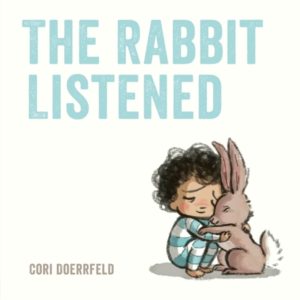
Example: The Rabbit Listened by Cori Doerrfeld
This is a quiet book, yes, but it works because the emotional core is crystal-​clear and universally resonant. Note how the hook—how kids process big feelings—feels urgent and relatable, even though the plot is minimal.


It’s well-​written, but I didn’t fall in love.”

This is often code for “I admire this, but I don’t have a vision for how to sell it.” Editors have to advocate hard for every book they acquire, and that requires real enthusiasm. No one wants to take on a project they feel lukewarm about, even if the writing is strong.

What might help:
Nothing, necessarily. This one isn’t about a fixable flaw, but rather more about fit. Keep querying. The right person might fall hard.

Example: Julian Is a Mermaid by Jessica Love
This debut book is lyrical, quiet, and elegant—easily one an editor could have passed on for being “lovely, but maybe too subtle.” But its emotional depth and visual storytelling made the right editor fall in love, and champion it all the way to success.


There’s not quite enough here for a picture book.”

This might mean there’s not a full arc, or that the story leans more toward vignette or concept than narrative. It can also mean the emotional or plot payoff isn’t big enough to justify 32, 40, or 48 pages.

What might help:
Dig deeper into the character’s journey. Add tension, reversals, or a turning point. Picture books (even/​especially quiet ones!) need structure to shape the reader’s experience.

Example: A Sick Day for Amos McGee by Philip C. Stead and Erin E. Stead
This story is gentle, but it has a clear beginning, middle, and end. Amos takes care of animals at the zoo. One day he’s sick—and they return the favor. The role reversal adds narrative weight to what could’ve been a flat concept.


I wasn’t quite connecting with the voice.”

This is a gentle way of saying that something in the tone, language, or narrative feel simply didn’t land. The voice might feel too adult, too generic, or inconsistent. Or maybe it didn’t match the story’s intended mood or audience.

What might help:
Read it aloud. Is the rhythm strong? Does it sound like a real person? Could the narrator be more specific, distinctive, or emotionally resonant?

Example: Creepy Carrots! by Aaron Reynolds, illustrated by Peter Brown
The voice here is spot-​on: cinematic, dramatic, and a perfect match for the mock-​horror tone. The exaggerated seriousness is what sells the humor…and the book.


It’s too similar to something else on our list.”

This is rarely personal. More times than not, it’s strategic. Editors have to balance their list across themes, formats, tones, and audiences. If they just acquired a book about ballet-​loving dinosaurs, they’re probably not going to take another one. I run into this a lot at my press because we’re a small press with a small list. I can’t buy a second book about penguins if we’ve already got one in the pipeline, or just published one…even though I’d love to do an all-​penguin imprint!

What might help:
Check your comps. Make sure your book fills a different niche, or offers a fresh twist that feels essential, not adjacent.

Example: Don’t Let the Pigeon Drive the Bus! by Mo Willems
A story about a demanding character trying to get their way? Done a zillion times before. But the second-​person narration, meta structure, and pigeon personality made this feel wildly new, even though the premise is simple.


We’re being really selective right now.”

Always true. But also: sometimes it’s a way of softening a pass without going into detail. Budgets, list size, market trends, team bandwidth, and internal priorities all play a role.

What might help:
This is nothing you can control. It’s just not a reflection on you or your work. Keep going. The right project will hit the right desk at the right time.

Example: The Day the Crayons Quit by Drew Daywalt and Oliver Jeffers
A book like this may have felt risky at the wrong time: epistolary format, multiple voices, no central plot. But with the right champion at the right moment, it broke through—and became a bestseller.


Final Thoughts:
Rejections don’t always mean “no forever.” And editorial speak isn’t meant to be mysterious, though it can MOST DEFINITELY feel that way in the moment for a while. As writers, it helps to hear what’s often behind the phrases. As editors, it helps to be honest about what we mean. The more we can bridge that gap, the stronger the books (and the industry) become.

Got a phrase you’d like help decoding? Leave a comment or reach out! I’m happy to demystify where I can.

Agent Interview: Katie Bircher (Sara Crowe Literary)

Welcome to our conversation with Katie Bircher, Associate Agent at Sara Crowe Literary. Katie may be a new agent, but she’s spent years shaping the conversation around picture books. As an editor and reviewer for The Horn Book, she helped define what makes a standout story. She’s also worked as a bookseller, freelance editor, and manuscript evaluator, bringing a wealth of experience to her role as an agent.

Now, as she builds her client list, Katie is shifting from evaluating picture books to championing them—using her deep storytelling instincts to help authors and illustrators create books that resonate. In this interview, we explore her journey from critic to advocate, what makes a picture book stand out in today’s crowded market, and the unique perspective she brings as an agent who has spent years deep in the world of kidlit.

Learn more about Katie here:
Sara Crowe Literary Website
Archive at The Horn Book


RVC: When you were a kid, what role did books play in your life? Were you a library kid, a bookstore kid, or something else entirely?

KB: I was a “books all the time” kid and would come back from either the library or the used bookstore with a huge stack. I would get in trouble for sneakily reading during class, at the table, or after lights out. I say “get in trouble,” but at one point my parents were hoping to open a children’s bookstore, so I don’t think they were all that mad about it. And clearly I come by my love of kids’ books honestly!

RVC: Good for you! Now, you studied Children’s Literature at Simmons University. What drew you to that, and how did it shape the way you think about picture books?

KB: I was originally a marine biology major in undergrad, and lasted about a year before my terrible math skills convinced me to switch to English lit. I remember telling my high school English teacher that I changed majors and she just laughed; it was so obviously where I should have been to begin with. Then I found myself reading middle-​grade and YA—especially YA fantasy—when I should have been doing my coursework. Eventually I realized I could actually work in children’s and YA books! I got excited, took a few additional classes in children’s books and child development before I graduated, and applied to Simmons.

The late Susan Bloom’s Simmons course on picture books was hugely influential. In one assignment, we read Molly Bang’s invaluable Picture This: How Picture Books Work and created our own limited-​palette picture books based on the principles in it. (Spoiler: It’s really hard!) In another, we analyzed, in-​depth, one spread each from one hundred picture books. Her course showed me both how magical the particular picture book alchemy of words and images can be and how deceptively difficult it is to achieve!

RVC: Sounds terrific!

KB: I also worked at the (deservedly) famous children’s bookstore Curious George in Cambridge’s Harvard Square for about five years, beginning when I started the Simmons MA program. Being surrounded by children’s books and people who LOVE them all day is, in itself, a fantastic education. Several of my co-​workers from that time have gone on to have careers as picture book creators.

RVC: Bookstores are great proving ground for kidlit creatives–no doubt about it. When reviewing picture books at The Horn Book, what was your process?

KB: Read the book many times, including out loud; look carefully at the illustrations; check for any information on the medium; consider whether the endpapers, case, gutters, etc. are used thoughtfully; take copious handwritten notes; type up and organize notes; try to make notes into a coherent review of about 150 words. Then it went on to fact-​checking and at least one round of revision. Sometimes revising involved talking through what I was trying to say with the other editors. Occasionally I would nominate an extra-​special book to receive a star, and then it would be read and discussed by the whole group.

RVC: Wow, thanks for explaining the process. Did you ever get to be part of the bigger award committees?

KB: I chaired the Boston Globe–Horn Book Award committee in 2018. Much of that process was similar, but on steroids—and with picture books only one of three categories! I commend and appreciate anyone who serves on book award committees, especially the ones with a ton of members or multi-​year commitments.

RVC: Were there ever books you personally loved but knew wouldn’t work for The Horn Book’s review standards? What makes a book a better fit for some venues than others?

KB: Yes—it taught me to dig into and articulate why I love a particular book. Is it really exceptionally crafted, or is it just that the book hits a sweet spot where some combination of my favorite topics, tropes, formats, authors, etc., intersect? A funny and sweet picture book about, say, a huggably cute cat character with ADHD getting distracted in ballet class (I just made that up) would be super appealing to me personally—but it also has to work in all these other storytelling and structural aspects. There’s also an element of whether a book is needed. I might note but give more grace about a structural flaw if a book reaches an underserved audience or authentically showcases an infrequently represented experience, because ultimately the goal is to get kids good books they need.

For most of the time I was at The Horn Book I worked on two different print publications: the Magazine, which reviews very selectively, and the dearly departed Guide, which had a much broader scope, so part of the process was determining whether a book made the cut to be featured in the mag. The 100-​year-​old Magazine is so distinct in character from SLJ, the Bulletin, Kirkus, or even the Guide, which have their own strong voices. You have to keep in mind the unique mission and audience of the publication.

RVC: What makes for a REALLY great picture book review?

KB: I love when the review complements the tone of the book itself—a funny review for a funny book, for example.

RVC: What’s one misconception people have about professional book reviews?

KB: People often find out you work in any kind of book-​related field and say, “Oh, it must be so great to read all day.” While I was at The Horn Book, there was definitely not time during the workday to read and write reviews! In addition to everything that goes into publishing a trade magazine and running a website, there’s also a lot of admin and editorial work in selecting and organizing the books, assigning them to reviewers, fact-​checking and editing reviews, tracking their status…

I think that’s true of the book world generally. In every job I’ve had in books—whether bookselling, working at The Horn Book, editing, or agenting—there’s just too much else to do to get much reading done during office hours. For me a lot of it is done either on the couch with a cat next to me or in the bathtub.

RVC: You’ve worked as a freelance editor for Pippin Properties and Penguin Random House. What was the most rewarding part of that work?

KB: Getting to work on a wide range of manuscripts all over the place in terms of their stages of publication, from proposal to proofreading.

RVC: Picture book texts are deceptively simple. What’s the most common issue you encountered when editing them?

KB: They have too many words—and/or they do too much “telling” without leaving enough room for the illustrator. Many of my suggestions are to move parts of the text into art notes or take them out entirely.

RVC: In your experience, what’s the hardest thing for picture book authors to get right?

KB: I’ve seen a lot of “picture book” manuscripts that I enjoyed, but didn’t think were really picture books. Just because a story is short, intended for a certain age audience, or illustrated doesn’t necessarily make it a picture book.

RVC: Totally been there. At Bushel & Peck, I sometimes have to alert an author that they’re wrong about what they think the manuscript is. Some don’t believe me when I say it.

KB: I feel the unique magic of picture books is that interplay where neither the text nor the art tells the complete story. I love when you can discover something new on each read. It’s like dance (my other big passion besides books): the music and the movement are each compelling individually, but they come together to make this incredible third thing that’s more than the sum of its parts.

RVC: You’ve worked on manuscripts from submission all the way to publication. What’s something about the picture book process that surprises most first-​time authors?

KB: How long everything takes, especially with picture books! Picture book deals we’re negotiating now are mostly for fall 2027 lists and onward.

RVC: Yep. We’re buying for 2028 now. I wish it weren’t the case! Now, what made you decide that agenting was the right next step in your career?

KB: Sara starting her own agency in 2023 and asking me to join her! At that point I’d been evaluating submissions and offering editorial suggestions on clients’ projects for about six years as part of my freelance work but had never considered agenting. I didn’t start taking on clients right away, but being invited to be the other half of Sara Crowe Literary is what made me feel like I could make that leap. It was both validating and somewhat daunting! But SCL is a great fit for me with my editorial background because Sara is such a hands-​on agent in terms of developing manuscripts and nurturing new authors as they grow in their craft.

About — Sara Crowe Literary

RVC: Now that you’ve stepped into agenting, what’s been the most exciting part so far? Anything that’s surprised you?

KB: It’s so exciting to connect with authors and artists at the beginning of what I believe will be a great career making lots of beautiful books. It’s been surprising how many hats an agent has to wear.

RVC: What’s the story behind your first picture book sale as an agent? How did that deal come together?

KB: I heard my now-​client Christal Presley read a manuscript at a Writing Barn event, requested to see it and any other projects, and then offered representation…and meanwhile, through the same program, editor Carter Hasegawa began mentoring Christal and fell in love with her brilliant PB bio about the first women to train in camouflage techniques. We submitted it formally and he offered, so Christal and her book were signed at basically the same time!

Hidden Women: How Louise Larned and Rose Stokes Became America’s First Women Camouflage Artists, illustrated by Ashley Yazdani, will be published by Candlewick in fall 2027.

RVC: Congrats! How did it feel when you got the offer? Did it match what you expected from your first deal, or were there surprises?

KB: It was very low-​key, and it took a long time for everything to be finalized after the initial flurry of activity. The “champagne pop” moment—even the moment that it felt like it was really happening—didn’t come until the announcement ran in Publishers Weekly.

RVC: Looking back, what’s something you learned from that first sale that will stick with you in your career?

KB: This is probably cliché, but: to stop and savor the moment. Fingers crossed, I will be helping many clients announce deals in Publishers Weekly, and agenting can feel hectic, with a lot of moving parts. I suspect it’s easy to get swept up in the next thing on the endless to-​do list, but I never want to lose the joy and awe of getting to help bring wonderful books for young readers into the world. It is often such a difficult industry, but it can be so fulfilling too.

RVC: You’ve worked alongside Sara Crowe for years. What have you learned from her about the business side of publishing?

KB: So much of what I’ve learned about agenting has come from shadowing Sara! I admire and aspire to show the kind of support, resiliency, and adaptability she offers clients through the inevitable rejections and challenges.

RVC: What’s a personal “wishlist” item that you’re dying to see in submissions?

KB: I love nonfiction picture books on fascinating topics that manage to be both informationally accurate and lyrical. It’s a tricky balance to strike. I’d like to see one about Salt, matriarch of the humpback whale population in the Gulf of Maine, who has been studied since the 1970s. I don’t know how salable it might be, but recently I’ve also been thinking I’d love to see a biography of the extraordinary medieval abbess, composer, artist, visionary, and saint Hildegard of Bingen! She’s so cool.

And if anybody does have a funny and sweet picture book project about an adorable ADHD cat daydreaming in ballet class…well, you know where to find me.

cat ballet dancer 16762596 Vector Art at Vecteezy

RVC: One last question for this part of the interview—what are you most excited about as you continue to build your list?

KB: I can’t wait to share these great books with my nephews and nieces!

RVC: Alrighty, Katie—it’s time for THE SPEED ROUND! Short questions, snappy answers. Ready?

KB: Let’s do it!

RVC: Your go-​to coffee shop order?

KB: Vanilla almond milk latte.

RVC: Favorite literary cat (other than your own, of course)?

KB: Mogget from Garth Nix’s The Old Kingdom series.

RVC: What’s a picture book you think deserves its own theme park ride?

KB: Strollercoaster seems too easy, so…the Best Frints series by Antoinette Portis.

RVC: If you could instantly master one new skill (bookish or not), what would it be?

KB: Cello. Or painting. Or flamenco dance. Or…

RVC: Best bookish gift you’ve ever received?

KB: A print from Sophie Blackall’s wonderfully weird adult book Missed Connections.

RVC: If you could give your past self a single piece of career advice, what would it be?

KB: Get comfortable with networking and developing collaborative relationships. It takes a village to make any book, and you have to put in the effort to nurture and support your village.

RVC: Thanks so much, Katie!

KB: Thanks for having me!