
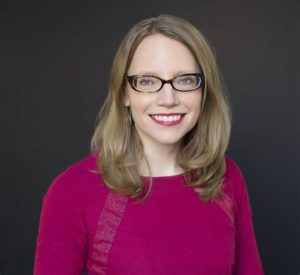
Editor Interview: Kait Feldmann (Arthur A. Levine/​Scholastic)

The final Industry Insider interview for 2018 is with Kait Feldmann. And not to toot my own OPB horn here, but the following is SO GOOD that it’s totally worth sending out on Xmas eve. Feel free to tuck this post under your tree and wait to open it until Xmas day, if you want! 

That being said–here are 11 fun facts about Kait to get us started! Why 11 and not 10? Because at OPB, you always get a little extra literary love. Plus there’s always the This is Spinal Tap connection to be enjoyed.

  1. Her fancy title? “Editor at Arthur A. Levine Books, an imprint of Scholastic.”
  2. How many n’s in “Feldmann”? Two.
  3. When did she join Scholastic? May 2014.
  4. She assisted on Newbery Honor-​winner Echo by Pam Muñoz Ryan, The Marvels by Brian Selznick, and The Tales of Beedle the Bard: The Illustrated Edition by J.K. Rowling, illustrated by Lisbeth Zwerger.
  5. Book hoarder, insomniac, and lover of all things sloth.”
  6. She’s a “proud hapa.”
  7. Sometimes wishes “referral” were spelled “refferrall.” (Ryan’s note: Don’t we all?)
  8. What does Kait yearn for in a manuscript? “Meaningful, character-​driven stories with humor and heart.”
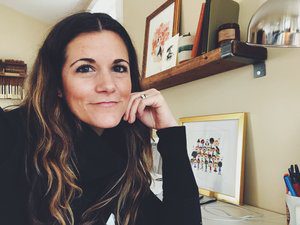
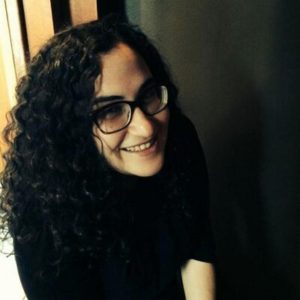
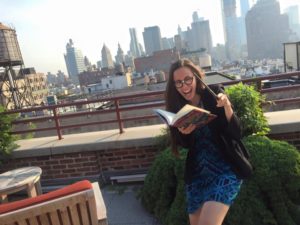
  9. Also “likes a little whimsy, light layers of magic.” (Ryan’s note: Witness the Potterhead Q&A exchange below! And note what Kait’s both reading and holding in the picture above!)
  10. Wants to see more picture books featuring kids of color.
  11. Submission WARNING from Kait! “I have a stone-​cold heart the size of a pea and am not moved by sweeping texts that explore ideas like love, family, tradition, etc., through a glimpse into many different kinds of experiences. Instead, I prefer to see specific narratives that focus on a particular character’s emotional journey. Universal through the specific!”

Arthur A. Levine website: www.arthuralevinebooks.com
Personal Website: www.kaitfeldmann.com
Twitter: www.twitter.com/kaitfeldmann
Tumblr: www.scattershotsilly.tumblr.com
Manuscript Wish List: www.manuscriptwishlist.com/mswl-post/kait-feldmann/


RVC: How did you first get involved with the publishing world?

KF: My first foray into publishing was an internship with Scholastic, which was offered after providing my mom (children’s book author Lisa Yee)  notes on Warp Speed that she passed along to her editor, Arthur Levine. He liked what I had to say and asked me to intern for him. I hadn’t considered an editorial career before, but that experience ignited my passion, and I spent the rest of my college years taking on any kind of book-​related work I could, interning remotely, assisting a local independent publisher, freelance editing, and selling fine writing pens in Vroman’s stationery department where I’d sneakily pretend to be a bookseller on the side.

RVC: So in your current editorial position at Arthur A. Levine Books, you’re primarily looking to acquire picture books and graphic novels. What appeals to you most about these ways of telling stories? 

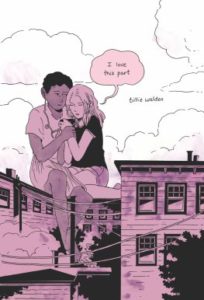
KF: Images bring something to a story that I think, when done right, can really enhance the world of words. And you can play with story in the book format in a way you simply can’t do in another medium. A great example is Tillie Walden’s I Love This Part, which I might call a middle-​grade picture book. It follows two girls through their relationship and break up in glimpses—each spread a different scene from their love story, not necessarily in order. Tillie only uses two colors, but she plays with them thoughtfully, saturating scenes of affection with purple and going grayscale in times of turmoil. She also plays with proportion and surrealism in a way that you’re just going to have to see for yourself…some things words can’t properly express.

RVC: Any advice on how to make this type of magic happen?

KF: Read widely. Really understand the ins and outs of the picture book form, know how to pace and paginate a story, study the way art is composed (notice the room left for text; the difference between spots, single pages, and full-​bleed spreads…). This is important even if you’re a writer only! Make it a habit to browse your library or bookstore every month or so to get a feel for what’s out there. In a submission, I can tell who does this and who doesn’t.

RVC: Plenty of relatively competent submissions hit your desk daily, I’m sure. In fact, just tell us. What’s an average week for you? How many new submissions come at you?

KF: It fluctuates depending on a number of factors, including whether I’ve been to a conference recently and how responsive I’ve been to agents (I try to be speedy! The catch is that the quicker I respond, the more submissions I get—it creates a sort of Hydra effect that’s quite stressful!).

Taking a look at a random week, I see: six agented submissions (three are international—already published but looking for a North American/​English-​language publisher), and 72 unagented submissions. 

RVC: How can you tell when writers haven’t done their homework for a submission? What’s the giveaway?

KF: Well, there’s the cosmetic stuff—I get a lot of “Dear Editorial Department,” “To Whom It May Concern,” or “Dear Kate Feldman” (note both first/​last misspelled). It’s not an automatic rejection if you have a generic or misspelled salutation, but since it’s your VERY FIRST impression, it does stand out…in a bad way.

Then there’s the pitch. My acquisition profile is easily Googleable, as are most editors’ and agents’. My bailiwick is picture books and graphic novels but I get a lot of MG/​YA novel submissions that are clearly copy-​pasted from a template. I’m also very vocal and specific about publishing diverse books and creators, yet I get a number of queries that either ignore that or say “I know you’re interested in diversity so my book might not be for you but I’m going to try anyway.” What? No! That’s almost worse than not doing your homework. It’s taking the time to do your homework wrong and turning it in anyway.

Query letters are like cover letters—if you want to stand out you need to personalize each one you send to show why you are a great fit for that position. In a way…you are applying for a job. There’s a lot of work ahead, so show that you’re serious and have thought it through.

RVC: When a submission hits your desk and you’re intrigued, do you Google the author? If so, what are you looking for?

KF: Yup, I’m a Googler. I don’t always know what I’m looking for—I guess just a broader sense of who the person is. What they like. What they stand for. How active they are in the book community. And of course, any red flags! It hasn’t happened often, but there were a few instances where I came across a Tweet and thought ohhhh…yeah, we won’t get along.

RVC: So speaking of getting along … we first met at the SCBWI conference in Orlando this past June. What do you get out of being a speaker at events like that?

KF: I love discussing craft and publishing and find that I learn and grow from my experiences at writers conferences, too. And of course, I always hope to make lasting connections. One of the first authors I signed, the indomitable Aida Salazar, is someone I met at SCBWI LA. My colleague Nick Thomas had a critique with her and passed along her work. We both fell so hard for her writing that we offered a two-​book deal right away. Her debut novel, The Moon Within (which Nick edited), comes out February 26, 2019 and her picture book, Jovita Wears Pants: The Story of a Revolutionary Fighter (that one’s mine!) follows in 2020.

RVC: Every editor and agent I speak with has a conference horror story or two–they were cornered in a bathroom stall, or someone slid 500 pages of a YA werefox thriller under their hotel door … three pages at a time … at 2 a.m. in the morning.

What’s YOUR conference-​related writer horror story?

KF: Omg, can anyone beat the 2 a.m. page slide? Imagine the editor sitting on the other side, reading in suspense, waiting for the next pages to follow…(kidding—I’m sure that’s NOT what happened and don’t encourage that behavior).

Mine is the time I was talking to an author at a bar and a man asked to join us—he was friendly but very focused on me, wanted to know all about my interests outside of publishing. It didn’t read as flirtatious but it was clear he had an agenda, and that shifted the dynamic of the conversation in an uncomfortable way. A month or so later I’d forgotten all about it when I received a big box packed with my favorite things…and at the very bottom, a manuscript. From Bar Guy. It was completely inappropriate, and under Scholastic’s Code of Ethics, also considered a bribe.

RVC: That’s crazy. And speaking of crazy, here’s a semi-​popular belief among writers: Editor’s don’t edit much anymore–they primarily just acquire (or more often, not!). While that might be true in some book areas, I don’t find that as valid to say about picture book editors.

How much time do you put in on any given picture book manuscript? How much before the sale is made? How much after?

KF: Is that true?? Perhaps in some circles, but that’s not how I was trained, and it’s not how I work! I typically schedule picture books to publish two years out from when I sign them, minimum! We go through rounds and rounds and rounds and rounds of editing. It really varies depending on the book and the creator and our working style—I try to adapt to provide what each creator needs from me, but sometimes neither of us knows what that looks like until we’ve taken a few different tacks!

There’s one creator who I approached cold and asked to develop a project from scratch—we worked for ten months on creating a story I could share with my acquisition team—but all that time working together and figuring out our style meant that by the time we officially signed it up we were flying.

RVC: What’s the most common misconception about being a picture book editor? What do authors–and possibly even agents–have wrong?

KF: The best way to make a children’s book editor bristle is to say “Oh how cute! You edit picture books? That must be so easy!” But I’m sure your readers know well…IT ISN’T EASY!

The one thing that bothers me even more, however, is people who underestimate the picture book audience. First of all, we should be writing UP to kids, not down. Kids are so smart, emotionally and intellectually, and they know instantly when their worth is being devalued. Second, picture books are not just for kids. They’re for anyone who loves a good story!

RVC: Alright–it’s time for the Speed Round! Go! What zoo animal deserves more picture book coverage?

KF: I’m very happy that sloths are finally having their moment, but they deserve moooooore!!!

RVC: You semi-​frequently tweet about amazing workplace discoveries. The office copier’s ability to corner staple. The “move to folder” dropdown in Outlook. What’s the latest breakthrough?

KF: The secret tunnel that leads to a cupcake store. You think I’m kidding.

RVC: Grammar gaff that drives you the most bonkers?

KF: Er…I’m not the bestest at grammar myself.

RVC: You’ve openly confessed to being a Potterhead. Spill the (Bertie Bott’s Every Flavour) beans. Most underappreciated character?

KFAngelina Johnson.

RVC: Three current picture book authors who are setting/​raising the bar?

KF: Jessica Love (Julián Is a Mermaid); Minh Lê (Drawn Together, illustrated by Dan Santat); Tillie Walden (I Love This Part).

RVC: The most unforgivable thing in a picture book submission is …

KF: Getting the person’s name wrong!

RVC: What would like to see written on your literary tombstone?

KF: Here lies Kait, who died as she lived, under a pile of books.

RVC: Thanks so much, Kait. What a way to wrap up the first year of OPB! Thanks!!

Editor Interview: Marilyn Brigham (Two Lions/​Amazon Publishing)

It’s my pleasure to announce that the November 2018 Industry Insider interview is with editor Marilyn Brigham of Two Lions/​Amazon Publishing. I’ve been a fan of Two Lions for some time now, so it’s a real treat to get the inside story on what makes the magic work so well there.

Here’s a bit about Marilyn:

In her 13+ years in the children’s book industry, Marilyn has edited 100+ trade children’s books, including picture books, chapter books, middle grade fiction, young adult fiction, and nonfiction. Some of her noteworthy titles include the Duck and Hippo Series by Jonathan London, illustrated by Andrew Joyner; the Amazon bestseller Goodnight, Little Monster and its sequels by Helen Ketteman, illustrated by Bonnie Leick; It’s Not Jack and the Beanstalk by Josh Funk, illustrated by Edwardian Taylor; and Ralph Tells a Story by Abby Hanlon.
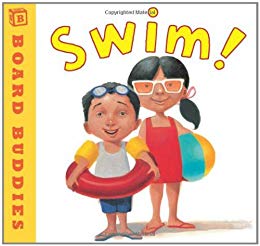
But Marilyn’s also a writer–she’s the author of the board book Swim!, illustrated by Eric Velasquez, as well as the educational title Dik-​Dik, part of the Even Weirder and Cuter Series from Bearport Publishing.

So let’s have Marilyn put that editing and writing acumen to good use with some OPB interview goodness. Here we go!

Amazon publishing website: www.amazonpublishing.amazon.com
Twitter: @MarilynBrigham


RVC: So how does someone from Syracuse University who got a proper degree in journalism manage to end up in the kidlit business? 

MG: Well, I thought I was going to get a magazine job after graduation, but I’m glad that I found myself at a book publisher instead! I started my career as an intern in the reference department at Marshall Cavendish, and I got lucky when an editorial assistant job opened up at the company a couple months later. It was a truly special place to work. The office was an old Georgian mansion in Westchester County, NY, filled with secret passageways and quirky offices, and I worked with an amazing team. I learned so much about the business of publishing and editing in general during my time there. As an assistant, I worked on the trade children’s book imprint as well as nonfiction series for the school and library market, and I ultimately worked up to editor in the Marshall Cavendish Children’s Books imprint.

I’m a lover of words, as are many of my closest friends, and I was obsessed with reading as a kid, so it’s not too surprising that I ended up working with books.

RVC: What’s the best thing about being in the kidlit business?

MG: Definitely the people! The KidLit community is full of so many creative and inspiring people (authors, illustrators, editors, marketing and PR folks, designers, the list goes on). I also love that it’s a very supportive industry and that in general, the KidLit community helps build up one another and celebrate everyone’s successes. Plus, there’s something inherently special about people who spend their days thinking about how we can enrich the lives of children through storytelling. I feel it when I go to conferences, such as ALA (American Library Association) or SCBWI (Society of Children’s Book Writers & Illustrators), and get to be surrounded by these people—my people!

We recently exhibited at ALA Annual in New Orleans, and the enthusiasm that the librarians had for our authors was such a good reminder of why we do what we do. One librarian started crying when she met our author Jonathan London, because she had shared so many of his books over the years with her own child. It was such a sweet moment!

RVC: Unlike many people in publishing, you’re an author, too–your board book, Swim!, came out in 2012, and your educational title, Dik-​Dik, came out in 2017. Are you a writer who edits, or an editor who writes? 

MG: I’d love to say I’m a writer who edits, but I don’t think I spend nearly as much time writing as I should! I really envy my authors for their discipline. I find it much easier to stay laser-​focused on work when I’m on the editing side of the table. (Yes, writers, the struggle is real!)

But no matter which side of the table I’m on, I know I am so lucky to be able to do this work for a living.

RVC: LinkedIn tells me that you have “a lengthy (digital) stack of half-​finished manuscripts” that you dig into whenever you can. What would the editor side of you say to the writer side of you in regards to the unpublished picture book manuscripts in that digital stack? And what about the picture book manuscripts you’ve already published?

MG: She would say, keep going! And write it before someone else does! While it’s definitely important sometimes to put a manuscript aside for a while and let it marinate, you also can’t leave it there forever. With picture books especially, I’ve seen that ideas can catch on all at once—I’ll suddenly get multiple picture book submissions on the same topic. It’s so weird how that happens!

In terms of the books I’ve published, of course I can’t help thinking about what I might have changed (editors die hard!), but I really try not to. It’s thrilling to see my name in print, and I don’t want to argue with it!

RVC: Could you share the connection between Marshall Cavendish Children’s Books and Two Lions, which just so happens to mirror your own career path?

MG: I was working at Marshall Cavendish Children’s Books when Amazon acquired some of their titles and backlist in 2012. It was exciting to go on the journey along with the authors and illustrators from the Marshall Cavendish list. For me, it was also an amazing opportunity to help shape the vision of what is now the Two Lions imprint. We came up with the Two Lions name as a way to tie together the great history of our backlist and our new future as part of Amazon Publishing. The name was also a nod to “Patience and Fortitude,” the two lions who stand proudly in front of the New York Public Library.

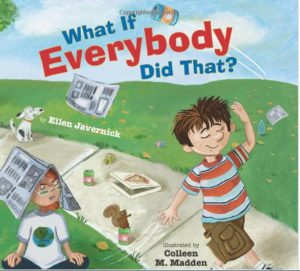
As an editor, it’s given me a special thrill to see some of the Marshall Cavendish books, such as What If Everybody Did That? by Ellen Javernick, illustrated by Colleen Madden, and Goodnight, Little Monster, by Helen Ketteman, illustrated by Bonnie Leick, reach an even wider audience at Amazon Publishing and become bestsellers years after their original publications. In fact, we’ve published sequels to both of those titles and now have a third book in each series still to come. This is in addition to so many great new titles and series that have been homegrown in the Two Lions imprint.

We’ve also had a lot of fun over the years trying out new programs to promote our books at Two Lions. One year, we did kid book review videos and had kids read our books and then talk about what they liked (and in some cases, how they’d give the books “ten million bajillion stars”!). In 2019, we’re working on animated trailers for all of our new titles—it’s a blast to see our characters coming alive on the screen!

RVC: What’s different about working at Two Lions?  What does being connected to the 800 lb. sales gorilla (Amazon) do for you?

MG: I’ve had the unique experience of coming from a very traditional publishing background and then going into a new and innovative publishing company. Working at Two Lions challenges me to constantly rethink my own biases and helps me find new ways to be inventive within the industry. We have a lot of freedom to bring new ideas to the table, and there’s an openness and encouragement to trying new things.

But one of the things I love most about working at Two Lions is the emphasis that we place on author and illustrator happiness. We see authors and illustrators as our customers, and we spend a lot of time thinking about them, developing our relationships with them, and soliciting their feedback (and I’ve seen real changes happen as a result). I’ve also had the opportunity to dip my toes into the creation of other content for kids, including enhanced eBooks and short stories for an app, which has helped expand my own skillset.

RVC: It seems as if Two Lions is making more of an effort to acquire and translate non-​English work. How does that shift relate to the growing kidlit interest in diversity and Own Voices? How conscientious of that are you when you’re deciding whether or not to champion a picture book submission?

MG: We’re very excited to be getting into the world of picture-​book translation! Amazon Publishing already has a long history of bringing translated works from around the world to the United States with our imprint, Amazon Crossing, and it’s a unique opportunity for me to help build on that legacy with children’s books from around the globe. I recently signed up my first book, Spiky, written and illustrated by Ilaria Guarducci and translated by Laura Watkinson. The book hails from Italy, where it was shortlisted for a picture book award. It’s about an evil forest creature named Spiky whose body is covered in spikes. When Spiky suddenly loses his spikes, he must learn what it means to be a friend. Spanish, French, Chinese, and Korean rights to the book have also been sold, which I think speaks to the universal message of the book. But I also love how the story has a distinctly Italian feel to it as well, and we’ve retained some of the small Italian details in the art, such as an Italian newspaper, as something for kids to discover on their own.

I think the timing of our picture books in translation couldn’t be better with the focus on diversity and #OwnVoices in KidLit. There are so many elements regarding diversity to consider—race, nationality, sexuality, disability—and I think that non-​American perspectives are also so important to include. As corny as it sounds, the kids really are our future, and giving them diverse perspectives is so vital to helping them become better global citizens. It’s exciting that we’re at a moment in history when diverse perspectives and characters are being championed and becoming bestsellers. Diversity is definitely on my mind when considering acquisitions, as well as through the editing and art creation process. And I still have so much more to learn in this area, too!

RVC: The other day, you tweeted praise for Leila Sales’ Publisher’s Weekly article “What Authors and Editors Wish They Could Say to One Another.” I came across that piece as well and found it both honest and useful. But what’s one more thing you’d add to the list that editors wish they could just say (scream?) at authors?

MG: I would add: Picture books are a long game. It’s easy to feel impatient and frustrated as the pieces come together. Plus, holiday and seasonal timing can be so important. I want my authors to know that I get antsy for the pub dates to come, too! The best thing you can do while you wait is to keep creating.

(And I promise that one day you will blink, and the pub date will be here!)

RVC: What kinds of picture books do you think the marketplace (and maybe Two Lions specifically?) is missing?

MG: I think it’s always difficult to find picture books that touch on sensitive, emotional topics (for example, death), while also handling the subject matter in a way that’s not overly sentimental or heavy handed. There are a lot of trying issues that kids face, too, and I’d love to see more picture books that address difficult topics.

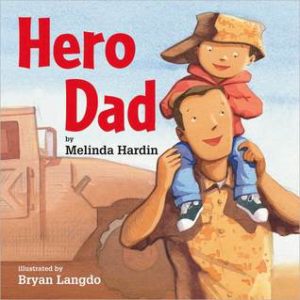
One of the books I had the pleasure to work on was Hero Dad, written by Melinda Hardin and illustrated by Bryan Langdo. In the book, a little boy compares his dad, who is in the military, to a superhero. Using minimal text and focused images, the author and illustrator created such a strong, heart-​warming, and accessible book for kids. The book has also been featured in commercials for the Wounded Warrior Project, which has been very rewarding to see.

We followed it up with Hero Mom, because of course moms are superheroes too! That book featured a diverse group of kids and showed the many jobs their moms do in the military and why they are like superheroes.

RVC: Want to dish on a few of your favorite upcoming projects?

MG: Always! I’m super excited about a few debut authors I have coming in 2019. The first is Lauren H. Kerstein with her book Rosie the Dragon and Charlie Make Waves, illustrated by Nate Wragg, which is a funny summertime romp about a boy who is teaching his pet dragon to swim. The second is Lisa Robinson, who has two titles forthcoming with Two Lions: Pirates Don’t Go To Kindergarten!, illustrated by Eda Kaban, a first-​day-​of-​kindergarten story featuring a pirate-​loving little girl who makes her former preschool teacher walk the plank; and Pippa’s Night Parade, illustrated by Lucy Fleming, about a little girl with a wild imagination who has to tame the creatures that are coming out of her storybooks each night.

Additionally, author Joy Jordan-​Lake, who is published on Amazon Publishing’s Lake Union imprint, has her first picture book to come with Two Lions: A Crazy-​Much Love, illustrated by Sonia Sánchez, a heartfelt and deeply personal story about a parent’s love for her adopted child. These authors are a talented bunch, and I can’t wait to introduce them to readers!

RVC: So it’s time for the Speed Round! Ready … GO! Best place in NYC to take a literary agent or Two Lions author for a slice of pizza?

MG: I’d probably opt for wood-​fired in this scenario and have to give a shout-​out to PizzArte, which is right near my office and SO good.

RVC: “If I never got into writing or editing, I’d instead be ________”

MG: In a career related to animals, for sure. Maybe a veterinarian. Biology was always my favorite area of science, and I have a deep love for animals. Plus, I don’t get grossed out too easily.

(Just keep bees far, far away from me, and we’ll be good!)

RVC: If you could sing one song–and one song only–on American Idol, what would it be?

MG: Hmm, probably something old and classic, like “You’ve Got a Friend” by Carol King.

(P.S. I don’t think I’d win, though!)

RVC: The #1 reason you turn down a picture book manuscript submission?

MG: It’s not a fit with our publishing program. At Two Lions we’re focused on books that have both commercial and literary appeal, and that have well-​developed story arcs and character arcs. We also look for holiday and seasonal-​themed books.

Our list is relatively small, so if we already have something similar on our list, we’ll likely have to pass. There are a lot of great books out there that deserve to be published but don’t necessarily fit for us.

RVC: Favorite under-​appreciated picture book?

MG: Well, it’s not really under-​appreciated, but I think Good Night, Gorilla by Peggy Rathmann is one of the best picture books of all time! I actually never read it until I had my son, but it’s a little piece of genius! So if you haven’t yet read it, go do it. Now.

RVC: What makes a Two Lions picture book a Two Lions picture book?

MG: It’s a book that you want to hug! And then read again.

RVC: Thanks so much, Marilyn!

Editor Interview: Christina Pulles (Sterling Publishing)

The October 2018 Industry Insider interview is with Christina Pulles, Executive Editor at Sterling Children’s Books.

By way of introduction, here’s a quick bio snippet on Christina:

Christina Pulles joined Sterling Children’s Books in June 2015, and before that worked at Simon & Schuster’s Simon Spotlight imprint. Realistic middle grade holds a soft spot in her heart, but she also loves working on everything from board books to fiction and nonfiction picture books. Originally from the Chicago area, she now reads, runs, bakes, and eats in Brooklyn with her husband.

Sterling Website: www.sterlingpublishing.com
Twitter: twitter.com/ChristinaPulles


RVC: Like most in the writing/​publishing biz, you were a mega-​reader as a kid. But you’ve said that it was only in high school that you first started thinking about being a book editor. How did that idea come about? And what specifically appealed to you about that job?

CP: I became an editor for my high school newspaper, and I loved coming up with ideas for stories and writing them or editing them, but it just didn’t feel like exactly what I wanted to do, both the writing and the journalism parts. I don’t know how exactly I came to the realization that there were editors for books, too, but once I did I knew that was what I wanted to do—to sit quietly and read books all day (which, of course, is not at all what my job is like).

RVC: So we’re both Chicago natives! I started my writing career while doing my undergrad at Northern Illinois University, and you got your first publishing world job in the Windy City, too–at the book distributor Independent Publishers Group (IPG). What did you do there, and what did you learn that helped you be a more successful editor down the road?

CP: I absolutely loved working at IPG. I was a Sales Associate there, first assisting our B&N rep and then expanding to work on other national accounts. Seeing how the buyers’ estimates would change based on what materials we had available to show them helped me understand how important it is to always get my Sales team the materials they need to give each book its best shot.

RVC: After a stint at Simon & Schuster’s Spotlight imprint, you moved to Sterling Publishing, a mid-​sized New York publisher. It’s also one of the few picture book publishers that still allow unsolicited, unagented submissions, right? What are some of the WOW-​level slush successes you’ve witnessed?

CP: Before my time at Sterling, another editor, Zaneta Jung, found Josh Funk’s amazing Lady Pancake & Sir French Toast in our slush pile, though he got an agent and signed other deals soon after. One of my favorite upcoming projects came in as an unagented, snail-​mail submission: When Grandma Gives You a Lemon Tree by Jamie L. B. Deenihan.

RVC: Jamie’s book is terrific. Let’s circle back on that in a moment. (She and I are pals, plus OPB just interviewed her agent, Linda Camacho, two months back. Small world, huh?)

But talk a bit more about how the acquisition process works at Sterling. What departments are involved? How much autonomy do editors have? What’s the typical time frame for a submission that makes it all the way through?

CP: It can take a very long time, unfortunately—definitely up to a few months! Because we’re a smaller company, we get the whole team involved in the process, all the way up to our President. This ends up being a great thing, though, as everyone gets excited about a book right from the start.

RVC: So you’ve bought two picture books from Jamie now–When Grandma Gives You a Lemon Tree and When Grandpa Gives You a Toolbox.  What kind of pitch did you make to your team for those manuscripts? Was it all about comps (competing titles) and P&Ls (profit and loss estimates), language use, story elements, an agent’s charisma, or … ? What works to make the magic happen and the deal to emerge?

CP: It was a combination of all of those things! I create a memo to share with the team that includes a positioning statement (a very quick line about what a book is and why someone would want to buy it), a brief description of the story, an author bio, and comp titles. The sales team reviews all of that information to determine how many copies they think they can sell to their accounts. Then we plug those numbers into our P&L to see if the project will make a profit.

I think Jamie’s books were a particularly easy sell because of both the grandparent angle—people can buy them for Grandparents’ Day, Mother’s Day, and Father’s Day—and the message about putting down electronics, getting outdoors, and making something special.

RVC: That’s a great message for sure. It gets me wondering just how aware writers are about built-​in hooks and the reasons editors really take on a manuscript. Now you recently participated in a critique opportunity for picture book writers via Inked Voices which included conversations about stories and the pitches. What are the most common errors you find in picture book submissions? In queries/​pitches/​cover letters? 

CP: I got to read some great projects in my Inked Voices session, and this feedback doesn’t necessarily apply to those!

With submissions in general, I see a lot of rhyming text that doesn’t work. If you’re going to write in rhyme, read your text aloud constantly to see if it’s scanning properly. Keep in mind that other people in different regions or countries may not pronounce things the same way you do. Try to choose your words based on more than the fact that they rhyme with the last word of the previous line—they should fit naturally into the story, too.

In pitch letters, we get all kinds of mistakes in terms of who the manuscripts are being submitted to! Do your research about an editor before pitching them, and make sure the house actually publishes books like the one you’re submitting. Not every book has to have a hook as specific as a grandparent hook—maybe the hook of your manuscript is that it deals with emotional intelligence, or it’s connected to STEAM in some way, or it illustrates a great friendship. Whatever stands out about your manuscript, make sure to include that in your cover letter!

RVC: I feel your pain. Despite this being the OnlyPictureBooks blog, I still get unsolicited YA and adult books for review. One time, I even got a business how-​to book. Ugh!

This all gets me thinking about another issue writers sometimes fret over–the importance of an author platform. I get it! Part of why I’m doing OPB is to grow my platform in the kidlit world. I also do it because OPB is fun, interesting, educational, and full of good literary karma for all involved, as you’ll soon find.

So for you and for Sterling, on a scale of 1 (least) to 10 (most), how important is it that a potential picture book author has a platform? Has that level of importance changed over the years? Do you anticipate it changing in the future?

CP:  I do think it’s becoming more and more important—I would say it’s moved from a 5 to a 6 in the past few years. Authors that have a big social media presence are often able to build up hype for their books, and that leads to sales. A platform doesn’t have to be all about social media (which I’m not great at, anyway); having a nice website and being able to set up school visits and events on your own are also huge selling points for a picture book author.

RVC: What’s the most exciting trend you’re seeing in picture books now?

CP: I’m excited by two things: the sophistication of some recent picture books like A Different Pond by Bao Phi and How to Make Friends with a Ghost by Rebecca Green, and the inclusivity of books like The Day You Begin by Jacqueline Woodson and Rafael López and All Are Welcome by Alexandra Penfold and Suzanne Kaufman. I don’t think either of these things should be trends; they’re recognizing children for what they’re capable of understanding and they should inform how we approach children’s books in general.

RVC: Okay, it’s time for the Speed Round. GO! Which videos are more likely to suck you into the time-​wasting internet void–kittens or baby pandas?

CP: Baby pandas. I’m not a cat person (that’s relevant to my submission tastes, too!).

RVC: Best place to get cupcakes in Brooklyn?

CP: It’s not in Brooklyn, but Molly’s Cupcakes in the West Village is my favorite. Their original location is in Chicago.

RVC: Best Chicago pizza?

CP: I was raised on Lou Malnati’s. My husband hasn’t even tried any of the other places yet.

RVC: My brother LOVES Lou Malnati’s, too. Next question, though–what’s the coolest literary pilgrimage you’ve taken?

CP: I went to Prince Edward Island on my honeymoon, and it really was everything I hoped—we saw the Green Gables house, ate amazing seafood, biked along the rocky red coast, and had dinner in Charlottetown.

RVC: Picture book character you’d most want to meet in real life?

CP: The mouse from If You Give a Mouse a Cookie.

RVC: What never-​before-​authored-​anything celebrity do you think would write the best picture book?

CP: I’m obsessed with Jane the Virgin and Gina Rodriguez, and I think a picture book either from Gina or from the character of Jane would be a lot of fun! She’s a romance writer on the show and S&S published “her” book last year.

RVC: Best picture book published in the last year that too few people are talking about?

CP: Two of my own books, Magnolia Mudd and the Super Jumptastic Launcher Deluxe by Katey Howes and Valerio Fabbretti and Help Find Frank by Anne Bollman are so charming and fun, and I’d love to see them get more attention!

On the non-​Sterling side, I’ve been in love with All the Way to Havana by Margarita Engle and Mike Curato since it came out last year, and haven’t heard as much about it as I would have thought.

RVC: Three words that authors you’ve worked with will say about their experiences with you and Sterling.

CP: Attentive, enthusiastic, and innovative—I hope!

RVC: Thanks a ton, Christina! 

Agent Interview: Elizabeth Harding (Curtis Brown Ltd.)

It’s with oodles of pleasure that I bring kidlit agent Elizabeth Harding to OPB for this month’s Insider Interview. Why am I so totally stoked about this? Three reasons.

  1. Curtis Brown Ltd. has been representing authors since 1914 and is one of the very best full-​service literary agencies in the publishing world.
  2. Elizabeth reps a great list of authors and illustrators of picture books, middle-​grade fiction, and young adult fiction, including Jane Yolen, Karen Cushman, Robert Cormier, S.E. Hinton, Nikki Grimes, Lee Bennett Hopkins, Jane Dyer, Heidi Stemple, Pat Mora, Gordon Korman, Gennifer Choldenko, and so many more.
  3. As of August 2018, she’s MY agent, too. (Here’s my reaction to when Elizabeth offered to rep my writing)

Elizabeth started at Curtis Brown Ltd. almost 20 years ago as an assistant to the legendary Marilyn E. Marlow. Elizabeth’s list includes New York Times bestsellers, Newbery, National Book Award, Printz, and Coretta Scott King honor and award winners. She’s a graduate of the University of Michigan (there’s a 93% chance that she’ll use the phrase “Go Blue!” on any given day—it’s true!), a devoted and lifelong fan of her hometown Cleveland teams (she’ll be celebrating all week the Browns’ first win since the Stone Age), and lives in Manhattan with her husband and four sons.

Agency Website: https://www.curtisbrown.com/agents/elizabeth-harding-vice-president/
LinkedIn: https://www.linkedin.com/in/elizabeth-harding-03a2335
Twitter: https://twitter.com/ehardingnyc


RVC: Thanks for agreeing to let OPB readers in on this interview, which is primarily about you and I getting to know each other as we embark on a literary partnership together. So let’s just jump right in. 

A common lament at writing conferences is that it seems harder to get a kidlit literary agent than it is snare a publishing contract. What do you think? Is there any truth to that? 

EH: I’m not sure I can answer that, to be honest. There are so many more agents now who specialize in children’s literature compared to when I first started, so there seems to be a broad pool of kidlit agents.

On the other hand, the quality of queries and manuscripts which I receive these days is on average much greater than when I first started, as is the sheer volume. I think social media has given new writers invaluable connections and accessible tools to better their craft. And writers these days are so savvy. So I would guess that I am not alone in saying that I receive many, many submissions that are good, but I wait for the one that is amazing.

RVCHow many queries do you get a month and what’s the ratio of No to Yes?

EH: I receive anywhere between 30–50 queries per week, which include full picture book manuscripts and sample pages for middle-​grade and YA. I confess that my Query Inbox usually eats me alive, but I do take on perhaps 1–3 new writers/​illustrators per year. I also pass along queries to my colleagues if I think it might be of interest to them.

RVCWhat’s the most common reason(s) for passing on a query?

EH: The feeling of sameness. Or just feeling overwhelmed with my current workload.

RVC: You’ve been in the kidlit agenting business for some time now, so you’ve been able to witness how the industry changes, adapts, and transforms. What are you noticing now that’s significantly different than, say, five or ten years ago?

EH: Authors have to shoulder so much more publicity/​marketing responsibility than ten years ago. At the same time, authors have so many more opportunities via social media to make their own direct connections with readers, bloggers (also new in the last decade) and teachers and librarians. The author-​as-​a-​brand mindset is much more common today. When I started, I think that type of name-​branding was reserved for the biggest of authors while now every author can create and build their own platform, brand, etc.

RVC: If you could wave your magic wand and change one thing about the publishing industry, what would it be?

EH: That time secretly would stop each day for an extra two hours – but just for everyone in publishing so we could all catch up.

RVC: Describe your ideal client.

EH: Everyone on my list!

RVC: Describe the writer from hell.

EH: An Ohio State fan.

RVC: You’re blessed to be able to work with such an amazing group of talented writers. Jane Yolen, in particular, is one of my favs. She even did an interview with OPB not that long ago! What’s the best thing about working with her? 

EH: Aside from Jane’s versatile and astounding talent, she is beyond generous with her time and knowledge. I still learn from her.

RVCWhat’s Jane’s most underappreciated but still yowzers-​great book?

EH: Personally, I love Jane’s Commander Toad series illustrated by Bruce Degen. All of my boys–regardless of which school they attended at the time–brought home old, tattered paperback copies of Commander Toad straight from their classroom book bins.

RVCLightning round! Favorite place to get a top-​notch cupcake in NYC?

EH: Two Little Red Hens.

RVC: Star Wars or Star Trek?

EH: Star Wars.

RVC: Would you rather do battle with 1 horse-​sized duck or 100 duck-​sized horses?

EH: Definitely 1 horse-​sized duck. Once I win the battle and tame it, I can fly around like Mother Goose 2.0–I’ll be Mother Duck but perhaps with a better hat.

RVC: Greatest Cleveland sports hero other than LeBron?

EH: I grew up watching Bernie Kosar, so I’ll choose him. If I had to choose a current Cleveland sports hero, I’d chose the entire Cleveland Indians team.

RVCCraziest thing an author wanted to have included in their contract? 

EH: Mum’s the word!

RVC: Single most important thing working with Marilyn taught you?

EH: Be persistent. And never do business at a party.

RVC: Three words that describe a great literary agent/​client relationship?

EH: Teamwork, respect, fun.

RVC: You’re the best, Elizabeth. Thanks so much!

Agent Interview: Linda Camacho (Gallt & Zacker Literary Agency)

The August 2018 Industry Insider interview is with literary agent Linda Camacho. While I often cobble together my own version of a bio for interview subjects, this time around, you get it straight from Linda herself. Enjoy the switcheroo!

Before I moved to Gallt & Zacker, I was with Prospect Agency and held various roles on the publishing side. After graduating from Cornell in 2005, I interned at Simon & Schuster and Writers House Literary Agency, and worked at Penguin and Random House. Somewhere in there, I got an MFA in creative writing from the Vermont College of Fine Arts.

Besides books, I love chocolate, travel, and far too much TV. In terms of submissions, I’m pretty omnivorous. I indulge in a variety of categories and genres, ranging from picture book to adult, from clean and lighthearted contemporary to edgy and dark fantasy.”

Agency Website: www.galltzacker.com
Facebook: www.facebook.com/linda.camacho19
Twitter: twitter.com/LindaRandom


RVC: As revealed in your bio, you got your start on the publishing side of things. What did your time at S&S, Random House, and Penguin do to prepare you to become an agent? 

LC: I worked in different departments in adult and children’s, from marketing to operations and foreign rights. In seeing the other side of the table, as an agent I’m better able to understand the processes of publishing better so that I know what questions to ask and how to better manage the expectations of my clients.

RVC: What’s an example of that insider publishing 411? For example, what’s something you wouldn’t have known to care so much about had you simply started out and stayed on the agent side of the equation?

LC: I definitely wouldn’t have realized the importance of metadata–the basic information about a book that you see flow out to websites like Amazon and Edelweiss, like ISBN, BISAC category, pub date, and such. How a book is categorized and cataloged in the scheme of metadata can affect a book’s discoverability, and, ultimately, sales. It’s all so changeable, really, and I learned about that from working in marketing operations, where I had to worry about those details.

RVC: So you went back to school and earned an MFA from the Vermont College of Fine Arts after you had your foot in the door in the publishing world. How did that happen, and what did the MFA do for you? 

LC: I knew I wanted to get a graduate degree, but it had to be in something I was passionate about. I enjoyed writing and, luckily, Random House has a tuition reimbursement program, so while I was working there, I decided to apply. The MFA in writing helped sharpen my editorial skills. Also, having gone through the writing pains, I became much more empathetic with my clients, to say the least!

RVC: Speaking of editorial skills–what’s one of your big grammar bugaboos? What drives you bonkers when you see an otherwise competent manuscript come across your desk but it has this ONE BIG GLARING GRAMMAR ARRRGHH thing happening?

I’ll share mine if you share yours!

LC: Misuse of commas is a big one for me! If someone doesn’t know how to use them, that issue crops up quite a bit throughout the text.

RVCOof–that’s a good one. Err, I mean a bad one. Well, you know what I mean.

The grammar gaff that makes my nostril hairs curl is the confusion over it’s vs. its. I tell my students all the time that guessing is not an acceptable option. Write down the two definitions on a Post-​It note. Stick said Post-​It note to your computer. Glance at said Post-​It note as needed. Review regularly. 

Its = possessive (The dog licked its paw.)
It’s = it + is (It’s pretty gross to see a dog lick its muddy paw.)

Voila, right?

LC: That has come to mind for me, too, actually! I feel your pain. 🙁

RVC: Alright–back to the interview. One of your clients, Jamie LB Deenihan, and I both took Jane Yolen’s Picture Book Boot Camp together back in April 2017. One of the manuscripts Jamie was working on at the time was When Grandpa Gives You a Toolbox–which you recently sold to Sterling. What grabs you most about this manuscript? 

Additionally–I happen to know that this story went through a lot of variations and revisions, as most picture book manuscript inevitably do. How did you know when it was 100% ready to send out? What’s your process for determining that?

LC: Jamie’s so great!

RVC: Totally agree! Plus she knows oodles about pets, picture books, and lemon trees. Just saying.

LCWhen Grandpa Gives You a Toolbox definitely underwent quite a few revisions. I provided feedback, but because this was a potential companion book to her first book with Sterling (When Grandma Gives You a Lemon Tree), a majority of the process was between Jamie and her editor. Eventually, Jamie got the manuscript to a place where her editor offered.

Jamie and I had gone back and forth on the manuscript before going on sub and, really, it’s instinct that tells me when to go out on sub. I try to help Jamie get it into its best shape possible and then I send her work out into the world when it just feels ready.

Recently, Jamie and I did go out on sub with another picture book that sold within a few months to a big 5 house and we’re eagerly awaiting the day we can announce that one.

RVC: Congrats on that! 

One of the other topics I wanted to ask you about is We Need Diverse Books. How important is this movement in general and this nonprofit organization in specific? 

LC: I could go on and on ad nauseam about the importance of the diversity movement, but the best I can say about it is this: It’s long overdue.

Inclusion is not a new conversation by any stretch, but from the moment #WeNeedDiverseBooks went viral, the publishing industry took notice in a way it hadn’t before. Things are changing and while we still have far to go, I’m optimistic it’ll only get better from here. We just have to keep pushing and remembering that this is more than a “trend.”

RVC: Since we’re hitting the biggest PB issues of the day here, let’s go after one more. A few weeks back, Lupine Grove Literary Agency unexpectedly shut down, and a lot of authors who thought they were being properly represented were horrified to discover that nothing could be further from the truth. The Lupine Grove client pool included quite a few PB authors.

Tell me a bit about what the value of a quality literary agent is today, and also how vital trust, honesty, openness, and a collaborative spirit is to its success.

LC: The Lupine Grove discovery was certainly a shock to so many people. Trust is certainly key to the agent-​client relationship, so all I can advise creatives is to stay open, trust their instincts, and to keep a supportive community around them.

RVC: It’s time for the lightning round. Ready … GO! Favorite hobbit?

LC: Peregrin “Pippin” Took.

RVC: Neil Gaiman–great English writer or the greatest English writer?

LC: Great English writer. 🙂

RVCThe Hollywood celeb Linda Camacho is most likely to be mistaken for?

LC: I can’t say that I’d ever be mistaken for a celebrity. LOL. An extra maybe?

RVC: “If I never got into the world of writing, publishing, or agenting, I’d instead be …”

LC: Ha–I’d be a divorce attorney. It’s sad and all, but it doesn’t sound dull.

RVC: Longest amount of time it took to secure a deal for a picture book manuscript you repped?

LC: About 5 months. I do have a couple out on sub that have been out longer, so if they sell (fingers crossed!), maybe those will set the new record.

RVC: Shortest amount of time it took to secure a deal for a picture book manuscript you repped?

LC: So far, two months. So nothing too crazy yet!

RVC: Since we mentioned Jane Yolen in this interview… your favorite Jane Yolen picture book?

LCOwl Moon–it’s so lyrical.

RVC: Three words that describe your dream client?

LC: Professional, hard-​working, and kind.

RVC: Thanks so much, Linda!


Freelance Editor Interview: Mary Kole

This month’s Industry Insider interview is with freelance editor and book consultant Mary Kole. I know her from Way Back When because she was the then-​assistant to my then-​literary agent, and in that role, Mary Kole provided solid feedback and advice on some of my kidlit projects.

She’s perhaps the ultimate Industry Insider because she’s done such a wide range of things in the world of writing and publishing. She earned an English and Theatre BA at Santa Clara University, then began a career freelance writing for newspapers and magazines, including the Los Angeles Times. While pursuing her MFA in Creative Writing at the University of San Francisco, she interned at her first literary agency. Upon completing her degree and securing representation for her own writing, she interned in the children’s editorial department at Chronicle Books in San Francisco.

She went on to read for the Andrea Brown Literary Agency (that’s where I first ran across her!), one of the oldest and most prestigious children’s book literary agencies in America. Three and a half happy years there as an Associate Agent gave her a solid foundation in the business and cemented her love for all things children’s literature. She then became a Senior Literary Manager and founder of the children’s book department at Movable Type Management in New York City. In 2013, she left to finally pursue her first love, editorial work, full time.

My work directly with writers had always been my favorite part of agenting,” she admits, “so it wasn’t a tough decision to make.”

Who better, then, to share industry wisdom and insight about the picture book world with the OPB family?

Website: www.marykole.com
Website: www.KidLit.com
Facebook: www.facebook.com/kidlit
Twitter: twitter.com/kid_lit


RVC: Most people probably know you as the dynamo behind Kidlit.com and/​or the author of Writing Irresistible Kidlit (one of the better books on writing for authors of any genre). How did those projects come about?

MK: Thanks! I started reading for a literary agency in 2008, while I was doing my MFA. There were so many easily avoidable mistakes in the slush, and I found the whole publishing process so fascinating, that I decided to start a blog about it. Kidlit has been my platform to talk about writing and publishing ever since. It grew into a more organized book in 2013, and I challenged myself to create an entire writing reference guide from scratch, instead of using existing blog content. It was so much fun to write, because I love teaching on the subject of writing and publishing. I also included a lot of examples from my favorite books of the era, so the whole thing was like a giant book report. Writing that book was one of my fondest memories, and I’m so grateful that it’s still out there, speaking to writers.

RVC: What has doing them taught you?

MK: It’s funny. My agent for the book was Andrea Brown, who was my boss at the time. The book cleared acquisitions and I was pretty much floating when Andrea called. But the first thing she told me was, “This book deal isn’t going to change your life.” If you know Andrea, you’ll laugh. She is wise but can sometimes be quite direct. In the moment, I really thought she was raining on my parade. But she was right. Publishing a book, believe it or not, didn’t change my day-​to-​day life. Sure, it’s probably the accomplishment I’m most proud of, but I didn’t wake up on a yacht the day after it came out, if you know what I mean. What it has done, however, is push me to think deeper and harder about my craft, and to come up with new ideas, better ideas…

The book and the blog are my challenge and my motivation. They both inspire me to keep putting one foot in front of the other. I think I finally understand Andrea’s point. The book deal wasn’t the life-​changing destination. It was the first step of the journey of my life’s work.

RVC: You’ve worked in publishing (Chronicle Books), agenting (Andrea Brown Literary and Movable Type Management), and the freelance world—the bookworld trifecta! Which of these held the most surprises?

MK: I’ll take the “triple threat” label. As a former (tragic) theatre major who couldn’t act, sing, or dance, this is probably the first time it has applied! Agenting was probably the biggest wake-​up call. I was surprised by how big the global publishing world is (hellooooo, Bologna Children’s Book Fair), and also how small, sometimes. Meaning that it sometimes really does come down to category and trend and what a house wants to publish and what the spreadsheet projections say. Projects I loved would fail to sell and utter tripe would shoot up the lists. It was a crash course in the intersection between art and business. And I’m still not entirely sure that it’s not all a complete and total crapshoot.

But one thing I learned is that writers who keep working and honing their craft and coming up with new ideas do tend to persevere. There is a place on shelves for those who are dedicated enough to learn the business side of things. At one point or another, business and art might just intersect with their particular project. The point is to be out there, waiting at that intersection, as frequently as possible. That’s why I like my current job best of all: I can work directly with creators to take their work to the next level. After all, “Success is where preparation and opportunity meet.” I can’t guarantee when opportunity will come, but I’m all about being prepared for it!

RVC: Let’s talk about viable career paths. (I’m thinking about some of my own creative writing students, armed with a world of ambition and a BFA degree in creative writing.) Would you recommend that my students do what you did and try it all out? Or do you think there might be better rewards—creative, financial, or otherwise—in one of those areas? Is one easier to break into? Does one come with more sand traps and alligator pits?

MK: Publishing is a tough field to make a career in, I’m not going to lie to you. To work at a house, you’ll need to live in a place where publishers operate. For a lot of people, that’s NYC. Aspiring editors flood into the city every day. Houses tend to have a lot of entry-​level openings but sometimes career progression is slow. You always answer to someone above you who dictates the flavor of your list.

Agenting, on the other hand, can be a huge trial and error process. You will often work with mentors for a long time before building your own list. But you have more relative autonomy to find your own superstars—and make your own mistakes. You will always be networking, trying to find both clients and editors who you can form relationships with. Houses often take several years to pay for a book in full and agenting is largely commission-​based, unless you’re with a big agency that will pay you a draw. So you are going out to $22 drinks in Manhattan with the help of Mr. Mastercard and hoping it’ll turn a corner soon. Or at least I was! In both of these fields, people get started by interning or reading for publishers or agencies for free. This is hungry, long, and tiring work. You learn a lot but the slush is unrelenting and you can’t pay rent with reader reports.

With freelance editing, you can hang up your shingle with a stylish website and start working with clients immediately. But your first few years are going to be taken up with establishing yourself and marketing your services. If you want to charge money, you’ll need to convince people you’re worth what you’re charging. Reading experience with publishers or agencies comes in very handy here. (Maybe now you know why I went for the triple threat?)

Overall, the people who do well in publishing tend to be hustlers. They will make a name for themselves. There’s always the visionary publisher who everyone wants to work with, the hot agent who has the best projects, the desirable editor with the waiting list. Reputation is key. And from what I remember of my BA/​MFA experience, marketing classes weren’t a requirement. They really should be.

RVC: In your six years as an agent, you ran across oodles of picture book manuscript submissions. While we all know many of the general things that make a book work—interesting characters, compelling plot, appropriate pacing, etc.—what signaled to you that “Wow, this writer is good and I really need to take my time with this manuscript!”?

MK: Small characterizing details about the protagonist always seem to set a project apart, as well as the character’s ability to feel deeply. This last bit always gets me. If a writer is able to capture an emotion in a way that creates the emotion inside of me, I am immediately intrigued. The slush is full of picture book manuscripts that dutifully list a character’s favorite stuffed animals and ice cream flavor and favorite sport in an attempt for readers to “know” that character. But such a list is useless in terms of getting at the marrow of the protagonist as a person. If a writer, on the other hand, is to write, for example, “Petey looked up at the moon. He wondered if anyone in the whole wide world was seeing it right then,” that stirs up a deeper sense of Petey. He’s maybe lonely. He maybe feels like an outsider. I’m not told this, explicitly. But I’d much rather know what a character thinks about or how they see their world or what their experience is within it than…you know…that their favorite color is red.

RVC: If you had to recommend two picture books as mentor texts for beginning picture book writers, which two would you choose? And what lessons would they impart?

MK: I’ll do three to cover plot, voice, and character. Little Blue Truck by Alice Schertle and illustrated by Jill McElmurry has earned its success for a reason. A lot of writers out there want to write in rhyme. But they get so caught up in their rhyming pairs and the style of their prose that they forget—books need story. Here, an unlikely and humble hero saves the day by being who he always is. In the meantime, with all the animal sounds and the high stakes plot, this book has enough movement and fun to be an engaging read-​aloud for even the youngest kids.

A lot of people like to write “sweet” books about how precious childhood is. If this is your goal, study Little Bitty Friends by Elizabeth McPike, illustrated by Patrice Barton. It’s very simple and veeeeeery sweet but the childlike voice and wonder on every page really make it stand out, along with a satisfying last page. It’s also in rhyme. This captures childhood without outright telling about how amazing and wonderful it all is, which I see way too often.

For a great picture book character, study The Adventures of Beekle: The Unimaginary Friend by Dan Santat. This is such a touching story, but without being syrupy or heavy-​handed. Beekle is a great example of a character who has a problem and works creatively and endearingly to solve it. His objective and motivations are really well-​defined. A lot of picture books don’t put their protagonist in the driver’s seat, which is a grave mistake. Ideally, it’s about empowering our young audience!

RVC: While you can handle nearly any type of story in your capacity as a freelance editor, you’ve clearly got a knack for kidlit and picture book authors. What’s the most common challenge picture book clients have when they come to you for guidance and help?

MK: The most common error aspiring picture book writers make is to overtly teach their audience. They have a theme they’re writing about and they want everyone to know it. This is understandable. But a didactic picture book manuscript will die a quick death in the slush. Kids are told what to do all day long. They don’t want an overt lesson positioned at the end of a book they’re reading for fun.

The best way around this common pitfall is to convey the lesson via the main character’s experience, so that the reader can appreciate it firsthand and “discover” it themselves. Empower your protagonist and for the love of all things good—never have a wise adult swoop in at the end to deliver the message. We all love Granny, but the final moment of discovery in a picture book belongs to the child-​age main character.

Here’s one of my links on this very topic: www.kidlit.com/2014/07/14/picture-book-wisdom-from-without-vs-within

RVC: Warning signs a writer should watch for when looking at hiring a freelance editor?

MK: Unfortunately, if they’re too nice, you are not getting value from the service. That’s not to say that I Simon Cowell people’s work to shreds for the fun of it. Or that I level arbitrary criticism just to make it look like I did something. Or that I’m mean. But if your editor has one or two pieces of mild feedback and mostly encouragement, they may make a wonderful critique partner or coffee buddy, but they are giving you unrealistic expectations of your work.

Publishing is a tough business. Rejection is everywhere. If you get a green light and a thumbs up from a “professional,” you’re vulnerable to having your hopes crushed when you actually go out on submission. I’d say it’s better to invest in tough feedback, and do the hard work early in the process, then reap the potential rewards later.

These types of nice editors are very tempting because praise feels good. Work sucks. Being told that you need to do a heavy revision? Just ugh. But the writers who tend to be the most successful in their endeavors are the ones who aren’t afraid of rolling up their sleeves and diving in. Light notes breed complacency. If you’ve tried to submit with no luck, slightly tweaking a manuscript that actually needs substantial revision is only going to bring you the same results.

I consider myself nice to the client but realistic about the work, which sometimes comes across as challenging. But I’ve been building my credibility for ten years. Me blowing smoke at a client just to make them feel warm and fuzzy isn’t going to do either of us any good. My approach comes from experience in the publishing industry, and knowing how cutthroat it can be. Remember, anyone can hang a shingle out and proclaim themselves an editor. Do they have the experience and, more importantly, the level of feedback to back themselves up?

RVC: Rhyme + picture books. Thoughts?

MK: Rhyme can be so tough. Publishers obviously still publish rhyming books. Two of the mentor texts I cited above use rhyme. But most agents and publishers aren’t looking for rhyme and do not put it on their wish lists. Why? Simply put, most amateur rhyme needs more work. Writers find a rhyming pattern and think they’re done. But what about rhythm? Stressed and unstressed syllables? Are they putting rhyme above all else or does the rhyme actually serve the story? There’s an outdated notion that picture books have to rhyme. Well, the industry has shifted tremendously toward looser, more colloquial prose storytelling. The question everyone needs to ask themselves is, “Does this have to be in rhyme? Why?” If you’re just doing it because you think you have to, I’d say that doesn’t bode well. Take it out of rhyme and explore what the story actually is. Most aspiring rhyme writers get so caught up in the style that they neglect the substance, and it really should be the other way around.

RVC: Speed round! Fav dish by your chef husband?

MK: He makes this raw shaved artichoke and arugula salad that I love. There’s also a chicken thigh curry tagine he cooks that’s out of control. Before we had our son, he spent weekends cooking these giant pots of stews and freezer meals. It gets cold in Minnesota, don’tcha know! Some of my favorite memories are of us devouring those stews and goulashes after we’d gotten our baby to sleep. But, really, I gratefully eat anything he makes.

RVC: Your two pugs, Olive and Gertie. Which has a better sense of humor?

MK: Gertie is a true pug and loafs around all day. Then she gets this wild burst of energy sometimes, and runs around crazed. It’s hilarious. Olive, on the other hand, is wily. If there’s even the whiff of food anywhere, don’t turn your back. We were setting up for a party one time and left a chair pulled away from the table. That’s all it took for Olive to decimate our buffet spread. She ate an entire coffee cake!

RVC: #1 poolside drink for a summer scorcher in Minneapolis?

MK: Change “pool” to “lake” or “river” and now you’re talking! We have a cabin on the beautiful St. Croix River, and refreshments are a must on the pontoon boat. I don’t drink, so I’ve gotten pretty good at mocktails. They’re usually built around various flavors of La Croix sparkling water (apricot and tangerine are my favorites) or kombucha (Brew Dr.’s “Love” flavor). Sometimes I’ll throw in some fresh berries and mint. My son wakes up at dawn, which, in the summer is about 5:30 a.m., so cold brew coffee is almost another member of the family.

RVC: Most terrific writing how-​to book you’ve read?

MK: I see everyone on this blog recommending Ann Paul’s Writing Picture Books, so I would toss in another vote for that. I loved The Emotional Craft of Fiction by Donald Maass, even though it’s not geared for picture book writers. It reminds us that we strive to create emotional responses in the reader, and a lot of people forget to consider that.

RVC: Three words that describe your editing style.

MK: Honest, tough, encouraging.

I really don’t want to portray myself as a monster or a jerk. But I will say this: Every writer who has the spark can learn something from working with me. Every project can take one or several steps forward. As long as someone is committed to learning and growing in their craft, I will help them. I have never said “Don’t quit your day job” to a writer, because as long as there’s a willingness to learn, there’s progress to be made. Mean feedback can kill a writer’s motivation for years to come. Trying to package my feedback in a way that’s going to motivate and galvanize a writer, instead of squash their mojo, is a responsibility that I take very seriously.

RVC: Best thing someone said about Writing Irresistible Kidlit.

MK: I am lucky that my book has enjoyed some great reviews from aspiring writers. I can’t pick a specific piece of feedback. One of my editorial clients called me “a one-​woman MFA program,” though, and that has really stuck out to me. The other feedback that I love to get is that I’ve played a small role, whether through my editorial work, book, or blog, in helping a writer either return to writing after a long time away or take the next step in their journey, whether that’s getting agented or a earning a book contract. I really love to be there on the sidelines for these big “dreams coming true” occasions.

Andrea may have been right that signing a book deal doesn’t change a person’s whole life, but that pure awe and satisfaction of publishing a book? It’s like nothing else!

RVC: Thanks so much, Mary Kole!