Picture Book List: 15 Terrific Books About Teachers

It’s back-​to-​school time, so what better way to celebrate the awesome teachers in our lives than to put together a list of fun picture books about teachers, schools, and students?

If I missed any of your favorites, drop a note in the comments. Enjoy!
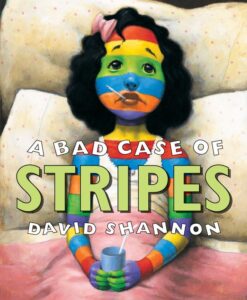

A Bad Case of Stripes by David Shannon (March 1998)

From Goodreads: “‘What we have here is a bad case of stripes. One of the worst I’ve ever seen!’ Camilla Cream loves lima beans, but she never eats them. Why? Because the other kids in her school don’t like them. And Camilla Cream is very, very worried about what other people think of her. In fact, she’s so worried that she’s about to break out in…a bad case of stripes!”

Pages: 32
Reading Age: 3–7
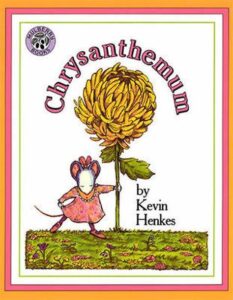

Chrysanthemum by Kevin Henkes (September 1991)

From Goodreads: “Chrysanthemum thinks her name is absolutely perfect—until her first day of school. “You’re named after a flower!” teases Victoria.
“Let’s smell her,” says Jo.

Chrysanthemum wilts. What will it take to make her blossom again?”

Pages: 32
Reading Age: 2–6
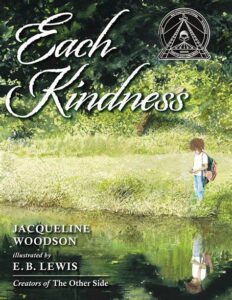

Each Kindness by Jacqueline Woodson, illustrated by E.B. Lewis ? (October 2012)

From Goodreads: “Chloe doesn’t really know why she turns away from the new girl, Maya, when Maya tries to befriend her. And every time Maya asks if she can play with Chloe and the other girls, the answer is always no. So Maya ends up playing alone. And then one day she’s gone.

When Chloe’s teacher gives a lesson about how even small acts of kindness can change the world, Chloe is stung by the opportunity that’s been lost. How much better could it have been if she’d just shown Maya a little kindness and opened her heart to friendship?”

Pages: 32
Reading Age: 6–10
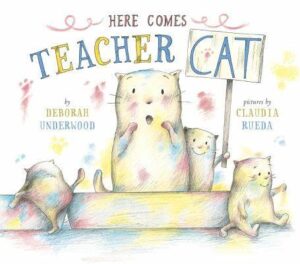

Here Comes Teacher Cat by Deborah Underwood, illustrated by Claudia Rueda (August 2017)

From Goodreads: “It’s back to school for the New York Times bestselling Cat when he steps in as a substitute teacher.

Cat is not pleased to be tapped as substitute teacher. Not only is it cutting into his naptime, but a roomful of kittens is a little … much. At school, Cat follows the lesson plan of music, building, and painting–only in gradually more mischief-​making Cat style. By the end, Cat has learned a thing or two about inspiring others by being himself. But even more heart-​melting and humorous is what these adorable kittens have learned from Cat.”

Pages: 88
Reading Age: 3–5
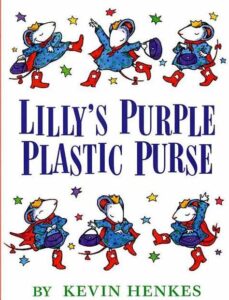

Lilly’s Purple Plastic Purse by Kevin Henkes (May 1996)

From Goodreads: “Hooray For Lilly!

Lilly loves everything about school, especially her teacher, Mr. Slinger. But when Lilly brings her new favorite things

movie star sunglasses (complete with diamonds)
three quarters (shiny ones)
a purple plastic purse (it plays lively music when opened)

to school, and insists on showing them to everyone even though it is not Sharing Time, Mr. Slinger is not amused. In fact, Mr. Slinger confiscates her prized possessions. Lilly’s fury leads to revenge and then to remorse as she sets out to make amends, in this modern classic by the beloved Kevin Henkes.”

Pages: 40
Reading Age: 3–6
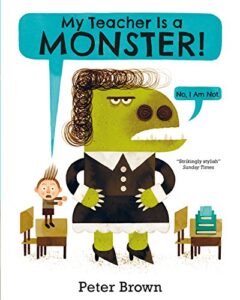

My Teacher Is a Monster by Peter Brown (July 2014)

From Goodreads: “Bobby has a problem. You see, his teacher is a monster. But when Bobby runs into his teacher outside of school, he learns there is more to her than meets the eye.”

Pages: 40
Reading Age: 3–9
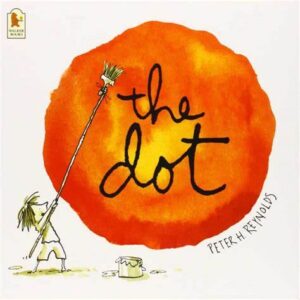

The Dot by Peter H. Reynolds (September 2003)

From Goodreads: “With a simple, witty story and free-​spirited illustrations, Peter H. Reynolds entices even the stubbornly uncreative among us to make a mark — and follow where it takes us.

Her teacher smiled. “Just make a mark and see where it takes you.”

Art class is over, but Vashti is sitting glued to her chair in front of a blank piece of paper. The words of her teacher are a gentle invitation to express herself. But Vashti can’t draw — she’s no artist. To prove her point, Vashti jabs at a blank sheet of paper to make an unremarkable and angry mark. “There!” she says.

That one little dot marks the beginning of Vashti’s journey of surprise and self-​discovery. That special moment is the core of Peter H. Reynolds’s delicate fable about the creative spirit in all of us.”

Pages: 32
Reading Age: 4–7
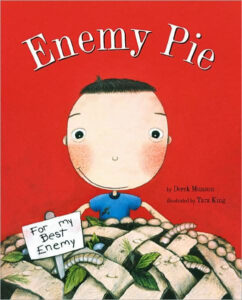

Enemy Pie by Derek Munson, illustrated by Tara Calahan King (September 2000)

From Goodreads: “It was the perfect summer. That is, until Jeremy Ross moved into the house down the street and became neighborhood enemy number one. Luckily Dad had a surefire way to get rid of enemies: Enemy Pie. But part of the secret recipe is spending an entire day playing with the enemy! In this funny yet endearing story, one little boy learns an effective recipes for turning your best enemy into your best friend. Accompanied by charming illustrations, Enemy Pie serves up a sweet lesson in the difficulties and ultimate rewards of making new friends.”

Pages: 40
Reading Age: 3–6
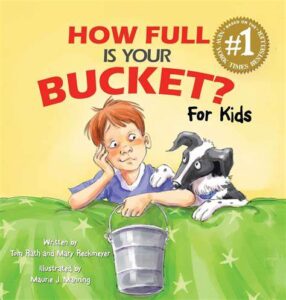

How Full Is Your Bucket? (for kids) by Tom Rath and Mary Reckmeyer, illustrated by Maurie J. Manning (April 2009)

From Goodreads: “Through the story of a little boy named Felix, this charming book explains to children how being kind not only helps others, it helps them, too. As he goes about his day, Felix interacts with different people — his sister Anna, his grandfather, other family and friends. Some people are happy, but others are grumpy or sad. Using the metaphor of a bucket and dipper, Felix’ grandfather explains why the happy people make Felix feel good, while the others leave him feeling bad — and how Felix himself is affecting others, whether he means to or not. This beautifully illustrated adaptation takes the original book’s powerful message — that the way we relate to others has a profound effect on every aspect of our lives — and tailors it to a child’s unique needs and level of understanding.”

Pages: 32
Reading Age: 3–7
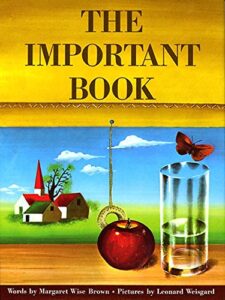

The Important Book by Margaret Wise Brown, illustrated by Leonard Weisgard (May 1999)

From Goodreads: “Goodnight Moon creator Margaret Wise Brown’s The Important Book is a deceptively simple exercise–taking familiar things like an apple, spoon, or shoe, and finding the most basic association with those things. The most important thing about an apple? It is round. A spoon? You eat with it. A shoe? You put your foot in it. But why, according to Brown, is the most important thing about grass “that it is green,” while the most important thing about an apple is “that it is round”? Why is “that it is white” the most important thing about snow and a daisy? Whether or not you’d distill these things in the same way that the author does, Brown makes us think about the essence of everyday entities in new ways. The illustrations, by Caldecott Medal winner Leonard Weisgard (The Little Island), perform the same function–capturing the spoonness of spoons, the roundness of an apple, the motion of wind.”

Pages: 24
Reading Age: 4–9
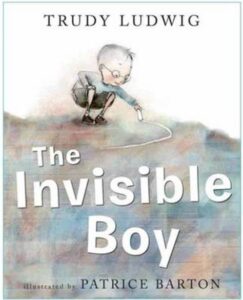

The Invisible Boy by Trudy Ludwig, illustrated by Patrice Barton (October 2013)

From Goodreads: “Meet Brian, the invisible boy. Nobody ever seems to notice him or think to include him in their group, game, or birthday party… until, that is, a new kid comes to class.

When Justin, the new boy, arrives, Brian is the first to make him feel welcome. And when Brian and Justin team up to work on a class project together, Brian finds a way to shine.

From esteemed author and speaker Trudy Ludwig and acclaimed illustrator Patrice Barton, this gentle story shows how small acts of kindness can help children feel included and allow them to flourish. Any parent, teacher, or counselor looking for material that sensitively addresses the needs of quieter children will find The Invisible Boy a valuable and important resource.”

Pages: 40
Reading Age: 5–8
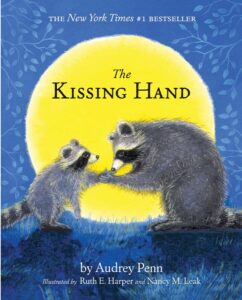

The Kissing Hand by Audrey Penn, illustrated by Ruth E. Harper and Nancy M. Leak (January 2003)

From Goodreads: “Chester Raccoon is very scared and nervous about his first day of school. His mom helps to solve his anxiety in a very special way that involves the kissing hand.”

Pages: 32
Reading Age: 2–6
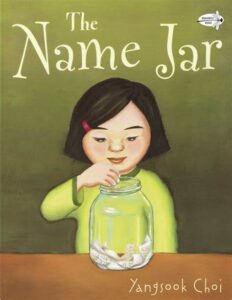

The Name Jar by Yangsook Choi (October 2003)

From Goodreads: “The new kid in school needs a new name! Or does she?

Being the new kid in school is hard enough, but what about when nobody can pronounce your name? Having just moved from Korea, Unhei is anxious that American kids will like her. So instead of introducing herself on the first day of school, she tells the class that she will choose a name by the following week.

Her new classmates are fascinated by this no-​name girl and decide to help out by filling a glass jar with names for her to pick from. But while Unhei practices being a Suzy, Laura, or Amanda, one of her classmates comes to her neighborhood and discovers her real name and its special meaning.

On the day of her name choosing, the name jar has mysteriously disappeared. Encouraged by her new friends, Unhei chooses her own Korean name and helps everyone pronounce it—Yoon-​Hey.”

Pages: 40
Reading Age: 3–6


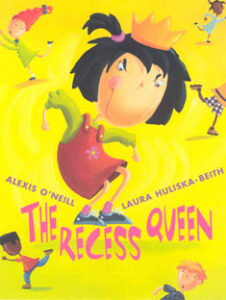
The Recess Queen by Alexis O’Neill, illustrated by Laura Huliska-​Beith (February 2002)

From Goodreads: “A fresh & original twist on the common issue of bullying. Kids will relate, & parents & teachers will appreciate the story’s deft handling of conflict resolution (which happens w/​o adult intervention) Mean Jean was Recess Queen and nobody said any different. Nobody swung until Mean Jean swung. Nobody kicked until Mean Jean kicked. Nobody bounced until Mean Jean bounced. If kids ever crossed her, she’d push ’em and smoosh ’em lollapaloosh ’em, hammer ’em, slammer ’em kitz and kajammer ’em. Until a new kid came to school! With her irrepressible spirit, the new girl dethrones the reigning recess bully by becoming her friend in this infectious playground romp.”

Pages: 32
Reading Age: 5–7
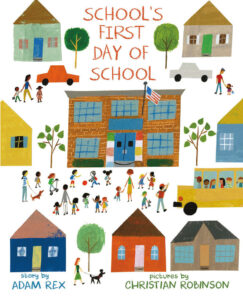

School’s First Day of School by Adam Rex, illustrated by Christian Robinson (June 2016)

From Goodreads: “It’s the first day of school at Frederick Douglass Elementary and everyone’s just a little bit nervous, especially the school itself. What will the children do once they come? Will they like the school? Will they be nice to him?

The school has a rough start, but as the day goes on, he soon recovers when he sees that he’s not the only one going through first-​day jitters.”

Pages: 40
Reading Age: 5–6
Picture Book List: 20 Heartwarming Books for Valentine’s Day

Love is in the air here at OPB, and we’re sharing that love with you via a wonderful list of heartwarming picture books.

If we missed one that makes your heart melt, please drop the name of that title in the comments. We always appreciate hearing what books you love!


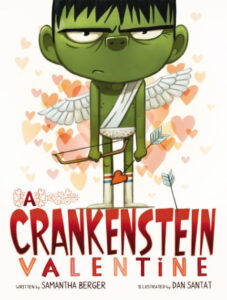
A Crankenstein Valentine by Samantha Berger, illustrated by Dan Santat (December 2014)

From Goodreads: “Even the crankiest monsters have hearts in this Valentine tale from fan favorite author Samantha Berger and Caldecott medalist illustrator Dan Santat.

Cheesy cards, allergy-​inducing bouquets, and heart-​shaped everything? YECHHHH! It’s enough to turn anyone into a monster! An ordinary kid becomes Crankenstein on the most lovey-​dovey, yuckiest day of the year: Valentine’s Day.

Can Crankenstein find a way to turn his sour day sweet? Can a monster find a little love in his heart? Find out in the monstrously funny A Crankenstein Valentine.”

Pages: 40
Reading Age: 3–6


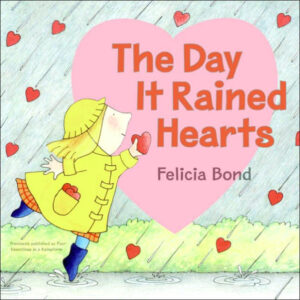
The Day It Rained Hearts by Felicia Bond (December 2006)

From Goodreads: “A creative and sweet story, perfect for Valentine’s Day, that helps open the hearts of young readers. From the beloved illustrator of If You Give a Mouse a Cookie.

One day it rains hearts, and Cornelia Augusta catches them. She realizes that the hearts are perfect for making valentines. Each heart is special in its own way, and Cornelia Augusta knows exactly who to send them to: her animal friends.

A fun way to spark creativity and thoughtfulness! The perfect book to pair with Valentine’s Day crafts.”

Pages: 36
Reading Age: 2–5


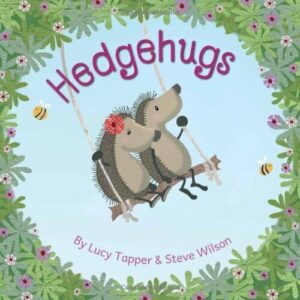
Hedgehugs by Lucy Tapper & Steve Wilson (September 2014)

From Goodreads: “Horace and Hattie are hedgehogs, and the very best of friends. Together, they make daisy chains, splash in puddles, and have tea parties. But there is one thing they can’t do—hug! They are just too spiky. Throughout the seasons, these two hedgehogs will try many different ways of hugging. But will Horace and Hattie find a hug that feels just right?”

Pages: 32
Reading Age: 1–4


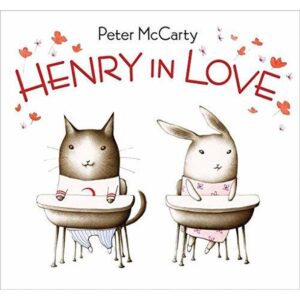
Henry in Love by Peter McCarty (December 2009)

From Goodreads: “Henry is a bit of a dreamer and not much of a talker.Then there’s Chloe, who says what she thinks and knows how to turn a spectacular cartwheel.

This is the story of how one blueberry muffin makes all the difference.”

Pages: 48
Reading Age: 2–7


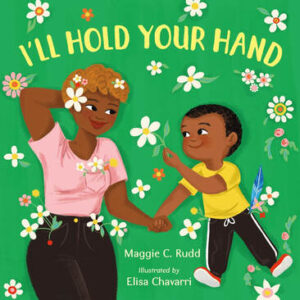
I’ll Hold Your Hand by Maggie C. Rudd, illustrated by Elisa Chavarri (February 2022)
From Goodreads: “This sweet picture book celebrates the unbreakable bond of a parent’s support for a child though life’s milestones, from learning to walk to the first day of school and all the highs and lows in between.

From the night you arrive to your first night away,
from learning to crawl to healing a broken heart,
and for all the highs and lows in between…
through every season, every challenge, and every joy, you are loved.

With sweet, lyrical text and stunning art, I’ll Hold Your Hand celebrates the unbreakable bond of family, and all the ways our actions can say “I love you” louder than words.”
Pages: 40
Reading Age: 3–6


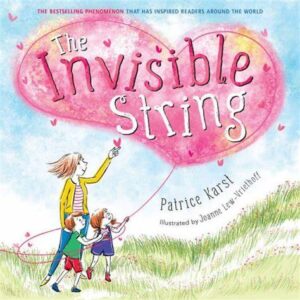
The Invisible String by Patrice Karst, illustrated by Joanne Lew-​Vriethoff (October 2018)

From Goodreads: “A picture book about the unbreakable connections between loved ones–updated with new illustrations and an afterword from the author.

A mother tells her two children that they’re all connected by an invisible string. “That’s impossible!” the children insist, but still they want to know more: “What kind of string?” The answer is the simple truth that binds us all: An Invisible String made of love. Even though you can’t see it with your eyes, you can feel it deep in your heart, and know that you are always connected to the ones you love. Does everybody have an Invisible String? How far does it reach? Does it ever go away?”

Pages: 40
Reading Age: 3–7


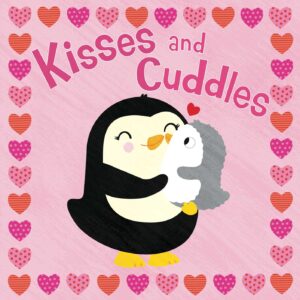
Kisses and Cuddles by Little Bee Books (December 2015)

From Goodreads: “A little penguin loves to do many things during his fun day, but nothing beats getting kisses and cuddles from his mama!

Follow a little penguin as he spends his day doing everything he loves–such as eating pancakes, playing with his toys, drinking hot chocolate, spotting rainbows, and more. But what does he love the most? Kisses and cuddles from his mama!”

Pages: 16
Reading Age: 1–4


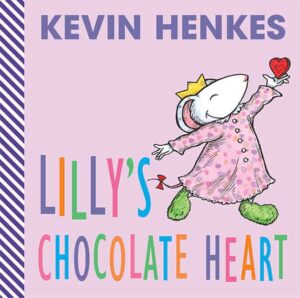
Lilly’s Chocolate Heart by Kevin Henkes (December 2003)

From Goodreads: “Lilly loves her chocolate heart.
Will she save it?
Forever and ever?
What do you think?”

Pages: 24
Reading Age: 1–4


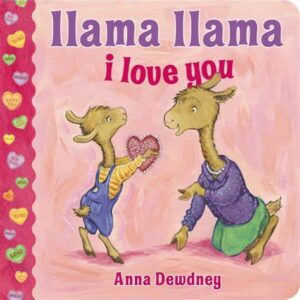
Llama Llama I Love You by Anna Dewdney (December 2014)

From Goodreads: “Beloved storyteller Anna Dewdney shows young children sweet ways to express their love on Valentine’s Day and all year round in Llama Llama I Love You!

With short and simple rhyming text, the Llama Llama board books introduce Llama Llama to babies and toddlers before they’re ready for longer full-​length stories. And their small size and durable pages are perfect for little hands.

In Llama Llama I Love You, little llama shows his friends and family how much he loves them with heart-​shaped cards and lots of hugs. What could be sweeter than Llama Llama on Valentine’s Day?”

Pages: 14
Reading Age: 1–3


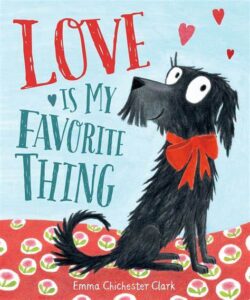
Love Is My Favorite Thing by Emma Chichester Clark (August 2015)

From Goodreads: “Starring an enthusiastic pooch whose joy, optimism and love know no bounds, this lively picture book is based on Emma Chichester Clark’s own dog, and joyfully celebrates unconditional love.

Plum has lots of favorite things—catching sticks, her bear, her bed—but really, LOVE is her absolute favourite thing. She loves her family and all the things they do together. Sometimes, however, Plum’s exuberance causes trouble, and she just can’t help being naughty. But fortunately, love is such a great thing that even when she makes mistakes, Plum’s family still adores her.”

Pages: 32
Reading Age: 2–6


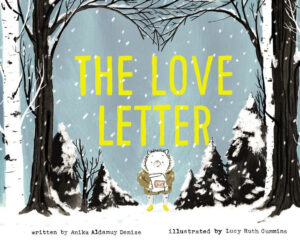
The Love Letter by Anika Aldamuy Denise, illustrated by Lucy Ruth Cummins (October 2019)

From Goodreads: “Fall in love with this endearing and adorable picture book that illustrates how a little bit of heart goes a long way to making the world a better place.

Hedgehog, Bunny, and Squirrel are best friends. One day, they each find a letter. But not just any letter…

A love letter.

My word!

My whiskers!

Aww, nuts!

Someone loves them. But who? The answer may surprise you!

Celebrated author Anika Aldamuy Denise and beloved illustrator Lucy Ruth Cummins deliver this heartwarming tale about a wonderful mix-​up that reminds us of the joys of friendship.

Makes for a perfect Valentine’s Day gift, or for any time you want to tell someone in your life how much you love them!”

Pages: 36
Reading Age: 1–5


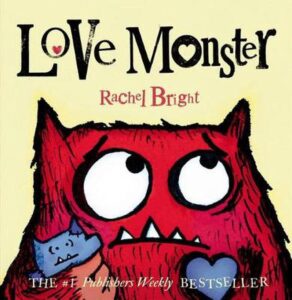
Love Monster by Rachel Bright (December 2014)

From Goodreads: “Featuring the only Monster in Cutesville, LOVE MONSTER is a wonderfully warm and witty look at how sometimes, when you least expect it, love finds you… From a phenomenal picture book talent.

It can be tough being the only funny-​looking Monster in Cutesville, but this Monster is not one to hang around and feel sorry for himself, so he’s off – out into the big wide world to look for someone to love him.
He looks high, he looks low and he looks everywhere in-​between, but it’s only when he’s just about to give up that he finally finds what he is looking for…

Featuring an instantly charming main character who will appeal to children and adults alike, LOVE MONSTER is a warm and witty tale about the power of taking action from a terrific talent new to the HarperCollins list.”

Pages: 32
Reading Age: 1–4


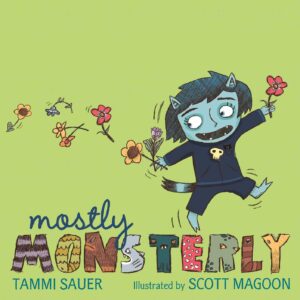
Mostly Monsterly by Tammi Sauer, illustrated by Scott Magoon (August 2010)

From Goodreads: “Bernadette might seem like an ordinary monster, but sometimes she likes to do some very unmonsterlike things, like pick flowers. And pet kittens. And bake.

When the time comes for Bernadette to go to Monster Academy, she’s just a teensy bit nervous. Her classmates just don’t understand her. They’d rather uproot trees than sing friendship songs. And they prefer fried snail goo to Bernadette’s homemade cupcakes with sprinkles. Can Bernadette find a way to make friends at school and still be herself?”

Pages: 40
Reading Age: 4–8


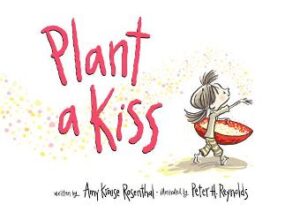
Plant a Kiss by Amy Krouse Rosenthal, illustrated by Peter H. Reynolds (December 2015)

From Goodreads: “Little Miss planted a kiss …

One small act of love blooms into something bigger and more dazzling than Little Miss could have ever imagined in this epic journey about life, kindness, and giving.

New York Times bestselling author Amy Krouse Rosenthal and award-​winning illustrator Peter H. Reynolds have teamed together for the first time, creating what may soon prove to be a perennial favorite.”

Pages: 36
Reading Age: 1–5


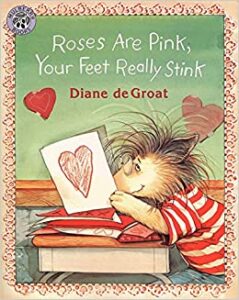
Roses Are Pink, Your Feet Really Stink by Diane deGroat (December 2022)

From Goodreads: “This Valentine’s Day favorite read-​aloud will prompt lots of giggles, as well as discussions on kindness and forgiveness.

Gilbert is all set to write fifteen friendly valentine cards to his classmates. But how can he write a nice poem for the boy who tweaked his nose, or the girl who made fun of his glasses? Instead, Gilbert writes two not-​so-​nice valentines…and signs the wrong name on both!

When his classmates read his poems, their feelings are hurt, and Gilbert’s prank quickly turns into pandemonium. But with the help of a friend and an honest apology, there’s always time for a change of heart on Valentine’s Day.”

Pages: 32
Reading Age: 4–7


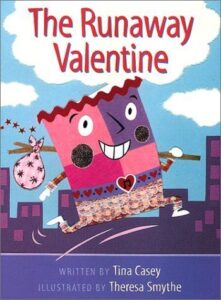
The Runaway Valentine by Tina Casey, illustrated by Theresa Smythe (January 2001)

From Goodreads: “Victor has the glitziest glitter, the shiniest sparkles, and a special button that can play twenty different love songs! He’s the fanciest valentine in the card shop. That is, until he falls off the rack and gets swept into a dusty corner. And when he marches out of the shop and sets out on his own, he tatters his corners, frazzles his edges, and loses all his lace!But no matter what happens to him, one person after another finds that Victor is just what they were looking for. And through a wild Valentine’s Day journey he brings them all together — which, after all, is what valentines do best.”

Pages: 32
Reading Age: 3–6


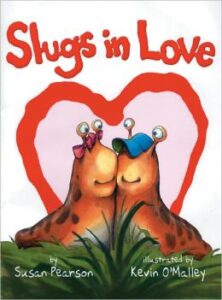
Slugs in Love by Susan Pearson, illustrated by Kevin O’Malley (November 2012)

From Goodreads: “Marylou loves everything about Herbie—how his slime trail glistens in the dark, how he can stretch himself thin to squeeze inside the cellar window, and how he always finds the juiciest tomatoes. But Marylou is a shy slug. How can she get Herbie to notice her? Find out how Marylou woos her beloved in this must-​have love story that’s perfect for Valentine’s Day.”

Pages: 34
Reading Age: 4–7


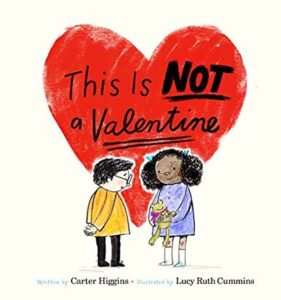
This Is Not a Valentine by Carter Higgins, illustrated by Lucy Ruth Cummins (December 2017)

From Goodreads: “This book is not a valentine. It doesn’t have lacey edges or sugary hearts. But it is full of lucky rocks, secret hiding spots, and gumball machine treasures. This is a book about waiting in line and wishing for cinnamon buns. About recognizing that if you care so much about someone not thinking you care, maybe you really do. But wait—isn’t that exactly what love is about? Maybe this book is sort of a valentine after all. A testament to handmade, wacky, bashful, honest love—sure to win over the hearts of all readers—this offering from debut picture book author Carter Higgins and children’s book veteran Lucy Ruth Cummins is the perfect gift to celebrate every relationship, from parent to child, sibling to sibling, partner to partner, crush to crush.”

Pages: 48
Reading Age: 5–8


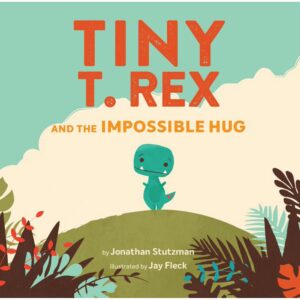
Tiny T. Rex and the Impossible Hug by Jonathan Stutzman, illustrated by Jay Fleck (March 2019)

From Goodreads: “Meet Tiny, a diminutive but determined T‑Rex in a big world, as he embraces all obstacles against him in his quest to learn how to hug.”

Pages: 48
Reading Age: 2–5


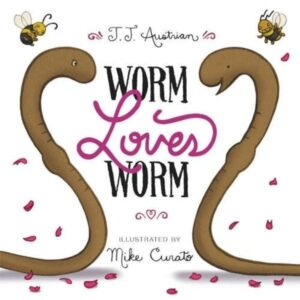
Worm Loves Worm by J.J. Austrian, illustrated by Mike Curato (January 2016)

From Goodreads: “Perfect for fans of And Tango Makes Three and The Sissy Duckling, this irresistible picture book is a celebration of love in all its splendid forms from debut author J. J. Austrian and the acclaimed author-​illustrator of Little Elliot, Big City, Mike Curato.

You are cordially invited to celebrate the wedding of a worm … and a worm.

When a worm meets a special worm and they fall in love, you know what happens next: They get married! But their friends want to know—who will wear the dress? And who will wear the tux?

The answer is: It doesn’t matter. Because Worm loves Worm.”

Pages: 32
Reading Age: 3–7


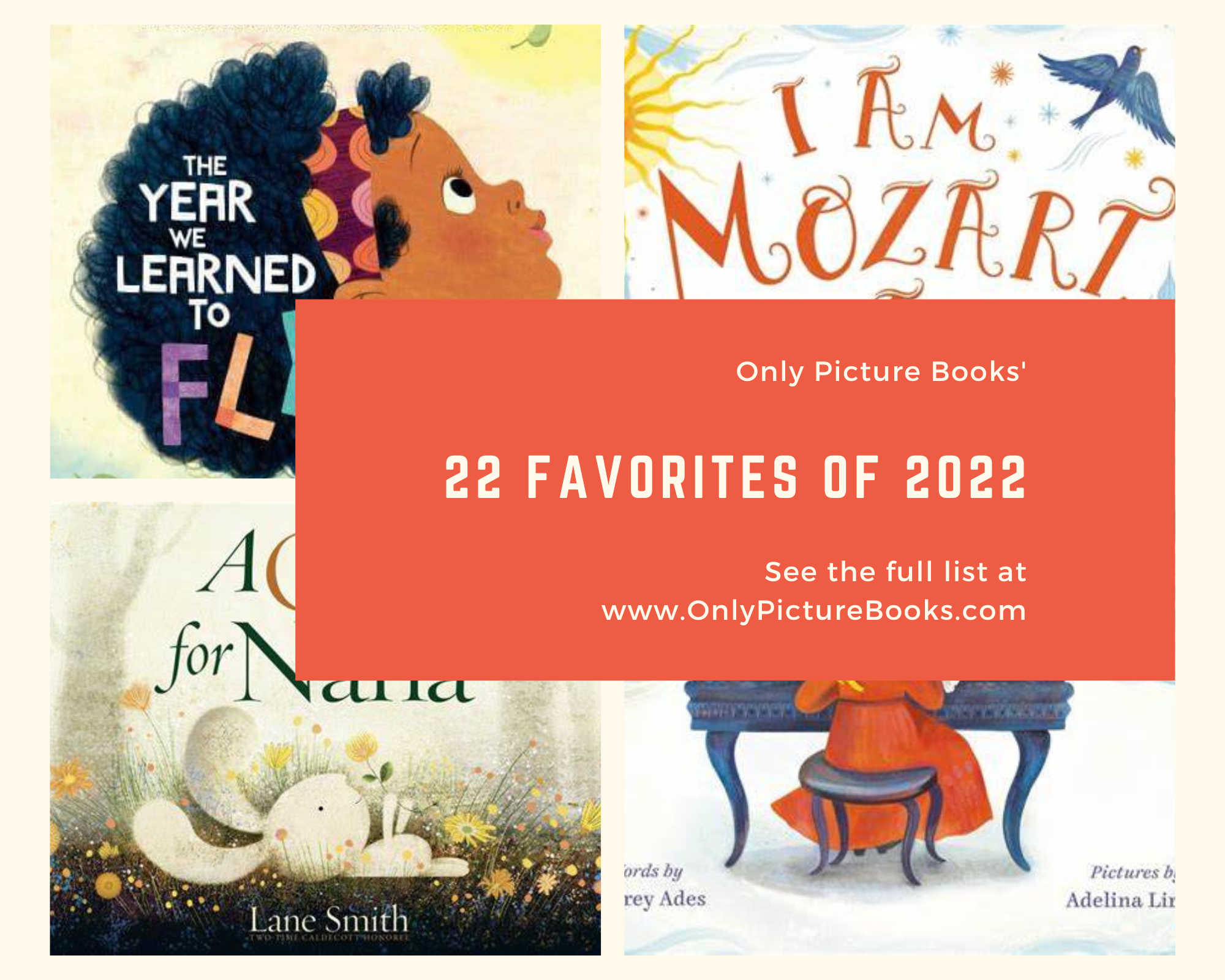
Only Picture Books’ 22 Favorites of 2022

Hello, 2023! While we’re really excited about the kidlit world and all that’s about to happen this year, we wanted to take a moment to reflect on some truly terrific picture books from the past twelve months.

This is a subjective list, so if we missed a great picture book, our apologies. Feel free to add your own suggestions in the comments. We’ll try to include those in future lists, if we can.

One last thing–since we’re running this in our regular Picture Book Review slot of the month, we’ll include our own 5‑word reviews along with a link to the Goodreads reviews. Creating these haiku-​like mini-​reviews is as challenging as it is fun. Try it yourself sometime!


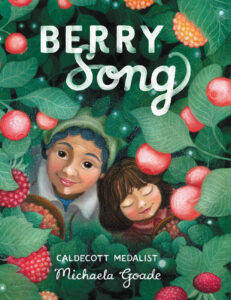
Berry Song by Michaela Goade (19 July 2022)

OPB Five-​Word Review: Luminous, dreamy, pro-​earth joy. Berrytastic.

Goodreads Reviews


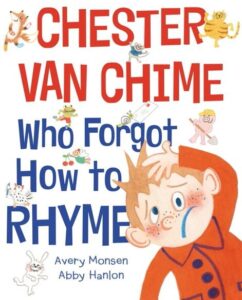
Chester van Chime Who Forgot How to Rhyme by Avery Monsen, illustrated by Abby Hanlon (15 March 2022)

OPB Five-​Word Review: Rhyming read-​a-​loud hilarity. Interactive fun.

Goodreads Reviews


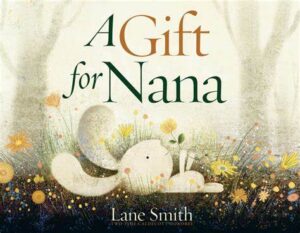
A Gift for Nana by Lane Smith (10 May 2022)

OPB Five-​Word Review: Quirky. Cute. Maybe for adults?

Goodreads Reviews


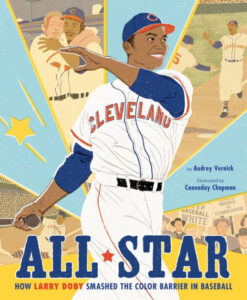
All Star: How Larry Doby Smashed the Color Barrier in Baseball by Audrey Vernick, illustrated by Cannaday Chapman (4 January 2022)

OPB Five-​Word Review: Unsung hero. Door-​opener. Fascinating. Timely.

Goodreads Reviews


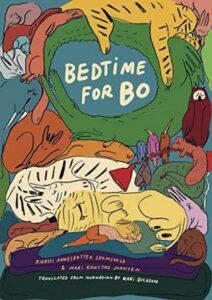
Bedtime for Bo by Kjersti Annesdatter Skomsvold and Mari Kanstad Johnsen, translated by Kari Dickson (9 August 2022)

OPB Five-​Word Review: Joyous, snuggly bedtime love. Imaginative.

Goodreads Reviews


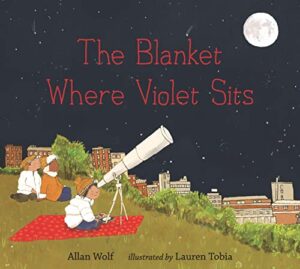
The Blanket Where Violet Sits by Allan Wolf, illustrated by Lauren Tobia (30 August 2022)

OPB Five-​Word Review: Lyrical cumulative rhymes. Picnicky fun.

Goodreads Reviews


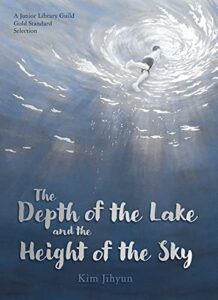
The Depth of the Lake and the Height of the Sky by Kim Jihyun (19 April 2022)

OPB Five-​Word Review: Evocative wordless storytelling. Enchanting debut.

Goodreads Reviews


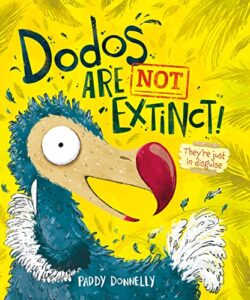
Dodos Are Not Extinct by Paddy Donnelly (8 February 2022)

OPB Five-​Word Review: Extinct animals aplenty. Storytime silliness.

Goodreads Reviews


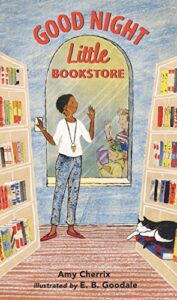
Good Night Little Bookstore by Amy Cherrix, illustrated by E.B. Goodale (29 August 2022)

OPB Five-​Word Review: Cozy, charming Goodnight Moon pastiche.

Goodreads Reviews


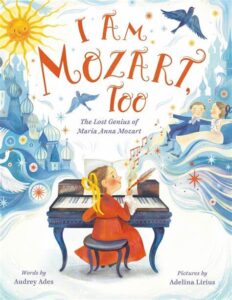
I Am Mozart, Too: The Lost Genius of Maria Anna Mozart by Audrey Ades, illustrated by Adelina Lirius (22 February 2022)

OPB Five-​Word Review: Gender injustice–Mozart’s prodigy sister.

Goodreads Reviews


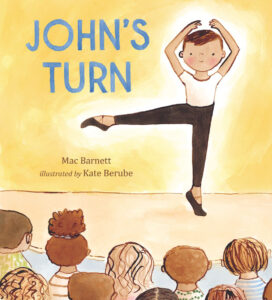
John’s Turn by Mac Barnett, illustrated by Kate Berube (24 February 2022)

OPB Five-​Word Review: Embrace your talent. Gloriously so.

Goodreads Reviews


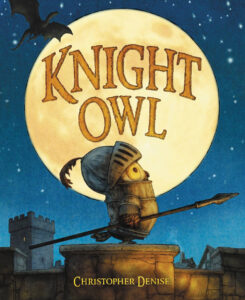
Knight Owl by Christopher Denise (15 March 2022)

OPB Five-​Word Review: Owlish wordplay. Bravery. Radiant art.

Goodreads Reviews


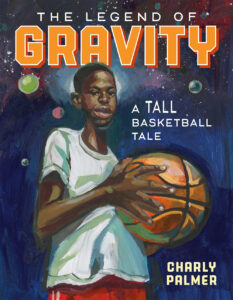
The Legend of Gravity: A Tall Basketball Tale by Charly Palmer (4 January 2022)

OPB Five-​Word Review: Splendrous colors. Fanciful facts. Teamwork!

Goodreads Reviews


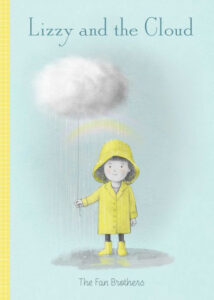
Lizzy and the Cloud by The Fan Brothers (3 May 2022)

OPB Five-​Word Review: Pet clouds are awesome. Beautiful.

Goodreads Reviews


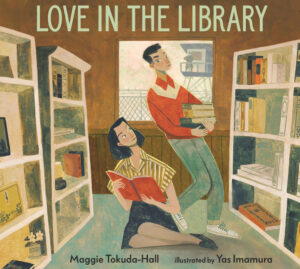
Love in the Library by Maggie Tokuda-​Hall, illustrated by Yas Imamura (8 February 2022)

OPB Five-​Word Review: Detainment camp. History. Heartbreak. Books!

Goodreads Reviews


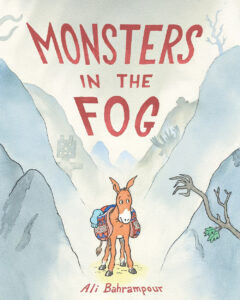
Monsters in the Fog by Ali Bahrampour, illustrated by Cannaday Chapman (14 June 2022)

OPB Five-​Word Review: Humorous mountain journey. Beware “monsters”!

Goodreads Reviews


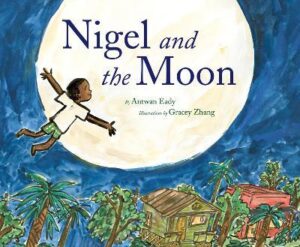
Nigel and the Moon by Antwan Eady, illustrated by Gracey Zhang (19 July 2022)

OPB Five-​Word Review: Childhood dreams. Heart-​melting ending.

Goodreads Reviews


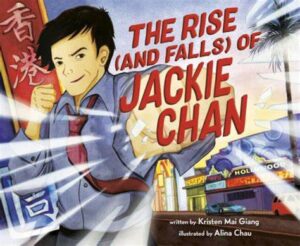
The Rise (and Falls) of Jackie Chan by Kristen Mai Giang, illustrated by Alina Chau (29 March 2022)

OPB Five-​Word Review: Goofball acrobatics. Vibrant art. POW!

Goodreads Reviews


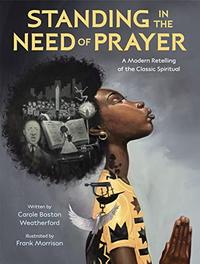
Standing in the Need of Prayer: A Modern Retelling of the Classic Spiritual by Carole Boston Weatherford, illustrated by Frank Morrison (20 September 2022)

OPB Five-​Word Review: Glorious tribute. Discussion-​starting. Ear-​pleasing. Timely.

Goodreads Reviews


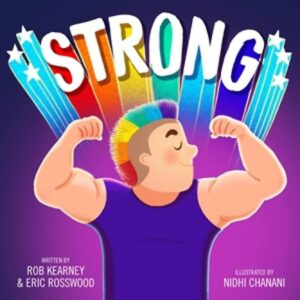
Strong by Rob Kearney and Eric Rosswood, illustrated by Nidhi Chanani (10 May 2022)

OPB Five-​Word Review: Becoming an LGBTQ+ strongman. Empowering.

Goodreads Reviews


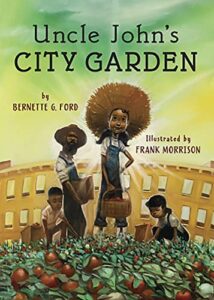
Uncle John’s City Garden by Bernette Ford, illustrated by Frank Morrison (3 May 2022)

OPB Five-​Word Review: City gardens. Family. Recipes. Delicious.

Goodreads Reviews


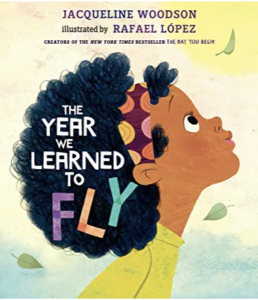
The Year We Learned to Fly by Jacqueline Woodson, illustrated by Rafael López (4 January 2022)

OPB Five-​Word Review: Lyrical history lifts up readers.

Goodreads Reviews


I got so excited going through my shelf of 2022 picture books for this end-​of-​year list that I completely forgot to go back through the books we reviewed here at OPB (which I keep on a different shelf in a different room). I’m not bumping any of the 22 above books because they all belong here, but so do the following three titles.

I supposed that makes this post more accurately “Only Picture Books’ 22 25 Favorites of 2022.”


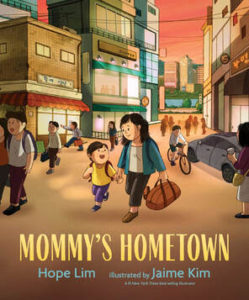
Mommy’s Hometown by Hope Lim, illustrated by Jaime Kim (12 April 2022)

OPB Five-​Word Review: Hits me just right. Sensitive.

See the original OPB review here.


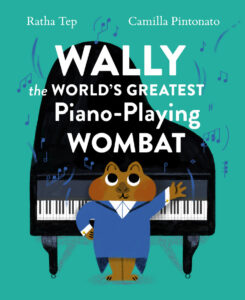
Wally, the World’s Greatest Piano-​Playing Wombat by Ratha Tep, illustrated by Camilla Pintonato (18 October 2022)

OPB Five-​Word Review: Passion. Pride. Participation. Pianos. Potent!

See the original full OPB review here.


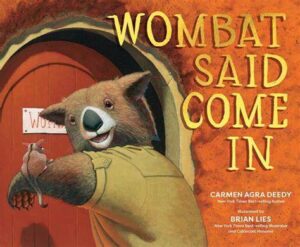
Wombat Said Come In by Carmen Agra Deedy, illustrated by Brian Lies (6 October 2022)

OPB Five-​Word Review: Friendship. Empathy. Safe and secure.

See the original full OPB review here.

OPB Favorites: Best Agent/​Editor Interview Moments from OPB in 2022

Thanks to having such a GREAT crew of writers, artists, and industry folks visit OPB this past year, tons of terrific/​useful/​exciting things came out in the interviews. For this final Industry Insider post, I decided to compile some of the most memorable agent/​editor interview moments right here in one handy-​dandy end-​of-​the-​year post.

**If their answers required a lead-​in/​framing questions, I included those. Many of these gems, however, stand well enough on their own.**

Did I miss a great line or idea from a 2022 Industry Insider interview that really stuck with you? If so, go ahead and tell me in the comments.

See you in 2023!


Reka Simonsen (Editorial Director, Atheneum)

RVC: What’s the most common misconception about editors?

RS: Even in the book world, I find that most people still think that editing means correcting grammar and punctuation—the kind of red-​pen editing that a lot of us are familiar with from the notes teachers wrote on our school essays. More experienced writers and agents know otherwise, of course, but first-​time authors still often expect that the first thing they’ll see from an editor is a detailed line-​level edit of the manuscript, which is usually a much later step in the process, rather than a letter or conversation that looks at the bigger picture aspects of the story, which is more often the first editorial step.


Kayla Tostevin (Senior Editor, Page Street)

RVC: What important lessons did editing that book teach you?

KT: This book was probably my first big lesson on how incredibly subjective publishing is. The author-illustrator–my bosses–and I all had many different ideas about the best way to handle many aspects of this book, and I realized, oh, being an editor is much less about fully controlling the development of a book than it is about finding the best route to solid middle ground between multiple visions. It’s not steering the car so much as politely giving directions from the shotgun seat, while sometimes the driver ignores you to make their own rogue turns, or the backseat passengers argue, or your maps app dies and you have to ask everyone to pull over and be patient with you while you reroute.

It’s a kind of chaos I’ve learned to fondly embrace. Having to come up with a new title that satisfied everyone was an especially hard piece of this lesson.


Frances Gilbert (Editor-​in-​Chief, Doubleday Books for Young Readers/​Random House Children’s Books)

RVC: Let’s help some of the aspiring writers out there. What’s a common misconception about kidlit editors?

FG: I know our industry can feel opaque when you’re trying to break in. One thing I always let people know is that we’re always earnestly trying to find exciting new works. I think people have the idea that we enjoy rejecting things, when in truth it’s the opposite. We’re always avidly trying to find great writing. We don’t enjoy saying “No” as often as we must. “Yes” is always more exciting.

***

RVC: One more question for aspiring writers—what are your feelings on art notes? 

FG: If I don’t know what you envision happening in the book without art notes, then give me art notes. It’s that simple. I don’t understand why people worry about them so much.


Catherine Laudone (Editor, Paula Wiseman Books)

CL: Today, I make time to read for pleasure (and for school), and I go to the library once a week to check out picture books and graphic novels. Although I will admit that I consume novels mostly in the audiobook format these days. It’s easier to listen while doing the dishes, making dinner, or driving somewhere than it is to find time to sit down and read a physical copy.

Allison Cohen (Editor, Running Press Kids)

RVC: All the time, I see editors moving into the field of agenting. You did that, but then you boomeranged back to editing. That’s really quite rare.

AC: I loved being an agent. I loved working with writers across genres—children’s and adult, fiction and non-​fiction, etc. And the relationships I built with my authors were unbelievably special. But the 247 hustle was a lot. You’re not just an agent—you’re an editor, an accountant, a lawyer, a therapist, etc. I often found myself pulled away from some of what I loved best about the job—working with authors on developing their manuscripts. Don’t get me wrong, being an editor requires hustle—nights and weekends reading and editing—but it’s a different kind. I had been talking to an editor friend of mine about life and maybe making a change but not really knowing what that change was.

***

RVC: What’s one thing that a lot of people just don’t quite understand about picture books?

AC: There is SO much that has to come together to make a book. That’s why schedules can be so long. It takes a lot to create synergy between the text and illustrations—you have the manuscript, then you find the right illustrator, then you get the sketches (almost always adjustments are made), then you see the color art (more adjustments are made). You’re getting together materials to share with sales so they can sell in to their accounts. You’re building marketing/​publicity plans to launch the book into the world. All this is happening while the managing ed and production teams are doing their best to make sure the books are printed, shipped, etc. There are so many hands that touch a book. It takes time. It’s a lot of work, but then you get the advance copy, hold it in your hands and think, THIS IS WHY. It is incredible when everything works out.


Lisa Rosinsky (Senior Editor, Barefoot Books)

LR: Early mornings are still my favorite time to write…when my creative brain is still loose and dreamy, before my critic/​editor brain has fully awoken.
***


RVC: Who or what has influenced you as an editor?

LR: That’s a tough one…I’d have to name every book I’ve ever read and every editor I’ve ever had the privilege to work with. Most recently, though, I have to say that reading books with my two-​year-​old has taught me an enormous amount about editing. There’s nothing like reading a book over and over with a toddler to show you where the plot lags or fails to hold a reader’s attention, where the syntax is clunky or there are missing details. And picture books are a shared experience between an adult and a child—you have to think about the grownup buying and reading the books as well as the young audience. My new test for a manuscript when I’m reading submissions is, “Would I still want to read this one again after reading it at bedtime every single night for MONTHS?”

RVC: That’s a high bar, indeed!

LR: Absolutely.


Tricia Lawrence (Agent, Erin Murphy Literary Agency)

RVC: What’s the most important things authors should know or understand about effectively using social media to support their careers?

TL: That social media DOES NOT MATTER without the writing. It supports the book, but it doesn’t supersede the book. You only need a massive social media platform if you’re writing nonfiction for the mainstream adult trade market, say, if you’ve got a new approach to phlebotomy or something (ha!), but the story matters the most in children’s literature and teen literature. It’s ALL that matters.

That said, pick the social media tools you enjoy and leave off the rest. If you don’t like Twitter, it will be obvious. If you LOVE TikTok, go with god and have fun.


Jacqui Lipton (Agent, Tobias Literary Agency)

RVC: You work as a legal consultant for writers and creative artists. What’s the most frequently asked question you get? 

JL: Definitely questions about including other people’s work (e.g. song lyrics, lines of poetry, photographs) in your own work—and the extent to which that infringes copyright. A lot of people think that giving attribution to the original creator avoids a copyright infringement problem and it really doesn’t because copyright isn’t about attribution—it’s about copying. Attributing the original creator is always nice, but it’s not a copyright issue. If the original creator gives you permission to use their work and asks for attribution in return, that’s a contract (it’s a contractual license to use their work with attribution).

The other common question is about defamation—say, someone is writing a memoir and want to know what they can “get away with” writing about real people in their lives without being at risk for a defamation suit. Luckily for authors, defamation is a pretty weak law in the United States as compared with other countries. Truth does tend to be a defense and statements of opinion, rather than fact, are typically not defamatory.

***

RVC: What’s your personal feeling on Art Notes from authors?

JL: I think they’re fine as long as they’re not overdone. Some pieces require more art notes than others to clarify what’s happening in the text. As long as the author isn’t being overly prescriptive and not giving any room for the illustrator to shine, or, conversely, the author isn’t leaving too much of the narrative to the illustrator because the author, say, doesn’t really know how the story ends (!), I think, with practice, it’s usually relatively clear where and when illustrator notes should be included.

Agents should be able to help with this, too. I’m often discussing adding illustrator notes (or removing them) with client work, so there’s no “perfect” amount of illustrator notes to include when querying agents, and an agent who likes your work should be able to discuss including or deleting illustrator notes. Same with backmatter and other supplemental information.


Natalie Lakosil (Agent, Irene Goodman Literary Agency)

RVC: What are some of the lessons you learned by agenting children’s books?

NL: What I learned over the years was that you’re going to suck at it for a little bit. You have to push past that, the “I don’t know what I’m doing, and nothing is selling–why is nothing selling…WHY?” because you’re kind of figuring out your own path.

Obviously, I didn’t NOT sell anything, but I have a much stronger sell-​through rate now. Back then, I was still building connections. I learned that you have to stay flexible as an agent. Don’t be afraid to branch into something new, even though it’s going to take work. You’re going to have to do a lot of research. You’re going to have to talk to colleagues. You’re going to have a lot of trial and error and not be perfect in your style and process. That could all take years, but it’s worth it in the end. You just have to push past that learning curve.

***

RVC: What is the hardest part about being a literary agent?

NL: The emotional roller coaster of the industry. I get rejection daily. I pour my heart and soul into projects that don’t sell. I fall in love with projects that I don’t get to work on. I get horrible news when a book is cancelled, or something bad happens and something’s in jeopardy for an author or client. There are so many things that shift daily that you have to practice self care a lot so you can manage the ups and downs.

It’s commission work, too. Not everybody works on commission, but at least for me, it means there are ups and down throughout the year. You could have a fantastic first quarter that makes your year, then maybe nothing comes in for the next couple months and you’re questioning, “Am I ever going to sell a book again?” because you’re seeing other agents doing amazing things. And you’re thinking like, “Oh, should I be doing that?” There’s a lot of comparison going on. It’s like the Facebook thing, a lot of people shouting about all their amazing things. But they don’t share the hardships, and we all experience hardships.


James McGowan (Agent, BookEnds Literary Agency)

JW: What was the most helpful lesson you learned as an intern?

JM: Ask questions. I am by nature a question-​asker but it is crucial that every intern abandon any level of fear and just ask the question they have. There is no stupid question when you’re learning a field. Also, it makes you look engaged, interested, and people remember you better when they talk to you more.

***

JW: Was there anything about the process of having your book published that took you by surprise, having worked in the industry?

JM: Ha! No, not really. I knew what to expect. Well, maybe just the general anxiety of it all. I did not realize how much pressure one can feel when gearing up for a publication day.


And since OPB underpromises and over-delivers…here are a few inspirational SCBWI FL conference highlights from this year’s Orlando event, as well!

(If you want to see all of them, here’s the full write-​up on it @ OPB.)


Brett Duquette (Executive Editor, Little Bee Books)

BD: Revising can be hard. One idea is to take it like a cake in layers. Don’t try and do everything at the same time. Because if you’re like me, all you’ll do is just work on making verbs and nouns prettier. Have a language layer or a plot layer or a character layer. It might help to think about it like you’re painting.

***

BD: When I was younger, my brother gave me a photo of myself as a baby and said, Would you be mean to that person? So, if you’re hard on yourself, look at a photo of yourself as a child, and remember that you deserve love. Be gentle to yourself.


Aneeka Kalia (Associate Editor, Viking Children’s Books)

AK: Be patient, be persistent, and be kind to yourself.


Laurent Linn (Art Director, Simon & Schuster)

LL: Be true to your purpose. Because your purpose is one of the few things in life that you control.

***

LL: Be honest with your readers or readers who aren’t reading yet…no matter what their age or stage of development.


Joyce Sweeney (Agent, The Seymour Agency)

JS: Go ahead and feel the sorrow when something bad happens in your career, then get back up and say, Okay, well, what can I do now? What’s the next thing?

Cover Reveal: The Witness Trees by Ryan G. Van Cleave

We’re doing more and more Cover Reveals at OPB these days, and I got to thinking…I’m so pleased with the cover of my own new picture book that I wanted to have a big to-​do about it. So, that’s what I’m doing here!

You all know I don’t just drop covers and call it a blog post. Instead of that, I always include a mini-​interview because context is everything. Even though I’ll be the one asking AND answering the interview questions in this post, I’ll give it some extra oomph to ensure it’s up to OPB’s usual standards of fun and excellence.

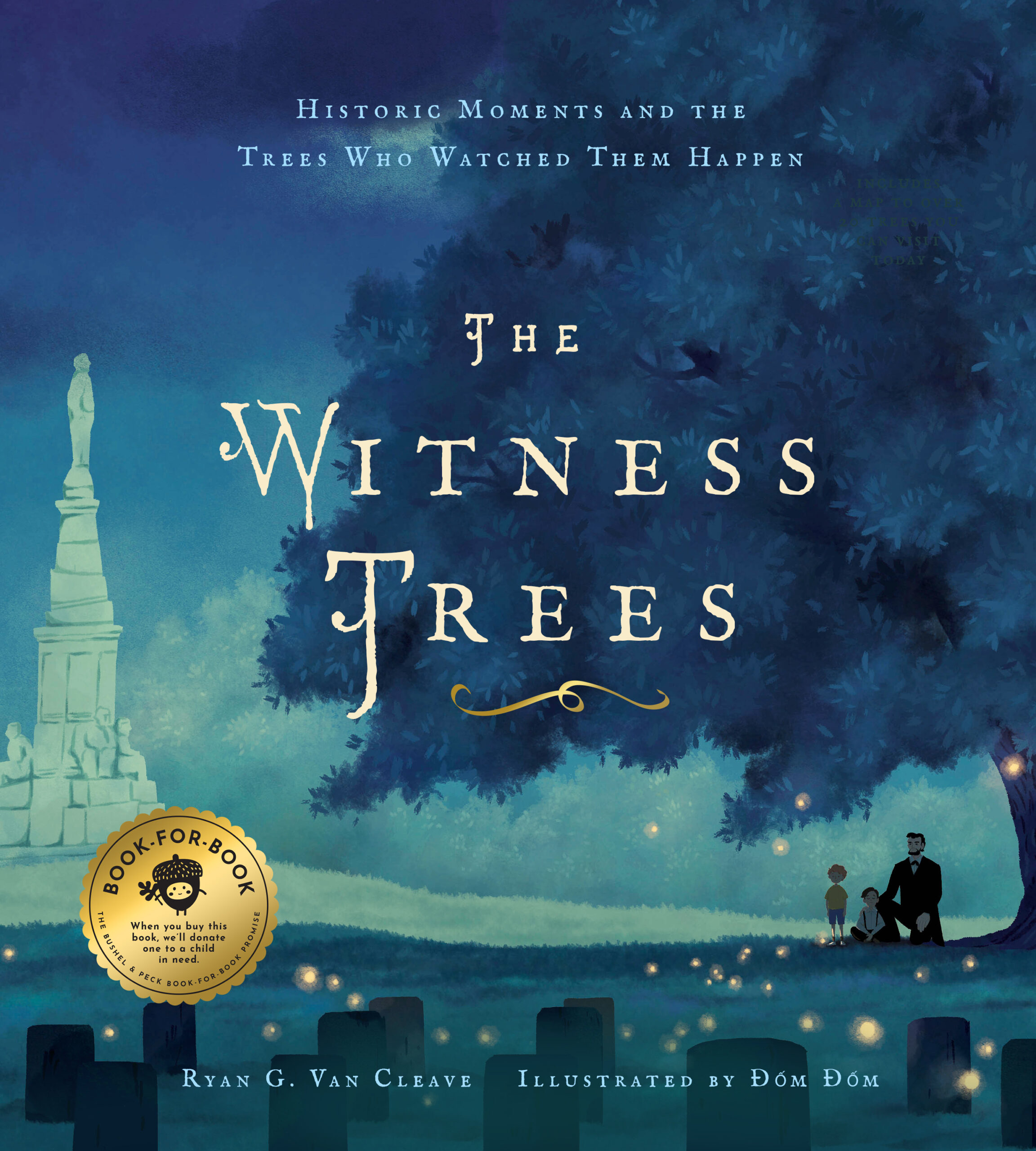
Now, without further ado, here’s the cover to The Witness Trees: Historic Moments and the Trees Who Watched Them Happen (Bushel & Peck, March 2023).

OPB: How did the idea for this book come about?

RVC: I’ve always been interested in history, but when I visited California for the first time when I was 10 or so, I was in awe of the towering redwoods. THIS was living history, I realized.

Over the years, I’ve been fortunate enough to have seen trees far older than America. Talk about putting things in perspective, right?

The idea of trees that witness history stuck with me. When I finally sat down to write this book, the title came first, and then I just worked with the idea of giving voice to the specific trees that have stood witness to some of the most important moments in human history. To no one’s surprise, the trees speak in a poetic manner, which just makes sense–trees are poetic and beautiful and glorious in every way.

OPB: Who created the art for this book?

RVC: He’s a Vietnamese artist named Đốm Đốm. My editor just knew he was right for this project, and from the start, Đốm Đốm did exactly what a good illustrator does–he deepened and expanded the text in ways I didn’t anticipate.

OPB: This is a Bushel & Peck book, right? Aren’t you working there?

RVC: It’s a curious situation, yes. After a number of conversations in late 2021 and early 2022, the owner, David Miles, bought a few of my picture book manuscripts. Soon after, he hired me to offer some editorial input on another book he’d acquired. It went so well that he eventually brought me on in a more sizable capacity.

These days, I’m serving as editor for most of their books, save for the middle grade and young adult books. It’s a great outfit and I’m pleased to be part of the team. Plus, working with a gifted artist and art director like David–whether that’s on my own books or the books of others–is an education every time.

OPB: One last question. What’s the most important lesson that this book taught you?

RVC: This book taught me that when an editor says, “I like the book but I’m going to pass because I don’t have a clear vision for it,” that it’s a real thing. While it’s always frustrating to come up short with a submission, the editor has to LOVE LOVE LOVE the manuscript or the magic isn’t likely to happen.

David DID have a clear vision for this from the start, and because of that, the entire process has gone smoothly, and the end product is looking better than I expected. It feels and looks magical to me. I’m incredibly pleased.

OPB: Thanks for sharing the cover with OPB. Best of luck with the book!

Picture Book List: 15 Pumpkin Picture Books

Maybe I’ve just got a hankering for pumpkin pie, or maybe it’s how my neighborhood is full of jack-​o-​lanterns since Halloween is right around the corner.

Regardless, this month’s Bonus Goody is another picture book list, and it’s deliciously pumpkin-​themed. Enjoy it!


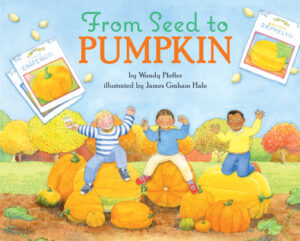
From Seed to Pumpkin by Wendy Pfeffer, illustrated by James Graham Hale (August 2015)

From Goodreads: “Pumpkins can be baked in a pie, carved into jack‑o’-lanterns, and roasted for a healthy snack. But how does a tiny seed turn into a big pumpkin? With clear text and detailed, colorful illustrations, this book explains what a pumpkin seed needs to help it grow! This book also includes delicious pumpkin recipes and easy experiments to do with pumpkin seeds.

This is a Stage 1 Let’s‑Read-and-Find-Out, which means the book explains simple science concepts for preschoolers and kindergarteners. Let’s‑Read-And-Find-Out is the winner of the American Association for the Advancement of Science/​Subaru Science Books & Films Prize for Outstanding Science Series.

Supports the Common Core Learning Standards and Next Generation Science Standards.”

Pages: 40
Reading Age: 3–7


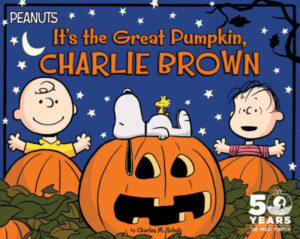
It’s the Great Pumpkin, Charlie Brown by Charles M. Schulz, adapted by Kara McMahon, illustrated by Scott Jeralds (July 2015)

From Goodreads: “Spooky tricks and hilarious treats abound in this retelling of the beloved Halloween special that comes with holographic foil and embossing on the cover!

Celebrate Halloween with Charlie Brown and the rest of the Peanuts gang!

It’s Halloween night, which means costumes, trick-​or-​treating, bobbing for apples…and waiting for the Great Pumpkin. Linus is certain that the Great Pumpkin will rise out of the pumpkin patch to bring toys to all the children of the world. Could this be the year that it finally happens?

Find out in this stunning storybook with an embossed cover with holographic foil!”

Pages: 32
Reading Age: 4–8


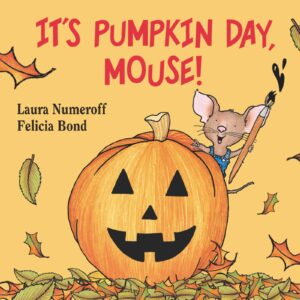
It’s Pumpkin Day, Mouse! by Laura Numeroff, illustrated by Felicia Bond (July 2019)

From Goodreads: “Join Mouse from If You Give a Mouse a Cookie as he decorates all the pumpkins in the patch in this sweet board book from Laura Numeroff and Felicia Bond.

Mouse is excited for fall because that means it is time to decorate pumpkins! But one is missing. Where could it have gone?

This is the perfect Halloween book for the very youngest reader, and is just the right book to get kids and budding artists inspired to work on their own Halloween crafts.”

Pages: 24
Reading Age: 1–3


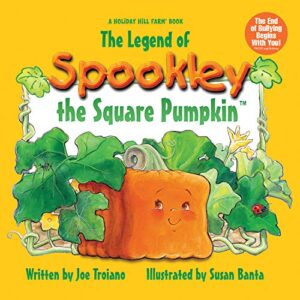
The Legend of Spookley the Square Pumpkin by Joe Troiano, illustrated by Susan Banta (Jan 2018)
From Goodreads: “One day in the pumpkin patch the strangest little pumpkin hatched.… Spookley the Pumpkin was different. All the other pumpkins teased him, until Spookley proved that being different can save the day!

Spookley CD includes — A reading of the story by Farmer Hill — The Transylvania Twist — The Spookley Song — Bugs! I Love Them All!”

Pages: 23
Reading Age: 2–6


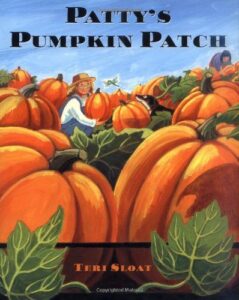
Patty’s Pumpkin Patch by Teri Sloat (Aug 1999)

From Goodreads: “Patty’s pumpkin patch is a surprisingly busy place all year long. There’s plowing and planting in the spring, weeding (and lots of growing!) in the summer, and much more than just picking pumpkins in the fall. For within the patch, creepy-​crawly, furry, and feathered friends from A to Z are always on the move, keeping Patty company and watching her work.

The perfect lead-​in or follow-​up to a visit to a pumpkin patch, Teri Sloat’s bouncy verse and vibrant, detailed artwork make this an outing kids can enjoy any time of the year.”

Pages: 32
Reading Age: 2–6


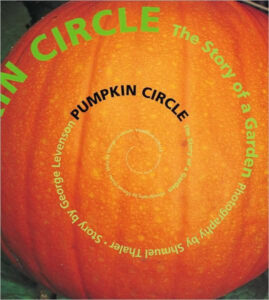
Pumpkin Circle: The Story of a Garden by George Levenson, illustrated by Shmuel Thaler (August 2002)

From Goodreads: “We can be sure of this: It’s a circle without end. It’s pumpkin seeds to pumpkins to pumpkin seeds again!

This treat of a picture book comes cloaked in the colors of fall. Bouncy verse and glowing photographs show a backyard pumpkin patch move through its natural cycle–a bug’s eye and a bird’s high view of seeds sprouting, flowers blooming, bees buzzing, pumpkins growing …and then going back to earth.

An author’s note explains how to grow your own pumpkin.”

Pages: 40
Reading Age: 4–6


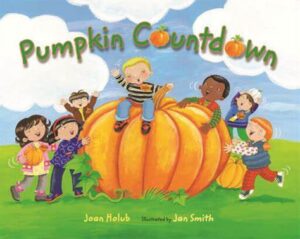
Pumpkin Countdown by Joan Holub (September 2018)

From Goodreads: “In this rhyming picture book, a classroom of children goes on a field trip to the pumpkin patch, where they count everything in sight. The book is perfect for the fall season, and an extra fun way to teach children to count backward from twenty.”

Pages: 32
Reading Age: 4–8


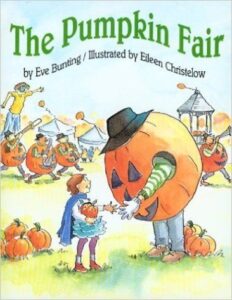
The Pumpkin Fair by Eve Bunting, illustrated by Eileen Christelow (September 2001)

From Goodreads: ““A bouncy rhyme and delightful artwork bring this pumpkin fair to life. The young narrator is ecstatic to be at the local pumpkin fair, where pumpkins of every size are on display—and that’s not all! There’s pumpkin bowling, a pumpkin pull, and every sort of food you can imagine made from the orange stuff, from ice cream to stew.… Christelow’s good-​natured watercolor-​and-​ink illustrations are filled with things to look at and laugh about, including a marching band in pumpkin suits. Keep this book around to read for autumn story hours—but you might want a piece of pumpkin pie when you’re done.”—ALA Booklist

Christelow’s jubilant illustrations in watercolor and pen and ink add to the general atmosphere of gaiety—everywhere readers look, families are interacting happily and having fun.… Halloween is never mentioned, so the book could be used to celebrate the harvest season in general. Of course, it will also serve as a good non-​scary Halloween story.”—School Library”

Pages: 32
Reading Age: 4–7


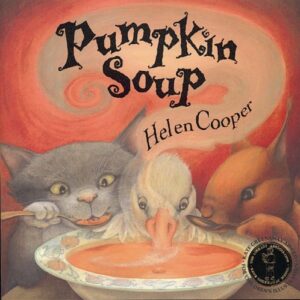
Pumpkin Soup by Helen Cooper (September 2005)

From Goodreads: “Deep in the woods in an old white cabin, three friends make their pumpkin soup the same way every day. The Cat slices up the pumpkin, the Squirrel stirs in the water, and the Duck tips in just enough salt. But one day the Duck wants to stir instead, and then there is a horrible squabble, and he leaves the cabin in a huff. It isn’t long before the Cat and the Squirrel start to worry about him and begin a search for their friend. Rendered in pictures richly evoking autumn, Helen Cooper’s delightful story will resonate for an child who has known the difficulties that come with friendship. Included at the end is a recipe for delicious pumpkin soup.”

Pages: 32
Reading Age: 2–6


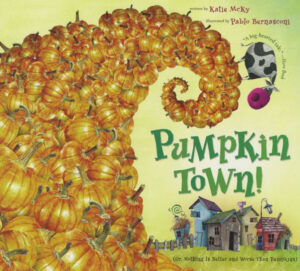
Pumpkin Town! (Or, Nothing is Better and Worse Than Pumpkins!) by Katie McKy, illustrated by Pablo Bernasconi (August 2008)

From Goodreads: “One pumpkin makes a tasty pie. Two pumpkins can be carved into grinning jack‑o’-lanterns, and a couple hundred more make for a decent pumpkin patch. Gather one thousand pumpkins and you’ll have a grand fall festival.
But what happens when a town has an accidental abundance of pumpkins?

What do José and his brothers do with a mountain of pumpkins? An EXPLOSION of pumpkins? Step into Pumpkin Town and see!”

Pages: 32
Reading Age: 4–8


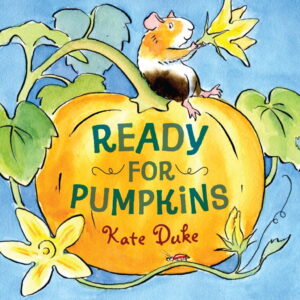
Ready for Pumpkins by Kate Duke (August 2012)

From Goodreads: “A classroom guinea pig finds a way to plant his own garden in this funny tale of pumpkins and patience.

After watching the first graders grow plants from seeds, Hercules, the class guinea pig, is inspired. He wants to grow things, too!

With the help of a rabbit named Daisy, Hercules plants his seeds and waits. And waits and waits.… He learns that growing things takes more than seeds and soil, sun and rain. It takes patience. But sometimes having to wait makes the reward even sweeter.

Duke’s story brims with humor of both the classroom and animal-​buddy varieties, and her featherlight paintings capture every ounce of Herky’s enthusiasm, impatience, and eventual satisfaction.” —PW, starred review”

Pages: 40
Reading Age: 5–8


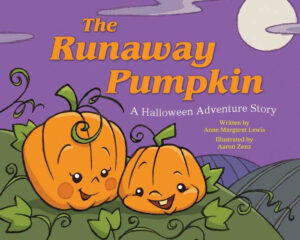
The Halloween Pumpkin: A Halloween Adventure Story by Anne Margaret Lewis, illustrated by Aaron Zenz (September 2018)
From Goodreads: “A cute little Halloween pumpkin announces that he is ready for a Halloween adventure. So he prepares to set out on the exploration of a lifetime. However, his ever watchful and caring mother wants to make sure he’s prepared before he takes that first step outside.

The little pumpkin will begin his adventure on a witch’s broom, where he will fly through the skies. Next, he’ll dare to venture through the very spookiest haunted house. And to celebrate the night, he’ll dance to the “Monster Mash”! It’s scary out there on Halloween night, but his mother is packing a parachute just in case he falls, a blankie for reassurance, and his favorite monster shoes so he can boogie-​woogie all night long. Whatever adventures he has, he is sure to be prepared. Halloween isn’t so scary when you have a mother pumpkin making sure you’re ready for whatever frights might come your way!”

Pages: 22
Reading Age: 2–6


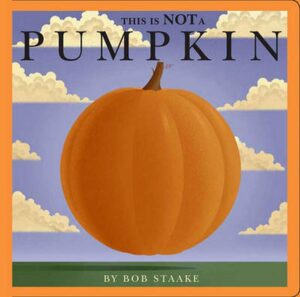
This NOT a Pumpkin by Bob Staake (August 2007)

From Goodreads:

It

may

be round like

a pumpkin and even orange

like a pumpkin, but this is NOT

a pumpkin! If it’s not a pumpkin,

then what is it? Preschoolers and

toddlers will love knowing the

answer and enjoy the fun,

unexpected” ending!”

Pages: 32
Reading Age: 1–3


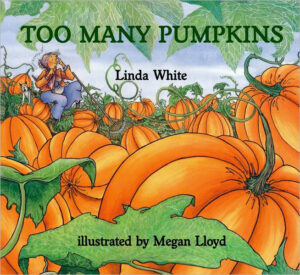
Too Many Pumpkins by Linda White, illustrated by Megan Lloyd (January 1996)

From Goodreads: “What can you do with too many pumpkins?

Rebecca Estelle has hated pumpkins ever since she was a girl when pumpkins were often the only food her family had. When an enormous pumpkin falls off a truck and smashes in her yard, she shovels dirt over the pieces and forgets about them. But those slimy pumpkin smithereens sprout up in autumn, and Rebecca Estelle finds a sea of pumpkins in her garden.

A heartwarming classic for more than twenty years, this story shows what happens when one thrifty gardener figures out how to make other people happy with the squash she can’t stomach.

Filled with colorful illustrations from a season of gardening, this is a perfect book for young gardeners and pumpkin lovers. Its wonderful lesson about helping others can be appreciated in the classroom or at home.”

Pages: 32
Reading Age: 3–7


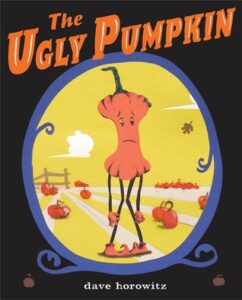
The Ugly Pumpkin by Dave Horowitz (August 2008)

From Goodreads: “Putting a wacky twist on Hans Christian Andersen’s The Ugly Duckling, Horowitz tells this story of an ugly pumpkin that doesn’t fit in. He leaves the pumpkin patch, and by the time Thanksgiving rolls around, he discovers the truth about who he is. Full color.”

Pages: 40
Reading Age: 2–6