
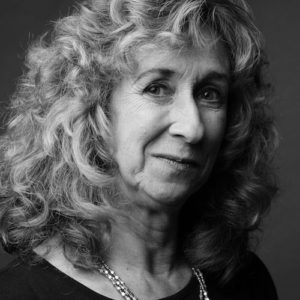
Author Interview: Sy Montgomery

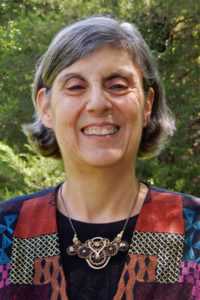
I’m a sucker for authors with great personal stories, and Sy Montgomery shares this on her website:

To research her books, films, and articles, Sy Montgomery has been chased by a silverback gorilla, embraced by a Giant Pacific Octopus, and undressed by an orangutan. But she is perhaps best known for her 14-​year love affair with Christopher Hogwood, a runt piglet who grew to a 750-​pound great Buddha master.

So, yeah. We’re having Sy in for this month’s Author Interview. No doubt about it!
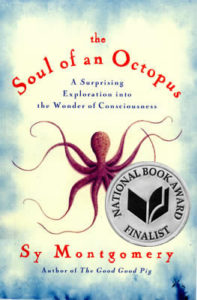
Here’s a bit more bio-​wise about Sy. She’s a naturalist, documentary scriptwriter, and author of more than twenty acclaimed books of nonfiction for adults and children, including the National Book Award Finalist The Soul of an Octopus and the memoir The Good Good Pig, a New York Times bestseller. The recipient of numerous honors—including lifetime achievement awards from The Humane Society and the New England Booksellers Association—she lives in New Hampshire with her husband, border collie, and flock of chickens.

And since I’m a world-​class animal fan, I know we’ll get along famously.

With that, let’s get to it!

Sy’s website

Sy’s Twitter


RVC: Some of the picture book authors I interview have a zillion different books about a zillion different topics. You seem to have gone another way and committed more fully to a specific focus. What’s the common denominator with the kidlit—all the books, really—that you write?

SM: Everything I write, for adults and kids, is inspired by and in service to animals.

RVC: Clearly you must’ve had a meaningful early encounter with animals. What was it?

SM: I don’t even remember this, but my parents told me: When I was younger than two, my parents took me to the Frankfurt Zoo, in Germany (where I was born–not in the zoo, but in the city of the Frankfurt!) I broke free of my parents’ hands for a few moments and disappeared. When they found me, I had toddled into the hippo pen—right next to a 3,000-pound hippo, considered the most dangerous animal in Africa.

My parents weren’t happy, but clearly, both the hippos and I were fine about it. I always felt comfortable with animals—far more so than with most people.

RVC: That’s amazing. When did you go from being an animal pal to becoming a writer (not that you can’t do both, as your career demonstrates so well)?

SM: When I began to read, my father, an Army General and my hero, used to help me read animal stories in The New York Times. Back then, in the 1960s, most of the animal stories in the newspaper were about how animals were going extinct due to poaching, pollution, and human overpopulation. I was horrified! Even as a little kid, I realized that people were at fault here, but the good news was that people could also be the solution. If only people knew what was happening! If only people understood that animals have thoughts and feelings, and love their lives as we love ours!

Up to that point in my life, I’d wanted to be a veterinarian—to this day, it’s a vocation I consider almost holy. But I realized as a child that I might be able to help more animals as a writer by getting people to care about animals.

RVC: You were a triple major in college. How did that happen, and how did it prepare you for a life as a writer (and adventurer)?

SM: I just was so hungry for knowledge about EVERYTHING—which is a great thing for a writer. My majors were magazine journalism, French language and Literature, and Psychology. I would have quadruple majored, adding biology, but the school wouldn’t let me!

RVC: I’ve been there. I finished 2.5 undergraduate majors myself and would’ve kept accumulating more had someone not told me, “Hey, just go to graduate school, silly!” Which I did. 
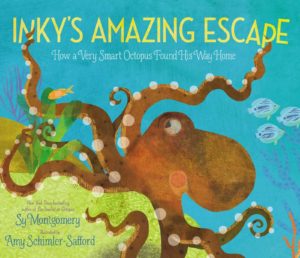
Let’s get to your books. I’m a big fan of Inky’s Amazing Escape: How a Very Smart Octopus Found His Way Home. How did that book come about?

SM: In 2015, my book for adults, The Soul of an Octopus, was published, and became a surprise national (and later international) bestseller and National Book Award finalist. So when a very smart octopus who lived in a New Zealand aquarium escaped from his tank and slid down a drain back into the ocean he’d come from, all sorts of news outlets turned to me for comment. It seemed like this would make a fabulous book for children!

RVC: Besides telling Inky’s escape story in that book, you share interesting octopus facts. They’re such interesting creatures—how do you know which things to share, and how much is too much? That’s something many nonfiction picture book writers struggle with.

SM: Kids absolutely LOVE octopuses! Really, space on the page—not my young readers’ interest—was the limiting factor!

RVC: Why are octopuses so special to you?

SM: I love how these creatures are so different from us that you’d have to go to outer space or science fiction to find something more different from us—and yet, you can become very good friends with an octopus. We both like to play!

RVC: I’m now second-​guessing myself, grammatically speaking. Should I be saying “octopi” instead?

SM: “Octopuses” is the correct plural, though “octopi” sounds cooler!

RVC: Gotcha–thanks!

Let’s talk about the octopus book you just mentioned–The Soul of an Octopus: A Surprising Exploration into the Wonder of Consciousness. Wow, what a book! Honestly, it’s the first one of yours I ran across. I’ll bet you hear that a lot.

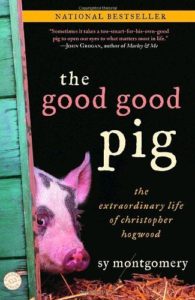
SM: Thank you! That book sure had legs! (or arms!) It was my second national bestseller. The first was The Good Good Pig, a memoir (for adults) of my life with a 750-​pound pig who was really a great big Buddha master.
RVC: What was the most difficult aspect of writing that book?

SM: I had such fun researching and writing The Soul of an Octopus. The only difficult part was my own self-​doubt that I wasn’t worthy of telling my octopus friends’ stories. But when I can’t trust myself, I can trust my teachers, in this case the octopuses and others (including people) who showed me that if I have a soul, an octopus has one, too.
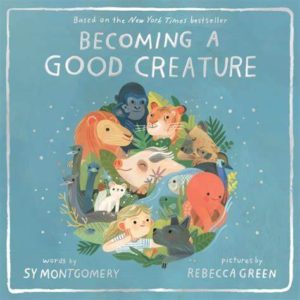
RVC: You wrote about an octopus as well in the New York Times bestselling book How to Be a Good Creature: A Memoir in Thirteen Animals. How did you go about adapting that 208-​page into a 40-​page picture book, Becoming a Good Creature? What was the process?

SM: In addressing the struggles that adults face—finding a passion, building a family, learning to forgive, to survive despair, to start life anew–How to be a Good Creature dealt with some mature themes (child abuse, suicide) that weren’t appropriate for very young children. But we must remember that even very young readers face equally dramatic challenges in their lives. I thought about these, and about what animals a young child might like to meet. Clearly I needed to put lions and tigers and sharks in there, too! And hyenas! So the picture book has fewer icky grown-​up problems and more animals.

I was very lucky to have Kate O’Sullivan, my fabulous editor, to help me with this book. (And Becca’s artwork is so amazing that I honestly think this title would have sold if all I’d done was copy 40 pages from the phone book.)

RVC: Rebecca Green illustrated both the adult version and the picture book. You’re right–she’s very good. What appeals to you most about her work?

SM: The tenderness that she shows in depicting the animals is what I love most about her work. She doesn’t portray animals as cartoons. Many books about octopuses, for instance, have the head in the wrong place. That drives me nuts. Becca’s respect and affection for the animals shines through every illustration.

RVC: It seems to me that you think that we should—need to, in fact—interact more meaningfully with the animal world.

SM: Absolutely! Limiting your friendships to just one species is just as impoverishing as eating only one food, or listening to only one piece of music.
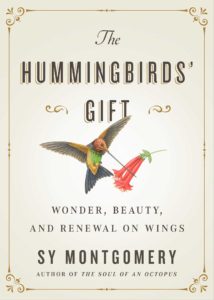
RVC: You’ve got a new book coming out in a few weeks—The Hummingbirds’ Gift: Wonder, Beauty, and Renewal on Wings. Congrats on that! While it’s not a picture book, it’s definitely kid friendly. In all your experience putting that book together, what surprised you the most?

SM: In that book, I had the great blessing of working with hummingbird rehabilitator Brenda Sherburn helping to raise and release orphaned baby hummingbirds. What amazed me is that these tiny delicate babies—they are little more than bubbles wrapped in light–can survive at all. Even for a mother hummingbird, raising a baby is a Herculean task. But for a person to do it? Consider this: they have to be fed every 20 minutes or they starve. But feed them too much, and they can actually pop.

RVC: That’s amazing. What’s the biggest misconception people have about hummingbirds?

SM: Most people love hummingbirds, and don’t realize how many we inadvertently kill. They are killed in shockingly large numbers by our pet cats. They are killed by pesticides we use on our lawns and gardens. (They don’t just need nectar; they need hundreds of tiny bugs every day to survive.) They are killed by pollution, by climate change, by the destruction of their habitats for homes and offices and stores. So it was a great privilege to try to fight that tide by working with Brenda to literally help bring some nearly-​dead hummingbird babies back to life!

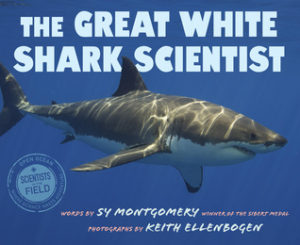
RVC: I’m a shark fan, too, so of course I really enjoyed your The Great White Shark Scientist, which is part of the Scientists in the Field series that includes other titles of yours such as Condor Comeback and Amazon Adventure. What is the most important thing people should know or understand about sharks?

SM: More people are killed by toilets than sharks. More people are killed by toasters than sharks. More people are killed by doctors’ and nurses’ mistakes than by sharks. But nobody wants to get rid of toilets, toasters, or medical professionals!

RVC: You likely don’t know this, but I live quite close to Mote Marine Laboratory & Aquarium, which was launched in 1955 as the Cape Haze Marine Laboratory. Who started it? Why, Dr. Eugenie Clark, a.k.a. “The Shark Lady.” Did you ever get a chance to talk sharks with her?

SM: Oh my gosh, I would’ve loved to! But I’m very lucky to be good friends with the star of The Great White Shark Scientist, Dr. Greg Skomal, who is the lead researcher documenting the recent and exciting population increase of great whites off Cape Cod’s iconic shores.

RVC: One last question before the final part of the interview. The New York Times has called you “equal parts poet and scientist” and The Boston Globe says you’re “part Indiana Jones and part Emily Dickinson.” Which of those four compliments pleases you the most?

SM: Though I’m a huge fan of Emily Dickinson’s, I think Indiana Jones had more fun!

RVC: Okay, Sy. Here we go. Put on your penguin party hat, because it’s time for THE SPEED ROUND! Zebra-​fast questions and zoomy cheetah answers, please. Are you ready?

SM: You bet!

RVC: Craziest thing you ever ate while chasing animals all around the world the way you do? 

SM: I drank rice wine flavored with the corpse of a fetal deer out of a human skull in Borneo while researching my first book.

RVC: Which animal would you most want to see write a book about YOU?

SM: Octavia the Giant Pacific Octopus. I would love to know what she thought about me, even though my mouth was in the wrong place (should have been in my armpits), I had two too few hearts (octopuses have three) and I could neither change color nor shape. Yet she loved me. Why?

RVC: If you had a theme song that describes your life right now, it’d be….

SM: A‑wimoweh, a‑wimoweh, a‑wimoweh, a‑wimoweh (“The Lion Sleeps Tonight”)
RVC: If you could ask any one animal any one question—which animal, and which question?

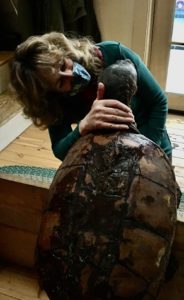
SM: I would ask Fire Chief, a 40-​pound, 60–80 year-​old snapping turtle who I work with (and adore) at Turtle Rescue League, what is his experience of time. (He was injured when he was hit by a truck crossing a street, and we are working with him to strengthen his back legs. I’m attaching a picture just for you!

RVC: A recent great picture book about animals is…
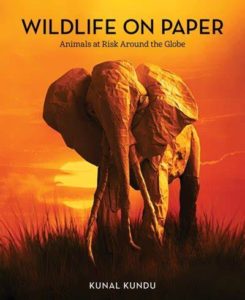
SM: Wildlife on Paper: Animals at Risk Around the Globe by Kunal Kundu. The book was inspired by his son, and features artwork he creates from crumpled paper.

RVC: What’s the best thing a child ever said about one of your books?

SM: I want to spend my life helping animals just like you!

RVC: Thanks so much, Sy! This was a a REAL treat.
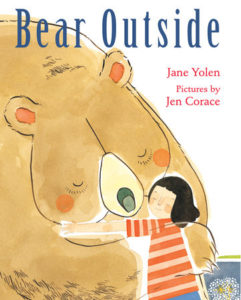
A Celebration of Jane Yolen’s 400th book (2 interviews and one original poem)

To help celebrate Jane Yolen’s 400th published book–what an amazing accomplishment!–I felt the need to do more than just review it at OPB. Thus, we have this bonus goody that’s just for you!

I asked Jane and Jen four questions each, and with the productivity and generosity that Jane is so well known for, she offered an original poem, too. Enjoy!


Questions for Jane

RVC: Why is Bear Outside a good book to be #400?

JY: Because it is typical of my picture book style–lyrical, strong young girl who solves a problem, and has a kicker last line.

RVC: What was most surprising about the hubbub around #400?

JY: That I seem to be the most surprised person of all!

Heidi (my daughter and PA) had been counting the books because when I hit 365 we had a big party at the Eric Carle Museum with teachers, librarians, editors, friends, etc. But I thought as I was just reaching my 80s, I would slow down. But a little over three years later, it was clear I was going to hit 400.

RVC: What’s something readers wouldn’t guess about the girl in this story?

JY: She is me in a way, though instead of a bear, I look out through the eyes of story and it emboldens me.

RVC: Your favorite image from the book? 

JY: I think the very last page, when they are quiet, and instead of a child hugging a toy bear to keep herself safe from night frights, the bear is hugging the girl.


Questions for Jen

RVC: Why is Bear Outside a good book to be #400?  

JC: Bear Outside is the result of so many things I never saw coming or anything I could have conceived of when I started my career in illustration. I had worked on bits and pieces here and there, and I got my foot into the door with Little Pea, but it wasn’t until I started creating bodies of work for gallery shows that I really started to develop a visual voice that felt true to me. It has always been a symbiotic relationship, bringing what I learned creating pieces for galleries into book work and bringing the narrative structure of book work back into paintings made for gallery shows.

If you had told 2007 me that this piece of my career would become part of someone else’s artistic milestone, let alone Jane Yolen’s artistic milestone, I would have calmly told you to get off of my lawn. But it is. It exists, it’s here, and it’s an incalculable honor. To have something put out into the world be seen and understood by someone and then be moved to write a story that respects the core of the image with spare, perfect words? It gives me too many feelings.

For me it’s not a good book to be #400. It’s the PERFECT book to be #400.

RVC: What was most surprising about the hubbub around #400 for Jane?

JC: When I received the manuscript for Bear Outside, I wasn’t told that it would be Jane’s 400th book. I didn’t even know until recently. So it’s all a wonderful surprise. I muddled through my own brain and ideas for so long–it’s a real crock pot of a brain. It makes me wonder what it’s like to have a brain that is all “go go go” while also creating beautiful, meaningful stories. It’s awe inspiring.

RVC: What’s something readers wouldn’t guess about Bear?

JC: Probably that Bear is a Taurus sun with a Sagittarius moon.

RVC: Your favorite line from the text?

JC: “I take care of Bear and Bear takes care of me.”

It’s the perfect distillation of the relationship between Girl and Bear. It’s ideally the relationship we should have in others.


Hugging the Bear

At night, in the dark,
he snores and grumbles.
Sometimes he whimpers.
Then I curl around him.
I am here, Bear, I whisper.
Day will come soon enough.
Wear me like a  suit of armor.
Hold me like a sword of fire.
Tell my story over and over
till all night fears go away.
And his mumbles and whimpers
fade into the dawn.

©2021 Jane Yolen all rights reserved

Author Interview: Laurie Wallmark

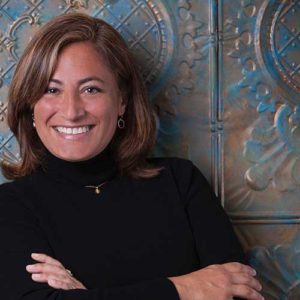
This month’s author interview is with award-​winning children’s book author, Laurie Wallmark, who writes wonderful picture books and regularly presents at conferences. She also offers webinars on kidlit writing, too, like the one I attended last week from her at The Writing Barn!
Here are five more things you should know about Laurie. She:

  • has two grown daughters (both software engineers!)
  • co-​chairs the Rutgers University Council on Children’s Literature
  • taught computer science to students incarcerated in maximum security prisons
  • has had four separate careers–software engineer, owner of a mail-​order company selling books about adoption and infertility, computer science professor, children’s book author
  • had a bookstore on the web before Amazon did

Now that we’ve got a much clearer sense of the background basics, let’s get to the actual interview and find out more about Laurie’s secret to PB success.

Website

Blog

Twitter

Facebook


RVC: So, we know each other through Jane Yolen’s Picture Book Boot Camp. How did you get involved with that?

LW: As soon as I saw the announcement that Jane Yolen and Heidi Stemple were holding a picture book boot camp, I was immediately interested. After speaking with a friend who had attended before, I knew I had to apply.

RVC: What has Jane’s support and guidance meant to you?

LW: The kidlit author community has always been a warm and supportive community. But to have someone with as much experience in the field as Jane in my corner means the world to me. Whether it’s sharing publishing business information or giving a “you can do it” just when you need it, I know I can count on Jane.

RVC: How’d you get started in writing children’s books? Since you had a career in software engineering and computer science, I’m guessing the writing bug came later.

LW: The writing bug came significantly later. As a child, the only creative writing I did was a few poems and some songs. About 20 years ago, I had an idea for a middle-​grade novel, so I read many craft books and took writing workshops. That book didn’t sell, so I figured I wasn’t a writer. Five years later, I had another idea for a middle-​grade novel. This one did sell, but the publishing company went out of business. But by this time, I was hooked. Later, I took one more writing break when it felt like I was also so close to getting published, but never quite getting across the finishing line.

Luckily, I couldn’t stay away from writing.

RVC: Why did you choose to earn an MFA in Writing? 

LW: After that second break, I decided I needed to concentrate on improving my craft rather than think about getting published. An MFA would help me to do just that.

RVC: What are some of the specific ways the MFA in Writing for Children & Young Adults at Vermont College of Fine Arts helped prepare you for success as a picture book writer?

LW: My first semester at VCFA, I took a picture book intensive. Having to write so many different types of picture books in so little time forced me to figure out how to get to the heart of the story and write it.

RVC: Unlike some writers who try their hand at everything, you’re laser focused—you write picture book biographies about women in STEM areas. Why is that your calling?

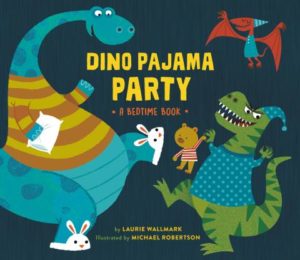
LW: I write about women in STEM because I love science and math, and I want to make sure that all children realize that anyone can join the field. But, I also have a fiction picture book, Dino Pajama Party, coming out in October from Running Press Kids. What’s funny is that because of my reputation, people ask me if it’s nonfiction.

RVC: Here’s hoping the cover helps clue them in!

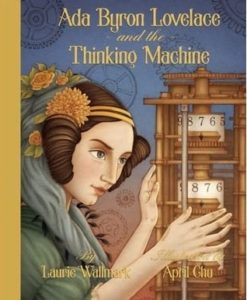
Now, your first book was Ada Byron Lovelace and the Thinking Machine (Creston Books 2015). What’s the story of how that came about?

LW: I’ve always loved math, and I wanted to share that love with kids. Since I’m a computer scientist, and Ada is a mathematician and the world’s first computer programmer, she seemed like the perfect subject for a biography.

RVC: Let’s talk about the process of writing your books. How do you get your ideas? Do you start with a subject, a person, or something else?

LW: For my women in STEM books, I keep a running list of people I might want to write about. When the time comes, I review that list and any notes I’ve already made, like the availability of source material.

For my fiction, I also keep a running list, but in this case it might be an idea, a title, a phrase, or a character. Again, periodically I review the list to see if any would make a good picture book.

RVC: How much research do you do before actually writing?

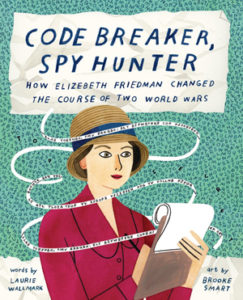
LW: I do almost all my research before I start writing. Invariably I come across discrepancies in the information, and that’s when you need to dig deeper. That’s where archive librarians are really helpful. As a simple example, in my new book, Code Breaker, Spy Hunter, the illustrator wanted to draw a picture of Elizebeth Friedman with her grandchildren. I knew she had had six, but what were their sexes and relative ages? Librarians to the rescue.

RVC: That book’s coming out this month. Congrats on that!  How’d you get hooked on her story?

LW: What’s fascinating to me about Elizebeth is that she wasn’t interested in math or science as a kid. She loved languages and majored in English. Yet she went on to be one of America’s most important cryptologists, helping to capture Nazi spies and rum runners. She also created the CIA’s first cryptology department.

RVC: She sounds positively awesome. I look forward to reading the book.

But part of the challenge with writing picture book biographies is making them interesting. What are some of the strategies you use to make that happen?

LW: I think if the author has a passion for what the subject’s field, it comes through in the writing. In my case, I love science and math, as you may have figured out by now!

RVC: Back matter. How do you know if you should use it? And if so, what and how much?

LW: You need to have, at the very least, a timeline of the person’s life and selected resources. Teachers and librarians appreciate the back matter, so it’s worthwhile for authors to include more. My back matter usually includes a more detailed explanation of the scientific or mathematical principles in the book. But in addition, I’ve included more unusual back matter such as transliterating from the Cyrillic alphabet and the subject’s various nicknames.

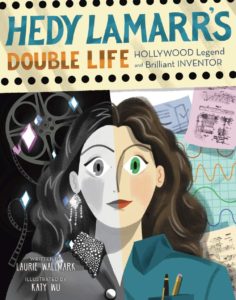
RVC: If someone’s already covered the person you want to write about, should authors just move on? I’m thinking about the situation with your book Hedy Lamarr’s Double Life and Jan Wahl’s Hedy & her Amazing Invention.

LW: A better example is Ada Lovelace. After my book came out, three more picture books about her also came out within a year.

I’d say if you know ahead of time, you should consider writing about another person. But if the subject is important to you, go for it. Clearly we need more than one book about any specific person.

RVC: Part of what sells books is giving a great author visit to libraries and schools. What kind of activities does the Friedman story lend itself to when you’re promoting that new book?

LW: This one’s easy, because the kids can have fun learning how to code and decode messages. Maybe I can find a Dick Tracy magic decoder ring.

RVC: I’ll take one, if you have those!

One last question for this part of the interview. Cuts happen, and good things sometimes don’t make it into the pages—it’s a fact of publishing. So, what didn’t make it into Code Breaker, Spy Hunter?

LW: Elizebeth worked on so many cases that it was hard to decide which ones to leave out. Even though I had 48 pages, which is a lot for a picture book, I could only include her most famous ones. For example, she was once called in to settle a dispute between two countries by showing a sailing vessel flying a Canadian flag was actually a US ship.

RVC: Alright, Laurie—it’s time for the LIGHTNING ROUND! Zippy questions, zappy answers, please. Are you ready?

LW: Go for it.

RVC: What’s your biggest time waster?

LW: Reading.

RVC: Favorite literary villain?

LW: Professor Moriarty.

RVC: Which of the STEM women you’ve written about would you most like to hang out with?

LW: Elizebeth Friedman. We could talk about both math (cryptology) and literature.

RVC: Five words that describe your writing process.

LW: Slow. Slow. Slow. Slow. Lightning-speed.

RVC: What’s a recent women-​in-​STEM biography that really got your attention?

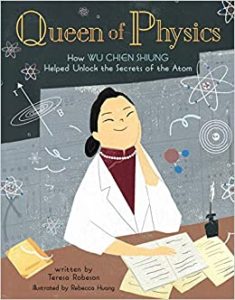
LW: Teresa Robeson’s Queen of Physics: How Wu Chien Shiun Helped Unlock the Secrets of the Atom.

RVC: What’s the best book compliment a kid every gave you?

LW: One of my school visit presentations is about women in computing. During a Q&A, one student said, “Ms. Wallmark, you should write a book about you.”

RVC: Thanks so much, Laurie! Best of luck with Code Breaker, Spy Hunter, too!

Author Interview: Beth Ferry

When I saw that Beth Ferry’s website had this quote from Albus Dumbledore (“Words are, in my not-​so-​humble opinion, our most inexhaustible source of magic”), I knew she’d be a terrific choice for the February 2021 Author Interview at OPB.

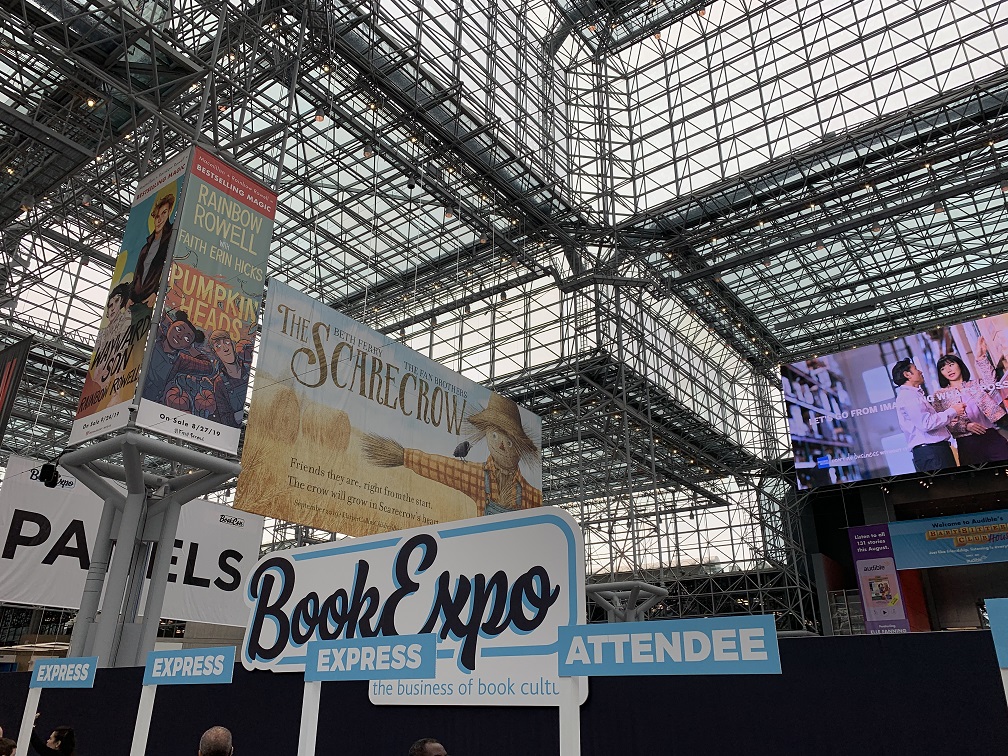
Plus, she was already on my radar thanks to my trip to Book Expo America in May 2019.

Hmm…I wonder why…

In case you don’t see the fun here, the banner (above) for Beth’s book (below) was about fifty feet long. Maybe bigger.

Before we get to Beth directly, let’s do a little more backgrounding.

Beth:

  • loves every shade of purple
  • has mad love for bulldogs
  • lives within a stone’s throw of a New Jersey beach
  • only grows pumpkins in her garden
  • can never have enough lemon cookies and hot tea
  • adores Anne Shirley of Anne of Green Gables

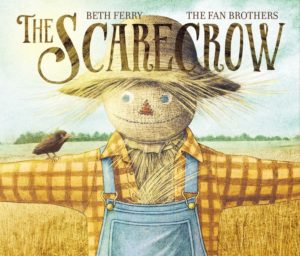
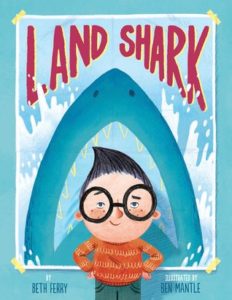
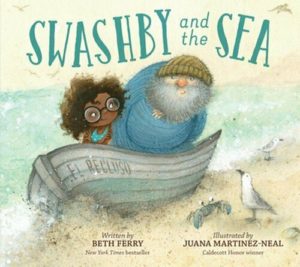
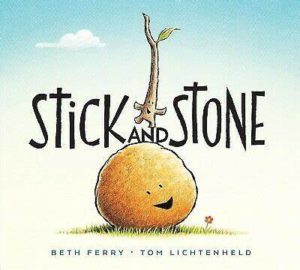
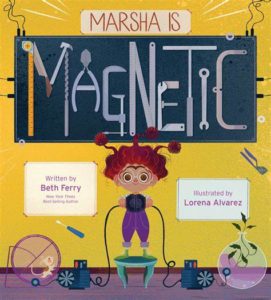
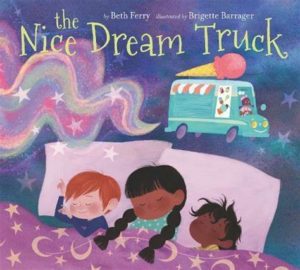
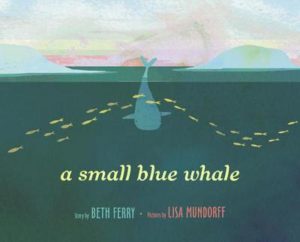
And she’s the author of more than a dozen picture books including these fine titles (which I heartily endorse).

Okay, now that we’ve gotten a good sense of who Beth is and what she’s about, let’s dive into the interview.

Website: www.bethferry.com

Twitter: @bethferry1

Instagram: @bethferry1


RVC: What role did SCBWI (Society of Children’s Books Writers and Illustrators) play in your writing journey?

BF: SCBWI was the first real resource that helped me understand how publishing works. It answered the many questions I had and showed me how much I really needed to learn. SCBWI taught me to treat my writing as a profession. Once I approached writing that way, it helped focus me.

RVC: What were some crucial mentor texts in those early years of writing?

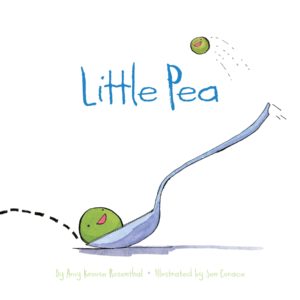
BF: The first book that comes to mind is Little Pea by Amy Krouse Rosenthal. That book made me realize the simplicity, the complexity, the brilliance, and the sublime silliness inherent in the best picture books. It was the book I remember having on my desk when I wrote Stick and Stone.

RVC: What’s the story behind Stick and Stone, your first picture book sale?

BF: I brought Stick and Stone to NJ SCBWI’s June 2011 conference. I had a one-​on-​one with an editor from Penguin who gave me some really positive feedback. He encouraged me to get an agent.

RVC: Is that how you ended up with super-​agent Elena Giovinazzo at Pippin Properties?

BF: Like I said, I was told: “Get an agent.”

Three little words.

One BIG task.

RVC: Totally agree!

BF: I submitted Stick and Stone to Pippin in the fall of 2011 and Elena pulled it from the slush pile and sold it in December. How’s that for crazy?

RVC: I often tell my students that hard work + timing + luck is the winning combo. Clearly it was for you, too!

But back to that first book. The hardest part of writing Stick and Stone was __________.

BF: …keeping to the word count I set for myself. I gave myself the goal of writing a story in under 200 words. I began writing Stick and Stone in prose, but couldn’t keep to the word count, so I decided to try it in rhyme. Once I switched over to rhyme, it just worked.

RVC: What surprised you most about Tom Lichtenheld’s illustrations?

BF: How perfect they were. Tom sent 3 different versions of the book for us to consider. I’m sure that every author you interview will tell you that the feeling of seeing the art for your very first book for the very first time is magical, indescribable, euphoric. And it is. Tom’s illustrations brought the story to life in the most perfect way. What surprised me even more is what a great guy he is. I’m extremely lucky to get to work with someone as talented and wise as he is.

RVC: Picture books are a whole bunch of collaborations of one type or another, but perhaps the most important is the author + agent combo. Why are you and Elena such a great fit?

BF: Elena understands that I’m prolific and supports me fully, no matter how many manuscripts I send her. She often pushes me to write things I may not have considered writing, such as graphic novels and chapter books. I know she believes in me and that helps me through the ups and downs of publishing.

RVC: What’s Elena’s superpower?

BF: Persistence! She never gives up on a story that we both love, or that I feel very strongly about. If it gets rejected a number of times, we might take a break from submission, but I know she’ll never give up on it, which really translates to knowing she’ll never give up on me.

If that’s not a superpower, I don’t know what is.

RVC: When did you realize that you could do this for a living? And how did you know?

BF: That’s a great question with not a great answer. I write because I love it, because I can’t not write. I would do it even if I couldn’t make a living at it. There’s no magic moment where you believe you’ve made it or done it. There’s always just the next book. The next great idea.

RVC: You just had a new book come out in January—Marsha Is Magnetic. When I first read it, I was struck by the pace of the book. When you turn in a manuscript like this, are you marking the page breaks yourself? How conscious are you of crafting effective page turns?

BF: I never paginate any of my manuscripts and actually don’t consciously consider page turns. I know how important they are, yet I focus more on making sure the story is satisfying. That’s my favorite word to describe a successful picture book – satisfying!

RVC: It seems as if you like rhyme even though you write plenty of books that don’t use it. In those non-​rhyming books (like Marsha Is Magnetic) how much do you tinker with the text to get the sound and rhythm satisfying?

BF: I love writing in rhyme and I always try to have some type of rhyme in all my books, whether it’s internal rhyme or just a rhyming couplet thrown in there somewhere. But you’re totally right that there’s a rhythm and pace to all picture books and I work really hard to make sure that my books have this. I spend most of my time tweaking my stories until I love how they sound when I read them aloud.

RVC: And…you’ve got a new book coming out in just over a month. It’s a bedtime story entitled The Nice Dream Truck. Care to give us a little teaser?

BF: Oh, how I love everything about this book. Playing with the words ice cream was the spark for the story and anything that has to do with ice cream and words is pretty excellent in my book. And this book explores the idea that nice dreams can be served up just like ice cream. It’s a bedtime story that encourages children to choose what they want to dream about right before going to sleep. I’ll have a triple scoop of bulldog puppies, please!

RVC: Me, too! Sounds sleepily scrumptious.

How do you handle making a bedtime book engaging while not revving a kid up so much that they (ironically) can’t get to sleep?

BF: I think the moments right before we fall asleep are when our minds are open to anything. We revisit parts of our day or we think of things we’re looking forward to. The idea that children can and should dream about goals or hopes or even fantastical romps with narwhals seems like such a satisfying way to head into dreamland.

RVC: In what ways did illustrator Brigette Barrager expand your original vision for The Nice Dream Truck?

BF: Brigette’s color palette is so dreamy and perfect. It totally captured the nighttime feel I had imagined, but her use of popsicles and ice cream scoops and cones for all the dream scenarios was such a wonderful surprise. Every page is full of ice cream! It makes so much sense, but it still surprised me!

RVC: You seem like you’ve got a very full plate in terms of your writing—witness five picture books coming out in 2021, and four in 2022! Congrats on all that success. How do you balance new work and under-​contract projects? Between your writing and non-​writing life?

BF: Time is such a strange thing. They say, if you want something done, ask a busy person. Which used to be me. But my three little “busys” have grown up, so now there’s not much difference between my writing life and my non-​writing life.

RVC: One last question for this part of the interview. Clearly, you’re a Harry Potter fan. If you had JK’s blessing to do a Potter-​themed picture book, what would you do?

BF: What a fun question! I think I’d have to do an unexpected friendship story, possibly between Hedwig and another owl. I’ve always wanted to do an owl book!

RVC: As JK might say, “Aparecium Interview Part 2!” which means, of course, that it’s now time for the SPEED ROUND. Zippy questions and zappy answers. Ready? 

BF: Hit me!

RVC: Best place in Jersey for slice of pizza?

BF: Carmen’s Pizzeria in Neptune, a.k.a. Pete and Elda’s.

RVC: What’s your biggest time waster?

BF: Watching Top Chef. I don’t even like to cook.

RVC: Which of your picture book characters thinks they’re most like you?

BF: Swashby!

RVC: Which of your picture book characters is ACTUALLY most like you?

BF: The whale from A Small Blue Whale.

RVC: What are some recent picture books that really got your attention?

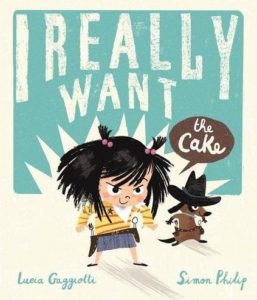
BF: I just read The Infamous Ratsos by Kara LaReau and loved it so much (although technically, it’s a chapter book.) I also thoroughly enjoyed the sweetness of Truman by Jean Reidy. I Really Want the Cake by Simon Philip made me laugh. And Tom Lichtenheld’s Louis, which he wrote, but did not illustrate, completely charmed me.

RVC: Best compliment a child ever gave your books?

BF: The very first time I read Stick and Stone to a group of 4‑year olds, they clapped. I was so surprised and delighted. I will never forget that day.

RVC: Thanks so much, Beth! Best of luck with your new titles this year!

BF: Thank you, Ryan, for these wonderful questions. I really enjoyed this.


Author/​Illustrator Interview: Marla Frazee

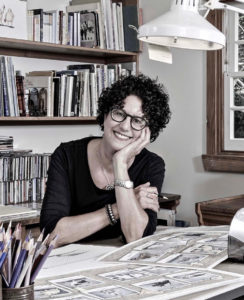
It’s always a treat when we get a picture book author who illustrates as well, and that’s exactly what we have with our January interview with Marla Frazee. (Witness two Caldecott Honors for her fine illustration work!) She was born and raised in LA, and has three grown sons who are off in the world, making her proud.
To get to know her a little bit better, let’s play seven truths and one lie. Here we go!

Marla:

  1. created the artwork for Sara Pennypacker’s bestselling Clementine series.
  2. had a childhood pet—a dog named Pappy who ran away at top speed every chance he got.
  3. refused to go to nursery school (and found kindergarten terrifying!).
  4. had to go to detention for wearing a clown costume to a high school assembly.
  5. was a contestant on Art Linkletter’s “Kids Say the Darnedest Things” TV show.
  6. has a Little Free Library in her front yard.
  7. authored The Boss Baby, which was adapted into a Dreamworks movie of the same name.
  8. works in a red-​doored studio in her backyard beneath an avocado tree.

Want to know which one is the falsehood? Read on and find out! The answer will be in the interview below.


RVC: What was the picture book that set you on the path to being a picture book maker?

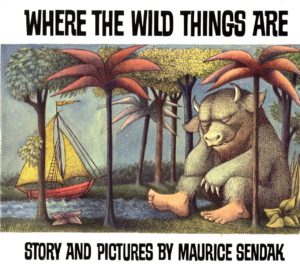
MF: It was, without a doubt, Where the Wild Things Are. I was 8 years old when it came out. I loved books, loved to draw, and was already planning to be a children’s book author and illustrator, but the moment I saw Max’s bedroom turn into a forest in just three page turns, well… it sealed the deal. I just wanted to learn how to make that sort of magic happen.

It’s still my favorite book of all time and I’m still trying to figure out how Sendak did what he did in it.

RVC: I’m sure you’ve been asked this before—are you a writer who does art, or an artist who writes? 

MF: I’m an illustrator who tells stories with pictures—and often words.

RVC: What kind of training did you have for your writing and your art?

MF: I went to ArtCenter College of Design in Pasadena, CA, and received a BFA in Illustration. I’ve attended as many SCBWI (Society of Children’s Writers and Illustrators) conferences as I could. I’m also a long-​time subscriber to The Horn Book Magazine which has given me a sense of both publishing history and its current state, notable books and the people who make them, and some understanding about why certain books get great reviews and others don’t. When I had children and read a bazillion books to them over the years, I developed my own passionate opinions about which children’s books worked and which didn’t. That’s been my training!

RVC: It took a while for you to break into picture books.

MF: It did take a while! No one could ever say I was an overnight success!

RVC: What kinds of things did you do along the way before landing that first book deal?

MF: I worked at Disney Studios after I graduated and quickly realized it wasn’t for me. I quit after 6 weeks to become a freelancer—and that’s what I’ve been doing ever since. In the years after that, I did whatever kind of illustration job I could get: textbook and mass-​market books for kids, editorial illustration, advertising, greeting cards, and stuff like McDonald’s Happy Meals boxes and kid-​friendly mascots for every team in the National Football League. But during all those years, I was trying to get published. I just wanted to make picture books.

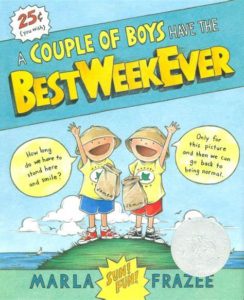
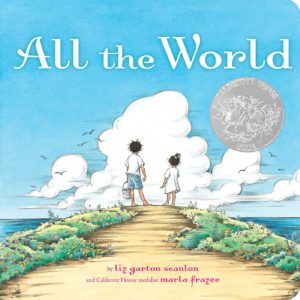
RVC: You’ve had incredible success as an illustrator for picture books, having received a Caldecott Honor for All the World and A Couple of Boys Have the Best Week Ever. How aware were you of those books being special during their making?

MF: I’m not sure how this will sound, but I always think the book I’m working on is special. If I don’t, I’ll keep revising until I do. And if I still don’t, as painful as it is, I put it away. The thing I am most surprised about, honestly, is which of my books do end up connecting more than others. I am the worst judge of how a book of mine will do once it is out in the world.

RVC: Liz Garton Scanlon did an interview with OPB in 2018—she’s terrific. What was the biggest challenge you faced in illustrating her manuscript All the World?

MF: Liz IS terrific. I’m with you on that!

RVC: Absolutely!

MF: Back to the previous question, I was immediately aware that her manuscript for All the World read like a classic. The biggest challenge I faced was getting my head around the title. I mean, a book about ALL the world? I knew I couldn’t illustrate a book about all the world. So I thought about what it was like to feel a part of the world—to be somewhere you love with people you love—and illustrated that.

It took a while to figure out. I dumped a nearly finished sketch dummy and started over. Our editor, Allyn Johnston of Beach Lane Books, kept both Liz and me on track through a number of revisions. Allyn had a sense of the emotional power of All the World from the start. She was instrumental in how that book came to be.

RVC: How is the process different with illustrating your own books versus the books of others?

MF: I love alternating between doing one of my own books and then illustrating someone else’s words. The process is very different. If it’s my own, I’m moving back and forth between pictures and words. It’s usually a big mess and I often don’t know it will come together. On the other hand, when I say yes to a manuscript, it’s already written. And it intrigues me, challenges me, and isn’t anything that I could’ve come up with myself. My job is to bring the picture story to a place where it is an equal partner to the words. It feels acrobatic.

RVC: How many books are you typically working on at the same time, and how long do they generally take?

MF: I typically work on one book at a time and once I’m actively in process (as opposed to marinating), each book usually takes a year.

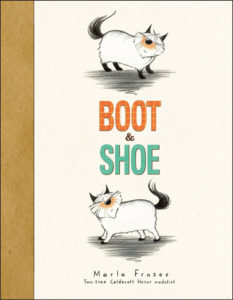
RVC: Let’s talk about Boot & Shoe. On one paw, it’s a funny dog bromance, but on the other paw—like so much of your work—there’s wit and wisdom, as well. How did this interesting story come about?

MF: Ha! Well asked!

Let’s see. I was teaching my Children’s Book Illustration class at ArtCenter, something I’ve done on and off for 25 years, and I listened as a student read Blueberries for Sal to the class. I love that book and it’s been a major influence in my own work, but this was the first time since I was a child that anyone read it aloud to me. I was thinking about how hilarious it is when we, the reader, know what’s going on but the characters don’t. Little Sal is following Little Bear’s mom and Little Bear is following Little Sal’s mom, and they don’t know it yet! But we do!

I decided right then that I wanted to make a book like that. I remembered how fun and funny it was to play hide-​and-​seek around a tree; one person going one way, the other person going the opposite way. That’s how the idea started.

RVC: Which of your books surprised you the most in terms of how it came out?

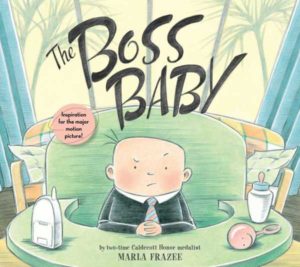
MF: The Boss Baby was one of the hardest books to figure out. It was funny in concept but unfunny for a long time in execution. The baby character needed to be cute, but not-​cute. The tone needed to be understood by a child, but sophisticated. The setting needed to be contrived, but realistic. I almost gave up on it. Obviously, I’m very glad it finally worked.

RVC: I think it’s fair to say that you might be best known–beyond the kidlit world—for The Boss Baby movie. How did that all happen?

MF: I heard that DreamWorks animation was interested in optioning The Boss Baby right before the book was published. I was thrilled, of course, but didn’t take this to mean a feature length film would actually be made. I know there are a lot of hurdles. But we just kept hearing good news about where it was in first the development process, and then in the production process.

During these years, DreamWorks invited me to the studio a number of times to meet the filmmakers and see the progress. It was an incredible experience to watch how much love, care, and talent went into it all. I always left completely blown away and inspired.

RVC: Just the other day, I saw that the movie sequel is coming out in late 2021, and there’s the Netflix TV show that’s been going for a few years now. How involved are you in the spinoffs?

MF: I was invited to see the sequel a few months ago when it was about 60% finished and had a great conversation with the producer afterward, but I have no creative involvement with the Boss Baby films or TV show. I’m more like a soccer mom. I sit on the sidelines and cheer.

RVC: You once said that kids read the pictures in a picture book in a way that adults no longer can. What does that mean? 

MF: Kids really read pictures. For story. For meaning. They see everything. No detail escapes them. They’re experts at it.

I think that once we learn to read words, this picture-​reading skill lessens and words take precedence. By the time we’re grownups, we aren’t all that great at reading pictures. We see them, sure, but we don’t study them the way kids do. I feel honored and humbled to be working for an audience of picture-​reading experts.

RVC: You’re really good at working the page turn—something would-​be picture book writers often ignore or struggle with. What’s your secret?

MF: What a nice thing to say! I work on thumbnails sketches for months and months to get the pagination right. The picture book form is a beautiful challenge and the page turn is one of its most unique and important features.

RVC: One final question for the “serious” part of the interview. What’s something you’re working on now that you’re really excited about?

MF: I’m trying to get a project to work. And I’m afraid it might not work. So “excited” isn’t something I’m feeling yet. More like determined. I’m really determined. I can’t talk about it yet.

RVC: I understand completely. With my own writing, I keep things quiet until that’s no longer an option, one way or another. Best of luck with it!

MF: Thanks!

RVC: Okey dokey, Marla. You’ve been waiting for it, and now it’s here—the Speed Round! Zoomy questions and zippy answers, please! Are you ready?

MF: I’m not too zippy, but sure…

RVC: Star Trek, Star Wars, or Stargate?

MF: None of the above. But have you ever seen the 2012 Sean Baker film Starlet? I loved that!

RVC: Best place in Pasadena for California pizza? 

Casa Bianca Pizza Pie in Eagle Rock (which is Pasadena-​adjacent; the neighboring town). Get the eggplant pizza.

RVC: Who would’ve been your Dream Author to illustrate for? 

MF: Ruth Krauss.

RVC: What’s your go-​to art tool?

MF: An eraser, maybe? I erase A LOT!

RVC: What’s the last picture book you read that totally WOWed you?

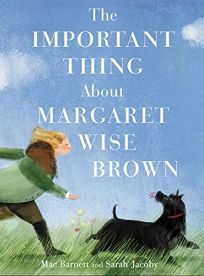
MF: I was blown away by The Important Thing About Margaret Wise Brown, written by Mac Barnett and illustrated by Sarah Jacoby. The way it was written and the way it was illustrated and the person it is about. My god. I felt that it was an innovative and expertly crafted as Margaret Wise Brown’s work was and because of that, it honored her legacy in every way possible.

RVC: Three words that sum up your picture book philosophy.

MF: Go for emotion.

RVC: Thanks so much, Marla! And for those who really want to know which of the bio “facts” in the introduction was actually a falsehood, the answer is…

MF: I wasn’t on Art Linkletter’s TV show, but my best friend Lisa Gilden was. She won a bunch of prizes that we played with together. I recall a toy vacuum cleaner and a croquet set. Obviously the croquet set was more fun!

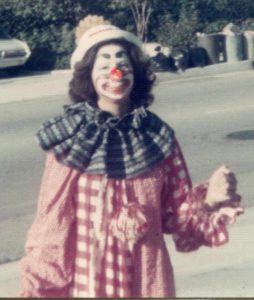
RVC: For those of you who didn’t notice, the above falsehood means that Marla WAS sent to detention “for wearing a clown costume to a high school assembly.” And Marla was nice enough to include a photo by way of proof. What better way to end this interview than that? Thanks, Marla!!

Author Interview: Doreen Cronin

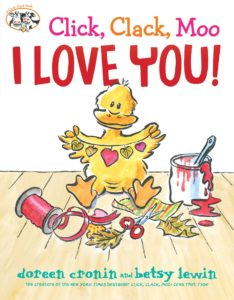
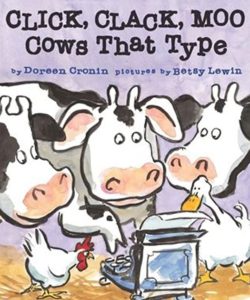
Talk about ending the year strong! This month’s author interview is with bestselling, award-​winning author Doreen Cronin, who’s known for (among other things) her Click, Clack series. If you don’t know these books, please remedy that immediately because they are truly first-​rate. Here are just a few of my faves from that series:
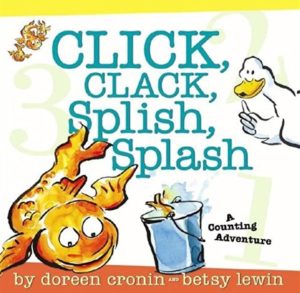
Doreen’s also the author of Rescue Bunnies, Bloom, Smick!, and many other books. She currently resides in New York City with her husband, two daughters, and a dog named Buster.

Let’s get on with the interview!


RVC: You were lucky enough to receive some very early encouragement from a teacher. What was it, and what did it mean to you?

DC: I was a very quiet, very studious six year old–with a deep fear of speaking up in class. My first-​grade teacher, Mrs. Cooper, couldn’t really get me to open up in class, so she started to give me writing assignments. Funny thing is, I didn’t consider them work since they were chances to “speak” in poem, in song, and in stories. She was just brilliant.

After quite a few of these “assignments,” which were really just opportunities to be heard, she said, “Ah, I see now. You’re a writer.”

I didn’t know “writer” could be a job. I’m not even sure I connected it with books, per se, but I knew she was right.  “I am a writer.”  On the hard days now, I still have to remind myself.

RVC: You took a sidetrack from Mrs. Cooper’s plan for you becoming a writer. You went to St. John’s Law School in the late 1990s and practiced law in downtown Manhattan for a few years. What appealed about that type of career?

DC: The research–and the writing! A career where I get to bury myself in these giant, gorgeously bound law books and analyze cases and then write pages and pages of a position or an argument? That was, at its core, a writing job, and I absolutely loved it.

RVC: How long were you juggling the two careers? Were you writing the entire time you were practicing law?

DC: I wrote so much when I was practicing law. When time is scarce, you make the most of it. And when your brain is going all day, it just doesn’t shut off at night (as we all know.).

Luckily for me, my brain could review documents and read cases and write briefs all day–and many nights and weekends–and then when I got home, she wanted to talk about cows. I let her talk.

RVC: Your dual-​career story reminds me a good bit of John Grisham, who also moved from a successful legal career to a successful writing one. How did you know when it was time to stop juggling and take the literary plunge?

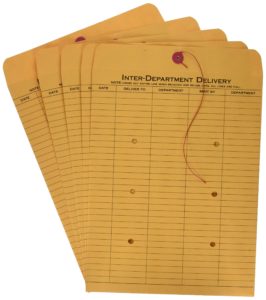
DC:  I don’t know how many readers are familiar with the “interoffice envelope,” but it is (was?) a large, manila-​type envelope with printed lines of “To” and “From” on front and back, to be re-​used over and over again.  At the top of the envelope was a deep maroon “paper button” and a string that looped around it (to secure the contents, ha!).  The mailroom would drop off piles of these and inside were memos, of course, and briefs you worked on that have now been red-​inked to within an inch of their original arguments (and not nearly as kindly as your editor’s remarks. Think “CRONIN, THIS IS NONSENSICAL GARBAGE” as opposed to “I’m not sure what you’re saying here.”).

Something happened a few months after Click Clack Moo was published and I would unloop the paper button on the  interoffice envelope and letters addressed Doreen Cronin, Author, would spill out. Readers were asking me what Duck was going to do next. And did I visit schools? And what was my favorite color?

That’s when I started to think about writing full time. I had lunch with two of my publishing colleagues and asked them if I should quit my day job. They both said “absolutely not.” So, of course, I did, because I don’t like being told what to do.

RVC: Let’s talk about Betsy Lewin. When did you first see the illustrations for Click, Clack, Moo?

DC: Oh, boy, very late in the game. I had never spoken to the art director or to Betsy. I was sent a copy of the sketches (by REAL MAIL, with STAMPS) and I was speechless. I had no idea what any of the characters looked like when I wrote the story. I didn’t even think about what they might look like.

Then I opened my envelope (another big manila one), and there they were.

It felt like they had been born. I actually cried. It was an extraordinary feeling to see them and meet them for the first time. Even if it meant crying alone through a fog of cigarette smoke. (Yes, I quit a long time ago.)

RVC: Why do you think her art works so well with the Click Clack books?

DC: Because she’s brilliant and funny and generous and so is her art. Betsy speaks in pictures and I speak in words and they just work together. Our written story and our illustrated story just understand each other and complement each other. I don’t know how else to explain it.

RVC: How collaborative is the storymaking process between the two of you?

DC: It isn’t! I like to write and then get out of the way.

There have been a few occasions over the years where Betsy will call me and say, “Can we talk about this page? I’m having some difficulty.” On every single one of those occasions, the problem was the text.

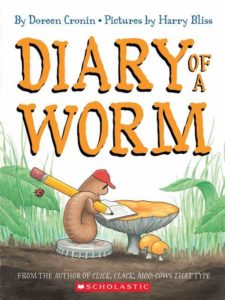
RVC: My kids really got a kick out of the Bug Diary series. The first one, Diary of a Worm, came out in 2003. What’s the story of how that book came about?

DC: I was trying to write a book about a girl with a really annoying kid brother (hello, autobiography). So when he bothered her, she would call him a pest and then…name the pest.  So, “You’re so annoying, you’re like…a worm!”  Then kid brother, being full of grit and resilience, would look up the pest and find out what makes the pest “good.”

Yes, pretty boring.

After about six months of writing that, I wrote a page where the kid brother writes in his journal as a worm, having been hurled that insult by his rude sister (hello, autobiography). After revising and revising that manuscript, that single page was the only page I liked, thus, Diary of a Worm was born.

RVC: I’m glad you stuck with the idea long enough to find the story you intended. Sometimes those things hide forever!

You’ve been fortunate to have earned a lot of honors, awards, and successes for your writing. Which meant the most to you?

DC: The first one, the Caldecott Honor for Betsy and the book for Click Clack Moo. Why? Because I didn’t even know what it was–I was blissfully unaware in the most innocent and ignorant way. Wasn’t aware of the ALA awards, wasn’t aware what was happening on that Monday in January. I had the day off from lawyering and I slept in. When the phone rang, I had absolutely no assumptions about who would be calling.

Ignorance really is bliss sometimes. Once you become aware of it–YOU WANT IT.

RVC: One last question for this part of the interview. You seem to be drawn to animal characters. Which of them do you feel is most like you?

DC: Ha! Duck and Worm. Duck is the side of my personality that has a problem with authority, and Worm is the side of my personality that needs to write to be heard.

RVC: Okey dokey, it’s time to get serious with a capital S—that’s because it’s the Speed Round. Zoomy questions and lickety-​split answers, please. Are you ready, Doreen?

DC: Always ready…

RVC: The best place in NYC for bagels? Pizza? Smoothies?

DC: My kitchen! It’s the most boring of answers ever given to the NYC’s best question, but due to an autoimmune condition, I live a dairy-​free, gluten-​free life. So I make my own GF bagels, GF pizza, and dairy-​free smoothies. ALL DAY LONG.

I would like to take this opportunity to plug the enormous, counter-​hogging air fryer–because it has transformed my soggy, gluten-​free life into a crispy extravaganza!

RVC: On a scale of 1 to 84, how much did you intend Click, Clack, Moo to be a sneaky lesson in collective bargaining?

DC: Ha! ZERO. I thought it was about the power of the written word–and how language changes everything. My then-​husband called me a socialist after he read it.

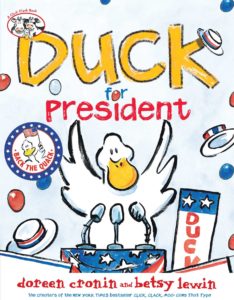
RVC: If Duck ran for President in 2020, what would’ve been his campaign promise?

DC: 2020–Back the Quack!

RVC: Five words that describe your writing process.

DC: Chaotic, sporadic, hilarious, inspired, tiring.

RVC: What was your favorite picture book of 2019?

DC: I couldn’t possibly!

RVC: Best compliment a child ever gave your books?

DC: Compliments from children make me cry. The best one is probably “I want to be a writer now, too!” Mrs. Cooper strikes again!

The funniest inquiry I ever got was, “Are you okay?”

RVC: Thanks so much, Doreen! We really enjoyed having you swing by to wrap up 2020 in style!