Behind the Books: 5 Key Questions to Ask About Your First Picture Book Draft

Between teaching picture book writing classes, editing at Bushel & Peck Books, and reviewing manuscripts through The Picture Book Doctor, I spend plenty of time looking at early versions of stories.

When you’ve just finished a draft, it’s worth stepping back and asking yourself a few bigger questions.

Here are five to start with before you dive into revisions.


1. Am I hiding the good stuff?

A writer spends the first few pages warming up, explaining the situation, or easing into the idea…then suddenly the story wakes up.

If the manuscript gets interesting around page four, there’s a good chance the book should start there.

(To be honest, if the book doesn’t grab readers at the start, they’re not reaching the good stuff on page four.)

2. Who is this really for?

Picture books are often read aloud by adults, so it’s easy to drift toward clever phrasing or jokes that mostly land with the grown-​up reader. Think politics, 80s or 90s pop culture riffs, or jokes about mortgages and wine.

A little of that can be fine, but the emotional center of the story still needs to belong to the kid listening.

If the adult reader is getting the biggest payoff, the balance is probably off.

3. Where does the character make a real choice?

Look for the moment where the main character decides something that changes, transforms, or shifts the direction of the story. We’re talking about giving characters agency here.

If the resolution happens because a parent steps in, luck intervenes, or the problem simply fades away, the character is riding the plot instead of driving it.

The writer’s job is to get the main character up a tree, and then once they are up there, throw rocks at them. | Vladimir Nabokov quote, HD Wallpaper

4. Where might the story be playing it safe?

First drafts often smooth things out. Your character learns the lesson quickly and the ending wraps up neatly.

Sometimes the story becomes stronger if the character struggles a little longer or the ending trusts the reader without spelling everything out.

5. What part of this would I fight for?

Imagine an editor saying, “We like the concept, but we think this section should change.”

What would YOU defend?

That answer often points to the manuscript’s true center (some might call it the “heart” or the “core”). And if nothing feels essential yet, well, that’s useful information too. It probably means you’re still discovering what the story wants to be, and that discovery process–which I’ll talk about in future posts–is completely different than the revision process.


First drafts are messy by design. That’s fine. But your job now is figuring out where the best version of the story is hiding and letting that version take over.

Behind the Books: Is This Idea Too Small? And Other Early Picture Book Questions

I teach Writing Picture Books at my college every semester these days. Some of the same craft questions emerge every time…usually when someone has a draft that’s almost working and they can feel it slipping.

Here are three of them.

Is this idea too small for a picture book?

This comes up most frequently with quiet stories, like a book about waiting, or taking a walk with grandma, etc.

I usually point to A Ball for Daisy. Here’s the spoiler–the whole book is about a dog and a ball. The ball breaks. Daisy loses it. That’s the plot.

What gives the book weight is how fully it stays with Daisy inside that moment. The story doesn’t rush past her reaction or try to decorate it with extra events. It lets the feeling unfold long enough for the reader to feel it too.

When a student draft starts to feel too small, what I usually see is hesitation. The writer rushes away from the moment just as it starts to deepen, or they fill the space with activity instead of attention.

That’s usually where our conversation turns. Not toward adding more story, but toward staying put just a little longer.

Do I need a clear lesson or message before I start writing?

No. When someone starts that way, I can usually tell by page two. The characters start acting like they already know what they’re supposed to learn, and every choice feels pre-approved.

To put it plainly–the story stops discovering and starts executing a plan.

In class, we look at The Most Magnificent Thing to see how to handle this in a more effective way.

In this story, the kid quits and then she sulks. Yeah, she’s maybe a bit irritating for a while. Yet the book doesn’t rush to redeem her or explain what we’re meant to take from it. The meaning shows up later, after the story has let her struggle honestly instead of steering her toward the right conclusion.

Most drafts that arrive with a message already attached don’t need a clearer message. They need a character who hasn’t worked things out yet and a story that’s willing to stay with that uncertainty instead of smoothing it over.

Why does my draft feel rushed at the end?

Most of the time it’s because the writer hits the brakes immediately after the problem is solved. In workshop, this shows up as a story that builds and resolves, but doesn’t give the reader any time to feel what that resolution actually meant.

A good real-​world example of how to avoid rushing the ending is Knuffle Bunny. The stuffie is found, which is the whole crisis of the book, yet Willems doesn’t end it there. He allows a little space afterward for the relief, the exhaustion, and the emotional shift to register before the book actually ends.

In student drafts, the fix usually isn’t more plot. It’s staying put for one more beat instead of cutting away the moment the problem disappears.

Behind the Books: 10 Picture Book Resolutions You Should Actually Keep in 2026

Whenever I don’t have a picture book creator interview lined up for a second-​week-​of-​the-​month post, I’ve got two options.

  1. Skip the week’s post and hope no one notices.
  2. Create something of equal use to picture book creators.

I like flexibility, so I tend toward option 2. That’s what we’re doing this week.

Which Type Of Expert Do You Want To Be?

Here we go!


It’s January, which means the internet is drowning in productivity hacks and motivational quotes from people who’ve already broken their resolutions by the time you’re reading this. But here’s the thing: most writing advice is either too vague (“write every day!”) or too prescriptive (“write exactly 500 words between 5–6am while standing on one foot and listening to Green Day”).

So here are ten resolutions for picture book creators that are actually achievable, actually useful, and—if I’m doing this right—actually entertaining. These come from my work as an editor at Bushel & Peck Books and from working with writers who’ve made these exact mistakes (including past me, who made ALL of them…often more than once).

1. Read at least five picture books you absolutely hate.

Not books that are badly written. I’m talking about books that are well executed on their own terms but collide hard with your personal taste.

Why? Because figuring out what you hate—and WHY you hate it—is craft gold. Is it the pacing? The voice? The ending that’s too neat? Too messy? Your taste is your compass. So sharpen it by purposefully bumping into things you despise.

2. Stop explaining your manuscript in your cover letter.

If your query letter includes phrases like “This story teaches children about…” or “The message is…” or “Readers will learn…”—delete them.

Your manuscript should do the teaching/​messaging/​learning-​inducing. Your cover letter should answer: What’s the book about? Why does it matter? Why are you the one to write it? That’s it. Three questions, not three pages.

3. Delete your opening line. Then delete the next one.

I’m not saying your opening definitely needs to go. I’m just suggesting that it probably does.

Most manuscripts start too early—with setup, with explaining, with warming up. Your story truly starts when something changes, when tension arrives, when your character wants something they don’t have. Everything before that? Probably throat-​clearing. Try starting on page two and see if anyone misses page one.

4. Join one writing group. Quit one writing group.

If you’re not in a critique group, find one. If you’re in three, quit two of them. Writing groups should make you better, not just busier. The right group pushes your craft, celebrates your wins, and tells you the truth about your work. The wrong group makes you feel obligated to show up, defensive about feedback, or completely exhausted by drama.

5. Read something that’s not a picture book.

Middle grade. Young adult. Adult fiction. Nonfiction. Poetry. Graphic novels. Even—brace yourself—literary fiction. Picture books are a 32-​page ecosystem, but the best ones borrow from everywhere.

You want to write tight? Read short stories. You want to nail voice? Read first-​person YA. You want to build a world fast? Read the opening chapters of terrific fantasy novels. To borrow an idea from Austin Kleon: steal like an artist.

**He’s got a lot worth of other good ideas worth stealing. Maybe sign up for Austin’s weekly newsletter?

6. Answer your own “So what?” question.

Before you submit, before you revise, before you do literally anything else…answer this:

  • So what?
  • Why does this story matter to an editor?
  • To an art director?
  • To a sales rep?
  • To a teacher?
  • To a parent?
  • To a kid?

If you can’t answer these easily and effectively, neither can anyone else. And if nobody else can answer them, your manuscript becomes someone’s “maybe pile” that turns into their “probably not” pile. Make it obvious why others they should care.

7. Stop submitting before your manuscript is ready.

You know that feeling when you finish a draft and immediately want to send it everywhere? That feeling is lying to you. It’s like an exciting first date where everything says go go go—and you already know that’s exactly when to slow down.

Sit on it for two weeks, or a month if you can stand it. Then read it fresh and realize what you missed: the saggy middle, the unclear motivation, the ending that felt brilliant at midnight but confusing in daylight. The best submissions are the ones that waited. The worst submissions are the ones that couldn’t.

8. Write three new first pages for your “finished” manuscript.

You’ve already revised your manuscript four nine eleven times. Great! Now write three completely new opening pages. Different POV, different tone, different first line.

You don’t have to use them—but the activity will show you what you’re attached to versus what’s actually working. Sometimes the thing you love most is the thing holding your story back. Find out BEFORE you submit.

9. Buy fewer craft books. Finish more manuscripts.

Writing craft books are fantastic. I’ve read plenty and even written a few. But if you’ve got six unfinished manuscripts and four unread craft books on your shelf, you don’t have a learning problem—you have a finishing problem.

  1. Pick one project.
  2. Write it badly.
  3. Revise it slightly less badly.
  4. Repeat until it’s good.

You’ll learn more from completing and revising one messy manuscript than from reading about how to write a perfect one.

10. Celebrate a rejection.

Not every rejection, of course…just a really good one. What’s that look like? It’s the kind that comes from an editor or agent you respect, who clearly read your work, who maybe even said something specific about why it wasn’t right for them. That rejection means you’re in the game. You’re being read by people who matter. You’re close enough to hear “not quite” instead of silence.

Frame it. Screenshot it. Whatever.

Just recognize that being rejected by the right people is progress.


So there you have it: ten resolutions that won’t make you a perfect writer but might make you a better one. Or at least a more self-​aware one. And if you break all of them by February? You’re still ahead of everyone who’s still “planning to start writing soon.”

Now go write something!

Author Interview: Irene Latham

Irene Latham - Highlights FoundationHere we go with another OPB Author Interview! Today we’re spotlighting Irene Latham, whose well-​wrought picture books keep winning hearts (and awards). I had the joy of editing The Museum on the Moon: The Curious Objects on the Lunar Surface, and I can confirm: Irene’s writing ability shines.

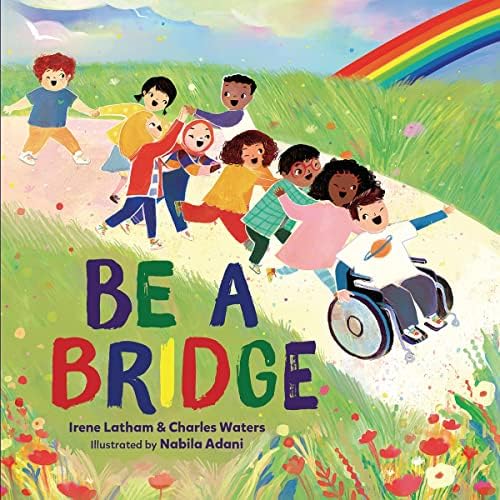
You may know her for Can I Touch Your Hair? (with Charles Waters), the Caldecott Honor book The Cat Man of Aleppo (with Karim Shamsi-​Basha), the kindness-​forward Be a Bridge (with Charles Waters), and her anthologies like The Mistakes That Made Us. Whether she’s writing persona poems, curating other poets’ voices, or sneaking science into verse, Irene’s work invites kids to look closely, feel deeply, and live language out loud.

Let’s learn more about her and her work right now!


RVC: When did you realize you were a poet?
IL: Family legend says I’ve been writing poems since I could wield a crayon—love poems, for my mother. But I am a shy person by nature and didn’t share my work with others or pursue publication until I was in my late twenties.

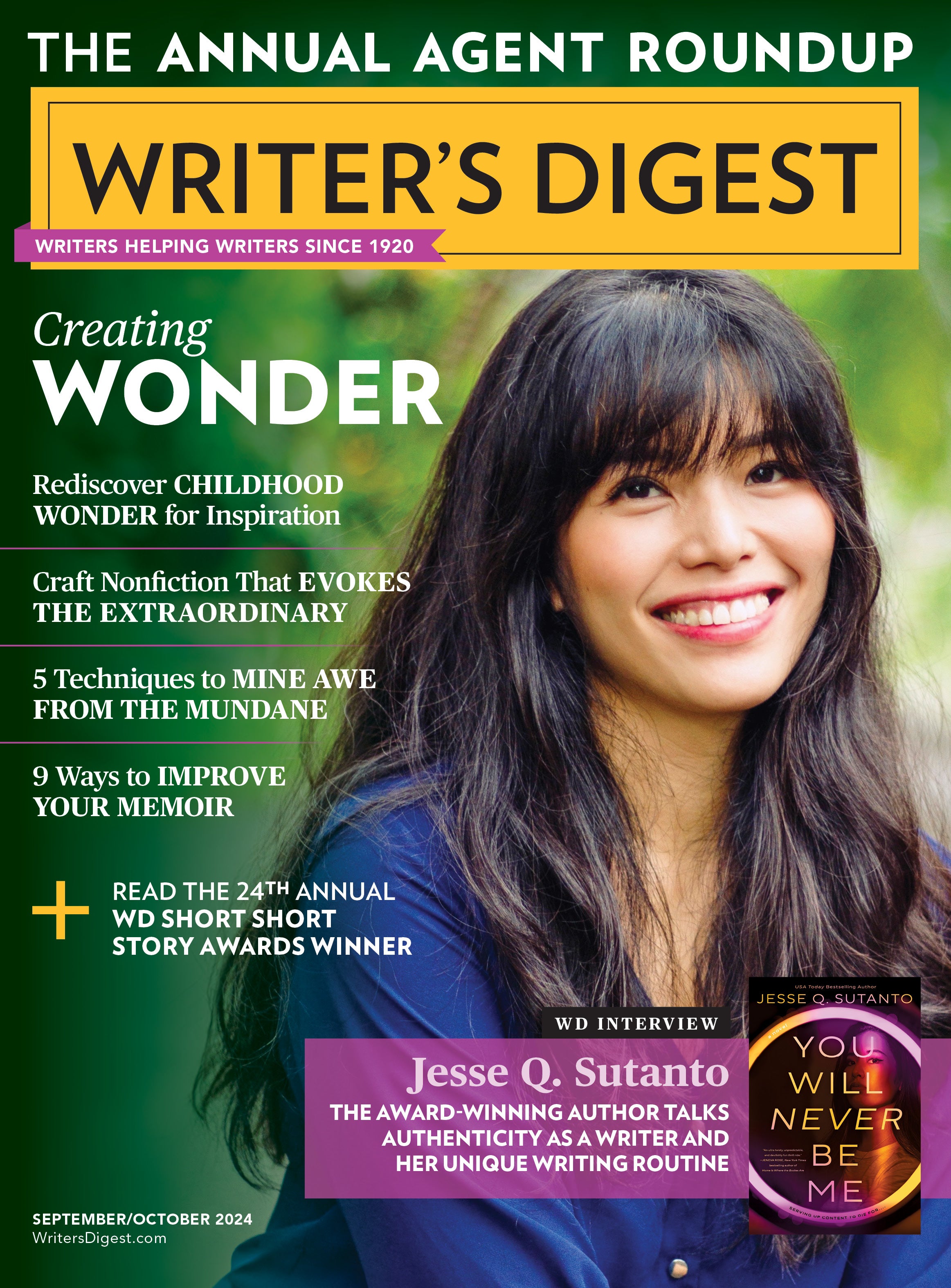
Writer's Digest Magazine September/October 2024 Cover RevealRVC: What kind of training do you have that supports that writing interest?
IL: I’m self-​taught. Each day I’m learning to be a poet through reading poems, of course, and also consuming craft books, podcasts, and articles. I spend part of each day in nature (we live on a lake), and I have attended many a conference and poetry reading. My first stop once I decided to try and get my work published was to join my state’s poetry society. Also, for decades now, my sister has gifted me a subscription to Writer’s Digest magazine (where I have seen lots of your articles, Ryan!).

RVC: Aw, shucks. Thanks!
IL: Much of my writing education has come from those pages!

Leaving Gee's Bend: A NovelRVC: What’s the story behind the first picture book you wrote and published?
IL: I started in the children’s market as a middle grade novelist with Leaving Gee’s Bend (Penguin, 2010). I still love writing novels, but before anything else, I am a poet. So I started sending picture book poetry collection manuscripts to my agent Rosemary Stimola, and together we worked up a list of editors who might be interested. Several manuscripts got rounds of rejections before I wrote Dear Wandering Wildebeest: And Other Poems from the Water Hole. Carol Hinz at Lerner acquired that book, and it was published with illustrations by Anna Wadham in 2014. Carol and I have worked together many times since then! The book received some starred reviews and awards, which was super encouraging. It, along with a companion title When the Sun Shines on Antarctica: And Other Poems About the Frozen Continent (Lerner, 2016) will be released in paperback in 2026.

RVC: The biggest lesson that experience taught you?
IL: Dear Wandering Wildebeest features poems with nonfiction text boxes. I learned pretty quickly that the text boxes are not simply “extra” information. These two pieces—the poem and the text box—should work in tandem. It’s important to include information in the text box that readers may need to decode the poem, and/​or information that anticipates a question a reader may have after reading the poem. And keep it SHORT.

RVC: This is GREAT advice.
IL: In some ways, the text boxes are like prose poems, leaning heavily on poetic elements of economy and precision of language.

RVC: Love that, thanks. Now let’s jump ahead to the book we worked on together—The Museum on the Moon. When you realized “hey, there’s a whole museum’s worth of artifacts on the Moon,” what clicked first—the book concept or a specific poem?
IL: I was a “space” kid who followed the NASA program, and later my oldest son had a childhood obsession with space travel. We also live near the U.S. Space and Rocket Center in Alabama. So I had been collecting moon facts for many years. One day, when reviewing my file of facts (I keep all sorts of files of potential book ideas that often arise from my general obsessions, and add to them over time.), I noticed quite a few things had been left on the moon. I jumped on the internet and found even MORE things! Given the number and variety of items, the history and science connections, and the innate kid appeal, I thought, hmm, this could be fun…and I started writing!

RVC: Craft nuts-​and-​bolts question here. Museum pairs poems with tight prose sidebars. How did you balance music with accuracy?
IL: It’s important to me that a poem be a poem. There should be a surprising image or word choice, some musicality, and it shouldn’t be just a recitation of clunky facts. There are myriad of other factual space books available to readers, so I felt my job was to really focus, to “explode the moment.” Which meant being ruthless when cutting and paring both the poems and text boxes. (Confession: there’s one poem in the collection that still feels a bit clunky to me, and every time I read it, I wish I’d spent a little more time unleashing its music!)

RVC: Dear blog readers, that last comment is something all book creators feel at one time or another. It’s okay–truly. You do your best and move on to next projects. Trust me on this. Now, let’s dig back into the book. It features a variety of poetry forms. What was the process for determining which poem formats got used in the book, and for which topics?
IL: The “matching” of subject matter to poetry form is an intuitive process. Mostly it just takes time and trust, allowing oneself to sit with it, to experiment, and allow the answer to arise on the page. The opening poem, “Welcome Earthlings!” is a triolet, an 8‑line form which features one line that repeats 3 times, and a second line that repeats 2 times. This repetition felt “right” to me because the moon also repeats, returning each night…and that became the focus of the poem, how even though you may see the moon every night, you don’t know everything about the moon. It has secrets, and now it’s here to share those secrets. It felt like a perfect marriage of form and content.

RVC: Agree! What’s your favorite spread to see illustrated by Myriam Wares, and why that one?
IL: I loved seeing Myriam’s rendering of the closing poem “This Poem is an Outpost.” We don’t know yet what a habitat on the Moon will actually look like, so I was super curious to get a glimpse into Myriam’s imagination. Her moon habitat is so inviting—who wouldn’t want to stay there before cruising out to Mars?

RVC: What’s one object on the Moon that surprised even you once you researched it?
IL: It surprised me to learn that Charles Duke (Apollo 16) left a photograph of his family on the moon. There’s something so tender and human about that—it was his way of making his loved ones part of the experience. Beautiful! (Though the photo is likely faded beyond recognition at this point.)

RVC: If UNESCO-​style protections ever extended to lunar sites, which locations belong at the top of your “heritage” list?
IL: The first footprints, number one. Probably my number two would be the lunar rover that holds the one book on the Moon—a red Bible. Truly, I could argue for them all! Perhaps there really does need to be a museum on the Moon?!

RVC: Let’s talk about collaboration. You and Charles Waters have built a true creative partnership. What’s his writing/​collaborating superpower?
IL: For fun, Charles and I named ourselves the I & C Construction Co.: Building Books One Word at a Time Since 2015.

RVC: HAH. Love it.
IL: We are friends first, and collaborators second, and we’ve been super fortunate to work on a variety of projects. Our current focus is on co-​curating poetry anthologies for children. Charles has multiple superpowers, but one that has really impacted me is how good he is at acknowledging all the others who help make a book. Our presentations always include slides of folks who helped along the way: from childhood teachers, to librarians who aided our research, to editors and book designers…Charles is a great connector, and he makes it his business to really “see” people.

RVC: How does your collaborative process work? And how/​when/​where/​why do the book ideas emerge?
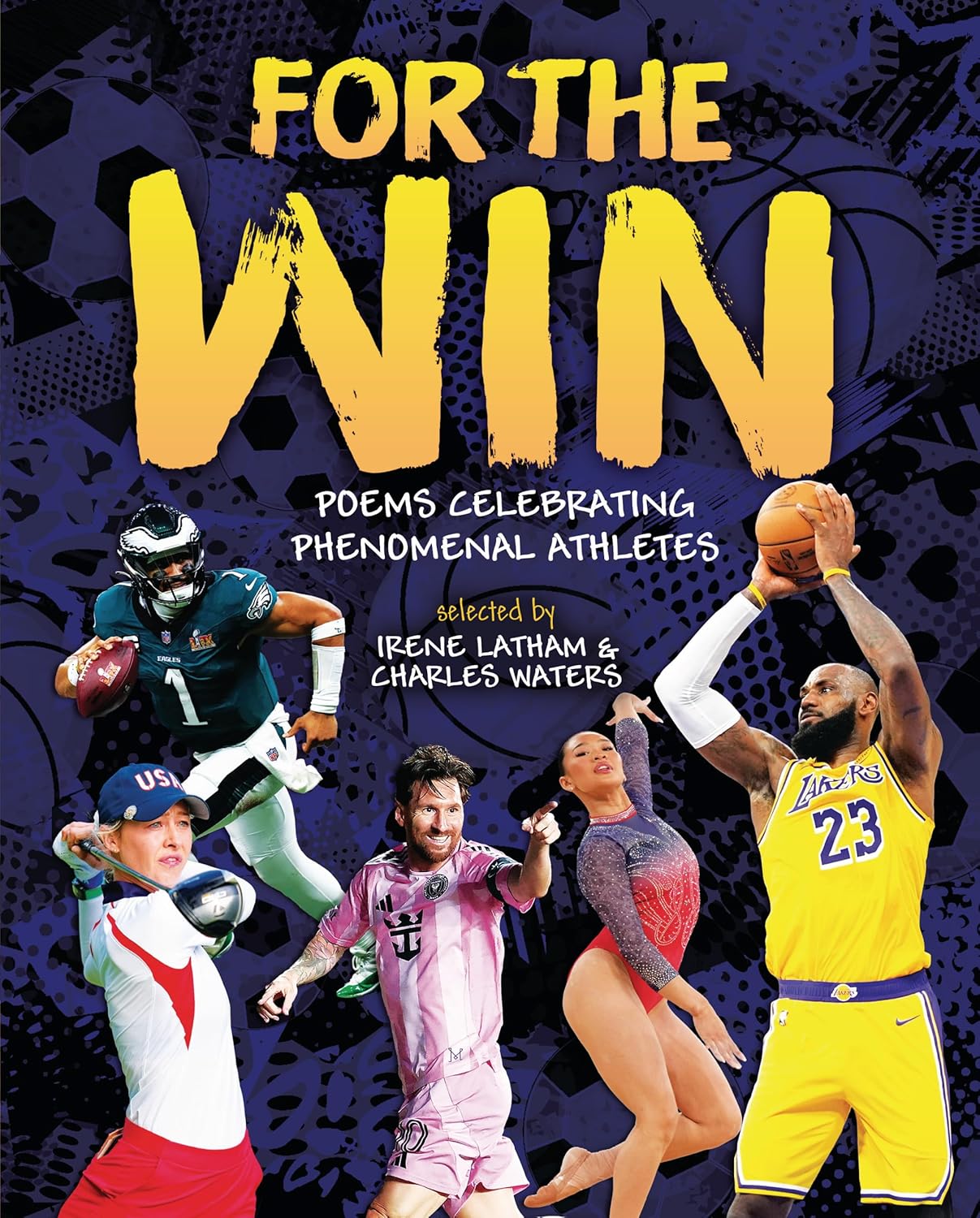
IL: Each project has been different, and our process continues to evolve. I’m mostly the idea person, but our next book, a poetry anthology titled For the Win: Poems Celebrating Phenomenal Athletes (Lerner, March 3,  2026) evolved out of an idea Charles had many years ago to do a sports anthology. I’m not a sports person, but when he came to me the idea, I pondered it for a while and eventually suggested we focus not on biography, but on moments in each athlete’s life, from introduction to the sport, training, setbacks, achievements, and also what happens after the great achievement. Such inspiring subject matter, whether one likes sports or not!

RVC: IT sounds terrific.
IL: In terms of our day-​to-​day work together, we currently love Google Docs, because we can both be working inside a document simultaneously. Sometimes we have these marathon phone calls where we’re talking through things and also making corrections in the document. Other times we work independently, and take turns responding or adding material. Some things we address through texting. We divvy tasks as best we can, allowing each of us to do the things we want to do, are best at, or feel called to do. I trust Charles, and he trusts me. Somehow it all works out!

RVC: In Be a Bridge, you distilled big, bridge-​building ideas for very young readers. What did “every word counts” look like in revision?
IL: Be a Bridge was a tough one! It emerged out of our efforts to bring the subject matter of Can I Touch Your Hair? Poems of Race, Mistakes, and Friendship to a younger audience. Carol Hinz rejected several of our manuscripts before we finally got to Bridge, so we’d already been revising and revising…There’s a didacticism inherent in the premise—I mean, the title itself is instructive!—and we wanted to “soften” that, but we were also hemmed in by these rhyming couplets. Taking out a single word seemed to unravel the whole thing! And then, after the book was illustrated, a sensitivity reader found some issues that needed further revising. It’s all a bit of a blur in my memory, but what makes it all worthwhile is hearing from educators and families how meaningful the book has been to them. A LOT of work goes into a picture book, that’s for sure!

RVC: The Mistakes That Made Us anthology invited poets to get autobiographical. What editorial promise did you and Charles make to contributors to help them go brave?
IL: We asked each poet to share a mistake from their own lives, write a poem about it, and then craft a nonfiction text box sharing how the mistake impacted their lives—what did they learn from it? Charles and I shared our own responses to the prompt, and we leaned into what impact this kind of vulnerability may have on our child readers. Our goal was to inspire and normalize mistake-​making. It’s just part of life! Not surprisingly given the generosity of poets, our contributors really came through, from Allan Wolf sharing how embarrassing it was to score a soccer goal for the wrong team to Naomi Shihab Nye sharing an incident from First Grade involving a fellow student taking too long at the pencil sharpener, a pencil, and bloodshed! As editors, our job was to stay out of the way of this truth-​telling as much as possible, stepping in only to help clarify or to eliminate unnecessary distractions on the page.

RVC: Speaking of collaborations, how do you handle art notes?
IL: I use them as sparingly as possible. One of my most favorite things about creating picture books is seeing what magic the illustrator conjures, so I want to give a wide berth! However, I have worked on a few historical books, both fiction and nonfiction, and it’s my responsibility to provide art notes, which can be links to historic photos or general research—anything that will help ensure our book will reflect the story’s time, place, people, and culture accurately.

RVC: This Poem Is a Nest is such a fine idea—turning one long poem into a ton of “nestlings.” What moment told you this wasn’t just a poem experiment but a full book?
IL: Of all my books, This Poem Is a Nest is probably the most joyful creative experience I’ve had. I was fortunate to work with Rebecca Davis (WordSong), and she acquired it when I’d only written about 30 nestlings. She believe in the book and invited me to have fun with it, so I did! Neither of us could have anticipated I would have had 161 poems worth of fun. As a creator, I’m so grateful to have been given this kind of freedom.

RVC: What’s one simple way families or classrooms can try their own found poems at home?
IL: You can find poems in the mail that arrives in your mailbox! Or on your bookshelf or magazine rack. Or you can download a pack of free poems from my website designed for just this purpose:

RVC: Let’s talk persona poems. What’s your checklist for writing ethically and vividly in another voice—especially for picture-​book readers?
IL: Do your research, of course. And not just about the person/​animal/​object, but also about the place and time where/​when the person/​animal lives or lived. Imagination is the building block of empathy, so really, all persona work is an exercise in empathy. To make these (or any type poem) more vivid, aim to include not only the sense of sight, but other senses as well. I have a new poetry collection coming from Astra/​WordSong in 2026 called Come In! Come In! Wordspinners to Welcome You Home, and the very last revision pass I did was for the sense of smell. At last gasp, I realized smell was underrepresented in the collection, so I made it my aim to bring in some more scents.

RVC: I’ve read that you’re a cellist. Has learning an instrument changed your line breaks or sound play on the page?
IL: That’s a great question. Playing the cello influences my writing in myriad ways! A musical phrase is not unlike a poetic one, and just as silence is a placeholder for emotion in music, white space serves the same purpose in poetry. More importantly, I’ve learned to appreciate the process of music-​making or poetry-​making, to focus on creating a connection with my audience rather than impressing anyone. Music, and poetry, is a place for me to just be me.

RVC: What can you tell us about the importance of community in a writer’s life?
IL: Truly this is a business of relationships. I love surrounding myself with book/​poetry people, people who share the impulse to use language and stories to attempt to discover the world and share ourselves on the page. I’ve learned community isn’t about numbers—so you can stop obsessing about growing your list of followers on social media! Community is about walking this world with kindness and openness and surrounding yourself with people who support what you’re doing, lift you up, and listen to your dreams and disappointments. This can be as simple as one other person, or two. The most important thing is to be authentic, and to be the kind of person who invites others to be authentic, too.

RVC: What’s one museum (on Earth!) you’d love to partner with for a poetry program, and what you do there?
IL: Ooh, I can’t think of a museum I wouldn’t want to partner with! I love museums—the big, flashy ones and the labor-​of-​love, local ones. Art, history, science…every trip I take includes a visit to one or more of these type of museums.

Also, since 2015, I’ve created a public art project on my blog called ArtSpeak!, in which I post an ekphrastic poem (poem inspired by art) to my blog. I love and have written on such a wide variety of art—you can find hundreds of these free poems on my website, and I am still just as in love with the project as I was ten years ago. Once, long ago, I did partner with Birmingham artist Liz Reed, and we mounted two “Poetry & Paint” shows in which she created art after I wrote, and I wrote poems after she painted. I’d love to do that again.

RVC: Last question for this part of the interview. What’s next in your picture-​book/​poetry world that you can tease?
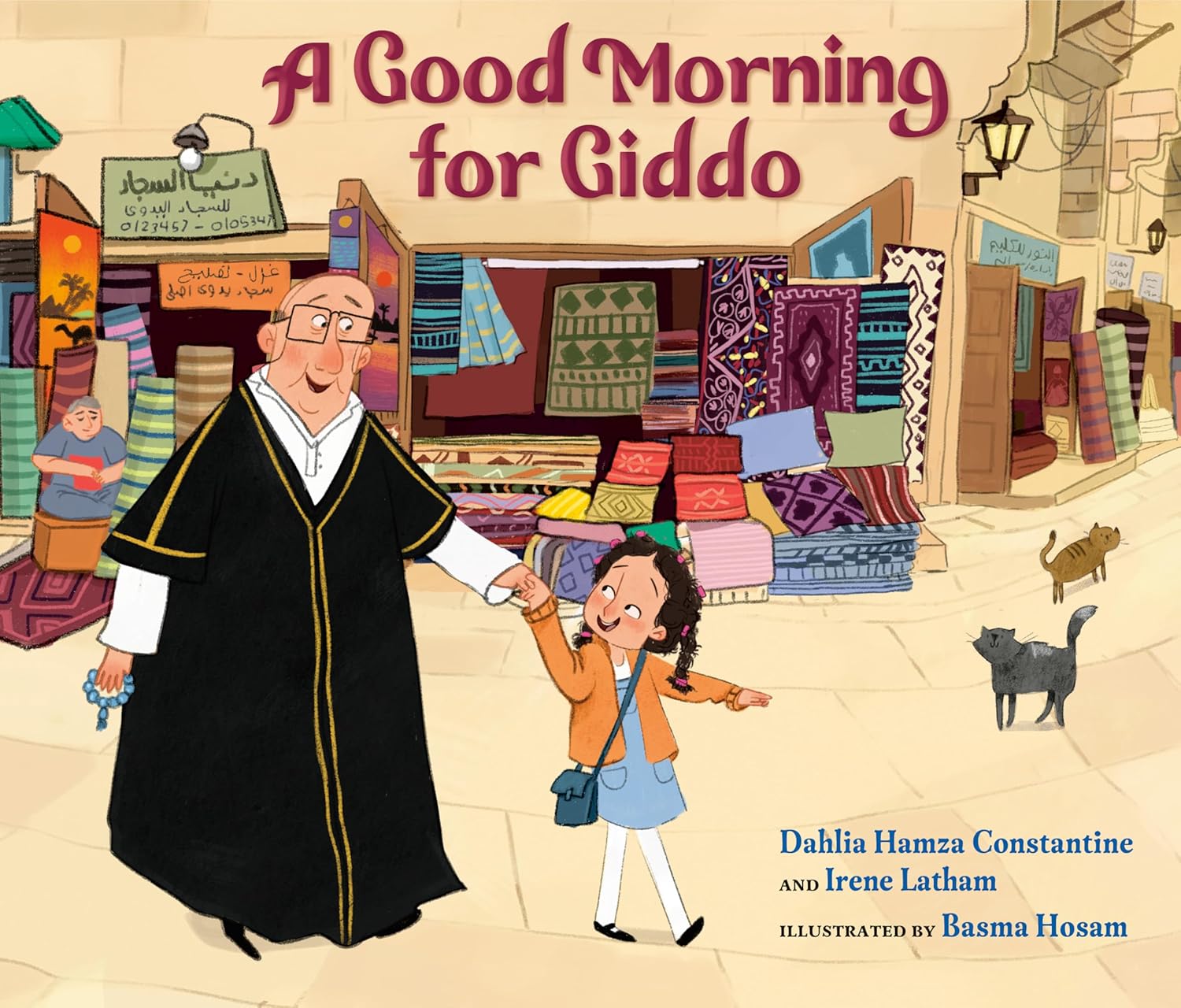
IL: I have three picture books releasing in 2026, and two of them are poetry. the (third) poetry anthology I’ve co-​curated with Charles Waters, For the Win: Poems Celebrating Phenomenal Athlete (Lerner); a narrative picture book titled A Good Morning for Giddo (Penguin Random House), I wrote with my friend Dahlia Hamza Constantine, featuring a little girl and her giddo (grandfather) exploring Egyptian arts and culture at the Cairo market; and a solo collection of 66 poems called Come In! Come In! Wordspinners to Welcome You Home (Astra Publishing). Imagine a Richard Scarry book, but instead of just words, readers get short poems.

RVC: Okay, Irene. It’s time for the SPEED ROUND! Quick questions and fast answers please. Ready?
IL: Let’s go!

RVC: If you could only have one app on your phone…
IL: Music tuning app.

RVC: Pick one: personal chef, house cleaner, or masseuse?
IL: Personal chef.

RVC: What outdated slang do you use the most?
IL: Is “Awesome” considered outdated? I say that and “Excellent” fairly often. As a Southerner, I also enjoy words like “yonder,” “reckon and “piddle, ” and I use “y’all” and “fixin’ to” pretty regularly—but those words feel timeless to me!

RVC: First line that pops into your head when someone says “write a moon haiku—go!”
IL: The moon makes music

RVC: A poet every picture-​book writer should read.
IL: Valerie Worth.

RVC: One word you want kids to feel after reading your picture books.
IL: Loved.

RVC: Thanks so much, Irene!

Author Interview: Keyshawn Johnson & Bettina Bush

Each year, I work as a ghostwriter on a few celebrity kidlit projects. No oneKeyshawn Johnson Wants the N.F.L. to Remember Its ‘Forgotten Four ... knows which ones, of course. That’s the “ghost” part of the equation.

Every so often, I get to collaborate instead of ghost, which means I can actually talk about the process. Today’s post is about one of those rare projects: a picture book I co-​created with Super Bowl champion and sports commentator Keyshawn Johnson and voice actress and singer Bettina Bush.

Once Upon a You—Keyshawn’s first picture book—shows kids everywhere that they’re the authors of their own destinies. Let’s hear more from Keyshawn and Bettina about the book, their creative process, and their friendship.Bettina Bush | Host, Speaker, Voice Artist & Advocate for Multiculturalism


RVC: So, the two of you are a creative powerhouse. How did your relationship first begin?

BB: That’s a funny story actually! [Laughs] About 15 years ago.…

KJ: Bettina and I go way back. We’re neighbors and she was walking down the street with her baby daughter. I came out the front door and Cassie pointed at me and said, “Daddy!” [Laughs]

Bettina was like “You look nothing like my husband but she must be thinking of my dad!” It was an immediate friendship. Bettina and my wife Jen are very tight and our kids and families have always been close.

RVC: When did you first realize you might want to create something together?

BB: It sort of evolved naturally. We’d talk about our kids, about legacy, and about how powerful stories can be in shaping who we become. One day we realized—wait, this is the story we should be telling.

KJ: Bettina’s got this incredible creative energy, so when she said let’s start with a children’s book and see where we want to go from there, I said, “Okay, I trust you.  Let’s go!”

RVC: Hah. Love it.

KJ: And I’ll definitely say we’re just getting started.

RVC: What drew you both to picture books—and this idea in particular?

BB: I’ve always believed stories are the bridge between imagination and identity. Picture books are where that starts. You see yourself reflected in these beautiful images and words, and it shapes the way you dream.

RVC: Absolutely!

KJ: Picture books are special. They’re one of the first places where a kid starts to dream big. I’ve read to my kids plenty of nights, and I know the kind of magic that happens when a story really lands. This idea—Once Upon a You—was about showing kids that their story matters, that they have control over their own path. That spoke to both of us.

RVC: The title Once Upon a You sounds like an invitation. How did that phrase come about?

KJ: We wanted something that felt classic, like a fairy tale—but flipped. “Once upon a time” is what we all know, but this is your story. You’re you. When Bettina said “Once Upon a You,” I was like, “That’s it right there.” It’s simple, but powerful.

RVC: Keyshawn, what surprised you most about the world of children’s publishing once you jumped in?

KJ: How collaborative it is. I mean, I’ve been part of teams my whole life, but this is a different kind of teamwork. There are editors, illustrators, designers—all focused on every detail to make sure it connects. And I’ll be real, I didn’t know how much time and heart goes into one 32-​page book. It’s a grind, but a rewarding one.

RVC: Bettina, as someone who’s worked in voice and music, how did your storytelling instincts translate into this medium?

BB: It’s actually very natural. Music, voice acting, writing—they all come from rhythm and emotion. With picture books, you’re writing a kind of song. Every line has a cadence, every page turn is a beat. You have to feel the flow of it. My background in performing helps me hear the story in my head—the tone, the warmth, the rise and fall. It’s all about creating an emotional melody through words.

RVC: What did collaboration look like day-​to-​day? Were you trading drafts, voice notes, Zoom calls, or late-​night texts?

KJ: All of the above! [Laughs]

We’d text ideas at random hours, hop on calls, send each other notes—it was constant communication. We both have busy lives, but when something feels right creatively, you find the time. It was like running a two-​minute drill, but for storytelling.

BB: The energy was always flowing. What made it special was that there was such mutual respect—we trust each other’s instincts, and that made the process really joyful.

RVC: How did seeing the illustrations for the first time change how you felt about the story?

BB: That was honestly magical. When we saw the art come to life, I teared up. You have this vision in your mind, and then suddenly there it is, breathing and full of color and emotion. The illustrator captured the heart of the story perfectly—it was like watching your imagination step off the page and smile back at you.

KJ: Oh man, that was emotional. The first time I saw the art, it hit me how real it all was. You write these words, you talk about concepts, but when an illustrator brings that to life—it’s like seeing your vision walk off the page. It gave me chills.

RVC: The book’s message—“you’re the author of your own destiny”—feels both empowering and personal. Why was that message important to you?

BB: Because it’s true for every single one of us. I’ve lived many creative lives—music, acting, producing—and through all of it, I’ve learned that no one writes your story but you. I want every child to feel that sense of agency and possibility. That message is something I live by, and it’s something I want to gift to my own kids and to every reader.

RVC: Love it. How about for you, Key? 

KJ: Because that’s my life, straight up. I wasn’t handed anything. I had to work, stay focused, believe in myself even when others didn’t. That’s what I want kids to understand—it doesn’t matter where you start, you have the power to shape your story. That’s the message I wish someone had told me when I was young.

RVC: Was there a line or image in the book that hit you emotionally once it was on the page?

BB: There’s a moment that talks about “the light that lives inside you.” That one really got me. It’s such a simple line, but it holds so much truth. We all have that light—it just needs to be seen, nurtured, and believed in. Seeing that line surrounded by such beautiful illustrations—it gave me goosebumps.

KJ: The part where it talks about “the moments that make you you.” That hit me hard. It reminded me of my kids, my journey, all the things that shaped me along the way. It’s not just about success—it’s about identity, and being proud of who you are.

RVC: What do you hope kids (and parents) take away after reading Once Upon a You together?

BB: I hope they take away a sense of wonder and ownership over their stories. For kids, that they can dream big and define who they are. For parents, I hope it opens up conversations about self-​belief and creativity—and maybe even helps them see themselves through their children’s eyes again.

KJ: For kids, I want them to know they’re capable of amazing things and to ignore anyone who tells them otherwise. For parents, I hope it sparks conversations—about dreams, resilience, and love. Reading together can be such a grounding moment.

RVC: Since COVID, I often ask a health and wellness question in OPB interviews. With both of you being so busy with work and family, I’m really curious—what do you do to destress? 

BB: Music is my therapy. I’ll sing, write, or just put on a playlist and let myself breathe. And honestly, being outside helps—whether walking my dog, going to the beach, or just sitting in the sun. I also try to unplug and be present with my family.

KJ: For me, it’s simple—working out, getting outside, spending time with my family. I need that balance. I’ll hit the gym, then come home and just watch a game with my kids. That’s the reset button right there.

RVC: So, every author interview at OPB has two parts: the main interview, and then the SPEED ROUND. And it’s time to get zippy. Are you both ready for quick questions and fast answers?

BB: Yep!

KJ: Let’s do it!

RVC: What’s one thing fans would be surprised to learn about you?

BB: I climbed Mt. Kilimanjaro when my kids were little!

KJ: I can’t swim.

RVC: What snack fuels your creativity?

BB: French fries with ranch.

KJ: Chips and really good salsa.

RVC: You can invite any three people—real or fictional—to storytime. Who’s on the rug?

BB: My dad and my two kids. I’d give anything to watch them together at this age.  I’m 100% certain they’d blow each other’s minds in the best ways.

KJ: Three kids who don’t have books.

RVC: If Once Upon a You had a mascot, what would it be?

BB: A butterfly. Magical growth and beauty.

KJ: Probably a lion. Courage and heart—the stuff we want kids to feel when they read the book.

RVC: A picture book you loved as a kid that still sticks with you?

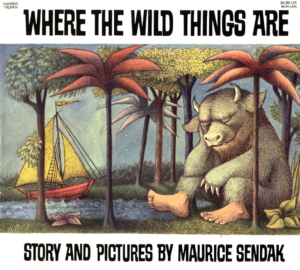
BB: Where the Wild Things Are. It’s about imagination, courage, and coming home to yourself. That story never leaves you—it grows with you.

KJ: The Giving Tree. That one’s timeless. Simple message, deep meaning. I’ve read it to my kids too, and it still hits the same.

RVC: What’s one word that captures Once Upon a You?

BB: Becoming. Because it’s all about the journey of who you are, who you’ve been, and who you’re meant to be.

KJ: Empowerment. That’s it. It’s about owning your story—no matter where it starts or where it goes.

RVC: That was terrific—thank you both for sharing the behind-​the-​scenes magic!

Author Interview: Joan Schoettler

This month, we’re featuring Joan Schoettler, author of Books Travel the World, which I had the pleasure of editing for Bushel & Peck Books. Joan’s writing carries a quiet beauty and a deep sense of care for story and history. Her verse novel The Honey Jar: An Armenian’s Escape to Freedom won the California Book Award Gold Medal for Juvenile Literature, and her picture book Good Fortune in a Wrapping Cloth received the APALA Award.

A longtime educator and literacy advocate, Joan blends research, heart, and lyricism in ways that stay with readers. She lives in central California, where she enjoys reading, gardening, and traveling with her family.

Let’s dive into this interview and learn more about Joan right now!


RVC: Joan, you’ve worn many hats over the years—professor, poet, and kidlit author. What drew you to children’s books in the first place? 
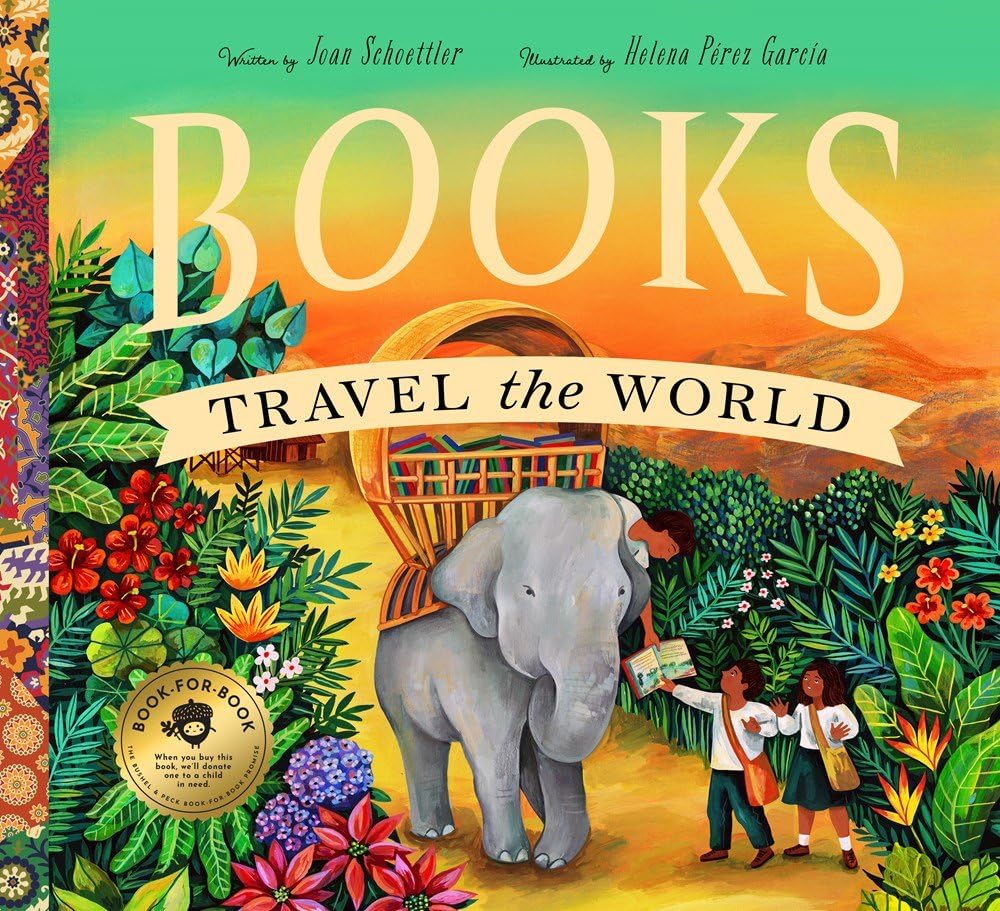
JS: Thank you for the opportunity to talk with you about writing today. Your editorial notes and comments for Books Travel the World definitely brought insights that tightened and enriched my story. Much appreciated.

RVC: Happy to help!

JS: I struggled with reading until about the third grade, and I remember my parents worrying about me learning to read. My mother took advantage of having a library walking distance from our home and took us often. I liked going there, especially when I could read the books.

My 5th grade teacher turned the coat closet at the back of the room into a classroom library where books invited us to explore fiction, non-​fiction, and poetry. Characters in books felt like friends. Reading became a constant in my life. To this day, my friends and I continue to talk about and share books.

RVC: You earned a BS in Social Science at San José State University. What was the plan with that degree?

JS: Finding my purpose has been and continues to be part of my life journey. When I reflect on your questions, I step back into my childhood home where my mom’s friend shared her copies of National Geographic magazine. My interest in cultures around the world stemmed from looking at unique photographs and reading stories of people and societies from around the world. My curiosity in social studies took hold in school where various cultures were explored. My favorite part of the school day began with maps and photographs and stories of people who lived in faraway lands. As time went on, studying and learning about different cultures and sharing them with others, felt right, so I focused my education on social studies and teaching.

I began teaching in elementary school but soon decided to focus on one subject instead of teaching across the curriculum. Children’s literature? Art? Social Science? My desire to deepen my understanding of how reading persuades, informs, and entertains led me to study children’s literature, but my curiosity and regard for art and discovering communities and how they interact over time remained strong. Becoming a writer never crossed my mind.

RVC: Yet at some point, you realized that you wanted to write and publish books for children.

JS: After many years of studying, teaching, and immersing myself in children’s literature, three different episodes came together and nudged me forward. At lunch with a famous children’s author, I asked her where all her stories came from.

Why, inside.” Then she pointed her finger to me and said, “They’re inside you, too, Joan. You just have to let them out.” I didn’t believe her, but a seed was planted.

Around the same time a child asked me if I ever wrote stories and why I always made them write and share their stories but if I didn’t write any stories myself. I paused again. His question challenged me. A short time later, I read an obituary about a well-​known storyteller who had taught me and whom I greatly admired. I sat down that morning and putting pen to paper, I wrote my first story. It was about a storyteller.

RVC: How did that growing interest in writing connect with your interest in education?

JS: While many authors have known they wanted to become a writer, my desire to write came after a long career in children’s literature. My love of children’s books, sharing them with young readers in my early teaching career, delving into the world of children’s literature as I pursued a Master’s Degree in Literacy, and teaching children’s literature, storytelling, and reading and writing at the university, took hold.

With young readers and university students we examined children’s books; interweaving the main components of writing, exploring the art of storytelling, and focusing on the powerful visual impact illustrators use to bring stories to life. We read poetry and investigated nonfiction. We studied authors, their books, and their lives. We compared different versions of biographies of the same person and various adaptations of fairy tales. We studied memorable, engaging characters, universal themes, creative setting, captivating plots, and the main components of illustrations in children’s books. The years of reading and delving into books set the groundwork for writing.

RVC: When/​why did you make the full commitment to writing books for kids? 

JS: When I finally took pen to paper, my writing journey began. I joined a children’s writing critique group, and their support, encouragement, and creativity invited me to follow a writing path. Many drafts, many rejections, and many years passed before my first publication. But as I reflect on the years I read to and with children, all the ways we studied literature together, and all the interactions with teachers and librarians along the way, I realized how my life experiences prepared and guided me to begin writing. I’m honored to share my children’s books with young readers, parents, teachers, and librarians.

RVC: Let’s talk about your first published picture book. What’s the story behind that story?

JS: Visiting museums ties into my curiosity of cultures. The Asian Art Museum in San Francisco displayed an exhibit on Korean bojagi. I’d never seen Korean wrapping cloths before, and they captured my imagination. Chungie Lee, a well-​known Korean fiber artist, had created a large bojagi with stencils of Korean women who were bojagi artists from the 1800s. I wanted to know the story behind these women. Who were they? What invited them to create works of art passed on for centuries? What drove them to meticulously sew stitch after stitch to create works of art from scraps of fabrics?
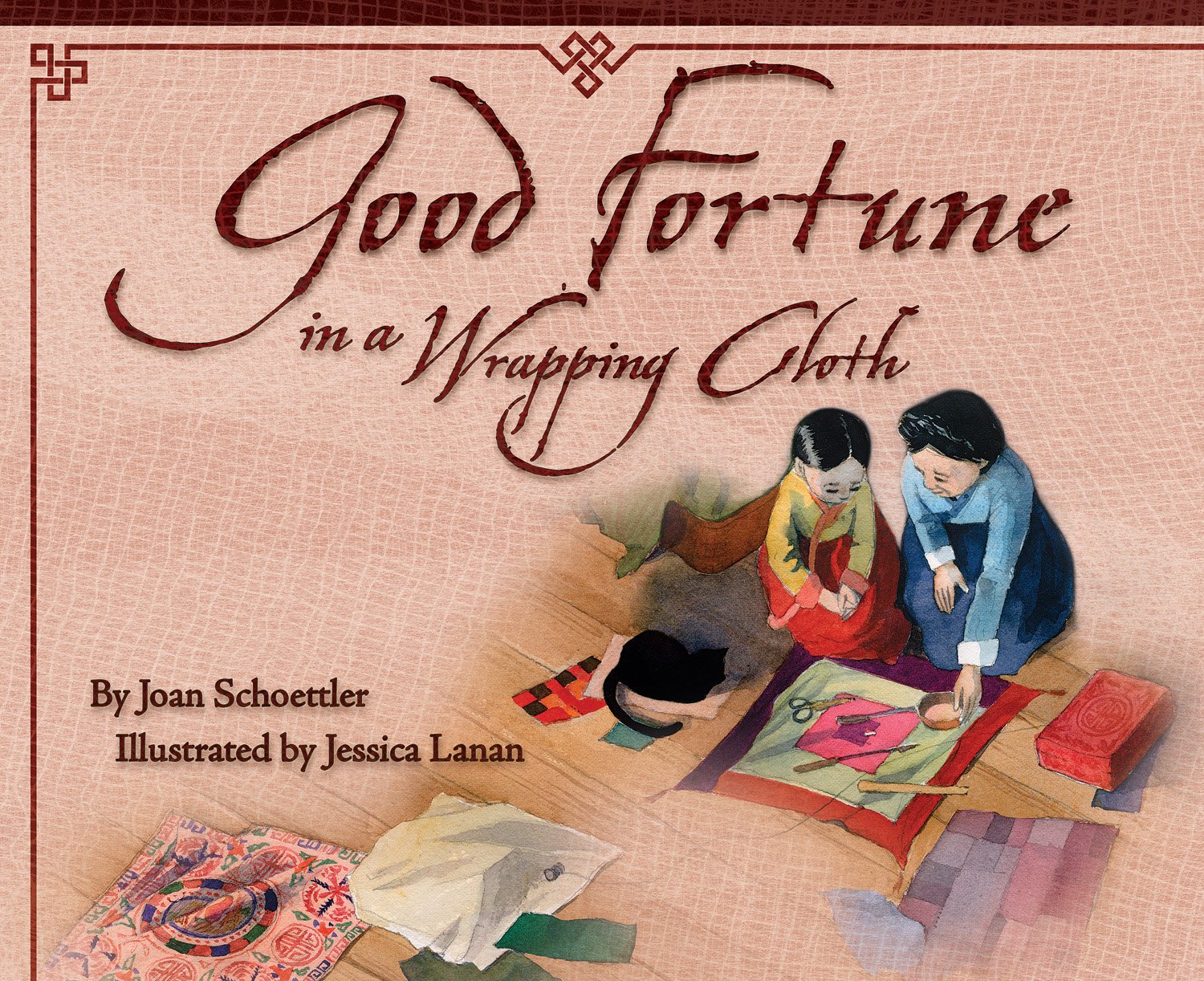
I learned the women offered good luck, good fortune, and good health with each stitch, and that knowledge and art led to my first children’s picture book, Good Fortune in a Wrapping Cloth.

RVC: What’s the best lesson that book taught you?

JS: Writing is more than just the story. Gifts abound in unexpected places. Research opens doors to knowledge, art, and community. The outreach of curators at Asian museums offered insights in history and opportunities to learn about the Korean culture far beyond my inquiry regarding bojagi. Invitations to speak and sign my book at museums, in private homes, and at Korean schools and community centers enriched my learning and experiences beyond what I imagined.
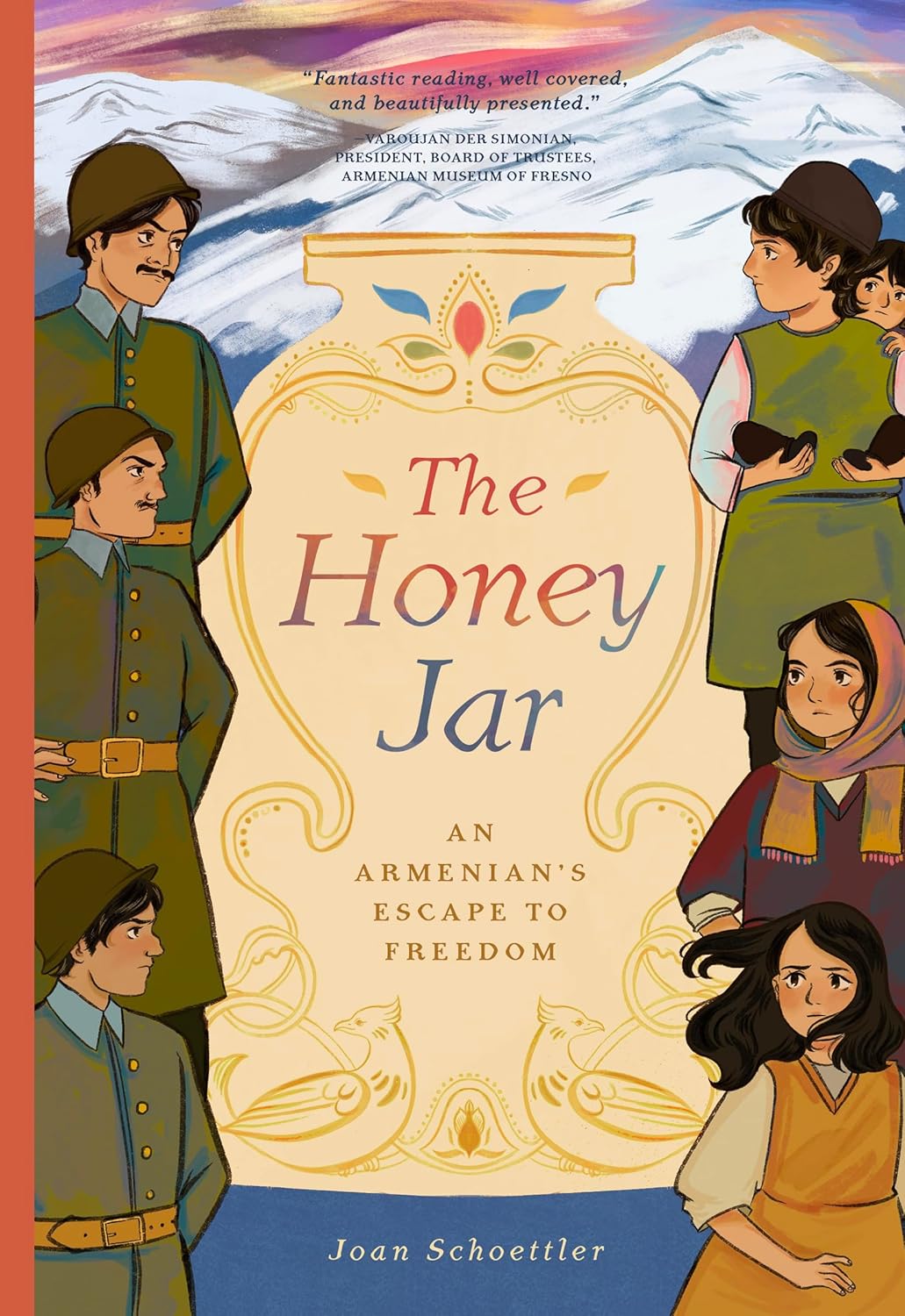
RVC: The Honey Jar takes place in the Middle East, while Good Fortune in a Wrapping Cloth focuses on Korean culture. What does your research process look like when writing cross-​cultural stories?

JS: My research begins like broad strokes across a blank sheet of paper. Questions abound. Family life. Homes. Food. Rituals. Education. Clothing. Jobs. Responsibilities. Children’s play. One leads to another. Large questions break off into smaller ones. I believe what is written on the final pages of my books is a fraction of the knowledge I’ve gained in learning about a culture. Books about art and history, primary sources and interviews, and deep research is imperative. Stacks of picture books fill my arms as I depart from the library.

Cross-​cultural research examines people and their behaviors from one culture to another. Through in-​depth research the knowledge of different cultures–their customs, their foods, their homes–begin to create a framework for the story. Diversity of cultures found throughout the world demonstrate a richness in people values and beliefs, rituals, interactions, and language. This diversity must be honored and shared. But the belief in the family unit, the power of loss and love, and working through conflict to find your identity are universal themes.

RVC: Speaking of stories about more than one culture…let’s leap over to your new one—Books Travel the World. Where did that idea come from?

JS: Do you remember earlier I mentioned my initial interest in cultures through National Geographic magazines? That carried through in what I studied in college. It is woven through my life. When I reflect on the stories I have written and stories I hope to write, my interests cross many cultures. Tie that into my dedication of a lifetime of working in children’s literature and my belief in getting books into the hands of children whether locally, nationally, or internationally, Books Travel the World seems like a culmination of what I believe in. I want to honor all of the people throughout the world who remain dedicated to their belief in the importance of reading and that reading will make a difference in the world.

RVC: What was the biggest challenge with writing that book? Was it the research rabbit hole or something else?

JS: Learning about all the dedicated people who believe in the importance of literacy inspired me so the research was delightful and heartwarming. Writing a text for young readers became my challenge. The teacher in me wanted to make sure the readers saw all the creative possibilities literature offers after the reading. The sharing of stories, the art, the drama, the creativity, and the inspiration for the reader found in books was important to share with the reader too. While I wove these components organically into the text, I also included information in the back matter of ways to extend the literary experience with the reader.

RVC: Now that the book is done and out, I can ask this question. What are you happiest about?

JS: Two elements come to mind. Helena Pérez-Garcia’s vibrant and eye-​catching illustrations bring the story to life! In reading the story to children, their chiming in on the refrain, “One more story please!” warms my heart. I hope all parents, teachers, and librarians listen to that request and read “one more story.”

RVC: What are some of the fun things you’ve done to promote that book?

JS: Enjoying signing at bookstores, meeting librarians at ALA and sharing my book with them, inviting children to write postcards to the librarians in the book, and participating in district librarian meetings where the outreach goes directly to the librarians of schools are some of the important components of promotion for Books Travel the World. With other books, I’ve presented and signed at museums, schools, festivals, and book clubs.

RVC: What’s the most important thing people should know or understand about librarians?

JS: Librarians are essential to providing access to books, information, and research. Librarians work in libraries, hospitals, law firms, medical research labs, and universities. School librarians empower students to embrace curiosity and learn independently through their knowledge of books and technology. “Students with access to well-​resources libraries with certified librarians consistently perform better academically.” (Center for American Progress. April 18, 2024)

RVC: Let’s talk about process. What’s your writing process like these days? Has it changed over the years?

JS: In some ways, I find the writing process overflowing beyond the time sitting in the chair at my desk. Spending time at museums, plays, movies, concerts, and, of course, in nature inspire me. The creative self needs to be nurtured. Daydreaming opens new pathways in a story. Journaling allows me to listen closely to characters, to embellish settings, and to learn more about myself. I write picture books and middle grade novels, so I always have stacks books to nudge me on my writing journey. I usually have three projects at different stages in place. Incubating new ideas, writing the early drafts, and editing others fill my days. After walking or yoga, I keep my mornings for writing and often return to it again in the afternoon. My critique group has been meeting weekly for twenty years. Their insights, support, and encouragement are ongoing and essential to my work.

RVC: What’s a topic you haven’t written about yet but would love to explore in a future book?

JS: I’m going to keep you in suspense regarding this question. I keep my future projects close but will let you know when something new is coming.

RVC: In all of your experience as a kidlit author, what has most surprised you?

JS: First, I’m surprised how story ideas come to me: at museums, in gardens, in conversations, and obituaries. My writing is enriched by learning from research and experts. Amazing opportunities open up like private museum tours, meeting family members of people I’m researching, and invitations to weekend-​long workshops.

RVC: Since COVID, I try to ask at least one health and wellness question in every interview. Here’s yours. What’s your favorite thing to do to de-​stress or defeat negativity?

JS: After indulging in chocolate, my stress relievers are going for a walk, riding my bike, or spending time in the garden listening to birds, watching squirrels, and enjoying the beauty of nature. Sometimes a nap works too!

RVC: Last question for this part of the interview. What’s next for you? Are there any upcoming books or projects you’re excited to share?

JS: I’m pleased to share A Doctor at Heart: The Groundbreaking Story of Scientist and Educator Vivien Thomas, my upcoming picture book, with you (Beach Lane Books: May 12, 2026). A few other stories are making the submission rounds. A new story has been begging for my undivided attention. I’m excited to delve into another culture to share a universal story of family, dreams, and creativity.

RVC: Alrighty, Joan. It’s time for the SPEED ROUND. Short and sweet questions followed by zippy-​skippy answers. Are you ready?

JS: Yes!

RVC: What’s your go-​to snack when you’re deep in writing mode?

JS: Chocolate.

RVC: What’s your secret talent? 

JS: Planting sweet peas for 50 years.

RVC: If Books Travel the World were made into a documentary, who should narrate it?

JS: Jim Molesky.

RVC: What’s one thing every nonfiction writer should keep in their toolkit?

JS: Notebooks.

RVC: What’s a great nonfiction picture book published in 2025 that isn’t getting its due?
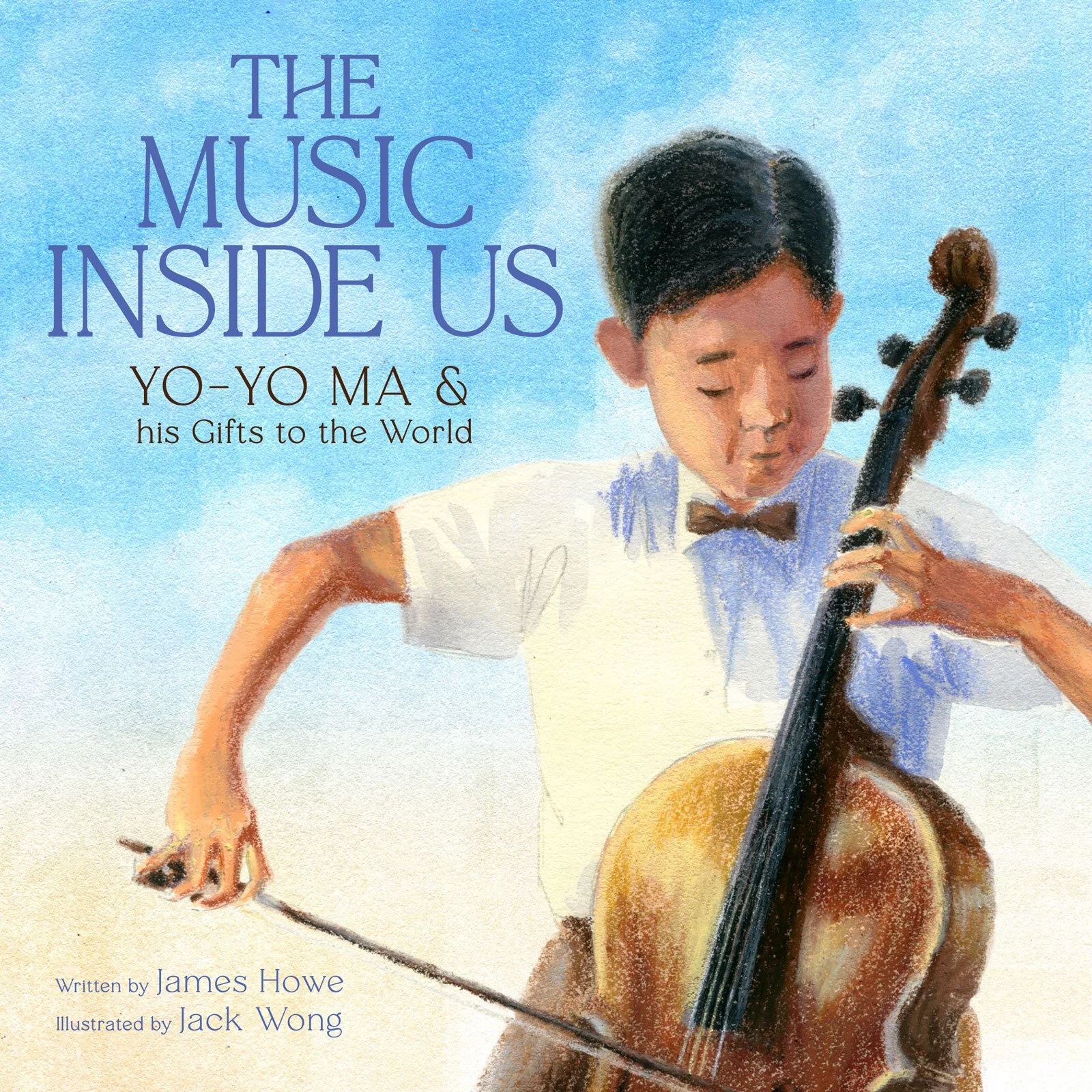
JS: The Music Inside Us: Yo-​Yo Ma and His Gifts to the World

RVC: What’s one word you hope people use to describe your books?

JS: Engaging.

RVC: Thanks so much, Joan!