
In lieu of an industry interview, we’re going a different route today. Since this is the Season of Thanks, I’m offering something I think writers will be thankful for. It’s something editors and agents wish more writers understood: your picture book needs to answer one question fast—so what?
Not in a mean way. But more like a who is this for and why will it matter to them? way.
Because here’s the thing: your manuscript doesn’t just need to convince an editor. It needs to work for the art director planning page turns, the sales rep pitching to Barnes & Noble, the librarian deciding what to order, the teacher choosing a readaloud book for the classroom, and the grandparent standing in the aisle at Target.
If you can’t answer “So What?” clearly, nobody else can either.
What “So What?” Actually Means
It’s two things:
- Who needs this book? (Age range + the specific kid experience you’re addressing)
- What does it give them? (Not a theme. A benefit they can feel.)
Example:
- Weak: “It’s about friendship.”
- Strong: “It’s for 4–6 year olds learning how to navigate their first disagreements with friends. It shows them that saying sorry doesn’t mean you’re wrong, just that you care.”
See the difference? The second one tells everyone in the pipeline exactly who to sell it to and why a parent or teacher would buy it.
How to Prove It in Your Manuscript
Once you know your “So What?,” make sure your manuscript delivers it across all 32 (or more!) pages.
- Does your main character’s problem match the reader’s real-life struggle?
- Does the story show (not tell!) how to handle that struggle in a way kids can try themselves?
- Does the story create natural visual moments and pacing that support the So What?
If you can’t clearly picture the shelf it belongs on or the specific kid who needs it after reading your opening, that’s your revision signal.
The “So What?” Statement
Try this: This book is for [age] about [specific kid problem]. It helps them [what they’ll learn/feel/do] through [the story’s approach].
If you can say that out loud without hedge words like “kind of” or “explores the idea of,” you’re on the right track.
Let’s look at a real example:
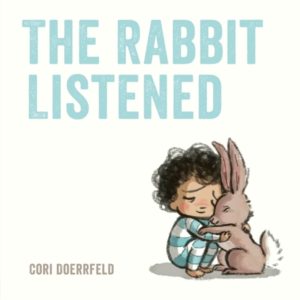 “The Rabbit Listened is for 3–6 year olds who’ve experienced something upsetting and don’t know how to feel better. It helps them understand that sometimes you don’t need solutions or advice—you just need someone to sit with you and listen—through a story where different animals offer different types of comfort until Rabbit shows up and simply stays.”
That’s a “So What?” every role in the pipeline can work with. The editor knows it’s a social-emotional title. The art director can visualize quiet, tender moments. The sales rep can pitch it to the feelings/comfort shelf. And the parent shopping at their local indie bookstore immediately knows if their kid needs this book right now.
Your turn. Write the “So What?” for your current manuscript. If it lands clearly—no hemming and hawing, no vague language—you’ve got a solid foundation. But if you’re struggling to articulate it? That’s valuable information too. It usually means the manuscript itself needs clearer focus before it’s ready to send out.
Thanks so much! I love this helpful article.
This writeup is helpful! Thanks
Thank you for the template to use during revisions. Very clear explanation and wonderful examples. Feeling thank ful for this article.