Industry Insights: The Two-​Sentence Cover Note

In Bushel & Peck submission emails, I get cover notes all the time that are longer than the picture book manuscript they’re introducing. So I skim the cover notes. Or more often, I skip them entirely and just go straight to the pages.

Best Practices in Manuscript Submission for Journal Articles - HigherEd+

I’ve written blog posts before about how cover letters should answer three basic questions. This is a zoomed-​in look at just the first two—and how to do them without explaining your book to death.

Here’s one approach that works for me: two sentences at the top of your email that tell me what this book promises to a child and how it delivers on that promise as a picture book.

This picture book is for [age band] about [kid-​facing idea]. It helps readers [benefit] through [a visual approach the art can carry], including [one specific spread moment].

The key is naming something concrete that illustrations can carry—not just themes or topics, but actual visual moments that make your manuscript work as a picture book. This also signals to the art team that you’re thinking visually from the start (always a plus!).

(Made-​up) Fiction example:
This picture book is for ages 4 to 8 about a city kid learning to sleep during a blackout. It helps readers handle nighttime worries through a neighbor-​to-​neighbor walk by flashlight, including a rooftop stargazing spread that resets the mood.

(Made-​up) Nonfiction example:
This picture book is for ages 5 to 8 about how honeybees work together to survive the seasons. It helps readers understand colony life through cutaway hive views that change across the year, including a waggle dance spread with labeled movements kids can try.

If you try this format, I’d put those two sentences at the very top of your email, before your manuscript or any links. Once I start reading, I want the book—not the cover note—to do the convincing.

For me, less is more when it comes to cover letters. Especially for picture book submissions.

If you’ve got another way to create an editor-​pleasing cover letter for a picture book submission, let me know in the comments!

Reading Activities: Flora and the Jazzers by Astrid Sheckels

Flora and the Jazzers
Author: Astrid Sheckels
Illustrator: Astrid Sheckels
7 October 2025
Waxwing Books
40 pages

Book description from Goodreads: “What will become of the music in Flora’s heart?

Flora the ferret longs to attend a concert someday, but she is only a lowly scullery maid. She must save every penny.

When she discovers that the Jazzers, her favorite band, are performing at the hotel where she works, Flora is determined to hear them. But her manager forbids her from going. “Music is not for someone like you,” he tells her.

It turns out, however, that the Jazzers have a problem, and Flora might be just the one to help…

A Cinderella-​like animal story set in the 1920s for readers with a song in their heart, written and illustrated by Astrid Sheckels.”

Want some reviews of Flora and the Jazzers?

Here’s the book trailer for Flora and the Jazzers.

Reading Activities inspired by Flora and the Jazzers:

  • Before Reading–From looking at the front cover: 
    • What kind of story do you predict this will be–realistic, a fairy tale, or something else?
    • What time period do the clothes, hair, and setting suggest?
    • What do you think “the Jazzers” are: a band, a group of friends, a nickname, something else?
    • What questions would you like to ask the author-​illustrator before reading the book?
  • After Reading–Now that you’ve read the story: 
    • What does Flora want most at the beginning, and what stands in her way?
    • What moments show Flora’s courage, even when she feels small?
    • How does the story use music as more than background?
    • Which scene felt most like a turning point, and why?
    • What did the illustrations help you understand about the hotel world and Flora’s place in it?
    • What does the ending suggest about belonging and being seen?
    • Would you recommend this book to a friend? Why or why not?
  • Soundtrack of a Scene:
    Pick one spread and imagine the music playing underneath it. Is it fast or slow? Loud or soft? Smooth or bouncy? Write three “sound words” that match the mood, then read them out loud like a tiny poem.
  • Jazz Improv Drawing:
    Fold a paper into four boxes. In each box, draw Flora in the same pose. Now “improvise” the details each time: change the hat, the background, the lighting, the expression By the last box, Flora is ready for the stage!
  • Hotel Map Challenge:
    Draw a simple map of the hotel from Flora’s point of view. Include places she works, places she dreams about, and places she feels unwelcome. Add arrows showing how she moves through the space during the story.
  • Your Own “Music Is For…” Poster:
    The manager says music is for certain people. Flora proves otherwise.
    Make a poster that begins with: Music is for…
    Fill it with drawings and words showing who belongs in the audience, on the stage, backstage, everywhere.
  • Fairy Tale Spin Workshop:
    This story carries Cinderella energy. Create your own spin in three quick steps:
    Choose the setting (hotel, diner, subway, amusement park)
    Choose the dream (dance, cooking, painting, science)
    Choose the “helper” (band, neighbor, stray cat, librarian, teammate)
    Write a 6–8 sentence summary of your version.
  • Books, Books, and More Books! Check out these picture books about music, rhythm, and finding your voice:

Before John Was a Jazz Giant by Carole Boston Weatherford, illustrated by Sean Qualls

A look at John Coltrane’s childhood, where ordinary sounds shape the way he hears the world. Notice how rhythm and repetition turn everyday noise into the beginnings of music.


Jazz Day: The Making of a Famous Photograph by Roxane Orgill, illustrated by Francis Vallejo

A neighborhood parade grows as jazz spills into the streets and pulls everyone along. Notice how rhythm and repetition in the text mirror the way music gathers a crowd.


Rap a Tap Tap: Here’s Bojangles—Think of That! by Leo and Diane Dillon

This lively tribute follows the rise and style of Bill “Bojangles” Robinson through sound-​driven language and motion-​filled art. Pay attention to how page design and pacing create a sense of dance.


The Sound of All Things by Myron Uhlberg, illustrated by Connie Schofield-​Morrison

A boy who is deaf experiences the world through vibration, motion, and visual rhythm rather than sound. Watch how the illustrations translate music and noise into movement and pattern, inviting young readers to rethink what it means to “listen.”


Trombone Shorty by Troy “Trombone Shorty” Andrews, illustrated by Bryan Collier

A New Orleans kid with a trombone and a dream keeps pushing his way toward the music he loves. Look at how color captures energy, ambition, and a strong sense of place.

Behind the Books: 10 Picture Book Resolutions You Should Actually Keep in 2026

Whenever I don’t have a picture book creator interview lined up for a second-​week-​of-​the-​month post, I’ve got two options.

  1. Skip the week’s post and hope no one notices.
  2. Create something of equal use to picture book creators.

I like flexibility, so I tend toward option 2. That’s what we’re doing this week.

Which Type Of Expert Do You Want To Be?

Here we go!


It’s January, which means the internet is drowning in productivity hacks and motivational quotes from people who’ve already broken their resolutions by the time you’re reading this. But here’s the thing: most writing advice is either too vague (“write every day!”) or too prescriptive (“write exactly 500 words between 5–6am while standing on one foot and listening to Green Day”).

So here are ten resolutions for picture book creators that are actually achievable, actually useful, and—if I’m doing this right—actually entertaining. These come from my work as an editor at Bushel & Peck Books and from working with writers who’ve made these exact mistakes (including past me, who made ALL of them…often more than once).

1. Read at least five picture books you absolutely hate.

Not books that are badly written. I’m talking about books that are well executed on their own terms but collide hard with your personal taste.

Why? Because figuring out what you hate—and WHY you hate it—is craft gold. Is it the pacing? The voice? The ending that’s too neat? Too messy? Your taste is your compass. So sharpen it by purposefully bumping into things you despise.

2. Stop explaining your manuscript in your cover letter.

If your query letter includes phrases like “This story teaches children about…” or “The message is…” or “Readers will learn…”—delete them.

Your manuscript should do the teaching/​messaging/​learning-​inducing. Your cover letter should answer: What’s the book about? Why does it matter? Why are you the one to write it? That’s it. Three questions, not three pages.

3. Delete your opening line. Then delete the next one.

I’m not saying your opening definitely needs to go. I’m just suggesting that it probably does.

Most manuscripts start too early—with setup, with explaining, with warming up. Your story truly starts when something changes, when tension arrives, when your character wants something they don’t have. Everything before that? Probably throat-​clearing. Try starting on page two and see if anyone misses page one.

4. Join one writing group. Quit one writing group.

If you’re not in a critique group, find one. If you’re in three, quit two of them. Writing groups should make you better, not just busier. The right group pushes your craft, celebrates your wins, and tells you the truth about your work. The wrong group makes you feel obligated to show up, defensive about feedback, or completely exhausted by drama.

5. Read something that’s not a picture book.

Middle grade. Young adult. Adult fiction. Nonfiction. Poetry. Graphic novels. Even—brace yourself—literary fiction. Picture books are a 32-​page ecosystem, but the best ones borrow from everywhere.

You want to write tight? Read short stories. You want to nail voice? Read first-​person YA. You want to build a world fast? Read the opening chapters of terrific fantasy novels. To borrow an idea from Austin Kleon: steal like an artist.

**He’s got a lot worth of other good ideas worth stealing. Maybe sign up for Austin’s weekly newsletter?

6. Answer your own “So what?” question.

Before you submit, before you revise, before you do literally anything else…answer this:

  • So what?
  • Why does this story matter to an editor?
  • To an art director?
  • To a sales rep?
  • To a teacher?
  • To a parent?
  • To a kid?

If you can’t answer these easily and effectively, neither can anyone else. And if nobody else can answer them, your manuscript becomes someone’s “maybe pile” that turns into their “probably not” pile. Make it obvious why others they should care.

7. Stop submitting before your manuscript is ready.

You know that feeling when you finish a draft and immediately want to send it everywhere? That feeling is lying to you. It’s like an exciting first date where everything says go go go—and you already know that’s exactly when to slow down.

Sit on it for two weeks, or a month if you can stand it. Then read it fresh and realize what you missed: the saggy middle, the unclear motivation, the ending that felt brilliant at midnight but confusing in daylight. The best submissions are the ones that waited. The worst submissions are the ones that couldn’t.

8. Write three new first pages for your “finished” manuscript.

You’ve already revised your manuscript four nine eleven times. Great! Now write three completely new opening pages. Different POV, different tone, different first line.

You don’t have to use them—but the activity will show you what you’re attached to versus what’s actually working. Sometimes the thing you love most is the thing holding your story back. Find out BEFORE you submit.

9. Buy fewer craft books. Finish more manuscripts.
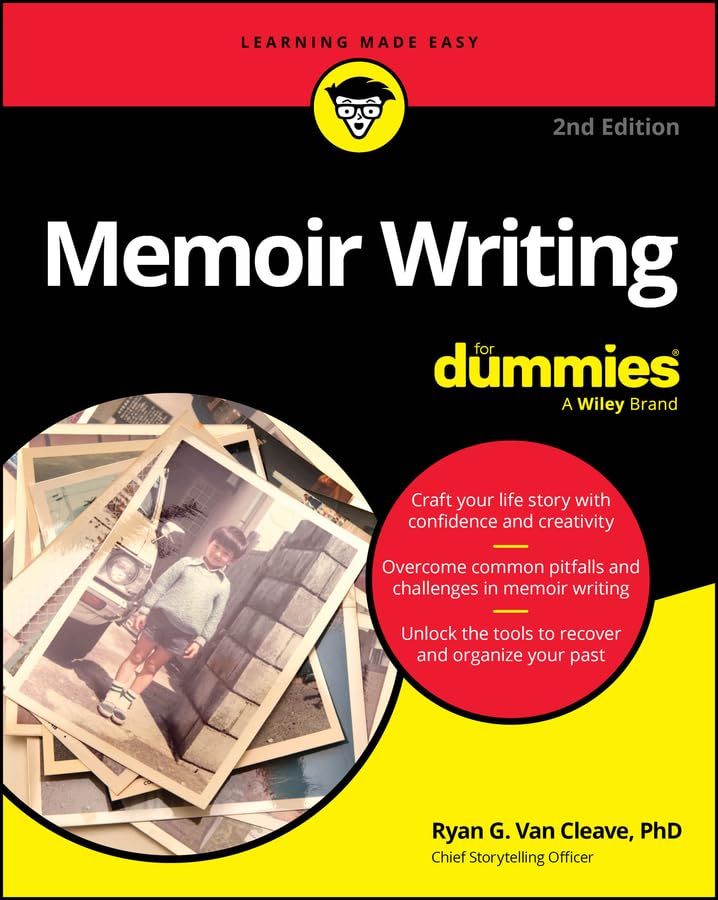
Writing craft books are fantastic. I’ve read plenty and even written a few. But if you’ve got six unfinished manuscripts and four unread craft books on your shelf, you don’t have a learning problem—you have a finishing problem.

  1. Pick one project.
  2. Write it badly.
  3. Revise it slightly less badly.
  4. Repeat until it’s good.

You’ll learn more from completing and revising one messy manuscript than from reading about how to write a perfect one.

10. Celebrate a rejection.

Not every rejection, of course…just a really good one. What’s that look like? It’s the kind that comes from an editor or agent you respect, who clearly read your work, who maybe even said something specific about why it wasn’t right for them. That rejection means you’re in the game. You’re being read by people who matter. You’re close enough to hear “not quite” instead of silence.

Frame it. Screenshot it. Whatever.

Just recognize that being rejected by the right people is progress.


So there you have it: ten resolutions that won’t make you a perfect writer but might make you a better one. Or at least a more self-​aware one. And if you break all of them by February? You’re still ahead of everyone who’s still “planning to start writing soon.”

Now go write something!
Picture Book Reviews: Five-​Word Reviews for January 2026

New year, same challenge: distilling a picture book into five words. It never gets easier—there’s always more to say—but that’s what makes this format fun.

There’s no theme this month, just strong storytelling worth your time. Here we go!


A Cure for the Hiccups
Author: Jennifer E. Smith
Illustrator: Brandon James Scott
Random House Studio
4 November 2025
40 pages

Ryan’s five-​word review: Charming mindfulness lesson. With hiccups.

😮‍💨 4.25 out of 5 deep breaths


The Humble Pie
Author: Jory John
Illustrator: Pete Oswald
HarperCollins
4 November 2025
44 pages

Ryan’s five-​word review: Puns, pies, and overdue honesty.

🥧 4 out of 5 pie slices


The Old Sleigh
Author: Jarret & Jerome Pumphrey
Illustrator: Jarret & Jerome Pumphrey 
Norton Young Readers
4 November 2025
48 pages

Ryan’s five-​word review: Community kindness warms cold nights.

🛷 4 out of 5 sleigh rides


The Snowball Fight
Author: Beth Ferry
Illustrator: Tom Lichtenheld
Clarion Books
4 November 2025
48 pages

Ryan’s five-​word review: Childhood joy + perfectly packed snow.

❄️ 4.25 out of 5 perfect snow days


Stella and Roger Are on the Move
Author: Clothilde Ewing
Illustrator: Lynn Gaines
Denene Millner Books/​Simon & Schuster Books for Young Readers
11 November 2025
40 pages

Ryan’s five-​word review: Chicago farewell sparks inner courage.

🌆 4.25 out of 5 Chicago memories