Each year, I work as a ghostwriter on a few celebrity kidlit projects. No one knows which ones, of course. That’s the “ghost” part of the equation.
Every so often, I get to collaborate instead of ghost, which means I can actually talk about the process. Today’s post is about one of those rare projects: a picture book I co-created with Super Bowl champion and sports commentator Keyshawn Johnson and voice actress and singer Bettina Bush.
Once Upon a You—Keyshawn’s first picture book—shows kids everywhere that they’re the authors of their own destinies. Let’s hear more from Keyshawn and Bettina about the book, their creative process, and their friendship.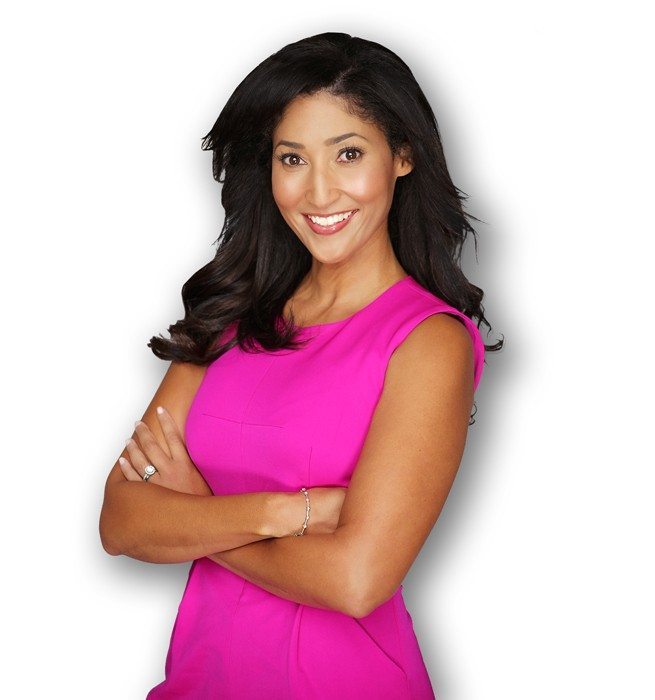
RVC: So, the two of you are a creative powerhouse. How did your relationship first begin?
BB: That’s a funny story actually! [Laughs] About 15 years ago.…
KJ: Bettina and I go way back. We’re neighbors and she was walking down the street with her baby daughter. I came out the front door and Cassie pointed at me and said, “Daddy!” [Laughs]
Bettina was like “You look nothing like my husband but she must be thinking of my dad!” It was an immediate friendship. Bettina and my wife Jen are very tight and our kids and families have always been close.
RVC: When did you first realize you might want to create something together?
BB: It sort of evolved naturally. We’d talk about our kids, about legacy, and about how powerful stories can be in shaping who we become. One day we realized—wait, this is the story we should be telling.
KJ: Bettina’s got this incredible creative energy, so when she said let’s start with a children’s book and see where we want to go from there, I said, “Okay, I trust you. Let’s go!”
RVC: Hah. Love it.
KJ: And I’ll definitely say we’re just getting started.
RVC: What drew you both to picture books—and this idea in particular?
BB: I’ve always believed stories are the bridge between imagination and identity. Picture books are where that starts. You see yourself reflected in these beautiful images and words, and it shapes the way you dream.
RVC: Absolutely!
 KJ: Picture books are special. They’re one of the first places where a kid starts to dream big. I’ve read to my kids plenty of nights, and I know the kind of magic that happens when a story really lands. This idea—Once Upon a You—was about showing kids that their story matters, that they have control over their own path. That spoke to both of us.
RVC: The title Once Upon a You sounds like an invitation. How did that phrase come about?
KJ: We wanted something that felt classic, like a fairy tale—but flipped. “Once upon a time” is what we all know, but this is your story. You’re you. When Bettina said “Once Upon a You,” I was like, “That’s it right there.” It’s simple, but powerful.
RVC: Keyshawn, what surprised you most about the world of children’s publishing once you jumped in?
KJ: How collaborative it is. I mean, I’ve been part of teams my whole life, but this is a different kind of teamwork. There are editors, illustrators, designers—all focused on every detail to make sure it connects. And I’ll be real, I didn’t know how much time and heart goes into one 32-page book. It’s a grind, but a rewarding one.
RVC: Bettina, as someone who’s worked in voice and music, how did your storytelling instincts translate into this medium?
BB: It’s actually very natural. Music, voice acting, writing—they all come from rhythm and emotion. With picture books, you’re writing a kind of song. Every line has a cadence, every page turn is a beat. You have to feel the flow of it. My background in performing helps me hear the story in my head—the tone, the warmth, the rise and fall. It’s all about creating an emotional melody through words.
RVC: What did collaboration look like day-to-day? Were you trading drafts, voice notes, Zoom calls, or late-night texts?
KJ: All of the above! [Laughs]
We’d text ideas at random hours, hop on calls, send each other notes—it was constant communication. We both have busy lives, but when something feels right creatively, you find the time. It was like running a two-minute drill, but for storytelling.
BB: The energy was always flowing. What made it special was that there was such mutual respect—we trust each other’s instincts, and that made the process really joyful.
RVC: How did seeing the illustrations for the first time change how you felt about the story?
BB: That was honestly magical. When we saw the art come to life, I teared up. You have this vision in your mind, and then suddenly there it is, breathing and full of color and emotion. The illustrator captured the heart of the story perfectly—it was like watching your imagination step off the page and smile back at you.
KJ: Oh man, that was emotional. The first time I saw the art, it hit me how real it all was. You write these words, you talk about concepts, but when an illustrator brings that to life—it’s like seeing your vision walk off the page. It gave me chills.

RVC: The book’s message—“you’re the author of your own destiny”—feels both empowering and personal. Why was that message important to you?
BB: Because it’s true for every single one of us. I’ve lived many creative lives—music, acting, producing—and through all of it, I’ve learned that no one writes your story but you. I want every child to feel that sense of agency and possibility. That message is something I live by, and it’s something I want to gift to my own kids and to every reader.
RVC: Love it. How about for you, Key?
KJ: Because that’s my life, straight up. I wasn’t handed anything. I had to work, stay focused, believe in myself even when others didn’t. That’s what I want kids to understand—it doesn’t matter where you start, you have the power to shape your story. That’s the message I wish someone had told me when I was young.
RVC: Was there a line or image in the book that hit you emotionally once it was on the page?
BB: There’s a moment that talks about “the light that lives inside you.” That one really got me. It’s such a simple line, but it holds so much truth. We all have that light—it just needs to be seen, nurtured, and believed in. Seeing that line surrounded by such beautiful illustrations—it gave me goosebumps.
KJ: The part where it talks about “the moments that make you you.” That hit me hard. It reminded me of my kids, my journey, all the things that shaped me along the way. It’s not just about success—it’s about identity, and being proud of who you are.
RVC: What do you hope kids (and parents) take away after reading Once Upon a You together?
BB: I hope they take away a sense of wonder and ownership over their stories. For kids, that they can dream big and define who they are. For parents, I hope it opens up conversations about self-belief and creativity—and maybe even helps them see themselves through their children’s eyes again.
KJ: For kids, I want them to know they’re capable of amazing things and to ignore anyone who tells them otherwise. For parents, I hope it sparks conversations—about dreams, resilience, and love. Reading together can be such a grounding moment.
RVC: Since COVID, I often ask a health and wellness question in OPB interviews. With both of you being so busy with work and family, I’m really curious—what do you do to destress?
BB: Music is my therapy. I’ll sing, write, or just put on a playlist and let myself breathe. And honestly, being outside helps—whether walking my dog, going to the beach, or just sitting in the sun. I also try to unplug and be present with my family.
KJ: For me, it’s simple—working out, getting outside, spending time with my family. I need that balance. I’ll hit the gym, then come home and just watch a game with my kids. That’s the reset button right there.
RVC: So, every author interview at OPB has two parts: the main interview, and then the SPEED ROUND. And it’s time to get zippy. Are you both ready for quick questions and fast answers?
BB: Yep!
KJ: Let’s do it!
RVC: What’s one thing fans would be surprised to learn about you?
BB: I climbed Mt. Kilimanjaro when my kids were little!
KJ: I can’t swim.
RVC: What snack fuels your creativity?
BB: French fries with ranch.
KJ: Chips and really good salsa.
RVC: You can invite any three people—real or fictional—to storytime. Who’s on the rug?
BB: My dad and my two kids. I’d give anything to watch them together at this age. I’m 100% certain they’d blow each other’s minds in the best ways.
KJ: Three kids who don’t have books.
RVC: If Once Upon a You had a mascot, what would it be?
BB: A butterfly. Magical growth and beauty.
KJ: Probably a lion. Courage and heart—the stuff we want kids to feel when they read the book.
RVC: A picture book you loved as a kid that still sticks with you?
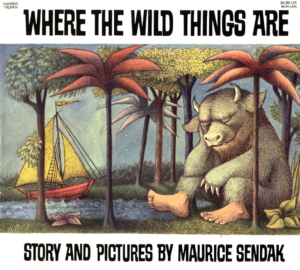 BB: Where the Wild Things Are. It’s about imagination, courage, and coming home to yourself. That story never leaves you—it grows with you.
KJ: The Giving Tree. That one’s timeless. Simple message, deep meaning. I’ve read it to my kids too, and it still hits the same.
RVC: What’s one word that captures Once Upon a You?
BB: Becoming. Because it’s all about the journey of who you are, who you’ve been, and who you’re meant to be.
KJ: Empowerment. That’s it. It’s about owning your story—no matter where it starts or where it goes.
RVC: That was terrific—thank you both for sharing the behind-the-scenes magic!

 an editor. It needs to work for the art director planning page turns, the sales rep pitching to Barnes & Noble, the librarian deciding what to order, the teacher choosing a readaloud book for the classroom, and the grandparent standing in the aisle at Target.
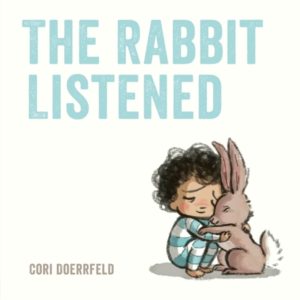 “The Rabbit Listened is for 3–6 year olds who’ve experienced something upsetting and don’t know how to feel better. It helps them understand that sometimes you don’t need solutions or advice—you just need someone to sit with you and listen—through a story where different animals offer different types of comfort until Rabbit shows up and simply stays.”



 Balloon
 Moon Song
