This month, we’re featuring Joan Schoettler, author of Books Travel the World, which I had the pleasure of editing for Bushel & Peck Books. Joan’s writing carries a quiet beauty and a deep sense of care for story and history. Her verse novel The Honey Jar: An Armenian’s Escape to Freedom won the California Book Award Gold Medal for Juvenile Literature, and her picture book Good Fortune in a Wrapping Cloth received the APALA Award.
A longtime educator and literacy advocate, Joan blends research, heart, and lyricism in ways that stay with readers. She lives in central California, where she enjoys reading, gardening, and traveling with her family.
Let’s dive into this interview and learn more about Joan right now!
RVC: Joan, you’ve worn many hats over the years—professor, poet, and kidlit author. What drew you to children’s books in the first place?
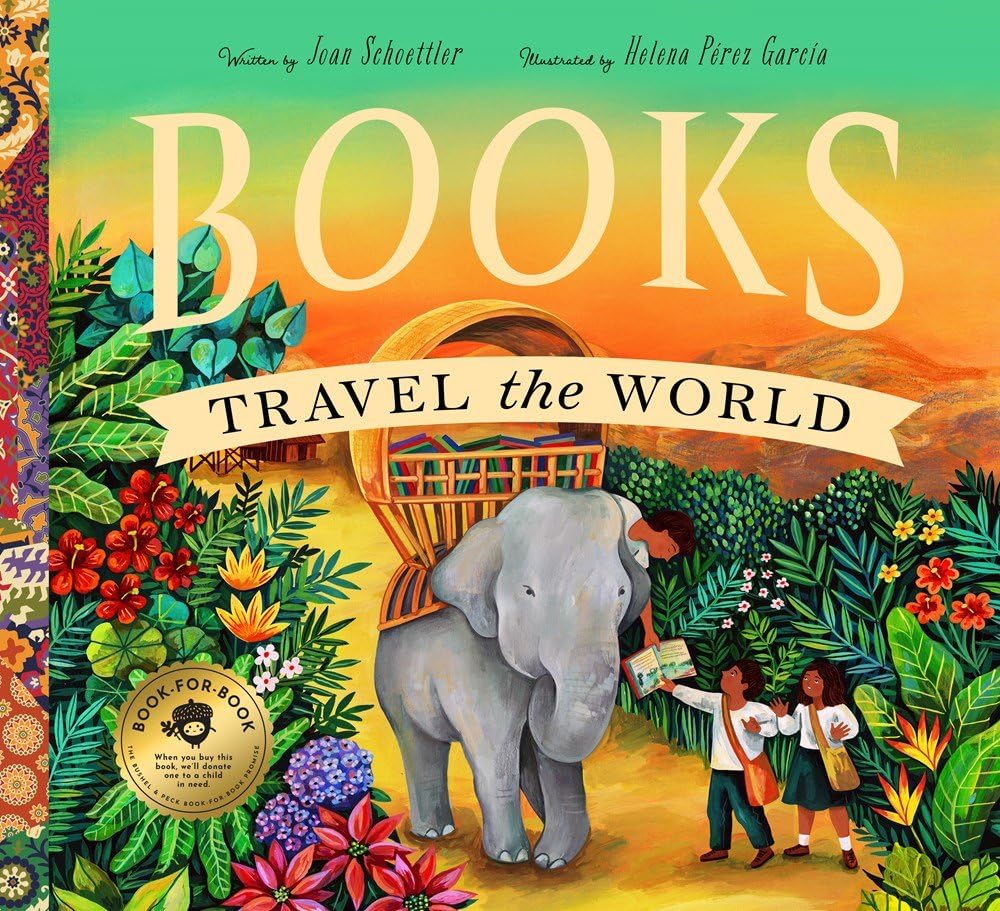 JS: Thank you for the opportunity to talk with you about writing today. Your editorial notes and comments for Books Travel the World definitely brought insights that tightened and enriched my story. Much appreciated.
RVC: Happy to help!
JS: I struggled with reading until about the third grade, and I remember my parents worrying about me learning to read. My mother took advantage of having a library walking distance from our home and took us often. I liked going there, especially when I could read the books.
My 5th grade teacher turned the coat closet at the back of the room into a classroom library where books invited us to explore fiction, non-fiction, and poetry. Characters in books felt like friends. Reading became a constant in my life. To this day, my friends and I continue to talk about and share books.
RVC: You earned a BS in Social Science at San José State University. What was the plan with that degree?
JS: Finding my purpose has been and continues to be part of my life journey. When I reflect on your questions, I step back into my childhood home where my mom’s friend shared her copies of National Geographic magazine. My interest in cultures around the world stemmed from looking at unique photographs and reading stories of people and societies from around the world. My curiosity in social studies took hold in school where various cultures were explored. My favorite part of the school day began with maps and photographs and stories of people who lived in faraway lands. As time went on, studying and learning about different cultures and sharing them with others, felt right, so I focused my education on social studies and teaching.
I began teaching in elementary school but soon decided to focus on one subject instead of teaching across the curriculum. Children’s literature? Art? Social Science? My desire to deepen my understanding of how reading persuades, informs, and entertains led me to study children’s literature, but my curiosity and regard for art and discovering communities and how they interact over time remained strong. Becoming a writer never crossed my mind.
RVC: Yet at some point, you realized that you wanted to write and publish books for children.
JS: After many years of studying, teaching, and immersing myself in children’s literature, three different episodes came together and nudged me forward. At lunch with a famous children’s author, I asked her where all her stories came from.
“Why, inside.” Then she pointed her finger to me and said, “They’re inside you, too, Joan. You just have to let them out.” I didn’t believe her, but a seed was planted.
Around the same time a child asked me if I ever wrote stories and why I always made them write and share their stories but if I didn’t write any stories myself. I paused again. His question challenged me. A short time later, I read an obituary about a well-known storyteller who had taught me and whom I greatly admired. I sat down that morning and putting pen to paper, I wrote my first story. It was about a storyteller.
RVC: How did that growing interest in writing connect with your interest in education?
JS: While many authors have known they wanted to become a writer, my desire to write came after a long career in children’s literature. My love of children’s books, sharing them with young readers in my early teaching career, delving into the world of children’s literature as I pursued a Master’s Degree in Literacy, and teaching children’s literature, storytelling, and reading and writing at the university, took hold.
With young readers and university students we examined children’s books; interweaving the main components of writing, exploring the art of storytelling, and focusing on the powerful visual impact illustrators use to bring stories to life. We read poetry and investigated nonfiction. We studied authors, their books, and their lives. We compared different versions of biographies of the same person and various adaptations of fairy tales. We studied memorable, engaging characters, universal themes, creative setting, captivating plots, and the main components of illustrations in children’s books. The years of reading and delving into books set the groundwork for writing.
RVC: When/why did you make the full commitment to writing books for kids?
JS: When I finally took pen to paper, my writing journey began. I joined a children’s writing critique group, and their support, encouragement, and creativity invited me to follow a writing path. Many drafts, many rejections, and many years passed before my first publication. But as I reflect on the years I read to and with children, all the ways we studied literature together, and all the interactions with teachers and librarians along the way, I realized how my life experiences prepared and guided me to begin writing. I’m honored to share my children’s books with young readers, parents, teachers, and librarians.
RVC: Let’s talk about your first published picture book. What’s the story behind that story?
JS: Visiting museums ties into my curiosity of cultures. The Asian Art Museum in San Francisco displayed an exhibit on Korean bojagi. I’d never seen Korean wrapping cloths before, and they captured my imagination. Chungie Lee, a well-known Korean fiber artist, had created a large bojagi with stencils of Korean women who were bojagi artists from the 1800s. I wanted to know the story behind these women. Who were they? What invited them to create works of art passed on for centuries? What drove them to meticulously sew stitch after stitch to create works of art from scraps of fabrics?
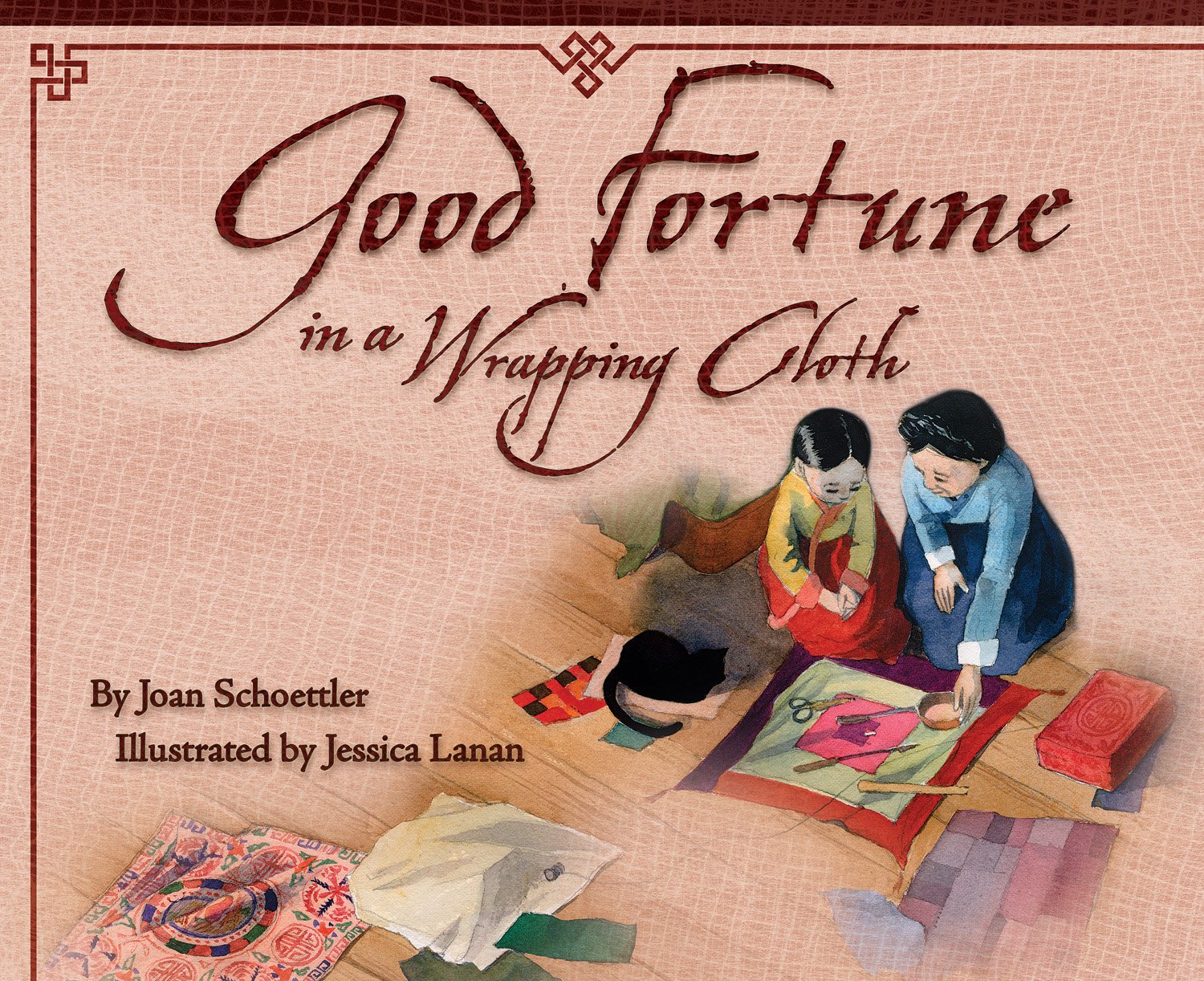 I learned the women offered good luck, good fortune, and good health with each stitch, and that knowledge and art led to my first children’s picture book, Good Fortune in a Wrapping Cloth.
RVC: What’s the best lesson that book taught you?
JS: Writing is more than just the story. Gifts abound in unexpected places. Research opens doors to knowledge, art, and community. The outreach of curators at Asian museums offered insights in history and opportunities to learn about the Korean culture far beyond my inquiry regarding bojagi. Invitations to speak and sign my book at museums, in private homes, and at Korean schools and community centers enriched my learning and experiences beyond what I imagined.
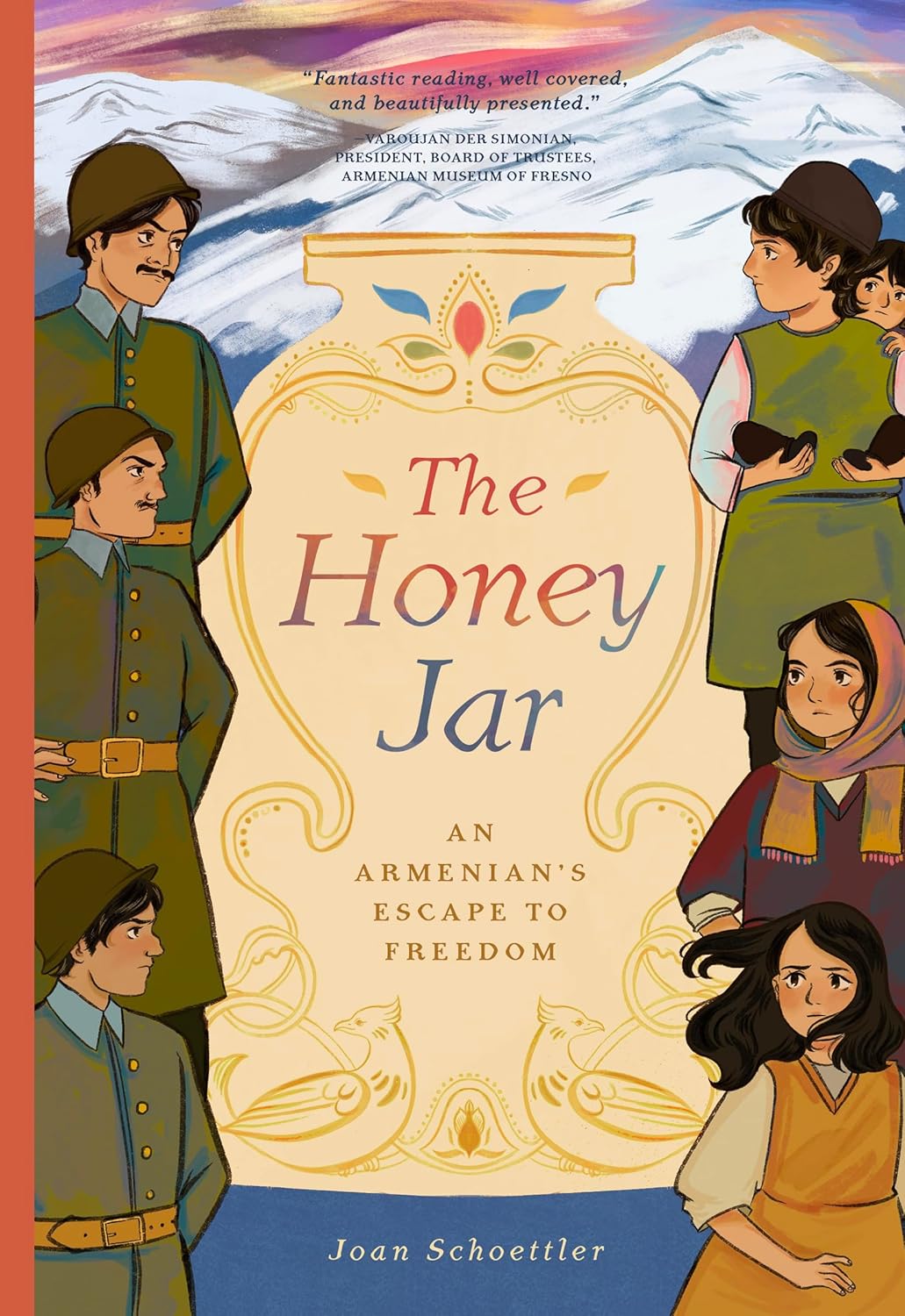 RVC: The Honey Jar takes place in the Middle East, while Good Fortune in a Wrapping Cloth focuses on Korean culture. What does your research process look like when writing cross-cultural stories?
JS: My research begins like broad strokes across a blank sheet of paper. Questions abound. Family life. Homes. Food. Rituals. Education. Clothing. Jobs. Responsibilities. Children’s play. One leads to another. Large questions break off into smaller ones. I believe what is written on the final pages of my books is a fraction of the knowledge I’ve gained in learning about a culture. Books about art and history, primary sources and interviews, and deep research is imperative. Stacks of picture books fill my arms as I depart from the library.
Cross-cultural research examines people and their behaviors from one culture to another. Through in-depth research the knowledge of different cultures–their customs, their foods, their homes–begin to create a framework for the story. Diversity of cultures found throughout the world demonstrate a richness in people values and beliefs, rituals, interactions, and language. This diversity must be honored and shared. But the belief in the family unit, the power of loss and love, and working through conflict to find your identity are universal themes.
RVC: Speaking of stories about more than one culture…let’s leap over to your new one—Books Travel the World. Where did that idea come from?
JS: Do you remember earlier I mentioned my initial interest in cultures through National Geographic magazines? That carried through in what I studied in college. It is woven through my life. When I reflect on the stories I have written and stories I hope to write, my interests cross many cultures. Tie that into my dedication of a lifetime of working in children’s literature and my belief in getting books into the hands of children whether locally, nationally, or internationally, Books Travel the World seems like a culmination of what I believe in. I want to honor all of the people throughout the world who remain dedicated to their belief in the importance of reading and that reading will make a difference in the world.
RVC: What was the biggest challenge with writing that book? Was it the research rabbit hole or something else?
JS: Learning about all the dedicated people who believe in the importance of literacy inspired me so the research was delightful and heartwarming. Writing a text for young readers became my challenge. The teacher in me wanted to make sure the readers saw all the creative possibilities literature offers after the reading. The sharing of stories, the art, the drama, the creativity, and the inspiration for the reader found in books was important to share with the reader too. While I wove these components organically into the text, I also included information in the back matter of ways to extend the literary experience with the reader.
RVC: Now that the book is done and out, I can ask this question. What are you happiest about?
JS: Two elements come to mind. Helena Pérez-Garcia’s vibrant and eye-catching illustrations bring the story to life! In reading the story to children, their chiming in on the refrain, “One more story please!” warms my heart. I hope all parents, teachers, and librarians listen to that request and read “one more story.”
RVC: What are some of the fun things you’ve done to promote that book?
JS: Enjoying signing at bookstores, meeting librarians at ALA and sharing my book with them, inviting children to write postcards to the librarians in the book, and participating in district librarian meetings where the outreach goes directly to the librarians of schools are some of the important components of promotion for Books Travel the World. With other books, I’ve presented and signed at museums, schools, festivals, and book clubs.
RVC: What’s the most important thing people should know or understand about librarians?
JS: Librarians are essential to providing access to books, information, and research. Librarians work in libraries, hospitals, law firms, medical research labs, and universities. School librarians empower students to embrace curiosity and learn independently through their knowledge of books and technology. “Students with access to well-resources libraries with certified librarians consistently perform better academically.” (Center for American Progress. April 18, 2024)
RVC: Let’s talk about process. What’s your writing process like these days? Has it changed over the years?
JS: In some ways, I find the writing process overflowing beyond the time sitting in the chair at my desk. Spending time at museums, plays, movies, concerts, and, of course, in nature inspire me. The creative self needs to be nurtured. Daydreaming opens new pathways in a story. Journaling allows me to listen closely to characters, to embellish settings, and to learn more about myself. I write picture books and middle grade novels, so I always have stacks books to nudge me on my writing journey. I usually have three projects at different stages in place. Incubating new ideas, writing the early drafts, and editing others fill my days. After walking or yoga, I keep my mornings for writing and often return to it again in the afternoon. My critique group has been meeting weekly for twenty years. Their insights, support, and encouragement are ongoing and essential to my work.
RVC: What’s a topic you haven’t written about yet but would love to explore in a future book?
JS: I’m going to keep you in suspense regarding this question. I keep my future projects close but will let you know when something new is coming.
RVC: In all of your experience as a kidlit author, what has most surprised you?
JS: First, I’m surprised how story ideas come to me: at museums, in gardens, in conversations, and obituaries. My writing is enriched by learning from research and experts. Amazing opportunities open up like private museum tours, meeting family members of people I’m researching, and invitations to weekend-long workshops.
RVC: Since COVID, I try to ask at least one health and wellness question in every interview. Here’s yours. What’s your favorite thing to do to de-stress or defeat negativity?
JS: After indulging in chocolate, my stress relievers are going for a walk, riding my bike, or spending time in the garden listening to birds, watching squirrels, and enjoying the beauty of nature. Sometimes a nap works too!
RVC: Last question for this part of the interview. What’s next for you? Are there any upcoming books or projects you’re excited to share?
JS: I’m pleased to share A Doctor at Heart: The Groundbreaking Story of Scientist and Educator Vivien Thomas, my upcoming picture book, with you (Beach Lane Books: May 12, 2026). A few other stories are making the submission rounds. A new story has been begging for my undivided attention. I’m excited to delve into another culture to share a universal story of family, dreams, and creativity.
RVC: Alrighty, Joan. It’s time for the SPEED ROUND. Short and sweet questions followed by zippy-skippy answers. Are you ready?
JS: Yes!
RVC: What’s your go-to snack when you’re deep in writing mode?
JS: Chocolate.
RVC: What’s your secret talent?
JS: Planting sweet peas for 50 years.
RVC: If Books Travel the World were made into a documentary, who should narrate it?
JS: Jim Molesky.
RVC: What’s one thing every nonfiction writer should keep in their toolkit?
JS: Notebooks.
RVC: What’s a great nonfiction picture book published in 2025 that isn’t getting its due?
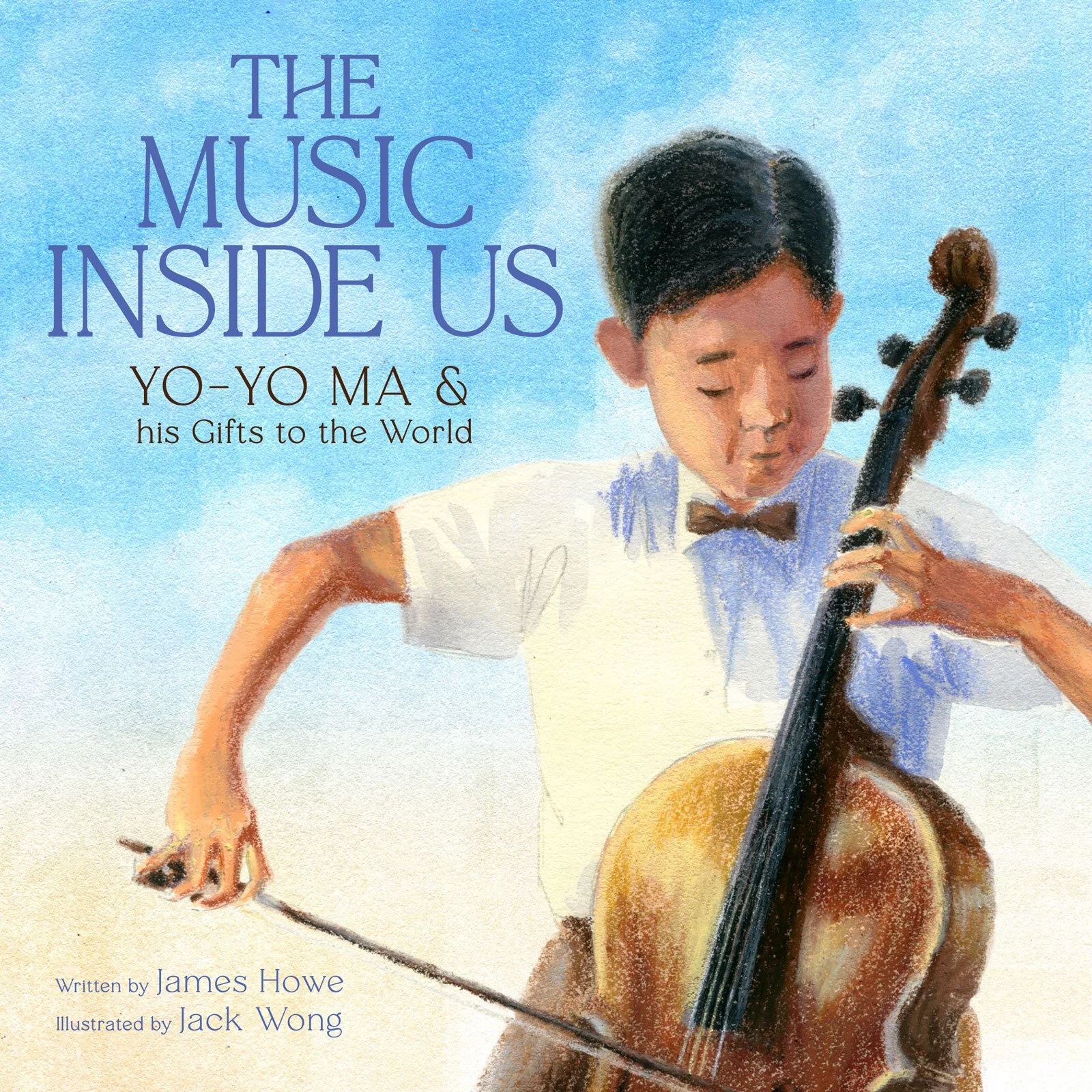 JS: The Music Inside Us: Yo-Yo Ma and His Gifts to the World
RVC: What’s one word you hope people use to describe your books?
JS: Engaging.
RVC: Thanks so much, Joan!




 The Monster in the Lake
 The Trouble with Giraffes