Picture Book List: 12 Picture Books That Feel Like September

There’s something unmistakable about September. Apples hit their peak. Crickets chirp louder at night. The light shifts, the air thins, and kids trudge back to school in stiff sneakers. It’s not quite fall—not yet—but the new season is stirring just below the surface.

(And yes, there is fall in Florida. Sort of.)

This Bonus Goody features picture books that echo the feel of September—fresh starts, golden afternoons, a hush settling over the world. These stories invite readers to slow down, lean in, and welcome the season as it arrives.

Curl up with one (or all!), and let September settle in. If I missed your favorite September-​ish picture book, let me know in the comments!


The Apple Pie That Papa Baked by Lauren Thompson, illustrated by Jonathan Bean (July 2007)

From Goodreads: “These are the apples, juicy and red,
that went in the pie,
warm and sweet,
that Papa baked…
for guess who!”

  • 32 pages
  • Reading Age: 5–8 years

Before We Eat: From Farm to Table by Pat Brisson, illustrated by Mary Azarian (May 2018)

From Goodreads: “Milk doesn’t just appear in your refrigerator, nor do apples grow in the bowl on the kitchen counter. Before we eat, many people must work very hard―planting grain, catching fish, tending animals, and filling crates. In this book, vibrantly illustrated by Caldecott Medalist Mary Azarian, readers find out what must happen before food can get to our table to nourish our bodies and spirits.”

  • 36 pages
  • Reading Age: 4–8 years

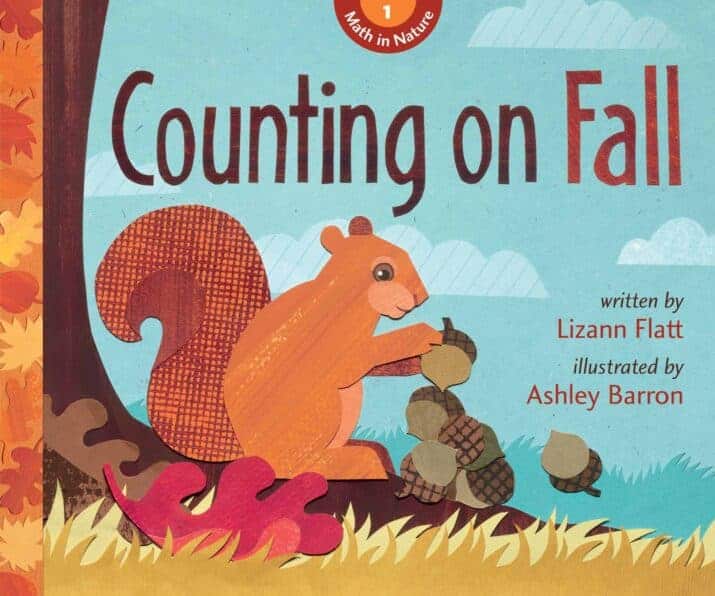
Counting on Fall by Lizann Flatt, illustrated by Ashley Barron (August 2017)

From Goodreads: “As young readers journey into the natural world, they will discover that numbers, patterns, shapes — and much more! — can be found by observing everyday plants and animals.

What if animals and plants knew math, just like you? Would leaves fall in patterns? Would whales enter a race? In Counting on Fall, the first title in the Math in Nature series by award–winning author Lizann Flatt, nature comes to life to help children grasp concepts of number sense and numeration. The engaging “What if?” format of this informational picture book is sure to delight five– to seven– year– olds.”

  • 32 pages
  • Reading Age: 5–7 years

Fletcher and the Falling Leaves by Julia Rawlinson, illustrated by Tiphanie Beeke (August 2006)

From Goodreads: “Celebrate fall with the sweet and charming Fletcher the fox!
As the leaves fall from his favorite tree, Fletcher worries that something is terribly wrong. But then winter comes, and with it a wonderful surprise. Do you know what it is? Join Fletcher and find out.… Fletcher the fox is concerned about nature and wants to understand the changing of the seasons. Young readers will share the feelings of wonder and empathy as they curl up with a parent or gather in circle time to enjoy this beautiful picture book.”

  • 32 pages
  • Reading Age: 2–6 years

Full of Fall by April Pulley Sayre (August 2017)

From Goodreads: “Discover the magic—and the science—behind fall leaves with this companion to the celebrated Raindrops Roll and Best in Snow .

With gorgeous photo illustrations, award-​winning author April Pulley Sayre explores the transformation trees undergo in fall. The book takes readers through the leaves’ initial change from green to red, yellow, and orange, the shedding of the leaves, and the leaves crumbling as winter approaches. Extensive back matter explains the science behind this process to the youngest of budding scientists.”

  • 40 pages
  • Reading Age: 4–8 years

Goodbye Summer, Hello Autumn by Kenard Pak (August 2016)

From Goodreads: “As trees sway in the cool breeze, blue jays head south, and leaves change their colors, everyone knows–autumn is on its way!

Join a young girl as she takes a walk through forest and town, greeting all the signs of the coming season. In a series of conversations with every flower and creature and gust of wind, she says good-​bye to summer and welcomes autumn.”

  • 32 pages
  • Reading Age: 2–5 years

The Great Pumpkin Contest by Angie Rozelaar (July 2019)
From Goodreads: “Two neighboring cats compete for first place in a pumpkin contest, but it takes a cat-​astrophe to make them realize there’s a lot more they can win than just a blue ribbon.”

  • 40 pages
  • Reading Age: 4–8 years

Hello, Harvest Moon by Ralph Fletcher, illustrated by Kate Kiesler (September 2017)

From Goodreads: “While tired farmers and their families are in bed, the harvest moon silently climbs into the sky and starts working its magic. For some, it is the nightly signal to rise and shine. It is time to hunt, to work, or to play in the shadows. For a little girl and her cat, it is an invitation to enjoy the wonders of the night and a last flood of light before the short days of winter set in. With an evocative text and radiant illustrations, this companion to Twilight Comes Twice offers a glimpse of nature’s nightlife long after bedtime.”

  • 32 pages
  • Reading Age: 4–7 years

The Hike by Alison Farrell (October 2019)

From Goodreads: “This book tells the story of three girls’ friendship—and their tribulations and triumphs in the great outdoors. Here is the best and worst of any hike: from picnics to puffing and panting, deer-​sighting to detours. Featuring a glossary, a sketchbook by one of the characters, abundant labels throughout, and scientific backmatter.

  • 56 pages
  • Reading Age: 2–5 years

The Leaf Thief by Alice Hemming, illustrated by Nicola Slater (August 2021)

From Goodreads: “A brilliantly funny picture book about seasons, written by Alice Hemming and illustrated by Nicola Slater. Squirrel is so cross. Yesterday there were loads of beautiful leaves on his tree, but today? Today some are missing and Squirrel is convinced that someone has stolen them… there’s a leaf thief on the loose! Join Squirrel on a mission to find the culprit, and meet so many fun animals on the way, while you find out how the world takes on different colours as the months pass by. A laugh-​out-​loud book about the changing seasons, with extra information in the back for especially curious minds Perfect as a companion reader to children learning about seasons in school A brilliant picture book that explores feelings, moods and times where we feel out of control.”

  • 32 pages
  • Reading Age: 2–5 years


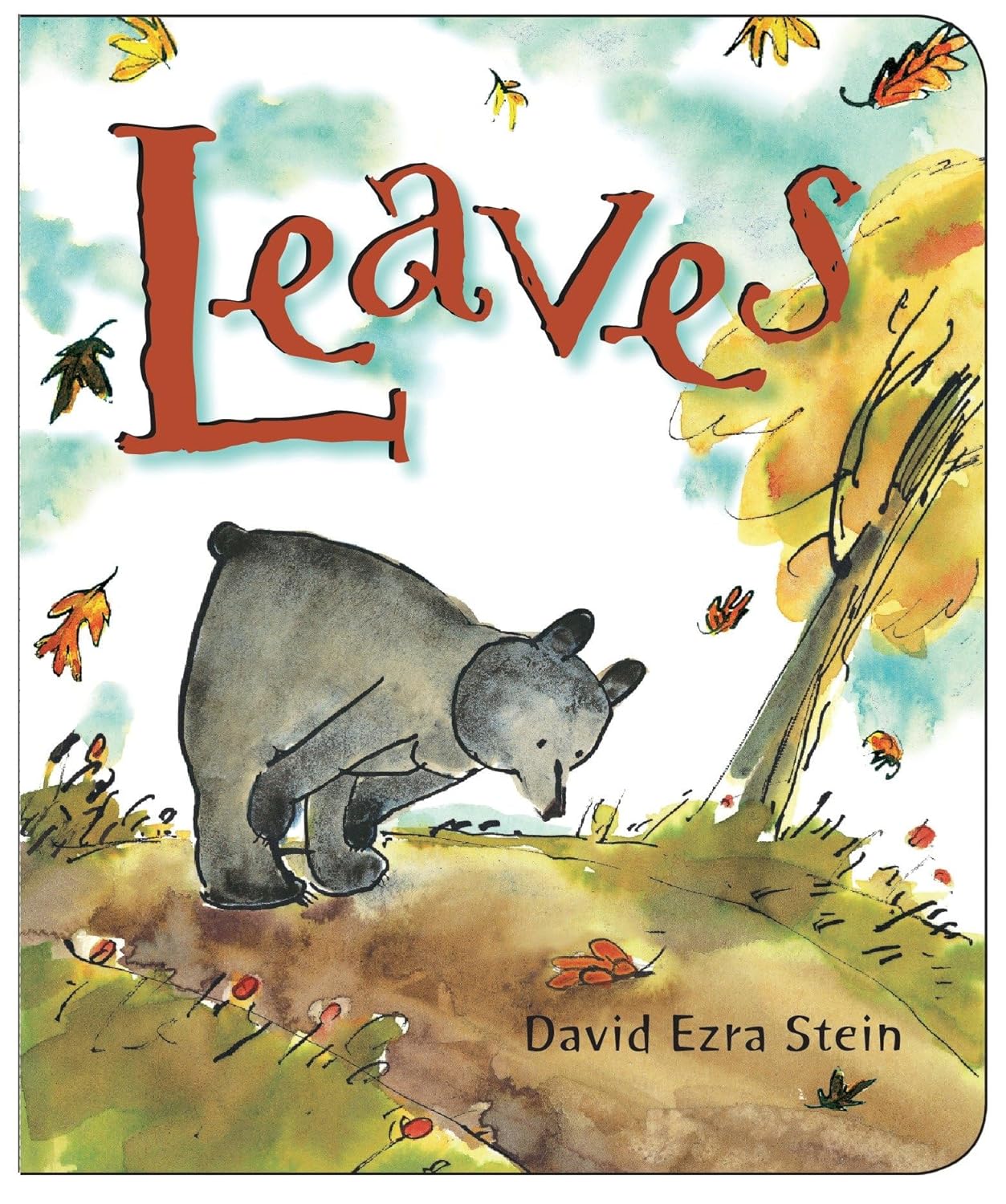
Leaves by David Ezra Stein (October 2019)

From Goodreads: “It’s a young bear’s first autumn, and the falling leaves surprise him. He tries to put them back on the trees, but it doesn’t work. Eventually, he gets sleepy, and burrows into the fallen leaves for a long nap. When he wakes up, it’s spring and there are suddenly brand-​new leaves all around, welcoming him. Graceful illustrations and a childlike main character offer the perfect way to talk to children about the wonder of the changing seasons.”

  • 32 pages
  • Reading Age: 1–3 years

Oak Leaf by John Sandford (September 2019)

From Goodreads: “An artistic picture book about an autumn leaf’s journey that beautifully evokes the season. A lone autumn leaf falls and flies away on a breeze. It travels up and over the world and down again—where it finally lands on the page of a little girl’s open book and becomes a keepsake.”

  • 40 pages
  • Reading Age: 5–7 years

Industry Insights: Read and Write in Spreads

My Writing Picture Books class is building picture book dummies this week, so spread planning is on my desk and in my head. We had a great time folding paper and stapling up dummies in class last week, too.

If you’re new to making dummies, start with these two resources:

How to Craft a Picture Book Dummy

Picture Book Dummy, Picture Book Construction: Know Your Layout

As the students work with their dummies this week, I’ve asked them to assign a job to every spread. One spread, one purpose. Why? Weak spreads and soft page turns become hard to ignore. A dummy makes each spread’s job visible.

Use your dummy to shape spreads

Label the job for each spread, then place lines from your current draft that best serve that job. Keep only lines that serve a spread’s job. Move others to a better spread or copy them into a “cuts” file for possible reuse.

My spread job checklist

  • Promise: who or what the book is about and the energy it carries
  • Pattern: the everyday or plan we’ll soon disrupt
  • Tilt: the first small change
  • Escalate: effort increases or stakes rise
  • Breath: a quiet beat to reset attention
  • Surprise or Cost: the twist or the price of trying
  • Climax: the most charged action or reveal
  • Resonance: a final image that lingers

I tell my students to use this as a quick gut check while working on their dummies. When a moment is small, two jobs might even share one spread. If the book runs longer, the same spread logic applies. You can repeat Pattern, Tilt, Escalate, and Surprise or Cost until you reach the Climax and the final Resonance.

What editors and art directors notice

Here’s my advice for beginning and early career picture book writers. After two or three revision passes, make a quick paper dummy for yourself. Use that exercise to shape the manuscript you eventually submit because editors and art directors can tell when a story has been dummy tested. How do they know? Because it reads like a book.

  • Page turns feel intentional. The opening starts delivering the cover promise. A real breath appears where listeners need it. Reveals land on turns.

  • Lines leave room for pictures. You aim the feeling and the beat. The illustrator invents the staging.

  • Pacing fits the format. It reads cleanly in 32 pages because empty spreads were cut or combined.

  • The book is easy to picture in layout. Conversations move faster and decisions come easier.

That’s the point of making a dummy first, folks. It’s a simple craft step that signals professional readiness. Plus, it’s a good excuse to break out the glue sticks, scissors, staplers, and crayons and have some fun.

Reading Activities: The Truth About Dragons by Julie Leung, illustrated by Hanna Cha

The Truth About Dragons
Author: Julie Leung
Illustrator: Hanna Cha
13 August 2023
Henry Holt and Co. Books for Young Readers
40 pages

Book description from Goodreads: “An unforgettable lyrical picture book that celebrates biracial identity from the award-​winning author of Paper The Inspiring Story of Tyrus Wong, Immigrant and Artist.

Lean in close,
my darling bao bei,
and I will whisper
a most precious secret
about a powerful magic
that lives inside you.

Brought to life with lavish and ornate illustrations, The Truth About Dragons follows a young child on a journey guided by his mother’s bedtime storytelling. He quests into two very different forests, as his two grandmothers help him discover two different, but equally enchanting, truths about dragons.

Eastern and Western mythologies coexist and enrich each other in this warm celebration of mixed cultural identity.”


Need some reviews of The Truth About Dragons?


Reading Activities inspired by The Truth About Dragons:

  • Before Reading–From looking at the front cover: 
    • What do you notice about the two different dragons on the cover? How are they alike or different?
    • Why do you think the title is The Truth About Dragons? What kind of truth might the book explore?
    • What do the trees, sky, and mountains in the background suggest about where the story takes place?
    • What feelings do the colors on the cover give you?
    • What questions would you like to ask the author or illustrator before reading the book?
  • After Reading–Now that you’ve read the story: 
    • What are the two worlds the boy travels between? How does he feel in each one?
    • How do the two dragons reflect different parts of the boy’s identity?
    • What does the fire inside represent for him?
    • Have you ever felt like you had to choose between two sides of yourself? What helped you figure it out?
    • Why do you think the author chose dragons to tell this story?
    • What does the ending suggest about the boy’s journey and how he sees himself now?
  • Dragon Duo Drawing: The boy meets two dragons, one from each of his worlds. Draw your own version of each dragon. What colors, powers, or personalities do they have? Add labels or speech bubbles to bring them to life.
  • Bridge Between Worlds: The story shows a bridge between the boy’s two worlds. Fold a piece of paper in half. On one side, draw or write about one part of your identity, like your family, culture, or language. On the other side, draw or write about another. Then create a bridge in the middle that connects them. What do you carry across?
  • Dragon Flame Poem: “There’s a fire that burns inside me,” the boy says. Write a short poem about your own inner flame. What makes you strong, creative, or unique? You can shape your poem like a flame or a dragon tail if you want.
  • Truth Teller Mask: The dragons help the boy speak his truth. Make your own truth-​teller mask with paper, string, or a paper plate. Use colors and patterns that show who you are. On the back, write one sentence about something true and important to you.
  • Family Fire Storytime: Sit with a family member and ask them to tell you a story from their past, something they’ve never shared before. Then retell it in your own words, adding dragon-​like details to turn it into a magical tale.
  • Books, Books, and More Books! Check out these real-​world picture books about identity, culture, and embracing all the parts of who you are:

Eyes That Kiss in the Corners by Joanna Ho, illustrated by Dung Ho
A lyrical celebration of Asian identity, family connection, and seeing beauty in yourself.


The Many Colors of Harpreet Singh by Supriya Kelkar, illustrated by Alea Marley
A gentle story about a boy who expresses his feelings through color while adjusting to a new place.


My Two Border Towns by David Bowles, illustrated by Erika Meza
A touching story of a boy who moves between two countries and learns the power of community and care.


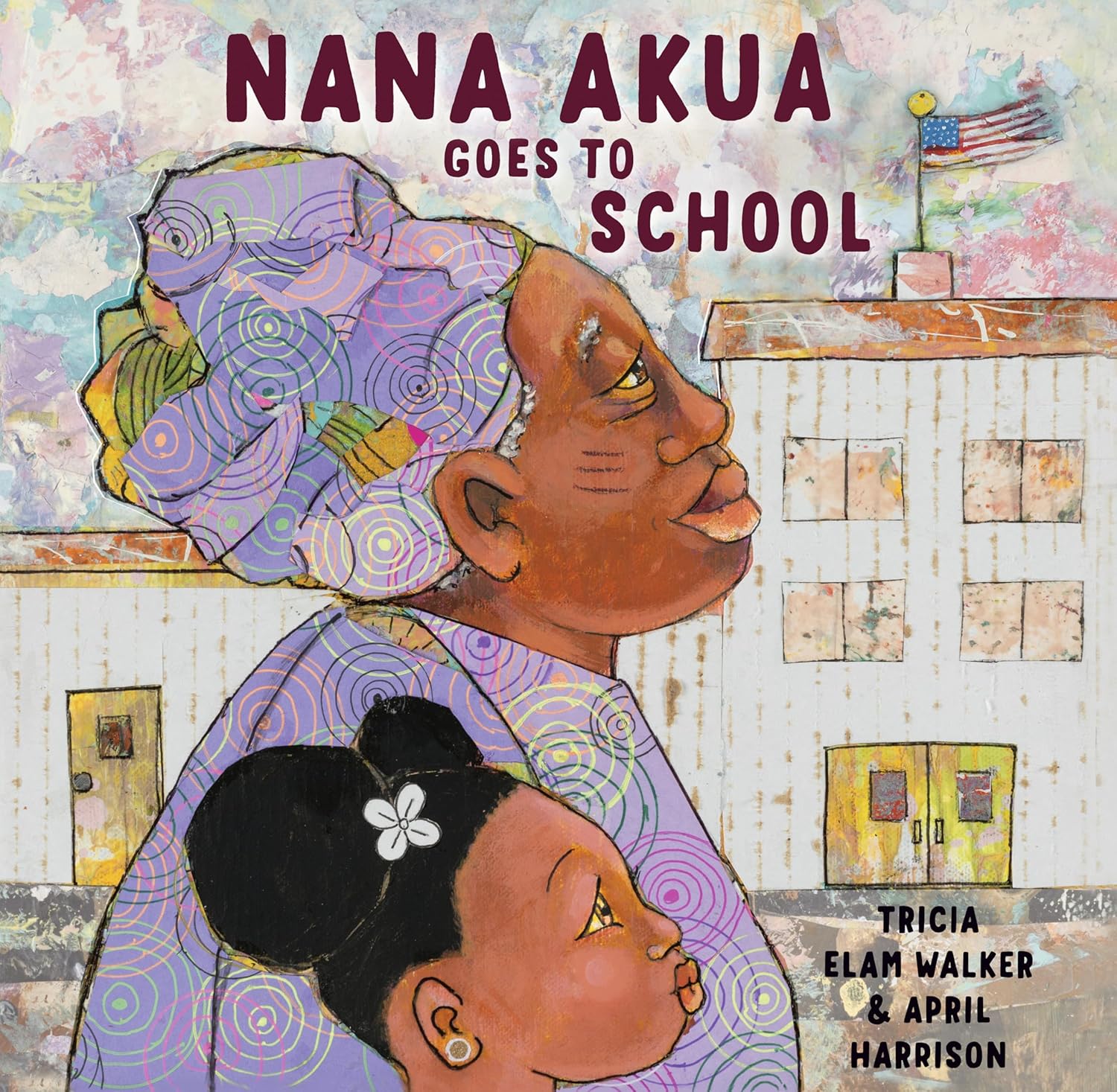
Nana Akua Goes to School by Tricia Elam Walker, illustrated by April Harrison
Zura’s grandmother shares a cultural tradition that at first seems different—but turns out to be a gift.


Where Are You From? by Yamile Saied Méndez, illustrated by Jaime Kim
A moving conversation between a girl and her abuelo about where she comes from and who she is..

Author Interview: Susan Hughes

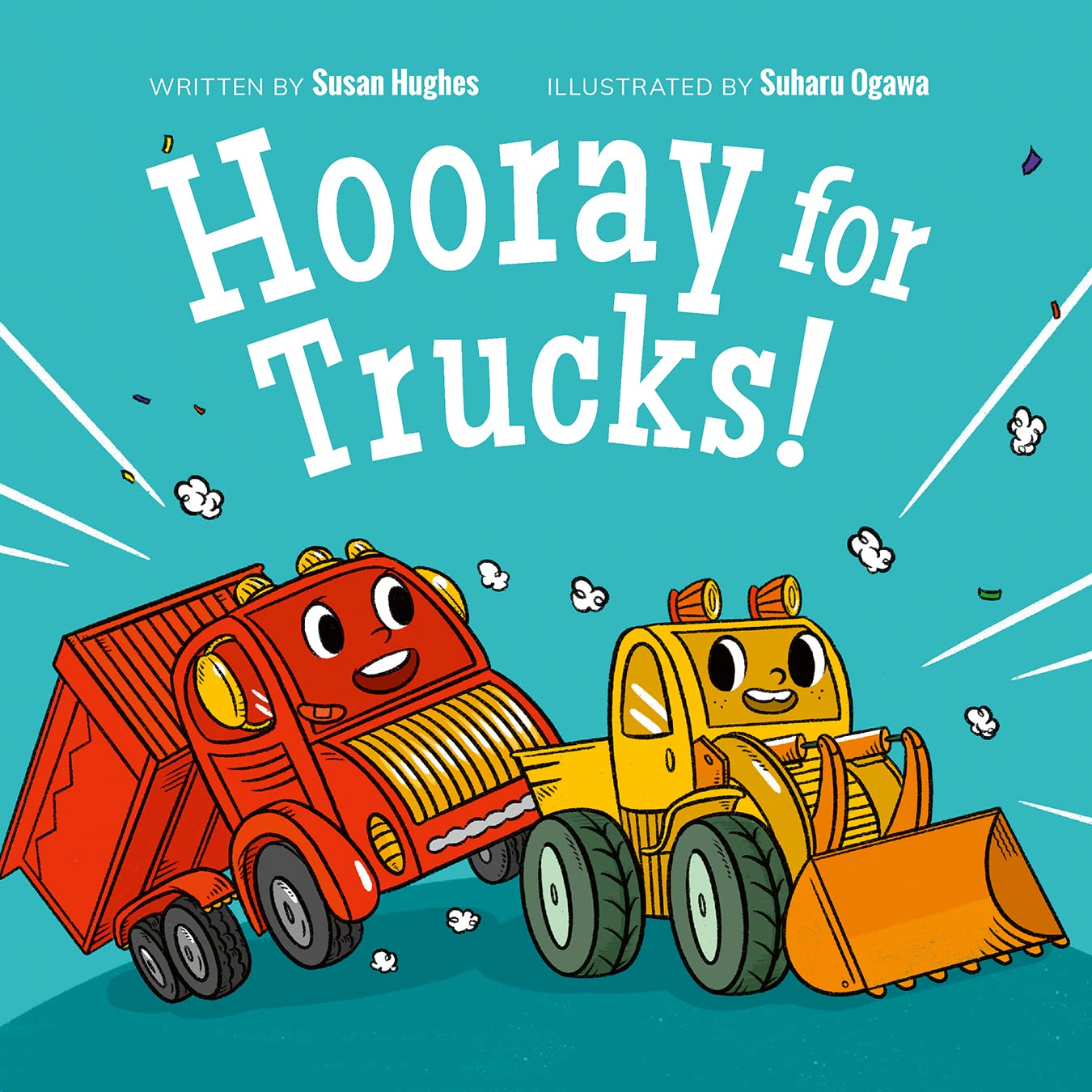
This month on the OPB Author Interview Series, we’re delighted to feature Susan Hughes—an award-​winning Canadian author and freelance editor with more than 30 books to her name. Susan’s picture books range from joyful read-​alouds like Hooray for Trucks to powerful nonfiction like Walking in the City with Jane and Walking for Water. Her books have been honored with the Norma Fleck Award for Canadian Children’s Non-​Fiction and numerous other accolades.

In addition to her writing, Susan is a sought-​after editor and story coach who has helped countless writers strengthen their craft. A lifelong lover of books, Susan now lives and works in Toronto, in a tall house with a red door, where she continues to balance her own creative projects with guiding others toward theirs.

Let’s jump into the conversation!


RVC: Susan, you’ve written everything from nonfiction to fiction, chapter books to YA—but picture books seem to be at the heart of your work. What keeps you coming back to them?

SH: There is something so marvelous about writing and rewriting a story with a limited number of words (or even none !), then feeling that “click” that means it’s good, it’s come alive; and then releasing it into the world with the hope that what might come next is a publisher who loves it and acquires it; an experienced editor who makes just-​right suggestions to further shape it and improve it; an illustrator with imagination and talent whose visuals elevate the story even more in ways both expected and surprising, and so on. It’s fantastic!

RVC: I quite agree! Now, you’ve said your love of writing goes back to your childhood writing club. How did those early experiences shape the way you approach writing now?

SH: When I was in grades 7 and 8, my two best friends and I loved to write stories and poems, so we’d meet every few weeks or so to share our work. It was important to find at least one or two things we liked in one another’s writing, but we also agreed to be honest about any problems and challenges we saw. I recall how wonderful it was to get feedback, and to this day, one of my biggest joys is receiving an editor’s notes on a manuscript heading for publication.

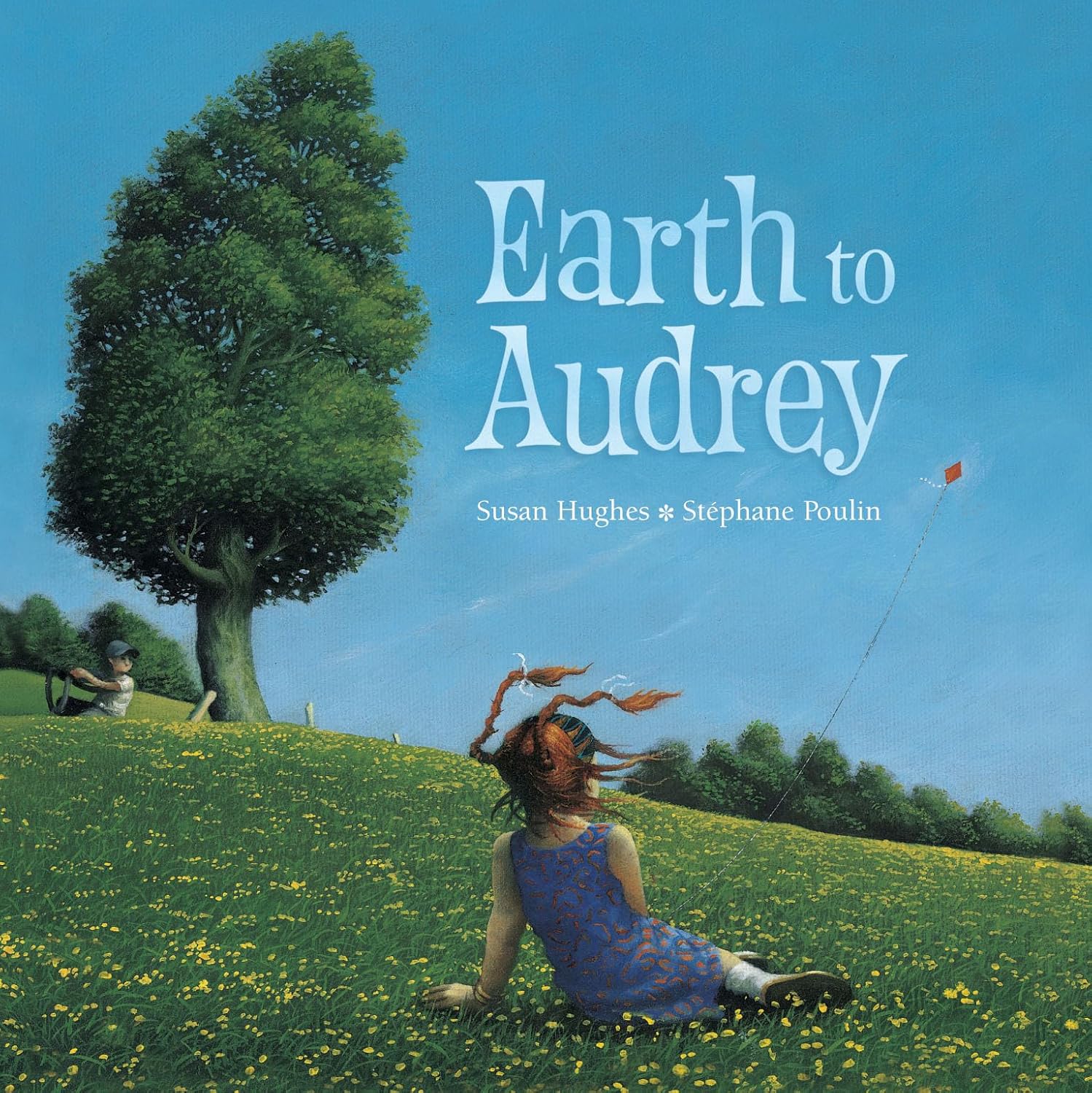
RVC: Not every author agrees with that attitude, but it’s a winning mindset, no doubt about it! Let’s go back to Earth to Audrey (2005). That was one of your earliest picture books—what’s the story behind that book?

SH: Ah, yes. It’s still one of my favorites! And even though it was over two decades ago, I still remember writing the first paragraphs that would eventually become Earth to Audrey. I was just playing, writing in the first-​person voice of a young girl. She was lying on the grass, looking up at the sky, and having big thoughts and feelings – about the expansiveness of space, the feeling of Earth solid beneath her, how much she longed for a friend … I don’t really recall exactly.

But I remember being pleased with it, feeling there was something there—an essence, heart … So, I shaped it a bit—gave it a beginning, something of a middle, and an end, and I asked a trusted writer friend to read it.

I smile when I remember her response. “It’s lovely writing, and she’s an interesting character, but … it’s not a story yet. Nothing happens! Things have to happen!”

She was right, of course–(thank you, Monica Kulling!)

RVC: What was the biggest lesson that book taught you?

SH: This book and Monica taught me to make things happen when I write stories. It’s something I still need to remind myself when I write.

RVC: The Puppy Pals series (originally published in Canada, now available in the U.S. with Sourcebooks Jabberwocky) has found a whole new audience. What has it been like to see those chapter books reach readers across borders?

SH: It’s terrific! Many of my other books have also been published in other countries and also translated into different languages. It’s very cool knowing kids from Greece to Czechoslovakia and from the Netherlands to China are enjoying my stories!

RVC: Walking in the City with Jane introduces kids to Jane Jacobs. What drew you to her story, and how did you decide what to include for young readers?

SH: Back in 2014 or so, I felt inspired to write a picture book biography about a woman—a unique individual who had made a difference and who would be inspiring to kids 5 and up. I’d known of Jane Jacobs for years, but when I began reading about her in detail, I couldn’t believe how perfect she would be as a picture book subject.

Jane Jacobs was a creative problem-​solver, curious and imaginative, always asking questions, making her own observations, and coming up with her own original solutions. She was fascinated with cities and how they functioned. She changed the way people think about how cities grow and develop. She saw them as living ecosystems, made up of different parts working together; that cities should be walkable; that they were primarily for people.

She was an “ideas” person, but she was also a go-​getter and an activist, supporting the wisdom of local citizens who knew their neighborhoods and community best and wanted to protect them from destruction or development, not just cheering them on from the sidelines but joining the rallies, getting her hands dirty, making her voice heard, standing up for what she believed in—even if it meant being arrested.

RVC: One of the challenges of writing about an interesting person is that you can’t fit all the cool stuff you learn about them into the book. What are some awesome things that just didn’t make the cut?

SH: There were so many, but two kid-​friendly ones were how Jane’s dad would often respond to her endless questions about how things worked by handing her the encyclopedia. He encouraged her to find out answers for herself. Or how Jane was living and working with her sister in New York City after finishing high school, but expenses were so steep, they sometimes had to eat Pablum, a type of porridge-​like baby food, bland (ick!) but cheap and nutritious.

RVC: Your non-​fiction books Sounds All Around and Lights Day and Night in your Science of How series explore the physics of sound and light. What was the biggest challenge in writing these books for a picture book audience?

SH: Ha! Okay, well, there wasn’t just one big challenge–there were at least four.

  1. Read about, and understand, each concept thoroughly.
  2. Convey the information in very few words and at a level that kids in K‑3 could understand.
  3. Convey the information accurately.
  4. Because children are learning about these concepts at school, convey the information in a way that supports what they know but is unique, engaging, and draws them in.

Tackling these kinds of challenges and bringing nonfiction concepts to life on the page for kids is exactly what makes writing nonfiction picture books so delightfully appealing to me!

RVC: On the lighter side, Hooray for Trucks is pure fun. What inspired you to write a story just for the joy of it?

SH: Recalling this makes me grin, because I literally sat down to write one day and decided, “Okay. I want to have some fun!” I like writing in different styles and trying new things, and I’d never written a picture book story in rhyme. It would be fun to try.

So, on this day, I thought, “I’m going to write a rhymer about something super popular with younger kids.” Dinosaurs, stars … or, a‑ha! A fun story about cars and trucks … My own three kids had all spent hours playing with cars and trucks when they were little. And hey, I’d recently heard about a truck parade in Victoria, B.C. and this sparked an idea for a playful storyline.

Bouncy, bright rhyme with a sprinkling of snappy dialogue and some “sound” words –Honk! Beep! Toot!—would make it fun to read-​aloud and also fun to write!

And, sure enough, it was!

RVC: How does your writing process shift when you’re working on a lyrical nonfiction book versus a bouncy, rhyming read-aloud?

SH: When I’m returning to a work in progress, whatever the writing style or whether the story is fiction or nonfiction, it takes me some time to reengage with the topic and also with the tone.

However, I can jump back into the writing and revising of a rhyming read-​aloud relatively quickly and easily, while, when writing or revising a lyrical nonfiction book I need to set aside much more time for each writing session. I need to reconnect with the topic and also immerse myself more deeply in the prose to continue exploring the voice and rhythm that works best or to continue to write in the one that’s been established.

RVC: What was one of your most surprising discoveries while researching a nonfiction book?

SH: Ah, that’s easy! While doing research for one of my middle-​grade nonfiction projects, I came across an amazing photo essay. It told about a young boy in a village in Malawi who was walking to get water with the girls and women, taking his sister’s place so she could go to school and not miss out on an education. I knew I had to share this true story with young children, and this became my picture book Walking for Water: How One Boy Stood Up for Gender Equality.

RVC: For a nonfiction project, do you usually begin with a child-​centered story question, or do you dive into research first?

SH: I always research first. I love researching, almost to a fault! Sometimes it’s difficult to decide I’ve learned enough and accumulated enough information that it’s time to stop and actually begin outlining the book! Other times, I’ll find myself going off on a more interesting research tangent. I may end up setting aside, or scrapping my original idea for a new one with more potential.

RVC: You’ve worked with a wide range of illustrators. How do you think about illustration potential when drafting a picture book manuscript?

SH: Even now, when drafting a picture book story, I can still find myself immersed in the words of a story and not giving any thought at all to what the story could look like or how the visuals could share in the telling of the story. For example, when I wrote What Happens Next, the story was all about the narrative structure. The story has a call and response-​like pattern written to reflect the outsider personality of the main character. I didn’t think about the art at all. Fortunately, almost magically, Carey Sookocheff chose a thoughtful color palette and spare illustration style to perfectly support and reveal the mood and tenor of the bullying story.

More and more often, however, when I begin to write a picture book story, right from the start, I’m taking into account, and depending on, the art to show what isn’t being said. A great example is my first wordless picture book, which is coming out with Owl Kids in 2027!

RVC: Which of your picture books changed the most between the first draft and final book?

SH: Probably Walking for Water: How One Boy Stood up for Gender Equality. I wrote the story as a narrative text, and it was acquired as such; however, the editor suggested the story might have more kid appeal if it were revised as a picture novel-​graphic novel hybrid. I agreed and rewrote it, trimming out lots of the descriptive text and reframing the text as script. It worked really well!

RVC: As both an author and freelance editor, what common pitfalls do you see in picture book manuscripts?

SH: Writing that seems a bit flat, without that special spark. Text that doesn’t leave enough “space” for visuals to tell the story. Text that is unclear. Text that is too explicit and doesn’t allow readers to make their own connections. It’s always a fine balance between all these important elements!

RVC: Now, if you had to pick one of your picture books that best represents your voice, which would it be and why?

SH: Great question. But I don’t think there is one picture book that best represents my voice. I’ve written in many different voices and sometimes there is a consistency of voice, but more often than not, there isn’t. My stories usually demand a voice unique to them. And this is something I really love about writing – the opportunity and freedom to create the voice best suited to an individual story.

RVC: Last one for this part of the interview: what’s next for you in the world of picture books?

SH: I am delighted to have several picture books coming out over the next few years–one is nonfiction and the third of a series, one is fiction and very playful, one is fiction and wordless, and one is fictional but inspired by a real person!

RVC: Alright, Susan. It’s time for the Speed Round. Zippy questions and fast answers please. Are you ready?

SH: Definitely.

RVC: Favorite snack while writing?

SH: Ha! I don’t allow myself to snack while writing. It would be a slippery slope …!

RVC: If you could live inside one of your books for a day, which would it be?

SH: My picture book Carmen and the House that Gaudí Built—so I could meet the amazing Spanish designer and architect Antoni Gaudí as he designed the dragon-​topped Casa Batlló and the little girl, Carmen, who went on to live in that house!

RVC: Best piece of editorial advice you’ve ever received?

SH: “Make things happen!” of course.

RVC: A nonfiction picture book you’d recommend to every writer?

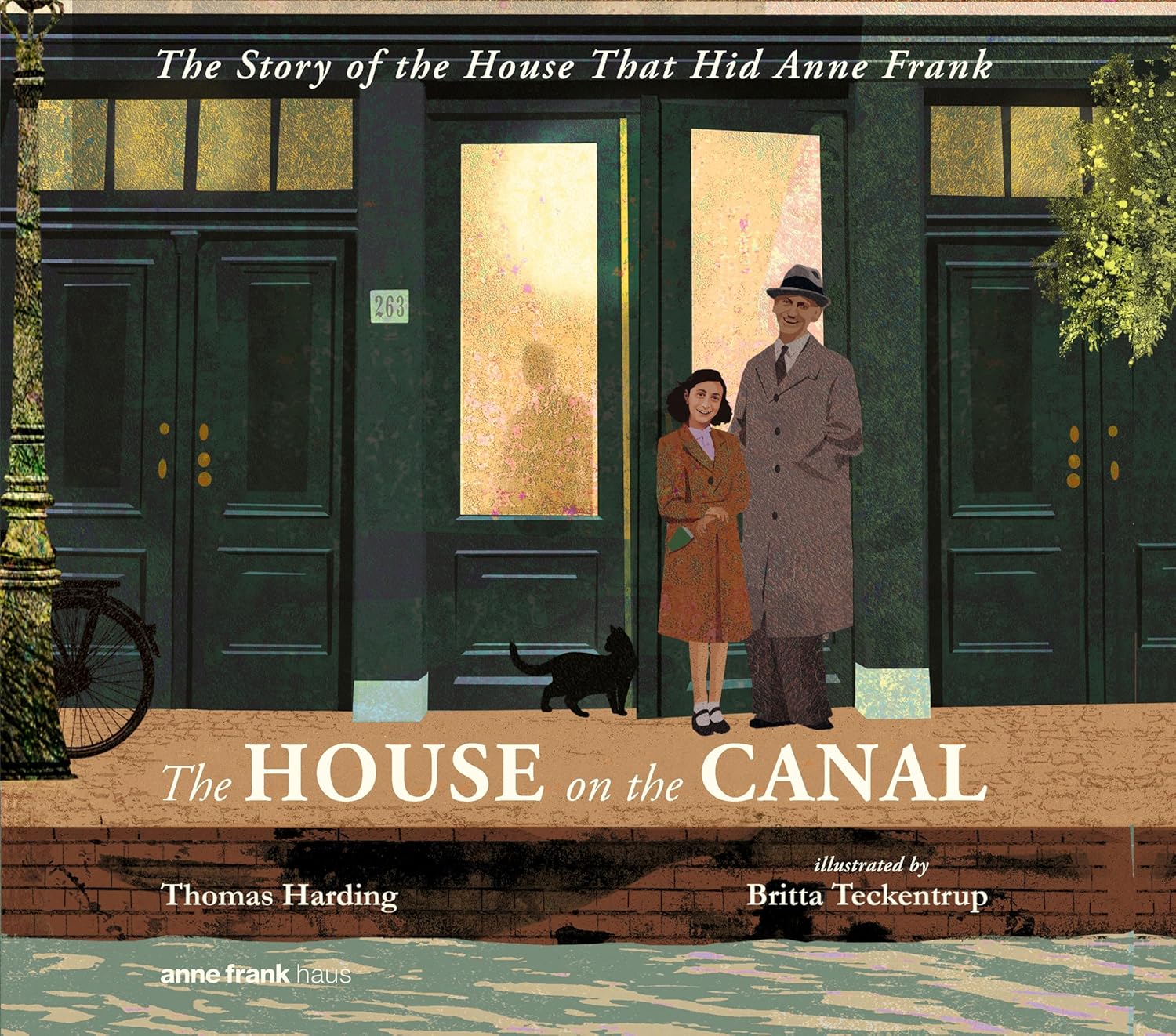
SH: The House on the Canal: The Story of the House that Hid Anne Frank by Thomas Harding.

RVC: One word you hope readers use to describe your books?

SH: Fantabulous!

RVC: Thanks so much, Susan!

Picture Book Review: 5‑word reviews (Big Boy Joy; Diego Fuego; No More Chairs; Pencil’s Best Story Ever; To Catch a Ghost)

Each week, I sift through stacks of new picture books looking for the ones that feel fresh, moving, or just plain fun. These five-​word reviews are my way of marking what caught my eye and held it. Not full critiques, just honest first impressions drawn from voice, feeling, and the spark of something well made.

Let’s see which ones you remember.


Big Boy Joy
Author: Connie Schofield-​Morrison
Illustrator: Shamar Knight-​Justice
Bloomsbury Children’s Books
3 June 2025
32 pages

Ryan’s five-​word review: Apologies build better playground days.

🏃‍♂️4.25 out of 5 soaring sneakers


Diego Fuego: The Firefighting Dragon
Author: Allison Rozo and Rafael Rozo
Illustrator: Vanessa Morales
Penguin Workshop
22 July 2025
32 pages

Ryan’s five-​word review: Fireproof charm. Frozen flair. Familia.

🔥🚫 4 out of 5 flame-​free heroes


No More Chairs bookcover

No More Chairs
Author: Dan Gill
Illustrator: Susan Gal
Little, Brown Books for Young Readers
1 July 2025
40 pages

Ryan’s five-​word review: Quiet courage leaves lasting echo.

🪑 4.5 out of 5 welcome chairs


Pencil’s Best Story Ever
Author: Carly Gledhill
Illustrator: Carly Gledhill
Post Wave
29 July 2025
32 pages

Ryan’s five-​word review: Art school energy, playground mindset.

🎨 4 out of 5 creative messes


To Catch a Ghost
Author: Rachel Michelle Wilson
Illustrator: Rachel Michelle Wilson
Orchard Books
1 July 2025
40 pages

Ryan’s five-​word review: Ghost-​hunting manual meets unexpected empathy.

👻 4.25 out of 5 ghost traps