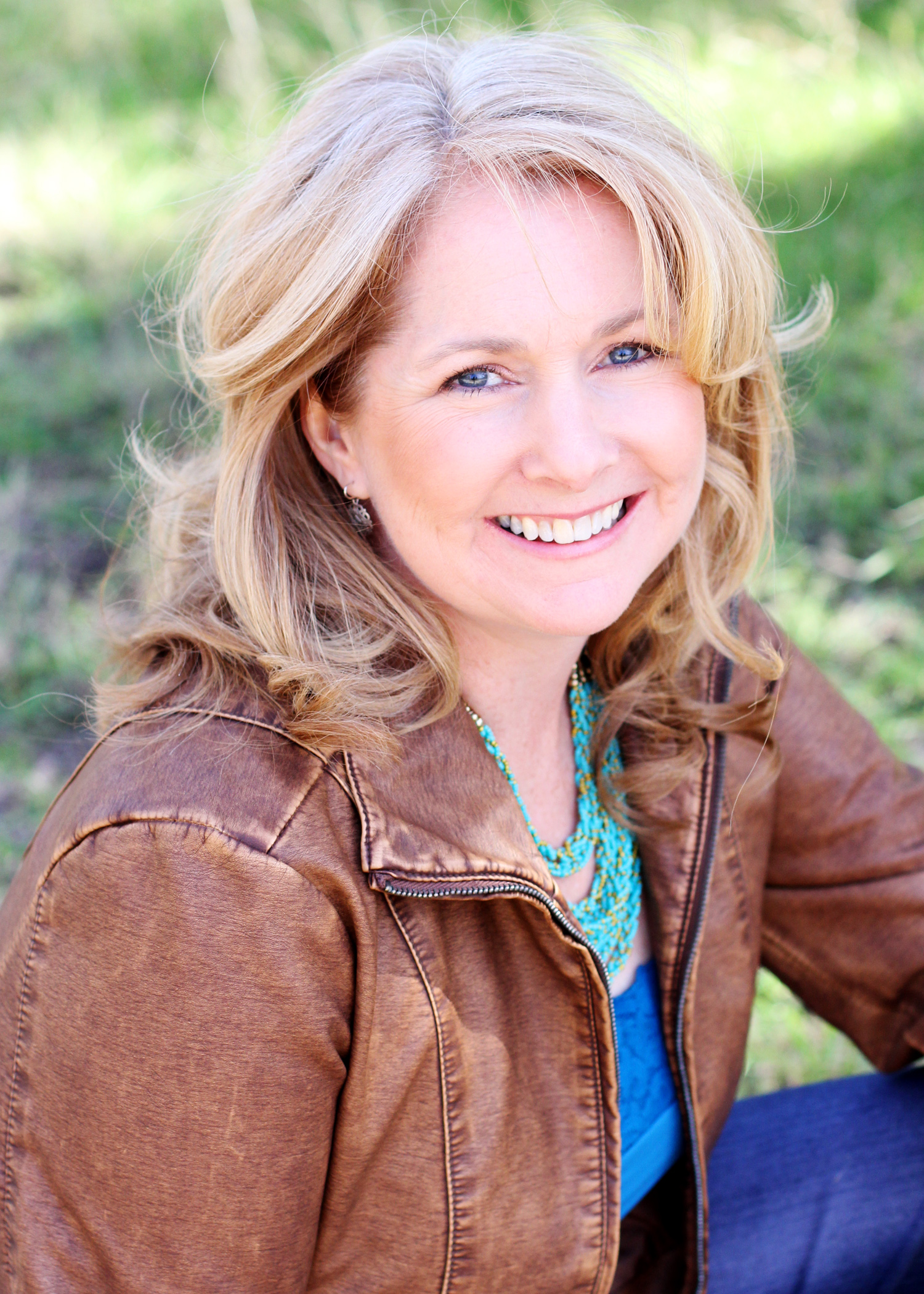
 This month on the OPB Author-Illustrator Interview Series, we’re thrilled to feature Donna Janell Bowman—a writer, researcher, and storyteller who brings history to life for young readers. Donna’s award-winning picture books, including Step Right Up: How Doc and Jim Key Taught the World About Kindness, King of the Tightrope: When the Great Blondin Ruled Niagara, and Wings of an Eagle: The Gold Medal Dreams of Billy Mills (co-authored with Billy Mills), shine a light on incredible historical figures who persevered against the odds.
With a passion for uncovering overlooked stories, Donna’s meticulous research and lyrical writing have earned her accolades like the Sibert Honor, multiple state book awards, and recognition from ALA, NCTE, NCSS, and the Library of Congress. She holds an MFA from Vermont College of Fine Arts and has spent years teaching, editing, and mentoring writers.
Join us as we discuss her journey from ranch kid to award-winning author, her deep-dive research process, and the unforgettable stories she brings to life.
RVC: You grew up on a ranch, surrounded by wide-open spaces and animals. How did your childhood experiences shape your love for storytelling?
DJB: Ooh, I love this question! There were a few downsides to being a ranch kid: I was isolated from my friends who lived in regular neighborhoods, we had only five TV channels (pre-digital age), and I had seemingly endless chores in all weather conditions. When I was young, I didn’t appreciate how the wide-open spaces and uninterrupted time provided a sort of incubator for a rich imagination and sense of curiosity. My penchant for stories began right there in Central Texas.
RVC: It sure sounds like it!
DJB: The animals, too, shaped me. I was an animal lover, and we had a whole lot of them, but I had a special bond with horses. Through my years of training for and competing in horse shows, I was the lucky beneficiary of the remarkable animal-human connection. I learned compassion and empathy — traits that would be critical to future me, the writer.
RVC: You once dreamed of being a veterinarian, movie star, writer, and princess—all at the same time! When did writing take center stage for you?
DJB: Ah, the pie-in-the-sky dreams of youth! I was awed by the power of drama to evoke emotion and truth, and actors’ abilities to inhabit characters so believably. I had a very active imagination! But Hollywood was not in the cards for me. Instead, I checked out books from the bookmobile that came to my school at irregular times and imagined the stories playing out in my mind. Then I created my own stories while sitting in a tree, often with a horse and dog waiting below. Stories, poems, and diary entries filled my notebooks. When my parents gifted me a typewriter, I became a writing machine, surely to the annoyance of my family.
My concern for animals sparked my interest in veterinary work, but after working for a clinic for two years as a teenager, I realized that it wasn’t quite the altruistic endeavor that I naively hoped. Later, I would write a book about kindness toward animals.
As for becoming a princess, well, at some point, I realized that Disney princesses were passive in their lives rather than empowered women. How boring! Don’t get me wrong, I was ready to saddle my own horse if some hunky guy who lived in a castle showed up on his trusty steed with the perfect proposal and some feminist leanings.
It took a little time, but I eventually circled back to my writing roots.
RVC: Before publishing children’s books, you wrote for newspapers and magazines. How did that background help shape your voice as a nonfiction writer?
DJB: This is a classic case of faking it till I made it. Though I had taken some journalism classes in college, I did not consider myself a journalist. When I left the corporate world, I took a chance and pitched myself to regional newspapers and later to children’s magazines. To my surprise, I had success with both. The more I wrote and adapted to variables, the closer I came to my own writing voice, and the more confident I became in my skills.
RVC: This is a common story I hear from kidlit authors. You’re in good company!
DJB: While I was writing those articles, I wrote plays for local theatre, and I was immersed in children’s books with my kids. At some point, when my youngest son was in diapers, I knew that I wanted to be a children’s book author. For an agonizing number of years that followed, I studied and dissected picture books like a scientist. And I wrote a lot. I was relentless!
RVC: Talk about your MFA from Vermont College of Fine Arts. What was the most valuable lesson you took away from that experience?
 DJB: Everybody with an MFA will answer this question differently, depending on their pre-MFA experience and their specific program. I started the VCFA Writing for Children and Young Adults program with seven books under contract and years of deep self-study under my belt. But, good golly, the program was intense! The volume of reading and critical and creative writing on short deadlines was challenging. On top of that, somehow, I managed to launch my first trade picture book, Step Right Up, during my second semester. Yowza! The two-year program deepened and expanded my knowledge base, provided an invaluable community that now includes forever friends, and taught me that there is always more to learn.
RVC: Let’s get to your books! What’s the story of your first published picture book?
DJB: Thank you for clarifying “published” picture book. During school visits, kids always ask me how many books I’ve written, which is a very different question.
RVC: Absolutely. Those are two completely different things.
DJB: Like most authors, before my first published book, I wrote a lot of meh manuscripts that will never see the light of day, but each one educated me.
Step Right Up: How Doc and Jim Key Taught the World About Kindness took ten years to bring into the world. I first learned about Doc Key and his “educated” horse, Beautiful Jim Key, through an adult book about the subject. My interest was piqued because once a horse girl, always a horse girl. But I was so skeptical about the true story that I had to do my own deep research. Soon, I was convinced that this was a story that kids needed to know.
RVC: How did the manuscript change over those ten years?
DJB: My first iteration of Step Right Up was middle-grade nonfiction, but an agent suggested that I rewrite it as a picture book. I spent the next 1 ½ years studying the unique genre of picture book biographies. After too many rewrites and revisions to count, my manuscript found a home with Lee and Low Books and was published in 2016, just when the world needed a book about kindness. Gratefully, it racked up many awards and accolades.
RVC: Nice! What lessons did that book teach you—about writing, research, or even publishing?
DJB: Oh, gosh, how much time do you have? My journey with Step Right Up was a masterclass in research, the challenges of carving a focused angle out of a giant story, the power of revision, the synergistic relationship between author and editor, and the fluid nature of publishing timelines. Perhaps most importantly, I learned that the key to writing a book that deeply resonates with readers is to select a topic that deeply resonates with me. Considering my background, it’s not surprising that a piece of my heart is threaded through Step Right Up.
RVC: Your books often highlight underdogs and figures who defied expectations. What draws you to these kinds of stories?
DJB: It’s interesting that we authors don’t always recognize the patterns in our choice of subjects or story themes until we’re a bit further down the publishing path. Like most people, I have felt like an underdog at times, and I know the internal wrestling match between insecurity and determination. By learning about the lives of people who overcame great obstacles, persevered against skepticism, and upended expectations, I find hope and empowerment. Kids need those stories, too. That’s the power of books and stories, isn’t it?
RVC: With so much research involved in nonfiction, how do you organize your notes and materials to keep everything manageable?
DJB: I’m a research junkie, so this makes me chuckle. My processes have evolved since my first nonfiction manuscript (unpublished) almost twenty years ago.
I am a tactile person, so I like both hard copies of my research materials and digital folders. Since many of my books are historical, I organize my materials chronologically or by subtopic. In fact, I’ve earned a bit of a reputation for my giant binders. As if that’s not enough of a chore, I then copy and paste the most vital information into a Word document that is divided by relevant topics for easy scannability. It’s a tedious process that makes me grouchy, but the document becomes an invaluable tool during fact-checking and when, years later, I’m interviewed about my older books. For example, a few weeks ago, I was interviewed about Beautiful Jim Key, but it has been many years since I visited my old research. Thankfully, I didn’t need to dig through my old binders because I had my detailed “book bible” document as a quick refresher.
RVC: Wings of an Eagle was a collaborative project with Olympian Billy Mills. What was it like co-authoring a book with him, and how did that change your writing process?
 DJB: People are often surprised to learn that Wings of an Eagle was my idea. In 2014–15, I learned about Billy while I was researching for a different book. Talk about an underdog story? He was born impoverished, was orphaned as a child, and faced health challenges and systemic racism. Just when he was ready to give up, he remembered his late father’s advice to chase a dream to heal a broken soul. Billy’s dream was Olympic-sized. Spoiler alert: He succeeded and is still the only American to win Olympic gold in the 10,000-meter event, and only the second Native American to win Gold in any track & field event.
RVC: Such a heroic story here!
DJB: I researched and wrote a first draft of the book while I was a VCFA student. But, as a white woman, it didn’t feel right to pursue publication without Billy’s blessings and input, so I spent the next four-plus years trying to secure an interview with him. In January 2020, I got my chance. I spent a day with Billy and his wife at their home. It was magical! By the end of the day, we agreed to collaborate; I would do the writing and revising and work with an acquiring editor, and Billy would supply information and ensure authenticity and accuracy. Our many conversations broadened my perspective and inspired me to look much closer at American history, with special consideration for Billy’s point of view. My journey with Billy and Wings taught me to be open-hearted and flexible.
RVC: Your books blend history with a strong narrative voice. How do you balance factual accuracy with engaging storytelling?
DJB: Firstly, thank you! I always remind myself that I’m writing a true story, not a journalistic article. For narrative nonfiction, my job is to select the facts that serve my story angle and theme and then flesh them out into source-based scenes that seamlessly connect to each other in a natural arc and a satisfying resolution. Unfortunately, picture books have limited page space and word counts, so I must leave 95% of my research material on the cutting room floor. That part is painful!
As for voice, before I begin writing, I carefully consider the character’s vibe and the overall story tone. As much as possible, I customize my narrative voice to reflect who the character is/was and the impact they had on their world. That’s why each of my books has a unique narrative voice.
RVC: What’s one of the most surprising discoveries you’ve made while researching for a book?
DJB: I’ve had stunning revelations during research for each of my books, but I’ll offer one as a cautionary tale.
RVC: Please do!
 DJB: For my book King of the Tightrope: When the Great Blondin Ruled Niagara, I was desperate to track down descendants of the tightrope walker because my research revealed conflicting information. Three years into my search, I finally made contact with Blondin’s French great-great-grandson. Fortunately, he was his family’s historian, and he was thrilled about my project. Huzzah! We shared resources and, together, dispelled some myths about Blondin that had been perpetuated since the mid-1800s, including a fictionalized biography published in 1861—a source used by practically every writer who has written about Blondin since that time. Lesson learned: Don’t fully trust any single source.
RVC: What advice would you give to writers tackling their first nonfiction picture book?
DJB: Choose a character or topic that will retain your interest and commitment for a very long time, potentially years.
Ask yourself why you personally resonate with your character or subject. Doing so will lead you to the heart of your story and your likely theme.
Let glorious curiosity be your guide, and don’t settle for the low-hanging fruit of research. The good stuff is buried and begging to be uncovered — probably not online.
Remember that experts and sensitivity readers are important. Don’t be shy about contacting them. They are usually honored to be asked.
RVC: If you could go back in time and give one piece of advice to your younger writer self, what would it be?
DJB: Only one? Okay then…do not expect your children’s books to financially support you!
RVC: One last question for this part of the interview. What’s next for you? Are there any upcoming projects or events you’re excited to share?
DJB: I do have other projects in the works, but I’m not able to discuss them yet. Otherwise, I’ll be heading to ALA with Billy Mills at the end of June to accept the Robert F. Sibert Honor for Wings of an Eagle. And Wings has been named the South Dakota One Book for 2025, so we will be there in September, along with illustrator SD Nelson, for the book festival and to celebrate approximately 15,000 third graders receiving a copy of the book. Huzzah!
RVC: I’ll see you at ALA then. And congrats!
DJB: Oh, and I’ll be teaching some online classes soon, so readers should watch my website for details.
RVC: Okay, Donna. Let’s launch into the Speed Round. Fast questions and zippy answers please. Are you ready?
DJB: Hey, I have survived an MFA and the publishing process, so I can handle anything.
RVC: What’s one thing about ranch life that city folks would be shocked to learn?
DJB: Mud can suck boots right off your feet!
RVC: You can instantly master any extreme sport—what do you pick?
DJB: Mountain climbing.
RVC: If your life had a theme song, what would it be?
DJB: “Unwritten” by Natasha Bedingfield.
RVC: Which of your book characters would make the best travel companion?
DJB: Billy Mills, of course!
RVC: If you could go back in time and witness one historical event, which would it be?
DJB: Hm! I would like to have witnessed the suffrage movement and the first vote under the 19th Amendment.
RVC: What legacy do you hope your books leave behind?
DJB: Through my books, I hope readers, especially my future descendants, will hear my voice encouraging them to chase their dreams, shoulder through obstacles, and extend hope and love to all of humanity.
RVC: Thanks so much, Donna!
DJB: Thank you for inviting me, Ryan! It has been a real pleasure!





 Me
Me