Editor Interview: Joy Peskin (FSG Books for Young Readers)

Here’s a hearty OPB welcome to Joy Peskin, Senior Executive Editor at Farrar, Straus, Giroux Books for Young Readers, an imprint of Macmillan Children’s Publishing Group.

Joy and I first crossed paths this past June at the WIFYR conference in Utah, where we were both on the teaching faculty (her virtually, me in person). I caught her afternoon Zoom talk to the entire group, and about halfway through I was already mentally drafting the invitation to bring her onto OPB. Yeah, she was great.

So, here we are.

A quick bio for context: Joy has spent three decades in kidlit, moving up the editorial ranks from Editorial Assistant all the way to the top. Her stops include Puffin, Scholastic, Viking, and now FSG BYR. She edits across picture books, middle grade, and YA, and her current picture book work includes the best-​selling Escargot series, written by Dashka Slater and illustrated by Sydney Hanson. She’s also mentored a whole crew of editors coming up behind her, including Kendra Levin.

Alright, on to the questions!


RVC: You were weighing social work against publishing when you graduated. What tipped you toward books?

JP: My parents were willing to pay for what was then the Radcliffe Publishing Course, but not for a social work degree. That’s the honest answer. And I respected it. As a parent now of a 16-​year-​old myself, I get it—it’s not our job as parents to pay for everything our kids choose to do. We get to have a horse in the race.

RVC: As someone with two kids of my own, I say “yep.”

JP: They very graciously offered to pay for Radcliffe, and I took them up on it because I was happy to try out both paths and see which door opened first. Publishing was the door that opened.

What I ended up doing was finding a way to do both. I’ve always done social-​work-​adjacent work as a volunteer, and I’ve always done publishing as a paid employee. Both really matter to me.

One thing I try to convey when I mentor people is that you set yourself up for failure if you think one job is going to satisfy every professional need in your life. Same way you don’t choose one partner and expect them to satisfy every single need in your entire life. You can try. I don’t think it’s going to work.

RVC: What from the Radcliffe course actually stuck?

JP: A number of things, but the one I think about the most is the social element. The director of the program at the time was this amazing woman named Lindy Hess, who has since passed away. And as I recall, Lindy said that if we got into the program and completed it, we’d get a job—it was a job machine in 1996. Publishers recruited right out of Radcliffe. Faxes would come in with job listings and cover the entire wall by the end of the six weeks. You’d just walk up, pick one, and apply.

RVC: WOW. Stories like this just…wow.

JP: But the more enduring lesson was this: we literally had something called Sherry Hour every day. I did not drink sherry at it. I don’t know if any of the other students did. But we were meant to have a little snack and socialize with each other and with the publishing professionals who came to present that day. Lindy told us that was important, and she was right.

I think about that constantly now that we’re all working from home or hybrid. The proximity thing, learning by osmosis—that’s diminished. So the social piece has to be much more intentional now. Junior people have to be more curious and inquisitive. Senior people have to be more deliberate about teaching.

RVC: Amen to that. And speaking of learning from senior people…your first job in New York was at Puffin, and you clearly admired your boss there. What did that early apprentice period actually look like day-to-day?

JP: I remember starting and my boss saying, “Oh my gosh, I’m so glad you’re here—I have a project for you.”

I was like, “I’m going to get a project! An important project! It’s going to be creative!”

And then it turned out the project was: it’s winter, she’s organizing her Bologna schedule, and I need to make a grid and send out a million faxes. This was the olden days. So I had to learn how to use a fax machine, dial internationally, offer people slots, move them around the grid.

That’s the honest picture of starting out. In the beginning, your work is very administrative. Then it slides into a hybrid where you’re assisting some and doing some of your own books. Then when you move up to editor, most people aren’t assisting anymore—you’re doing your own work. At that level, I was at Scholastic, where I got projects handed down from senior people who acquired them and then dropped them onto us as if from the heavens. I didn’t start acquiring my own books until I moved to Viking as a senior editor. I was about 30.

RVC: But you got to run the department at FSG for about 13 years, which sounds pretty terrific.

JP: The big change when I became Editorial Director in 2012 was that I was acquiring my own books, editing my own books, and managing a team. That was 13 years. Now as Senior Executive Editor, I’m back to just acquiring and editing my own stuff and managing an assistant, which honestly is a nice reset. I love the mentorship piece and I still do plenty of that, but there’s something clarifying about being able to focus on just the editorial work itself again.

RVC: Let’s talk picture books specifically. You’ve worked on the Sparkle series with Amy Young, an author-​illustrator. What’s that dynamic like compared to when you’ve got a separate author and illustrator on a project?

JP: I love working with Amy. I worked with Amy years ago when I was at Penguin, and then we did the Sparkle books together at FSG. One reason I love working with author-illustrators—and I’ll admit this is a little selfish—is that it cuts out some of the approvals process. If you’re both the author and the artist, I know you approve the art because you made it! When there’s a separate author, obviously we want them happy with the art too, so we run every stage by them. Happy to do that. Always want to do that. But when it’s a one-​stop shop, it’s just easier.

I also love that author-​illustrators are using both parts of their brain at once. They’re picturing how the art looks and tailoring the text to that. There’s a unity of creative vision.

RVC: You’ve said the freshest picture books bring something new to evergreen topics—first day of school, new sibling, bedtime. What’s a recent example that made you go, “oh, THAT’s how you do this topic differently”?

JP: by Bunmi Laditan, illustrated by Tom Knight. Absolutely perfect example. The ground floor of the story is the classic thing—your child is going from a crib or your bed into their own big bed. Every parent has some version of that conversation. Sometimes kids are excited, sometimes not. It’s a turning point in most children’s lives.

RVC: Here’s the OPB review of The Big Bed. It’s an interesting book for sure.

JP: Bunmi took that common thing and totally inverted it in a genius way. Instead of the parents sitting the little girl down to say, “You’re a big girl now, time for a big bed,” she flips it so that the little girl goes to the dad and is like, “Dad, we need to have a talk. It’s been the three of us in this bed—you, me, and Mom. There’s not room for you anymore. This is your own big bed, which will actually be a camping cot, so I can be with Mommy.”

Genius. We all get it, but I’d never seen it done that way before.

RVC: Agree. But back to mentoring. You’ve been on both ends of the equation. What makes it work in publishing specifically?

JP: Publishing is an old-​fashioned apprenticeship. You don’t need a graduate degree to do it—some people have one, and that’s fine, but you don’t need one. You can’t just jump into a surgical suite and start cutting people up without a medical degree. But you can, in fact, jump into publishing with just a bachelor’s and learn the whole thing on the job. So mentorship has to be baked in.

Some people are more inclined to receive it or give it, based on a lot of factors. For me, I’ve been really lucky to identify people I wanted to learn from. Who you end up reporting to can really determine your path. But sometimes it’s not even your boss—it’s another senior person in the group.

RVC: Such a great point.

JP: What worries me now is that we’ve lost so much of the proximity piece. When I started, I sat in a cubicle right outside my boss’s office. I listened to everything she said because she was right there. That’s how you learn by osmosis. Now we don’t have that. So we have to be much more intentional—senior people have to actively teach, and junior people have to be genuinely curious.

AI is going to make this worse if we let it. The question with AI is: is it going to make us more human or less human? It could make us better at connecting. But right now I think it’s short-​circuiting our brains. We can’t forget how to be people.

RVC: Kendra Levin (VP and Editorial Director at Simon & Schuster Books for Young Readers) has publicly credited you as a mentor. From your side of that mentorship, what did you spot in her early?

JP: Kendra is my heart. I was texting with her today. I met her when she was 19—and because everybody stays the age they were when I met them forever, in my mind she’s still probably 19, although she’s not.

David Levithan had hired her as an intern at Scholastic, and she came to work in my office on Fridays. I had this weird office that had been a copy room, no windows, but I had a long desk, so David asked if she could sit with me. And we just hit it off right away. She knows I’ve told this story a million times, but sometimes I’d come in cranky—I was in a relationship at the time with a lot of ups and downs—and Kendra’s presence would just pry me out of whatever mood I was in. She was warm and delightful and smart and great at the work.

RVC: Who doesn’t love people like that?

JP: So first I connected with her as a human. Then when I moved to Viking and brought her over as my assistant, she was just so impressive at the work. And what really stood out was this: we’d have a check-​in and I and the other folks she reported to would be like, “You’re amazing, you’re the freaking best.” And she’d say, “Great. Are there specific ways I could grow and do better?”

She always wanted the critique. She had genuine passion for the work and this deep desire to keep learning. She never resisted the praise, but she wasn’t satisfied with just praise. That combination told me everything.

RVC: Now I want to hang out and work with Kendra. But back to you and your career–FSG has a clear identity as a publisher. In the picture book space specifically, how do you and your team define what feels like an FSG book versus what belongs elsewhere?

JP: What I really value about FSG—and it’s been this way from the start, even though I’m on my fourth boss over the years—is that the books I do are appreciated.

I brought something to acquisitions recently and people were like, “This is such a Joy Book.” And I felt very seen. Because a book I’m drawn to isn’t a specific genre—it’s a sensibility. It’s what’s baked into who I am and what I care about. And the house gets that. I don’t feel pressure to chase things outside my range.

RVC:…thinking hard about what’s a Ryan Book…hmmm…

JP: For picture books specifically, the example I’d hold up is the Escargot series by Dashka Slater. It came in through her agent, Erin Murphy, as this quirky little one-​off. A snail breaking the fourth wall, trying to get to the end of the book, moving slowly. Voicey and funny. It came from a really organic place for Dashka—she’d brought a snail puppet to author visits for her other books and just started talking in this snail voice as a gimmick, and kids loved it. So the book grew out of that.

RVC: For the deep dive on agent Erin Murphy, here’s the OPB interview with her. Back to you, Joy!

JP: I like an organic build. I tend to be much more comfortable with projects that start as some unusual thing I liked and then other people liked it too. Not a too-​big-​to-​fail thing where somebody spent $6 billion on a 40-​book series and then everyone’s job is to like it, so you can’t get sincere answers about it. That doesn’t create good art.

Escargot just did its thing, and now we’re building a 20-​book series. That’s the kind of thing I love.

RVC: As do tons of readers, too. But let’s shift to talking about the WIFYR (Writing and Illustrating for Young Readers) conference now, since that’s where I “met” you. Sort of. You had a room full of writers hanging onto your every word despite you Zooming in. What’s the piece of advice you find yourself giving—both to writers and to the editors on your team?

"Make It Work- Tim Gunn" Poster JP: “Make it work.” That’s straight from Tim Gunn on Project Runway, which I’m sure my kids have watched too many episodes of.

RVC: Me too!

JP: Tim would go up to a designer working on some assignment—make a dress out of stuff you found in a dumpster, whatever—and he’d say, “Tell me about this.” And then he might say something like, “I’m concerned, I don’t really get what you’re doing here…” But if the person loved it, he pushed them to, you know, make it work.

What I took that to mean is: All I can do is tell you if it’s working for me. If you give someone that feedback, they’ll either say, “Yeah, I agree, this is not coming together”—and then great, we’re on the same page. Or they’ll say, “No, I really love this.” And then it’s like: Okay, it’s not working now. If you love it, let’s find a way to make it work. If you can’t find a way, do something else.

I give some version of that advice all the time. “It’s not working for me. That doesn’t mean you can’t make it work. I don’t know exactly how, or maybe I have a couple ideas too. But—make it work.”

RVC: Preparing for a conference like WIFYR: how does that compare to coaching an author through a manuscript in-house?

JP: I take WIFYR seriously. What’s heartbreaking about the industry is that not every organization out there is ethical. Some places make promises they can’t keep—pay us a thousand bucks, come to this workshop for the weekend, we’ll get you published. Not possible.

WIFYR is the opposite. It’s best in class. So when I’m invited, I really prepare.

RVC: What an endorsement!

JP: For the one-​on-​one critiques, I’ve drawn a lot from my professional coaching training, which I did at Rutgers—the co-​active approach. You meet with the person, you listen, and then you basically ask them: What would feel like progress to you? What is it you want? Because not everybody wants the same thing. Some people want kind of what you’d expect—what did you think, what stood out, what’s not working. But some people are basically like, “Just tell me: Do I suck at this? Should I never do this again?”

So I don’t go in assuming what somebody wants. My goal is to be as clear and kind as possible while taking into account what the person is actually there for. That approach translates directly to the in-​house editing work, too.

RVC: Best thing a kid reader ever said about a book you worked on?

JP: This is easy. The 57 Bus by Dashka Slater—the same author as Escargot, a very multi-​talented writer. The book comes out for its 10-​year anniversary in Fall 2027. It’s a nonfiction YA about two teens whose paths cross when one of them—Richard, a Black teenage boy from a disadvantaged background—sets the skirt of the other teen, a white middle-​class transgender youth, on fire on a bus in Northern California. The person whose skirt was set on fire is injured but recovers. It’s about that moment, but it’s also about what came before and after, and about race, class, gender, forgiveness, repentance, paying your debt.

Early on we got a letter from a reader—a white middle-​class teenage boy—who said, essentially, that he’d gone into the book expecting to have a negative reaction to Richard. Like, how could you do what Richard did, how could you harm someone in that way? But he came out realizing he could have been Richard. Because Richard is essentially egged on by his friends to do a dumb thing. And I have a teenage boy living in my house. They can be stupid, God bless. They’re very peer-​motivated to do silly things because their friends think it’ll be funny. Richard thought it would just be a little spark. He didn’t expect the skirt to go up in flames.

That “there but for the grace of God go I” moment—a book making a teenager have that realization? That’s the whole thing right there. That’s why we do it.

RVC: Great answer, Joy. Let’s ask one more to wrap up this part of the interview. What’s a question no one’s ever asked you in an interview that you wish they would?

JP: “What’s the one that got away?”

RVC: What’s the answer?

JP: It’s Love, Aubrey by Suzanne LaFleur. It was a middle-​grade novel, published in 2009, I think. I bid on it when I was at Viking. I still think about it. It was just the most stunning story about love and loss and recovery.

RVC: Alright, Joy—time for the SPEED ROUND. Zippy-​quick questions, snappy-​fast answers, please. Ready?

JP: Ready.

RVC: Sparkle the Unicorn but make it a cocktail. What’s in it?

JP: Oh, that’s so fun. I’m not great at cocktails—I’m a gin and tonic or whiskey on the rocks person—but okay. It would be one of those cocktails that’s a little blue and a little yellow. A little bubbly and froofy. It would definitely have a cute little toothpick in it with a unicorn on top. Fruity but light. Very summery.

RVC: If your inbox had a theme song, what is it?

JP: I can’t quite land on a song, but I have a visual, which is: a leaf pile, and I’m raking, but the leaves keep falling. So maybe “Hazy Shade of Winter”? Something seasonal, something fall. But cheerful. There are no grudges. I’m just always in there raking.

RVC: A picture book from the past year that deserves more buzz?

JP: Finding Forgiveness by Rebecca Gardyn Levington, illustrated by Diana Mayo. It got some very nice notice—it was a Sydney Taylor Notable—but I absolutely love it, and I think it deserves more. It’s a perfect example of what I always talk about with picture books: three points of entry.

One, it’s Jewish-themed—and specifically about Rosh Hashanah, which is underrepresented (bonus points for not being about Hanukkah or the Holocaust, no offense to either).

Two, it’s a sister story, and I love a good sister story.

Three, it’s a conflict story—the sisters have gotten into a fight the night before Rosh Hashanah and have to make up.

Plus there’s beautiful back matter about the tradition of Tashlich, and about how to make a good apology. Because we make kids say they’re sorry all the time—you hit your brother, you broke your sister’s necklace, say you’re sorry. But what does it actually mean to make a repair? To understand the difference between impact and intention? That book gets at all of it.

RVC: The single most useful habit an editorial assistant can build in their first six months?

JP: I have a new EA right now—Cassandra Gutterman-​Johns (shout out! she’s crushing it)—and one of the things she’s doing so well is asking questions designed to help her understand me, and the other editor she supports, and how we each work. Not just “How do I do this task.” She’s taking over a tracking system from my previous assistant, and she said, “If it’s okay with you, I’m going to update it. But first I want to know what parts of it are useful to you, because I don’t want to change those.” I was like, I love you.

Not romantically. HR, relax.

But that’s such a good question. She’s not upending anything on day one. She’s learning the job first, then thinking about how she can tweak it for her own workflow and for what her bosses need. That’s the whole game.
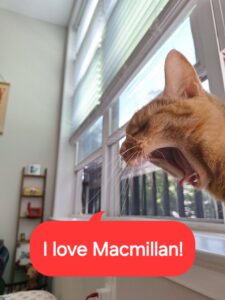
RVC: So you’ve got Pablo the sleepy cat, Pixie the fluffy guinea pig, and Clemmie the camera-​shy guinea pig. Here’s the ultimate question. Guinea pigs–great pet or the GREATEST pet?

JP: That’s the hardest question you’ve asked me, Ryan.

Pablo is a prince among cats. But I feel like the cat-​plus-​guinea-​pig combination is the lifestyle I want to have until I’m dead. Guinea pigs are the unsung heroes of pets. I bring my pigs outside to graze in the park, as anyone would, and when I went to our local town festival—which is called, I’m not kidding you, Maplewoodstock—I brought them out in their little outdoor pen, and I met probably 200 people of all ages and backgrounds who went absolutely out of their freaking minds for the pigs. They make people happy. They bring people together.
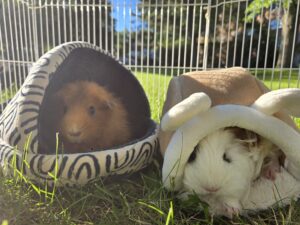
Everybody should get at least two—they’re herd animals. And they’re wasted on children. Do not throw them in a classroom. Be an adult. Get a couple of guinea pigs.

RVC: Well said. Thanks so much, Joy!
Author Interview: Katrina Moore

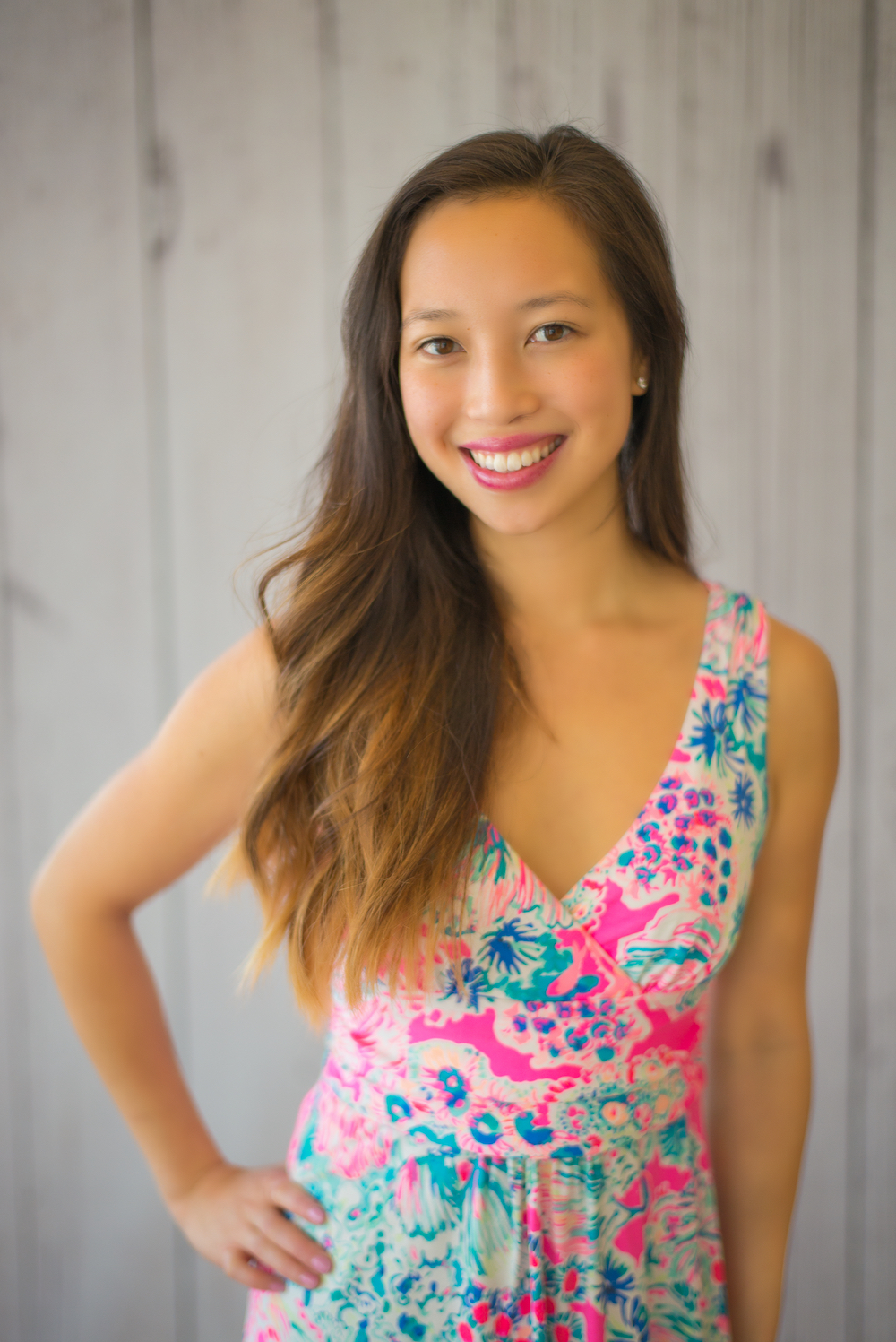
Hello, OPB family! I’m thrilled to be taking the reigns over for Ryan this month and conducting this month’s Author Interview with the oh-​so-​kind and talented Katrina Moore. I’ve been a huge fan of Katrina’s work for years and it was an absolute thrill to be able to meet her in person at NCTE in Boston last fall. Before we jump in to the interview, here’s a little about Katrina:

Katrina Moore is an author and former elementary educator. She holds a M.A. in Teaching and taught for thirteen years in Maryland, Massachusetts, New York, and New Jersey. She writes in Georgia, where her mission is to create books that children will hug for ages. She is the author of the humorous TEENY HOUDINI chapter book series (Teeny Houdini: THE DISAPPEARING ACT is nominated for the 2025 Washington State Otter Award), as well as several acclaimed picture books including THE STAR IN YOU, CHANG’E ON THE MOON (a 2024 Bookstagang Best Illustrated book), GRUMPY NEW YEAR,  HOPE IS A HOP, ONE HUG, GRANDPA GRUMPS (a 2023 Georgia Picture Book Award finalist, and 2025 Illinois Monarch Award nominee), and SOMETIMES LOVE ( a Bank Street College of Education’s Best Books of the Year). Her forthcoming books include the BIG JOB FOR LITTLE BABIES board book series, illustrated by Benson Shum. WHO’S DIGGING? publishes August 2025, and WHO’S BUILDING? publishes spring 2026. Another picture book in the beloved Grumps series, SCHOOLTIME GRUMPS, will publish summer 2026.

When Katrina is not building new literary worlds, she is cooking without a recipe, painting outside the lines, adventuring, or snuggling up with her two kids, husband, giant pups, and of course, digging into a cozy book. Connect with her at www.katrinamoorebooks.com, or on Instagram @katrinamoore1011  and Twitter/​X @kmoorebooks.


RGL: Hi. Katrina! I’m so thrilled you are here! To start, can you please tell us a little about your childhood? Were you one of those kids who was always writing?

KM: Hi, Rebecca! I’m so happy to be here, too! Thank you, and Ryan, for inviting me to Only Picture Books!

RVC: Happy to have you both here! Take it away, folks.

KM: I grew up as one of five kids, as the middle child, in a very big and busy family. It was a lot of fun, but I always needed and treasured some “me” time. So, while we played “Log Cabin,” or “Mermaids,” or “Quicksand Monster,” I was often scurrying off to find my own little nook, to spend some quiet time with my imagination. From an early age, I filled notebooks with drawings, musings, and lots of poems. I was often creating things – 3D art sculptures from found and repurposed materials around the house (these got me in a bit of trouble!), cakes, cookies, paintings, and dresses. Making something messy into something beautiful (and still sometimes, messy) has always been something I’ve gravitated toward.

Sometimes these ideas would start in my notebook, and sometimes they would be recorded there, afterwards. But always, journaling and writing have been something that I’ve done for myself – as reflection, as an escape, as a starting point to a bigger project, and as a way to fuel and capture my many passions, even as a kid.

RGL: I resonate so much with all of this! (Except for the four siblings. I only had one, and that was PLENTY!)  I know you worked as a teacher for more than a decade. What ages and subjects were your favorites to teach?

KM: Yes! I taught for over thirteen years as a public school elementary teacher. I taught every grade from kindergarten to fifth but spent the most time teaching second and third grade. One of the reasons I loved teaching in elementary school was that I got to teach all the subjects, and therefore, was able to do a lot of interdisciplinary teaching – a lesson or project that covered many learning targets but just felt like a fun project sparked by curiosity that nurtured the whole child.

While there’s something to love about every grade, and age of development, I really loved teaching the primary grades – kindergarten, first, and second. It’s probably the same reason that I love writing for children in these grades, as they’re the target age range for picture books (though, I’d also argue that picture books are really for ages 0 through over 100!).

RGL: Absolutely agree!

KM: There’s an unfiltered honesty at these ages that is so refreshing, and a way of viewing the world that is beautiful and admirable. They’re so smart, and while I’m teaching them important skills, they’re teaching me every day, too. They experience many new things and handle so much more than they get credit for. I have a deep respect for children that always came through in my teaching, and hopefully does through my writing, too!

RGL: Oh, it it definitely does. Did you use a lot of picture books during lessons or as read-​alouds in your classroom? What were a few of your favorite books to share with your students and why?

KM: I did! I read picture books aloud as much as I could, which was at least three times a day. I started every day with a morning meeting (even when I taught fifth grade!), and that always included a picture book read aloud. A favorite that I shared, year after year, during the opening week of school, was MY TEACHER IS A MONSTER (No I am Not) by Peter Brown, which invited them to discuss perspective, closely read the illustrations, feel super-​smart when they figured out what was going on with how the teacher looked, It’s such a fun book that it set the right tone for what learning in our classroom would feel like.

RGL: I don’t know that book, but can’t wait to go check it out now!

KM: Oftentimes, a picture book would make a great opener for a new topic we were going to learn. A great example of this is WATER IS WATER by Miranda Paul and Jason Chin, which was an excellent introduction to our water cycle unit in second grade, as well as a mentor text for poetry, and led to amazing student-​to-​text connections about the ways water is a part of their everyday lives.

RGL: LOVE, LOVE, LOVE that book!

KM: And, always, during the closing circle, at the end of the day, after some sort of reflection-​of-​the-​day activity, I would read a picture book. My favorite ones were always those that sparked rich conversations with my students, and allowed them to ask and wonder about things that they never encountered before, such as THE BOOK OF MISTAKES by Corinna Luyken. Reading this one aloud to students not only nurtured their growth mindset, but empowered them to reflect on their own “mistakes” and share how they could pivot when things didn’t go their way (which happens in elementary school, and as we know, all through adulthood, an awful lot!)

My favorites, as the above were, have multiple takeaways deeply ingrained into the stories, but are, first and foremost, books that understand and respect children, open their world, and entertain them.

RGL: You were clearly an incredible teacher. I wish I’d been in your class! How do you feel your experience as a teacher influenced your writing style and/​or the subjects you chose to tackle as an author? Can you give an example?

KM: My “mission” as an author is to write books that children will hug for ages. That is, I want to make books that children genuinely love. They love it because they see themselves in the story, because they connected with the subject so deeply, or because it makes them think anew, or feel a certain way—and they want to hold onto that.

When I wrote ONE HUG, I wanted to give a voice and stage to the little Chinese-​American girl in me who never saw herself accurately represented in the media. Like the characters in ONE HUG, my cultural identity influences my life, but it’s not my whole story. I wrote it for little-​me, but saw so many of my students in the story, too. Now, it’s so heart-​warming to hear from all different kinds of readers about how much their child, and their families connect with this book—and ones who are sleeping with the book under their pillow because they love it so much.

RGL: Awww, that’s the best. My son used to sleep with books too. So sweet!

KM: When I wrote THE STAR IN YOU, it was a love letter from my teacher heart—a message to each student, to let them know that even if they can’t see their own star, that I can.

Ultimately, the reason I write is the same reason I became a teacher. It’s driven by my desire to nurture children’s love of themselves, and of the world, and to feel confident and empowered by their place in it.

RGL: You are absolutely doing that! So, still wearing your Teacher hat for a little longer, I’m curious what advice do you have for authors? How can we get teachers to fall in love with our books?

KM: Write a book that you really love writing. There are various entry points for connection with a story, and as an author, we never really know the specific way in which a reader will connect with our books. However, when an author is genuinely having fun with their story, or their passion for their subject comes through, it’s often tangible. That, in itself, helps a book stand out to any reader. Specifically for the teacher reader, a book can earn a place on their shelf if it’s one that can be used and reused for multiple lessons, multiple times of the year, and will be one that helps to engage the reader that’s sitting at (or on) their toes during the read aloud. The ones I ended up buying (with my little to non-​existent budget!) were ones that I ended up checking out so many times from the library, it made more sense to own it!

RGL: Such great advice. Thank you! Just curious, do teachers really use back matter and Teacher’s Guides?

KM: Yes! Back matter, when done well, is an incredible tool for a teacher–diving deeper into content that is connected to the curriculum, and offers the information in a child-​accessible way. It’s also excellent for extension. When a young reader wants to know more, but maybe there wasn’t enough time during the read aloud or the lesson, they can further research a topic on their own during a center, or as an independent activity, using the backmatter as a jumping off point. Teacher’s guides are great, too! I’d say the best ones are easy to use, and include activities that are curriculum based/​tied, and pretty self-​explanatory because teachers are very busy people!

RGL: That’s such a great point! So, when and why did you decide to leave teaching to become an author full-​time? What do you miss most about it?

KM: As of this July, I’ll have been writing and authoring full time for two years. I never left because I didn’t love teaching – I truly, truly did! But teaching full-​time is more than a full-​time job (mentally, emotionally, and physically), even when you try to be as efficient as possible (as I did). When I would finish my teaching day, I tried to be as present as possible for my children, dogs, and husband – so my mommy and wife hat would work overtime, too. That didn’t leave a lot of time for writing, which I both needed to do (to meet deadlines and because I don’t feel like “me” when I haven’t written in a while) and wanted to do—because I love it, and it feels like a “calling”. I would write in the wee hours of the night when I very much needed to be sleeping. Suffice to say, it wasn’t very sustainable, long term.

RGL: Good for you for recognizing that and taking care of yourself. Both my mom and sister were/​are teachers and it’s so true that they work much more than a full-​time job. Teachers are serious superheroes.

KM: What I miss most is seeing the same group of children every day and actively being a part of their growth and development. But my favorite part of the teaching day was reading together. During author visits to schools, I still get to do that, so I’m getting to experience the magic that happens during that time, still!

RGL: I love that. Well, you may not be teaching kids anymore, but I happen to know you are amazing at teaching other writers. You don’t know this, but about 7‑ish years ago (I want to say it was 2018 maybe?), when I was just getting my feet wet in the Kidlit world, I attended a session that you presented at the New Jersey summer SCBWI conference about revising, which included a whole slew of tips, including color-​coding different aspects of your manuscript with various highlighters. Your presentation seriously blew my mind. Do you still use that system for revising your own stories? Can you share one or two of your very favorite revision tips?

KM: Thank you, Rebecca! Yes, “Revising Your Writing Into A Pot of Gold” is the workshop where I go through my “Rainbow Revision” technique. It is still one that I use today – though not every time. Basically, you use a different color when you are focusing on one aspect of revision. To mentally, and tactilely switch gears, you change the color of your tool to focus on the next aspect. I don’t always need to go through all the “colors”, and what a specific project needs during revision feels more intuitive now. But I absolutely refer back to, and still use, that as my revision checklist before I feel a project is ready.

My absolute favorite, do-​it-​every-​time, revision tip is to paginate and pace out your manuscript. That doesn’t mean that when you turn it into your agent or editor you should designate the pagination, but as a step in your revision, you should absolutely do this so that you can feel and see the beats of your manuscript, and know which scenes and pages have too much going on, and where your story is feeling static (like perhaps you’ve realized there are four consecutive pages where the action has not changed). I have a lot of different ways that I do this, but a simple one is adding extra spaces between where I think a natural page turn should be. There should be about 12–15 spreads (sections of text between the spaces). How does the pacing feel? Is there too much action in this scene to be shown visually? Are you maximizing the word choice at each page turn?

I share some more revision checklist questions and techniques over on my free Writer’s Blog.

RGL: What a great resource. Thanks so much for sharing. Okay, let’s now dig into your stories a little more. Your books are so full of authentic, kid-​friendly emotion. Take SOMETIMES LOVE, for instance. Here is a story about the long-​time friendship between a little girl and her pup, from whom she has to separate when her mom is deployed overseas (don’t worry, dear readers, it has a happy ending!). The reader, along with the child character in the story, experiences so many emotions in this book – affection, joy, sadness, disappointment, worry, excitement and love, just to name a few. When writing, are you consciously thinking about all the emotions you hope to elicit in the reader?

KM: Thank you, Rebecca. Yes! An emotional journey is just as important, and sometimes (depending on the story), more important for a character to go through as a physical journey. A step in my revision is always to create an emotional map for the story. What is the emotion the character(s) are feeling on the page? What do I hope the reader will feel on this page? (Does it work? Or Not?). It’s not something I worry about while writing my first draft. But it’s always something I check for during revision!

RGL: As a fellow rhymer, I am truly in awe of your rhyming talent and ability to tell such meaningful stories with so few words. In ONE HUG, HOPE IS A HOP, THE STAR IN YOU, and SOMETIMES LOVE, your poetic texts are beautifully sparse while the plots of each of these books is mostly shown in the illustrations. What is your writing process like for these types of books? How do you decide when to add illustration notes and when to hold off and allow the illustrator to fill in the gaps?

KM: Thank you. One of the best parts of being an author-​only for a picture book is that I know part of the magic will happen when the illustrator brings my words to life, and instills their own vision into the story through their visual storytelling and artistic choices. The result of the text and art working together, and one not being able to fully work without the other, makes this format so unique – and exciting. So I’m always keeping that in mind.

For a text that I’m only writing, I still think visually. So, as I’m writing, I am mindful about what will be shown through the art, and then I focus the text on what is essential to the story here? What do I want to convey that can’t come through the art? What words are necessary? For my books that are poems, as are all the ones you mentioned above, they usually begin with a strong concept that I feel compelled to explore.

I’ll begin by word mapping and jotting down all the words that are associated with the concept. Then, I focus on what do I want to say about it? That’s how I usually narrow down which words I absolutely must keep. And then, it’s a puzzle of how this can be shown visually, and what cadence corresponds to it, and what meter meets the tone I want the read aloud to take on. Notice that I didn’t mention finding rhyming words. Though the rhyme must be perfect, or it throws off the entire read aloud experience, it really needs to serve the story, and not the other way around. So I make sure my story is set first, and then I fret about the meter and the rhymes!

RGL: Oh, yes. So many people don’t understand that writing in rhyme is really NOT about rhyming words, but about meter and rhythm, and that story always – always—must come first.

KM: Each of the above stories was sent (to my agent, to my editor, and then to the illustrator) with art notes. Because I do not want to overstep, but know that I need to convey important information about what’s happening in the narrative via art notes, I keep them to the essentials. What is happening in the plot that they need to know. I will usually give one overarching art note before the text, and then, per spread, what is happening in the action (if it’s not clear via the text). For example, in SOMETIMES LOVE, since there was an overarching art note, the first three spreads did not need a specific art note. It wasn’t until the next one, “Sliding, scratching, through the halls, love will sometimes break through walls” that I needed to include the art note: [dog anxious when girl leaves] 

RGL: Thanks for sharing all of that insider info. I love hearing about other writers’ processes. Even in your books that don’t rhyme, like your picture books GRANDPA GRUMPS and GRUMPY NEW YEAR, and your chapter book series TEENY HOUDINI, you use so much rich lyrical language – onomatopoeia, internal rhyme, metaphor/​simile, alliteration, etc. Have you always been a poet at heart?

KM: Thank you for noticing that! Yes. The first “writing” that I filled my notebooks with as a child were poems. I’ve always loved poetry and connected deeply to it. Perhaps because poems create such strong imagery, and usually explore something in a new or creative way. I am a very visual person, and an out-​of-​the-​box thinker, so I’m drawn to a format, and using poetic devices, that make images come to life in my mind, and one that allows us to think about something in a unique way. I also believe that poems, like picture books, are best enjoyed when read aloud. And what a treat it is when words can string together to sing, and boom, and make you feel something!

RGL: I couldn’t agree more! I was also a huge poetry lover/​writer as a kid. Let’s talk now about your incredible range. You’ve published a chapter book series, picture books in both rhyme and prose, a folktale retelling, and later this year you will release a toddler board book series called BIG JOBS FOR LITTLE BABIES, beginning with the first book, WHO’S DIGGING? (Readers, Katrina generously shared a sneak-​peek of this one with me and I have to tell you, it is absolutely adorable!) What made you decide to dip your toes in all these different waters?

KM: Hooray! I’m so glad you enjoyed it, Rebecca. I can’t wait to share the BIG JOBS FOR LITTLE BABIES series with the world in August! That’s a good question, and it’s not something that I’ve intentionally done. The stories that I end up writing are ones that will not leave me alone. As mentioned earlier, I am a person who wears many hats, and oftentimes, many at once. So, for me to take the time to turn an idea into a draft, and to revise that draft to a show-​ready state, it’s got to be one that’s literally keeping me up at night and begging to be written. And, it turns out, most of those were (and are) picture books, but also chapter books, and board books. Some stories are more suited to one form than another, and I just let the “heart” of the story and my “voice” as a writer come through and then go from there (and then make sure it conforms, or not—purposefully to that format). I enjoy the challenge, balance, and freshness of working on multiple projects, and in multiple formats at once.

RGL: That’s so amazing. Which format or genre is most enjoyable for you and/​or most challenging?

KM: Picture books come most “naturally” to me and forever have my heart. I love both the range of ways they can be written, and the range of the readership—especially how you can truly not outgrow them. When done well, there is such magic that happens between the pages of a picture book, and well after it’s closed, between the book and the reader(s) that is unique to that format. At the moment, drafting a middle grade novel is proving to be the most challenging (though also rewarding and energizing!) I am so used to cutting down words, and sticking to essentials, in the picture book format, and then having very controlled language and sentence structure in the chapter book format, that the freedom to build out a scene with words and elaborate (because the only details the reader will get are through the text in a typical novel) feels unnatural to me. I’m certainly stretching new muscles (and it’s mighty fun!).

RGL: I feel that. I honestly can’t imagine writing anything longer than a picture book! Do you think you’ll ever round out your Kidlit portfolio with an MG or YA novel? Or maybe even a graphic novel?

KM: Yes, definitely! As mentioned above, I’m working on some middle grade novels now. So hopefully I’ll be able to share more on that front, soon.

RGL: Oh, I can’t wait to hear more! Alright, now that all the tough questions are out of the way, it’s time for the LIGHTNING ROUND! Are you ready?

KM: Bring it on! 🙂

RGL: Bunnies or Puppies?

KM: Puppies!

RGL: One hug or a thousand kisses?

KM: One hug!

RGL: Three things that make you grumpy:

KM: Traffic, being hungry, and being sleep-deprived!

RGL: Have you ever worked as a magician?

KM: No, but I LOVE magic, and performed many tricks on willing (and unwilling) family members growing up.

RGL: Favorite magic trick?

KM: When you pull something unexpected out of a whole, closed fruit, that definitely shouldn’t have been there! It was the inspiration for the trick in Teeny Houdini : The Super-​Secret Valentine. When a magician performed that trick for me the first time, I was blown away!

RGL: Teacher who was most influential in your life:

KM: So many! But my first was Ms. Galvin, my Montessori teacher who taught me in first and second grade. She made me feel “seen” and special, and showed me how impactful little acts of kindness and generosity can be.

RGL: Nicest thing a child reader has said to you about one of your books:

KM: That I wrote about them in my book.

RGL: What makes your heart sing?

KM: When a person, especially a child, feels empowered to be fully and unapologetically themselves.

RGL: Thank you so much for sharing so much of yourself with us today, Katrina. You and your books are pure joy!


Rebecca’s BIO:

Rebecca Gardyn Levington is a children’s book author, poet, and journalist with a particular penchant for penning both playful and poignant picture books and poems – primarily in rhyme. She is the author of WHATEVER COMES TOMORROW (which has been translated into 9 languages and is the winner of a Crystal Kite Honor and a Northern Lights Book Award), BRAINSTORM!, AFIKOMAN, WHERE’D YOU GO?, LITTLE DREIDEL LEARNS TO SPIN, WRITE HERE, WRITE NOW, and I WILL ALWAYS BE… (on bookshelves 4/​15/​25!) with seven additional rhyming picture books forthcoming. Rebecca writes reviews and conducts author interviews monthly for the Picture Book Builders blog. Her award-​winning poems and articles have appeared in numerous anthologies, newspapers, and magazines. She lives with her family in Summit, N.J., where she enjoys bouncing on a mini-​trampoline, playing Mah Jongg, and eating chocolate-​peanut butter ice cream (although not usually at the same time!).

Find out more and sign up for Rebecca’s monthly newsletter at www.RebeccaGardynLevington.com.