Picture Book List: 12 Books for Kids Who Love to Make Things

September’s just around the corner, and that means we’ve still got a few long afternoons left. So it seems like a fine time to dig out the cardboard, masking tape, pipe cleaners, markers, and whatever else you’ve got in the craft drawer and then..unleash the kiddos.

To provide inspiration for a Maker Monday Afternoon (any day will do, though!), here are a dozen picture books that celebrate and champion kids who build, construct, tinker, test, dream, and occasionally make an awesome mess.

If one of your faves somehow didn’t make this totally subjective list, add it to the comments.

**Since so many teachers visit OPB, I’m adding a “Good for” list for each title, so it’s super easy to know how someone might use these books in the classroom.


Ada Twist, Scientist by Andrea Beaty, illustrated by David Roberts (September 2016)

From the publisher: “Ada has always been endlessly curious. Even when her fact-​finding missions and elaborate scientific experiments don’t go as planned, Ada learns the value of thinking through problems and continuing to stay curious.”

  • 32 pages
  • Reading Age: 3–7 years
  • Good for: scientific questions, curiosity, observation, perseverance, women-​in-​STEM conversations

The Book of Mistakes by Corinna Luyken (April 2017)

From Goodreads: “As one artist incorporates accidental splotches, spots, and misshapen things into her art, she transforms her piece in quirky and unexpected ways, taking readers on a journey through her process.”

  • 48 pages
  • Reading Age: 4–8 years
  • Good for: art class, creative confidence, revision, turning mistakes into opportunities

Boxitects by Kim Smith (January 2020)

From Goodreads: “A STEAM-​centered, adorably illustrated picture book about Meg, a brilliant and creative boxitect who creates extraordinary things out of ordinary cardboard boxes.”

  • 40 pages
  • Reading Age: 3–7 years
  • Good for: cardboard engineering, makerspace projects, design challenges, teamwork

The Curious Garden by Peter Brown (April 2009)

From Goodreads: “While out exploring one day, a little boy named Liam discovers a struggling garden and decides to take care of it. As time passes, the garden spreads throughout the dark, gray city, transforming it into a lush, green world.”

  • 40 pages
  • Reading Age: 3–6 years
  • Good for: garden projects, environmental stewardship, urban greening, community change

The Dot by Peter H. Reynolds (September 2003)

From Goodreads: “Art class is over, but Vashti is sitting glued to her chair in front of a blank piece of paper. The words of her teacher are a gentle invitation to express herself. But Vashti can’t draw — she’s no artist. To prove her point, Vashti jabs at a blank sheet of paper to make an unremarkable and angry mark. ‘There!’ she says.”

  • 32 pages
  • Reading Age: 4–8 years
  • Good for: art class, creative confidence, first marks, International Dot Day

Dreaming Up: A Celebration of Building by Christy Hale (October 2012)

From Goodreads: “A collection of illustrations, concrete poetry, and photographs that shows how young children’s constructions, created as they play, are reflected in notable works of architecture from around the world.”

  • 40 pages
  • Reading Age: 4–10 years
  • Good for: architecture, building units, concrete poetry, comparing kid-​made structures to real buildings

The Magical Yet by Angela DiTerlizzi, illustrated by Lorena Alvarez Gómez (April 2020)

From Goodreads: “Each of us, from the day we’re born, is accompanied by a special companion–the Yet. Can’t tie your shoes? Yet! Can’t ride a bike? Yet! Can’t play the bassoon? Don’t worry, Yet is there to help you out.”

  • 32 pages
  • Reading Age: 5–8 years
  • Good for: growth mindset, trying again, frustration tolerance, SEL conversations

Mud Book by John Cage, illustrated by Lois Long (April 2017)

From Goodreads: “In the mid-​1950s, legendary avant-​garde composer John Cage and artist Lois Long created a truly marvelous object. Part artist’s book, part cookbook, and part children’s book, Mud Book is a spirited, if not satirical, take on almost every child’s first attempt at cooking and making. Through the humble mud pie—add dirt and water!—Cage and Long encourage children to explore their imagination and to get their hands dirty, and they offer this ‘Mud pies are to make and look at, not to eat.’ ”

  • 36 pages
  • Reading Age: 3–5 years
  • Good for: sensory play, outdoor making, process art, messy creativity
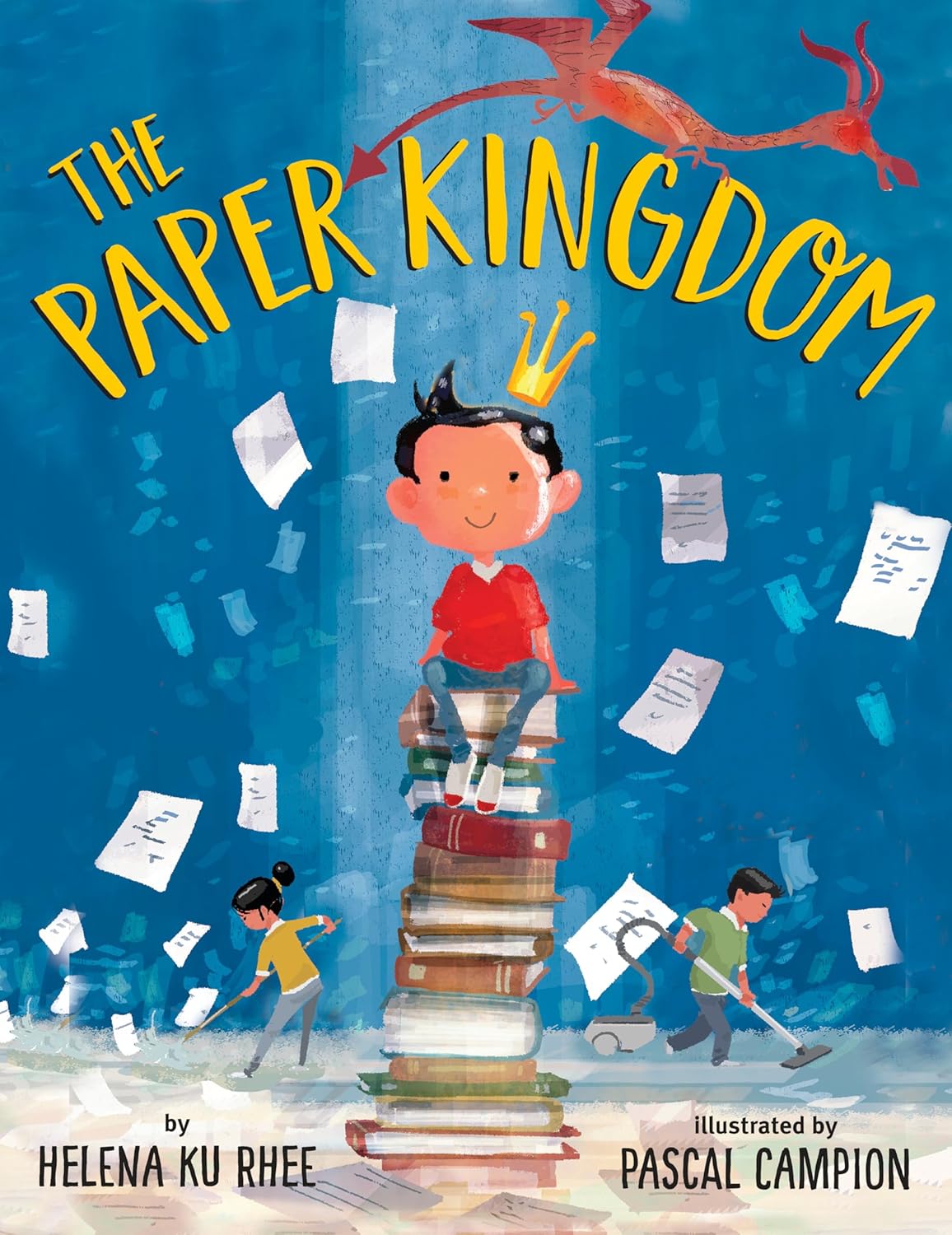
The Paper Kingdom by Helena Ku Rhee, illustrated by Pascal Campion (February 2020)

From Goodreads: “When the babysitter is unable to come, Daniel is woken out of bed and joins his parents as they head downtown for their jobs as nighttime office cleaners. But the story is about more than brooms, mops, and vacuums. Mama and Papa turn the deserted office building into a magnificent kingdom filled with paper. Then they weave a fantasy of dragons and kings to further engage their reluctant companion–and even encourage him to one day be the king of a paper kingdom.”

  • 40 pages
  • Reading Age: 3–7 years
  • Good for: imaginative play, paper crafts, family storytelling, transforming ordinary spaces

What Do You Do with an Idea? by Kobi Yamada, illustrated by Mae Besom (February 2014)

From Goodreads: “This is the story of one brilliant idea and the child who helps to bring it into the world. As the child’s confidence grows, so does the idea itself. And then, one day, something amazing happens. This is a story for anyone, at any age, who’s ever had an idea that seemed a little too big, too odd, too difficult. It’s a story to inspire you to welcome that idea, to give it some space to grow, and to see what happens next. Because your idea isn’t going anywhere. In fact, it’s just getting started.”

  • 44 pages
  • Reading Age: 5–8 years
  • Good for: brainstorming, creative courage, project launches, nurturing big ideas

What to Do with a Box by Jane Yolen, illustrated by Chris Sheban (February 2016)

From Goodreads: “If you give a child a box, who can tell what will happen next? It may become a library or a boat. It could set the scene for a fairy tale or a wild expedition. The most wonderful thing is its seemingly endless capacity for magical adventure, a feature imaginatively captured in cardboardesque art by Chris Sheban and rhythmically celebrated in this poetic tribute by renowned children’s author Jane Yolen.”

  • 32 pages
  • Reading Age: 6–8 years
  • Good for: cardboard builds, imaginative play, loose-​parts play, poetic read-alouds

With My Hands: Poems About Making Things by Amy Ludwig VanDerwater, illustrated by Lou Fancher & Steve Johnson (March 2018)

From Goodreads: “For young makers and artists, brief, lively poems illustrated by a NYT bestselling duo celebrate the pleasures of working with your hands. Building, baking, folding, drawing, shaping … making something with your own hands is a special, personal experience. Taking an idea from your imagination and turning it into something real is satisfying and makes the maker proud.”

  • 32 pages
  • Reading Age: 4–7 years
  • Good for: maker activities, poetry, art rooms, hands-​on creativity

Author Interview: Lisa Rogers

This month on the OPB Author-​Illustrator Interview Series, we’re delighted to feature Lisa Rogers—a former elementary school librarian turned award-​winning author! Lisa’s picture books, including 16 Words: William Carlos Williams and “The Red Wheelbarrow” and Beautiful Noise: The Music of John Cage, celebrate fascinating historical figures and creative expression. Her work has garnered starred reviews, prestigious awards, and recognition for its engaging storytelling and lyrical writing.

Lisa’s path to children’s literature was inspired by her career as a librarian, where she discovered her love for sharing stories with young readers. When she’s not crafting her next picture book, Lisa enjoys running, kayaking, and spending time with her loud and lovable hound. Join us as we explore her creative journey, the stories behind her books, and what’s next on the horizon!


RVC: Where did you grow up, and what role did books or libraries play in your childhood?

LR: I grew up in a tiny town on the Jersey shore. It had a little library above an old building that housed the police station. There was a turned staircase, and at the top of the landing, perched on a shelf in front of a stained-​glass window, was a full set of Beatrix Potter’s books. It seemed like the most magical place in the world.

RVC: It sure sounds like it!

LR: I learned to read at a young age, and that’s pretty much all I did. As there were no bookstores nearby, I relied on the library and the books we had at home. Besides encyclopedias, I read poetry, fairytales and folktales—Italo Calvino’s Italian tales, tales from Japan and West Africa, The Thousand and One Nights, and the art, poetry, and biography volumes of Childcraft, which was a multi-​volume resource for kids. I had some Golden Books and can still recite Margaret Wise Brown’s Home for a Bunny. Garth Williams’ endearing illustrations made me love animals.

RVC: Being both a librarian and a children’s author gives you a unique perspective. How did your time curating books for children influence the kinds of stories you wanted to write yourself?

LR: Choosing, sharing, and reading thousands of books aloud was a joy and the absolute best training for a writer. I got to choose the best books I could find! It was my job to read as many as I could! I could pick books I knew students would love (pangolins, please)!

RVC: Yes, pangolins. Plus penguins. And other awesome animals that start with p!

LR: When I started the job, the biography section was dated and abysmal, full of chapter books with invented dialogue. Then talented writers like Jen Bryant and Candace Fleming began making beautiful picture book biographies. I fell in love with them. I tried to write other types of stories, but it now seems natural that my debut, 16 Words, was a picture book biography.

RVC: I’m not at all surprised, either! We’ll come back to this book in a moment. What’s the most common misconception about being a librarian?

LR: We’ve come a long way from the wire-​rimmed glasses-​wearing, hair-​in-​a-​bun, finger-​to-​the-​lips stereotype, but when people ask “Do you still teach the Dewey Decimal System?” as if that’s what being a library teacher is all about, I can’t help but sigh. Sure, each library has its system of organization that students need to learn, but no one’s teaching them to memorize decimals. At least I hope not!

But most folks don’t know what a library teacher does. So I guess Dewey is the go-to.

RVC: After more than two decades as a librarian, what inspired you to take the leap from curating stories to creating your own? 

LR: I had long wanted to be an author, but I needed to earn a living. My first career was as a news reporter; I only fell in love with children’s books when I became a library teacher. I got up the courage to take an SCBWI workshop on writing for children. I started a blog narrated by my hound dog (whose daily Plops o’ Doom inspired Hound Won’t Go), formed a critique group, wrote lots of terrible stories, and became part of the vibrant group of children’s writers in the Boston area.

RVC: Let’s jump to your debut picture book, which celebrates William Carlos Williams and “The Red Wheelbarrow.” What drew you to his poetry?

LR: I’d known “The Red Wheelbarrow” poem since I was a child, so Williams’ imagist style of writing must have imprinted itself on me in some way. That’s similar to the type of poetry I write. I’m an observer, and as a kid spent a lot of time sketching and thinking about whatever was around me. I still do. I love lots of different kinds of poetry, but the ones that leave a lot of space for pondering are my favorites.

RVC: Beautiful Noise is such a unique subject for a picture book. What drew you to John Cage’s work, and how did you make his experimental music accessible to young readers?

LR: I was a noticing and listening child. Growing up at the beach, I paid attention to the sounds of the waves whacking the shore and shushing back and seagulls and constant wind and radios tuned to the Yankee game and lifeguard whistles and kids shouting over it all —all of that. I distinctly remember listening for silence and realized, like Cage, that there was no such thing.

RVC: The best poets and picture book makers learn how to really pay attention, so it’s no shocker that they notice things like this.

LR: I knew about Cage’s “silent” piece, 4’33,”and was intrigued when I saw a photo of Cage listening to a miked cactus as he ran a feather on its spines. But I got caught up in the many fascinating details of his life and work. I pared down the manuscript, added lots of onomatopoeia, narrowed it to just 4’33,” and then, feeling like I couldn’t do Cage’s genius justice, set it aside.

I’d never written in second person before, but a while later, without even thinking about it, that’s how it came out—scribbled on a notepad in one go. It wasn’t a conscious decision, but it turned out to be absolutely the right way to introduce him to children. It’s fun to read aloud and kids immediately catch on to the refrain which makes it even more fun.

RVC: Can you tell us more about the process of researching Beautiful Noise and how you captured John Cage’s creative spirit?

LR: I listened to his music, watched video, went to performances, consulted with composers and scholars, researched newspaper accounts and any book or article I could find, contacted the John Cage Trust to be sure the manuscript was accurate, but with all of that, there was so much compelling material that it got in the way of capturing his spirit. It took stepping away for me to really understand how to do that. It’s still rather mysterious to me. I recommend letting the subconscious take over.

RVC: You’re known for your meticulous research process. What are some surprising discoveries you’ve made while researching your picture book biographies?

LR: Wow, thanks for that great compliment! I found it surprising that my subjects’ lives connected with each other.

Joan Mitchell knew William Carlos Williams through Mitchell’s mother, who was an editor of Poetry magazine; he and poets Edna St. Vincent Millay and Carl Sandburg visited her Chicago home. Cage and Williams knew each other, as did Mitchell and Cage.

RVC: Wow!

LR: Joan Mitchell’s work often was compared to that of Claude Monet, and her home in Vétheuil, France, overlooked a house where Monet once lived. She purported to not appreciate the comparison, but I wonder what she really thought.

RVC: You’ve written both nonfiction and rhyming picture books. How does your process differ between the two?

LR: The same process works best for both–a strong emotion evokes an idea, and I turn that idea around in my mind for a while before I put anything on the page. Then I write words using a soft lead pencil on (preferably) unlined paper and don’t look at it for a while.

RVC: Let’s talk agents. You’re represented by Erzsi Deak at Hen & Ink Literary. How did you find her, and what makes your partnership work so well?

LR: I sent the bones of 16 Words to Erzsi through a submission opportunity provided by the 12 x 12 Writing Challenge. The manuscript was truly that—bones–but she saw something in it and encouraged me to add on a bit more; which apparently succeeded! It really has been a great partnership. I can rely on her to let me know if something isn’t working, and she’ll respect my decision to pull back on a submission if I think it needs revising. I’m so lucky to be agented by someone who gets me, who’s open and honest and smart and believes in me. Plus, she’s fun. She’s the best.

RVC: You mentioned SCBWI before, but I want to circle back. How has being part of communities like this (and The Writers’ Loft) helped you grow as a writer?

LR: They’ve meant everything to my growth–workshops, support, critiques, and most of all, encouragement. The New England SCBWI conference launched me into this kidlit world (this year’s is in Stamford, CT, in May—be there if you can!). I remember a Loft get-​together where I shared that I’d received a champagne rejection and everyone urged me to not give up, so I didn’t. Kidlit writers are such generous people!

RVC: And in the spirit of that generosity…if you could give one piece of advice to your younger self when you were just starting out as a writer, what would it be?

LR: Don’t let fear and self-​doubt in the way of trying to reach your goal. And don’t take so darn long to realize that!

RVC: What’s been your proudest moment as a children’s author so far?

LR: When I found out that 16 Words was going to be reviewed in The New York Times Book Review. My husband proposed to me over The Times—yep, he actually stopped reading and got down on one knee— and the book review is the first section I read on Sundays. I never, ever dreamed that a book I wrote would appear there. Nina Crews wrote the review, and when I saw her at the 2024 Chappaqua Children’s Book Festival, I immediately ran over to thank her for that fabulous, unforgettable moment. It was unbelievably special.

RVC: What can I say but “Wow!” again. But here’s one last question for this part of the interview. What’s coming up next for you? Any new books or exciting projects you can share?

cover.jpegLR: Absolutely! It’s kind of a big year! I’m really excited about two upcoming picture books: Joan Mitchell Paints a Symphony, about the abstract artist’s creative process, gorgeously illustrated by Stacy Innerst, and out in just a couple of weeks!

RVC: Congrats!

LR: Woody’s Words: Woodrow Wilson Rawls and Where the Red Fern Grows, illustrated by Susan Reagan, is coming out in September. Rawls’ life story is amazing, and Susan knows how to illustrate hounds, that’s for sure. It’s a beautiful book!

And I’m so honored that my poem, “If I Could Choose a Best Day,” was chosen for Irene Latham and Charles Waters’ anthology. If that wasn’t enough, they picked my poem’s title as the book title! That will be out in March and, with its lovely collages by Olivia Sua, it is a wonderful gift for any child.

RVC: It’s time for The Speed Round, Lisa. We’re going with ziptastically fast questions and zapalicious-​quick answers. Are you prepared for this challenge?

LR: Ryan, except when running, often pulled by my dog, I am not speedy, but I’ll try.

RVC: Favorite snack to fuel a writing session?

LR: No crumbs on the laptop! A tall cup of Harney Hot Cinnamon Spice tea to sip while pondering the birds at the feeder.

RVC: Which children’s book character would you want to spend a day with?

LR: Pooh. Or maybe Eeyore. I’d like to cheer him up. But probably not for a whole day.

RVC: Tucker (your rescue dog) gets to pick your next book subject—what do you think he’d choose?

LR: The science of sniffing. Or howling. The value of a good long nap. His untold backstory.

RVC: Your all-​time favorite library memory.

LR: Whoa! Pulling out one memory in 20 years of teaching amazing kids is so not possible…but here are a few:

  • When a first-​grader asked for a book on fusion, and I had one that they could read.
  • The day everyone, it seemed, left their baby teeth on the story rug.
  • When a student asked me if one of my colleagues was my dad.
  • The first grader who led book club discussions after library class.
  • Any time kids came in excited to be there and left happy.

You really didn’t expect just one memory, right?

RVC: What’s an underappreciated picture book you recommend to kid readers?

LR: Trick question! Any book can be underappreciated unless you take time to study its genius. Kids know how to do that; it’s adults who don’t always remember.

RVC: What legacy do you hope your books leave behind for readers?

LR: I hope they’ll feel that they have something special to share that the world needs and will appreciate—that their unique selves have worth beyond measure.

RVC: Thanks so much, Lisa!