
I’m introducing an alternative Industry Insider post format this month. Welcome to the Insider Mailbag. Depending on the questions that come in, I might answer them, or I might enlist some of my agent or editor colleagues to offer some wisdom and guidance.
I’ll tackle this month’s questions myself. Let’s get rolling!
Do I need to locate an artist before I submit my picture book manuscript? My friend’s daughter loves to draw and she offered to do the pictures.
With traditional publishing, the company buying your book will choose and pay the illustrator. Remember that the people who work at a publishing house are professionals. They know what they’re doing. They’ll match your text with an illustrator whose work complements the story, theme, etc.
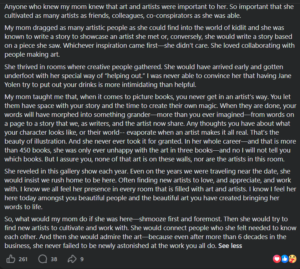
Just this week, I saw Heidi E.Y. Stemple talking on Facebook about how this worked with her kidlit legend mom, the late Jane Yolen. I’ll let Heidi explain it in her own words in this post honoring her mom at the Michelson Gallery show.
So, trust the pros. Trust the process. Thank your friend’s kiddo for the very kind offer, but leave her art out of the submission. And if you need guidance on how to write picture book text that an artist will love to work with, check out this OPB post.
***If you’re an author AND illustrator, that’s a different question, and we’ll save it for a future installment of the Insider Mailbag.
I used AI to brainstorm titles and a few of my plot ideas. But I wrote all the words myself. Do I have to disclose anything? Do editors really care?
In the past year, I’ve noticed that most of the contracts I’ve gotten now have specific AI clauses in them. Whatever your contract says, abide by it. Don’t lie. And don’t hide AI use from someone if asked directly about it. If you’re comfortable using it, you should be comfortable admitting it aloud to others.
Using AI to brainstorm is different from using it to write story text, yes. But agents and editors (and readers) might still care. Certainly other writers and kidlit artists care–I see them talking about it all the time on Reddit, on Facebook, etc.
Ideas that come from generative AI tend to be generic, so even if no one knows you used AI, the work itself is likely to be weak, which is a problem all on its own.
Why the heck does it take two years (or more!!) from contract to publication? It seems like we have the technology to do things faster.
You’re right, we do. And we see it anytime there’s a huge global news event (Michael Jackson’s death, COVID-19, etc.) and within weeks, there are books out on those very things.
With kidlit–especially picture books–a long process is normal. Good illustrators are often booked a year or more ahead. A while back, a writer friend found out that Melissa Sweet would be open to making the art for her next picture book…if my writer buddy was willing to wait three years. (My writer friend said something like @#$!@#$ yeah!)
Sketches, revisions, and final art can take six months to a year (or more). And remember that production includes proofs, printing (often overseas, which has its own time-sucking challenges and delays), plus shipping by boat. And the sales cycle starts quite early. Catalogs and promotional materials can go out maybe six to nine months before publication.
Some smaller presses might be able to move more quickly than the big NYC presses. My recommendation is to write great books, then send them out on sub while working on the next manuscripts. You’ll barely notice the long wait on your contracted books moving through the process to being released if you’re neck-deep in new manuscripts.
Got an Insider Mailbag question? Send it via email (if you have one of my email addresses), or use the CONTACT form.