
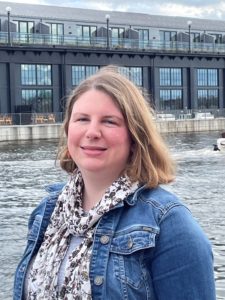
Editor Interview: Catherine Laudone (Paula Wiseman Books)

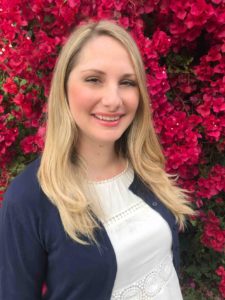
This month’s Industry Insider Interview is with Catherine Laudone, a children’s book editor at Paula Wiseman Books. Prior to joining Simon & Schuster in 2013, she graduated with a BFA in Writing, Literature, and Publishing from Emerson College and completed several internships at children’s publishing houses and literary agencies, including HarperCollins and Sourcebooks. She is also currently pursuing her MFA in Writing for Children and Young Adults at Vermont College of Fine Arts.

Over the last nine years, she’s edited picture books, middle grade, and young adult novels in a wide range of genres. Her authors’ titles have been New York Times bestsellers, Junior Library Guild selections, Indies New Voices and Indies Kids’ Next Pick selections. They have also been chosen for state reading and award longlists, and received starred reviews.

When Catherine isn’t editing, writing, or reading, she likes to throw pottery, crochet, bake, play tennis, and watch Gilmore Girls reruns. And, quite reasonably, she’s a devout fan of all things chocolate.

Let’s get to the interview so we can learn more!


RVC: What aspect/​part of you today gives away where you’re from and how you were raised?

CL: Growing up on Long Island, I was very close to my extended family—especially my Nana and cousins. My immediate family moved to New Jersey when I was in seventh grade, but we maintained those close relationships over the years. So, my love of stories centered on family and intergenerational relationships reflects my upbringing.

RVC: What influence did your family have on your love for stories?

CL: Growing up, every week my mom took my brothers and I to the library. We even had a designated “library bag” that we would load up with books. And both my parents would read to us every night before bed, fostering a love of stories and books that continues today.

RVC: That’s such a familiar story with agents and editors–I love it. Now, when you chose to attend Emerson College’s BFA program, were you planning to become a full-​time writer and editor?

CL: Yes, going into college I knew I wanted to write and edit children’s books. So, I chose Emerson’s program because it had the best of both worlds—writing and publishing within one degree.

RVC: What lesson from your time at Emerson do you find most useful today?

CL: Emerson College is where I learned to “speed read” and read multiple books at a time. These skills have been helpful, as I often have to multitask and work on many different projects daily as an editor.

RVC: Care to share a tip on how to speed read?

CL:  Speed reading is a fancy word for skimming. Sometimes when another colleague shares a longer novel for second reads, I skim or “speed read” several chapters to get a sense of voice and the story’s overall direction. Practice is the best tip I can give for learning to speed read or skim.

RVC: How did you land internships in publishing? And how valuable were those in terms of getting a full-​time job as an editor?

CL: I looked up internships online on my own, applied, and interviewed for them. I was fortunate that my parents lived about an hour outside of New York City, so I was able to live at home and intern in the city during the summers, between college semesters. I did a few internships in Boston during my semesters as well. Those internships gave me real-​world experience in the children’s publishing industry and helped when it came time for me to apply for entry level editorial jobs in children’s publishing.

RVC: I’m always interested in imprints named after someone because they feel so specific and distinct. Now, I have my own answer here, but I’m curious—in your mind, what makes a Paula Wiseman book a Paula Wiseman book?

CL: A Paula Wiseman book celebrates the joy of being a child—the excitement and magic of new experiences, learning, and building relationships. And a Paula Wiseman book reflects the wonderfully diverse world that we all live in.

RVC: What’s the story behind the first picture book you acquired?
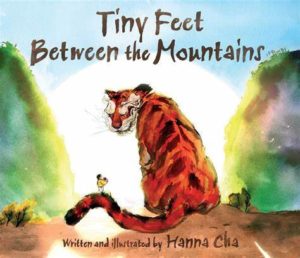
CL: Some graduating seniors from RISD [Rhode Island School of Design] came into the office one day for a portfolio review. I stopped to flip through the portfolio of a talented young woman named Hanna Cha. There was a stunning color sketch of a girl riding on a huge tiger’s back. I asked “Is there a story that goes with this art?” Hanna explained that she had a partial rough dummy that she’d done for school but the story itself was unfinished. I asked her to send it to me and from there we worked on the story together until it was ready to share at my editorial staff meeting. I was given the greenlight to acquire it and that story became Tiny Feet Between the Mountains.

RVC: If you had to summarize the most important lesson you learned over the start-​to-​finish process of that book getting published, what would it be?

CL: I learned that there is no “formula” for editing picture books. I had shadow-​edited other picture books with my supervisor prior to acquiring this one, but parts of his process didn’t naturally fit into how Hanna and I worked together. So, I adapted his process based on what worked for us and figured out the rest as I went. It was Hanna’s debut picture book as well, so it was nice to experience the learning curve together. That’s what makes editing picture books—or any book for that matter—so much fun. Each story is a unique puzzle waiting to be pieced together.

RVC: Describe a typical workday as an Editor at Paula Wiseman Books.

CL: Things have changed since the pandemic. I used to start my day with a long commute and lots of in-​person interactions, but now I work from home and Zoom with colleagues. But the job has remained the same. On a typical day, I am providing feedback on interiors of a picture book, editing a novel, giving my thoughts on a jacket design and art, writing catalog copy, sending requested materials to our Sales or Publicity teams, answering agents’ and authors’ questions via email, and attending meetings and acquiring books.

It’s a fast-​paced, hands-​in-​every-​cookie-​jar kind of job and that’s what I love about it. I’m never bored.

RVC: How much time do you have these days to read for pleasure?

CL: For a few years I fell behind on reading for pleasure—when you’re reading all day for work, sometimes it’s the last thing you want to do when you’re off the clock. But starting my MFA program at Vermont College of Fine Arts a year and a half ago made me get back into reading. I read a minimum of 50 children’s books per semester and annotate/​write critical essays on some of them.

RVC: Wow!

CL: Today, I make time to read for pleasure (and for school), and I go to the library once a week to check out picture books and graphic novels. Although I will admit that I consume novels mostly in the audiobook format these days. It’s easier to listen while doing the dishes, making dinner, or driving somewhere than it is to find time to sit down and read a physical copy.

RVC: No shame there–I do the same, which helps me justify having a commute. Please tell me about a time when things didn’t go the way you wanted. 

CL: There have been times when I gave notes and asked an author to do a revision and resubmit, in the hopes that I could bring the revision to my staff meeting and get the greenlight to take it to acquisitions. But sometimes those projects I’ve given notes on just don’t pan out and I have to pass. It’s disappointing in those cases but I always hope that my notes helped the author make the story a little stronger and that they will find the right home for their project, even if it’s not with me.

RVC: What’s one of your favorite success stories as an editor?
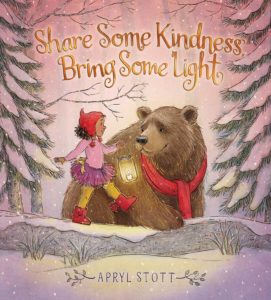
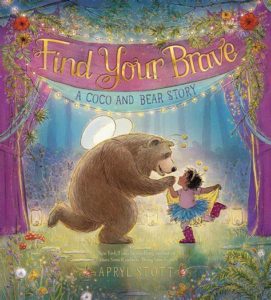
CL: That’s easy—Share Some Kindness, Bring Some Light, Apryl Stott’s New York Times bestselling debut picture book is one of my favorite success stories. When we used to be in the office, I would sometimes get postcards from illustrators advertising their work. One day I received one from Apryl, showing a little girl and a bear in the wintry woods. The bear wore a Santa Lucia wreath and red scarf. I was so charmed by the art that I cold-​emailed Apryl’s agent and asked if she had a story for these two adorable characters.

From there, Apryl and I spent months working on the story together and I went on to acquire it. Fast-​forward to when the book comes out during the height of the pandemic in 2020, and Barnes & Noble picks it for a holiday promotion! Then the Library of Congress picks the story for their National Holiday Read-​Aloud! With all this love for Apryl, the book hits the New York Times bestseller list for a few consecutive weeks. It was a major milestone for both me and Apryl and a true homegrown author-​illustrator success story.

RVC: What do you think of the state of kidlit right now?

CL: I think the kidlit landscape is in a state of evolution. Sure, there are some growing pains that come with that, but I’m encouraged to see so many new voices emerging and telling the stories of underrepresented groups of children and teens.

RVC: Your debut picture book—She Kept Dancing: The True Story of a Professional Dancer with a Limb Difference—comes out from Macmillan in fall 2023. Congrats on becoming an author!

CL: Thank you so much!

RVC: She Kept Dancing is co-​authored. What’s the story behind how this book and your writing partnership came to be?

CL: I have always loved watching the Radio City Rockettes at the Radio City Christmas Spectacular and on TV during the Macy’s Thanksgiving Day Parade. So, I was intrigued when I saw an online article about Sydney Mesher, the first Radio City Rockette with a visible disability. I instantly read it and was so inspired by Sydney’s story. My first thought was “wow, this would make an incredible picture book.” I cold-​emailed Sydney and her two agencies, asking if she’d be interested in discussing the possibility of a picture book. I was delighted when Sydney herself responded and said she was interested. I started interviewing Sydney and the story of her career and her levels of determination and perseverance were incredible. I assumed I would hire a cowriter to help tell the story and I would be the editor of the book.

Things came to a halt when we went into COVID lockdown and the initial proposal wasn’t approved by the Radio City Rockettes. But I couldn’t get Sydney’s story out of my mind—and the more I thought about it, the more I wanted to be the one to help write and tell her story. I reached out again and Sydney and I reconnected. I asked if Sydney would be open to coauthoring the book with me and she agreed. Then we came up with an entirely new angle for her story and that’s the version that wound up finding a home with Emily Settle at Macmillan. I am incredibly grateful to have Sydney as my coauthor and Natelle Quek as our illustrator—it’s been a fantastic collaboration all around.

RVC: How is the process different for an established editor like yourself in terms of submitting a picture book manuscript?

CL: It’s actually not different for me at all! I still have my literary agent submit a picture book manuscript to editors on my behalf. I have to wait for their feedback and receive rejections and requests for revise and resubmits the same as anyone else.

RVC: How has the process (so far!) with She Kept Dancing informed your work as an editor? 

CL: While working on She Kept Dancing, I really had to be sensitive and thoughtful about how I portrayed Sydney as a disabled individual—I had to make sure to capture who she was as a person apart from her disability, while also still make sure that her limb difference and her challenges were portrayed accurately. And I had to put myself in her shoes emotionally and mentally to make sure her character arc was genuine and compelling. As an editor, I look for the same level of care and sensitivity at the craft level when reviewing submissions, especially those featuring disabled characters.

RVC: What’s the most interesting thing about Sydney Mesher that didn’t make it into the book?

CL: I think we managed to get everything in there, actually! So, you’ll have to read the book and decide for yourself what is the most interesting fact about Sydney.

RVC: You’re currently pursuing an MFA in Writing for Children and Young Adults at Vermont College of Fine Arts. You’ve already got a successful career in the industry, so do you find it a little weird?

CL: Not really, because they are two separate careers within the same industry. Yes, there is some overlap when it comes to application of craft. But when I’m an editor, I’m helping another author or illustrator tell the best story they can and make their dreams a reality. When I’m an author, I’m telling my own stories and going after my own writing dreams. I chose to pursue my MFA in Writing for Children and Young Adults to take my own writing to the next level. Being able to apply what I’ve learned to my editor career is an added bonus.

RVC: How many times has a classmate (or a teacher?) pitched you an idea for Paula Wiseman Books?

CL: I’m pleased to say that this has never happened. Sure, sometimes a classmate or advisor might ask my opinion on something publishing-​related if they know I’m an editor. But they never pitch their own books to me. That’s what I love about VCFA—in the program I’m just another fellow writer and student who is there to learn and grow. And people are very respectful of that boundary.

RVC: Editor, author, consultant, freelancer, student. How do your various roles feed each other?

CL: All my roles feed each other in an endless cycle of creativity and critical thinking. I have to be creative in coming up with my own stories and offering feedback on authors’ and illustrators’ stories. And I think critically to find craft-​based solutions and ask the right questions that help both myself and my authors and illustrators best execute those stories.

RVC: You sound busy! What do you do to de-stress?

CL: Going to the gym or for a walk helps a lot. And I like to refill my creative well by learning new things. During the last two years I learned how to throw pottery, but lately I’ve gotten back into crocheting and trying new, harder patterns. Spending time with family and friends is also a great way to de-stress.

RVC: One last question for this part of the interview. What upcoming projects are you most excited about?

CL: As an author, I’m of course excited about She Kept Dancing. And I have a few other works-​in-​progress that I’m excited about but can’t share at the moment. As an editor, I am very excited about some new books that my authors and illustrators have coming out:

RVC: Okay, Catherine. It’s time for the LIGHTNING ROUND. Zippy questions and zoomy answers, please. Are you ready?

CL: Bring it on!

RVC: Gilmore Girls…great TV show or the greatest TV show?

CL: Great TV show—it’s a classic but it does have its flaws.

RVC: Most underappreciated Gilmore Girls character?

CL: That’s a tie between Kirk and Lane! Kirk is great comedic relief, and Lane is the BFF that Rory never deserved or truly appreciated, I think.

RVC: Favorite recipe from (or inspired by) the show?

CL: I own the Gilmore Girls recipe books! So, I have to say Sookie’s blueberry lemon shortcake was delicious!

RVC: What’s your most important good habit/​routine as an editor?

CL: Never answering work emails on the weekend. It’s a good habit, to help keep a healthy balance between my professional and personal life.

RVC: A favorite picture book of 2021 that you didn’t edit?
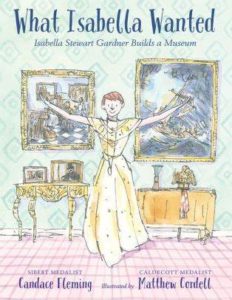
CL: What Isabella Wanted: Isabella Stewart Gardner Builds a Museum by Candace Fleming and illustrated by Matt Cordell.

RVC: Your picture book philosophy in five words or fewer?

CL: It needs an emotional hook.

RVC: Thanks so much, Catherine.

CL: Thank you for this opportunity!
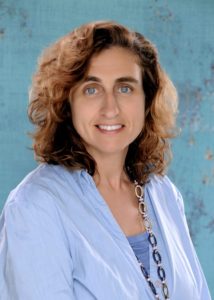
Agent Interview: Jacqui Lipton (Tobias Literary Agency)

After working as an Associate Agent and intern at several literary agencies, Jacqui Lipton founded Raven Quill Literary Agency in 2019 and, in 2022, the agency merged with The Tobias Literary Agency where Jacqui continues to focus on developing the careers of unique, high quality, engaging, and often underrepresented voices. She represents a little bit of everything from children’s books through the adult market in both fiction and nonfiction.
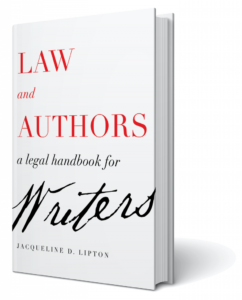
In addition to holding an MFA in Writing for Children & Young Adults from Vermont College of Fine Arts, Jacqui is a law professor and attorney with American and international experience in commercial and intellectual property law. She writes columns on legal issues for writers for the SCBWI BulletinLuna Station Quarterly, Catapult Community Page, and Savvy Authors, and she’s a frequent presenter on these issues around the country. She’s also the author of Law and Authors: A Legal Handbook for Writers (University of California Press, 2020).

Jacqui focuses on representing authors of picture books, novels, novels-​in-​verse, and nonfiction from middle grade through to the adult market.

Now that we’ve got a sense of what Jacqui is bringing to the OPB table, let’s get to the interview!


RVC: Which came first—the interest in writing/​publishing or the interest in law?

JL: I’d have to say I was writing LONG before I was thinking of going to law school. I was always an avid reader from a very young age and started writing bad poetry in elementary school, moved on to short stories in high school, and soon tried short novels and scripts. A major attraction of the law for me involved the narratives relating to legal disputes—different ways the same facts can be perceived and relayed by different parties–and the very human stories the law often deals with.

RVC: Way back when, what were you reading, and what influence did those books have on you?

JL: I started out with mysteries when I was young—I loved books that included puzzles to solve. I still love a good mystery or suspense story. I tend to like relatively fast-​paced stories that contain surprises along the way, but now I also enjoy slower paced, thoughtful literary pieces with beautiful writing craft.

RVC: You’ve got a connection to Australia. Care to explain how you went to university there?

JL: I actually grew up in Australia and moved to the States later in life, so I still have an Aussie accent and did most of my schooling in Australia. I went to the UK for my Ph.D., and also now hold that good old MFA in writing from Vermont College of Fine Arts.

RVC: Since you literally wrote the book on legal issues for writers, let me ask—why do writers need to know about the law? Isn’t it something their agent just handles for them?

JL: Well, to start with, not all writers work with agents or literary lawyers, so it’s worth understanding the basics of the contract you’re entering into! And honestly the main through-​line of the book is that it’s not necessary for authors to know a lot about the law, and that the law should never stand in the way of writing what you want to write because there’s usually a workaround for common legal problems that arise, many of which I discuss in the book.

So, the idea of the book is to explain in simple terms, with accessible pop culture examples, the basics of things like what a copyright is, the key terms authors will see in contracts with agents and with publishers (and the key differences between those contracts) and how defamation, privacy and trademark law can come into play in the writing life. The content of the book is really drawn from lots of questions authors have asked me over the years and my attempts to answer them in simple, accessible terms.

RVC: Simple and accessible sounds wonderful.

JL: There are other books out there that go into, say, publishing contracts in a lot more detail than my book. Mine is really intended as an entry point to give authors a heads up on the key legal issues they might face in their careers, and importantly, which issues can be easily handled without legal help, which may need legal help, and where to go to find effective and hopefully affordable legal help. It also has chapters focusing on self-​publishing where agents/​lawyers are less likely to be consulted. The book won’t make anyone into a lawyer, but hopefully it will give authors comfort about the scary-​seeming questions that often get raised and inaccurately addressed in a a lot of writing groups (online and IRL)!

RVC: I teach Introduction to the Profession of Creative Writing and The Profession of Creative Writing at my college, and something we talk about in those classes that shocks young writers is copyright and IP (intellectual property). They often don’t have any idea of the rights they’re surrendering for free by posting things on social media, for example. 

JL: That was a big reason I wrote the book—just to give authors some accessible and accurate knowledge about things like their intellectual property rights. And posting stuff on social media usually isn’t “giving away” rights in your work, but it may be infringing rights in other people’s work! It’s important to understand the difference between protecting your own rights and respecting other people’s rights—and I hope the book addresses some of those distinctions.

RVC: Gotcha–thanks for clarifying that! Now, you work as a legal consultant for writers and creative artists. What’s the most frequently asked question you get? 

JL: Definitely questions about including other people’s work (e.g. song lyrics, lines of poetry, photographs) in your own work—and the extent to which that infringes copyright. A lot of people think that giving attribution to the original creator avoids a copyright infringement problem and it really doesn’t because copyright isn’t about attribution—it’s about copying. Attributing the original creator is always nice, but it’s not a copyright issue. If the original creator gives you permission to use their work and asks for attribution in return, that’s a contract (it’s a contractual license to use their work with attribution).

The other common question is about defamation—say, someone is writing a memoir and want to know what they can “get away with” writing about real people in their lives without being at risk for a defamation suit. Luckily for authors, defamation is a pretty weak law in the United States as compared with other countries. Truth does tend to be a defense and statements of opinion, rather than fact, are typically not defamatory.

RVC: How did you go from being a lawyer to being a literary agent?

JL: I actually still do a bit of both (or at least a bit of contract consulting here and there). I also mainly teach law rather than practice. I’ve always been more of a teacher than a lawyer, which, I think, is part of the reason I wrote the book. The teacher in me just won’t stop! So, I tend to do a bit of everything but my main focus is a combination of teaching and agenting.

RVC: What’s something most people wouldn’t appreciate about being an agent?

JL: How much paperwork there is in terms of contracts, payments, just day to day emails. I think a lot of people have a kind of glamorous conceptions of agents on the phone doing big deals for books that become instant bestsellers. A lot of it is actually admin work behind a computer. I also think people assume agents make a lot more money than they do, a lot more quickly than they do over the span of a career. An agent only gets a commission on projects they sell, and, even then, it’s usually typically around 15% and most book deals aren’t six-​figure deals. So, you do the math! And bear in mind that unless you own your own agency, that 15% is split between the agent and the agency, so many agents only earn between 7.5 to 12% of the deals they do, depending on their arrangements with their agencies.

RVC: You’re a writer, too. How does your own writing inform your agenting?

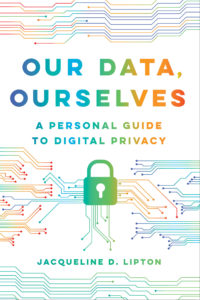
JL: I’m not sure that it really does. I tend not to write in areas where I actively agent because I have trouble turning off my editor brain in the genres I work on for clients, which tends to interfere with my ability to write creatively myself in those genres. So, at the moment I write mainly prescriptive nonfiction for adults (the legal issues book and a forthcoming data privacy handbook—Our Data, Ourselves: A Personal Guide to Digital Privacy, coming out this fall with University of California Press). I tend to rep nonfiction more in the kidlit space and more narrative nonfiction than I write. And I don’t really write much in the way of fiction.

Never say never, but once my editor brain is switched on for a particular genre, I find it hard to switch off.

RVC: What made you take the potentially scary dive into launching your own agency?

JL: It was something that felt right at the time because I had trained for a while and I had the legal/​business background to do it. It also enabled me to call the shots and develop the business the way I wanted to develop it—with a wonderful team of agents and clients. I think it paid off in the sense that we gave a lot of newer agents and clients a wonderful start in the business and then, with the recent Tobias merger, we were able to quickly draw on the strengths and synergies between the two agencies to provide clients a deeper level of service and more opportunities more quickly than if we had continued on our own.

RVC: In all your experience with Raven Quill, what surprised you the most?

JL: We did manage to make a lot of deals very quickly, or at least more quickly than I guessed we would, particularly as we had newer agents and a lot of newer clients on deck. We were probably helped a bit by the pandemic because we didn’t have brick and mortar premises to deal with at a time when lots of people were trying to renegotiate leases, and we didn’t have a lot of existing contracts with pub dates being postponed due to school and bookstore closings, supply chain issues, etc. I guess I was also surprised by the amount of faith clients and editors placed in us so quickly and so graciously.

RVC: Let’s talk about picture books specifically. What are some of the picture books you’ve repped that are indicative of your tastes, both as an agent and for your agency?

JL: It’s so weird to think of myself as a picture book agent because it was one area I never specifically trained in, but I did end up selling a number of them. My picture book tastes are pretty eclectic and my list is currently pretty full in that regard so I’m more likely to look at a picture book author who also writes in other segments of the market at the moment.

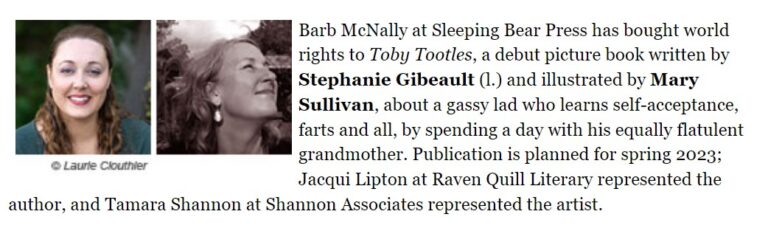
One of my absolute favorite picture books (coming out in 2023 with Sleeping Bear Press) is Stephanie Gibeault’s Toby Tootles, illustrated by Mary Sullivan, because I was so delighted to actually sell a fart book! But what I love about the book is that it’s really a book about self-​acceptance that uses flatulence in a humorous way to get the message across.

I have to also give a shout out to Tziporah Cohen for two of her picture books, On the Corner of Chocolate Avenue: How Milton Hershey Brought Milk Chocolate to America, illustrated by the amazing Steven Salerno, and coming out this fall with Clarion, and Afikomen, coming out in spring 2023 with Groundwood (illustrated by Yaara Eshet). I love the Hershey bio because it’s about the way Hershey struggled to create a sweet treat accessible to the masses, and not just for the wealthy. And I LOVE Afikomen because it’s a wordless time travel portal fantasy about Passover. Writing the pitch for it was a lot of fun as you can imagine.

RVC: I’ll bet!

JL: Two of my clients have absolutely amazing picture books coming out on the Heartdrum list at HarperCollins, one about community with a particular shout out to people who identify as “two spirit” (Circle of Love by Monique Gray Smith, illustrated by Nicole Neidhardt) and another about a young girl coming of age and learning about how to make a ribbon skirt with her grandmother (Stitches of Tradition or Gashkigwaaso Tradition) by Marcie Rendon, illustrated by Joshua Mangeshig Pawis-Steckley.

Another one that I’m particularly excited about is Molly Golden’s debut nonfiction picture book, Becoming Real: The True Story of the Velveteen Rabbit, illustrated by Paola Escobar, forthcoming with Clarion (big shout out to Jennifer Greene for her editorial vision). While it’s a picture book biography, it’s really a story about using creativity to overcome grief and it was a perfect book to work on during the pandemic.

RVC: Sounds quite timely.

JL: I hate calling out particular client projects because I’ll always end up leaving someone out but hopefully this list shows you that when I do rep picture books, the actual genres within PB that I rep are pretty broad (although I definitely have a soft spot for nonfiction), but what I’m looking for is a meaningful theme at the heart of the piece. For example, I don’t want to see a biography that simply chronicles someone’s life. I want to see a story about hope or grief or love that uses the biography format (or whatever other format) as the vehicle to investigate that theme.

RVC: Something I’ve found to be true is that most agents get a ton of pretty good manuscripts. What helps a story stand out from a bunch of others that are totally solid and have a lot going for them but ultimately won’t make the cut?

JL: That’s a tough one to answer! The short answer is probably “narrative voice” but it’s really difficult to define what that means. When I end up passing on perfectly good projects that don’t have that special “it” factor, I usually write the author a note saying “I wasn’t drawn organically into the story through the characters and their voices; I felt like I could see the author’s hand telling me what was going on.” What I mean by that is there’s a difference between a character who just leaps off the page and into your heart and a character who is interesting, but interesting in the same way as a lot of other characters. I wish I could be more specific. And it’s also subjective, so a character that doesn’t speak to me on that level may well speak to other agents and editors. That’s why it’s almost impossible to define “voice” in a way that’s meaningful to writers! Each agent/​editor “knows it when they see it” and we’re all looking for slightly different nuances.

RVC: What’s your personal feeling on Art Notes from authors?

JL: I think they’re fine as long as they’re not overdone. Some pieces require more art notes than others to clarify what’s happening in the text. As long as the author isn’t being overly prescriptive and not giving any room for the illustrator to shine, or, conversely, the author isn’t leaving too much of the narrative to the illustrator because the author, say, doesn’t really know how the story ends (!), I think, with practice, it’s usually relatively clear where and when illustrator notes should be included.

Agents should be able to help with this, too. I’m often discussing adding illustrator notes (or removing them) with client work, so there’s no “perfect” amount of illustrator notes to include when querying agents, and an agent who likes your work should be able to discuss including or deleting illustrator notes. Same with backmatter and other supplemental information.

RVC: What DON’T you want to see in terms of picture book submissions? 

JL: I’m being very selective about picture book submissions at the moment because my list is pretty full on that front and pretty strong already. I’m not the best fit for anthropomorphized animal characters–or dragons. Actually, I’m probably not the best fit for any prince/​fairy/​dragon pieces!

RVC: What’s a favorite client picture book success story?

JL: I have one that I can’t talk about because it hasn’t been announced yet so ask me next time!

RVC: Consider us tantalized regardless! Now, what’s a favorite you CAN share?

JL: I really loved selling a beautiful picture book, Rising by award-​winning Canadian literary fiction author, Sidura Ludwig, which is being illustrated by Sophia Vincent-​Guy and published by Candlewick. Sidura is such a beautiful lyrical writer and the manuscript was so quiet and heartfelt, simply chronicling a day making Challah between a mother and daughter, but of course it was about so much more. It resonated with themes of family and community across countries and generations. It ended up being a competitive bidding situation between editors who really understood the message and felt passionately about it. At the end of the day, Mary Lee Donovan ended up editing it and she is an absolute dream for this piece. Jewish stories that aren’t about a particular religious holiday or the holocaust have been few and far between, so a simple family Challah-​baking story felt in some ways a tough nut to crack in the market, and I was so glad we found an editor—in fact more than one—who really had the most amazing vision for the piece.

RVC: That’s the secret–finding an editor with the right vision for a story. Awesome.

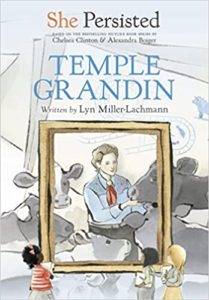
JL: I know you only asked for one story but I was also super-​excited about the sale of Lyn Miller-​Lachmann’s debut picture book, Ways to Play, illustrated by Gabriel Alborozo to Levine Querido. Lyn had always wanted to write a picture book and now calls herself a “triple threat” as a result of spanning the PB, MG and YA markets (and she’s also now written a chapter book as well—the Temple Grandin volume in the She Persisted series—so maybe she’s a quadruple threat). Ways to Play will be such a beautiful book dealing with children on the spectrum being called out for not playing with toys the same way as other kids; both Lyn and Gabriel are on the spectrum and it’s the perfect partnership for this piece.

RVC: Last question for this part of the interview. What would you like to brag about in terms of forthcoming client work? And/​or your own writing?

JL: All of it! Seriously, I can’t pick a project. I’m fortunate and so, so grateful that my clients have put their trust in me and shared their amazing creative work with me and supported me as the agency grew and changed and ultimately merged with the team at Tobias. If I have a brag at all, it’s that I think the market is going to see our clients’ work go from strength to strength in coming years and I can’t wait to see what the future brings for all of us.

RVC: Alrighty, Jacqui. It’s now time for the Lightning Round. Zippy questions and zappy answers, please. Are you ready?

JL: Uh, didn’t you notice the length of my previous answers?? I don’t think I can do this! HELP!!!

RVC: Favorite Crayola color (real or invented)?

JL: Memory Lane Indigo.

RVC: What always cheers you up when you think about it?

JL: My kids’ smiles.

RVC: What do you think you’re much better at than you actually are?

JL: Critiquing plays and musicals!

RVC: Guilty reading pleasure?

JL: ROMANCE!!!!

RVC: What’s the One That Got Away?

JL: Ooh, that’s a tough one. I probably can’t name her because she’s working with another agent and happily selling books I wished I’d had the opportunity to rep. (She knows who she is!!! Or does she???)

RVC: In five words or less, your picture book philosophy.

JL: Write with heart. Rinse. Repeat.

RVC: Thanks so much, Jacqui! 

JL: Thanks for having me!

Agent Interview: Natalie Lakosil (Irene Goodman Literary Agency)

Natalie Lakosil is an agent at the Irene Goodman Literary Agency. An honors graduate of the University of San Diego, California, Natalie holds a B.A. in Literature/​Writing. For over a dozen years, she has championed and helped build the careers of numerous award-​winning, critically acclaimed, and bestselling authors. Natalie represents adult nonfiction, adult cozy mystery/​crime, female-​driven thrillers, upmarket women’s/general fiction, illustrators, and all ages (picture book, chapter book, MG, YA) of children’s literature, both fiction and nonfiction.
In terms of her agenting needs, Natalie is especially looking for:

  • BIPOC and underrepresented voices where identity isn’t the focus
  • projects with intersectionality

She’s also a “total cat person, unicorn lover, fierce female, and mother of two tiny humans.” She also admits that for a good decade, she was terrified of going back in time and screwing up her life. “I literally documented my schedule and everything I needed to do so that if my adult self ever went back in time and went into my own kid body, I’d be able to pick right up and not screw up my grades.”

Now that we’ve got a good sense of who Natalie is, let’s get to that interview and find out more about what she does!


RVC: When you were a kid, what was your relationship to reading and writing?

NL: Oh, great question. While I always wanted to be a writer, I didn’t love writing until middle school. That might because I got Cs in spelling and grammar throughout elementary school–I was really bad at capitalizing words and spelling. Because I started reading so much in middle school, I did a 180 and writing became my strongest subject.

Love came first. Perfecting and honing the skills came second.

RVC: I love the idea of turning a weakness into a strength. What books proved important in fostering that love for reading and writing?

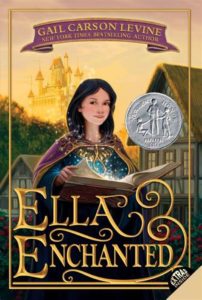
NL: My go-​to is Ella Enchanted, though when I really started reading a ton, I was into Meg Cabot and Tamora Pierce. That’s when I fell in love with the age level I handle now as an agent. Then I moved on to romance novels.

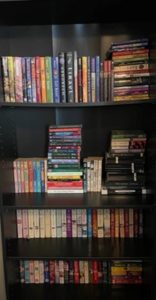
Teresa Medeiros, Jude Deveraux, Nora Roberts, Julia Quinn–all those greats inspired me to want to do it myself, but also to help others. I wanted to represent them and help their careers, too. I still have the books that I loved the most (except for library books–checked out one a day!) so here’s a glimpse at that shelf.

RVC: What was the career goal you had when you went to UCSD to study literature and writing?

NL: I’m one of those really weird agents because I started writing at such a young age. My mom got me Jeff Herman’s annual Guide to Book Publishers, Editors & Literary Agents when I was thirteen and that’s how I found out what a literary agent was. I was like, “That! I want to do that!” So, I went into UCSD with this five-​year plan. I was going to graduate, move to New York, then work at an editing house–maybe even work as a copy editor for a bit, to get my feet wet and build my connections–and then I was going to become an agent and write a lot, as well.

Obviously, my five-​year plan didn’t happen. I got an internship in college at an agency. Once I actually start working in the industry, I didn’t want to be a writer anymore. I just found I couldn’t get past my own head. I’d be critiquing my own ideas and I’d say, “Oh, my goodness, I don’t know that I’d be able to do everything that writers do.” I shifted completely away from writing myself.

RVC: Is that internship what led you to your first “real” job in a literary agency? That was with Sandra Dijkstra, right?

NL: Yes. I interned there for a couple years, and then I interned at a newspaper, where I quickly found out that journalism writing wasn’t for me!

When I graduated, I thought I was going to go to grad school and get my PhD in English. I got rejected everywhere. Then I reached out to the agency where I interned and asked, “Got any openings?” They did. I got really, really lucky.

RVC: At the agency, were you working on kidlit from the start?

NL: Oh, I never thought I was going to go into handling children’s books at all. I thought I was only going to do romance novels. That’s what I was reading. That’s all I wanted to do. I liked women’s fiction, historical fiction, romance novels. When I eventually made my way up to being an agent, I was told that I was now the children’s agent at the agency. I said “Okay!” and I figured it out.

Through trial and error, I actually found I was pretty good in this space. Before long, I fell totally in love with children’s books. I just kept pushing my way into all the different genres, and I now represent everything within the children’s area. Today, it’s almost all of my list. I’m trying right now to break into more adult nonfiction, but I don’t take on romance novels at all anymore (only from existing clients).

RVC: This change to kidlit as a focus–was that still at the first agency, were you at Bradford by then?

NL: It was the first agency. The Sandra Dijkstra Literary Agency.

RVC: What was the first picture book you got to work on?

NL: It was by a client who’s still with me–Roseanne Greenfield. And to this day, I’m still trying to sell that first picture book. I’ve gone on to sell seven other books for her, but the first one we worked on together didn’t sell. It was a lyrical nonfiction texts about bioluminescence, and I still think it’s going to sell. I love it so much!

RVC: It sounds pretty cool to me, too.

NL: Roseanne helped ease me into things because she’d been previously represented by the Andrea Brown Agency–she was a talent. And she’d already published several books before we worked together. So, I actually grew a lot with her.

RVC: What are some of the lessons you learned by agenting children’s books?

NL: What I learned over the years was that you’re going to suck at it for a little bit. You have to push past that, the “I don’t know what I’m doing, and nothing is selling–why is nothing selling…WHY?” because you’re kind of figuring out your own path.

Obviously, I didn’t NOT sell anything, but I have a much stronger sell-​through rate now. Back then, I was still building connections. I learned that you have to stay flexible as an agent. Don’t be afraid to branch into something new, even though it’s going to take work. You’re going to have to do a lot of research. You’re going to have to talk to colleagues. You’re going to have a lot of trial and error and not be perfect in your style and process. That could all take years, but it’s worth it in the end. You just have to push past that learning curve.

RVC: Is it REALLY that different working at different agencies?

NL: In terms of perspectives and ideas, yes, there’s absolutely a difference at each place. And agencies absolutely are and should be thinking about different voices in the room and opening space for new agents and underrepresented voices. But it’s also an apprenticeship model, so usually the hope is that an intern or an assistant will stay and build into an agent.

As for moving around, career-​wise, I’ve grown, so I’ve had different needs. I needed a lot of support and handholding when I was new, versus now, I just need more administrative support. Moving agencies is kind of just you growing in your career. As an agent, you have to reevaluate where you’re at. Is it offering what you know you need? If you have a conversation with the team and it’s just not the right fit, you sometimes have to move.

RVC: I’ve had those same conversations with college and universities, too. I’m at my seventh one now, though I’ve been here for 13 years.

NL: I don’t know if this is still the case today, but that’s how it was back then. The idea was that you can’t be friends with other agents–they’re your competition. My next agency was the complete opposite of that. They were more, “Let’s talk about stuff, and be friends with people.” I even ended up joining a book club with other agents, including ones from other agencies. We all came to each other with what we’re facing, what was going on, and we just bounced things off of each other. I grew so quickly that way because we were all at varying levels. Collaboration is so important to growing. Everybody does things a little bit different as an agent. Every agent is going to have their own style. Even today, I do a lot of mentoring.

I’m still learning things about how different agencies operate. And I know it’s okay not to have all the answers. As long as you’ve got a support system, you’ll be fine. There’s room for all of us. We’re going to sell books, even if we have tastes that overlap. We’re making sure we’re all working in a good way which helps the industry too because editors get overwhelmed. That’s partially because some newer agents don’t have anybody to talk to. “Should I do this? Or should I do this?” they wonder. That creates problems in the pipeline for everybody.

RVC: Why is the Irene Goodman Literary Agency your forever home?

NL: The structure. The way this agency is set up, there’s no reason for me to ever leave. It’s very much like owning my own agency and running a business, yet I have the resources of an incredibly successful team with me. And compensation-​wise, it’s all about long-​term growth, which fits where I’m at. I feel like I have the best of both worlds here.

RVC: What is the hardest part about being a literary agent?

NL: The emotional roller coaster of the industry. I get rejection daily. I pour my heart and soul into projects that don’t sell. I fall in love with projects that I don’t get to work on. I get horrible news when a book is cancelled, or something bad happens and something’s in jeopardy for an author or client. There are so many things that shift daily that you have to practice self care a lot so you can manage the ups and downs.

It’s commission work, too. Not everybody works on commission, but at least for me, it means there are ups and down throughout the year. You could have a fantastic first quarter that makes your year, then maybe nothing comes in for the next couple months and you’re questioning, “Am I ever going to sell a book again?” because you’re seeing other agents doing amazing things. And you’re thinking like, “Oh, should I be doing that?” There’s a lot of comparison going on. It’s like the Facebook thing, a lot of people shouting about all their amazing things. But they don’t share the hardships, and we all experience hardships.

RVC: It’s so refreshing how honest you are on all of this. In fact, I’m going to take advantage of that and ask you a question I don’t ask people in these interviews. Brace yourself!

Whenever I talk to other writers, most of them complain about their agents at some level. What would be the thing your clients might complain about you? It’s a terrible thing to ask, I fully realize, but I’m so interested in your thoughts here.

NL: Honestly, I hope there’s nothing. I try my best. I have end-​of-​the-​year calls where I review with everybody to make sure we’re aligned vision-​wise and career-​wise, and we have clear goals for the next year. I always ask, “Is there anything else that I could be doing better for you or more for you?” I’m not afraid of hearing from my clients or having to adjust to a client’s needs.

I was a little behind in reading because I got COVID, so I didn’t work for two weeks, which set me back like two months.

RV: Sorry to hear that!

NL: It was frustrating. But I dug out!

Specific to picture book writers, because they are so prolific, it can be really frustrating for them when we have to talk about how many things we can submit at a time or how often. I’m very strategic about what we try to sell. I’m not just throwing everything out there. We’re carefully building careers.

With a debut author, I find that they want to do everything even after they sell that first book. They ask, “What else can I do? What more can I do?” It’s because the mindset hasn’t shifted yet from “I need to sell, I need to get on submission, I need to sell!” But again, we have to be strategic, and we also don’t want to damage relationships. I usually see that shift as launch approaches, and they realize, “There’s going to be so much work with editorial and launch and marketing.”

RVC: Oh yeah. That part of the process can and does take up a lot of time.

NL: I interact a lot with my clients, and they interact with each other. I have a ton of client resources on a client portal at my website where I literally just downloaded all of my years of information and workshop materials for them. I’m always available for calls and I check in a lot. Communication is pretty important to me. I need that and I need honesty from them so I can be a fierce advocate.

RVC: Let’s talk about how all that support and those client resources have translated into successes. What’s a favorite client success story?

NL: It’s a hard question. Do I have to pick just one?

RVC: We don’t have to call it your #1 favorite–just one of your many favorites. We don’t anyone to feel snubbed, right?

NL: There are different kinds of successes. When I worked with Tiffany Jackson for six years, seeing her rise from debut to bestselling author and watching her talent be recognized was just so wonderful. Though there’s immediate successes, too, where you sell an author’s debut for six figures plus, and then they continue to rise from there.

RVC: Both of those sure sound like the definition of success to me!

NL: I think there’s a a fallacy in the industry to say that success is based on one thing, because I have authors that aren’t bestsellers, but they’re consistently selling well, and they’re consistently publishing new books. To me, that’s successful. That’s a very successful career.

RVC: I agree completely. Now, some writers get writer’s block. Do you ever get agents block?

NL: Yes. With the ups and downs of working for yourself, you have to push yourself to do stuff. And there are times when I’m in a rut, you know, where I’m just not finding anything that sounds great to me. I’d like to sign someone, but nothing is really hitting it.

There are those lulls in the industry too such as right after Thanksgiving where the whole industry is wondering, “Are we on vacation yet?” That’s a challenging time because you just kind of want to be with friends and family. The rest of the industry also does, but there’s still a ton of work to do for everybody.

RVC: What do you think of the state of kidlit right now?

NL: It’s in a really exciting place. With picture books, we’re having a renaissance. Lots of picture books are selling for more than they ever did before. I’m loving the conversations that we’re all having together about how we work, what kinds of things we work on, who we’re working with in the process of the above, and really questioning everything. We need to make sure we’re not just doing things because it’s how it’s always been done. And, finally, we’re opening the door and recognizing the need for voices as diverse as the rest of the country. It can be challenging to navigate sometimes, but I’m not afraid of that challenge.

RVC: Brag time, what’s a project or two that you’re really excited about?

NL: I have a middle grade novel that releases in May called Freddie vs. the Family Curse. It’s so cute and fun. Everyone who reads it is just falls in love with the humor and the characters; it has two starred reviews already. I’m really, really excited to see that one hit the market.

I also have a debut YA coming up, called The Loophole that’s coming out in June. It’s got one of those memorable voices and while it’s fun and funny, it also just tugs at your heart and gives you all the feels. I can’t wait for people for the world to read it.

I also have a new novel from the talented Katie Henry coming soon, Gideon Green in Black and White. It’s already got some starred reviews; her writing is sharp and funny and delightful and this new one has a mystery noir edge I think readers will love. And I have to mention Juliana Brandt’s next MG page-​turner Monsters in the Mist. She tackles really tough subjects through genre metaphor, and her writing is incredible. This one explores grief and processing trauma through a haunted island (which is also just a spooky and creepy ghost story!).

RVC: Any picture book bragging?

NL: Oh, gosh, I have a lot of picture books in the works. In June, The Notebook Keeper: A Story of Kindness from the Border comes out. I read it and I wanted to cry–we sold it immediately. It’s so moving and beautiful. It’s going to affect a lot of people.

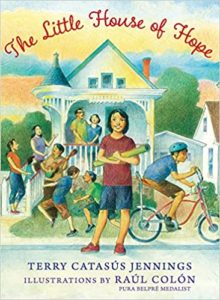
I have another picture book coming out in May that also made me want to cry. It’s called The Little House of Hope. It’s got an English and Spanish version and it’s about this house that becomes a refuge for all sorts of people coming into the country and how over the years, people come in and out as they find their footing. It’s always a place where people can safely go.

RVC: Okay, Natalie, we’re moving into the the lightning round. Fast Qs and faster As. Are you prepared?

NL: I guess?

RV: We’ll soon find out. HERE WE GO! If animals could talk, what animal would be the most annoying?

NL: Birds.

RVC: If the answer is “unicorn,” what’s the question?

NL: “What’s your soul animal?”

RVC: How do you organize your books?

NL: My client books, alphabetically. The books I read, by the order I read them in.

RVC: If I looked at your workspace, what are some of the things I’d see?

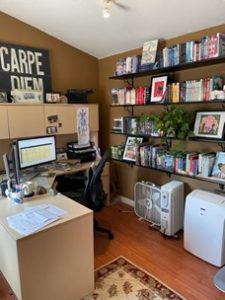
NL: A ton of books everywhere. I have a huge floor to ceiling shelving of all my client titles. And hopefully you notice all the plants in the room. I’m very big on plants. I have an enormous sign that says Carpe Diem and crystals everywhere. Hopefully it all looks organized and clean, too.

RVC: What’s a recent picture book that came out that really caught your attention?

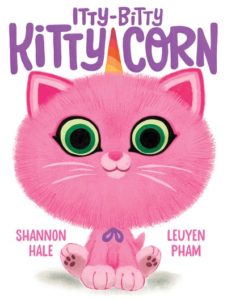
NL: I have a four-​year-​old and a seven-​year-​old so I’m constantly buying picture books. A few recents: Perfectly Pegasus by Jessie Sima, Itty-​Bitty Kitty Corn by Shannon Hale, Take a Breath by Sujean Rim, The Year We Learned to Fly by Jacqueline Woodson.

RVC: What’s your agenting philosophy in six words or fewer?

NL: Transparency, honesty, strategy, passion, client satisfaction, and collaboration.

RVC: Thanks so much, Natalie. This was terrific!

Editor Interview: Allison Cohen (Running Press Kids)

Welcome to Allison Cohen, who is the subject of this month’s Industry Insider interview at OPB. Since 2018, she’s been an editor at Running Press Kids (an imprint of Hachette Book Group), but for eight years prior to that, she served as a literary agent at The Gersh Agency. Before that, she worked almost two years as an assistant at a different literary agency (The Gernert Company).
Allison got herself on my radar via being so prominent on the recent Dealmakers List at Publishers Marketplace—anyone making as many deals as she’s making has my attention for sure!

Allison keeps a pretty low online profile, so instead of me making things up or sharing summer internship information (for example, she worked at Gemstar/​TV Guide for 5 months a long, long time ago), let’s jump ahead to the interview to see what we can discover together!


RVC: Congratulations on having the second-​smallest digital footprint of anyone I’ve interviewed here. Is that on purpose or did it just happen that way?

AC: Hahaha! I wear that as a badge of honor. To be honest, I have a love-​hate relationship with social media. I think it can be a wonderful place to connect and support a shared love of all things—books, music, food, travel, (insert personal interests here), but a few years ago, I realized I needed to take myself offline to protect my mental health. It can be a very toxic place, too, and so I’ve been happy to (mostly) let it go.

RVC: I hear you there! Other than my blog, I stay pretty low-​key, as well. Now, let’s go back to the start of things for you. Where’d you grow up?

AC: Just outside northeast Philly.

RVC: Describe the path that led from there to where you are now, working in NYC as an editor for a kidlit imprint at one of the Big 5 publishers.

AC: I come from a long line of educators (both my parents were teachers, as was my sister, aunts/​uncles, etc.), and so I always assumed I would be a high school English teacher when I grew up. In college, I realized my interests extended beyond teaching, and I thought about other opportunities I could pursue as an English Lit major. I thought about what I loved most (spoiler alert: books/​reading), and had a moment where I was like, hmm…maybe I do the “teaching thing” later in life and find something in the immediate that lets me surround myself with books for a few years before I change gears. I didn’t really know where to start, so I applied to a job at TV Guide, hoping to work with their magazine (dating myself here). Let’s just say it wasn’t exactly what I’d imagined it would be.

Skip ahead to when an amazing friend of mine was telling me about her job in sales at Random House and how she thought I should consider moving to NYC and getting a job in “real” publishing. She sold me. My first job at a Big 5 was as the assistant to Madeline McIntosh when she led the audio group. She was an incredible mentor and really helped me figure out what I wanted to do. We were talking over lunch one day, and I started talking about all these editors I admired and how I wanted to be like them. She asked me what, specifically, I liked about what these editors did. After I told her, she casually asked if I’d ever thought about being an agent. I hadn’t. At the time, I thought of agents in the abstract. They were the people who sent publishers submissions, and then we took it from there. She set up some informal meetings for me to talk with agent friends she knew so I could hear more about their day-​to-​day, and I was hooked. I wanted to be the person on the very front lines. Finding the author, helping them shape their work, finding them a home with a publisher, championing them every step of the way, having these lifelong connections.

So, when the opportunity presented itself, I took a job as an assistant to two agents. I learned a lot about what really goes into creating a book—what it takes to find and grow authors, sell books, etc. I eventually wound up as Phyllis Wender’s assistant at Gersh. I’ve never met anyone like Phyllis. Her career path is incredible. There’s nothing she hasn’t done. She is also one of the most passionate, dedicated, generous, loving people I’ve ever met. To this day, she is an unbelievable mentor. She helped me build my list and become an agent in my own right. I am forever indebted to her and could write a book about all she’s taught me—personally and professionally. After eight years at Gersh, however, an opportunity presented itself and…well, RP Kids became my home!

RVC: All the time, I see editors moving into the field of agenting. You did that, but then you boomeranged back to editing. That’s really quite rare.

AC: I loved being an agent. I loved working with writers across genres—children’s and adult, fiction and non-​fiction, etc. And the relationships I built with my authors were unbelievably special. But the 247 hustle was a lot. You’re not just an agent—you’re an editor, an accountant, a lawyer, a therapist, etc. I often found myself pulled away from some of what I loved best about the job—working with authors on developing their manuscripts. Don’t get me wrong, being an editor requires hustle—nights and weekends reading and editing—but it’s a different kind. I had been talking to an editor friend of mine about life and maybe making a change but not really knowing what that change was.

That same week, I saw the opening at Running Press Kids. It felt like the universe was sending me a sign. I REALLY struggled with leaving behind my authors, but I knew the relationships with the ones who really mattered would continue (they have), and I told myself that if the whole editing “thing” didn’t work out, I could always come back to agenting. I knew how to do it. I loved it. I could come back.

I started at Running Press and I loved it. Present tense. I love it. I love the people. The entire team—we’re a family. I love our authors. I love our list. It’s relit a creative fire I didn’t realize I’d been missing. Four years later, I can’t imagine doing anything else.

RVC: For those that don’t know Running Press Kids that well, say a few words about what makes it different than other imprints and presses.

AC: We are small but mighty. And we approach every book as a collaboration. We trust each other and really value opinions on everything from cover to copy. And I think the collective passion of our team is why our books look the way they do and find the readers they do. Because we’re all working towards the same goal of instilling a lifelong love of reading into the readers who find our books.

RVC: What was the first picture book you acquired?

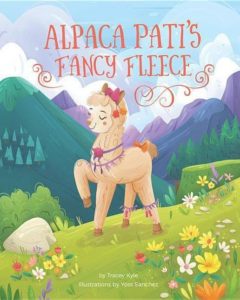
AC: Alpaca Pati’s Fancy Fleece by Tracey Kyle.

RVC: What was the best lesson that came out of that book?

AC: It was a crash course in how to manage all the moving parts of producing a picture book. From finding an illustrator to managing schedules of deliverables. I learned just how collaborative the process is—not just between the author and illustrator, but across all the different departments—editorial, design, managing ed, production, marketing/​publicity, sales. There is SO much that goes into making these books happen. They don’t just appear on shelves at stores. Ha!

RVC: It seems like you have a particular interest in nonfiction picture books. Is that fair?

AC: Ooh, I don’t know…maybe in the beginning? I love books that teach kids about the world without being overly didactic. At RPK, we pride ourselves on publishing beautiful books that educate while they entertain. That said, several of my more recent acquisitions have been fiction, and it’s because I need that balance. Fiction offers opportunities to celebrate life and nature and can teach kids how to be better people, all through the power of story.

RVC: Let’s help out those writers and agents who read OPB. What kinds of things are you looking for?

AC: Hmm…this is hard because sometimes I don’t realize I’m looking for something until it hits my desk. That is such a non-​answer, I know. I will say that I have been having a lot of fun with our mystical/​magical books. With picture books I take on, I’m mostly looking for projects in the mindfulness, conservation/​nature, and social justice space.

RVC: What kinds of things are you NOT looking for?

AC: Rhyming picture books! Okay, to be fair, there is always an exception to this. BUT it often seems writers think picture books have to be written in rhyme, and then they try to force this rhyme scheme that doesn’t feel natural and the book falls apart a little.

On a more general note, I’m not looking for sci-​fi/​fantasy or chapter books.

RVC: I’m curious about what you do in a day-​to-​day work sense.

AC: Day-to-day…it really depends on what kinds of meetings we have. First thing, every morning, I check my email to make sure there aren’t any “fires” that developed overnight. Then I look at the day and block out times to deal with all the things. I used to try and get to every email in real-​time, but it’s a losing battle. So, now I just create blocks on the calendar to tend to everything. I work on pitches/​proposals for our internal editorial meetings (including comp research). I run P&Ls for potential acquisitions. I review passes and proofs of our books in production, style manuscripts for transmittal, work on cover copy, draft fact sheets for sales/​marketing. This all happens in between various meetings—cover meetings (love reviewing covers of our books), illustrator meetings (reviewing portfolios for potential projects), editorial meetings, calls with agents, editorial calls with authors, etc.

Mind you, I try to check my email every half hour or hour, depending on what the day is like. The hardest part, honestly, is just trying to keep things moving and being able to pivot when something major needs to be addressed.

RVC: What’s the most common misconception that people have about editors?

AC: That we spend our days reading and editing manuscripts. If only! The days are spent drafting copy, running P&Ls, reviewing proofs, preparing titles for launch and sales conference. Pretending I don’t have 221 emails in my inbox…(see above answer—hahaha!)

RVC: If you had to summarize the most important thing you’ve learned about being an editor, what would it be?

AC: To be flexible. Sometimes, you have to reimagine a book—sometimes it’s the trim size or page count. Sometimes it’s the art because an illustrator you wanted isn’t available. Sometimes a book’s on-​sale date has to move out—it can be a month or two, or sometimes it’s to a different season. There are a multitude of reasons things change over the course of a book’s production, and much is out of your control, so you just have to roll with it. Remind yourself it’s all part of the process of making sure the book is the best version of itself.  

RVC: What’s one thing that a lot of people just don’t quite understand about picture books?

AC: There is SO much that has to come together to make a book. That’s why schedules can be so long. It takes a lot to create synergy between the text and illustrations—you have the manuscript, then you find the right illustrator, then you get the sketches (almost always adjustments are made), then you see the color art (more adjustments are made). You’re getting together materials to share with sales so they can sell in to their accounts. You’re building marketing/​publicity plans to launch the book into the world. All this is happening while the managing ed and production teams are doing their best to make sure the books are printed, shipped, etc. There are so many hands that touch a book. It takes time. It’s a lot of work, but then you get the advance copy, hold it in your hands and think, THIS IS WHY. It is incredible when everything works out.

RVC: Since COVID has clearly affected all of us, I’m making an extra effort to ask a mental health question in every interview now. Here’s yours: what do you do to de-stress?

AC: I go outside. I feel so much better surrounded by nature. I go for runs or hikes. I just need to get out and get moving.

RVC: And here’s a follow-​up mental health question. What do you do to defeat negativity—internally or from the outside world?

AC: That’s a great question. It’s something I’m really working on, so I’m not sure I have an answer. I will say I have some really amazing friends and family that are always at the ready to offer support and keep me in check. So, when I’m really feeling down about something, I just reach out to the people I love and know they will come back with either a virtual hug or send a ridiculous meme to distract me.

Sounds cheesy, but it’s the best I can think of for now.

RVC: One last question for this part of the interview. What forthcoming projects do you want to brag about?

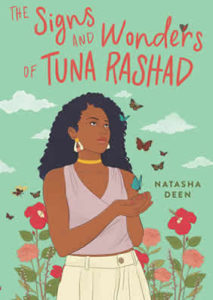
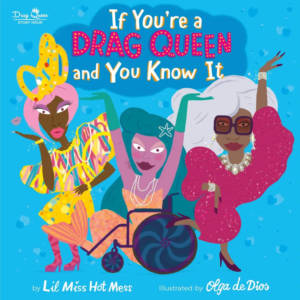
AC: There are so many!! Honestly, I look at our list and just think, WOW, we make beautiful books that demand conversation (and attention). Natasha Deen was the very first author I worked with at RP Kids, and her next book with us, The Signs and Wonders of Tuna Rashad (YA fiction) pubs this summer. The second book from Lil Miss Hot Mess, If You’re a Drag Queen and You Know It, comes out this summer. I didn’t work on this, but it’s just such a fun book, and the cover is incredible—a true feast for the eyes!

We have an awesome Junior Handbook series, and the third book is publishing this Fall—The Junior Tarot Reader’s Handbook. In a similar “mystical” vein, we have Astrology for Black Girls this summer. We have two picture books that reteam the author/​illustrator, that are so much fun—Peculiar Primates and Battle of the Brains coming this Fall.

I could seriously go on and on. Is there room to brag about all of our books? Because that’s how I feel about our list.

RVC: Alrighty, Allison. It’s time for the Big Moment. It’s…THE LIGHTNING ROUND! The point values are quintupled, and the stakes have never been higher. We’ve got the countdown clock ready because we’re looking to handle six questions and answers in sixty seconds. Are you ready?

AC: [Stretches arms. Closes eyes and takes a deep breath…] 

RVC: If you could only have one app on your phone, it’d be…

AC: My music app. I LOVE music and have all sorts of playlists depending on my mood or what I’m doing—editing, running, cooking, etc. Wait, is that considered an app? If not, then I guess my Notes app because I use it all the time when I have an idea for a book or need to create lists or to-​dos. My brain is so overloaded that I can’t remember anything without writing it down.

RVC: Would you rather have a personal chef, a personal trainer, or a maid?

AC: Ryan! Oh, gosh…ummm…personal chef? I actually find cleaning therapeutic. I do like cooking, but I don’t always have the time or resources. But, man, a personal trainer would be pretty cool, too.

Chef. I’m going to stick with personal chef! Final answer!

RVC: If someone narrated your life, who would you want to be the narrator?

AC: Jennifer Garner. She’s the first person that popped into my head. I don’t know why. Maybe because she’s amazing?

RVC: Five words (or fewer!) that come to mind when someone says “Art Notes.”

AC: Leave room for creative license! (to be clear, for the illustrator’s creative license)

RVC: What was the One That Got Away?

AC: Oof. You would think it would get easier each time, but there are a few that have stuck with me even years later. I try to console myself with the knowledge that at least the book will find its way into the hands of readers, and I’ll be able to add a copy to my personal bookshelf.

RVC: Your favorite quote about picture books (or writing, or editing—I can adjust to whatever you’ve got)

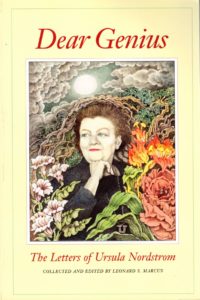
AC: It’s not a quote, but I was gifted the book Dear Genius: The Letters of Ursula Nordstrom, and it is one of the best gifts I’ve ever been given. I changed a lot about the way I approach editing after reading her letters. And I think anyone who loves publishing and books should read it. There is so much wonderful history (and humanity) in this book, and I have found a lot of inspiration in how I approach my work from it. If you really need a quote, though, on my wall is a quote from Ernest Hemingway: There is no friend as loyal as a book. 😉

RVC: Thanks so much, Allison!

AC: THANK YOU!!!

Agent Interview: James McGowan (BookEnds Literary Agency)

The February 2022 Industry Insider Interview at OPB is with James McGowan, a literary agent at BookEnds Literary Agency. He joined the agency as an intern and worked in multiple departments. Now, as an agent, he represents an accomplished list of award-​winning writers and illustrators, focusing on “illustrated projects for young readers (board books, picture books, chapter books, and middle grade) as well as adult nonfiction and mystery/​suspense novels.”
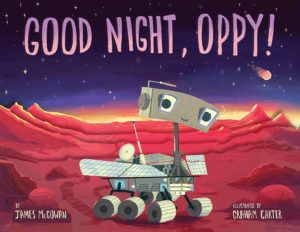
In addition, James is a picture book author himself. His first book, Good Night, Oppy!, was published this past year. Clearly, he knows this industry inside and out!

And just because fun facts are great to know, here’s additional information about James:

  • He’s an enormous Jeopardy! fan.
  • He considers himself a professional snacker.
  • He has a deep love of science.
  • He loves a good laugh and probably provides some laughs, being fluent in sarcasm.
  • He currently lives on Staten Island, where he was born and raised.

Let’s share some links and get right to the interview!


JW: When did you discover your love for reading and writing? 

JM: In the most cliché answer: I’ve always been a reader. I can remember my mom teaching me to read using a board book (whose title I sadly cannot remember). I remember taking a book to parties and sitting in the corner, and begging to stop at bookstores. It’s something that has always been with me.

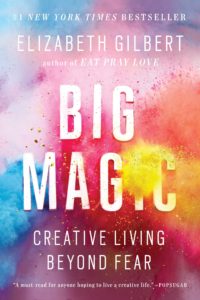
Writing came much later, after I graduated from college and listened to Big Magic by Elizabeth Gilbert on my commutes to and from the BookEnds office. I always had ideas, but that book made me think I can see them through.

JW: You began working at BookEnds Literary Agency in 2015 as a summer intern. How did you go about getting this internship?

JM: I applied to just about every internship program one could find in publishing, and BookEnds was one of the only two or three that replied to me. Finding an internship in this industry is all about persistence!

JW: What was the most helpful lesson you learned as an intern?

JM: Ask questions. I am by nature a question-​asker but it is crucial that every intern abandon any level of fear and just ask the question they have. There is no stupid question when you’re learning a field. Also, it makes you look engaged, interested, and people remember you better when they talk to you more.

JW: What was it about picture books that made you decide this is where you want to be?

JM: For me, it’s the combination of text and illustration. Picture books are a work of art and that’s because of the collaboration. Seeing your book come to life is a feeling no picture book author will ever get tired of.

JW: What’s your favorite part of being a literary agent?

JM: Much like above… the collaboration. I’m not sure of another job where you work this closely with creators in both a creative and strategic setting. I love having a roster of brilliant minds that I can learn from and create with.

JW: Since joining BookEnds, you have worked in various departments. How do these different experiences help you when representing your clients?

JM: This has made me a better agent, hands down. I would not trade my time as an assistant for anything. I can speak confidently in every aspect of running a literary agency, from the accounting department to contracts, taxes, subsidiary rights, social media, etc. I’ve always felt I can bring my clients a deep understanding of how the agency can and will serve them, and I’ve always appreciated that.

JW: As an agent who represents both writers and illustrators, how is the process different between the two?

JM: Oh, totally different! But… not? At the same time? I mean, authors do not have the guide that illustrators do in terms of story. They’re crafting and creating that from scratch, whereas the illustrator has the author’s roadmap (manuscript). But each of them are creating details and story arcs that the other is not. An illustrator can add a visual arc to a story that the writer never could have imagined. The process is obviously different in that one is text and one is art, but the creative process, I imagine, is quite similar.

JW: I have noticed more and more authors are getting into self-​publishing. As an agent, what do you think about that?

JM: This really depends on what the creator’s goal is. If you want to self-​publish, then you wouldn’t need an agent. If you wish to traditionally publish your book, an agent is the first step. Most publishers do not accept submissions by unagented creators so you’ll need an agent to submit, but we’re not just here to submit for you. A good agent will negotiate your offers, your contracts, manage schedules, advocate for you in terms of marketing, track payments and royalty statements, seek new opportunities for subsidiary rights, and more. All of that is not something most authors are able to do, and in my opinion is worth the commission.

JW: What do you look for when you get a story that features or covers issues involving the LGBTQ+, BIPOC, and other groups with historically lesser representation so that the story champions these groups?

JM: Overall, I’m looking for good storytelling. I, like any reader, wants to be swept away by something. I want to invest myself into the story the author or illustrator wants to tell. That is the same for any creator. When working with marginalized creators, I see my role as one of amplification. How can I assist in getting their story and experiences out there?

JW: Making connections with an agent for brand new writers, while extremely important, can be pretty intimidating. What advice would you give to a new writer on the scene with making these meaningful connections?

JM: Don’t overthink it. Agents are humans, and we all just want to connect with others.

JW: I have heard you appreciate a good laugh. Why do you feel humor is important in picture books?

JM: Humor, to me, is the most foolproof way of captivating someone’s attentions. When we’re dealing with kiddos, whose attention is sacred, humor is your best friend.

JW: With the vast number of ways humor can express itself, what do you look for in stories with humor?

JM: I’m open!

JW: What type of humor turns you off?

JM: I’d say I’m not typically a potty humor person, but if something is done inventively, it could totally work for me.

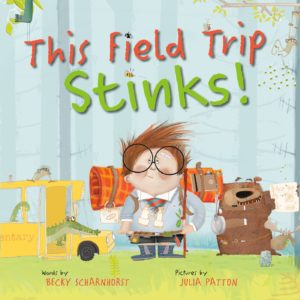
JW: One upcoming humorous book from an author you represent, Becky Scharnhorst, caught my attention, This Field Trip Stinks!, the follow-​up to My School Stinks! What elements of a picture book make it a good candidate for a sequel?

JM: Stuart (the main character) is one of my favorite picture book characters ever. In terms of what makes a good sequel for a humorous picture book, to me, it’s just that: a great focal character.

JW: Also, congratulations, as you recently had your own picture book published, Good Night, Oppy! Space books were my favorite as a kid. How did you come up with the idea for this book?

JM: Thank you! Mine, too. When the news broke about Oppy, I heard it on the radio during my commute to work. As soon as I got into the office, I was chatting with my agent about it and the story came to life from there.

JW: Finding a way to make science appealing to young readers is so important. What advantages do you see to using fictionalized characters and stories to present this material?

JM: This is a great question. It really depends on the science to me, but I think it’s a great way of hooking a younger reader. To me, Oppy was instantly loveable. By following her journey in the book, I hope readers were learning a bit more about uncrewed space travel.

JW: Was there anything about the process of having your book published that took you by surprise, having worked in the industry?

JM: Ha! No, not really. I knew what to expect. Well, maybe just the general anxiety of it all. I did not realize how much pressure one can feel when gearing up for a publication day.

JW: On Twitter, you encourage all clients to celebrate new deals at least twice, and your favorite part is hearing how clients celebrate the news. What’s been your favorite celebration story from a client?

JM: This is my favorite part. One of my clients has her go-​to coffee shop that she runs to get her favorite latte from. Some of my clients go out to dinner. One person finds a celebration that ties into their book’s subject (i.e. buying themselves a space-​themed gift for a space-​themed book).

JW: How did you celebrate the news your book was getting published?

JM: Super low key. I was TIRED. Ha! My family did get me a cake and sang happy birthday which I thought was funny. But otherwise, I just accepted the love on social media, and really just appreciated the moment for what it is, which is an incredible achievement.

JW: On social media, you’re pretty active as an agent. What are the benefits of being on social media regularly as an agent?

JM: Connection. Community. Especially as a younger agent, building your reputation as a kind person that others would want to work with, social media can be incredibly useful. I’ve always seen it as connecting with people and a place to share what I’m working on.

JW: Okay, James, it’s time for the SIX QUESTION SPEED ROUND with lightning-​fast questions and answers please! Are you ready?

JM: Of course not, but here we go…

JW: Name your favorite sitcom.

JM: You’re kidding me right now. I have lots! I have always loved Friends. Brooklyn 99 and New Girl were more recent favorites. The show I cannot shut up about right now is Abbott Elementary.

JW: As a professional snacker, name your go-​to snack and, as a daily-​double, any snacks you do not like.

JM: Goldfish. A snack I do not like…. Potato chips. I’ve always found them greasy! But I do liked baked potato chips.

JW: If you could write questions for Jeopardy!, provide the category you would create for your questions.

JM: Children’s books, of course. Or snacks!

JW: Five things we’d see if we checked out your office.

JM: A ton of books. Approximately .5 million paperclips. Post-​its everywhere. My iPad. Schweppes lemon lime seltzer.

JW: What’s a recent picture book that really got your attention?

JM: Nigel and the Moon by Antwan Eady and Gracey Zhang.

JW: What’s the most important trait you bring to the keyboard?

JM: Honesty!

JW: Thanks so much, James!


Joshua Walls is a children’s author and travel writer who isn’t afraid to fuse, challenge, or deconstruct genres in the pursuit of creating compelling stories. Currently, he lives in Sarasota, FL where he’s pursuing a BFA in Creative Writing at Ringling College of Art and Design. He’s also the co-​founder and co-​host of the Fluff It podcast.
Editor Interview: Lisa Rosinsky (Barefoot Books)

This month’s Industry Insider Interview is with Lisa Rosinsky, Senior Editor at Barefoot Books in Concord, MA, where she edits and art directs picture books and board books. Lisa could just as easily appear at OPB as an Author Interview because she’s a poet, YA novelist, and picture book writer, too. Along the way, she earned a BA in creative writing from the Writing Seminars at Johns Hopkins and an MFA in creative writing (poetry) from Boston University. She also beat out hundreds of applicants to become the 2016–2017 Associates of the Boston Public Library Writer-​in-​Residence, where she worked on her first and second YA novels. Her debut YA novel, Inevitable and Only, tells a story of secrets, sisters, and Shakespeare!
Pretty cool, right?

But wait—there’s more! Here are ten things you absolutely must know about Lisa before we go any further. Just because.

Lisa:

  1. translates French picture books.
  2. has two cats that are convinced they’re dogs.
  3. was half of a two-​person traveling production of The Lion, the Witch, and the Wardrobe.
  4. is a font nerd (favorite typeface: Baskerville; favorite punctuation mark; ampersand &).
  5. has been a musical instrument-​selling wench at a Renaissance Faire.
  6. writes poems about “love, gods, and dinosaurs.”
  7. has worked as a witchcraft and spellbook proofreader.
  8. has been a library coffee shop barista.
  9. has a shockingly good collection of punny T‑shirts.
  10. was once co-​billed with Sir Patrick Stewart (say what?! Find out more below…)

What better intro to an interview is there than a list of awesomeness like that, right? So, let’s get straight to the interview then!


 RVC: Rumor has it that you started writing as a child growing up in the suburbs of Baltimore.

LR: As far back as I can remember, I’ve always wanted to make books. I used to write and illustrate my own little poems in a marble composition notebook. I also used to cut out pieces of loose-​leaf paper, staple them together, and write a character profile on each page. I called them my “People Books”—they were meant to be catalogs of characters I could write about someday.

RVC: Talk about starting the writing research early! Now, what school project got you really thinking more seriously about becoming a writer?

LR: When I was in fourth grade, I met That Teacher—the one who changes your whole life. Her name was Kitty Boyan. She read us The Mysteries of Harris Burdick by Chris Van Allsburg—a book of unfinished stories or story-​starters, 14 intriguing images with titles and one-​line captions but no other text. Mrs. Boyan assigned us to pick one of the images and write the story behind it. Mine turned into an entire novel that took me four more years to finish. I wrote the whole thing by hand in—you guessed it—a marble composition notebook. It’s fun to look at it now and see how drastically my handwriting changed over those four years!

RVC: When I look at my childhood writing efforts, I can’t even read the chicken scratches! Since we’re talking about your childhood though, the plotline for your first YA book, Inevitable and Only, sort of came from that, didn’t it?

LR: That’s true! One day when I was in middle school, out of the blue, I invented an older brother. It started by dropping his name at lunch. Then my friends were curious, so I had to come up with more details about his backstory and why they’d never met him. By the time he’d turned into a rock-​guitarist-​Doctor-​Without-​Borders who was conveniently taking a year off to backpack around the world, which was why none of my friends had ever seen his purple hair, sleeve tattoos, or facial piercings—well, at that point one of my friends asked my mom, “Hey, have you heard from Steve lately?” She said, “…Steve who?” and the game was up.

Many years later, I started daydreaming on a long drive about a character who discovered a secret sibling they’d never met…and that’s where Inevitable and Only began. I wrote the story outline in one long rush and then drafted the book during NaNoWriMo (National Novel Writing Month), which is a challenge to write a novel, or at least 50,000 words, in 30 days.

RVC: Looking back, what was the most important lesson you learned from participating in NaNoWriMo?

LR: NaNoWriMo is a wild experience. Trying to hit that 50,000-word goal in such a short span of time teaches you amazing writing discipline. I would wake up very early and write a couple thousand words before work every morning to make sure I hit my word count for the day. Then I’d outline the next scene, so that the next morning I’d wake up and know exactly what I was going to write and could sit down and start right away.

RVC: So, you’re a morning writer then?

LR: Early mornings are still my favorite time to write…when my creative brain is still loose and dreamy, before my critic/​editor brain has fully awoken.

RVC: From looking at your LinkedIn educational profile, it’s clear that you were going full-​blast toward a future as a poet (witness the 2009 Provost’s Undergraduate Research Award for “Poetry in Performance” and numerous publications in venues such as Prairie Schooner, Mid-​American Review, and Hunger Mountain). Since you’re not a poetry professor somewhere, I have to ask—what got you off that course and into the world of kidlit? Was it being an editorial intern at Highlights for Children?

LR: I’m still writing and publishing poetry in journals, and I’m also working on a full-​length poetry collection. But I have never been interested in academia as a career. I’ve always wanted to make books, rather than write or teach about them.

RVC: I get that. I’m knee deep (sometimes neck deep!) in academia, and I assure everyone, it’s not at all the same as making books. Now, when did you officially get interested in kidlit?

LR: I first became interested in kidlit when I worked as a traveling actor for the Maryland Theatre Association. We were a small company of actors and we’d drive all over the state of Maryland performing plays for elementary school students. We did one play about folktales around the world and another that was a two-​person production of The Lion, the Witch, and the Wardrobe. I played Lucy, Susan, and the White Witch, and the other actor played Aslan, Peter, Edmund, and Mr. Tumnus. We did a lot of quick costume changes! From that job, I learned that I loved working with kids and stories, and I wanted to find a job where I could keep doing that. I applied for an internship at Highlights, the magazine I’d loved since I was little, and from there I fell in love with children’s publishing.

RVC: Your first actual job in kidlit was at Boyds Mills Press. In all your experience there, what most surprised you?

LR: I worked in managing editorial, so I mostly handled schedules and copyediting. But I learned as much as I could about the creative side of editing when I got to sit in on acquisitions meetings. I was surprised by how much there was to learn about artwork. My educational background was all in writing and literature; I’d never studied art. But picture books are at least 50% about the illustrations.

I loved the way illustrators could not only bring a story to life with pictures but could also add to the text, creating new dimensions and nuances that the author (or editor!) might not have even dreamed of. And I loved seeing which artists were chosen for each manuscript and trying to figure out what made the illustrator a perfect fit for that book. Art directing is still one of my absolute favorite parts of my job.

RVC: What Boyds Mills book that you worked on was your favorite?

LR: You Nest Here with Me, by Jane Yolen and Heidi E. Y. Stemple and illustrated by Melissa Sweet, is still a favorite bedtime read-​aloud in our house. That was also one of the first times I got to work on a book written by an author whose work I’d loved reading as a kid. I was only a lowly copyeditor on the project, but still–there is no thrill quite like that experience.

RVC: How did you end up at Barefoot Books?

LR: I wanted to move from managing editorial to the more creative side of things—not just project-​managing books, but making them. So I took some fabulous classes in the children’s literature MA program at Simmons College and then earned an MFA in creative writing from Boston University. After that, I started looking for editorial jobs. A friend introduced me to Barefoot Books around the same time, saying they were the best books she’d found for her young son, with diverse casts of characters, beautiful stories, and gorgeous artwork. I researched Barefoot and saw that they’d just posted a senior editor role—so I applied.

RVC: What’s the most important thing people should know or understand about Barefoot Books?

LR: Barefoot has been an independent, mission-​driven company for its entire 30-​year history. I think that has allowed us to be nimble, take risks, and devote a deep level of care and attention to every single one of our books the whole way through the process. We keep our titles in print for a very long time, so each book is a long-​term investment for us. We’ve always had a global focus, opening kids’ hearts and minds to stories from around the world and teaching them to be compassionate global citizens and stewards of our planet—messages that I think continue to become more relevant every year. And our whole list has a distinctive visual aesthetic; we work with illustrators from all over the world who make high-​quality, beautiful artwork in a wide variety of media and styles.

RVC: Please share your secret for being so productive. Freelance copyeditor. Senior editor at Barefoot Books. Poet. Novelist. Mom. How do you make all that happen and still find time to do interviews like this?

LR: I guess “I have no idea” isn’t a very helpful answer?! I am constantly trying to get better at saying no to things… But in all seriousness, I’m grateful that I get to do so many things I love every day. I highly recommend having a couple of cats who will nap in your lap while you’re working so that you can’t get up.

RVC: [Making Note to Self that says: Purchase cats.] You write picture books under the not-​so-​secret pen name of Skye Silver. Why use a pen name, and is there a story behind that one?

LR: It’s an homage to two of my friends and mentors at Barefoot. Our (now-​retired) editor-​in-​chief and cofounder Tessa Strickland wrote under the pen name Stella Blackstone, and senior editor Kate DePalma sometimes writes as Sunny Scribens. So, I chose a celestial name to go with Stella and Sunny, using the last three letters of my last name, “-sky.”

TL;DR: it’s my pirate persona.

RVC: How’d one of Skye’s book, Dump Truck Disco, happen?

LR: When I was little, I had a big collection of Matchbox cars and loved to make up stories with them. I gave them names and personalities and invented a complex web of relationships and jobs and families for them all. So it was pure delight to write a book about construction vehicles that come to life and build a secret project together! Barefoot published it as a singalong, which means the book comes with (super catchy) music and audio animation. You can find a sneak preview of it here.

RVC: What’s your favorite construction vehicle from that one?

LR: Favorite truck in the book—that’s tough! Illustrator Christiane Engel brought them all to life with such amazing individual personalities. I think it’s a three-​way tie between Dump Truck Daisy, Tractor Tiana, and Excavator Esteban.

RVC: The text scans quite well. What’s your strategy for handling meter and rhyme as an author? As an editor?

LR: Thank you! And that’s an easy one: reading and rereading lines out loud.

RVC: Since this is an Industry Insider Interview (allegedly!), let’s circle back to your editorial day job. What do you think is the most common misconception about editors?

LR: I googled “common misconceptions about editors” and came up with a lot of links saying that writers worry that their editors will change their work. I have enormous respect for the authors I work with—I think that being a writer myself helps me to understand both sides of the process and hope that brings an element of compassion and collaboration to my work as an editor. I try to communicate clearly with writers about where I see potential in their manuscripts and what changes I would ask them to make, before we sign a contract, to make sure that we’re on the same page. I think of my job as a literary lapidary: finding a gorgeous rock and helping polish all the facets so they catch the light and shine as brightly as the author intended.

RVC: Who or what has influenced you as an editor?

LR: That’s a tough one…I’d have to name every book I’ve ever read and every editor I’ve ever had the privilege to work with. Most recently, though, I have to say that reading books with my two-​year-​old has taught me an enormous amount about editing. There’s nothing like reading a book over and over with a toddler to show you where the plot lags or fails to hold a reader’s attention, where the syntax is clunky or there are missing details. And picture books are a shared experience between an adult and a child—you have to think about the grownup buying and reading the books as well as the young audience. My new test for a manuscript when I’m reading submissions is, “Would I still want to read this one again after reading it at bedtime every single night for MONTHS?”

RVC: That’s a high bar, indeed!

LR: Absolutely.

RVC: Since 2019, you’ve participated in #DVpit (a pitch event for unagented creators of marginalized communities) on Twitter. What do you most like about that event?

LR: I love that #DVPit gives editors a chance to discover writers who haven’t necessarily followed a “traditional” path towards publishing, or who are struggling to get their stories and voices out there. I don’t use Twitter much personally—it stresses me out!—but I resurface for #DVPit and a few other pitch events throughout the year. And I do think Twitter can be extremely valuable to writers for forming networks, learning from each other, and breaking down barriers of privilege and access in the industry.

RVC: What’s your favorite #DVpit success story?

LR: That’s like asking someone to pick their favorite child… But I’ll mention the #DVPit success story I just finished working on—Dinner on Domingos by Alexandra Katona, illustrated by Claudia Navarro. It’s a gorgeous story about something I think we all long for very deeply these days: a big warm family gathering around a delicious meal. Based on the author’s own childhood, the main character is a first-​generation Latinx American girl who doesn’t speak much Spanish, but wants to learn more so that she can bond with her Spanish-​speaking grandmother. It’s a heartwarming story that speaks poignantly to any family with cultural differences that form both barriers and bridges between generations.

RVC: I’m more conscientious of health and wellness than ever before, so I’m trying to ask a question in that arena more often. With that in mind, what do you do to de-​stress or for downtime?

LR: My brain and body feel best when I take a daily walk. Yoga and cooking help me relax. And playing music! Spending some quality one-​on-​one time with my piano or guitar always helps me recharge, clear my mind, and feel like myself again.

RVC: What’s your motto, or something you often say to encourage yourself?

LR: “There is no such thing as a children’s book emergency.” When deadlines are looming or a project feels stressful, it helps to remind myself that the entire point of my job is to bring joy to children. I’m unbelievably lucky to get paid to do this every day.

RVC: One last question for this part of the interview. What exciting projects should we expect from you in the near future, as an editor and/​or an author? It’s brag time!

LR: One of our Spring 2022 books I’m most excited about is Zahra’s Blessing: A Ramadan Story, written by Shirin Shamsi and gorgeously illustrated by Manal Mirza. This book has so many layers—it’s a story about a child volunteering at a shelter for asylum seekers during Ramadan. It’s also more broadly about loss, hope, friendship, and family. Kirkus just gave it a lovely review, calling it “a sweet story about the importance of sharing and caring that’s embedded in Islamic traditions.”

RVC: Shirin’s agent is Saba Sulaiman, who we just interviewed two months back at OPB. Small world, right? 

LR: The publishing world sure is!

RVC: Alright, Lisa. It’s time to get zipping along, and zip-​zap-​zoom we will, because it’s the Speed Round! Wahoo! Are you ready?

LR: Uh-​oh…

RVC: If you could pick a movie to describe where your life is at right now, what would it be?

LR: The sad truth is that I can barely stay awake through a whole movie these days…parents of toddlers will understand!

RVC: Weirdest celebrity run-in?

LR:  I was once a listener contestant on the NPR radio show Wait Wait Don’t Tell Me, and that week, the guest celebrity star was Sir Patrick Stewart. Can I say that counts as a “co-​billing”?! I still have Carl Kasell’s recording on my voicemail message. My mom used to text me: “I’m going to call you both don’t pick up, I just want to hear Carl Kasell.”

RVC: What literary invention do you wish were real?

LR: The tesseract. (Only if I get to travel it with Mrs. Who, Mrs. Which, and Mrs. Whatsit.)

RVC: Best non-​Barefoot book you’ve read recently?

LR: Adult fiction—The Sentence by Louise Erdrich. I found it so cathartic to read this gorgeous haunting story set at the beginning of the pandemic.

For picture books, I have to plug Dozens of Doughnuts by Carrie Finison! We’ve been reading it over and over at bedtime for weeks and it still makes me chuckle. The writing is impeccable and the story is so sweet.

RVC: What’s your dream project?

LR: A lyrical, poetic manuscript by a debut author, paired with a brand-​new illustration talent—I love helping open doors for creators early in their careers. There is such magic in bringing someone’s first book to life.

RVC: Let’s end with a favorite line from a picture book you edited.

LR: “A skunk? A skink? Platypus? Sun bear? Goblin shark? Pink fairy armadillo? Friendly school librarian?”

That’s from Jet the Cat (Is Not a Cat) and I won’t tell you the context—you’ll have to go read it to find out! (You can also hear all about the behind-​the-​scenes creation of this book in an interview with the author, the illustrator, and me on the Picture Book Look podcast.)

RVC: Thanks so much, Lisa! This was a truly great way to get us cooking along at OPB in 2022.